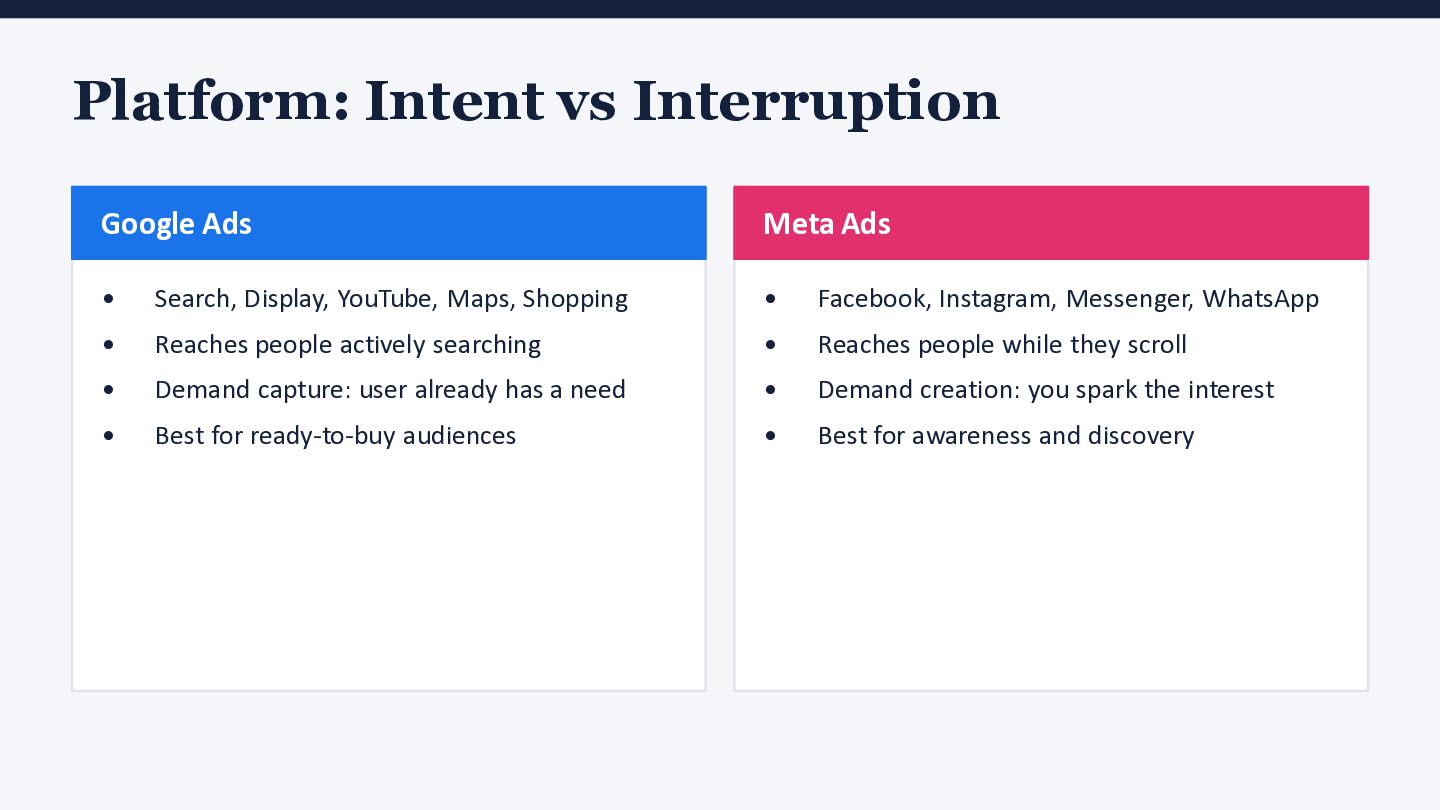
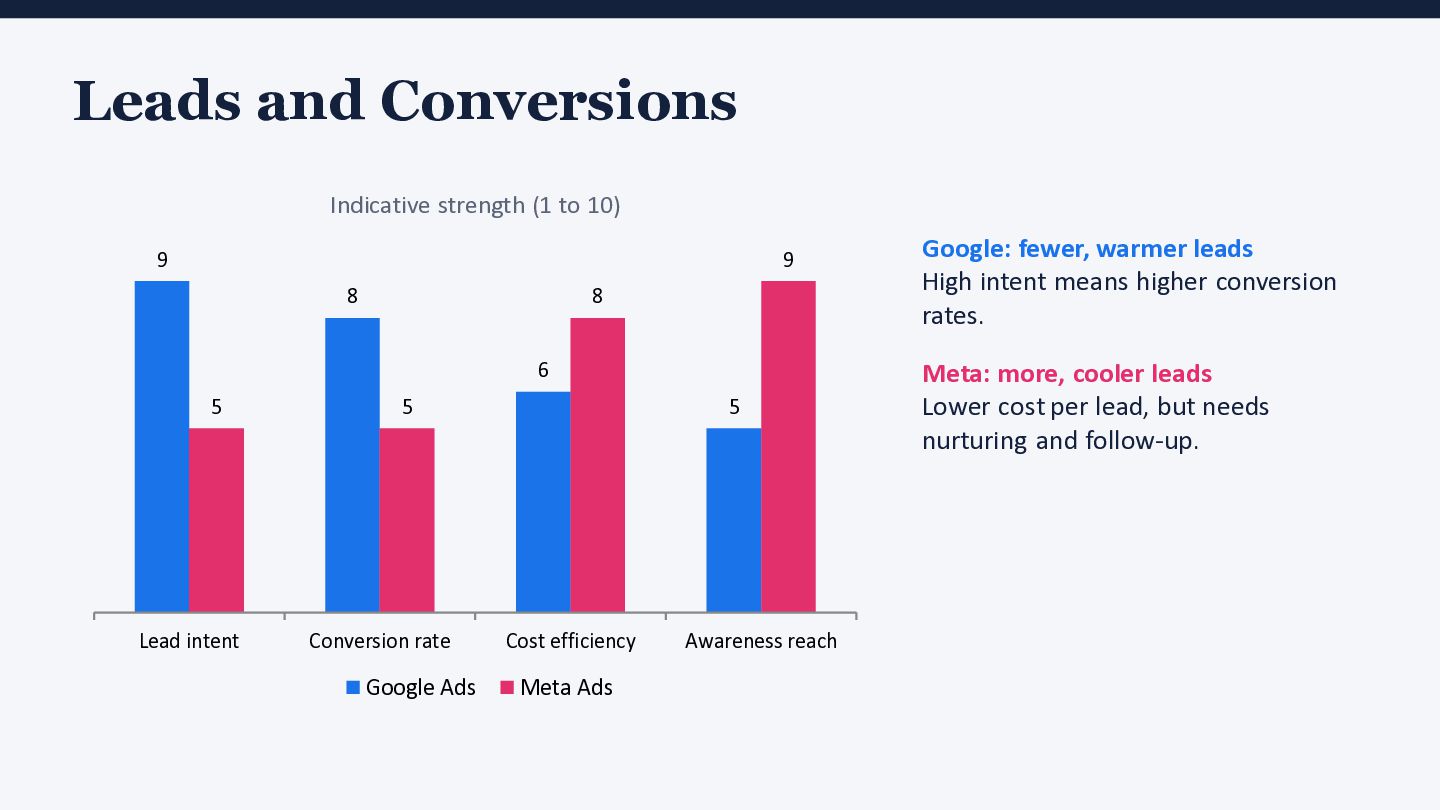
Display, YouTube, Maps, Shopping • Facebook, Instagram, Messenger, WhatsApp • Reaches people actively searching • Reaches people while they scroll • Demand capture: user already has a need • Demand creation: you spark the interest • Best for ready-to-buy audiences • Best for awareness and discovery
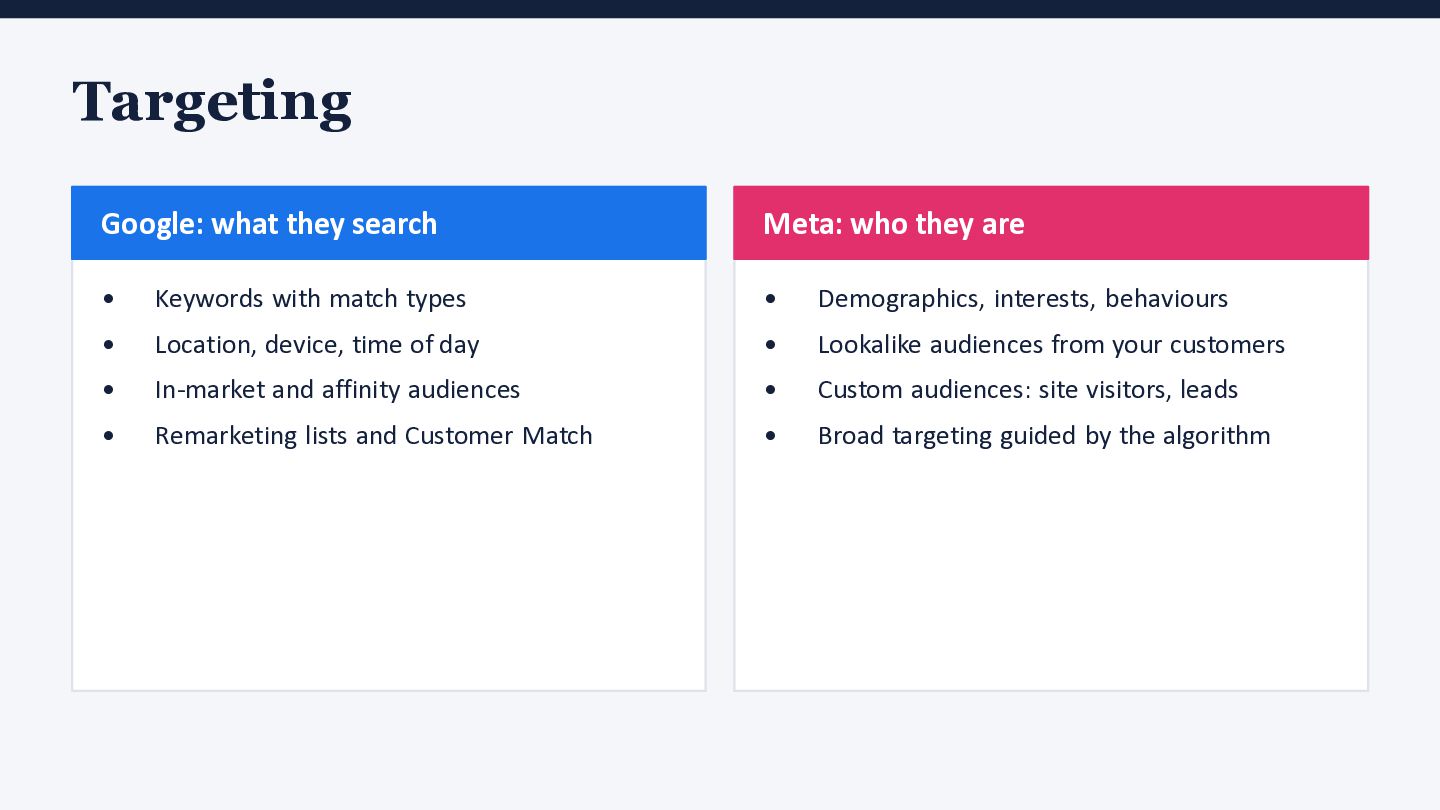
Keywords with match types • Demographics, interests, behaviours • Location, device, time of day • Lookalike audiences from your customers • In-market and affinity audiences • Custom audiences: site visitors, leads • Remarketing lists and Customer Match • Broad targeting guided by the algorithm
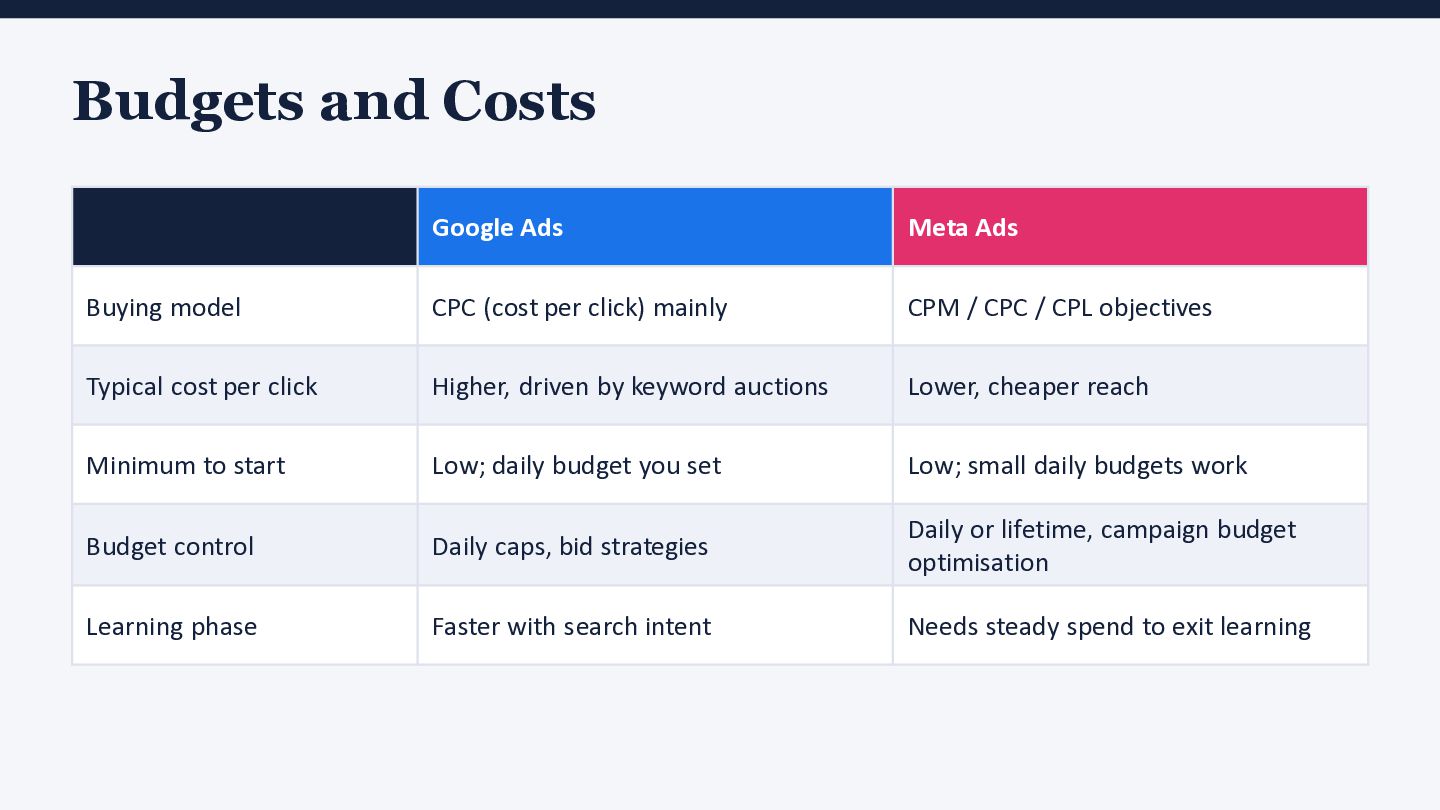
(cost per click) mainly CPM / CPC / CPL objectives Typical cost per click Higher, driven by keyword auctions Lower, cheaper reach Minimum to start Low; daily budget you set Low; small daily budgets work Budget control Daily caps, bid strategies Daily or lifetime, campaign budget optimisation Learning phase Faster with search intent Needs steady spend to exit learning
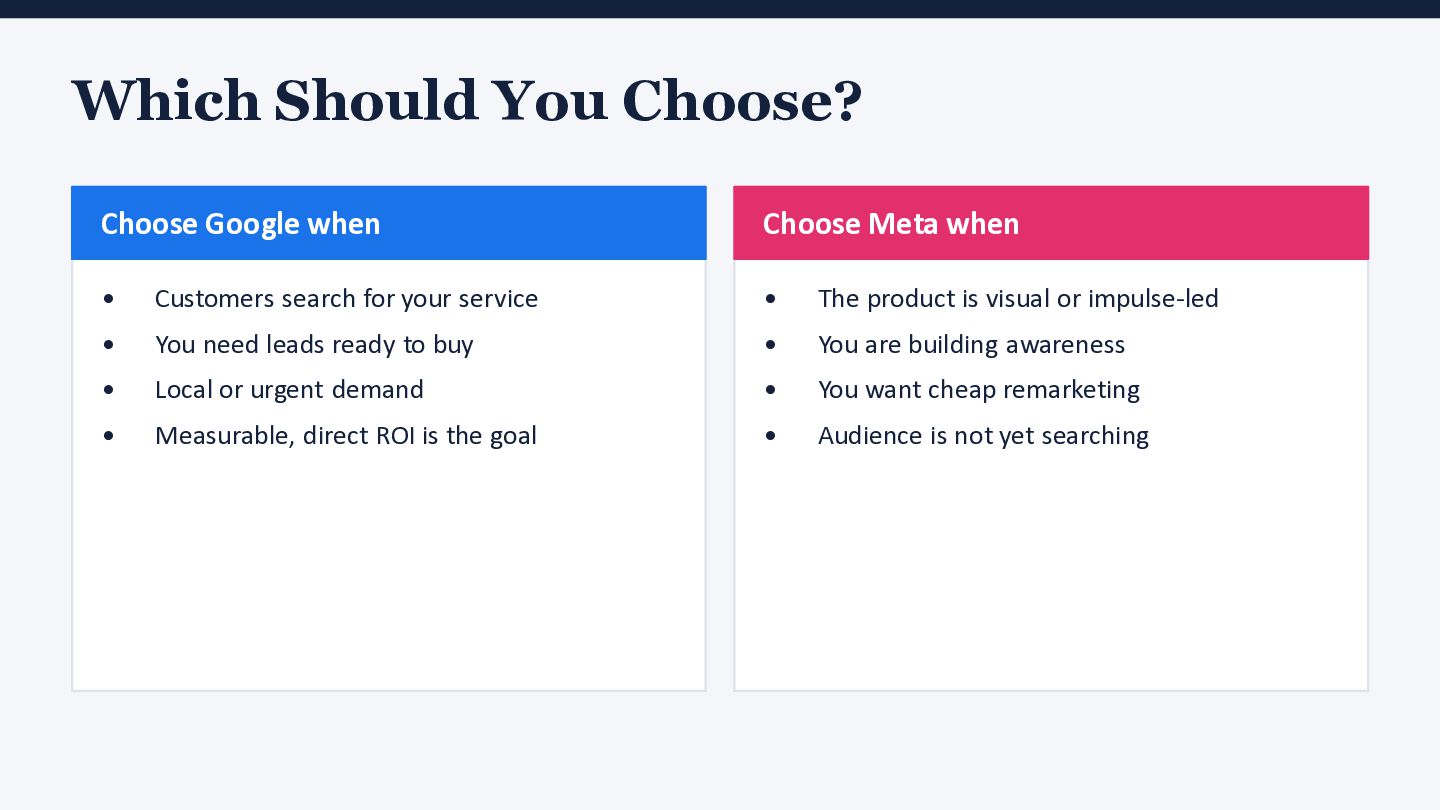
• Customers search for your service • The product is visual or impulse-led • You need leads ready to buy • You are building awareness • Local or urgent demand • You want cheap remarketing • Measurable, direct ROI is the goal • Audience is not yet searching
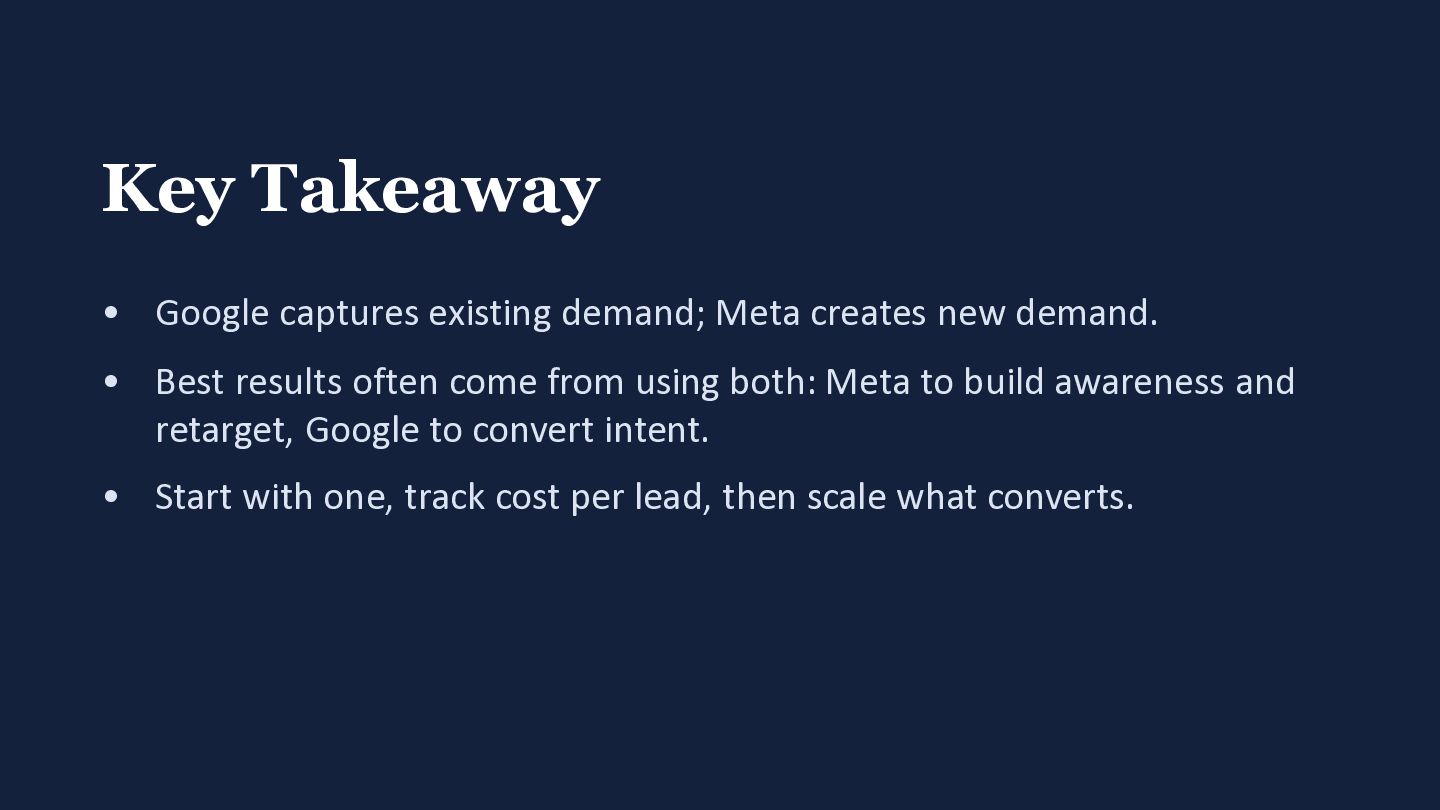
demand. • Best results often come from using both: Meta to build awareness and retarget, Google to convert intent. • Start with one, track cost per lead, then scale what converts.


 kastner
 jdejongh
 tapps
 inesmontani
 addyosmani
 garrettdimon
 eitanlees
 stephenakadiri
 jeffersonlam
 marketingsoph
 62gerente
 chikuwait