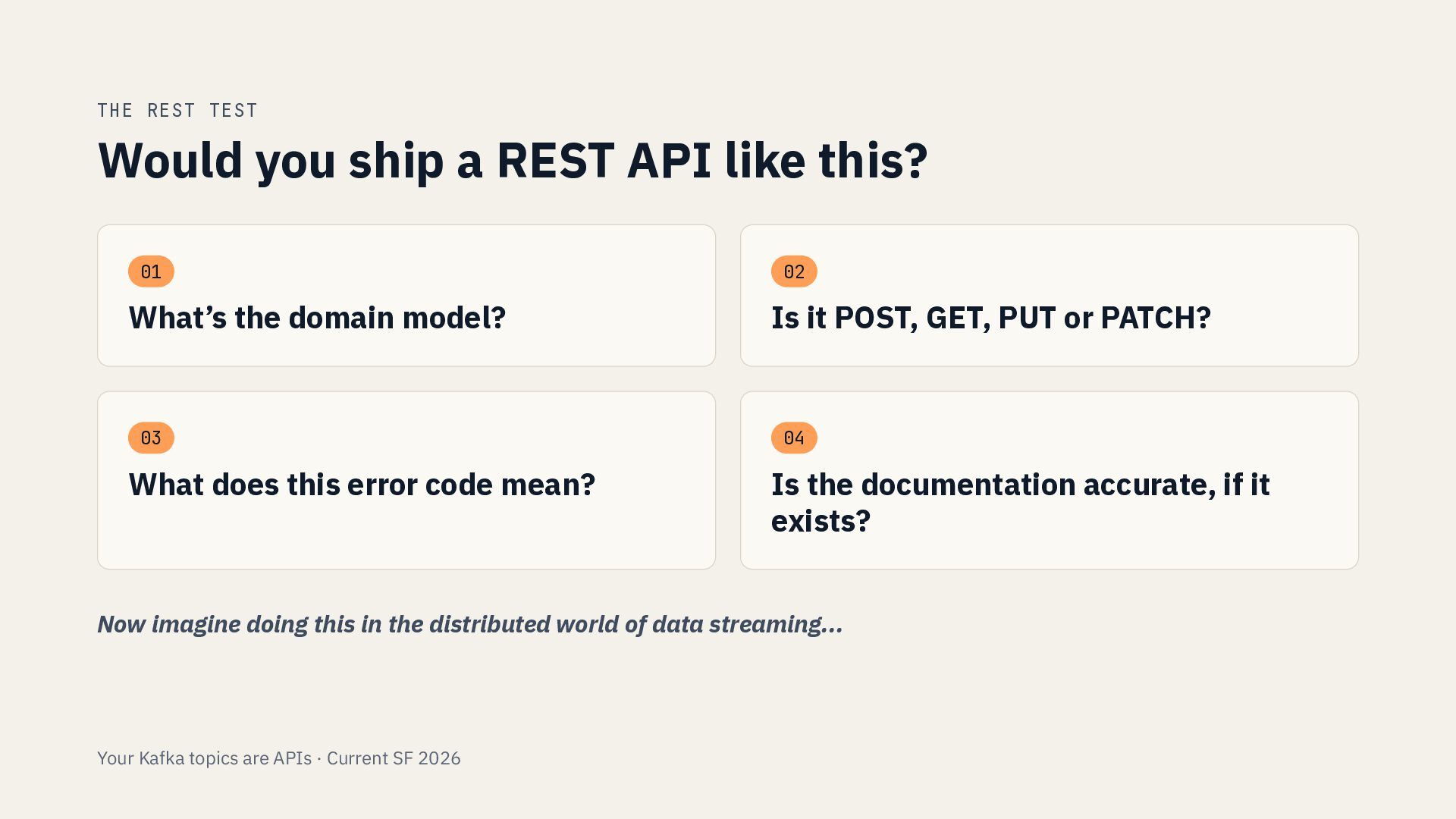
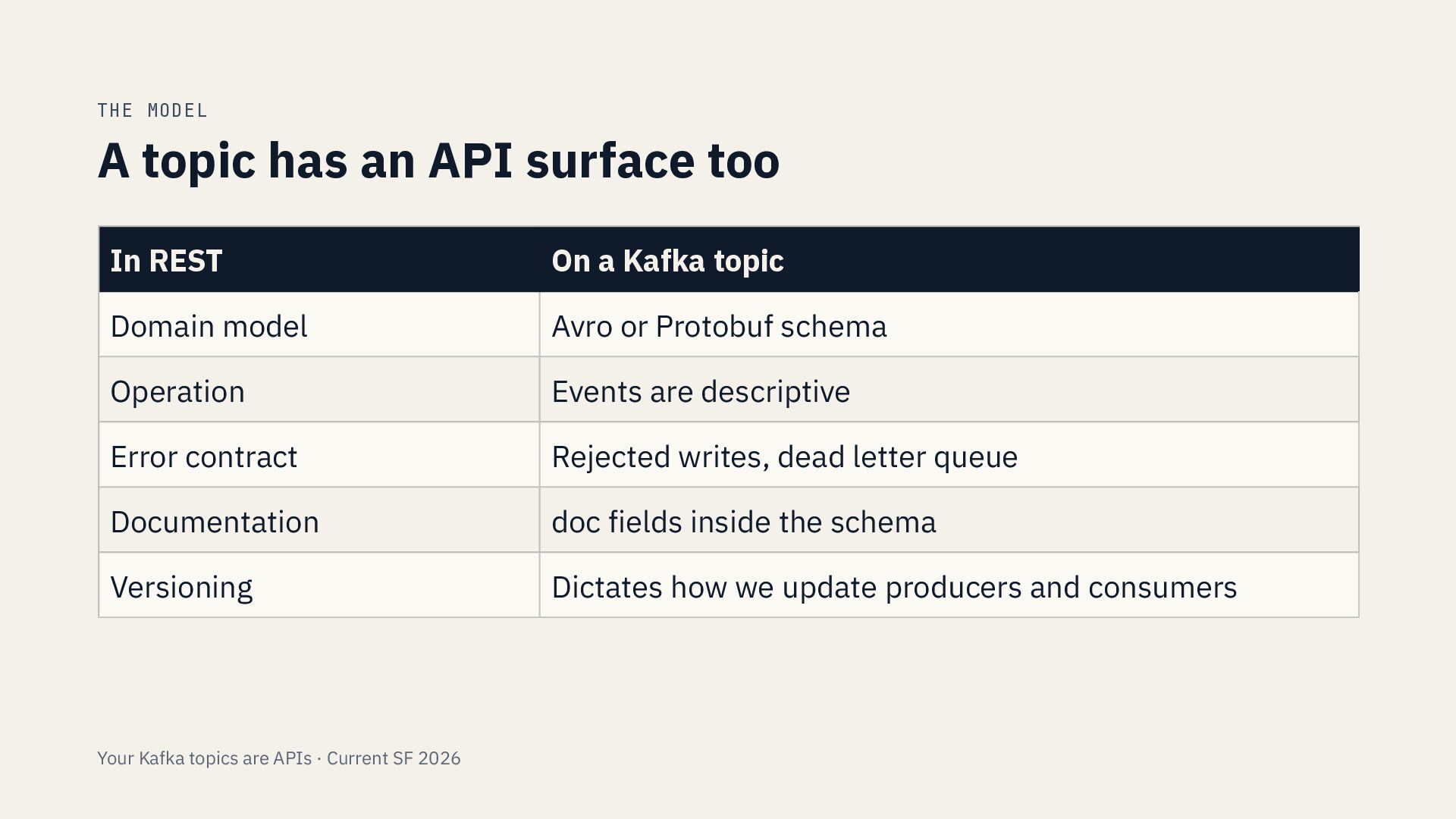
Would you build a REST API and make users guess the request and response formats?
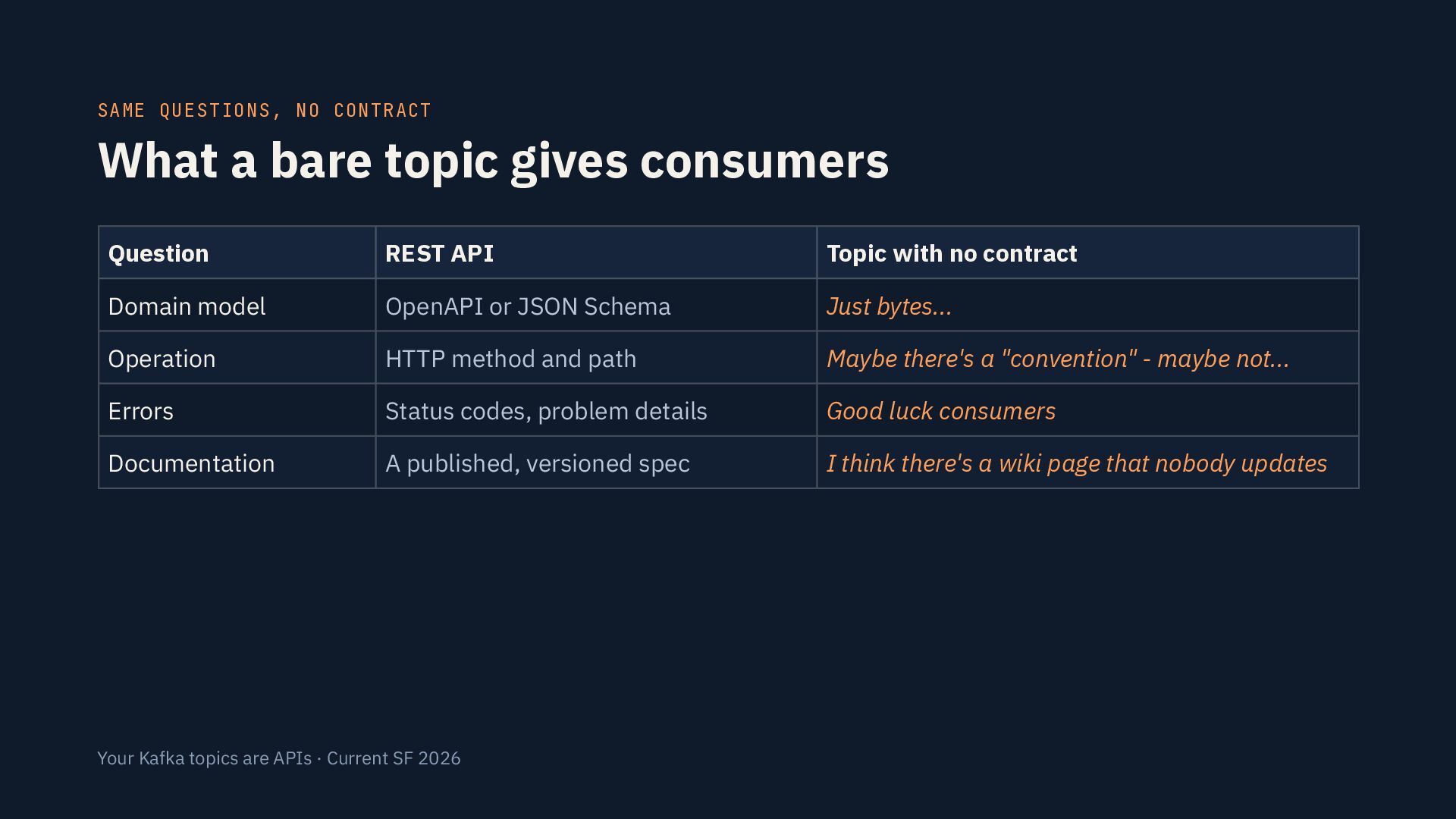
What's the domain model?
Name the operation… POST? GET? PUT? PATCH?
What does this error code even mean?
Is the documentation - if it even exists - accurate and relevant?
Yet that's exactly what many data streaming deployments do.
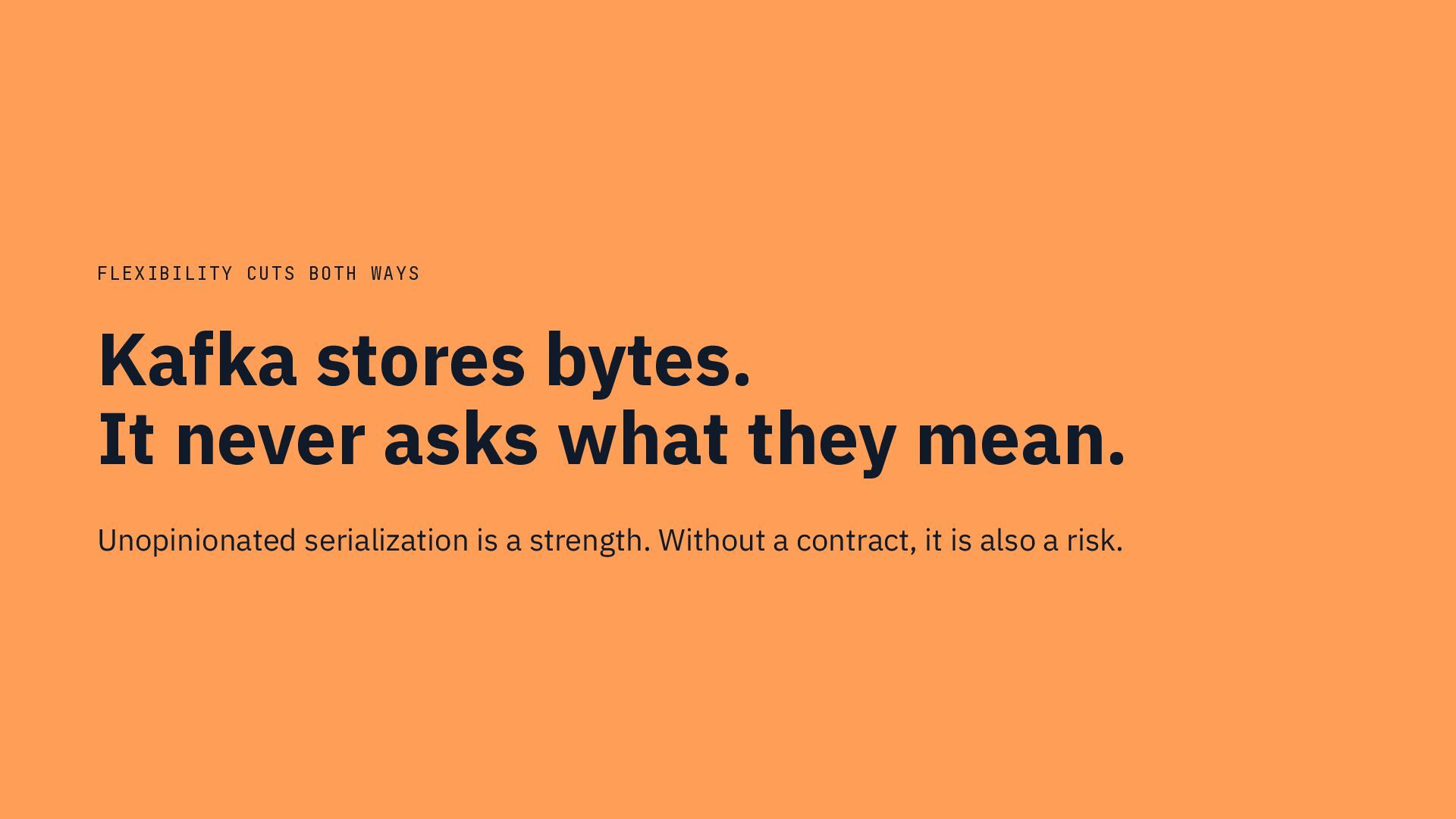
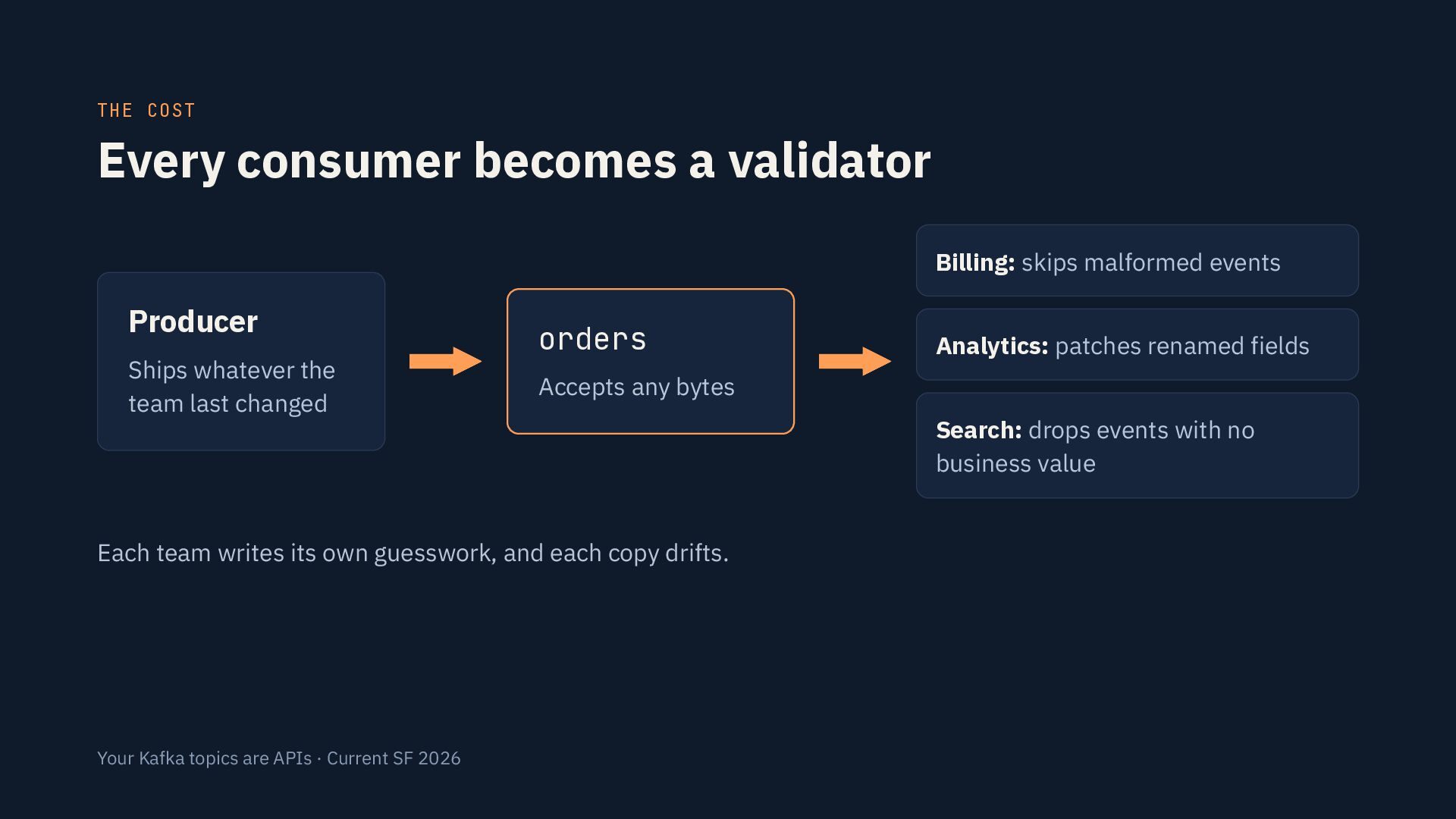
Apache Kafka's flexible, unopinionated serialization is a huge strength, but it's also a potential risk. Even if your event streams carry structured data, enforcing that structure, managing its evolution, and validating its contents aren't hard requirements. This leaves consumer applications preprocessing every event - even ones with no business value.
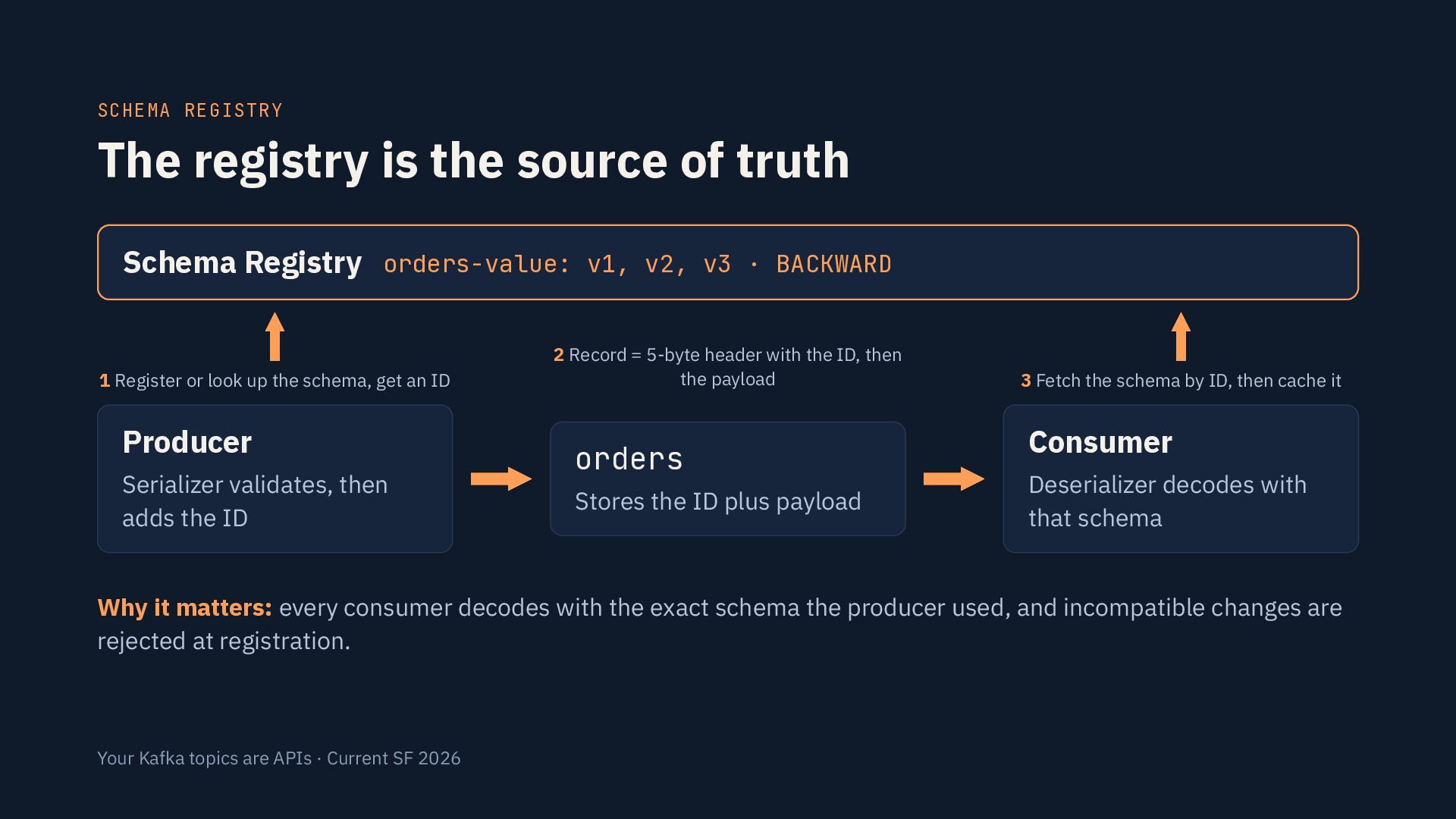
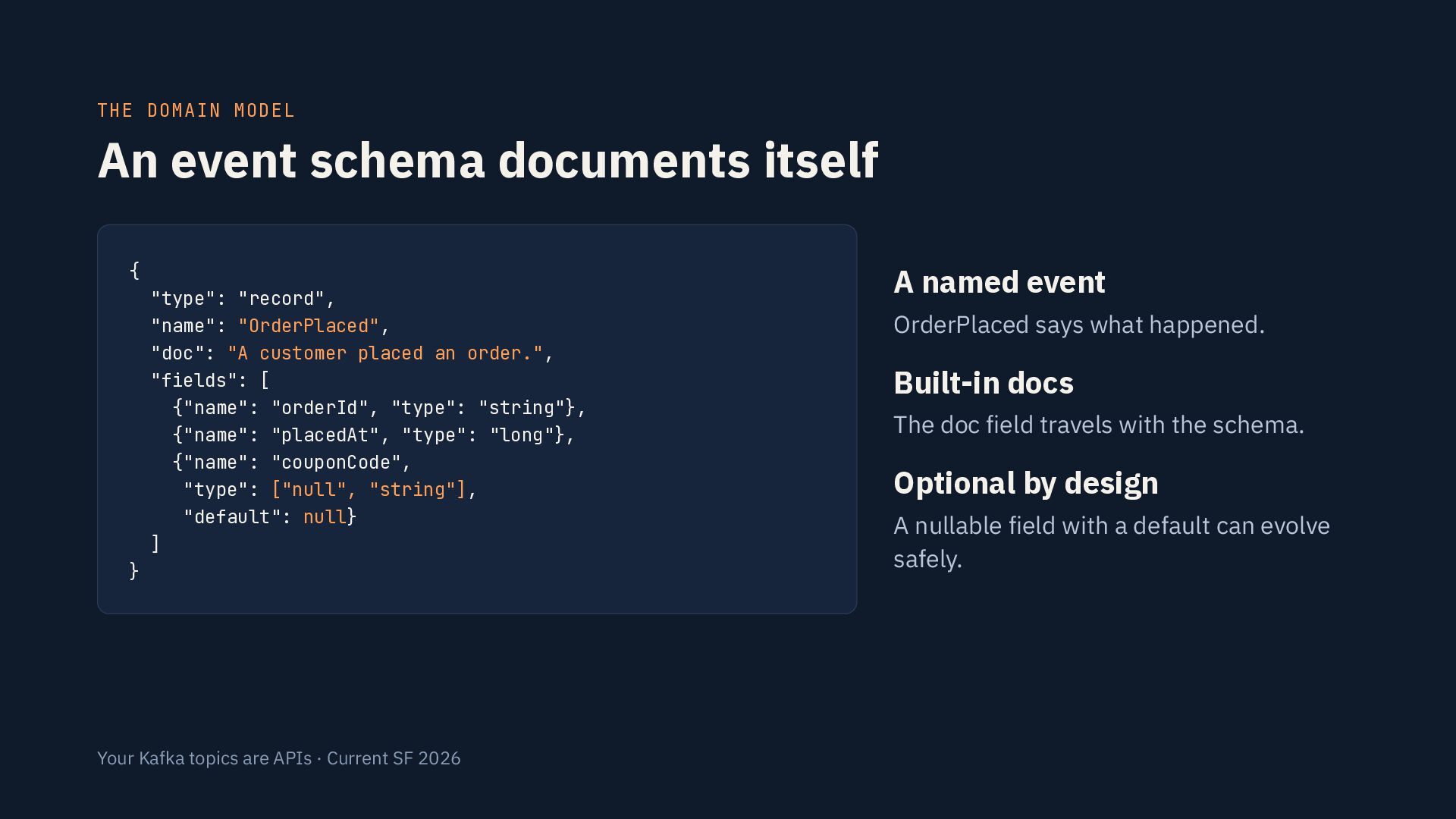
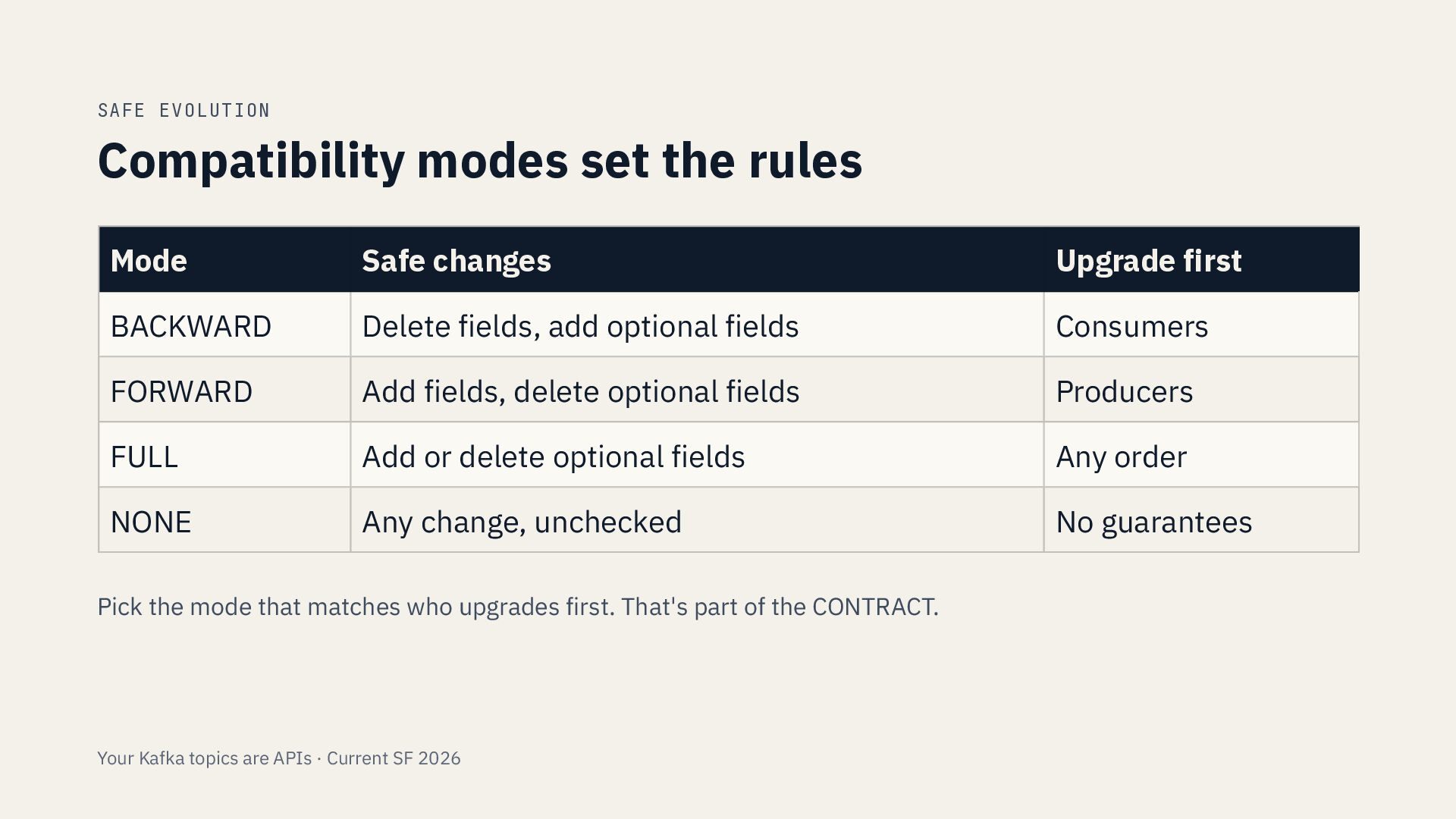
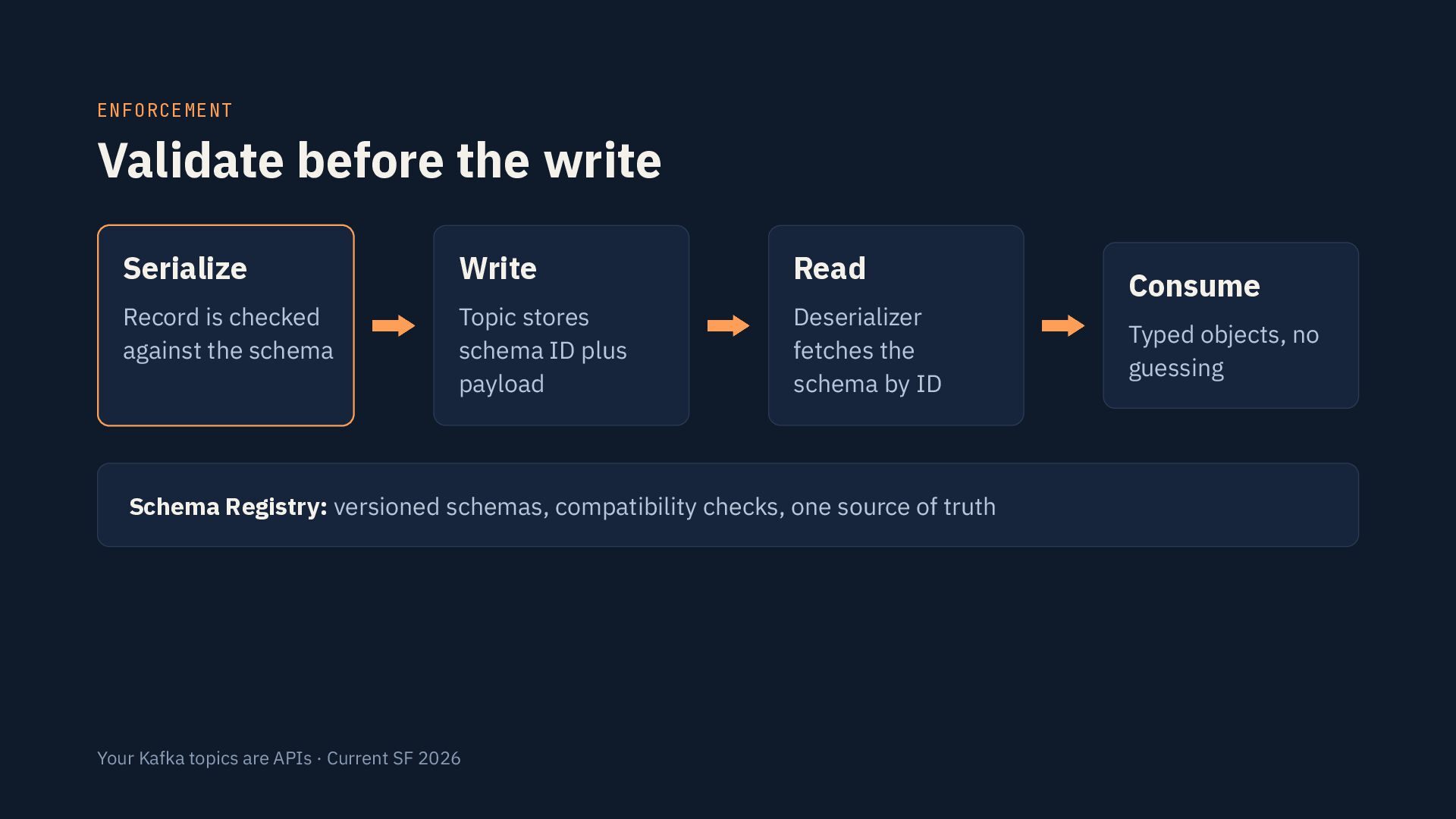
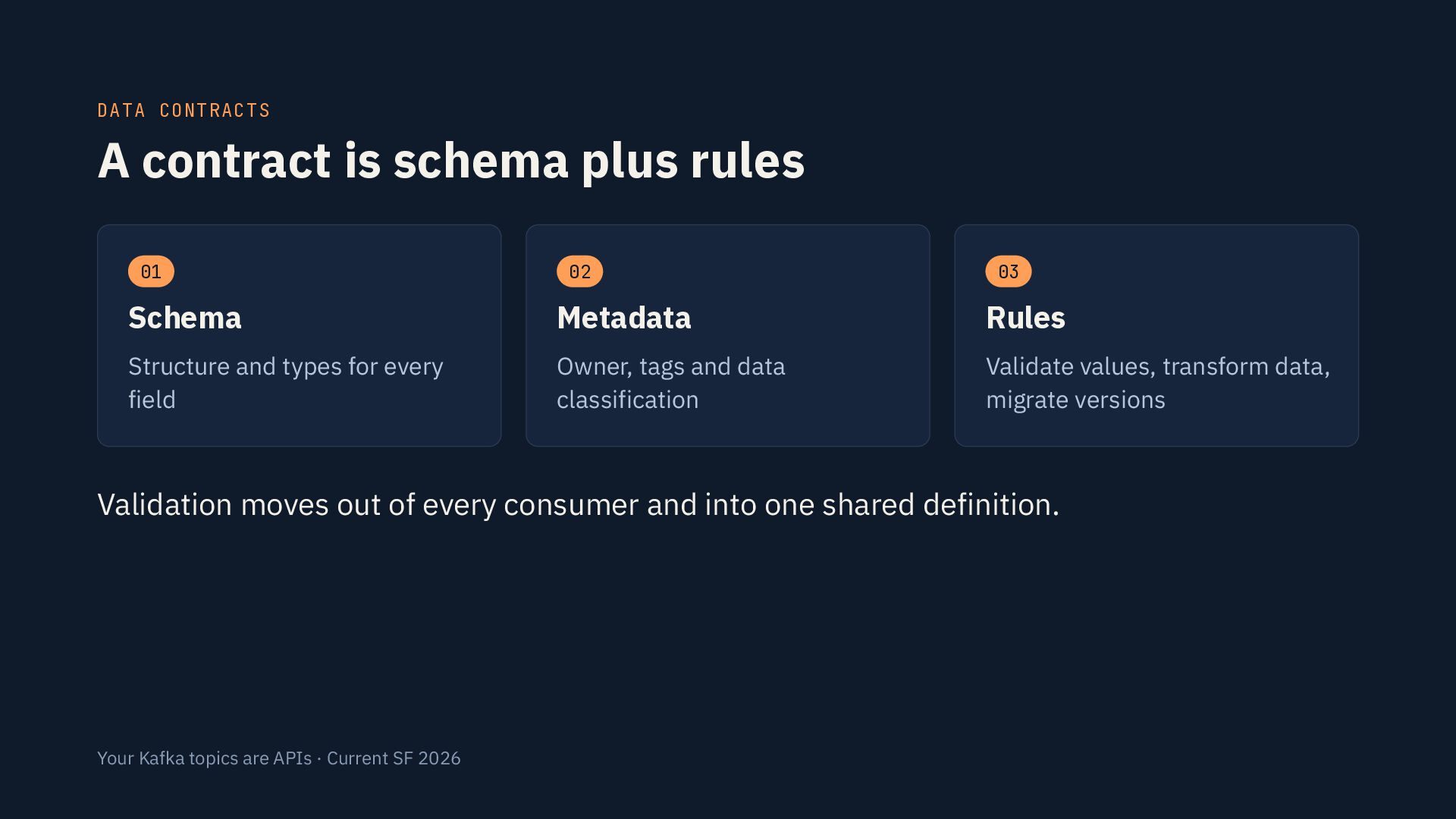
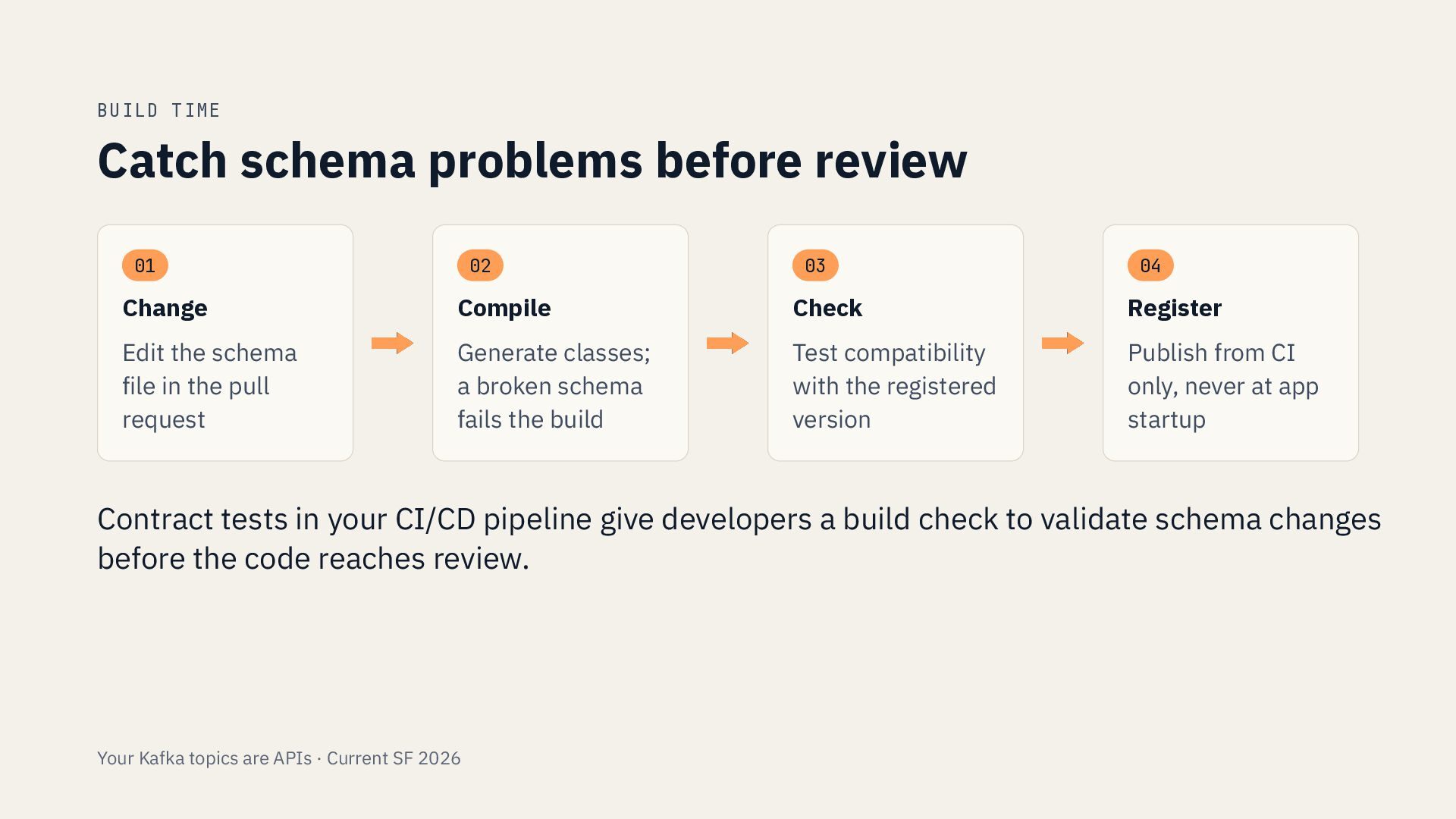
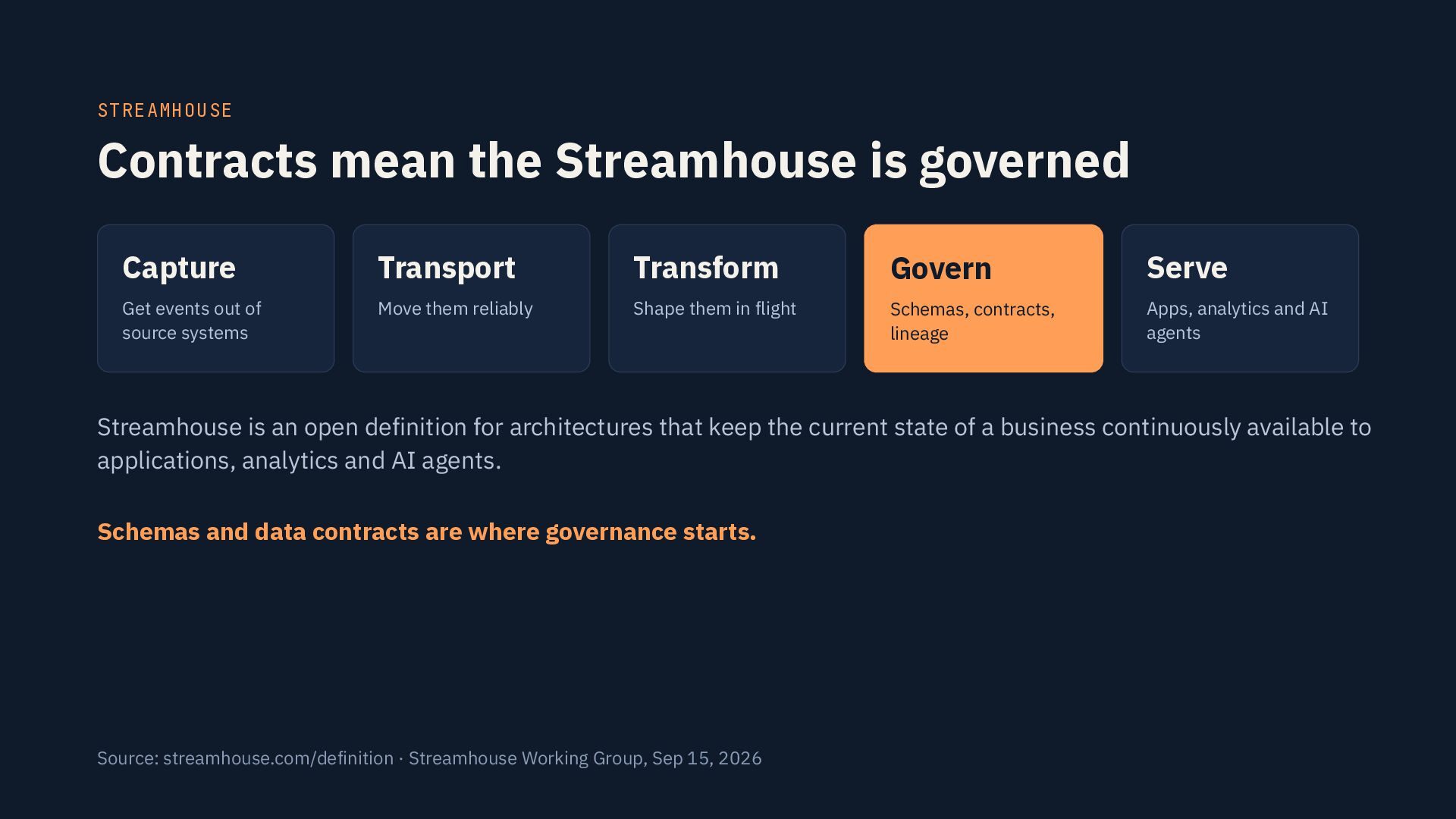
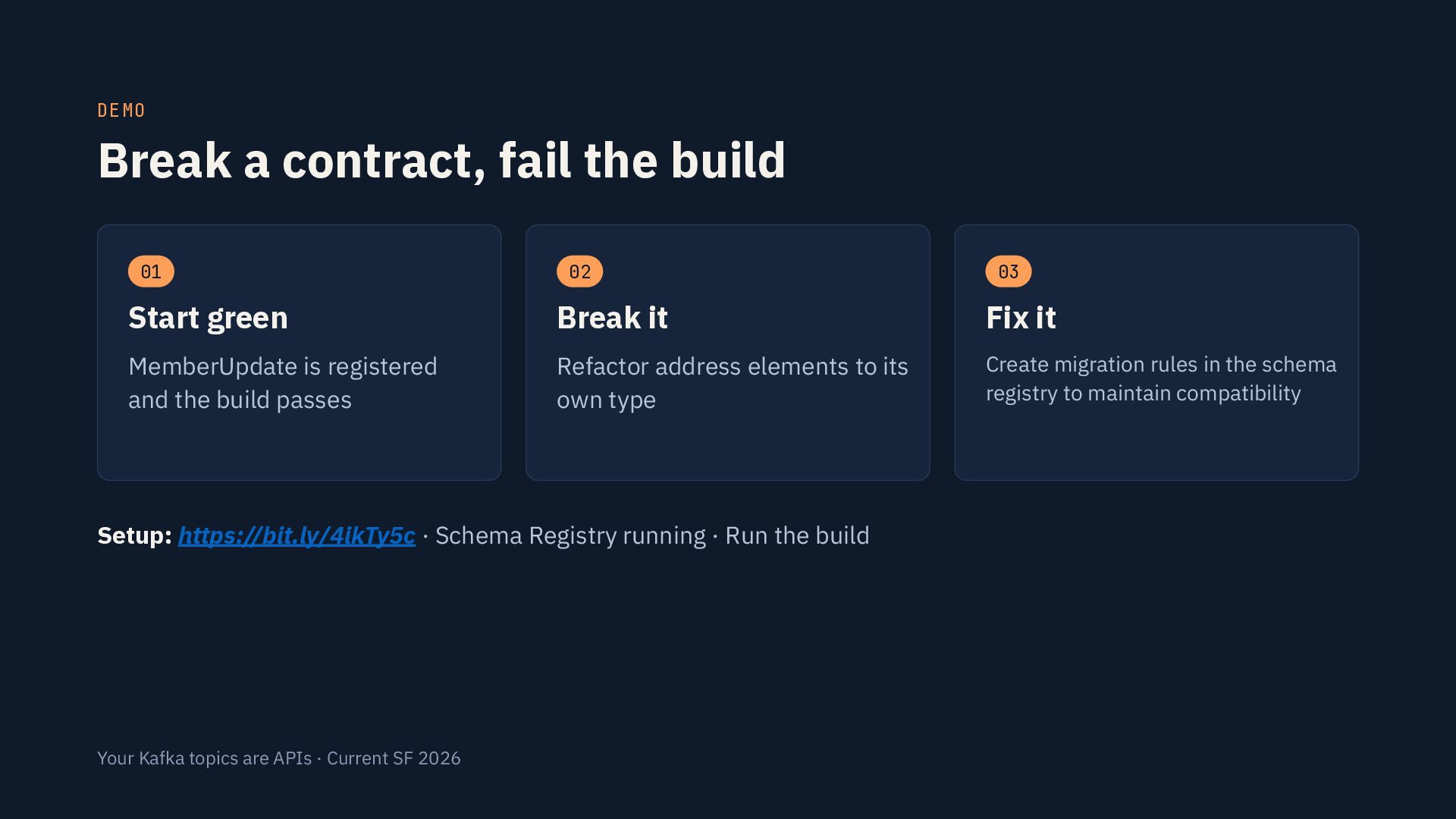
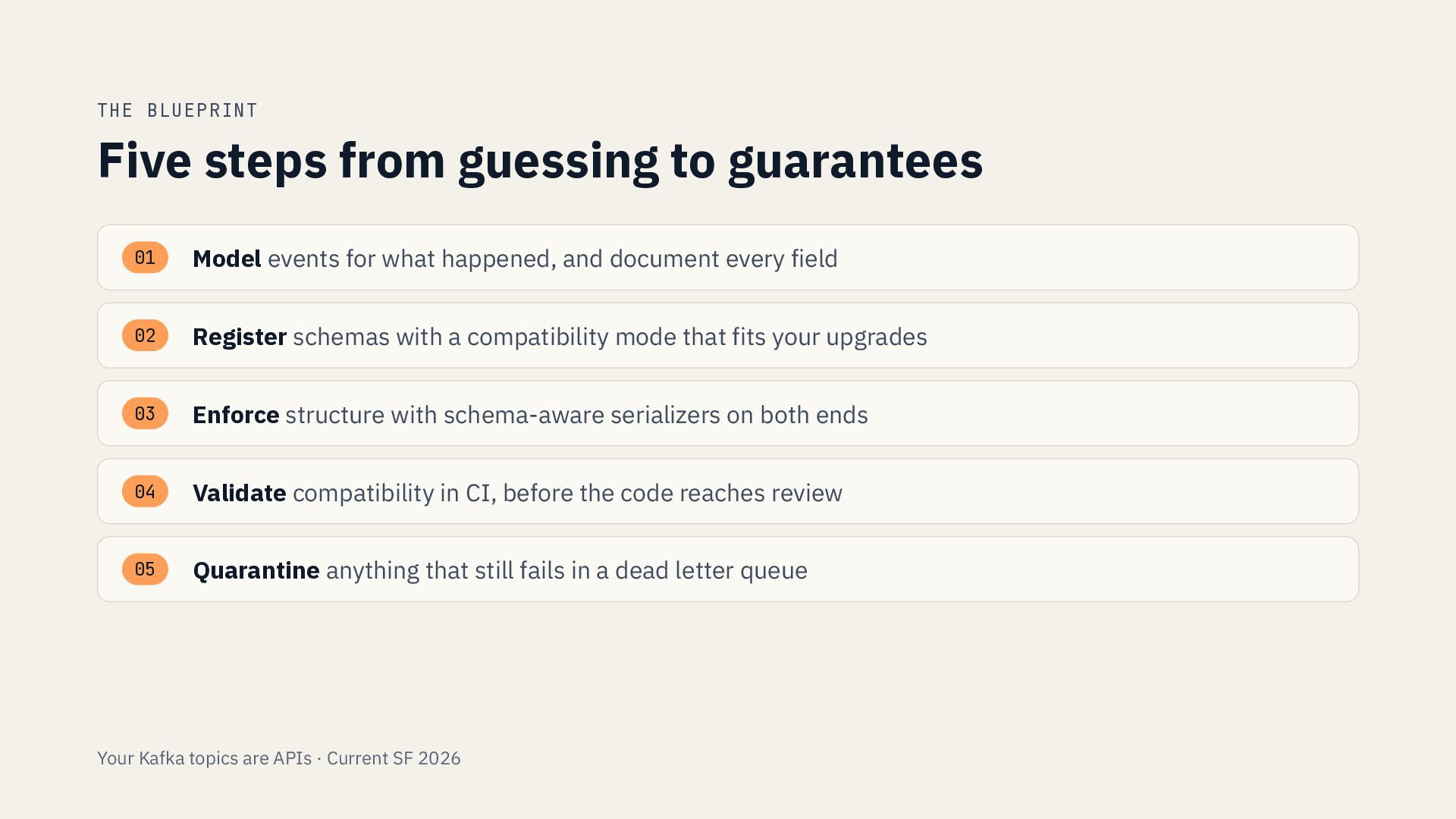
Designing structured events with a schema (Apache Avro and Google Protobuf) models your business domain and promotes safe evolution practices. Schema-aware serializers enforce event structure before it's written to the stream, while consumers leverage those shared schemas to deserialize on the other end. Build-time validation catches schema problems before code ever reaches review - one last line of defense against poison data. Through all of it, the goal is the same: treat your Kafka topics with the same rigor you'd apply to any API contract - because that's exactly what they are.
Join us to learn how to move validation upstream - transforming your event streams into data consumers can actually trust, with a practical blueprint for schema integrity and automated evolution.


 sandonjacobs
 sakusaku3939
 zozotech
 atsushieno
 delhi09
 rmetzger
 kworkdev
 ufried
 sraku2159
 taiyow
 ryuseiiida
 yoshiiryo1
 miso
 reverentgeek
 zakiyama
 matthewcrist
 deanohume
 mfonobong
 samtorres
 rmw
 jonyablonski
 addyosmani
 chriscoyier
 62gerente
 elsirapls