Upgrade to Pro — share decks privately, control downloads, hide ads and more …

Why Does My Child Copy Everything They See Online?

Sponsored · Your Podcast. Everywhere. Effortlessly. Share. Educate. Inspire. Entertain. You do you. We'll handle the rest. →

Why Does My Child Copy Everything They See Online?

From dance trends and catchphrases to mannerisms and risky
behaviours, online content is shaping how children play, talk and
relate. Imitation is a normal learning tool 4 but when screen-driven
copying becomes the default, it can affect creativity, attention and
emotional learning.

Avatar for ShapingtherapiesM

ShapingtherapiesM

June 23, 2026

More Decks by ShapingtherapiesM

Other Decks in Education

Transcript

  1. Why Does My Child Copy Everything They See Online? From

    dance trends and catchphrases to mannerisms and risky behaviours, online content is shaping how children play, talk and relate. Imitation is a normal learning tool 4 but when screen-driven copying becomes the default, it can affect creativity, attention and emotional learning.
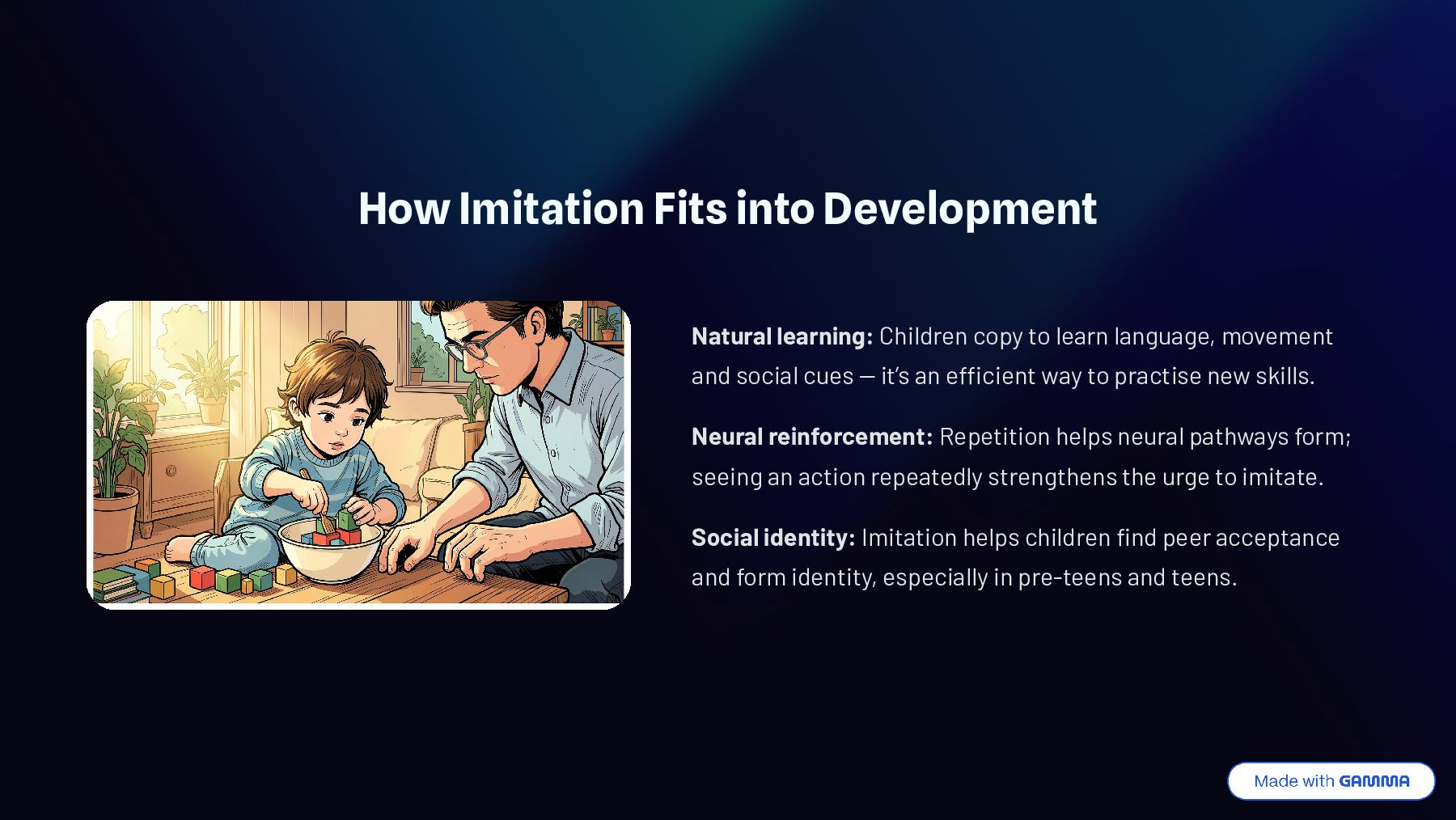
  2. How Imitation Fits into Development Natural learning: Children copy to

    learn language, movement and social cues 4 it9s an efficient way to practise new skills. Neural reinforcement: Repetition helps neural pathways form; seeing an action repeatedly strengthens the urge to imitate. Social identity: Imitation helps children find peer acceptance and form identity, especially in pre-teens and teens.
  3. When Copying Becomes Concerning 1 Creativity narrows Constant mimicry can

    reduce original play and idea generation 4 children may rely on scripted online templates instead of inventing their own. 2 Attention shifts Fast-paced clips reward short attention spans; children find slower, real-world activities less engaging. 3 Emotional mirroring Children copy emotional expressions and reactions seen online, which may be exaggerated or context-free and affect emotional regulation. 4 Social confusion Imitating aggressive or attention-seeking behaviours can create friction with peers and adults when context is missing.
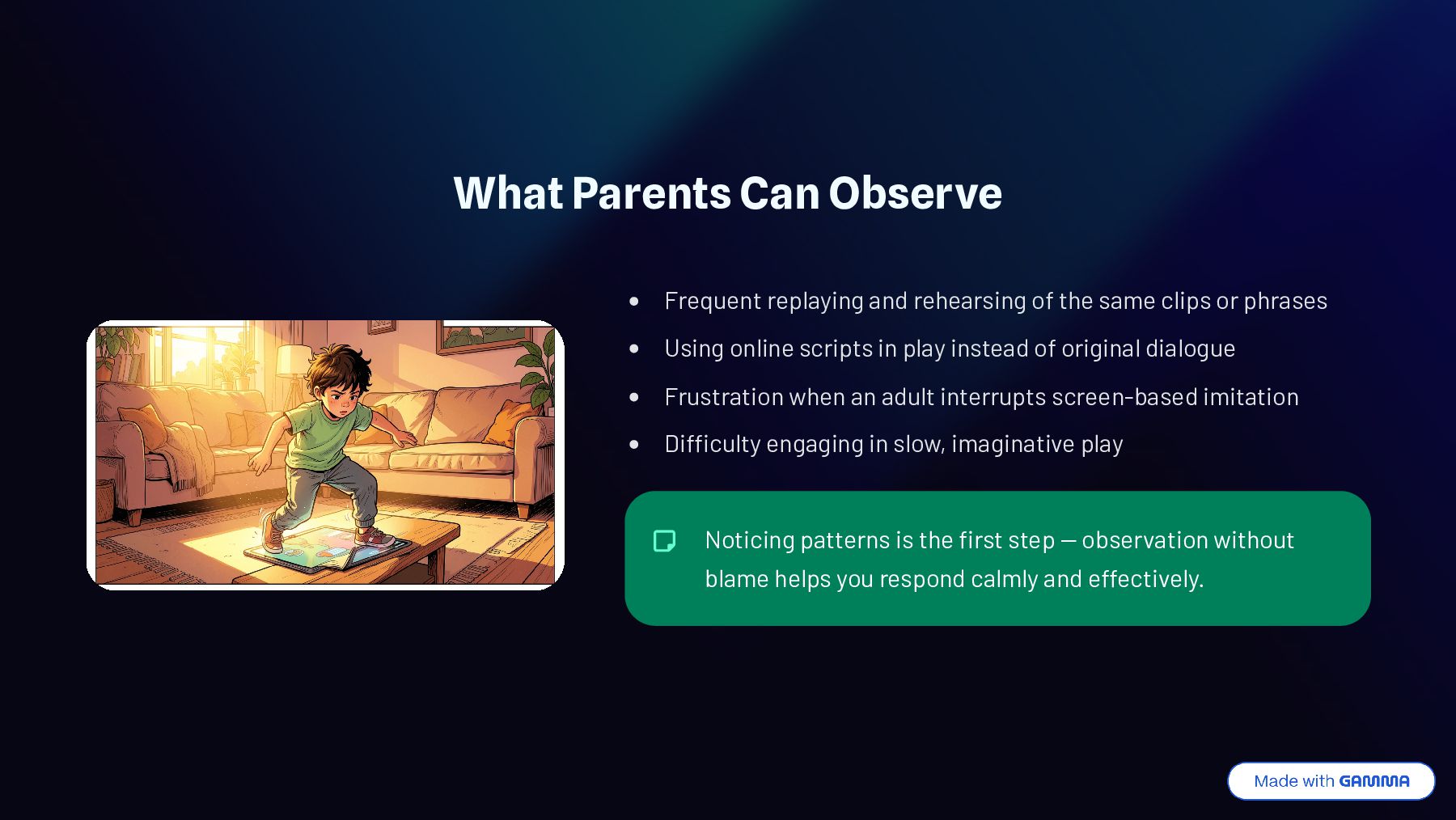
  4. What Parents Can Observe Frequent replaying and rehearsing of the

    same clips or phrases Using online scripts in play instead of original dialogue Frustration when an adult interrupts screen-based imitation Difficulty engaging in slow, imaginative play Noticing patterns is the first step 4 observation without blame helps you respond calmly and effectively.
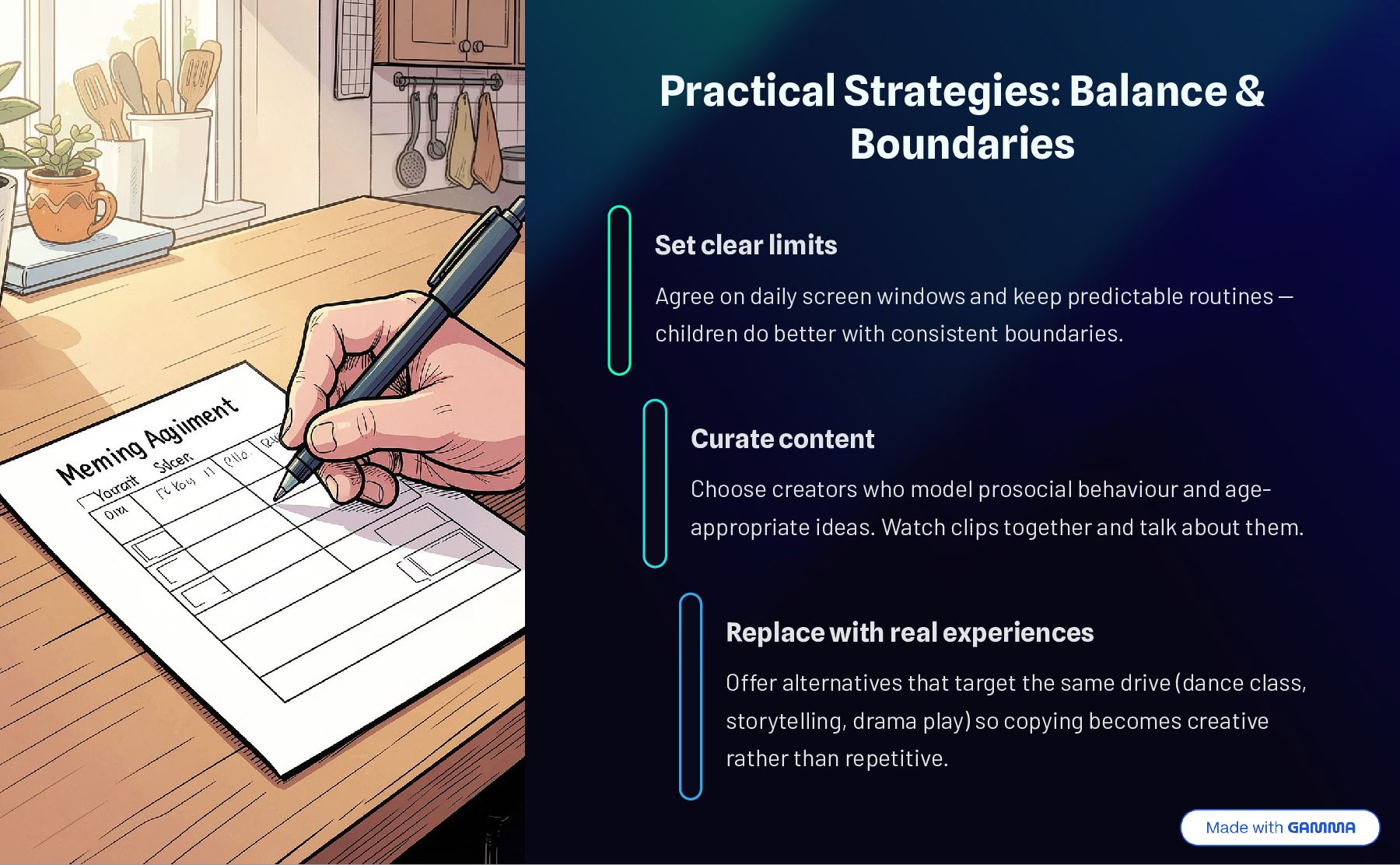
  5. Practical Strategies: Balance & Boundaries Set clear limits Agree on

    daily screen windows and keep predictable routines 4 children do better with consistent boundaries. Curate content Choose creators who model prosocial behaviour and age- appropriate ideas. Watch clips together and talk about them. Replace with real experiences Offer alternatives that target the same drive (dance class, storytelling, drama play) so copying becomes creative rather than repetitive.
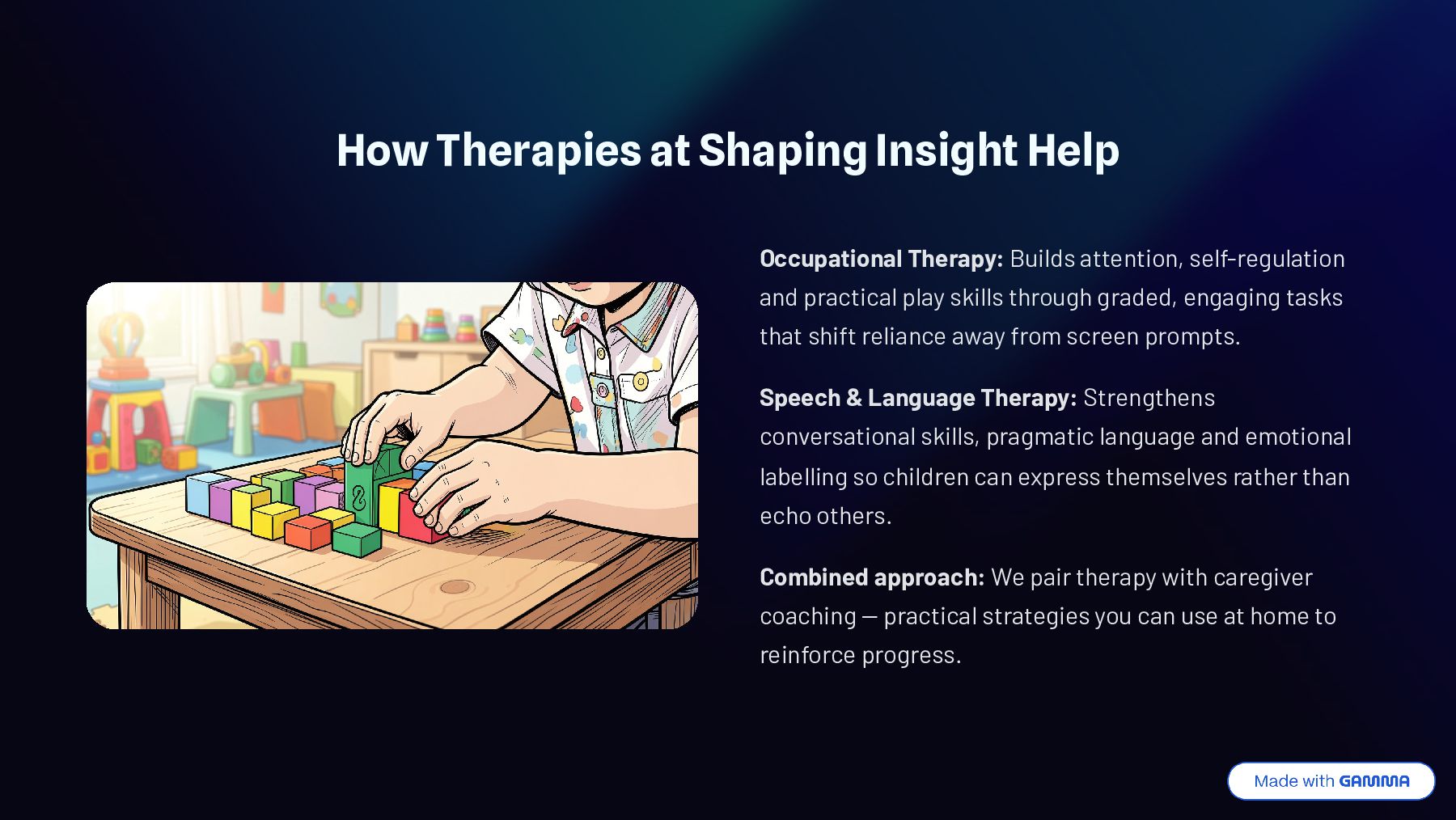
  6. How Therapies at Shaping Insight Help Occupational Therapy: Builds attention,

    self-regulation and practical play skills through graded, engaging tasks that shift reliance away from screen prompts. Speech & Language Therapy: Strengthens conversational skills, pragmatic language and emotional labelling so children can express themselves rather than echo others. Combined approach: We pair therapy with caregiver coaching 4 practical strategies you can use at home to reinforce progress.
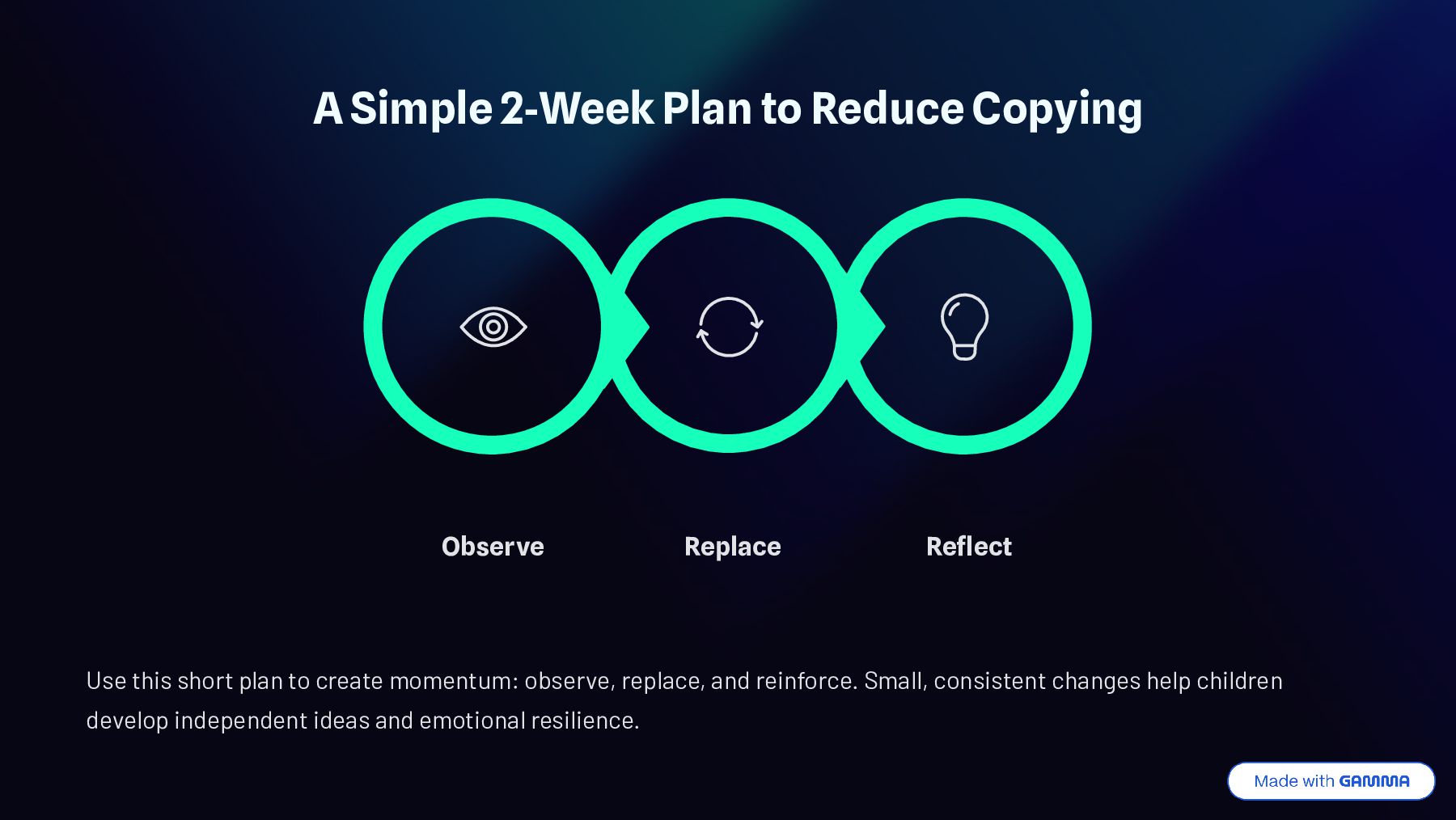
  7. A Simple 21Week Plan to Reduce Copying Reflect Replace Observe

    Use this short plan to create momentum: observe, replace, and reinforce. Small, consistent changes help children develop independent ideas and emotional resilience.
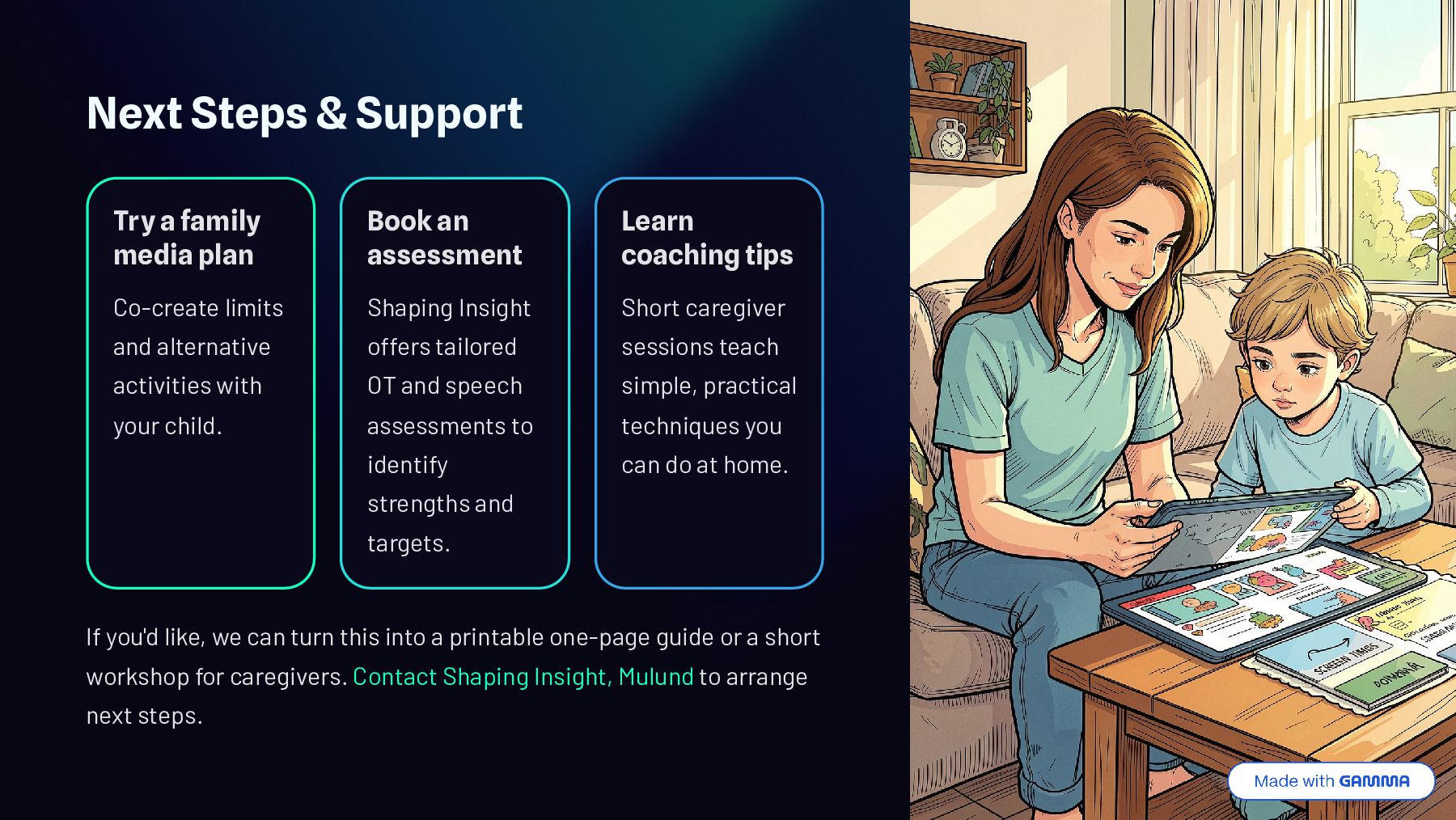
  8. Next Steps & Support Try a family media plan Co-create

    limits and alternative activities with your child. Book an assessment Shaping Insight offers tailored OT and speech assessments to identify strengths and targets. Learn coaching tips Short caregiver sessions teach simple, practical techniques you can do at home. If you'd like, we can turn this into a printable one-page guide or a short workshop for caregivers. Contact Shaping Insight, Mulund to arrange next steps.