The Hidden Cost of Falls: Why Hospitals Are Turning to AI
Hospital falls can lead to serious injuries, longer stays, and rising healthcare costs. Discover how hospitals are using AI-powered fall detection and real-time alerts to improve patient safety, support staff, and prevent avoidable incidents.
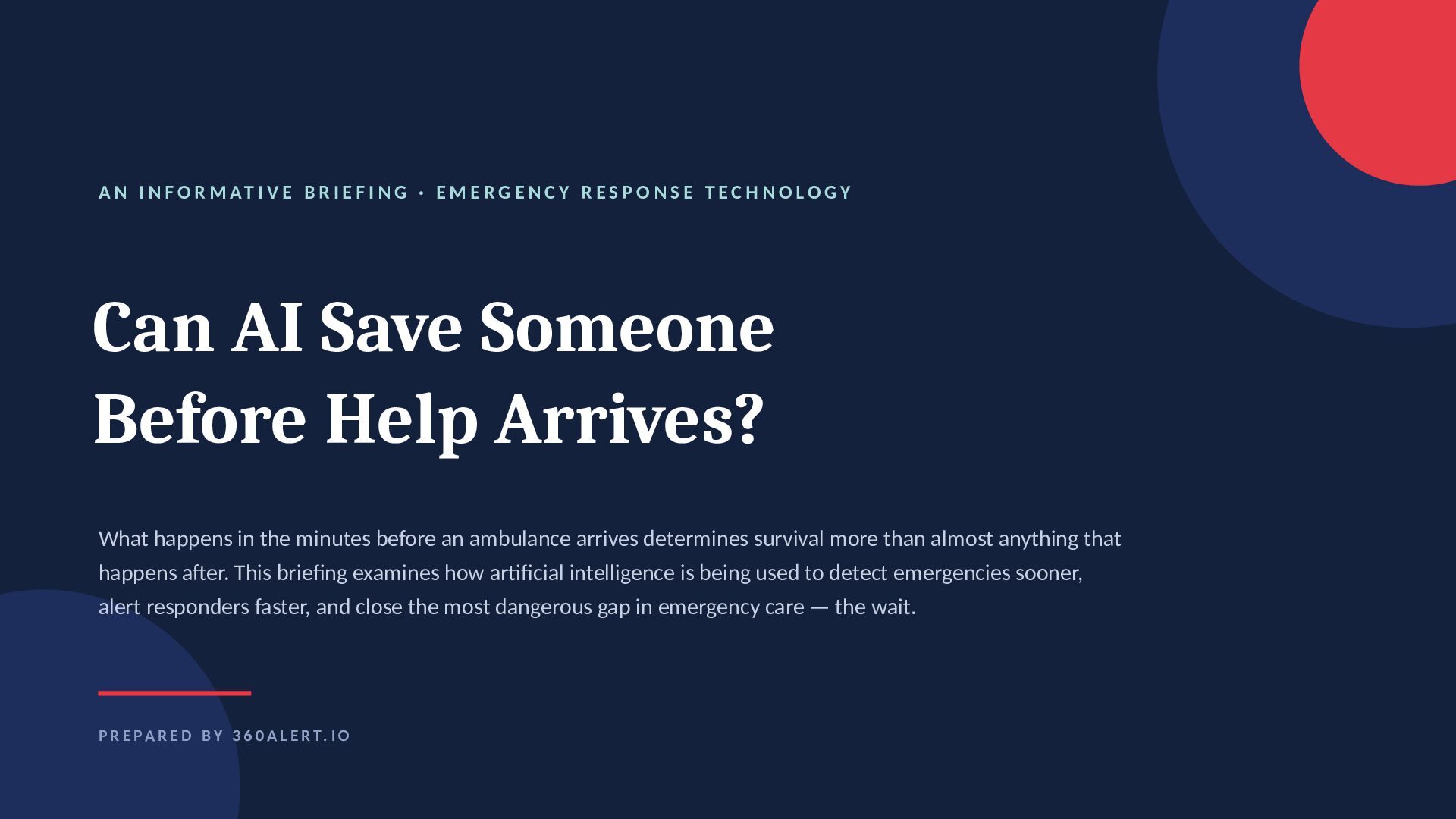
V E B R I E F I N G · E M E R G E N C Y R E S P O N S E T E C H N O L O G Y Can AI Save Someone Before Help Arrives? What happens in the minutes before an ambulance arrives determines survival more than almost anything that happens after. This briefing examines how artificial intelligence is being used to detect emergencies sooner, alert responders faster, and close the most dangerous gap in emergency care — the wait. P R E PA R E D B Y 3 6 0 A L E R T. I O
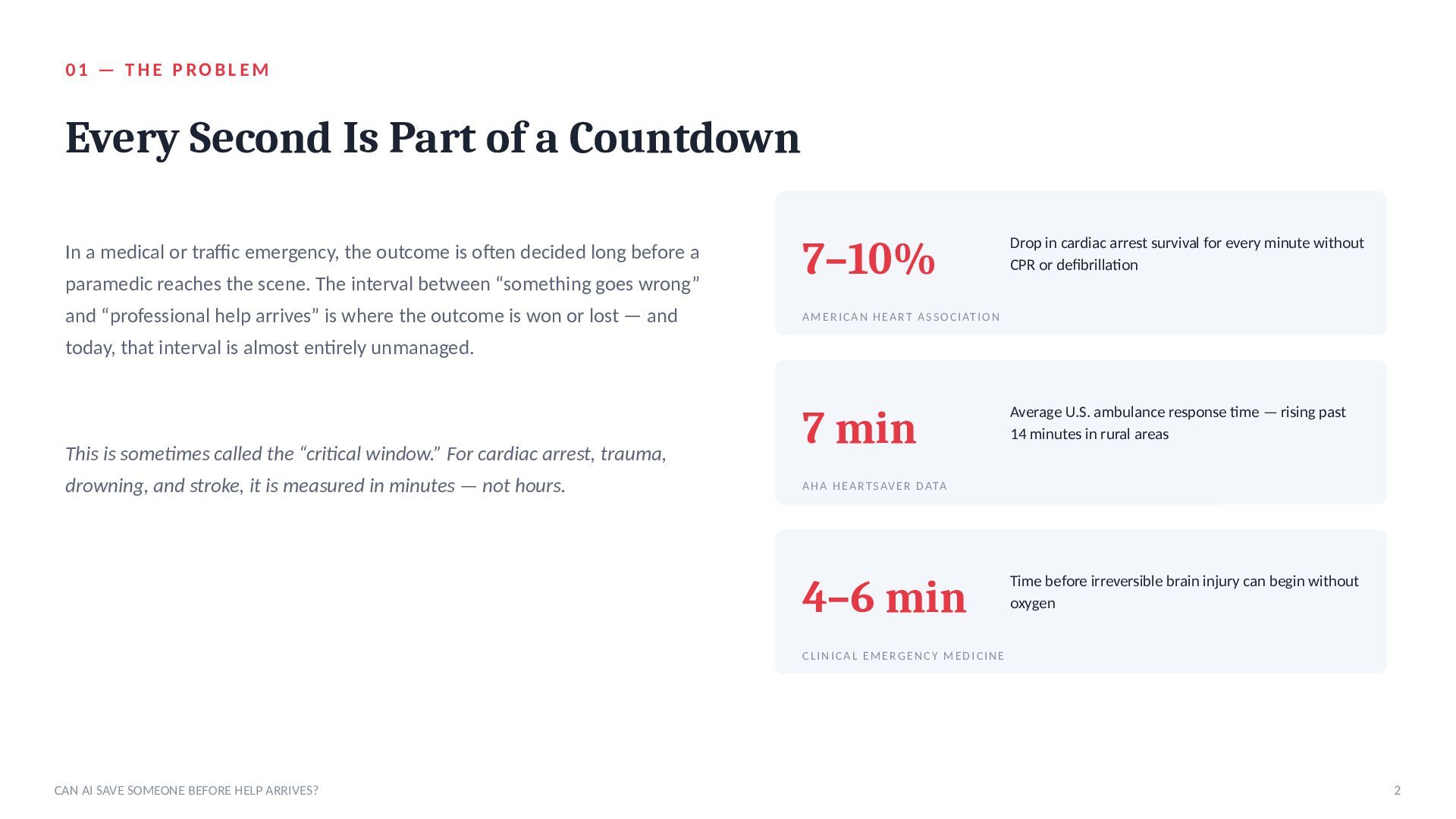
Countdown In a medical or traffic emergency, the outcome is often decided long before a paramedic reaches the scene. The interval between “something goes wrong” and “professional help arrives” is where the outcome is won or lost — and 7–10% Drop in cardiac arrest survival for every minute without CPR or defibrillation A M E R I C A N H E A R T A S S O C I AT I O N today, that interval is almost entirely unmanaged. This is sometimes called the “critical window.” For cardiac arrest, trauma, drowning, and stroke, it is measured in minutes — not hours. 7 min Average U.S. ambulance response time — rising past 14 minutes in rural areas A H A H E A R T S AV E R D ATA 4–6 min Time before irreversible brain injury can begin without oxygen CLINICAL EMERGENCY MEDICINE CAN AI SAVE SOMEONE BEFORE HELP ARRIVES? 2
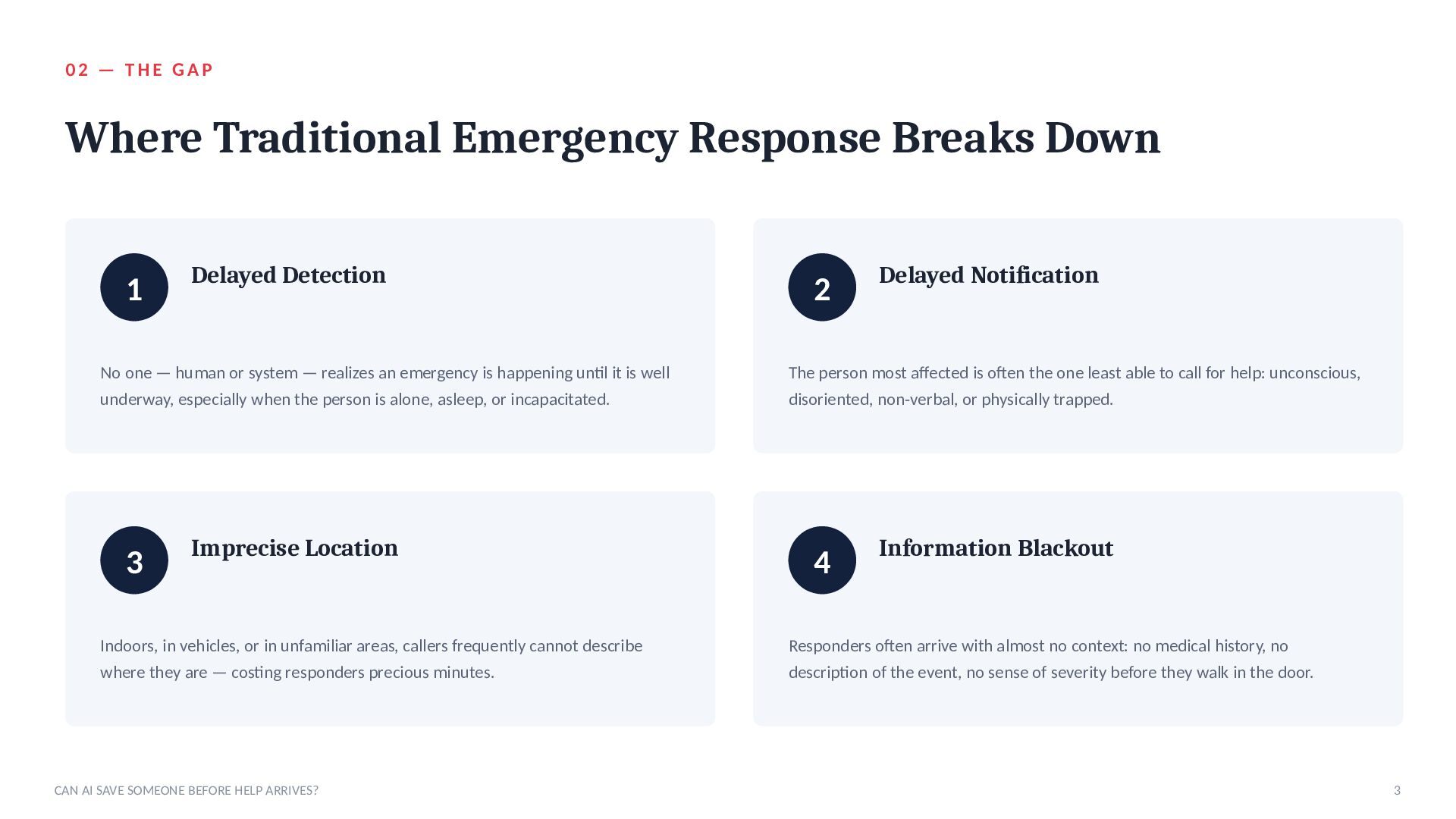
1 Delayed Detection No one — human or system — realizes an emergency is happening until it is well underway, especially when the person is alone, asleep, or incapacitated. 3 Imprecise Location Indoors, in vehicles, or in unfamiliar areas, callers frequently cannot describe where they are — costing responders precious minutes. CAN AI SAVE SOMEONE BEFORE HELP ARRIVES? 2 Delayed Notification The person most affected is often the one least able to call for help: unconscious, disoriented, non-verbal, or physically trapped. 4 Information Blackout Responders often arrive with almost no context: no medical history, no description of the event, no sense of severity before they walk in the door. 3
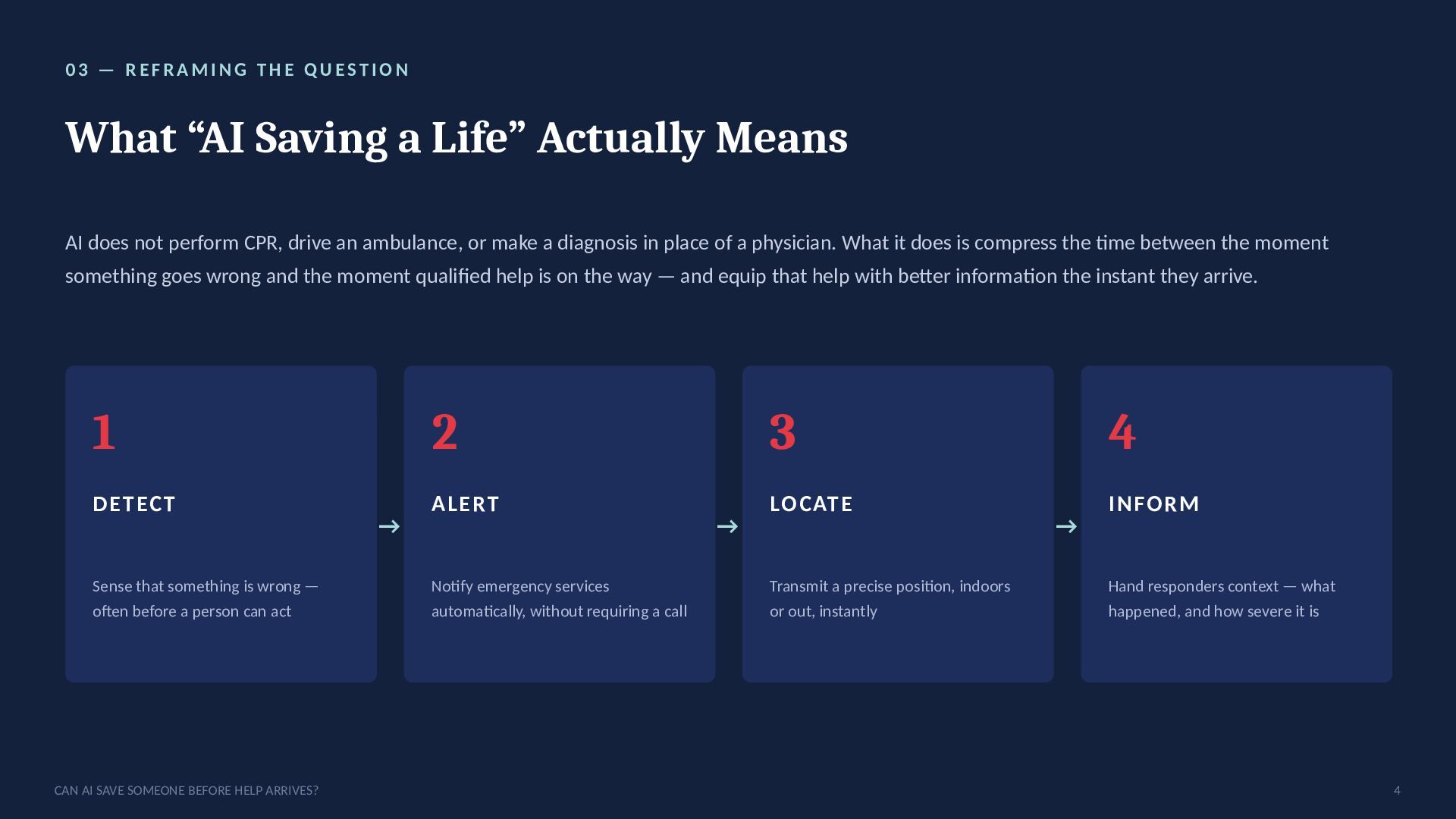
Actually Means AI does not perform CPR, drive an ambulance, or make a diagnosis in place of a physician. What it does is compress the time between the moment something goes wrong and the moment qualified help is on the way — and equip that help with better information the instant they arrive. 1 DET EC T Sense that something is wrong — often before a person can act CAN AI SAVE SOMEONE BEFORE HELP ARRIVES? 2 → AL E RT Notify emergency services automatically, without requiring a call 3 → LO CAT E Transmit a precise position, indoors or out, instantly 4 → INFOR M Hand responders context — what happened, and how severe it is 4
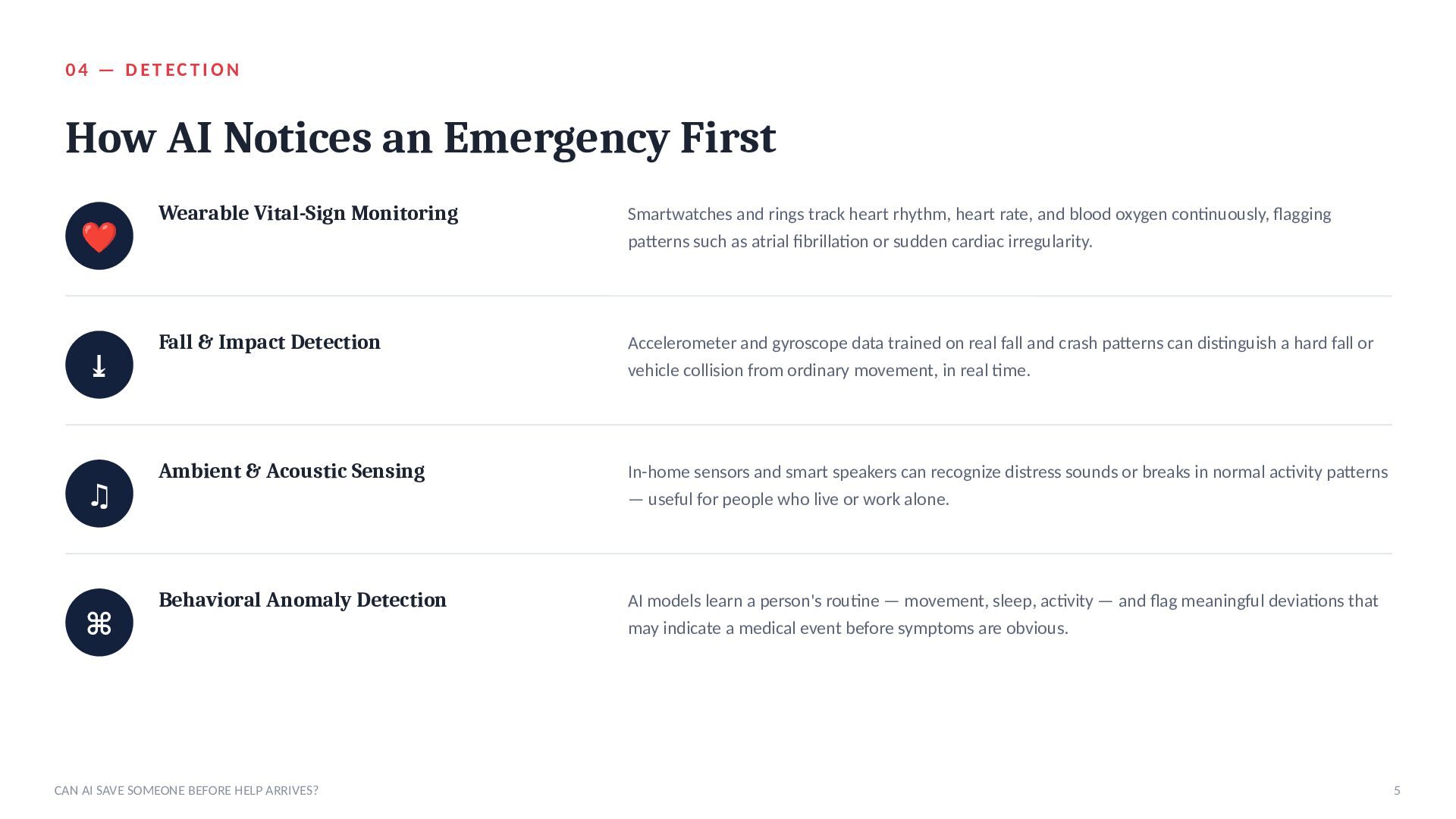
⤓ ♫ ⌘ Wearable Vital-Sign Monitoring Smartwatches and rings track heart rhythm, heart rate, and blood oxygen continuously, flagging patterns such as atrial fibrillation or sudden cardiac irregularity. Fall & Impact Detection Accelerometer and gyroscope data trained on real fall and crash patterns can distinguish a hard fall or vehicle collision from ordinary movement, in real time. Ambient & Acoustic Sensing In-home sensors and smart speakers can recognize distress sounds or breaks in normal activity patterns — useful for people who live or work alone. Behavioral Anomaly Detection CAN AI SAVE SOMEONE BEFORE HELP ARRIVES? AI models learn a person's routine — movement, sleep, activity — and flag meaningful deviations that may indicate a medical event before symptoms are obvious. 5
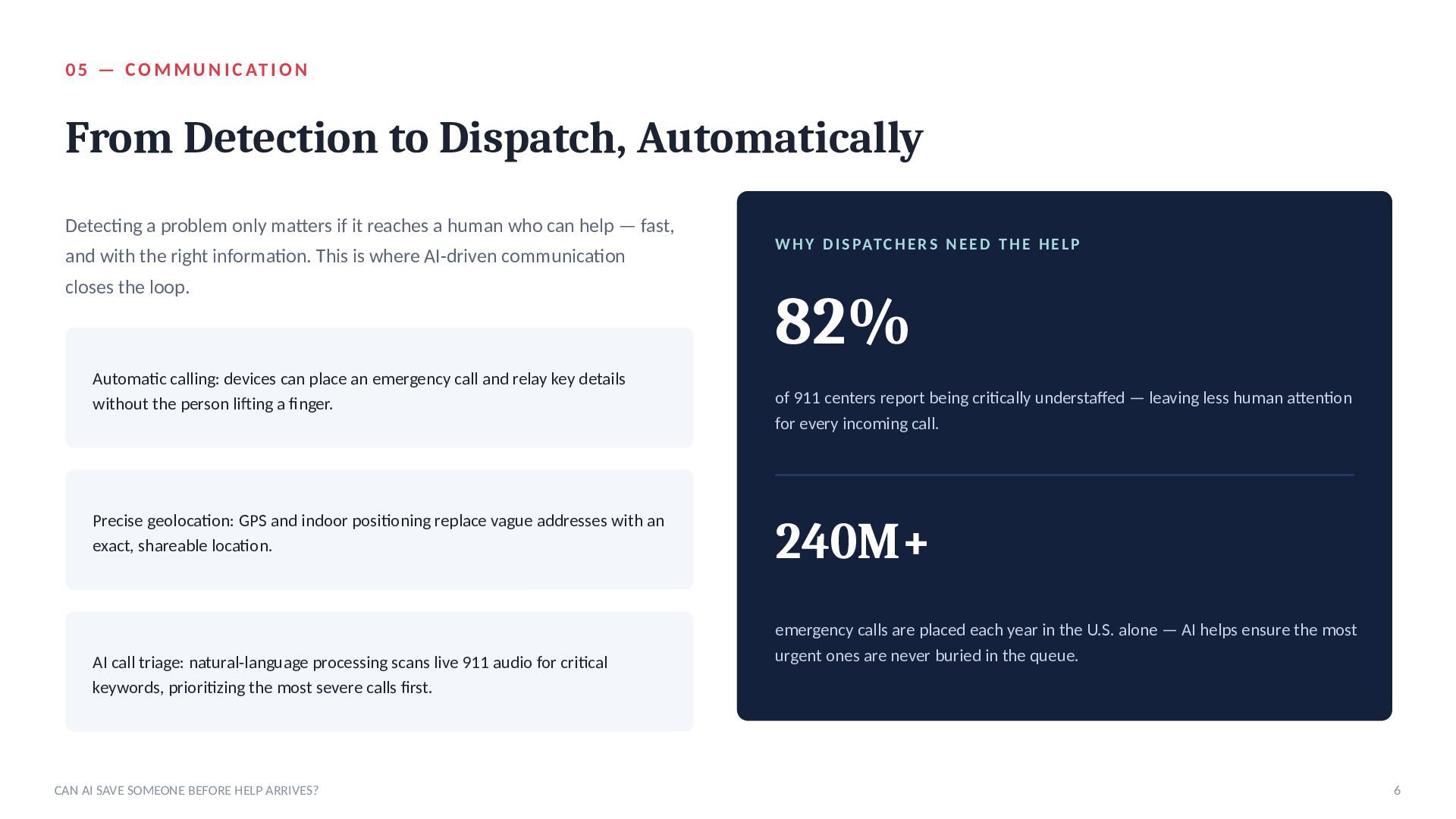
C AT I O N From Detection to Dispatch, Automatically Detecting a problem only matters if it reaches a human who can help — fast, and with the right information. This is where AI-driven communication closes the loop. Automatic calling: devices can place an emergency call and relay key details without the person lifting a finger. Precise geolocation: GPS and indoor positioning replace vague addresses with an exact, shareable location. AI call triage: natural-language processing scans live 911 audio for critical keywords, prioritizing the most severe calls first. CAN AI SAVE SOMEONE BEFORE HELP ARRIVES? W H Y D I S PAT C H E R S N E E D T H E H E L P 82% of 911 centers report being critically understaffed — leaving less human attention for every incoming call. 240M+ emergency calls are placed each year in the U.S. alone — AI helps ensure the most urgent ones are never buried in the queue. 6
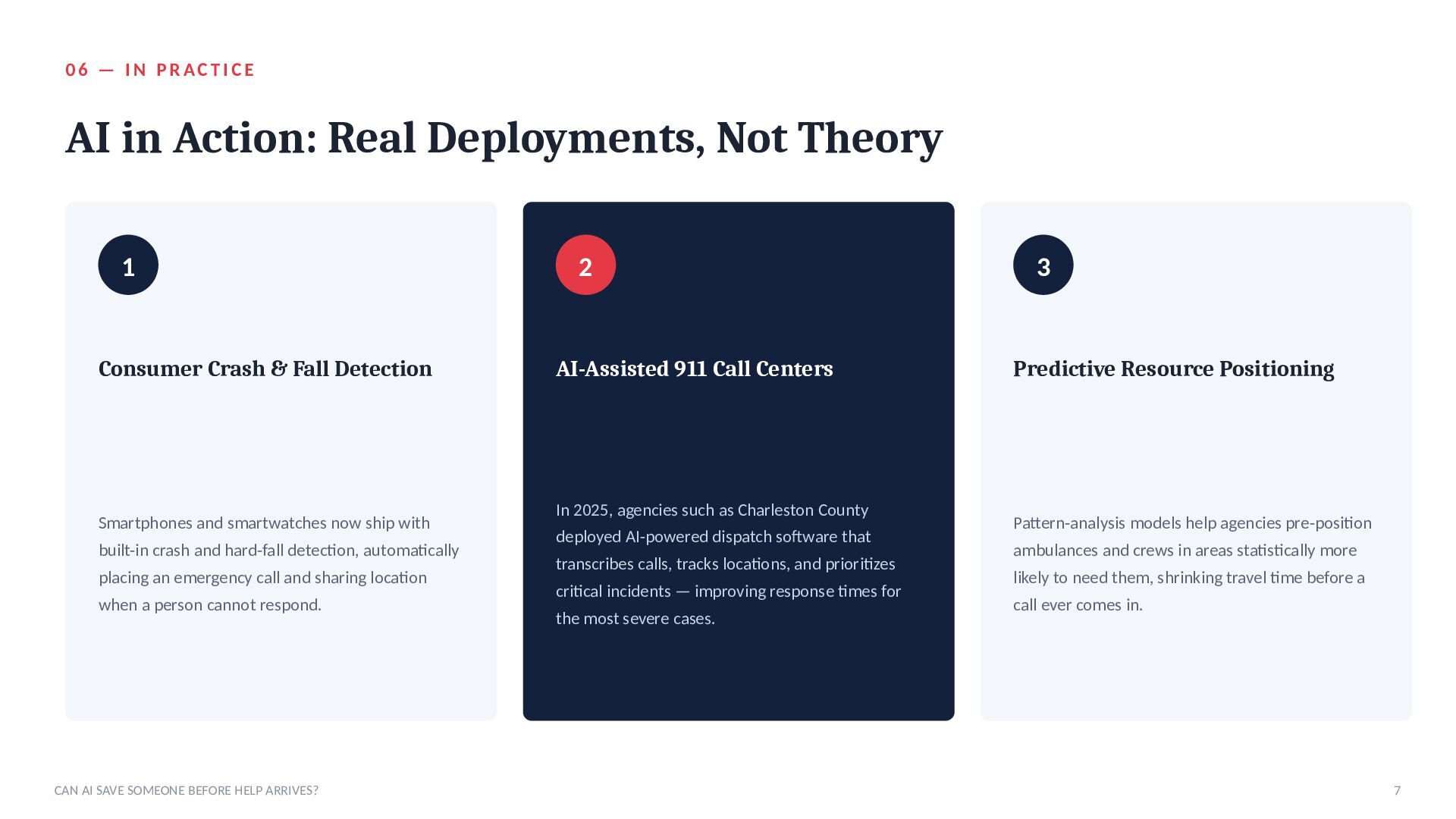
Theory 1 Consumer Crash & Fall Detection Smartphones and smartwatches now ship with built-in crash and hard-fall detection, automatically placing an emergency call and sharing location when a person cannot respond. CAN AI SAVE SOMEONE BEFORE HELP ARRIVES? 2 AI-Assisted 911 Call Centers In 2025, agencies such as Charleston County deployed AI-powered dispatch software that transcribes calls, tracks locations, and prioritizes critical incidents — improving response times for the most severe cases. 3 Predictive Resource Positioning Pattern-analysis models help agencies pre-position ambulances and crews in areas statistically more likely to need them, shrinking travel time before a call ever comes in. 7
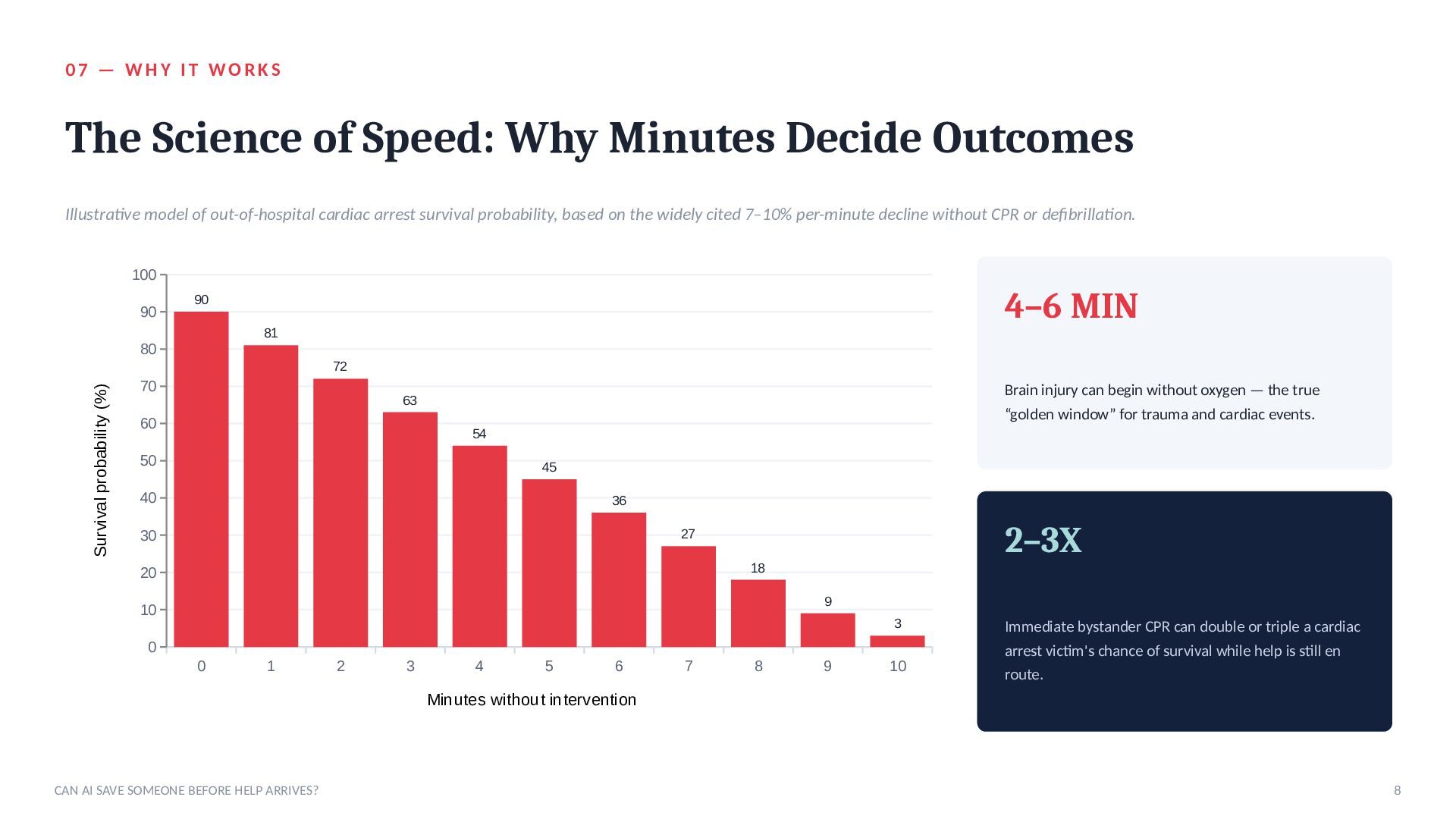
Minutes Decide Outcomes Illustrative model of out-of-hospital cardiac arrest survival probability, based on the widely cited 7–10% per-minute decline without CPR or defibrillation. 100 90 4–6 MIN 90 81 80 Survival probability (%) 72 70 Brain injury can begin without oxygen — the true “golden window” for trauma and cardiac events. 63 60 54 50 45 40 36 2–3X 27 30 18 20 9 10 3 Immediate bystander CPR can double or triple a cardiac 10 arrest victim's chance of survival while help is still en route. 0 0 1 2 3 4 5 6 7 8 9 Minutes without intervention CAN AI SAVE SOMEONE BEFORE HELP ARRIVES? 8
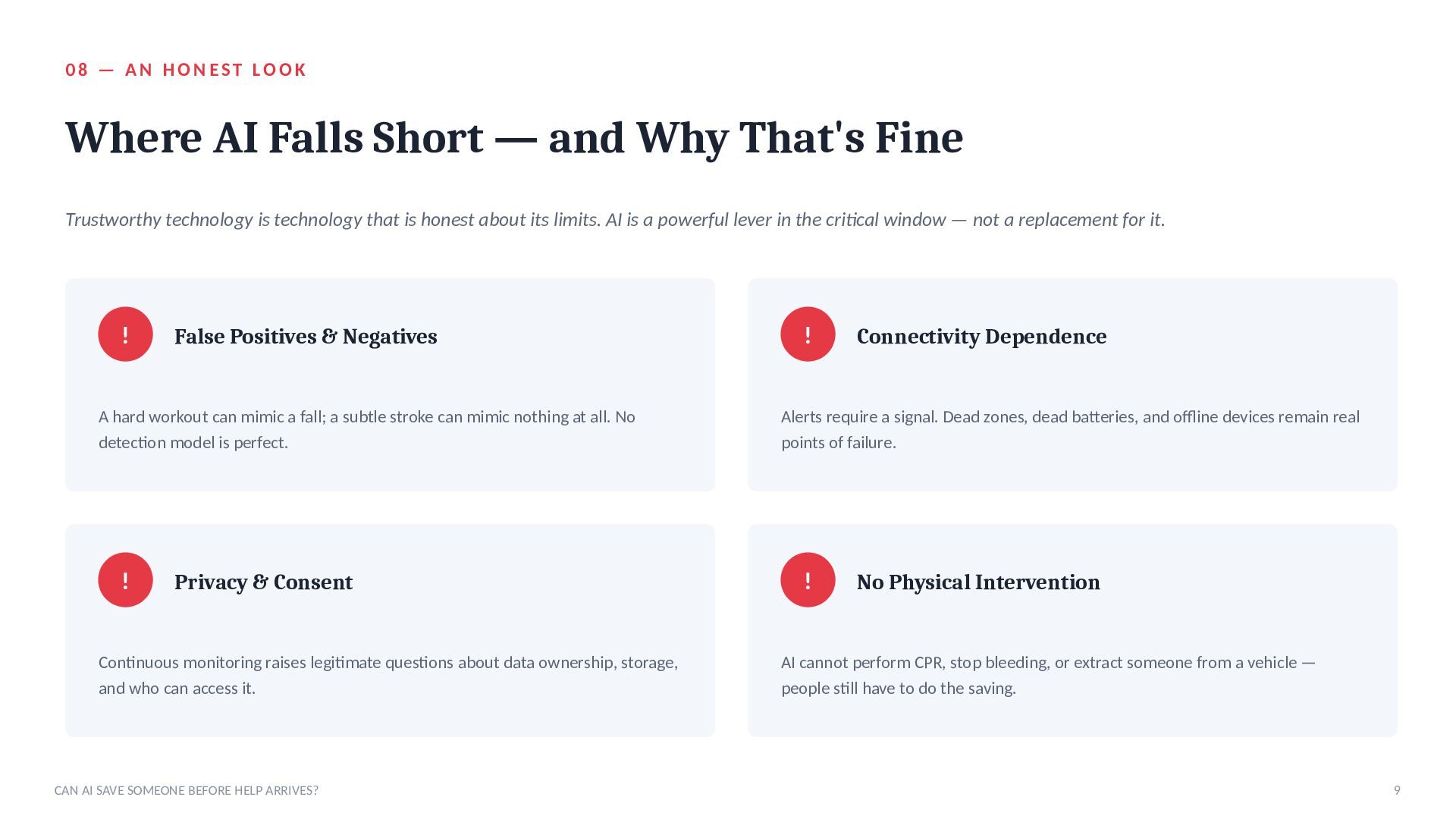
and Why That's Fine Trustworthy technology is technology that is honest about its limits. AI is a powerful lever in the critical window — not a replacement for it. ! False Positives & Negatives A hard workout can mimic a fall; a subtle stroke can mimic nothing at all. No detection model is perfect. ! Privacy & Consent Continuous monitoring raises legitimate questions about data ownership, storage, and who can access it. CAN AI SAVE SOMEONE BEFORE HELP ARRIVES? ! Connectivity Dependence Alerts require a signal. Dead zones, dead batteries, and offline devices remain real points of failure. ! No Physical Intervention AI cannot perform CPR, stop bleeding, or extract someone from a vehicle — people still have to do the saving. 9
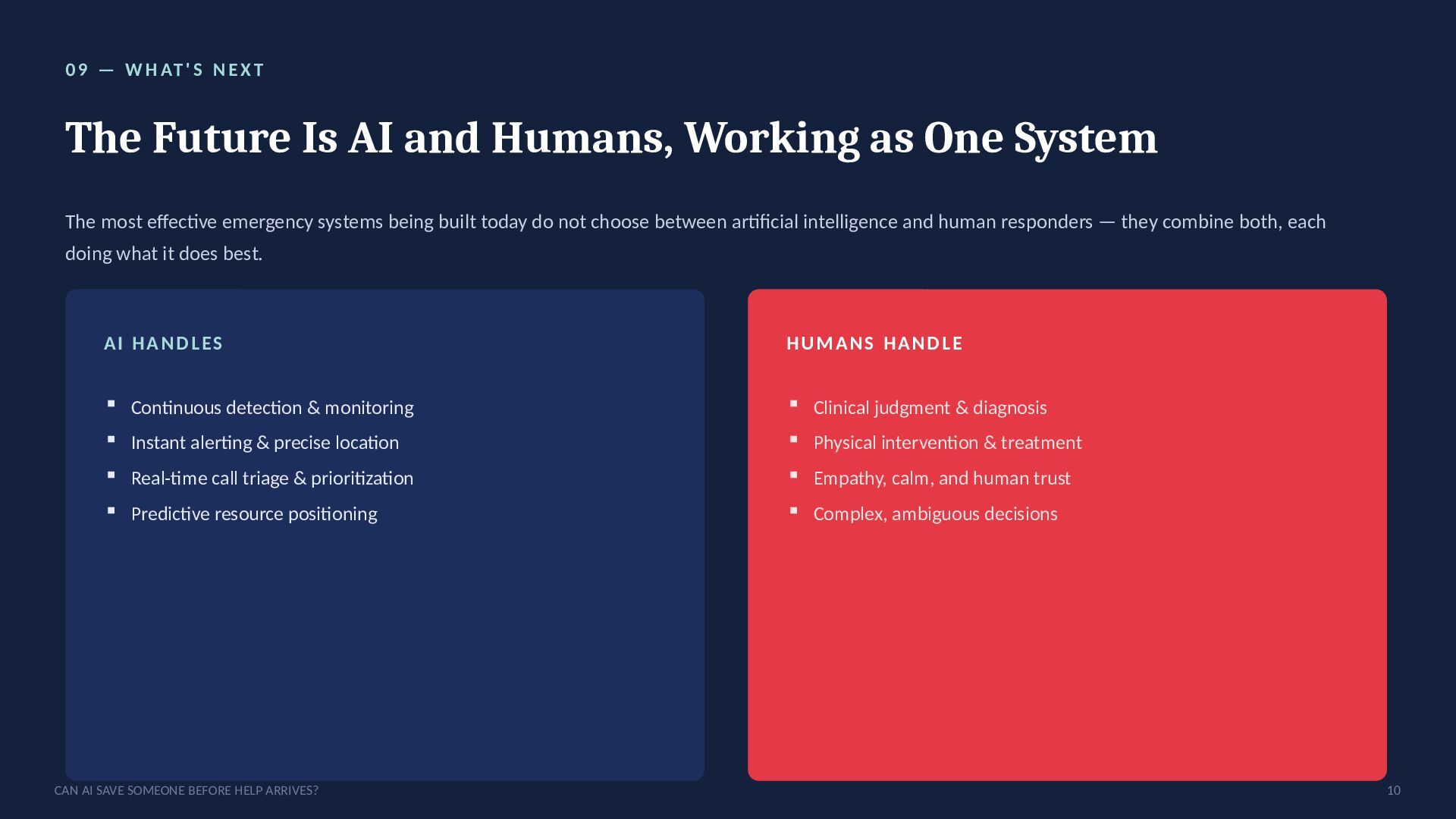
X T The Future Is AI and Humans, Working as One System The most effective emergency systems being built today do not choose between artificial intelligence and human responders — they combine both, each doing what it does best. A I H A N D L ES HUMANS HANDLE ▪ Continuous detection & monitoring ▪ Clinical judgment & diagnosis ▪ Instant alerting & precise location ▪ Physical intervention & treatment ▪ Real-time call triage & prioritization ▪ Empathy, calm, and human trust ▪ Predictive resource positioning ▪ Complex, ambiguous decisions CAN AI SAVE SOMEONE BEFORE HELP ARRIVES? 10
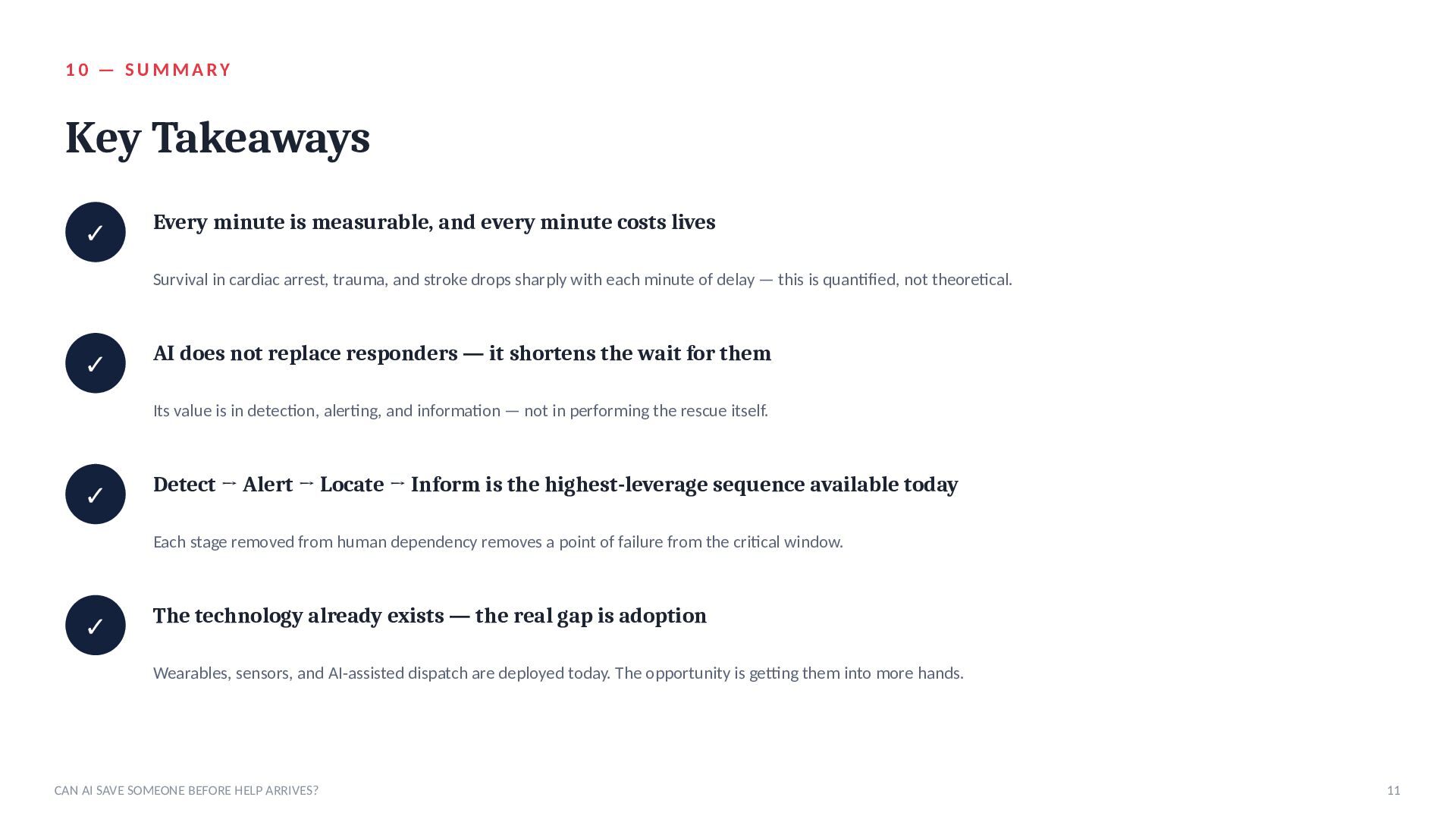
and every minute costs lives Survival in cardiac arrest, trauma, and stroke drops sharply with each minute of delay — this is quantified, not theoretical. ✓ AI does not replace responders — it shortens the wait for them Its value is in detection, alerting, and information — not in performing the rescue itself. ✓ Detect → Alert → Locate → Inform is the highest-leverage sequence available today Each stage removed from human dependency removes a point of failure from the critical window. ✓ The technology already exists — the real gap is adoption Wearables, sensors, and AI-assisted dispatch are deployed today. The opportunity is getting them into more hands. CAN AI SAVE SOMEONE BEFORE HELP ARRIVES? 11
Work for the People You Love Everything in this briefing — faster detection, instant alerts, precise location, and clear information for responders — is exactly what 360alert.io is built to deliver, quietly, in the background, for the moments that matter most. ❤ Detects the moment something is wrong — automatically, without a call ⚑ Sends an instant alert with your exact, real-time location ⌘ Gives responders the context they need before they even arrive Protect Your Critical Minutes — 360alert.io www.360alert.io