Open data and APIs • Dropping APIs on your data • Things to think about in your API • Writing libraries for code AND data (pymatgen REST interface) • Science stories to back this up • Ipython notebook demo
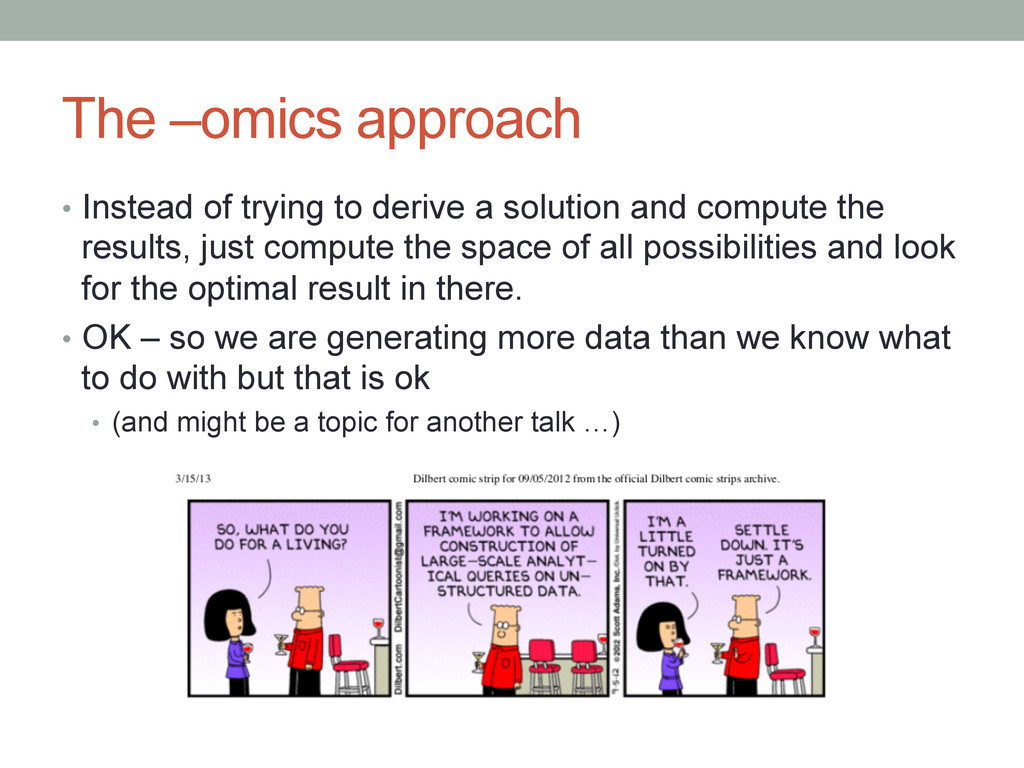
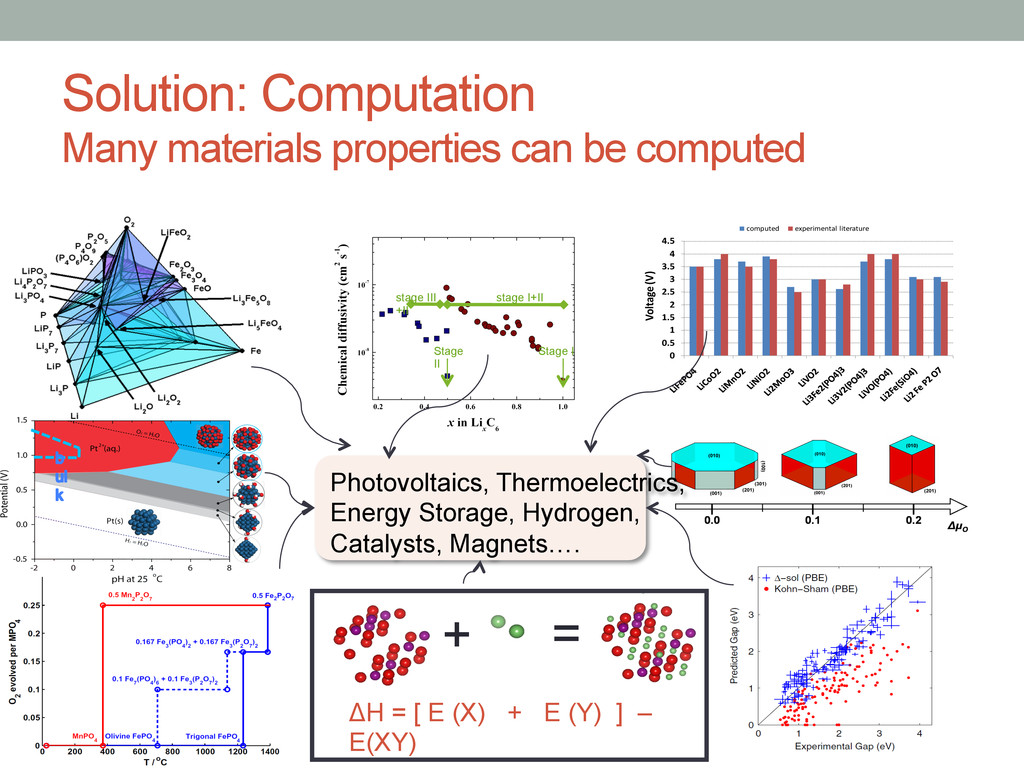
solution and compute the results, just compute the space of all possibilities and look for the optimal result in there. • OK – so we are generating more data than we know what to do with but that is ok • (and might be a topic for another talk …)
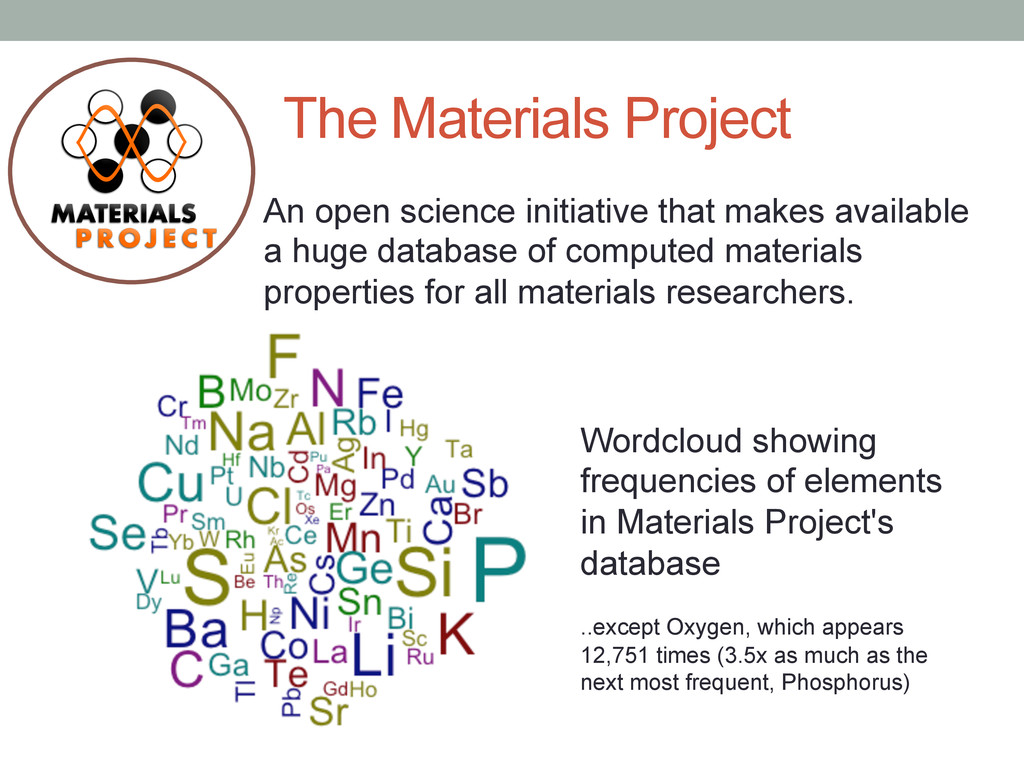
of computed materials properties for all materials researchers. The Materials Project Wordcloud showing frequencies of elements in Materials Project's database ..except Oxygen, which appears 12,751 times (3.5x as much as the next most frequent, Phosphorus)
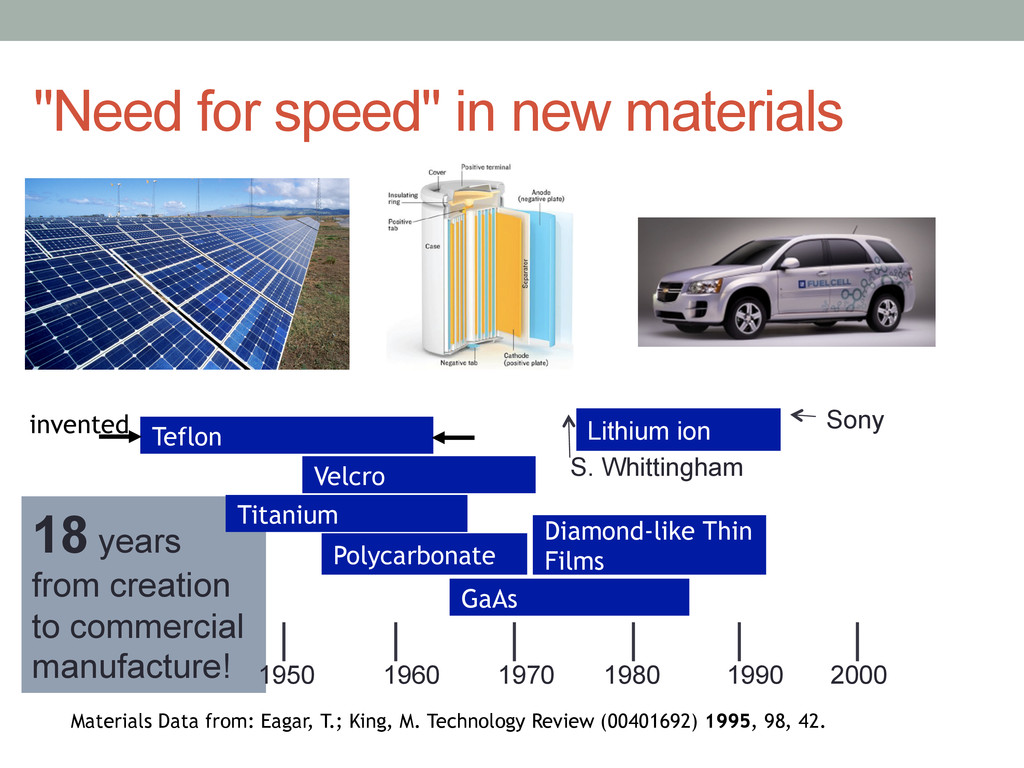
Polycarbonate GaAs Diamond-like Thin Films Materials Data from: Eagar, T.; King, M. Technology Review (00401692) 1995, 98, 42. invented 1960 1970 1950 "Need for speed" in new materials Lithium ion S. Whittingham Sony 1980 1990 2000
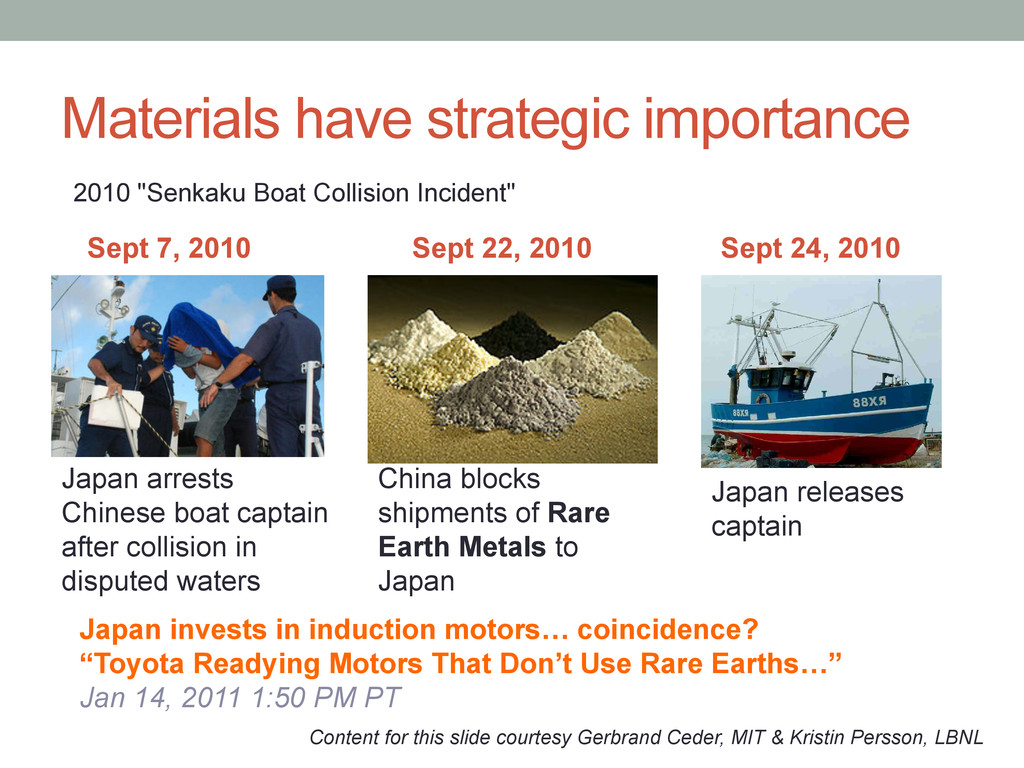
boat captain after collision in disputed waters China blocks shipments of Rare Earth Metals to Japan Sept 22, 2010 Japan releases captain Sept 24, 2010 Japan invests in induction motors… coincidence? “Toyota Readying Motors That Don’t Use Rare Earths…” Jan 14, 2011 1:50 PM PT Content for this slide courtesy Gerbrand Ceder, MIT & Kristin Persson, LBNL 2010 "Senkaku Boat Collision Incident"
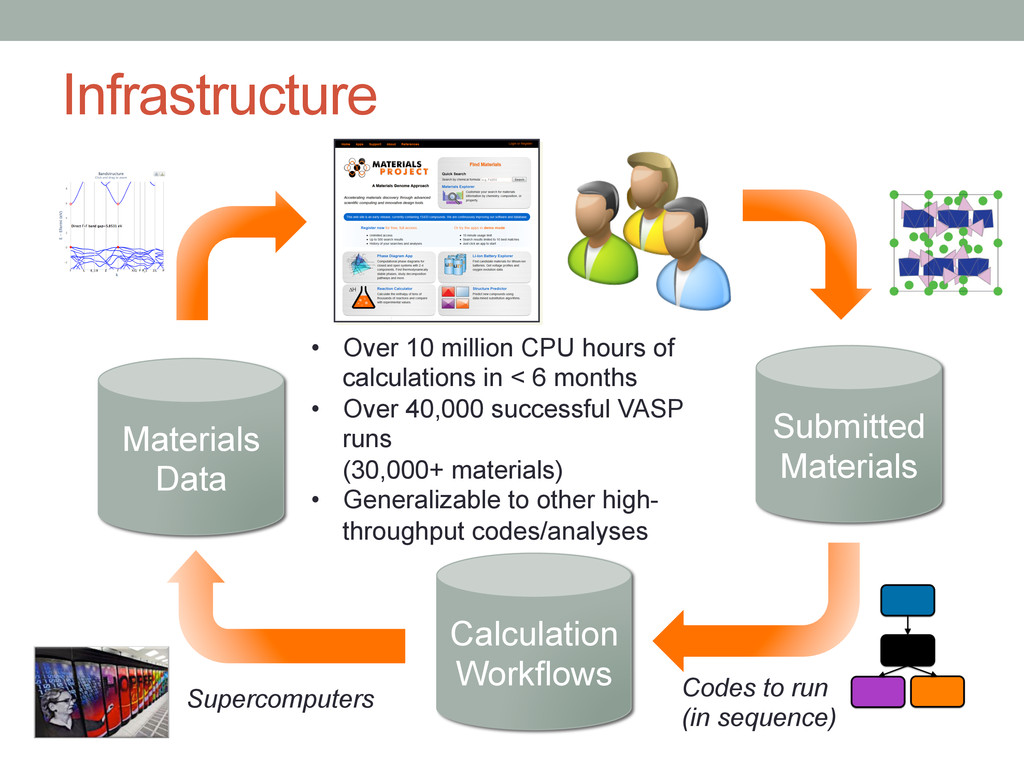
Over 10 million CPU hours of calculations in < 6 months • Over 40,000 successful VASP runs (30,000+ materials) • Generalizable to other high- throughput codes/analyses Calculation Workflows Supercomputers Codes to run (in sequence) Atomic positions
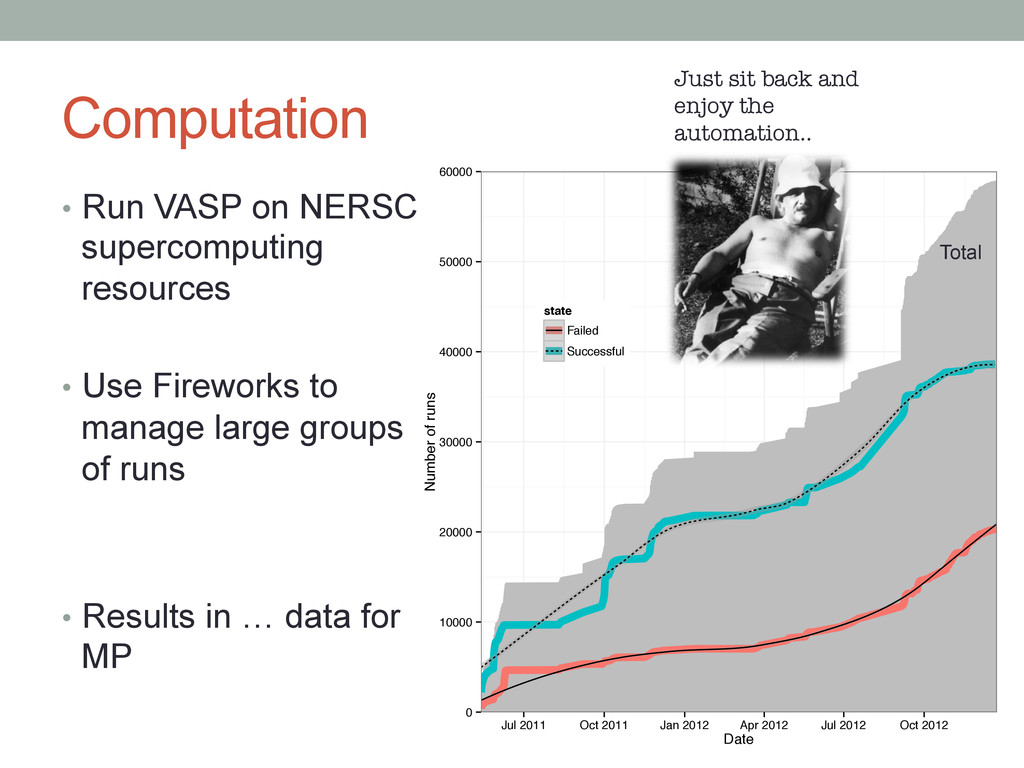
2011 Jan 2012 Apr 2012 Jul 2012 Oct 2012 Date Number of runs state Failed Successful Computation • Run VASP on NERSC supercomputing resources • Use Fireworks to manage large groups of runs • Results in … data for MP Just sit back and enjoy the automation.. Total
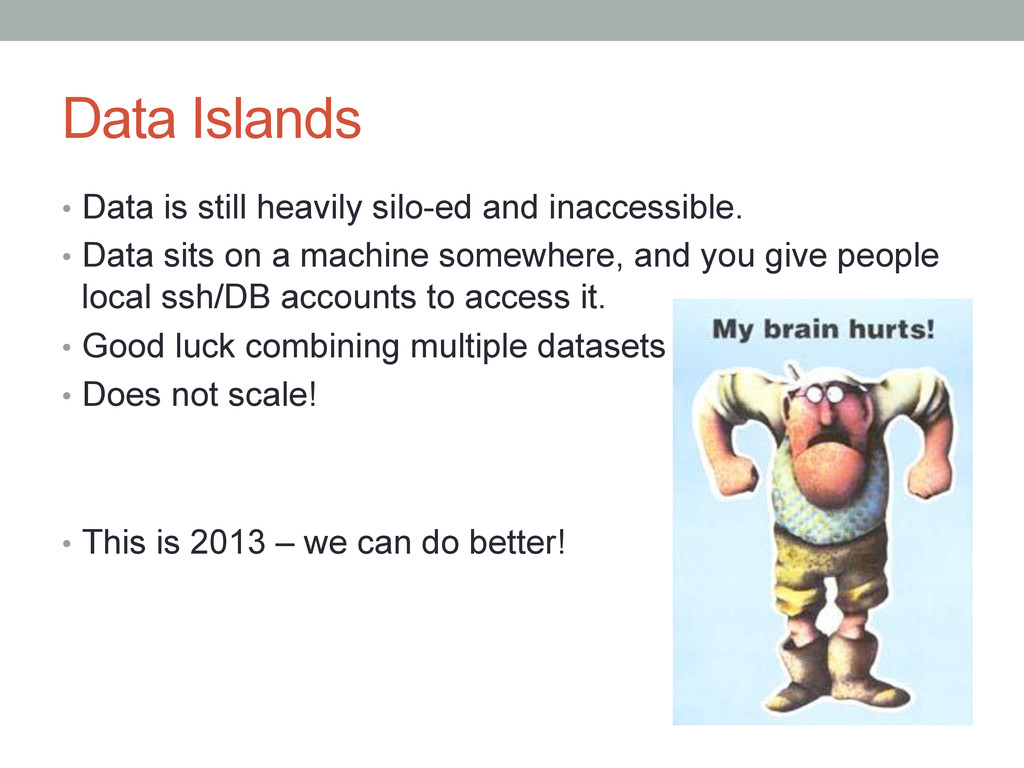
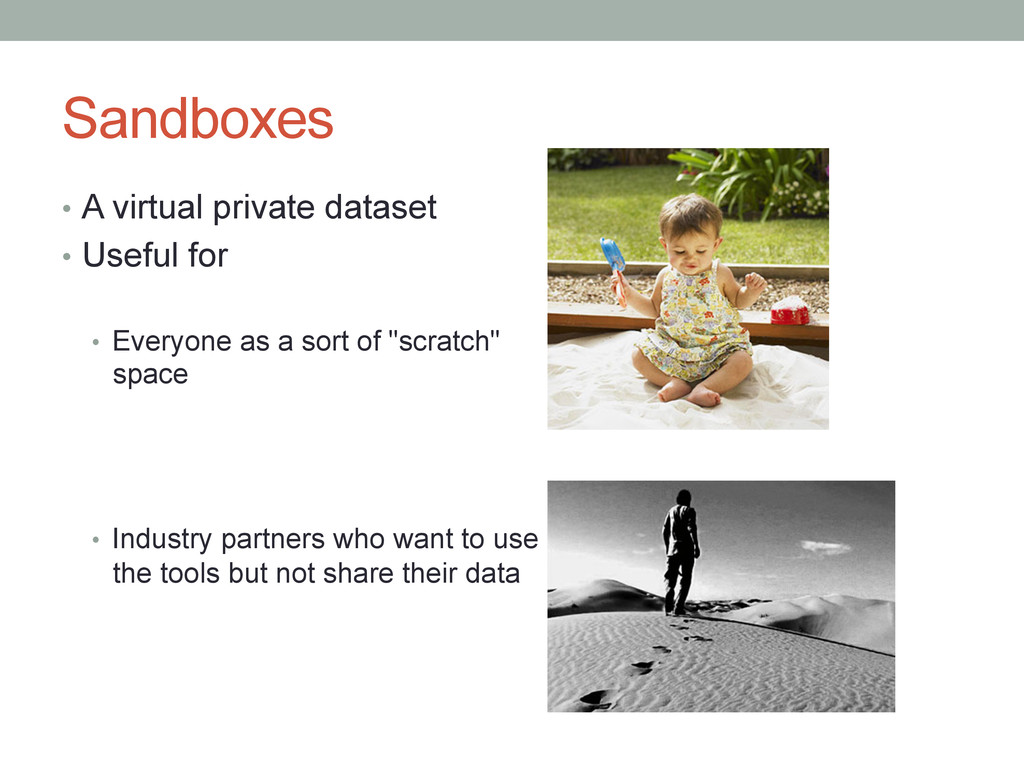
• Data sits on a machine somewhere, and you give people local ssh/DB accounts to access it. • Good luck combining multiple datasets • Does not scale! • This is 2013 – we can do better!
Result Published in the Last Year J.M. Wicherts, M. Bakker, and D. Molenaar: Willingness to Share Research Data Is Related to the Strength of the Evidence and the Quality of Reporting of Statistical Results PLoS ONE, 6(11): e26828, 2011, doi:10.1371/journal.pone.0026828. Content for this slide courtesy Greg Wilson, Software Carpentry
• Sub-select the data on demand rather than pulling down the entire dataset • Use your own local tools with centrally managed data • Everyone sees the same data – better collaboration
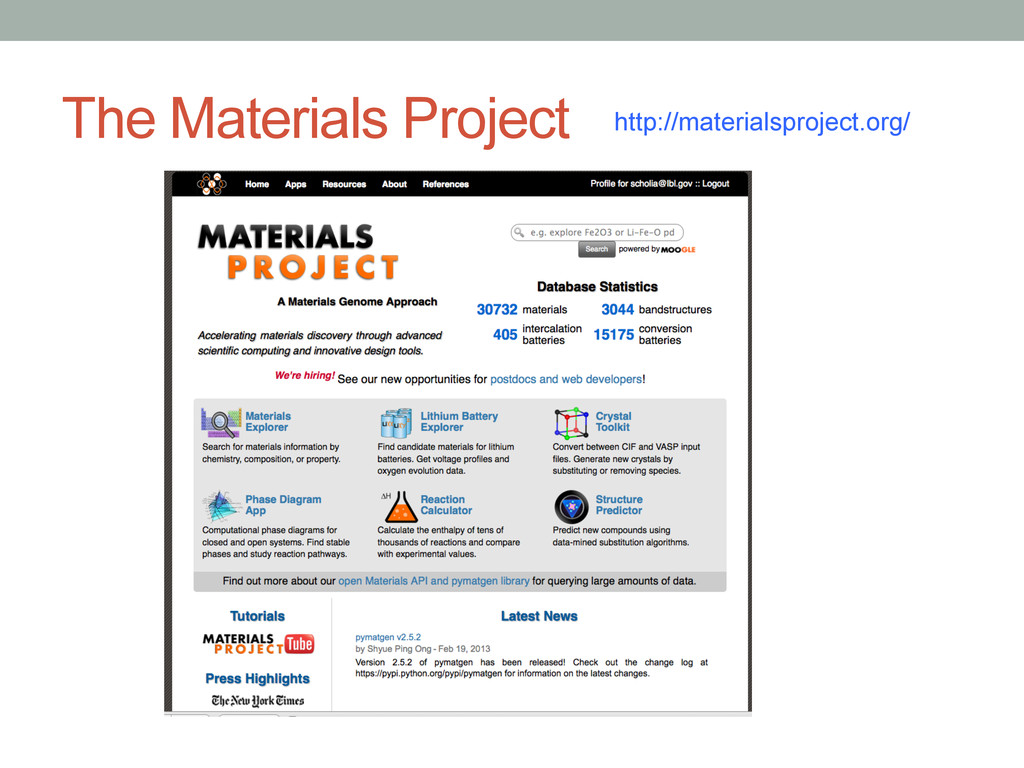
• http://materialsproject.org web portal makes materials data easily accessible • Materials Explorer • Phase Diagrams • Crystal Toolkit • Battery Explorer • Reaction Calculator • Structure Predictor • Focus on a highly functional and usable website to query materials data. (We heart Django!) • Additionally we distribute the tools used to compute and analyze the data as an open source library – pymatgen
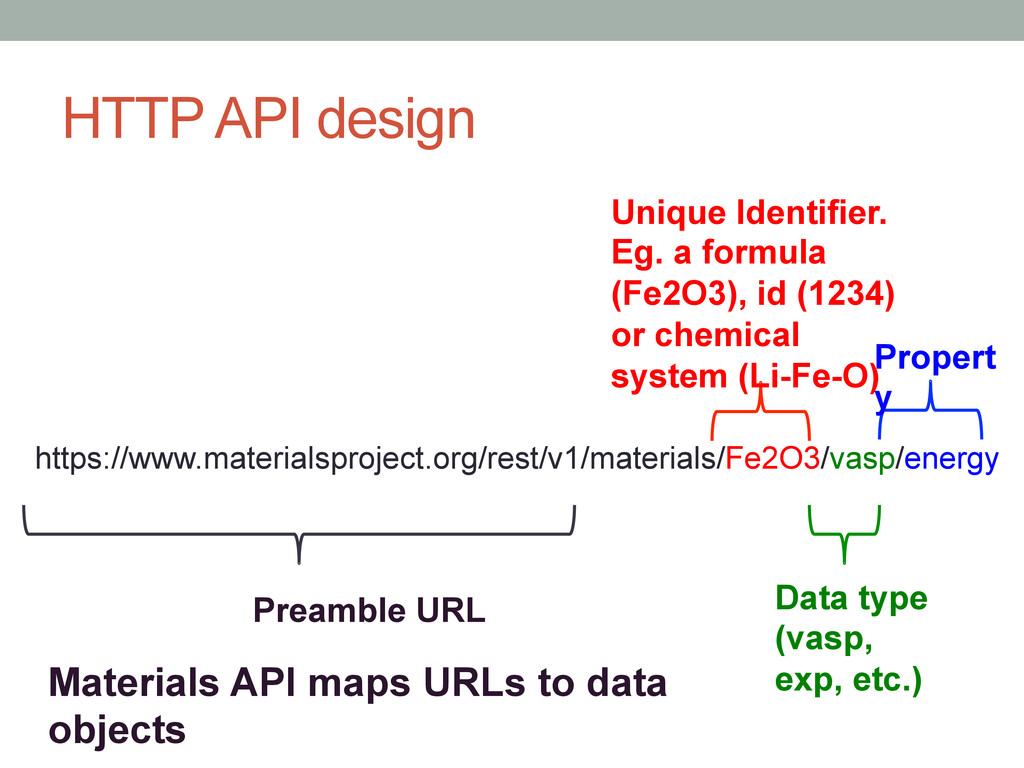
programmatic access to data • eg. Give me property X for all materials with Li and O so that I can pass it through my own codes • Lesson – make your data available through an API and people will start to do amazing things
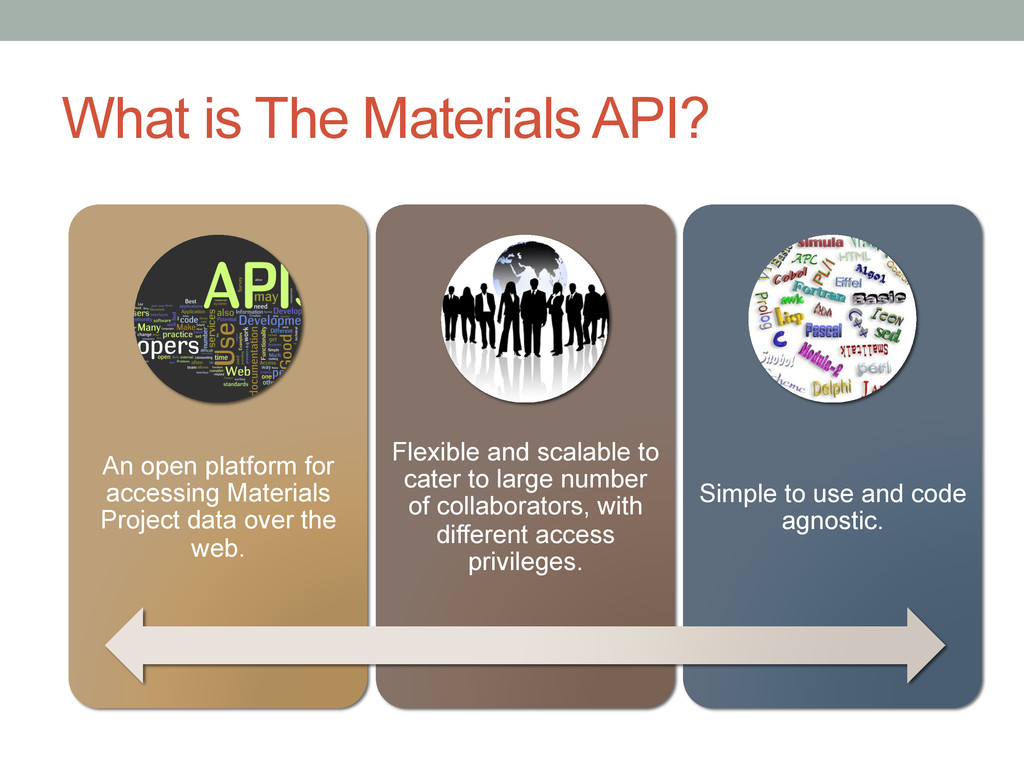
the web. • Web APIs provide programmatic access to data and resources to developers over the web • Access to data as well-defined objects allows users to develop their own custom applications and code Enables a thriving COMMUNITY built around data.
Materials Project data over the web. Flexible and scalable to cater to large number of collaborators, with different access privileges. Simple to use and code agnostic.
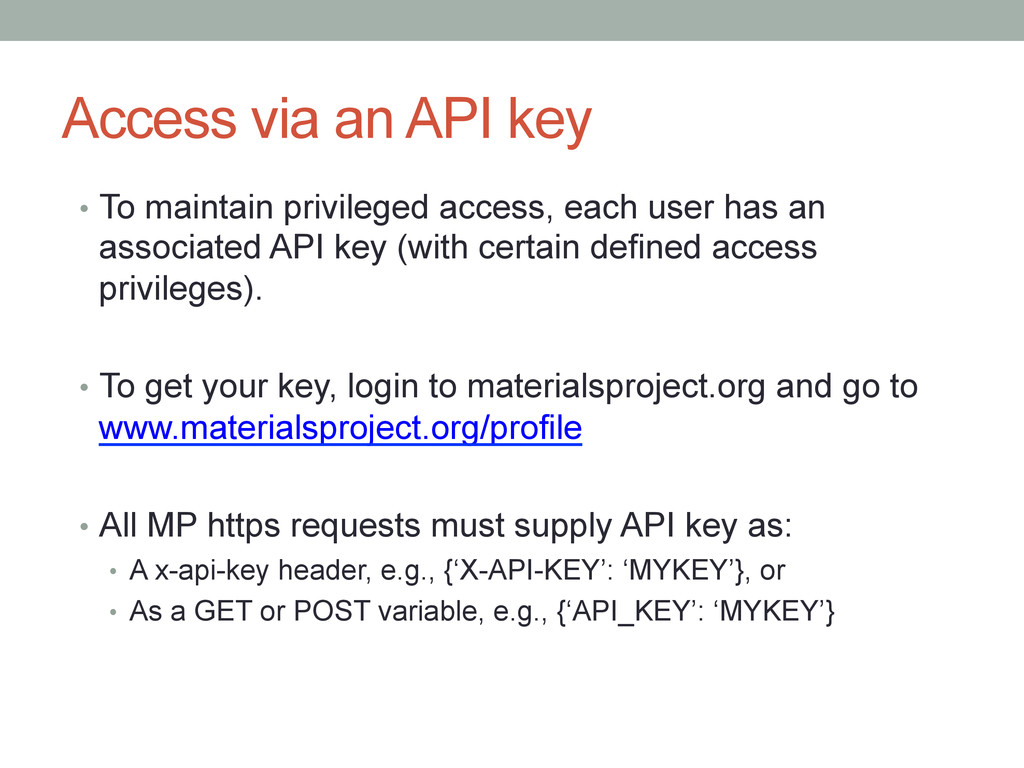
each user has an associated API key (with certain defined access privileges). • To get your key, login to materialsproject.org and go to www.materialsproject.org/profile • All MP https requests must supply API key as: • A x-api-key header, e.g., {‘X-API-KEY’: ‘MYKEY’}, or • As a GET or POST variable, e.g., {‘API_KEY’: ‘MYKEY’}
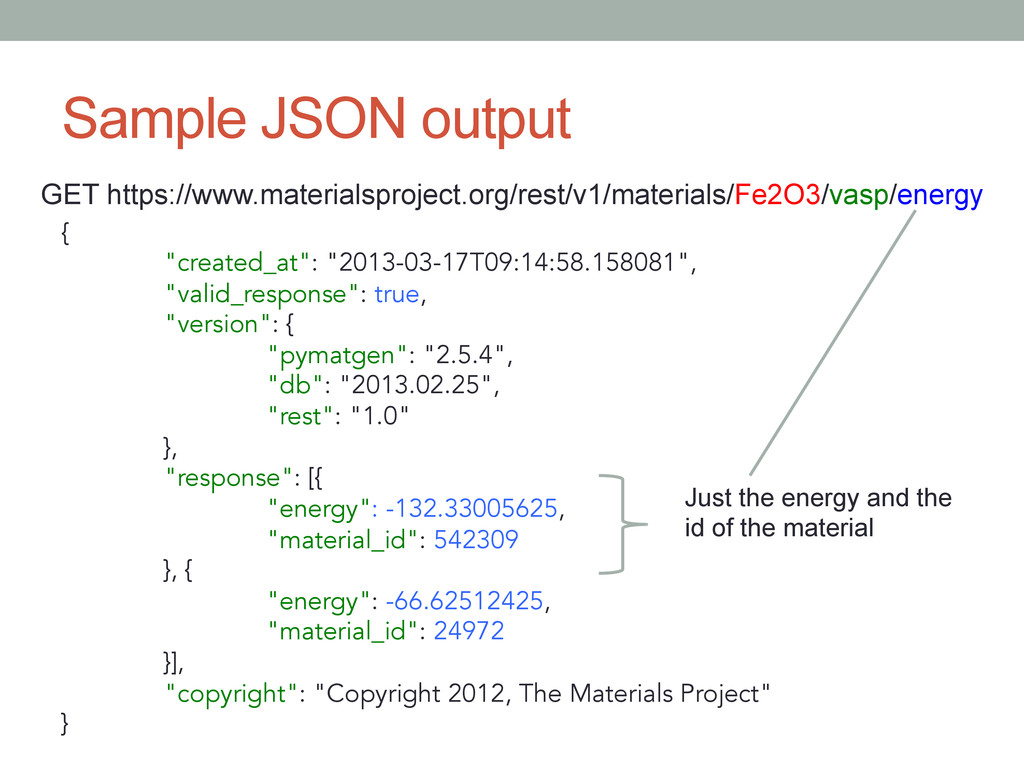
"version": { "pymatgen": "2.5.4", "db": "2013.02.25", "rest": "1.0" }, "response": [{ "energy": -132.33005625, "material_id": 542309 }, { "energy": -66.62512425, "material_id": 24972 }], "copyright": "Copyright 2012, The Materials Project" } Just the energy and the id of the material
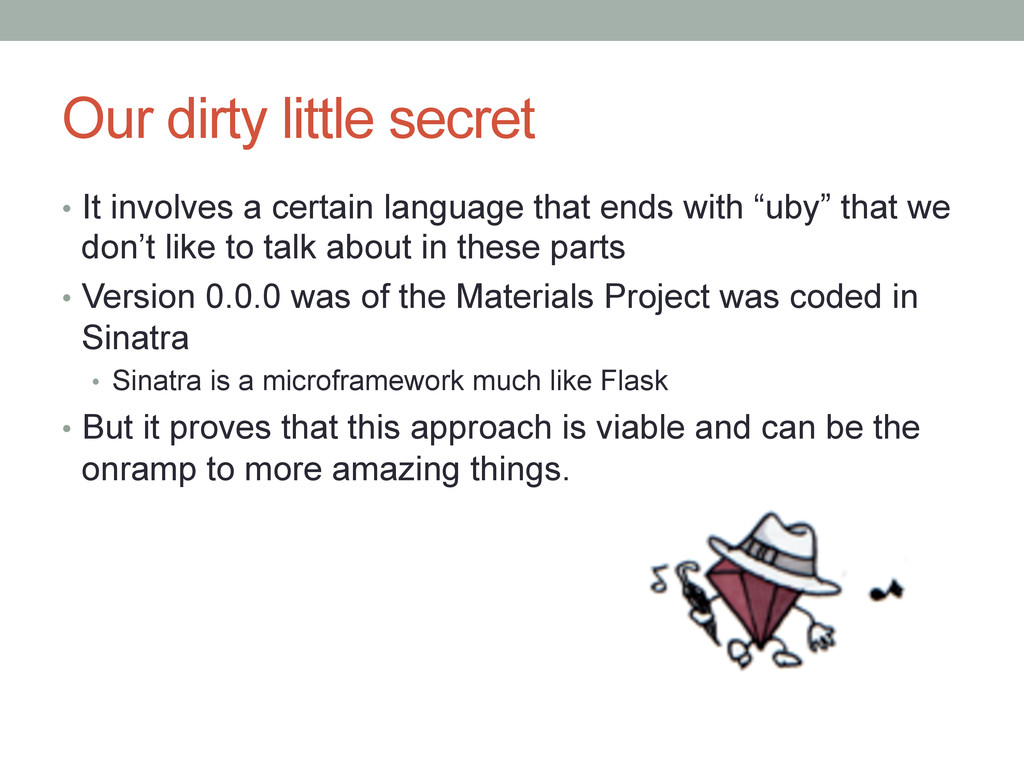
that ends with “uby” that we don’t like to talk about in these parts • Version 0.0.0 was of the Materials Project was coded in Sinatra • Sinatra is a microframework much like Flask • But it proves that this approach is viable and can be the onramp to more amazing things.
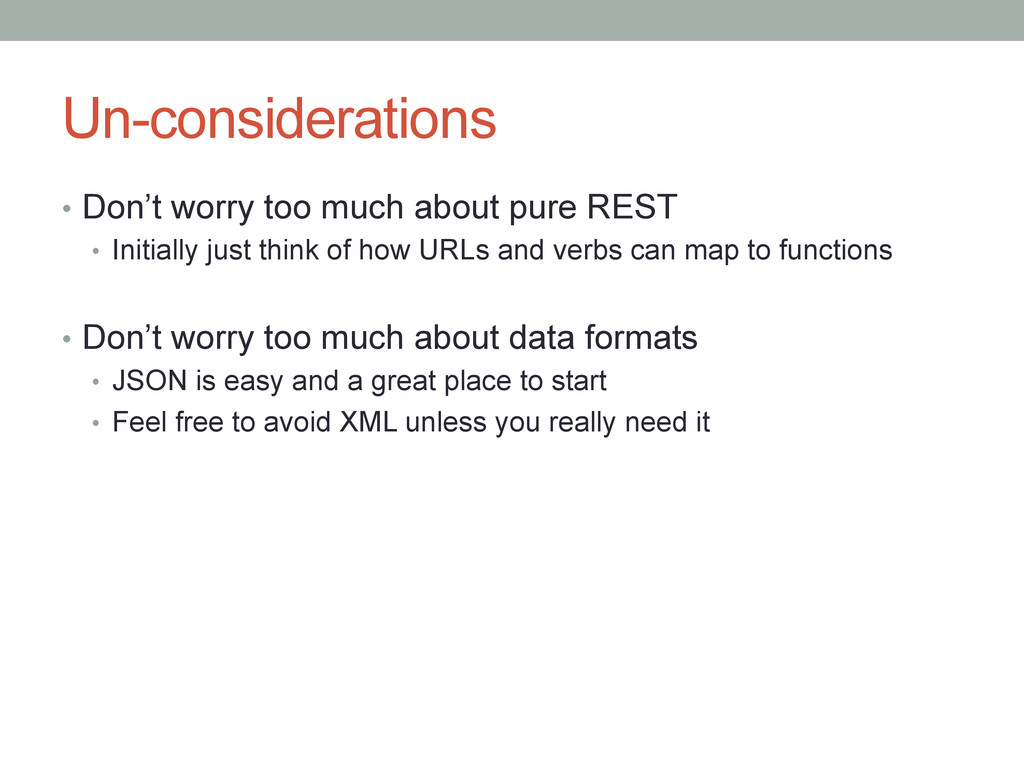
Initially just think of how URLs and verbs can map to functions • Don’t worry too much about data formats • JSON is easy and a great place to start • Feel free to avoid XML unless you really need it
Materials Project. • Defines core Python objects for materials data representation. • Provides a well-tested set of structure and thermodynamic analysis tools relevant to many applications. • Establishes an open platform for researchers to collaboratively develop sophisticated analyses of materials data obtained both from first principles calculations and experiments.
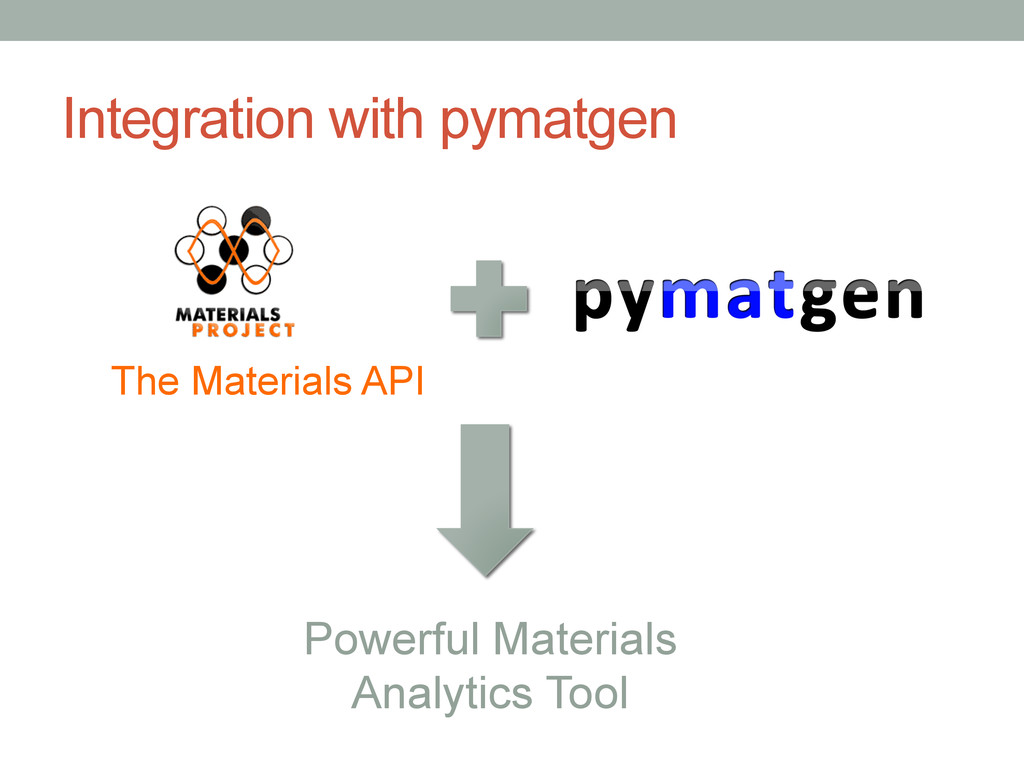
with computation! • The scientific python ecosystem has a ton of data analysis tools and libraries • Just starting to think about baking in datasets directly into these tools • Pymatgen allows you to access core MP data directly from the library
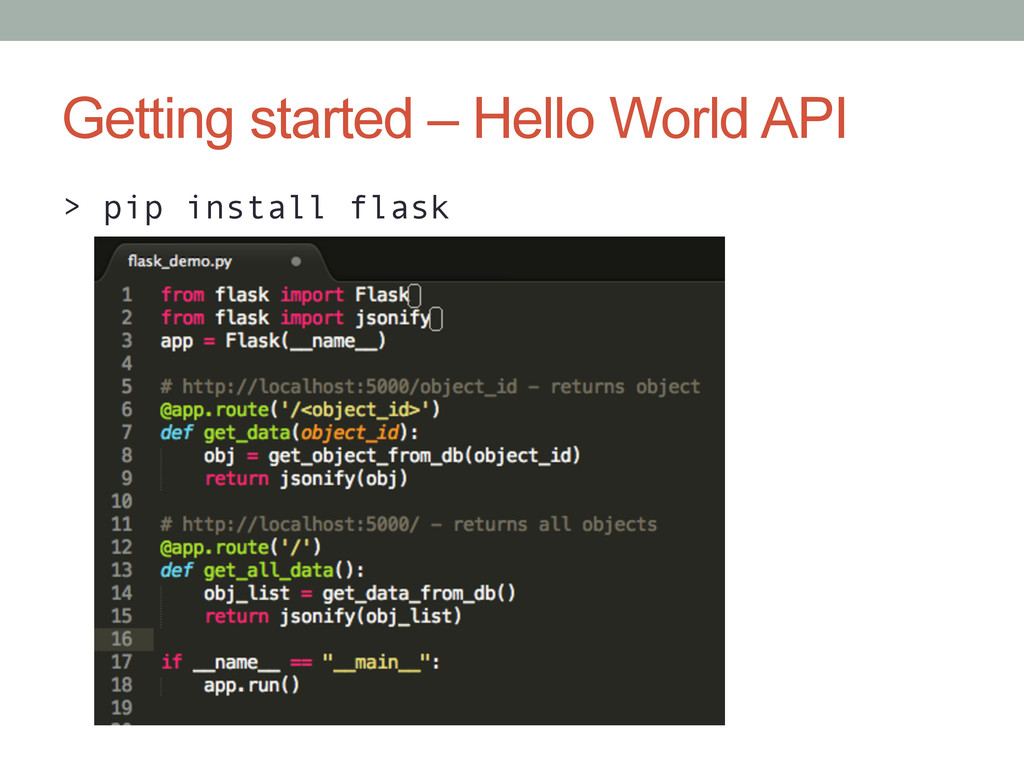
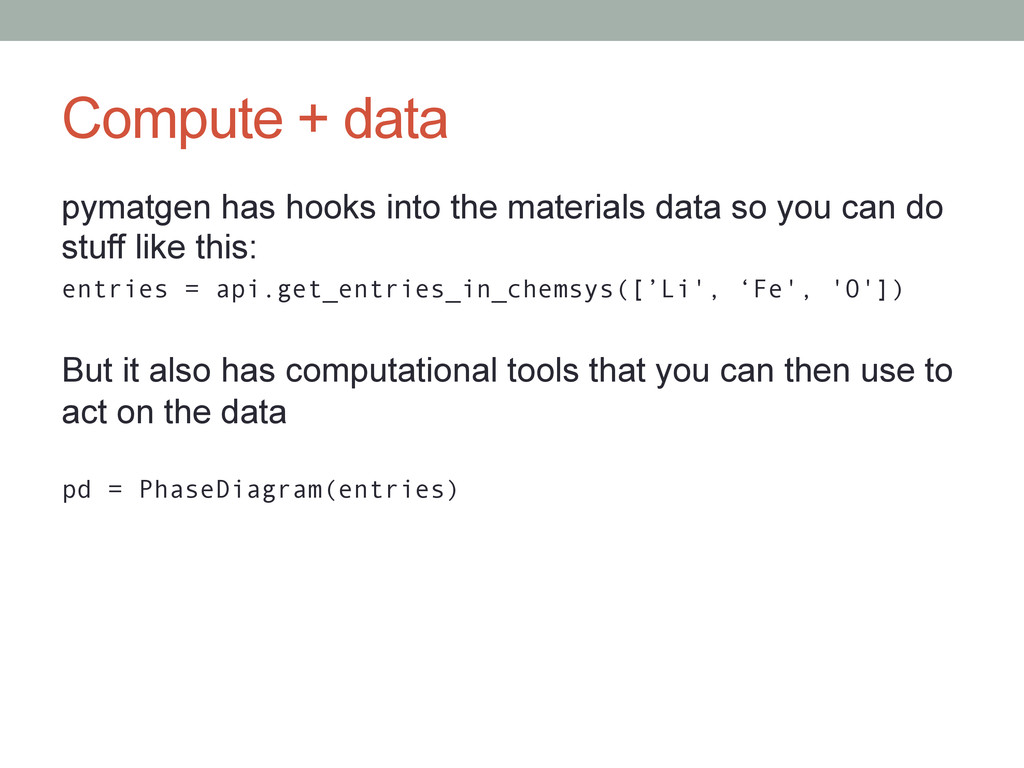
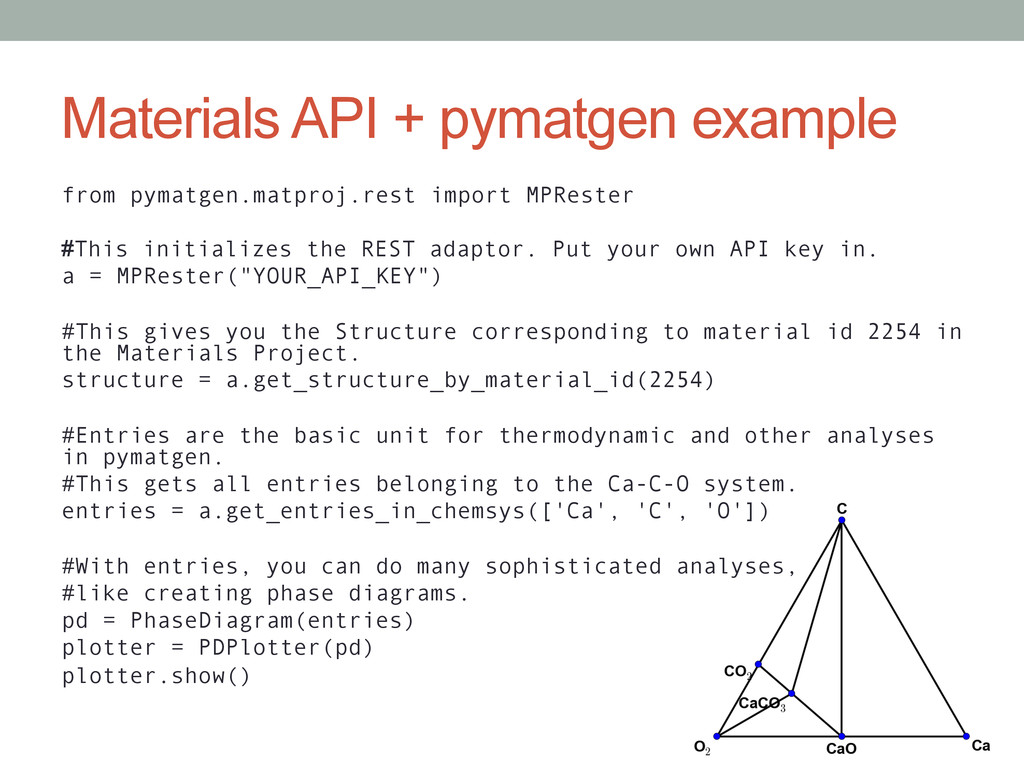
so you can do stuff like this: entries = api.get_entries_in_chemsys([’Li', ‘Fe', 'O']) But it also has computational tools that you can then use to act on the data pd = PhaseDiagram(entries)
lines between compute and data • But this is not a new idea • Think of all the tools built around commercial APIs • Twitter, Netflix etc. - python clients built around the API
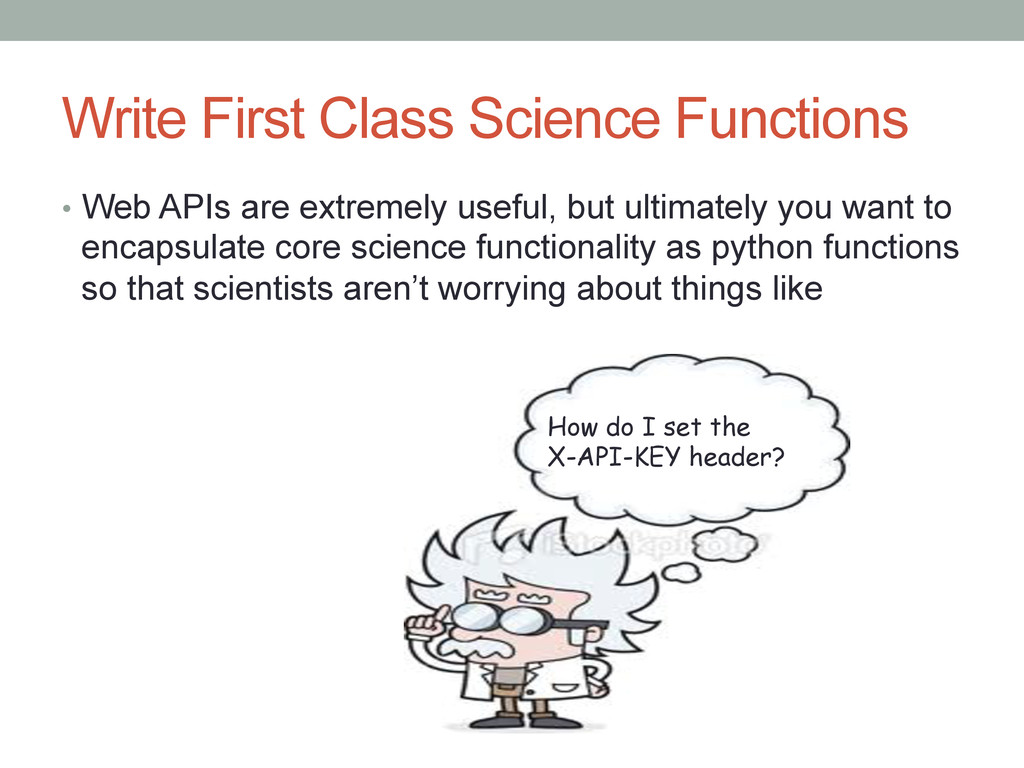
useful, but ultimately you want to encapsulate core science functionality as python functions so that scientists aren’t worrying about things like How do I set the X-API-KEY header?
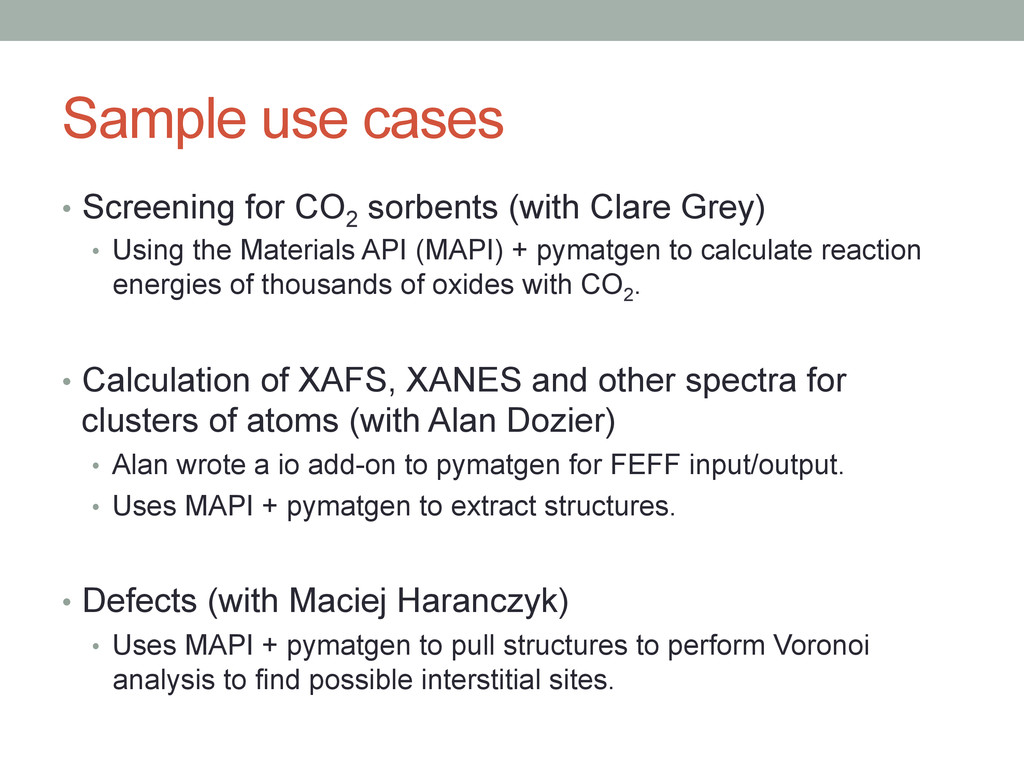
Grey) • Using the Materials API (MAPI) + pymatgen to calculate reaction energies of thousands of oxides with CO2 . • Calculation of XAFS, XANES and other spectra for clusters of atoms (with Alan Dozier) • Alan wrote a io add-on to pymatgen for FEFF input/output. • Uses MAPI + pymatgen to extract structures. • Defects (with Maciej Haranczyk) • Uses MAPI + pymatgen to pull structures to perform Voronoi analysis to find possible interstitial sites.
your own API key in. a = MPRester("YOUR_API_KEY") #This gives you the Structure corresponding to material id 2254 in the Materials Project. structure = a.get_structure_by_material_id(2254) #Entries are the basic unit for thermodynamic and other analyses in pymatgen. #This gets all entries belonging to the Ca-C-O system. entries = a.get_entries_in_chemsys(['Ca', 'C', 'O']) #With entries, you can do many sophisticated analyses, #like creating phase diagrams. pd = PhaseDiagram(entries) plotter = PDPlotter(pd) plotter.show() Materials API + pymatgen example
executing scientific workflows • It can be used to automate most types of calculations over arbitrary computing resources, including those that have a queueing system • It is very dynamic: Fireworks can begat other fireworks at runtime http://pythonhosted.org/FireWorks/
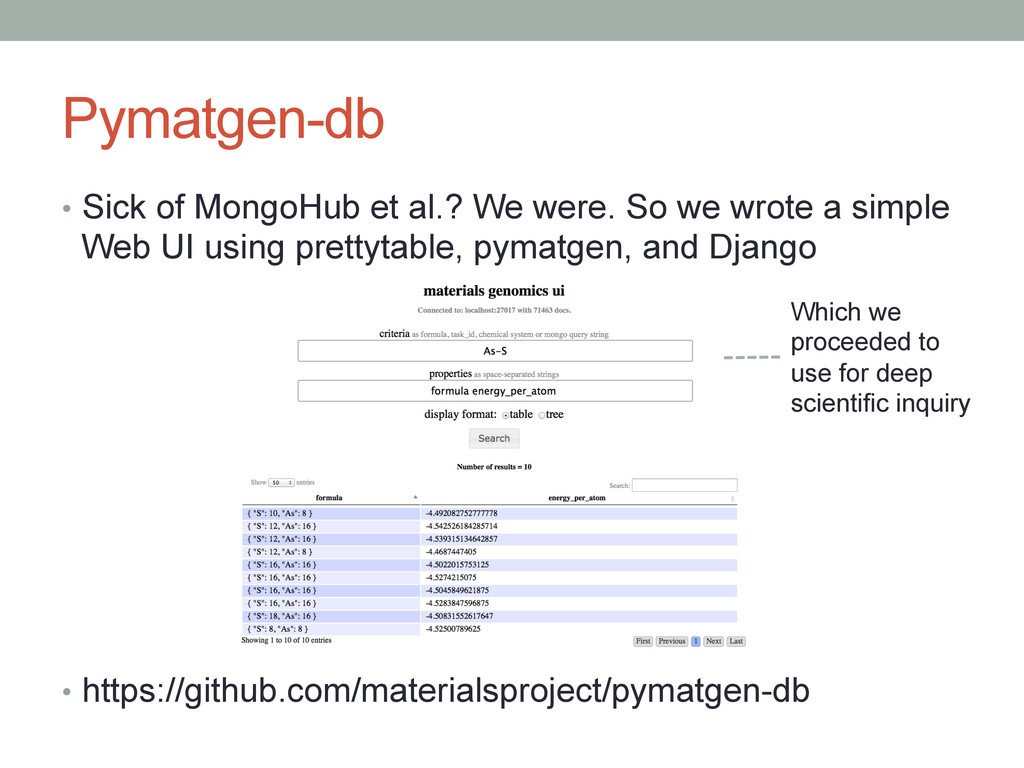
we wrote a simple Web UI using prettytable, pymatgen, and Django • https://github.com/materialsproject/pymatgen-db Which we proceeded to use for deep scientific inquiry
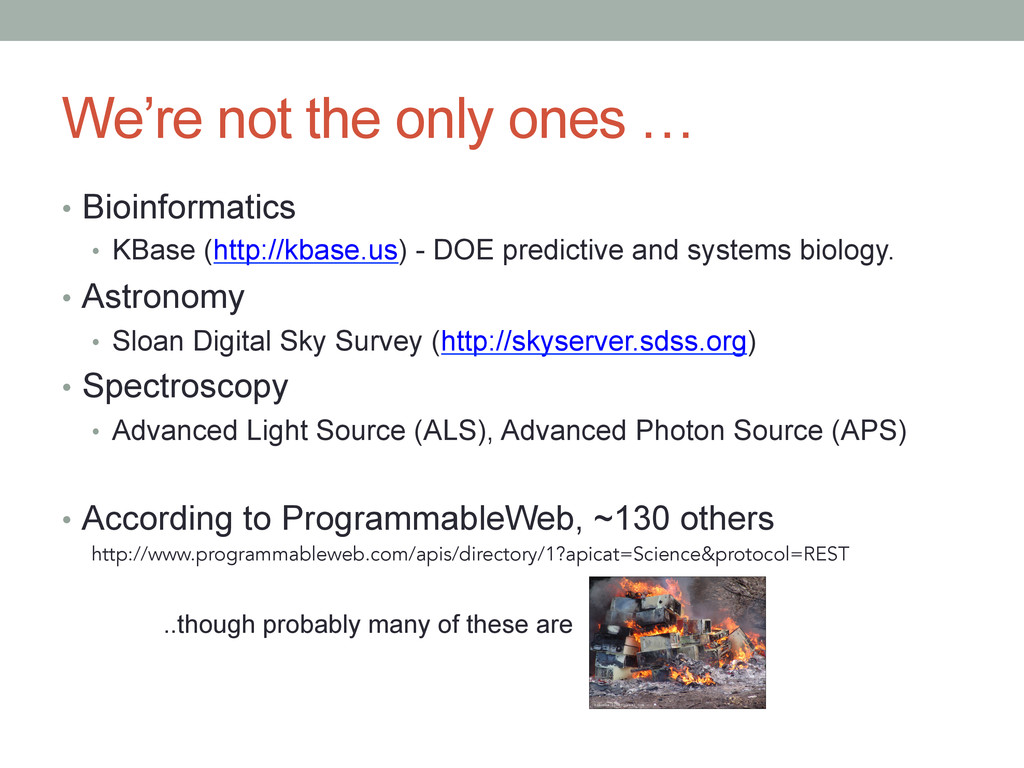
(http://kbase.us) - DOE predictive and systems biology. • Astronomy • Sloan Digital Sky Survey (http://skyserver.sdss.org) • Spectroscopy • Advanced Light Source (ALS), Advanced Photon Source (APS) • According to ProgrammableWeb, ~130 others http://www.programmableweb.com/apis/directory/1?apicat=Science&protocol=REST ..though probably many of these are
Friendly, powerful Web UI is a great way to engage, but then.. • Build APIs around your data to make it easily accessible • Write scientific libraries with *both* analysis and data, by hooking them up to APIs.
who would rather pass a Nobel prize winner on the way to lunch than get free dry-cleaning • downside: or even free coffee (groan) • upside: some of your tax dollars go towards your own salary! • http://jobs.materialsproject.org/


 shreddd
 ivargrimstad
 findyinc
 irinanazarova
 ryu1013
 guaca
 palkan
 y0hgi
 colorful12
 optim
 prota
 moro
 tomokon
 mfonobong
 mkilby
 apolaine
 jonoalderson
 lfama
 dougneiner
 bkeepers
 nwiizo
 kastner
 swwweet
 khoart
 sferik