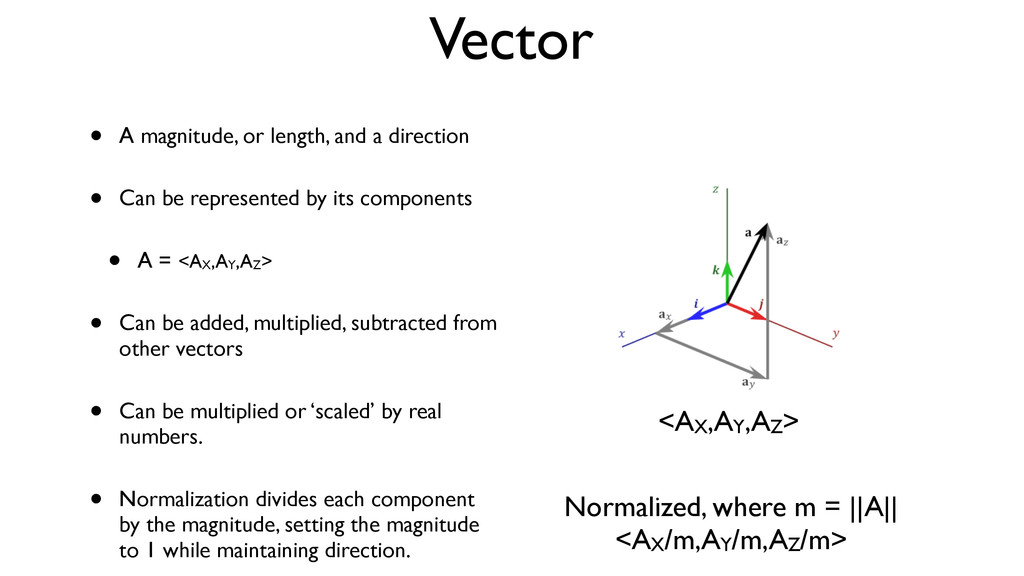
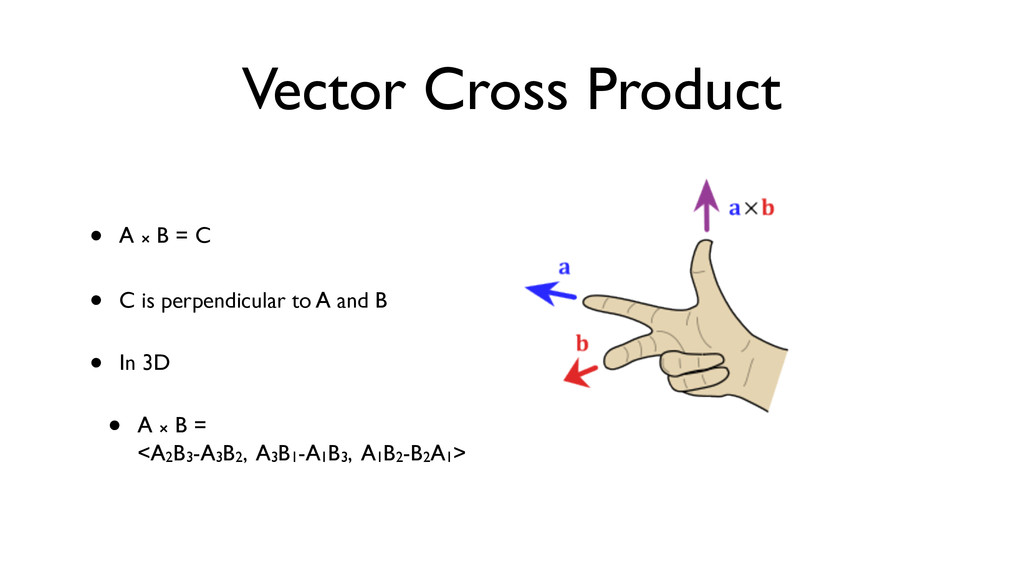
Can be represented by its components • A = <AX,AY,AZ> • Can be added, multiplied, subtracted from other vectors • Can be multiplied or ‘scaled’ by real numbers. • Normalization divides each component by the magnitude, setting the magnitude to 1 while maintaining direction. <AX,AY,AZ> Normalized, where m = ||A|| <AX/m,AY/m,AZ/m>
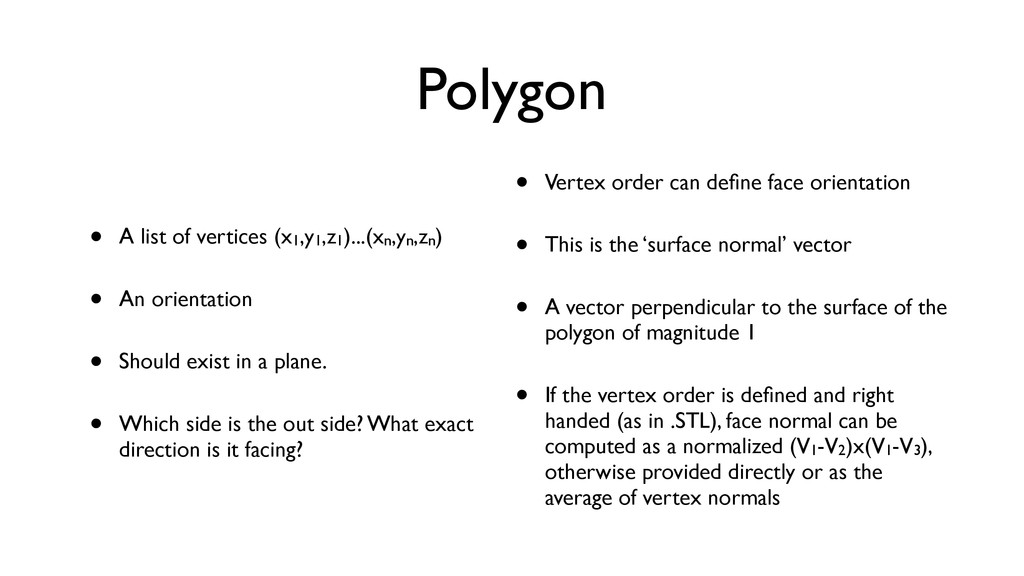
• Should exist in a plane. • Which side is the out side? What exact direction is it facing? • Vertex order can define face orientation • This is the ‘surface normal’ vector • A vector perpendicular to the surface of the polygon of magnitude 1 • If the vertex order is defined and right handed (as in .STL), face normal can be computed as a normalized (V1-V2)x(V1-V3), otherwise provided directly or as the average of vertex normals
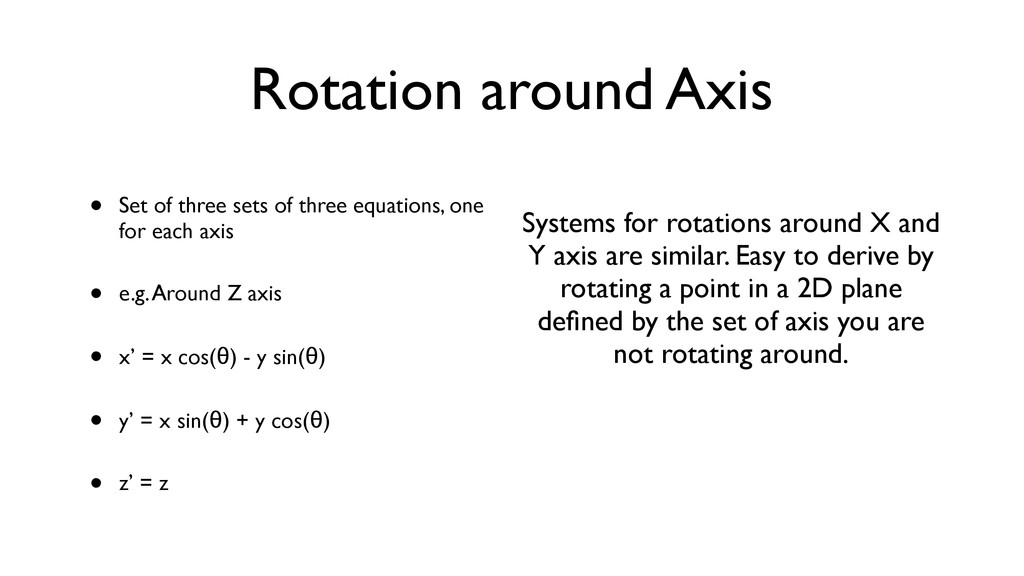
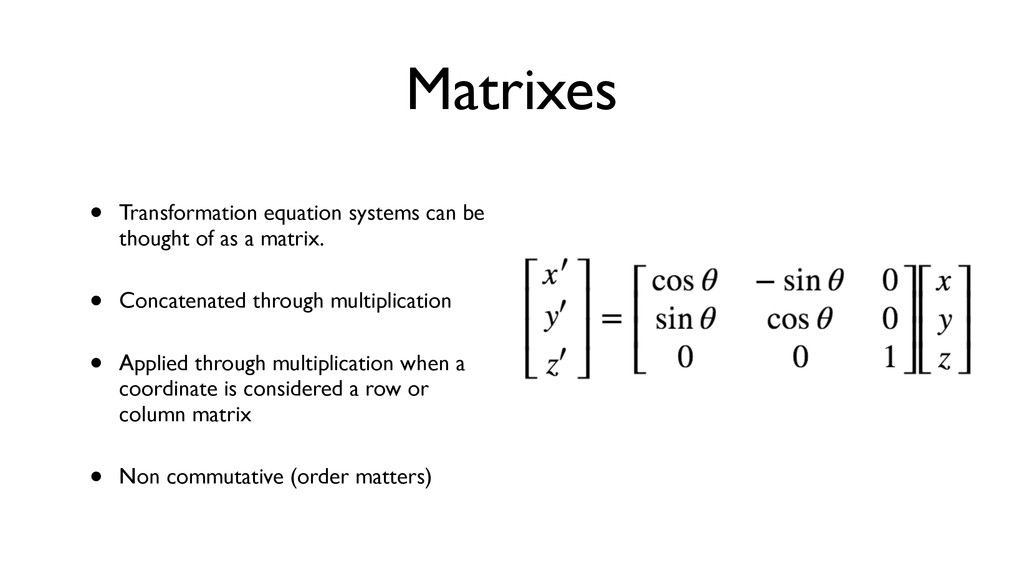
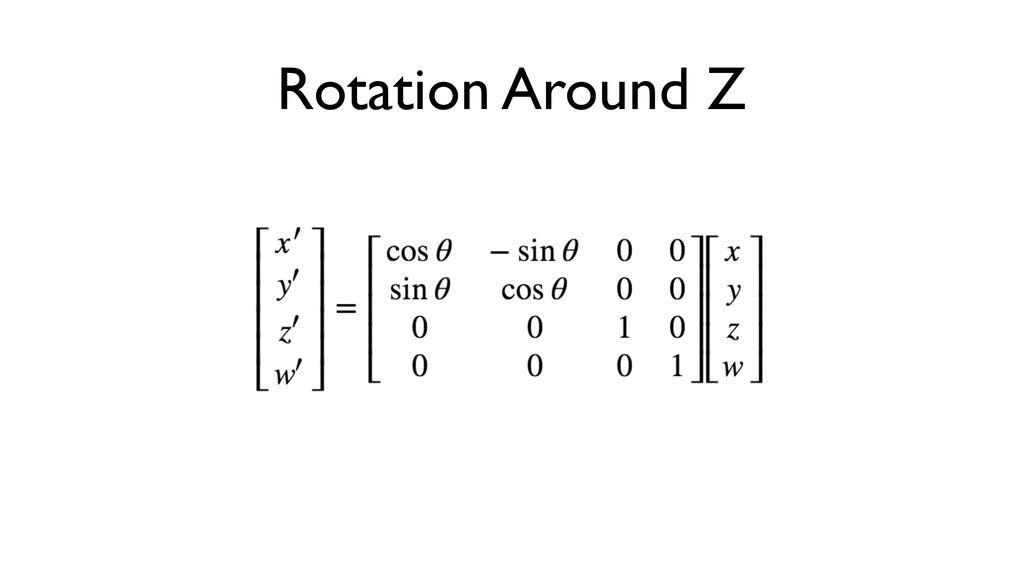
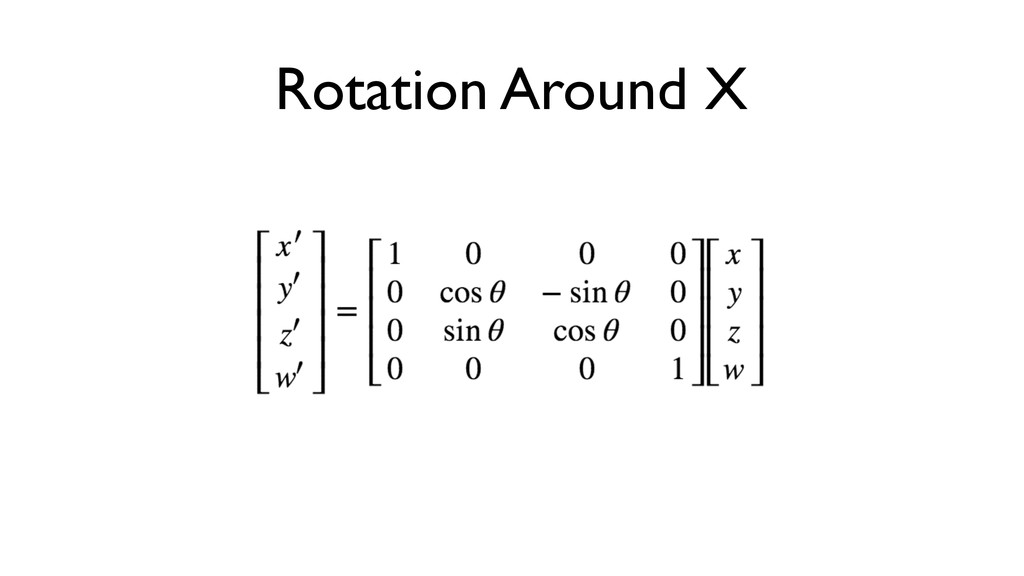
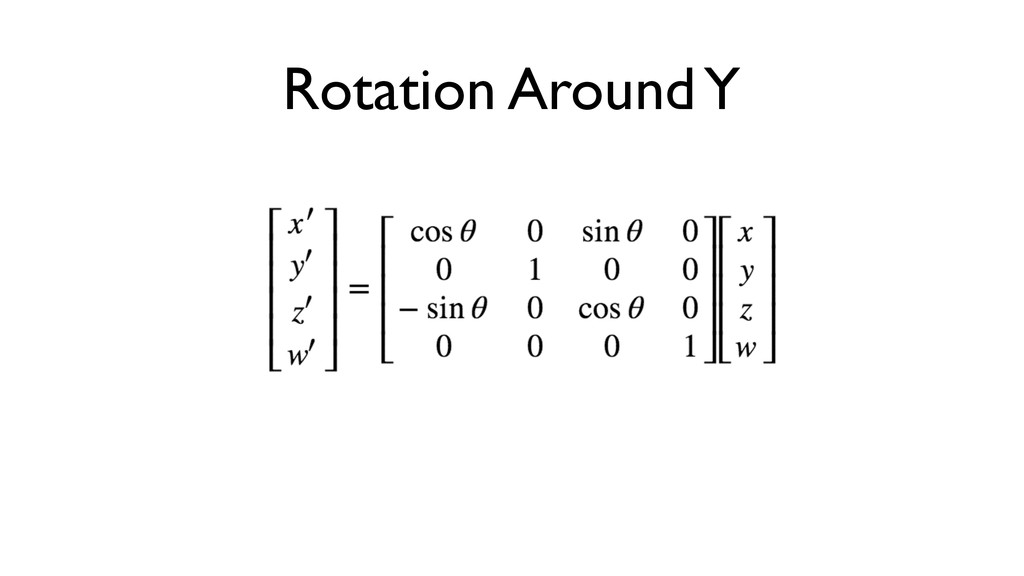
equations, one for each axis • e.g. Around Z axis • x’ = x cos(θ) - y sin(θ) • y’ = x sin(θ) + y cos(θ) • z’ = z Systems for rotations around X and Y axis are similar. Easy to derive by rotating a point in a 2D plane defined by the set of axis you are not rotating around.
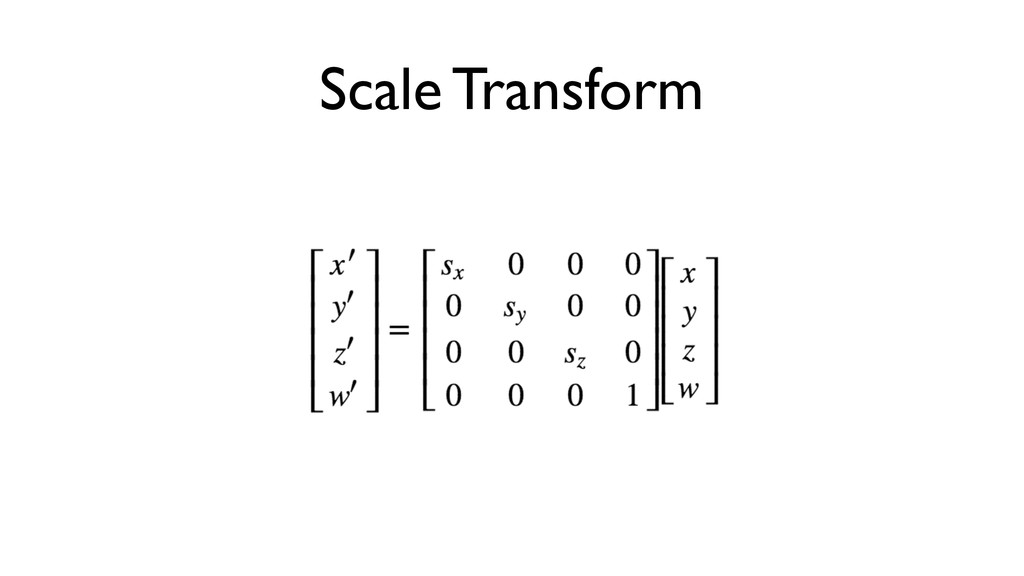
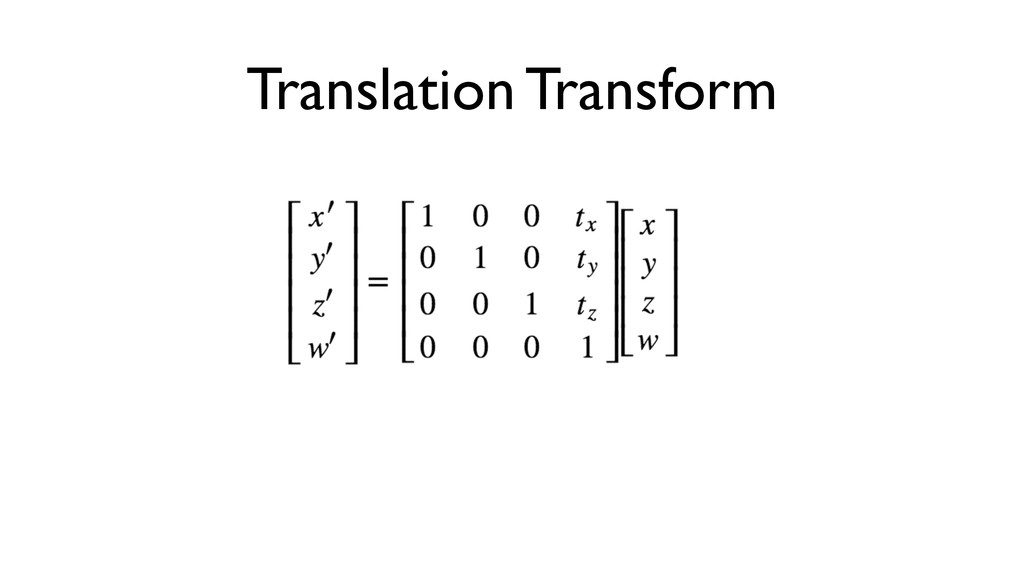
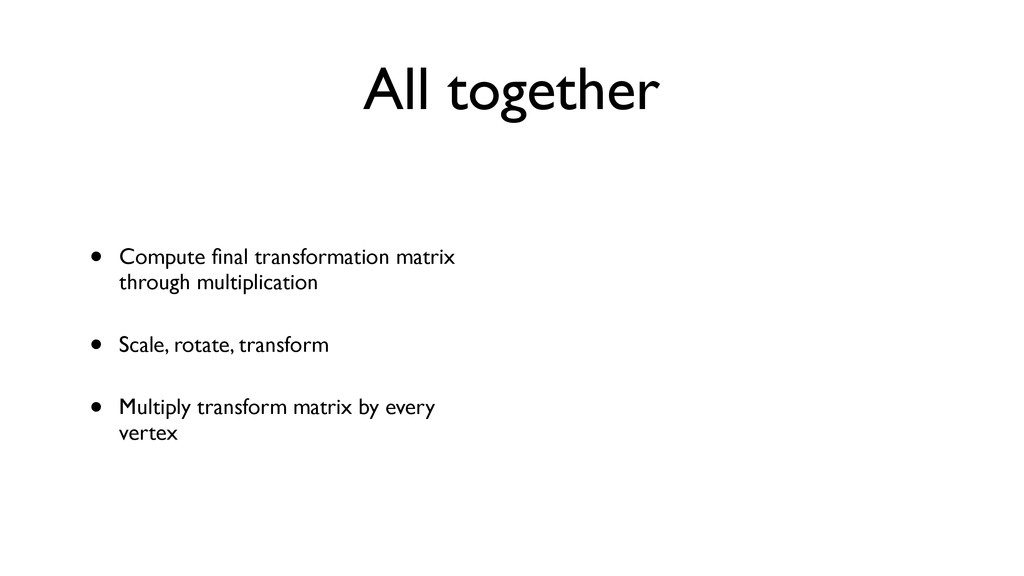
a matrix. • Concatenated through multiplication • Applied through multiplication when a coordinate is considered a row or column matrix • Non commutative (order matters)


 uyuki234
 kishida
 optim
 lef237
 yumnumm
 gam0022
 naokihaba
 teyamagu
 guaca
 kawashimo0
 neuecc
 oku053
 keithpitt
 sabderemane
 signer
 marcoroth
 ryanjones
 denniskardys
 dugsong
 techseoconnect
 reverentgeek
 tammyeverts
 cassininazir
 chrisshort