Upgrade to Pro — share decks privately, control downloads, hide ads and more …

PAS Stain | Principle, Procedure, Reagents & Tr...

PAS Stain | Principle, Procedure, Reagents & Troubleshooting

This presentation provides a step-by-step explanation of the Periodic Acid-Schiff (PAS) stain — a vital special stain used in diagnostic histopathology.

Learn the complete workflow including:
- Principle of PAS stain
- Reagents and preparation
- Full staining procedure
- Applications in fungal, renal, and tumor pathology
- Troubleshooting tips

Perfect for students, interns, and pathology professionals.
By: Mohd Salman
Ex-Core Diagnostics | Pathcore Diagnostics
📧 [email protected] | LinkedIn: mohd-salman-177975101

Avatar for Salman Siddique

Salman Siddique

August 04, 2025
Tweet

Other Decks in Science

Transcript

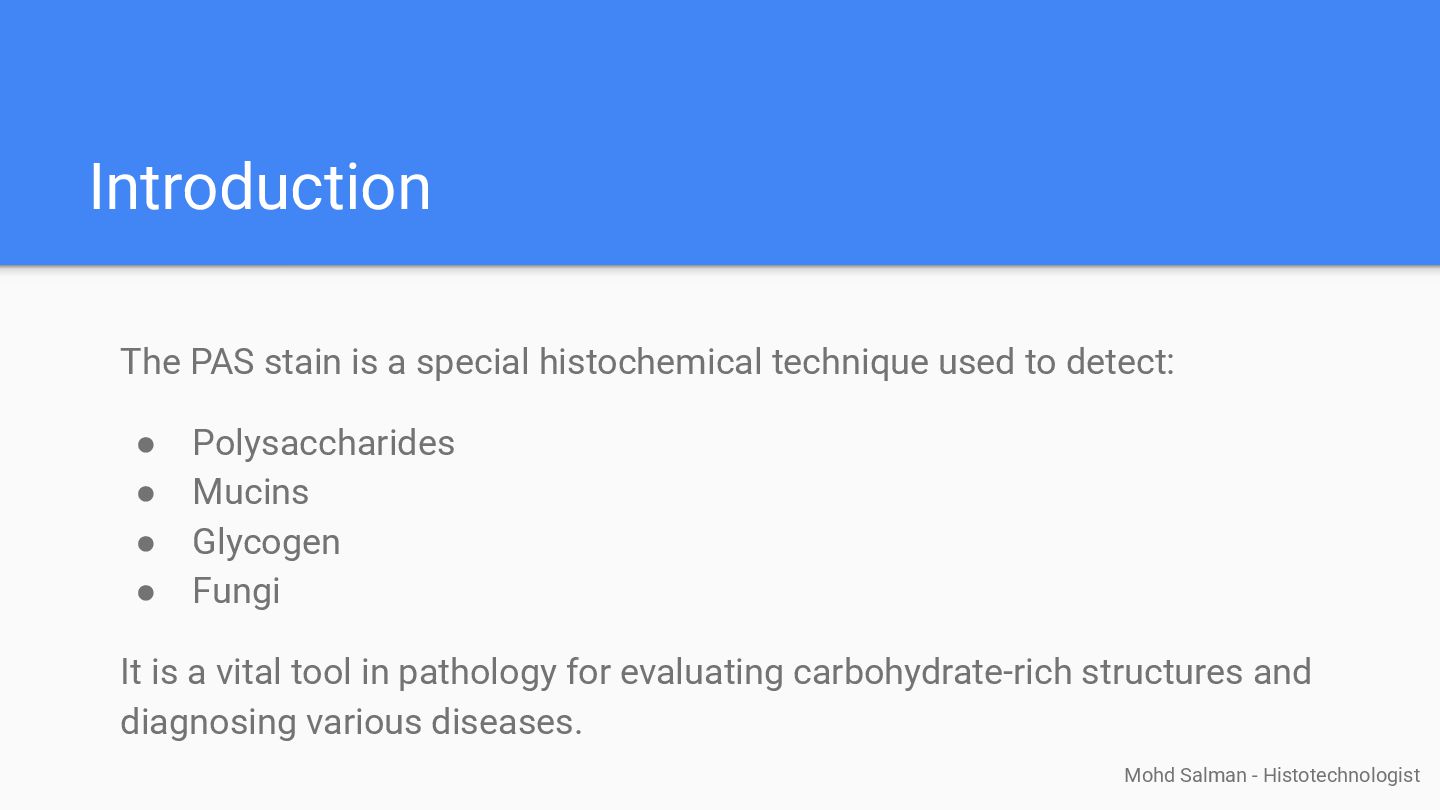
  1. Introduction The PAS stain is a special histochemical technique used

    to detect: • Polysaccharides • Mucins • Glycogen • Fungi It is a vital tool in pathology for evaluating carbohydrate-rich structures and diagnosing various diseases. Mohd Salman - Histotechnologist
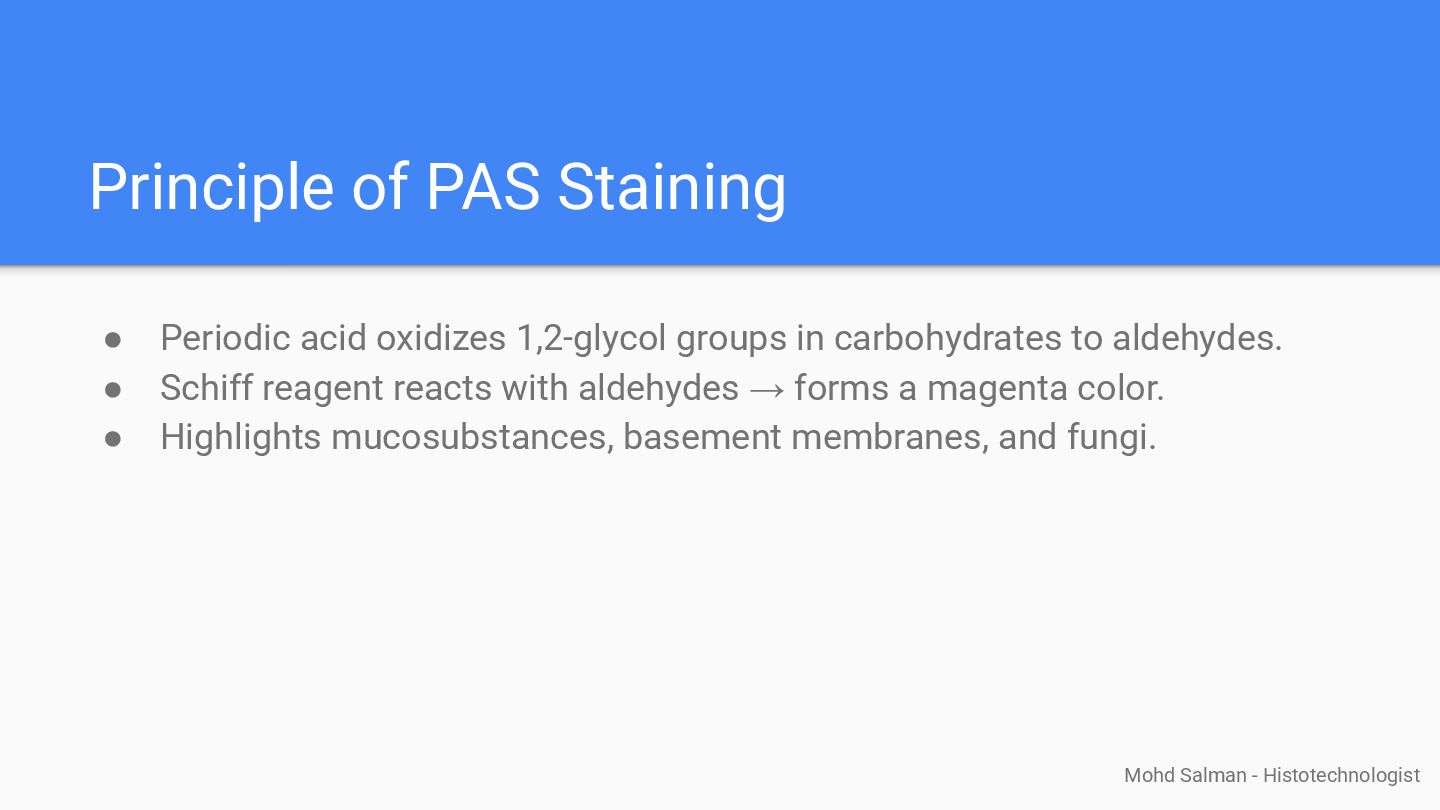
  2. Principle of PAS Staining • Periodic acid oxidizes 1,2-glycol groups

    in carbohydrates to aldehydes. • Schiff reagent reacts with aldehydes → forms a magenta color. • Highlights mucosubstances, basement membranes, and fungi. Mohd Salman - Histotechnologist
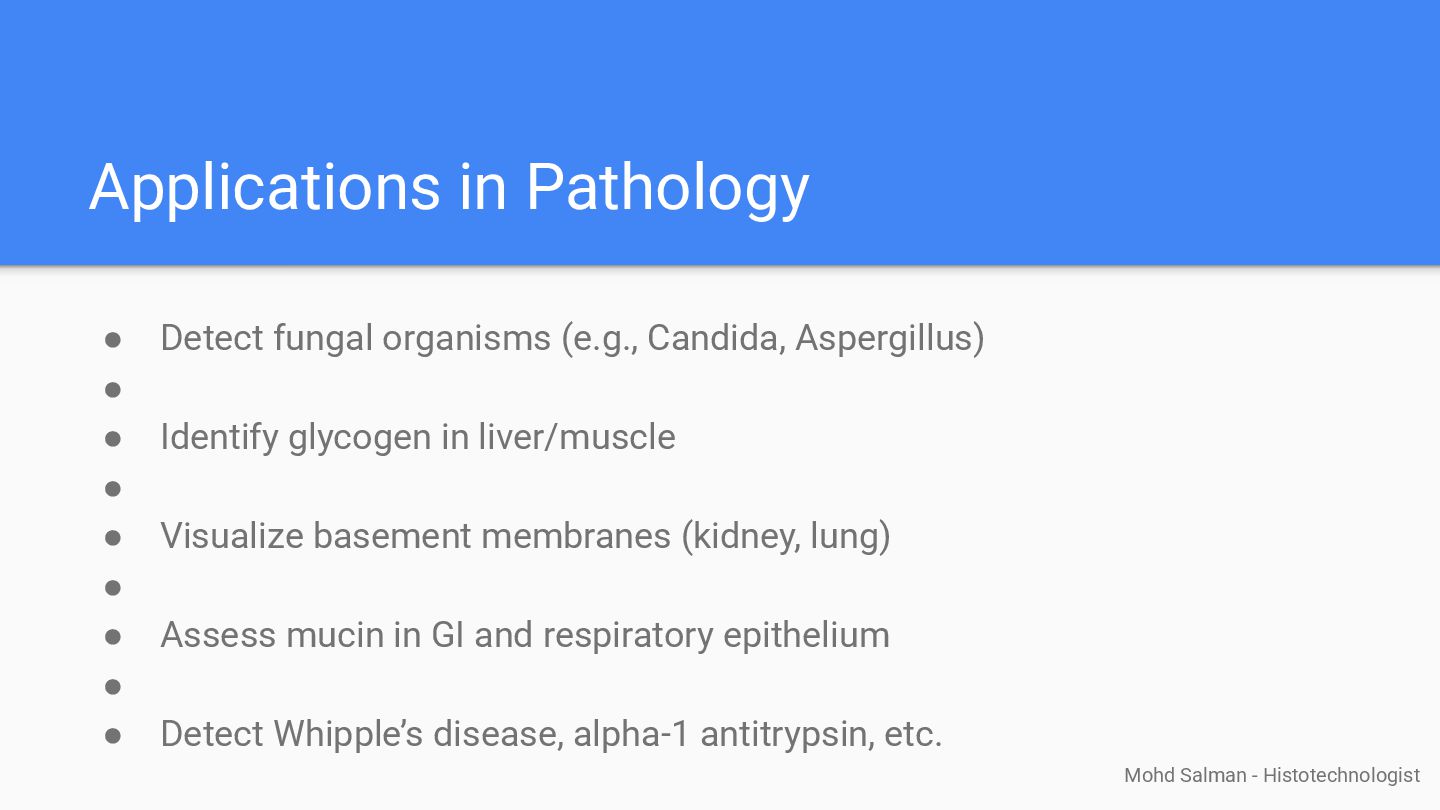
  3. Applications in Pathology • Detect fungal organisms (e.g., Candida, Aspergillus)

    • • Identify glycogen in liver/muscle • • Visualize basement membranes (kidney, lung) • • Assess mucin in GI and respiratory epithelium • • Detect Whipple’s disease, alpha-1 antitrypsin, etc. Mohd Salman - Histotechnologist
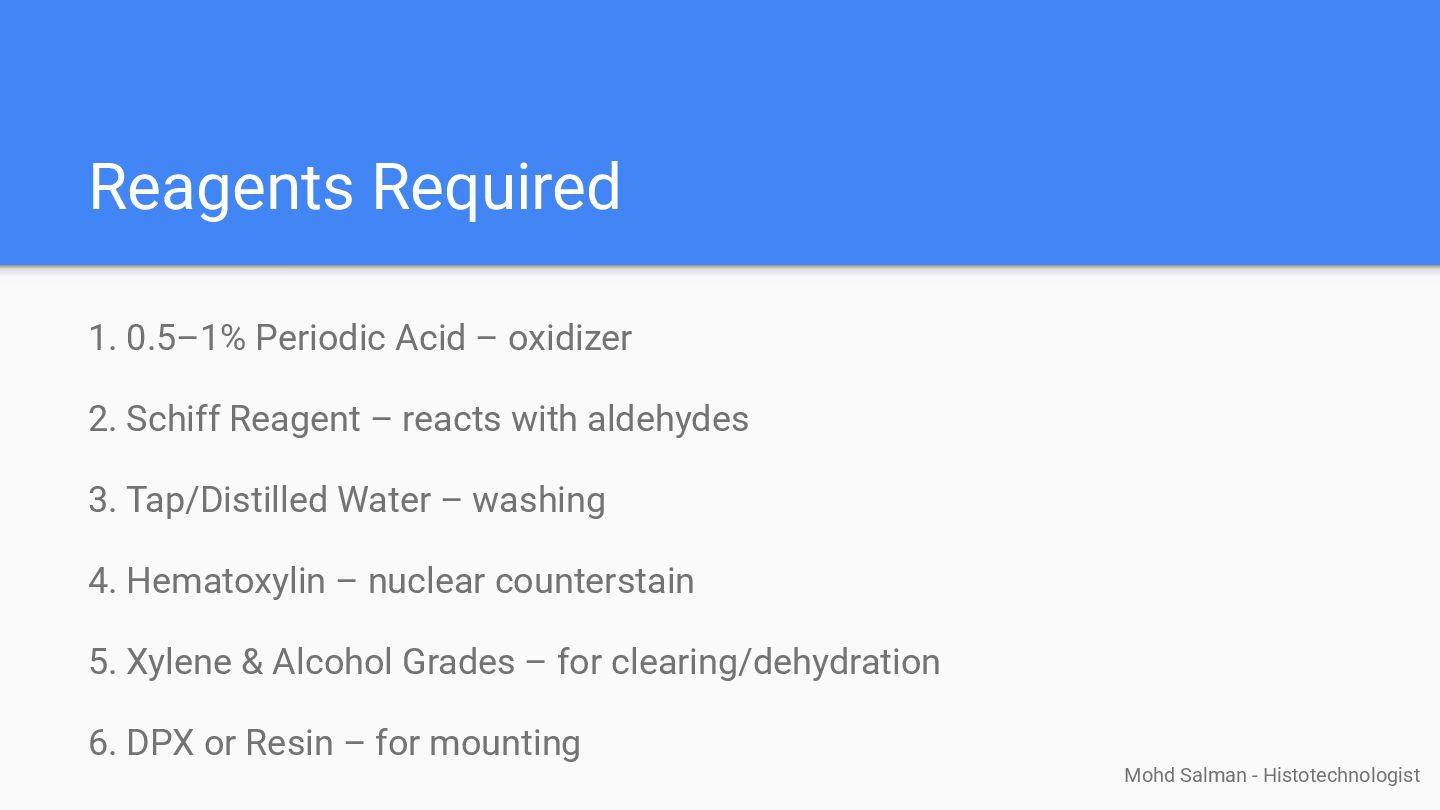
  4. Reagents Required 1. 0.5–1% Periodic Acid – oxidizer 2. Schiff

    Reagent – reacts with aldehydes 3. Tap/Distilled Water – washing 4. Hematoxylin – nuclear counterstain 5. Xylene & Alcohol Grades – for clearing/dehydration 6. DPX or Resin – for mounting Mohd Salman - Histotechnologist
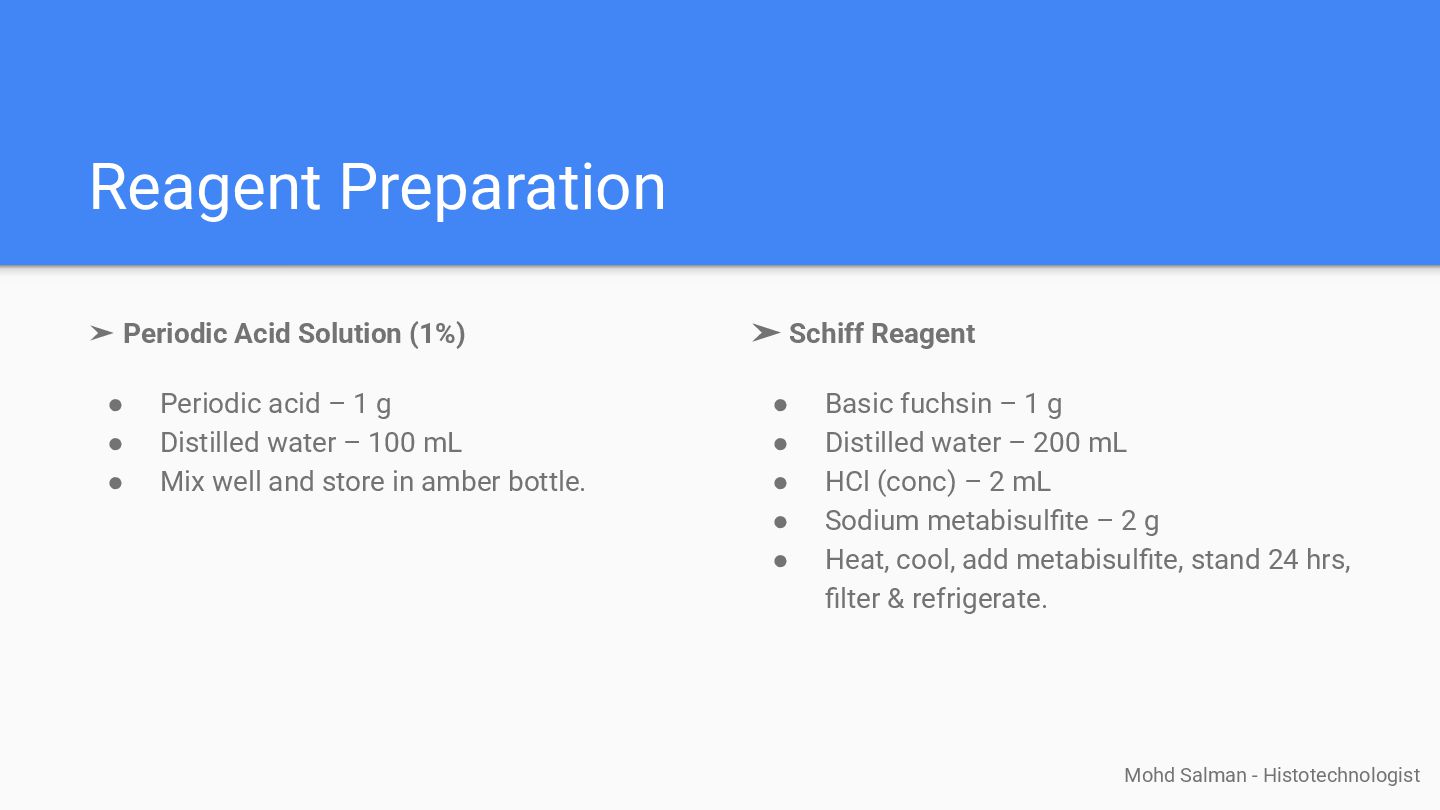
  5. Reagent Preparation ➤ Periodic Acid Solution (1%) • Periodic acid

    – 1 g • Distilled water – 100 mL • Mix well and store in amber bottle. ➤ Schiff Reagent • Basic fuchsin – 1 g • Distilled water – 200 mL • HCl (conc) – 2 mL • Sodium metabisulfite – 2 g • Heat, cool, add metabisulfite, stand 24 hrs, filter & refrigerate. Mohd Salman - Histotechnologist
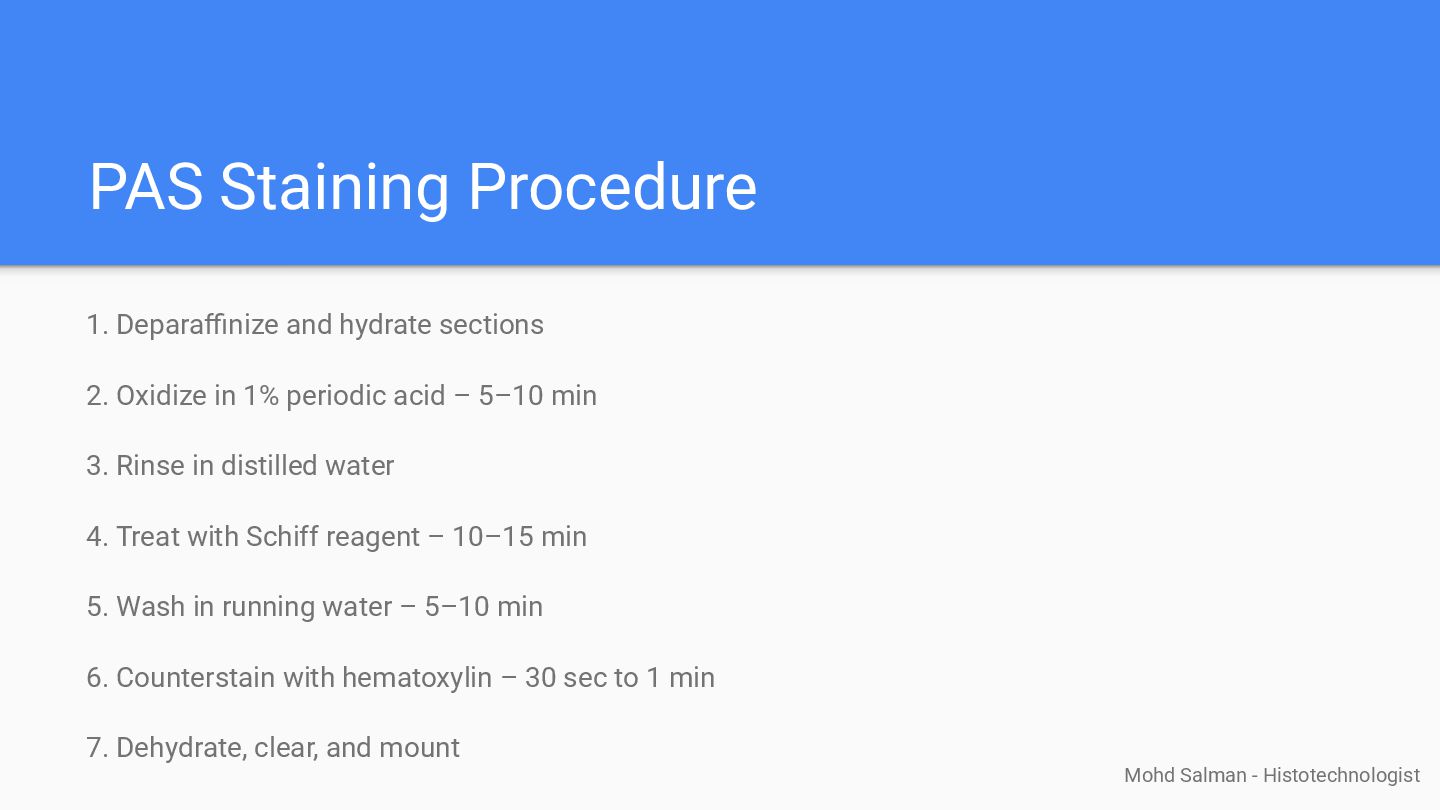
  6. PAS Staining Procedure 1. Deparaffinize and hydrate sections 2. Oxidize

    in 1% periodic acid – 5–10 min 3. Rinse in distilled water 4. Treat with Schiff reagent – 10–15 min 5. Wash in running water – 5–10 min 6. Counterstain with hematoxylin – 30 sec to 1 min 7. Dehydrate, clear, and mount Mohd Salman - Histotechnologist
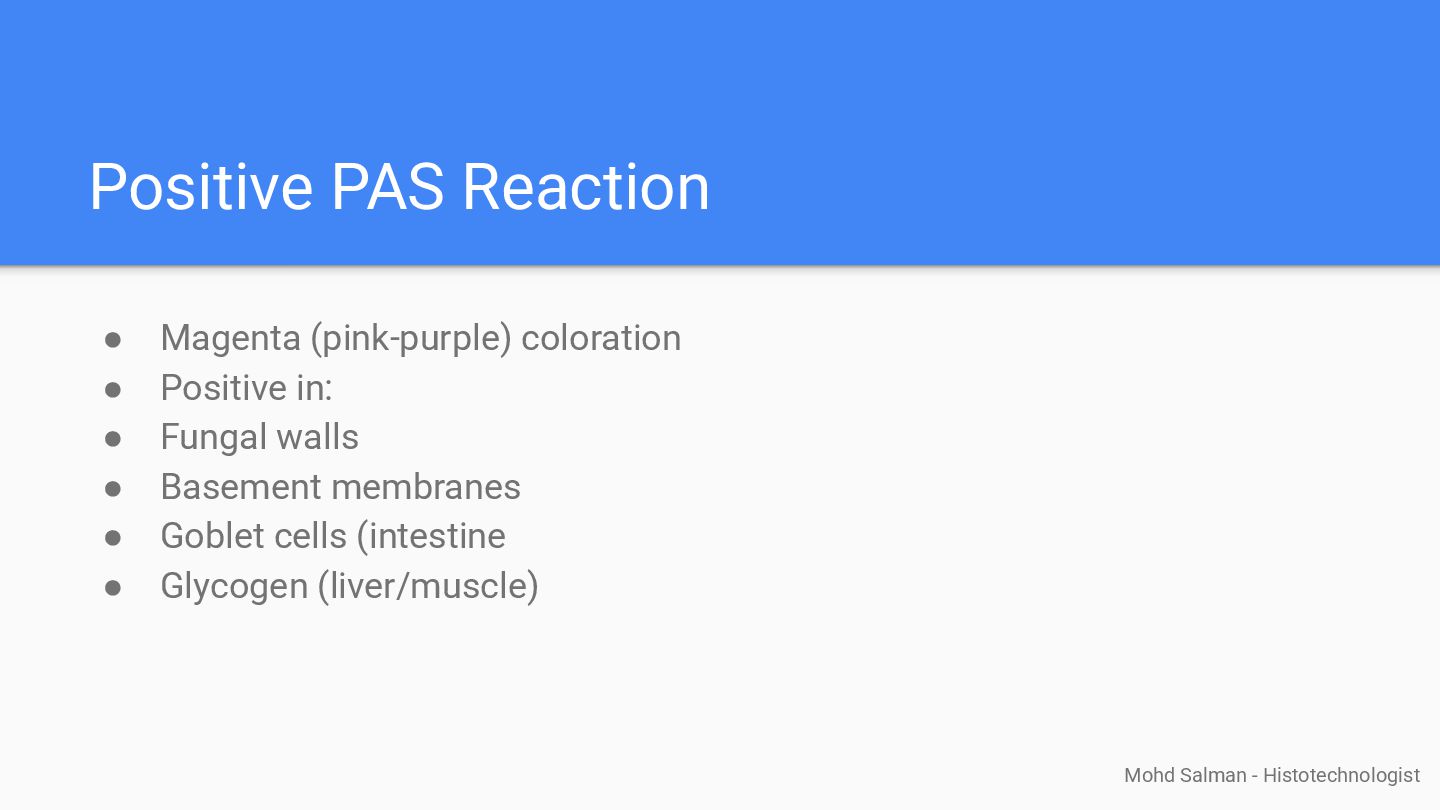
  7. Positive PAS Reaction • Magenta (pink-purple) coloration • Positive in:

    • Fungal walls • Basement membranes • Goblet cells (intestine • Glycogen (liver/muscle) Mohd Salman - Histotechnologist
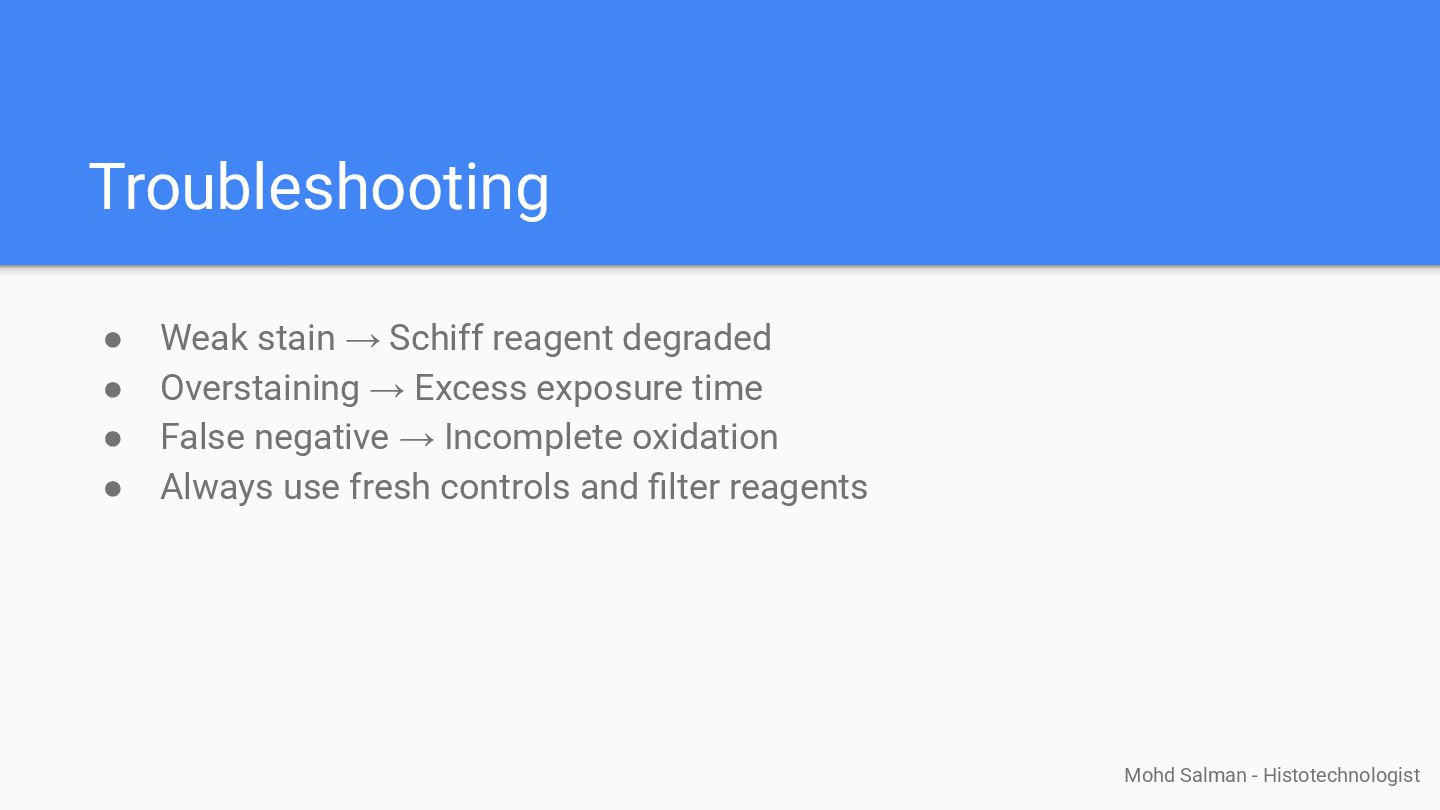
  8. Troubleshooting • Weak stain → Schiff reagent degraded • Overstaining

    → Excess exposure time • False negative → Incomplete oxidation • Always use fresh controls and filter reagents Mohd Salman - Histotechnologist
  9. Summary PAS is a routine, reliable special stain Identifies key

    carbohydrate structures Crucial for fungal, renal, and mucin diagnosis Easy to perform with proper technique and fresh reagents
  10. Mohd Salman Histopathology Specialist Medical Lab Professional Experienced in routine

    and special staining techniques including H&E, PAS, Reticulin, and more. Skilled in tissue processing, embedding, microtomy, and quality control 📧 Email: [email protected] 🔗 LinkedIn: linkedin.com/in/mohd-salman-1779 75101