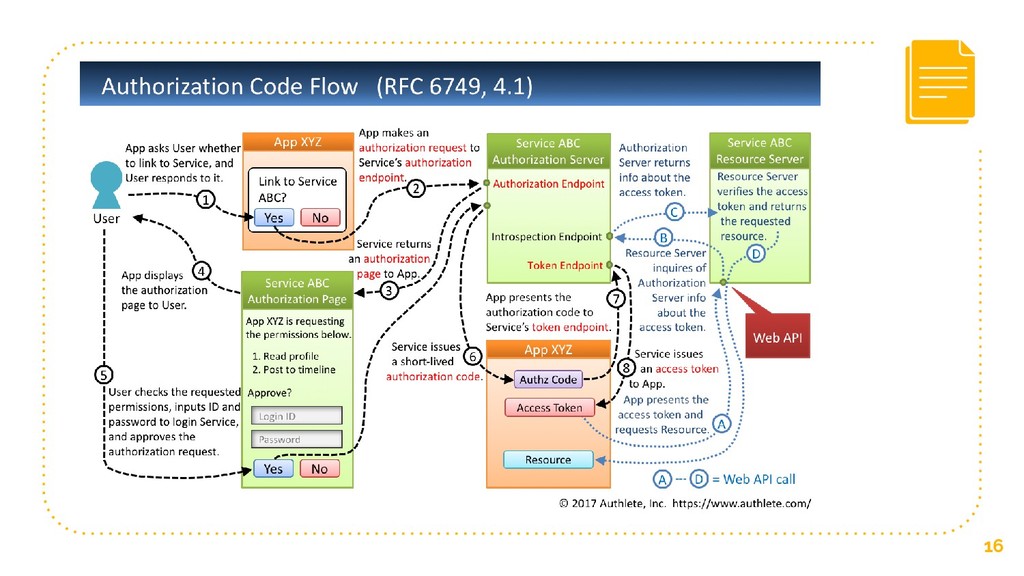
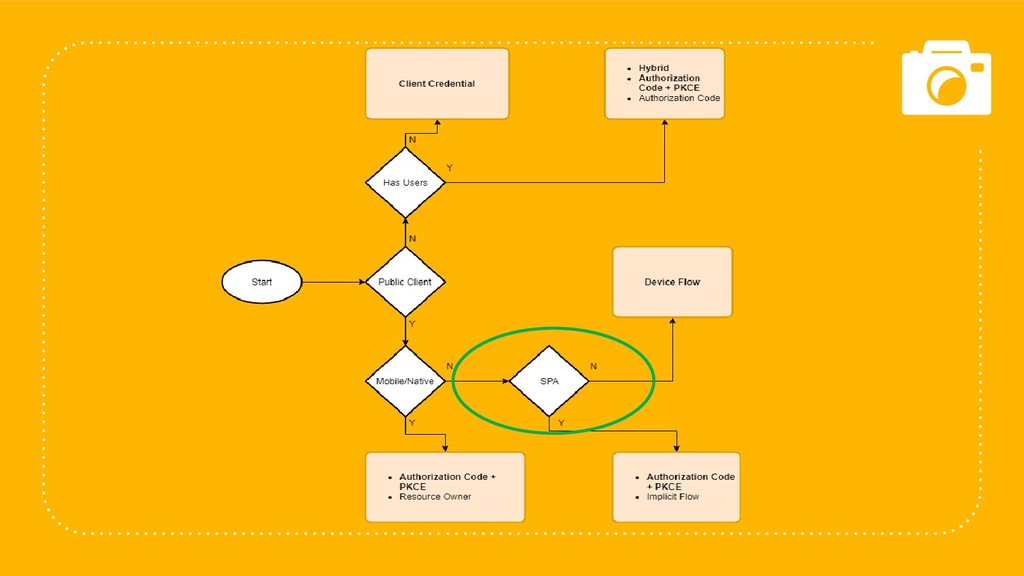
(Oauth, WS-*, Kerberos, SAML, etc.) • Reading Specification Is Hard • Conflicting Information In The Internet • Not Easy To Implement Correctly • Evolving Technique, New Exploit, Vulnerability 4
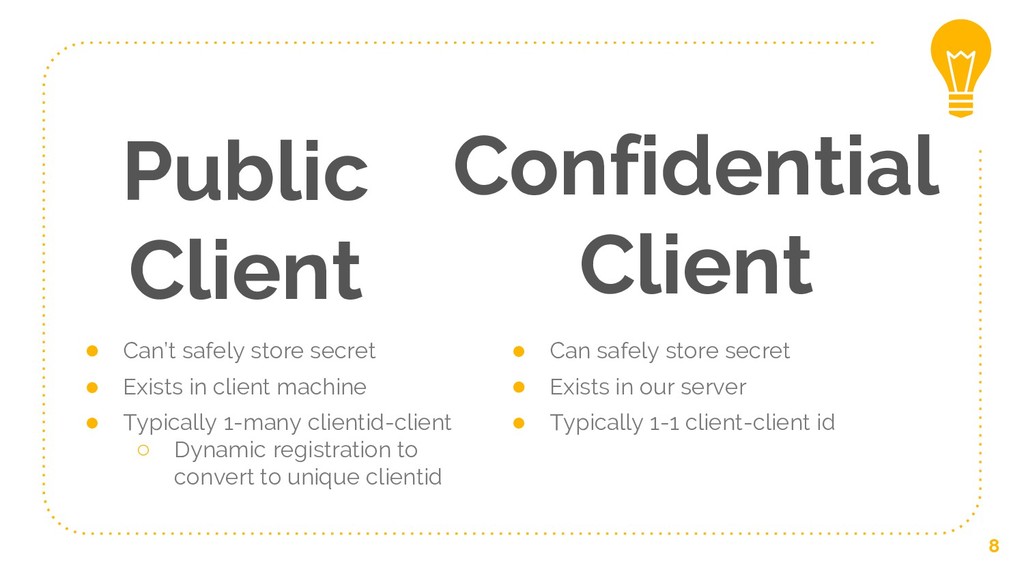
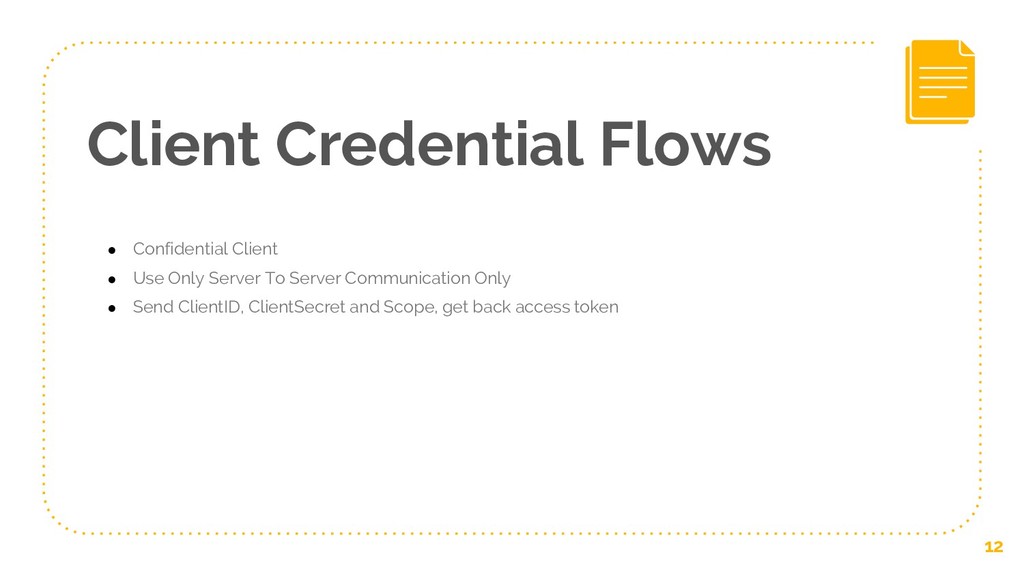
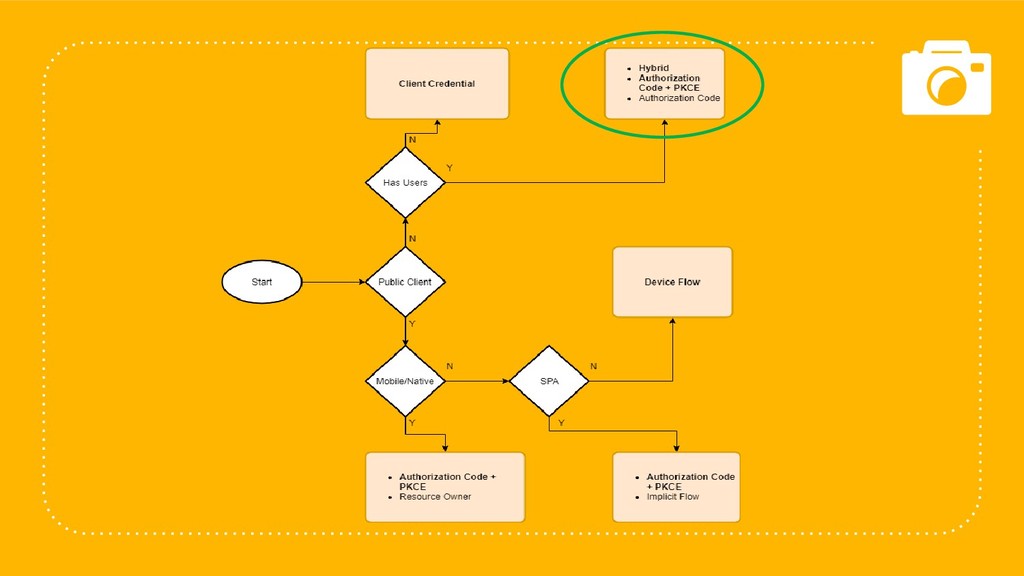
• Typically 1-many clientid-client ◦ Dynamic registration to convert to unique clientid Public Client • Can safely store secret • Exists in our server • Typically 1-1 client-client id 8 Confidential Client
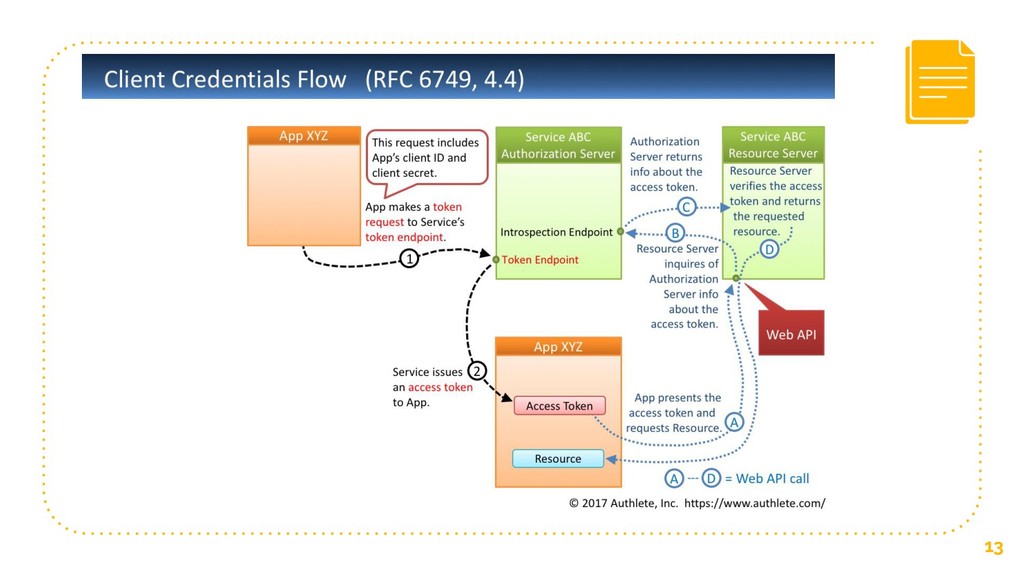
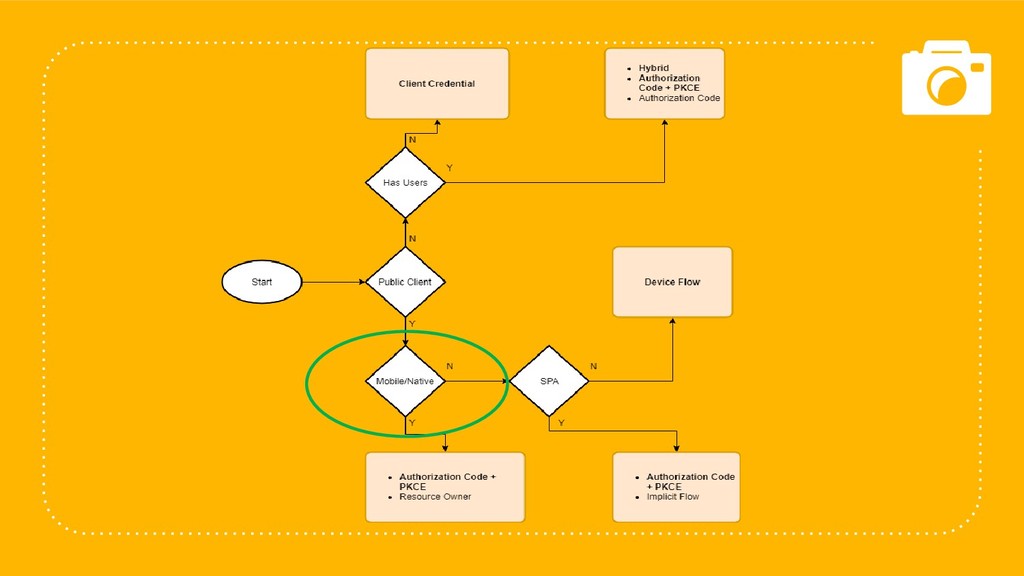
(Native, Cordova) • PC App (Native, Electron) Public Client • Back channel and front channel • Server to Server • Server side web application (Asp.Net MVC) 9 Confidential Client
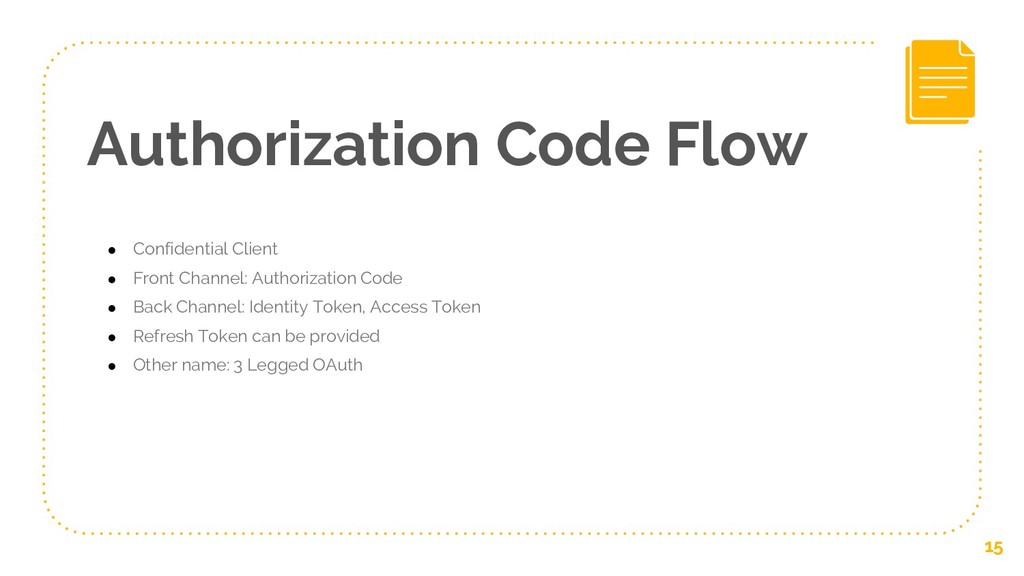
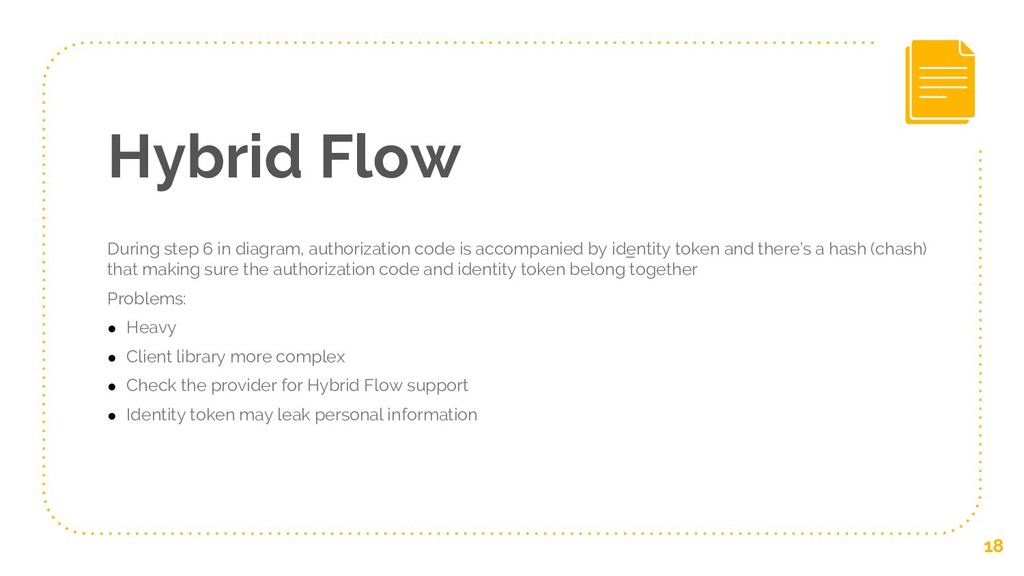
accompanied by id_ entity token and there’s a hash (chash) that making sure the authorization code and identity token belong together Problems: • Heavy • Client library more complex • Check the provider for Hybrid Flow support • Identity token may leak personal information 18
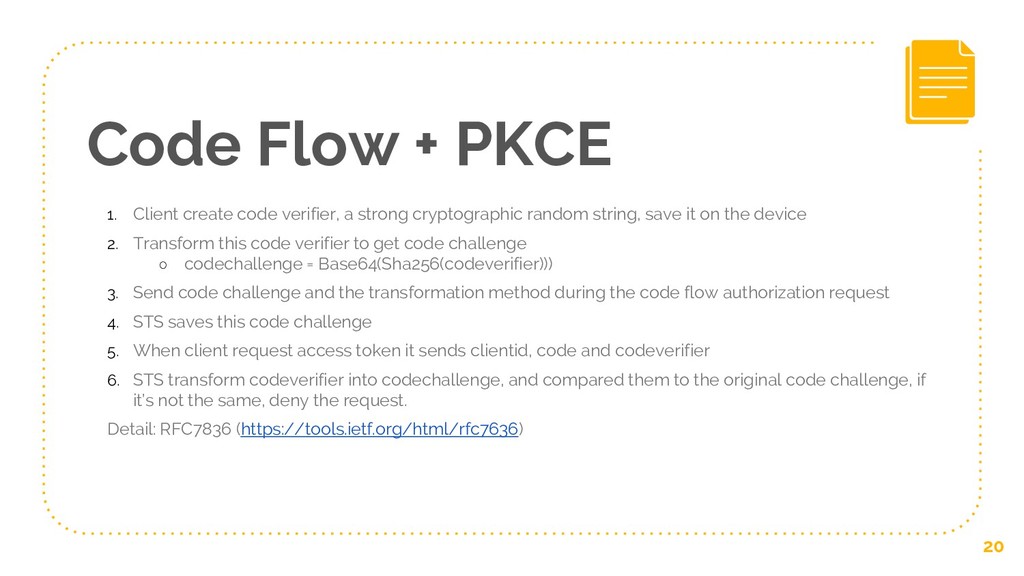
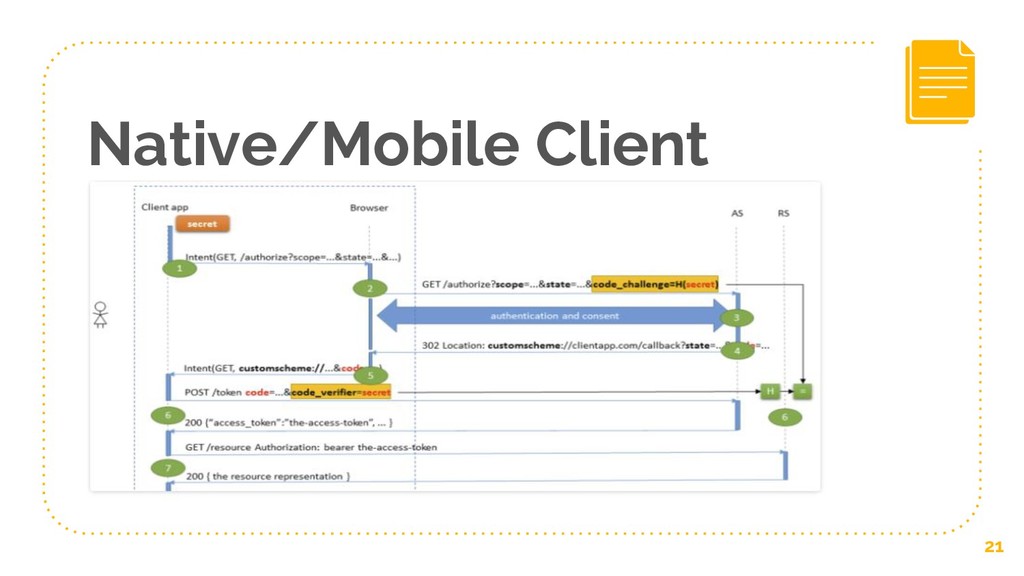
strong cryptographic random string, save it on the device 2. Transform this code verifier to get code challenge ◦ codechallenge = Base64(Sha256(codeverifier))) 3. Send code challenge and the transformation method during the code flow authorization request 4. STS saves this code challenge 5. When client request access token it sends clientid, code and codeverifier 6. STS transform codeverifier into codechallenge, and compared them to the original code challenge, if it’s not the same, deny the request. Detail: RFC7836 (https://tools.ietf.org/html/rfc7636) 20
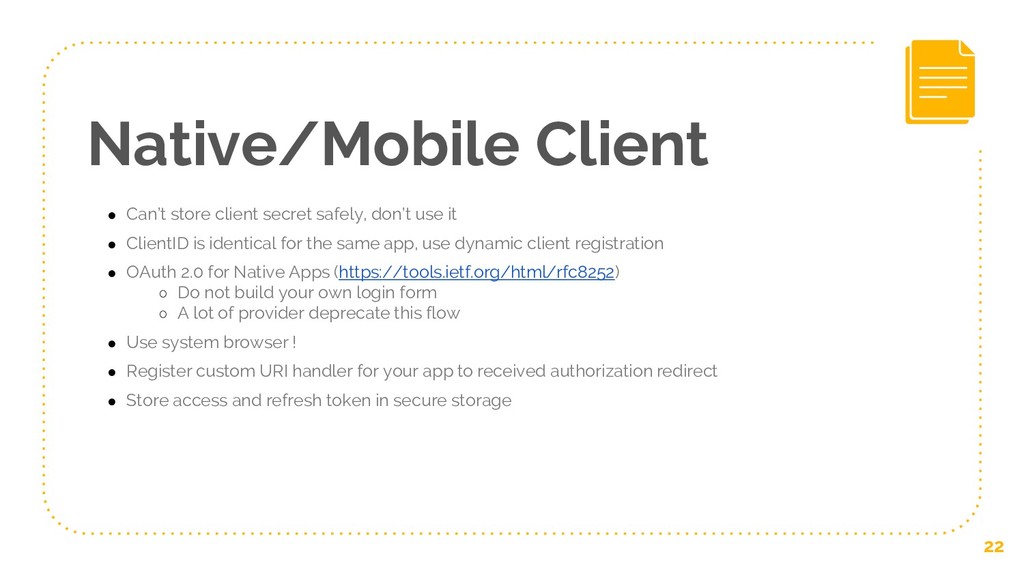
it • ClientID is identical for the same app, use dynamic client registration • OAuth 2.0 for Native Apps (https://tools.ietf.org/html/rfc8252) ◦ Do not build your own login form ◦ A lot of provider deprecate this flow • Use system browser ! • Register custom URI handler for your app to received authorization redirect • Store access and refresh token in secure storage 22
sent on the front channel • Must use hash fragment in the URL • XSS, XRF can cause access token exfiltration • How to prevent token substitution attack ? ◦ OpenID Implicit Flow added (at hash) claim 27
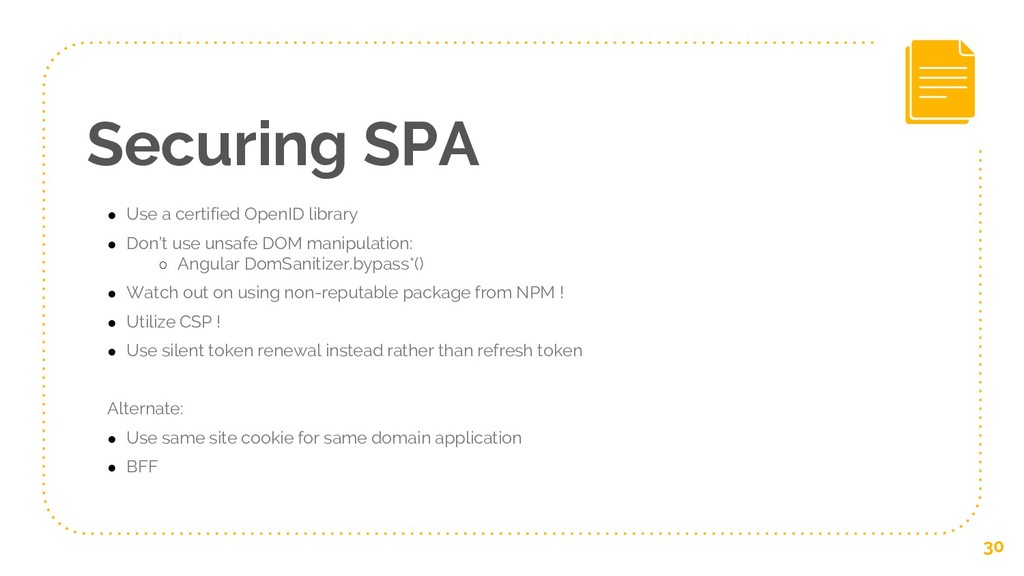
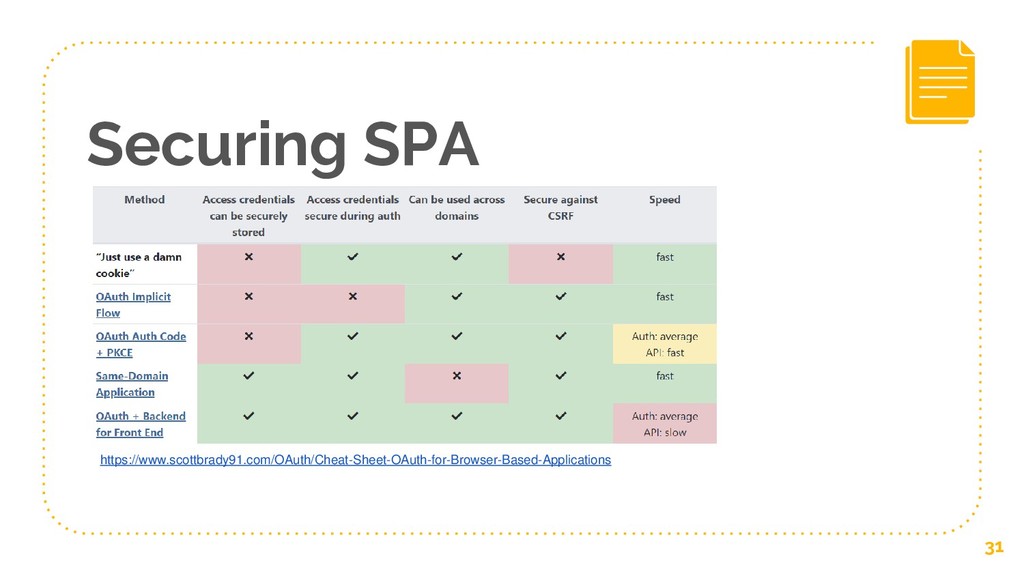
use unsafe DOM manipulation: ◦ Angular DomSanitizer.bypass*() • Watch out on using non-reputable package from NPM ! • Utilize CSP ! • Use silent token renewal instead rather than refresh token Alternate: • Use same site cookie for same domain application • BFF 30
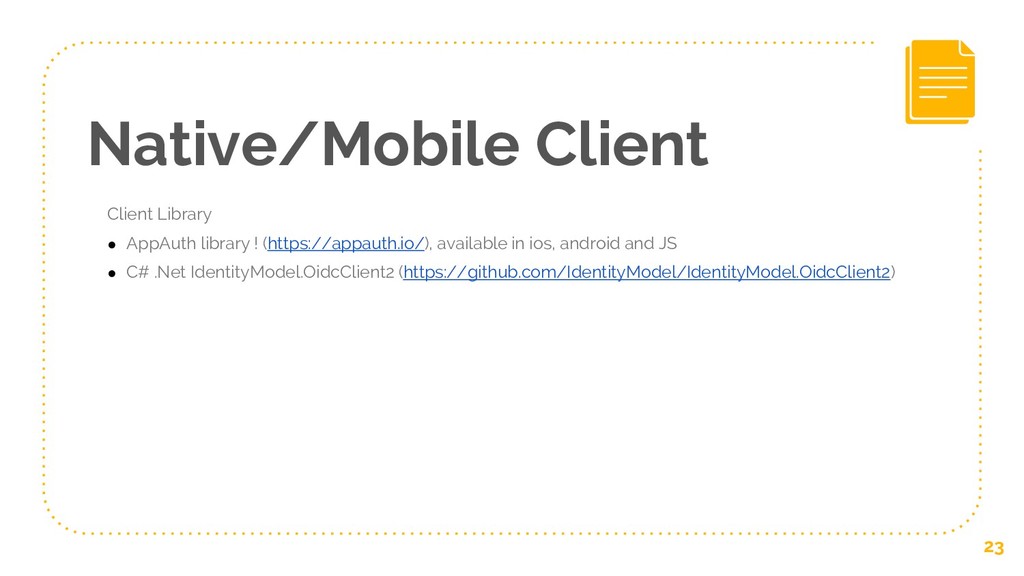
(https://tools.ietf.org/html/draft-parecki-oauth-browser-based- apps-02) • OAuth 2.0 Security Best Current Practice (https://tools.ietf.org/html/draft-ietf-oauth-security-topics- 12) • OAuth 2.0 for Native Apps (https://tools.ietf.org/html/rfc8252) 38


 tomokusaba
 gogutan
 tokuty
 codmoninc
 maimyyym
 takahashim
 genda
 takuroabe
 raspython3
 jtakeda
 tetsuya28
 yahonda
 codingconduct
 aleyda
 tmiket
 hannesfritz
 eileencodes
 mraible
 joshbly
 sarafernandez
 jct
 ipullrank
 khoart
 skoyamalab