Verilog/VHDL • Helps to break the "scary" barrier to enter circuit design by embedded software developers • Automatic FSMs from control flow ("while loops") • Comfortable debugging (tools new and upcoming like gdbwave)
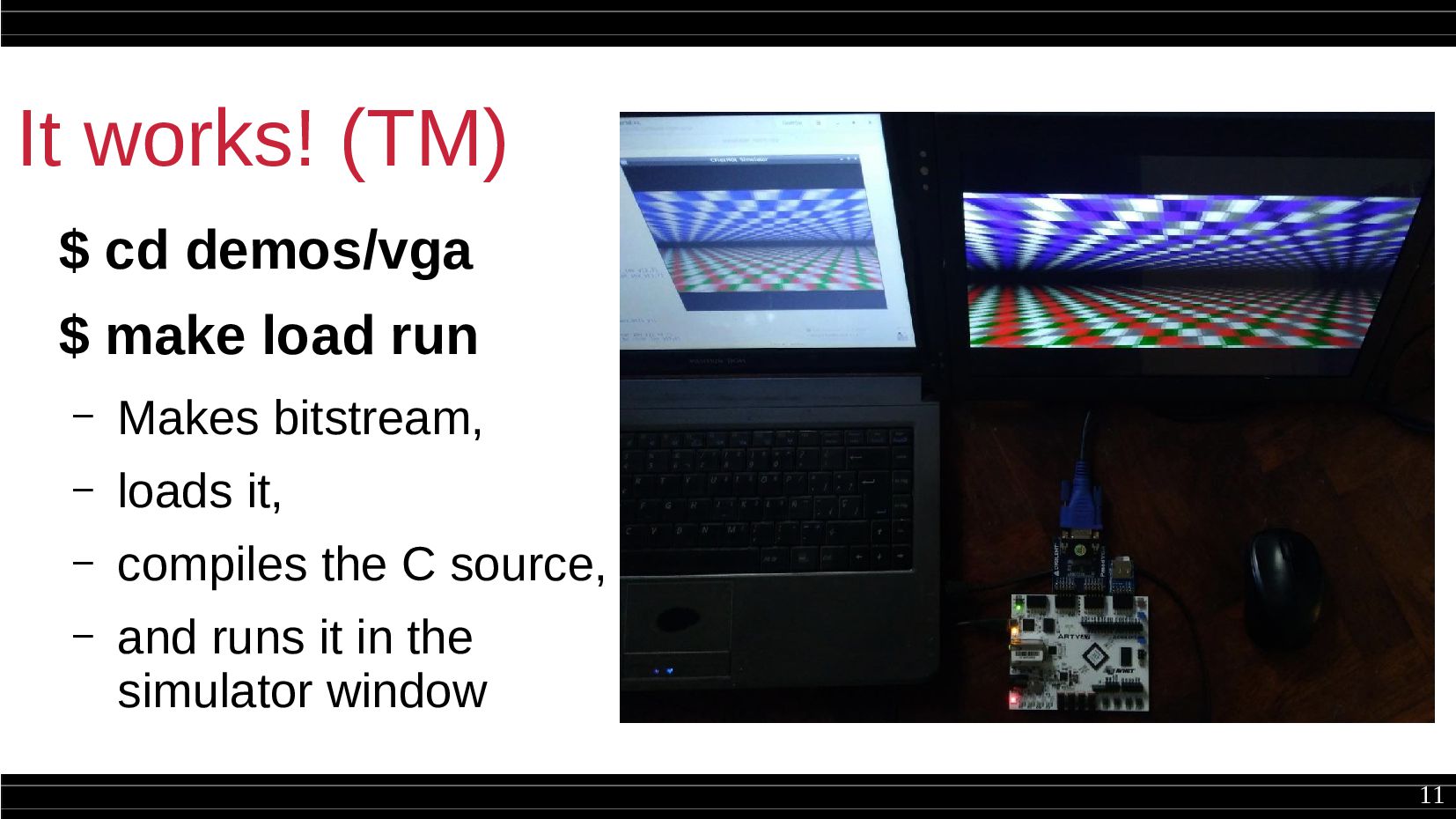
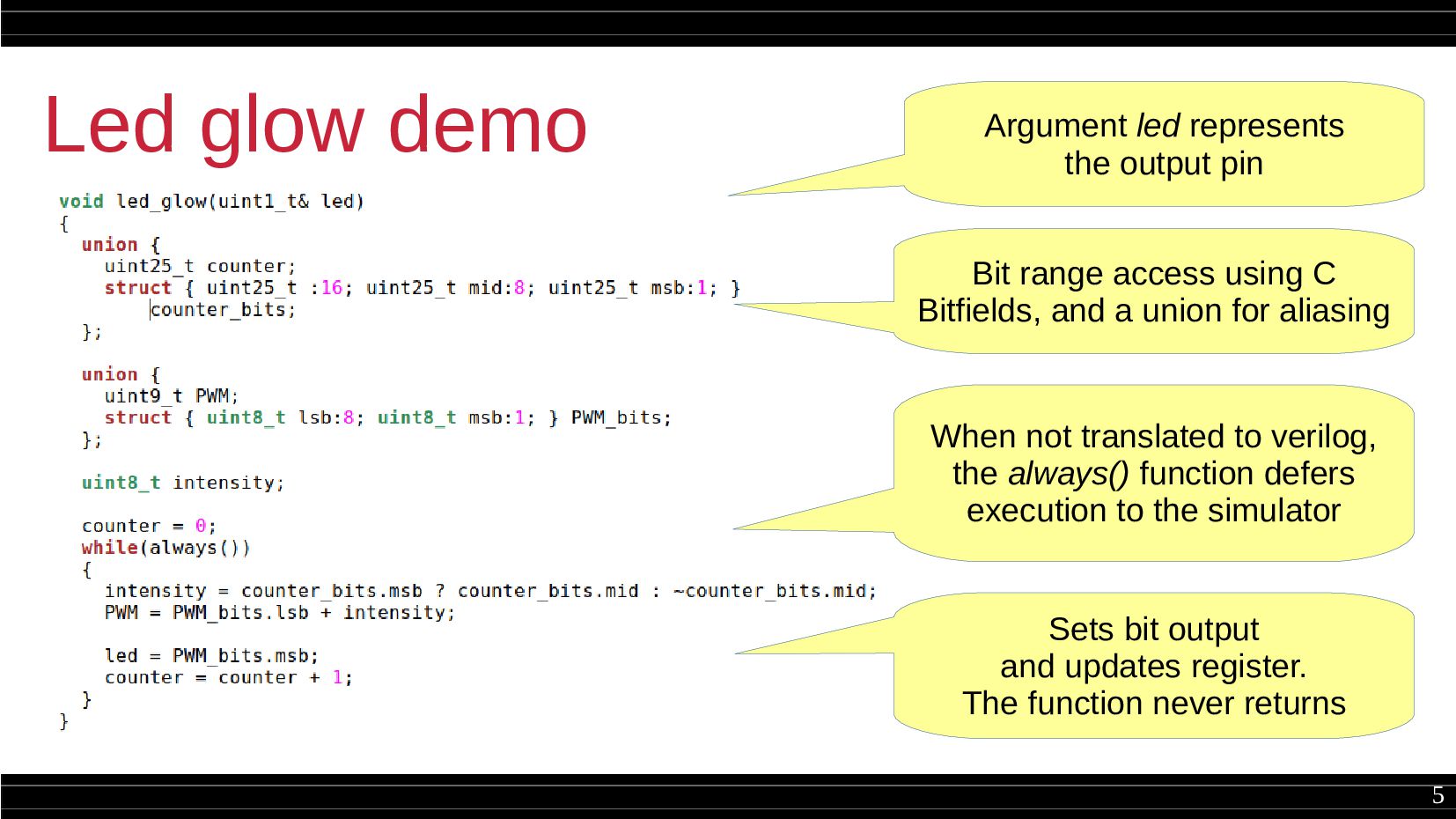
even faster than fast HDL simulators • Simulator runs at 220MHz clock speed (LED glow demo) • The 3D-like video demo surpasses realtime, even with a 15 years old CPU: 126FPS - 38M pixel/s • Original demo: 0.82 FPS (156X slower) - Silice’s “make verilator”
and a union for aliasing When not translated to verilog, the always() function defers execution to the simulator Sets bit output and updates register. The function never returns Argument led represents the output pin
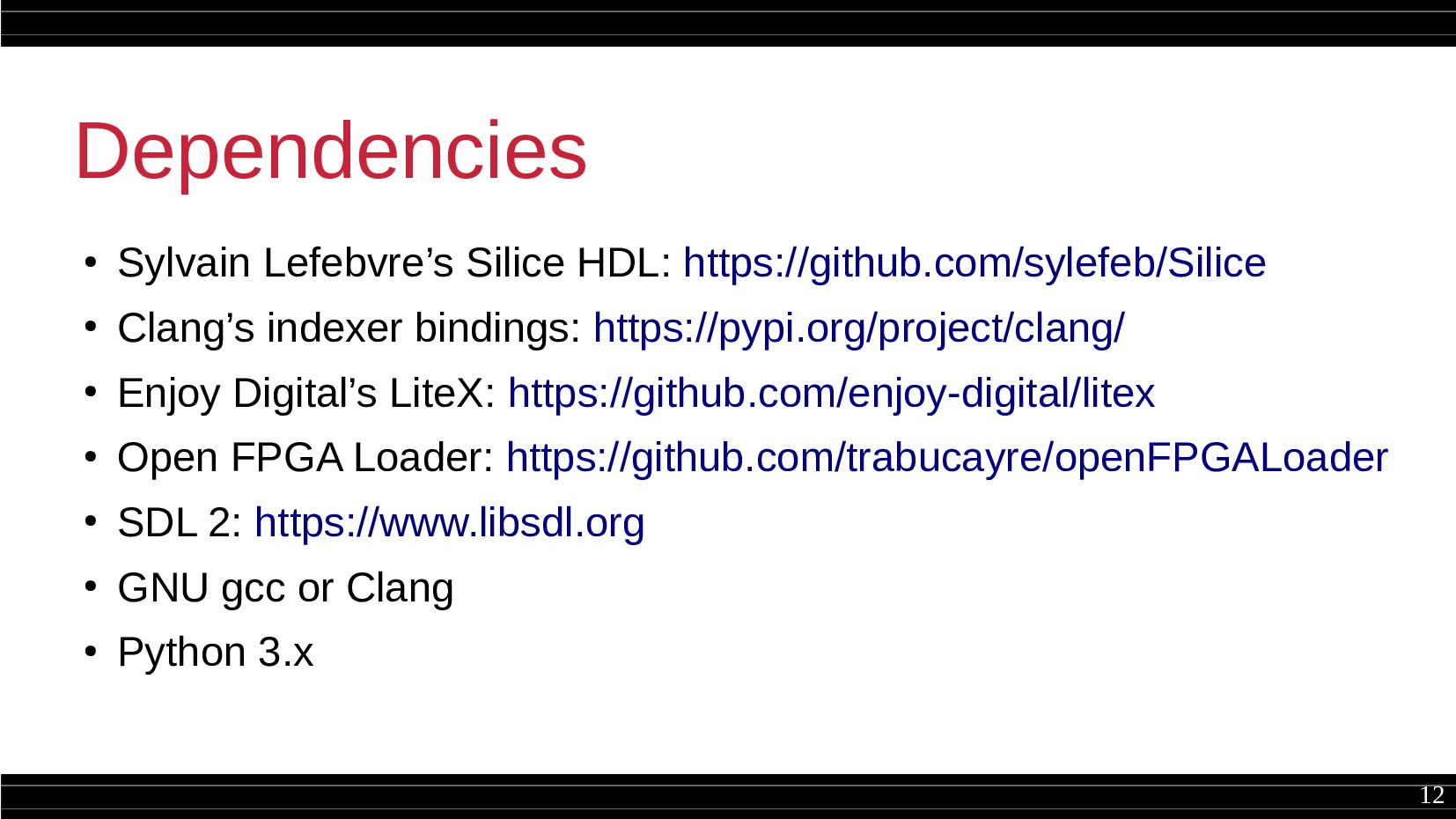
but also required the development of non-existing modules such as: – CflexParser: the first C++ parser/generator for python. Based on clang indexer’s bindings (tool to be released stand-alone) – Adding previously unsupported boards to Silice projects – Graphic display on the simulator: running the original C code or the Verilator output using a same codebase – Integration of Yosys+NextPNR into LiteX framework: mainlined
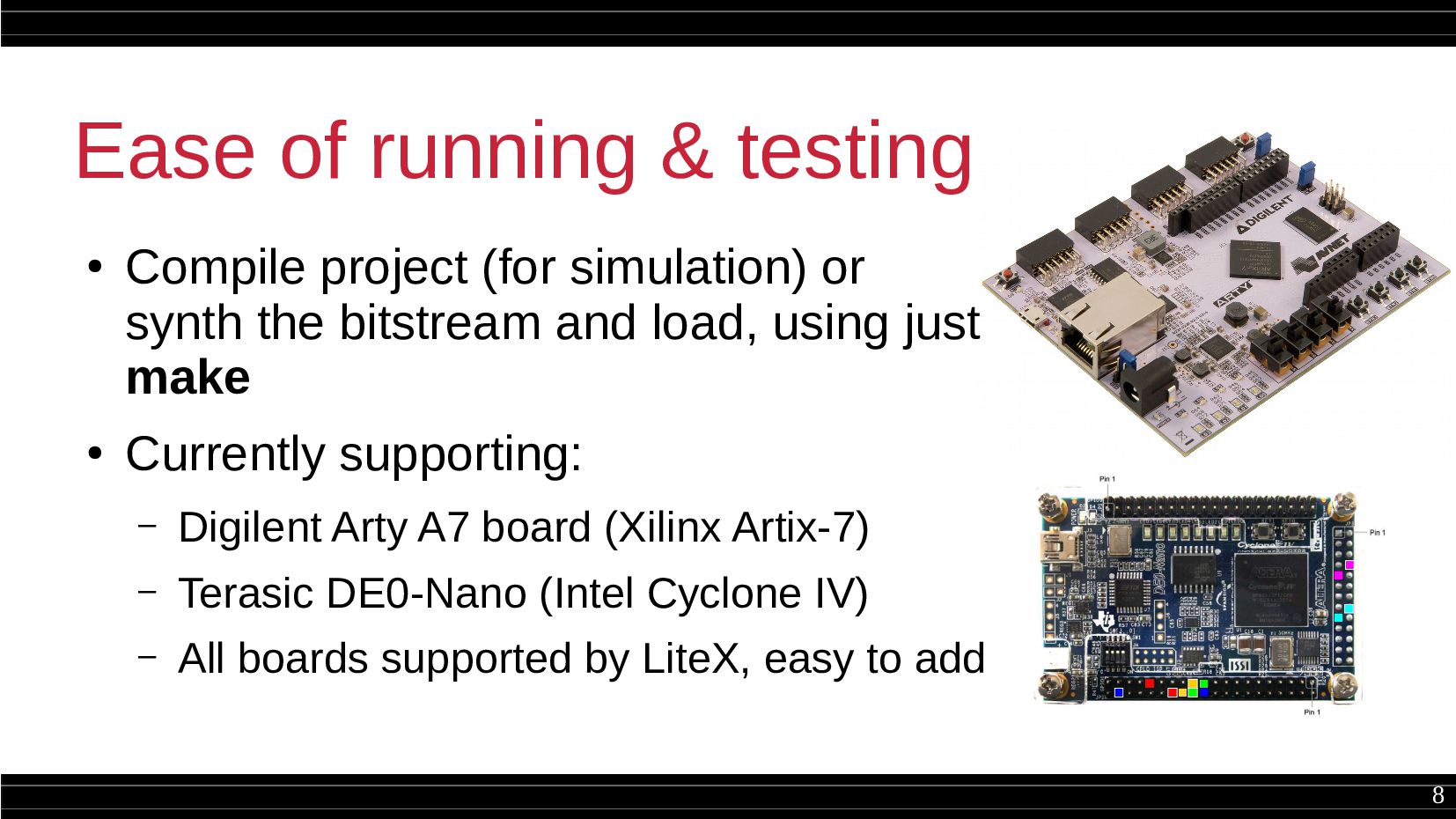
simulation) or synth the bitstream and load, using just make • Currently supporting: – Digilent Arty A7 board (Xilinx Artix-7) – Terasic DE0-Nano (Intel Cyclone IV) – All boards supported by LiteX, easy to add
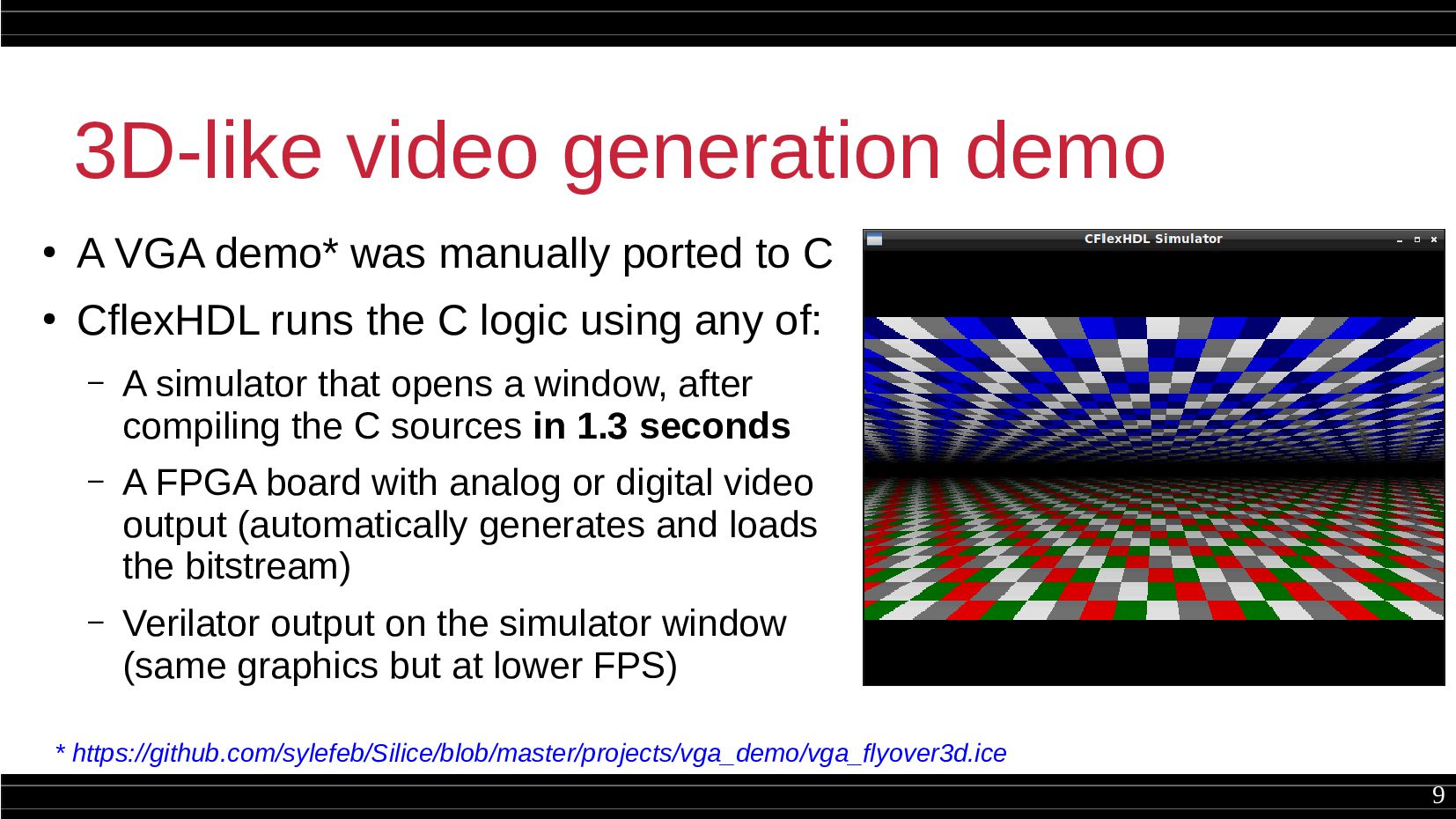
manually ported to C • CflexHDL runs the C logic using any of: – A simulator that opens a window, after compiling the C sources in 1.3 seconds – A FPGA board with analog or digital video output (automatically generates and loads the bitstream) – Verilator output on the simulator window (same graphics but at lower FPS) * https://github.com/sylefeb/Silice/blob/master/projects/vga_demo/vga_flyover3d.ice
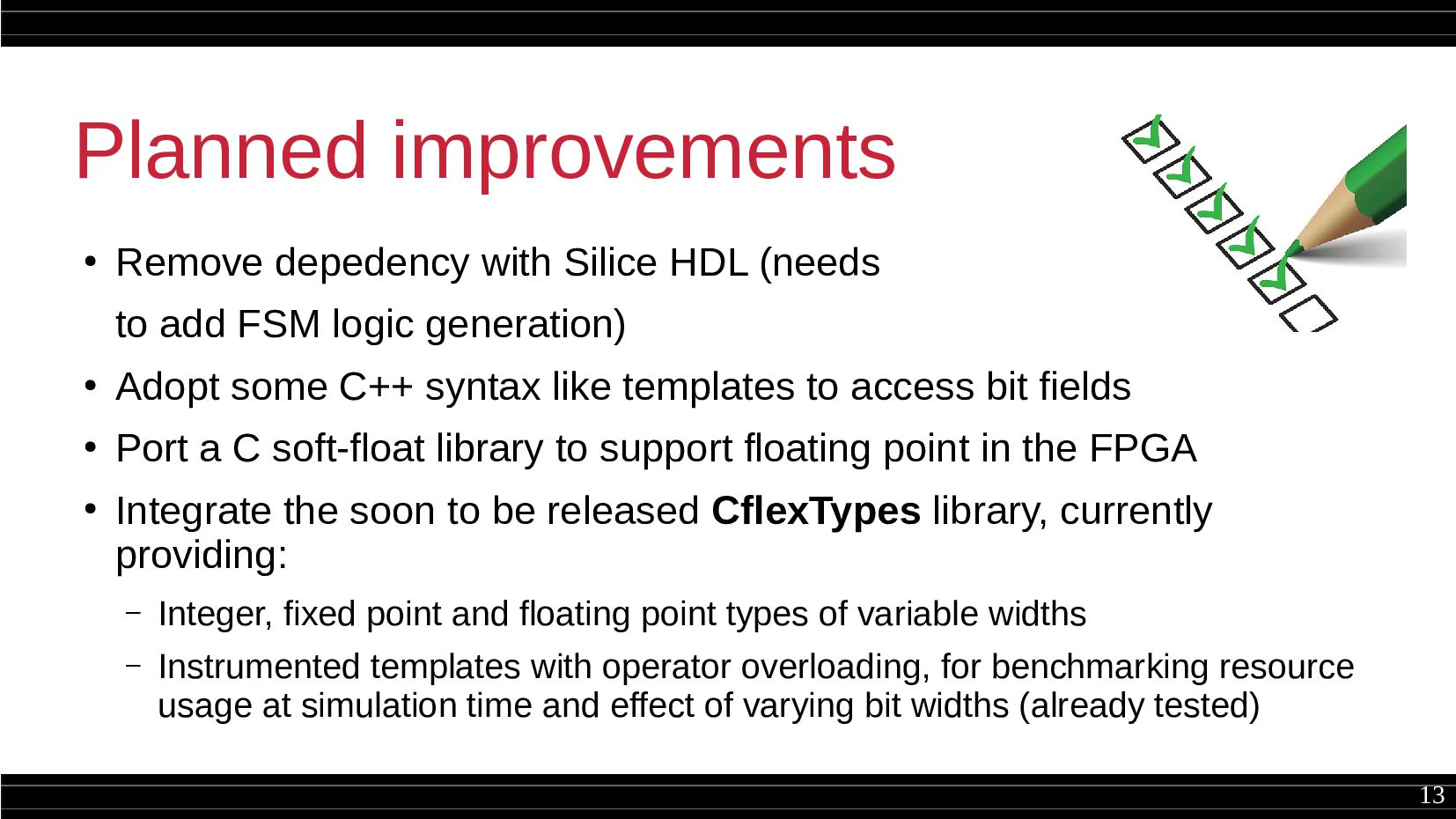
to add FSM logic generation) • Adopt some C++ syntax like templates to access bit fields • Port a C soft-float library to support floating point in the FPGA • Integrate the soon to be released CflexTypes library, currently providing: – Integer, fixed point and floating point types of variable widths – Instrumented templates with operator overloading, for benchmarking resource usage at simulation time and effect of varying bit widths (already tested)


 tomokon
 iwiwi
iwiwi
 uyuki234
 suneo3476
 kasacchiful
 artoy
artoy
 skydoves
 akihisaikeda
 sorah
sorah
 marcoroth
 utakaha
 mofurune
 codingconduct
 brad_frost
 inesmontani
 tammyeverts
 jonyablonski
 katarinadahlin
 letsgokoyo
 schlessera
 chrislema
 mza
mza
 bryan
bryan
 nikkihalliwell
![10 Example generated code (FSM) Verilog C source [...] Verilog](https://files.speakerdeck.com/presentations/2a8db348c8e941b9b3d093364e809f5d/slide_9.jpg)