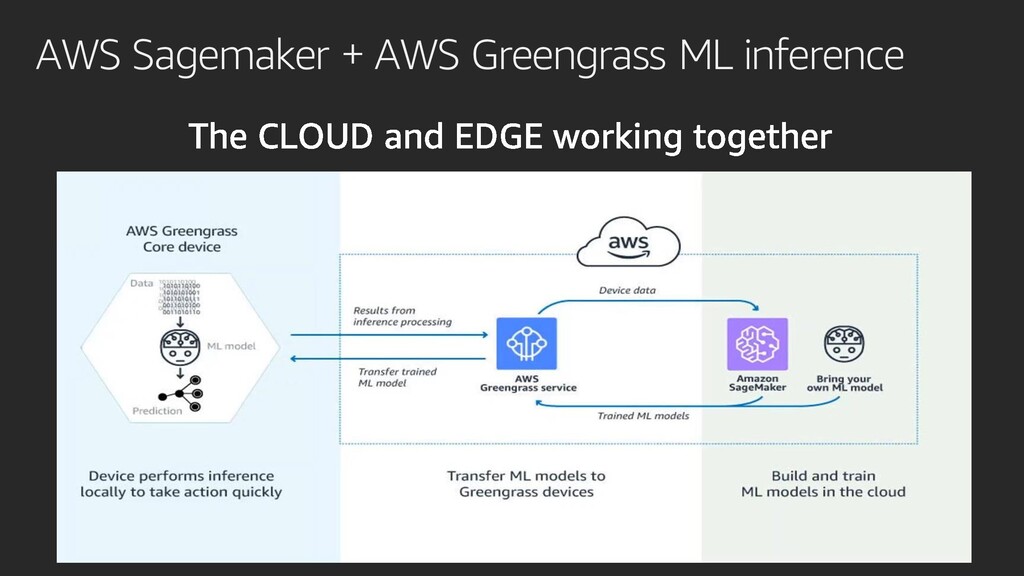
rights reserved. ML for IoT at the edge for resource-constrained regions Sukanya Mandal D V C 0 9 Associate Consultant Capgemini Technology Services India Limited
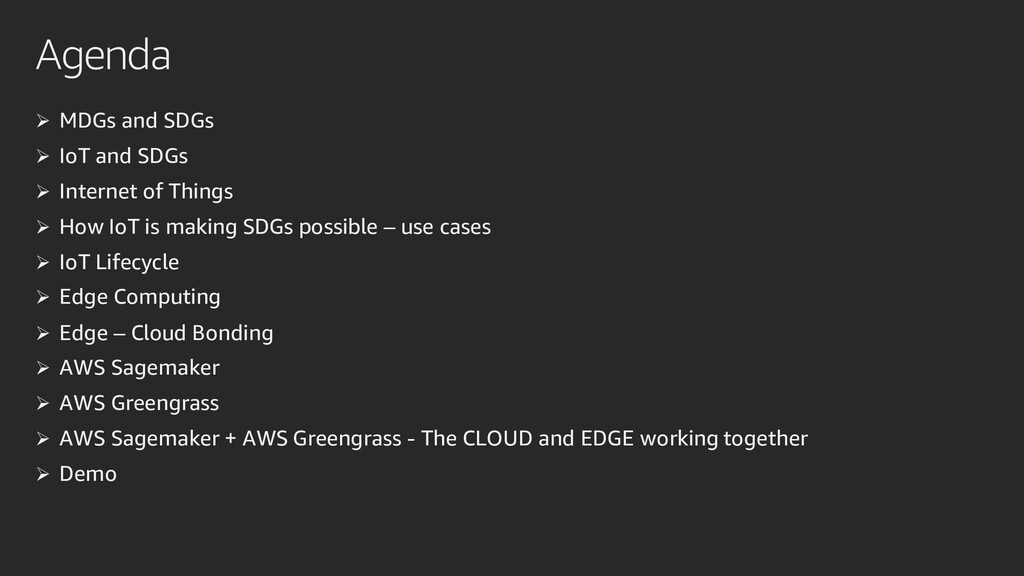
Internet of Things ➢ How IoT is making SDGs possible – use cases ➢ IoT Lifecycle ➢ Edge Computing ➢ Edge – Cloud Bonding ➢ AWS Sagemaker ➢ AWS Greengrass ➢ AWS Sagemaker + AWS Greengrass - The CLOUD and EDGE working together ➢ Demo
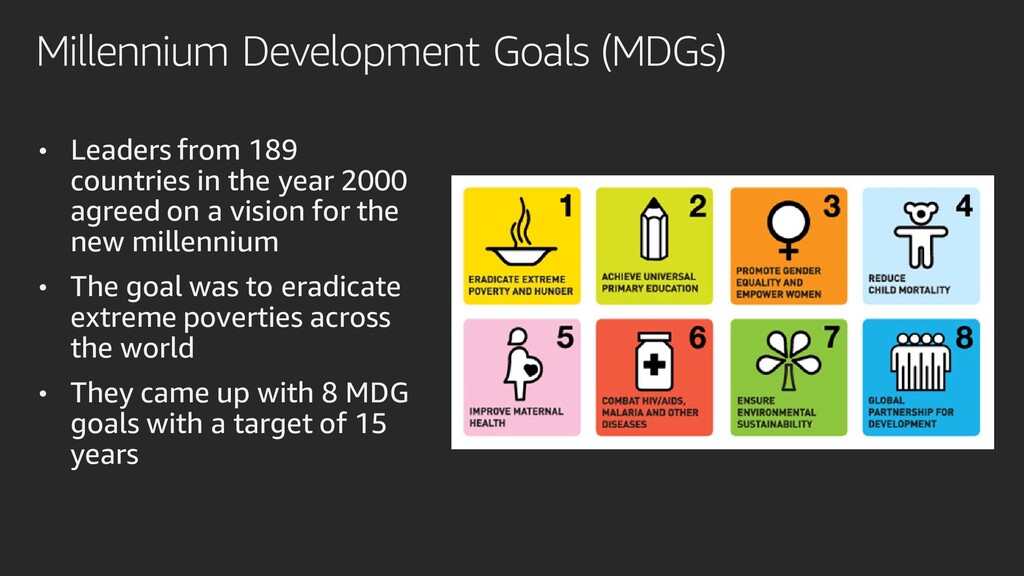
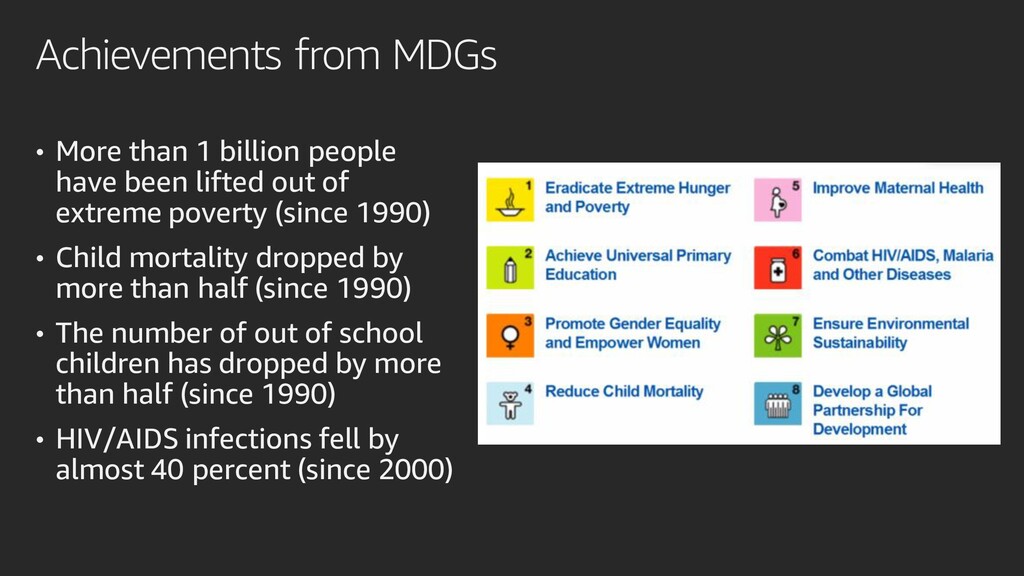
the year 2000 agreed on a vision for the new millennium • The goal was to eradicate extreme poverties across the world • They came up with 8 MDG goals with a target of 15 years
been lifted out of extreme poverty (since 1990) • Child mortality dropped by more than half (since 1990) • The number of out of school children has dropped by more than half (since 1990) • HIV/AIDS infections fell by almost 40 percent (since 2000)
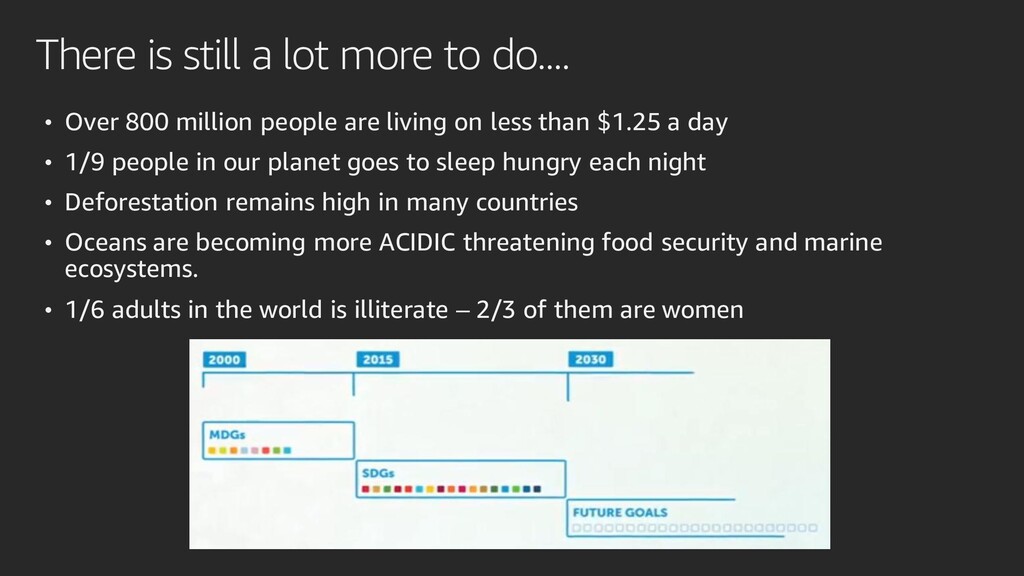
800 million people are living on less than $1.25 a day • 1/9 people in our planet goes to sleep hungry each night • Deforestation remains high in many countries • Oceans are becoming more ACIDIC threatening food security and marine ecosystems. • 1/6 adults in the world is illiterate – 2/3 of them are women
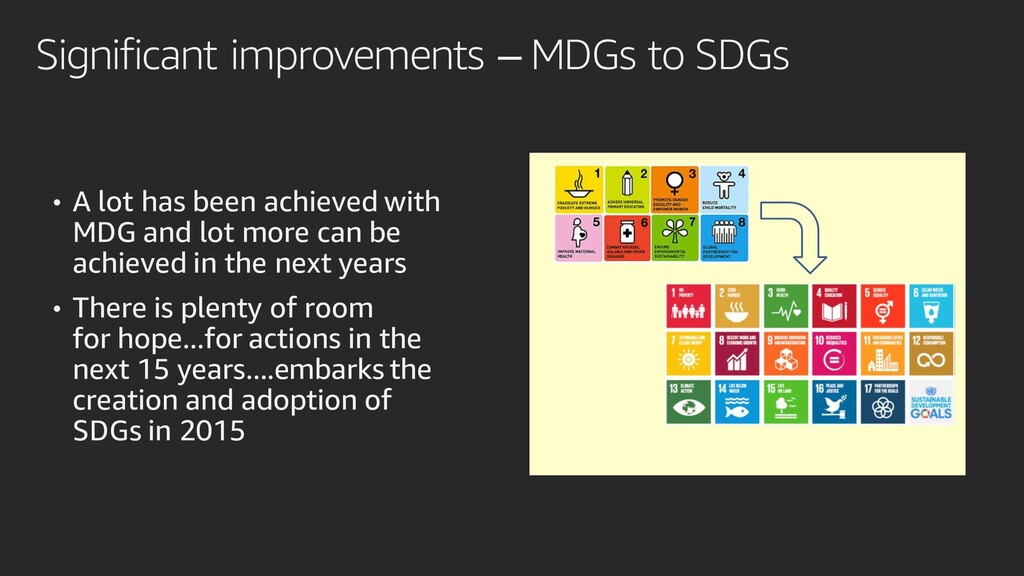
been achieved with MDG and lot more can be achieved in the next years • There is plenty of room for hope...for actions in the next 15 years....embarks the creation and adoption of SDGs in 2015
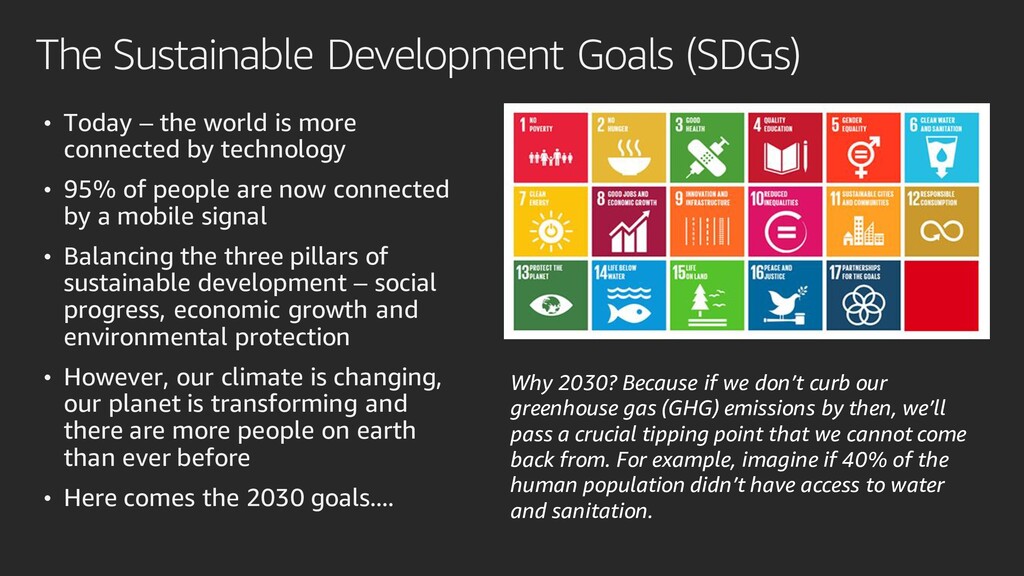
is more connected by technology • 95% of people are now connected by a mobile signal • Balancing the three pillars of sustainable development – social progress, economic growth and environmental protection • However, our climate is changing, our planet is transforming and there are more people on earth than ever before • Here comes the 2030 goals.... Why 2030? Because if we don’t curb our greenhouse gas (GHG) emissions by then, we’ll pass a crucial tipping point that we cannot come back from. For example, imagine if 40% of the human population didn’t have access to water and sanitation.
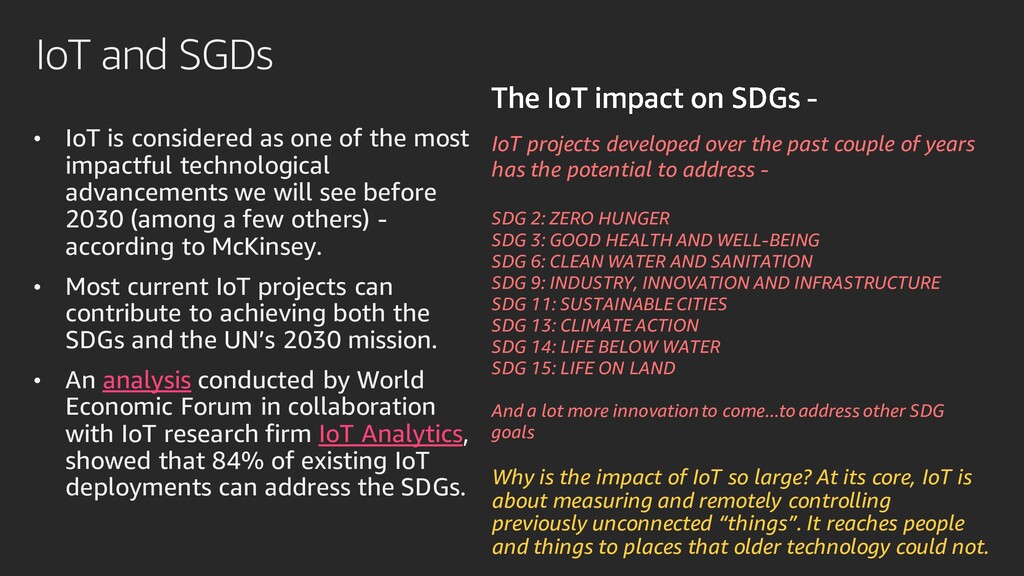
the most impactful technological advancements we will see before 2030 (among a few others) - according to McKinsey. • Most current IoT projects can contribute to achieving both the SDGs and the UN’s 2030 mission. • An analysis conducted by World Economic Forum in collaboration with IoT research firm IoT Analytics, showed that 84% of existing IoT deployments can address the SDGs. IoT projects developed over the past couple of years has the potential to address - SDG 2: ZERO HUNGER SDG 3: GOOD HEALTH AND WELL-BEING SDG 6: CLEAN WATER AND SANITATION SDG 9: INDUSTRY, INNOVATION AND INFRASTRUCTURE SDG 11: SUSTAINABLE CITIES SDG 13: CLIMATE ACTION SDG 14: LIFE BELOW WATER SDG 15: LIFE ON LAND And a lot more innovation to come...to address other SDG goals Why is the impact of IoT so large? At its core, IoT is about measuring and remotely controlling previously unconnected “things”. It reaches people and things to places that older technology could not.
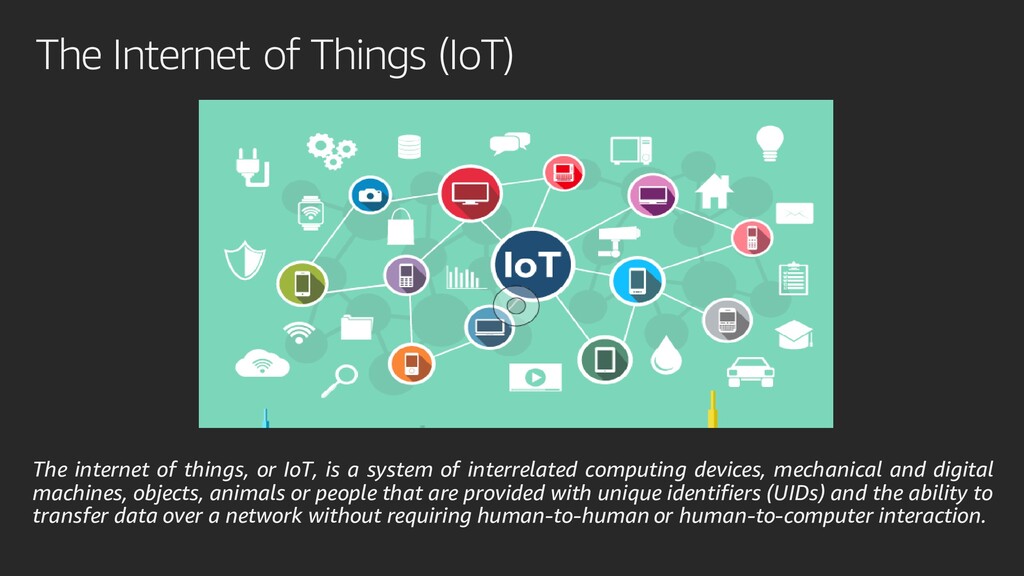
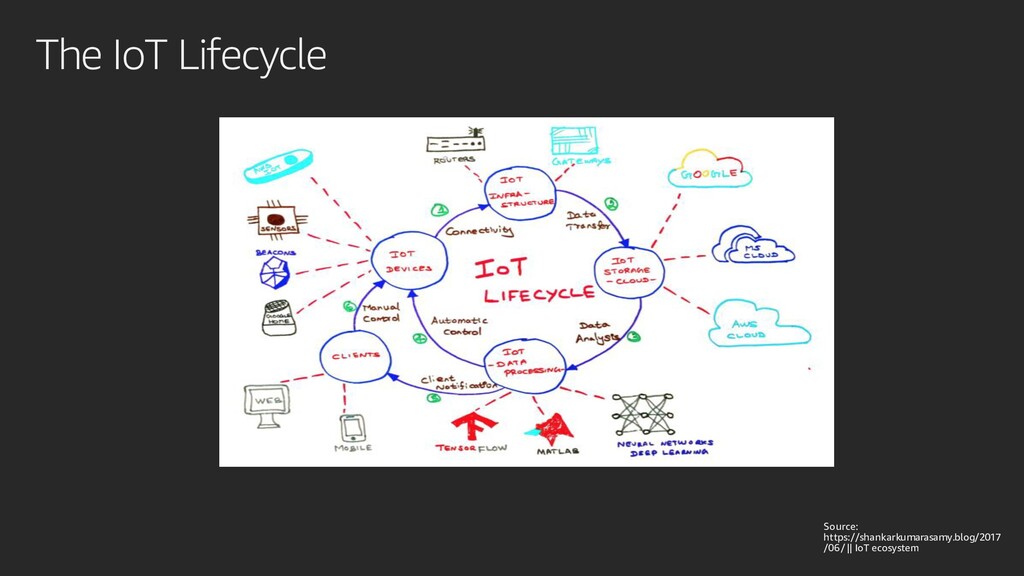
IoT, is a system of interrelated computing devices, mechanical and digital machines, objects, animals or people that are provided with unique identifiers (UIDs) and the ability to transfer data over a network without requiring human-to-human or human-to-computer interaction.
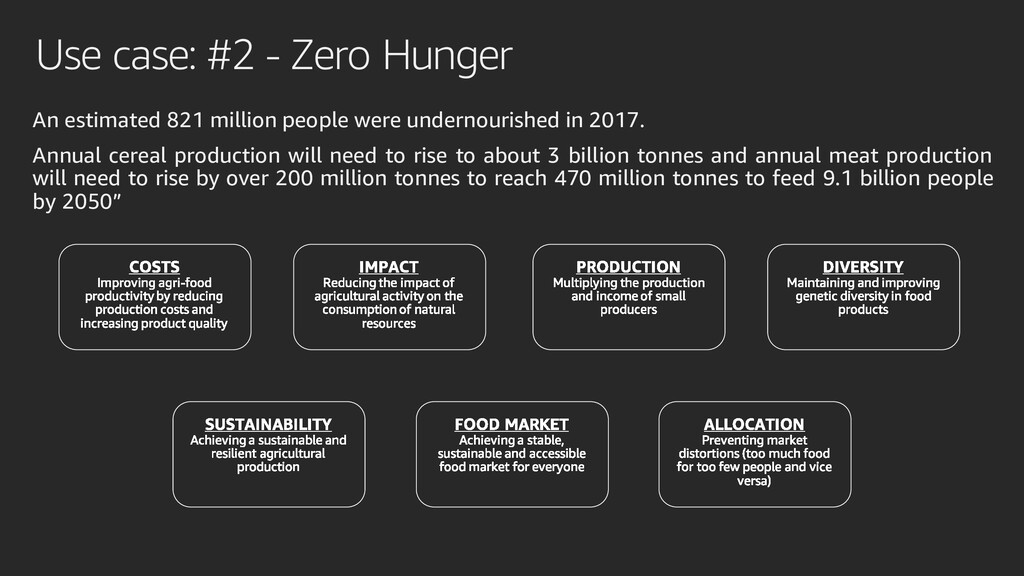
people were undernourished in 2017. Annual cereal production will need to rise to about 3 billion tonnes and annual meat production will need to rise by over 200 million tonnes to reach 470 million tonnes to feed 9.1 billion people by 2050”
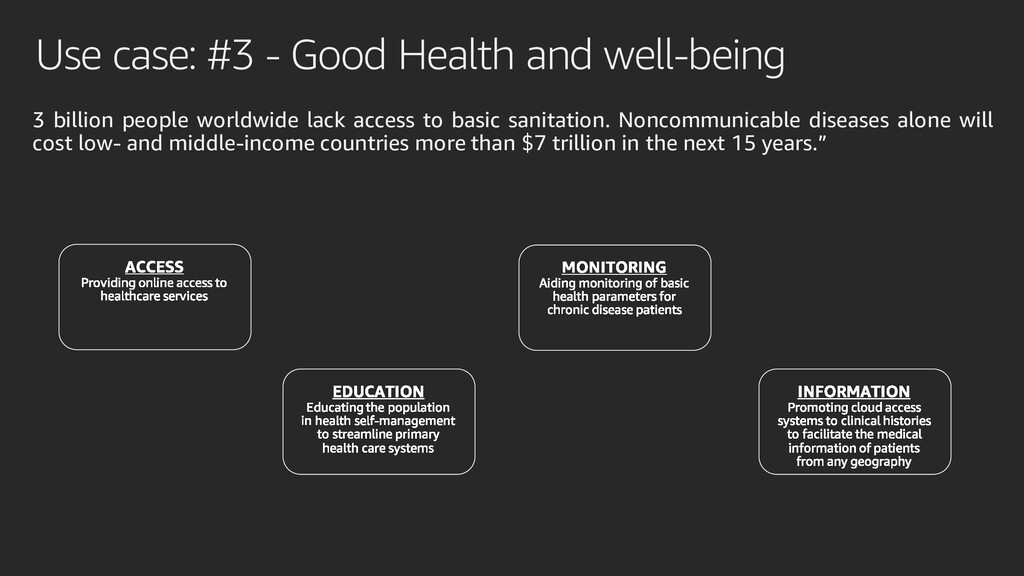
people worldwide lack access to basic sanitation. Noncommunicable diseases alone will cost low- and middle-income countries more than $7 trillion in the next 15 years.”
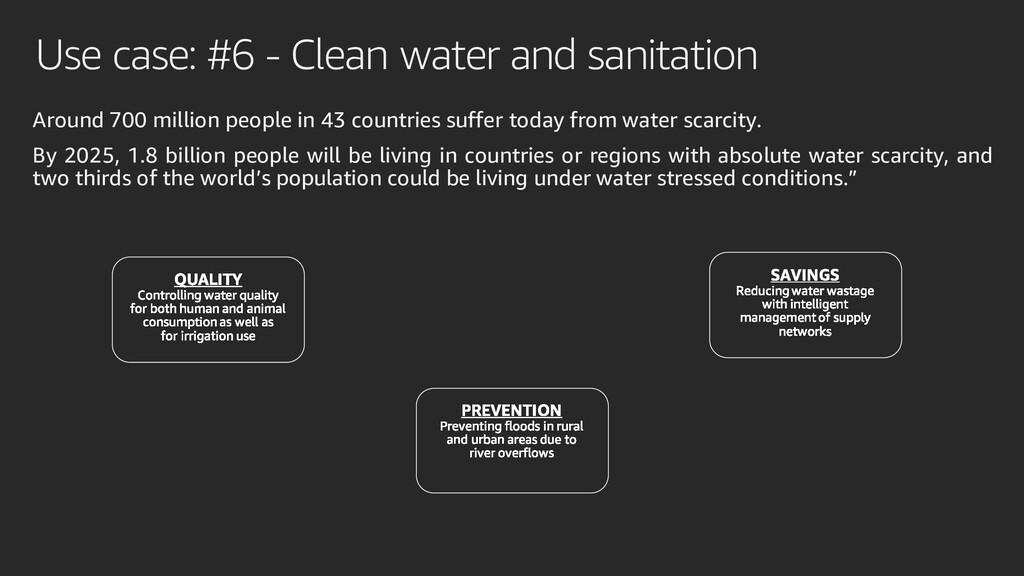
million people in 43 countries suffer today from water scarcity. By 2025, 1.8 billion people will be living in countries or regions with absolute water scarcity, and two thirds of the world’s population could be living under water stressed conditions.”
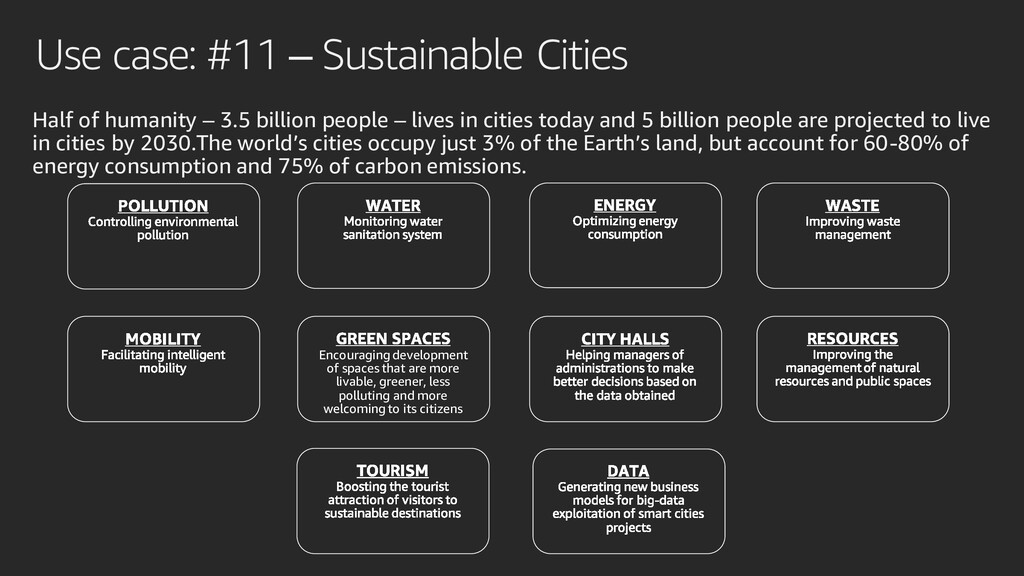
3.5 billion people – lives in cities today and 5 billion people are projected to live in cities by 2030.The world’s cities occupy just 3% of the Earth’s land, but account for 60-80% of energy consumption and 75% of carbon emissions. Encouraging development of spaces that are more livable, greener, less polluting and more welcoming to its citizens
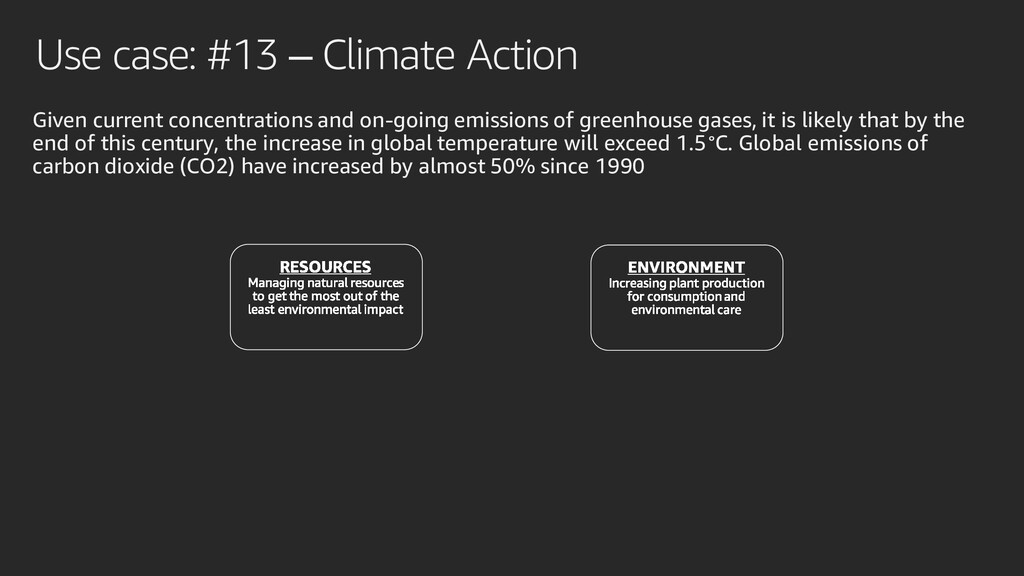
on-going emissions of greenhouse gases, it is likely that by the end of this century, the increase in global temperature will exceed 1.5°C. Global emissions of carbon dioxide (CO2) have increased by almost 50% since 1990
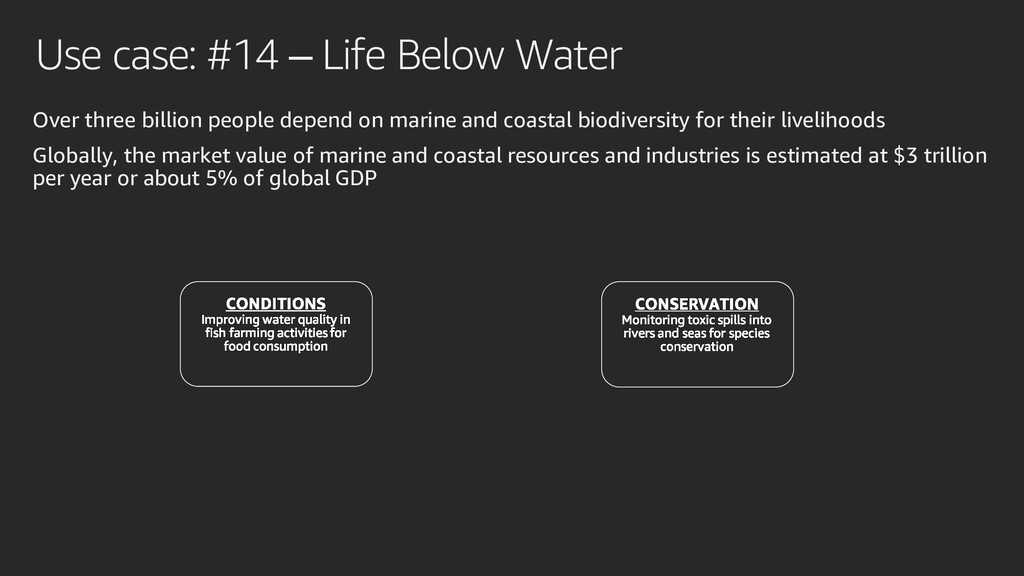
people depend on marine and coastal biodiversity for their livelihoods Globally, the market value of marine and coastal resources and industries is estimated at $3 trillion per year or about 5% of global GDP
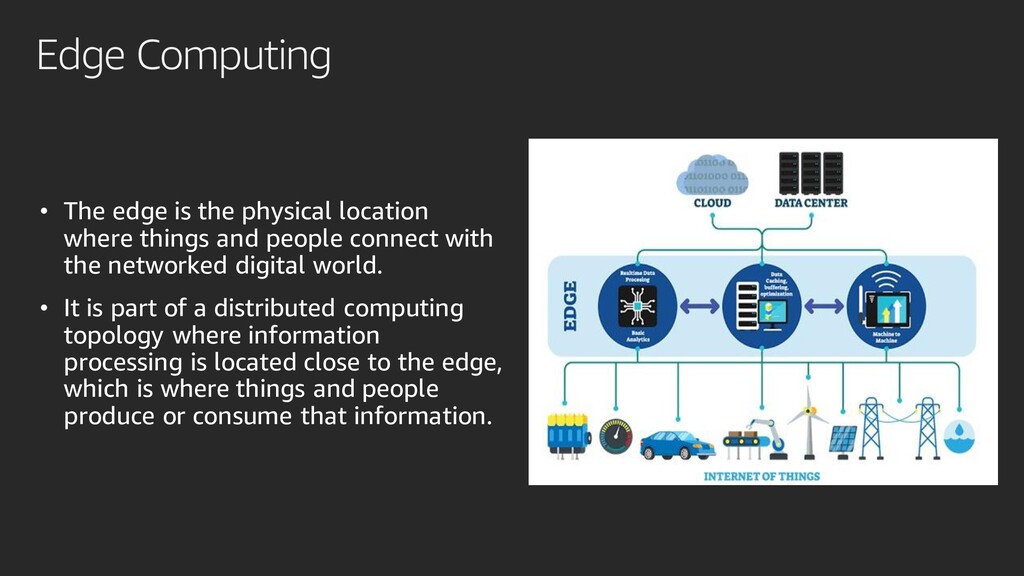
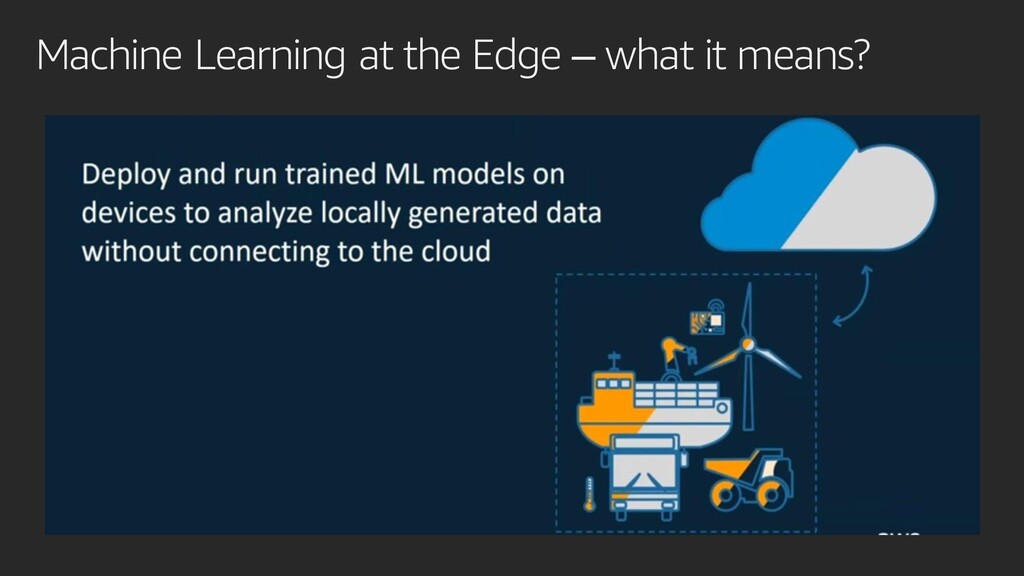
things and people connect with the networked digital world. • It is part of a distributed computing topology where information processing is located close to the edge, which is where things and people produce or consume that information.
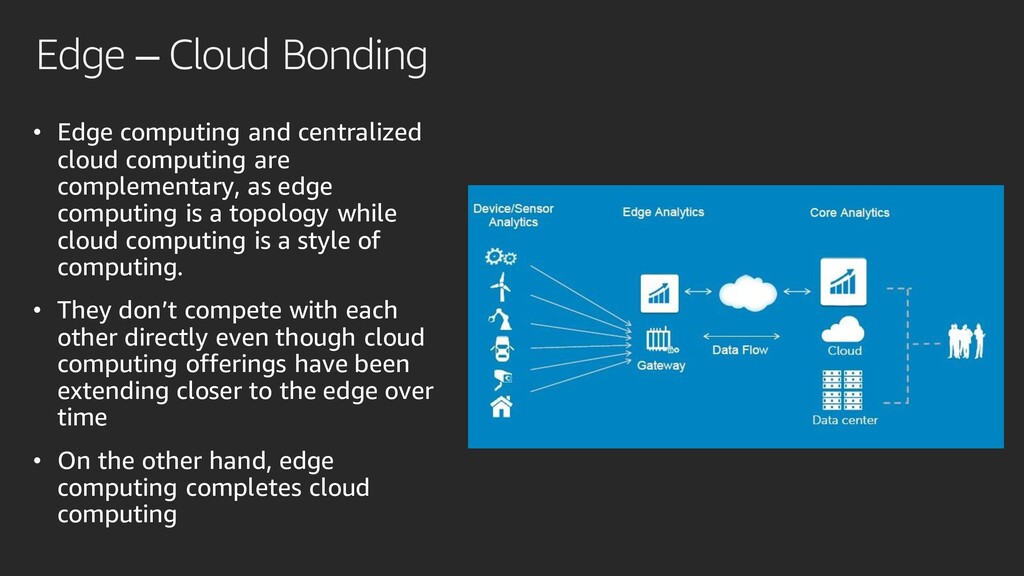
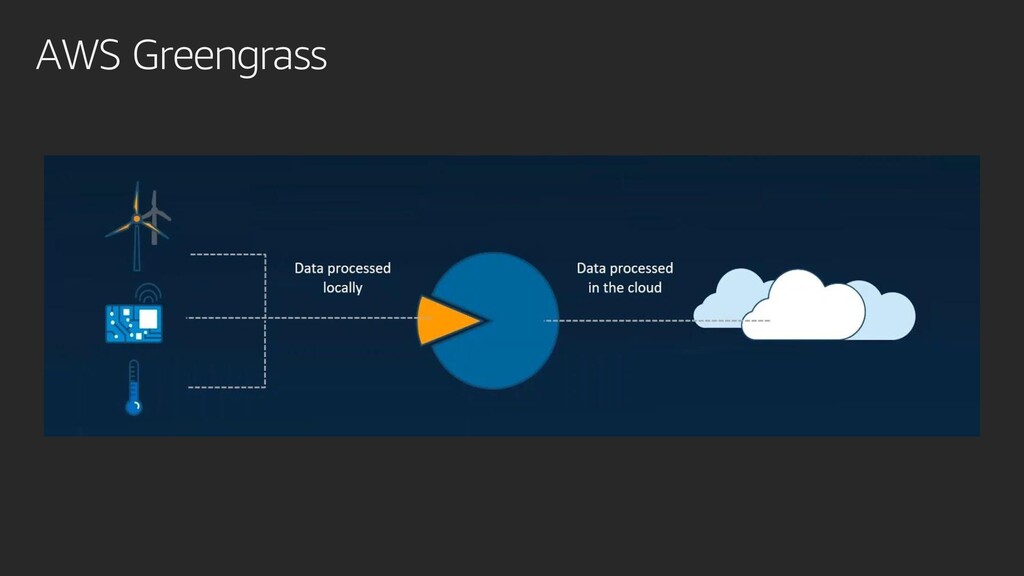
computing are complementary, as edge computing is a topology while cloud computing is a style of computing. • They don’t compete with each other directly even though cloud computing offerings have been extending closer to the edge over time • On the other hand, edge computing completes cloud computing
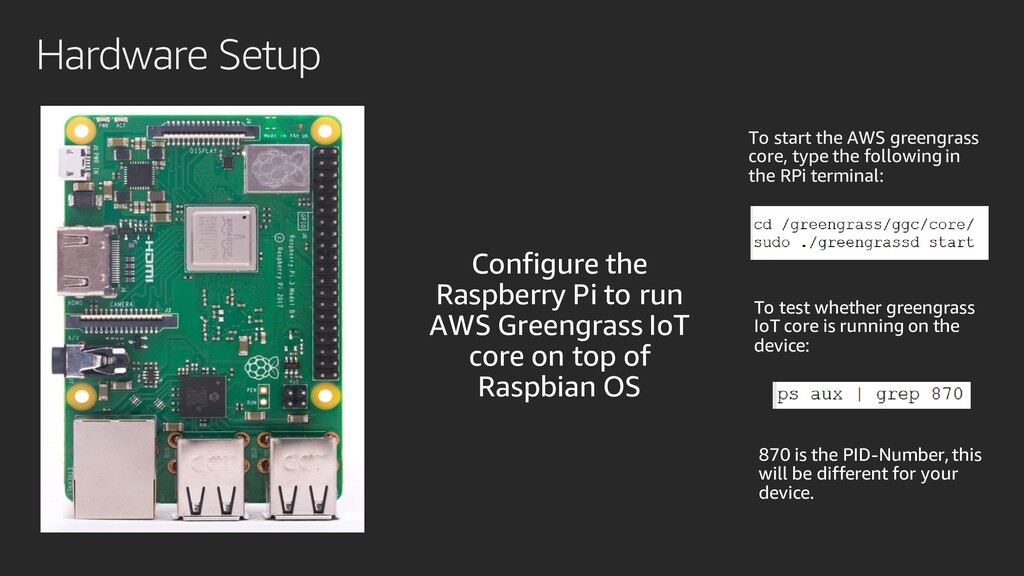
following in the RPi terminal: To test whether greengrass IoT core is running on the device: 870 is the PID-Number, this will be different for your device. Configure the Raspberry Pi to run AWS Greengrass IoT core on top of Raspbian OS
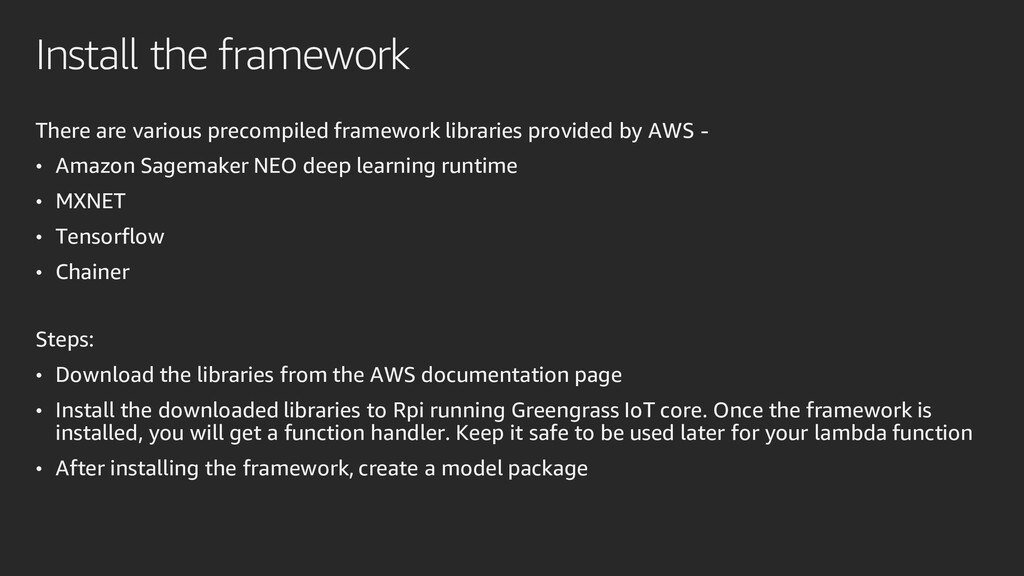
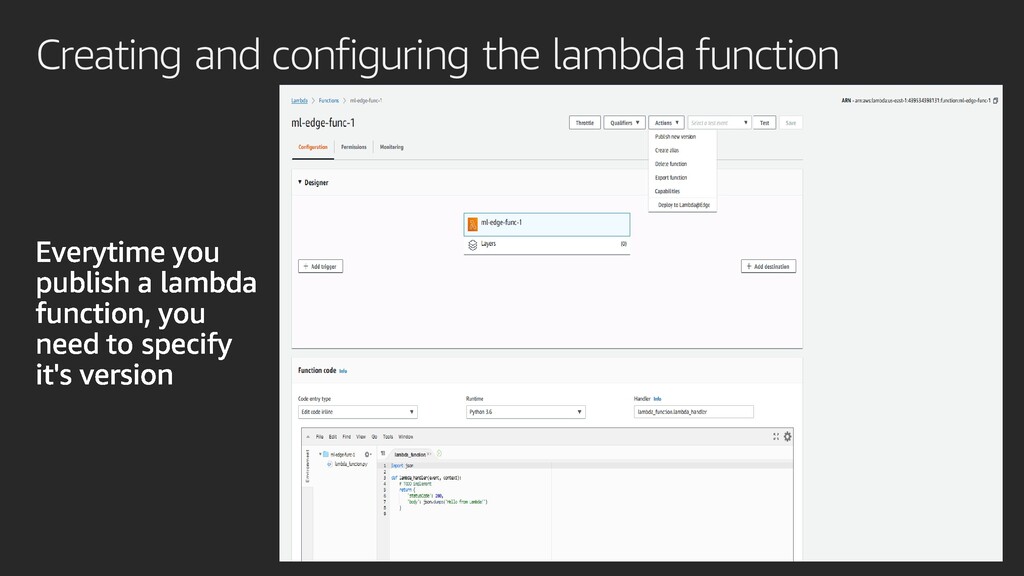
by AWS - • Amazon Sagemaker NEO deep learning runtime • MXNET • Tensorflow • Chainer Steps: • Download the libraries from the AWS documentation page • Install the downloaded libraries to Rpi running Greengrass IoT core. Once the framework is installed, you will get a function handler. Keep it safe to be used later for your lambda function • After installing the framework, create a model package
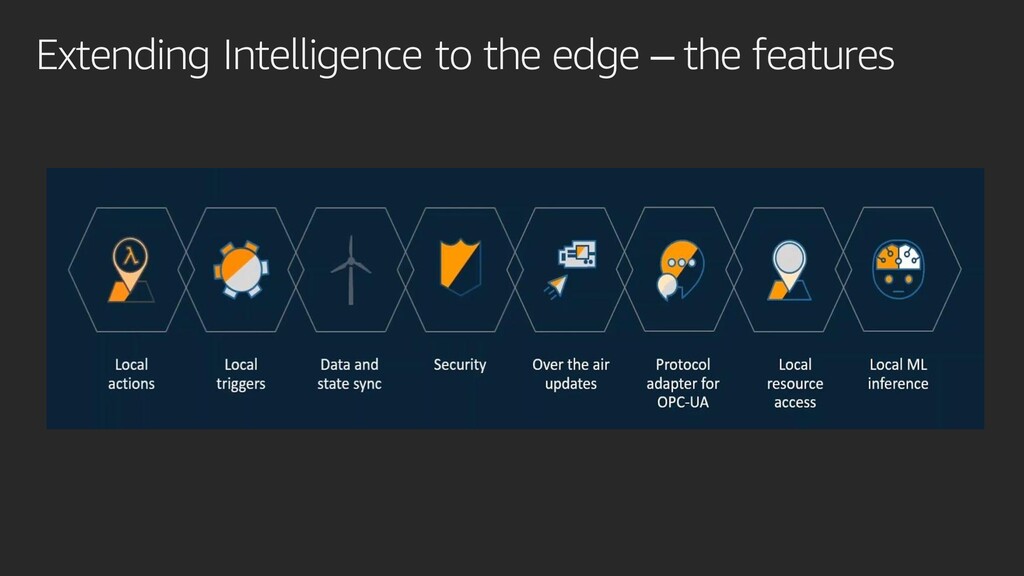
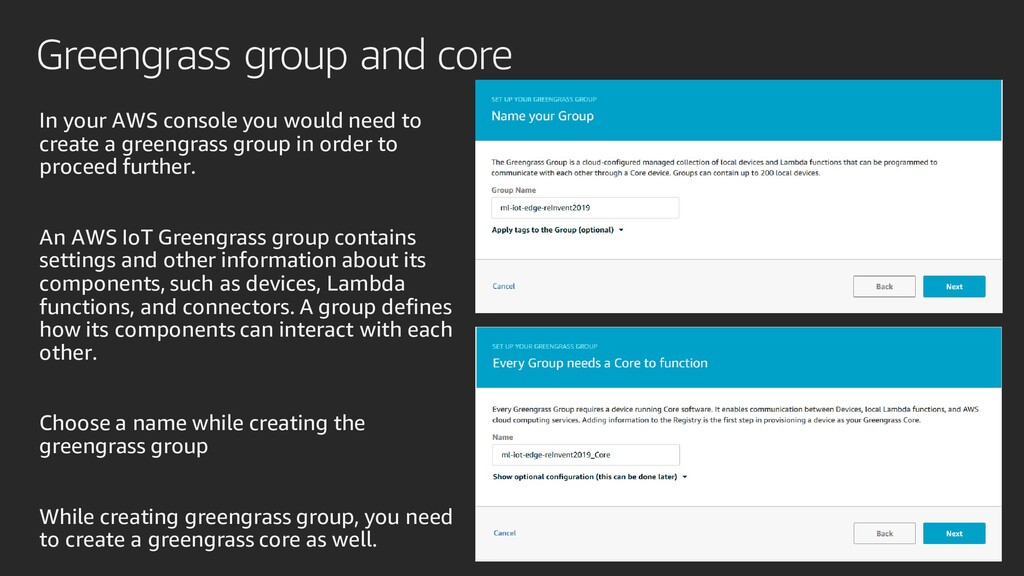
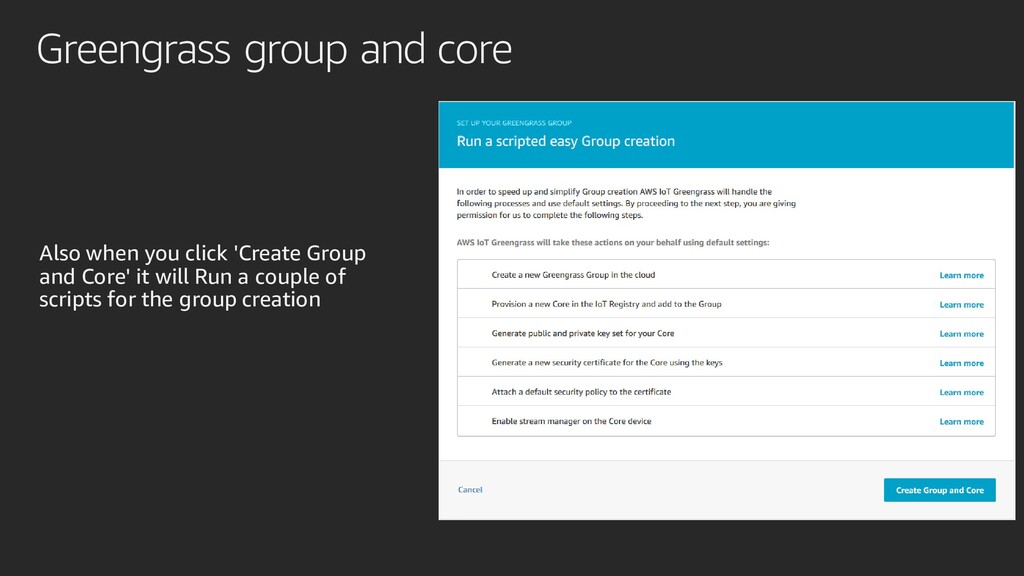
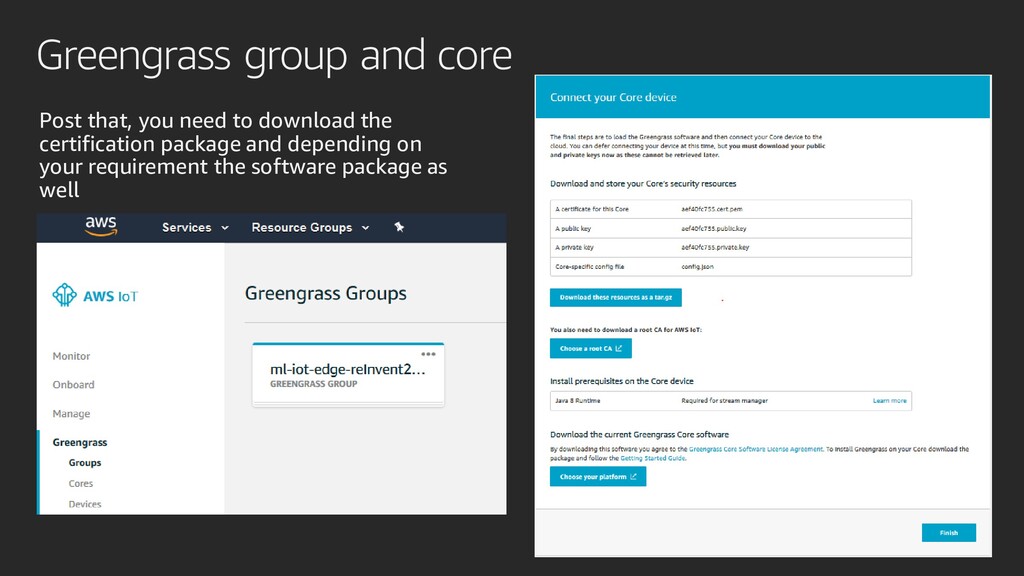
need to create a greengrass group in order to proceed further. An AWS IoT Greengrass group contains settings and other information about its components, such as devices, Lambda functions, and connectors. A group defines how its components can interact with each other. Choose a name while creating the greengrass group While creating greengrass group, you need to create a greengrass core as well.
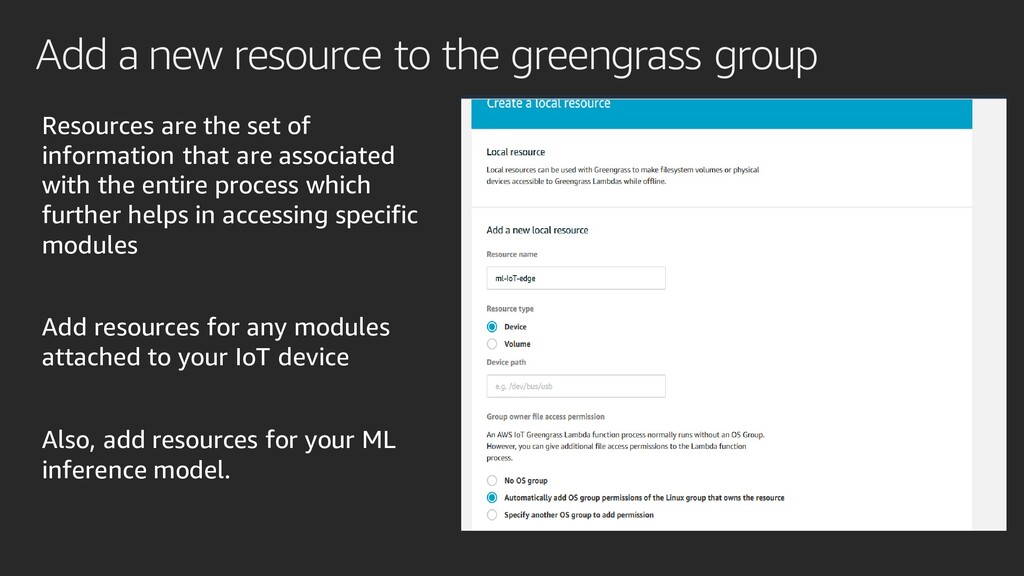
the set of information that are associated with the entire process which further helps in accessing specific modules Add resources for any modules attached to your IoT device Also, add resources for your ML inference model.
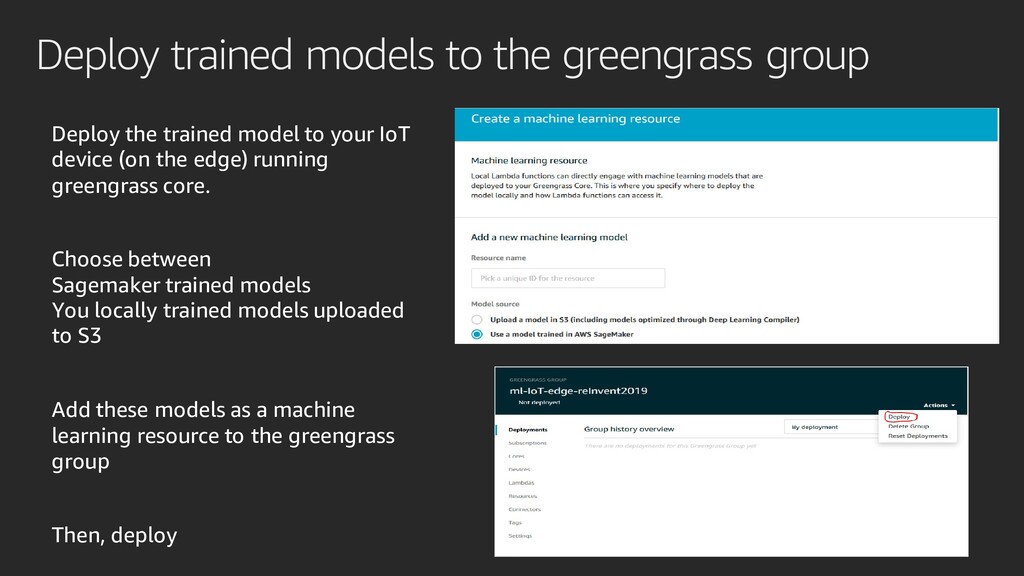
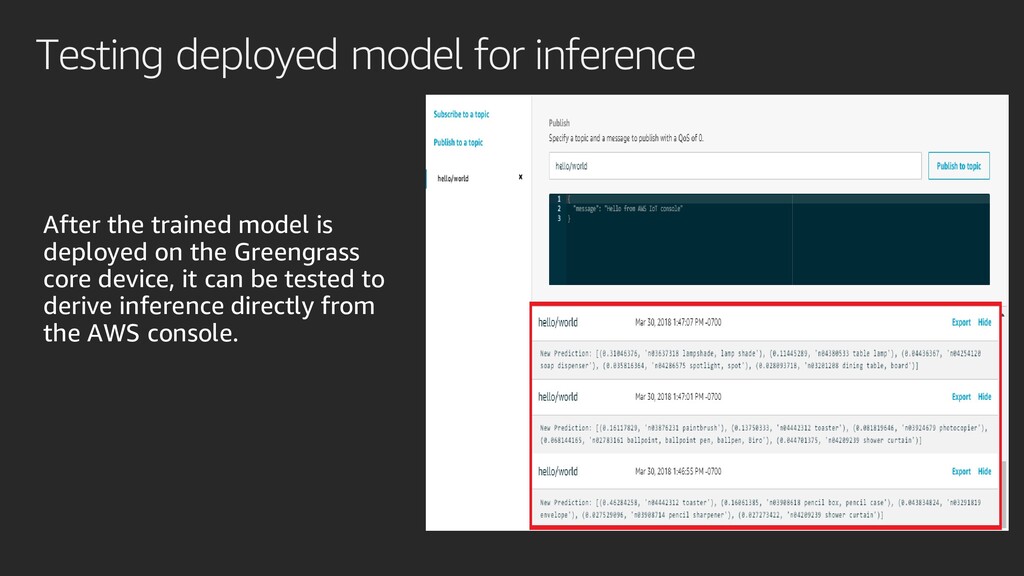
model to your IoT device (on the edge) running greengrass core. Choose between Sagemaker trained models You locally trained models uploaded to S3 Add these models as a machine learning resource to the greengrass group Then, deploy


 jtakeda
 nealle
 y0hgi
 tetsuya28
 koukihosaka
 ezaki
 codatum
 pfn
 puhitaku
 ishikawa_satoru
 daidaidai
 techtekt
 baasie
 techseoconnect
 holman
 dougneiner
 smashingmag
 kastner
 inesmontani
 reverentgeek
 pedronauck
 hatefulcrawdad
 kimpetersen