Upgrade to Pro — share decks privately, control downloads, hide ads and more …

Why you need to know your site’s performance pl...

Sponsored · SiteGround - Reliable hosting with speed, security, and support you can count on.

Why you need to know your site’s performance plateau (and how to find it) [PerformanceObserver 2026]

Have you ever asked yourself these questions?

"I made my pages faster, but my business and user engagement metrics didn't change. WHY???"
"How do I know how fast my site should be?"
"How can I demonstrate the business value of page speed to people in my organization?"
The answers might lie with identifying and understanding the performance plateau for your site.

Avatar for Tammy Everts

Tammy Everts

February 26, 2026
Tweet

More Decks by Tammy Everts

Other Decks in Technology

Transcript

  1. Recurring Questions… “I made my pages faster, but my business

    and user engagement metrics didn't change. WHY???”
  2. Recurring Questions… “I made my pages faster, but my business

    and user engagement metrics didn't change. WHY???” “How fast should my pages be?”
  3. Recurring Questions… “I made my pages faster, but my business

    and user engagement metrics didn't change. WHY???” “How fast should my pages be?” “How can I demonstrate the business value of page speed to people in my organization?”

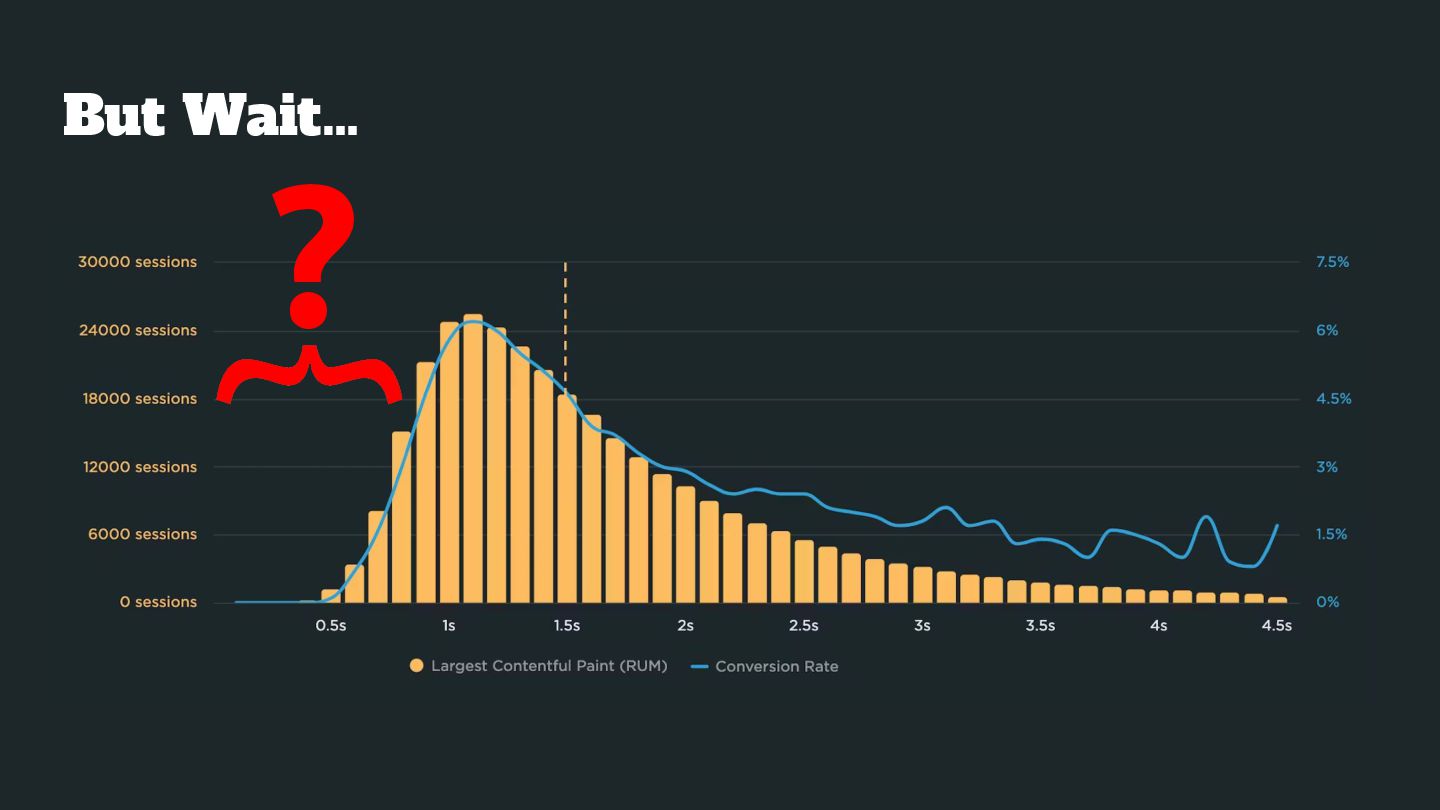
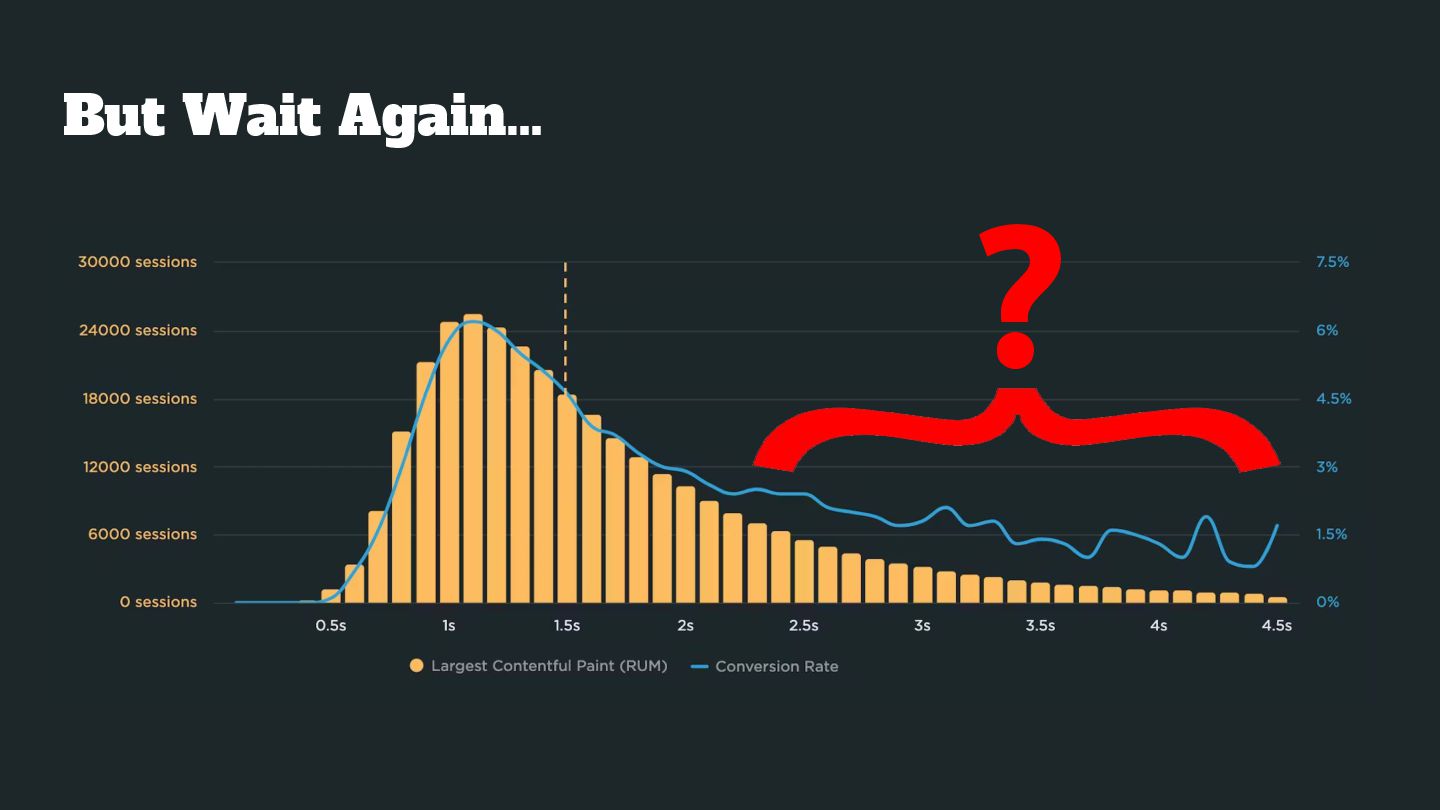
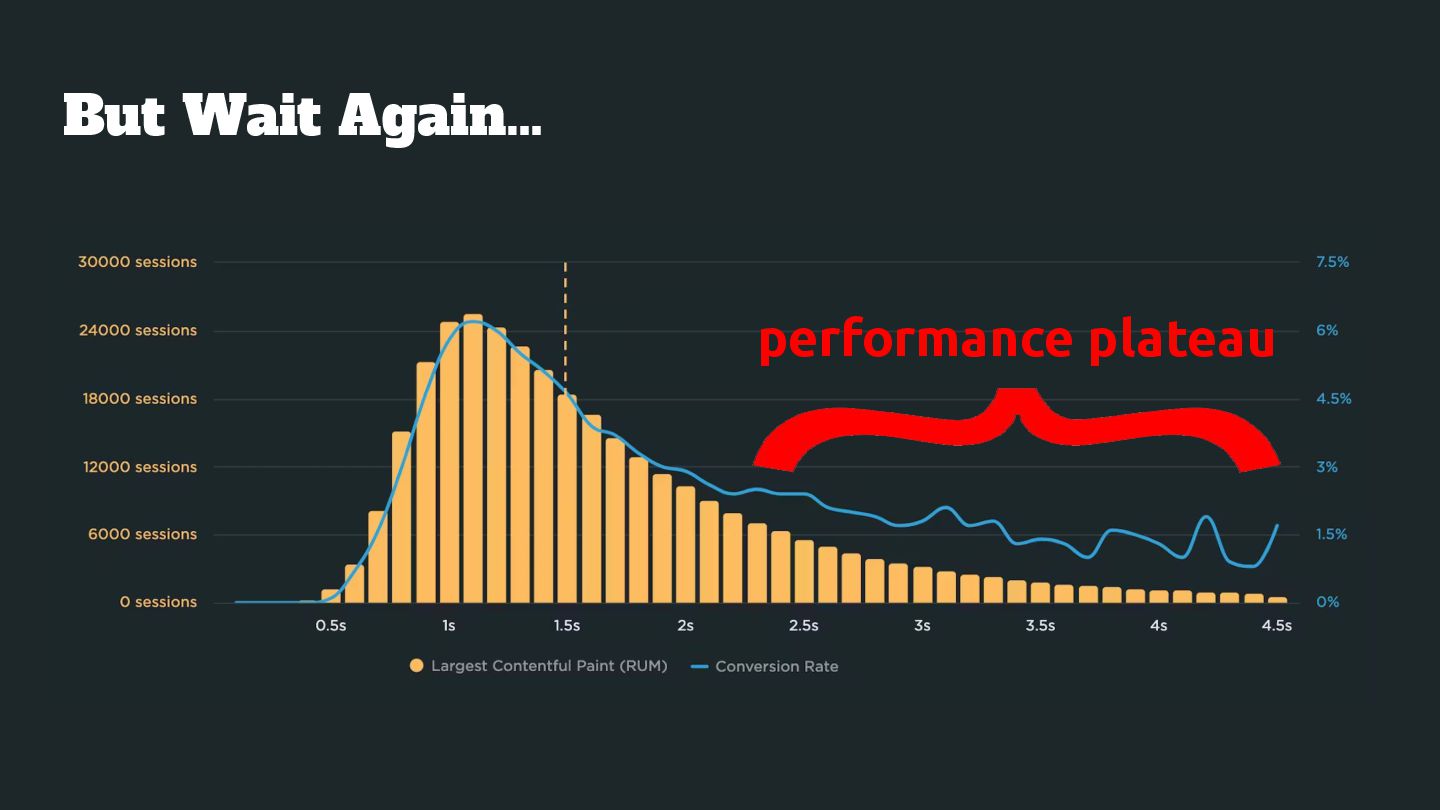
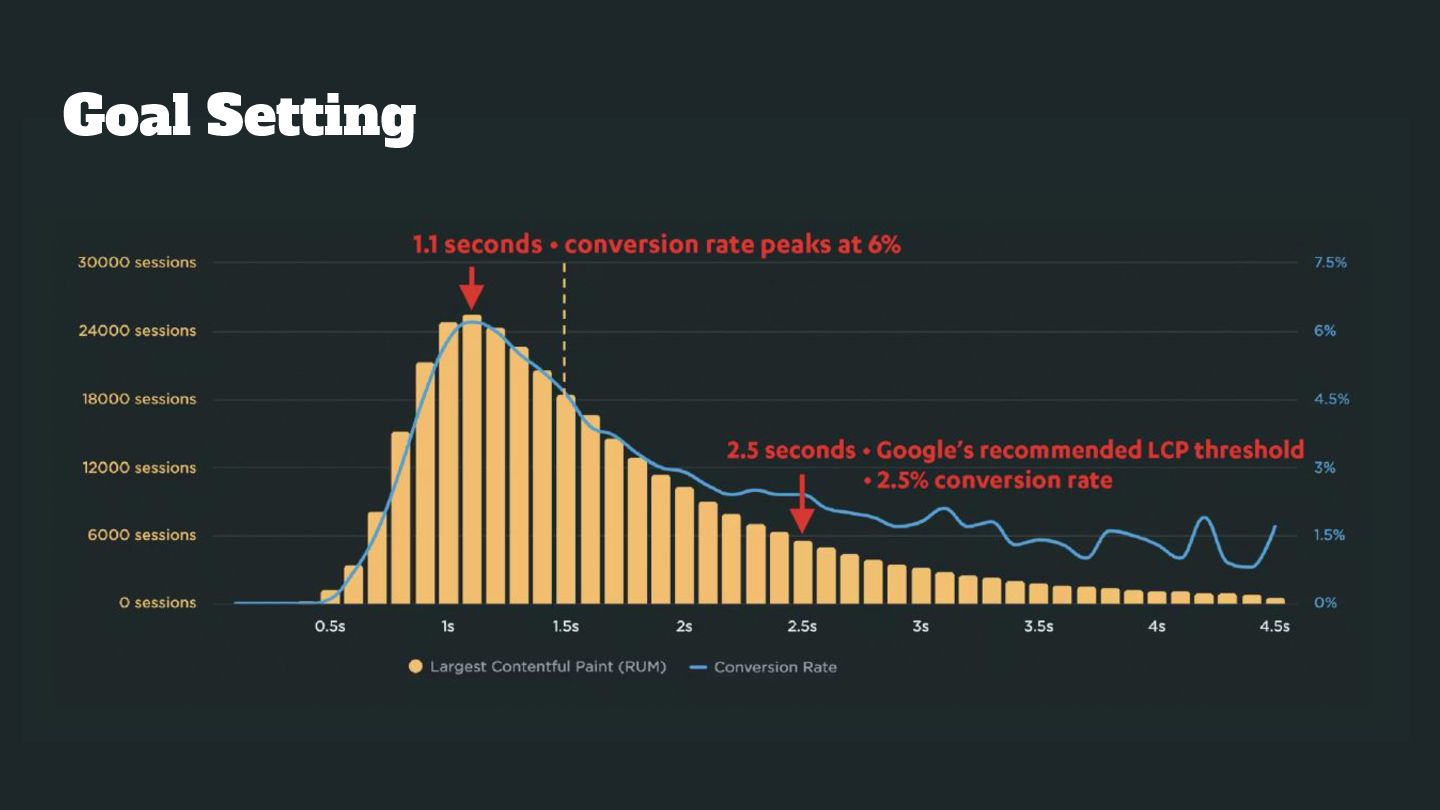
  4. What Is the Performance Plateau? The point where improvements in

    performance metrics no longer translate into measurable business gains
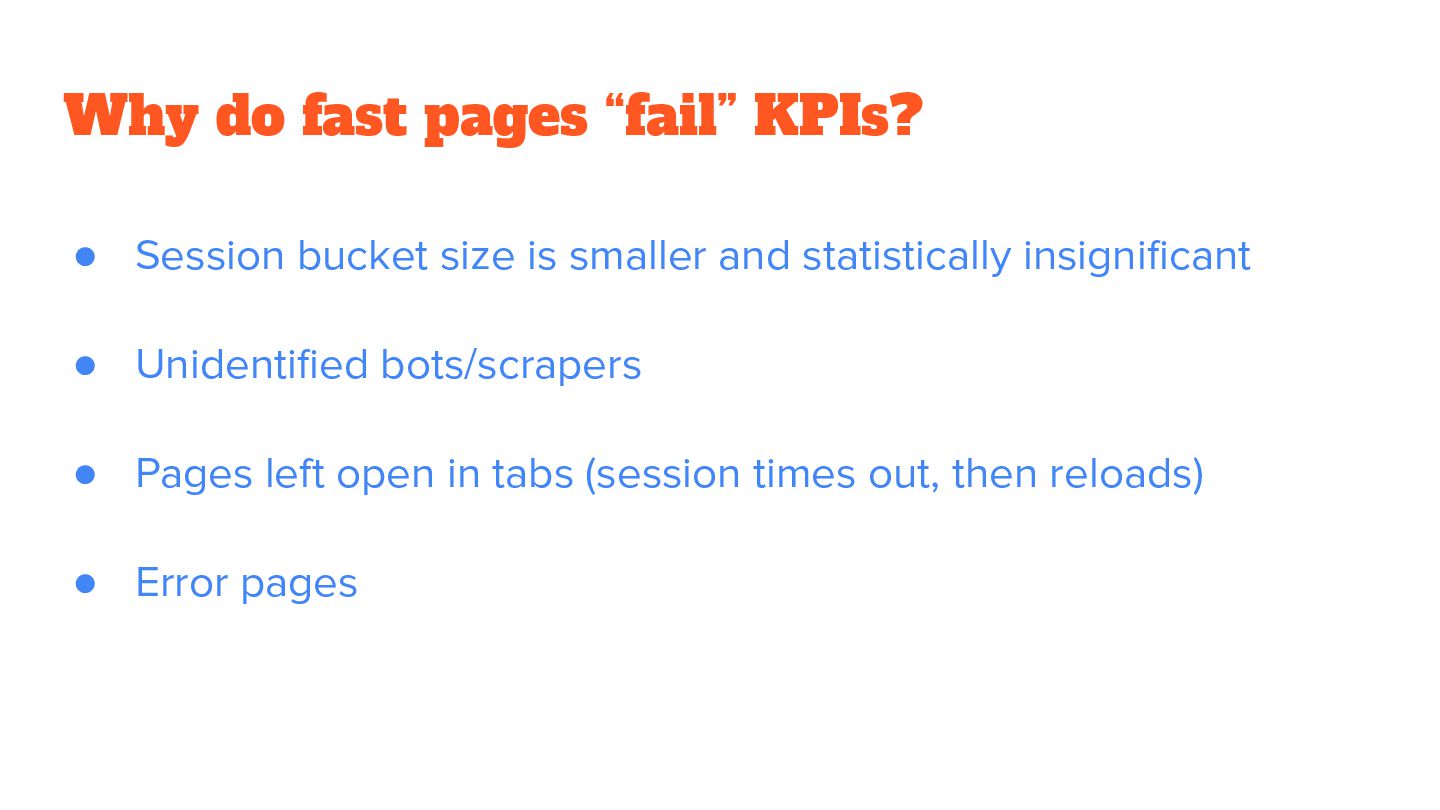
  5. Why do fast pages “fail” KPIs? • Session bucket size

    is smaller and statistically insignificant • Unidentified bots/scrapers • Pages left open in tabs (session times out, then reloads) • Error pages
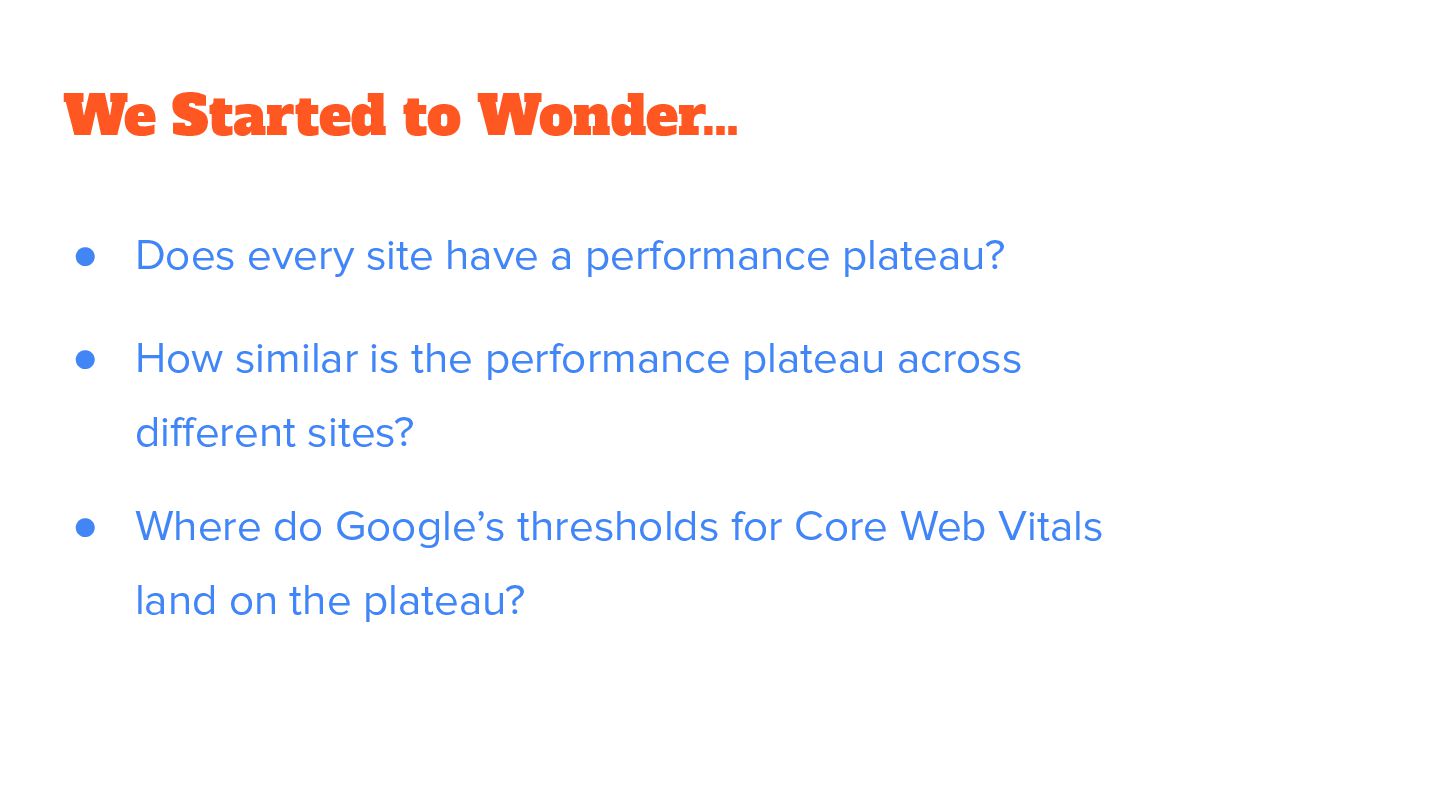
  6. We Started to Wonder… • Does every site have a

    performance plateau? • How similar is the performance plateau across different sites? • Where do Google’s thresholds for Core Web Vitals land on the plateau?
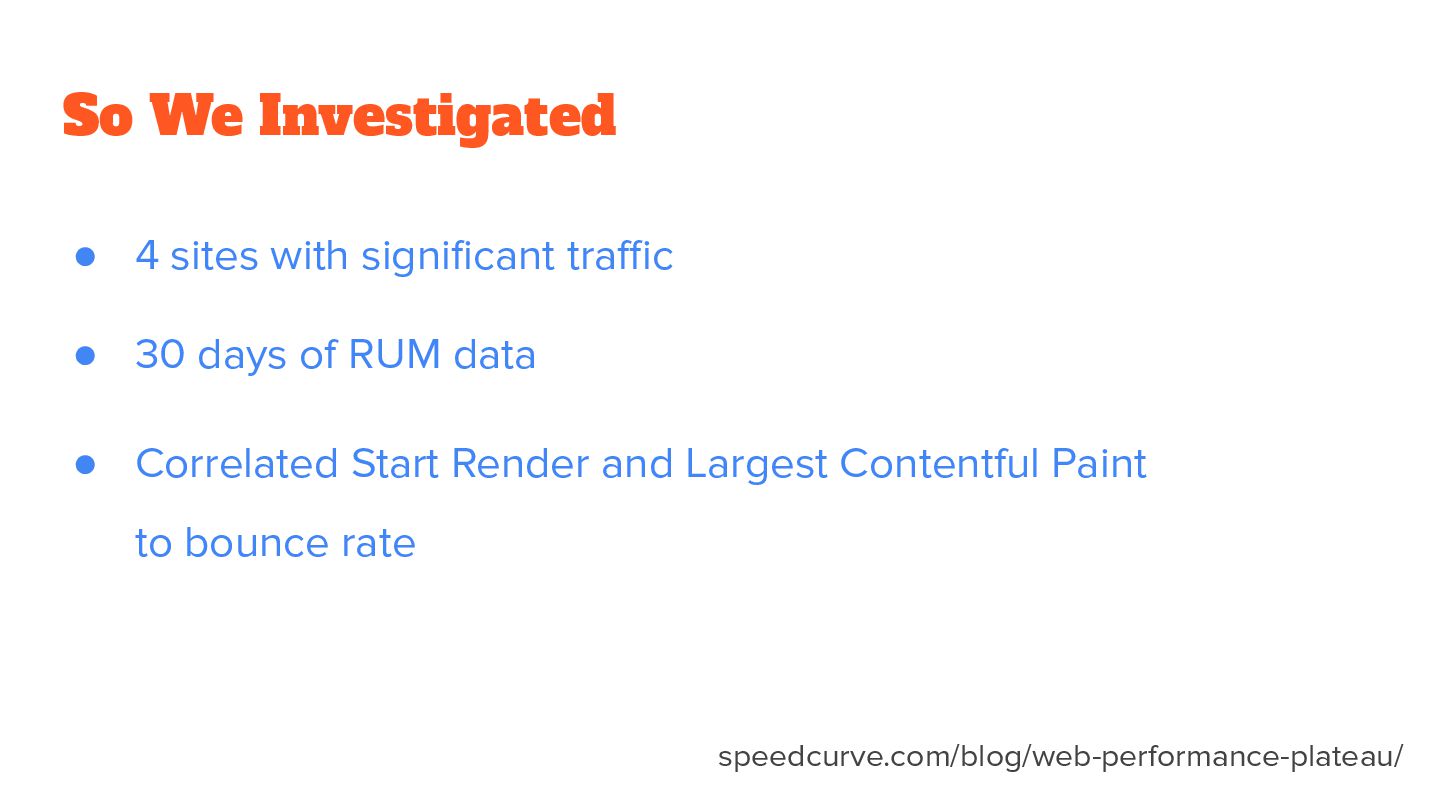
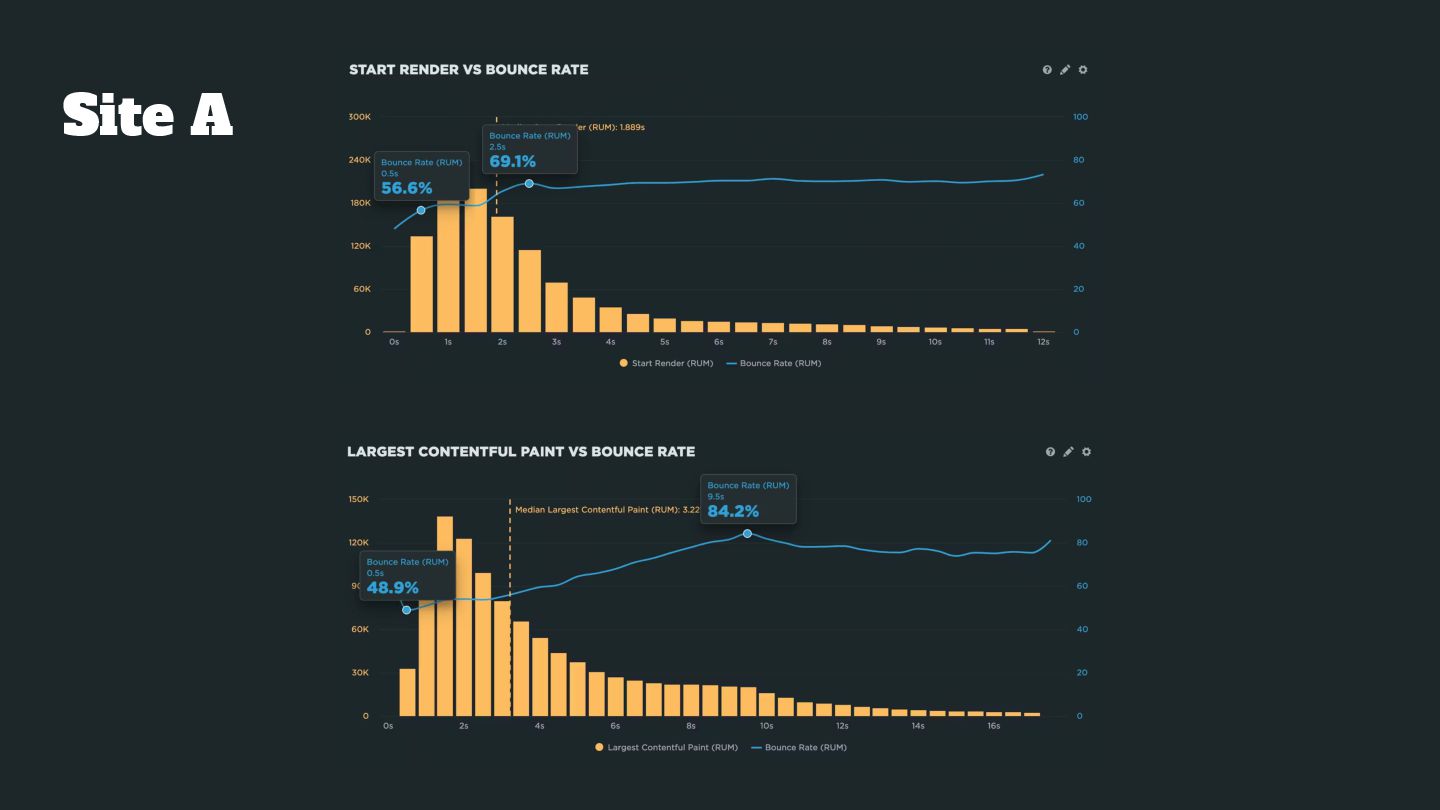
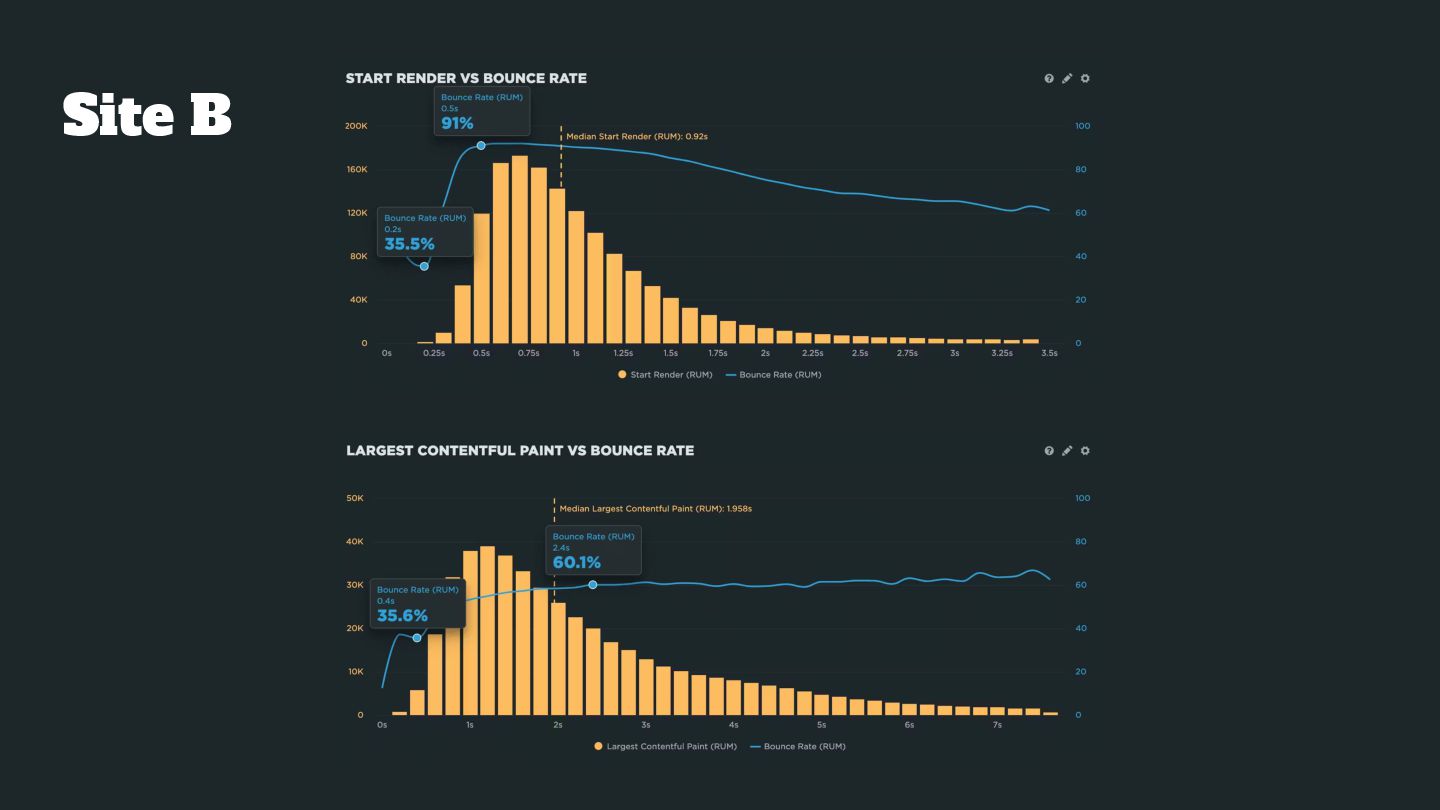
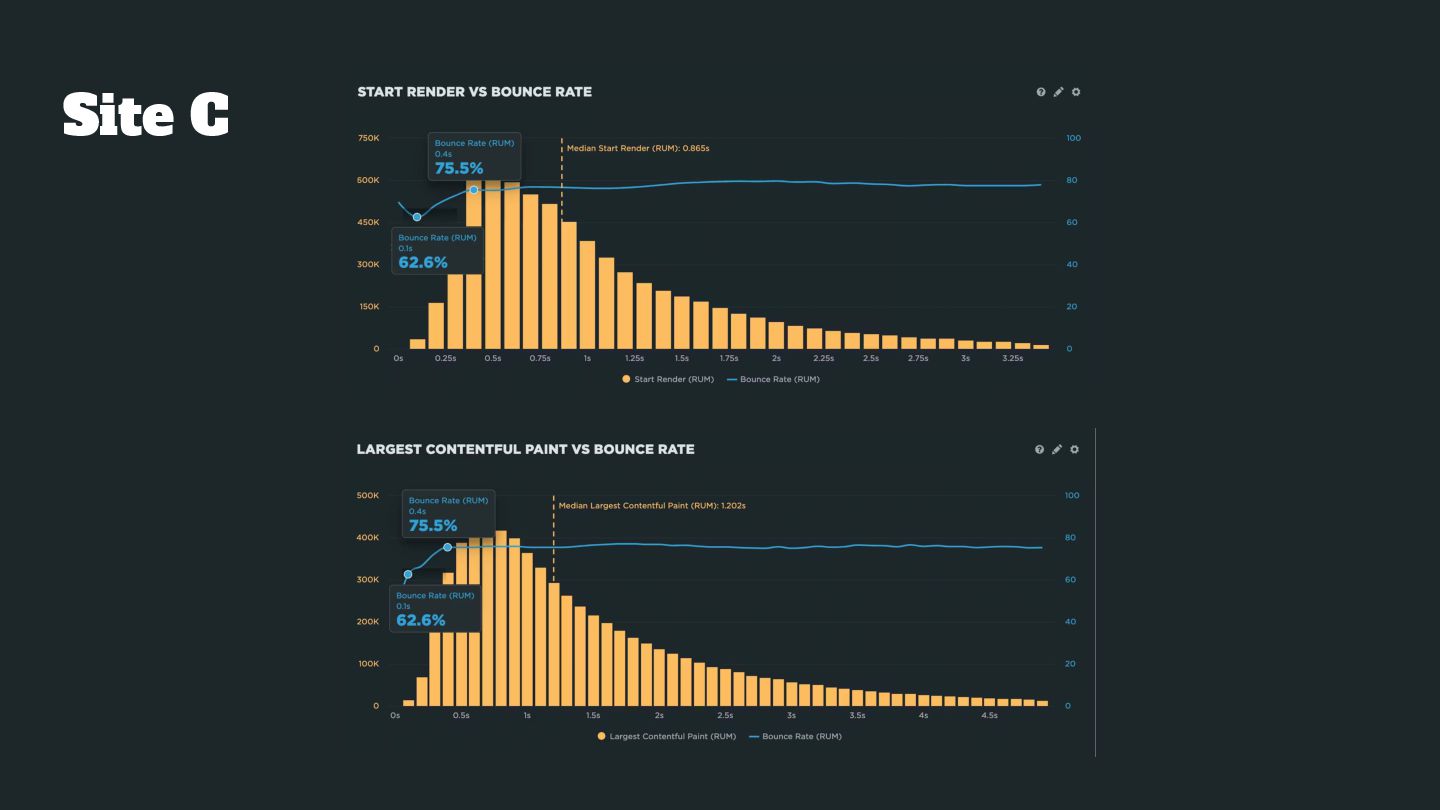
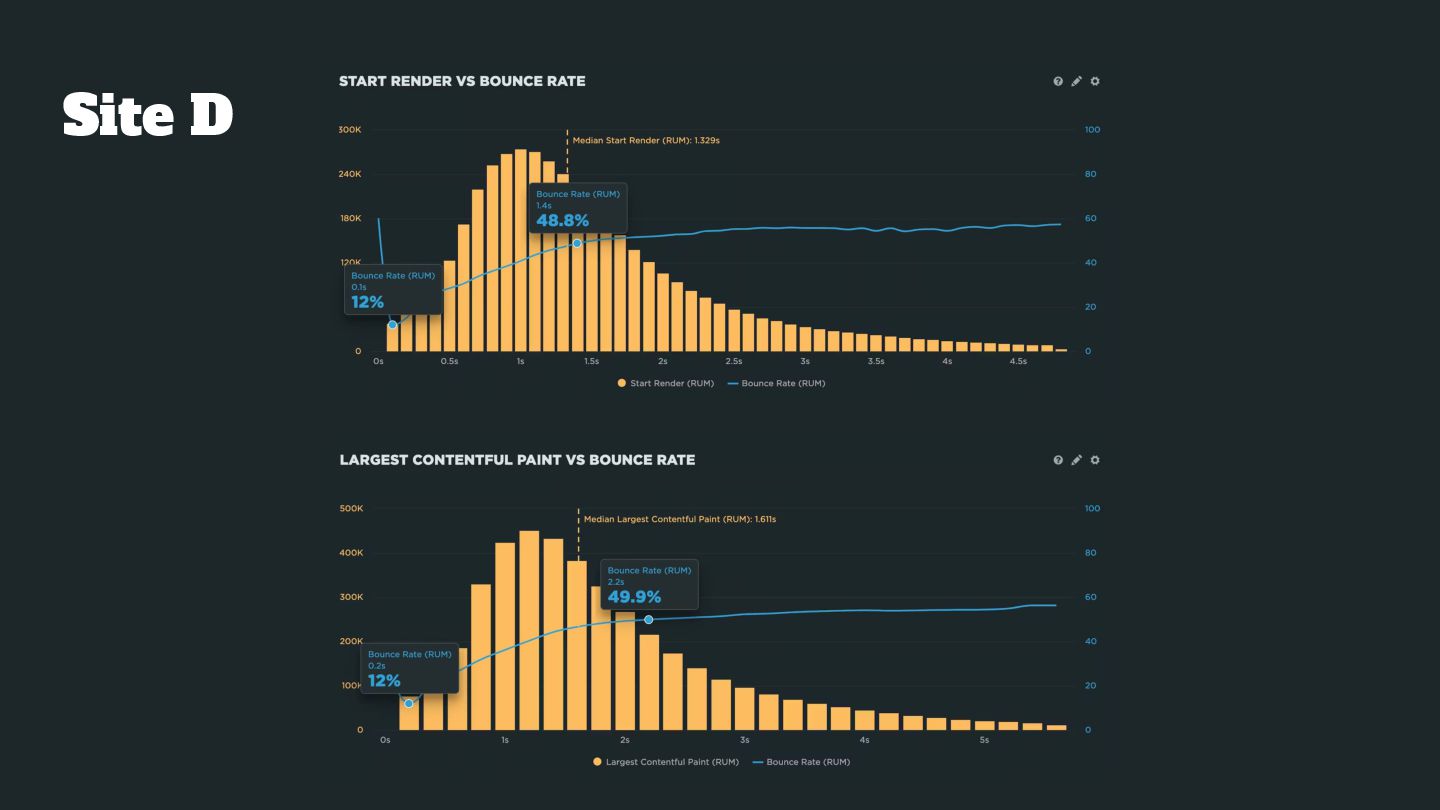
  7. So We Investigated • 4 sites with significant traffic •

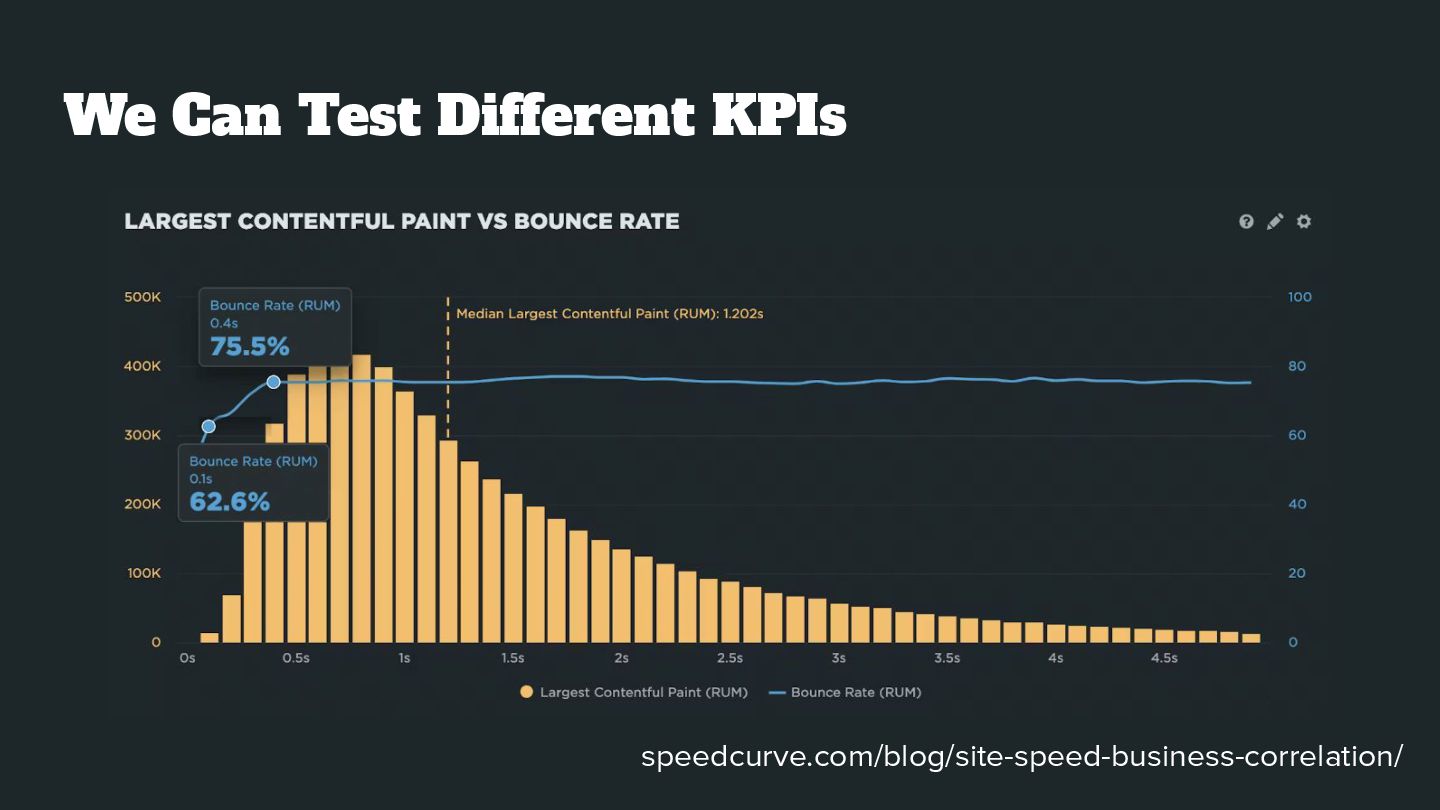
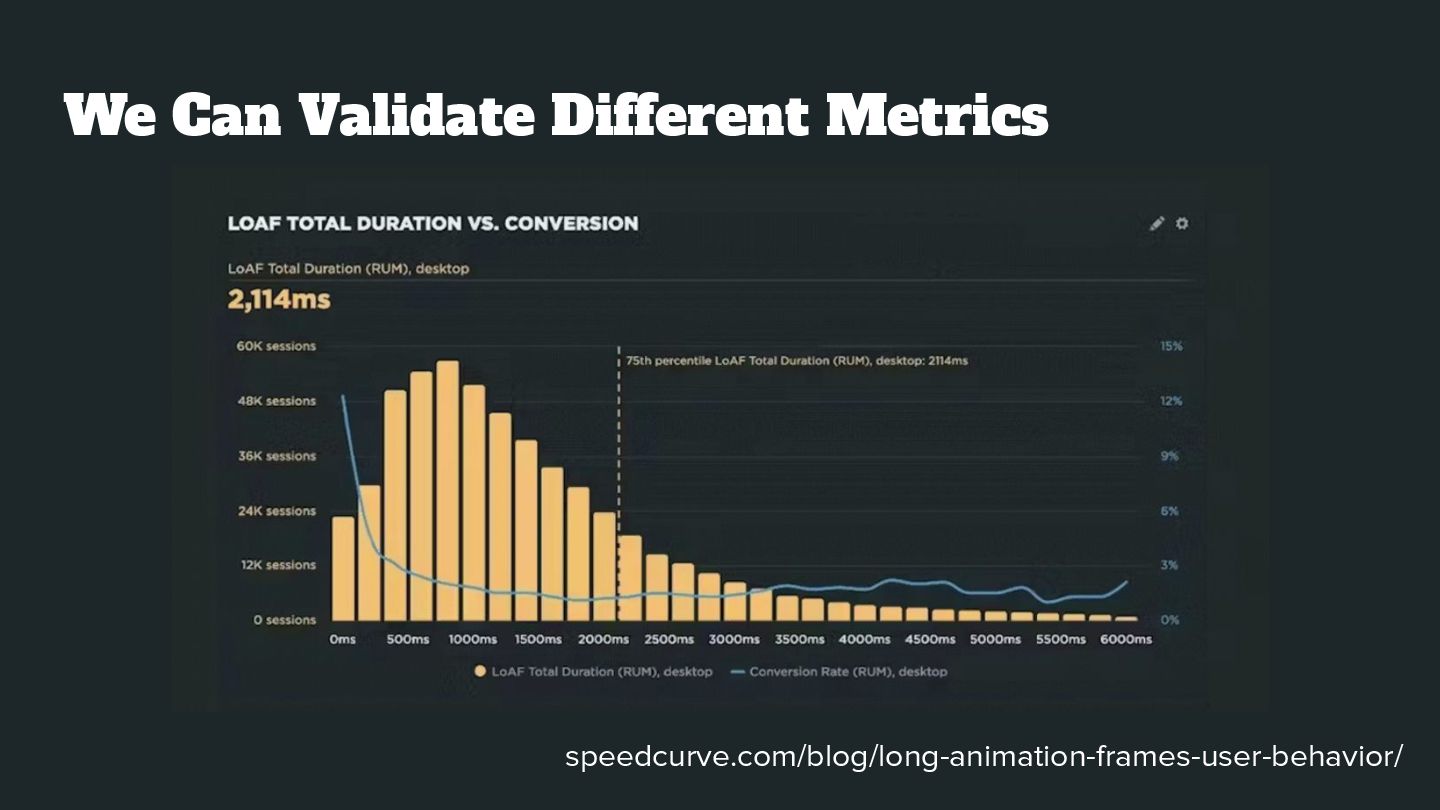
    30 days of RUM data • Correlated Start Render and Largest Contentful Paint to bounce rate speedcurve.com/blog/web-performance-plateau/
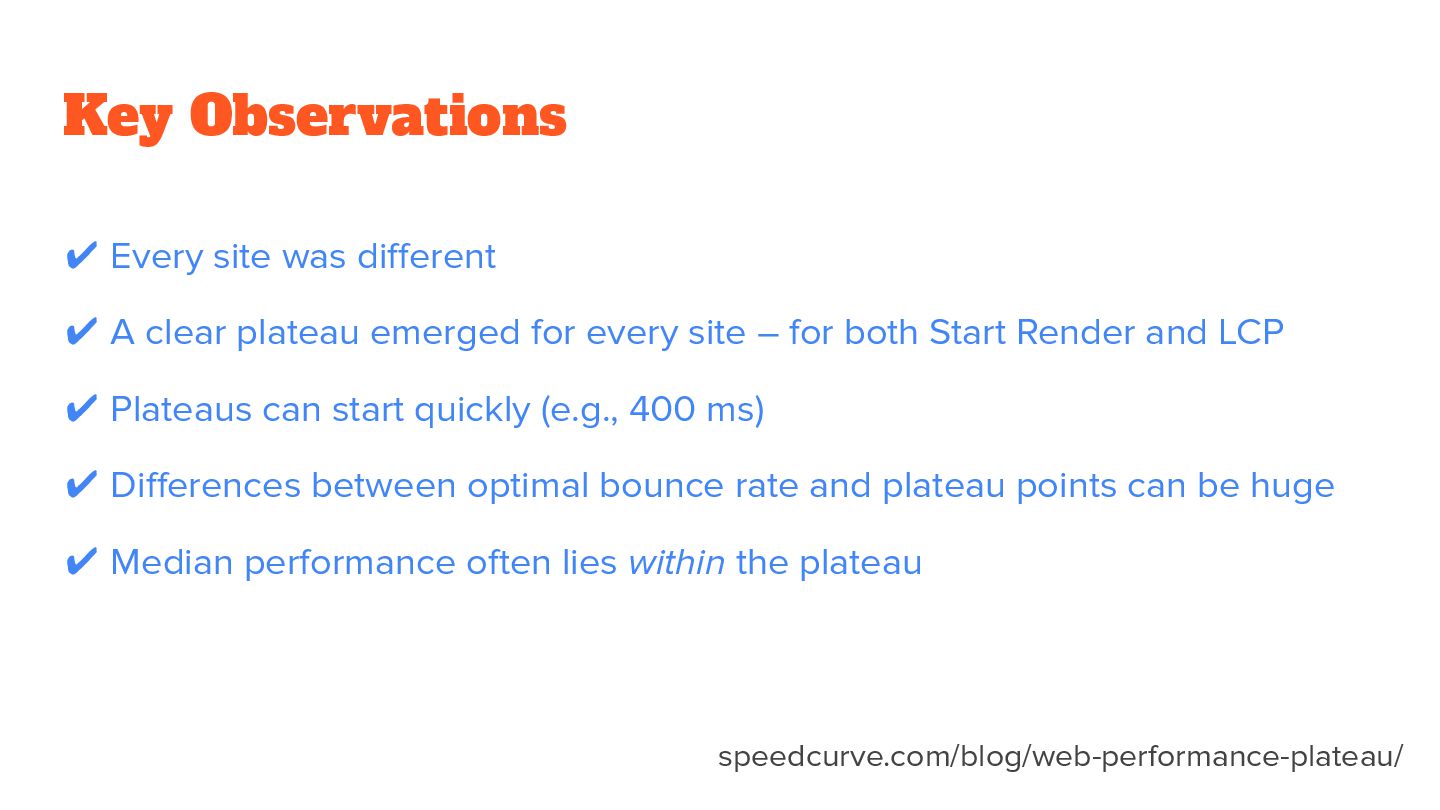
  8. Key Observations ✔ Every site was different ✔ A clear

    plateau emerged for every site – for both Start Render and LCP speedcurve.com/blog/web-performance-plateau/
  9. Key Observations ✔ Every site was different ✔ A clear

    plateau emerged for every site – for both Start Render and LCP ✔ Plateaus can start quickly (e.g., 400 ms) speedcurve.com/blog/web-performance-plateau/
  10. Key Observations ✔ Every site was different ✔ A clear

    plateau emerged for every site – for both Start Render and LCP ✔ Plateaus can start quickly (e.g., 400 ms) ✔ Differences between optimal bounce rate and plateau points can be huge speedcurve.com/blog/web-performance-plateau/
  11. Key Observations ✔ Every site was different ✔ A clear

    plateau emerged for every site – for both Start Render and LCP ✔ Plateaus can start quickly (e.g., 400 ms) ✔ Differences between optimal bounce rate and plateau points can be huge ✔ Median performance often lies within the plateau speedcurve.com/blog/web-performance-plateau/
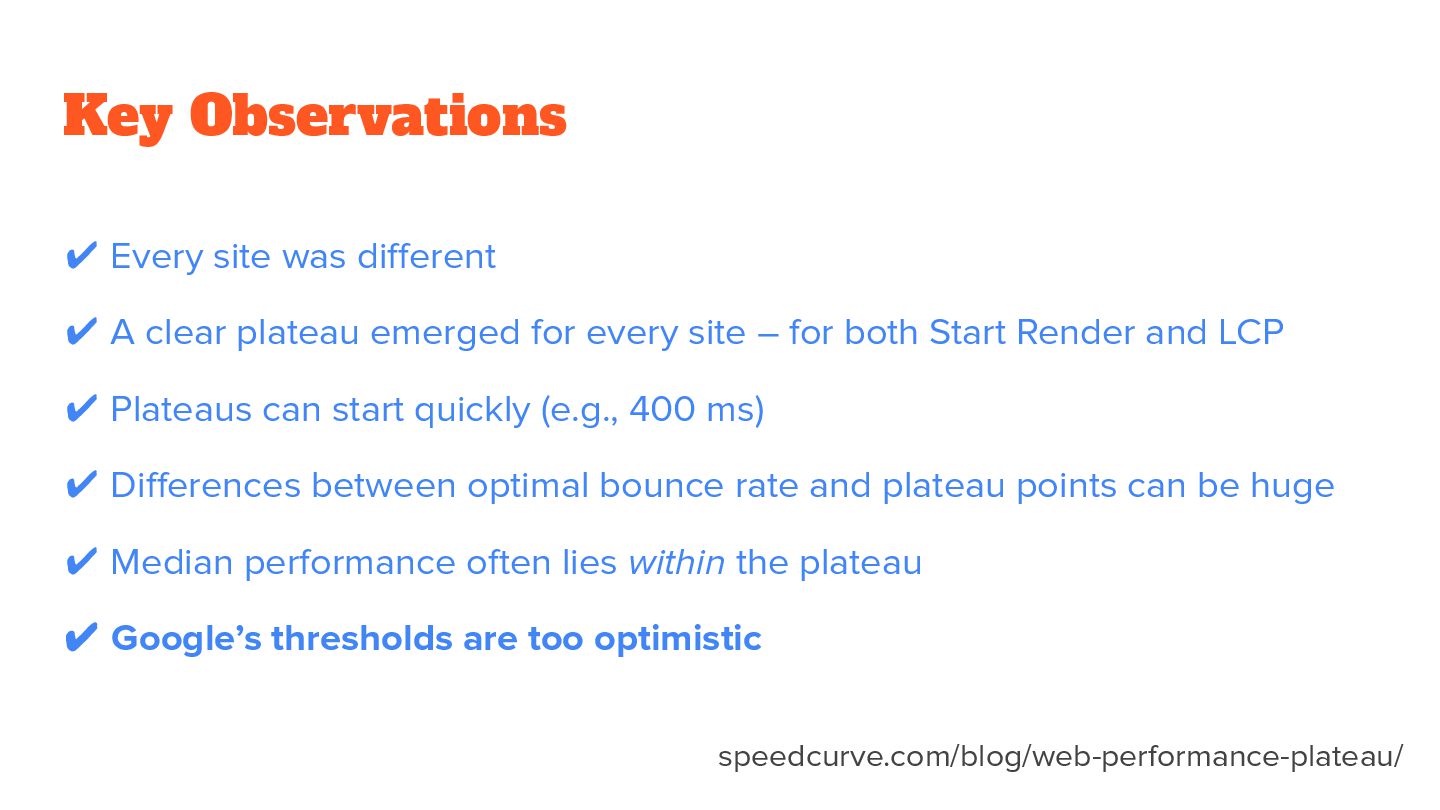
  12. Key Observations ✔ Every site was different ✔ A clear

    plateau emerged for every site – for both Start Render and LCP ✔ Plateaus can start quickly (e.g., 400 ms) ✔ Differences between optimal bounce rate and plateau points can be huge ✔ Median performance often lies within the plateau ✔ Google’s thresholds are too optimistic speedcurve.com/blog/web-performance-plateau/
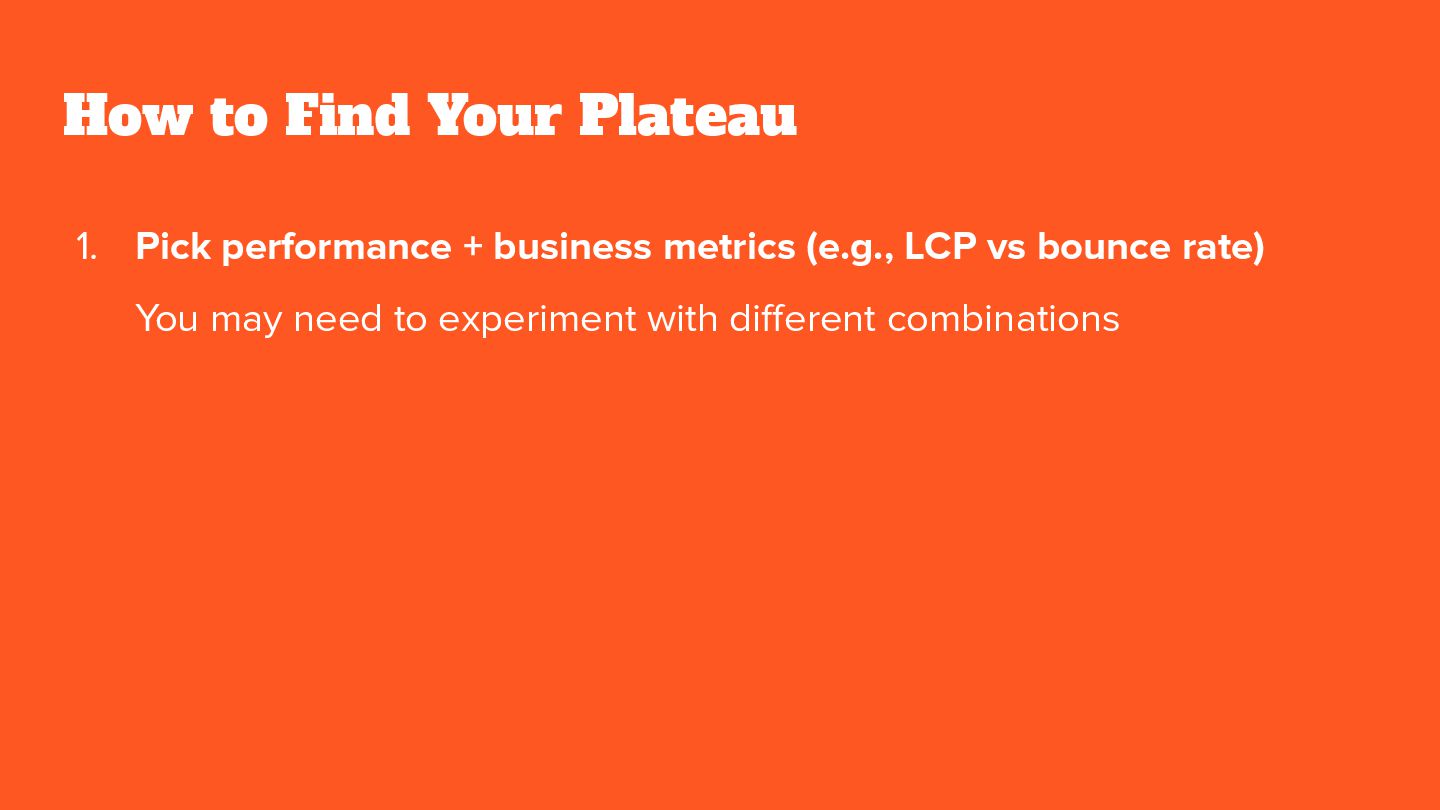
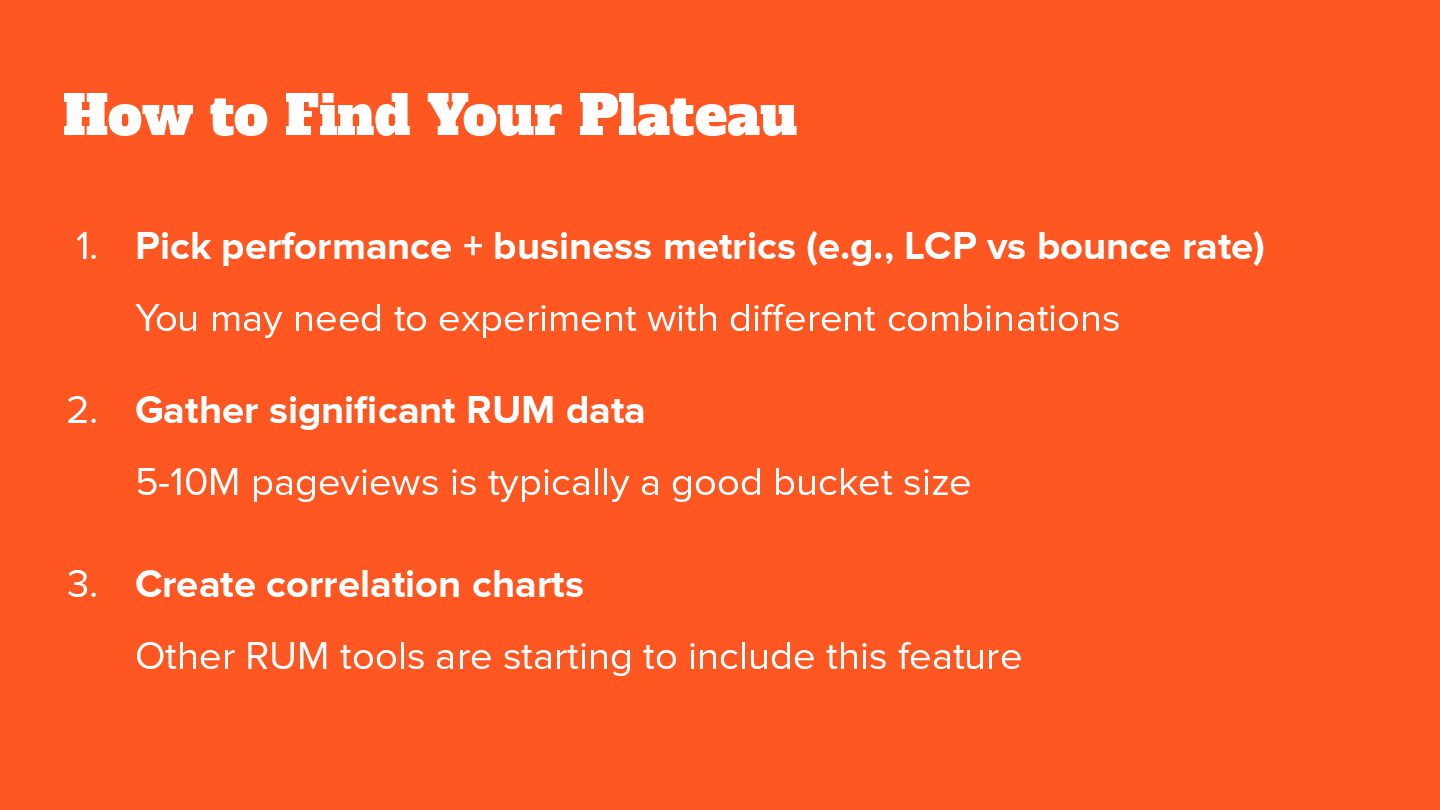
  13. How to Find Your Plateau 1. Pick performance + business

    metrics (e.g., LCP vs bounce rate) You may need to experiment with different combinations
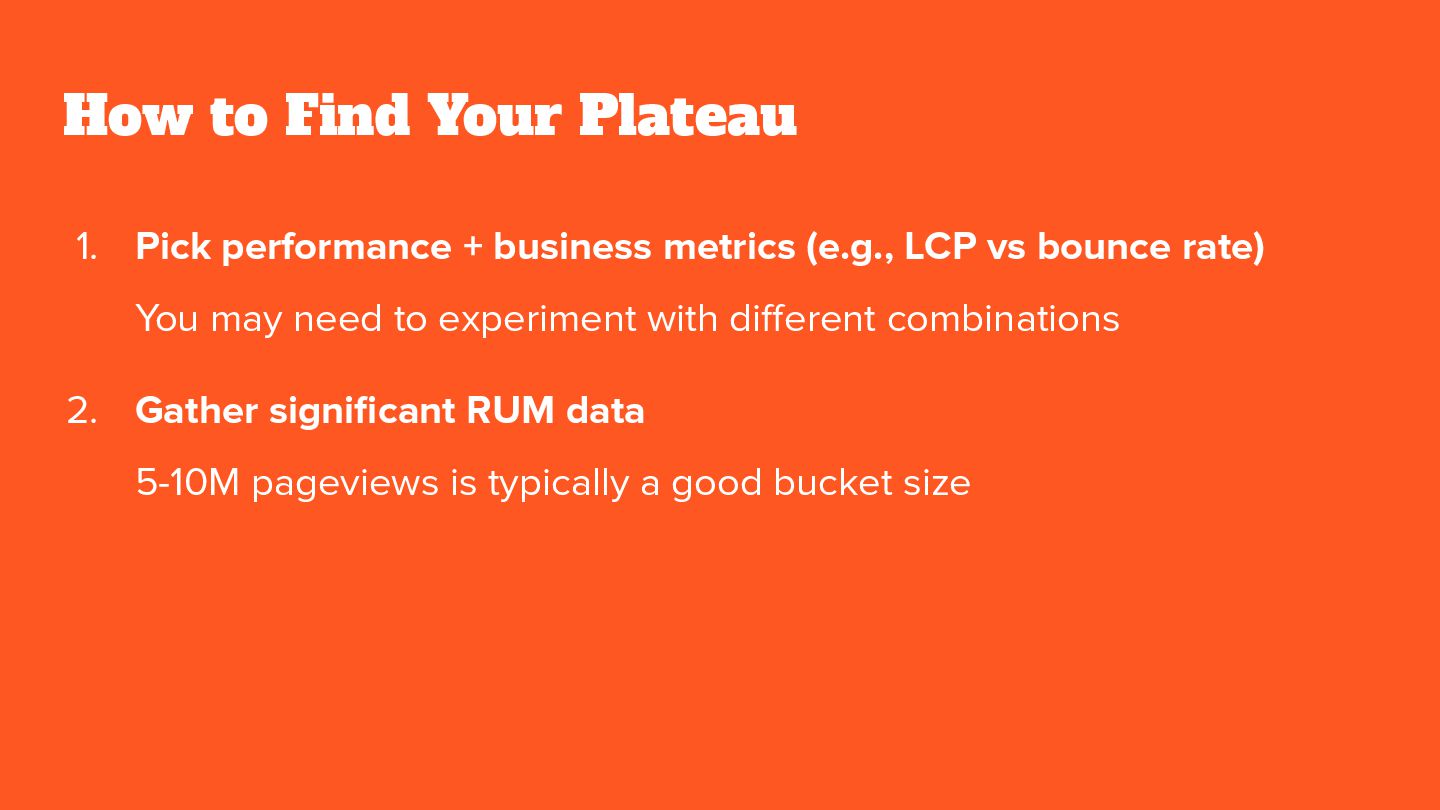
  14. How to Find Your Plateau 1. Pick performance + business

    metrics (e.g., LCP vs bounce rate) You may need to experiment with different combinations 2. Gather significant RUM data 5-10M pageviews is typically a good bucket size
  15. How to Find Your Plateau 1. Pick performance + business

    metrics (e.g., LCP vs bounce rate) You may need to experiment with different combinations 2. Gather significant RUM data 5-10M pageviews is typically a good bucket size 3. Create correlation charts Other RUM tools are starting to include this feature
  16. What to Do with Your Findings ✔ Share with stakeholders

    – help them see opportunity! ✔ Explain why improvements haven’t moved metrics
  17. What to Do with Your Findings ✔ Share with stakeholders

    – help them see opportunity! ✔ Explain why improvements haven’t moved metrics ✔ Reset performance goals – think beyond Core Web Vitals!
  18. Baselines & Tracking Over Time ✔ Repeat plateau analysis monthly

    or after major changes ✔ Compare distributions over time
  19. Baselines & Tracking Over Time ✔ Repeat plateau analysis monthly

    or after major changes ✔ Compare distributions over time ✔ Update performance goals as needed
  20. Takeaways ✔ You need to connect performance to business ✔

    Fast isn’t fast enough unless it affects user behaviour
  21. Takeaways ✔ You need to connect performance to business ✔

    Fast isn’t fast enough unless it affects user behaviour ✔ Real user data is essential for guiding decisions