Upgrade to Pro — share decks privately, control downloads, hide ads and more …

Object Oriented Design. Object Creation: classi...

Object Oriented Design. Object Creation: classical patterns and dependency injection

An overview of the main Object Oriented Design principles, on the limits of direct use of constructors for object creation, and how to solve this problem with classical factory patterns or dependency injection frameworks, with an example of how dependency injection can help implement the Unit of Work pattern for a clean architecture.

Avatar for tech-publica

tech-publica

October 26, 2018

Other Decks in Programming
Transcript

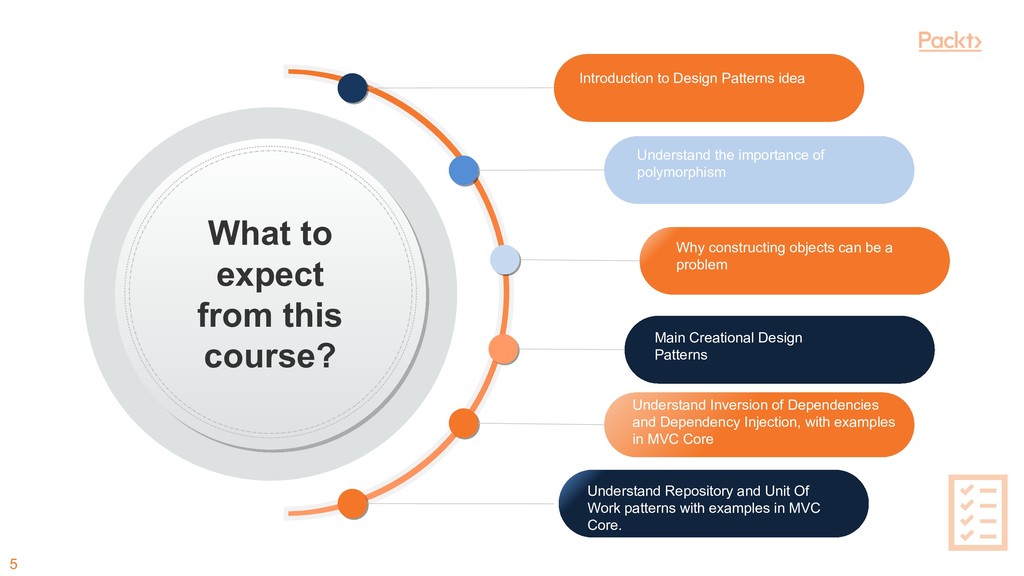
  1. What to expect from this course? Introduction to Design Patterns

    idea Understand the importance of polymorphism Why constructing objects can be a problem Main Creational Design Patterns Understand Inversion of Dependencies and Dependency Injection, with examples in MVC Core . Understand Repository and Unit Of Work patterns with examples in MVC Core. 5
  2. Idea borrowed from “real architecture” concept by Christopher Alexander (1977/79).

    Reusable design solution to recurrent problems Motivation, Structure, Implementation, Sample Code High level vocabulary Watch out for “patternitis” Design Patterns 6
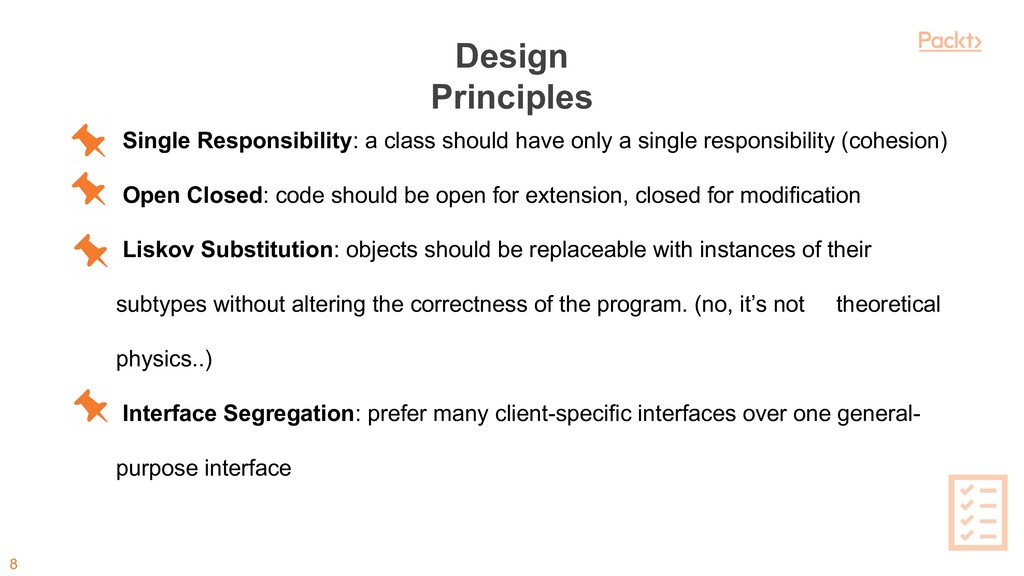
  3. Single Responsibility: a class should have only a single responsibility

    (cohesion) Open Closed: code should be open for extension, closed for modification Liskov Substitution: objects should be replaceable with instances of their subtypes without altering the correctness of the program. (no, it’s not theoretical physics..) Interface Segregation: prefer many client-specific interfaces over one general- purpose interface Design Principles 8
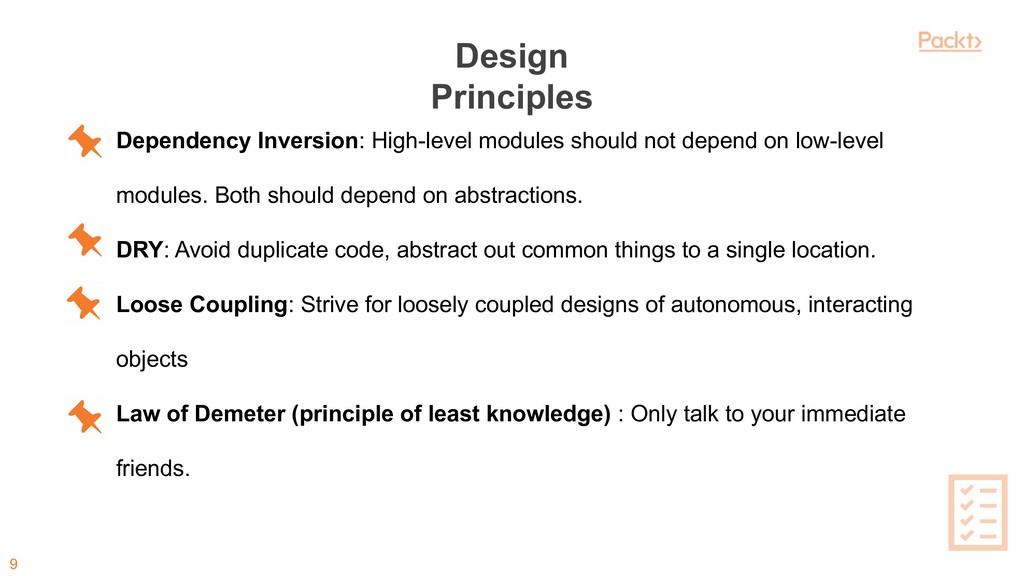
  4. Dependency Inversion: High-level modules should not depend on low-level modules.

    Both should depend on abstractions. DRY: Avoid duplicate code, abstract out common things to a single location. Loose Coupling: Strive for loosely coupled designs of autonomous, interacting objects Law of Demeter (principle of least knowledge) : Only talk to your immediate friends. 9 Design Principles
  5. Encapsulate what varies: find our code section that are likely

    to change, and move them in their own method or class. For more extensibility, make those method virtual and those classes members of a family of classes. You will see this in action in the factory idiom and patterns Design Principles 10
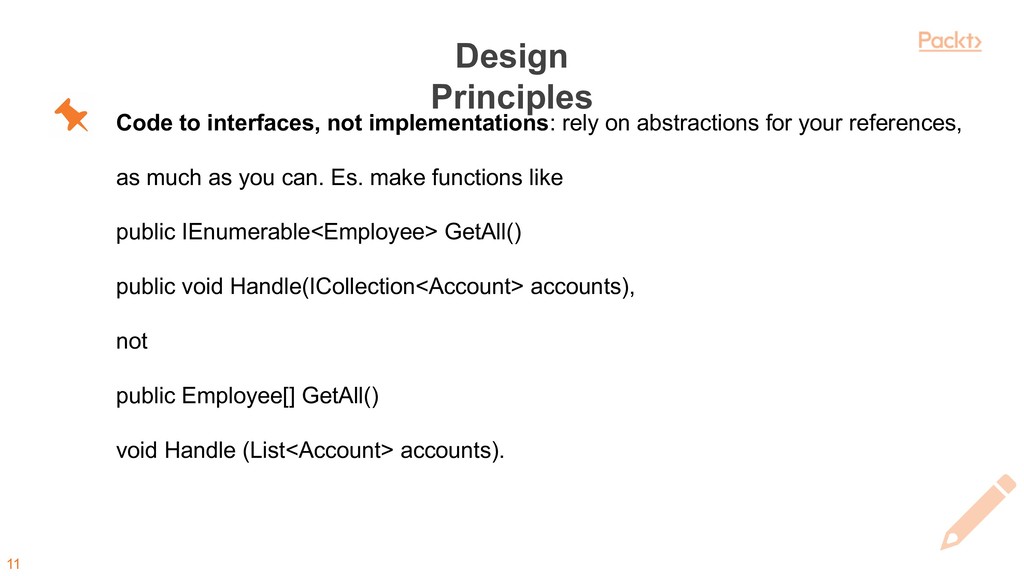
  6. Code to interfaces, not implementations: rely on abstractions for your

    references, as much as you can. Es. make functions like public IEnumerable<Employee> GetAll() public void Handle(ICollection<Account> accounts), not public Employee[] GetAll() void Handle (List<Account> accounts). Design Principles 11
  7. Prefer composition over inheritance: “Has a” can often be better

    than “Is a”: inheritance is a powerful tool, but also a dangerous one, as noted also by James Gosling. Implementation inheritance is useful but it is also the strongest type of coupling you can have between two classes. Deep or large implementation inheritance families can cause huge “ripple effects” in your code and make it fragile and hard to extend and modify. You can reuse code by composition, with less coupling and the added benefit of run time flexibility if you compose with an interface reference. Design Principles 12
  8. OOP main goal: easy maintenance and extensibility Obtained through polymorphism:

    encapsulate what varies + code to an interface + composition + Liskov That ‘s how you get Open Closed Extensibility And Maintenance 14
  9. The Problem With Constructors 16 Coding to an interface is

    all well and good until you have to do: Abstraction x = new Implementation(); With direct instantiation through constructor you are kissing goodbye to: Coding to an interface. Your references might be general and immutable but your code is littered with tons of implementation choices. Single Responsibility: Your class is now also responsible for creating other objects
  10. The Problem With Constructors DRY: You repeat over and over

    the same pattern of creation for objects and their dependencies. Dependency Inversion: Higher level modules end up depending on low level modules To sum it up, direct instantiation forces you to abandon “Riccardo Matrix Principle”: Ignorance (of the concrete type) is bliss. 17
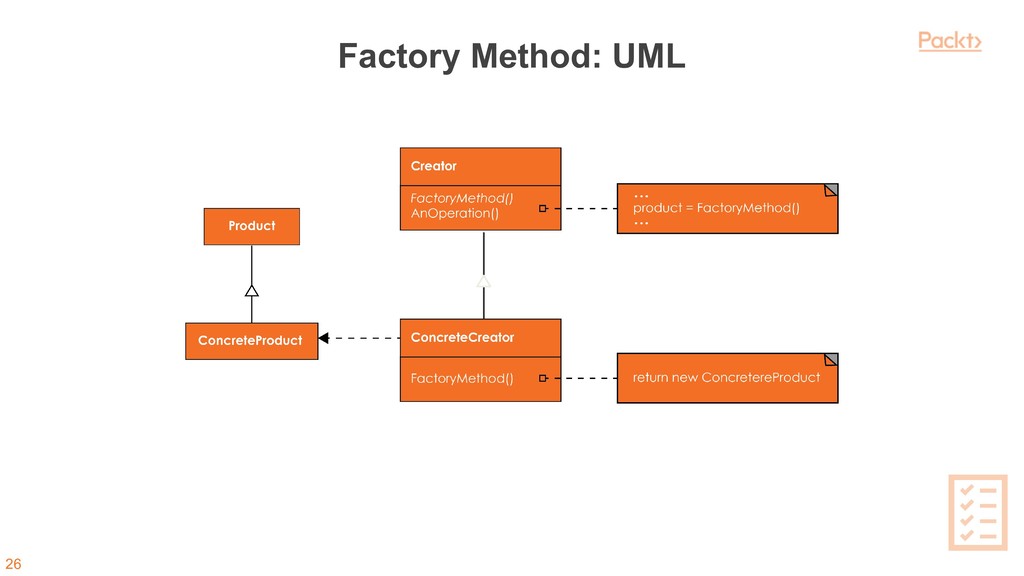
  11. Define an interface for creating objects , but lets subclasses

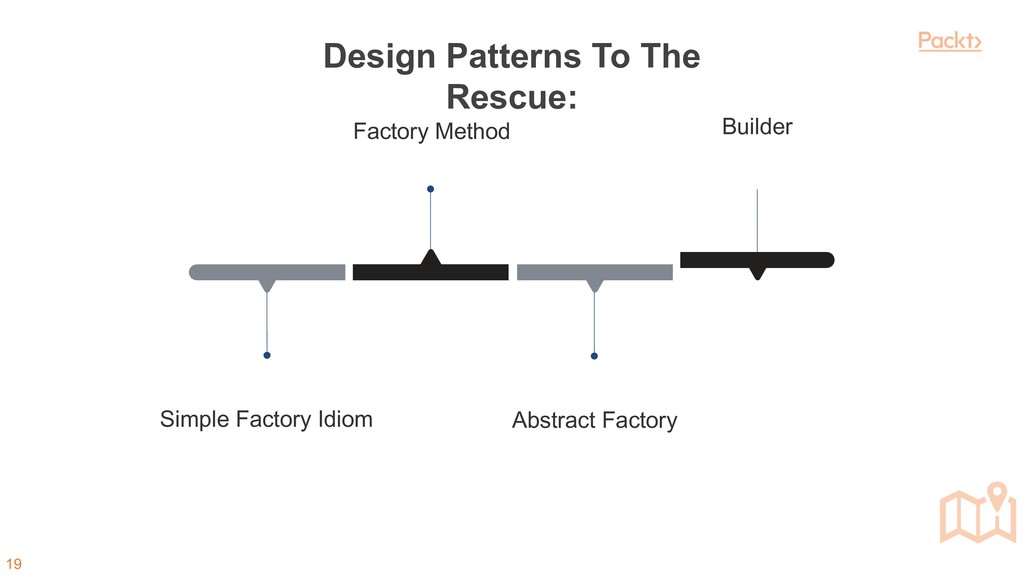
    decide which class to instantiate. Factory method lets a class defer instantiation to subclasses. Uh? English please... Factory Method: Definition 24
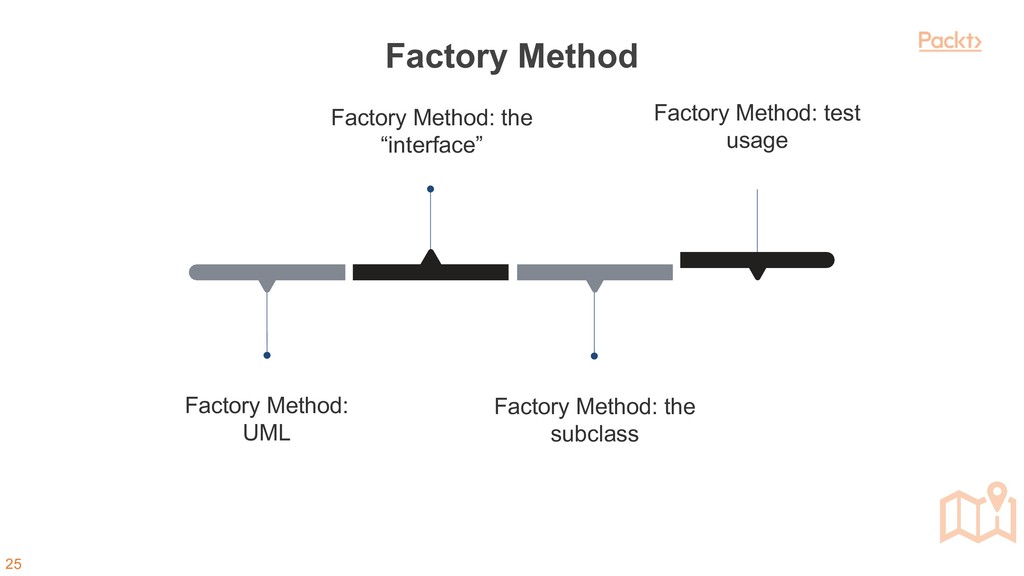
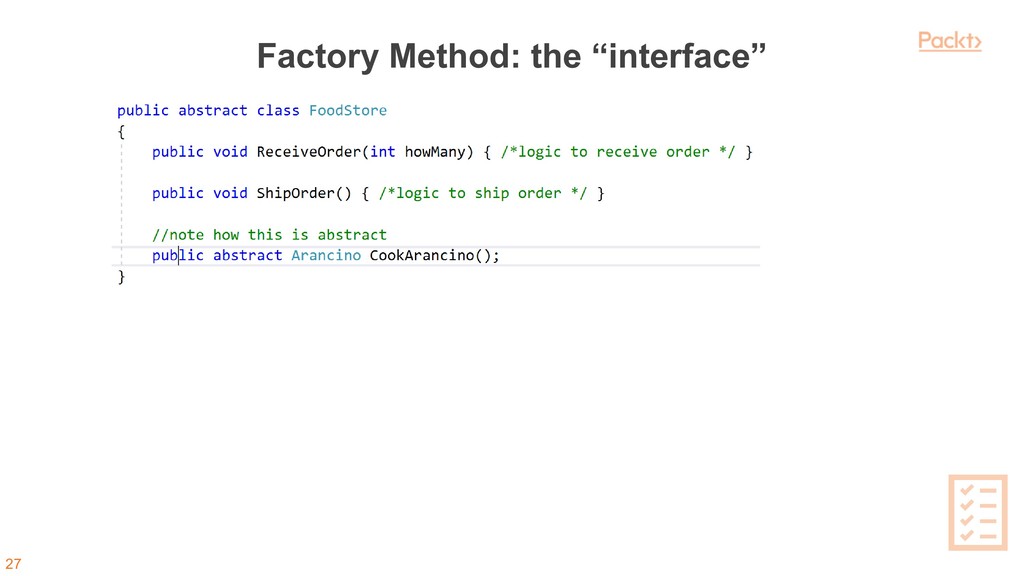
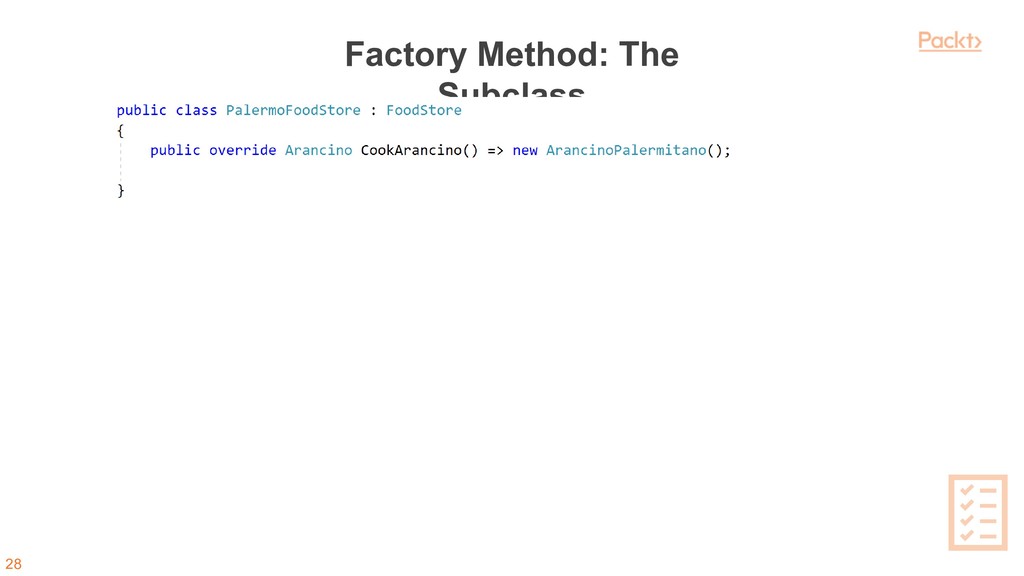
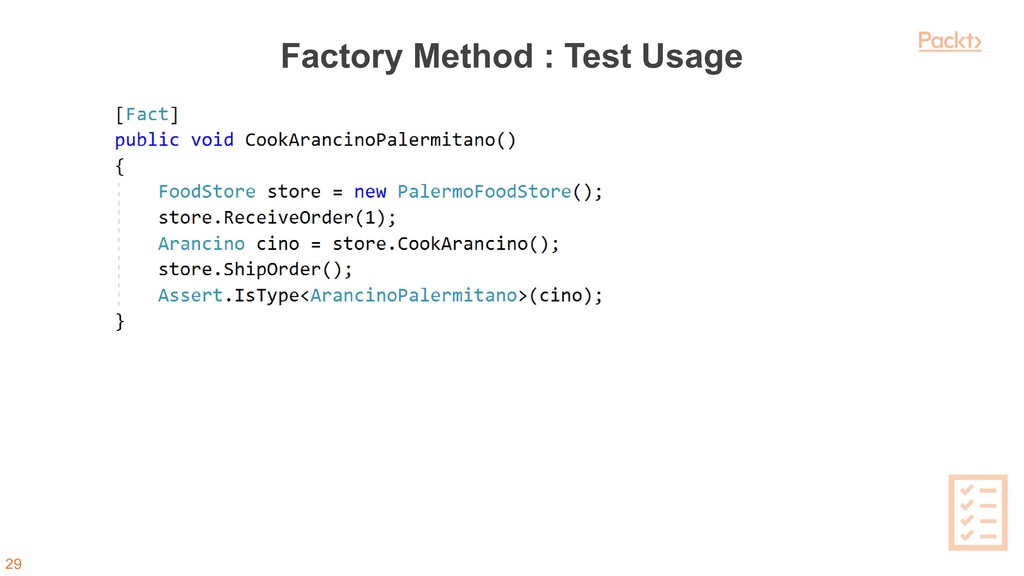
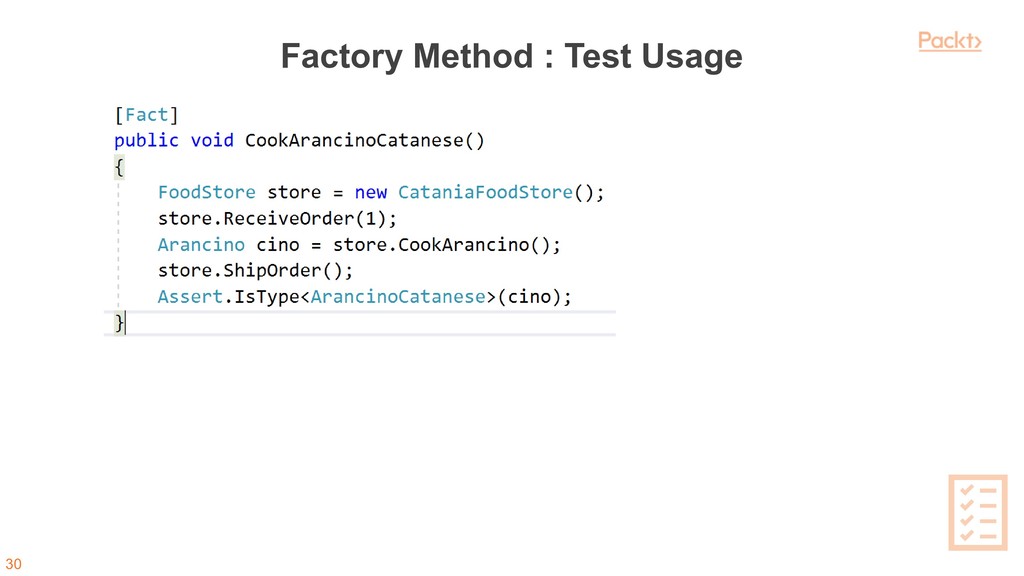
  12. Factory Method: UML Factory Method: test usage Factory Method: the

    “interface” Factory Method: the subclass 25 Factory Method
  13. Provides and interface for creating families of related or dependent

    objects without specifying their concrete class Uh? English please... Abstract Factory: Definition 32
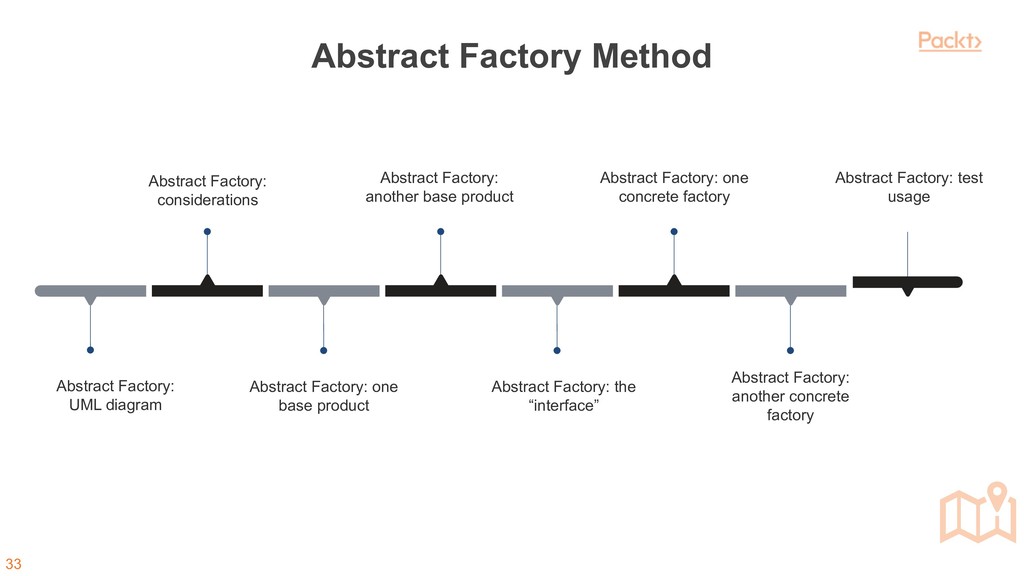
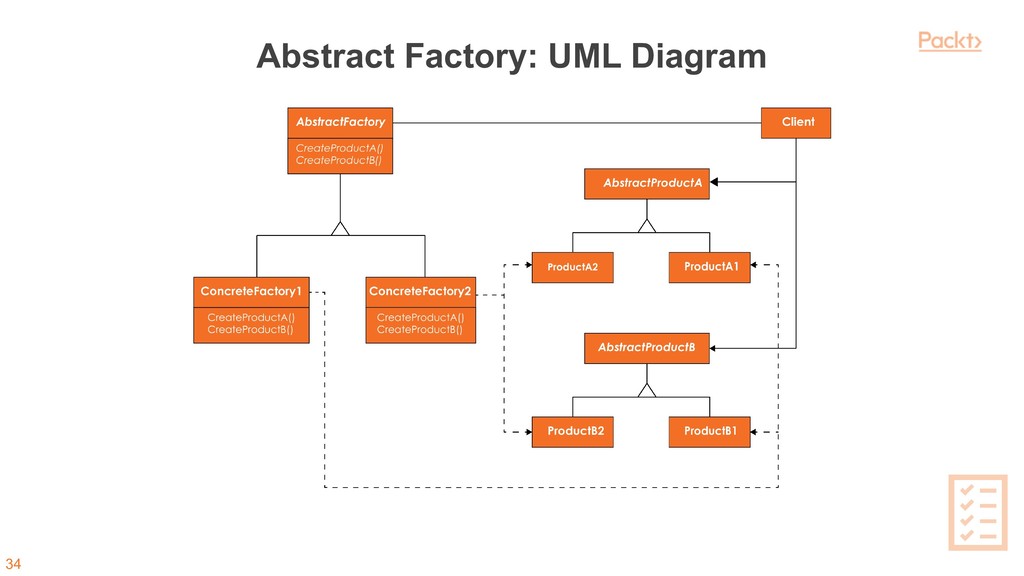
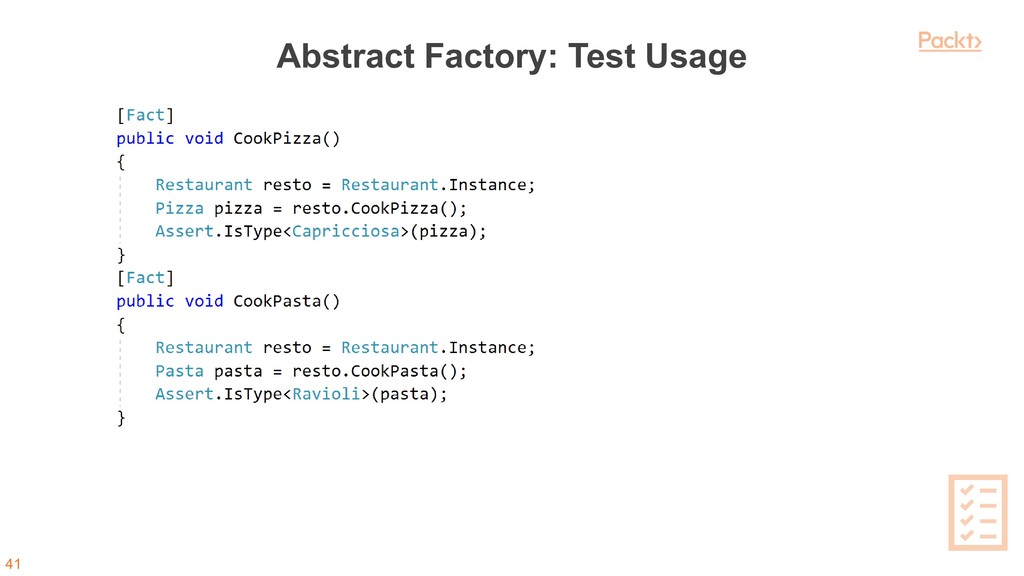
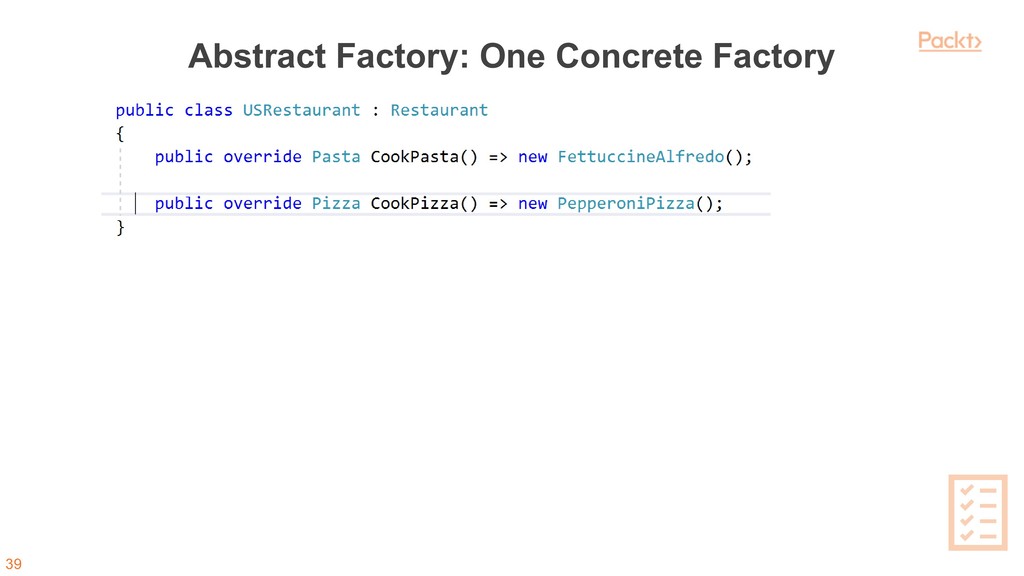
  14. 33 Abstract Factory Method Abstract Factory: UML diagram Abstract Factory:

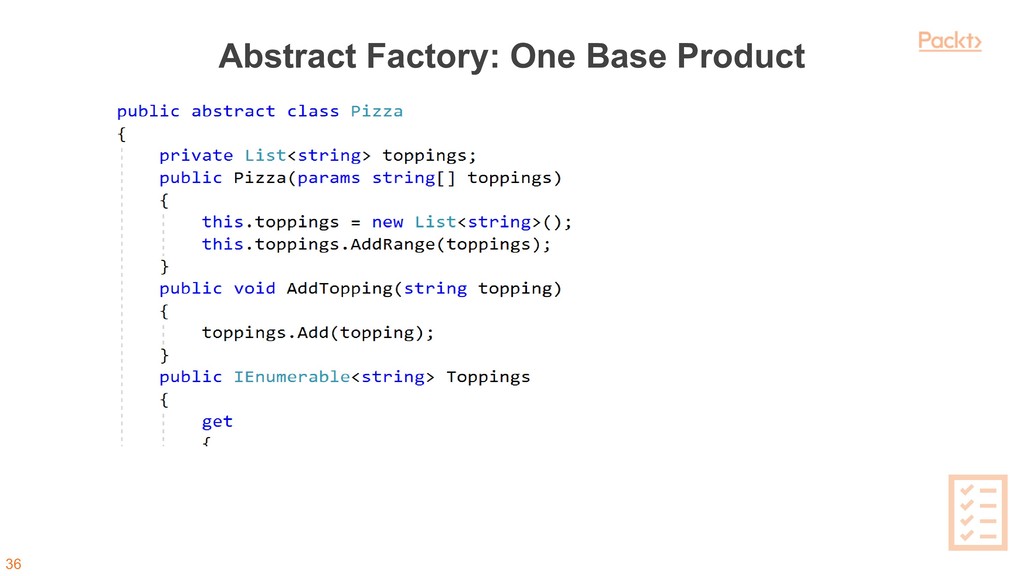
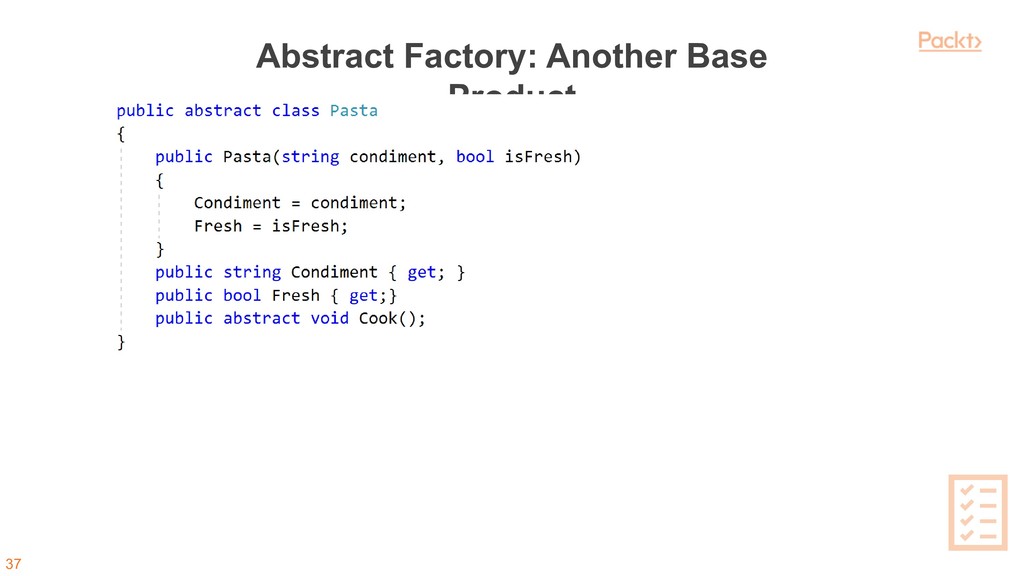
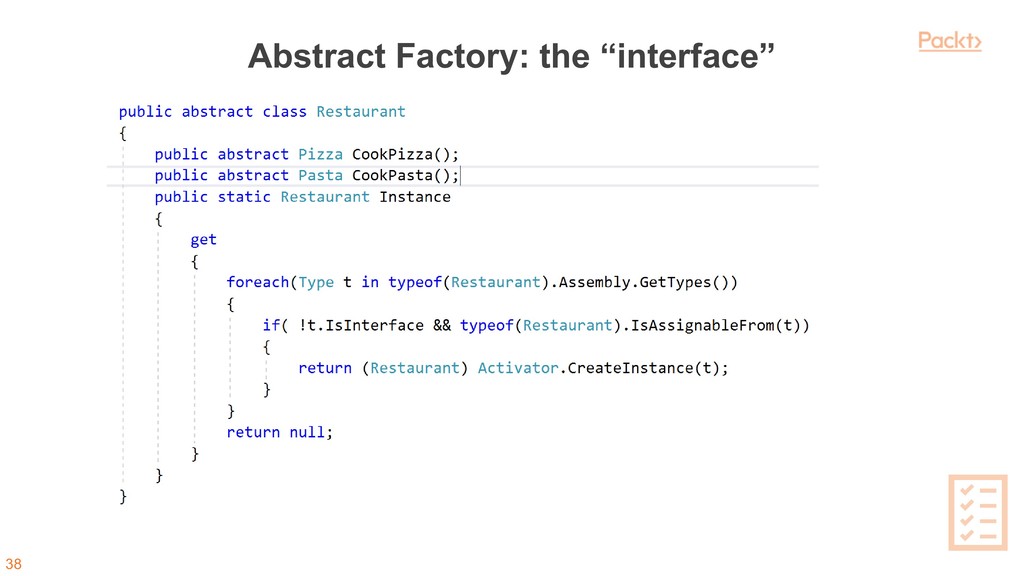
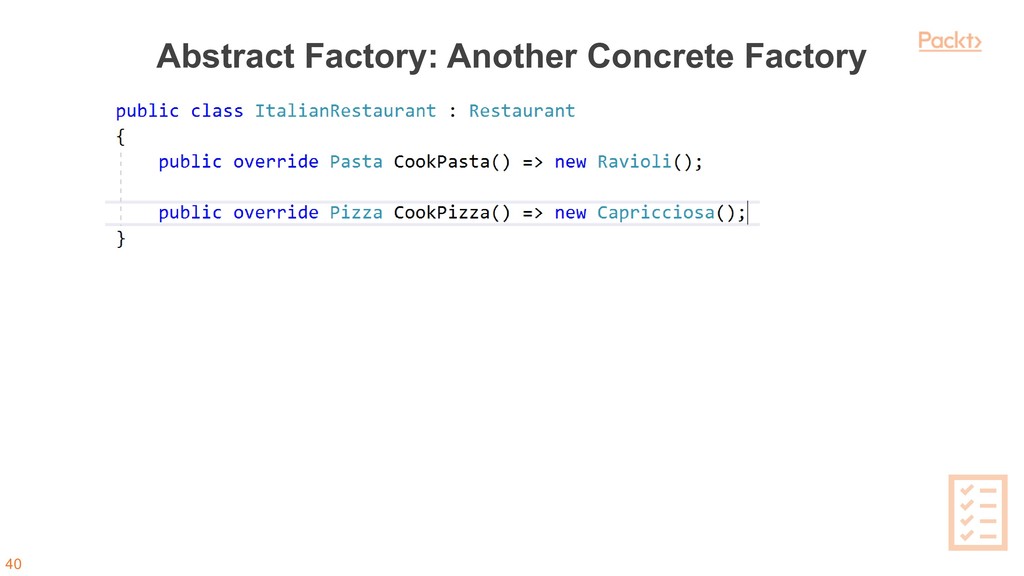
    another base product Abstract Factory: considerations Abstract Factory: one base product Abstract Factory: the “interface” Abstract Factory: one concrete factory Abstract Factory: test usage Abstract Factory: another concrete factory
  15. Sort of a combination of the Simple Factory Idiom and

    the Factory Method: encapsulate what varies + use polymorphism to change behaviour. Complex solution worth using when multiple families of products are present. Abstract Factory: Considerations 35
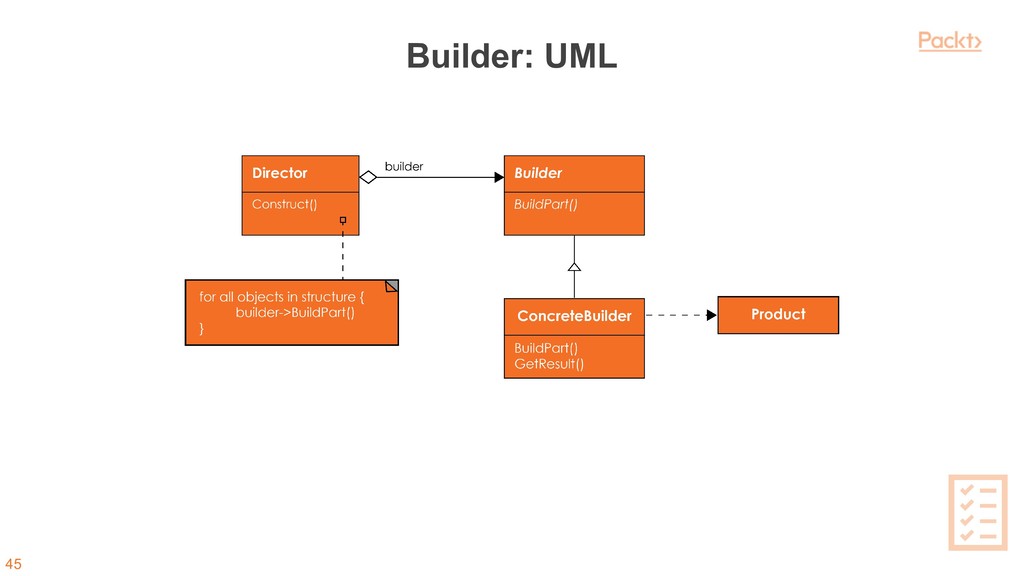
  16. Separate the construction of a complex object from its representation

    so that the same construction process can create different representations. Uh? English, please…. Builder: Definition 43
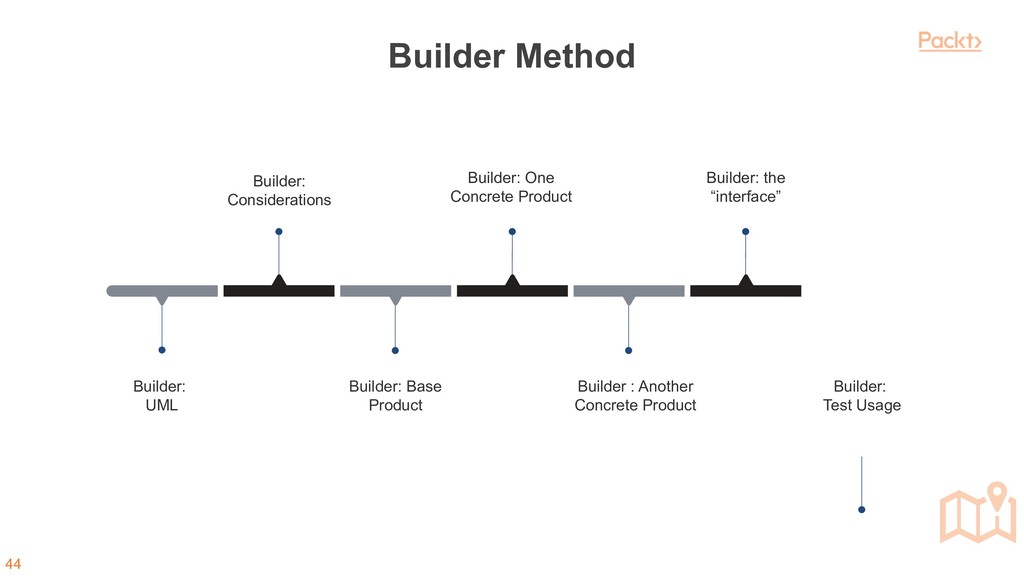
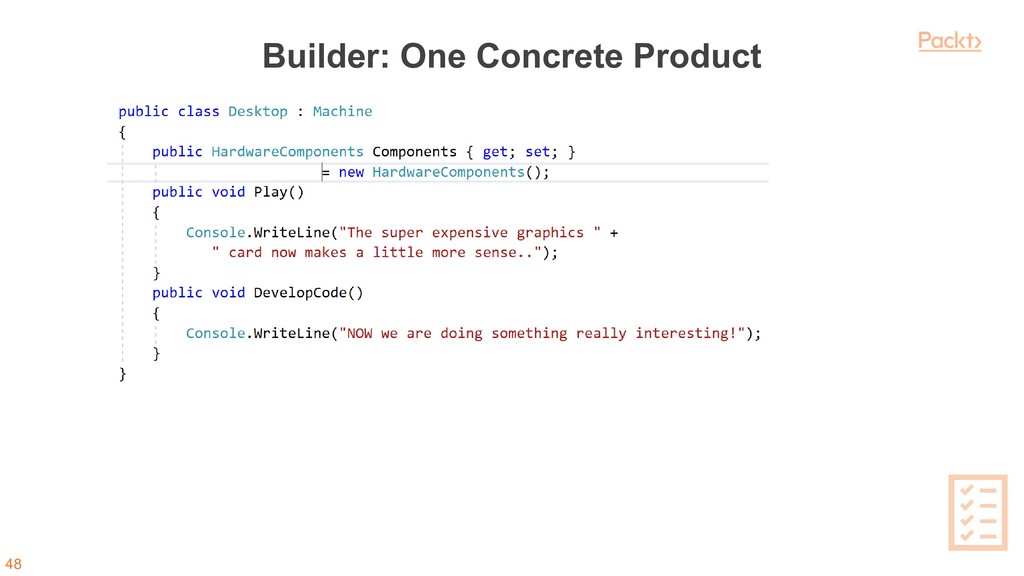
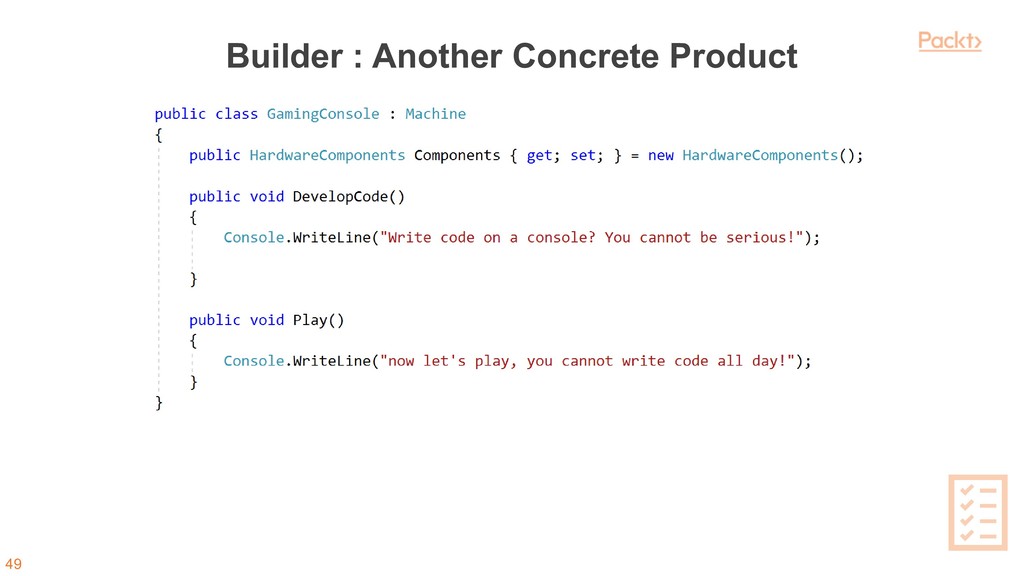
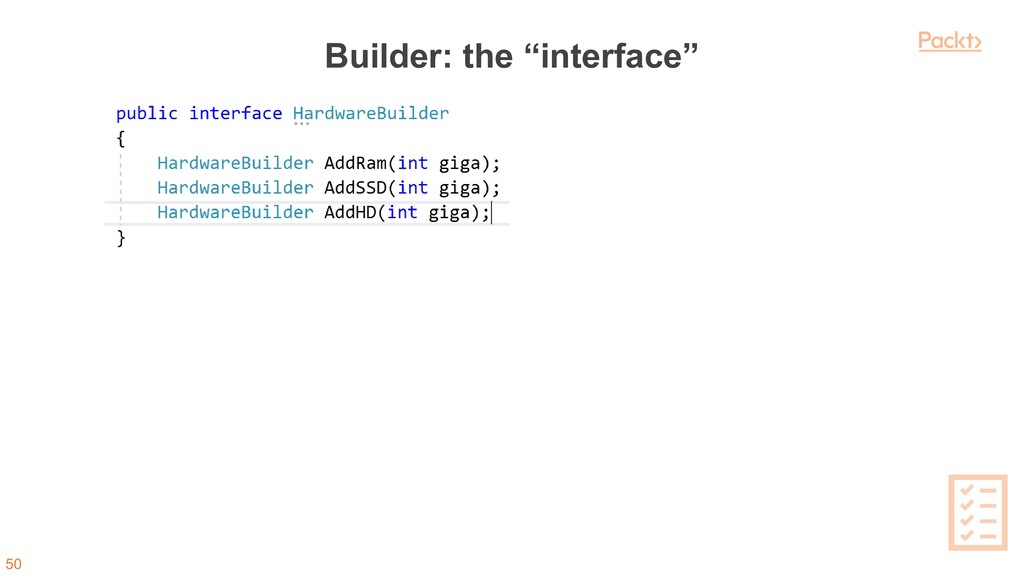
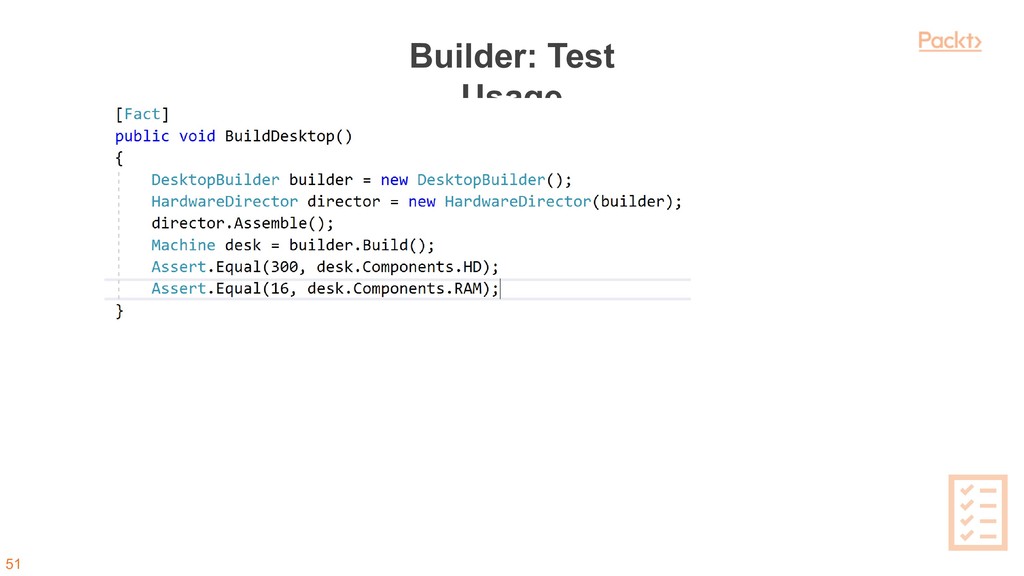
  17. 44 Builder Method Builder: UML Builder: One Concrete Product Builder:

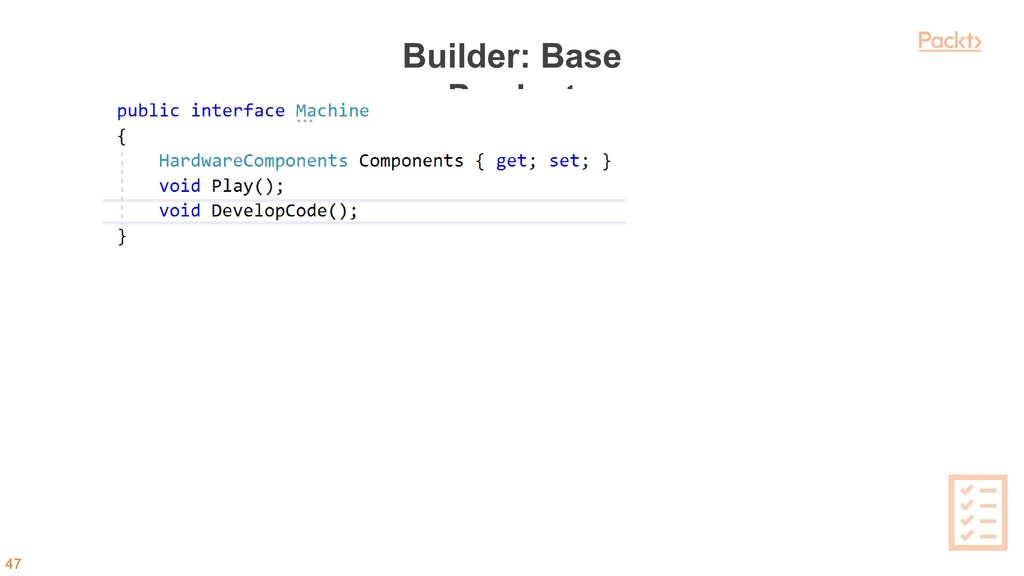
    Considerations Builder: Base Product Builder : Another Concrete Product Builder: the “interface” Builder: Test Usage
  18. The Builder pattern is more concerned about abstracting away the

    complexities of flexible object construction rather than producing a family of objects in a flexible extensible manner, but it can help also with that. Builder: Considerations 46
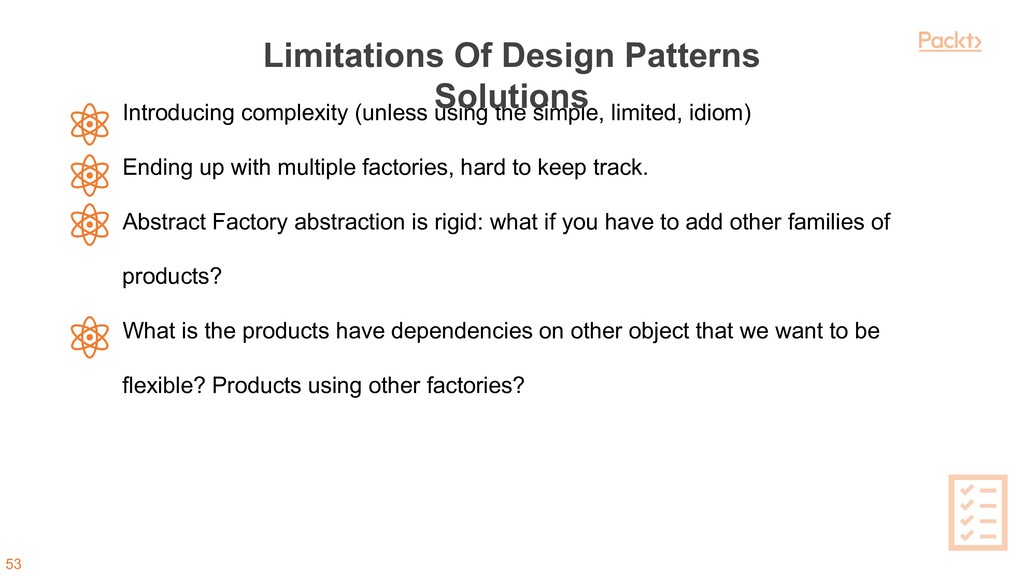
  19. Introducing complexity (unless using the simple, limited, idiom) Ending up

    with multiple factories, hard to keep track. Abstract Factory abstraction is rigid: what if you have to add other families of products? What is the products have dependencies on other object that we want to be flexible? Products using other factories? Limitations Of Design Patterns Solutions 53
  20. These limitations typically come out when the dependencies we need

    to instantiate are services. To overcome these limitations frameworks have been created with the goal of doing Dependency Injection Object Instantiation on Steroids, Dependency Injection 55
  21. DI is a particular case of a technique known as

    “Inversion of Control” , or “The Hollywood Principle” The control we are giving up is the decision about which particular implementation to instantiate. We delegate this responsibility to the DI framework. DI frameworks gained traction and popularity in the Java world , with the highly successful Spring Framework. Dependency Injection 57
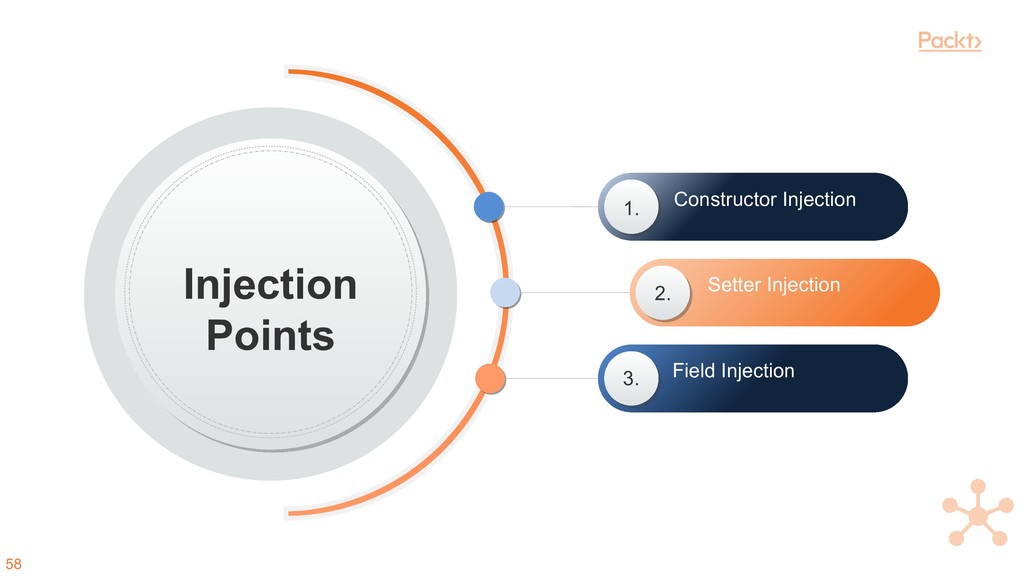
  22. Slide3 0 Injection Points ADD YOUR TEXT HERE. Constructor Injection

    Setter Injection Field Injection YOUR TEXT HERE. 3. 2. 1. 58
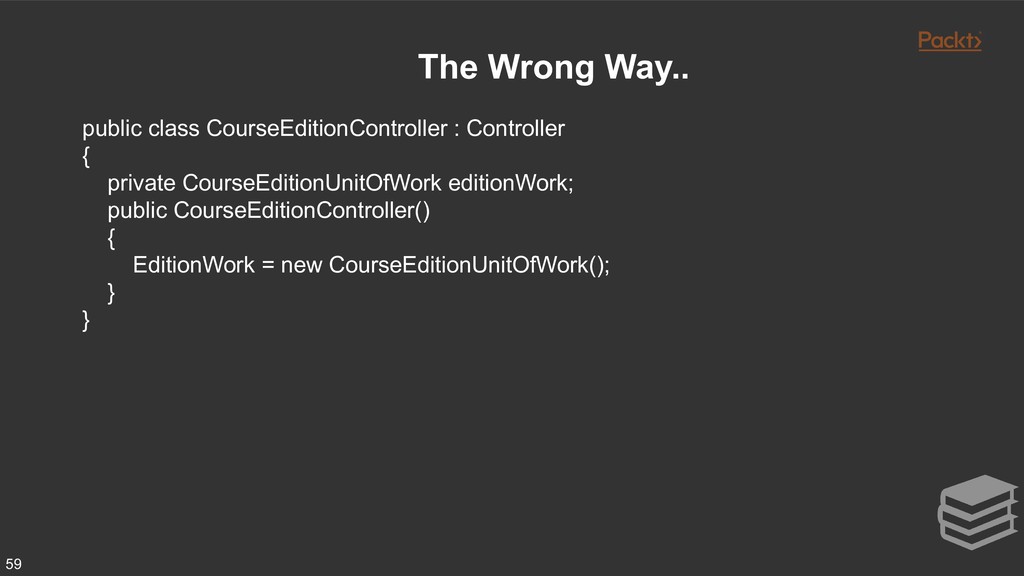
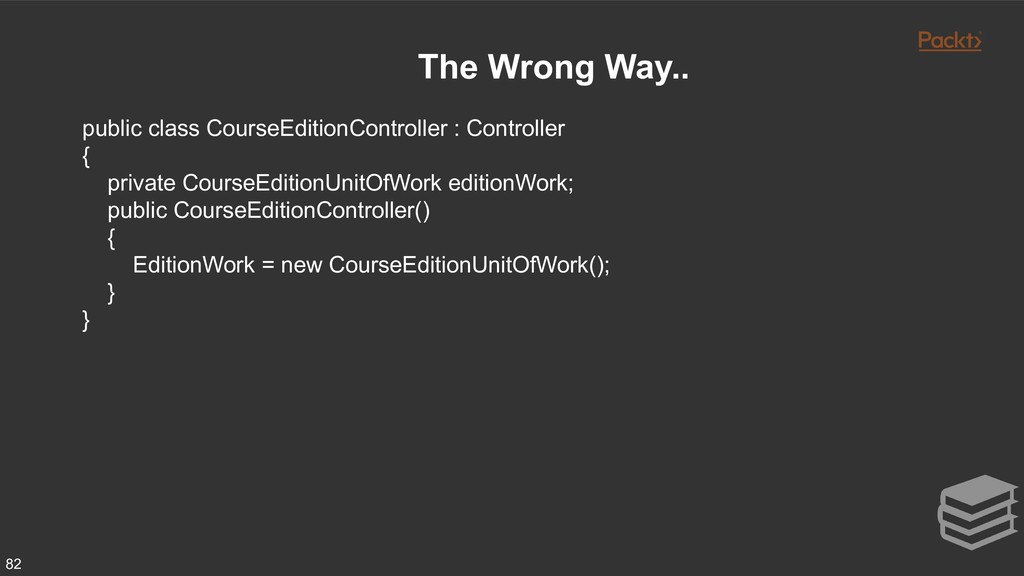
  23. The Wrong Way.. public class CourseEditionController : Controller { private

    CourseEditionUnitOfWork editionWork; public CourseEditionController() { EditionWork = new CourseEditionUnitOfWork(); } } 59
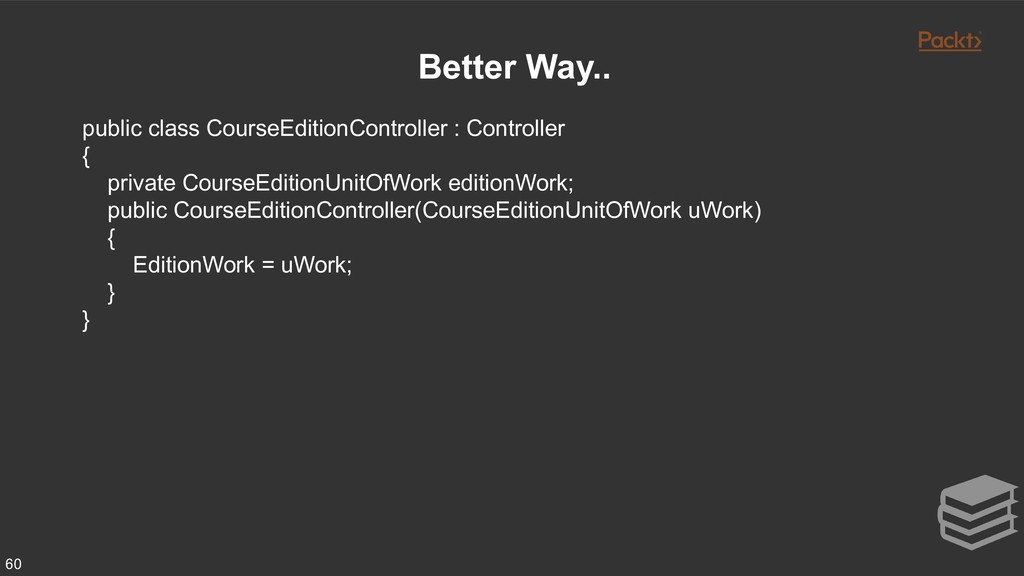
  24. Better Way.. public class CourseEditionController : Controller { private CourseEditionUnitOfWork

    editionWork; public CourseEditionController(CourseEditionUnitOfWork uWork) { EditionWork = uWork; } } 60
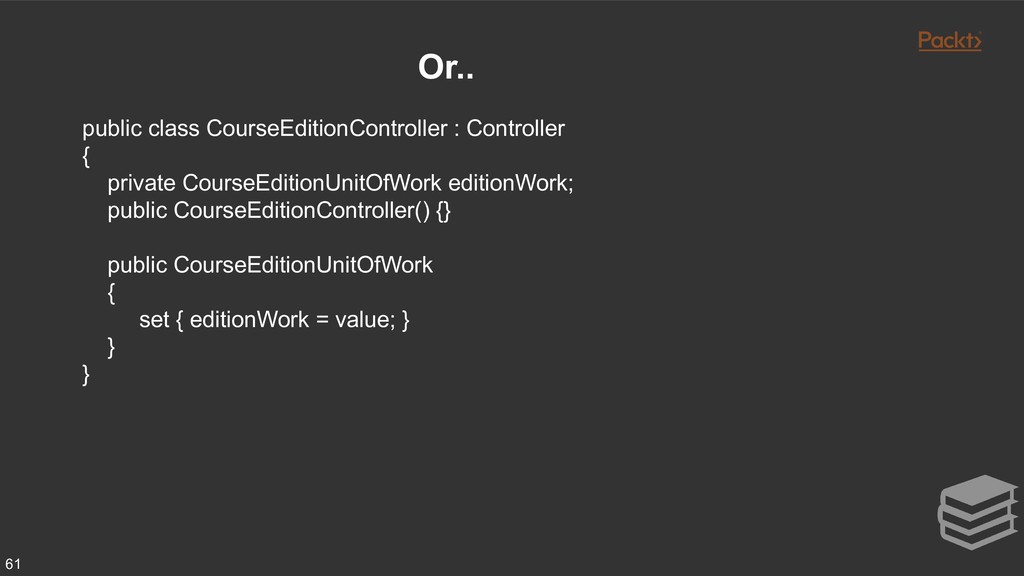
  25. Or.. public class CourseEditionController : Controller { private CourseEditionUnitOfWork editionWork;

    public CourseEditionController() {} public CourseEditionUnitOfWork { set { editionWork = value; } } } 61
  26. Enforces a clear initialization order. Guarantees that objects are created

    in a complete state Constructor Injection: Advantages 63
  27. More Flexible: not every dependency might be ready at object

    construction time More Flexible: objects dependencies can be reconfigured after creation time. Setter Injection: Advantages 65
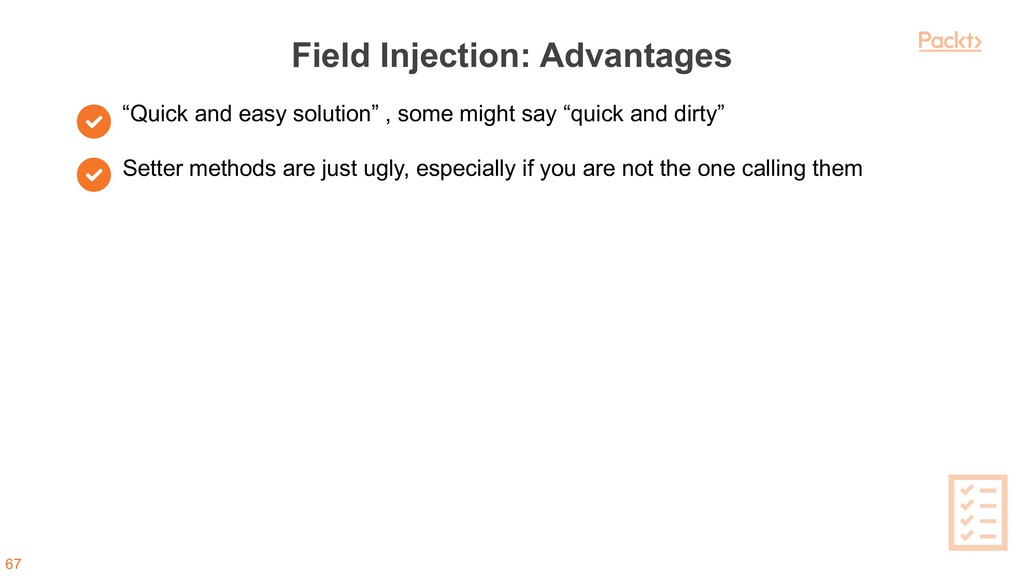
  28. “Quick and easy solution” , some might say “quick and

    dirty” Setter methods are just ugly, especially if you are not the one calling them Field Injection: Advantages 67
  29. All right, let’s see an example of DI in a

    modern .NET framework, MVC Core ... Enough Theory! Show Me An Example! 69
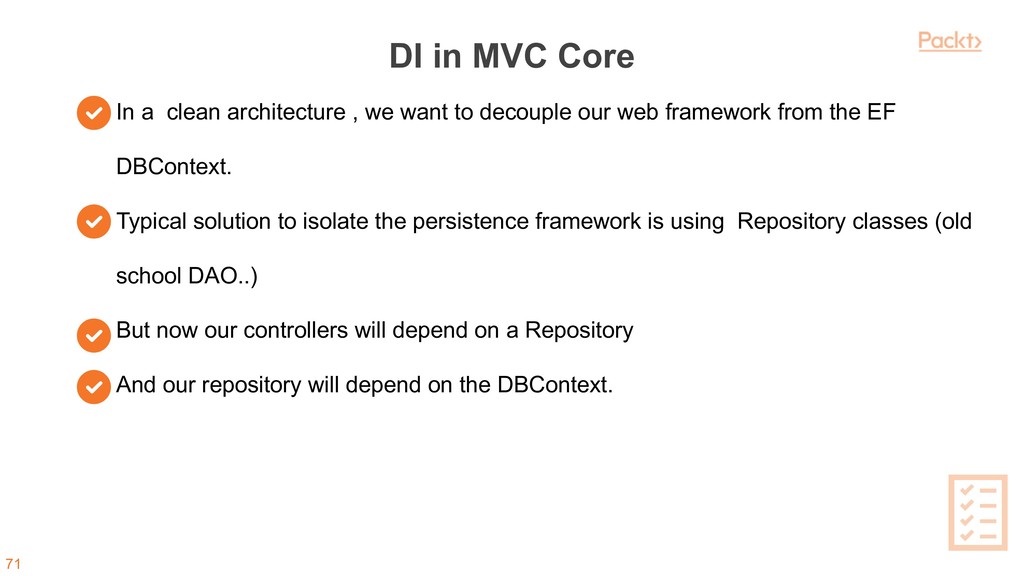
  30. In a clean architecture , we want to decouple our

    web framework from the EF DBContext. Typical solution to isolate the persistence framework is using Repository classes (old school DAO..) But now our controllers will depend on a Repository And our repository will depend on the DBContext. DI in MVC Core 71
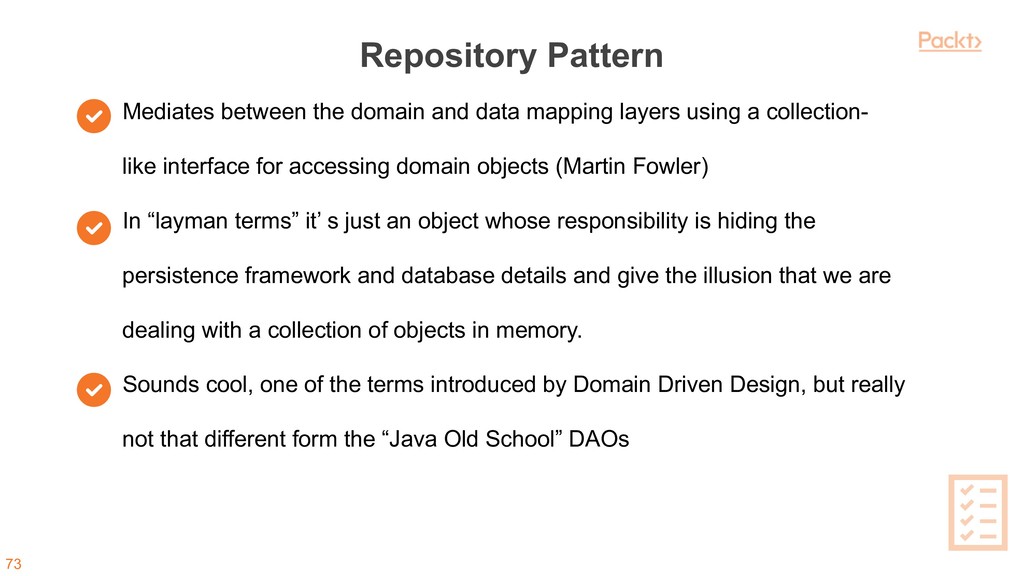
  31. Mediates between the domain and data mapping layers using a

    collection- like interface for accessing domain objects (Martin Fowler) In “layman terms” it’ s just an object whose responsibility is hiding the persistence framework and database details and give the illusion that we are dealing with a collection of objects in memory. Sounds cool, one of the terms introduced by Domain Driven Design, but really not that different form the “Java Old School” DAOs Repository Pattern 73
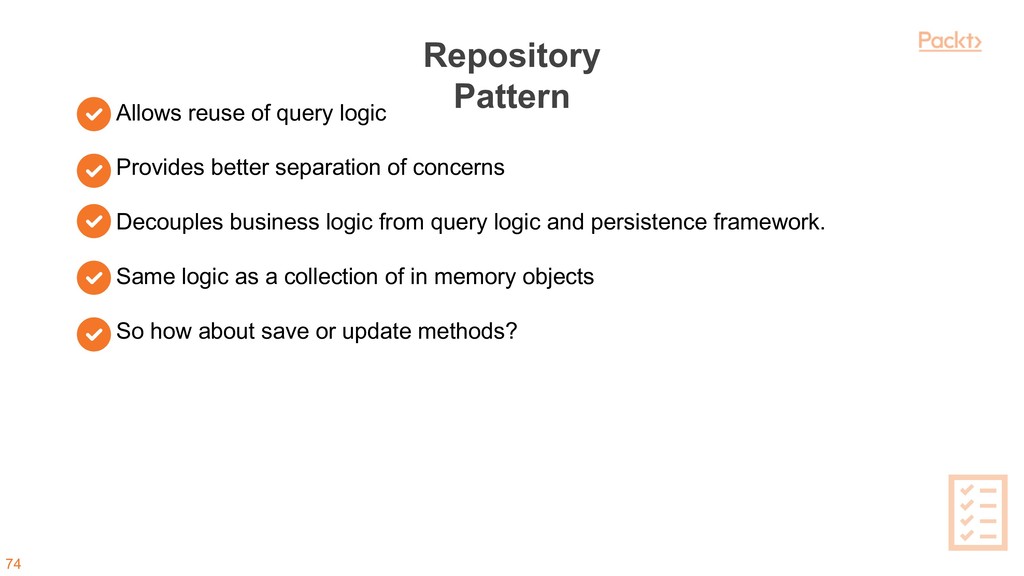
  32. Allows reuse of query logic Provides better separation of concerns

    Decouples business logic from query logic and persistence framework. Same logic as a collection of in memory objects So how about save or update methods? Repository Pattern 74
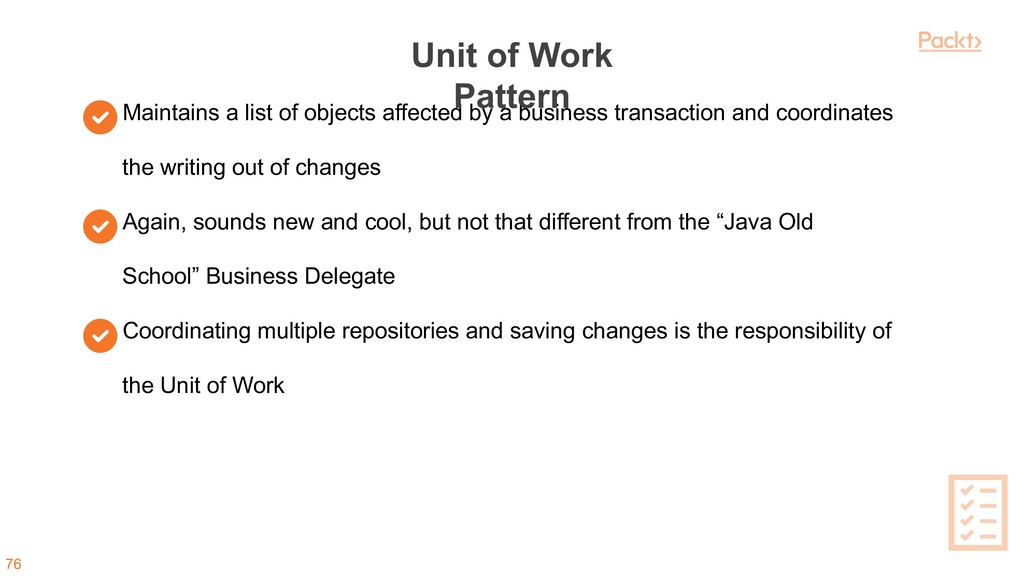
  33. Maintains a list of objects affected by a business transaction

    and coordinates the writing out of changes Again, sounds new and cool, but not that different from the “Java Old School” Business Delegate Coordinating multiple repositories and saving changes is the responsibility of the Unit of Work Unit of Work Pattern 76
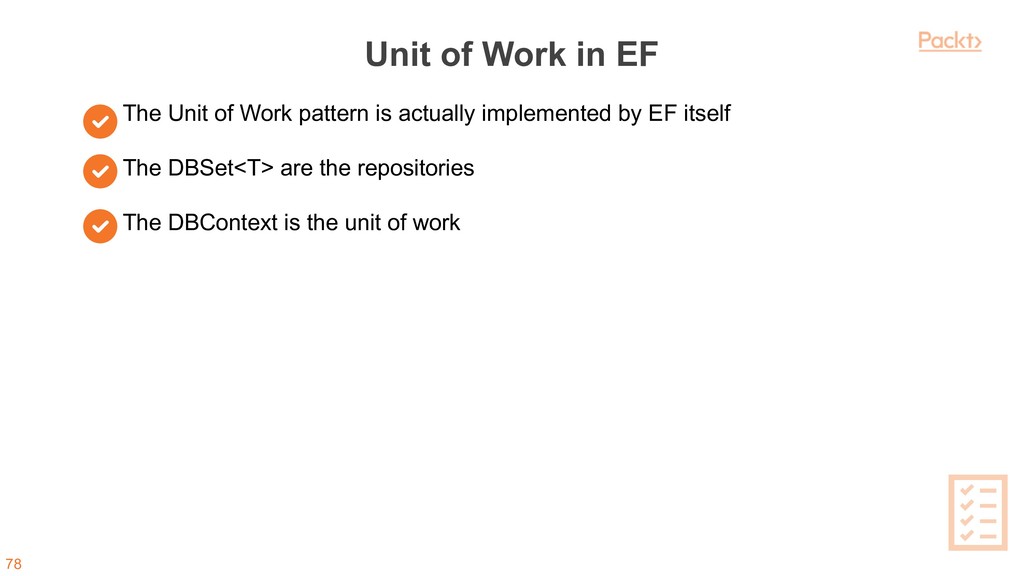
  34. The Unit of Work pattern is actually implemented by EF

    itself The DBSet<T> are the repositories The DBContext is the unit of work Unit of Work in EF 78
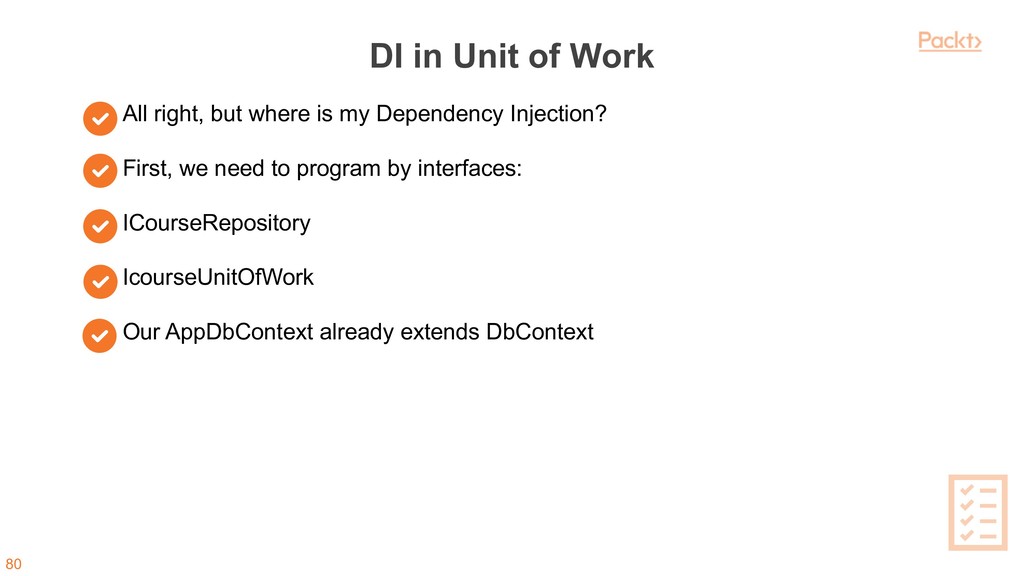
  35. All right, but where is my Dependency Injection? First, we

    need to program by interfaces: ICourseRepository IcourseUnitOfWork Our AppDbContext already extends DbContext DI in Unit of Work 80
  36. The Wrong Way.. public class CourseEditionController : Controller { private

    CourseEditionUnitOfWork editionWork; public CourseEditionController() { EditionWork = new CourseEditionUnitOfWork(); } } 82
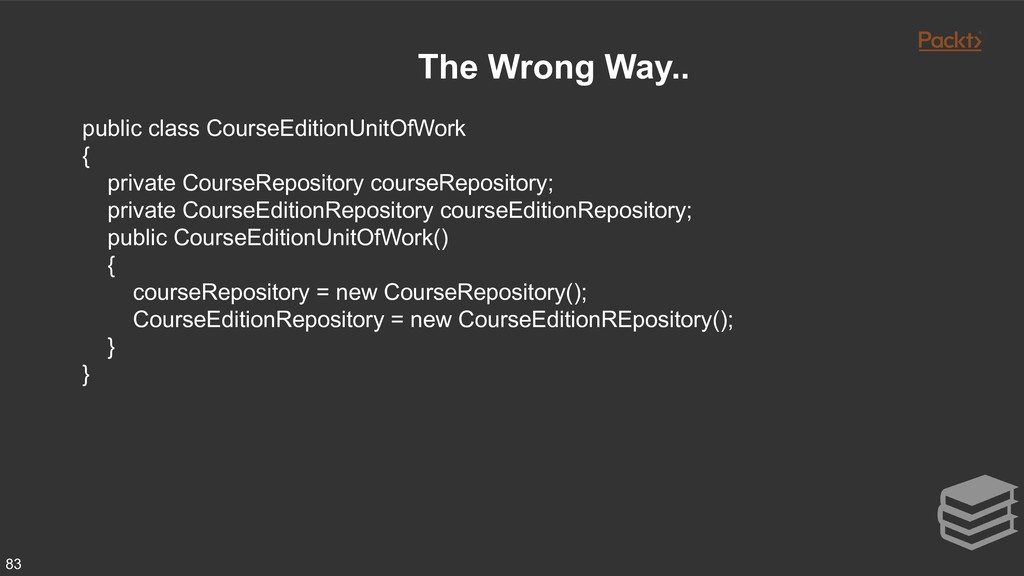
  37. The Wrong Way.. public class CourseEditionUnitOfWork { private CourseRepository courseRepository;

    private CourseEditionRepository courseEditionRepository; public CourseEditionUnitOfWork() { courseRepository = new CourseRepository(); CourseEditionRepository = new CourseEditionREpository(); } } 83
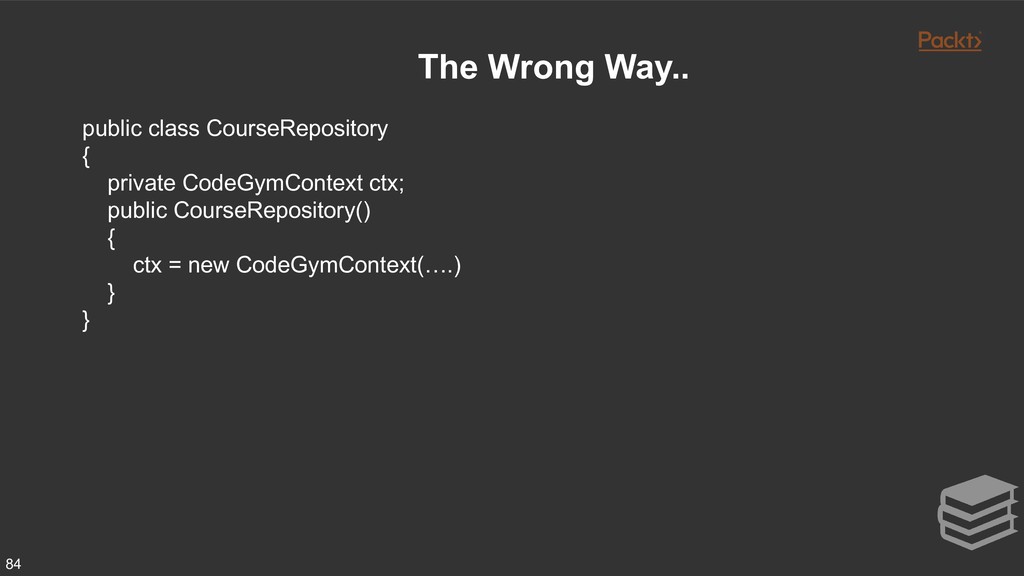
  38. The Wrong Way.. public class CourseRepository { private CodeGymContext ctx;

    public CourseRepository() { ctx = new CodeGymContext(….) } } 84
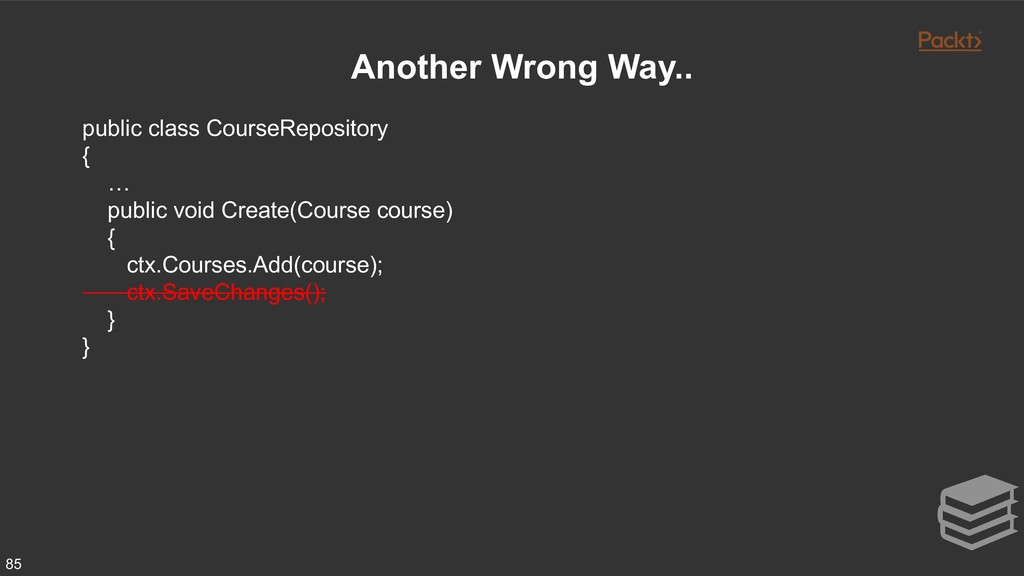
  39. Another Wrong Way.. public class CourseRepository { … public void

    Create(Course course) { ctx.Courses.Add(course); ctx.SaveChanges(); } } 85
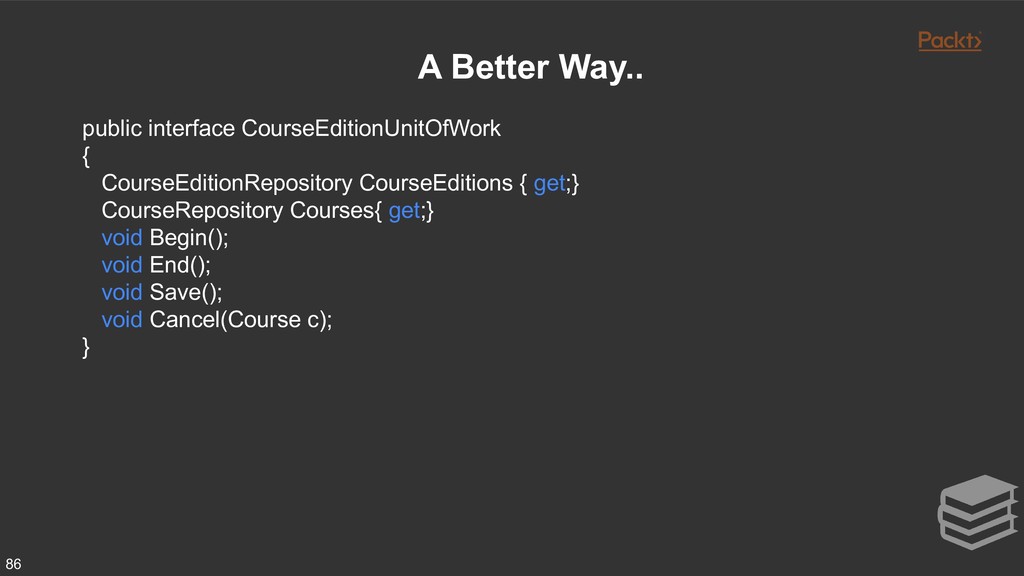
  40. A Better Way.. public interface CourseEditionUnitOfWork { CourseEditionRepository CourseEditions {

    get;} CourseRepository Courses{ get;} void Begin(); void End(); void Save(); void Cancel(Course c); } 86
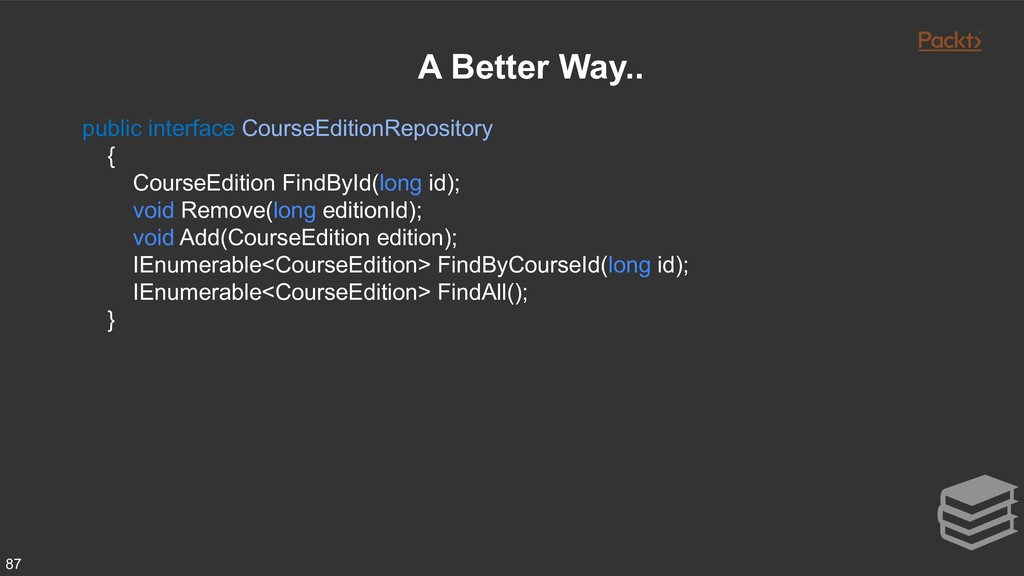
  41. A Better Way.. public interface CourseEditionRepository { CourseEdition FindById(long id);

    void Remove(long editionId); void Add(CourseEdition edition); IEnumerable<CourseEdition> FindByCourseId(long id); IEnumerable<CourseEdition> FindAll(); } 87
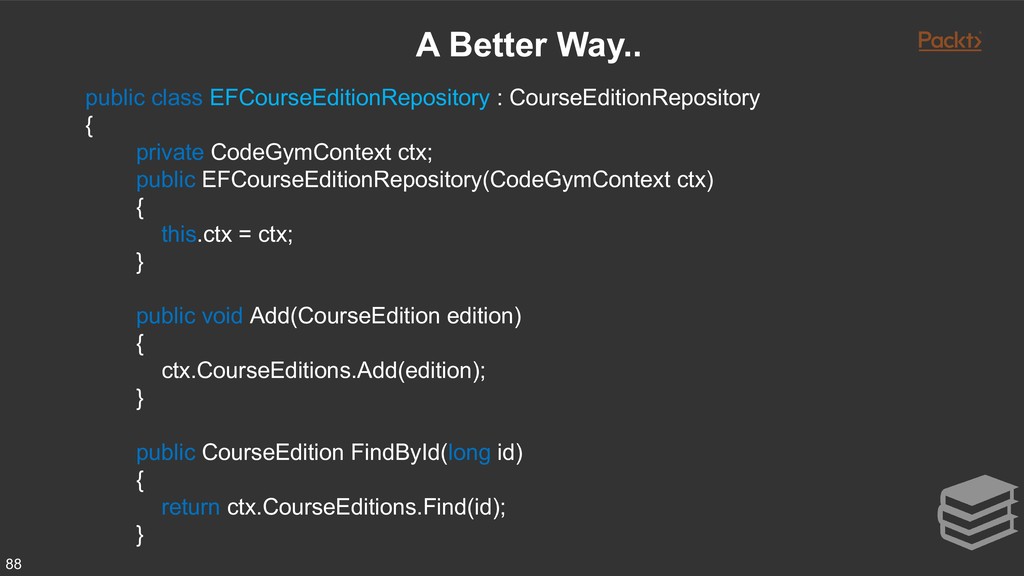
  42. A Better Way.. public class EFCourseEditionRepository : CourseEditionRepository { private

    CodeGymContext ctx; public EFCourseEditionRepository(CodeGymContext ctx) { this.ctx = ctx; } public void Add(CourseEdition edition) { ctx.CourseEditions.Add(edition); } public CourseEdition FindById(long id) { return ctx.CourseEditions.Find(id); } 88
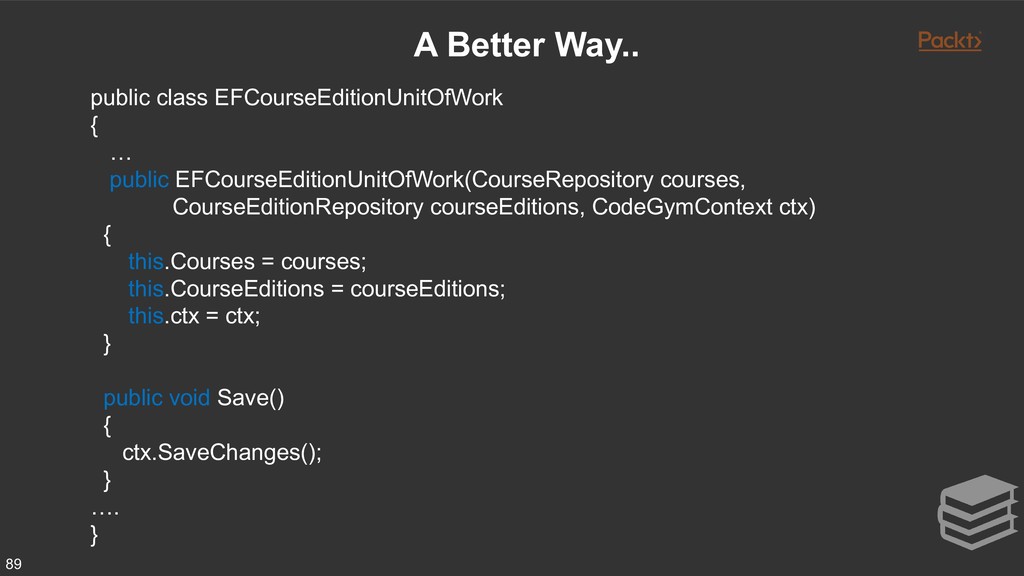
  43. A Better Way.. public class EFCourseEditionUnitOfWork { … public EFCourseEditionUnitOfWork(CourseRepository

    courses, CourseEditionRepository courseEditions, CodeGymContext ctx) { this.Courses = courses; this.CourseEditions = courseEditions; this.ctx = ctx; } public void Save() { ctx.SaveChanges(); } …. } 89
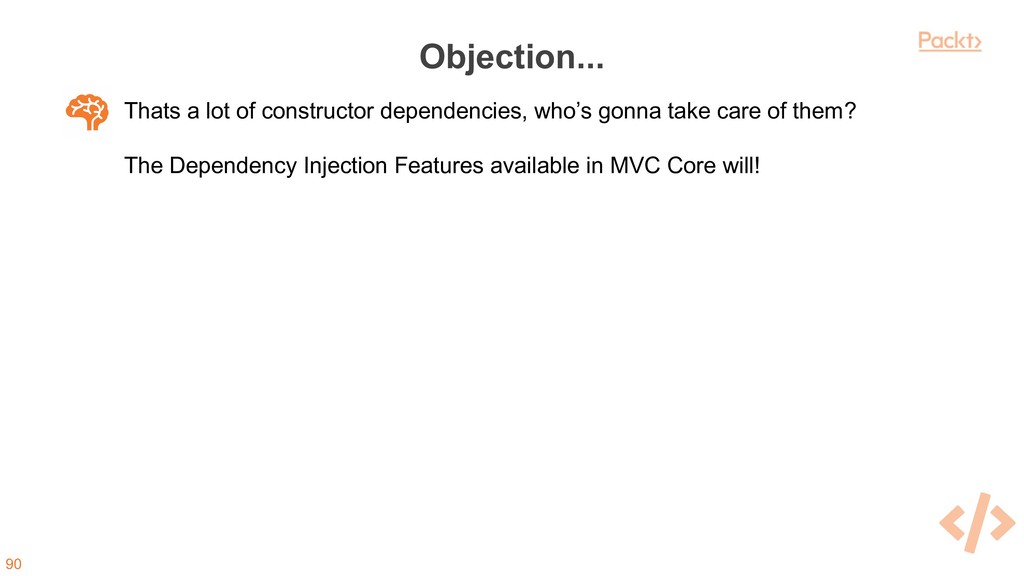
  44. Objection... Thats a lot of constructor dependencies, who’s gonna take

    care of them? The Dependency Injection Features available in MVC Core will! Slide2 4 90
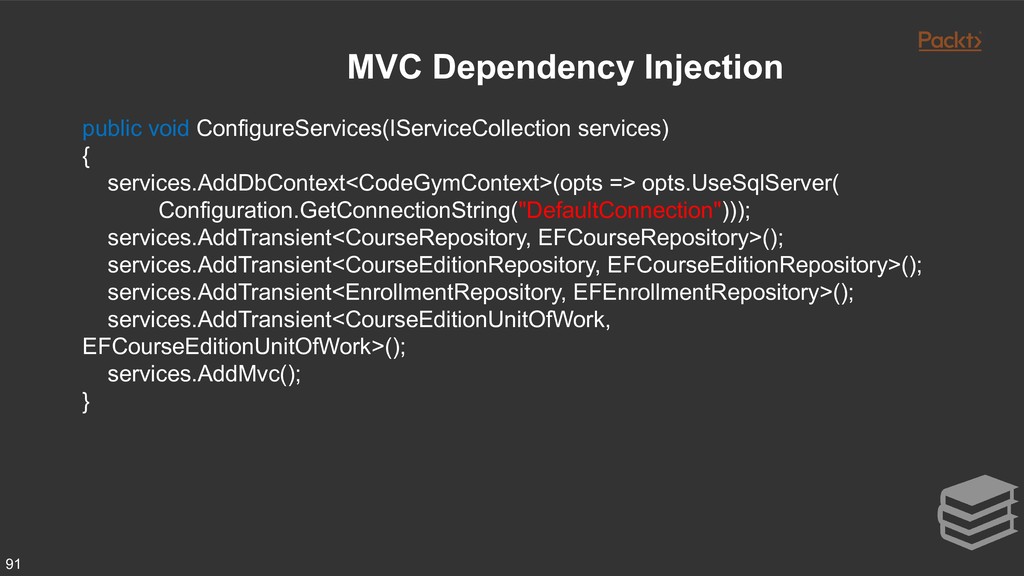
  45. MVC Dependency Injection public void ConfigureServices(IServiceCollection services) { services.AddDbContext<CodeGymContext>(opts =>

    opts.UseSqlServer( Configuration.GetConnectionString("DefaultConnection"))); services.AddTransient<CourseRepository, EFCourseRepository>(); services.AddTransient<CourseEditionRepository, EFCourseEditionRepository>(); services.AddTransient<EnrollmentRepository, EFEnrollmentRepository>(); services.AddTransient<CourseEditionUnitOfWork, EFCourseEditionUnitOfWork>(); services.AddMvc(); } 91
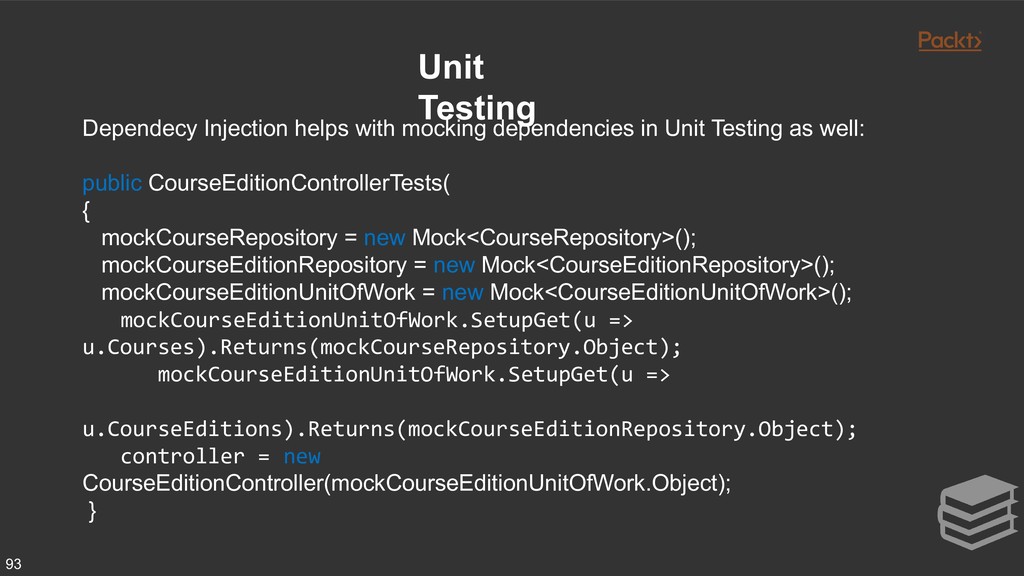
  46. Unit Testing Dependecy Injection helps with mocking dependencies in Unit

    Testing as well: public CourseEditionControllerTests( { mockCourseRepository = new Mock<CourseRepository>(); mockCourseEditionRepository = new Mock<CourseEditionRepository>(); mockCourseEditionUnitOfWork = new Mock<CourseEditionUnitOfWork>(); mockCourseEditionUnitOfWork.SetupGet(u => u.Courses).Returns(mockCourseRepository.Object); mockCourseEditionUnitOfWork.SetupGet(u => u.CourseEditions).Returns(mockCourseEditionRepository.Object); controller = new CourseEditionController(mockCourseEditionUnitOfWork.Object); } 93
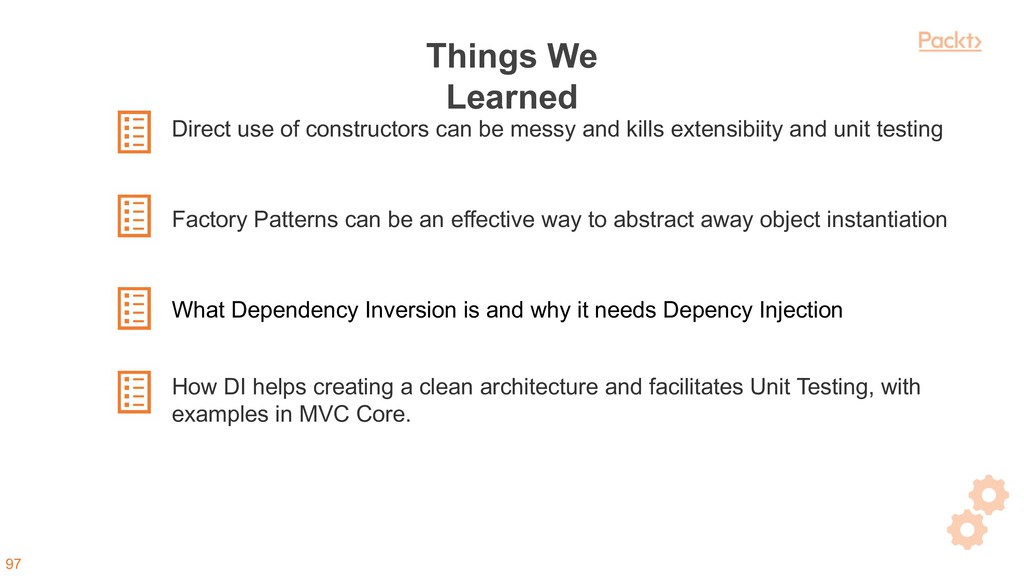
  47. Direct use of constructors can be messy and kills extensibiity

    and unit testing Factory Patterns can be an effective way to abstract away object instantiation What Dependency Inversion is and why it needs Depency Injection How DI helps creating a clean architecture and facilitates Unit Testing, with examples in MVC Core. Things We Learned 97