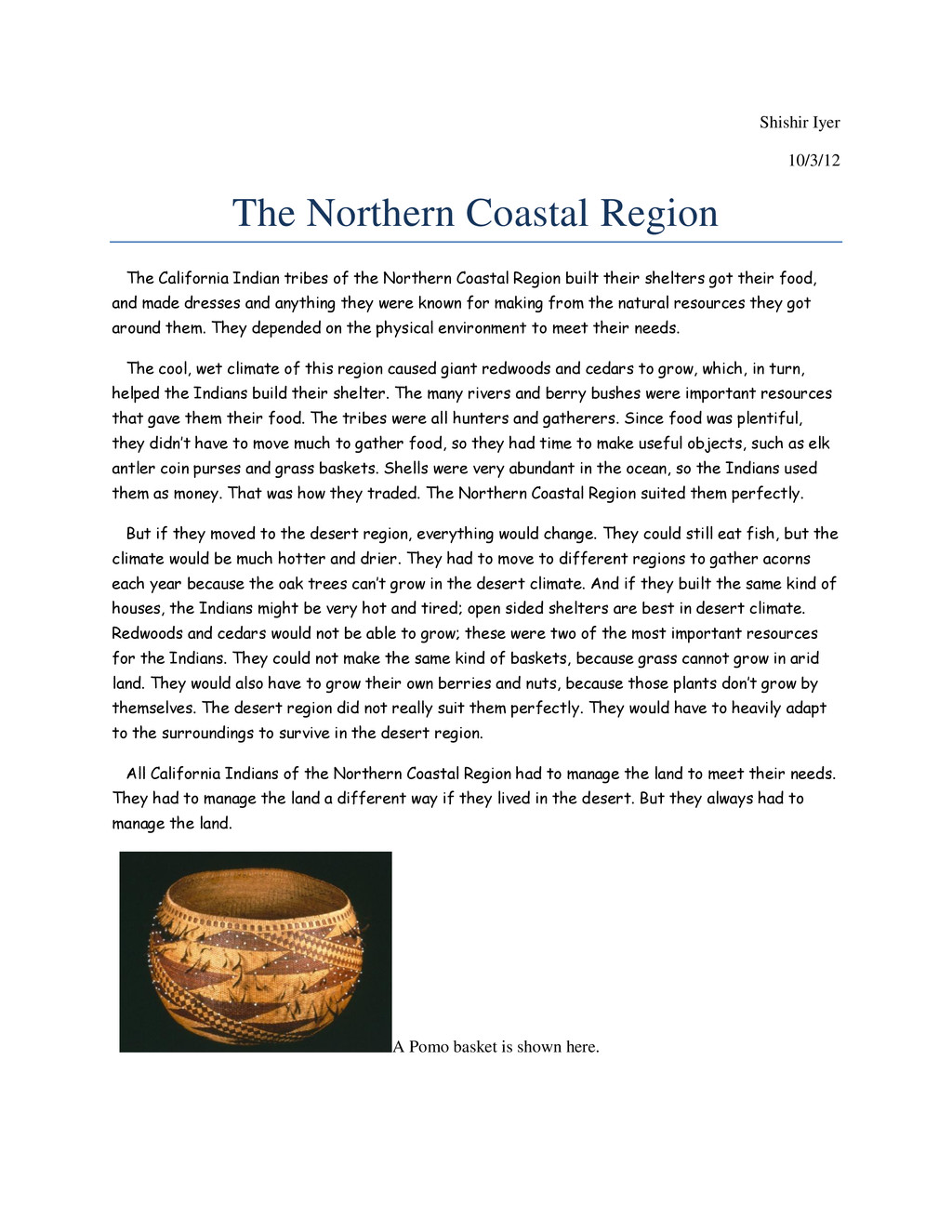
tribes of the Northern Coastal Region built their shelters got their food, and made dresses and anything they were known for making from the natural resources they got around them. They depended on the physical environment to meet their needs. The cool, wet climate of this region caused giant redwoods and cedars to grow, which, in turn, helped the Indians build their shelter. The many rivers and berry bushes were important resources that gave them their food. The tribes were all hunters and gatherers. Since food was plentiful, they didn’t have to move much to gather food, so they had time to make useful objects, such as elk antler coin purses and grass baskets. Shells were very abundant in the ocean, so the Indians used them as money. That was how they traded. The Northern Coastal Region suited them perfectly. But if they moved to the desert region, everything would change. They could still eat fish, but the climate would be much hotter and drier. They had to move to different regions to gather acorns each year because the oak trees can’t grow in the desert climate. And if they built the same kind of houses, the Indians might be very hot and tired; open sided shelters are best in desert climate. Redwoods and cedars would not be able to grow; these were two of the most important resources for the Indians. They could not make the same kind of baskets, because grass cannot grow in arid land. They would also have to grow their own berries and nuts, because those plants don’t grow by themselves. The desert region did not really suit them perfectly. They would have to heavily adapt to the surroundings to survive in the desert region. All California Indians of the Northern Coastal Region had to manage the land to meet their needs. They had to manage the land a different way if they lived in the desert. But they always had to manage the land. A Pomo basket is shown here.


 denniskardys
 rasagy
 techseoconnect
 chriscoyier
 bluesmoon
 rabernat
 pedronauck
 tanoku
 jct
 soudai
 addyosmani
 erikaheidi