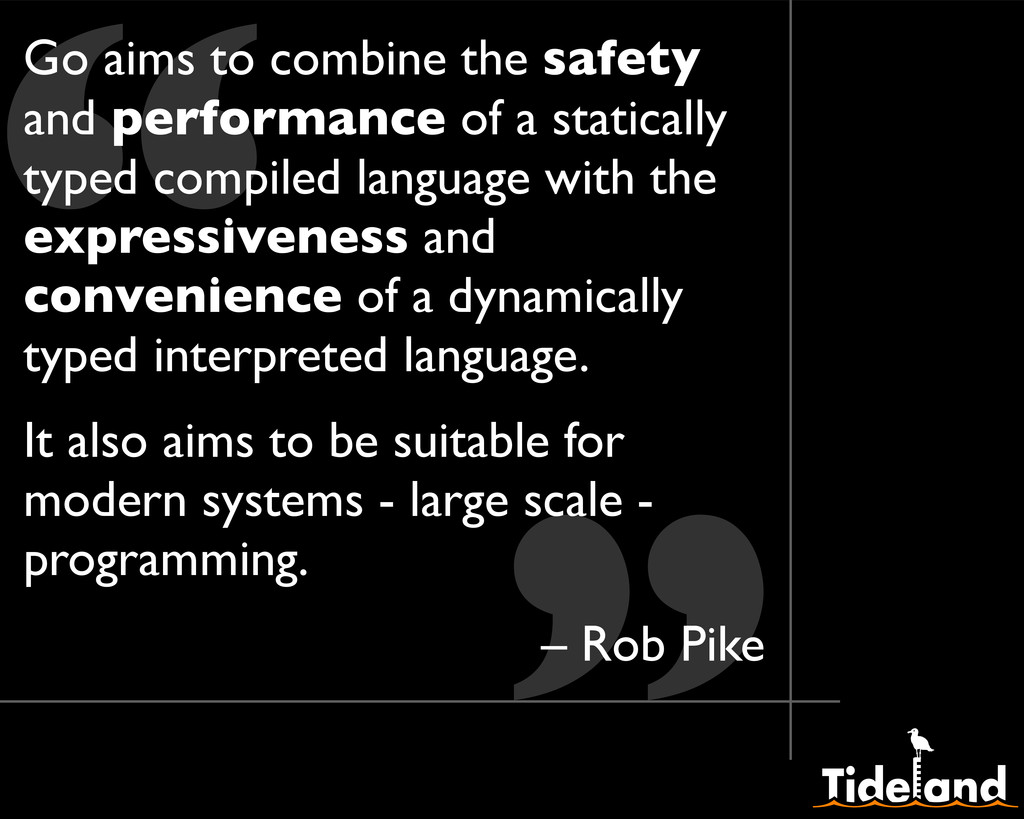
a statically typed compiled language with the expressiveness and convenience of a dynamically typed interpreted language. It also aims to be suitable for modern systems - large scale - programming. – Rob Pike
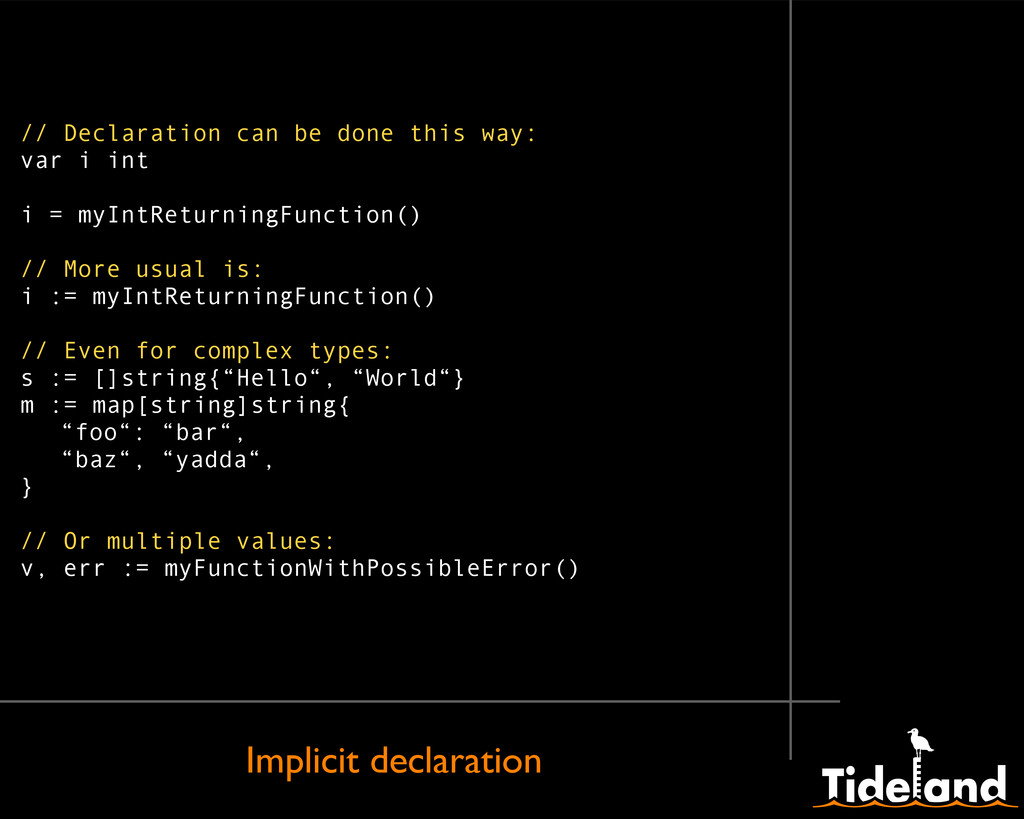
i int i = myIntReturningFunction() // More usual is: i := myIntReturningFunction() // Even for complex types: s := []string{“Hello“, “World“} m := map[string]string{ “foo“: “bar“, “baz“, “yadda“, } // Or multiple values: v, err := myFunctionWithPossibleError()
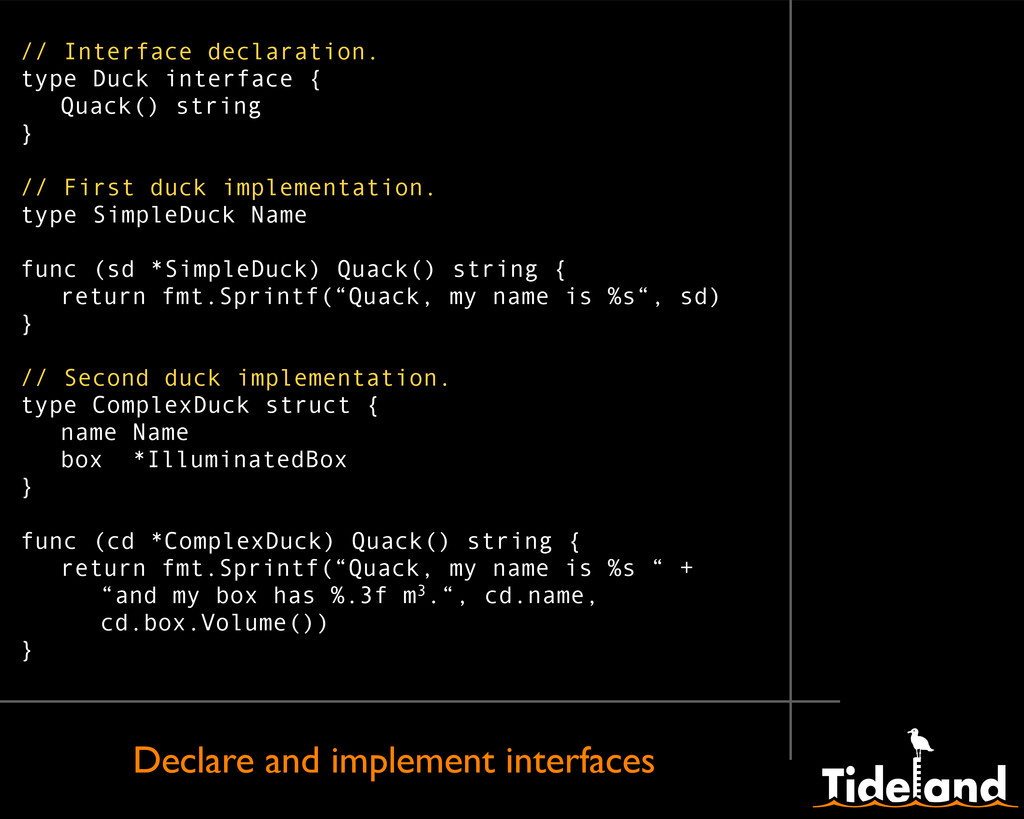
{ Quack() string } // First duck implementation. type SimpleDuck Name func (sd *SimpleDuck) Quack() string { return fmt.Sprintf(“Quack, my name is %s“, sd) } // Second duck implementation. type ComplexDuck struct { name Name box *IlluminatedBox } func (cd *ComplexDuck) Quack() string { return fmt.Sprintf(“Quack, my name is %s “ + “and my box has %.3f m3.“, cd.name, cd.box.Volume()) }
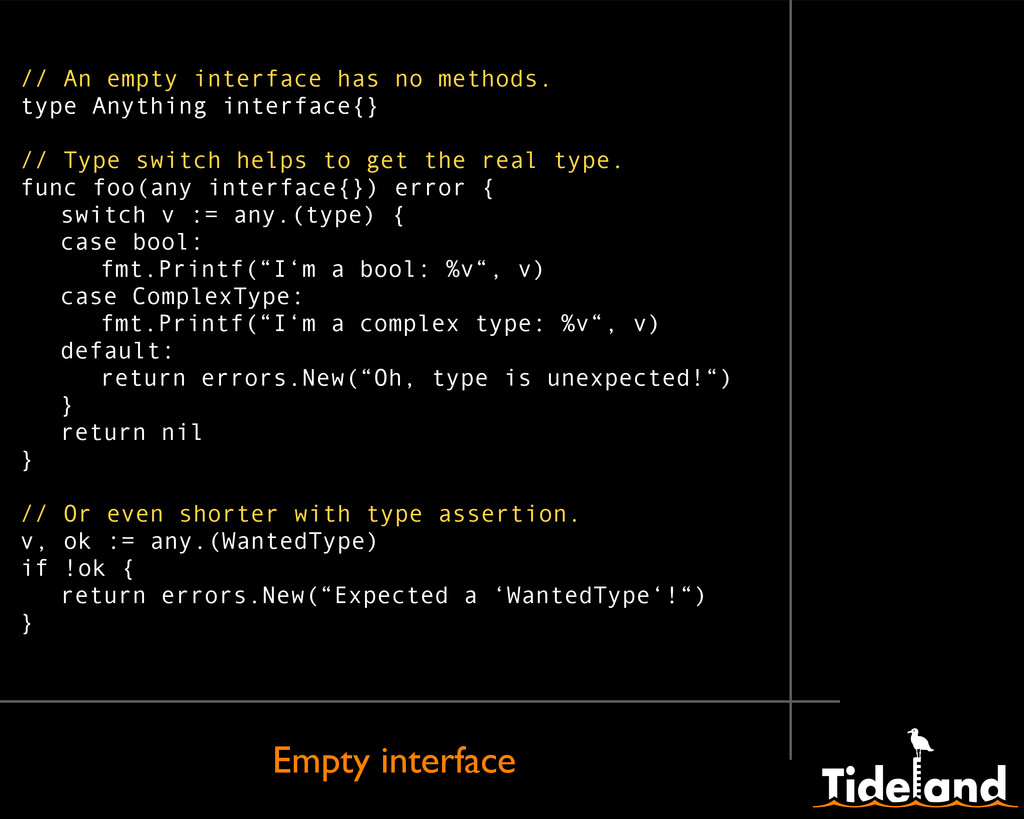
Anything interface{} // Type switch helps to get the real type. func foo(any interface{}) error { switch v := any.(type) { case bool: fmt.Printf(“I‘m a bool: %v“, v) case ComplexType: fmt.Printf(“I‘m a complex type: %v“, v) default: return errors.New(“Oh, type is unexpected!“) } return nil } // Or even shorter with type assertion. v, ok := any.(WantedType) if !ok { return errors.New(“Expected a ‘WantedType‘!“) }
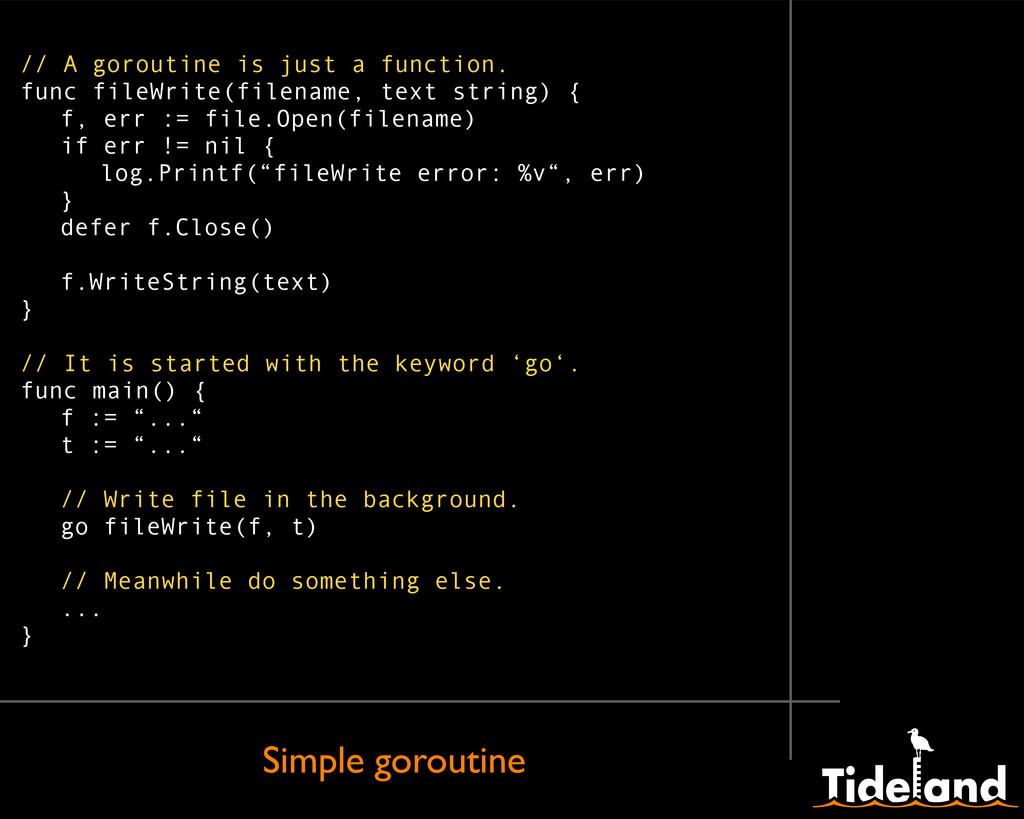
fileWrite(filename, text string) { f, err := file.Open(filename) if err != nil { log.Printf(“fileWrite error: %v“, err) } defer f.Close() f.WriteString(text) } // It is started with the keyword ‘go‘. func main() { f := “...“ t := “...“ // Write file in the background. go fileWrite(f, t) // Meanwhile do something else. ... }
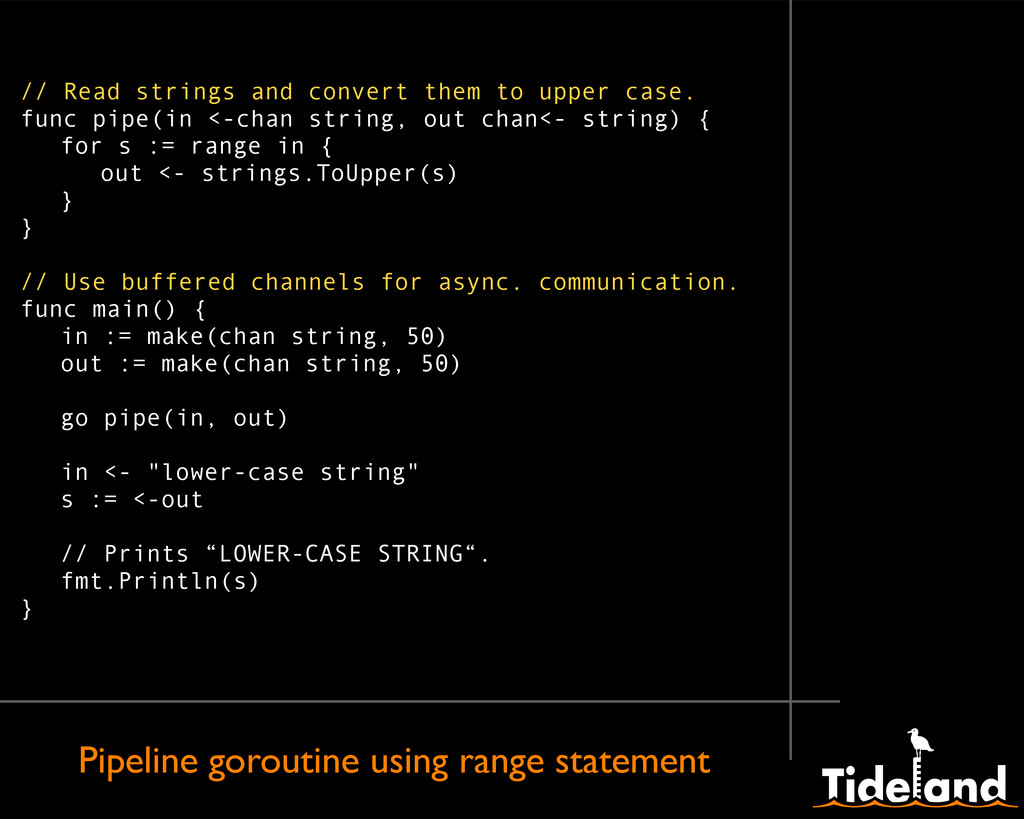
them to upper case. func pipe(in <-chan string, out chan<- string) { for s := range in { out <- strings.ToUpper(s) } } // Use buffered channels for async. communication. func main() { in := make(chan string, 50) out := make(chan string, 50) go pipe(in, out) in <- "lower-case string" s := <-out // Prints “LOWER-CASE STRING“. fmt.Println(s) }
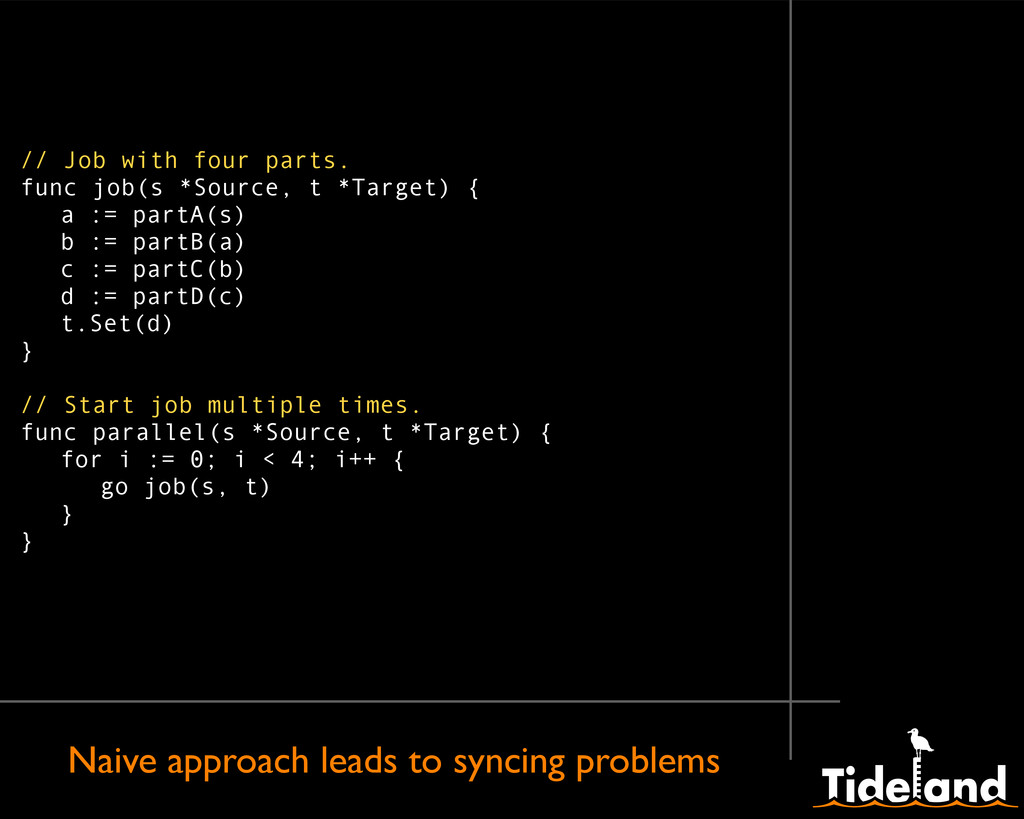
parts. func job(s *Source, t *Target) { a := partA(s) b := partB(a) c := partC(b) d := partD(c) t.Set(d) } // Start job multiple times. func parallel(s *Source, t *Target) { for i := 0; i < 4; i++ { go job(s, t) } }
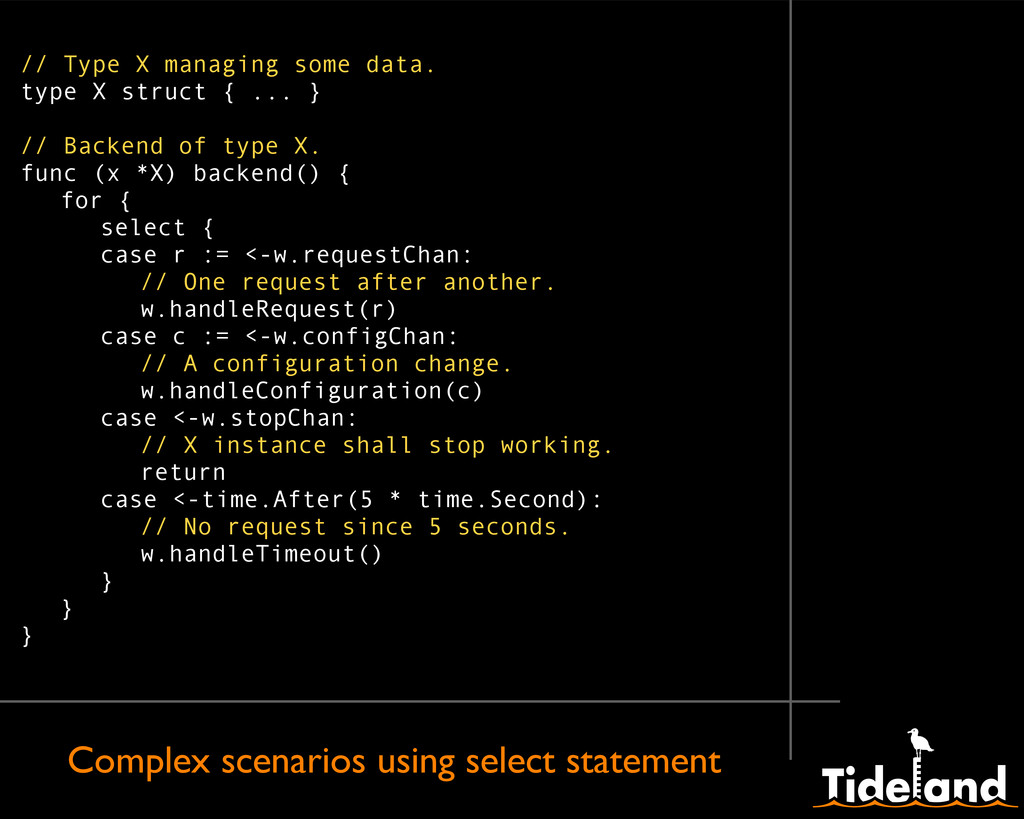
data. type X struct { ... } // Backend of type X. func (x *X) backend() { for { select { case r := <-w.requestChan: // One request after another. w.handleRequest(r) case c := <-w.configChan: // A configuration change. w.handleConfiguration(c) case <-w.stopChan: // X instance shall stop working. return case <-time.After(5 * time.Second): // No request since 5 seconds. w.handleTimeout() } } }
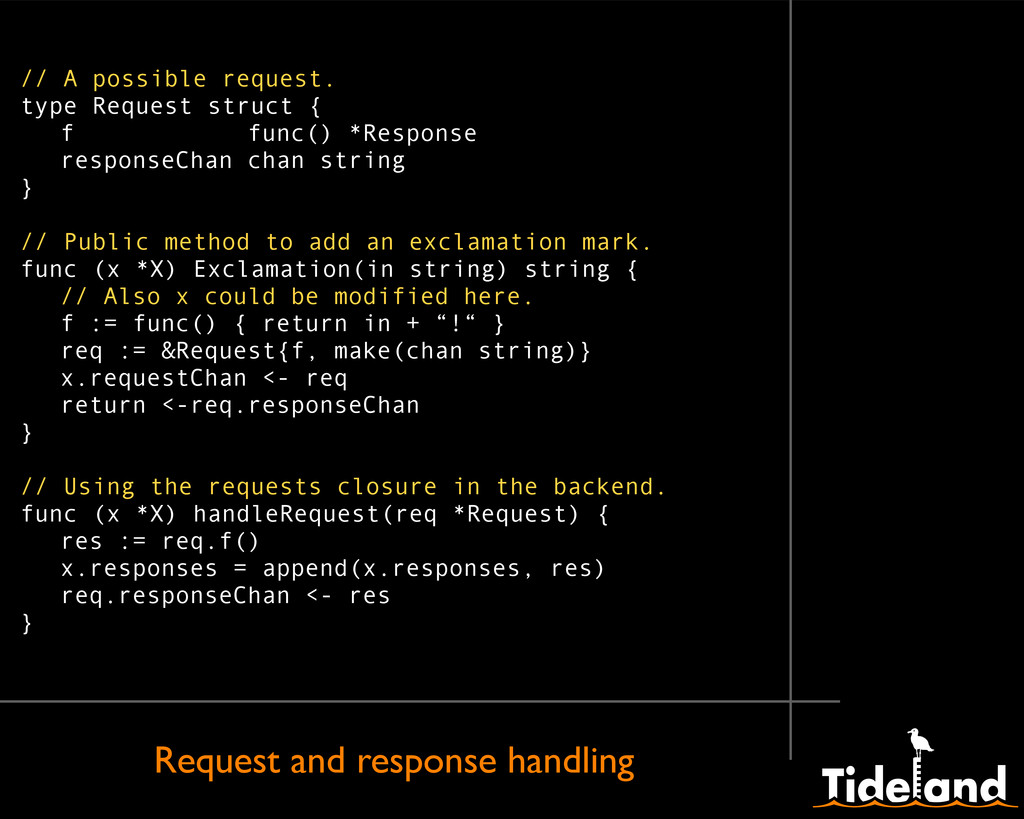
struct { f func() *Response responseChan chan string } // Public method to add an exclamation mark. func (x *X) Exclamation(in string) string { // Also x could be modified here. f := func() { return in + “!“ } req := &Request{f, make(chan string)} x.requestChan <- req return <-req.responseChan } // Using the requests closure in the backend. func (x *X) handleRequest(req *Request) { res := req.f() x.responses = append(x.responses, res) req.responseChan <- res }
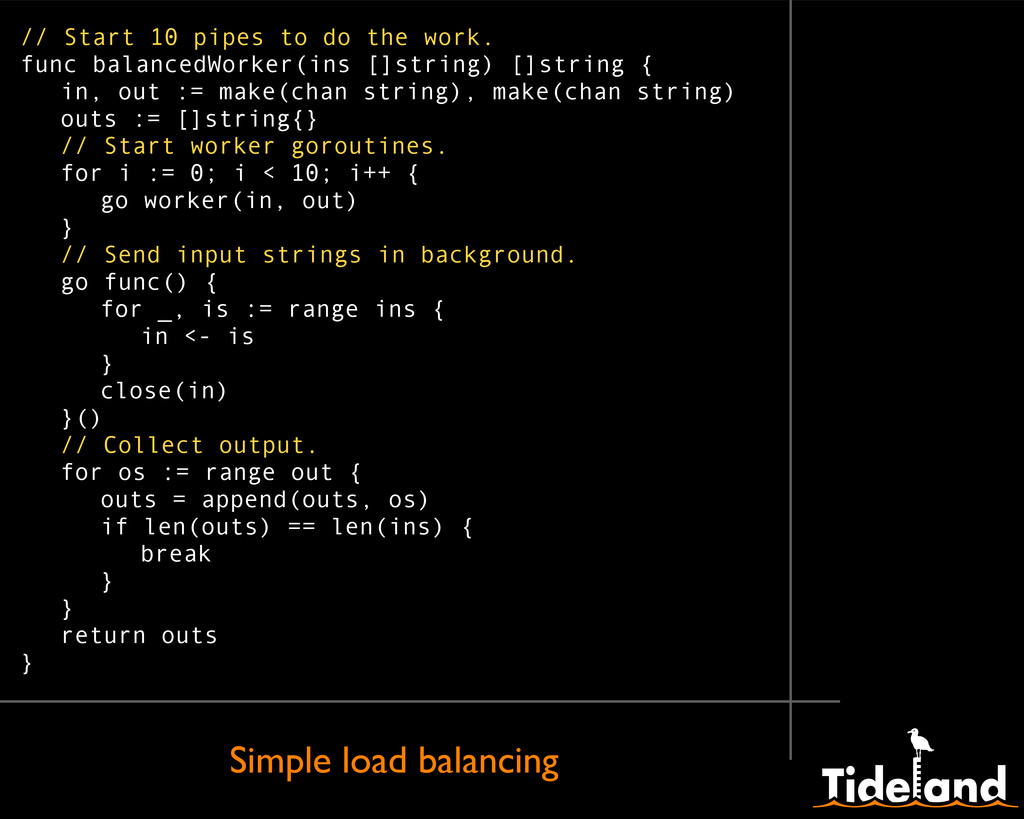
work. func balancedWorker(ins []string) []string { in, out := make(chan string), make(chan string) outs := []string{} // Start worker goroutines. for i := 0; i < 10; i++ { go worker(in, out) } // Send input strings in background. go func() { for _, is := range ins { in <- is } close(in) }() // Collect output. for os := range out { outs = append(outs, os) if len(outs) == len(ins) { break } } return outs }
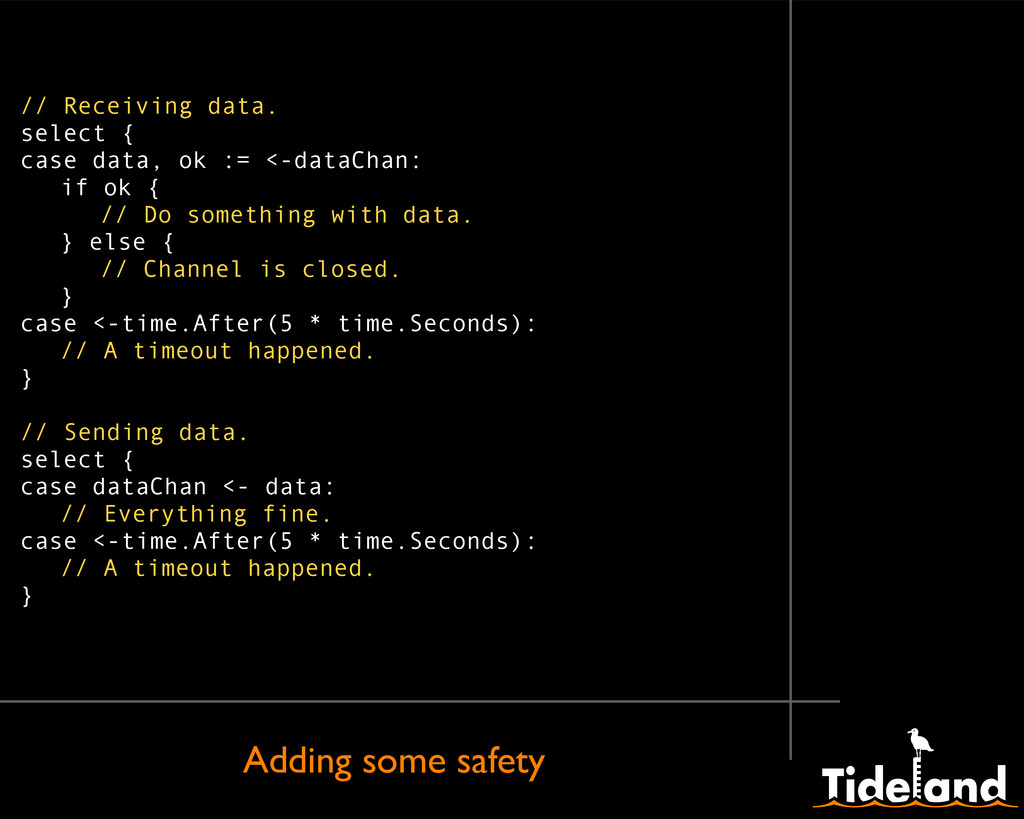
ok := <-dataChan: if ok { // Do something with data. } else { // Channel is closed. } case <-time.After(5 * time.Seconds): // A timeout happened. } // Sending data. select { case dataChan <- data: // Everything fine. case <-time.After(5 * time.Seconds): // A timeout happened. }
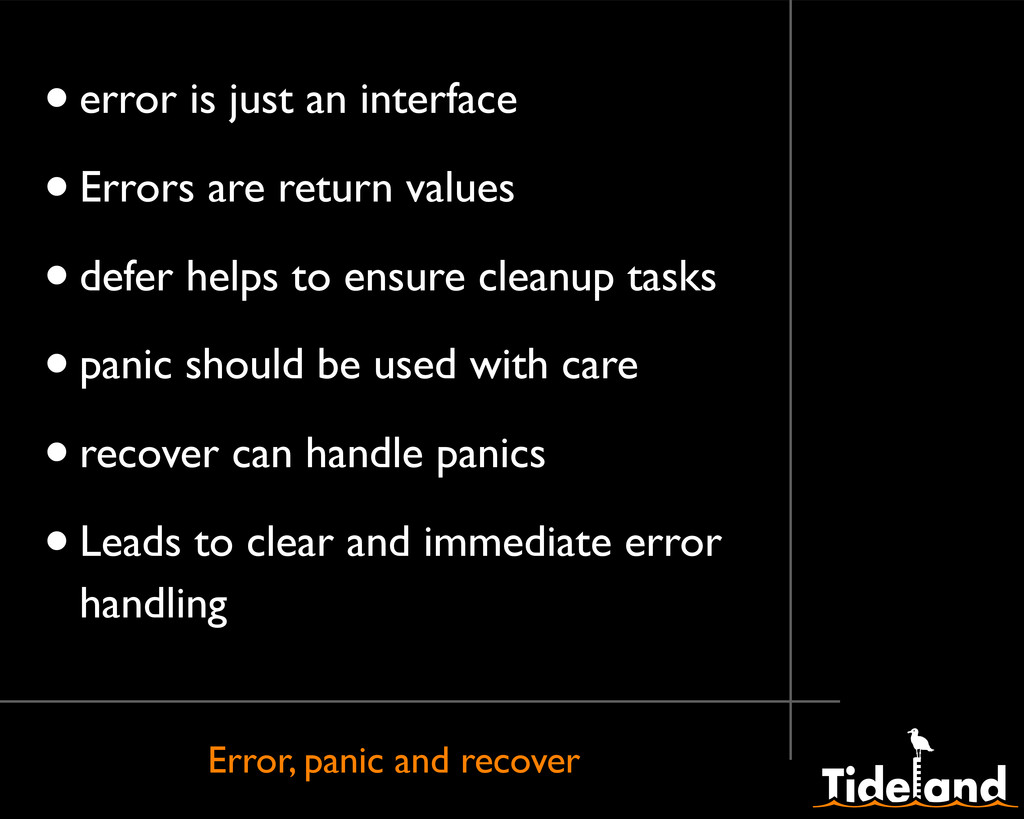
are return values •defer helps to ensure cleanup tasks •panic should be used with care •recover can handle panics •Leads to clear and immediate error handling


 themue
 lynnandtonic
 kneath
 chrisshort
 marktimemedia
 oripsolob
 inesmontani
 tammyeverts
 tammielis
 sergeychernyshev
 axbom
 jacobian
 cassininazir