extract_words(): for fname in FILES: for word in open(fname).read().split(): yield word, fname db = DiscoDB(extract_words()) db[‘dog’] db.keys() db.unique_values() db.items() # files that mention ‘dog’ # all distinct word # all distinct filenames # all (word, iter(fname)) pairs
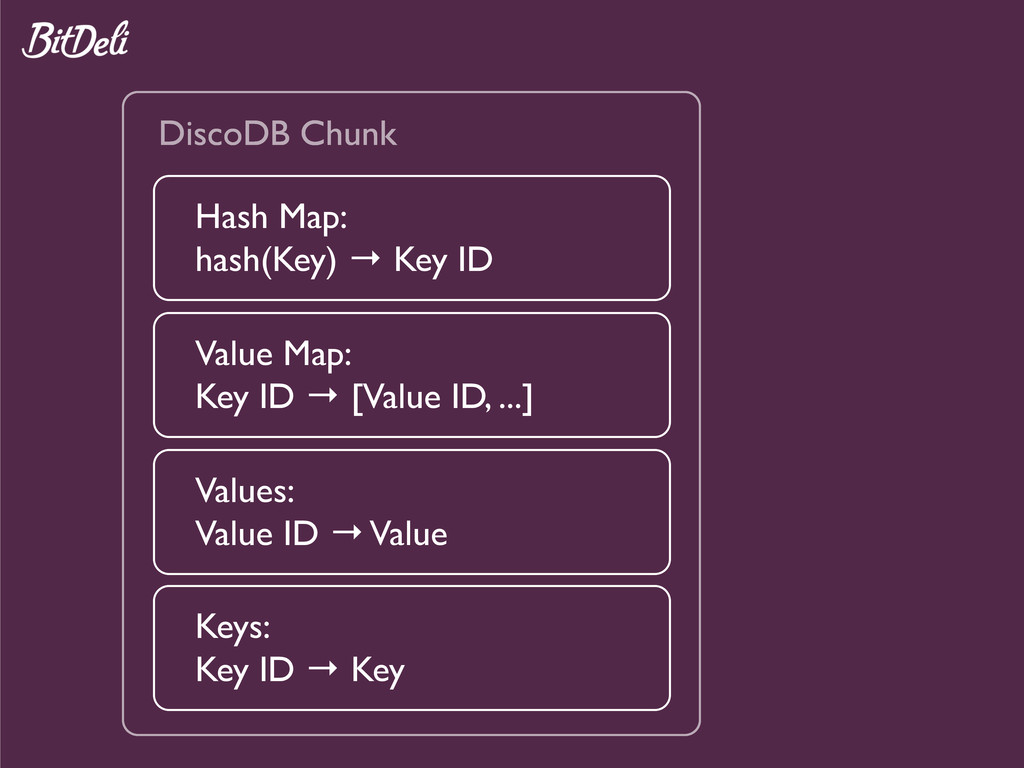
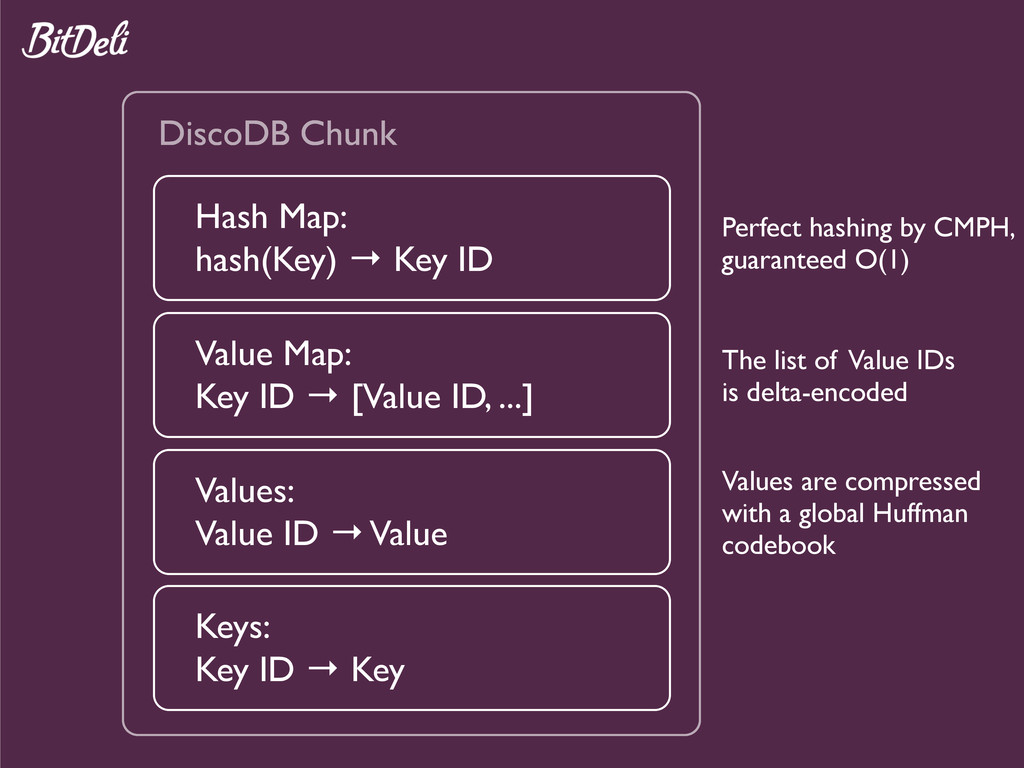
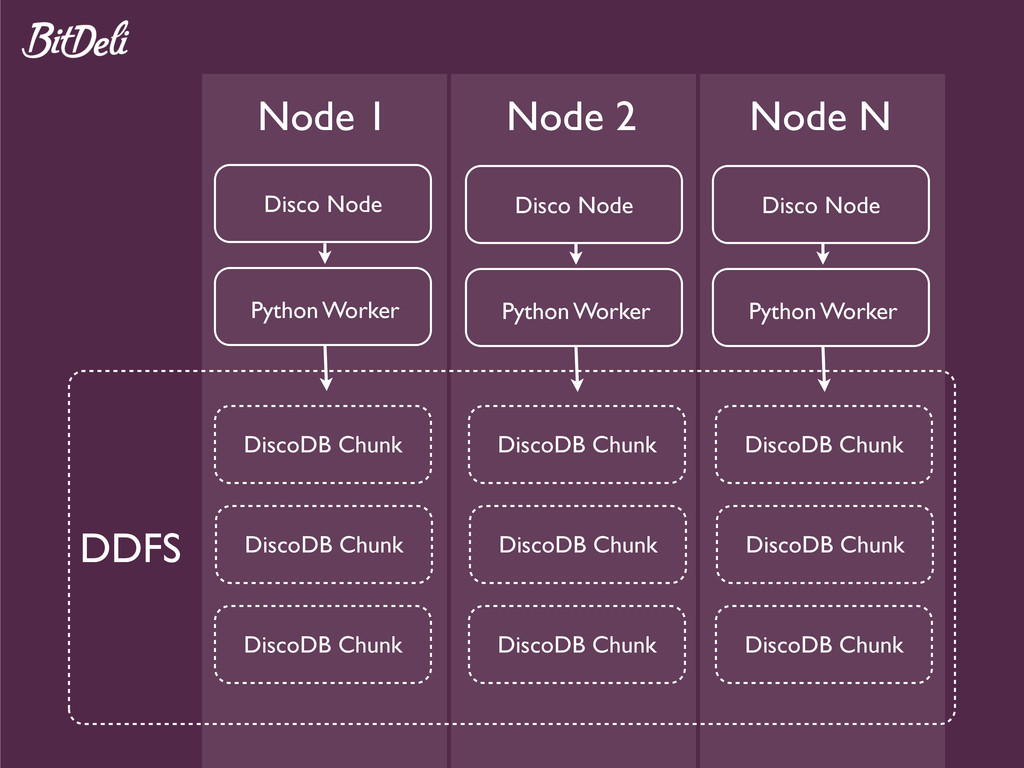
→ [Value ID, ...] Keys: Key ID → Key Values: Value ID → Value DiscoDB Chunk Perfect hashing by CMPH, guaranteed O(1) The list of Value IDs is delta-encoded Values are compressed with a global Huffman codebook
→ [Banana, Melon] Q(“A & B”) Apple Banana Q(“A | B”) Apple Orange Banana Q(“(A & B) | C”) Banana DiscoDB from discodb.query import Q Querying with Conjunctive Normal Form


 toshi0607
 kawanago
 kazukun0716
 pensuke628
 kairim0
 junkifurukawa
 yoshiakiyamasaki
 foursue
 dtunkelang
 yutakaosada
 leveragestech
 tanakaseiya
 wjessup
 zakiyama
 michielstock
 keavy
keavy
 chikuwait
 soudai
 aki_iinuma
 dugsong
 tammyeverts
 samanthasiow
 sarafernandez








![from discodb import DiscoDB FILES = [‘a.txt’, ‘b.txt’, ‘c.txt’] def](https://files.speakerdeck.com/presentations/d59c0ff084900130300712313b101275/slide_18.jpg)
![A → [Apple, Orange, Banana] B → [Apple, Banana] C](https://files.speakerdeck.com/presentations/d59c0ff084900130300712313b101275/slide_22.jpg)
![Thank You! TRENDING TRENDING TRENDING TRENDING https://bitdeli.com/free Interested? Contact [email protected]](https://files.speakerdeck.com/presentations/d59c0ff084900130300712313b101275/slide_27.jpg)