Upgrade to Pro — share decks privately, control downloads, hide ads and more …

The Use of GIS in Disasters

The Use of GIS in Disasters

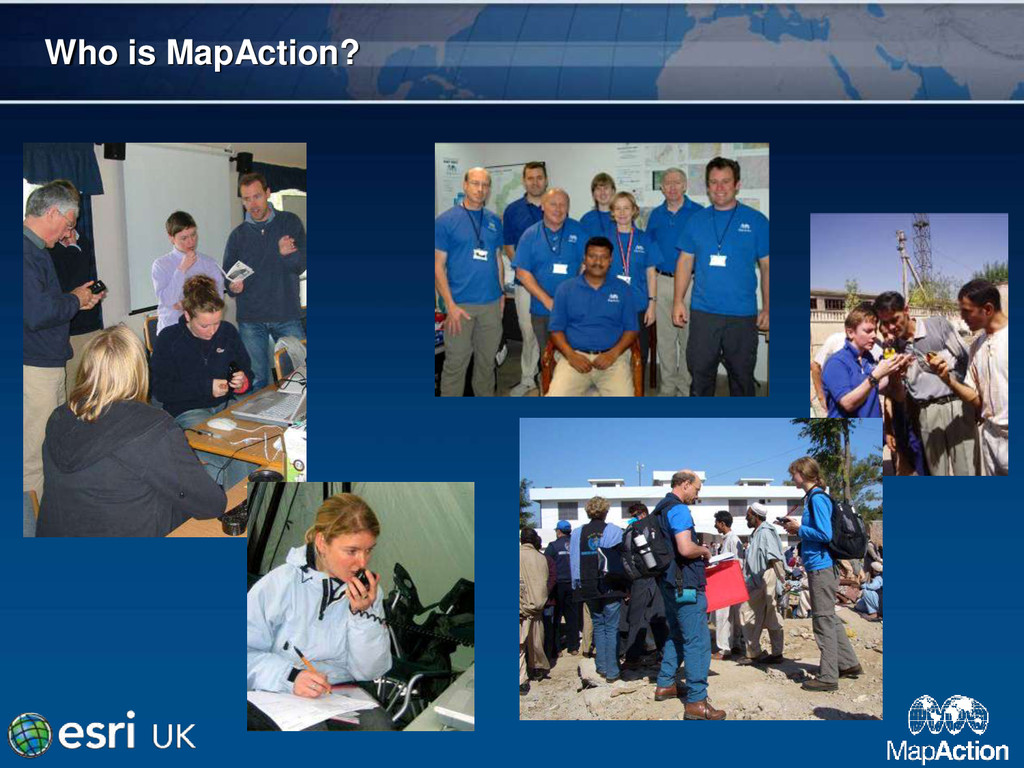
GIS is a powerful tool in providing a common operational picture during a humanitarian crisis. MapAction is the world's only deployable humanitarian GIS team.

Avatar for WML2013

WML2013

July 07, 2014
Tweet

More Decks by WML2013

Other Decks in Technology

Transcript

  1. The use of GIS in disaster response Maps and the

    geography of disaster Tectonic Hazards Teachers Conference 2014
  2. Sign posts •Who am I? •Who is MapAction? •Who is

    Esri? •GIS & Disaster Response – why and how? •ArcGIS Online •Questions and Answers
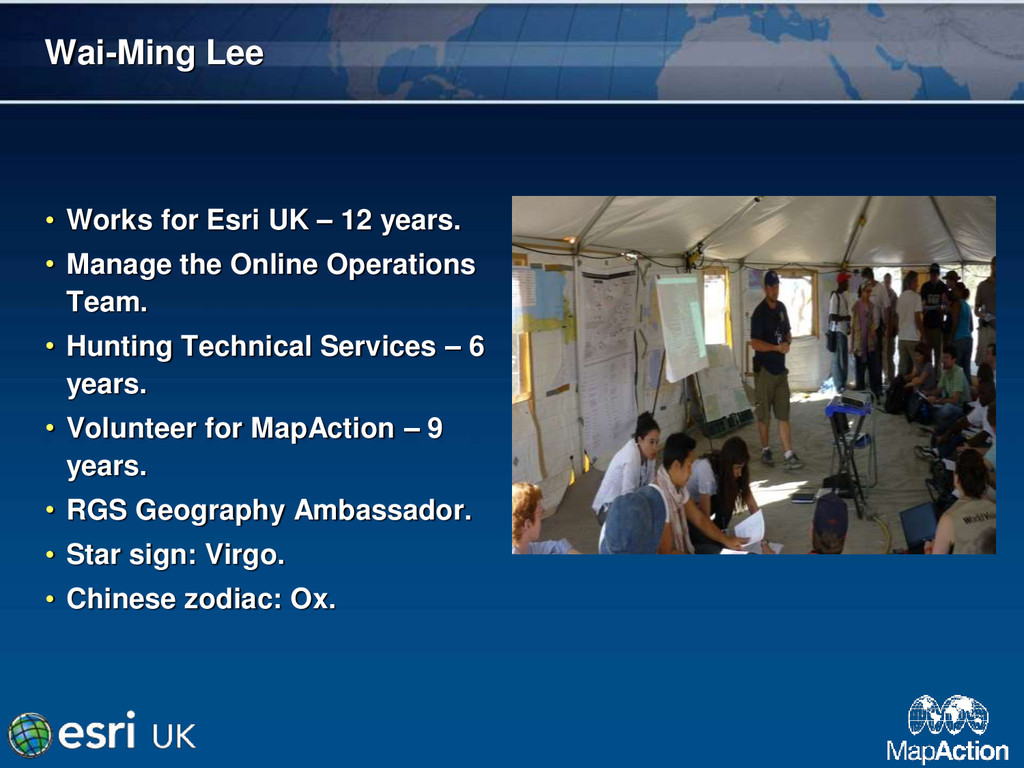
  3. Wai-Ming Lee • Works for Esri UK – 12 years.

    • Manage the Online Operations Team. • Hunting Technical Services – 6 years. • Volunteer for MapAction – 9 years. • RGS Geography Ambassador. • Star sign: Virgo. • Chinese zodiac: Ox.
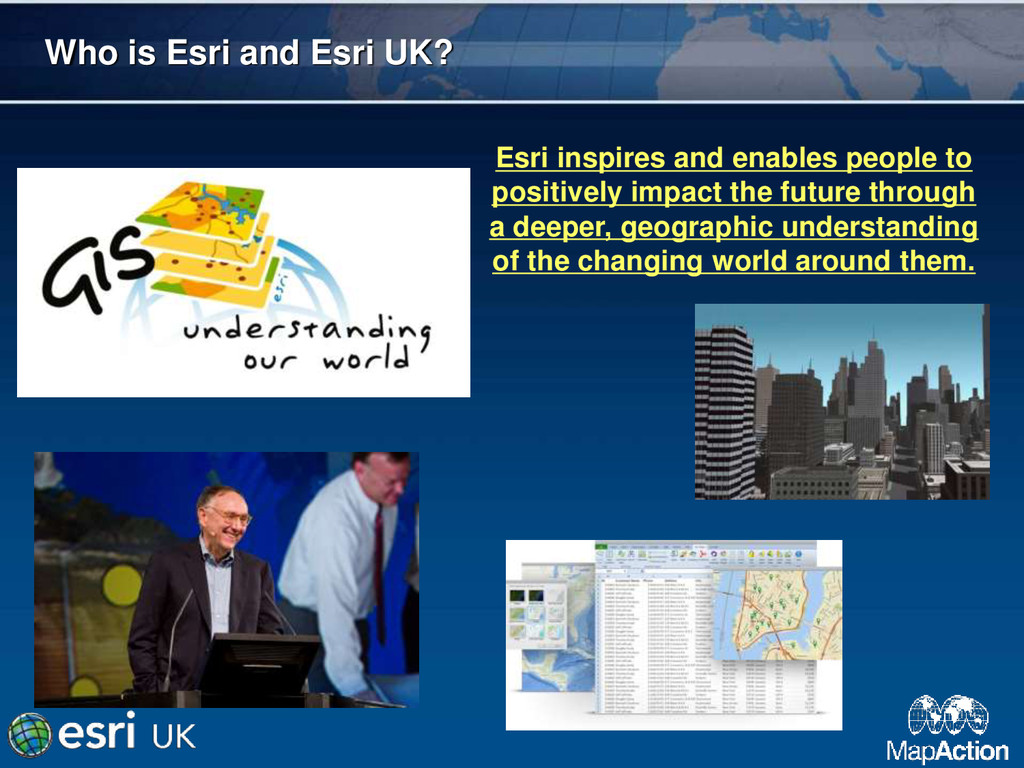
  4. Who is Esri and Esri UK? Esri inspires and enables

    people to positively impact the future through a deeper, geographic understanding of the changing world around them.
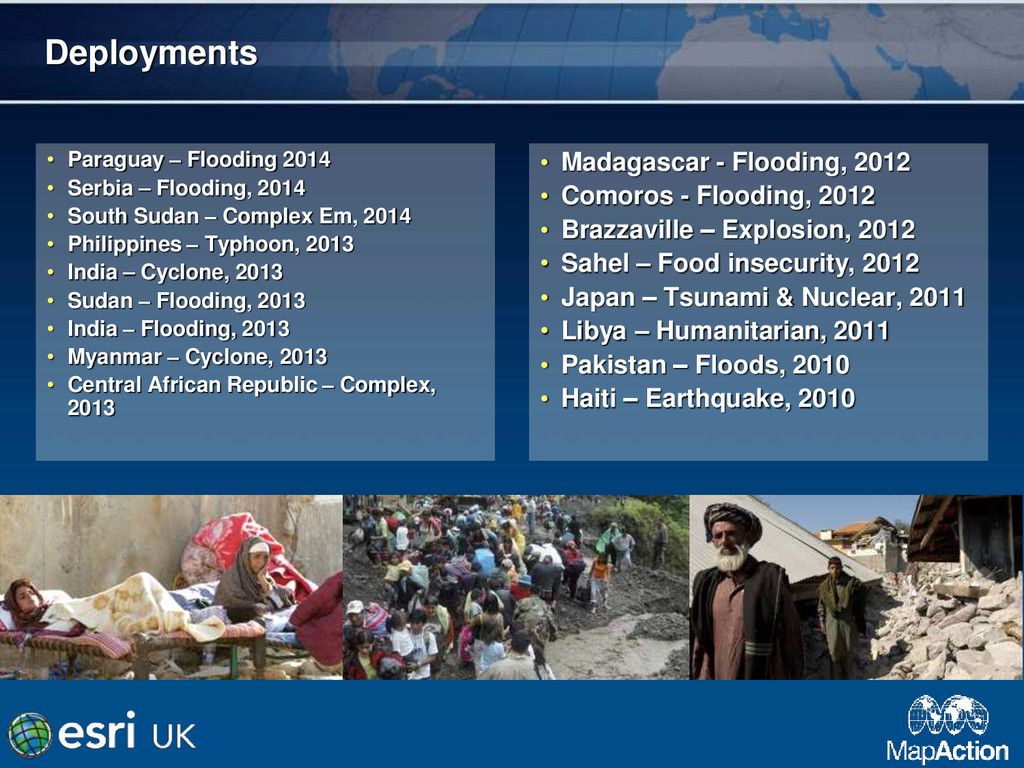
  5. Deployments • Paraguay – Flooding 2014 • Serbia – Flooding,

    2014 • South Sudan – Complex Em, 2014 • Philippines – Typhoon, 2013 • India – Cyclone, 2013 • Sudan – Flooding, 2013 • India – Flooding, 2013 • Myanmar – Cyclone, 2013 • Central African Republic – Complex, 2013 • Madagascar - Flooding, 2012 • Comoros - Flooding, 2012 • Brazzaville – Explosion, 2012 • Sahel – Food insecurity, 2012 • Japan – Tsunami & Nuclear, 2011 • Libya – Humanitarian, 2011 • Pakistan – Floods, 2010 • Haiti – Earthquake, 2010
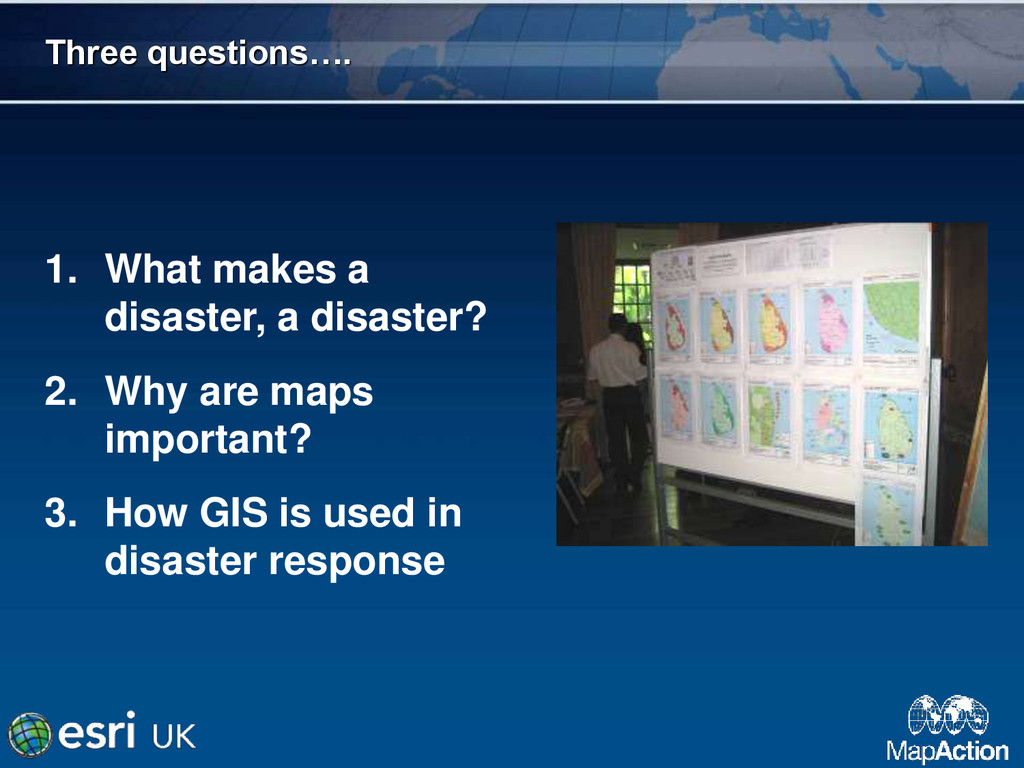
  6. Three questions…. 1. What makes a disaster, a disaster? 2.

    Why are maps important? 3. How GIS is used in disaster response
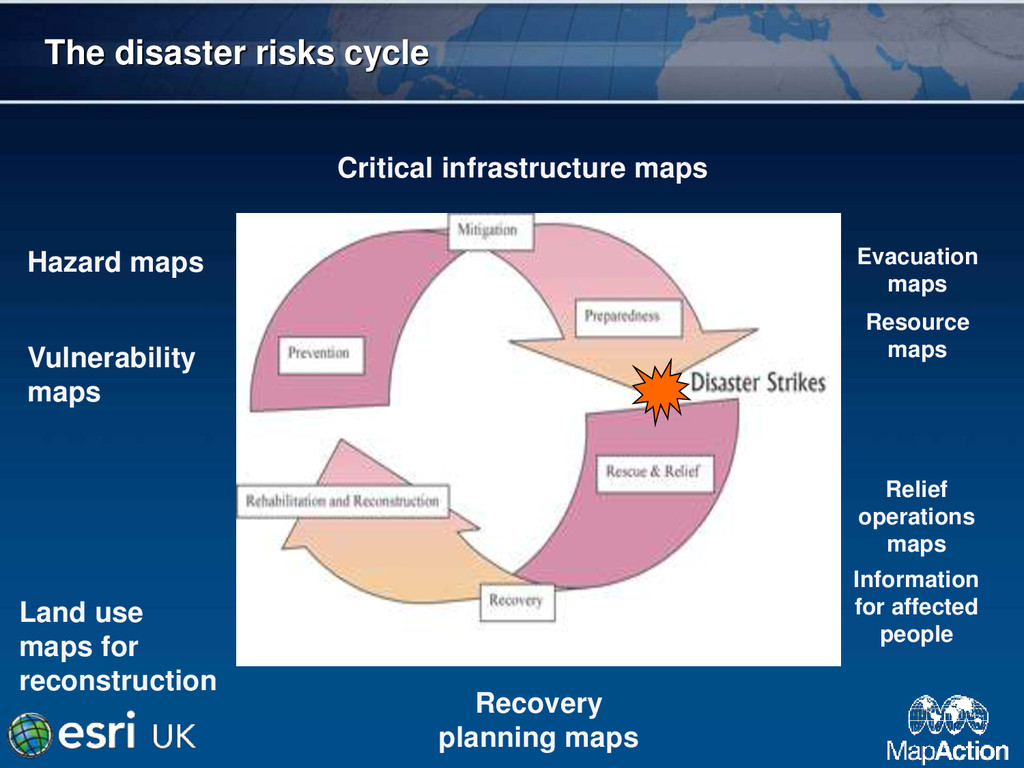
  7. The disaster event The disaster risks cycle Hazard maps Vulnerability

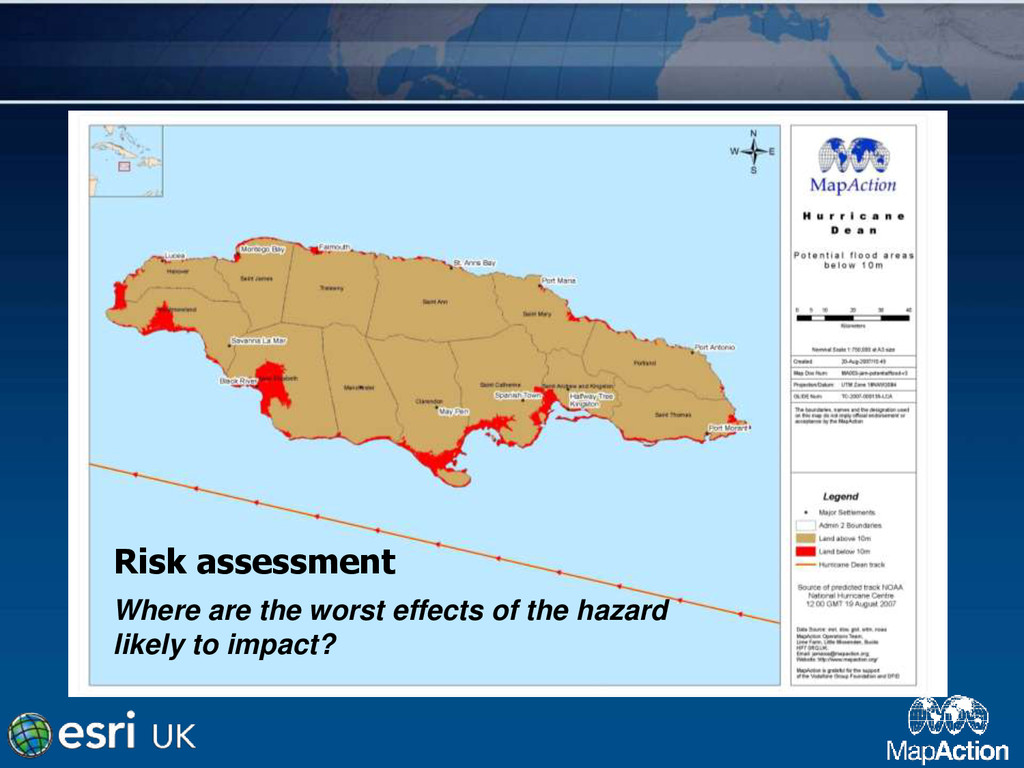
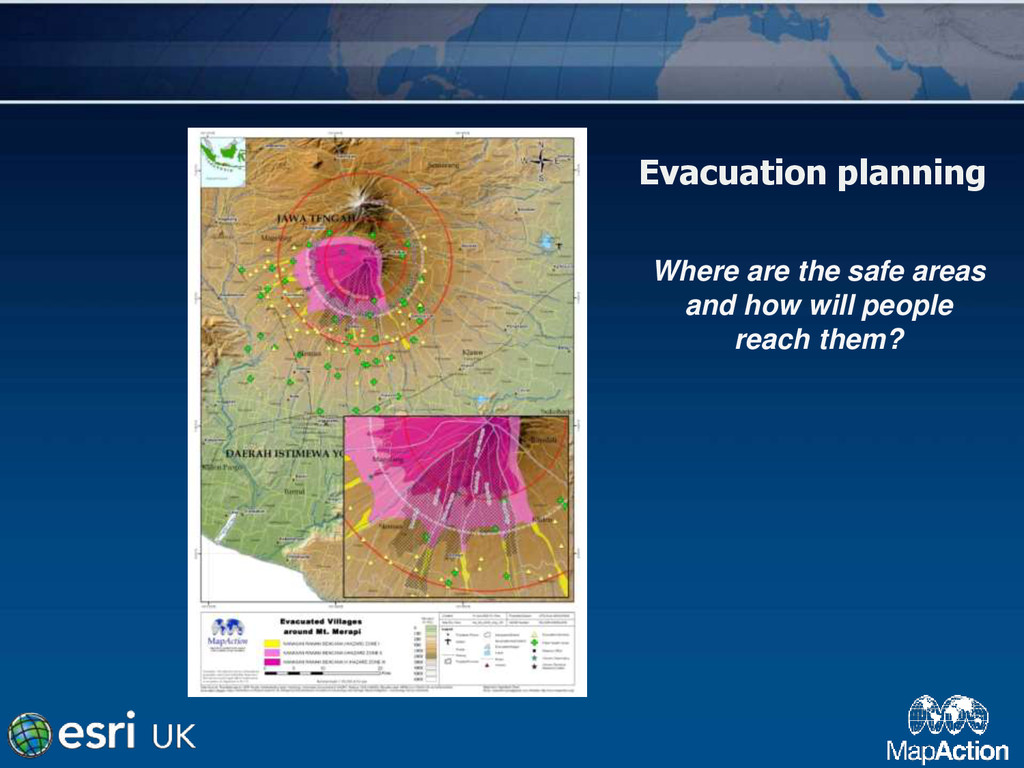
    maps Critical infrastructure maps Evacuation maps Resource maps Relief operations maps Information for affected people Land use maps for reconstruction Recovery planning maps
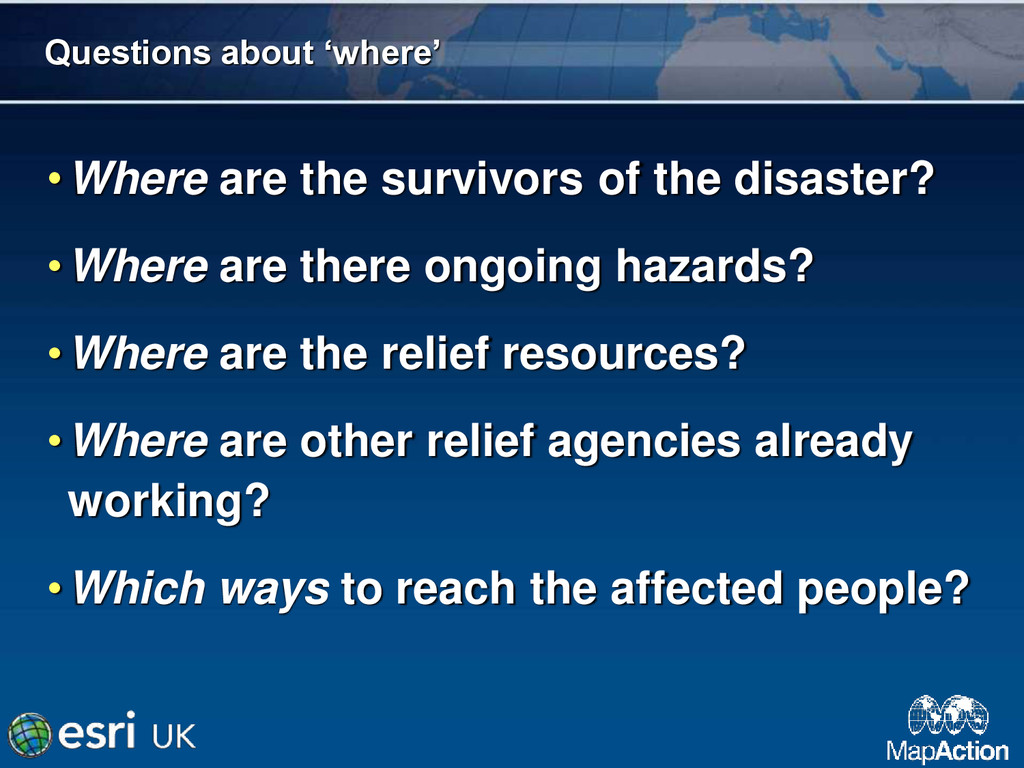
  8. Questions about ‘where’ •Where are the survivors of the disaster?

    •Where are there ongoing hazards? •Where are the relief resources? •Where are other relief agencies already working? •Which ways to reach the affected people?
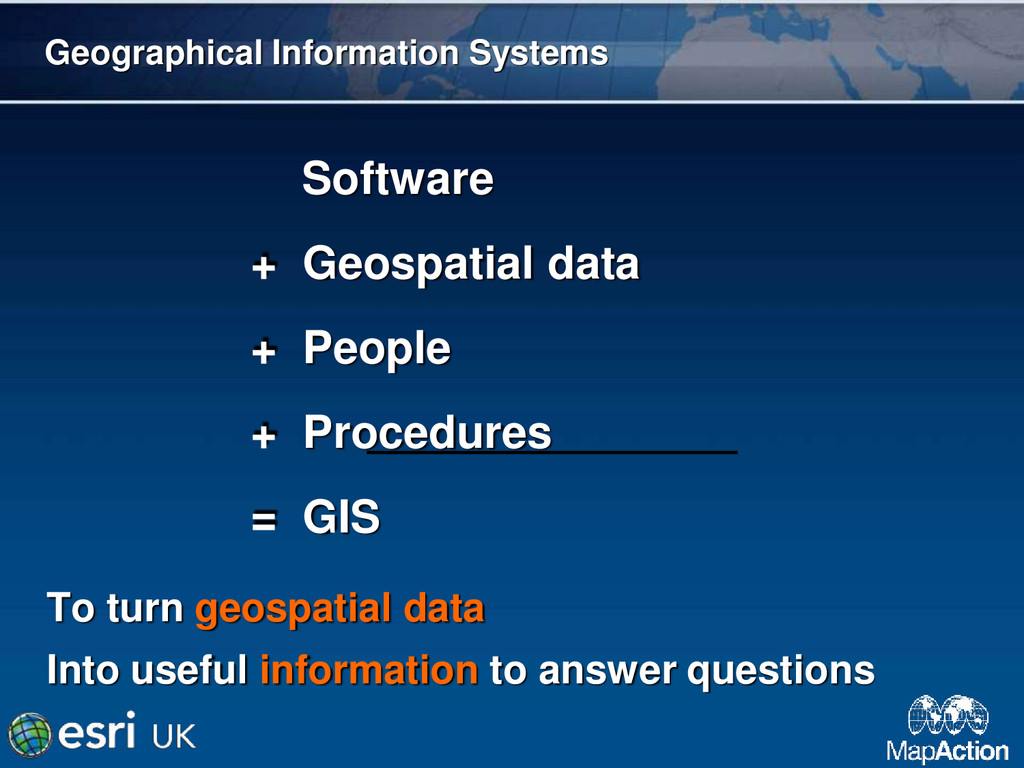
  9. Geographical Information Systems Software + Geospatial data + People +

    Procedures = GIS To turn geospatial data Into useful information to answer questions
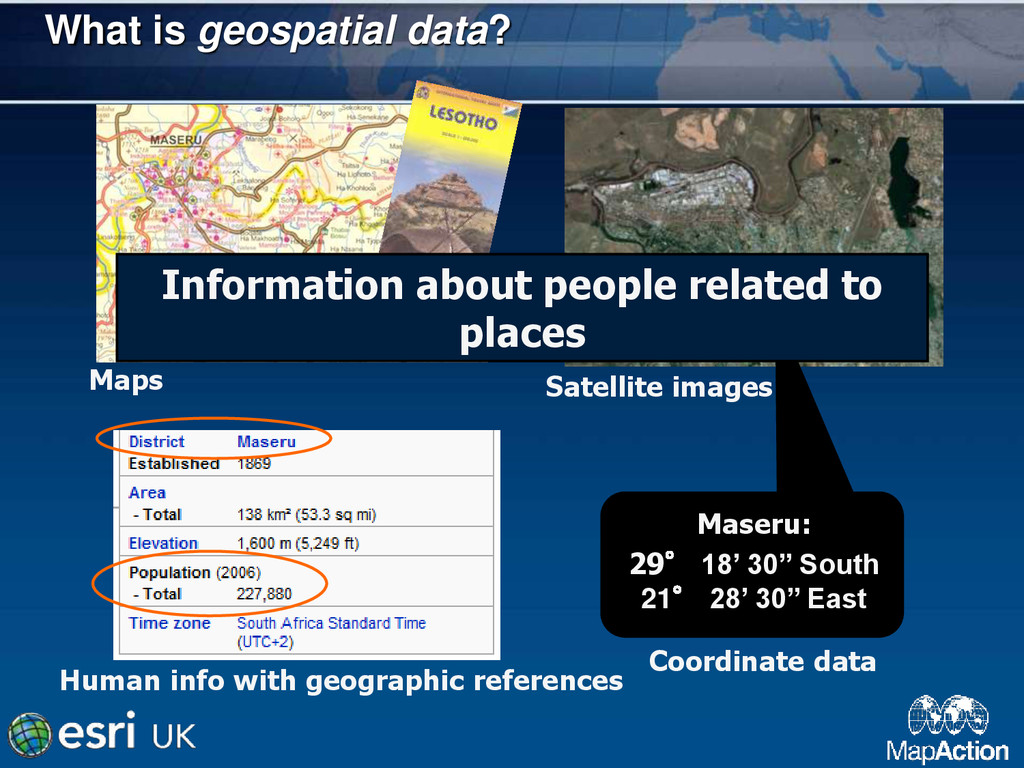
  10. What is geospatial data? Maps Satellite images Maseru: 29° 18’

    30’’ South 21° 28’ 30’’ East Coordinate data Information about people related to places Human info with geographic references
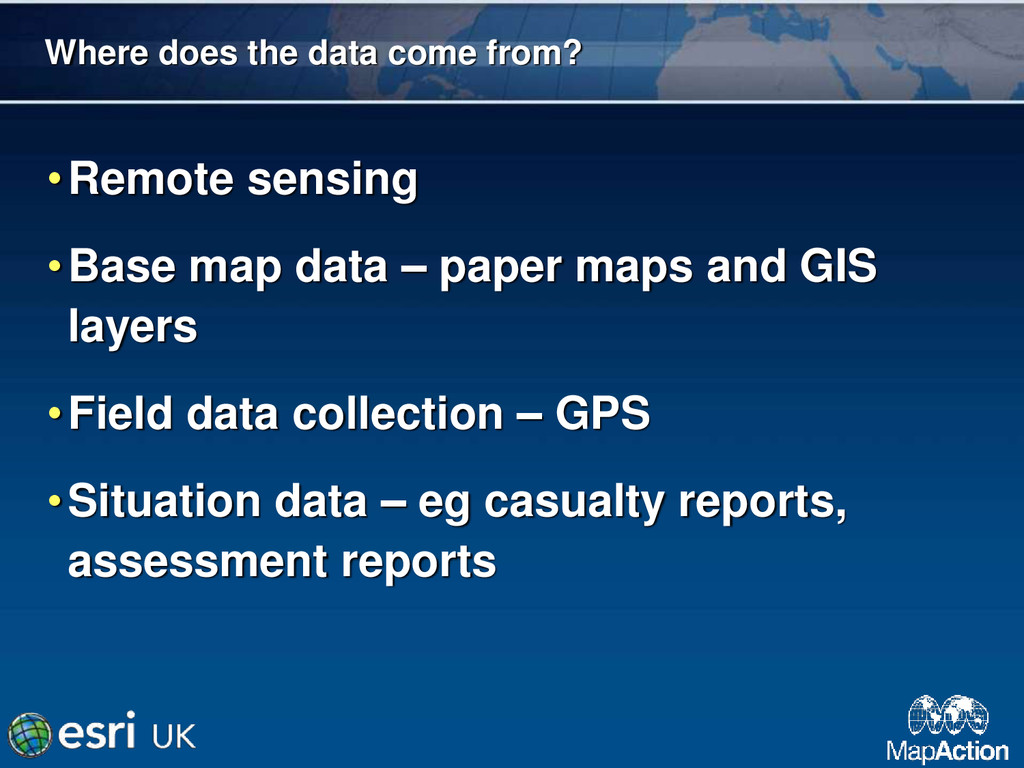
  11. Where does the data come from? •Remote sensing •Base map

    data – paper maps and GIS layers •Field data collection – GPS •Situation data – eg casualty reports, assessment reports
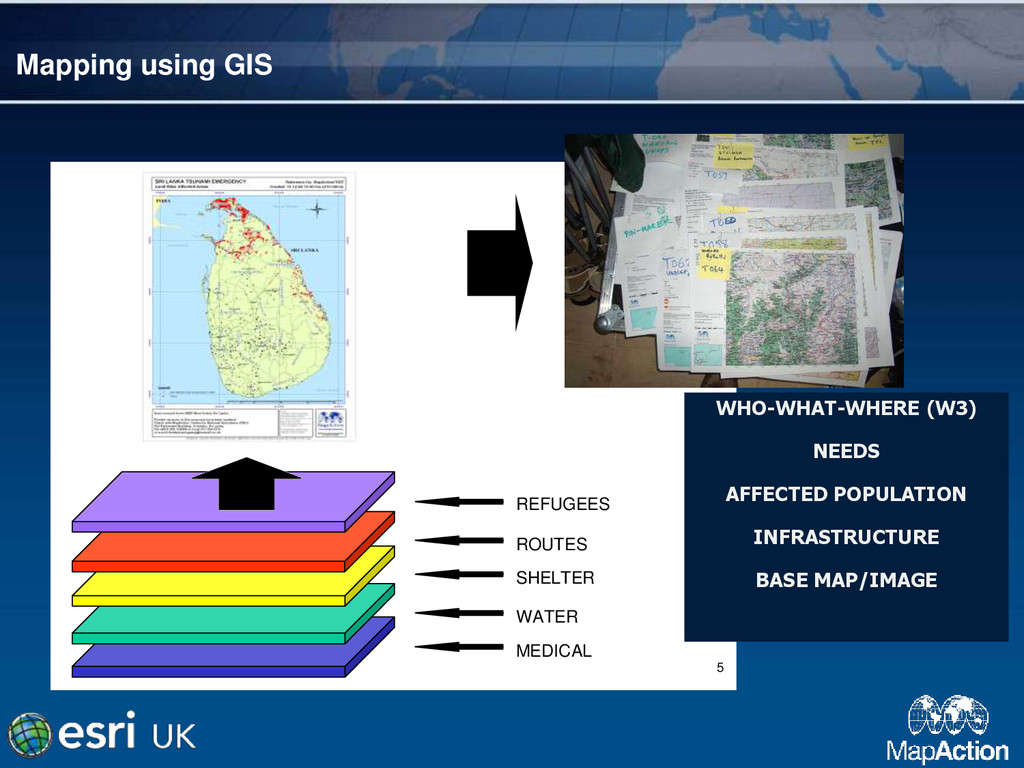
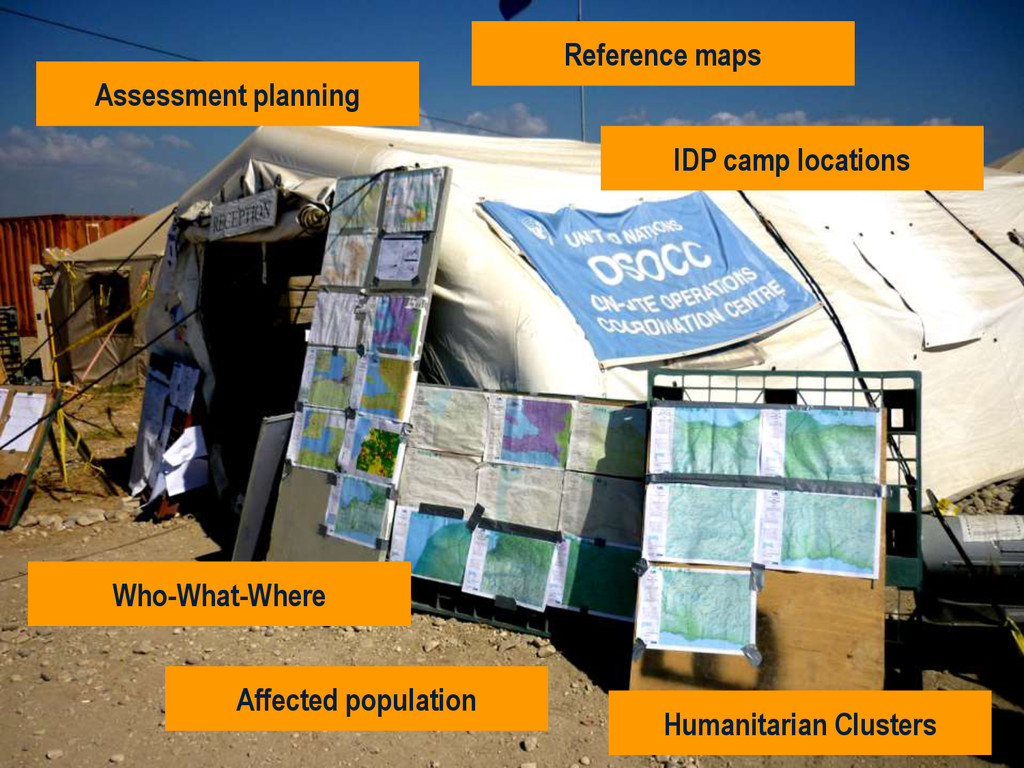
  12. 5 MEDICAL WATER SHELTER REFUGEES ROUTES EXAMPLE - SITUATION MAPS

    MapAction WHO-WHAT-WHERE (W3) NEEDS AFFECTED POPULATION INFRASTRUCTURE BASE MAP/IMAGE Mapping using GIS
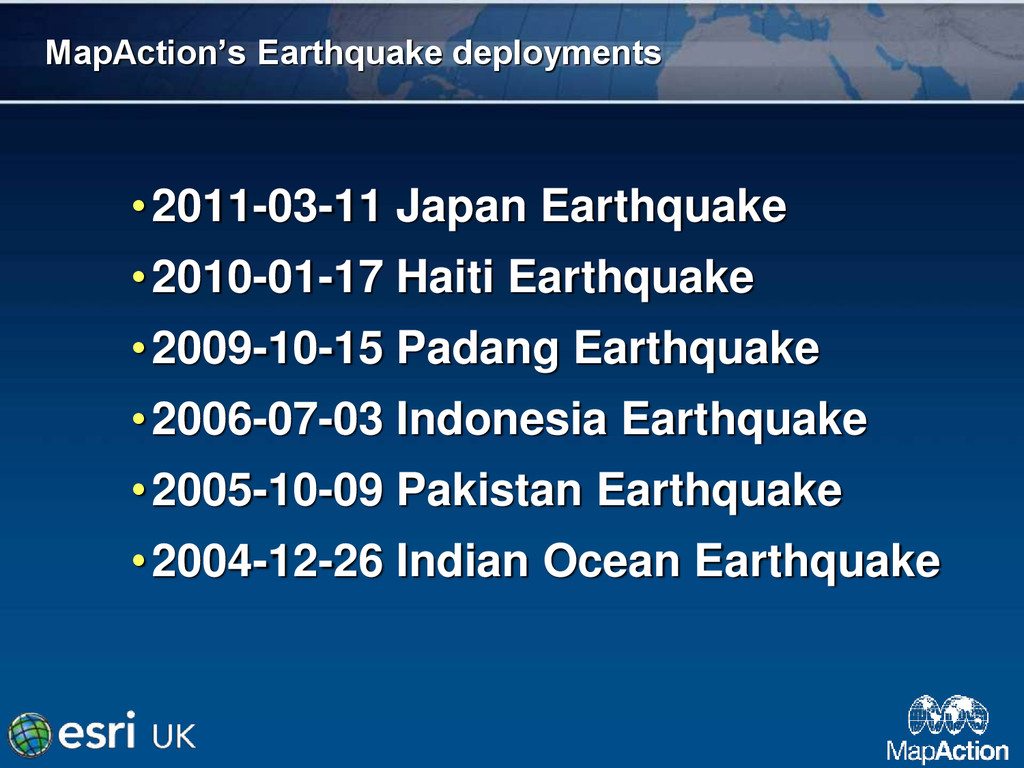
  13. MapAction’s Earthquake deployments •2011-03-11 Japan Earthquake •2010-01-17 Haiti Earthquake •2009-10-15

    Padang Earthquake •2006-07-03 Indonesia Earthquake •2005-10-09 Pakistan Earthquake •2004-12-26 Indian Ocean Earthquake
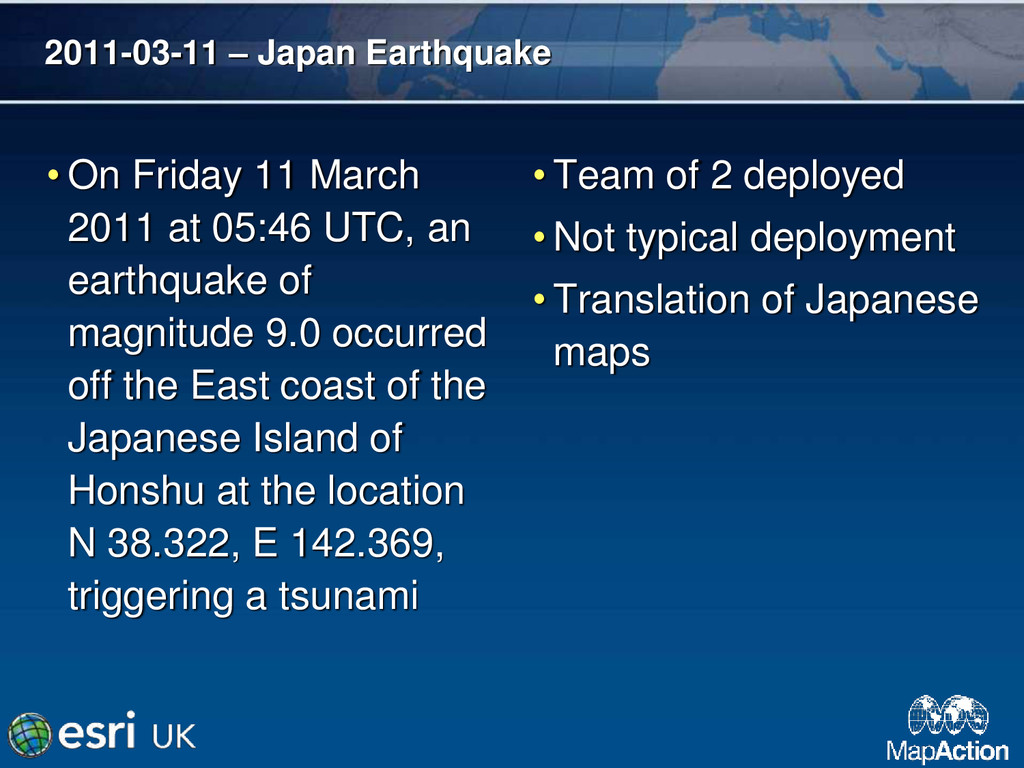
  14. 2011-03-11 – Japan Earthquake • On Friday 11 March 2011

    at 05:46 UTC, an earthquake of magnitude 9.0 occurred off the East coast of the Japanese Island of Honshu at the location N 38.322, E 142.369, triggering a tsunami • Team of 2 deployed • Not typical deployment • Translation of Japanese maps
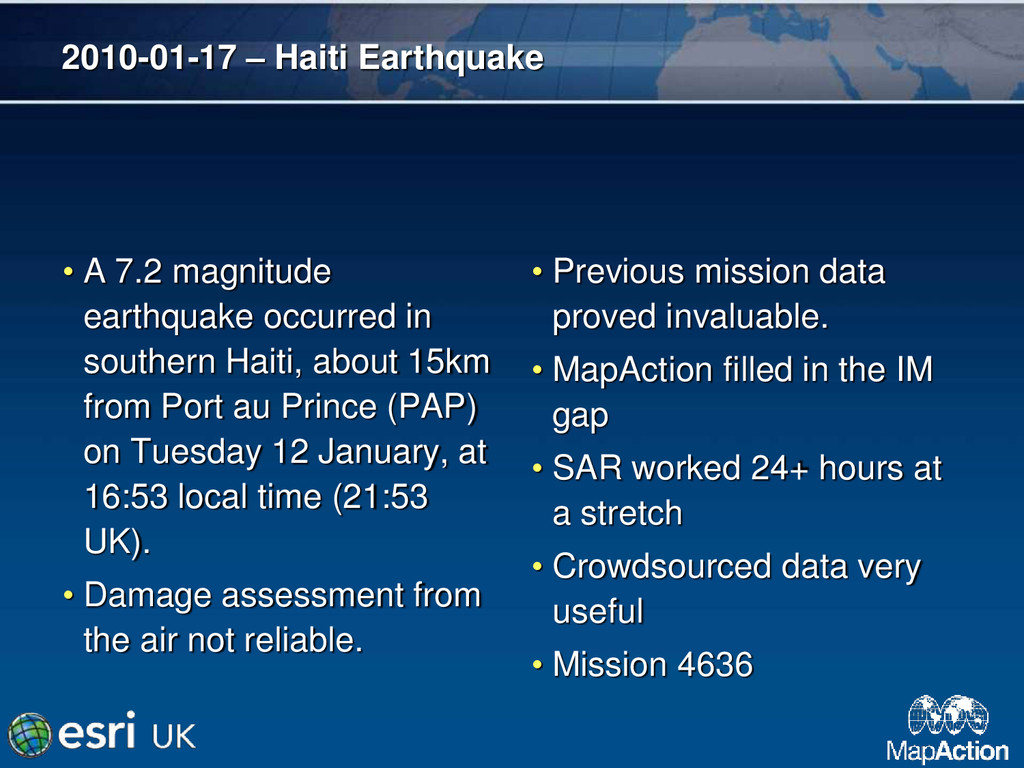
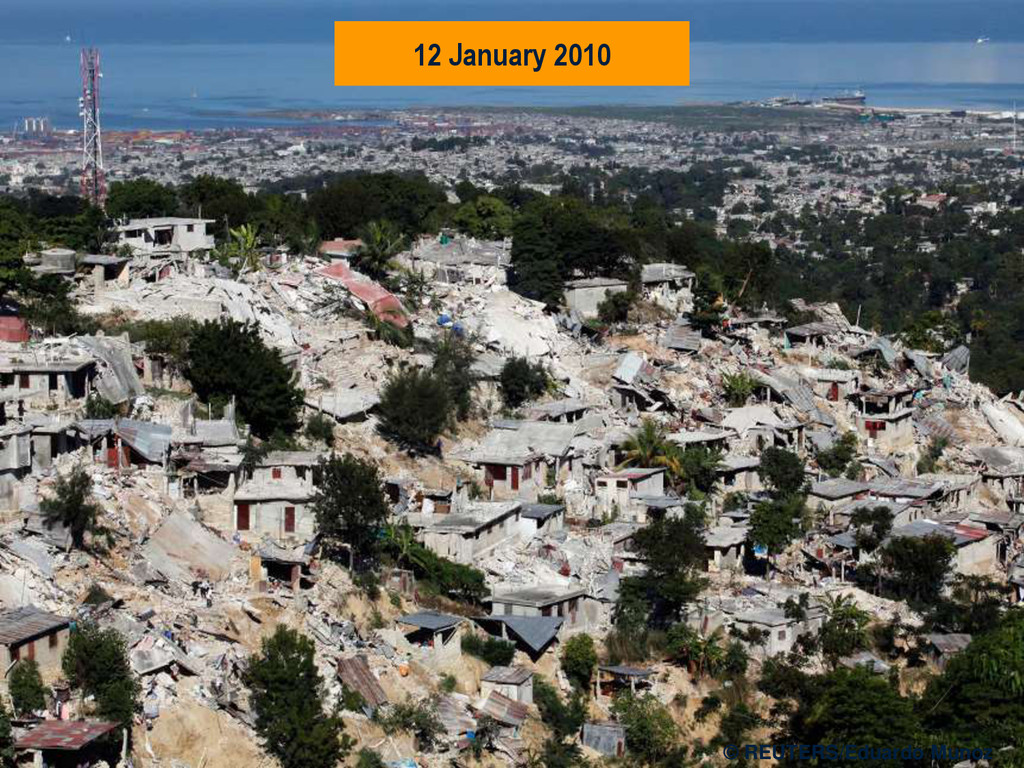
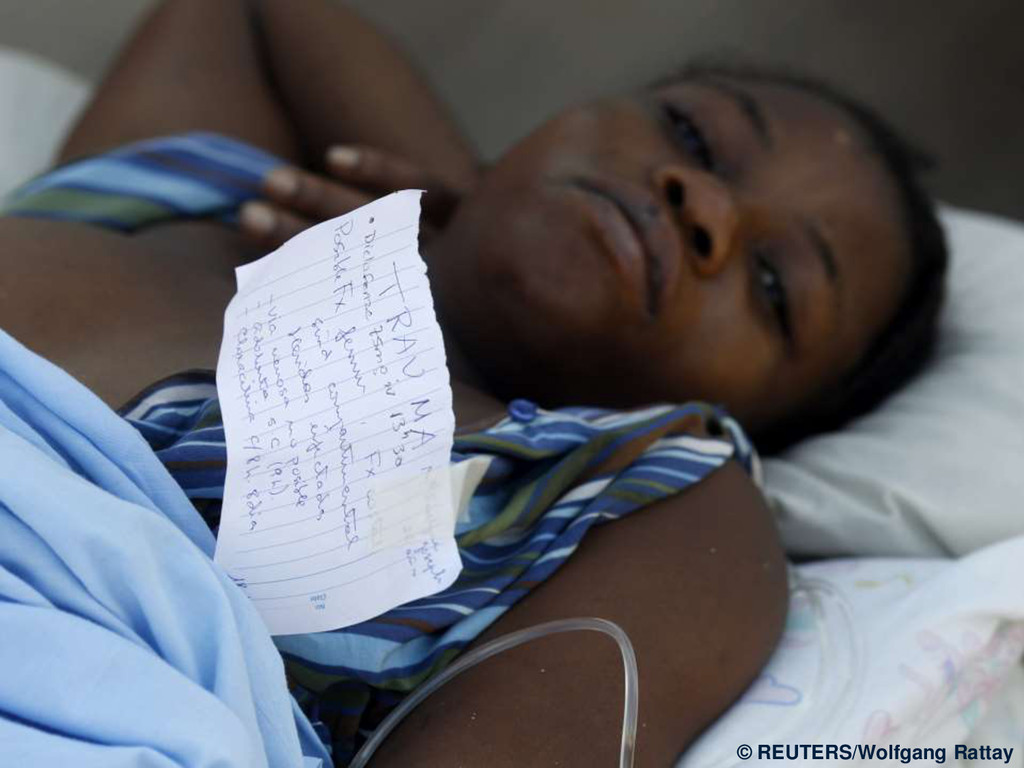
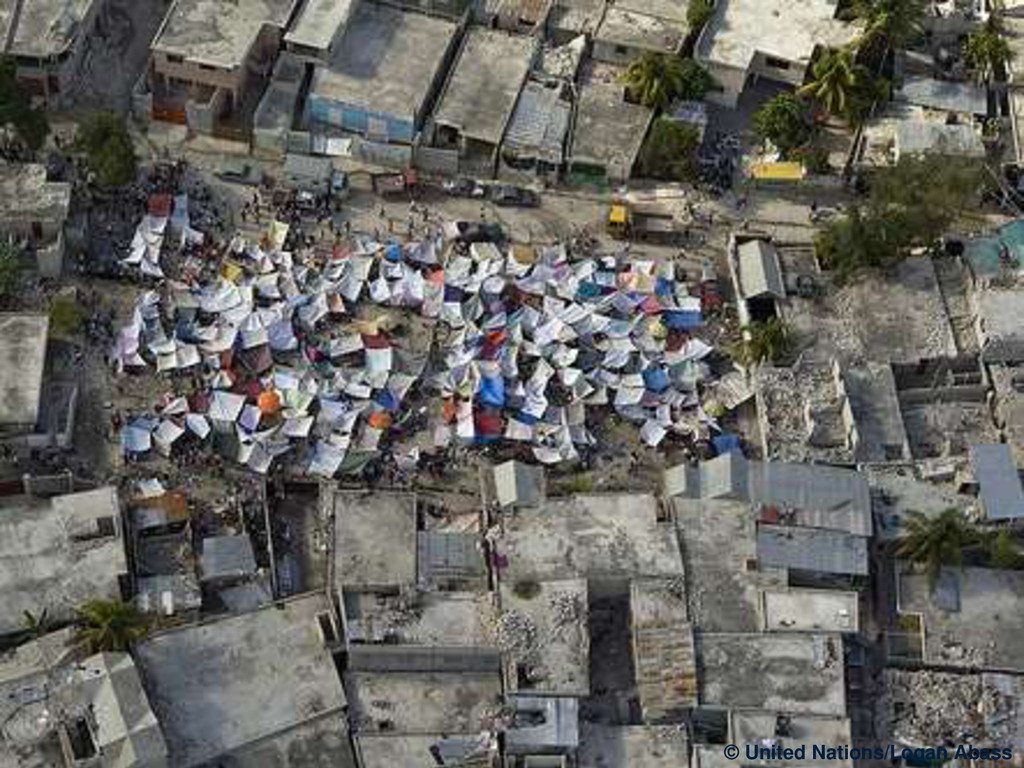
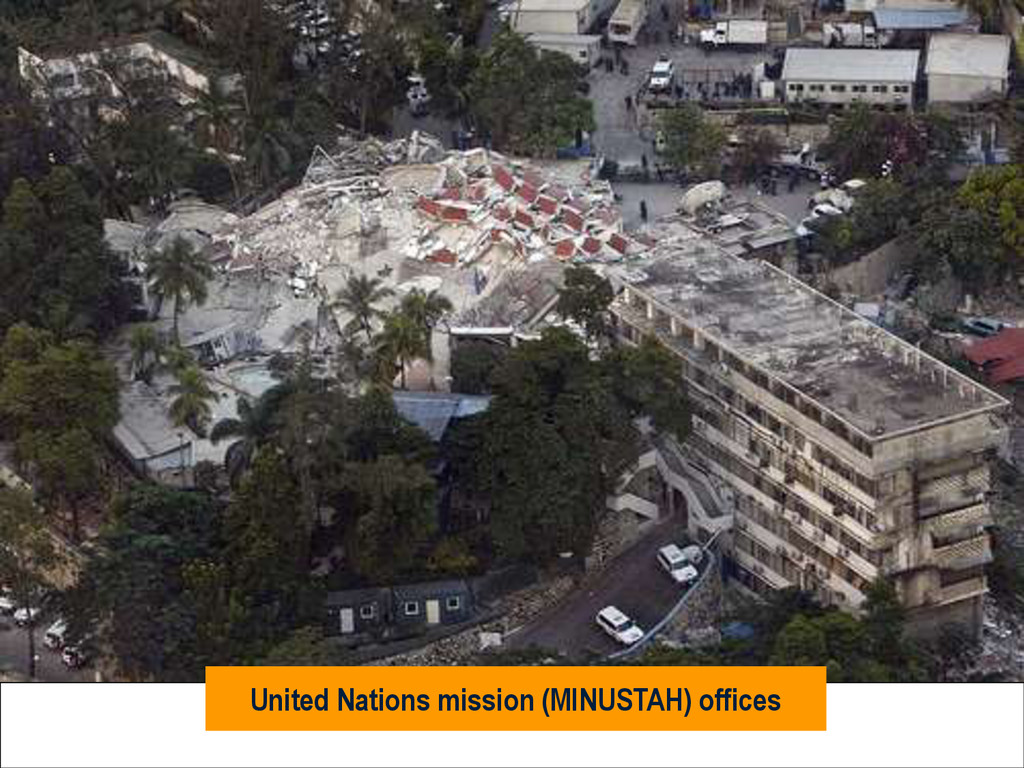
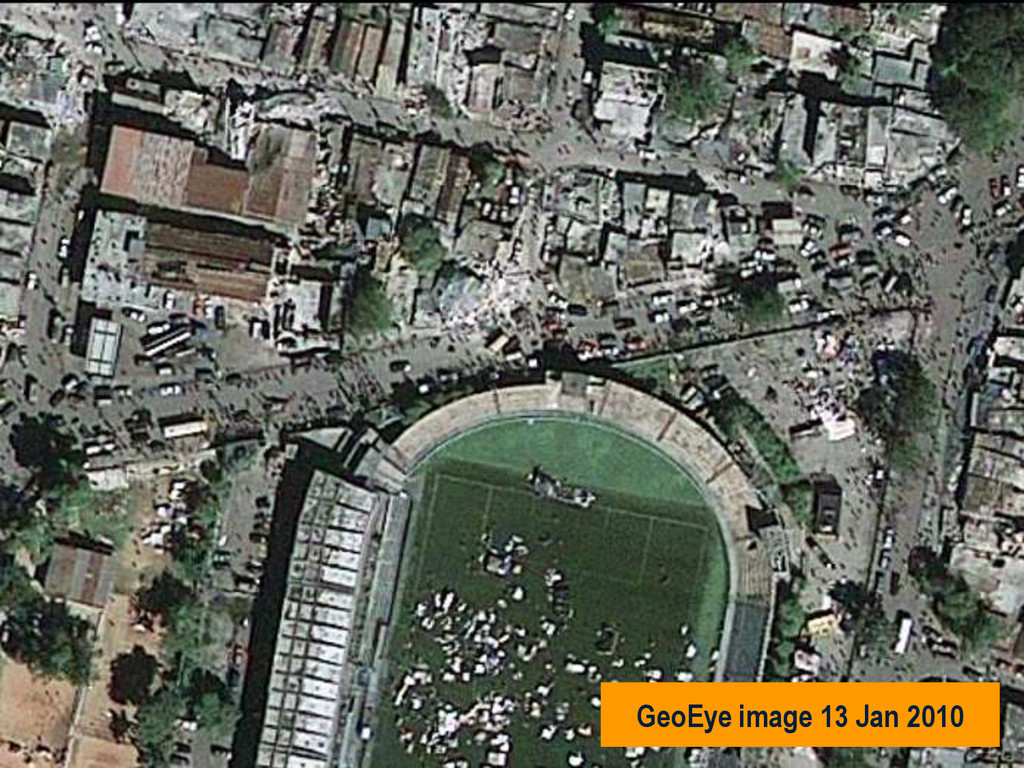
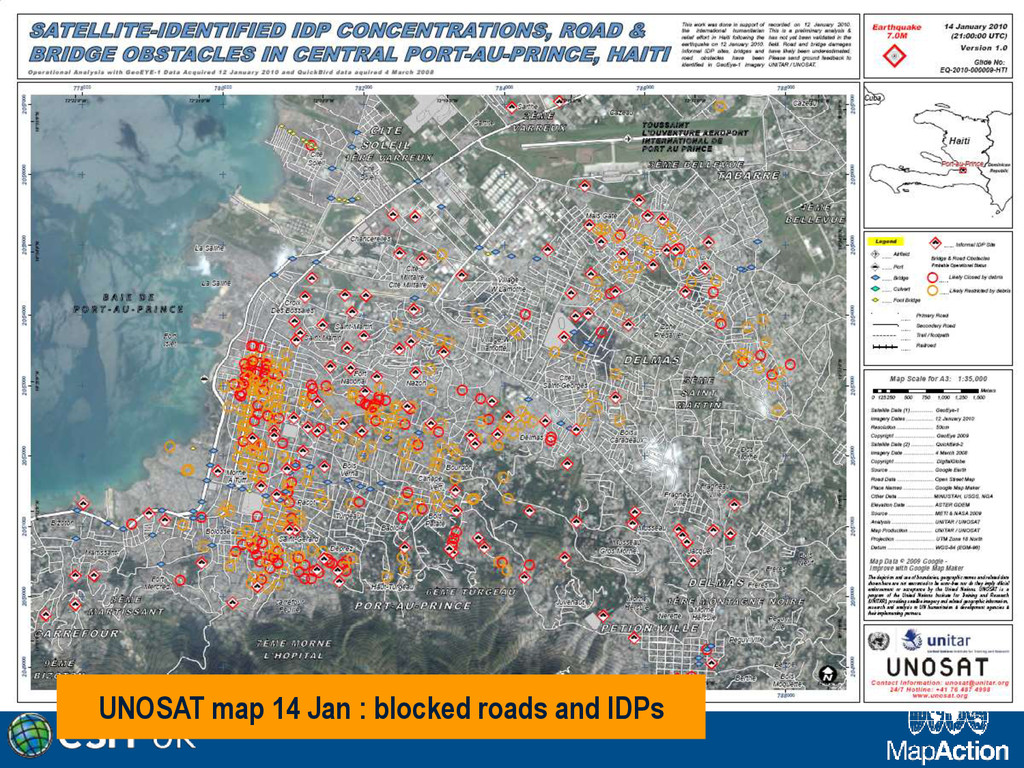
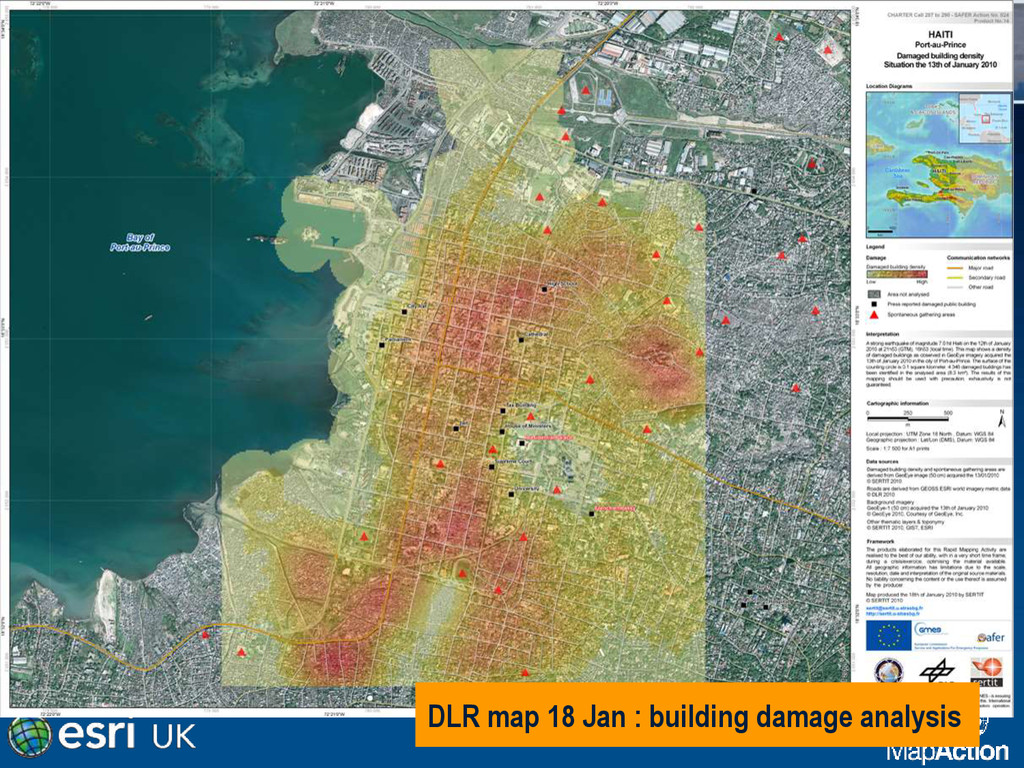
  15. 2010-01-17 – Haiti Earthquake • A 7.2 magnitude earthquake occurred

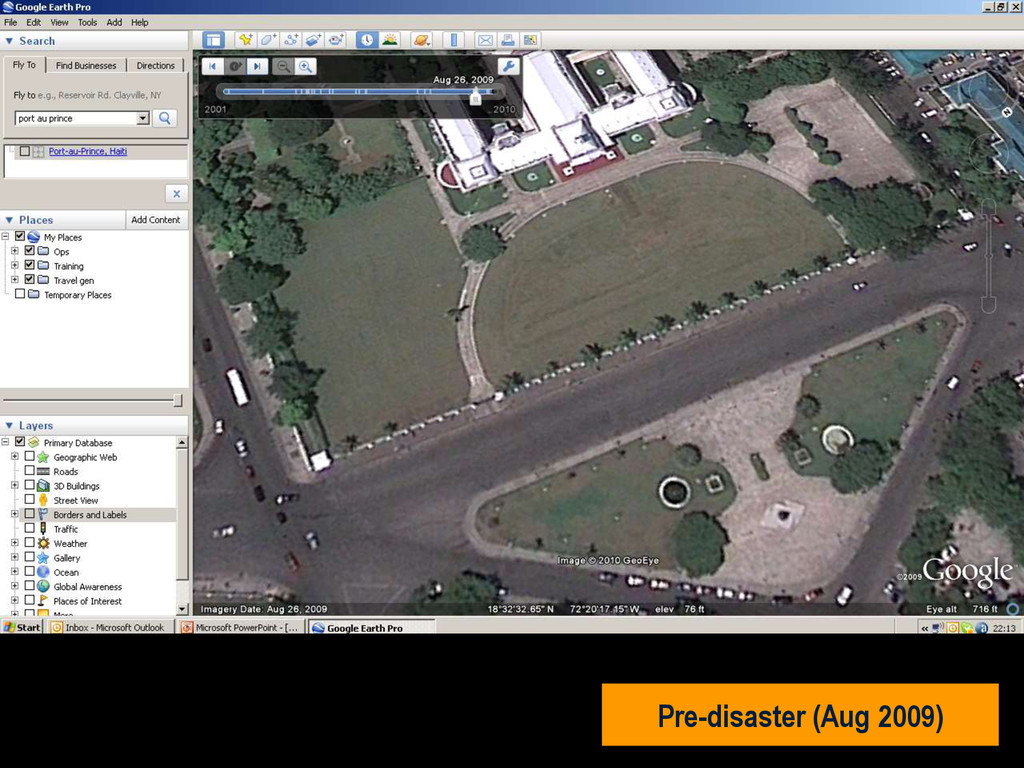
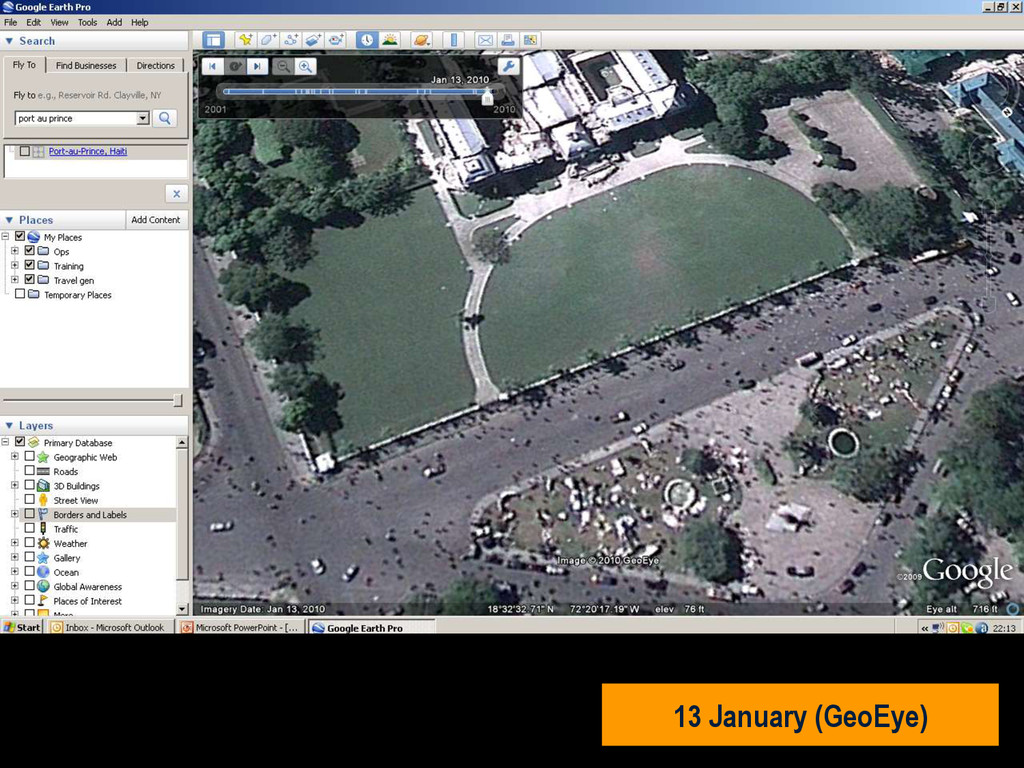
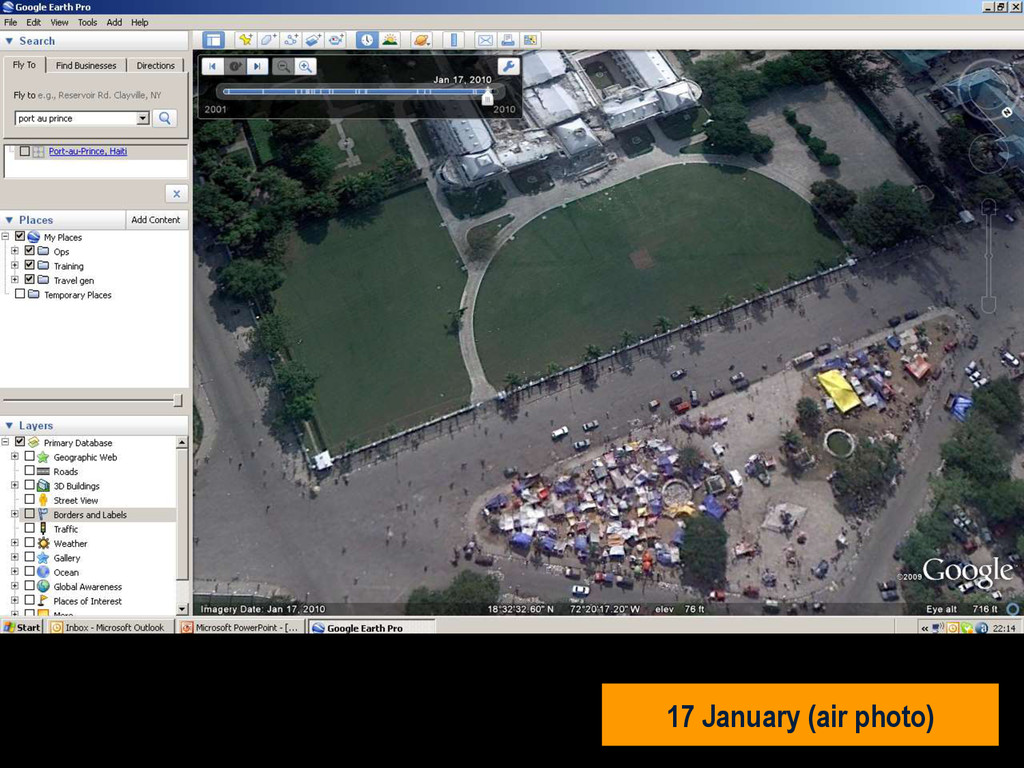
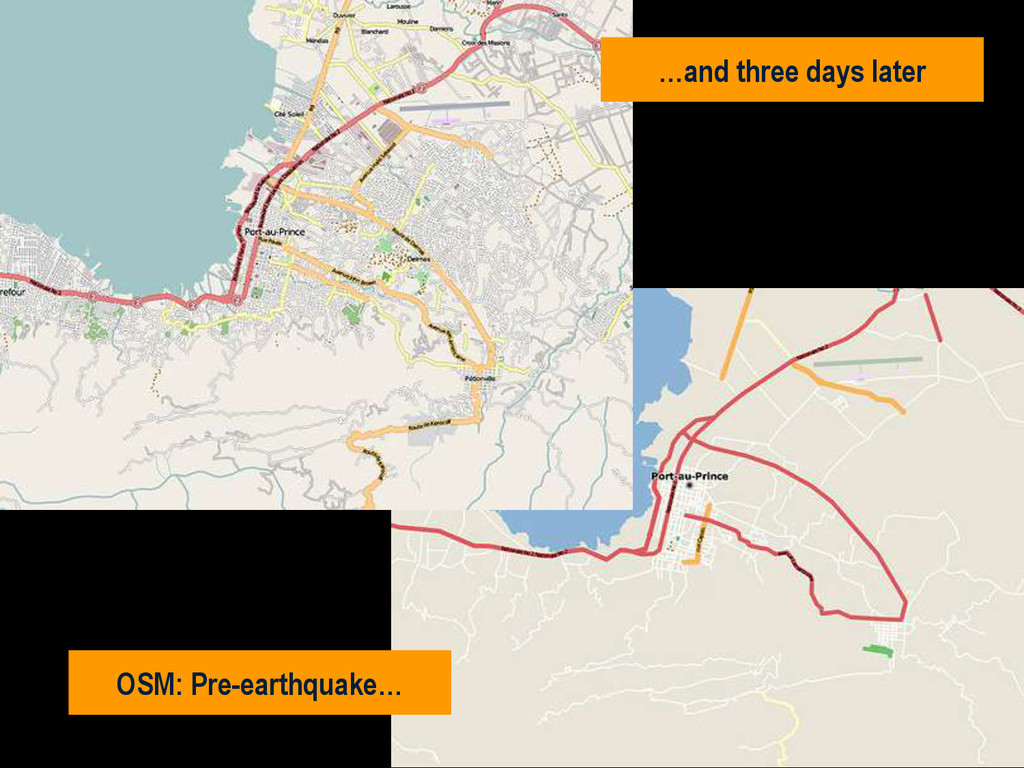
    in southern Haiti, about 15km from Port au Prince (PAP) on Tuesday 12 January, at 16:53 local time (21:53 UK). • Damage assessment from the air not reliable. • Previous mission data proved invaluable. • MapAction filled in the IM gap • SAR worked 24+ hours at a stretch • Crowdsourced data very useful • Mission 4636
  16. EARTHQUAKES, VOLCANOES AND PLATE TECTONICS IN ARCGIS ONLINE C:\USERS\MLEE\DOCUMENTS\MAPACTION\EARTHQUAKE AND

    SCHOOLS 2014\EARTHQUAKES, VOLCANOES AND PLATE TECTONICS IN ARCGIS ONLINE.PDF