Upgrade to Pro
— share decks privately, control downloads, hide ads and more …
Speaker Deck
Sign up for free
Menu
Search
Features
All features
Private URLs
Password Protection
Custom URLS
Scheduled publishing
Remove Branding
Restrict embedding
Deck Collections
Notes
Features
All features
Private URLs
Password Protection
Custom URLS
Scheduled publishing
Remove Branding
Restrict embedding
Deck Collections
Notes
Explore
Featured decks
Featured speakers
Programming
Technology
Storyboards
Explore
Featured decks
Featured speakers
Programming
Technology
Storyboards
Pricing
Search
Sign in
Sign up for free
How to use server logs to plan & surface content
Search
Yvie Ansari
April 30, 2026
280
0
Share
Embed
Copy iframe code
Copy JS code
Copy link
Start on current slide
How to use server logs to plan & surface content
Yvie Ansari
April 30, 2026
Featured
See All Featured
The Organizational Zoo: Understanding Human Behavior Agility Through Metaphoric Constructive Conversations (based on the works of Arthur Shelley, Ph.D)
kimpetersen
PRO
0
500
Chasing Engaging Ingredients in Design
codingconduct
0
360
The Myth of the Modular Monolith - Day 2 Keynote - Rails World 2024
eileencodes
28
3.7k
Git: the NoSQL Database
bkeepers
PRO
433
67k
Building a Scalable Design System with Sketch
lauravandoore
464
34k
Easily Structure & Communicate Ideas using Wireframe
afnizarnur
194
17k
Ecommerce SEO: The Keys for Success Now & Beyond - #SERPConf2024
aleyda
1
2.2k
New Earth Scene 8
popppiees
4
2.7k
Put a Button on it: Removing Barriers to Going Fast.
kastner
60
4.6k
Fantastic passwords and where to find them - at NoRuKo
philnash
53
4k
A brief & incomplete history of UX Design for the World Wide Web: 1989–2019
jct
2
530
JAMstack: Web Apps at Ludicrous Speed - All Things Open 2022
reverentgeek
1
640
Transcript
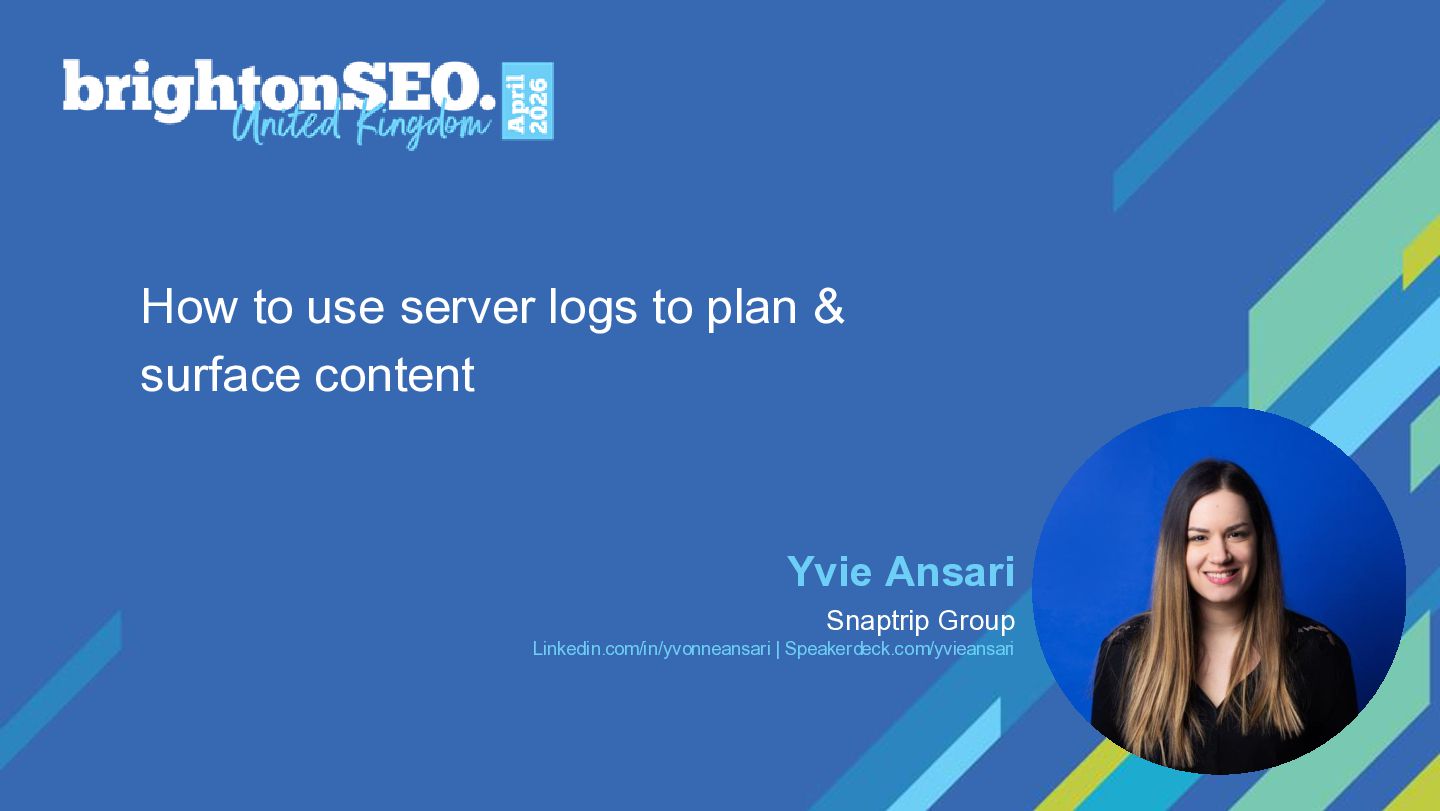
How to use server logs to plan & surface content
Yvie Ansari Snaptrip Group Linkedin.com/in/yvonneansari | Speakerdeck.com/yvieansari
Server access logs: the best ways to analyse them WHAT
WE WILL COVER
How to use the analysis to surface existing content WHAT
WE WILL COVER
How to use your analysis to plan future content WHAT
WE WILL COVER
A FEW NOTES BEFORE WE GET STARTED
I am not saying that you should purely look at
your server logs to build a content strategy – this would not work.
Your content strategy should always focus on the user first
and include data points based on user behaviours.
But… using server logs can help you improve your content
plan and surface that content.
SERVER ACCESS LOGS: THE BEST WAY TO ANALYSE THEM
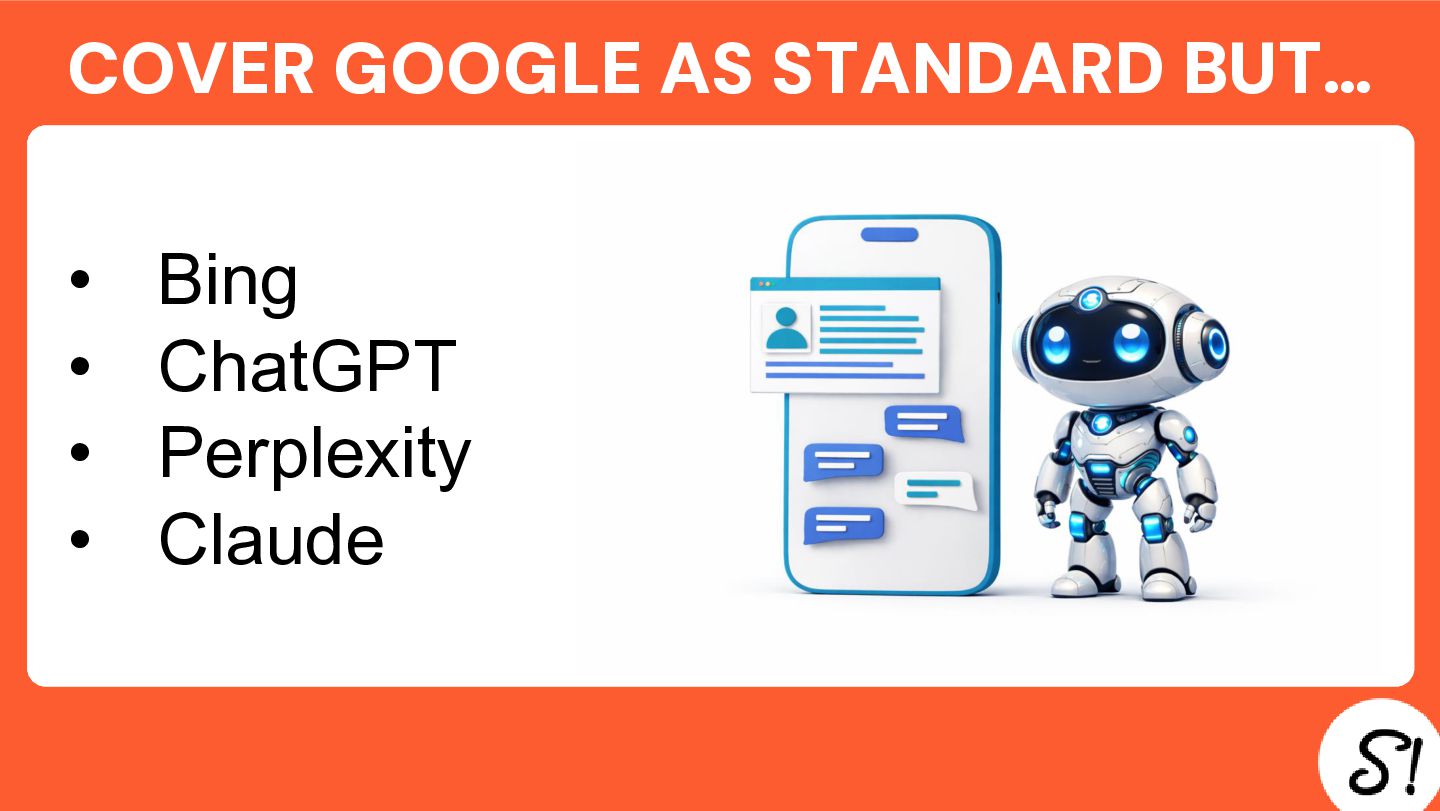
COVER GOOGLE AS STANDARD BUT… • Bing • ChatGPT •
Perplexity • Claude
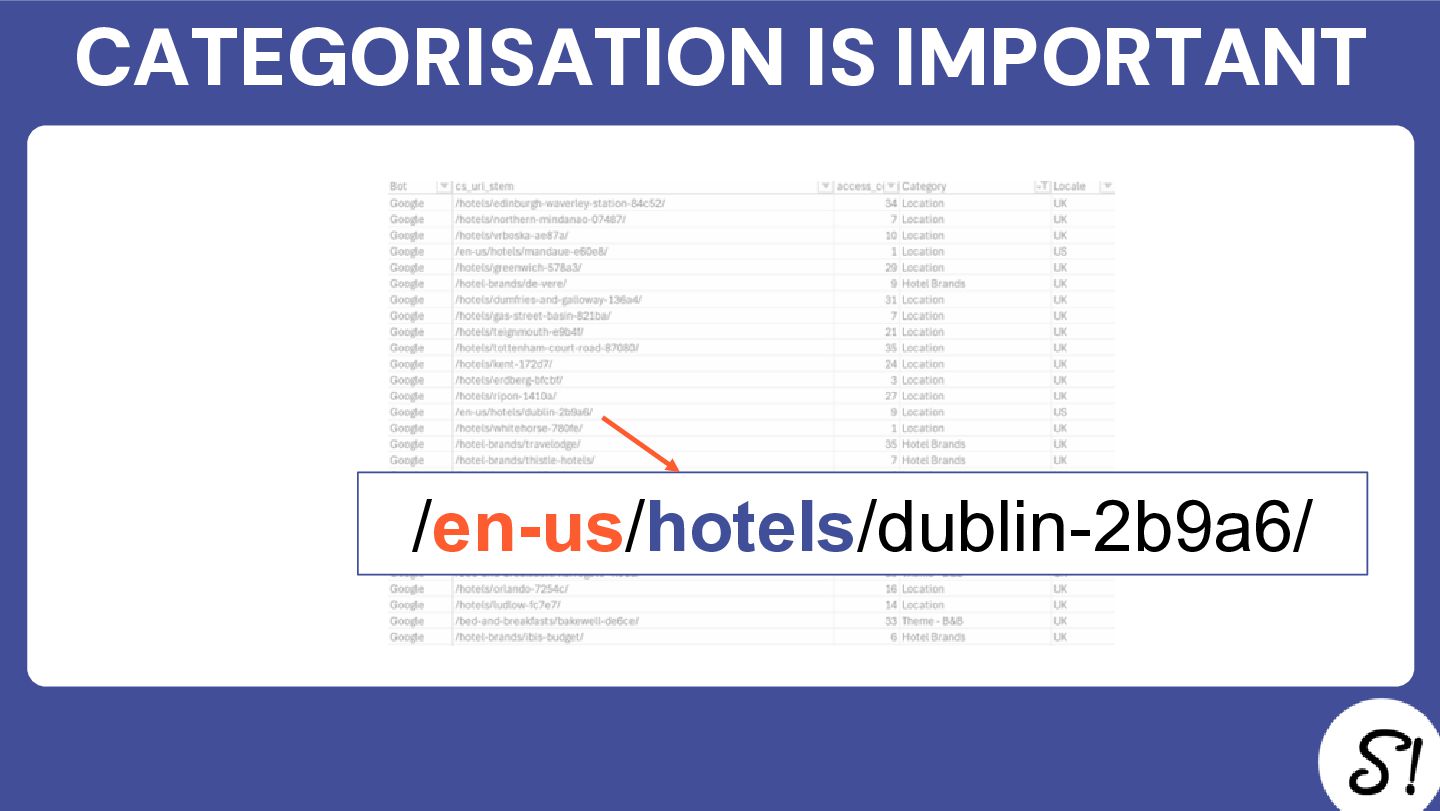
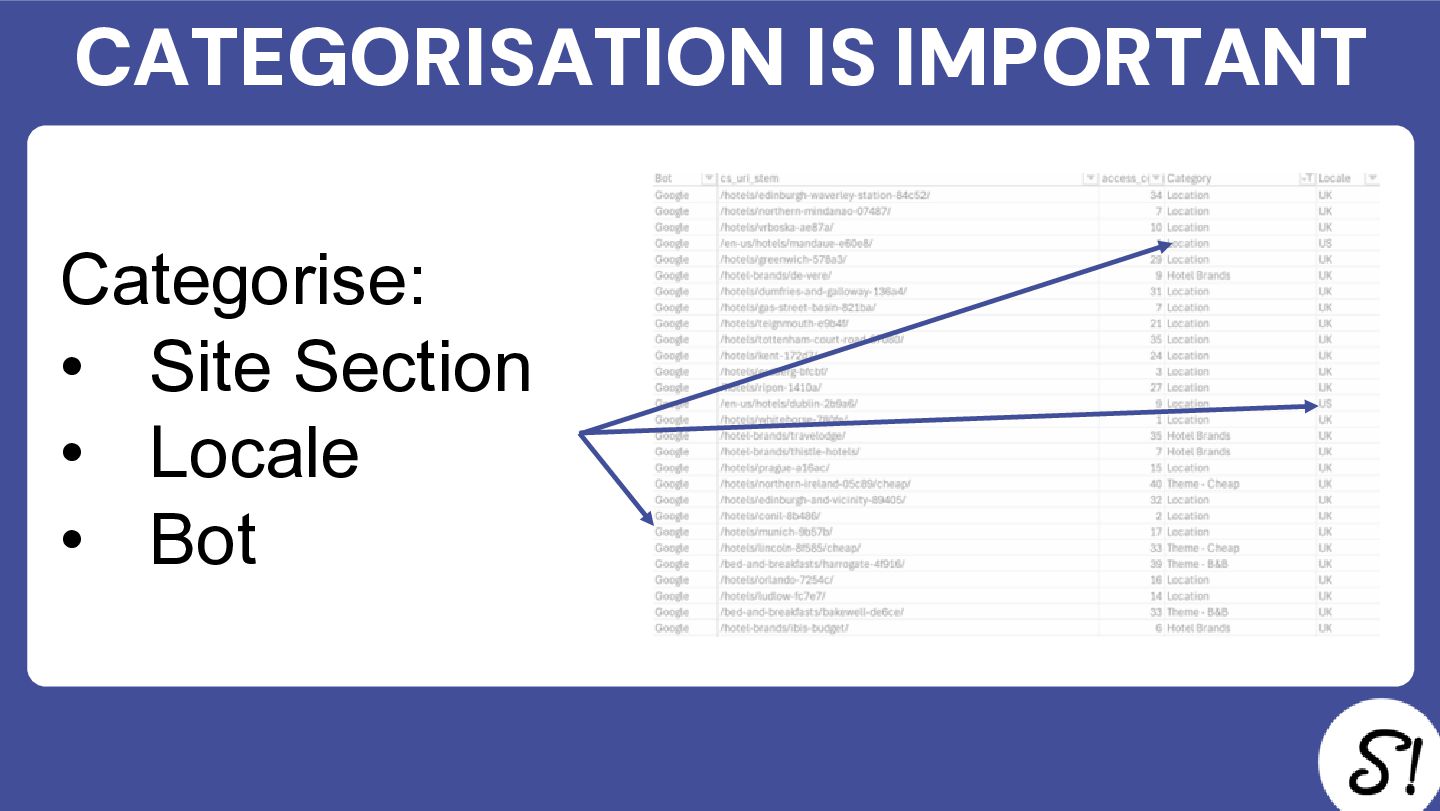
CATEGORISATION IS IMPORTANT /en-us/hotels/dublin-2b9a6/
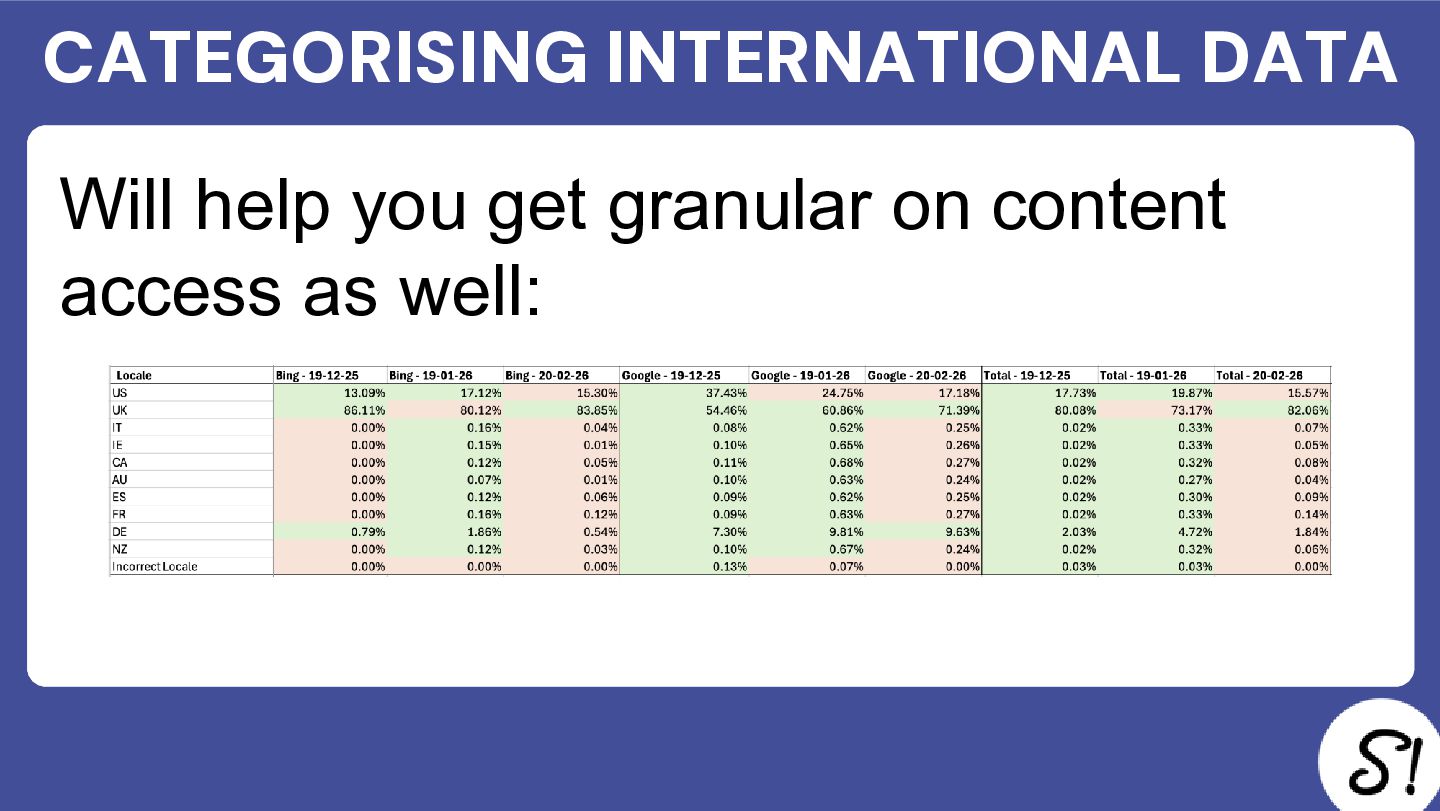
CATEGORISING INTERNATIONAL DATA Will help you get granular on content
access as well:
CATEGORISATION IS IMPORTANT Categorise: • Site Section • Locale •
Bot
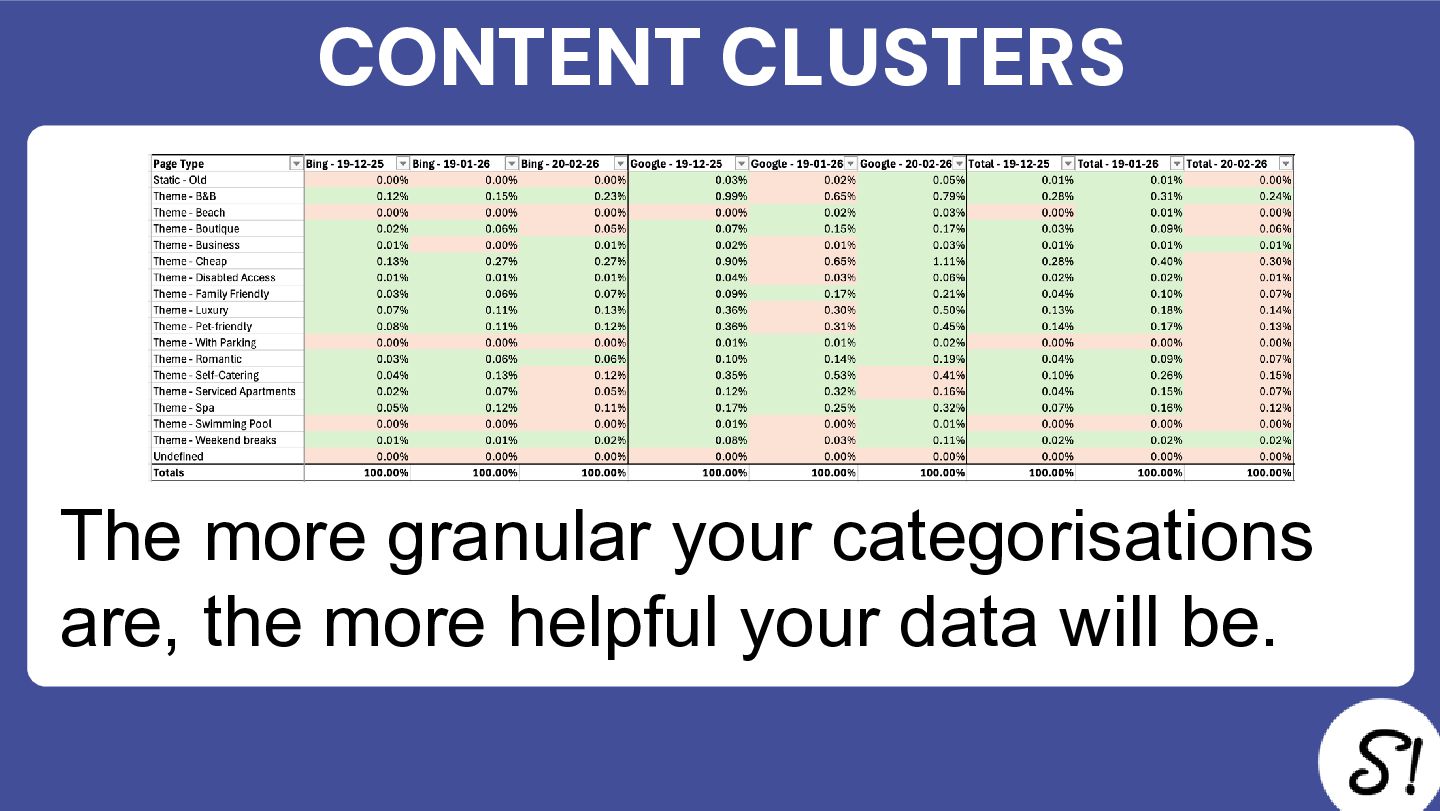
CONTENT CLUSTERS The more granular your categorisations are, the more
helpful your data will be.
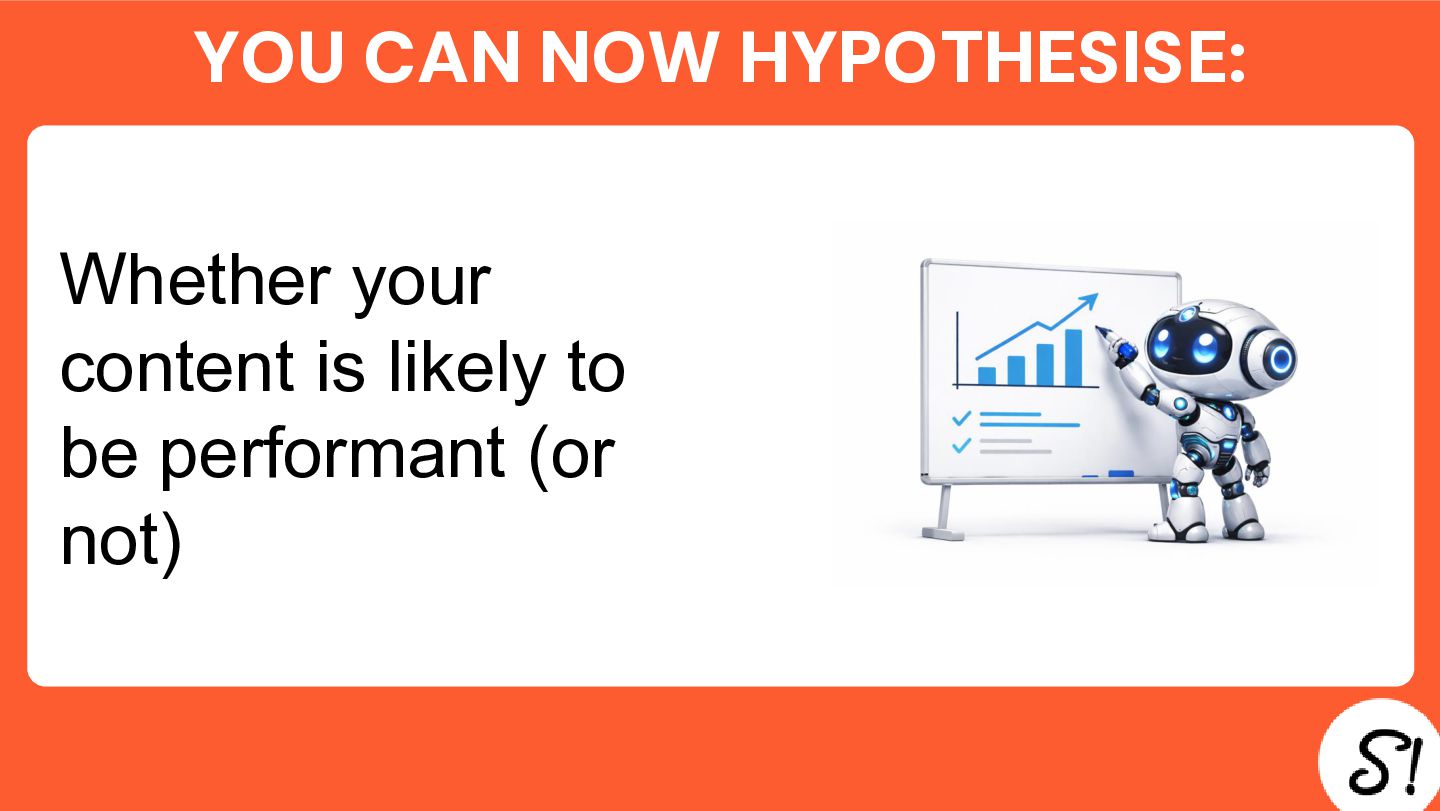
YOU CAN NOW HYPOTHESISE: Whether your content is likely to
be performant (or not)
YOU CAN NOW HYPOTHESISE: Whether bots are likely to like
new content
YOU CAN NOW HYPOTHESISE: Whether there is missing content that
bots are expecting to find
YOU CAN ALSO DETERMINE: If there are parts of your
site that LLMs / Google just can’t get to
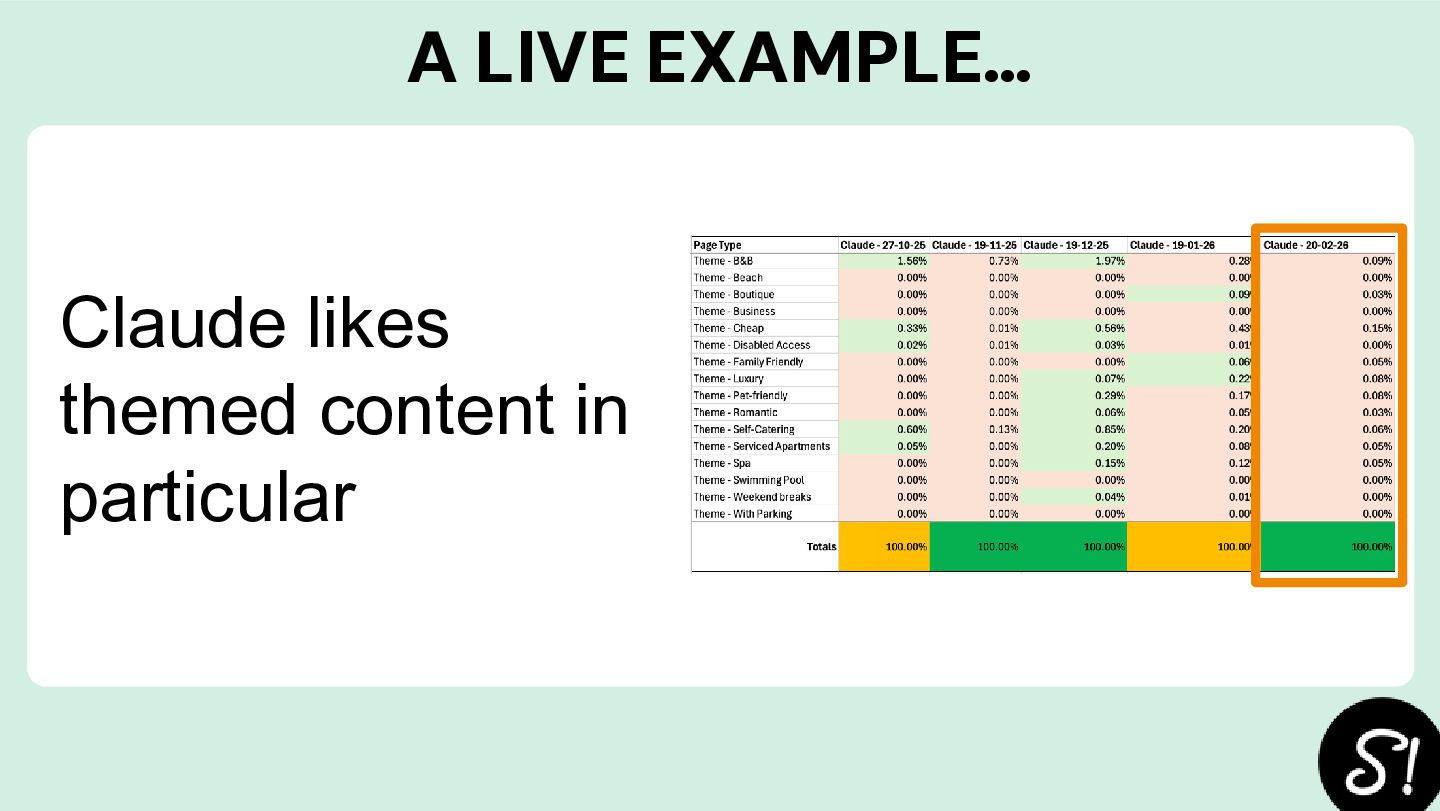
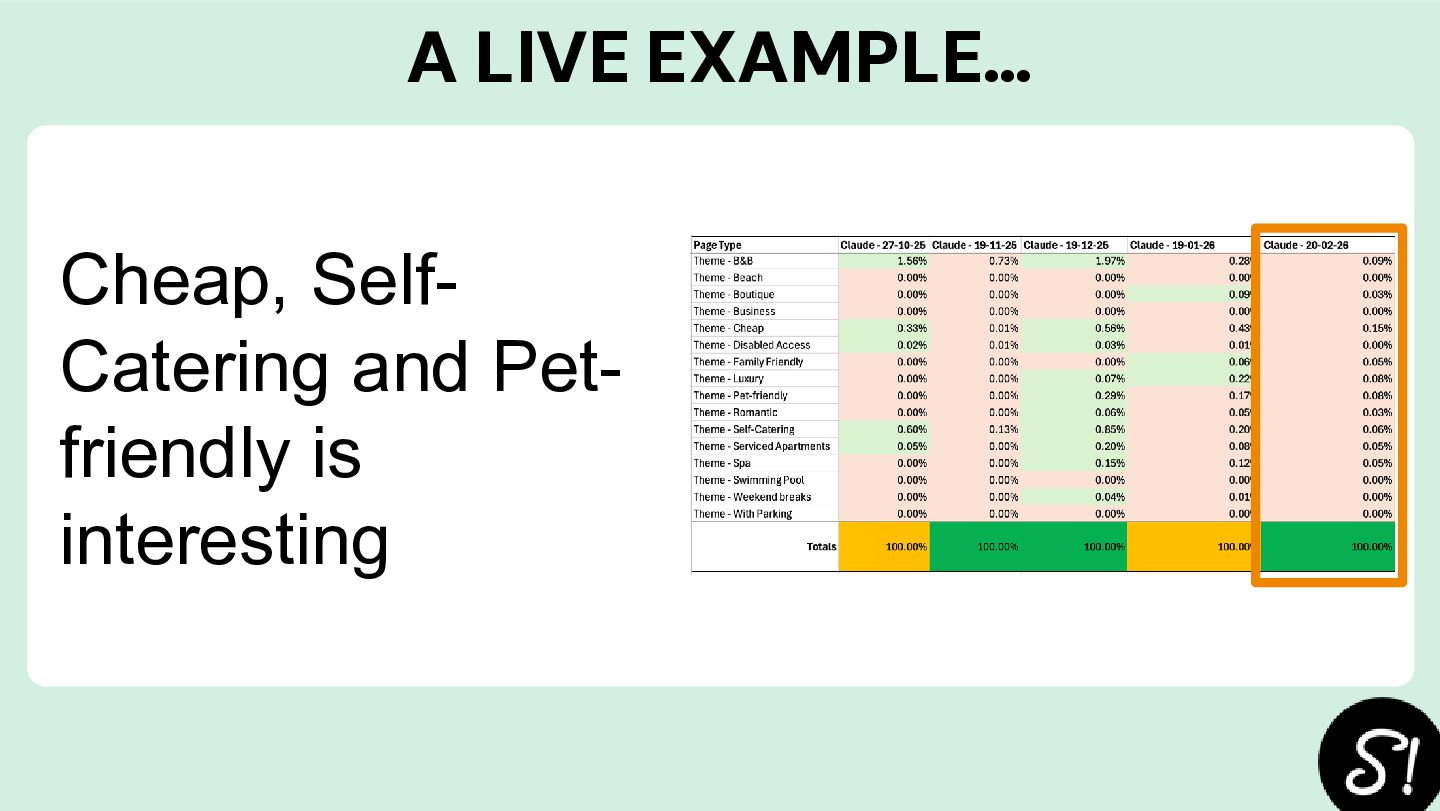
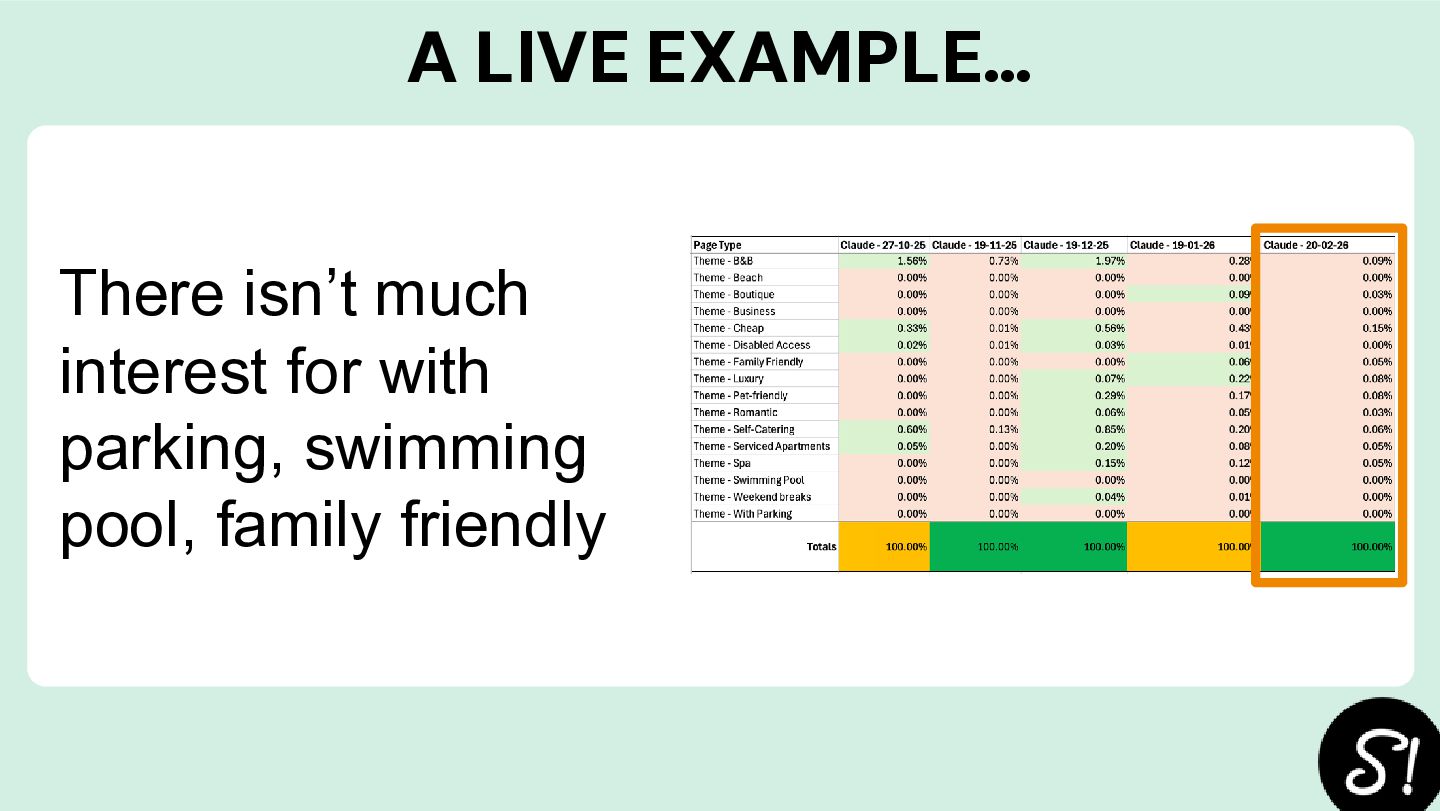
A LIVE EXAMPLE… Claude likes themed content in particular
A LIVE EXAMPLE… Cheap, Self- Catering and Pet- friendly is
interesting
A LIVE EXAMPLE… There isn’t much interest for with parking,
swimming pool, family friendly
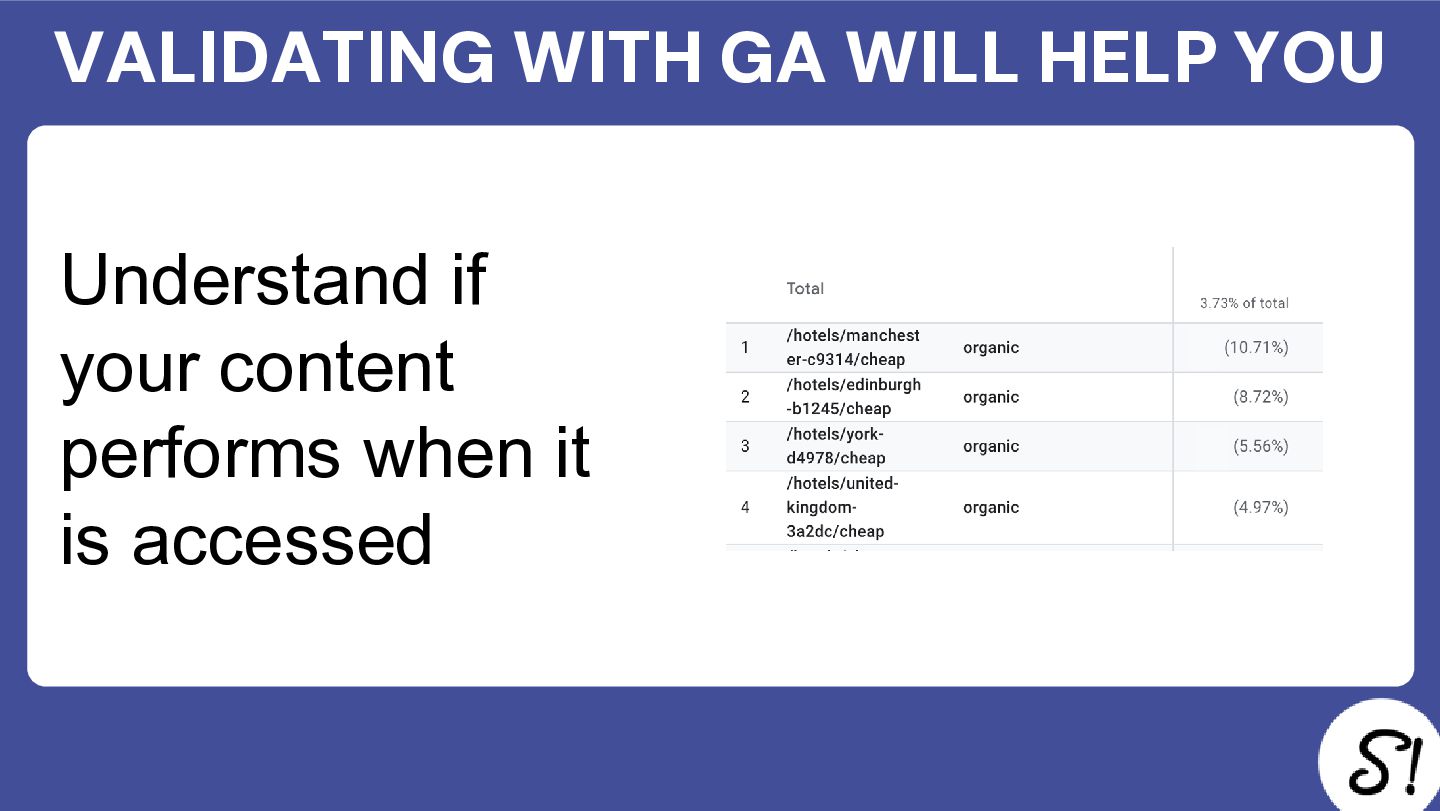
VALIDATING WITH GA WILL HELP YOU Understand if your content
performs when it is accessed
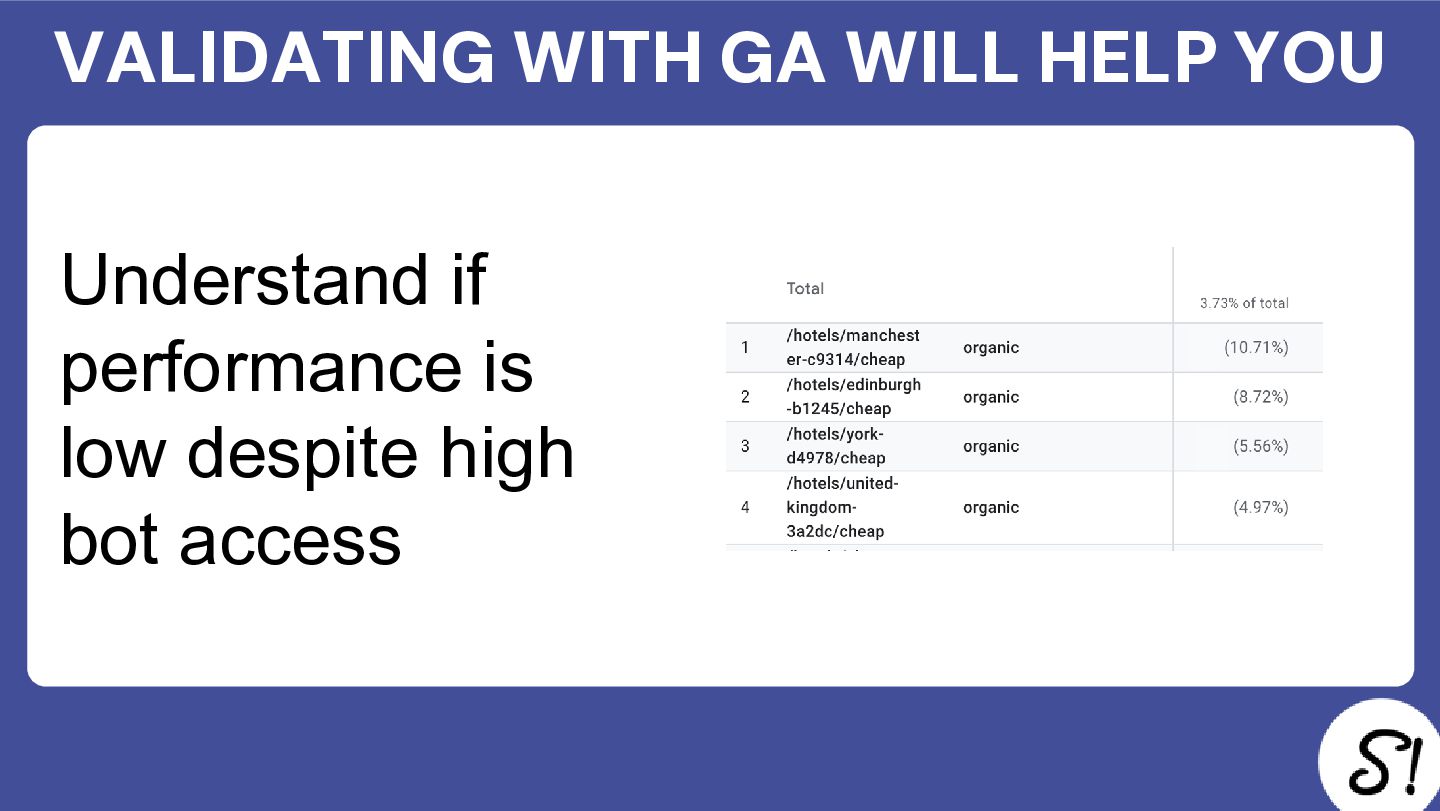
VALIDATING WITH GA WILL HELP YOU Understand if performance is
low despite high bot access
HOW TO USE YOUR ANALYSIS TO SURFACE CONTENT
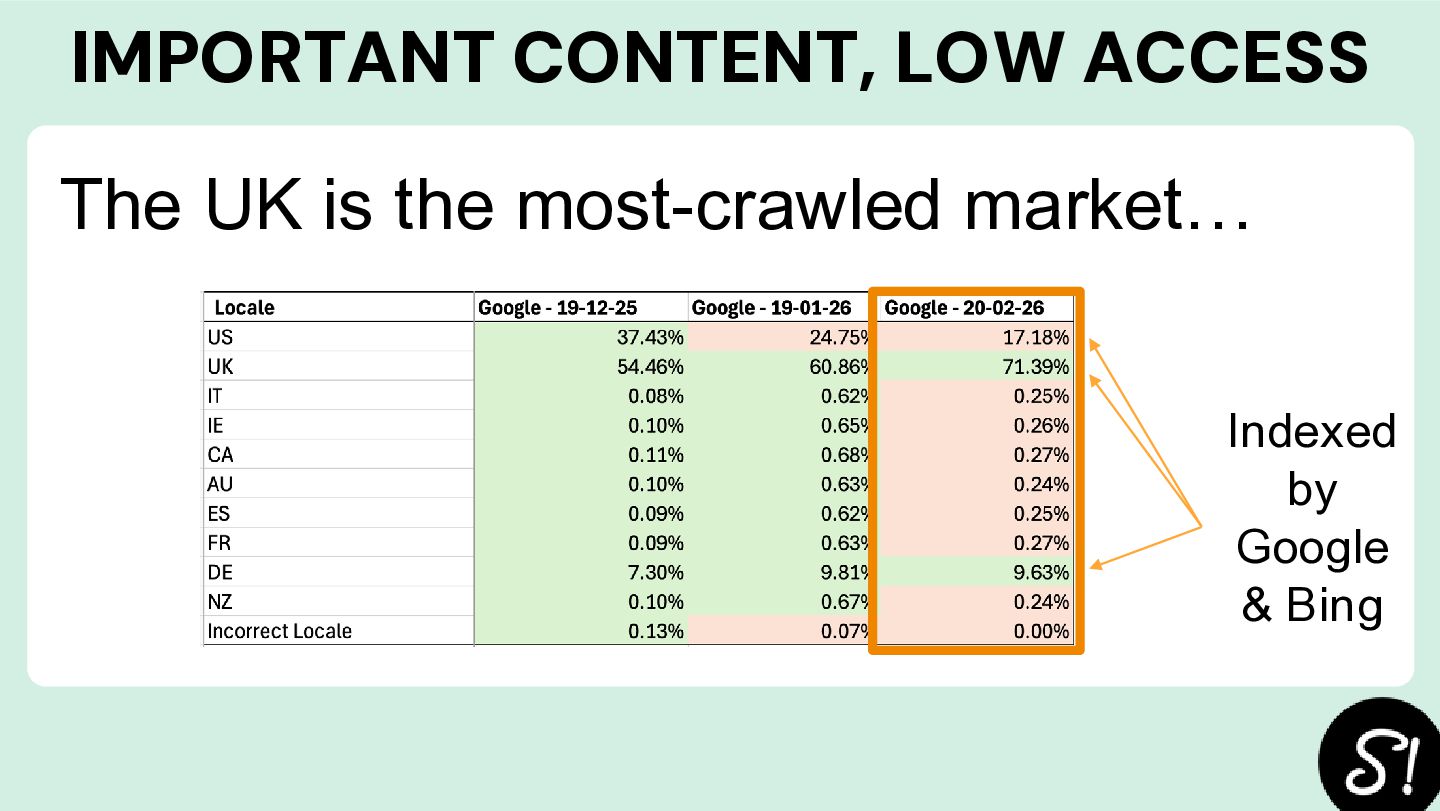
The UK is the most-crawled market… IMPORTANT CONTENT, LOW ACCESS
Indexed by Google & Bing
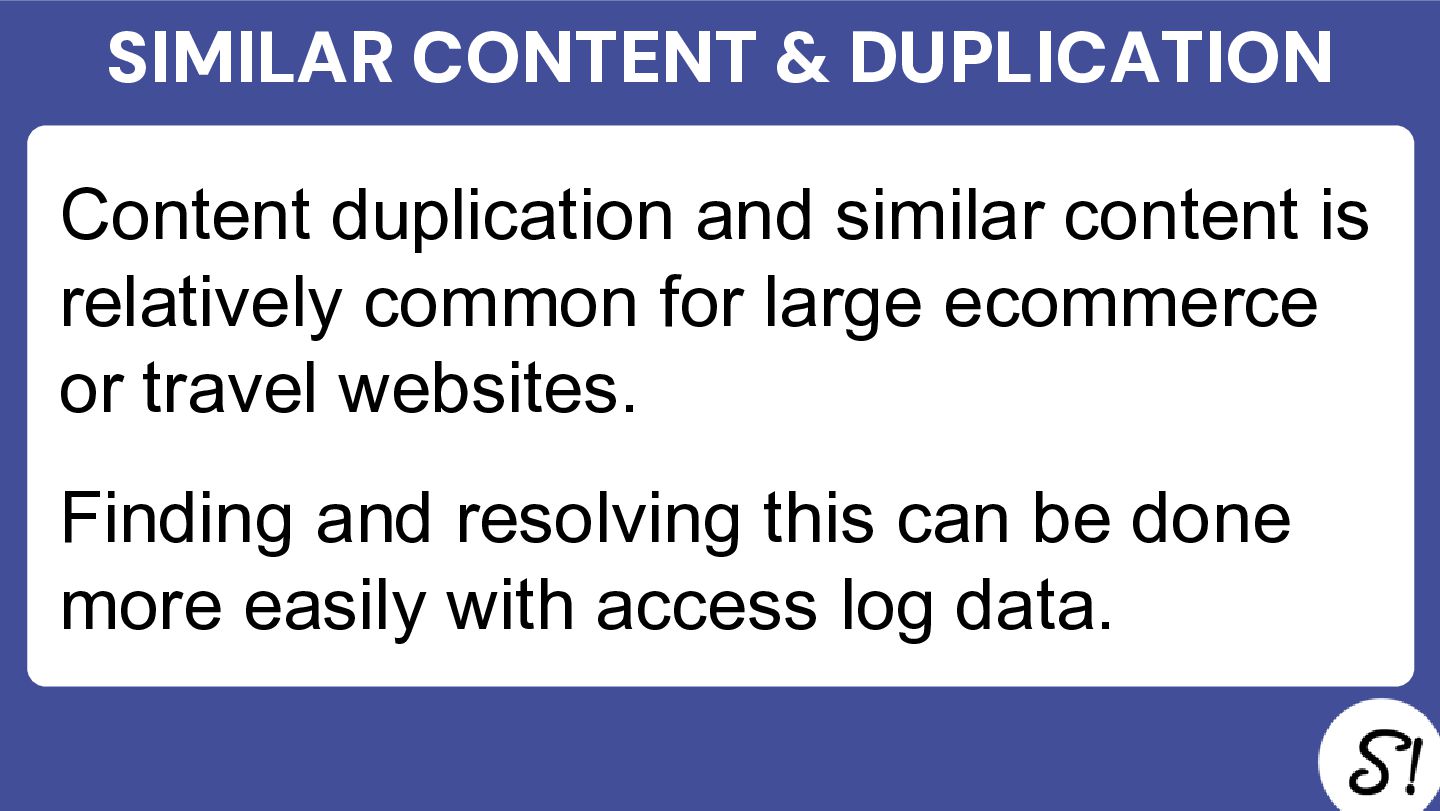
Content duplication and similar content is relatively common for large
ecommerce or travel websites. Finding and resolving this can be done more easily with access log data. SIMILAR CONTENT & DUPLICATION
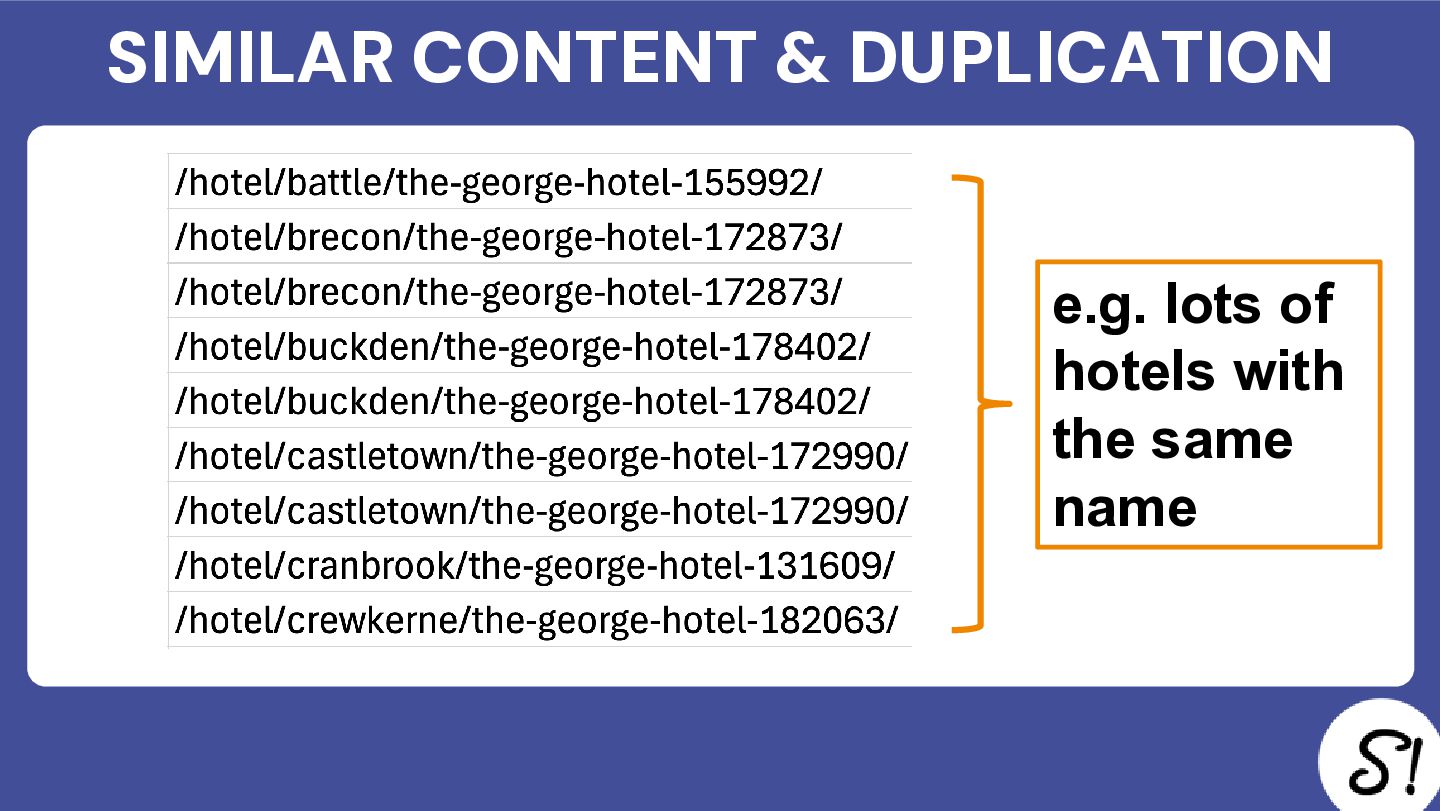
SIMILAR CONTENT & DUPLICATION e.g. lots of hotels with the
same name
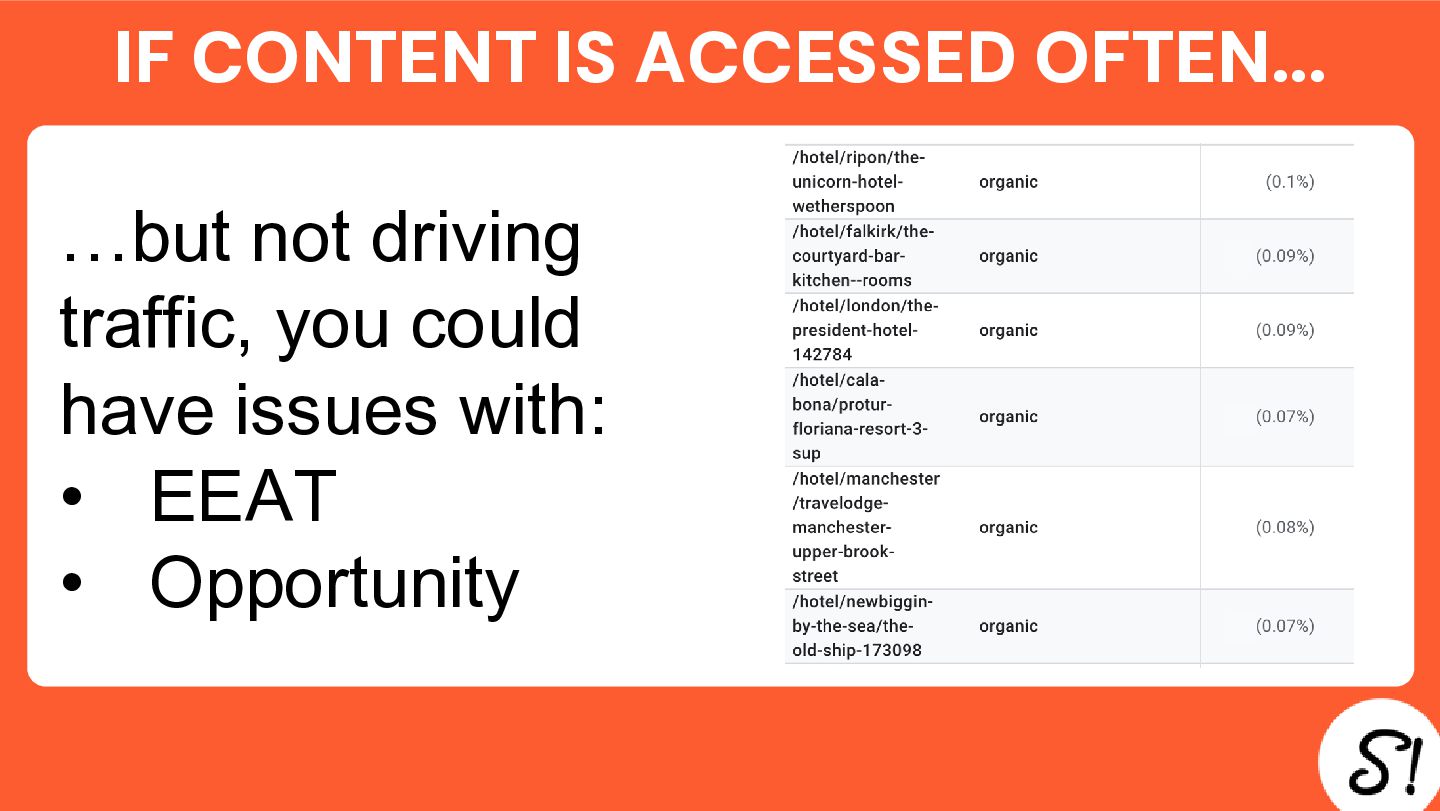
IF CONTENT IS ACCESSED OFTEN... …but not driving traffic, you
could have issues with: • EEAT • Opportunity
HOW TO USE YOUR ANALYSIS TO PLAN FUTURE CONTENT
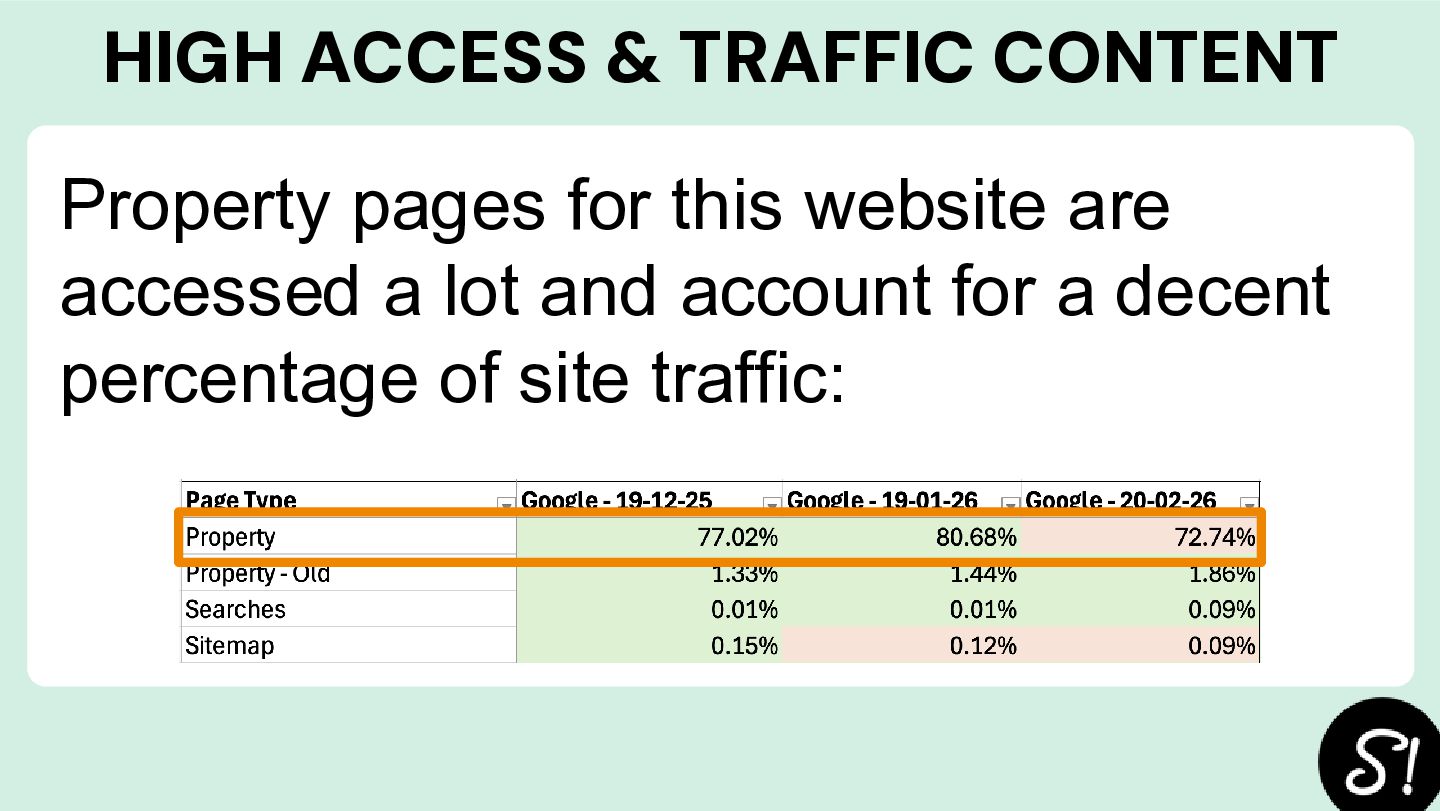
Property pages for this website are accessed a lot and
account for a decent percentage of site traffic: HIGH ACCESS & TRAFFIC CONTENT
It’s no secret that bots can hallucinate information including URLs.
This might sometimes highlight hidden opportunity for pages to be created. URL HALLUCINATIONS MAY SAY…
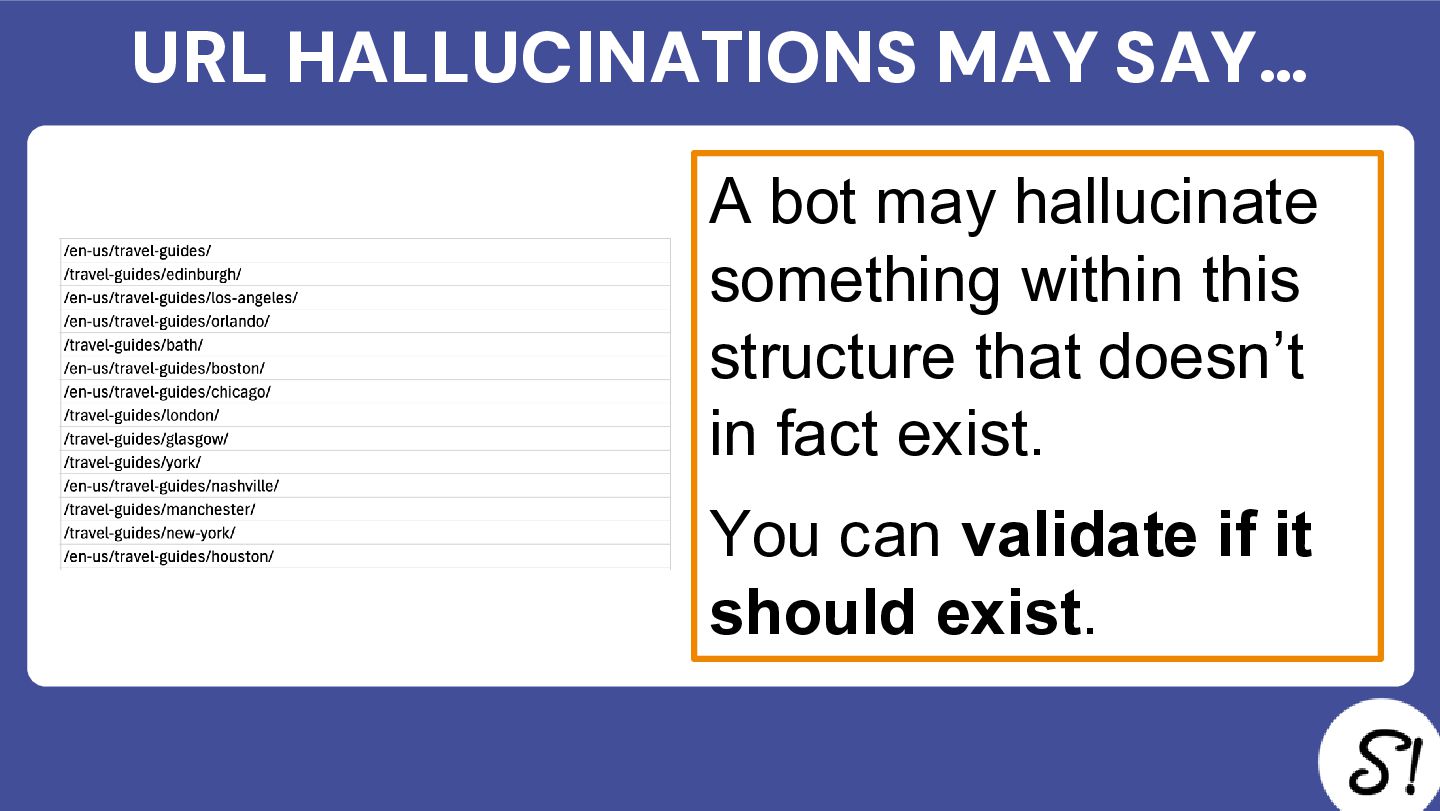
URL HALLUCINATIONS MAY SAY… A bot may hallucinate something within
this structure that doesn’t in fact exist. You can validate if it should exist.
However, these hallucinations may also simply highlight an internal linking
issue that needs to be resolved. URL HALLUCINATIONS MAY SAY…
SOMETHING TO LOOK OUT FOR
Using server logs is a great way of finding content
or pages that Google should not be crawling, which requires a review of your robots.txt file. URLS THAT SHOULD NOT BE CRAWLED
Frequently used parameters which you don’t want to index URLS
THAT SHOULD NOT BE CRAWLED
Blank pages due to temporary content forms in the checkout
flow URLS THAT SHOULD NOT BE CRAWLED
Site sections that are only meant for the user and
not for indexing URLS THAT SHOULD NOT BE CRAWLED
KEY TAKEAWAYS FROM THIS SESSION
Categorising URLs into topic clusters will make your analysis and
planning much simpler. HOPEFULLY YOU’VE LEARNED…
Finding important content with high or low access and low
performance can be a good place to start in terms of identifying low hanging fruit for improvements. HOPEFULLY YOU’VE LEARNED…
URL hallucinations can help you identify potential opportunities for content
creation. HOPEFULLY YOU’VE LEARNED…
THE END.


 kimpetersen
 codingconduct
 eileencodes
 bkeepers
 lauravandoore
 afnizarnur
 aleyda
 popppiees
 kastner
 philnash
 jct
 reverentgeek