as possible should pass between the moment of the accident and the start of the investigation! Starting the investigation a.s.a.p. after the accident occurs enables a supervisor or manager to: • Observe conditions as they were at the time of the accident. • Prevent disturbance of evidence. • Identify witnesses.
required to notify OSHA when an employee is killed on the job or suffers a work-related hospitalization, amputation, or loss of an eye. • A fatality must be reported within 8 hours. • An in-patient hospitalization, amputation, or eye loss must be reported within 24 hours. *All Bingham and Taylor employees should report unsafe acts/conditions, injuries, and illnesses during their normal shift hours*
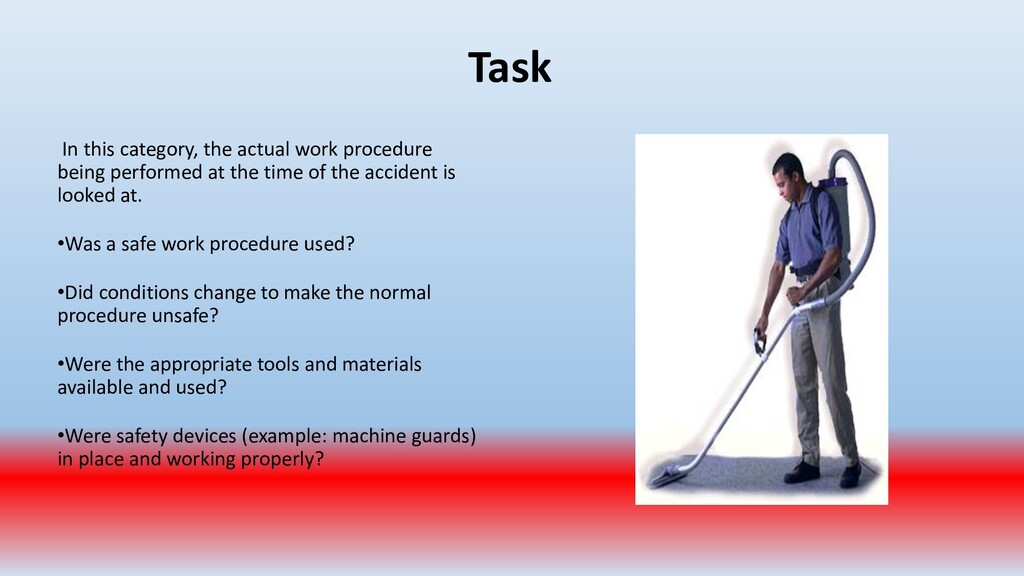
at the time of the accident is looked at. •Was a safe work procedure used? •Did conditions change to make the normal procedure unsafe? •Were the appropriate tools and materials available and used? •Were safety devices (example: machine guards) in place and working properly?
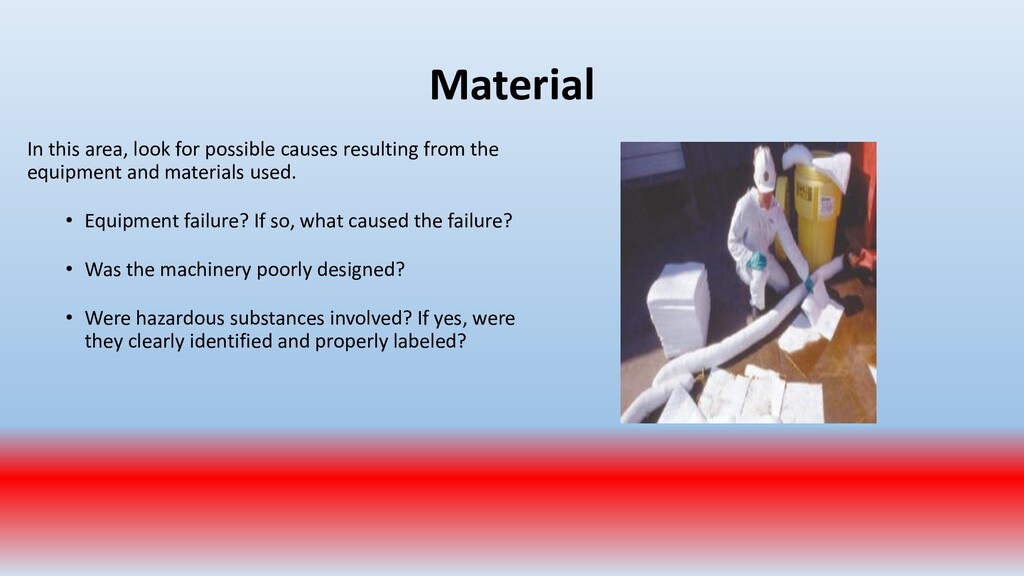
the equipment and materials used. • Equipment failure? If so, what caused the failure? • Was the machinery poorly designed? • Were hazardous substances involved? If yes, were they clearly identified and properly labeled?
Was the raw material substandard in some way? • Was PPE used? If yes, was it appropriate for the task being performed and was it in “serviceable condition?”
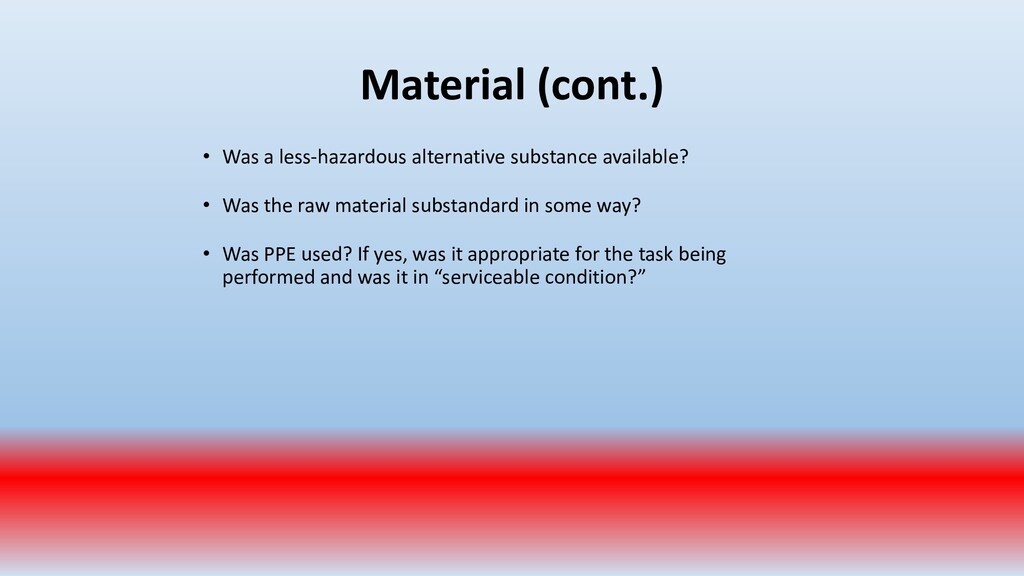
factors that need to be identified. • What were the conditions in the work area (example: cold, hot, damp, etc.)? • Was poor housekeeping a problem? • Was noise a problem? • Was there adequate light? • Were toxic or hazardous gases, dusts or fumes present?
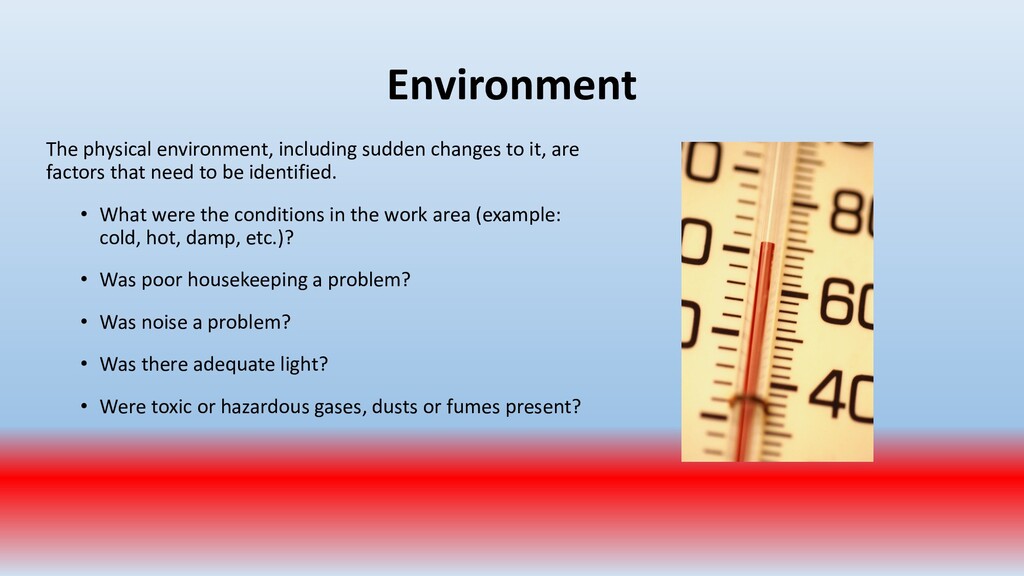
involved in the accident must be explored. • Was the employee experienced in the work he/she was doing? • Was the employee adequately trained for the task being completed? • Can the employee physically perform the work?
health at the time of the accident? • Was the employee tired at the time of the accident? • Was the employee under work or personal stress at the time of the accident?
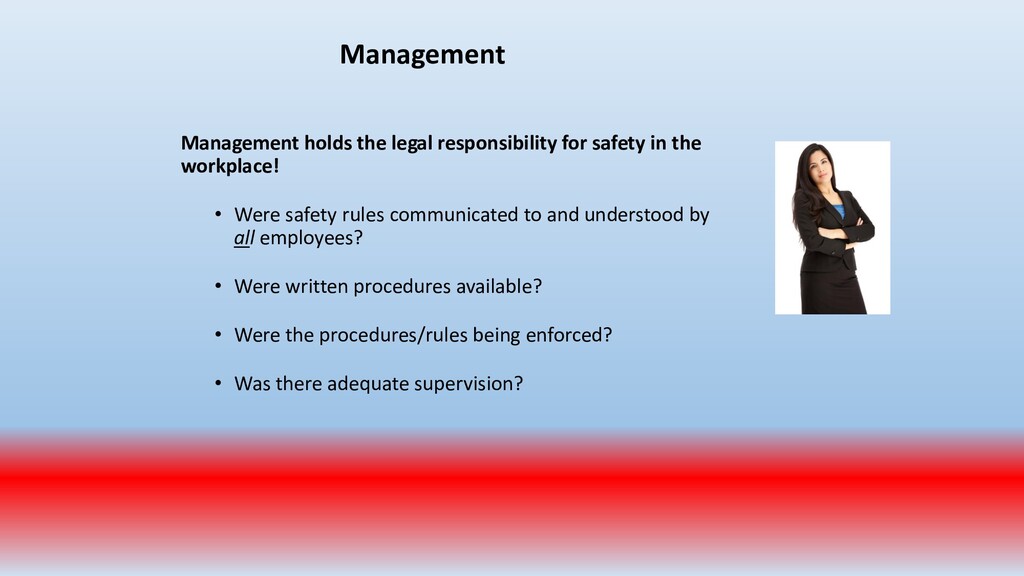
workplace! • Were safety rules communicated to and understood by all employees? • Were written procedures available? • Were the procedures/rules being enforced? • Was there adequate supervision?
being performed? • Were hazards previously identified? • Had procedures been developed to overcome the hazards identified? • Were unsafe conditions corrected? • Was regular maintenance of equipment done? • Were safety inspections completed?
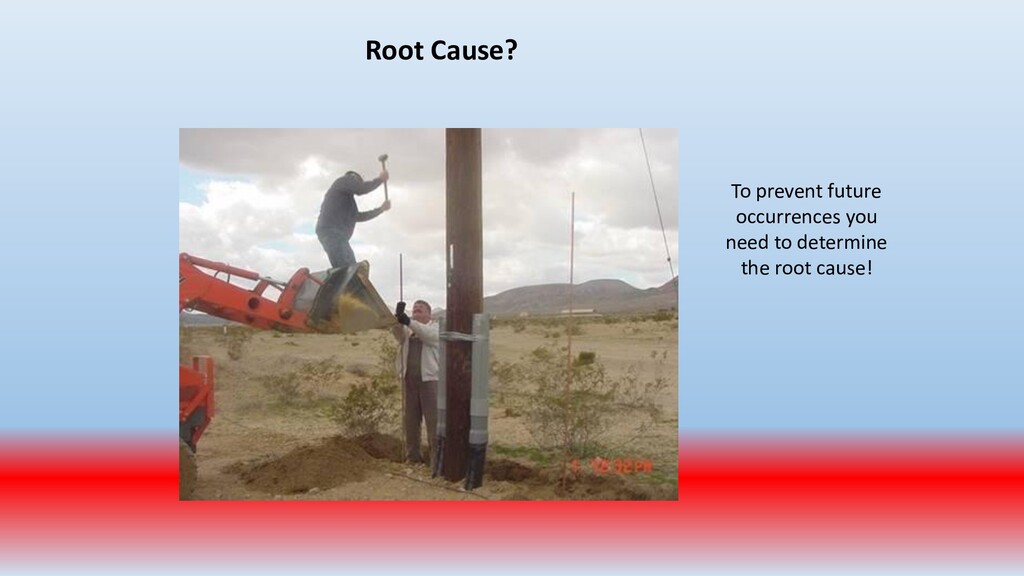
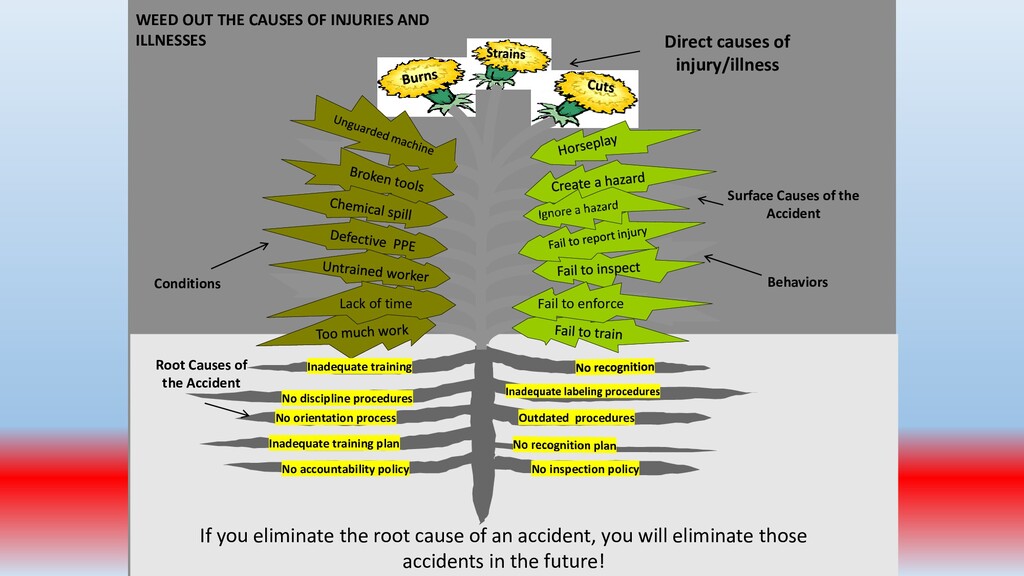
plan No accountability policy No inspection policy No discipline procedures Outdated procedures No orientation process Inadequate training Fail to enforce Lack of time Conditions Behaviors Surface Causes of the Accident Root Causes of the Accident Direct causes of injury/illness If you eliminate the root cause of an accident, you will eliminate those accidents in the future!
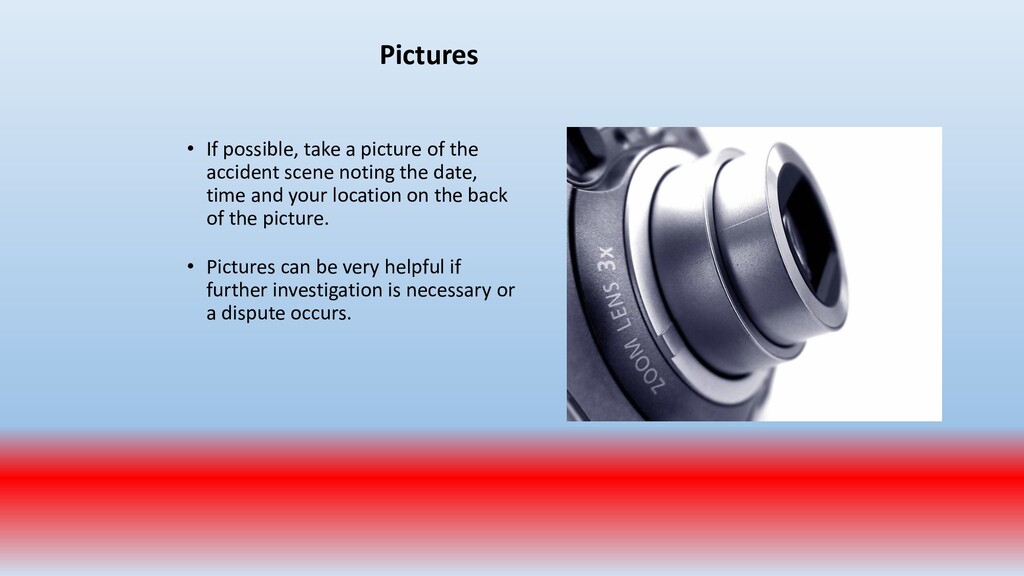
scene noting the date, time and your location on the back of the picture. • Pictures can be very helpful if further investigation is necessary or a dispute occurs.
possible after the accident. • Witnesses should be interviewed alone, other than in a group. • Have witnesses document their statements and ask them to date and sign.
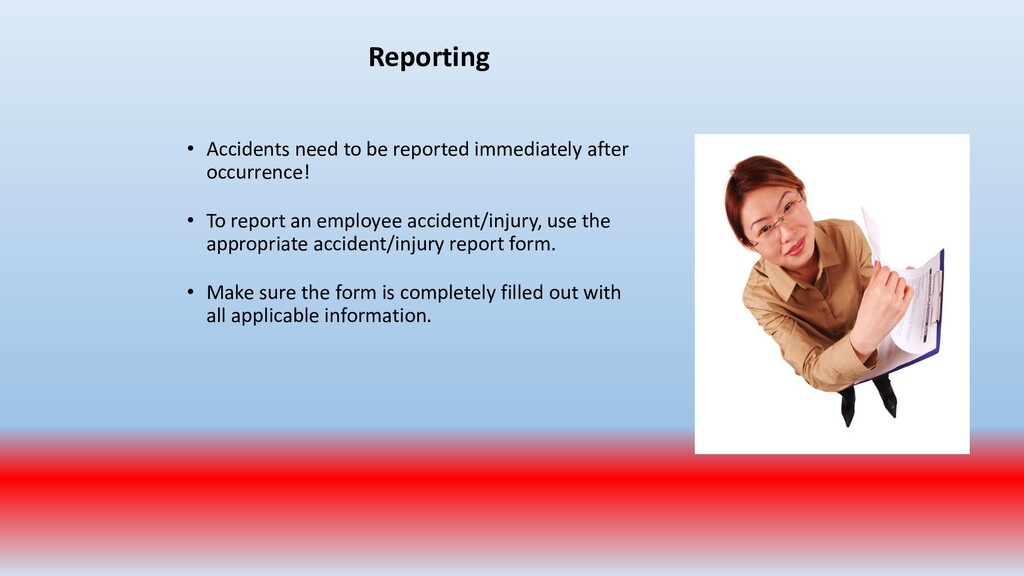
• To report an employee accident/injury, use the appropriate accident/injury report form. • Make sure the form is completely filled out with all applicable information.
is a detailed description of what happened to cause the accident. • Make sure there are appropriate/detailed comments as to what action(s) will be taken to prevent future accidents.
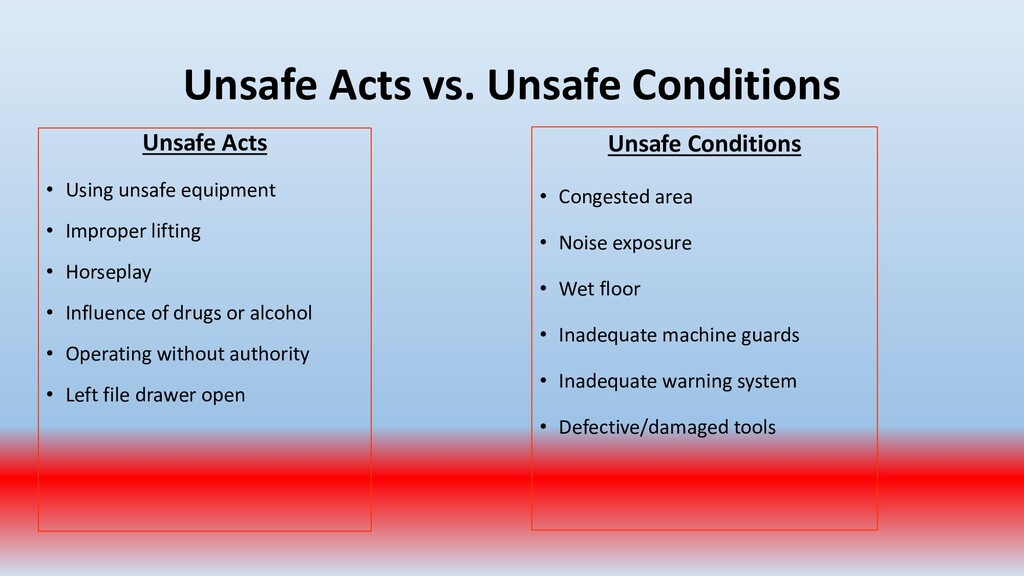
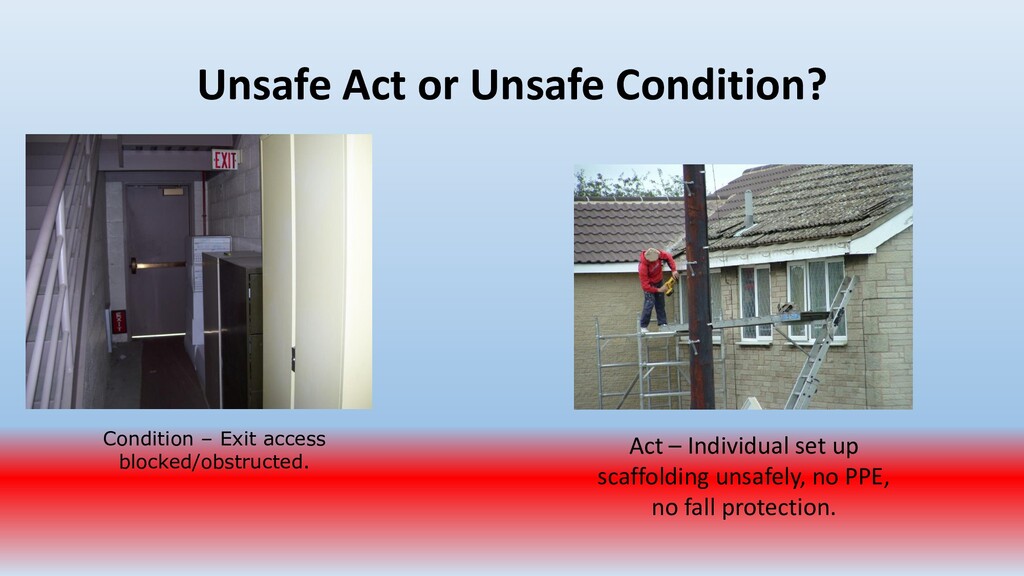
important. To accomplish this, conduct periodic “walk around” inspections looking for items such as: • Slip, trip and fall hazards (e.g., wires across a walk way) • Broken/damaged equipment (e.g., stool with a broken leg) • Exposed electrical wiring (e.g., frayed electrical cord) • Machinery with missing guards (e.g., cutting machine with missing blade guard.) • Damaged PPE (e.g., gloves with rips/tears)
to be reported to the appropriate area (e.g., broken floor tile that could cause a trip and fall should be reported to building maintenance for repair). • Safety officer, safety committee or maintenance department should keep a log of items reported and follow up to ensure hazards reported have been corrected.
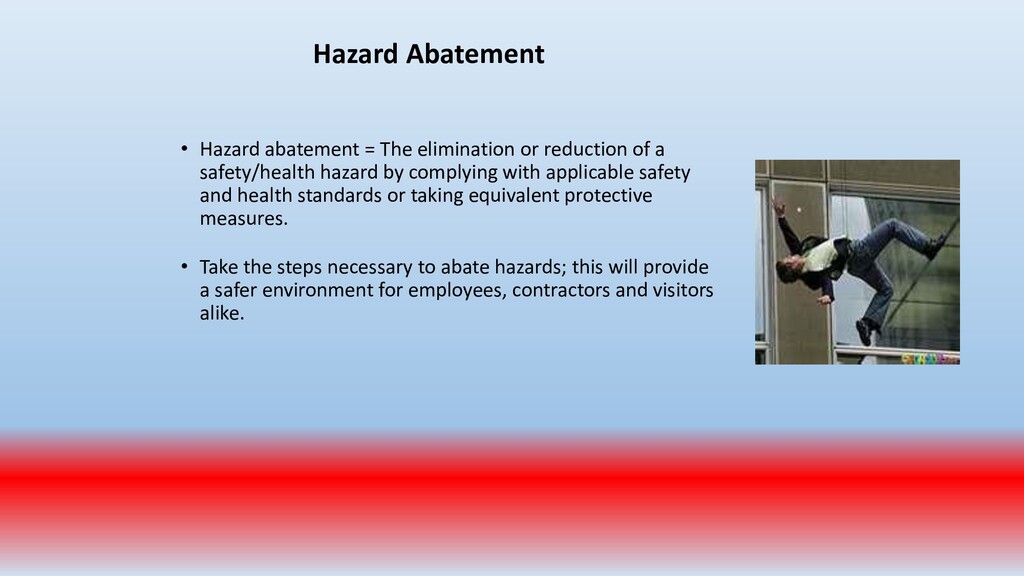
of a safety/health hazard by complying with applicable safety and health standards or taking equivalent protective measures. • Take the steps necessary to abate hazards; this will provide a safer environment for employees, contractors and visitors alike.
Ensure work areas are not cluttered and trash is removed regularly. • Provide necessary training/retraining for all employees. • Ensure that necessary controls are in place [engineering (e.g., machine guarding), administrative (e.g., labels/signs), PPE (e.g., safety goggles)]. • Have spills cleaned up immediately.
used. • Ensure mechanical handling equipment, or MHE, is being used properly. • Ensure walking/working surfaces are free of slip, trip and fall hazards. • Enforce safety rules, policies and procedures. • Ensure safety inspections are being conducted regularly.


 aokiplayer
 signer
 sciencetokyo
 ainischool
 robintux
 drpoonamkc
 bvr7352
 fmarot
 ishii_mit
 terasawat
 arnoknobbe
 chriscoyier
 reverentgeek
 jonrohan
 csswizardry
 lcolladotor
 soysaucechin
 skipperchong
 marktimemedia
 aleyda
 stuffmc
 katiecoart