Upgrade to PRO for Only $50/Year—Limited-Time Offer! 🔥

NSURLProtocol

 NSURLProtocol

Presented at CocoaHeads Moscow (January 2015)
Sample code: https://github.com/5at5ish/TICachingProtocolDemo

Avatar for Timur Islamgulov

Timur Islamgulov

February 04, 2015
Tweet

Other Decks in Programming

Transcript

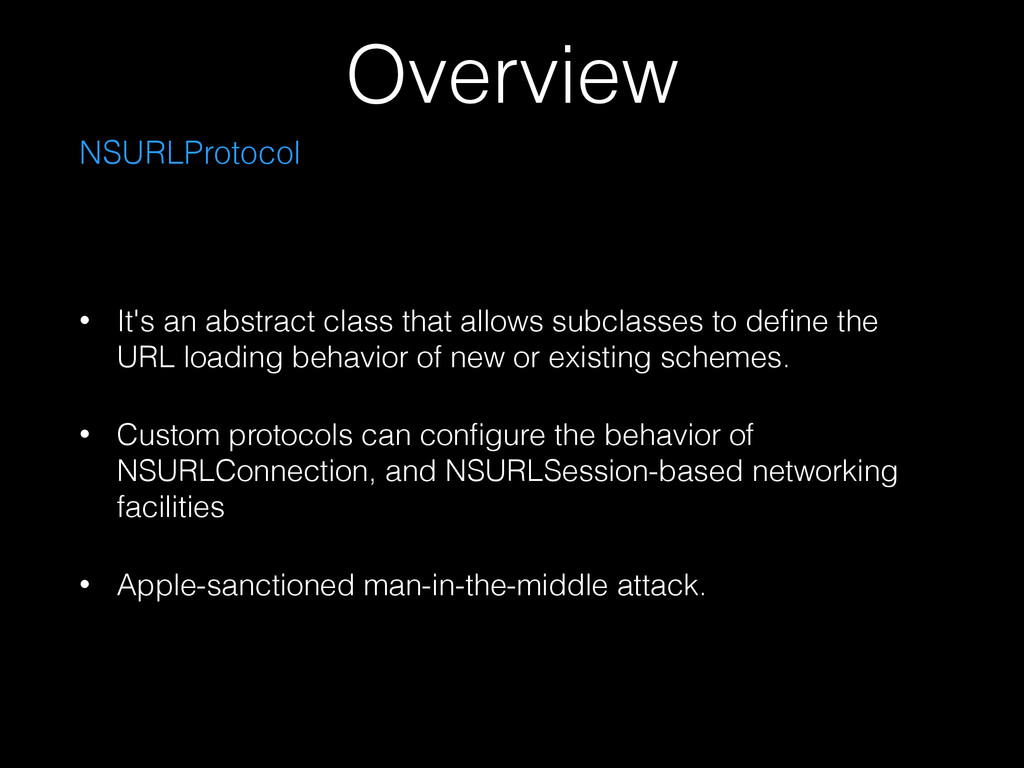
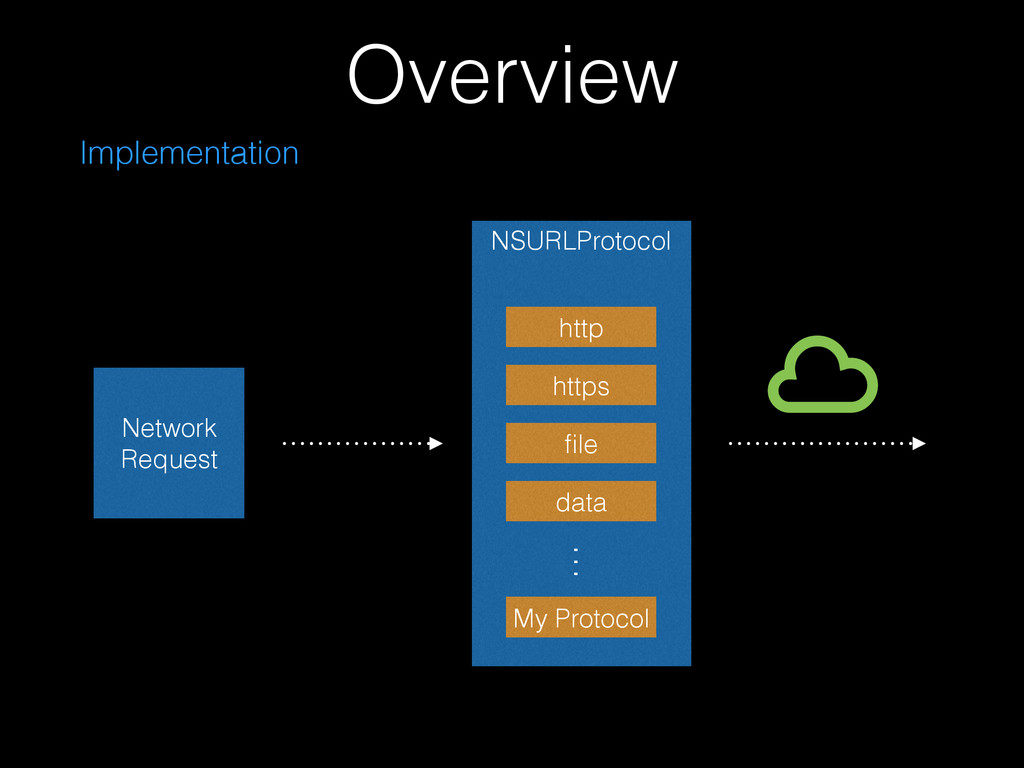
  1. NSURLProtocol • It's an abstract class that allows subclasses to

    define the URL loading behavior of new or existing schemes. • Custom protocols can configure the behavior of NSURLConnection, and NSURLSession-based networking facilities • Apple-sanctioned man-in-the-middle attack. Overview
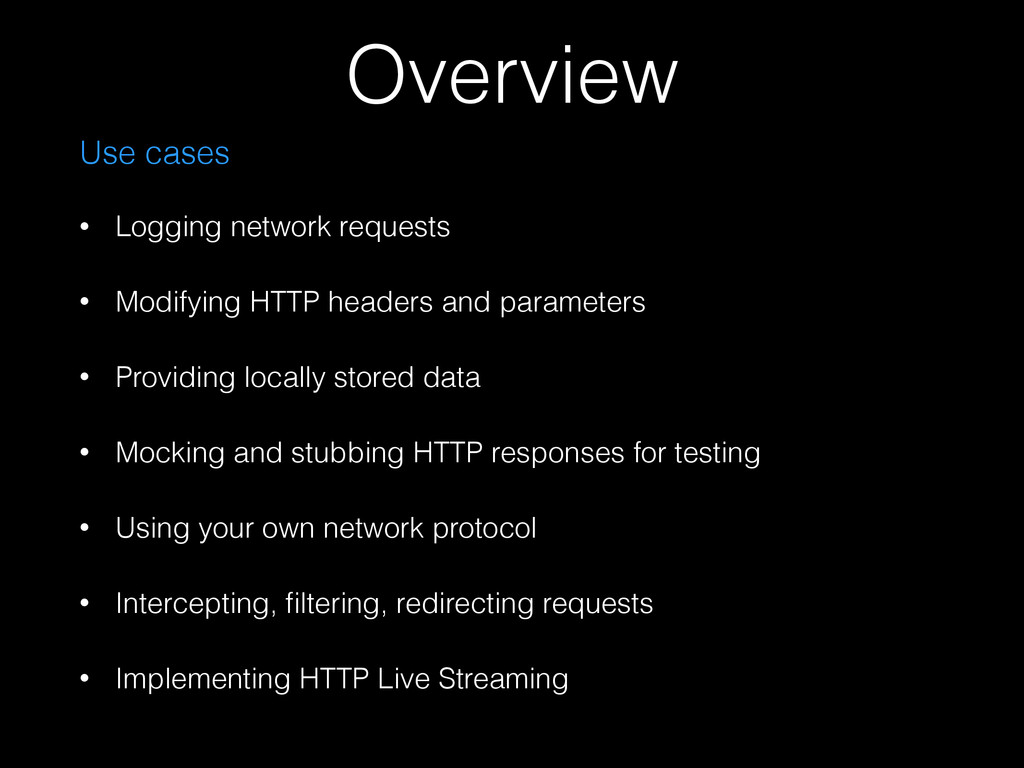
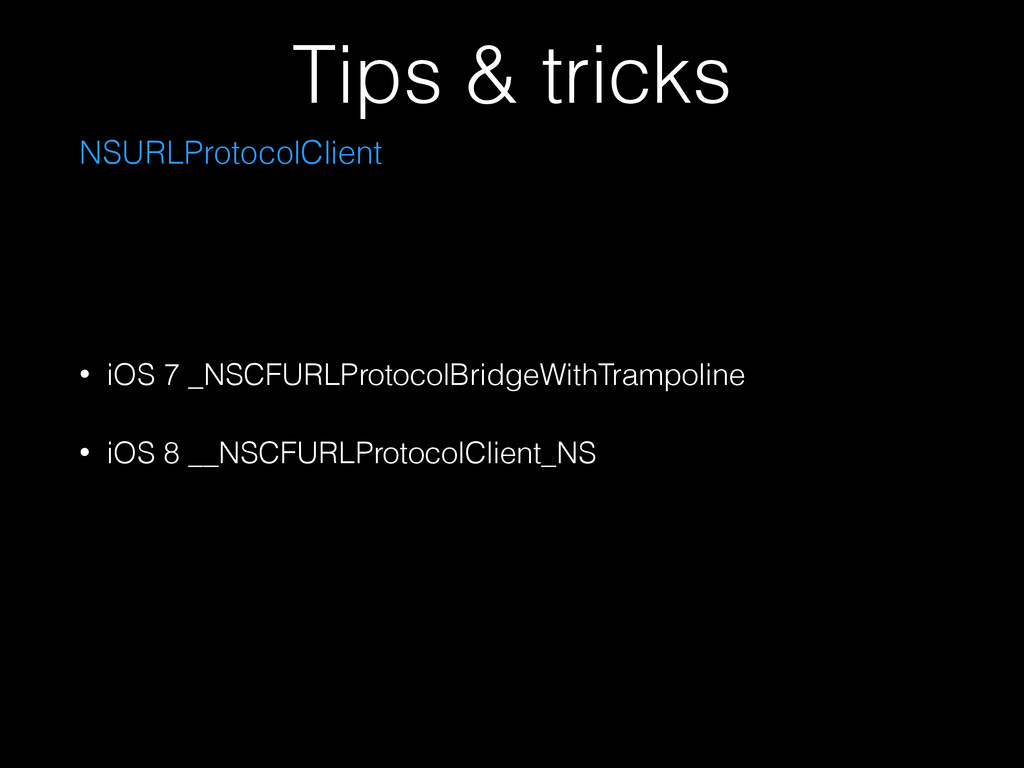
  2. Use cases • Logging network requests • Modifying HTTP headers

    and parameters • Providing locally stored data • Mocking and stubbing HTTP responses for testing • Using your own network protocol • Intercepting, filtering, redirecting requests • Implementing HTTP Live Streaming Overview
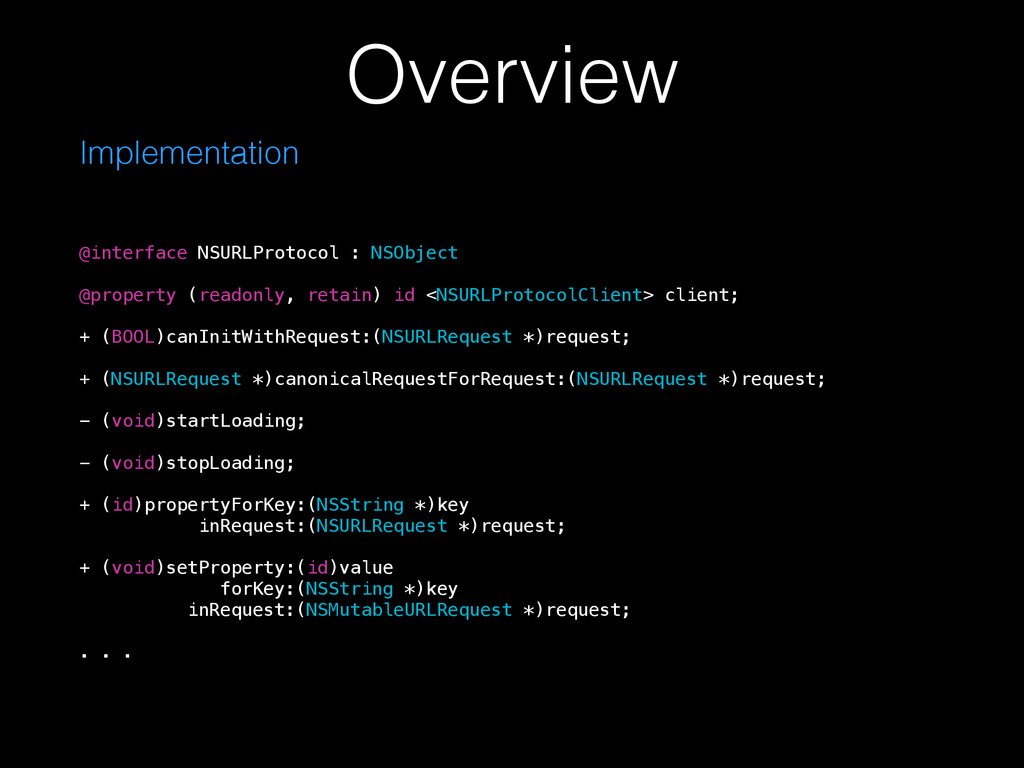
  3. Implementation @interface NSURLProtocol : NSObject ! @property (readonly, retain) id

    <NSURLProtocolClient> client; ! + (BOOL)canInitWithRequest:(NSURLRequest *)request; ! + (NSURLRequest *)canonicalRequestForRequest:(NSURLRequest *)request; ! - (void)startLoading; ! - (void)stopLoading; ! + (id)propertyForKey:(NSString *)key inRequest:(NSURLRequest *)request; ! + (void)setProperty:(id)value forKey:(NSString *)key inRequest:(NSMutableURLRequest *)request; ! . . . Overview
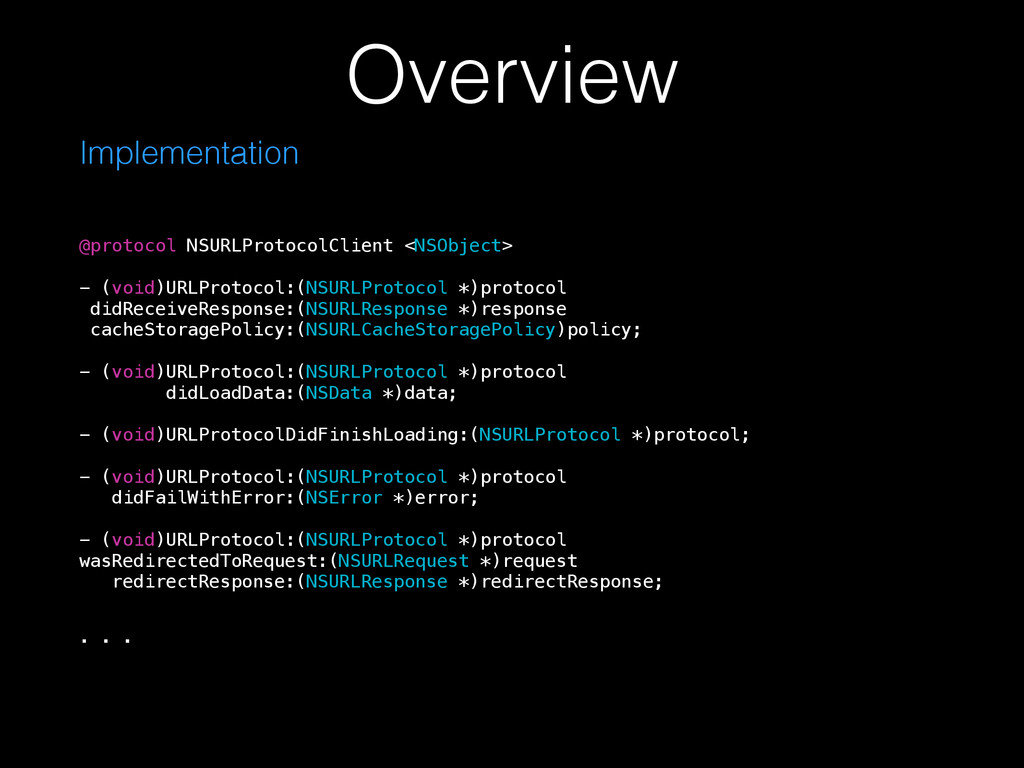
  4. Implementation @protocol NSURLProtocolClient <NSObject> ! - (void)URLProtocol:(NSURLProtocol *)protocol didReceiveResponse:(NSURLResponse *)response

    cacheStoragePolicy:(NSURLCacheStoragePolicy)policy; ! - (void)URLProtocol:(NSURLProtocol *)protocol didLoadData:(NSData *)data; ! - (void)URLProtocolDidFinishLoading:(NSURLProtocol *)protocol; ! - (void)URLProtocol:(NSURLProtocol *)protocol didFailWithError:(NSError *)error; ! - (void)URLProtocol:(NSURLProtocol *)protocol wasRedirectedToRequest:(NSURLRequest *)request redirectResponse:(NSURLResponse *)redirectResponse; ! ! . . . Overview
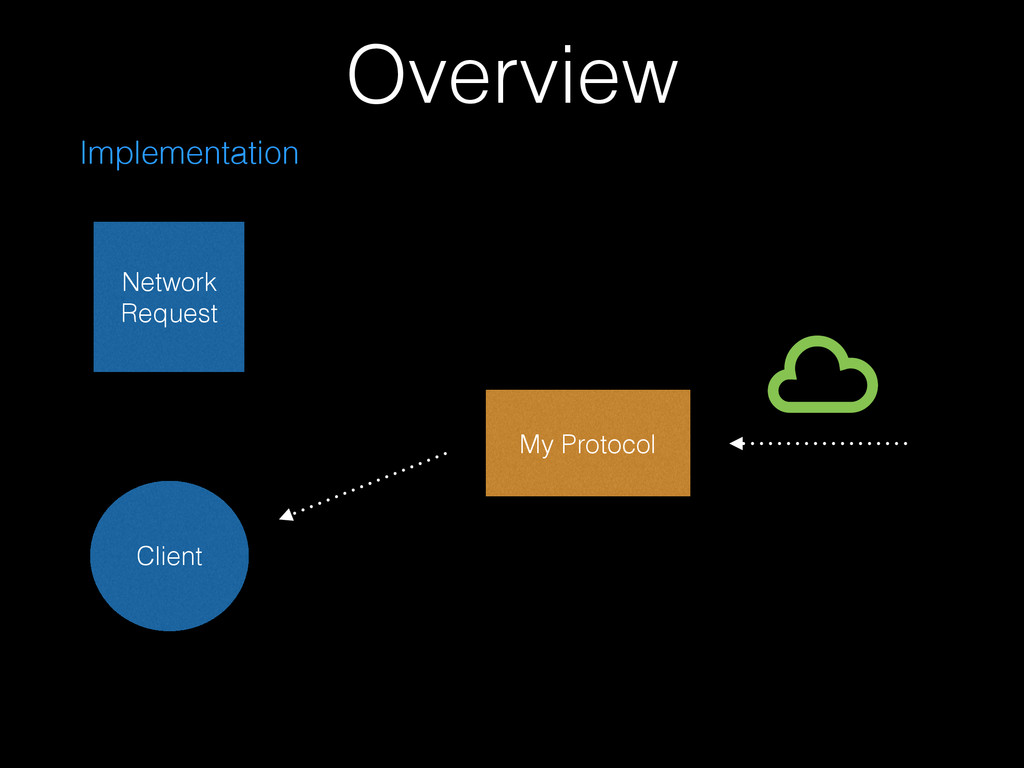
  5. An essential responsibility for a protocol implementor is creating a

    NSURLResponse for each request it processes successfully. Overview Implementation
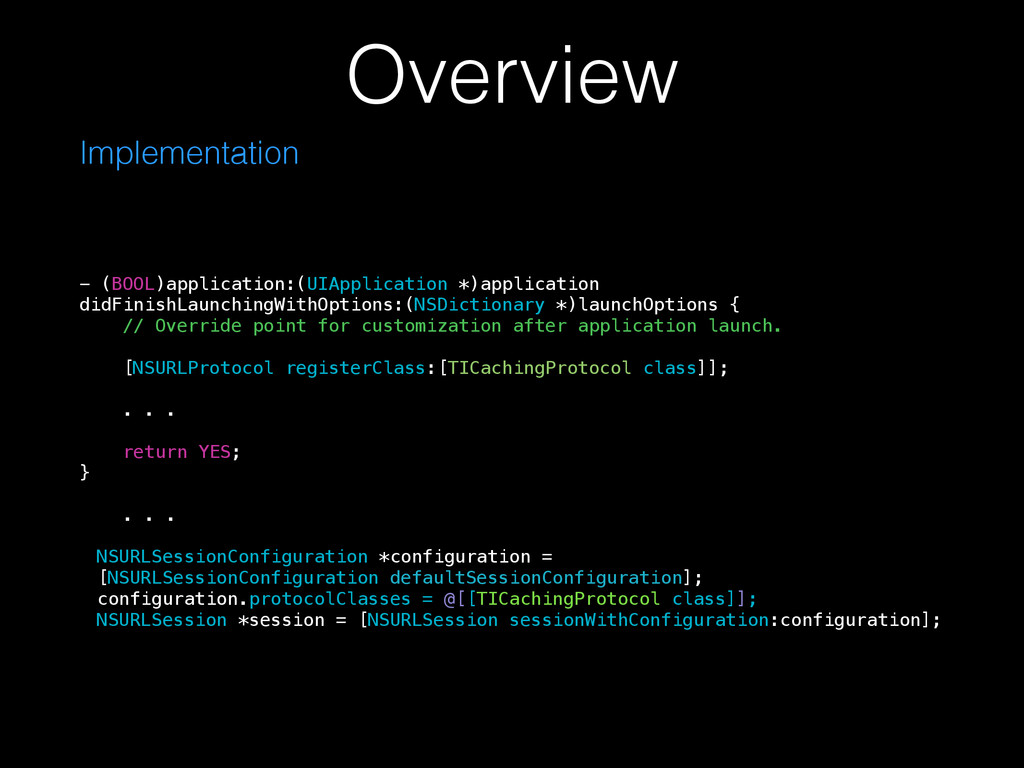
  6. Implementation - (BOOL)application:(UIApplication *)application didFinishLaunchingWithOptions:(NSDictionary *)launchOptions { // Override point

    for customization after application launch. [NSURLProtocol registerClass:[TICachingProtocol class]]; ! . . . ! return YES; } ! . . . ! NSURLSessionConfiguration *configuration = [NSURLSessionConfiguration defaultSessionConfiguration]; configuration.protocolClasses = @[[TICachingProtocol class]]; NSURLSession *session = [NSURLSession sessionWithConfiguration:configuration]; Overview
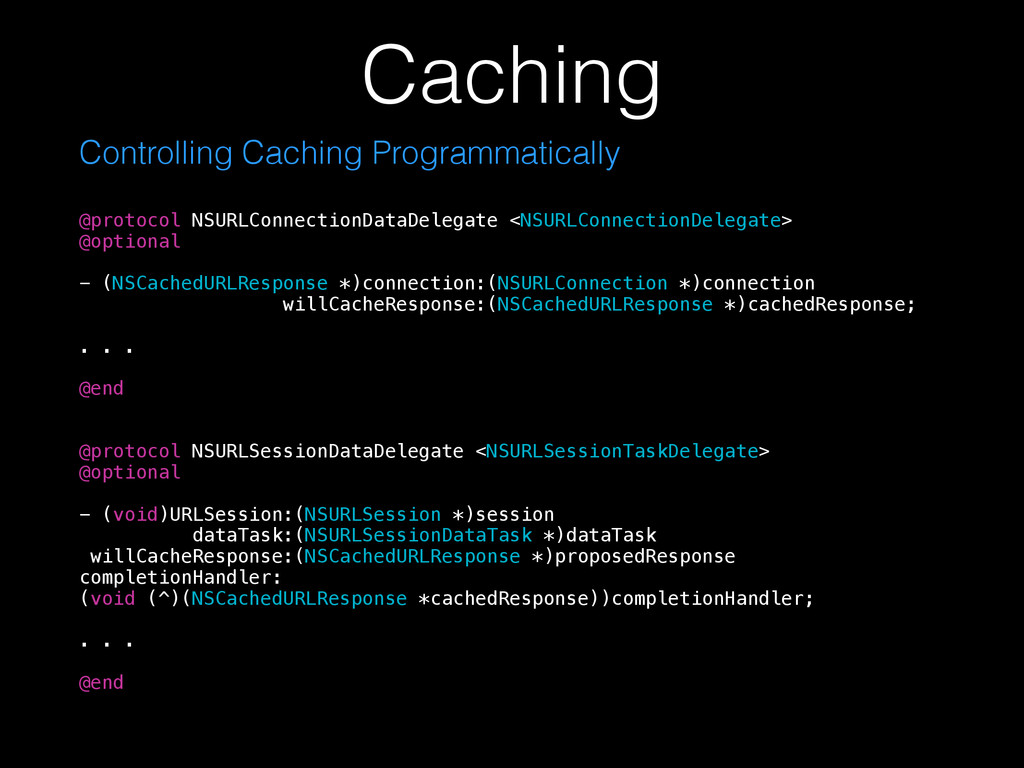
  7. Controlling Caching Programmatically @protocol NSURLConnectionDataDelegate <NSURLConnectionDelegate> @optional ! - (NSCachedURLResponse

    *)connection:(NSURLConnection *)connection willCacheResponse:(NSCachedURLResponse *)cachedResponse; ! . . . ! @end ! ! @protocol NSURLSessionDataDelegate <NSURLSessionTaskDelegate> @optional ! - (void)URLSession:(NSURLSession *)session dataTask:(NSURLSessionDataTask *)dataTask willCacheResponse:(NSCachedURLResponse *)proposedResponse completionHandler: (void (^)(NSCachedURLResponse *cachedResponse))completionHandler; ! . . . ! @end Caching
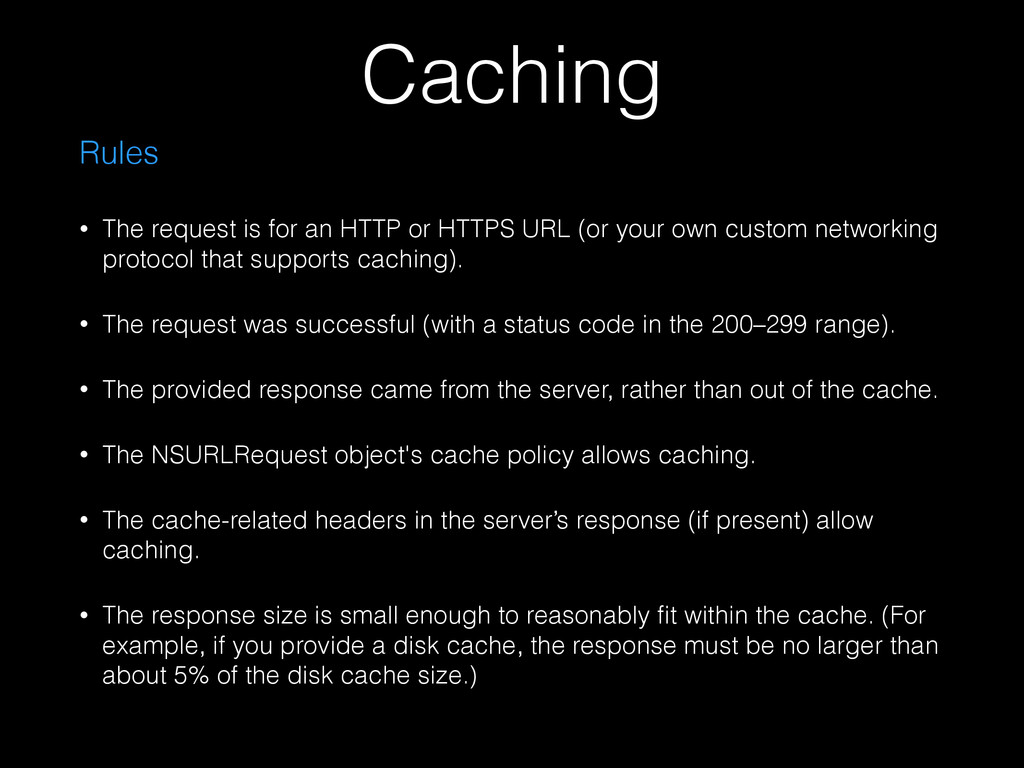
  8. • The request is for an HTTP or HTTPS URL

    (or your own custom networking protocol that supports caching). • The request was successful (with a status code in the 200–299 range). • The provided response came from the server, rather than out of the cache. • The NSURLRequest object's cache policy allows caching. • The cache-related headers in the server’s response (if present) allow caching. • The response size is small enough to reasonably fit within the cache. (For example, if you provide a disk cache, the response must be no larger than about 5% of the disk cache size.) Caching Rules
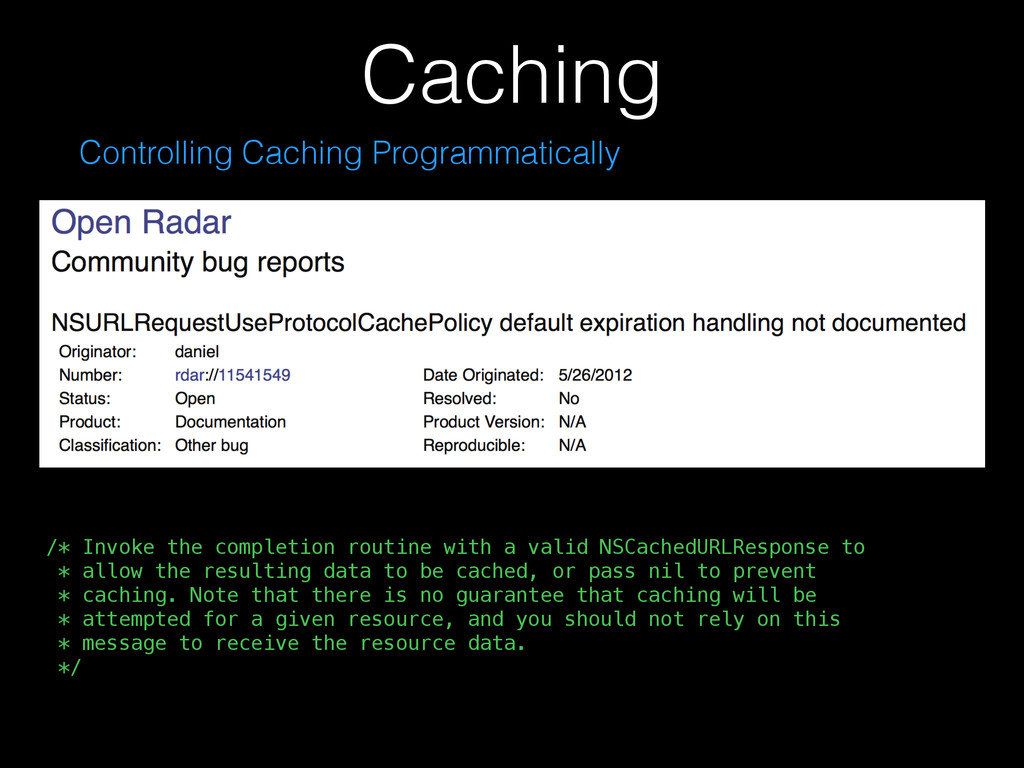
  9. Controlling Caching Programmatically ! Caching /* Invoke the completion routine

    with a valid NSCachedURLResponse to * allow the resulting data to be cached, or pass nil to prevent * caching. Note that there is no guarantee that caching will be * attempted for a given resource, and you should not rely on this * message to receive the resource data. */
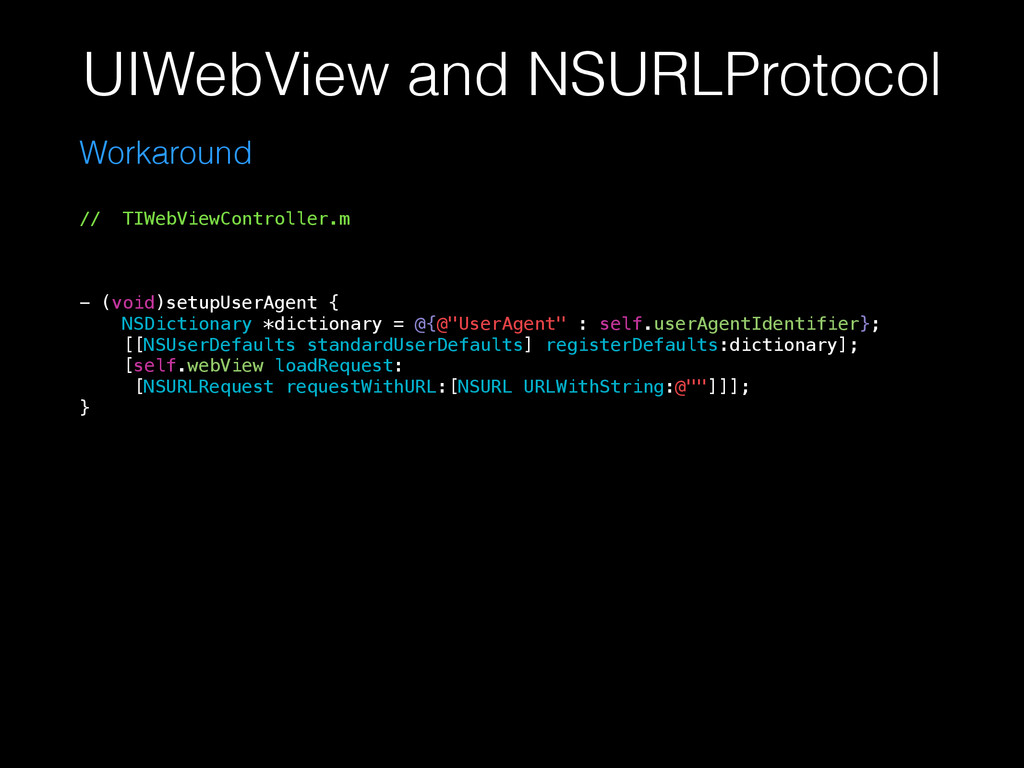
  10. Workaround UIWebView and NSURLProtocol // TIWebViewController.m ! ! ! -

    (void)setupUserAgent { NSDictionary *dictionary = @{@"UserAgent" : self.userAgentIdentifier}; [[NSUserDefaults standardUserDefaults] registerDefaults:dictionary]; [self.webView loadRequest: [NSURLRequest requestWithURL:[NSURL URLWithString:@""]]]; }
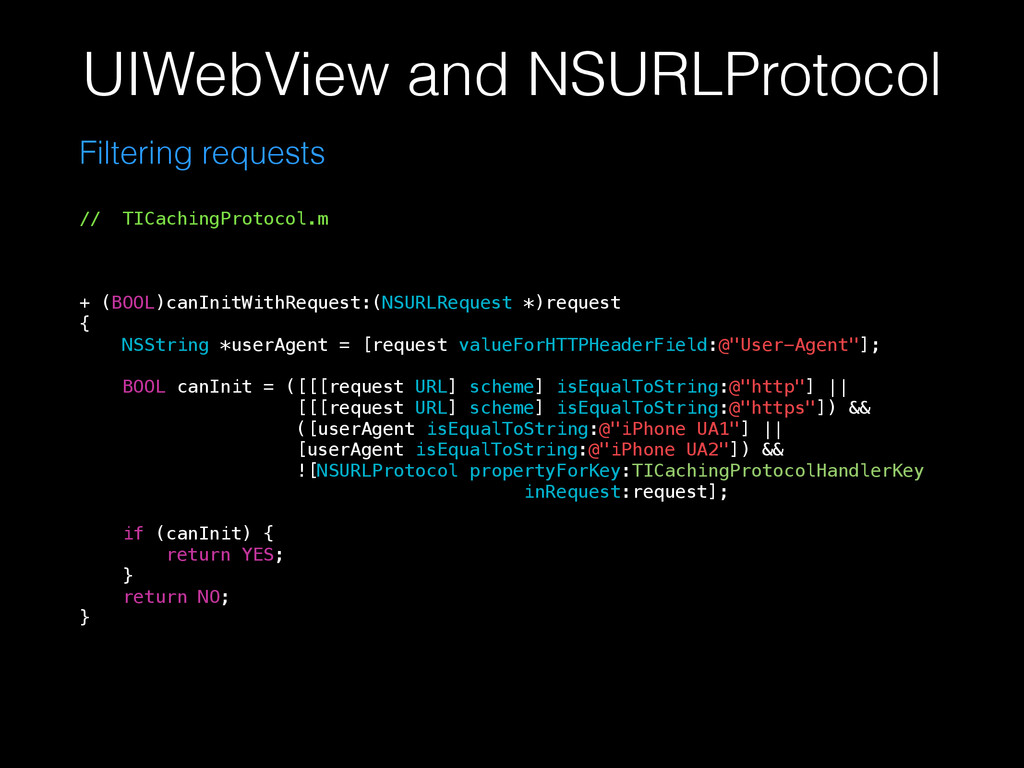
  11. Filtering requests UIWebView and NSURLProtocol // TICachingProtocol.m ! ! !

    + (BOOL)canInitWithRequest:(NSURLRequest *)request { NSString *userAgent = [request valueForHTTPHeaderField:@"User-Agent"]; BOOL canInit = ([[[request URL] scheme] isEqualToString:@"http"] || [[[request URL] scheme] isEqualToString:@"https"]) && ([userAgent isEqualToString:@"iPhone UA1"] || [userAgent isEqualToString:@"iPhone UA2"]) && ![NSURLProtocol propertyForKey:TICachingProtocolHandlerKey inRequest:request]; if (canInit) { return YES; } return NO; }
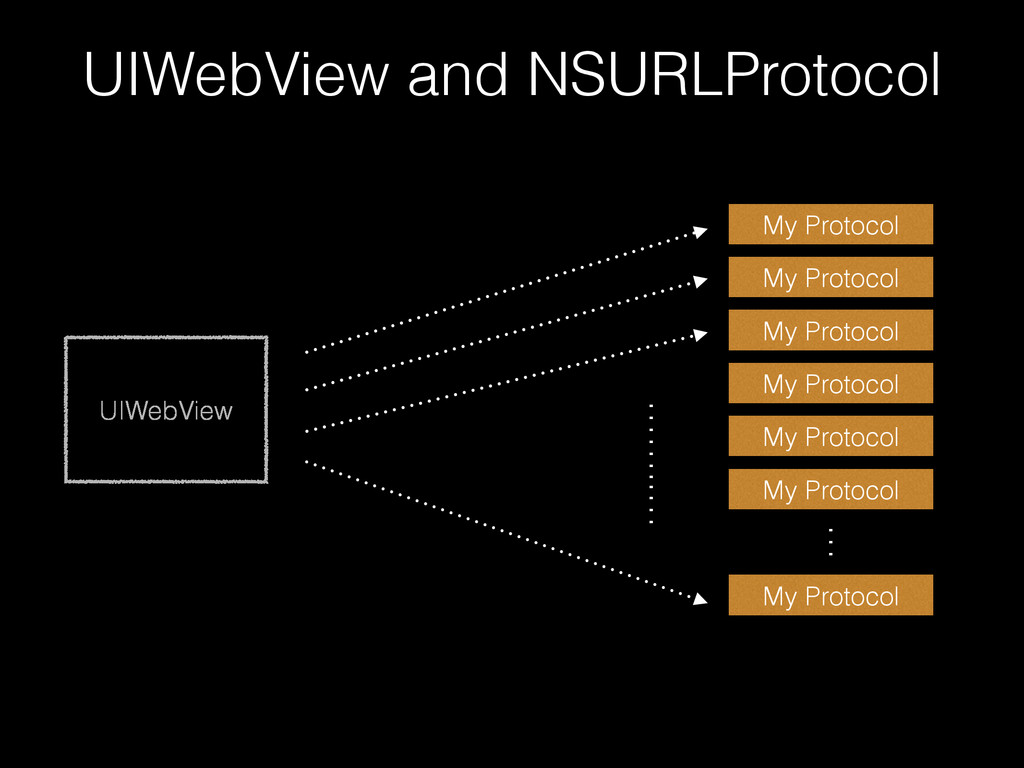
  12. UIWebView and NSURLProtocol UIWebView My Protocol My Protocol My Protocol

    My Protocol My Protocol My Protocol My Protocol … ……..…
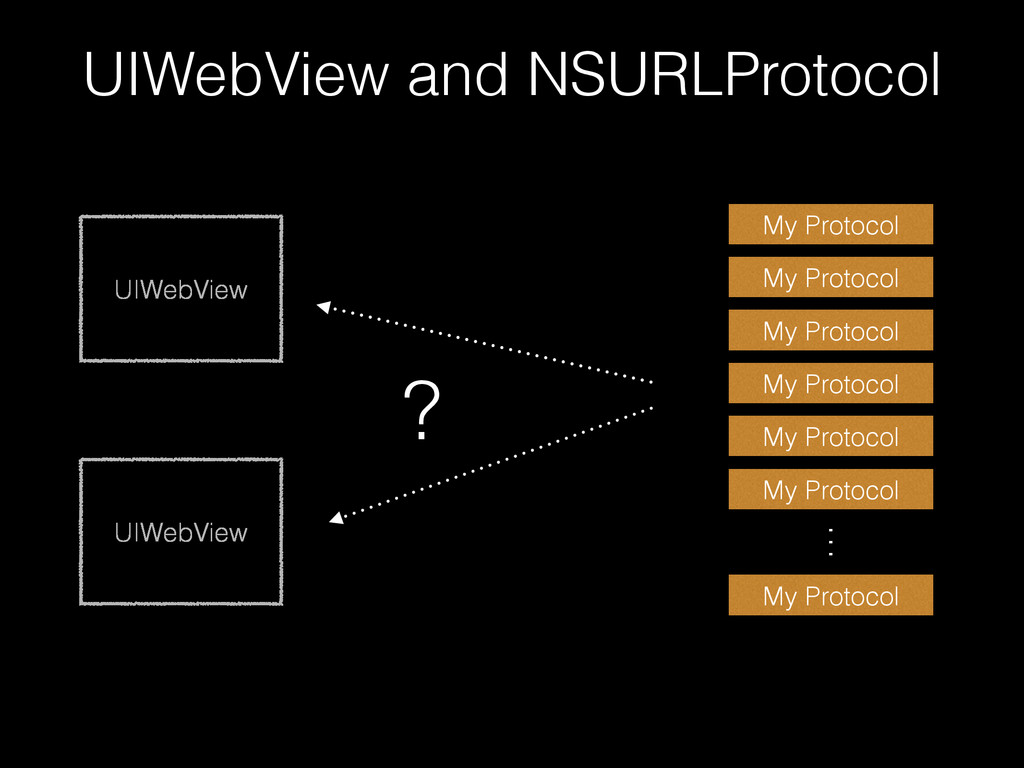
  13. UIWebView and NSURLProtocol UIWebView UIWebView My Protocol My Protocol My

    Protocol My Protocol My Protocol My Protocol My Protocol … ?
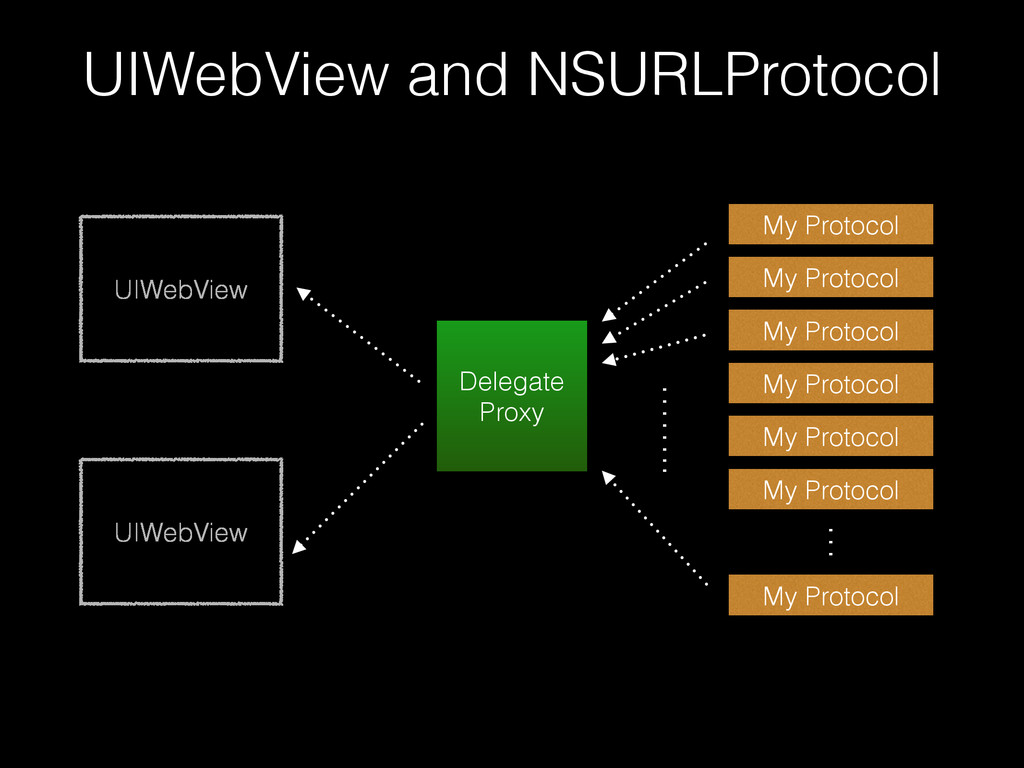
  14. UIWebView and NSURLProtocol UIWebView UIWebView My Protocol My Protocol My

    Protocol My Protocol My Protocol My Protocol My Protocol … Delegate Proxy ……..
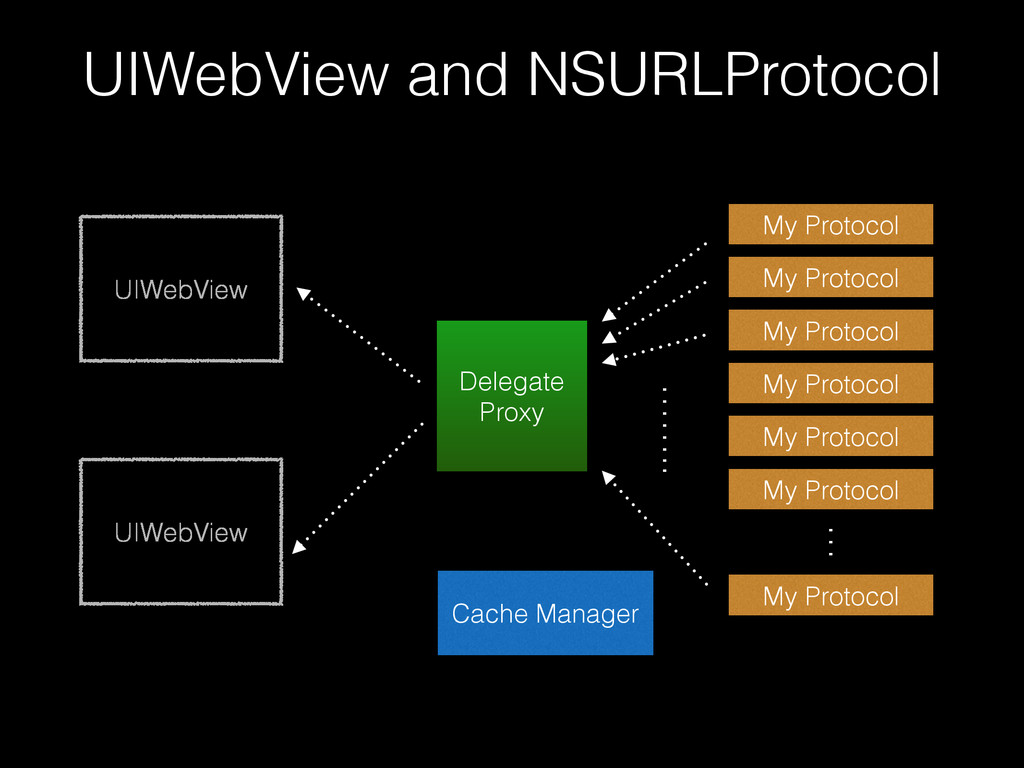
  15. UIWebView and NSURLProtocol UIWebView UIWebView My Protocol My Protocol My

    Protocol My Protocol My Protocol My Protocol My Protocol … Delegate Proxy …….. Cache Manager