The Role of Mobile Apps in Australia's Fitness Industry
Explore how fitness app development is transforming Australia’s fitness industry through personalized workouts, activity tracking, nutrition plans, wearable integration, and convenient digital fitness experiences.
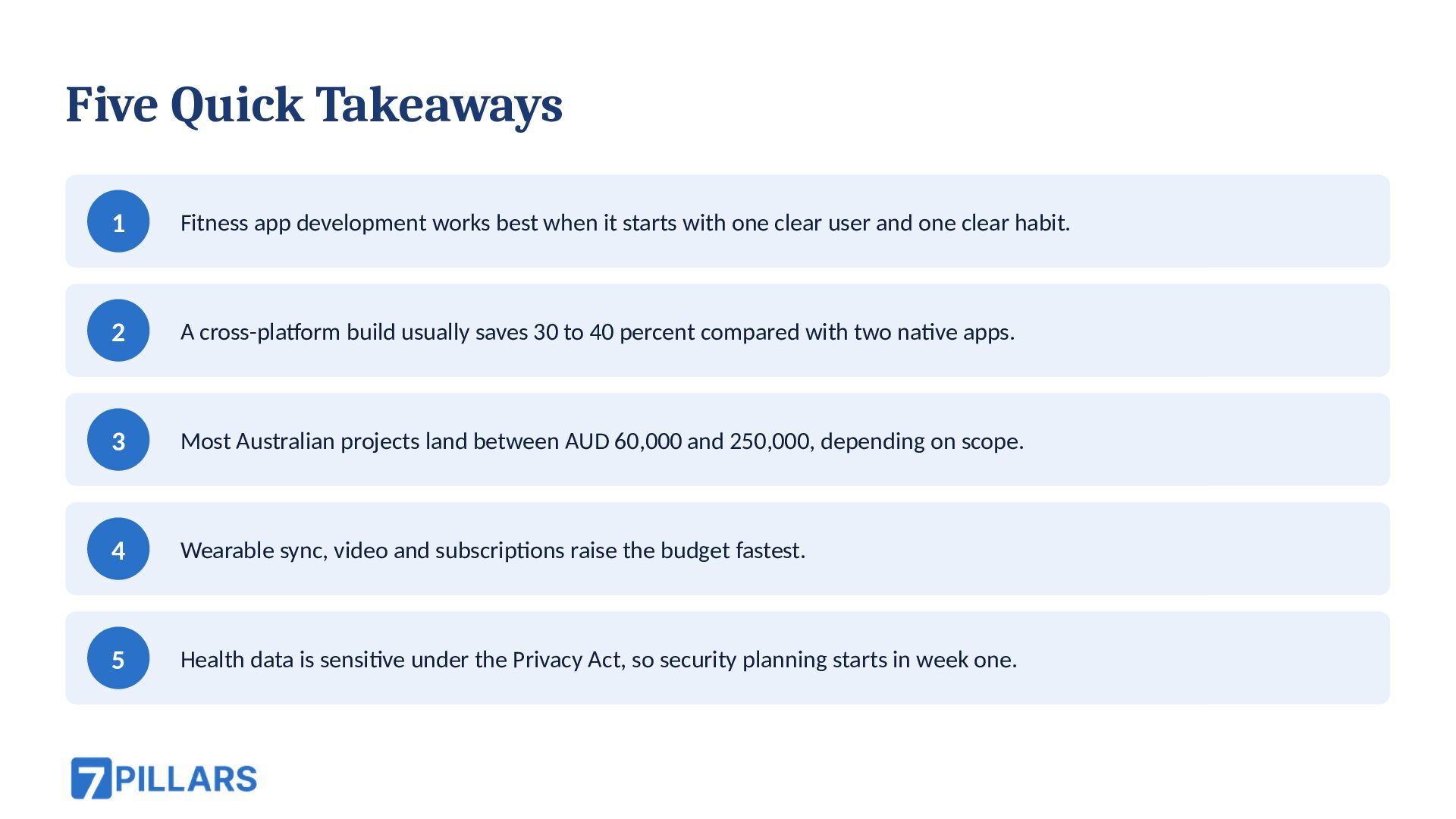
it starts with one clear user and one clear habit. 2 A cross-platform build usually saves 30 to 40 percent compared with two native apps. 3 Most Australian projects land between AUD 60,000 and 250,000, depending on scope. 4 Wearable sync, video and subscriptions raise the budget fastest. 5 Health data is sensitive under the Privacy Act, so security planning starts in week one.
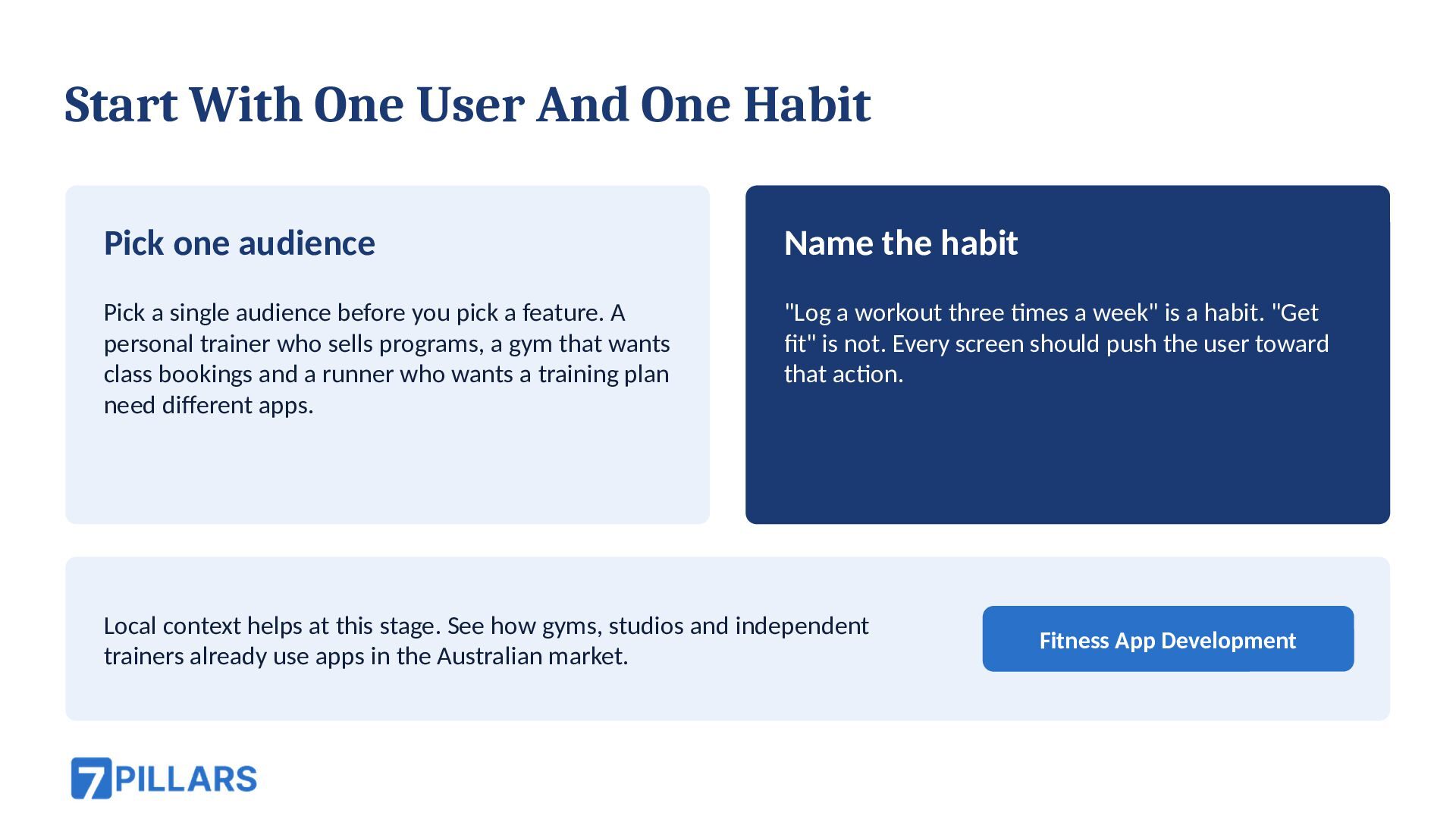
Name the habit Pick a single audience before you pick a feature. A personal trainer who sells programs, a gym that wants class bookings and a runner who wants a training plan need different apps. "Log a workout three times a week" is a habit. "Get fit" is not. Every screen should push the user toward that action. Local context helps at this stage. See how gyms, studios and independent trainers already use apps in the Australian market. Fitness App Development
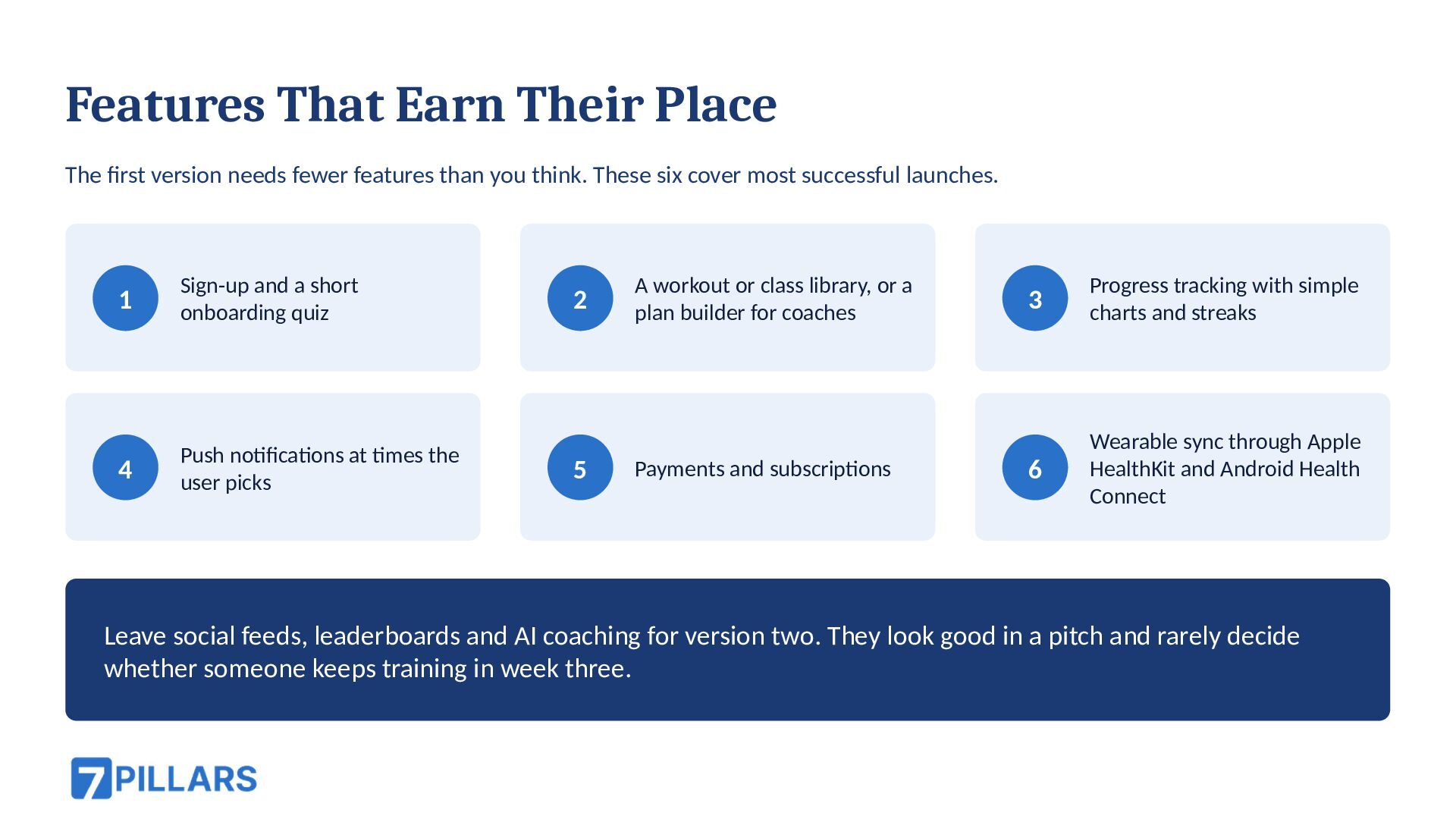
features than you think. These six cover most successful launches. 1 Sign-up and a short onboarding quiz 4 Push notifications at times the user picks 2 5 A workout or class library, or a plan builder for coaches Payments and subscriptions 3 Progress tracking with simple charts and streaks 6 Wearable sync through Apple HealthKit and Android Health Connect Leave social feeds, leaderboards and AI coaching for version two. They look good in a pitch and rarely decide whether someone keeps training in week three.
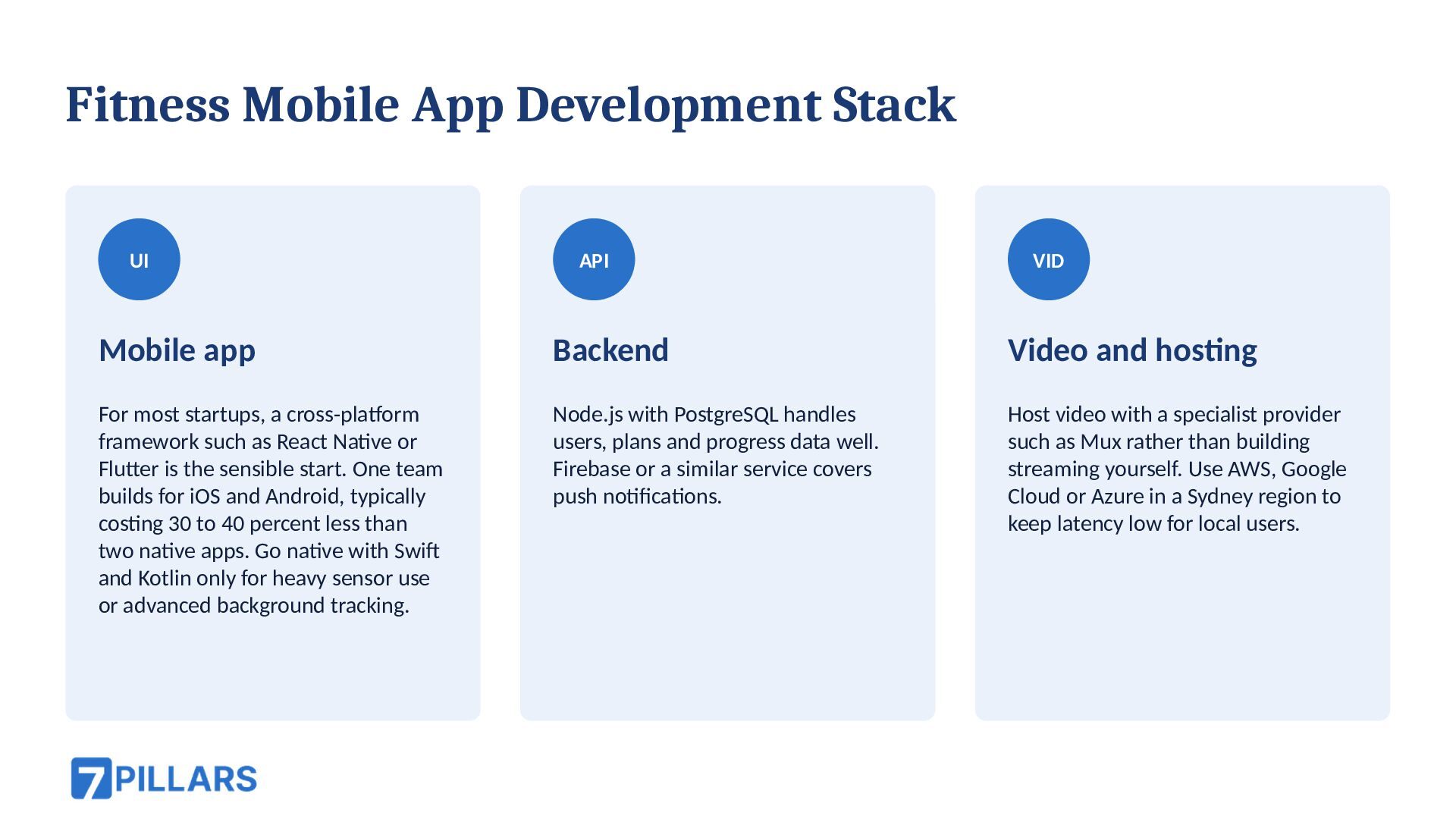
Backend Video and hosting For most startups, a cross-platform framework such as React Native or Flutter is the sensible start. One team builds for iOS and Android, typically costing 30 to 40 percent less than two native apps. Go native with Swift and Kotlin only for heavy sensor use or advanced background tracking. Node.js with PostgreSQL handles users, plans and progress data well. Firebase or a similar service covers push notifications. Host video with a specialist provider such as Mux rather than building streaming yourself. Use AWS, Google Cloud or Azure in a Sydney region to keep latency low for local users.
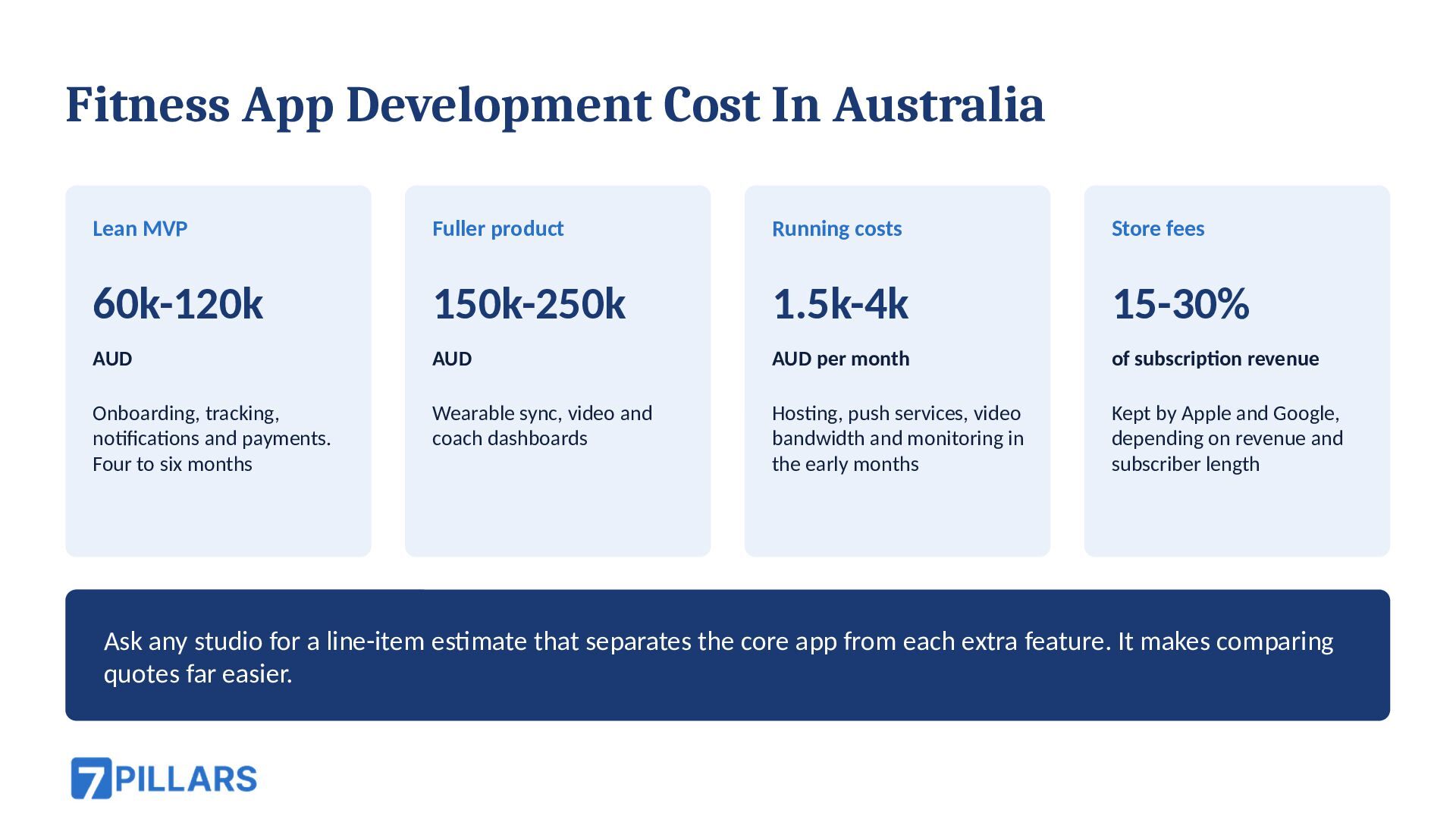
Running costs Store fees 60k-120k 150k-250k 1.5k-4k 15-30% AUD AUD AUD per month of subscription revenue Onboarding, tracking, notifications and payments. Four to six months Wearable sync, video and coach dashboards Hosting, push services, video bandwidth and monitoring in the early months Kept by Apple and Google, depending on revenue and subscriber length Ask any studio for a line-item estimate that separates the core app from each extra feature. It makes comparing quotes far easier.
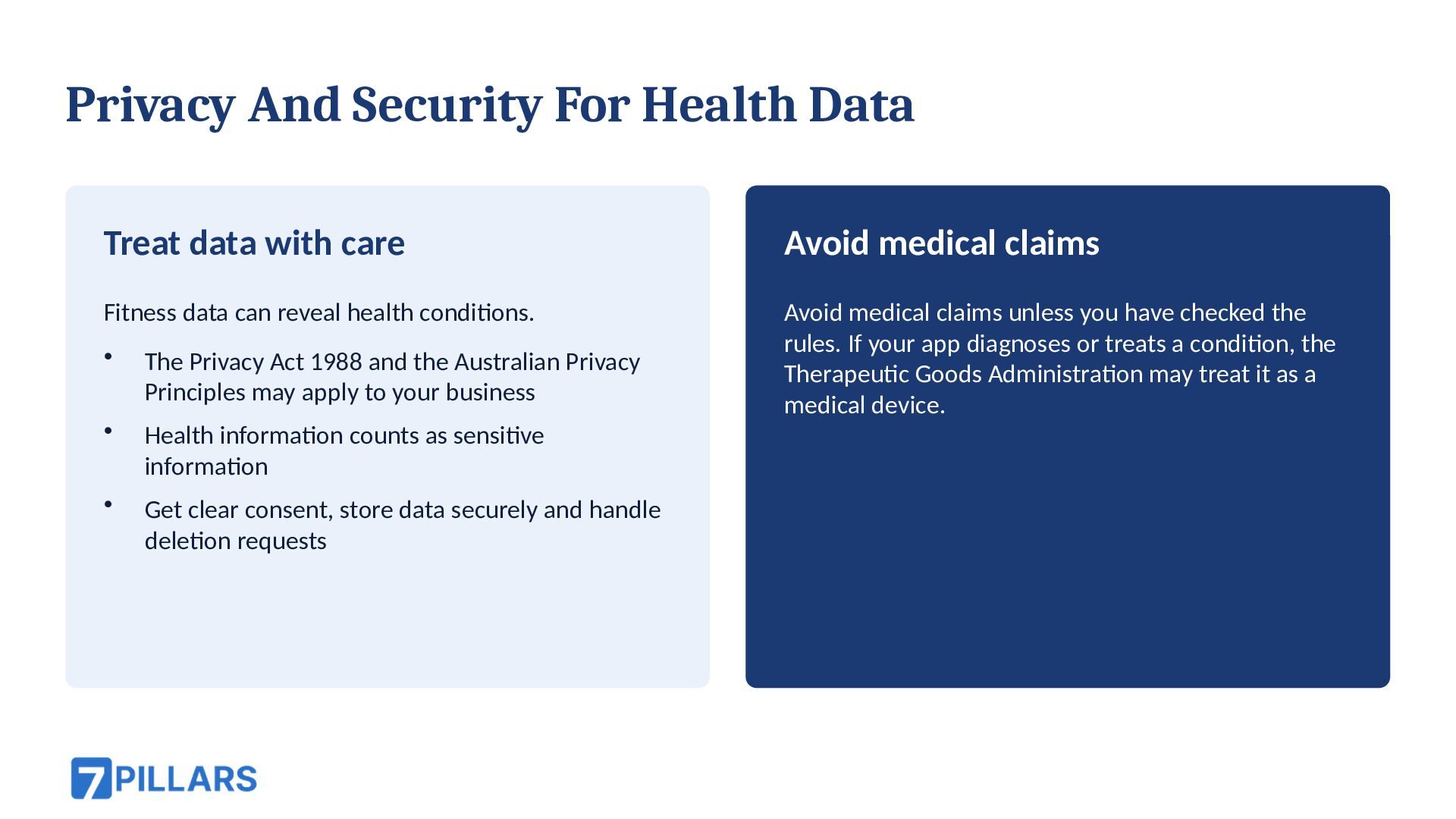
Avoid medical claims Fitness data can reveal health conditions. Avoid medical claims unless you have checked the rules. If your app diagnoses or treats a condition, the Therapeutic Goods Administration may treat it as a medical device. • The Privacy Act 1988 and the Australian Privacy Principles may apply to your business • Health information counts as sensitive information • Get clear consent, store data securely and handle deletion requests
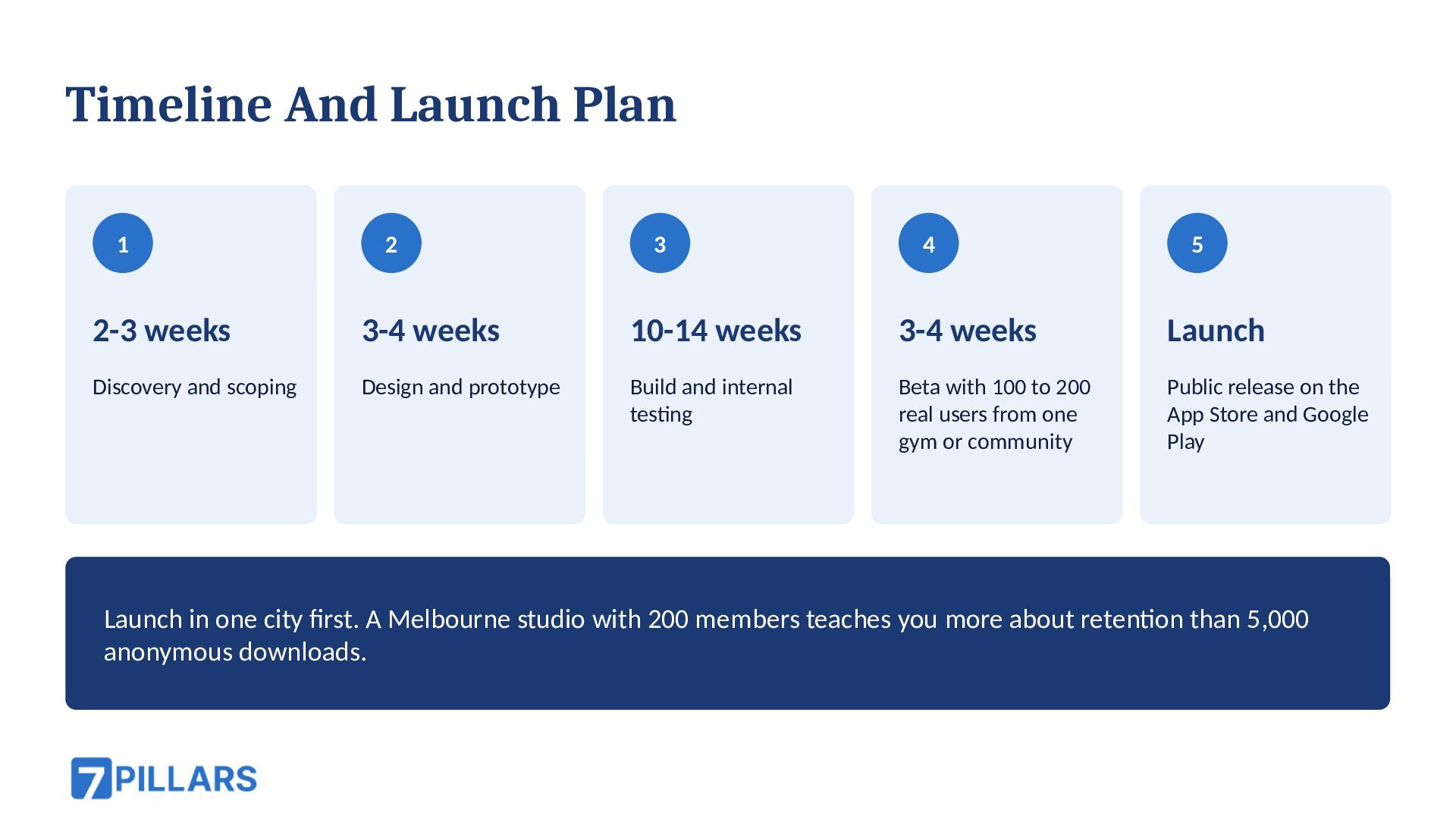
weeks 3-4 weeks 10-14 weeks 3-4 weeks Launch Discovery and scoping Design and prototype Build and internal testing Beta with 100 to 200 real users from one gym or community Public release on the App Store and Google Play Launch in one city first. A Melbourne studio with 200 members teaches you more about retention than 5,000 anonymous downloads.
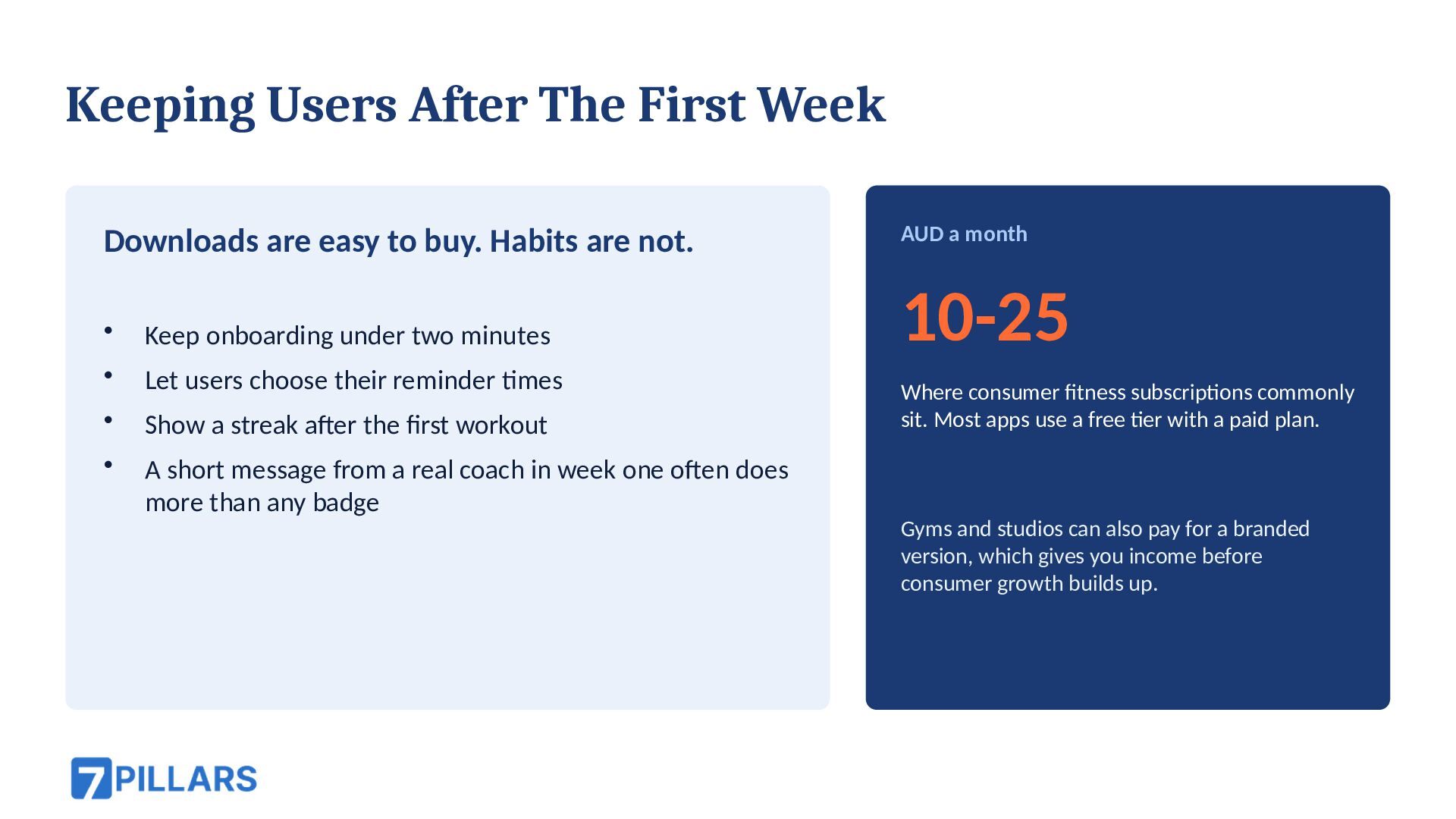
buy. Habits are not. • Keep onboarding under two minutes • Let users choose their reminder times • Show a streak after the first workout • A short message from a real coach in week one often does more than any badge AUD a month 10-25 Where consumer fitness subscriptions commonly sit. Most apps use a free tier with a paid plan. Gyms and studios can also pay for a branded version, which gives you income before consumer growth builds up.
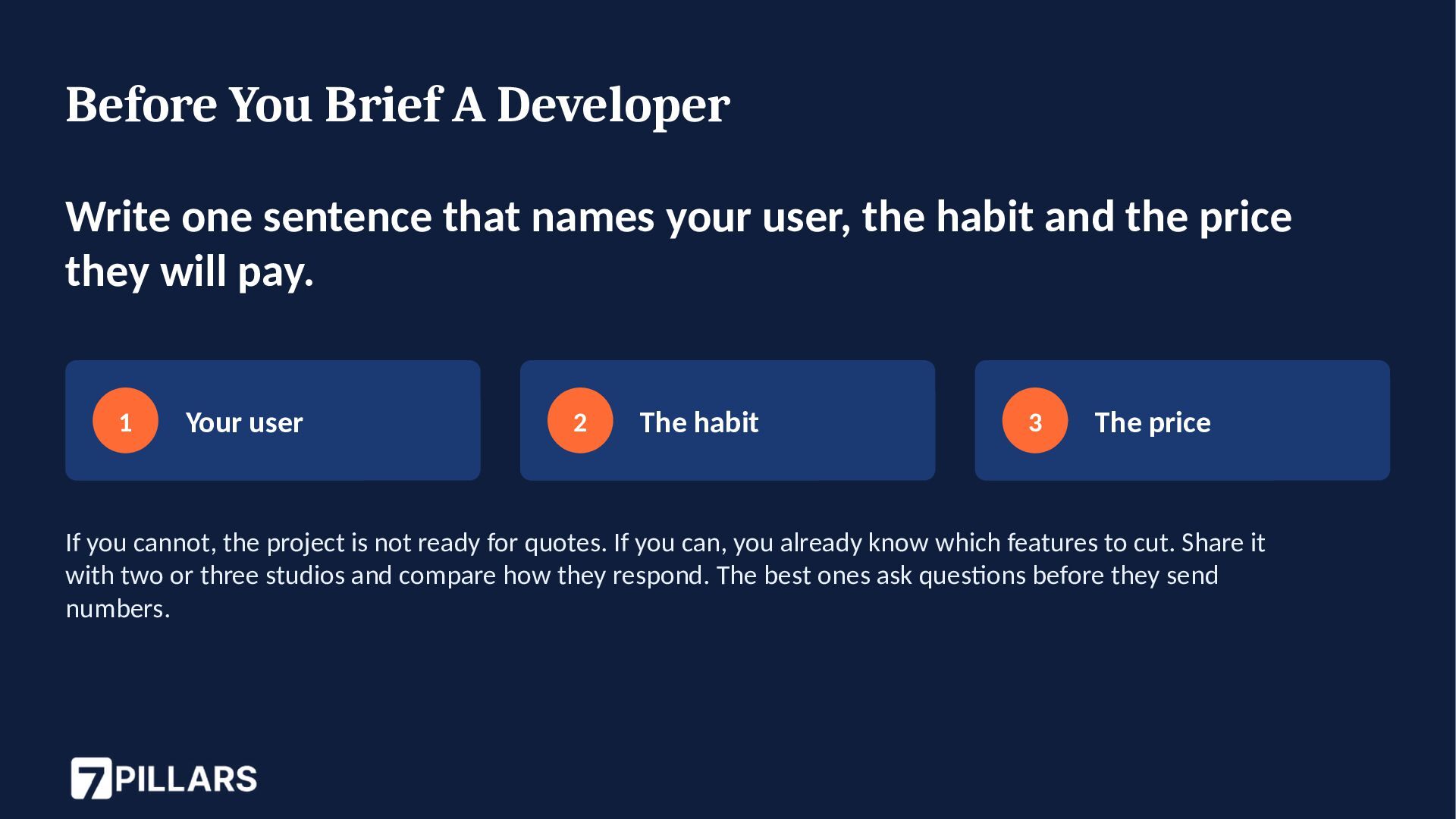
your user, the habit and the price they will pay. 1 Your user 2 The habit 3 The price If you cannot, the project is not ready for quotes. If you can, you already know which features to cut. Share it with two or three studios and compare how they respond. The best ones ask questions before they send numbers.
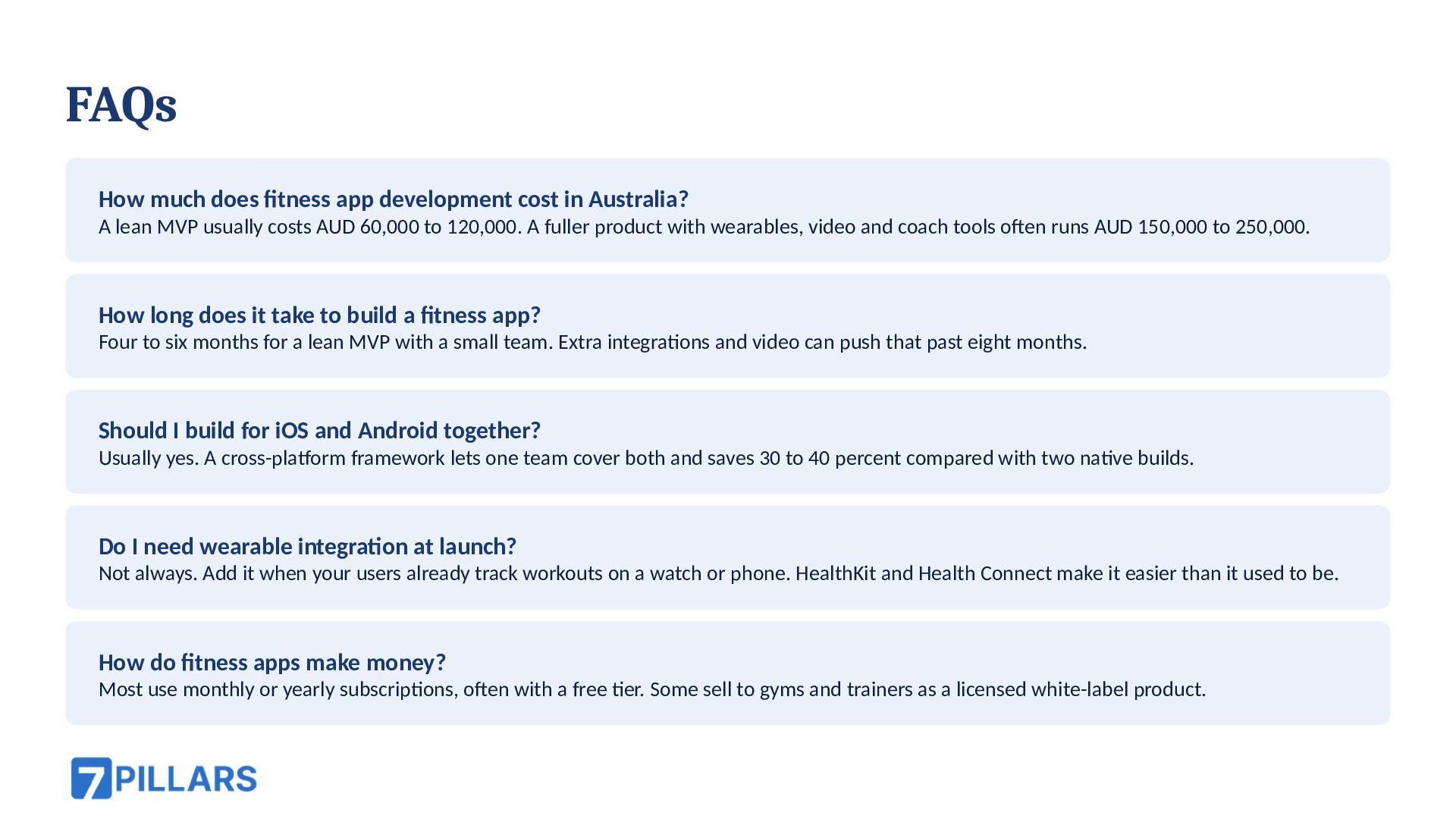
A lean MVP usually costs AUD 60,000 to 120,000. A fuller product with wearables, video and coach tools often runs AUD 150,000 to 250,000. How long does it take to build a fitness app? Four to six months for a lean MVP with a small team. Extra integrations and video can push that past eight months. Should I build for iOS and Android together? Usually yes. A cross-platform framework lets one team cover both and saves 30 to 40 percent compared with two native builds. Do I need wearable integration at launch? Not always. Add it when your users already track workouts on a watch or phone. HealthKit and Health Connect make it easier than it used to be. How do fitness apps make money? Most use monthly or yearly subscriptions, often with a free tier. Some sell to gyms and trainers as a licensed white-label product.


 7_pillars
 riyaamemiya
 daidaidai
 carta_engineering
 syuchimu
 yuuuuuuu168
 takuroabe
 takahashim
 shumei_ito
 kairim0
 bgpat
 shugo
 greenmidori
 axbom
 konakalab
 tmiket
 mongodb
 lindahogenes
 swwweet
 schlessera
 baasie
 jonoalderson