How-Much-Does-A-Mobile-App-Development Charge To build a tracking app
What does it cost to hire a tracking app development company in Australia? See typical AUD ranges, discovery fees, integration costs and how to compare quotes.
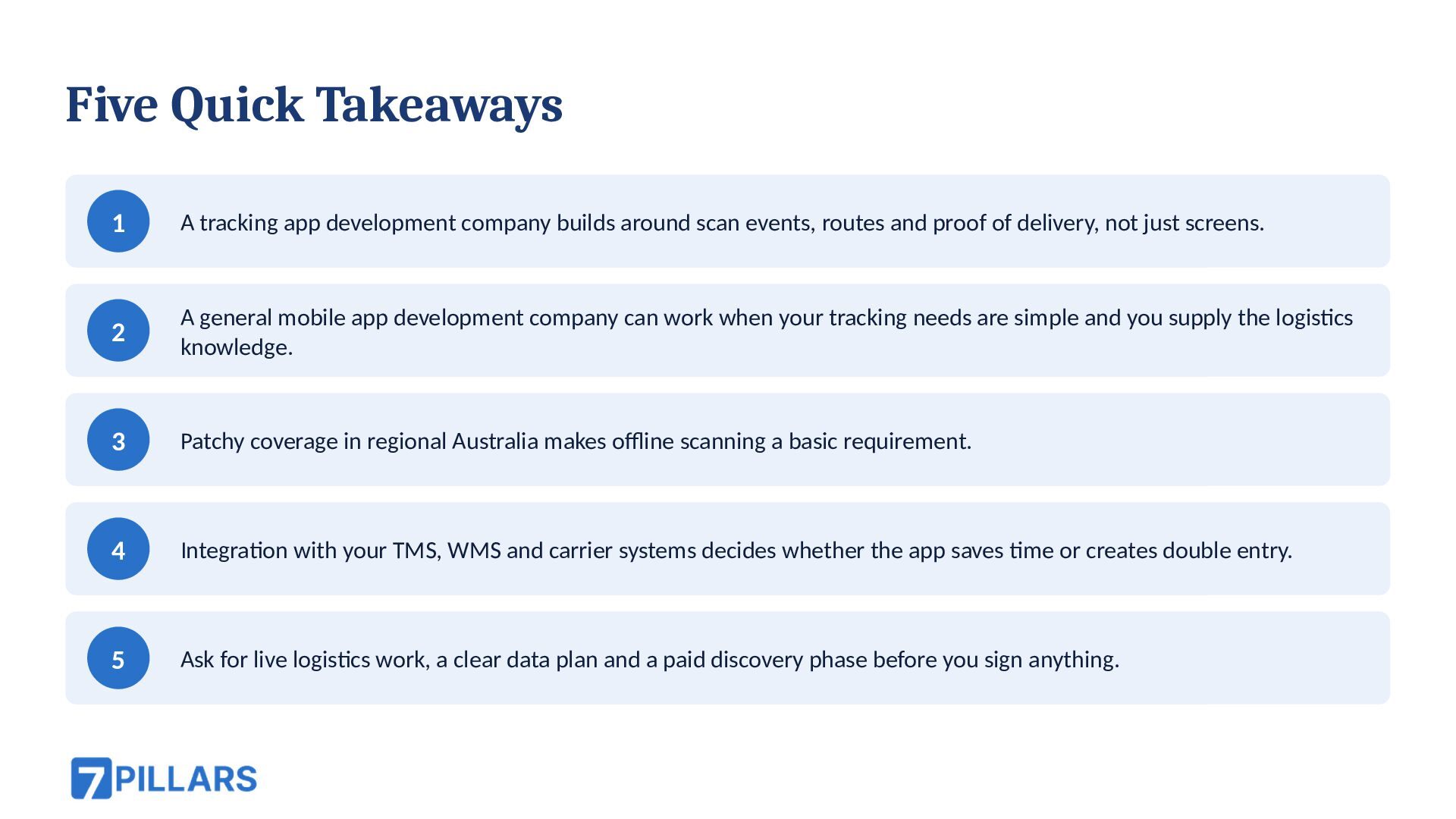
around scan events, routes and proof of delivery, not just screens. 2 A general mobile app development company can work when your tracking needs are simple and you supply the logistics knowledge. 3 Patchy coverage in regional Australia makes offline scanning a basic requirement. 4 Integration with your TMS, WMS and carrier systems decides whether the app saves time or creates double entry. 5 Ask for live logistics work, a clear data plan and a paid discovery phase before you sign anything.
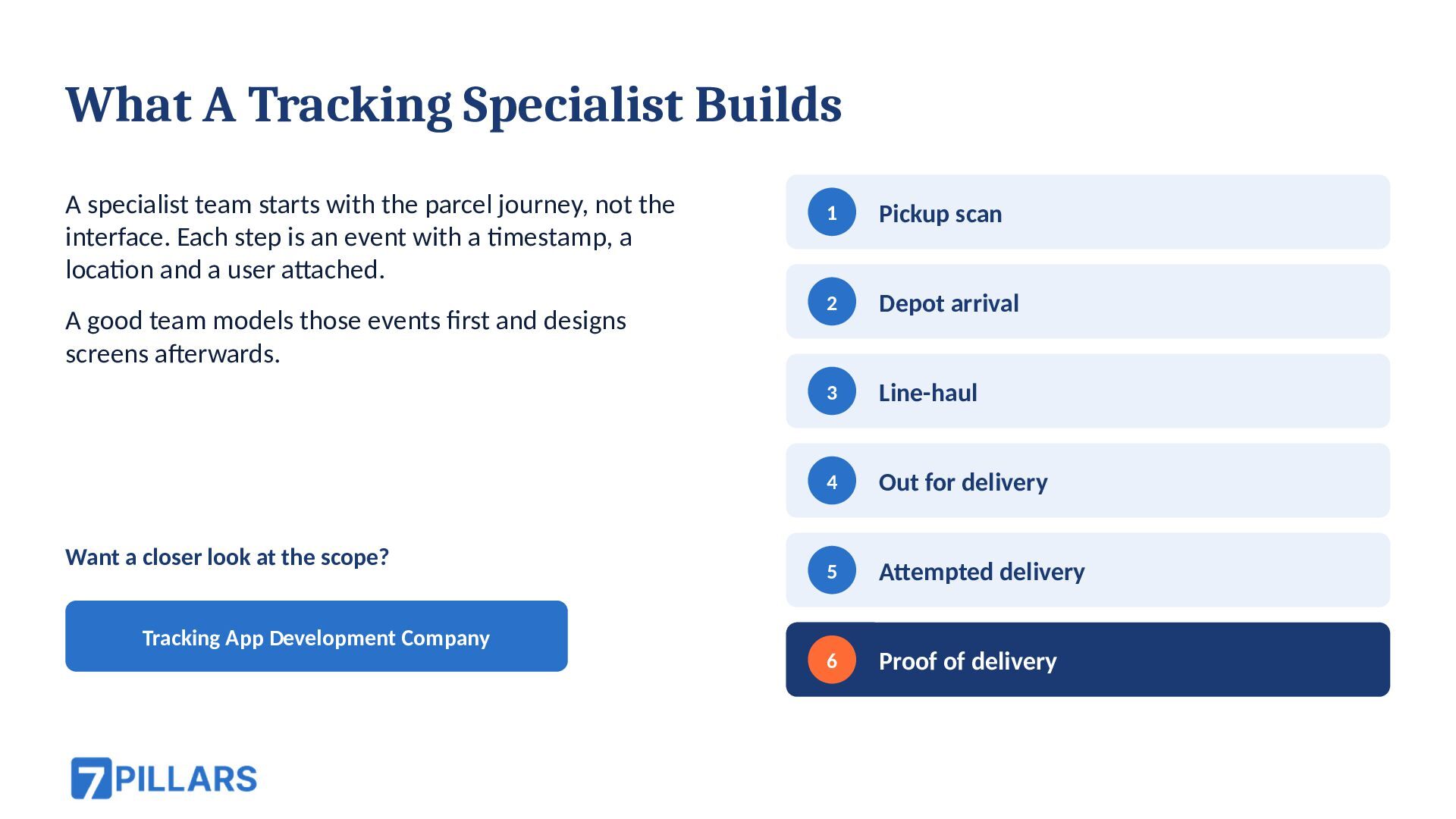
the parcel journey, not the interface. Each step is an event with a timestamp, a location and a user attached. A good team models those events first and designs screens afterwards. Want a closer look at the scope? Tracking App Development Company 1 Pickup scan 2 Depot arrival 3 Line-haul 4 Out for delivery 5 Attempted delivery 6 Proof of delivery
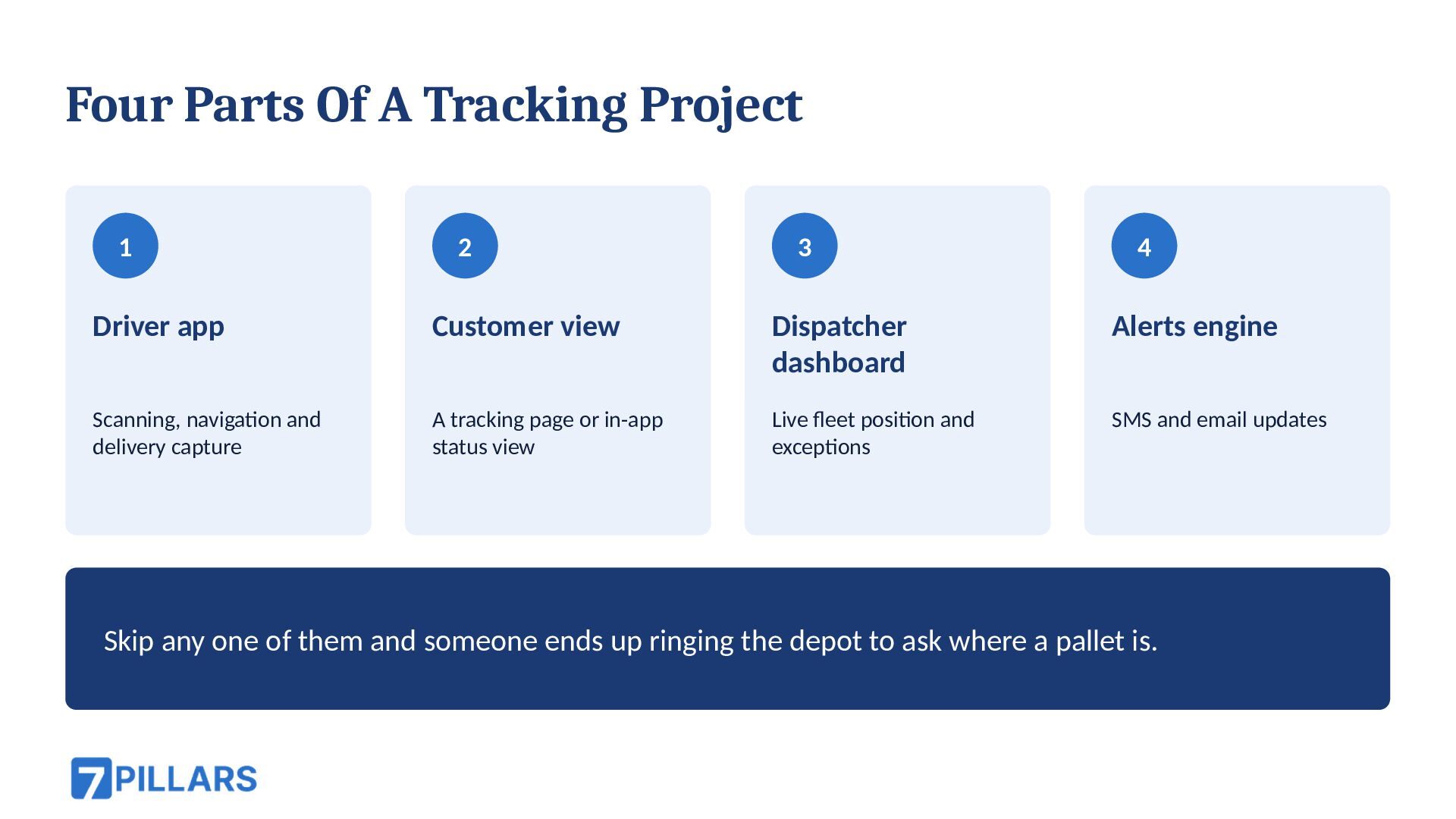
Driver app Customer view Dispatcher dashboard Alerts engine Scanning, navigation and delivery capture A tracking page or in-app status view Live fleet position and exceptions SMS and email updates Skip any one of them and someone ends up ringing the depot to ask where a pallet is.
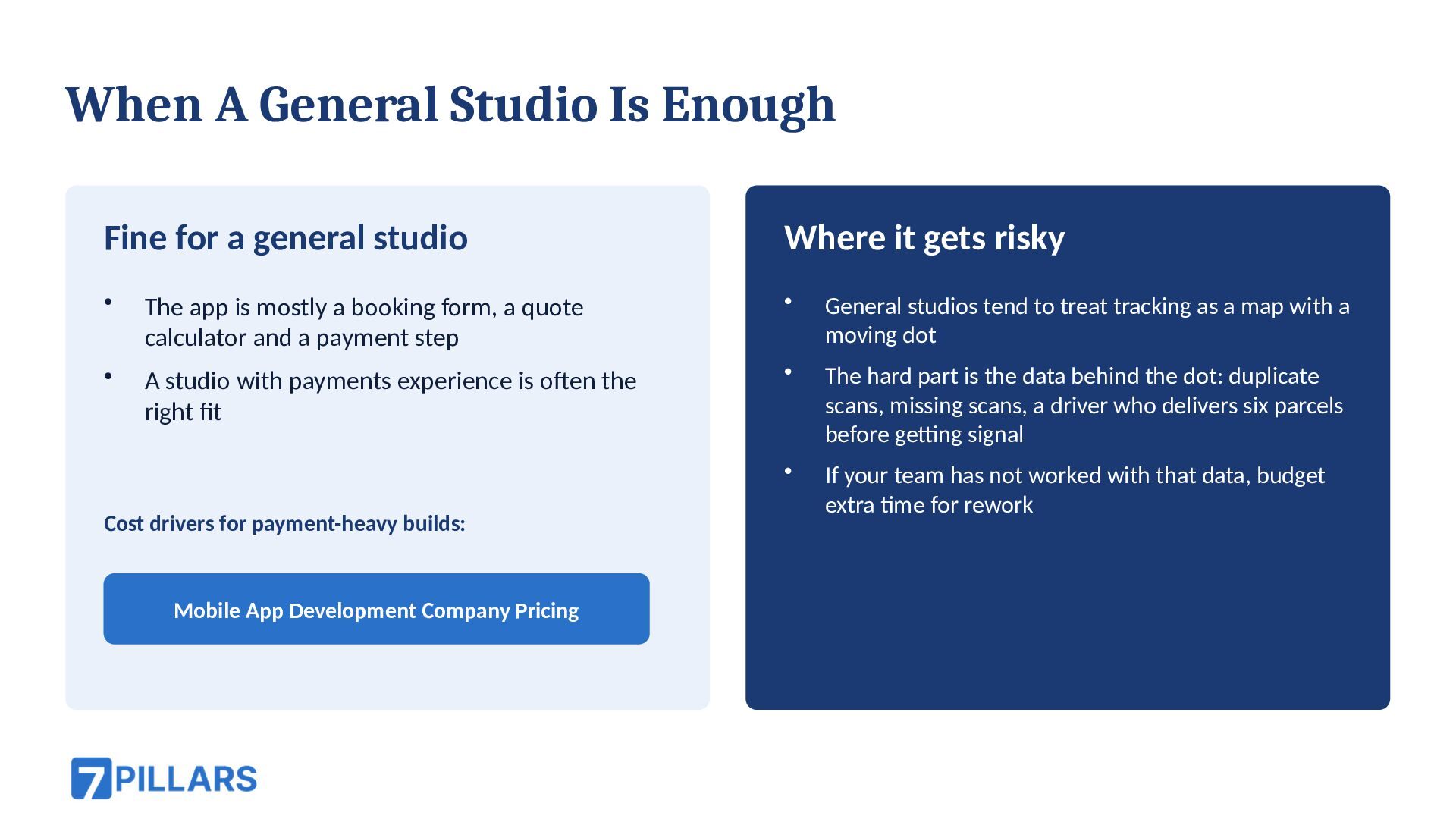
studio Where it gets risky • The app is mostly a booking form, a quote calculator and a payment step • General studios tend to treat tracking as a map with a moving dot • A studio with payments experience is often the right fit • The hard part is the data behind the dot: duplicate scans, missing scans, a driver who delivers six parcels before getting signal • If your team has not worked with that data, budget extra time for rework Cost drivers for payment-heavy builds: Mobile App Development Company Pricing
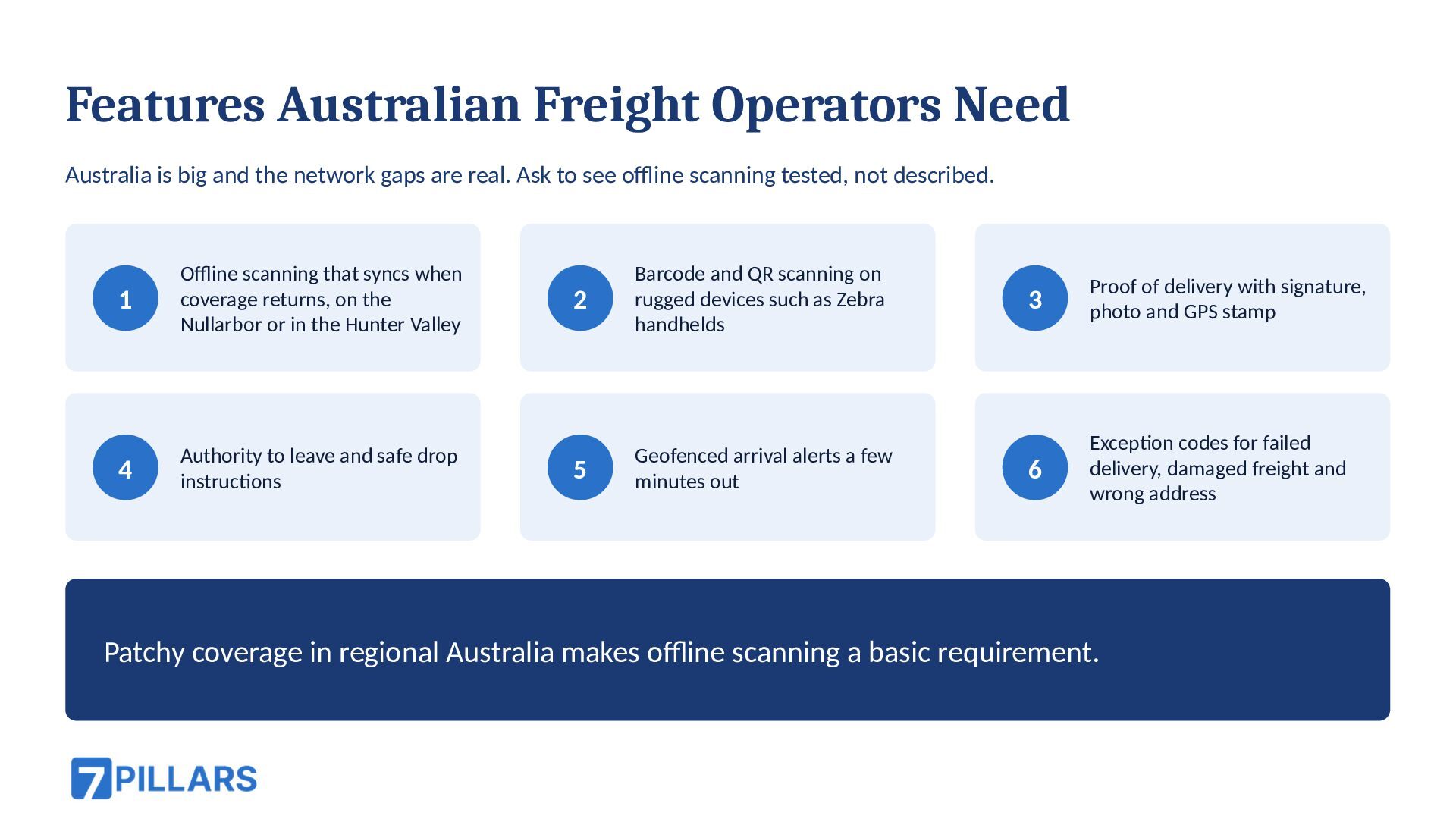
network gaps are real. Ask to see offline scanning tested, not described. 1 Offline scanning that syncs when coverage returns, on the Nullarbor or in the Hunter Valley 4 Authority to leave and safe drop instructions 2 Barcode and QR scanning on rugged devices such as Zebra handhelds 5 Geofenced arrival alerts a few minutes out 3 Proof of delivery with signature, photo and GPS stamp 6 Exception codes for failed delivery, damaged freight and wrong address Patchy coverage in regional Australia makes offline scanning a basic requirement.
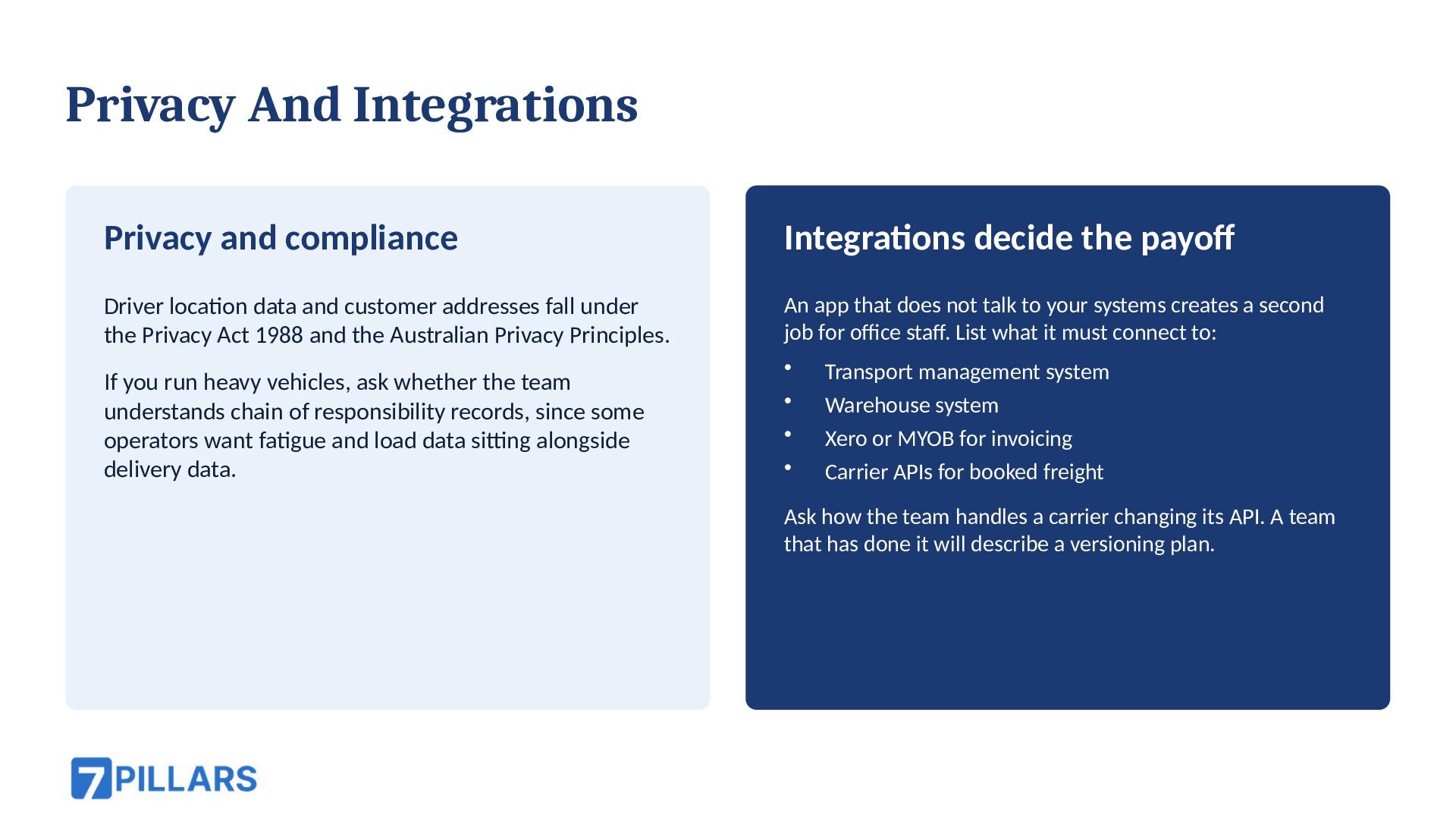
Driver location data and customer addresses fall under the Privacy Act 1988 and the Australian Privacy Principles. An app that does not talk to your systems creates a second job for office staff. List what it must connect to: If you run heavy vehicles, ask whether the team understands chain of responsibility records, since some operators want fatigue and load data sitting alongside delivery data. • • • • Transport management system Warehouse system Xero or MYOB for invoicing Carrier APIs for booked freight Ask how the team handles a carrier changing its API. A team that has done it will describe a versioning plan.
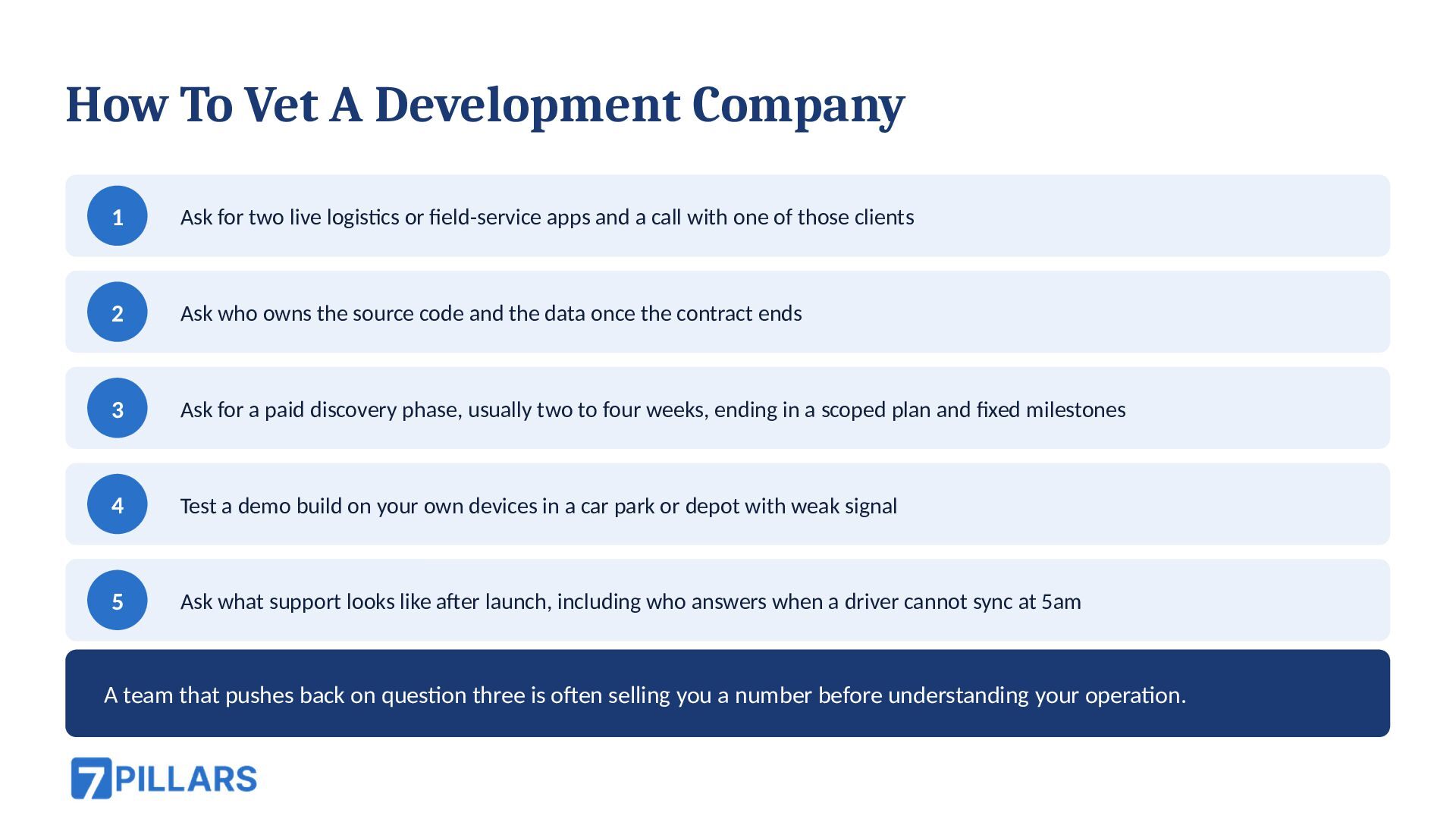
live logistics or field-service apps and a call with one of those clients 2 Ask who owns the source code and the data once the contract ends 3 Ask for a paid discovery phase, usually two to four weeks, ending in a scoped plan and fixed milestones 4 Test a demo build on your own devices in a car park or depot with weak signal 5 Ask what support looks like after launch, including who answers when a driver cannot sync at 5am A team that pushes back on question three is often selling you a number before understanding your operation.
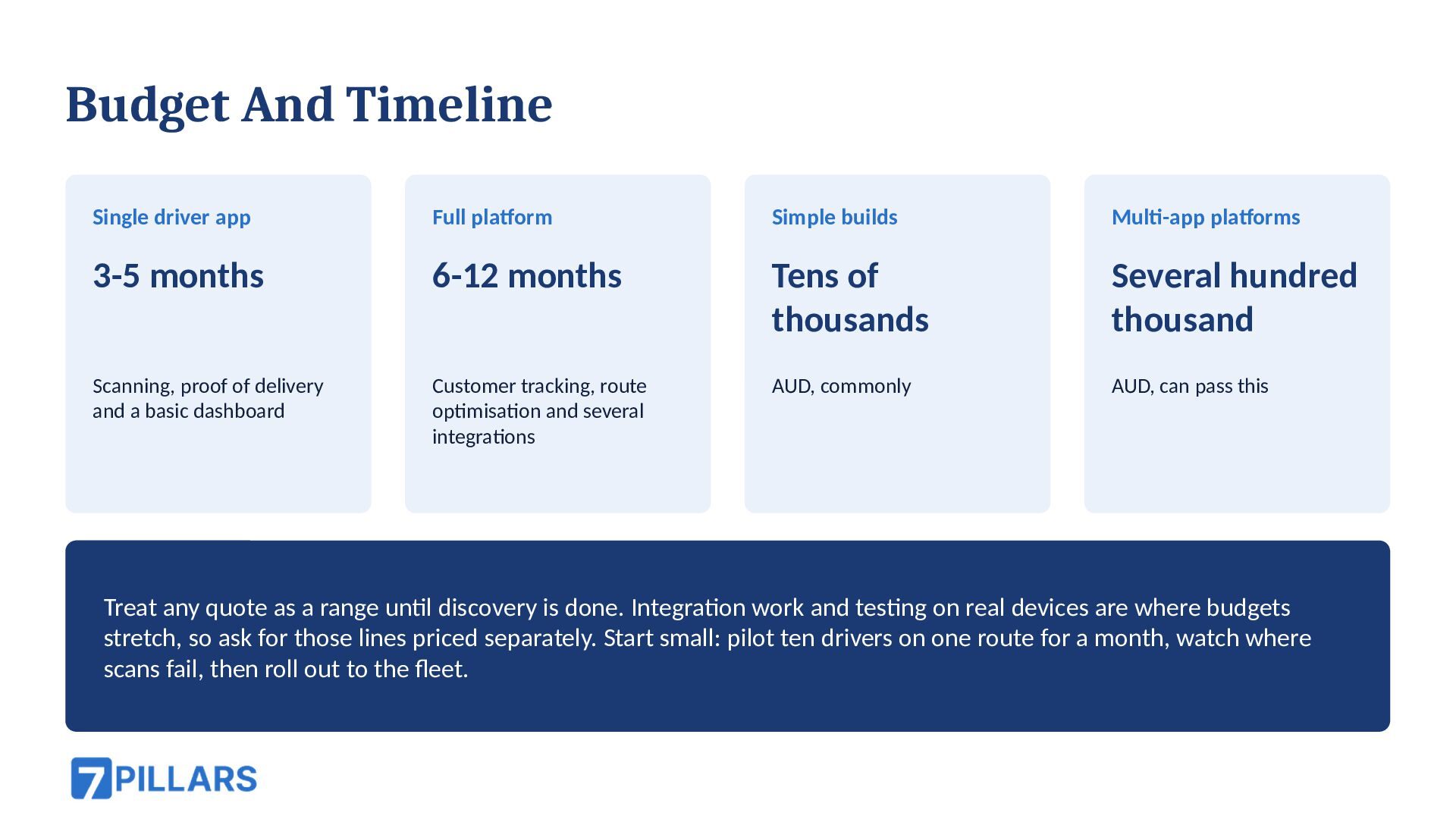
Multi-app platforms 3-5 months 6-12 months Tens of thousands Several hundred thousand Scanning, proof of delivery and a basic dashboard Customer tracking, route optimisation and several integrations AUD, commonly AUD, can pass this Treat any quote as a range until discovery is done. Integration work and testing on real devices are where budgets stretch, so ask for those lines priced separately. Start small: pilot ten drivers on one route for a month, watch where scans fail, then roll out to the fleet.
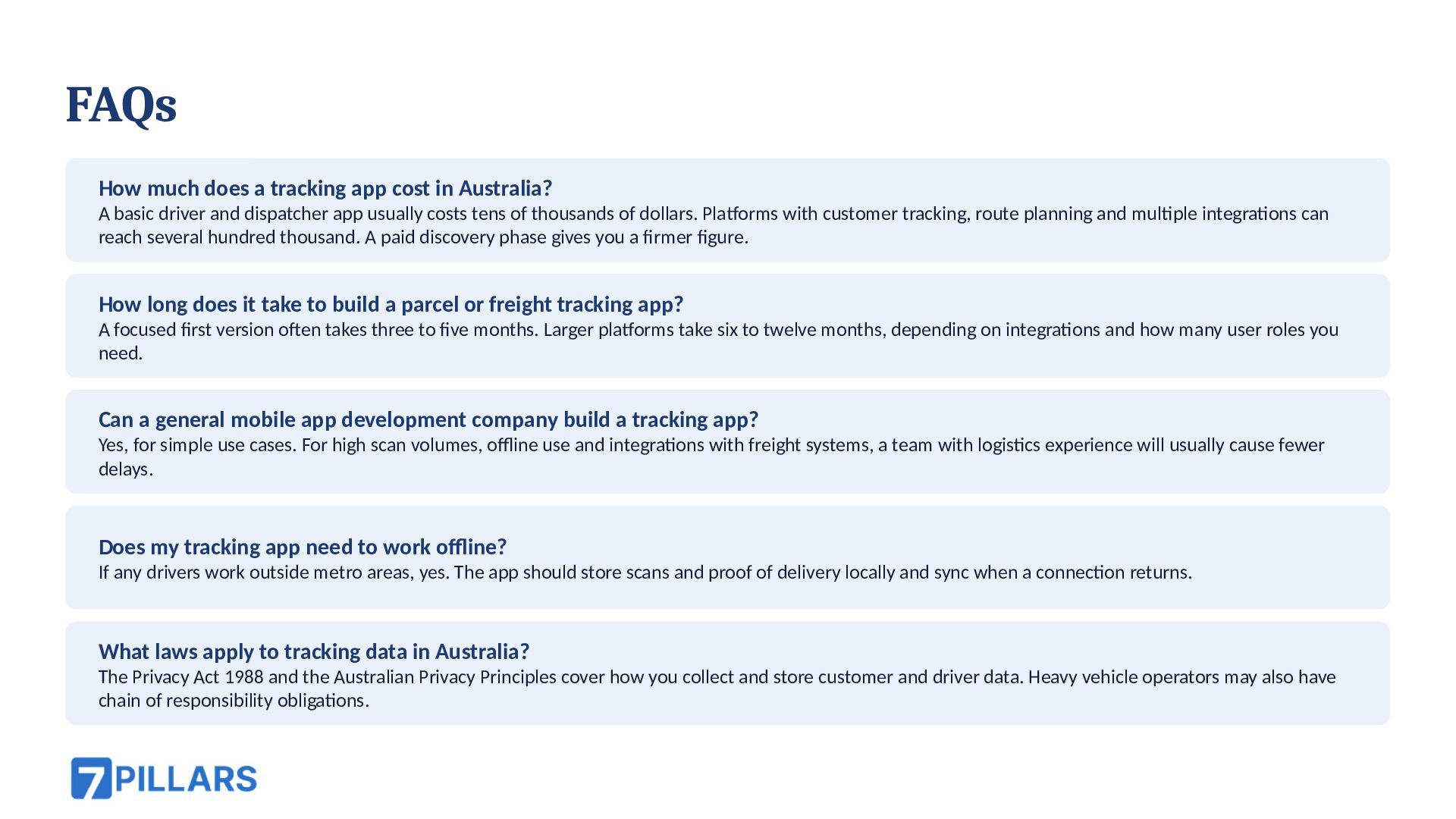
A basic driver and dispatcher app usually costs tens of thousands of dollars. Platforms with customer tracking, route planning and multiple integrations can reach several hundred thousand. A paid discovery phase gives you a firmer figure. How long does it take to build a parcel or freight tracking app? A focused first version often takes three to five months. Larger platforms take six to twelve months, depending on integrations and how many user roles you need. Can a general mobile app development company build a tracking app? Yes, for simple use cases. For high scan volumes, offline use and integrations with freight systems, a team with logistics experience will usually cause fewer delays. Does my tracking app need to work offline? If any drivers work outside metro areas, yes. The app should store scans and proof of delivery locally and sync when a connection returns. What laws apply to tracking data in Australia? The Privacy Act 1988 and the Australian Privacy Principles cover how you collect and store customer and driver data. Heavy vehicle operators may also have chain of responsibility obligations.


 7_pillars
 pfn
 kakehashi
 sansantech
 kizawa2020
 riyaamemiya
 takonda
 odashi
 kaminashi
 grimoh
 hiracky16
 puhitaku
 akitoshiga
 mfonobong
 jonrohan
 rasagy
 addyosmani
 geoffreycrofte
 eitanlees
 csswizardry
 kimpetersen
 bluesmoon
 pwiseman
 ryanjones
 speakerdeck