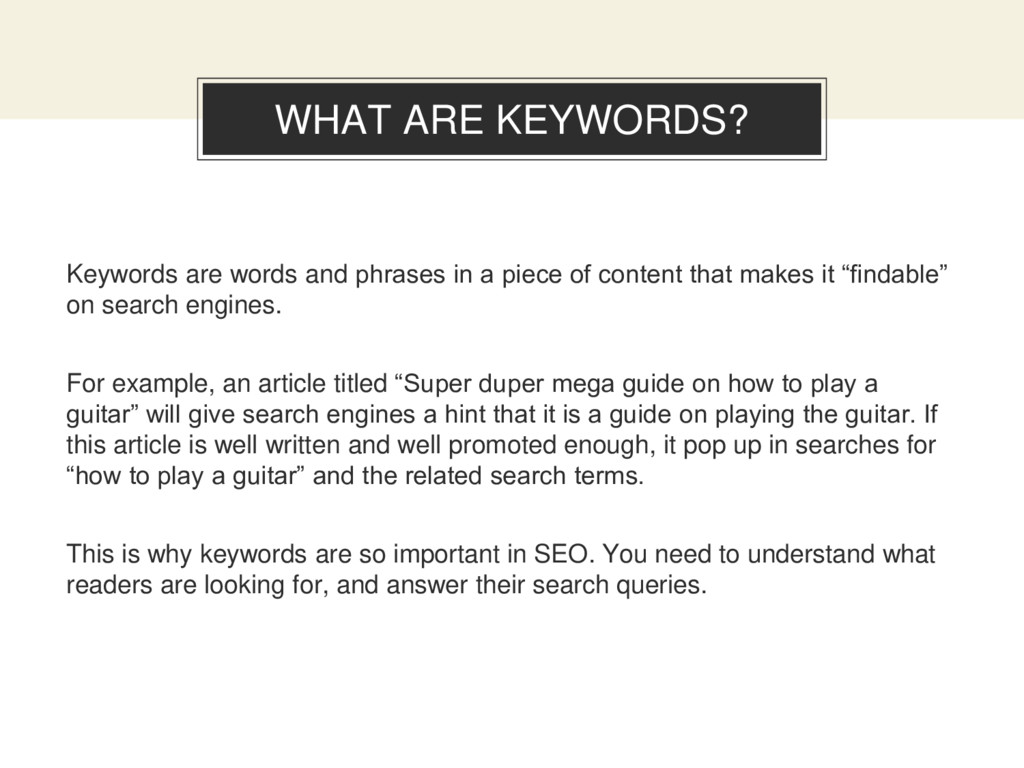
phrases in a piece of content that makes it “findable” on search engines. For example, an article titled “Super duper mega guide on how to play a guitar” will give search engines a hint that it is a guide on playing the guitar. If this article is well written and well promoted enough, it pop up in searches for “how to play a guitar” and the related search terms. This is why keywords are so important in SEO. You need to understand what readers are looking for, and answer their search queries.
step of keyword research has nothing to do with keywords nor SEO. • Begin by finding an interesting topic that is valuable to your readers. • If you don’t have an interesting topic, you won’t have any good content; You cannot do SEO and keyword research without solid content.
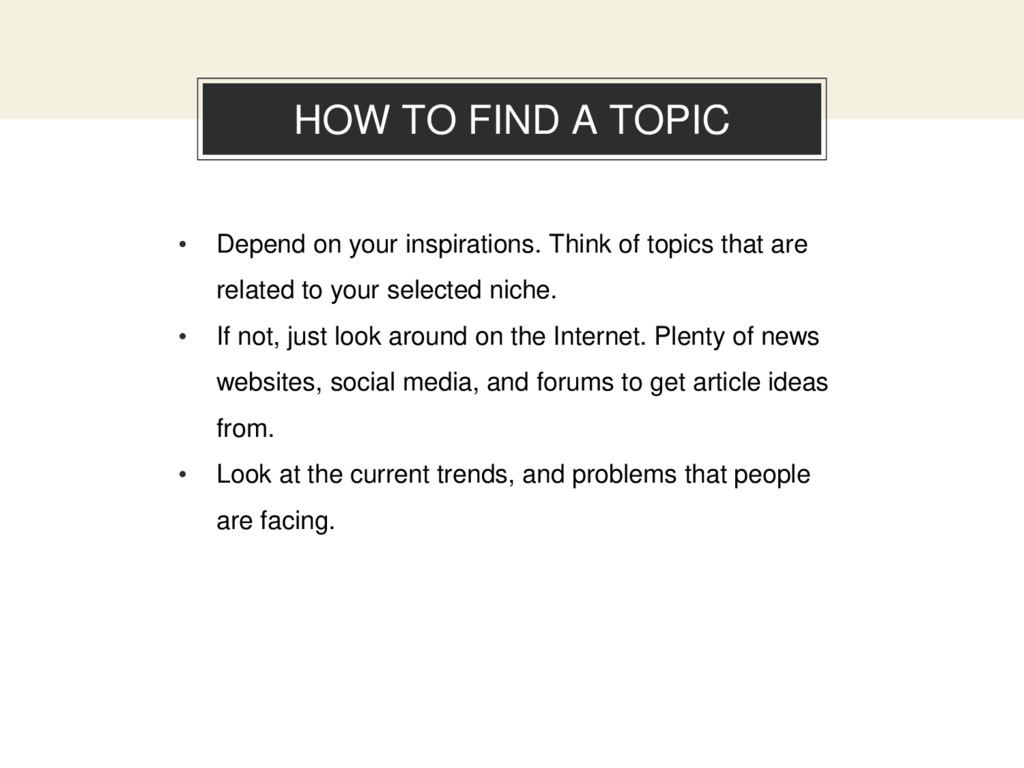
Think of topics that are related to your selected niche. • If not, just look around on the Internet. Plenty of news websites, social media, and forums to get article ideas from. • Look at the current trends, and problems that people are facing.
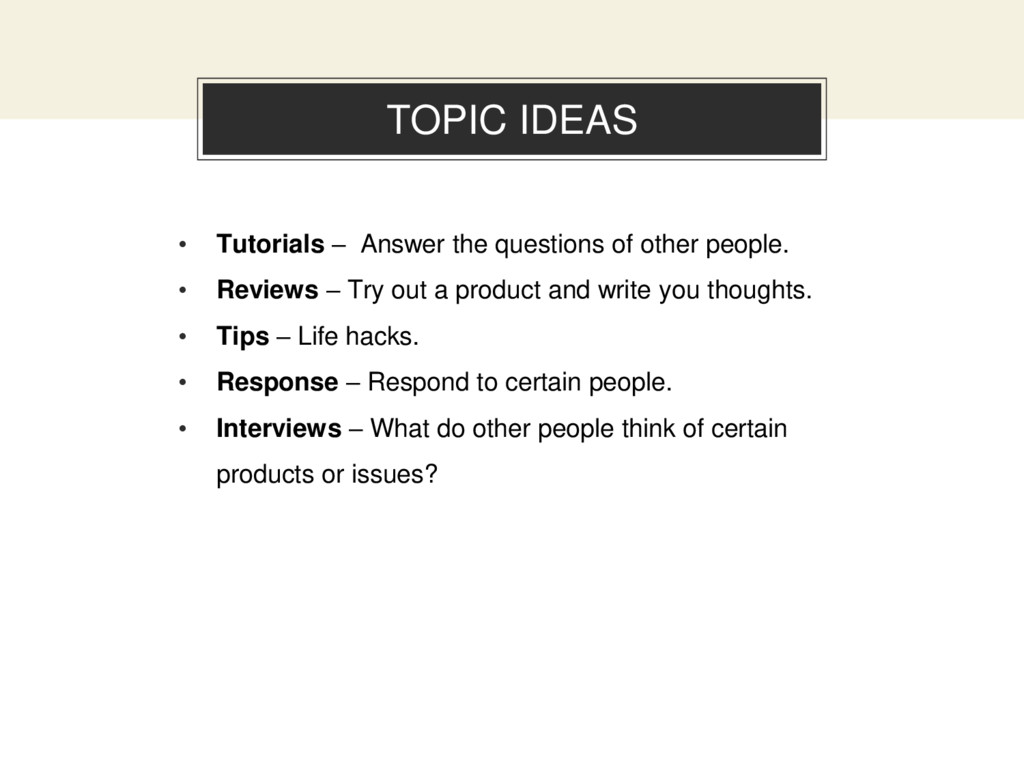
people. • Reviews – Try out a product and write you thoughts. • Tips – Life hacks. • Response – Respond to certain people. • Interviews – What do other people think of certain products or issues?
is time to start thinking like a user. • What do users enter into the search engine to find your article? • For example “beginner guitar lesson”, “basic piano chords” or “how to start a business”? • You do not need to exhaust the list, but just come up with 3-5 good seed keywords.
tools to find more related keywords. • You can use keyword.io and/or ubersuggest.io to help you. • If not, you can also enter your search term into Google, and use their suggested search terms.
keywords with more than 3 words, or what we call “long tail keywords”. • This is because the short keywords are usually generic and hard to score. • For example, “piano lessons” can refer to “free lessons”, “beginners”, “advanced” or even specific “classical” lessons. • Using keywords such as “basic chords piano lesson” is much better and more specific.
list of keywords, but which are the best? • Use the Google Keyword Planner to help you get more data. • No worries, it is a free tool. • Simply enter your keywords into “get search volume data and trends” and analyze the numbers.
free keywords research tool, here are a few consideration factors. • Search volume – No point targeting keywords that nobody has any interest in. • Value – This is the suggested bid for paid search. But also a good indicator that there’s market. • Competition – Nobody targets a keyword that has no interest and value… This is also a good indication.
a good idea to do a search of that exact keyword on search engines. • See who are the top 5 results. • If they are all big boys with multi-million dollar marketing budget and extremely well written content – you are going to have a hard time winning. • Go for keywords that has value and less competition.
on the past data. • It does not mean that keywords with low value are bad. • It could mean that the trend has not yet picked up. • If you want, you can predict and target trends. • Whichever keyword you choose, remember to only pick the best few – Do not attempt to choose a dozen of them and spam.


 aguarlim
 denniskardys
 cromwellryan
 brad_frost
 inesmontani
 nikkihalliwell
 tammyeverts
 pwiseman
 aarron
 ammeep
 vanstee
 axbom