Upgrade to Pro
— share decks privately, control downloads, hide ads and more …
Speaker Deck
Sign up for free
Menu
Search
Features
All features
Private URLs
Password Protection
Custom URLS
Scheduled publishing
Remove Branding
Restrict embedding
Deck Collections
Notes
Features
All features
Private URLs
Password Protection
Custom URLS
Scheduled publishing
Remove Branding
Restrict embedding
Deck Collections
Notes
Explore
Featured decks
Featured speakers
Programming
Technology
Storyboards
Explore
Featured decks
Featured speakers
Programming
Technology
Storyboards
Pricing
Search
Sign in
Sign up for free
Python Idiomático
Search
Alejandro Gómez
October 20, 2013
Programming
160
2
Share
Embed
Copy iframe code
Copy JS code
Copy link
Start on current slide
Python Idiomático
Alejandro Gómez
October 20, 2013
Other Decks in Programming
See All in Programming
Streamlitで実現する自然言語データアプリ開発
ayumu_yamaguchi
1
330
技術的負債の返済は、AI時代の複利で効く投資 — 経営としての意思決定とその遂行
curekoshimizu
1
2k
選挙速報を多くのユーザーへ 届ける Live Activities 設計
hamayokokuririn
0
190
仕様駆動開発による爆速プロダクト開発 / Bakusoku Spec Driven Development
kobakei
0
150
すこし踏み込む CancellationToken
htkym
2
1.5k
Go × SIMDで高速化するベクトル検索 ~ルーフラインモデルでSIMDが効く境界を探れ! ~
po3rin
1
5.7k
Apple Intelligence を用いた個人情報誤送信防止、及びユーザーリクエスト体験の改善について
yukiny
0
270
App Intentsのビルドプロセスを支える技術
kntkymt
0
490
Ghostty + Neovimで作る 透明でカッコ良い開発環境
j341nono
0
150
AI が書く Go コードの品質を劇的に向上させる Linter: “declscope”
mpyw
0
460
モデルのリファクタリングが難しいと思ったら、そもそも複雑だったのはビジネス仕様だった ? / is-the-business-domain-the-real-complexity
hatsu38
0
430
TiDB Cloudのカスタムコントローラーによるオートスケール対応
takaidohigasi
0
140
Featured
See All Featured
Leo the Paperboy
mayatellez
10
2.3k
Six Lessons from altMBA
skipperchong
29
4.5k
Digital Projects Gone Horribly Wrong (And the UX Pros Who Still Save the Day) - Dean Schuster
uxyall
1
3.2k
The Cost Of JavaScript in 2023
addyosmani
55
10k
sira's awesome portfolio website redesign presentation
elsirapls
0
430
The Director’s Chair: Orchestrating AI for Truly Effective Learning
tmiket
1
310
JavaScript: Past, Present, and Future - NDC Porto 2020
reverentgeek
52
6.1k
From π to Pie charts
rasagy
1
380
Speed Design
sergeychernyshev
33
2.1k
Music & Morning Musume
bryan
48
7.4k
Site-Speed That Sticks
csswizardry
13
1.5k
Visual Storytelling: How to be a Superhuman Communicator
reverentgeek
2
700
Transcript
@dialelo | github.com/alejandrogomez Python Idiomático
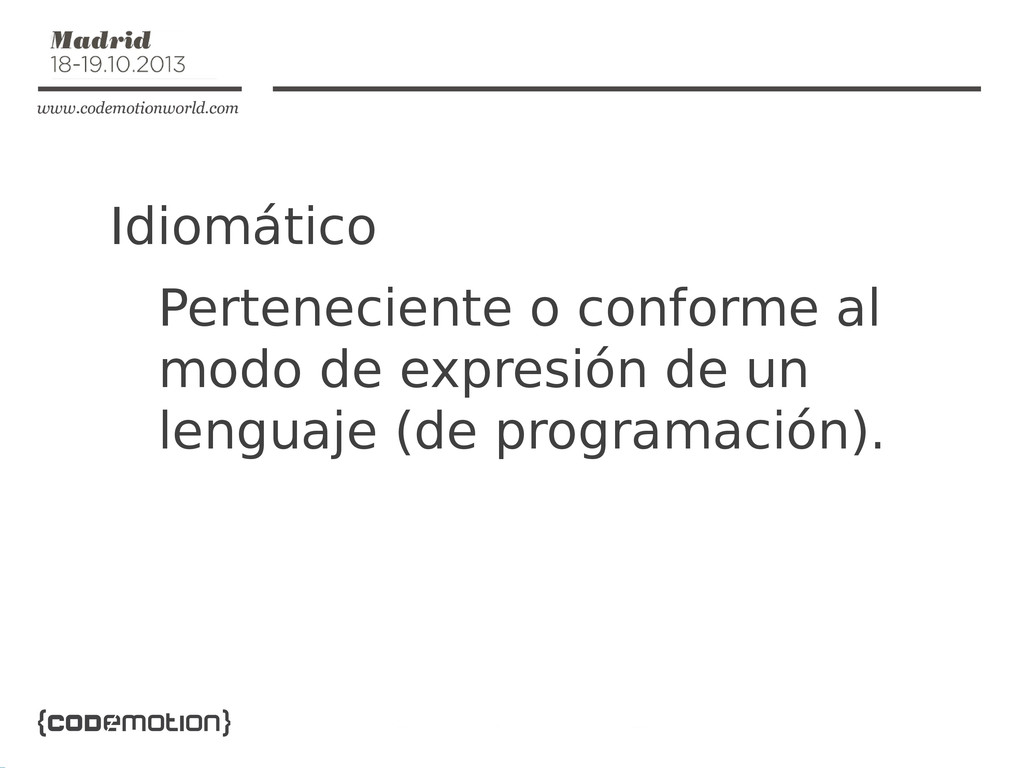
Idiomático Perteneciente o conforme al modo de expresión de un
lenguaje (de programación).
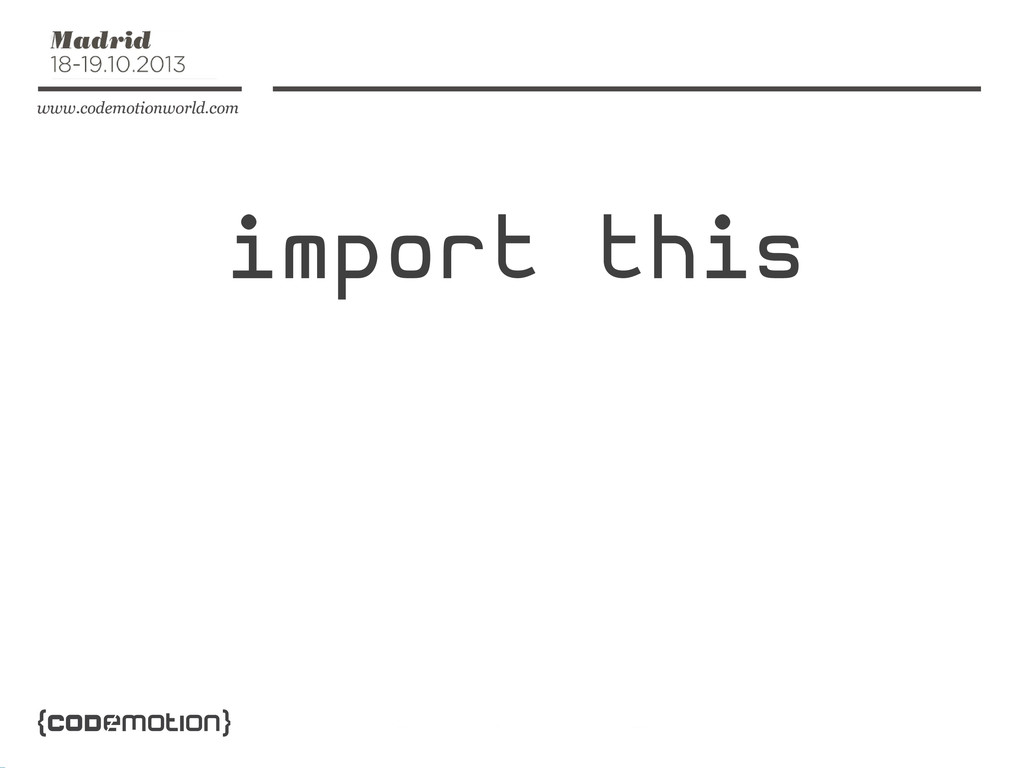
import this
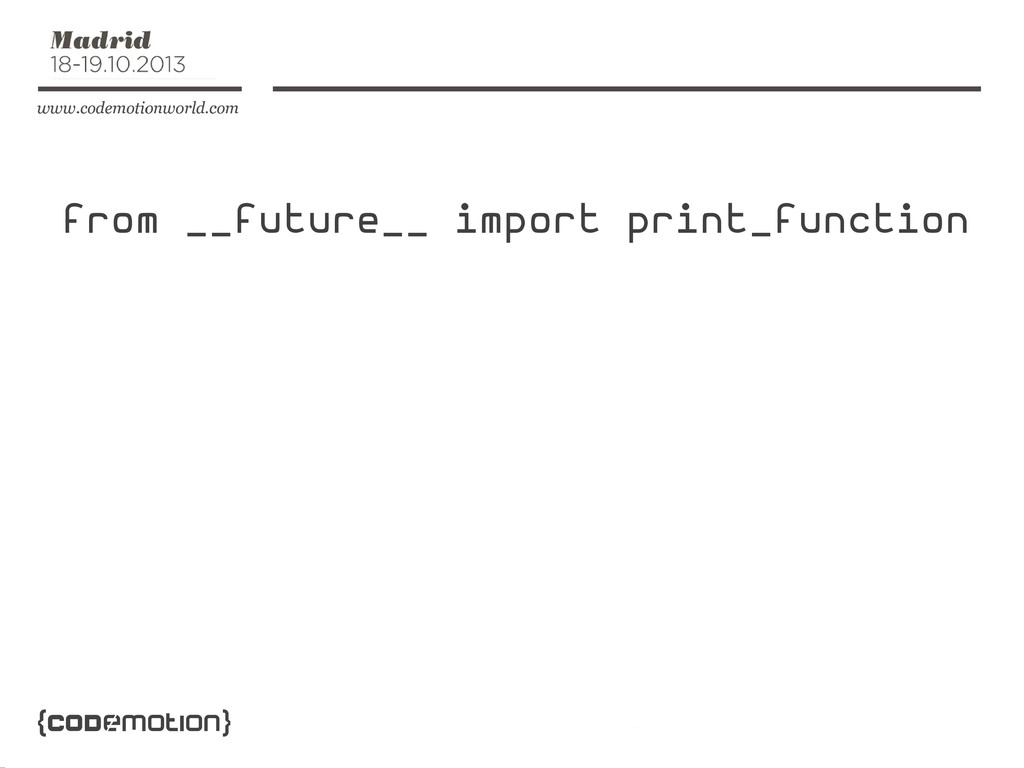
from __future__ import print_function
Unpacking
☹ favorite_color = [0xBA, 0xDA, 0x55] red = favorite_color[0] green
= favorite_color[1] blue = favorite_color[2]
☺ favorite_color = [0xBA, 0xDA, 0x55] red, green, blue =
favorite_color
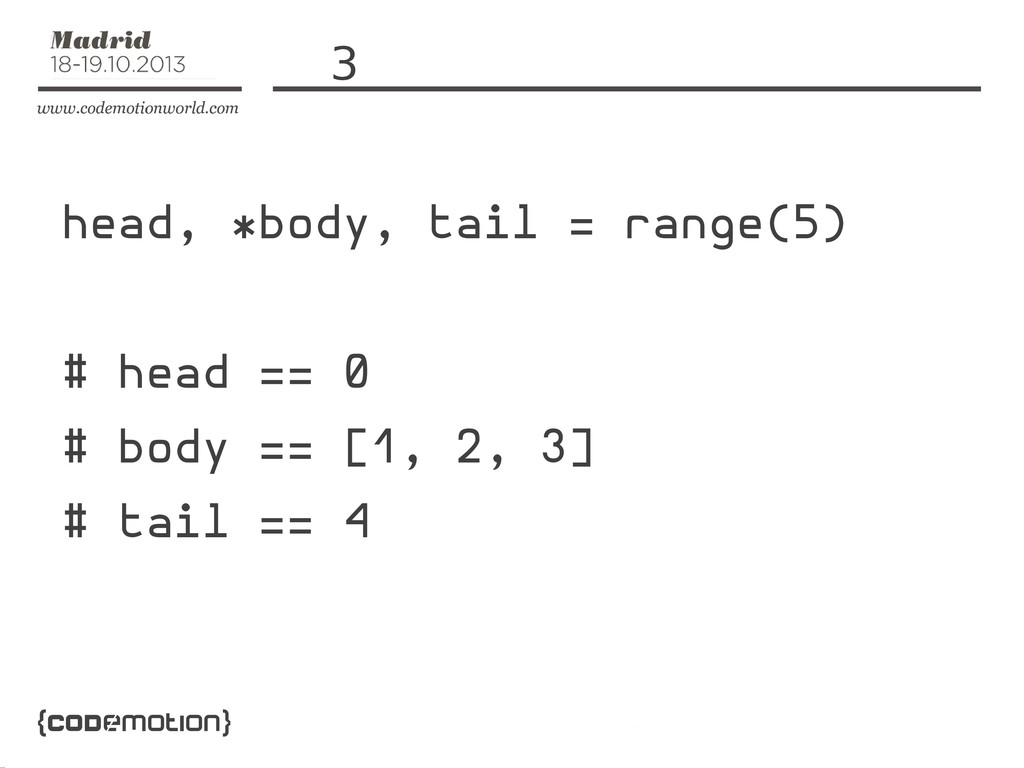
3 head, *body, tail = range(5) # head == 0
# body == [1, 2, 3] # tail == 4
Slices
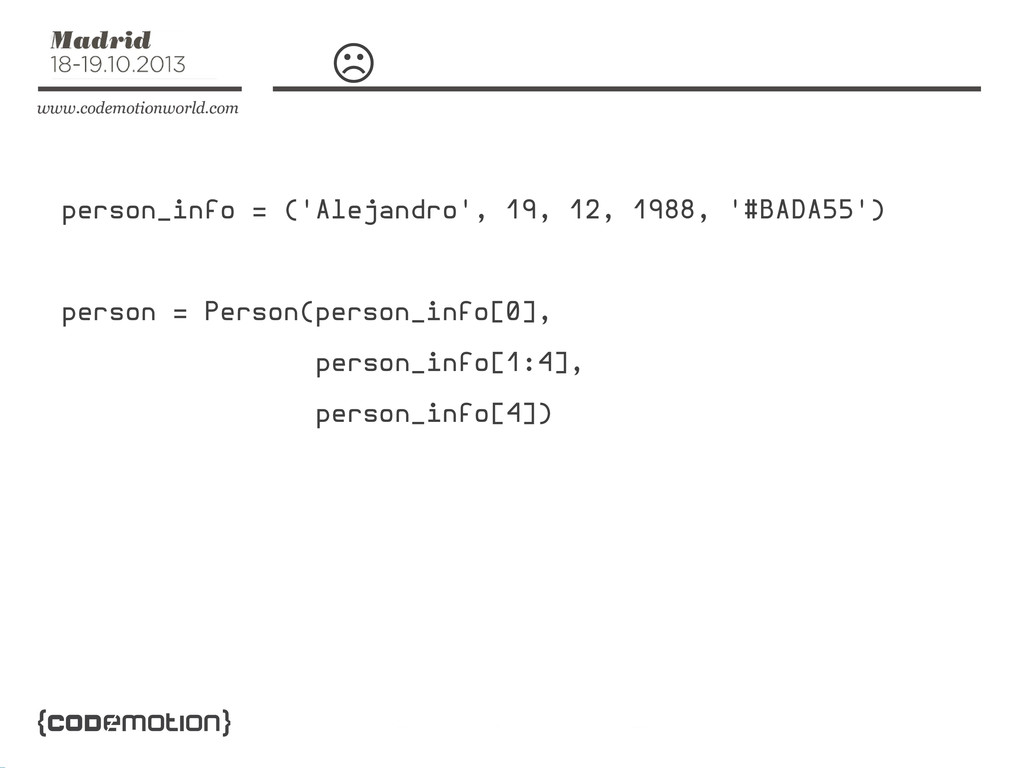
☹ person_info = ('Alejandro', 19, 12, 1988, '#BADA55') person =
Person(person_info[0], person_info[1:4], person_info[4])
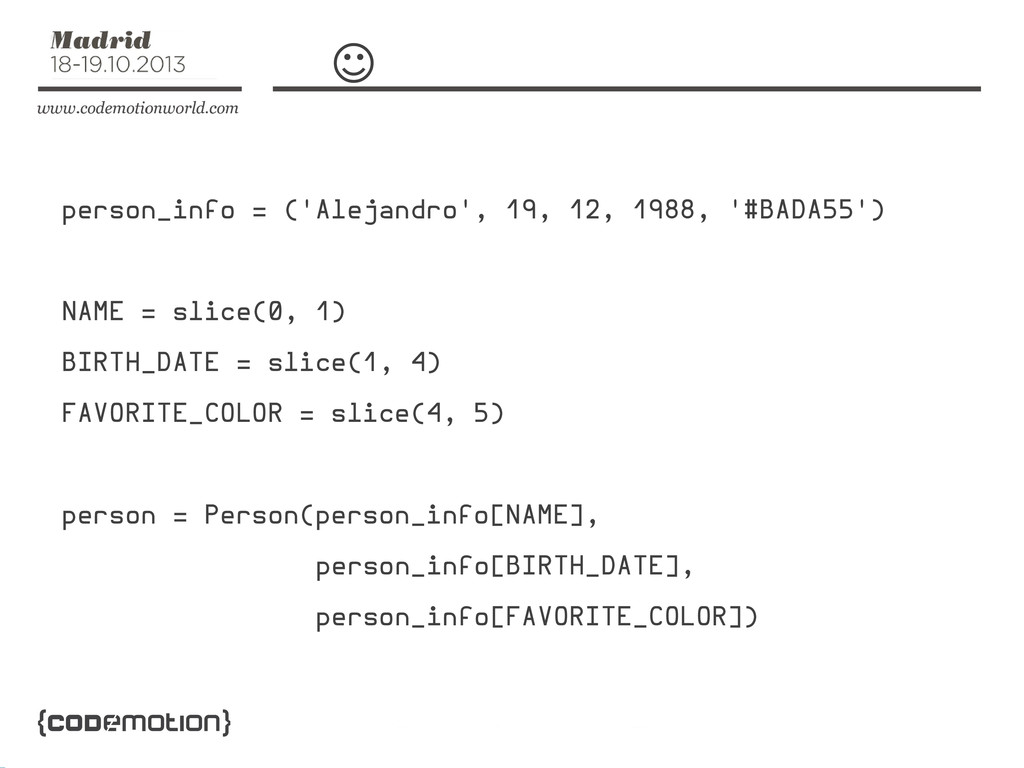
☺ person_info = ('Alejandro', 19, 12, 1988, '#BADA55') NAME =
slice(0, 1) BIRTH_DATE = slice(1, 4) FAVORITE_COLOR = slice(4, 5) person = Person(person_info[NAME], person_info[BIRTH_DATE], person_info[FAVORITE_COLOR])
Strings
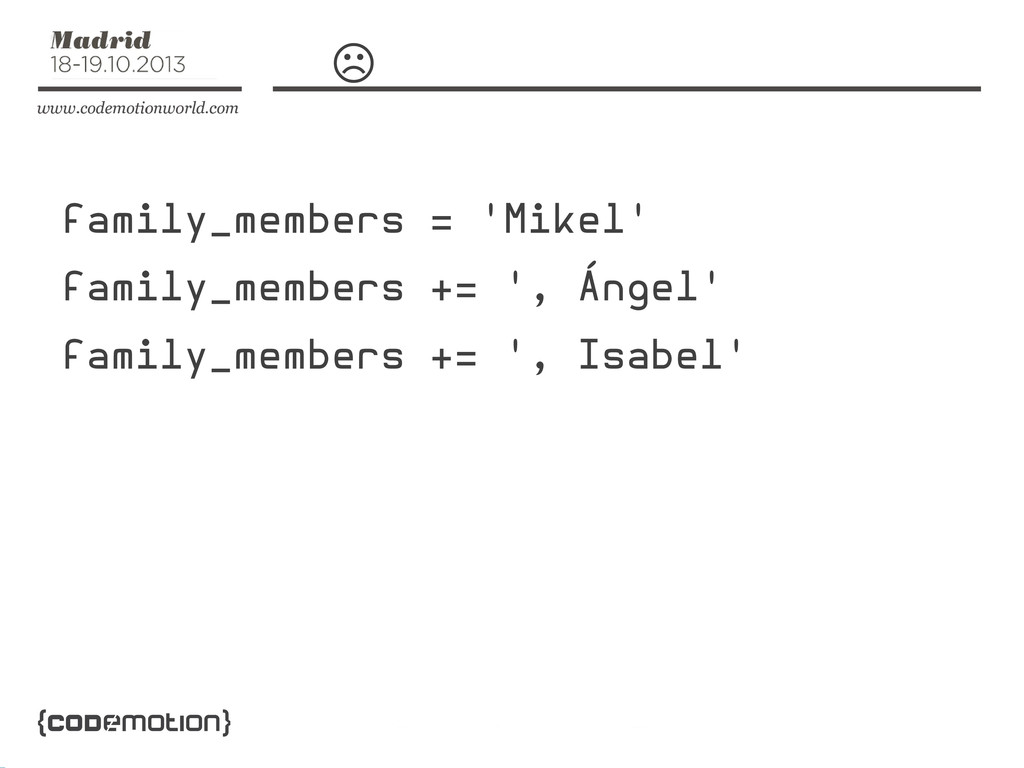
☹ family_members = 'Mikel' family_members += ', Ángel' family_members +=
', Isabel'
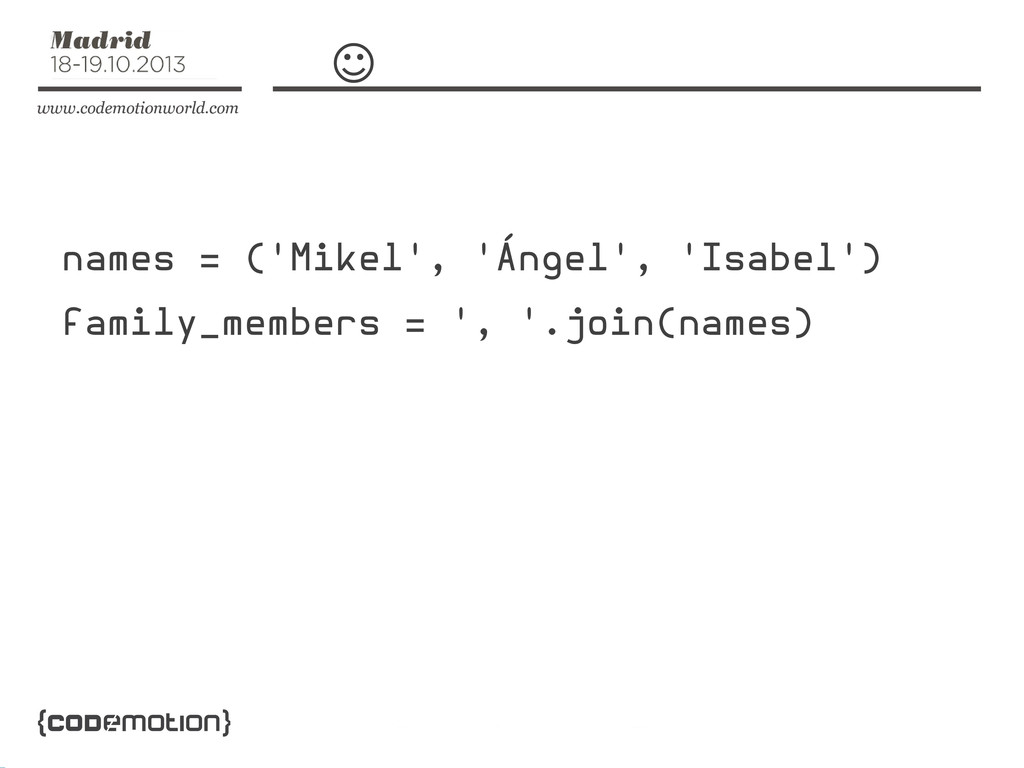
☺ names = ('Mikel', 'Ángel', 'Isabel') family_members = ', '.join(names)
Iteración Con índice
colors = ['red', 'green', 'blue']
☹ for i in range(len(colors)): print( colors[{}] : {} .format(i,
colors[i])) “ ”
☺ for i, color in enumerate(colors): print( colors[{}] : {}
.format(i, colors)) “ ”
Iteración A la inversa
☹ for color in colors[::-1]: print(color)
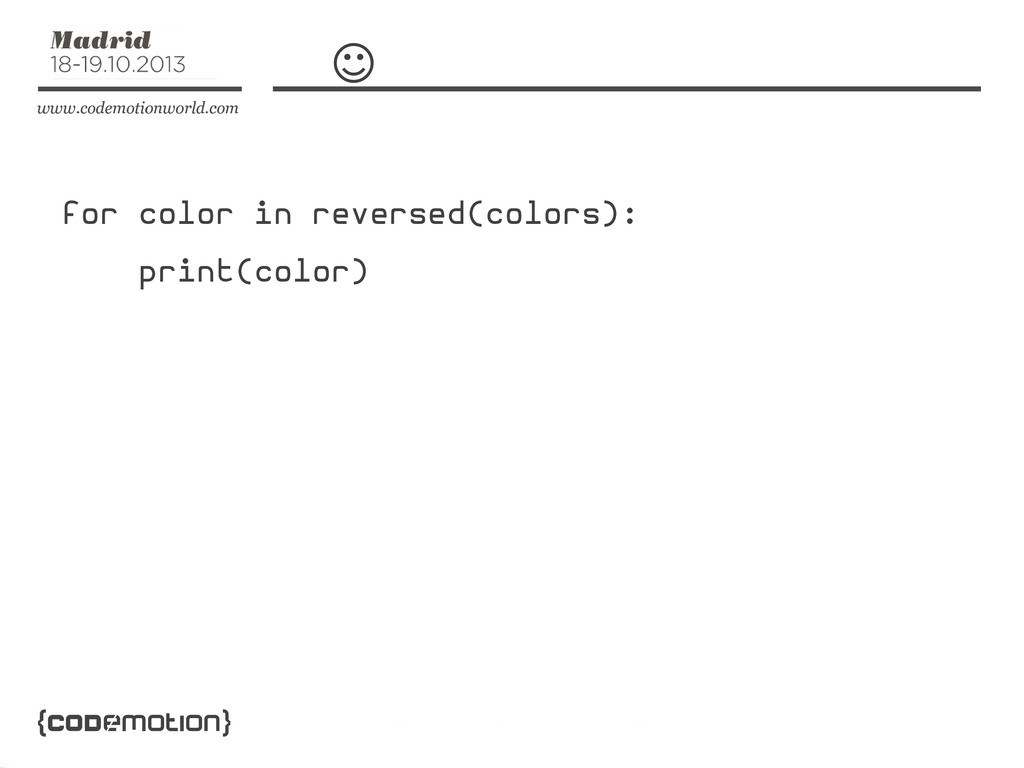
☺ for color in reversed(colors): print(color)
Iteración En orden
☺ for color in sorted(colors): print(color)
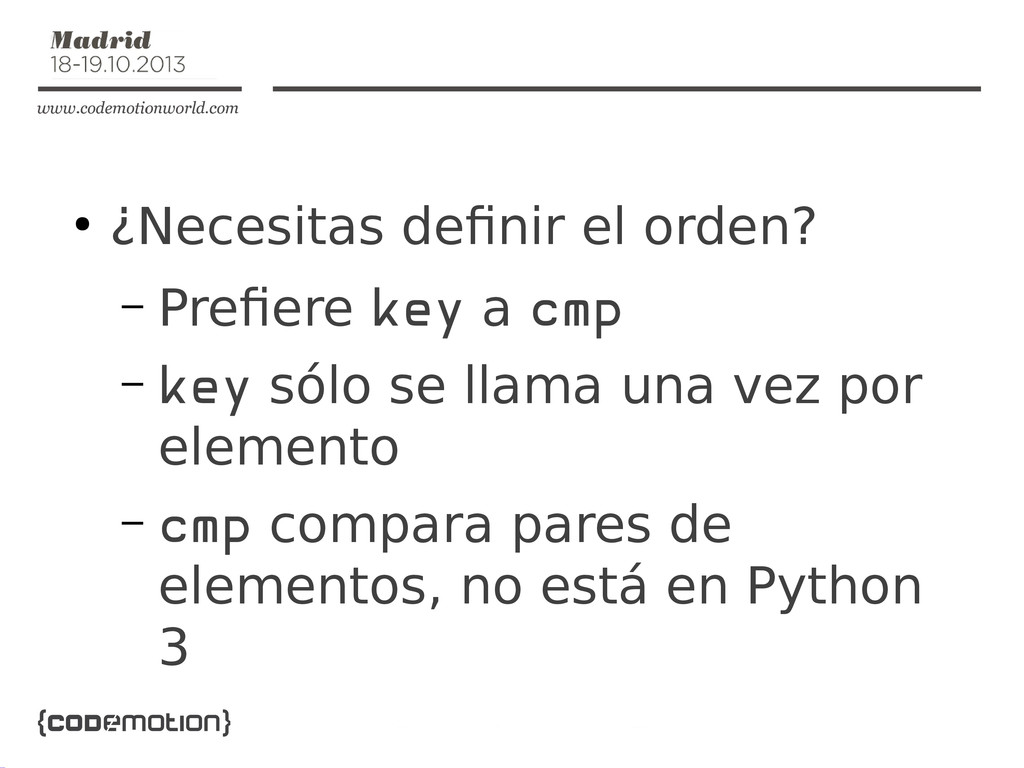
• ¿Necesitas definir el orden? – Prefiere key a cmp
– key sólo se llama una vez por elemento – cmp compara pares de elementos, no está en Python 3
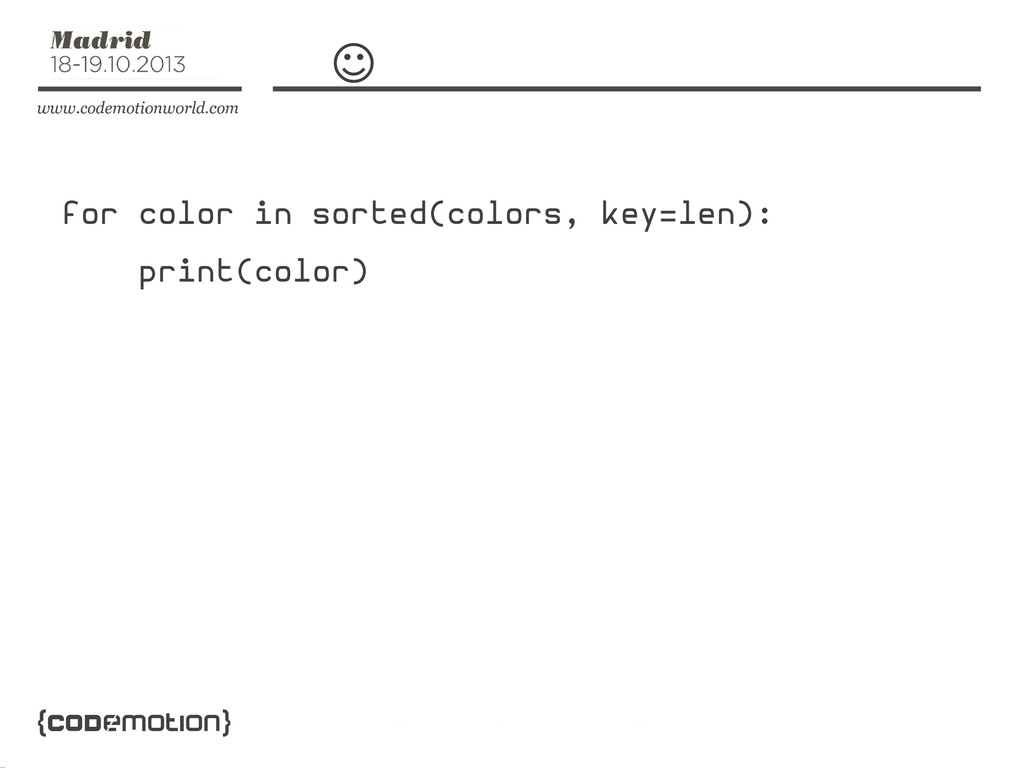
☺ for color in sorted(colors, key=len): print(color)
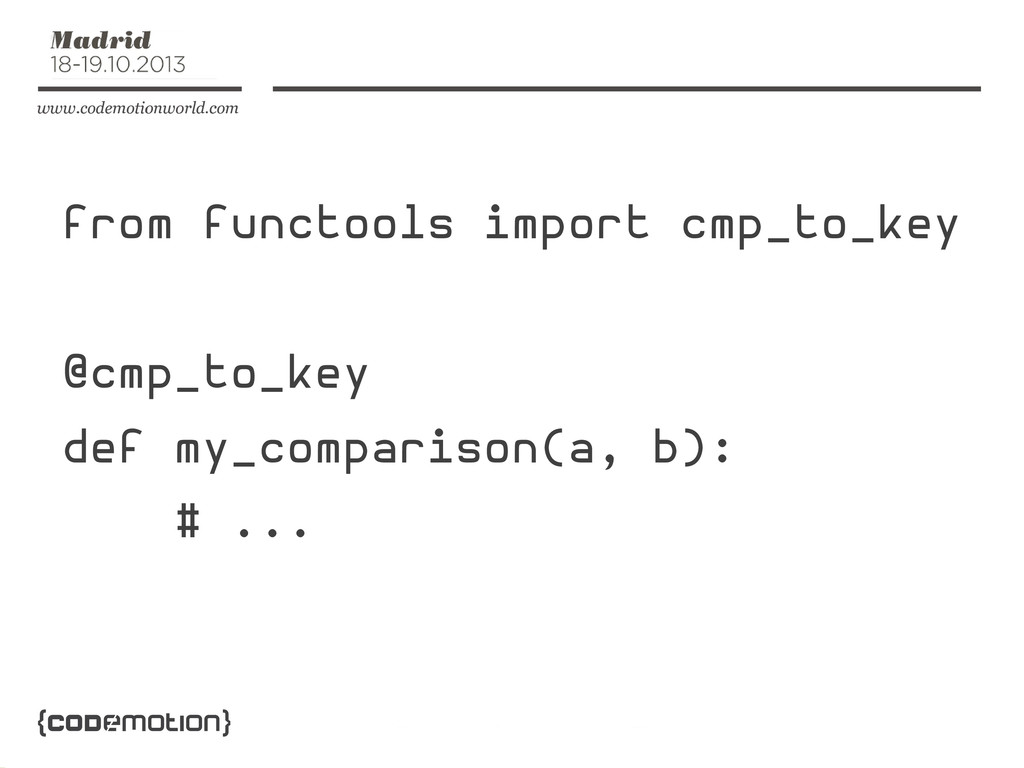
from functools import cmp_to_key @cmp_to_key def my_comparison(a, b): # ...
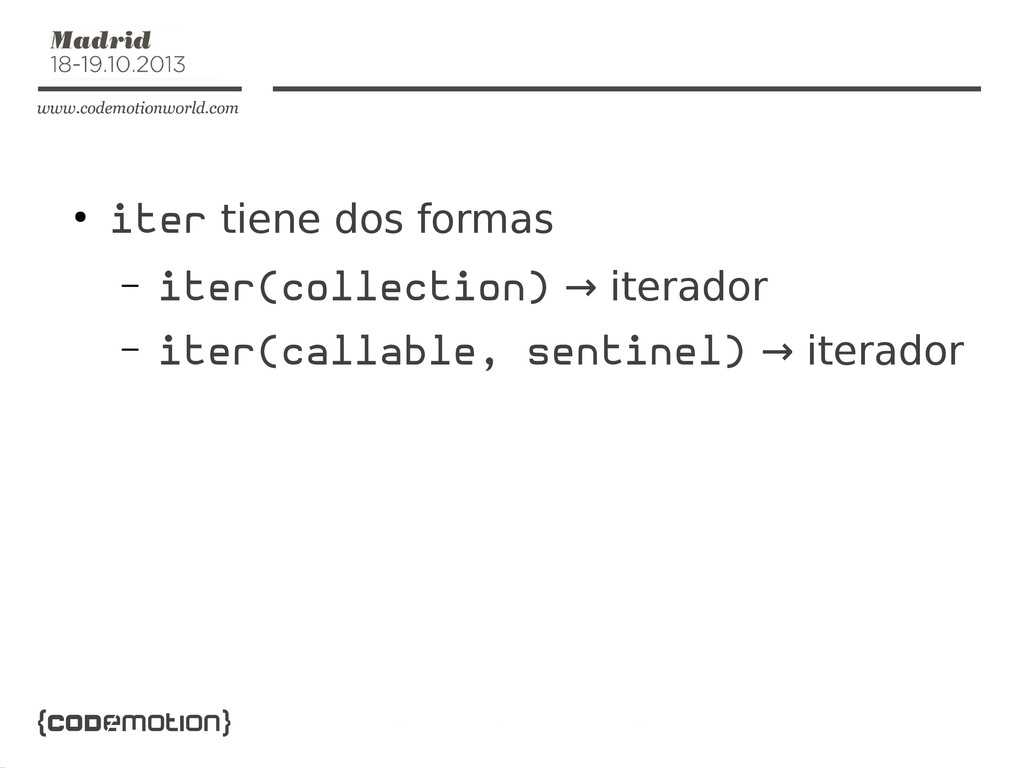
Iteración iter
• iter tiene dos formas – iter(collection) → iterador –
iter(callable, sentinel) → iterador
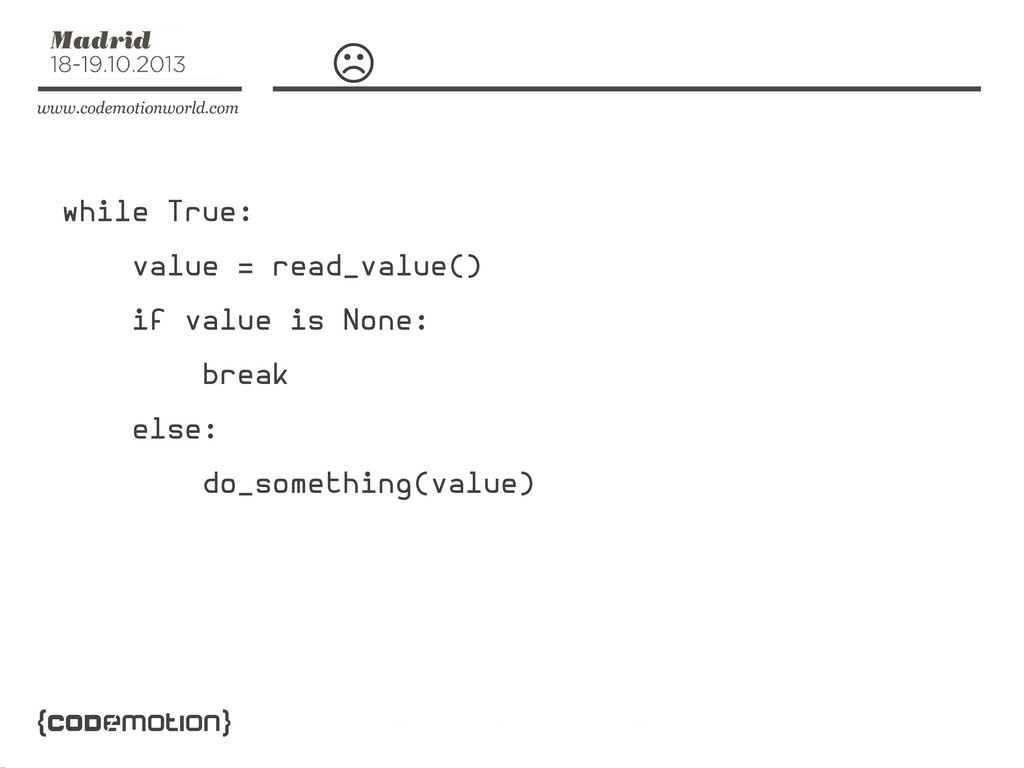
☹ while True: value = read_value() if value is None:
break else: do_something(value)
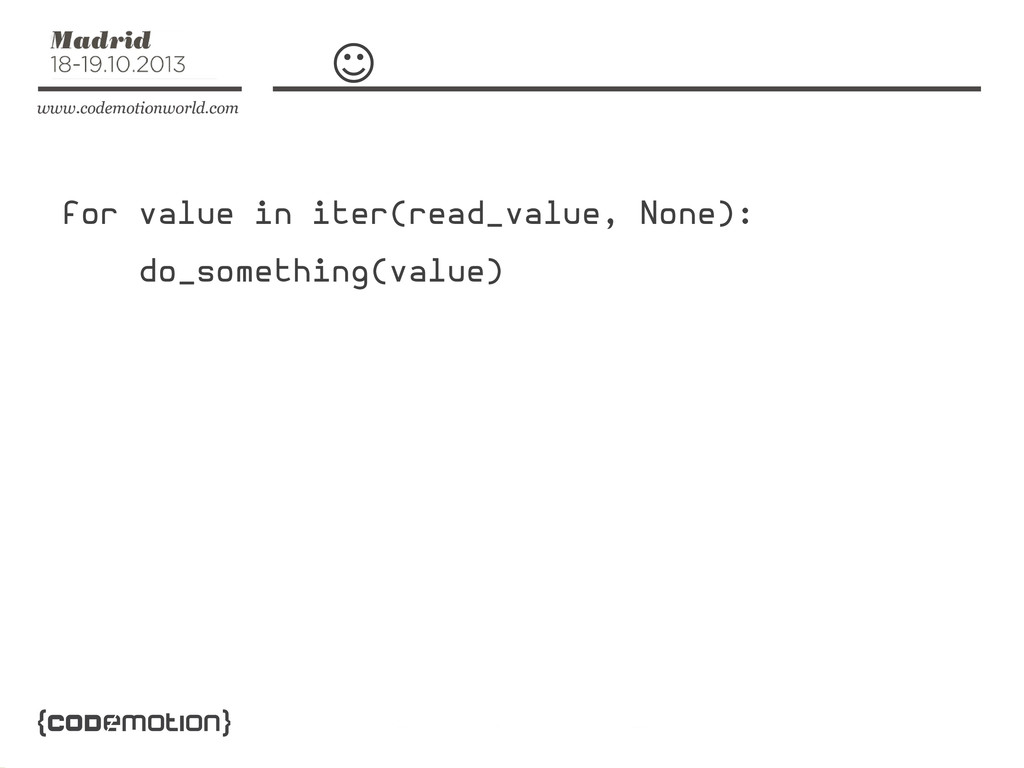
☺ for value in iter(read_value, None): do_something(value)
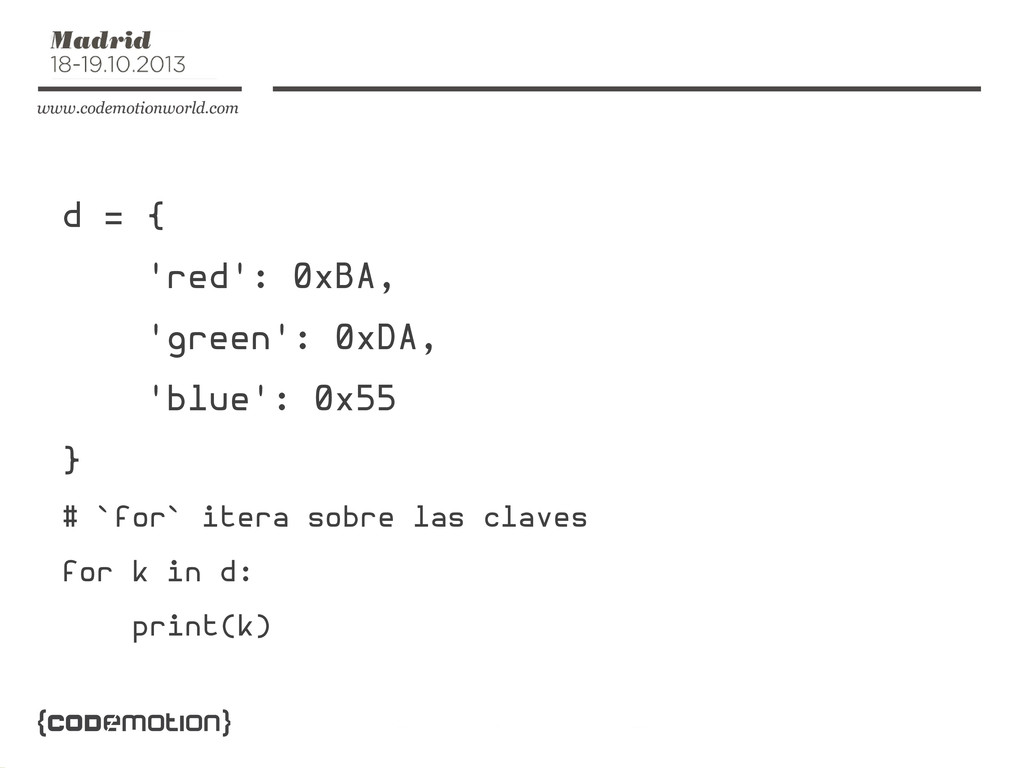
Diccionarios Iterar
d = { 'red': 0xBA, 'green': 0xDA, 'blue': 0x55 }
# `for` itera sobre las claves for k in d: print(k)
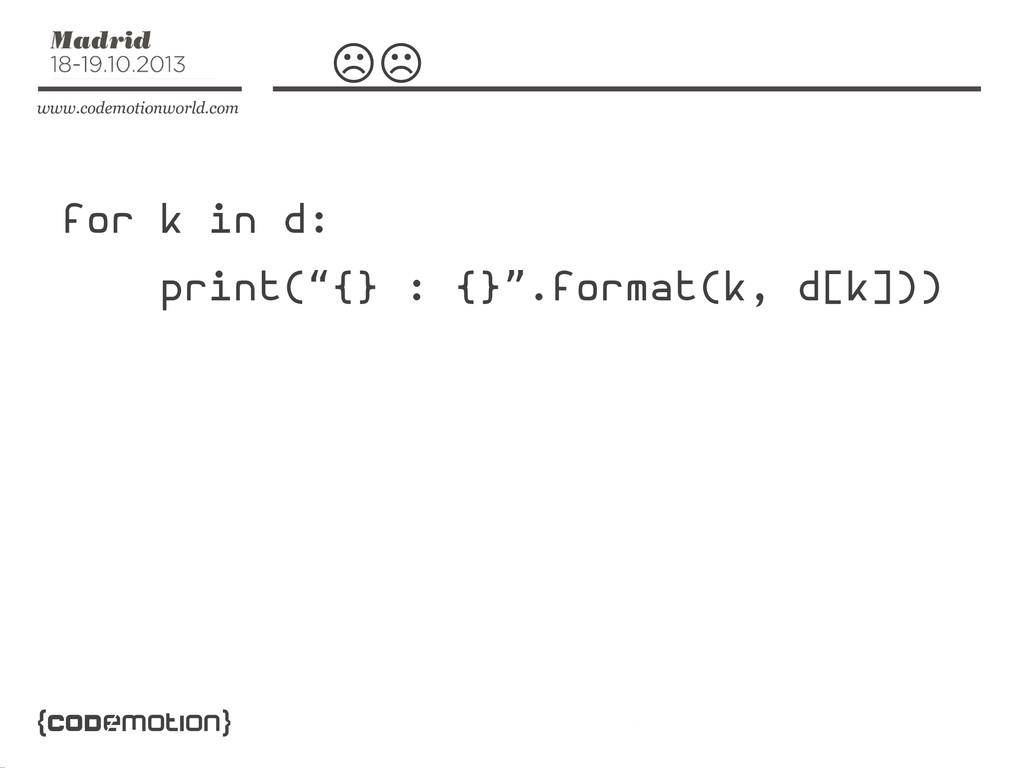
☹☹ for k in d: print( {} : {} .format(k,
d[k])) “ ”
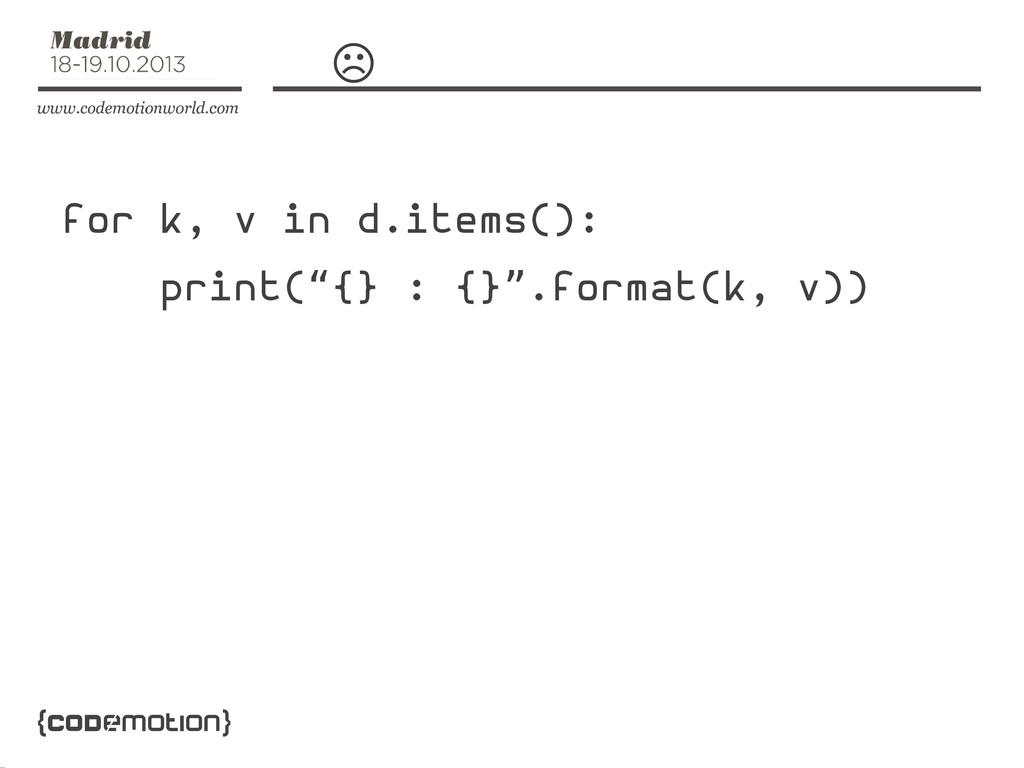
☹ for k, v in d.items(): print( {} : {}
.format(k, v)) “ ”
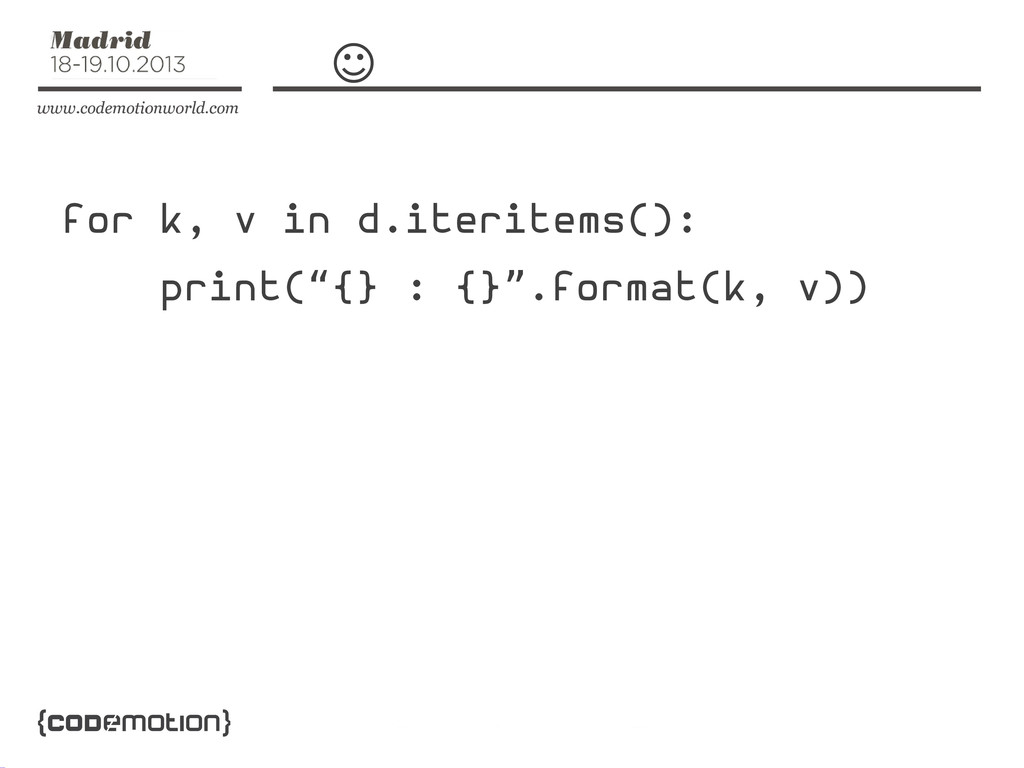
☺ for k, v in d.iteritems(): print( {} : {}
.format(k, v)) “ ”
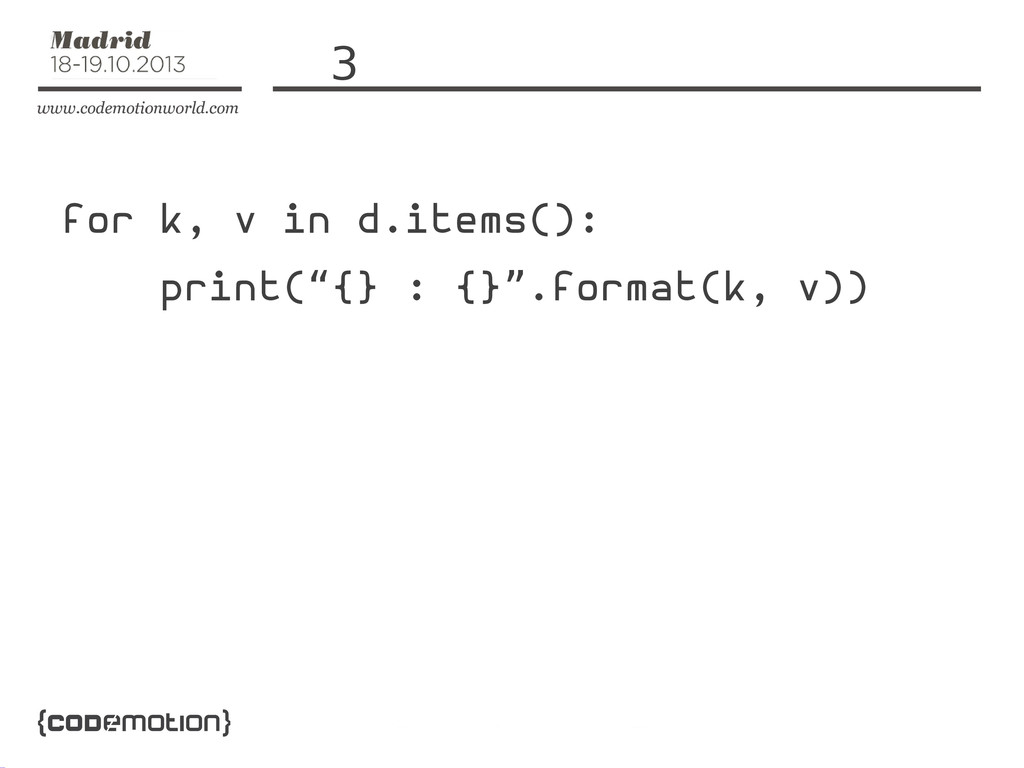
3 for k, v in d.items(): print( {} : {}
.format(k, v)) “ ”
Diccionarios Construir
colors = ['red', 'green', 'blue'] values = [0xBA, 0xDA, 0x55]
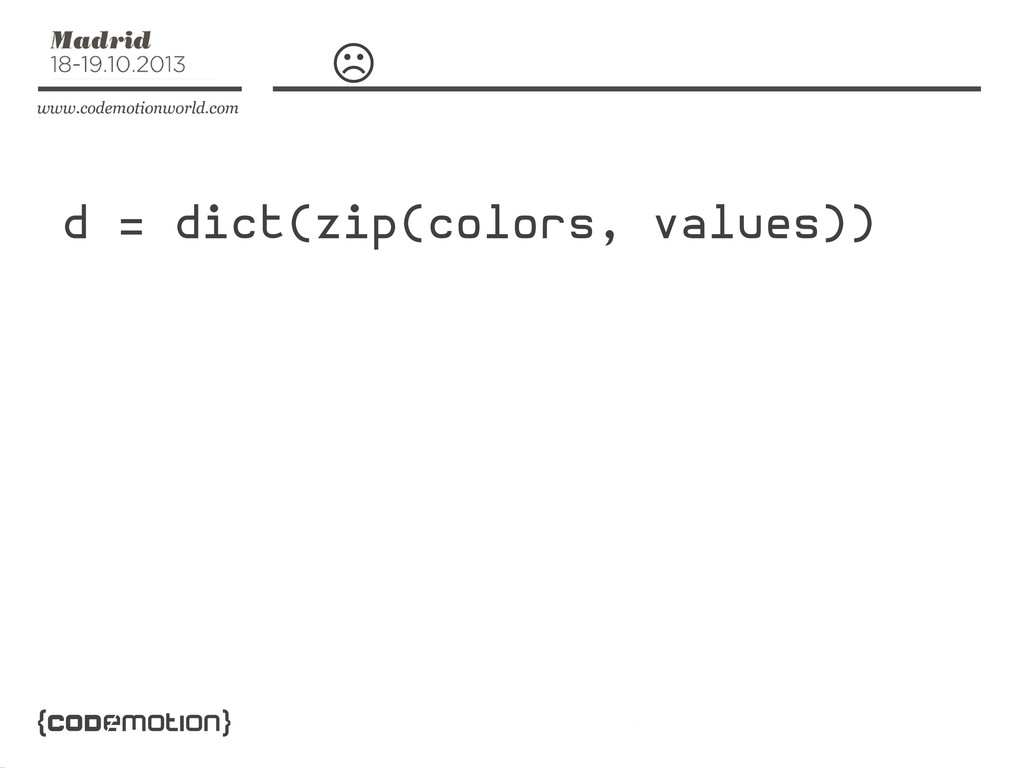
☹ d = dict(zip(colors, values))
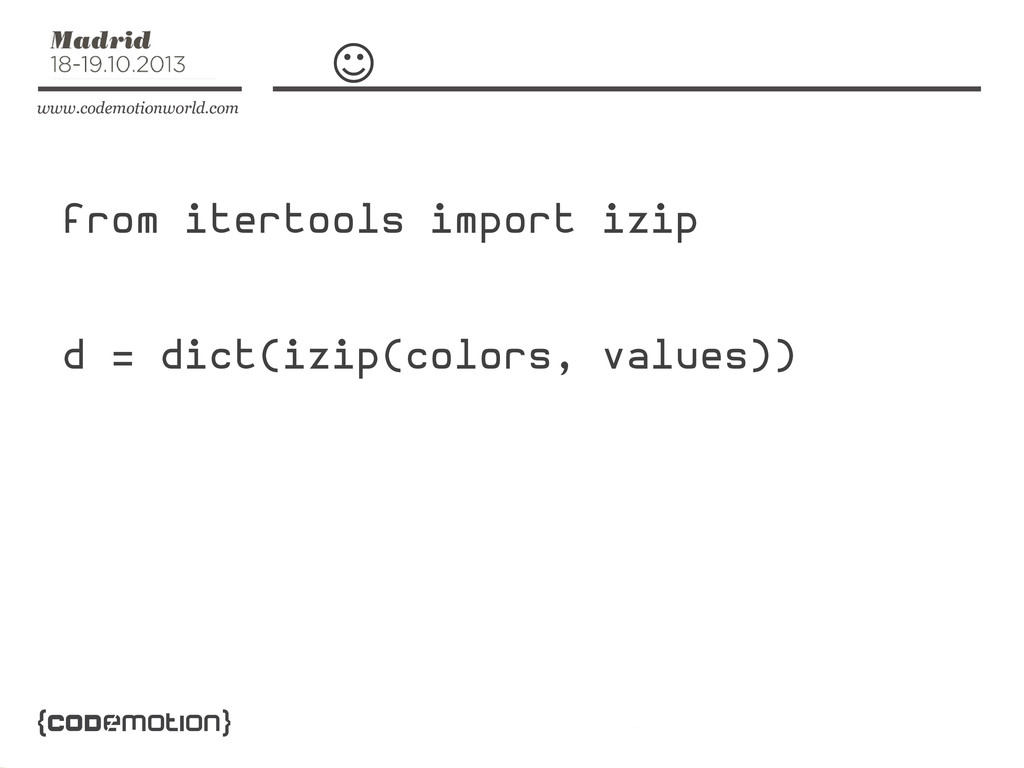
☺ from itertools import izip d = dict(izip(colors, values))
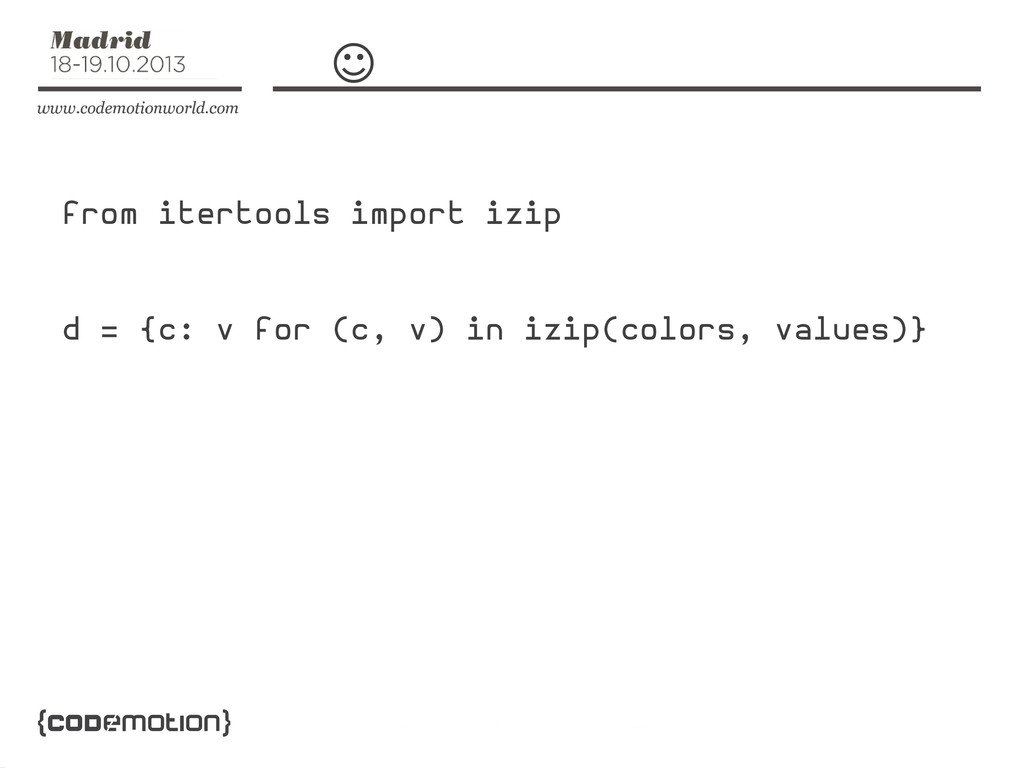
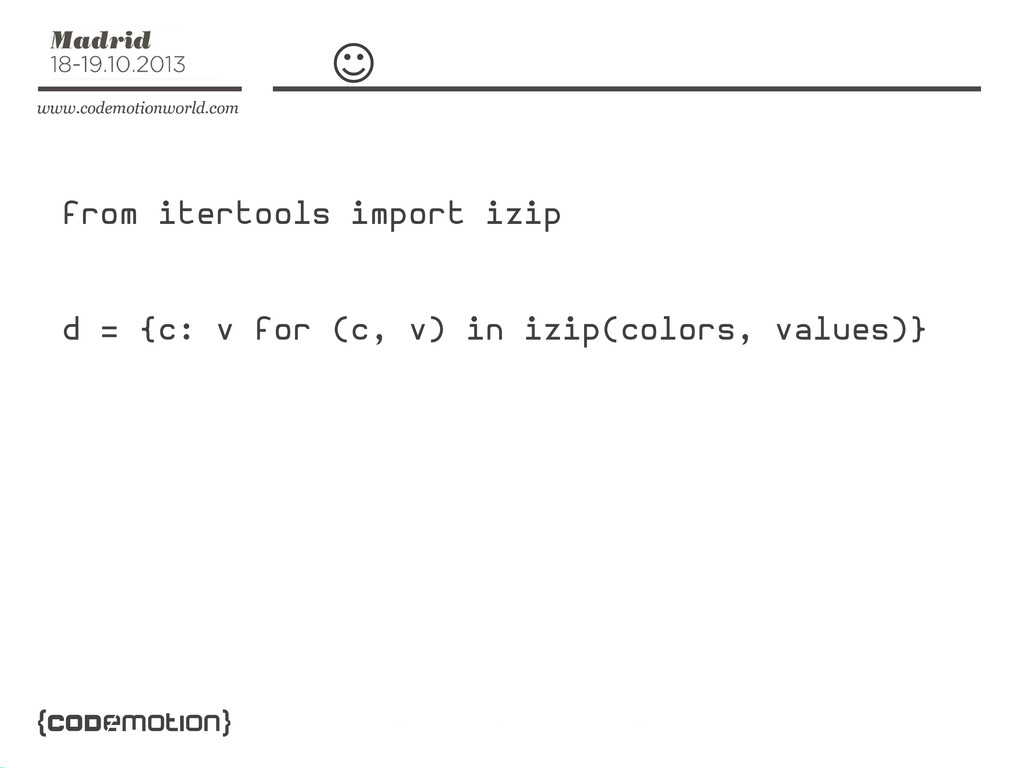
☺ from itertools import izip d = {c: v for
(c, v) in izip(colors, values)}
Diccionarios Combinar
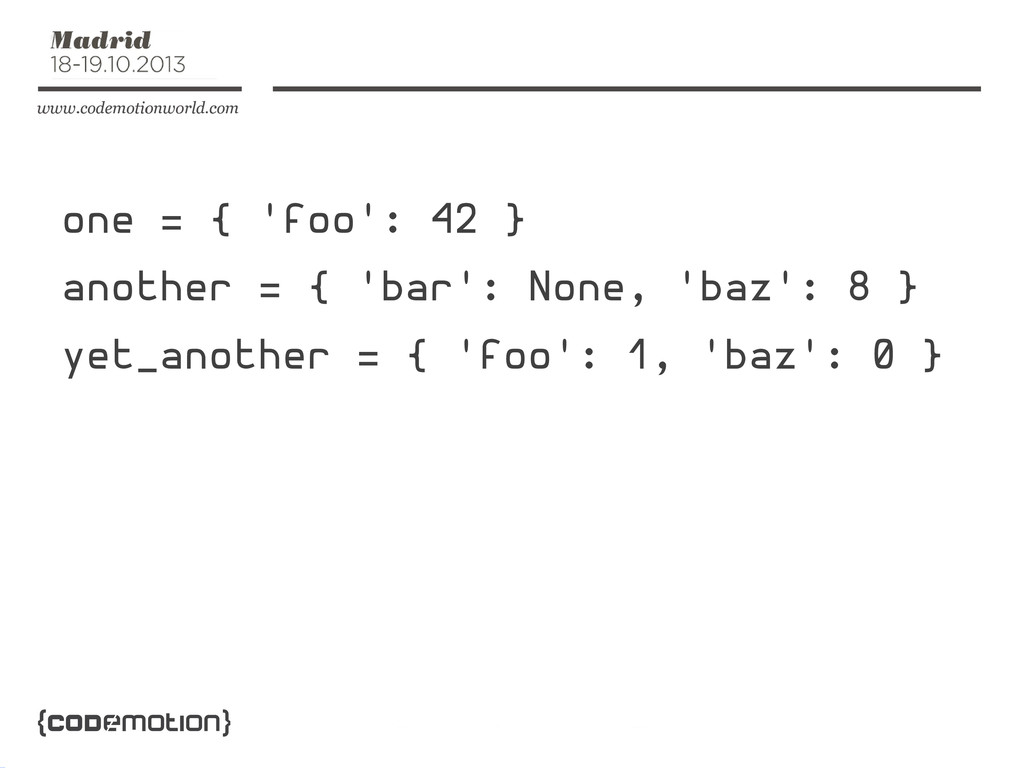
one = { 'foo': 42 } another = { 'bar':
None, 'baz': 8 } yet_another = { 'foo': 1, 'baz': 0 }
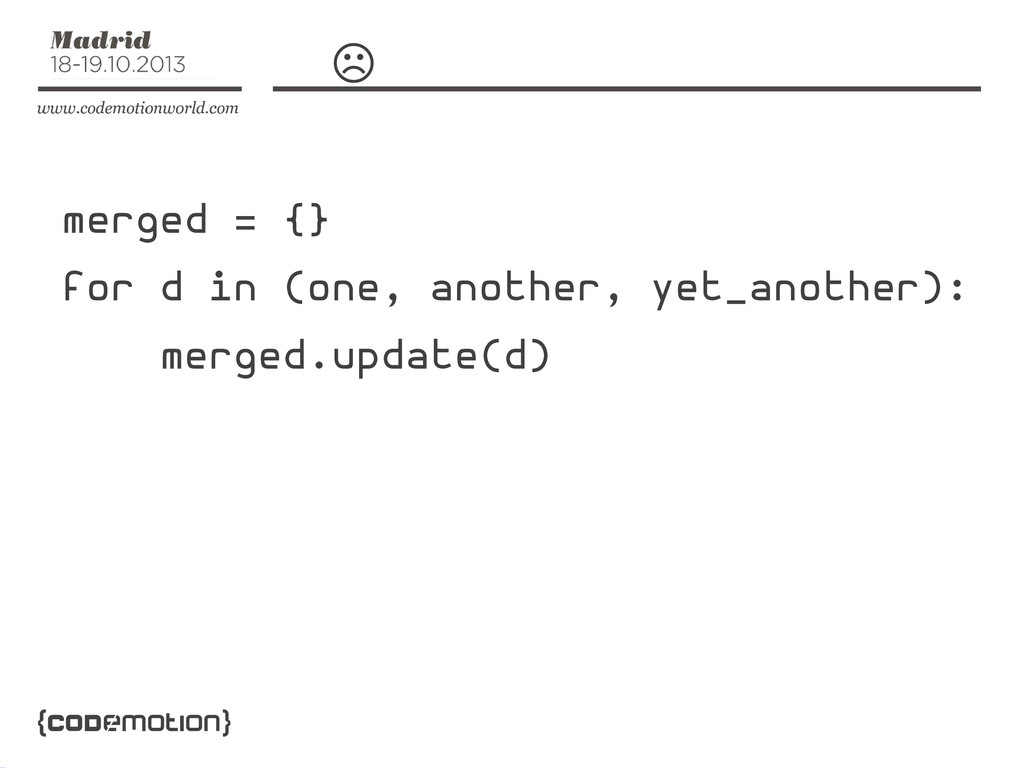
☹ merged = {} for d in (one, another, yet_another):
merged.update(d)
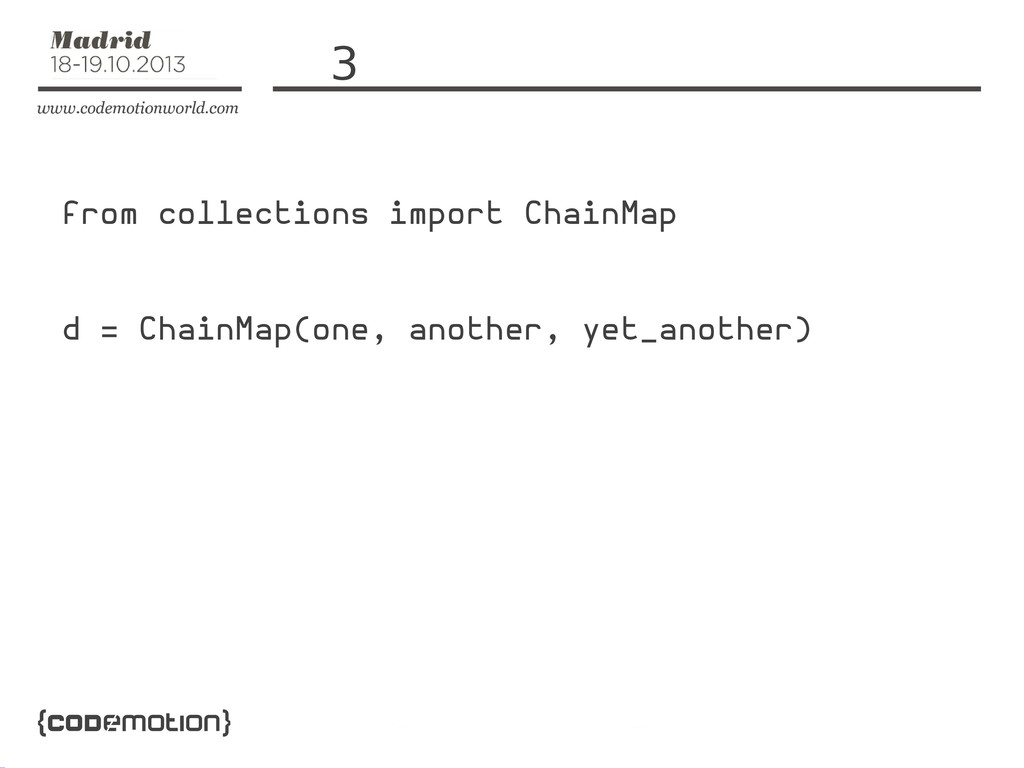
3 from collections import ChainMap d = ChainMap(one, another, yet_another)
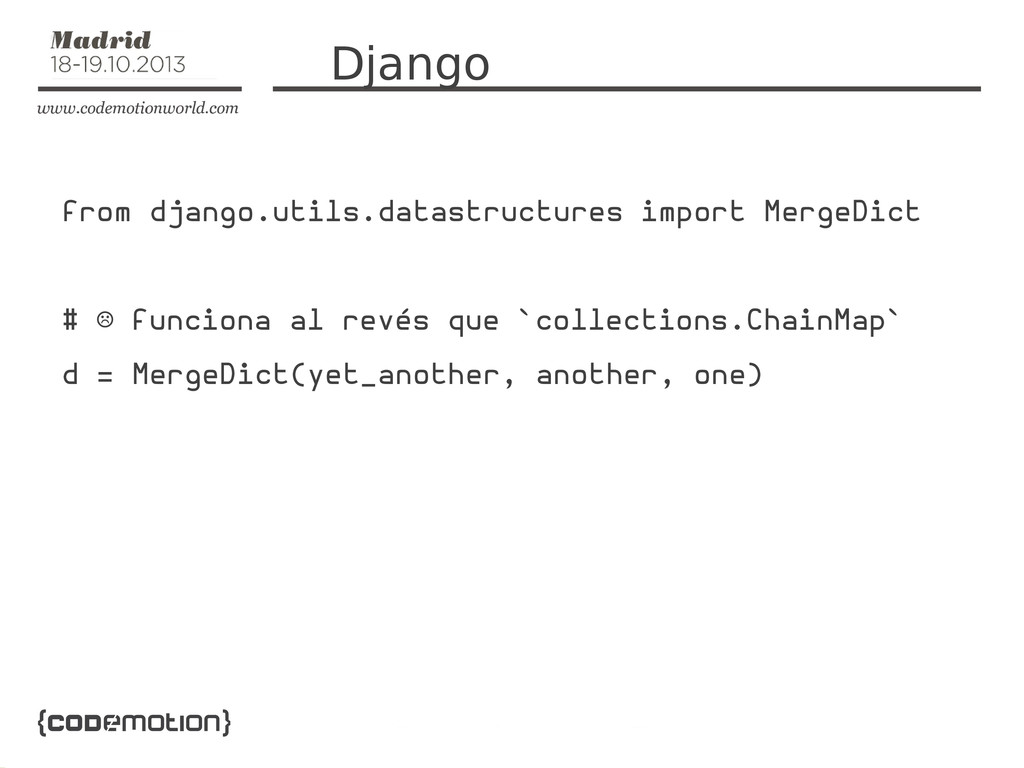
Django from django.utils.datastructures import MergeDict # funciona al revés que
`collections.ChainMap` ☹ d = MergeDict(yet_another, another, one)
☺ from itertools import izip d = {c: v for
(c, v) in izip(colors, values)}
Funciones λ
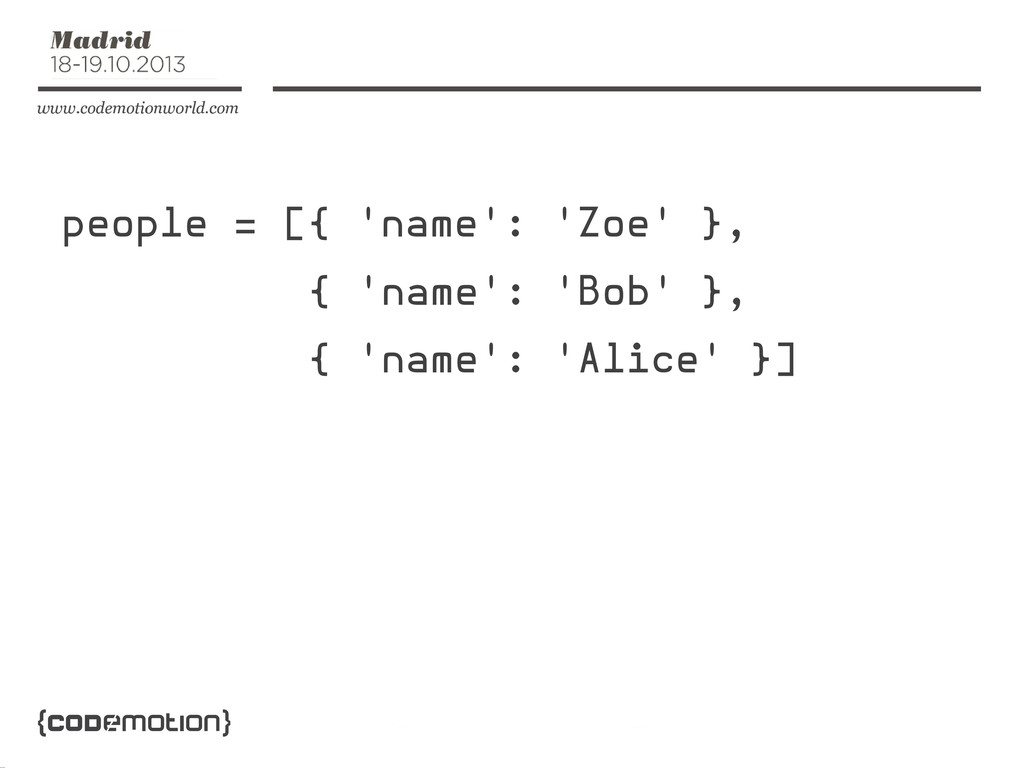
people = [{ 'name': 'Zoe' }, { 'name': 'Bob' },
{ 'name': 'Alice' }]
☹ for p in sorted(people, key=lambda p: p['name']): print(p)
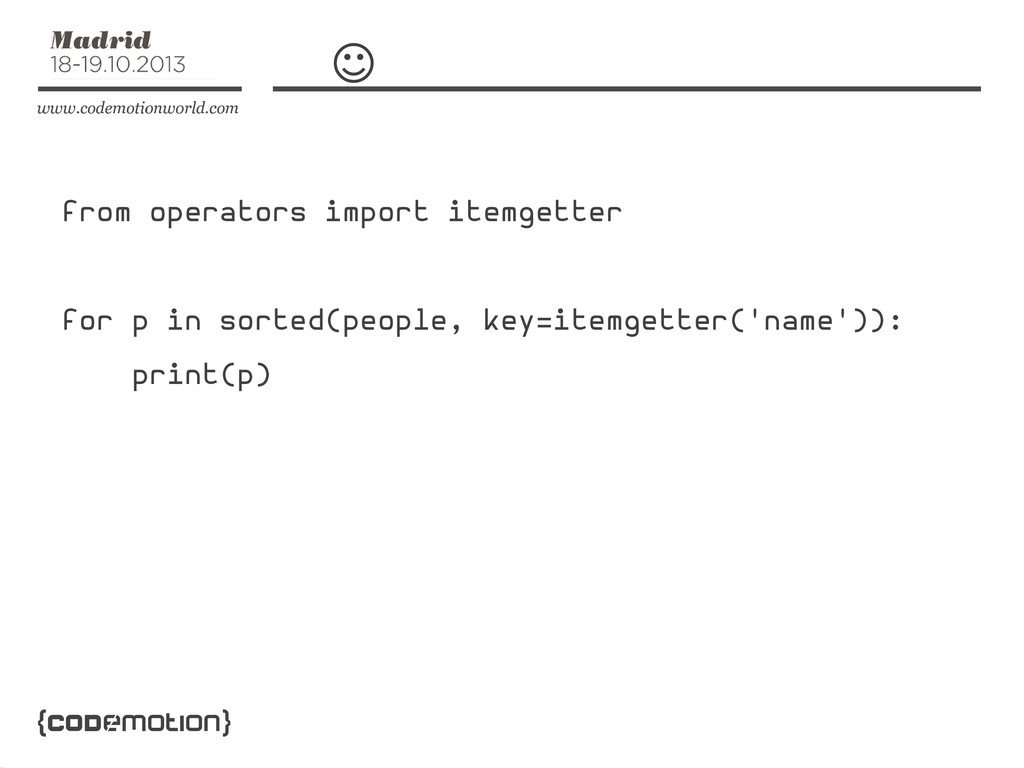
☺ from operators import itemgetter for p in sorted(people, key=itemgetter('name')):
print(p)
Funciones Argumentos
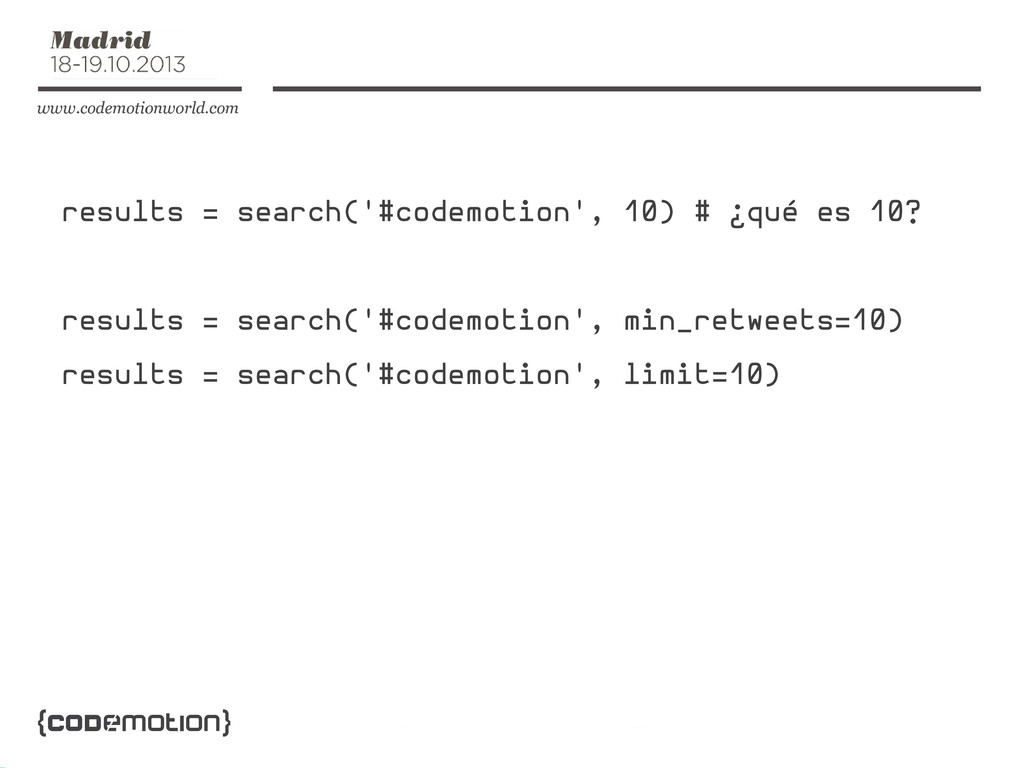
results = search('#codemotion', 10) # ¿qué es 10? results =
search('#codemotion', min_retweets=10) results = search('#codemotion', limit=10)
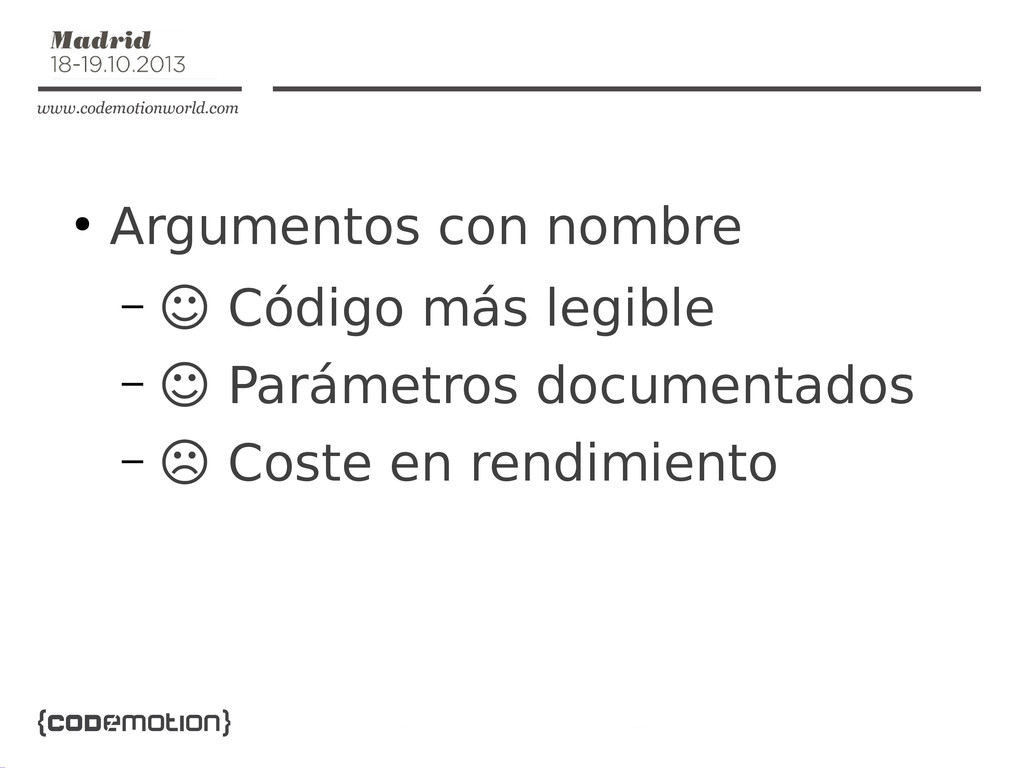
• Argumentos con nombre – ☺ Código más legible –
☺ Parámetros documentados – ☹ Coste en rendimiento
Funciones Valores de retorno
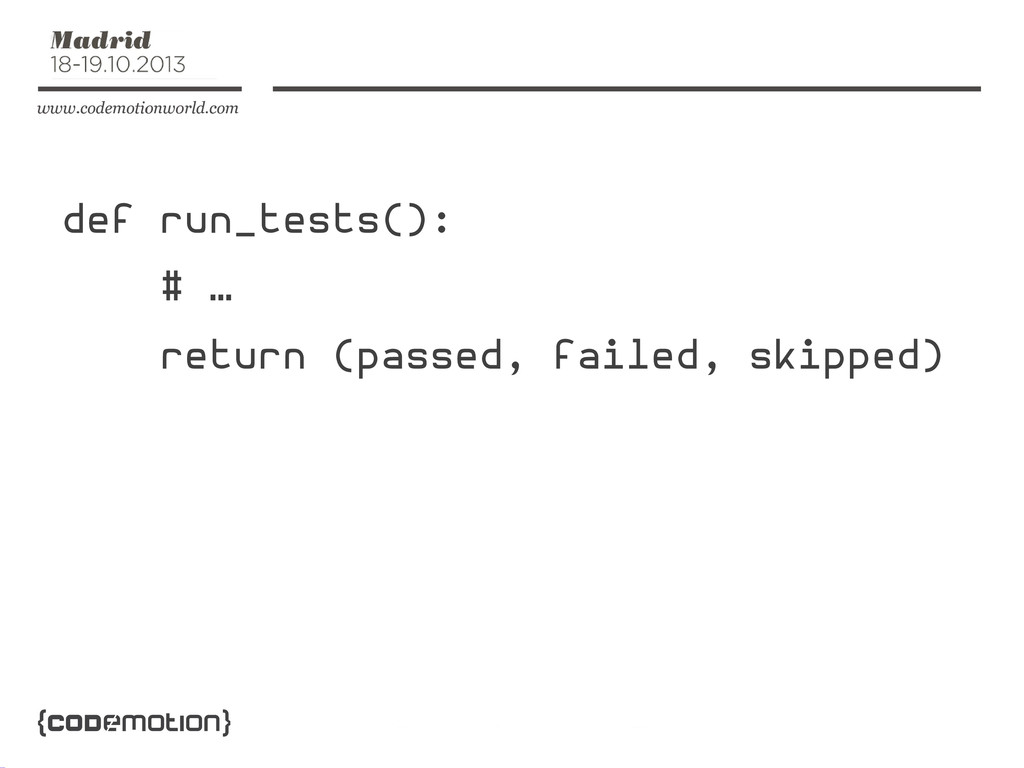
def run_tests(): # … return (passed, failed, skipped)
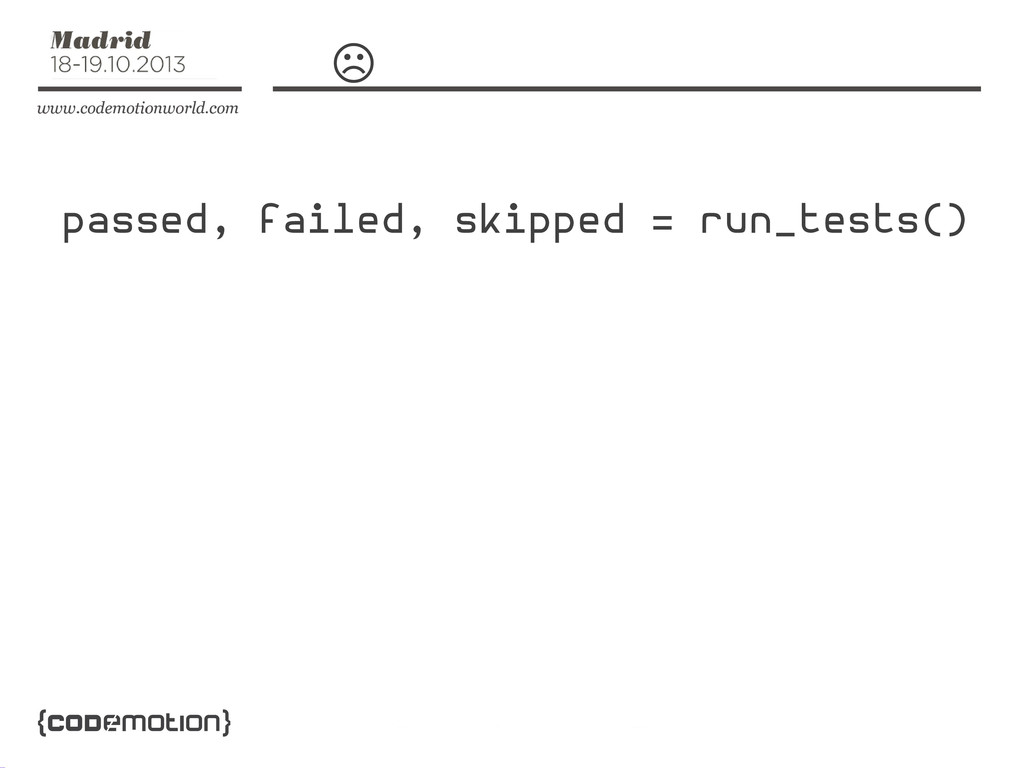
☹ passed, failed, skipped = run_tests()
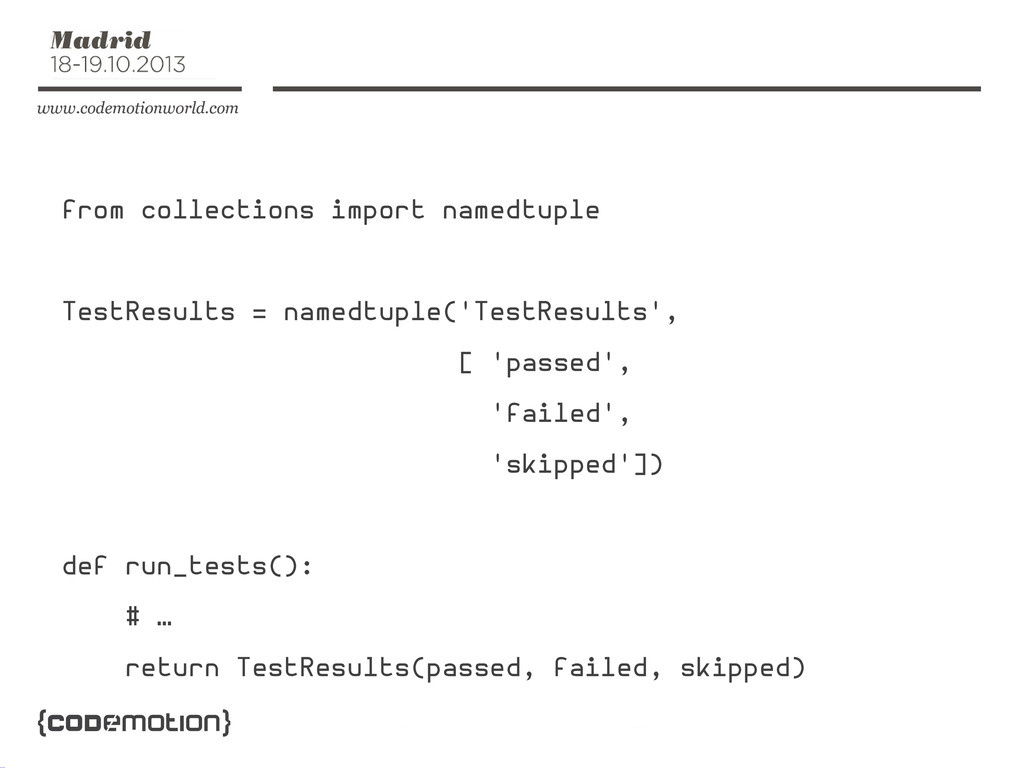
from collections import namedtuple TestResults = namedtuple('TestResults', [ 'passed', 'failed',
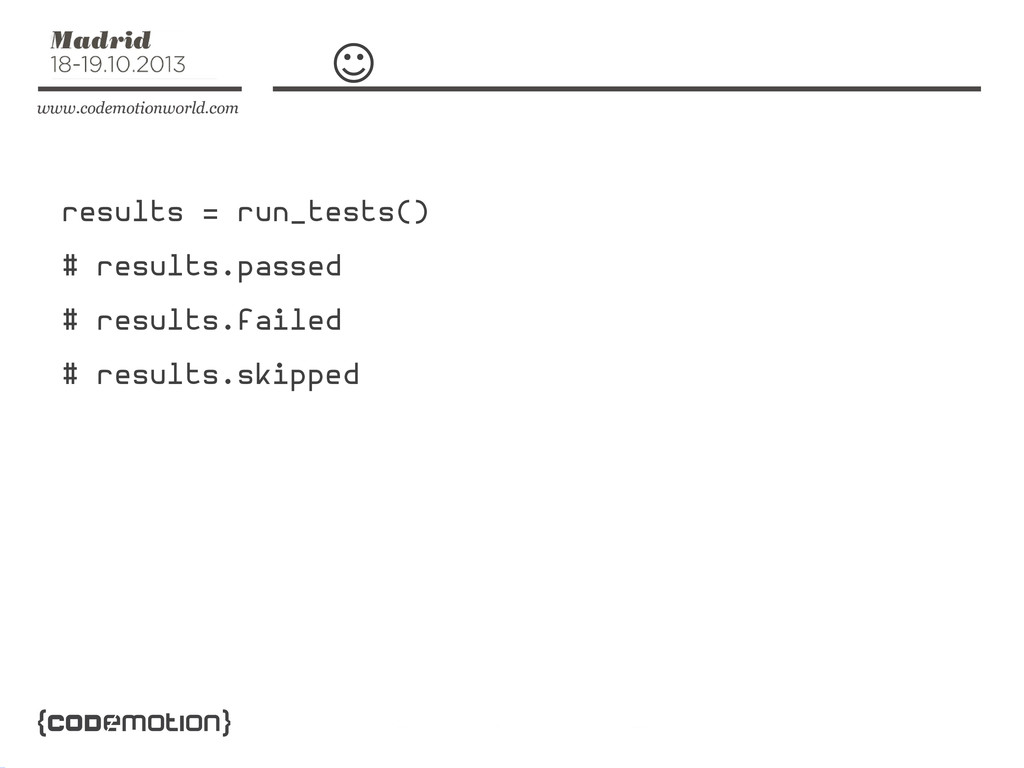
'skipped']) def run_tests(): # … return TestResults(passed, failed, skipped)
☺ results = run_tests() # results.passed # results.failed # results.skipped
Context Managers
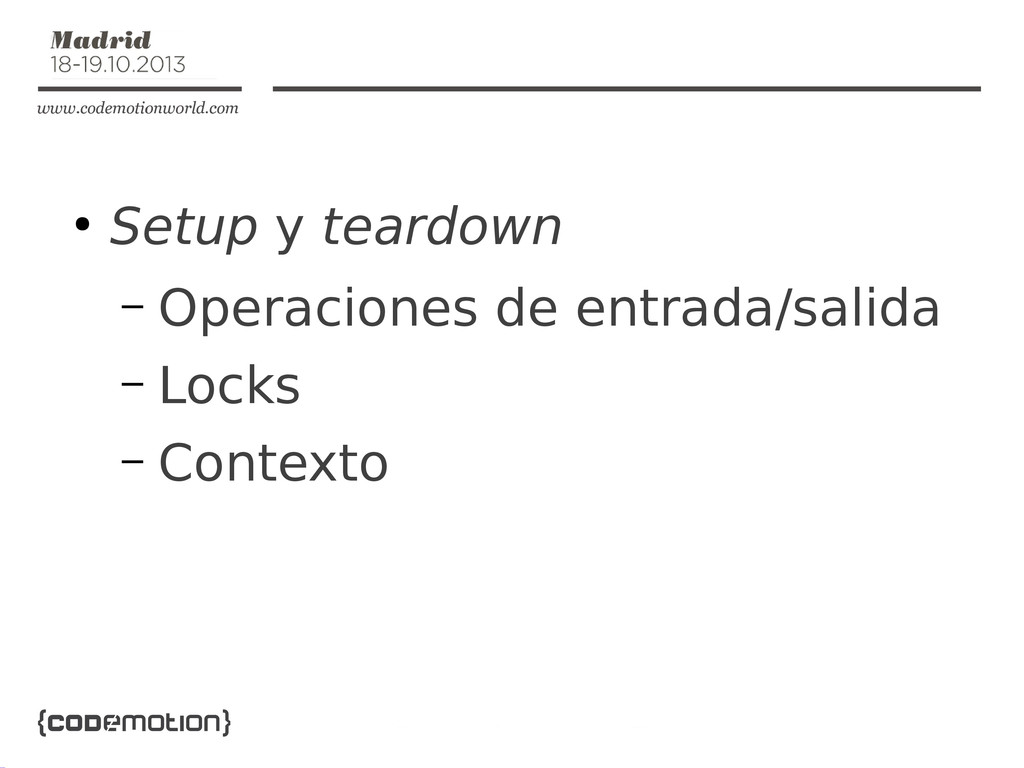
• Setup y teardown – Operaciones de entrada/salida – Locks
– Contexto
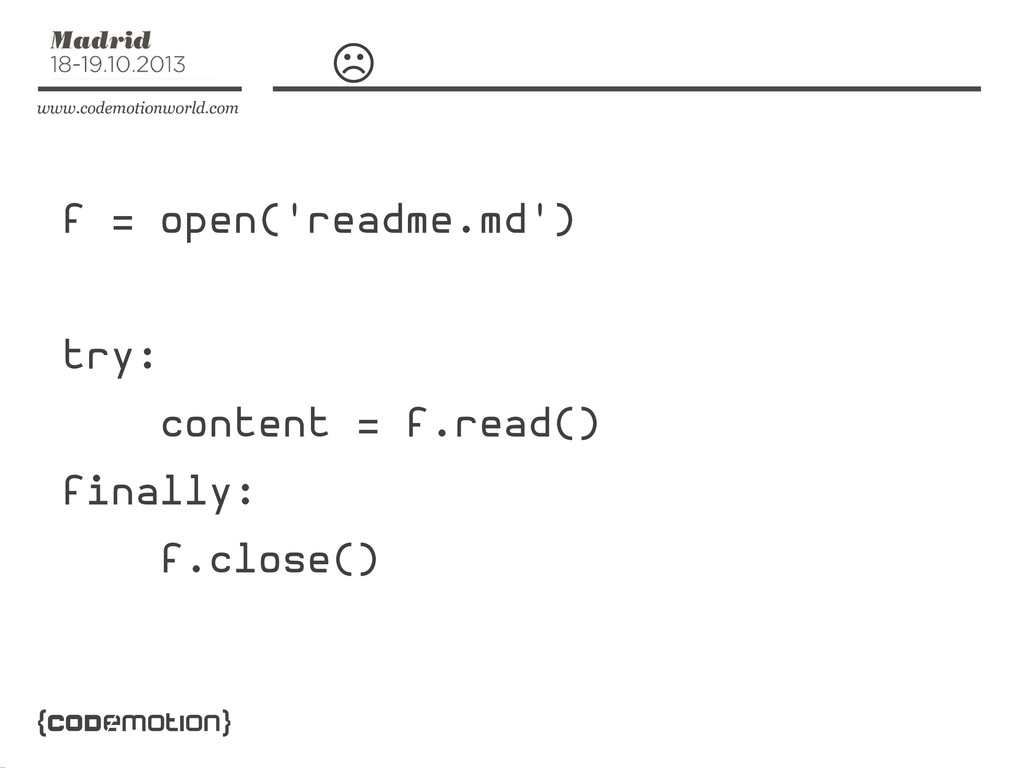
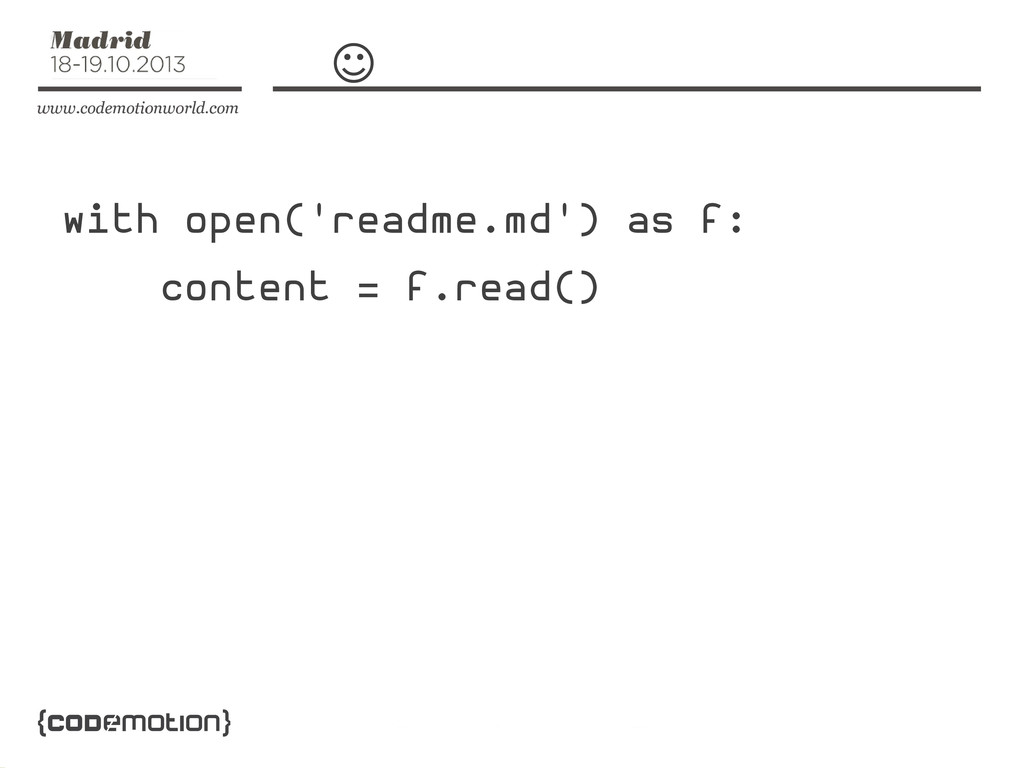
☹ f = open('readme.md') try: content = f.read() finally: f.close()
☺ with open('readme.md') as f: content = f.read()
Excepciones
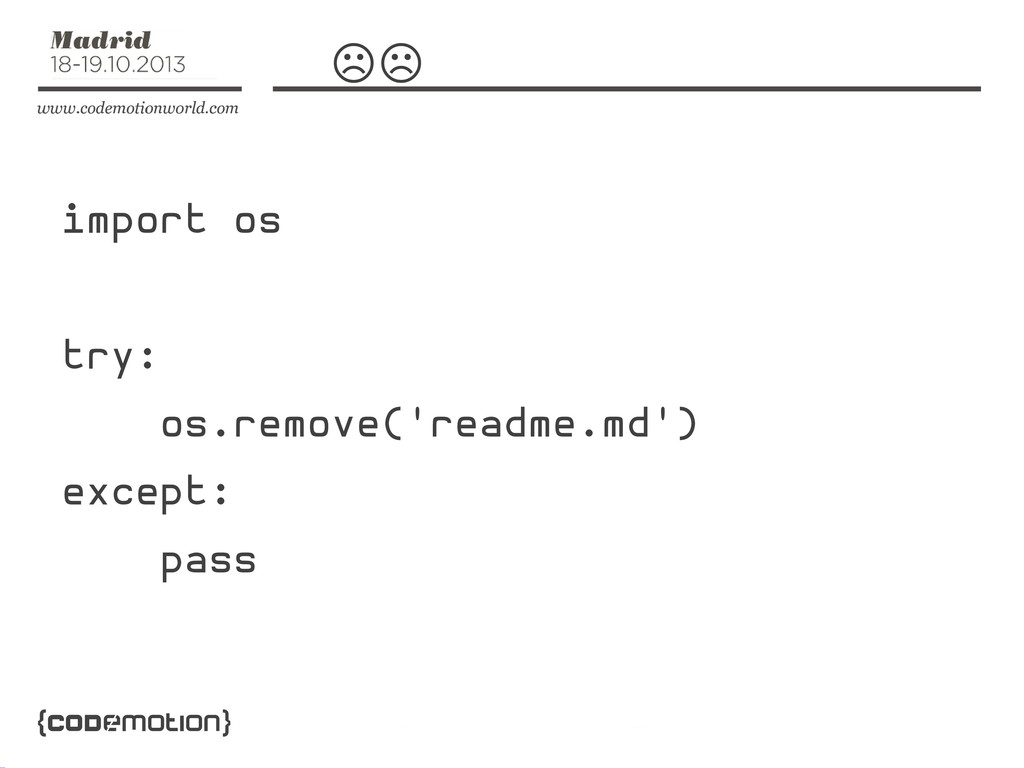
☹☹ import os try: os.remove('readme.md') except: pass
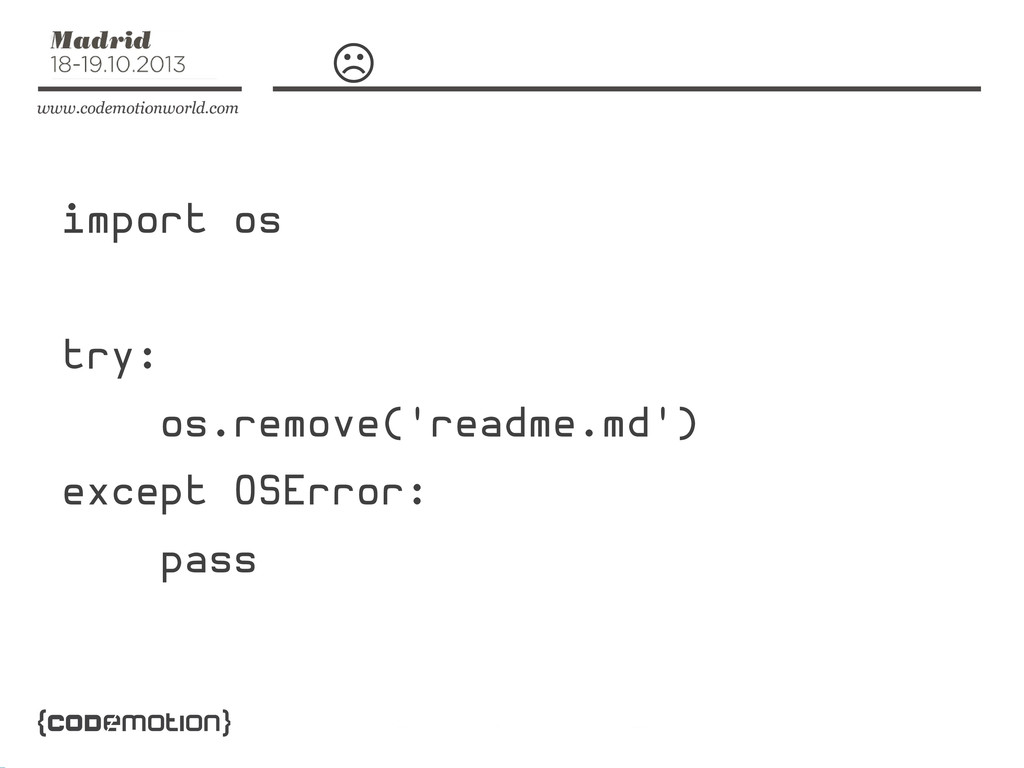
☹ import os try: os.remove('readme.md') except OSError: pass
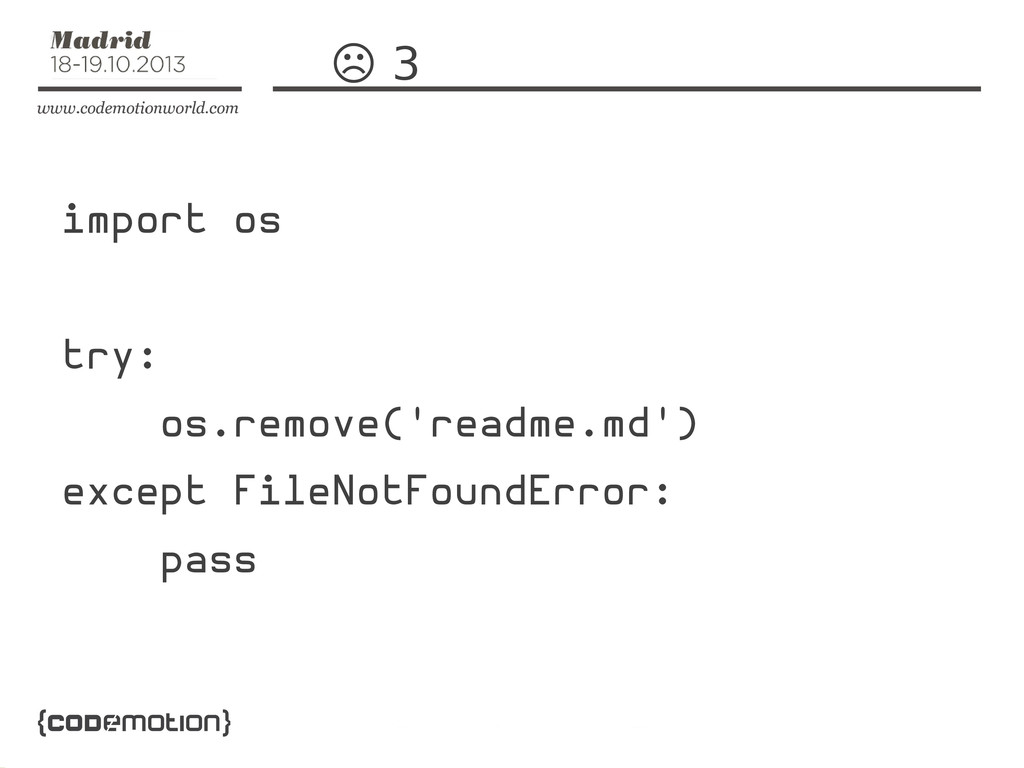
☹ 3 import os try: os.remove('readme.md') except FileNotFoundError: pass
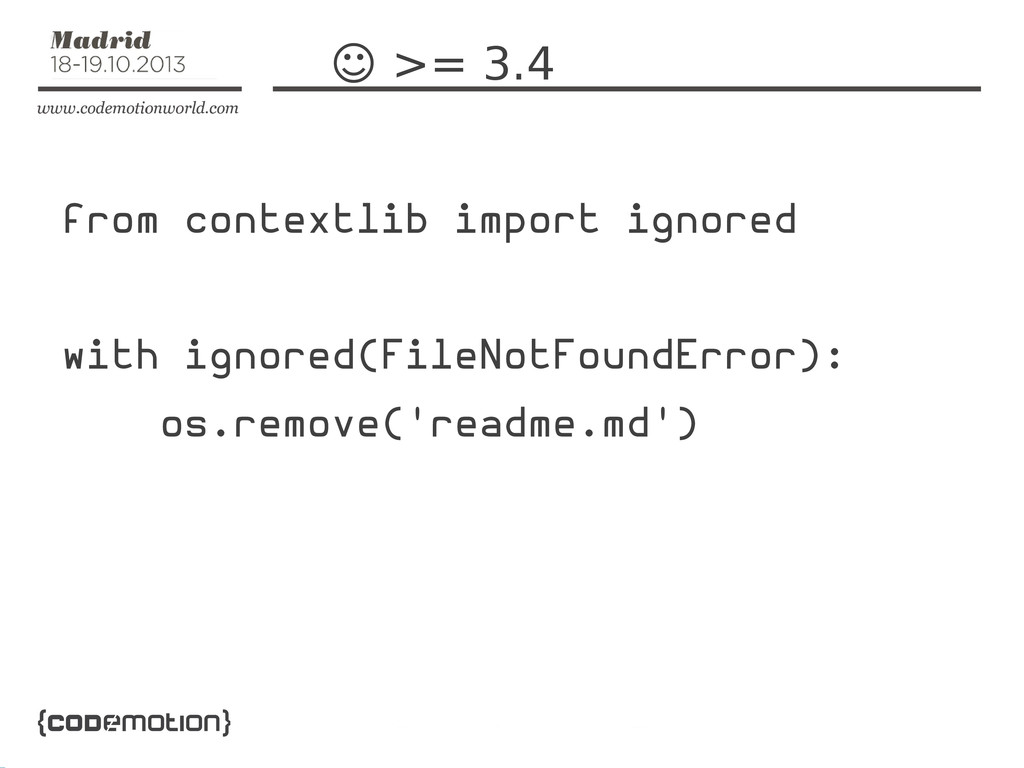
☺ >= 3.4 from contextlib import ignored with ignored(FileNotFoundError): os.remove('readme.md')
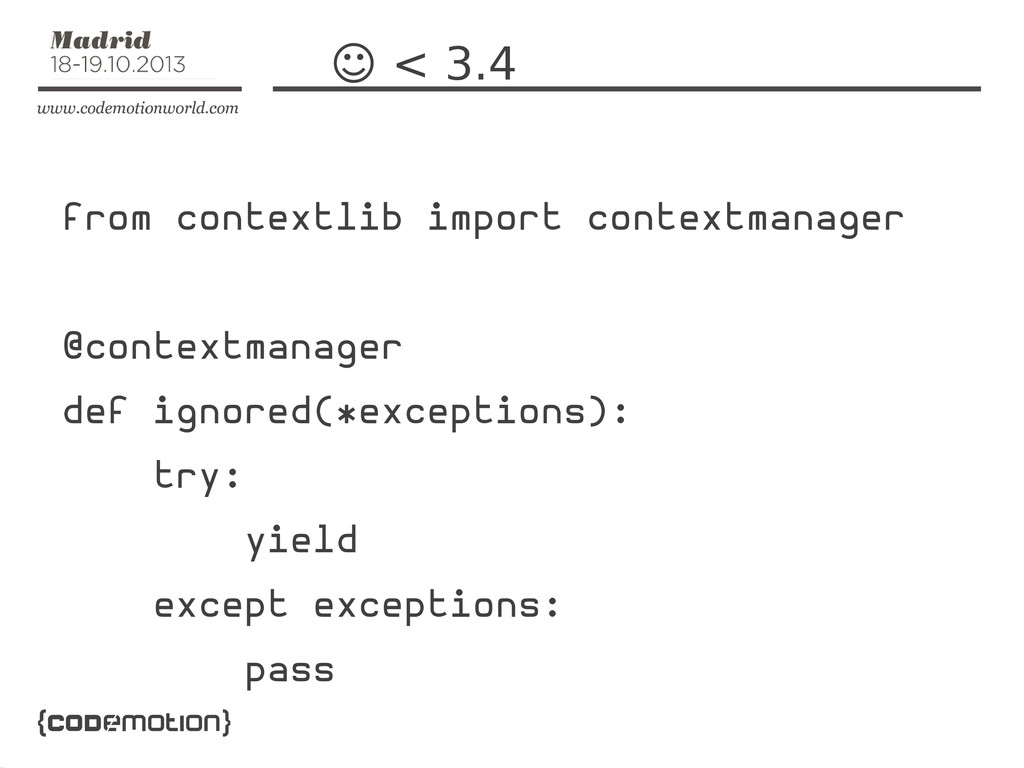
☺ < 3.4 from contextlib import contextmanager @contextmanager def ignored(*exceptions):
try: yield except exceptions: pass
Generator expressions
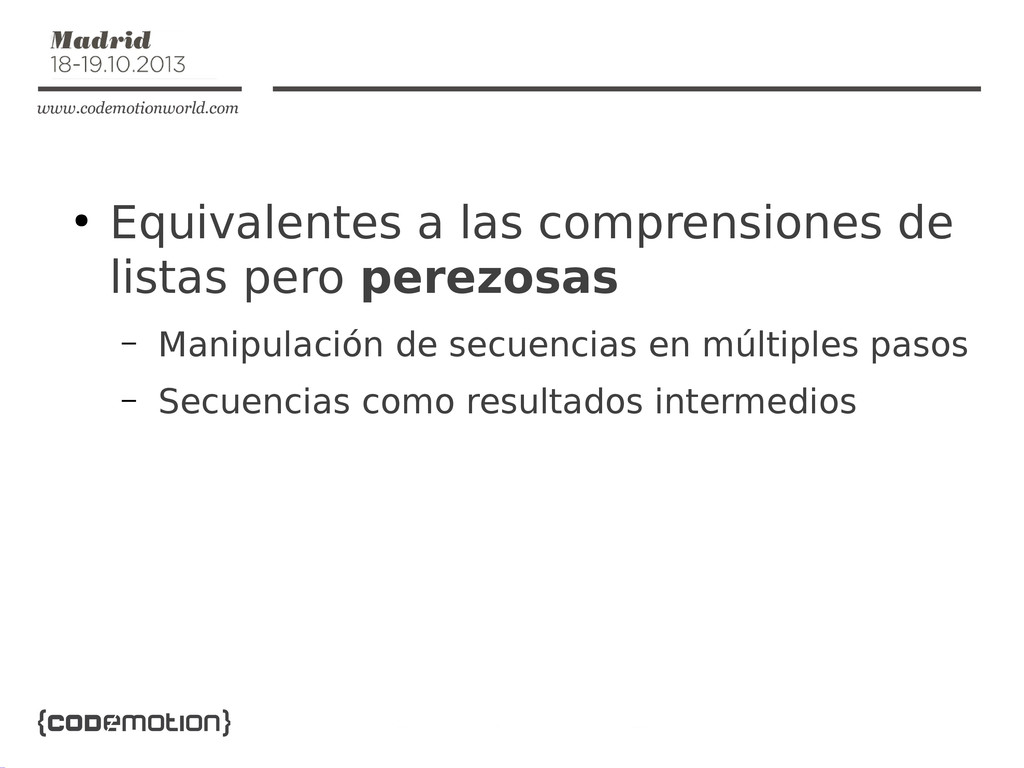
• Equivalentes a las comprensiones de listas pero perezosas –
Manipulación de secuencias en múltiples pasos – Secuencias como resultados intermedios
☹ uppercase_lines = [l.upper() for l in open('readme.md')] filtered_lines =
[l for l in uppercase_lines if l.startswith('#')] # ¿qué pasa si readme.md es un fichero ENORME? for l in filtered_lines: print(l)
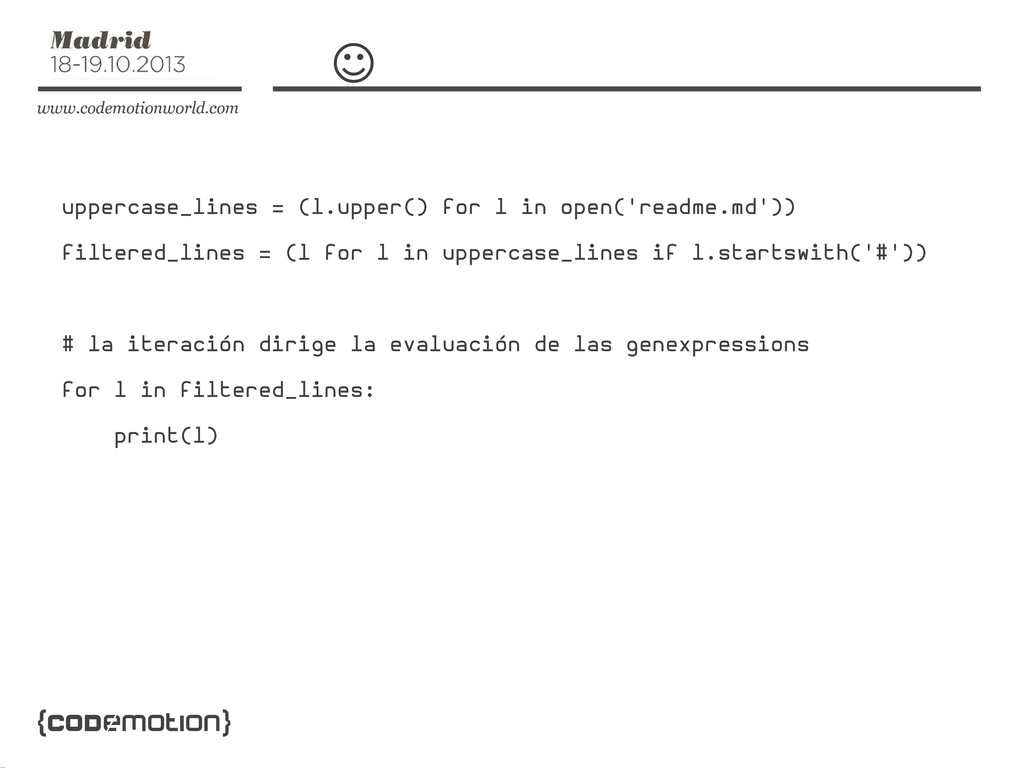
☺ uppercase_lines = (l.upper() for l in open('readme.md')) filtered_lines =
(l for l in uppercase_lines if l.startswith('#')) # la iteración dirige la evaluación de las genexpressions for l in filtered_lines: print(l)
None
Escribid código bonito
¡Gracias!


 ayumu_yamaguchi
 curekoshimizu
 hamayokokuririn
 kobakei
 htkym
htkym
 po3rin
 yukiny
 kntkymt
 j341nono
 mpyw
mpyw
 hatsu38
 takaidohigasi
 mayatellez
 skipperchong
 uxyall
 addyosmani
 elsirapls
 tmiket
 reverentgeek
 rasagy
 sergeychernyshev
 bryan
bryan
 csswizardry
![☹ favorite_color = [0xBA, 0xDA, 0x55] red = favorite_color[0] green](https://files.speakerdeck.com/presentations/bbbe94101b9a0131e3b23e3a86e044eb/slide_5.jpg)
![☺ favorite_color = [0xBA, 0xDA, 0x55] red, green, blue =](https://files.speakerdeck.com/presentations/bbbe94101b9a0131e3b23e3a86e044eb/slide_6.jpg)

![colors = ['red', 'green', 'blue']](https://files.speakerdeck.com/presentations/bbbe94101b9a0131e3b23e3a86e044eb/slide_15.jpg)
![☹ for i in range(len(colors)): print( colors[{}] : {} .format(i,](https://files.speakerdeck.com/presentations/bbbe94101b9a0131e3b23e3a86e044eb/slide_16.jpg)
![☺ for i, color in enumerate(colors): print( colors[{}] : {}](https://files.speakerdeck.com/presentations/bbbe94101b9a0131e3b23e3a86e044eb/slide_17.jpg)
![☹ for color in colors[::-1]: print(color)](https://files.speakerdeck.com/presentations/bbbe94101b9a0131e3b23e3a86e044eb/slide_19.jpg)



![colors = ['red', 'green', 'blue'] values = [0xBA, 0xDA, 0x55]](https://files.speakerdeck.com/presentations/bbbe94101b9a0131e3b23e3a86e044eb/slide_37.jpg)
![☹ for p in sorted(people, key=lambda p: p['name']): print(p)](https://files.speakerdeck.com/presentations/bbbe94101b9a0131e3b23e3a86e044eb/slide_49.jpg)
![☹ uppercase_lines = [l.upper() for l in open('readme.md')] filtered_lines =](https://files.speakerdeck.com/presentations/bbbe94101b9a0131e3b23e3a86e044eb/slide_71.jpg)