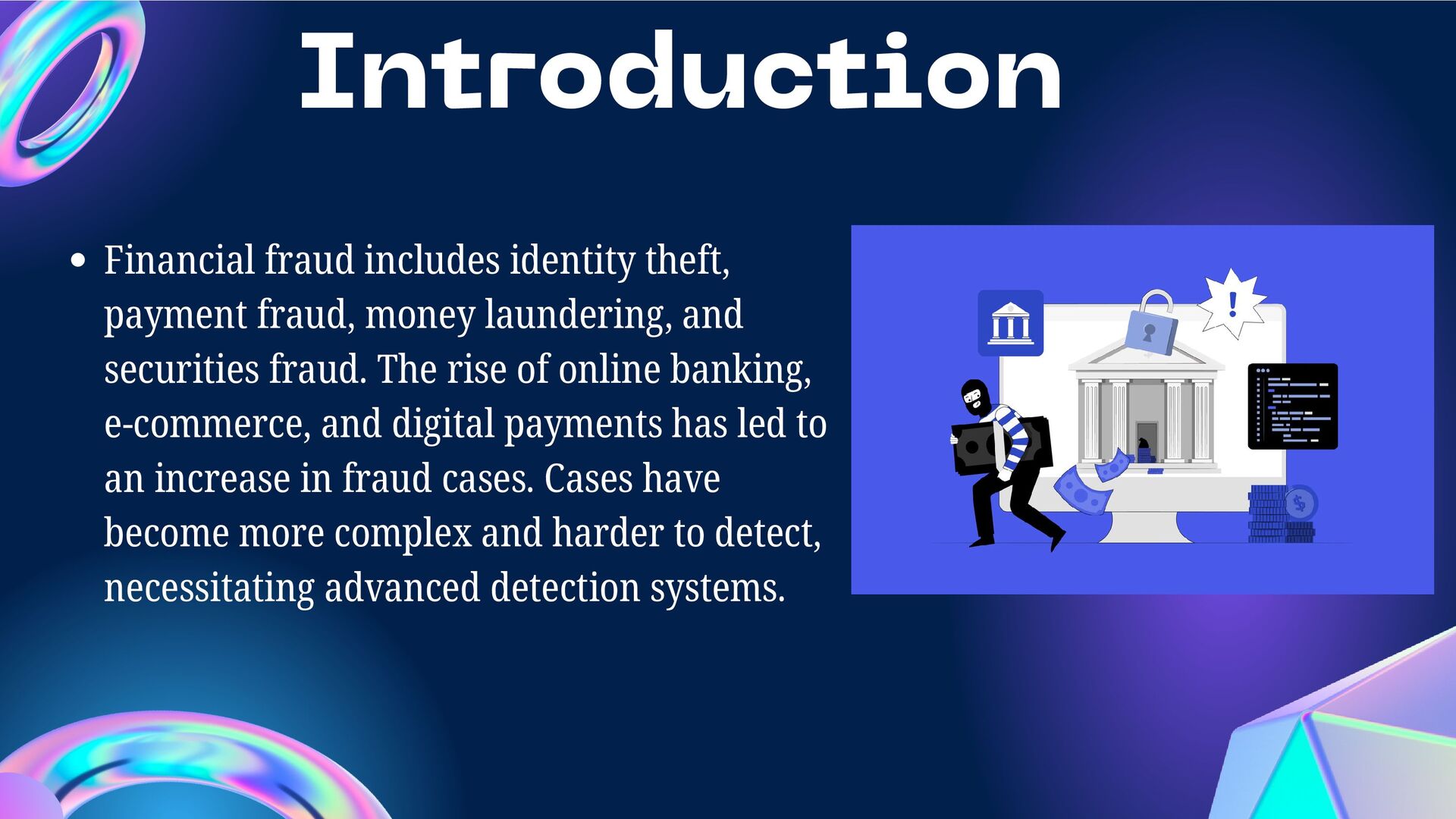
securities fraud. The rise of online banking, e-commerce, and digital payments has led to an increase in fraud cases. Cases have become more complex and harder to detect, necessitating advanced detection systems. Introduction
leveraging data analytics, machine learning, and artificial intelligence (AI) to detect, predict, and prevent fraudulent activities. As fraud becomes more sophisticated, traditional rule- based systems are no longer enough to detect emerging schemes. Data science empowers organizations to: Analyze vast amounts of data in real-time to spot anomalies and suspicious patterns. Predict fraudulent behavior based on historical data, using machine learning models. Automate fraud detection to reduce the manual workload of investigators. In essence, data science enhances both the efficiency and accuracy of fraud detection systems, helping financial institutions stay ahead of fraudsters. Importance of Data Science in Combating Fraud
normal activity Application: Detecting fraudulent transactions by analyzing patterns in transaction data, such as unusual spending amounts, locations, or frequencies. For example, Using machine learning algorithms to identify credit card transactions that are likely to be fraudulent based on factors like purchase history and location data.
Detecting fraudulent login attempts, unauthorized access, or unusual account activity by monitoring user behavior and comparing it to established baselines. Example: Using natural language processing to analyze customer support interactions for signs of fraud, such as unusual requests or suspicious language. Behavioral Analytics
Identifying fraudulent activity by examining connections between individuals or organizations involved in suspicious transactions. Example: Using graph analysis techniques to detect fraudulent schemes involving multiple individuals or entities, such as money laundering or identity theft. Social Network Analysis
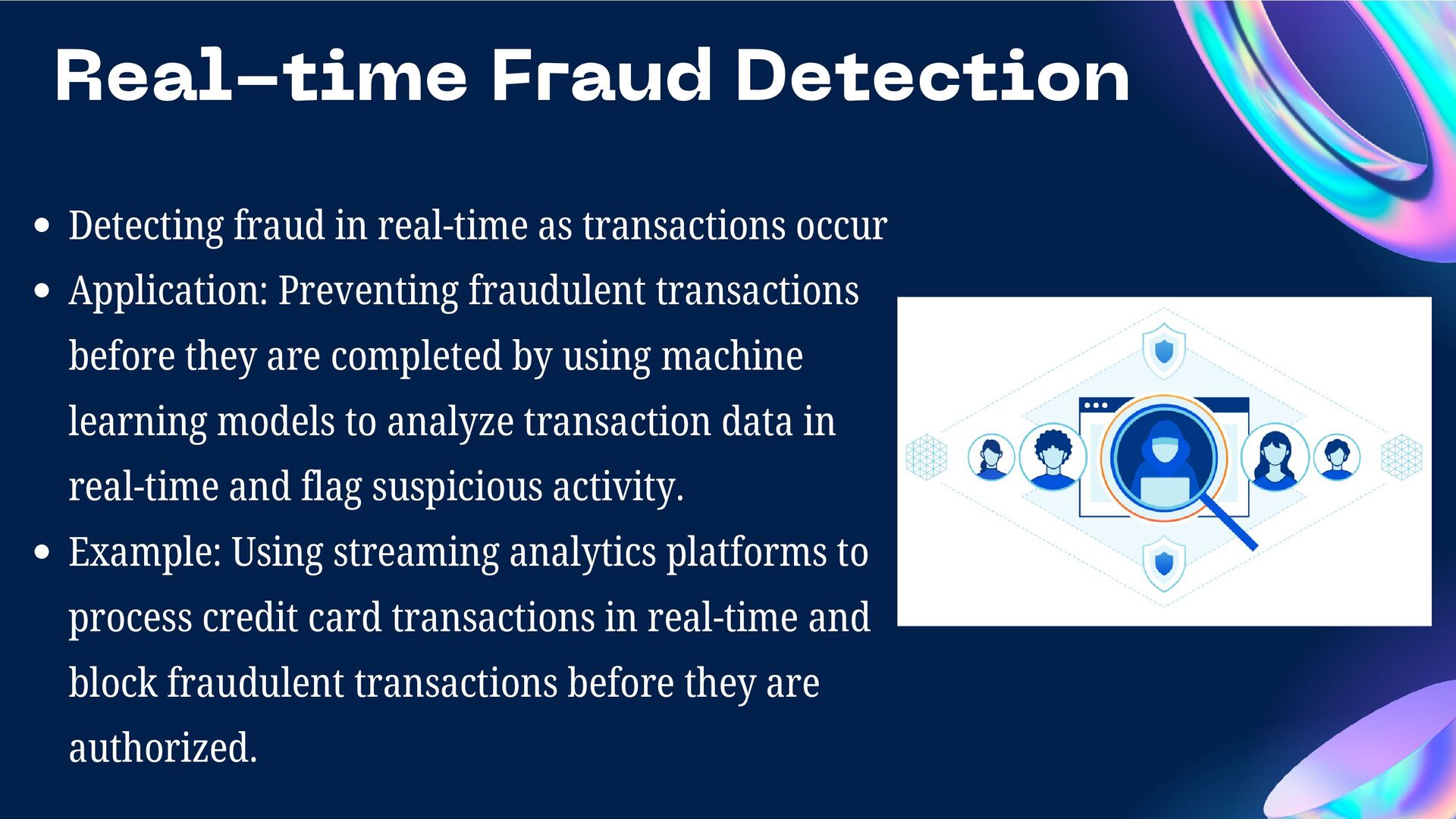
Application: Preventing fraudulent transactions before they are completed by using machine learning models to analyze transaction data in real-time and flag suspicious activity. Example: Using streaming analytics platforms to process credit card transactions in real-time and block fraudulent transactions before they are authorized.
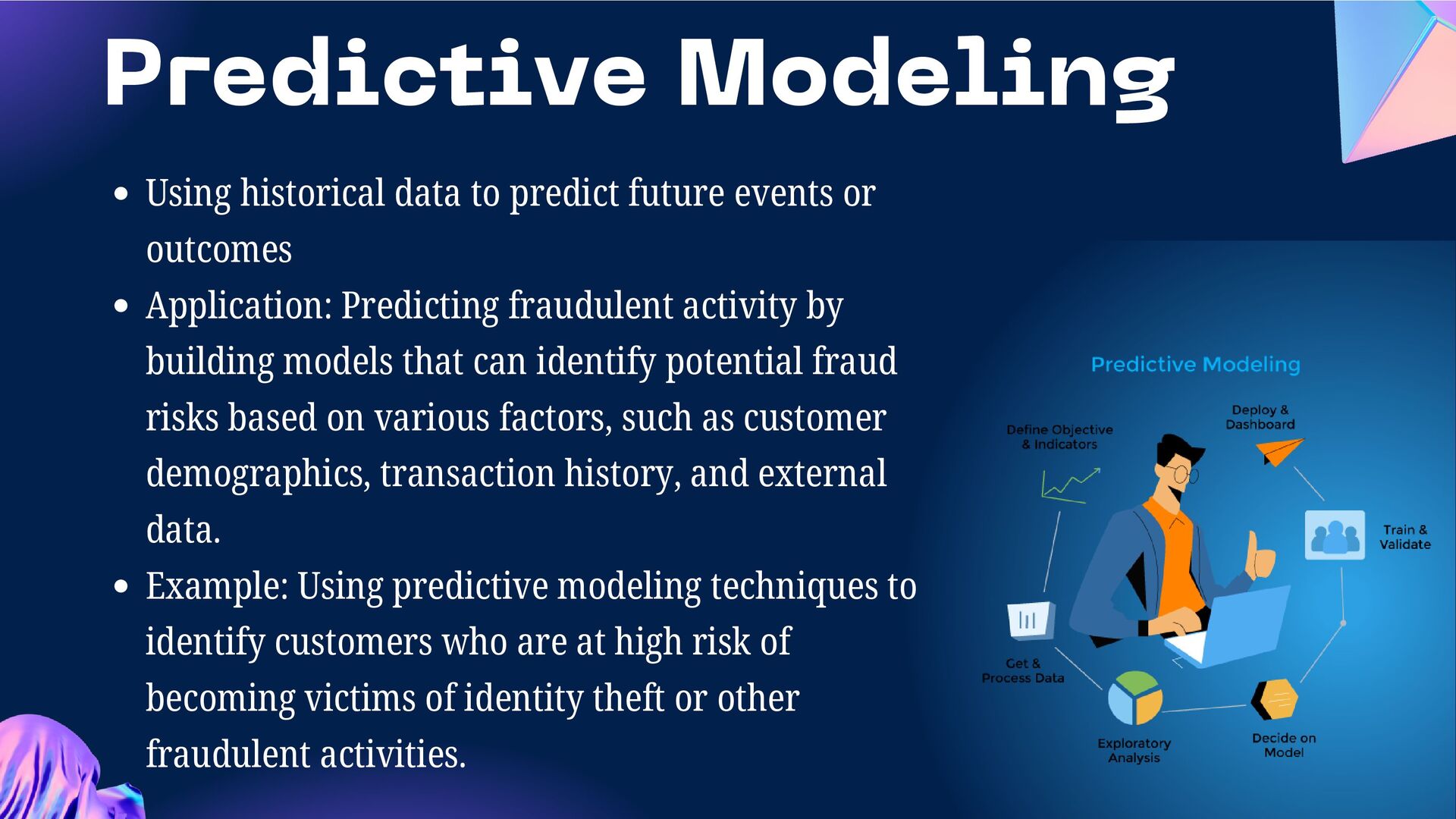
Predicting fraudulent activity by building models that can identify potential fraud risks based on various factors, such as customer demographics, transaction history, and external data. Example: Using predictive modeling techniques to identify customers who are at high risk of becoming victims of identity theft or other fraudulent activities. Predictive Modeling


 stephaniewalter
 chriscoyier
 ryanjones
 vanstee
 productmarketing
 tenderlove
 morganepeng
 inesmontani
 soudai
 pauljervisheath
 marketingsoph
 hannesfritz