Upgrade to Pro — share decks privately, control downloads, hide ads and more …

The Model Wasn't the Hard Part: Gen AI for Supp...

Sponsored · Your Podcast. Everywhere. Effortlessly. Share. Educate. Inspire. Entertain. You do you. We'll handle the rest. →
Anil Kumar
October 27, 2026

The Model Wasn't the Hard Part: Gen AI for Supply Chain at SME Scale

A build walkthrough of a generative AI logistics platform serving 1,200+ SMEs, and the sequencing decision that shaped it.

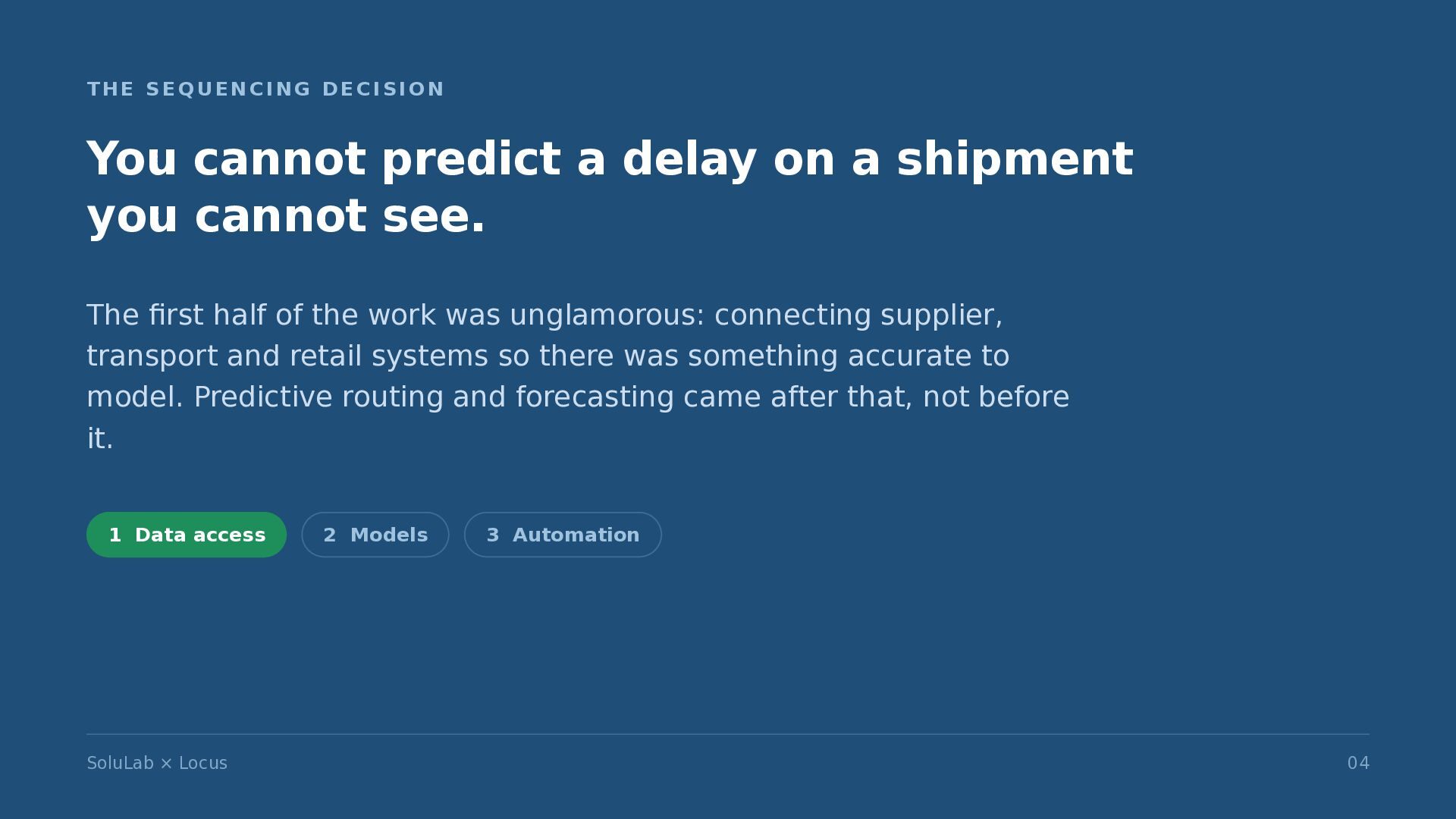
The interesting constraint was not model accuracy. It was that many clients had no way to share data in real time: no live inventory feed, no shipment events. You cannot predict a delay on a shipment you cannot see. So integration across disconnected supplier, transport and retail systems came first, and predictive routing and demand forecasting were built on top of that rather than in parallel with it.

Covered in 11 slides:

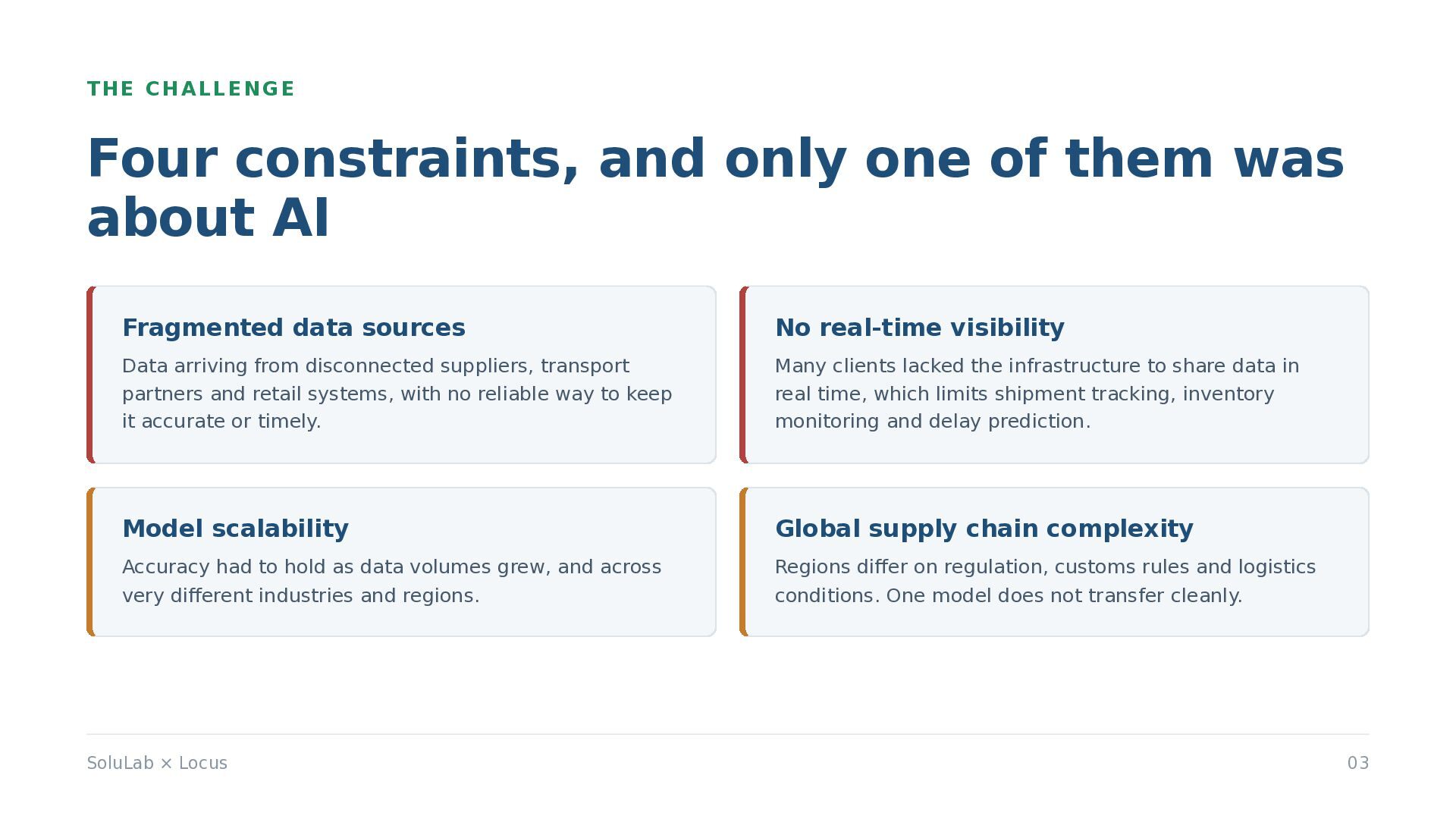
- The four project constraints, and why only one was an AI problem
- Why data access had to precede modelling
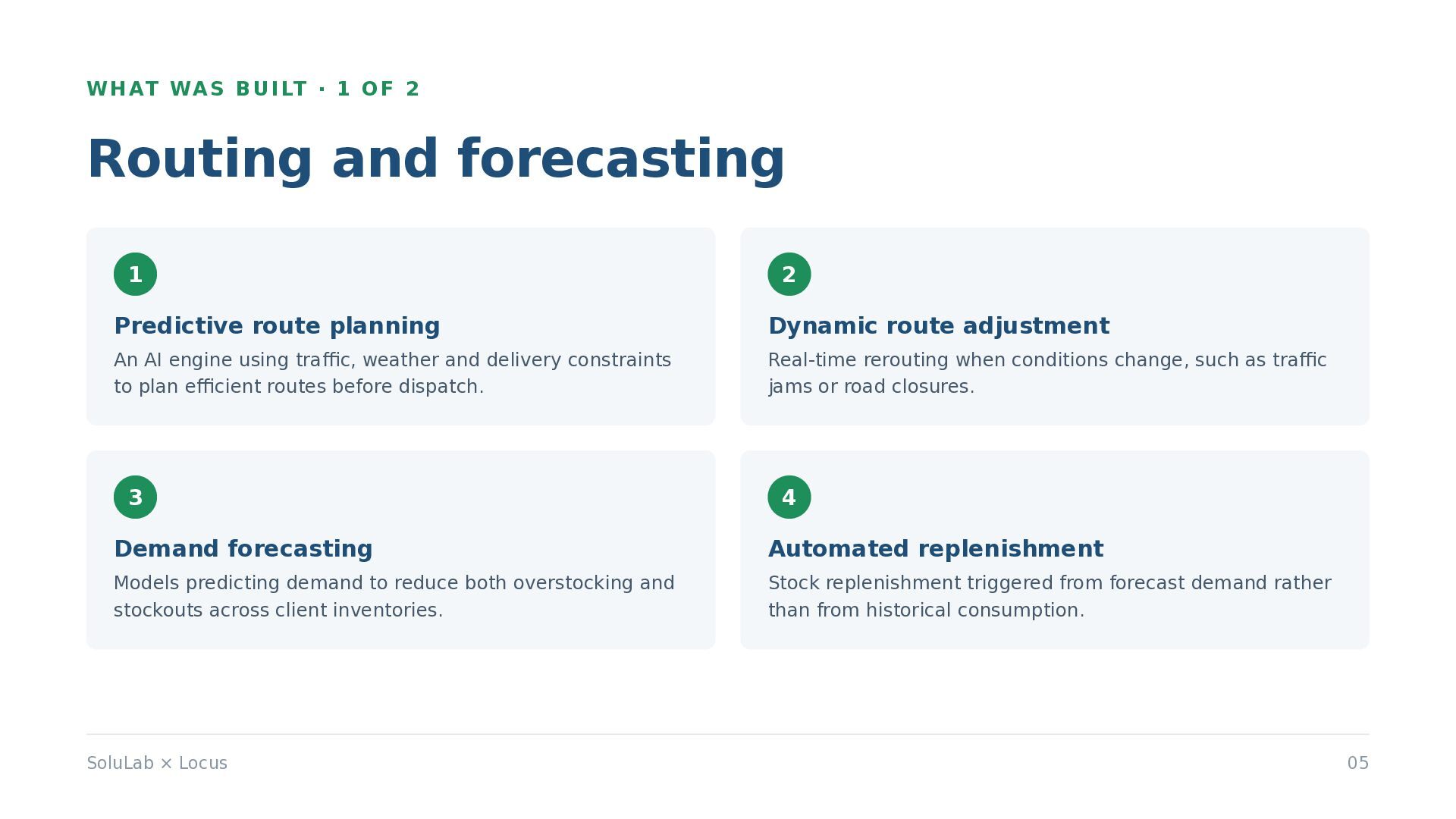
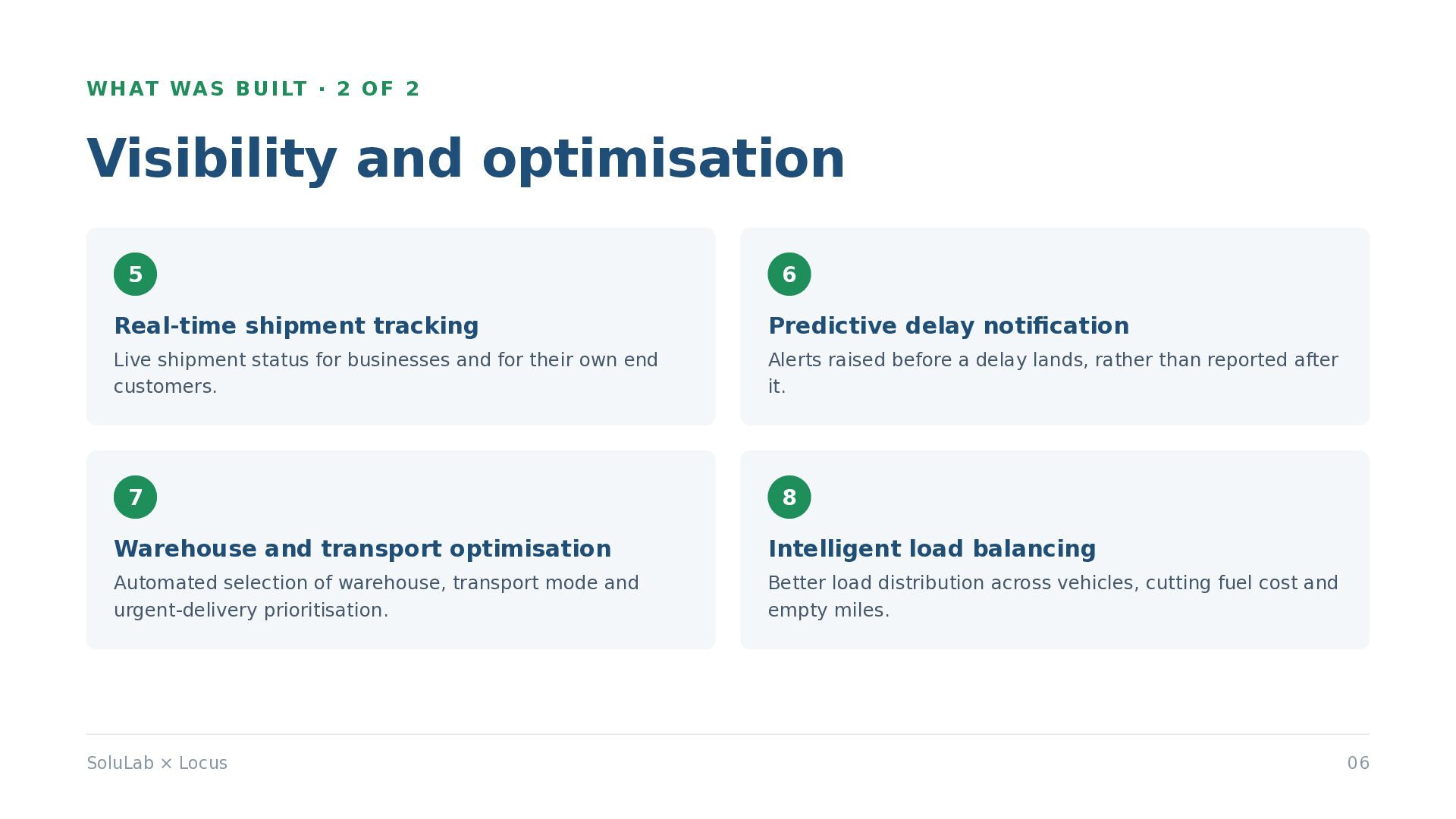
- Eight shipped capabilities, from predictive route planning to intelligent load balancing
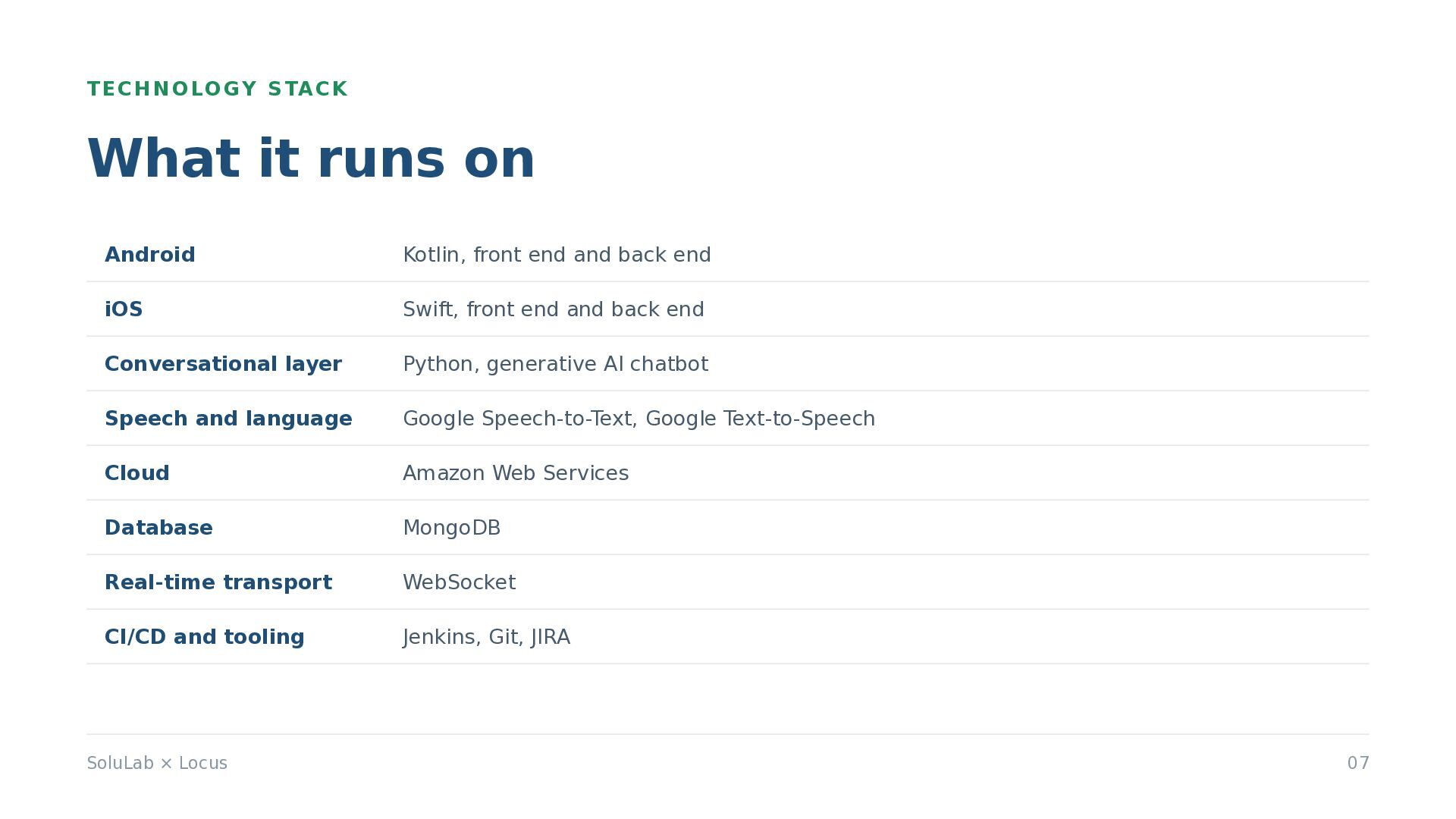
- Stack: Kotlin, Swift, Python, AWS, MongoDB, WebSocket, Google Speech APIs, Jenkins
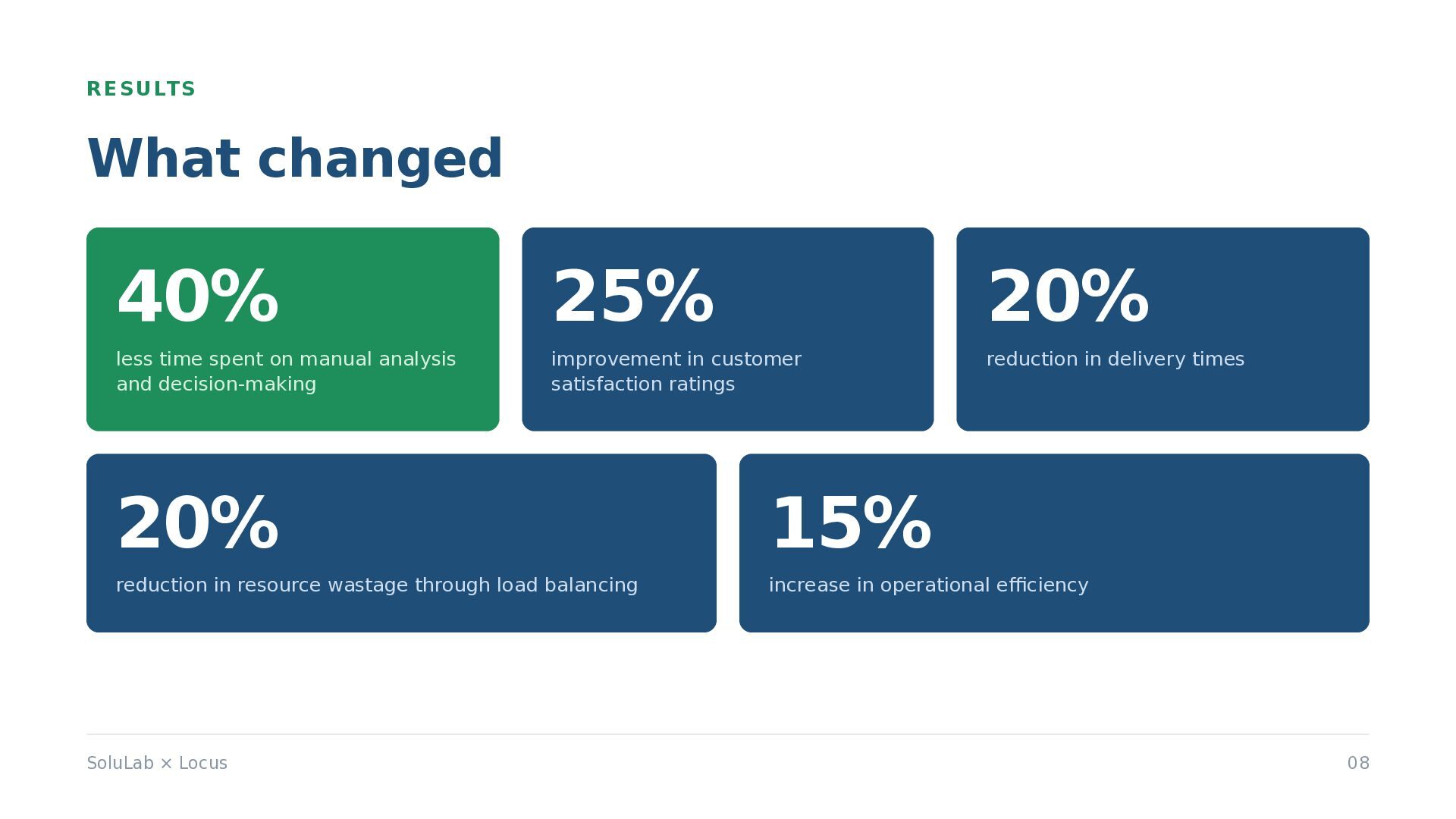
- Five measured outcomes, and an argument about which one actually matters

Full write-up: https://www.solulab.com/case-study/locus-gen-ai-supply-chain-platform/

Anil Kumar

October 27, 2026

Transcript

11 slides
  1. C A S E S T U DY The model

    wasn't the hard part. How a generative AI supply chain platform for 1,200+ SMEs got built, and why the data work came before the models. SoluLab × Locus · Gen AI in Supply Chain solulab.com
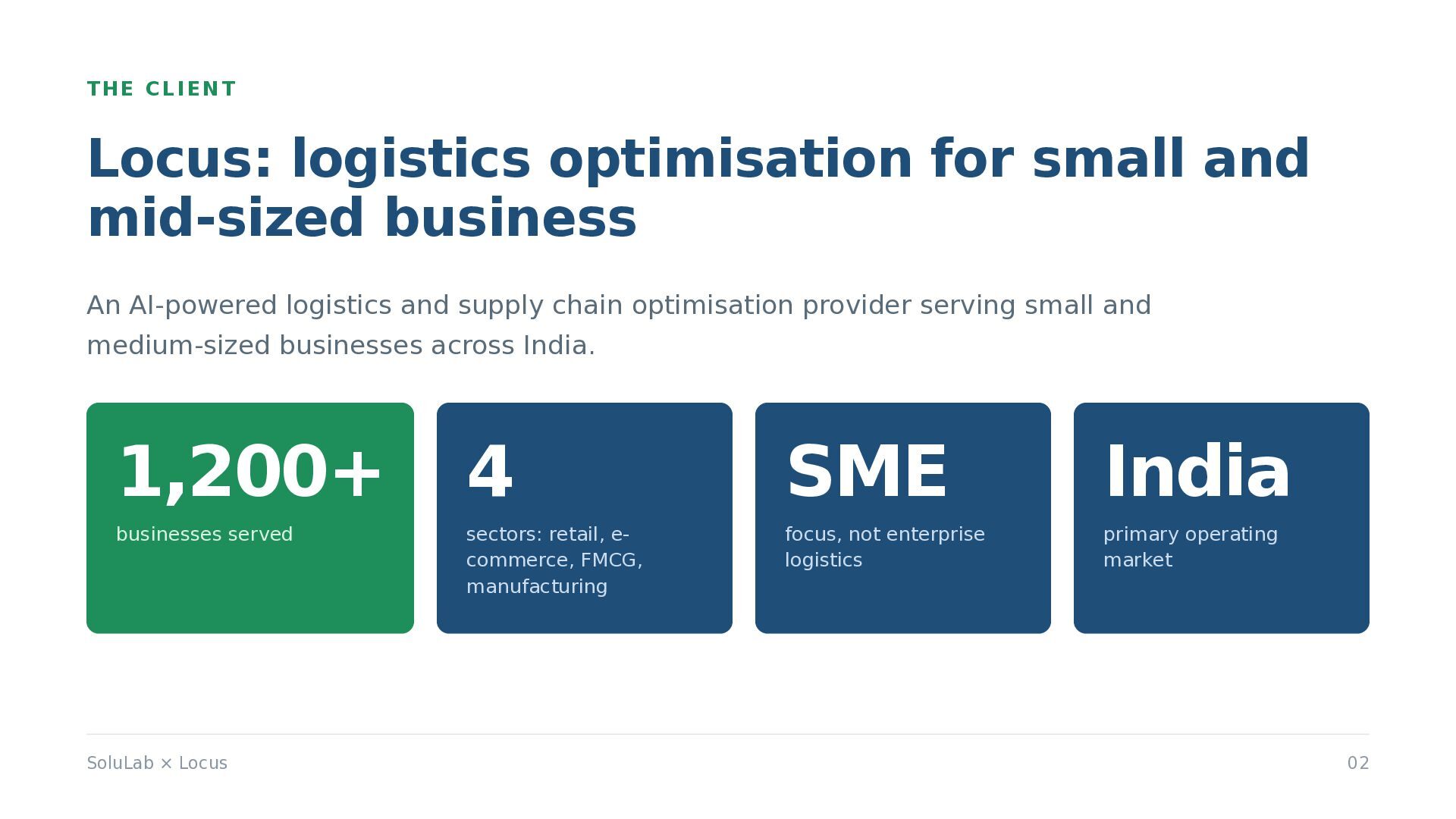
  2. THE CLIENT Locus: logistics optimisation for small and mid-sized business

    An AI-powered logistics and supply chain optimisation provider serving small and medium-sized businesses across India. 1,200+ 4 SME India businesses served sectors: retail, ecommerce, FMCG, manufacturing focus, not enterprise logistics primary operating market SoluLab × Locus 02
  3. THE CHALLENGE Four constraints, and only one of them was

    about AI Fragmented data sources No real-time visibility Data arriving from disconnected suppliers, transport partners and retail systems, with no reliable way to keep it accurate or timely. Many clients lacked the infrastructure to share data in real time, which limits shipment tracking, inventory monitoring and delay prediction. Model scalability Global supply chain complexity Accuracy had to hold as data volumes grew, and across very different industries and regions. Regions differ on regulation, customs rules and logistics conditions. One model does not transfer cleanly. SoluLab × Locus 03
  4. THE SEQUENCING DECISION You cannot predict a delay on a

    shipment you cannot see. The first half of the work was unglamorous: connecting supplier, transport and retail systems so there was something accurate to model. Predictive routing and forecasting came after that, not before it. 1 Data access SoluLab × Locus 2 Models 3 Automation 04
  5. W H AT WA S B U I LT ·

    1 O F 2 Routing and forecasting 1 2 Predictive route planning Dynamic route adjustment An AI engine using traffic, weather and delivery constraints to plan efficient routes before dispatch. Real-time rerouting when conditions change, such as traffic jams or road closures. 3 4 Demand forecasting Automated replenishment Models predicting demand to reduce both overstocking and stockouts across client inventories. Stock replenishment triggered from forecast demand rather than from historical consumption. SoluLab × Locus 05
  6. W H AT WA S B U I LT ·

    2 O F 2 Visibility and optimisation 5 6 Real-time shipment tracking Predictive delay notification Live shipment status for businesses and for their own end customers. Alerts raised before a delay lands, rather than reported after it. 7 8 Warehouse and transport optimisation Intelligent load balancing Automated selection of warehouse, transport mode and urgent-delivery prioritisation. Better load distribution across vehicles, cutting fuel cost and empty miles. SoluLab × Locus 06
  7. T E C H N O LO G Y S

    TA C K What it runs on Android Kotlin, front end and back end iOS Swift, front end and back end Conversational layer Python, generative AI chatbot Speech and language Google Speech-to-Text, Google Text-to-Speech Cloud Amazon Web Services Database MongoDB Real-time transport WebSocket CI/CD and tooling Jenkins, Git, JIRA SoluLab × Locus 07
  8. R E S U LT S What changed 40% 25%

    20% less time spent on manual analysis and decision-making improvement in customer satisfaction ratings reduction in delivery times 20% 15% reduction in resource wastage through load balancing increase in operational efficiency SoluLab × Locus 08
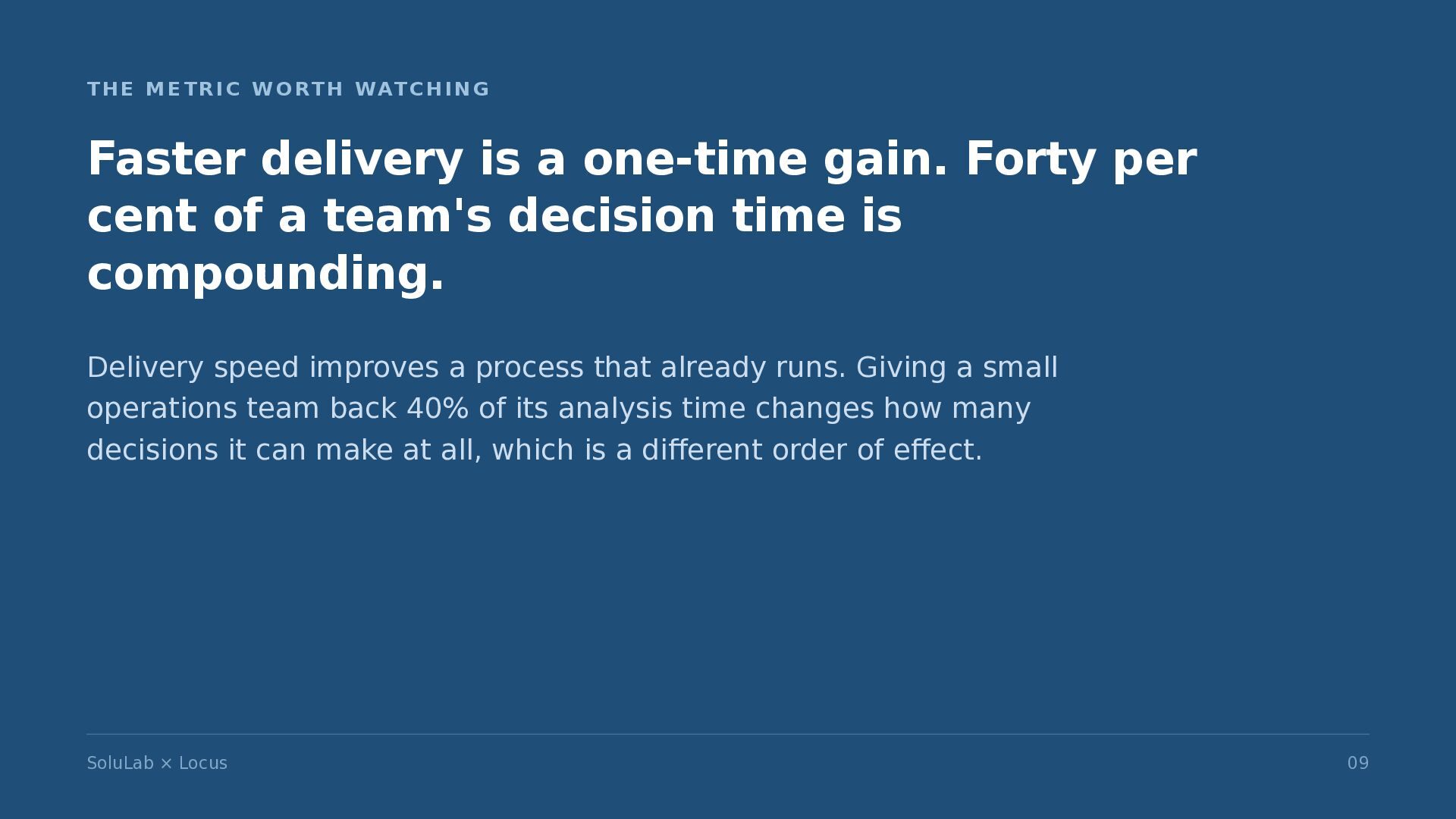
  9. T H E M E T R I C W

    O RT H WAT C H I N G Faster delivery is a one-time gain. Forty per cent of a team's decision time is compounding. Delivery speed improves a process that already runs. Giving a small operations team back 40% of its analysis time changes how many decisions it can make at all, which is a different order of effect. SoluLab × Locus 09
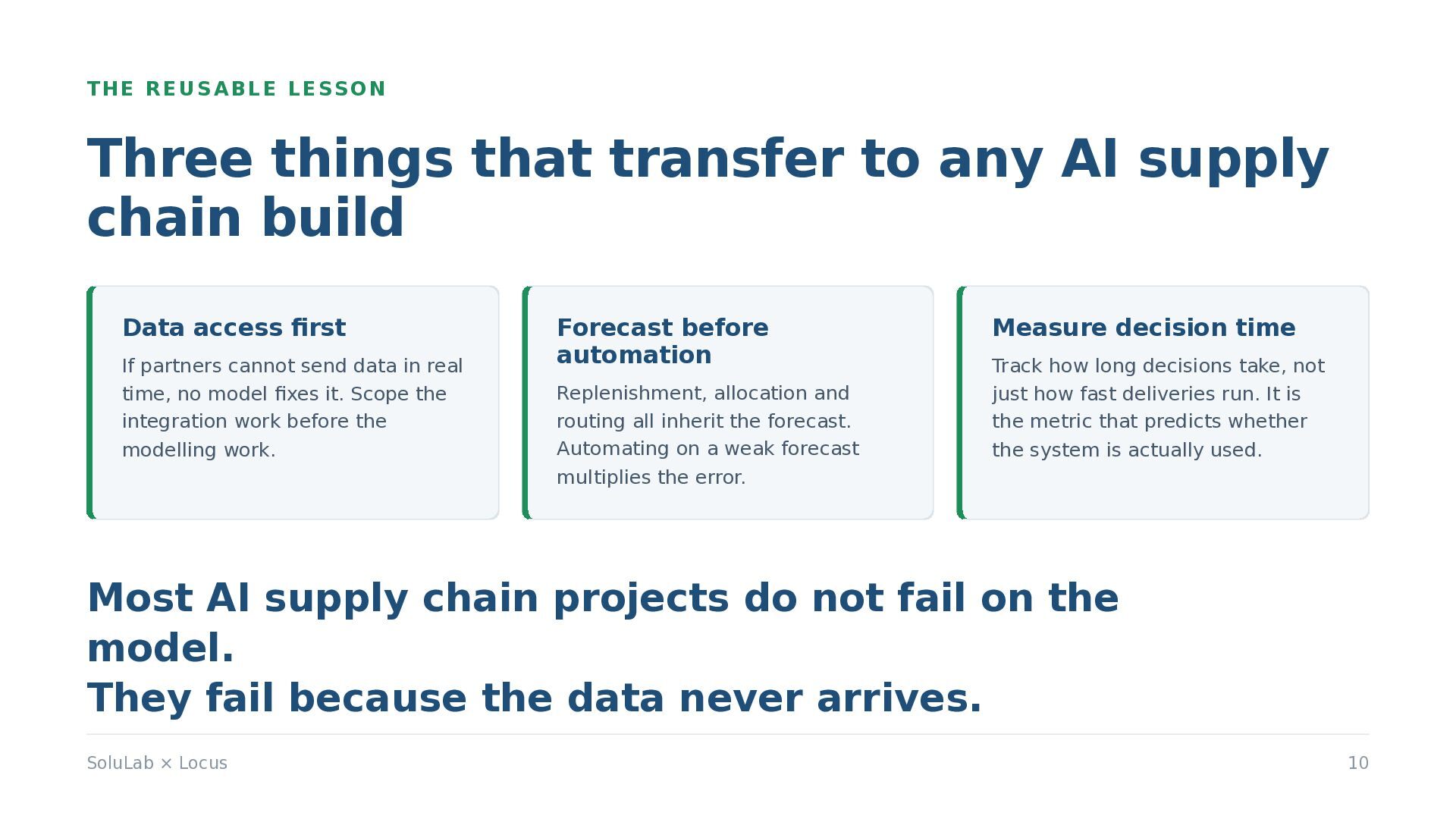
  10. T H E R E U S A B L

    E L E SS O N Three things that transfer to any AI supply chain build Data access first If partners cannot send data in real time, no model fixes it. Scope the integration work before the modelling work. Forecast before automation Replenishment, allocation and routing all inherit the forecast. Automating on a weak forecast multiplies the error. Measure decision time Track how long decisions take, not just how fast deliveries run. It is the metric that predicts whether the system is actually used. Most AI supply chain projects do not fail on the model. They fail because the data never arrives. SoluLab × Locus 10
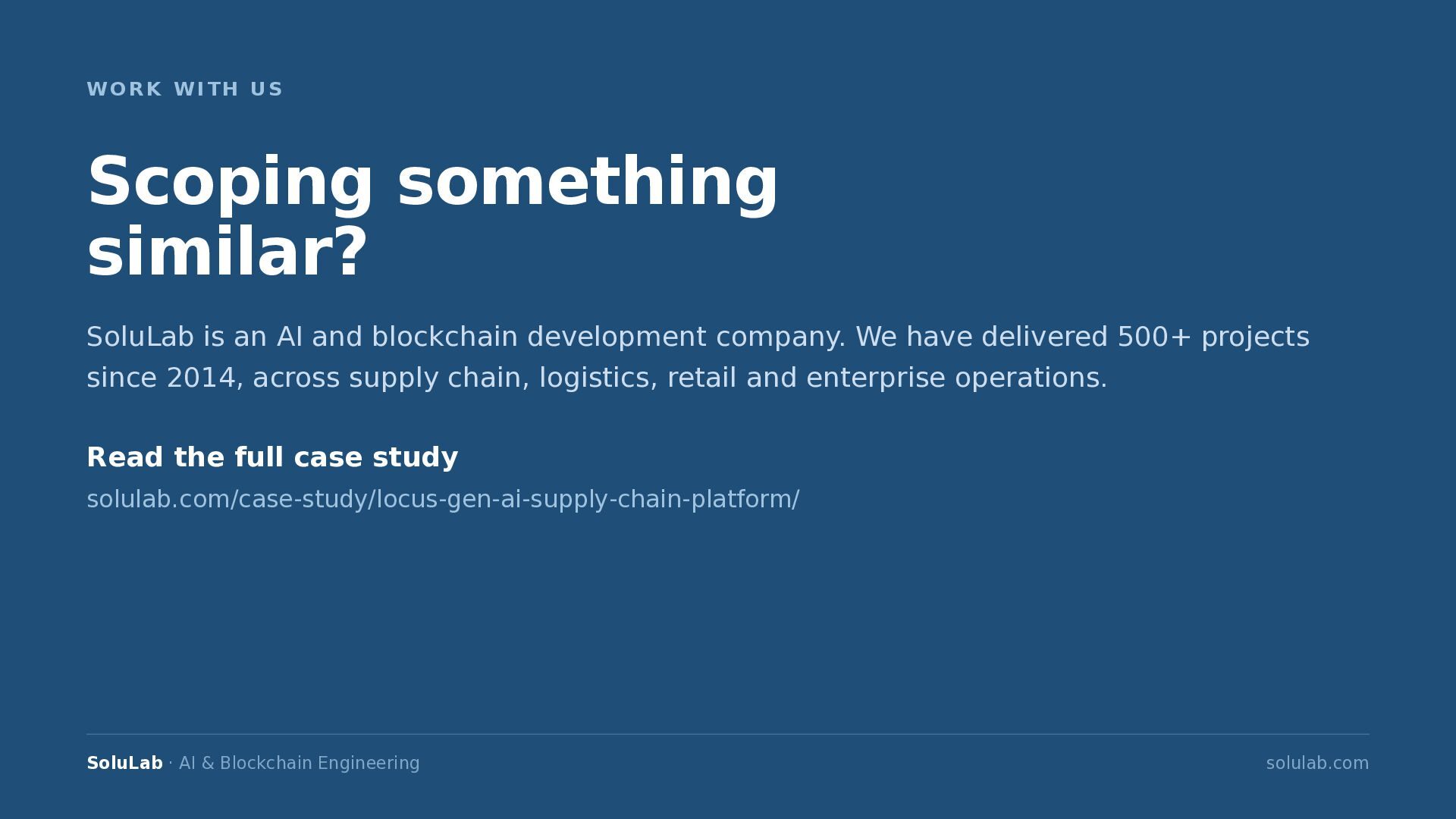
  11. WORK WITH US Scoping something similar? SoluLab is an AI

    and blockchain development company. We have delivered 500+ projects since 2014, across supply chain, logistics, retail and enterprise operations. Read the full case study solulab.com/case-study/locus-gen-ai-supply-chain-platform/ SoluLab · AI & Blockchain Engineering solulab.com

More Decks by Anil Kumar

Other Decks in Technology