Upgrade to Pro — share decks privately, control downloads, hide ads and more …

Building Agentic Workflows

Sponsored · Ship Features Fearlessly Turn features on and off without deploys. Used by thousands of Ruby developers.
Avatar for apidays apidays PRO
February 07, 2026

Building Agentic Workflows

Go beyond the AI agent hype with a deep dive into the practical architecture of agentic systems. Presented at apidays Paris 2025, Gbadebo Bello (Developer Advocate at Postman) breaks down the orchestration patterns required to build reliable, production-grade AI agents.

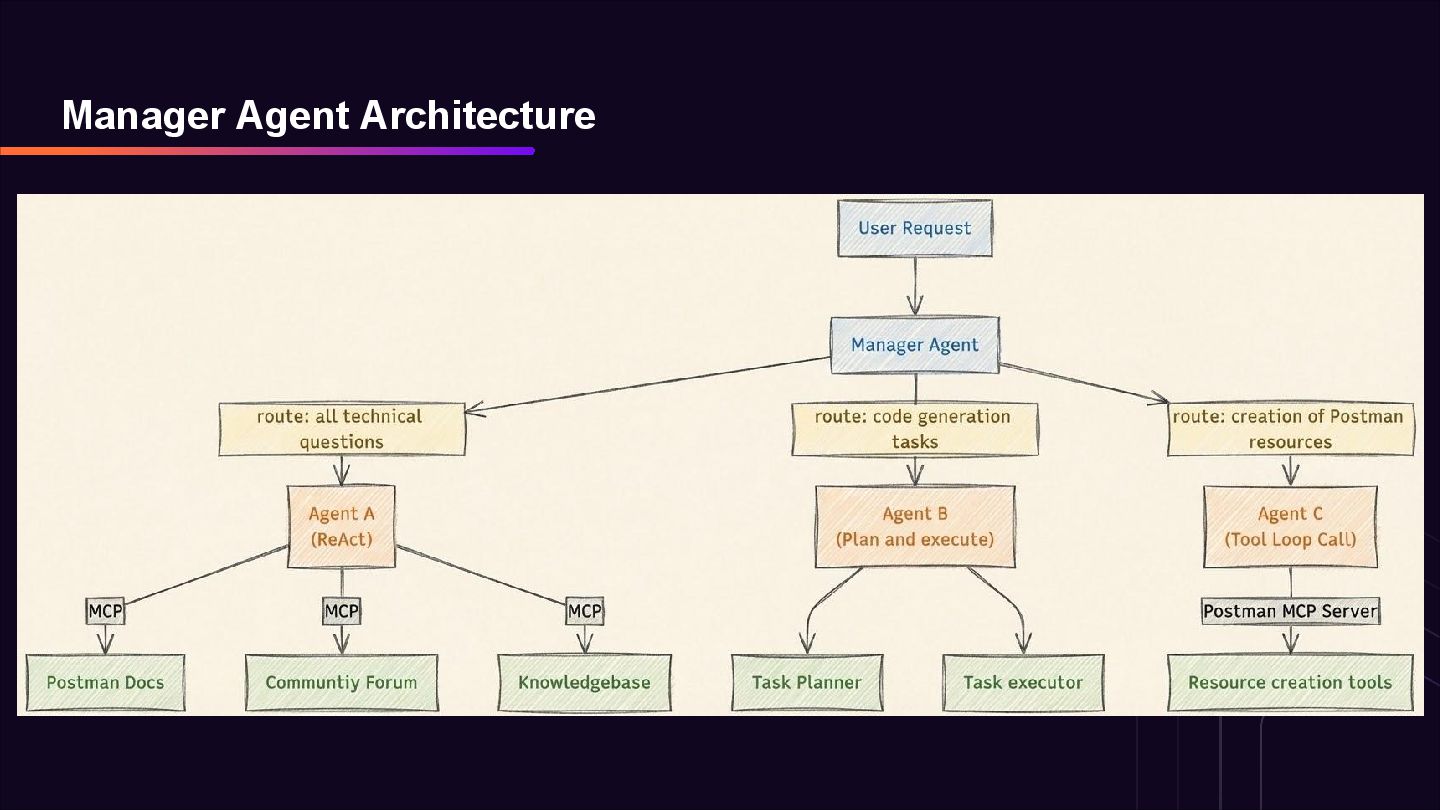
Key Technical Insights:
• Orchestration Patterns: Strategies for structuring single and multi-agent systems.
• Reasoning Loops: Deep dive into ReAct frameworks and intelligent tool calling.
• Decision Frameworks: How to choose architectures based on complexity and specialization.
• From Prototype to Production: Moving from "toy" agents to context-aware, human-in-the-loop systems.

A definitive blueprint for developers building the next generation of autonomous workflows.

------------------------------------

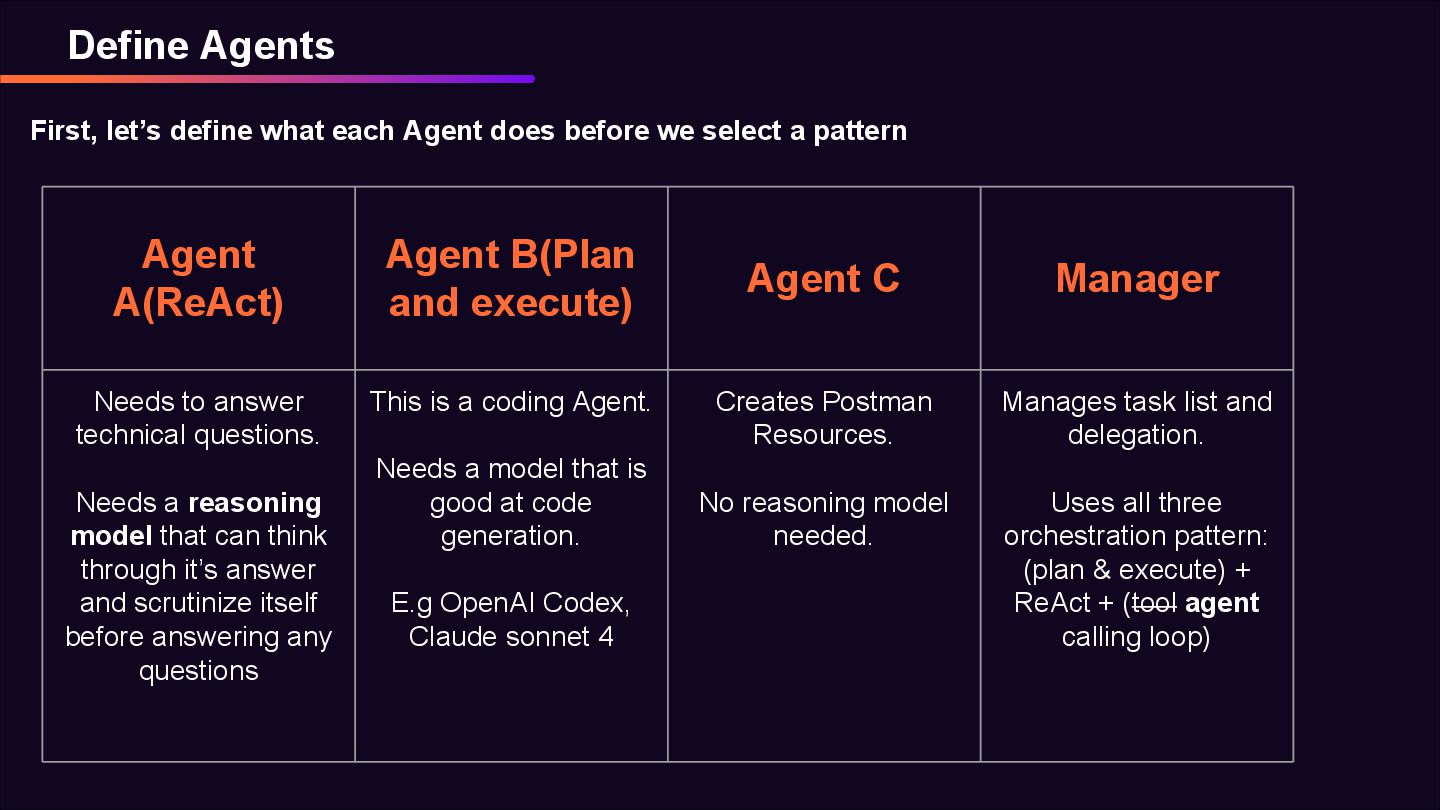
Conference Details:
Conference: apidays Paris 2025, part of FOST (Future of Software Technologies)
Theme: The APIs meet AI Conference: Innovation, Security, Sovereignty, Sustainability
Date: 9 - 11 December 2025 • CNIT Forest, Paris

Avatar for apidays

apidays PRO

February 07, 2026
Tweet

More Decks by apidays

Other Decks in Technology

Transcript

  1. © All rights reserved by Postman Inc Gbadebo Bello Developer

    Advocate Building Agentic Workflows: Patterns for Orchestrating Intelligent Systems
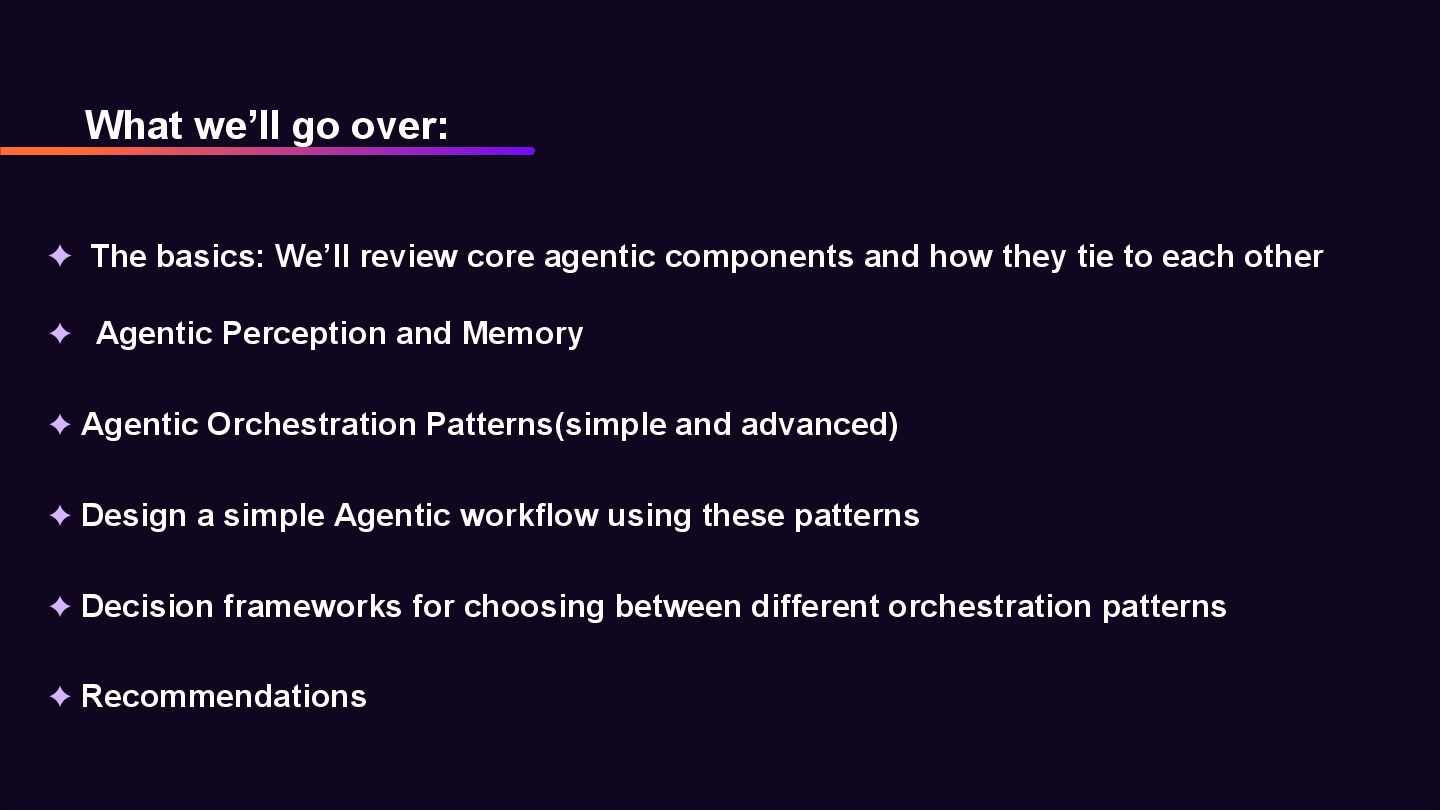
  2. What we’ll go over: ✦ The basics: We’ll review core
    agentic components and how they tie to each other ✦ Agentic Perception and Memory ✦ Agentic Orchestration Patterns(simple and advanced) ✦ Design a simple Agentic workflow using these patterns ✦ Decision frameworks for choosing between different orchestration patterns ✦ Recommendations
  3. To perceive the surrounding and be context aware, an agent

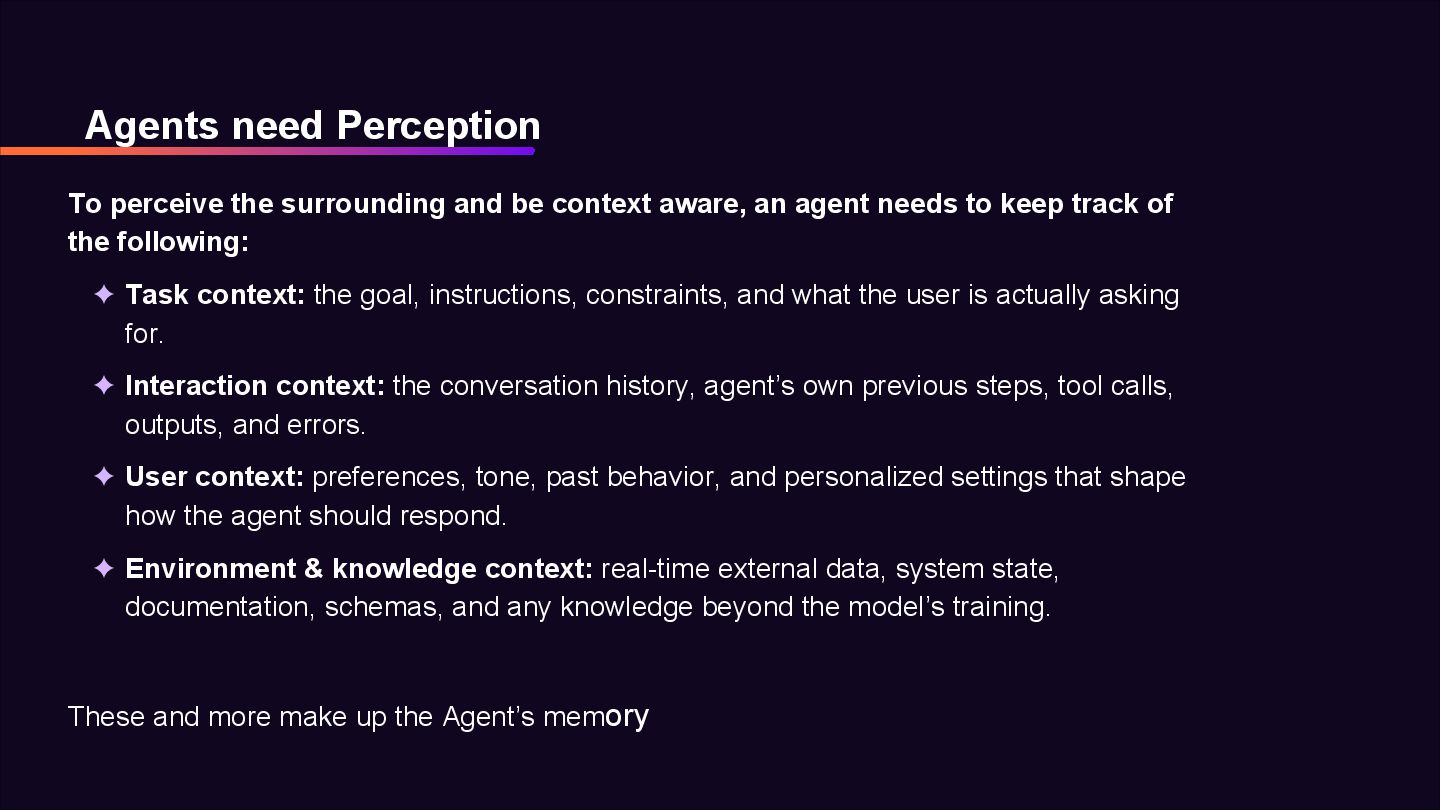
    needs to keep track of the following: ✦ Task context: the goal, instructions, constraints, and what the user is actually asking for. ✦ Interaction context: the conversation history, agent’s own previous steps, tool calls, outputs, and errors. ✦ User context: preferences, tone, past behavior, and personalized settings that shape how the agent should respond. ✦ Environment & knowledge context: real-time external data, system state, documentation, schemas, and any knowledge beyond the model’s training. These and more make up the Agent’s memory Agents need Perception
  4. ✦ Short Term Memory: Holds context within a single session

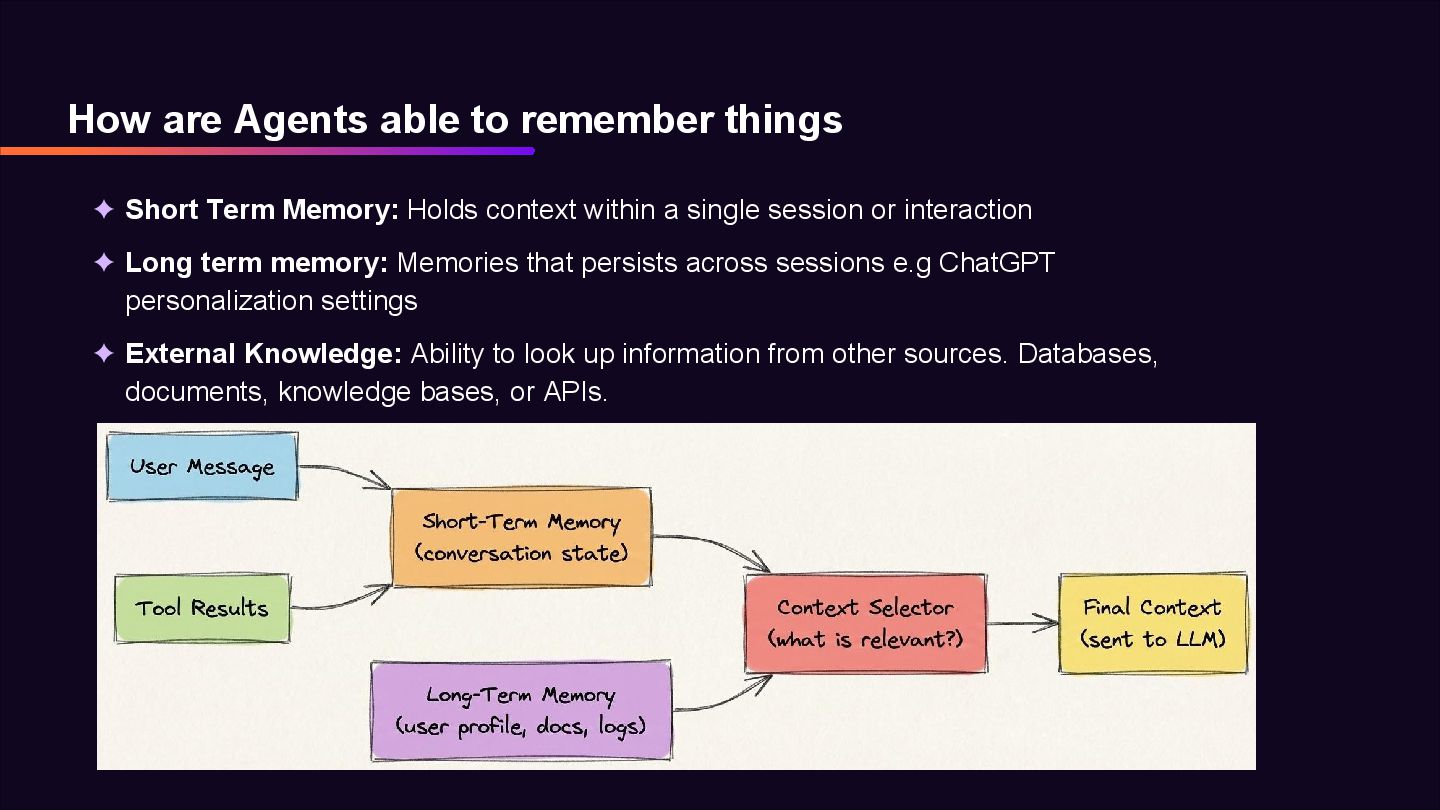
    or interaction ✦ Long term memory: Memories that persists across sessions e.g ChatGPT personalization settings ✦ External Knowledge: Ability to look up information from other sources. Databases, documents, knowledge bases, or APIs. How are Agents able to remember things
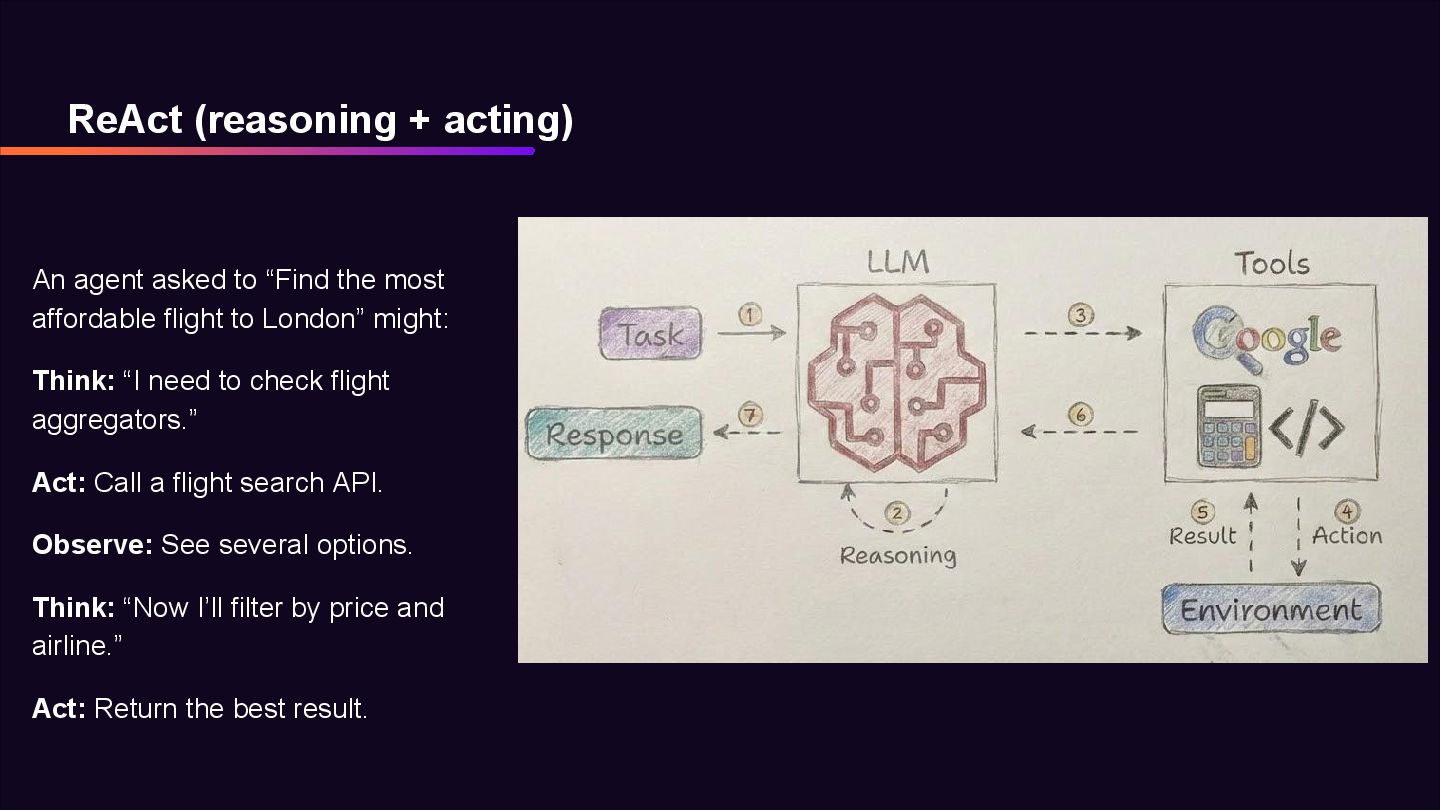
  5. ReAct (reasoning + acting) An agent asked to “Find the

    most affordable flight to London” might: Think: “I need to check flight aggregators.” Act: Call a flight search API. Observe: See several options. Think: “Now I’ll filter by price and airline.” Act: Return the best result.
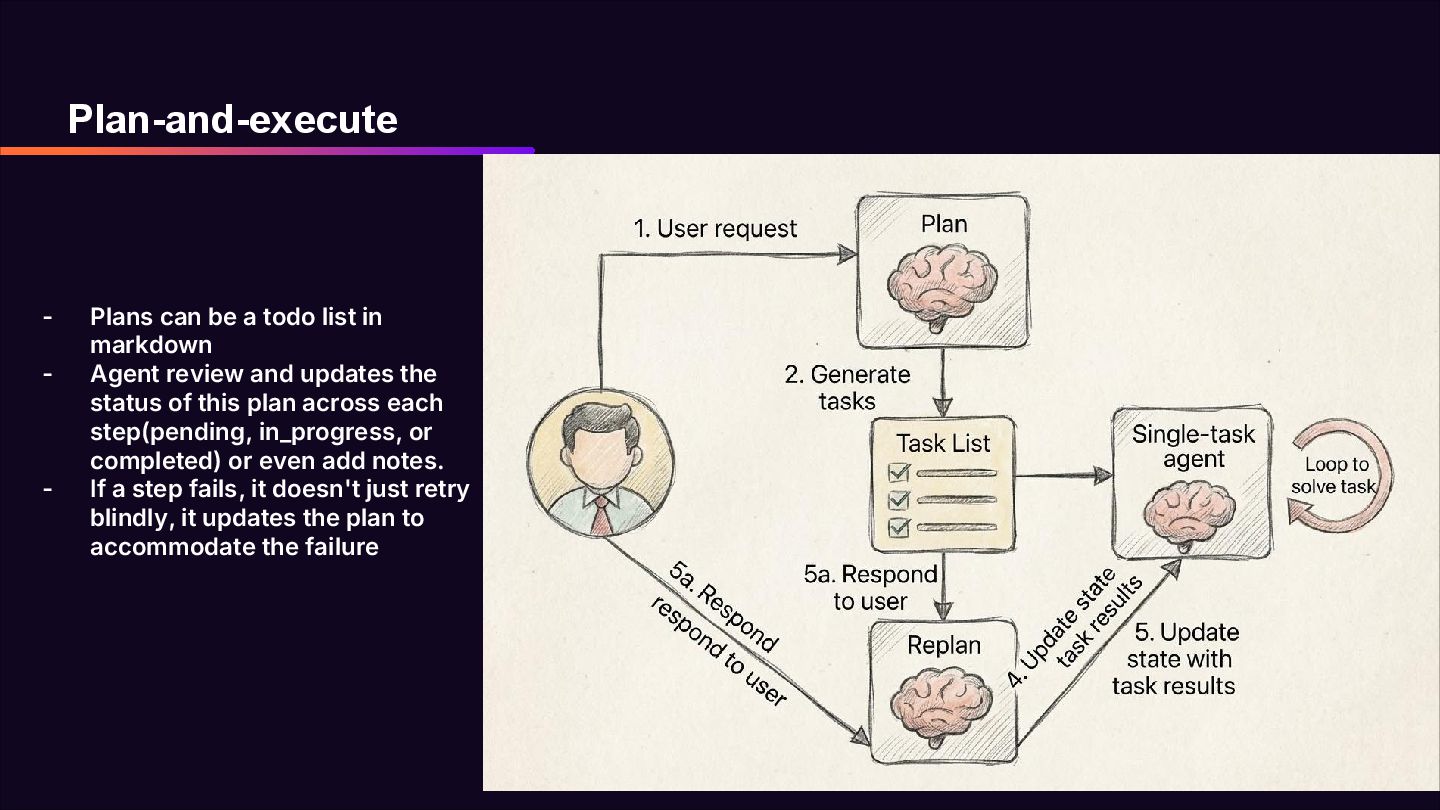
  6. Plan-and-execute - Plans can be a todo list in markdown

    - Agent review and updates the status of this plan across each step(pending, in_progress, or completed) or even add notes. - If a step fails, it doesn't just retry blindly, it updates the plan to accommodate the failure
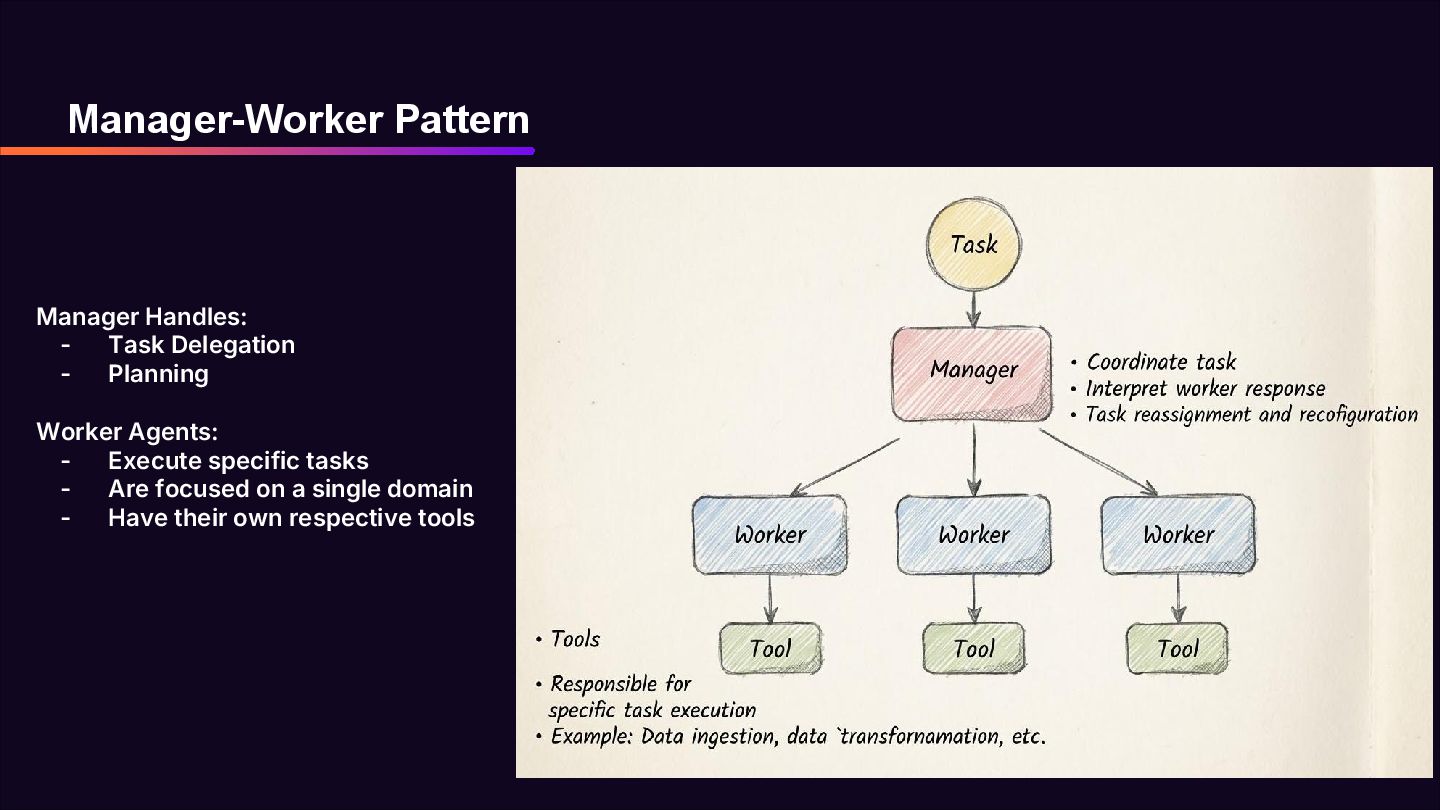
  7. Manager-Worker Pattern Manager Handles: - Task Delegation - Planning Worker

    Agents: - Execute specific tasks - Are focused on a single domain - Have their own respective tools
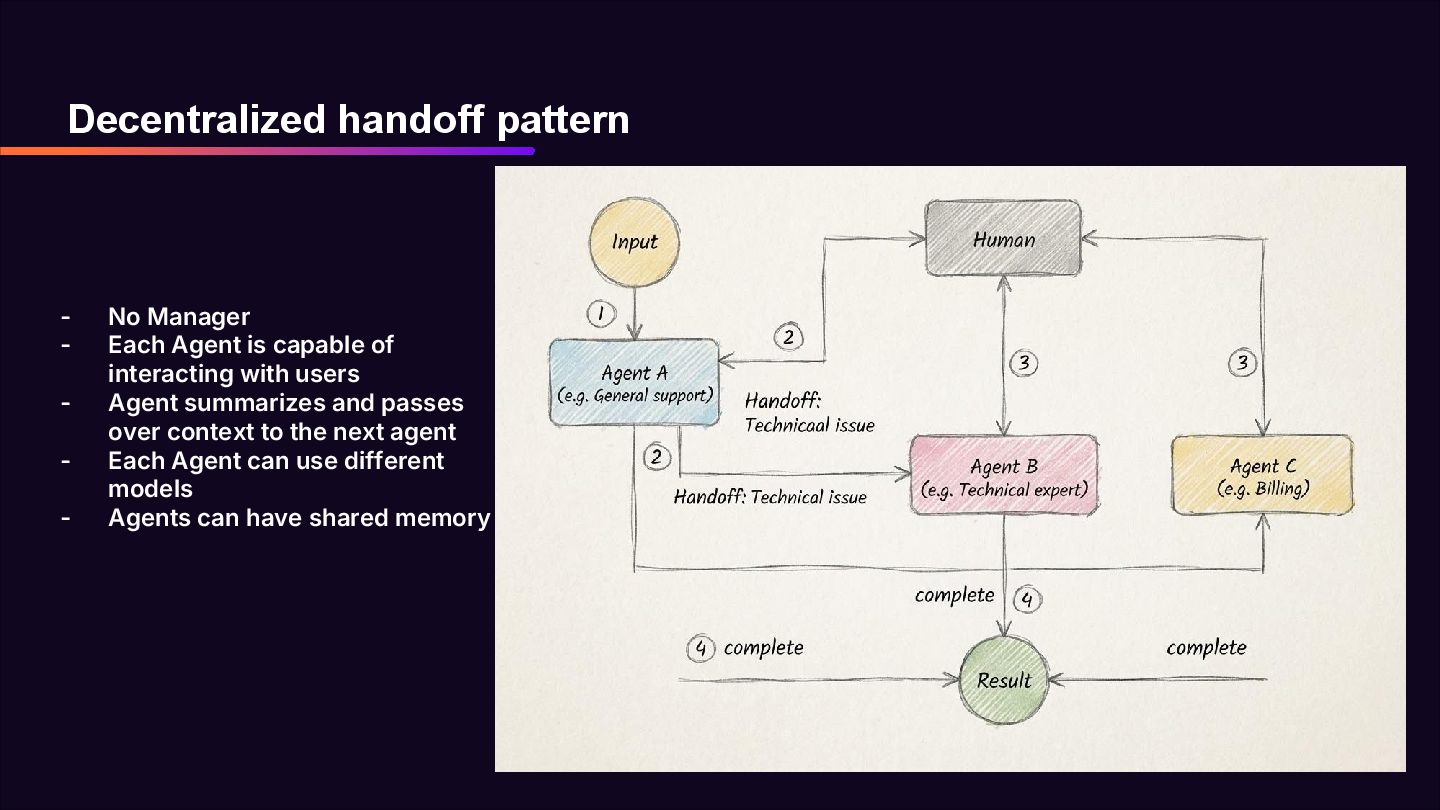
  8. Decentralized handoff pattern - No Manager - Each Agent is

    capable of interacting with users - Agent summarizes and passes over context to the next agent - Each Agent can use different models - Agents can have shared memory
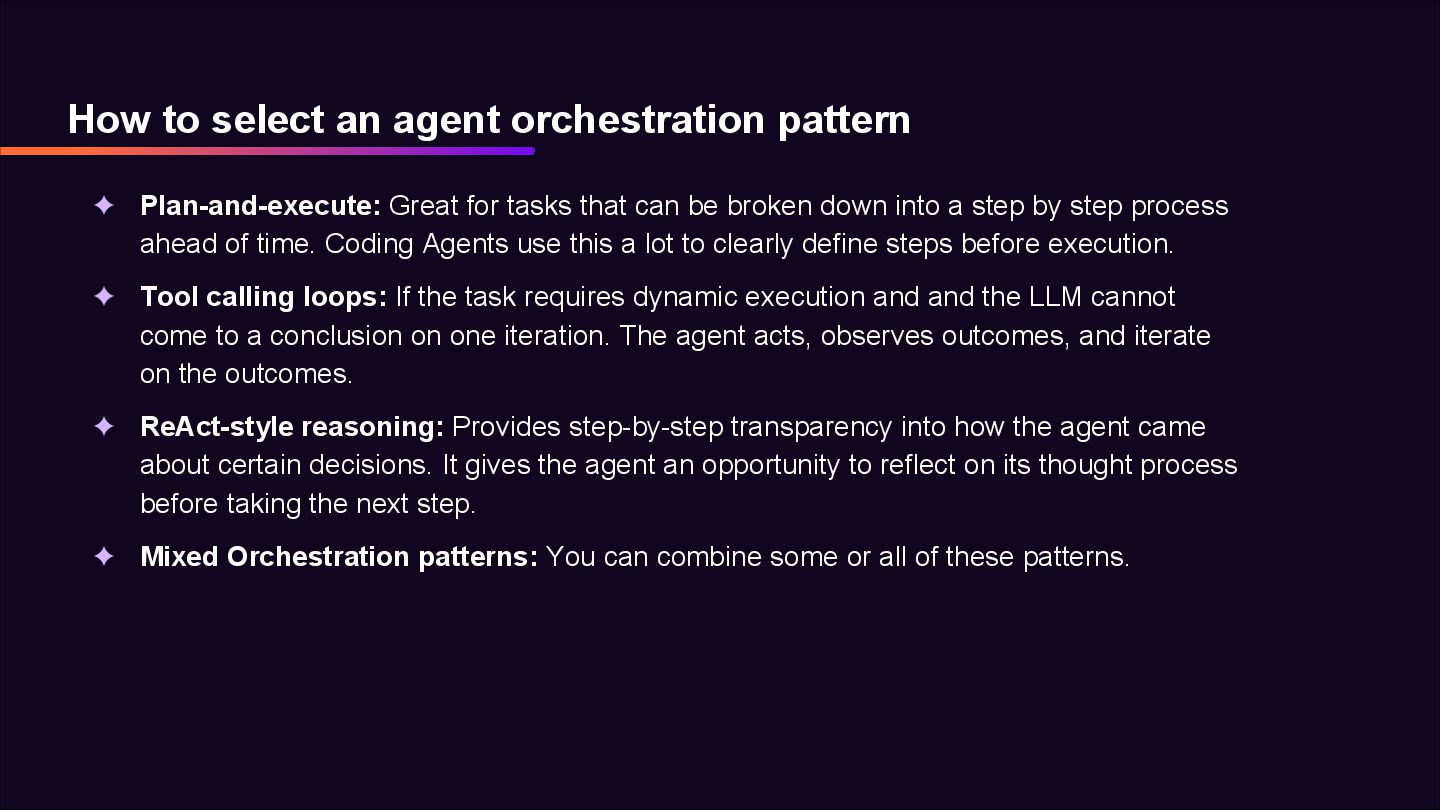
  9. ✦ Plan-and-execute: Great for tasks that can be broken down

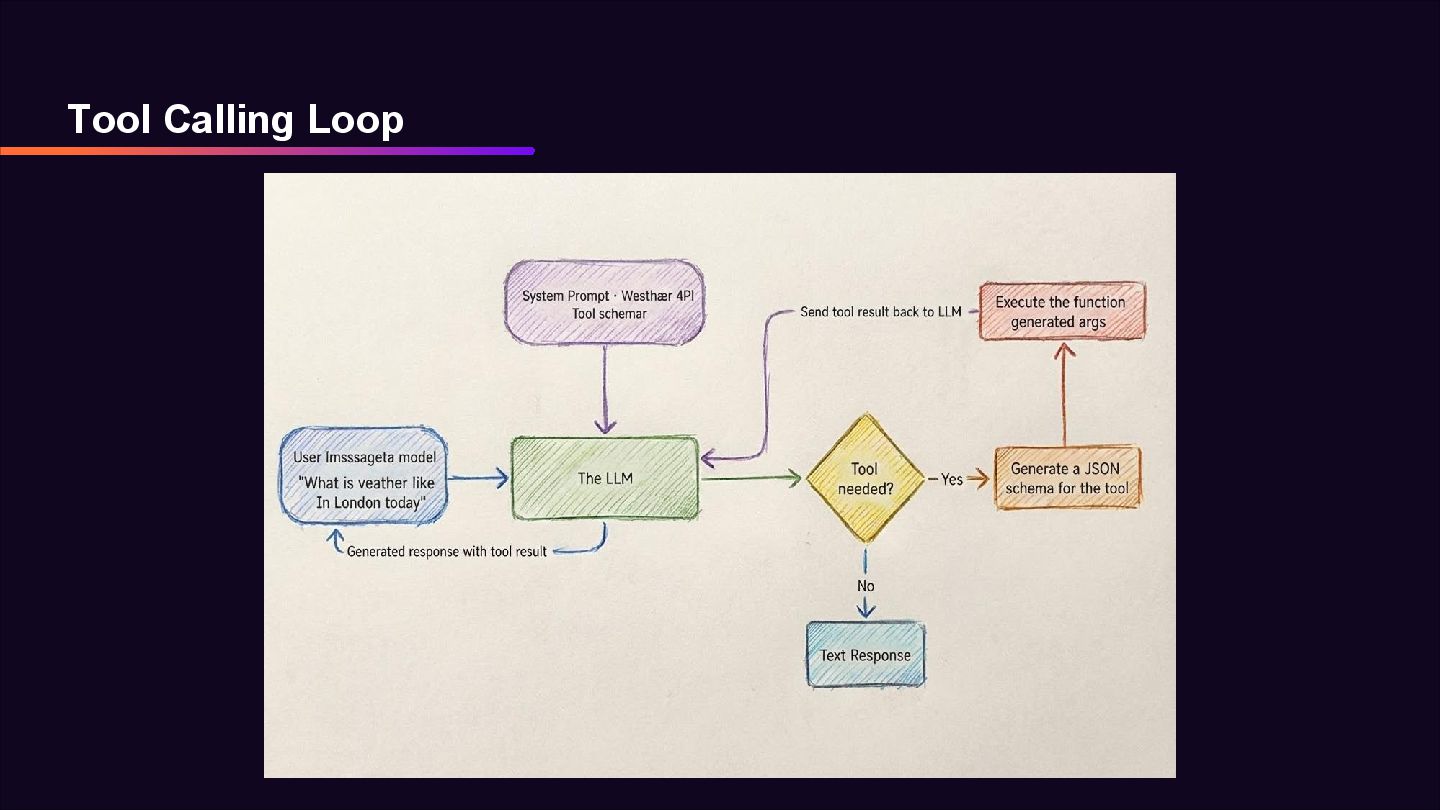
    into a step by step process ahead of time. Coding Agents use this a lot to clearly define steps before execution. ✦ Tool calling loops: If the task requires dynamic execution and and the LLM cannot come to a conclusion on one iteration. The agent acts, observes outcomes, and iterate on the outcomes. ✦ ReAct-style reasoning: Provides step-by-step transparency into how the agent came about certain decisions. It gives the agent an opportunity to reflect on its thought process before taking the next step. ✦ Mixed Orchestration patterns: You can combine some or all of these patterns. How to select an agent orchestration pattern
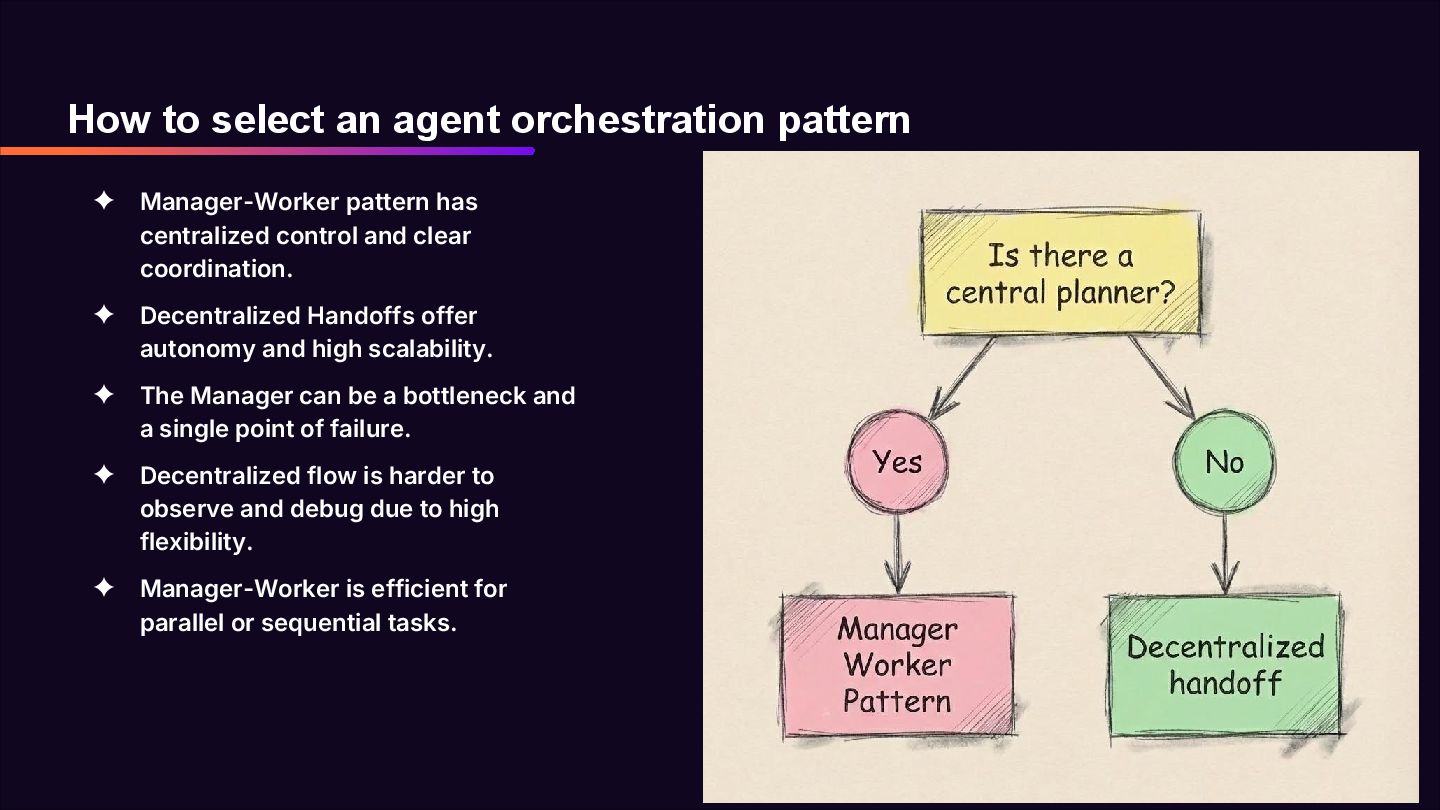
  10. ✦ Manager-Worker pattern has centralized control and clear coordination. ✦

    Decentralized Handoffs offer autonomy and high scalability. ✦ The Manager can be a bottleneck and a single point of failure. ✦ Decentralized flow is harder to observe and debug due to high flexibility. ✦ Manager-Worker is efficient for parallel or sequential tasks. How to select an agent orchestration pattern
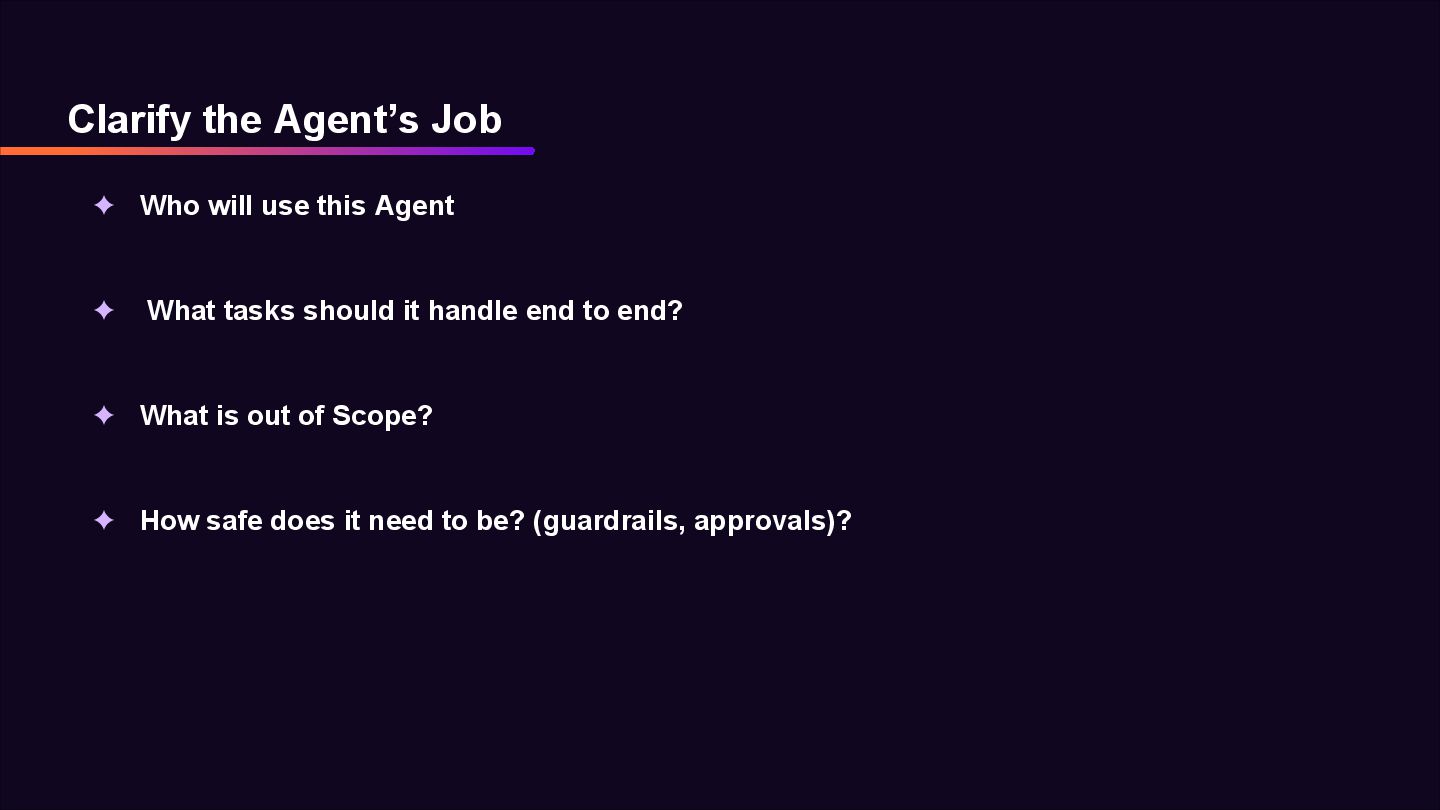
  11. ✦ Who will use this Agent ✦ What tasks should

    it handle end to end? ✦ What is out of Scope? ✦ How safe does it need to be? (guardrails, approvals)? Clarify the Agent’s Job
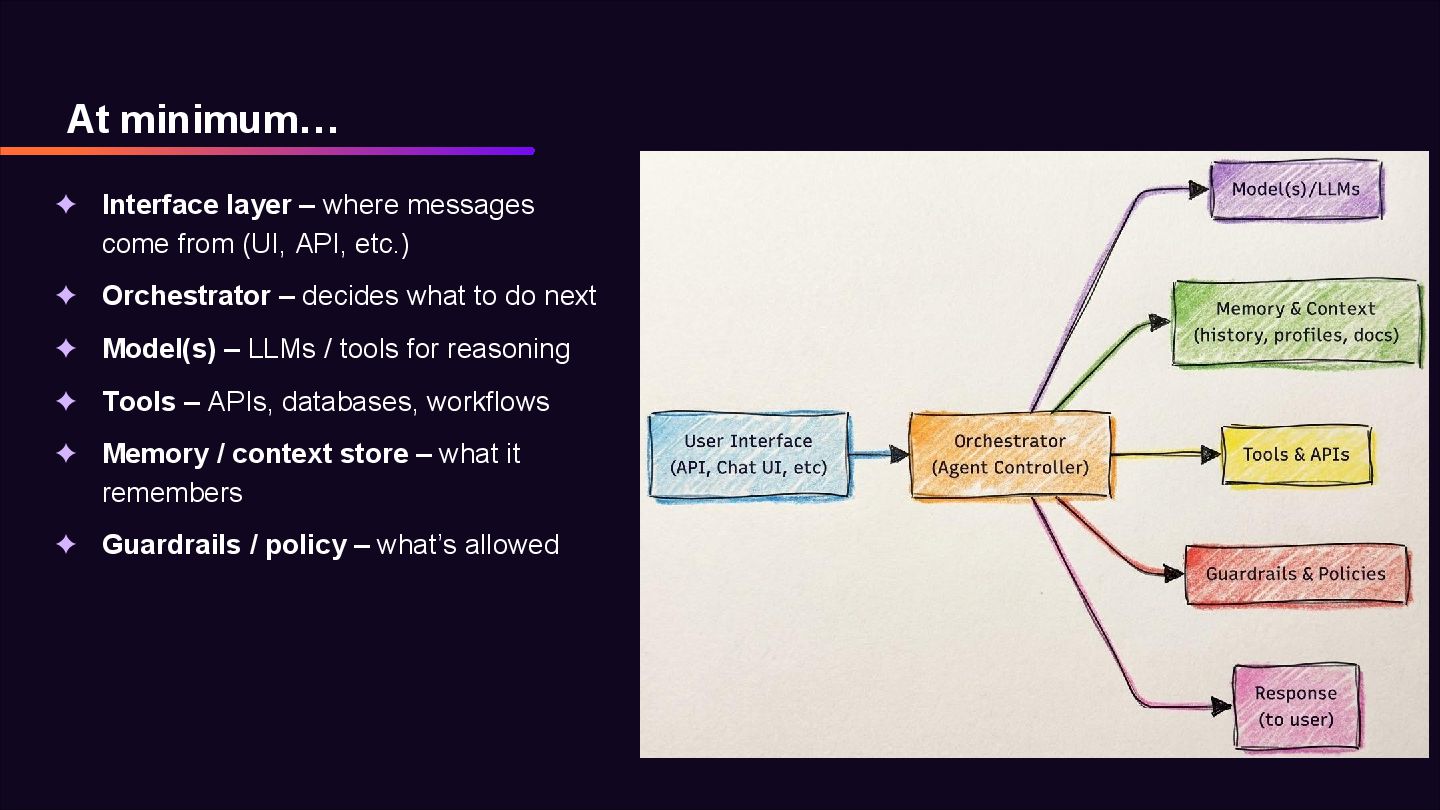
  12. At minimum… ✦ Interface layer – where messages come from

    (UI, API, etc.) ✦ Orchestrator – decides what to do next ✦ Model(s) – LLMs / tools for reasoning ✦ Tools – APIs, databases, workflows ✦ Memory / context store – what it remembers ✦ Guardrails / policy – what’s allowed
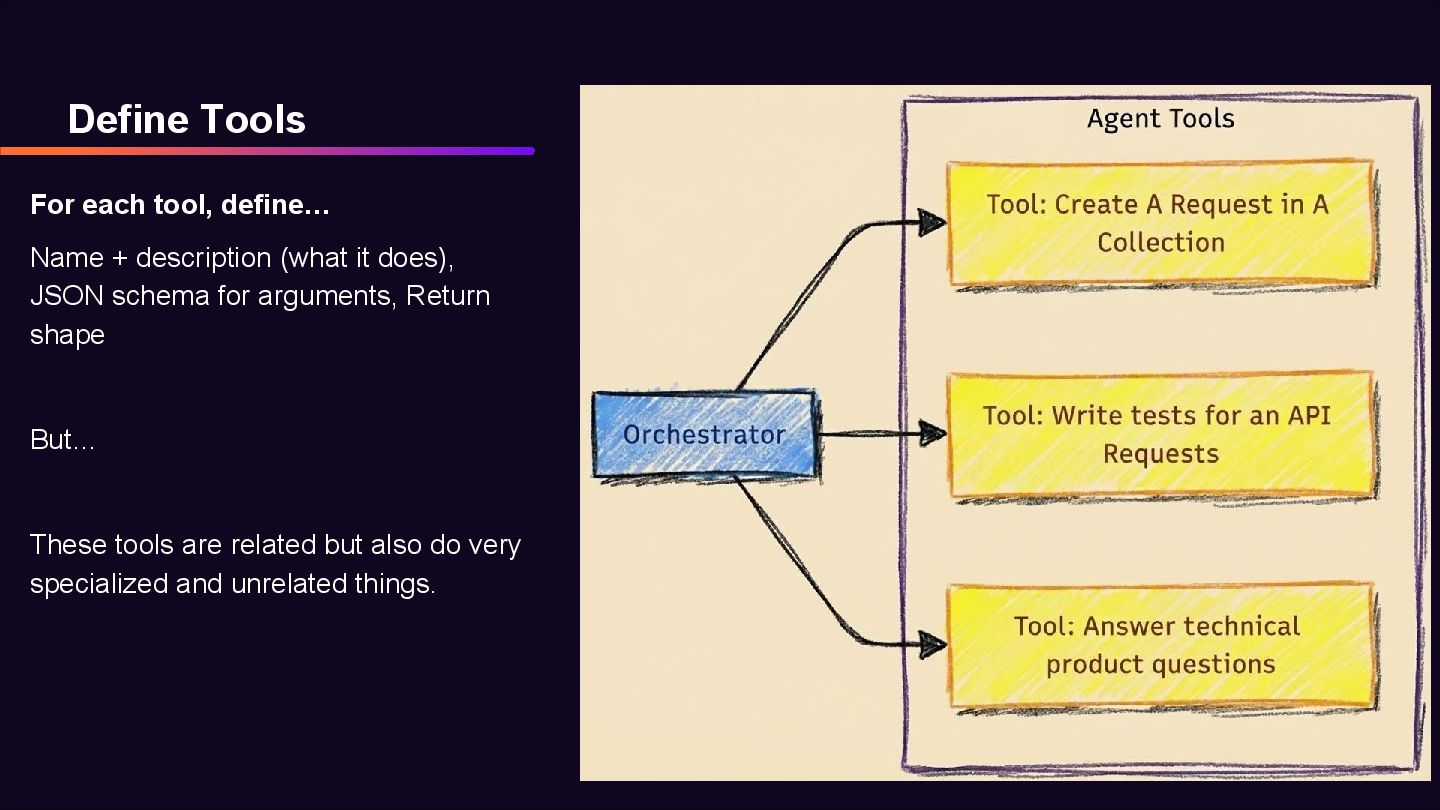
  13. Define Tools For each tool, define… Name + description (what

    it does), JSON schema for arguments, Return shape But… These tools are related but also do very specialized and unrelated things.
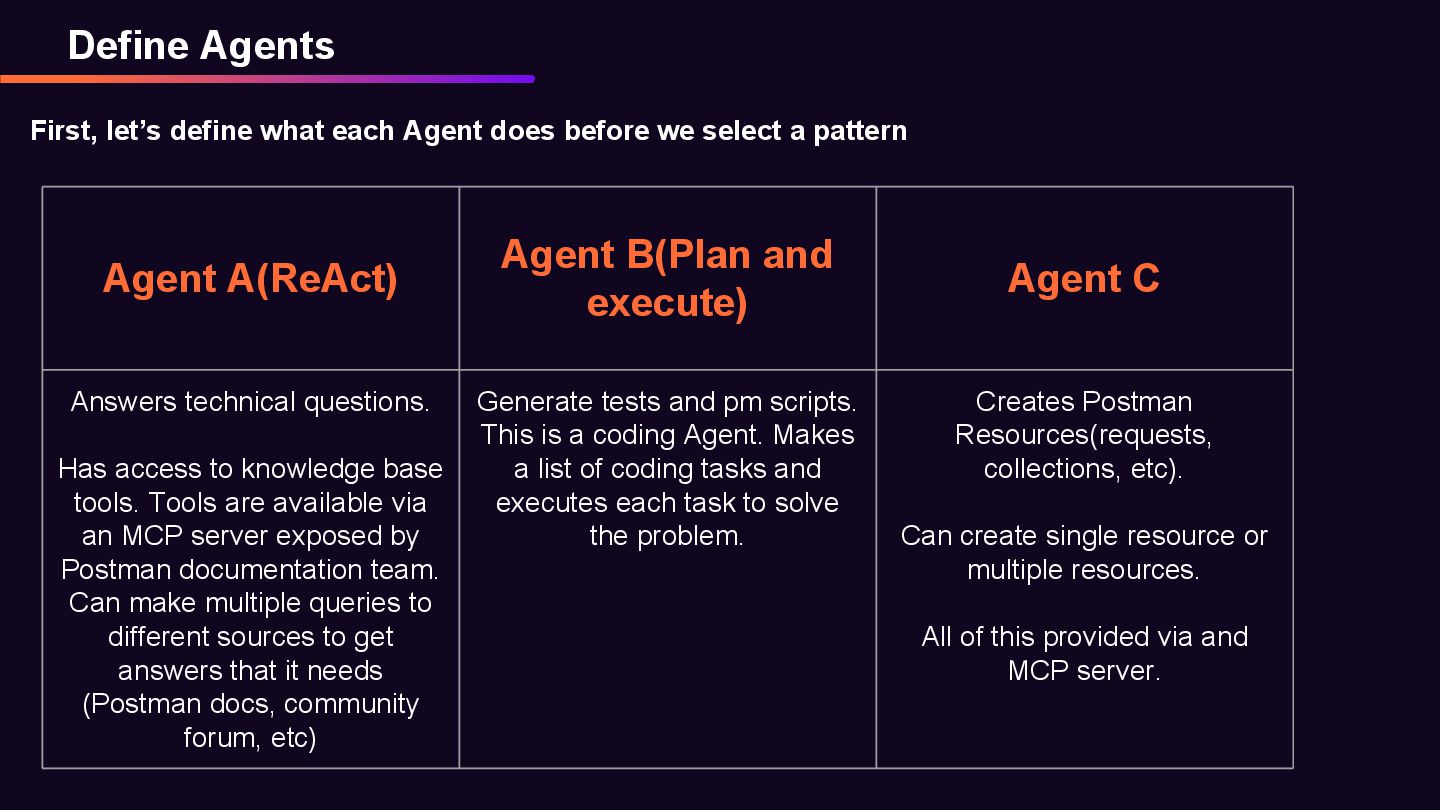
  14. Define Agents First, let’s define what each Agent does before

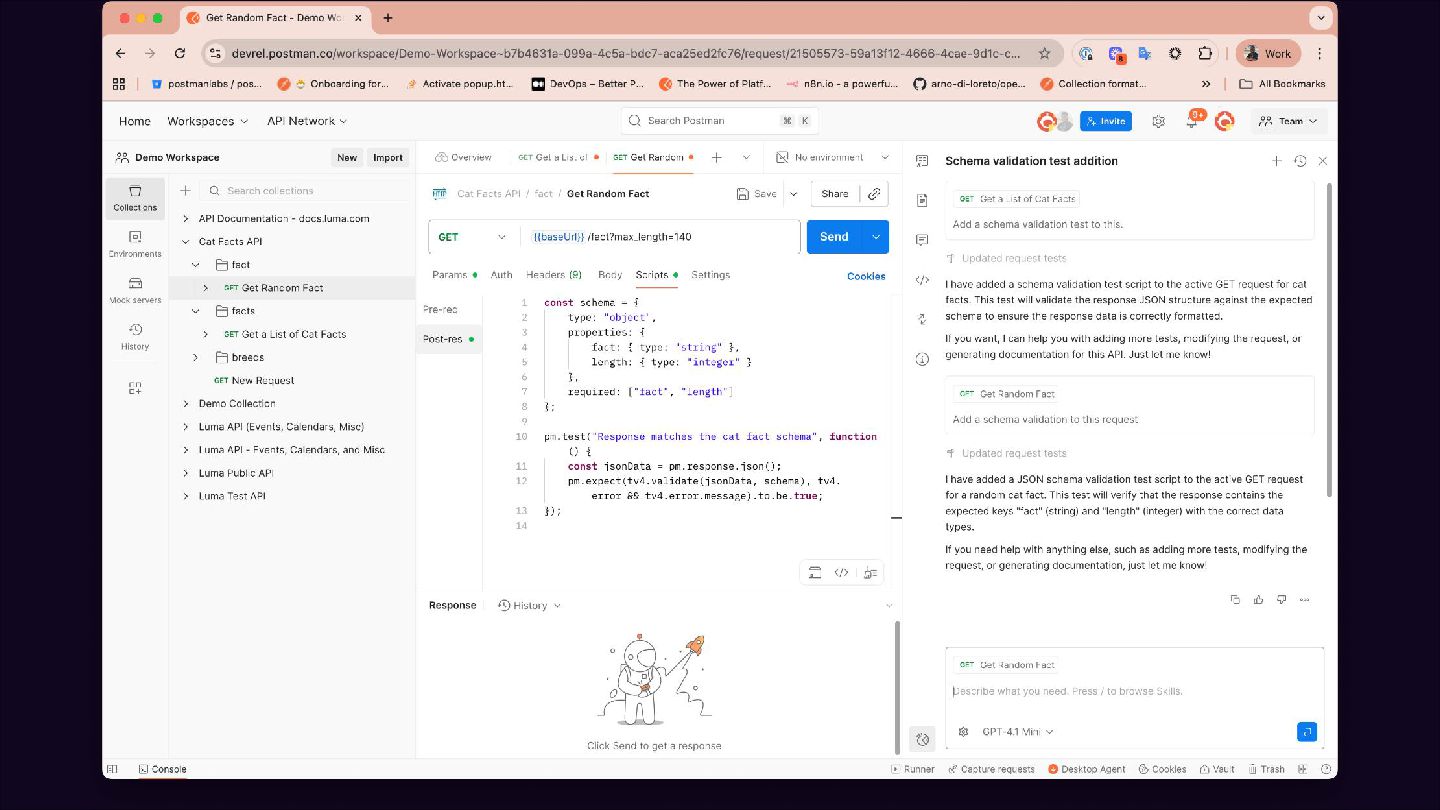
    we select a pattern Agent A(ReAct) Agent B(Plan and execute) Agent C Answers technical questions. Has access to knowledge base tools. Tools are available via an MCP server exposed by Postman documentation team. Can make multiple queries to different sources to get answers that it needs (Postman docs, community forum, etc) Generate tests and pm scripts. This is a coding Agent. Makes a list of coding tasks and executes each task to solve the problem. Creates Postman Resources(requests, collections, etc). Can create single resource or multiple resources. All of this provided via and MCP server.
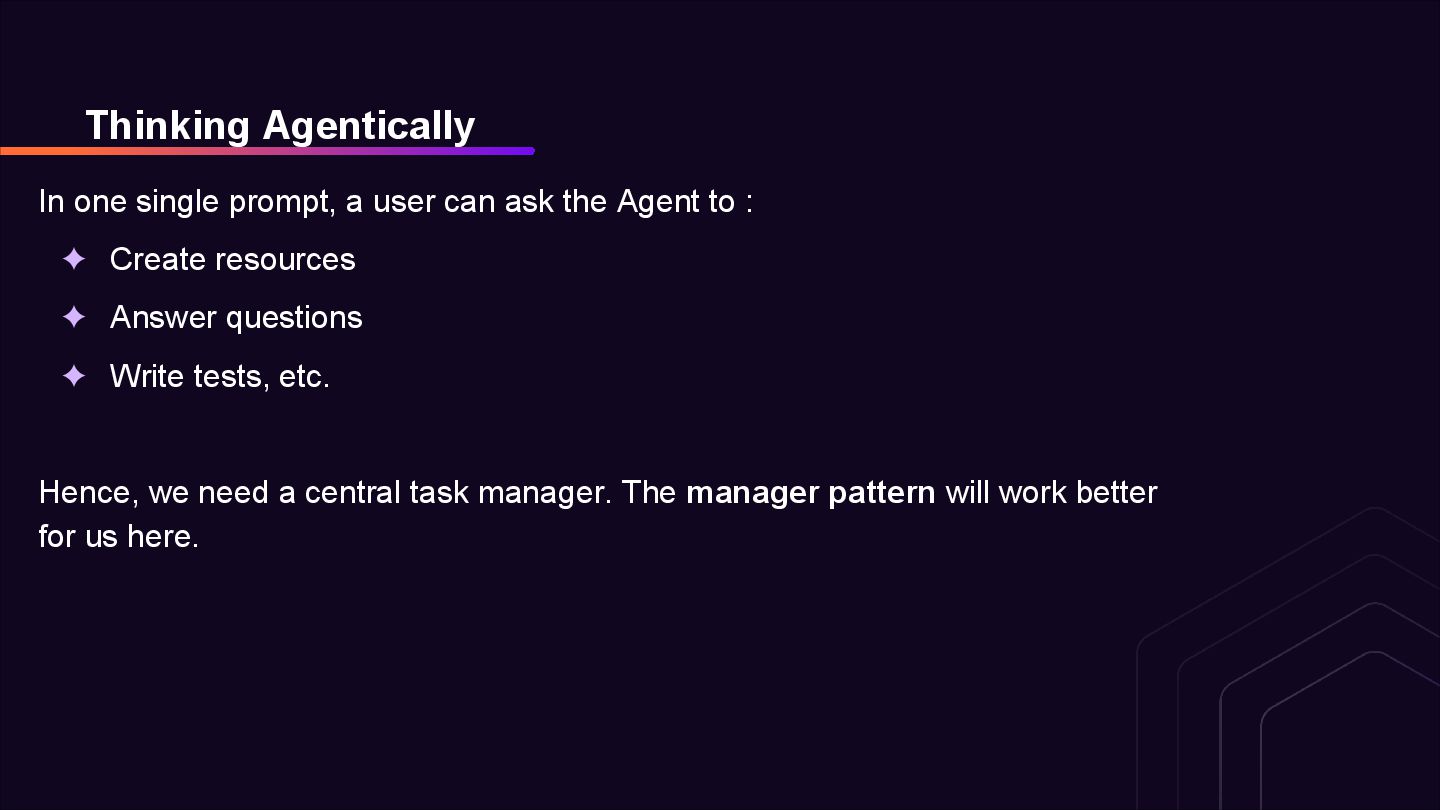
  15. Thinking Agentically In one single prompt, a user can ask

    the Agent to : ✦ Create resources ✦ Answer questions ✦ Write tests, etc. Hence, we need a central task manager. The manager pattern will work better for us here.
  16. Agent A(ReAct) Agent B(Plan and execute) Agent C Manager Needs

    to answer technical questions. Needs a reasoning model that can think through it’s answer and scrutinize itself before answering any questions This is a coding Agent. Needs a model that is good at code generation. E.g OpenAI Codex, Claude sonnet 4 Creates Postman Resources. No reasoning model needed. Manages task list and delegation. Uses all three orchestration pattern: (plan & execute) + ReAct + (tool agent calling loop) Define Agents First, let’s define what each Agent does before we select a pattern
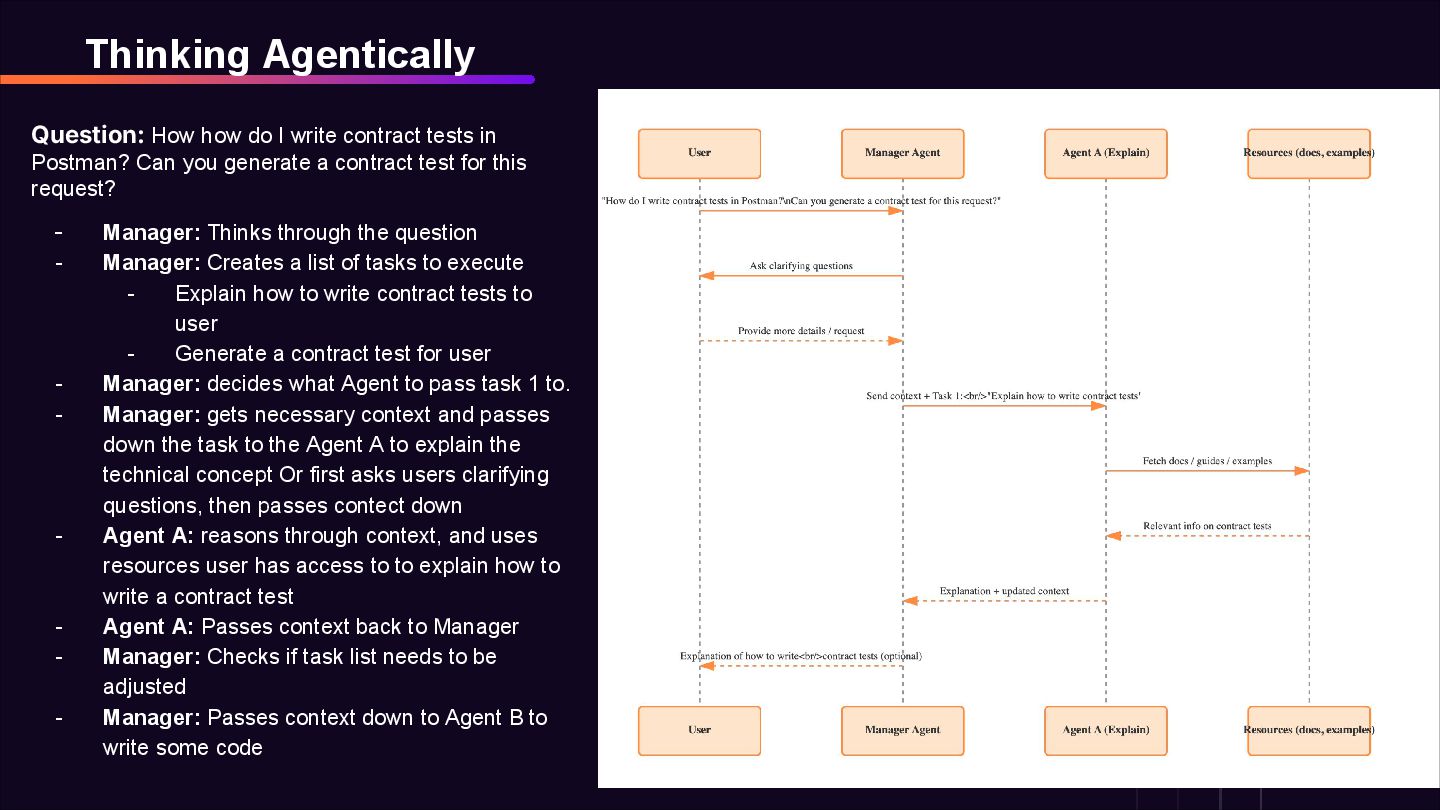
  17. Thinking Agentically How how do I write contract tests in

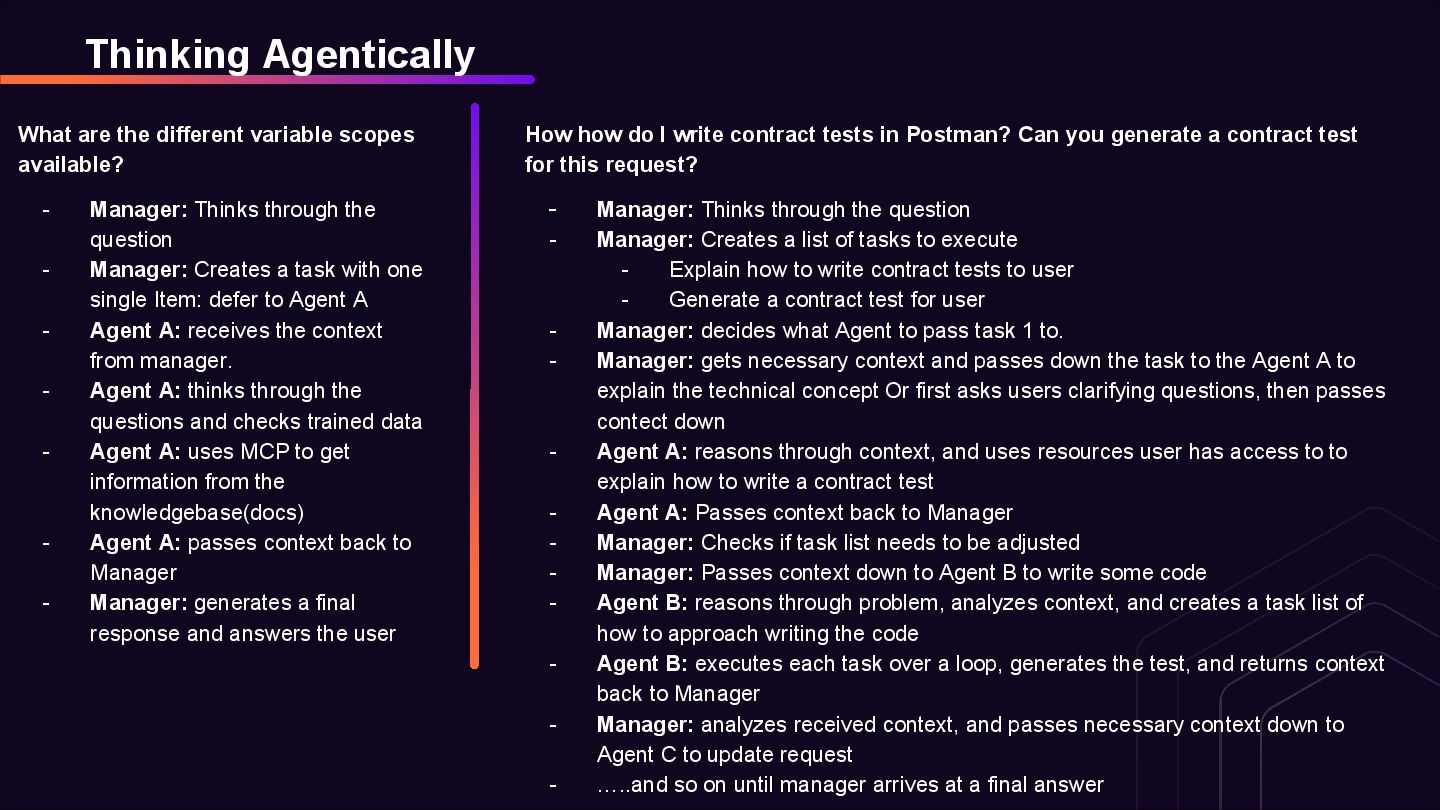
    Postman? Can you generate a contract test for this request? - Manager: Thinks through the question - Manager: Creates a list of tasks to execute - Explain how to write contract tests to user - Generate a contract test for user - Manager: decides what Agent to pass task 1 to. - Manager: gets necessary context and passes down the task to the Agent A to explain the technical concept Or first asks users clarifying questions, then passes contect down - Agent A: reasons through context, and uses resources user has access to to explain how to write a contract test - Agent A: Passes context back to Manager - Manager: Checks if task list needs to be adjusted - Manager: Passes context down to Agent B to write some code - Agent B: reasons through problem, analyzes context, and creates a task list of how to approach writing the code - Agent B: executes each task over a loop, generates the test, and returns context back to Manager - Manager: analyzes received context, and passes necessary context down to Agent C to update request - …..and so on until manager arrives at a final answer What are the different variable scopes available? - Manager: Thinks through the question - Manager: Creates a task with one single Item: defer to Agent A - Agent A: receives the context from manager. - Agent A: thinks through the questions and checks trained data - Agent A: uses MCP to get information from the knowledgebase(docs) - Agent A: passes context back to Manager - Manager: generates a final response and answers the user
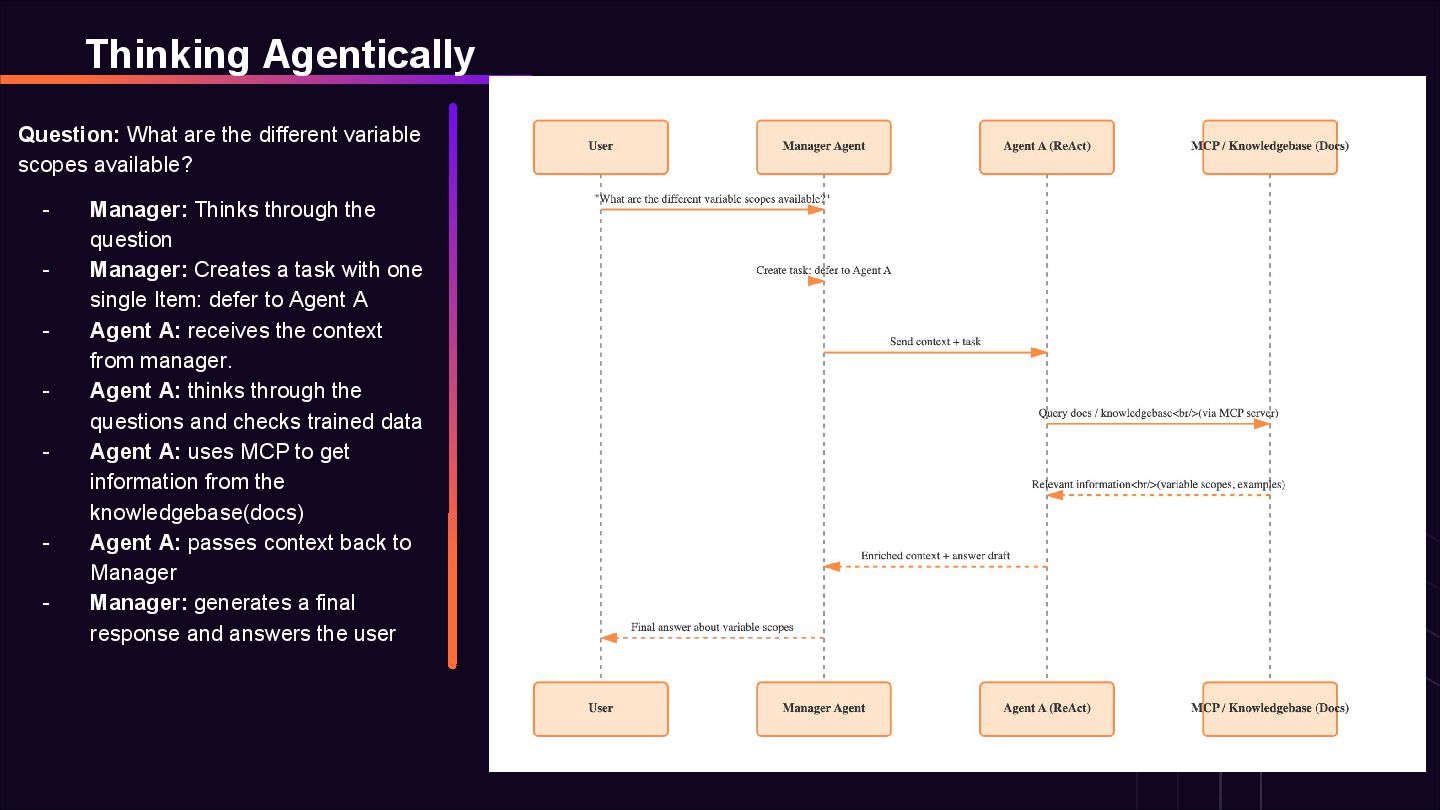
  18. Thinking Agentically Question: What are the different variable scopes available?

    - Manager: Thinks through the question - Manager: Creates a task with one single Item: defer to Agent A - Agent A: receives the context from manager. - Agent A: thinks through the questions and checks trained data - Agent A: uses MCP to get information from the knowledgebase(docs) - Agent A: passes context back to Manager - Manager: generates a final response and answers the user
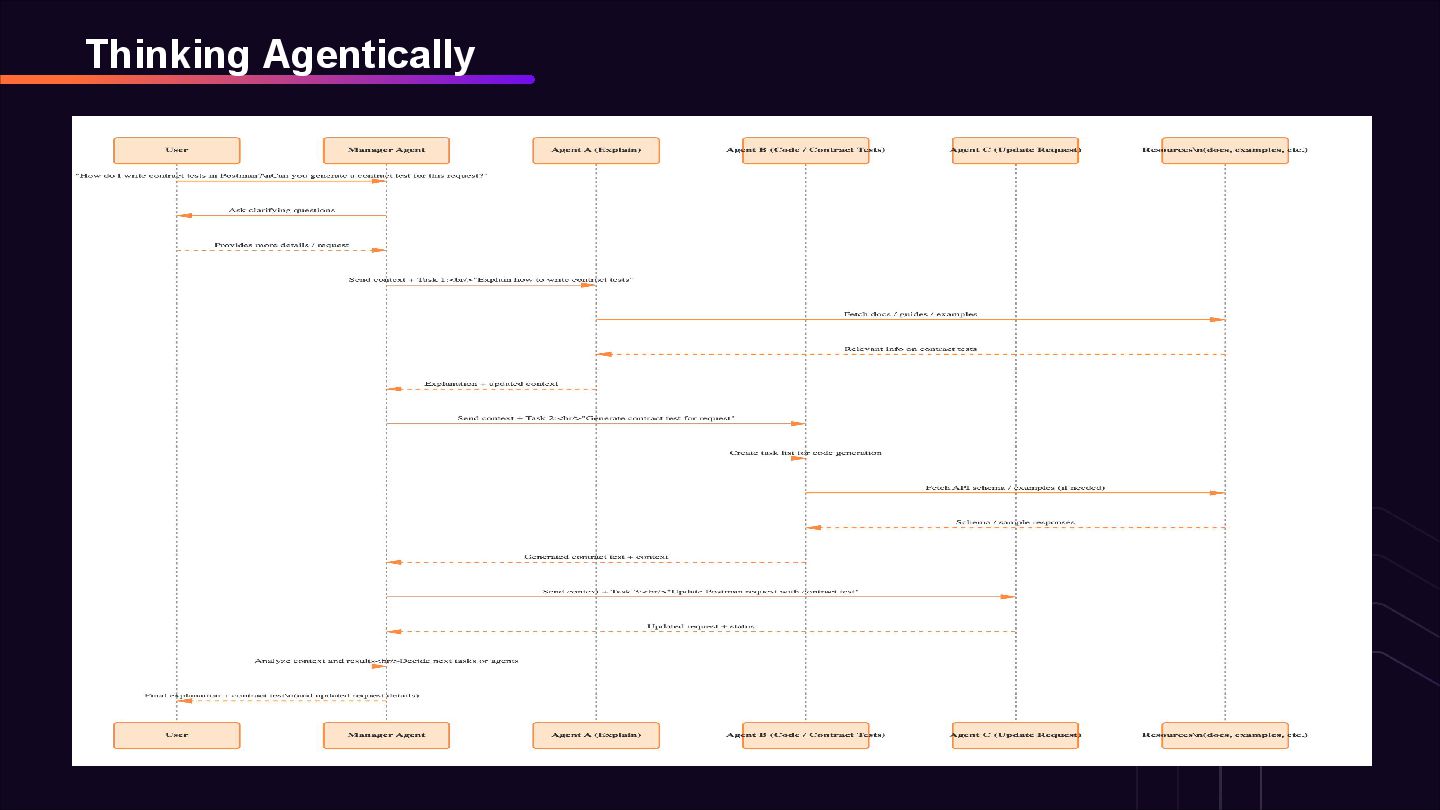
  19. Thinking Agentically Question: How how do I write contract tests

    in Postman? Can you generate a contract test for this request? - Manager: Thinks through the question - Manager: Creates a list of tasks to execute - Explain how to write contract tests to user - Generate a contract test for user - Manager: decides what Agent to pass task 1 to. - Manager: gets necessary context and passes down the task to the Agent A to explain the technical concept Or first asks users clarifying questions, then passes contect down - Agent A: reasons through context, and uses resources user has access to to explain how to write a contract test - Agent A: Passes context back to Manager - Manager: Checks if task list needs to be adjusted - Manager: Passes context down to Agent B to write some code
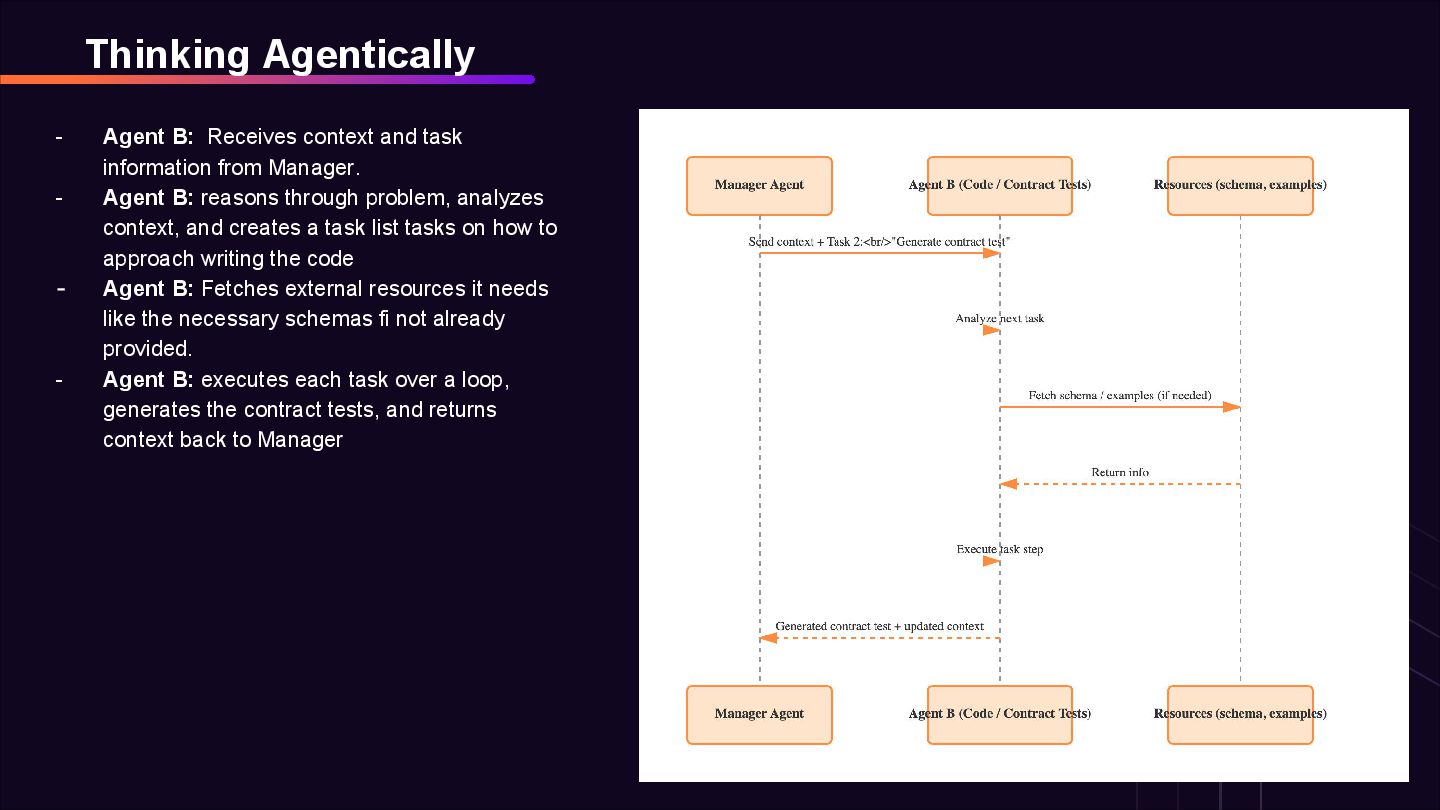
  20. Thinking Agentically - Agent B: Receives context and task information

    from Manager. - Agent B: reasons through problem, analyzes context, and creates a task list tasks on how to approach writing the code - Agent B: Fetches external resources it needs like the necessary schemas fi not already provided. - Agent B: executes each task over a loop, generates the contract tests, and returns context back to Manager
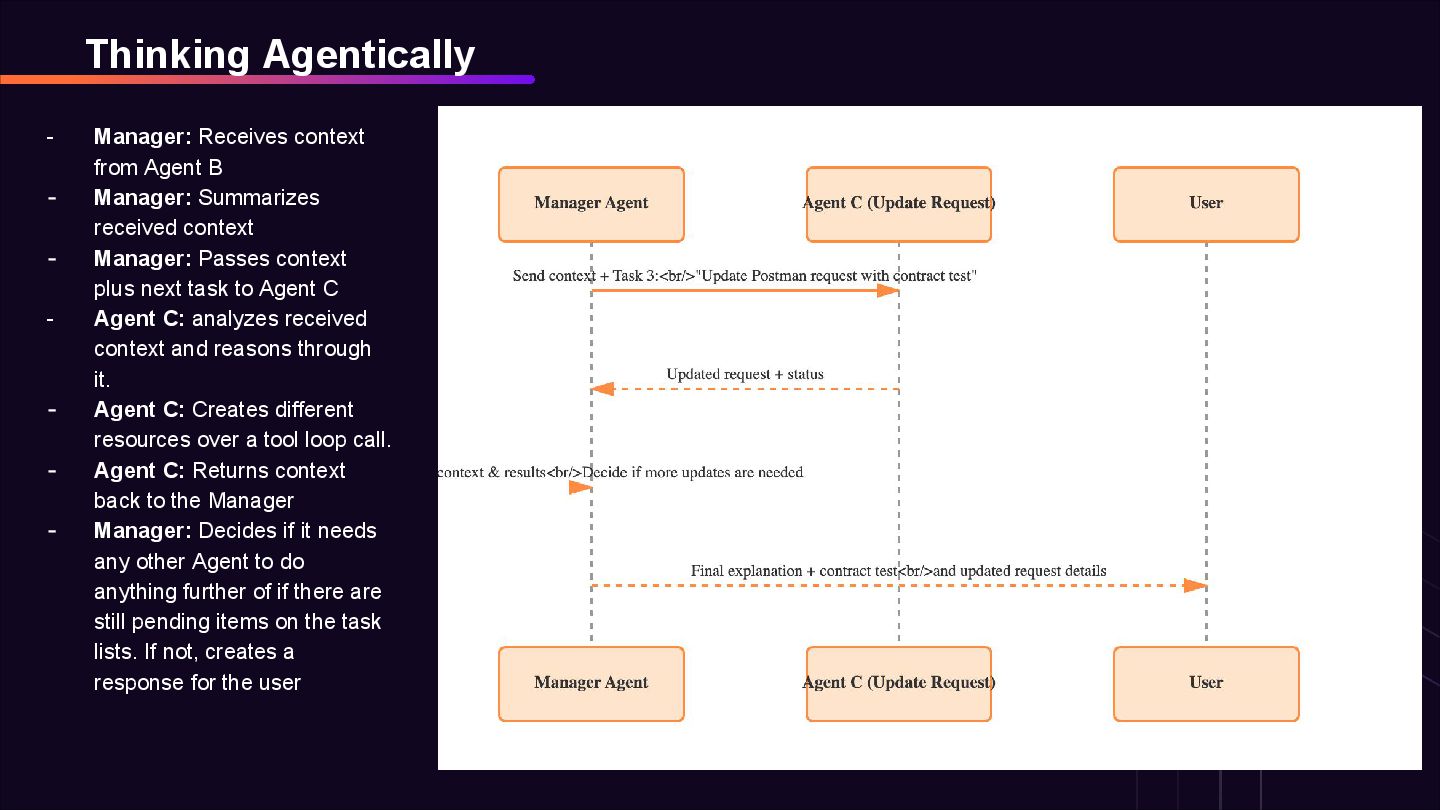
  21. Thinking Agentically - Manager: Receives context from Agent B -

    Manager: Summarizes received context - Manager: Passes context plus next task to Agent C - Agent C: analyzes received context and reasons through it. - Agent C: Creates different resources over a tool loop call. - Agent C: Returns context back to the Manager - Manager: Decides if it needs any other Agent to do anything further of if there are still pending items on the task lists. If not, creates a response for the user
  22. Recap ✦ The basics: We’ll review core agentic components and

    how they tie to each other ✦ Agentic Perception and Memory ✦ Agentic Orchestration Patterns(simple and advanced) ✦ Design a simple Agentic workflow using these patterns ✦ Decision frameworks for choosing between different orchestration patterns ✦ Recommendations
  23. Highlights ✦ Agents should not be jack of all trades.

    Agents should be specialized and optimized to be good at specific domains. ✦ Planning should always be explicit ✦ Memory should be persistent (Save the context window when you can) ✦ Context Engineering + Prompt Engineering = the new prompt engineering