$30 off During Our Annual Pro Sale. View Details »

How to be(come) the lead dev on your project

Avatar for Arno Koehler Arno Koehler
June 27, 2024
20

How to be(come) the lead dev on your project

What is a tech lead and what skills do you need to get the team to perform?
Being vulnerable takes strength, do not see it as a weakness.
Only know that being a leader means speaking last.
You never get a second chance to make a first impression, so make sure to make the right impression from the start. And finally, dare to ask for feedback to keep your skills sharp.

Avatar for Arno Koehler

Arno Koehler

June 27, 2024
Tweet

Transcript

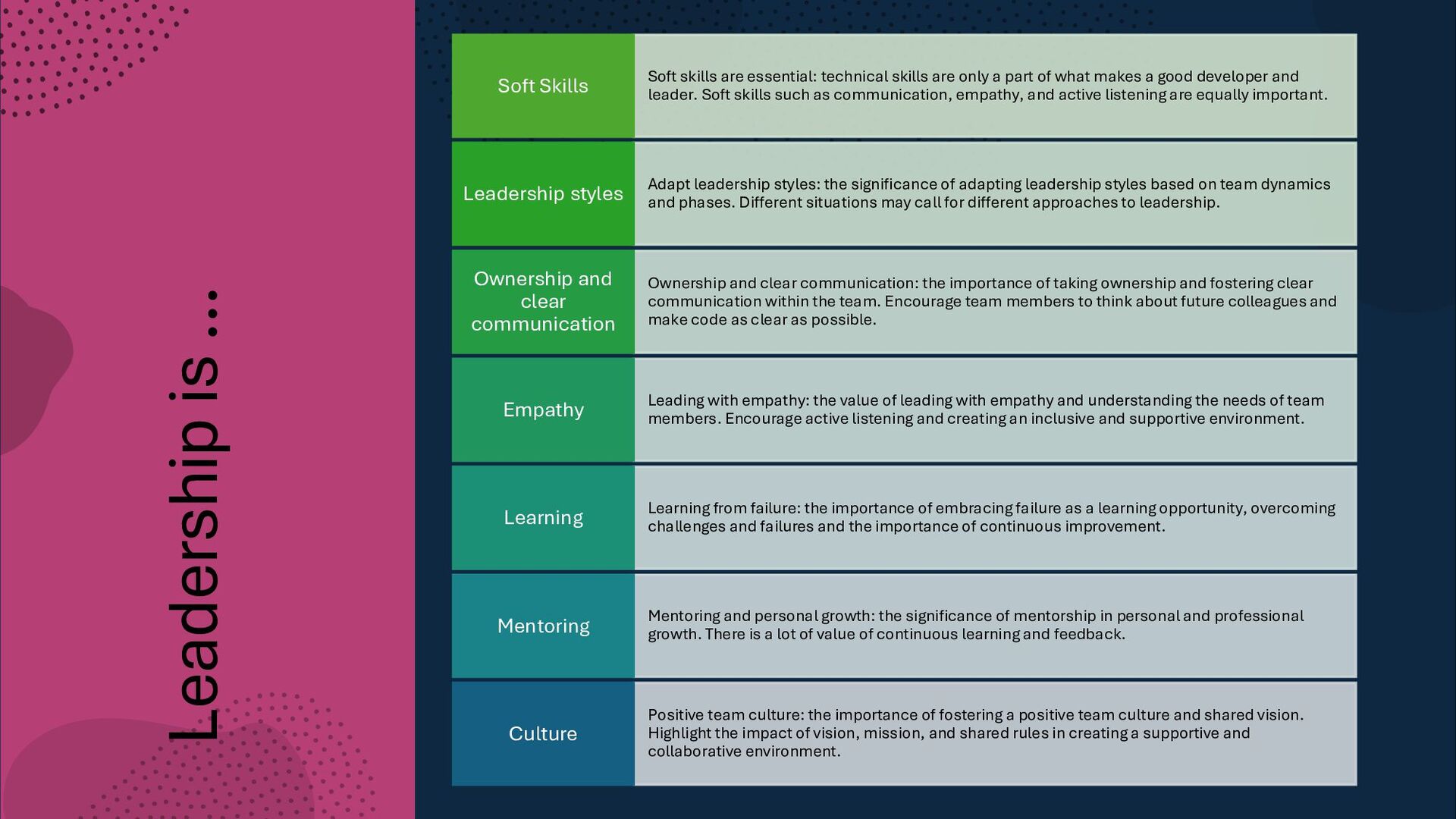
  1. Leadership is ... Soft skills are essential: technical skills are

    only a part of what makes a good developer and leader. Soft skills such as communication, empathy, and active listening are equally important. Soft Skills Adapt leadership styles: the significance of adapting leadership styles based on team dynamics and phases. Different situations may call for different approaches to leadership. Leadership styles Ownership and clear communication: the importance of taking ownership and fostering clear communication within the team. Encourage team members to think about future colleagues and make code as clear as possible. Ownership and clear communication Leading with empathy: the value of leading with empathy and understanding the needs of team members. Encourage active listening and creating an inclusive and supportive environment. Empathy Learning from failure: the importance of embracing failure as a learning opportunity, overcoming challenges and failures and the importance of continuous improvement. Learning Mentoring and personal growth: the significance of mentorship in personal and professional growth. There is a lot of value of continuous learning and feedback. Mentoring Positive team culture: the importance of fostering a positive team culture and shared vision. Highlight the impact of vision, mission, and shared rules in creating a supportive and collaborative environment. Culture
  2. One on One You will have better insights and more

    honest conversations (even more with different cultures) When you talk 1-1
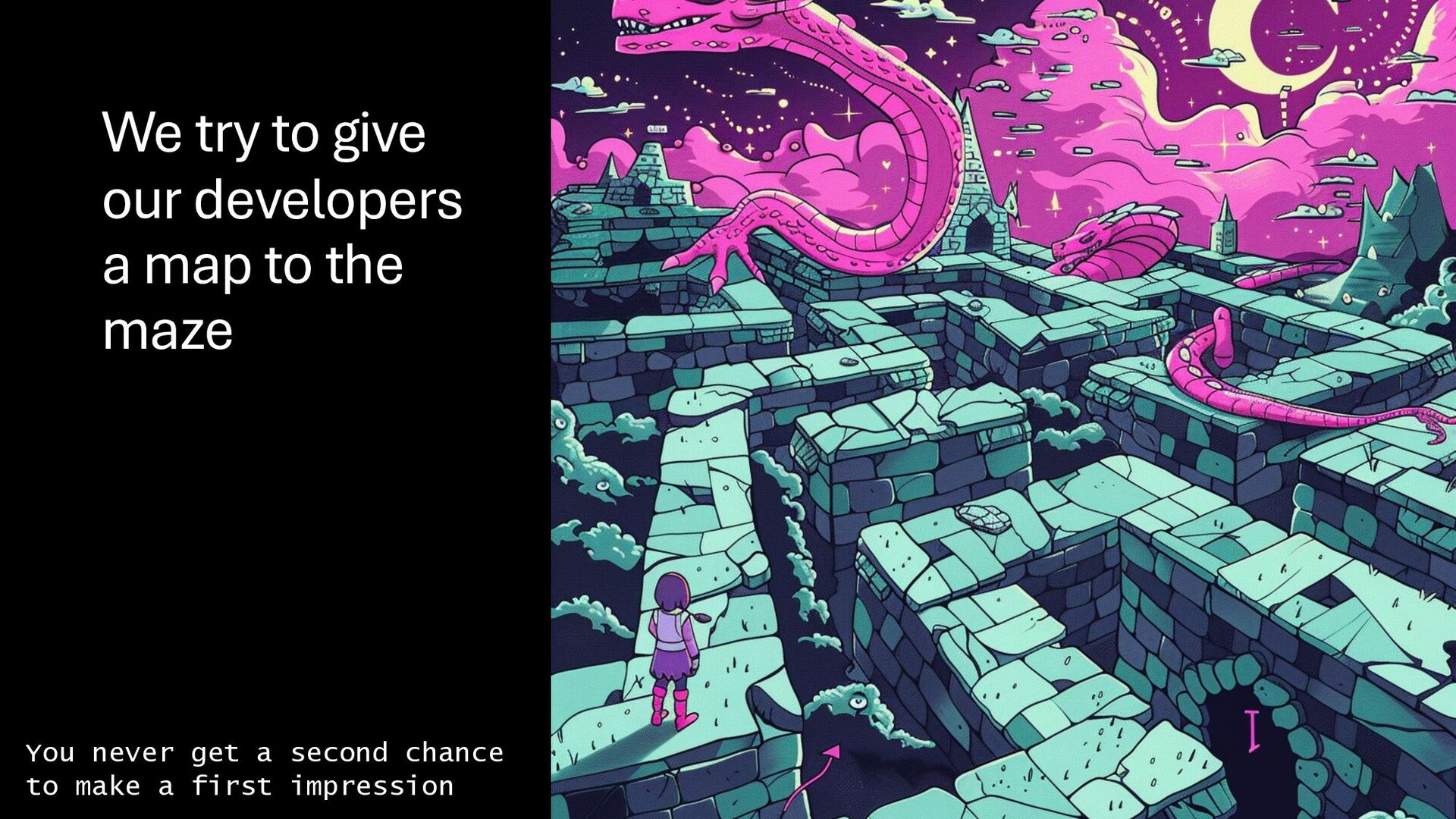
  3. We try to give our developers a map to the

    maze You never get a second chance to make a first impression
  4. During your first 2-3 weeks • Ask • for a

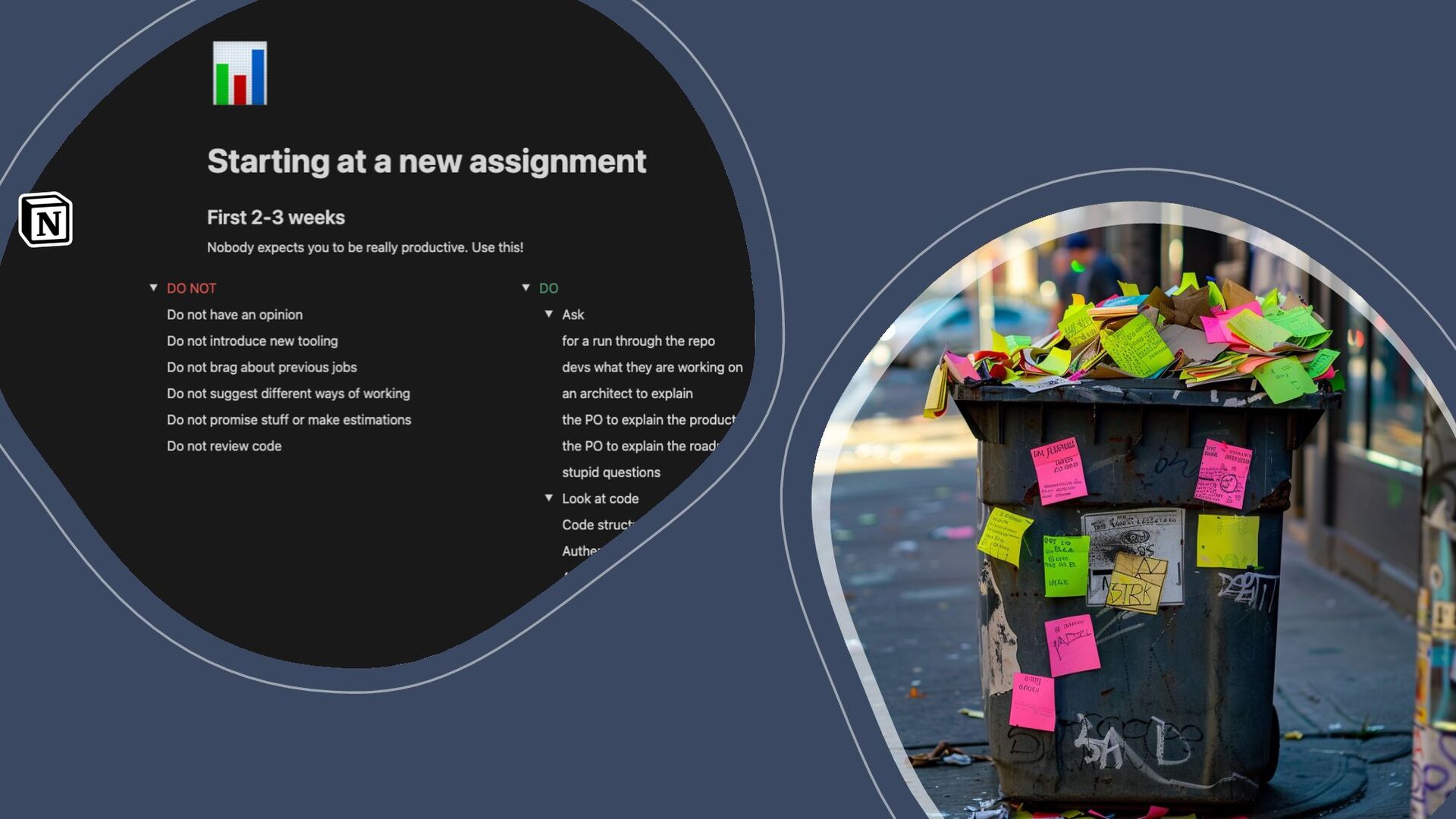
    run through the repo • devs what they are working on • an architect to explain • the PO to explain the product • the PO to explain the roadmap • Talk to the PO • Talk to the scrum master • Talk to team members • Talk to someone from platform team • Learn about the people • Who cares about what • What would they love to improve • stupid questions
  5. During your first 2-3 weeks • Learn: • Look at

    code • Code structure (e.g. modules) • Authentication • Api calls • Business logic • Utilities • Look at tests • Run them • Find repeating patterns • Check coverage • Look at documentation • Go over Confluence • Swagger files • Non-functional requirements • System integrations • Run some analysing tools • Look at CI/CD • Jenkins/CircleCI/etc. setup • Deployment
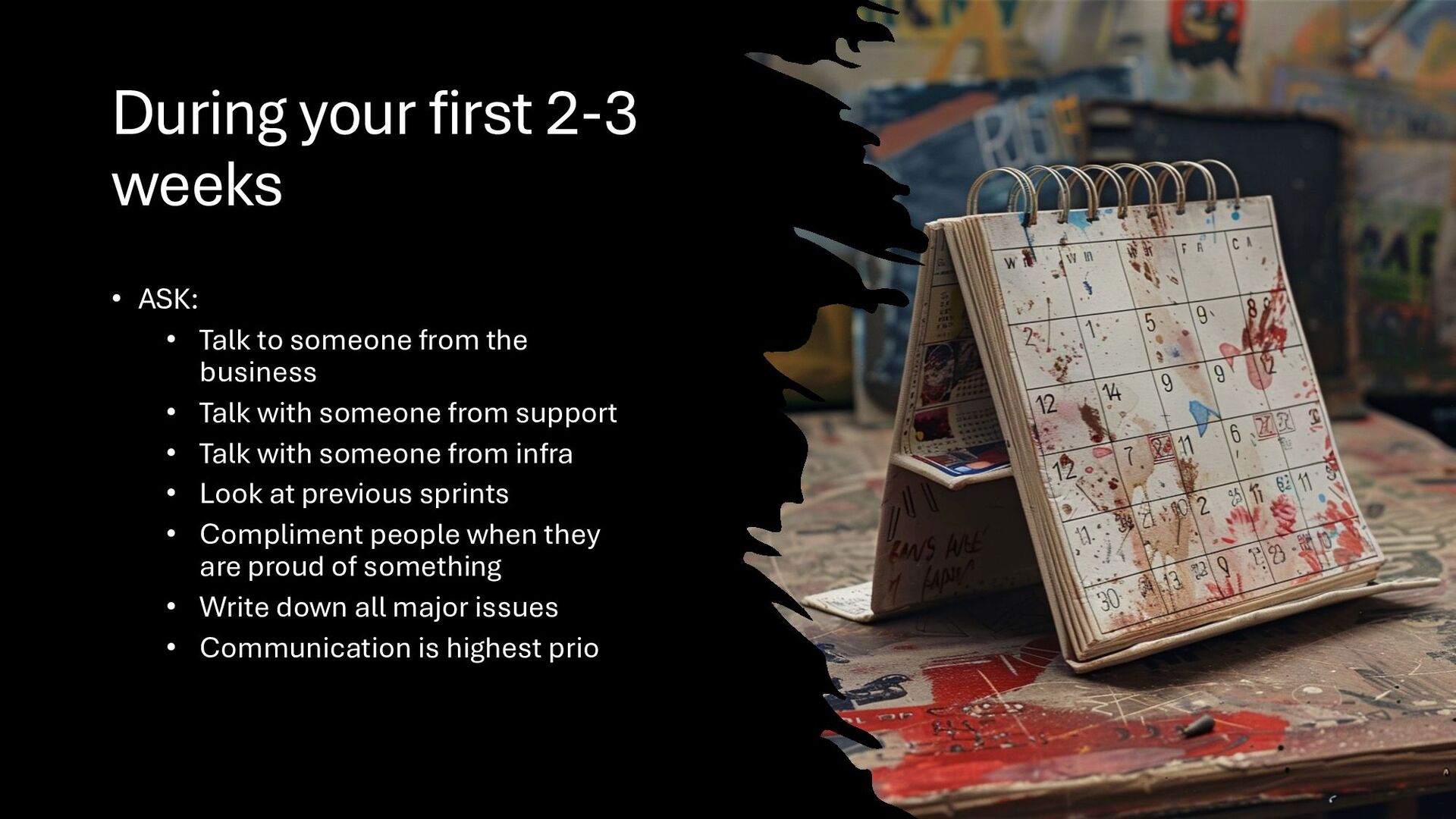
  6. During your first 2-3 weeks • ASK: • Talk to

    someone from the business • Talk with someone from support • Talk with someone from infra • Look at previous sprints • Compliment people when they are proud of something • Write down all major issues • Communication is highest prio
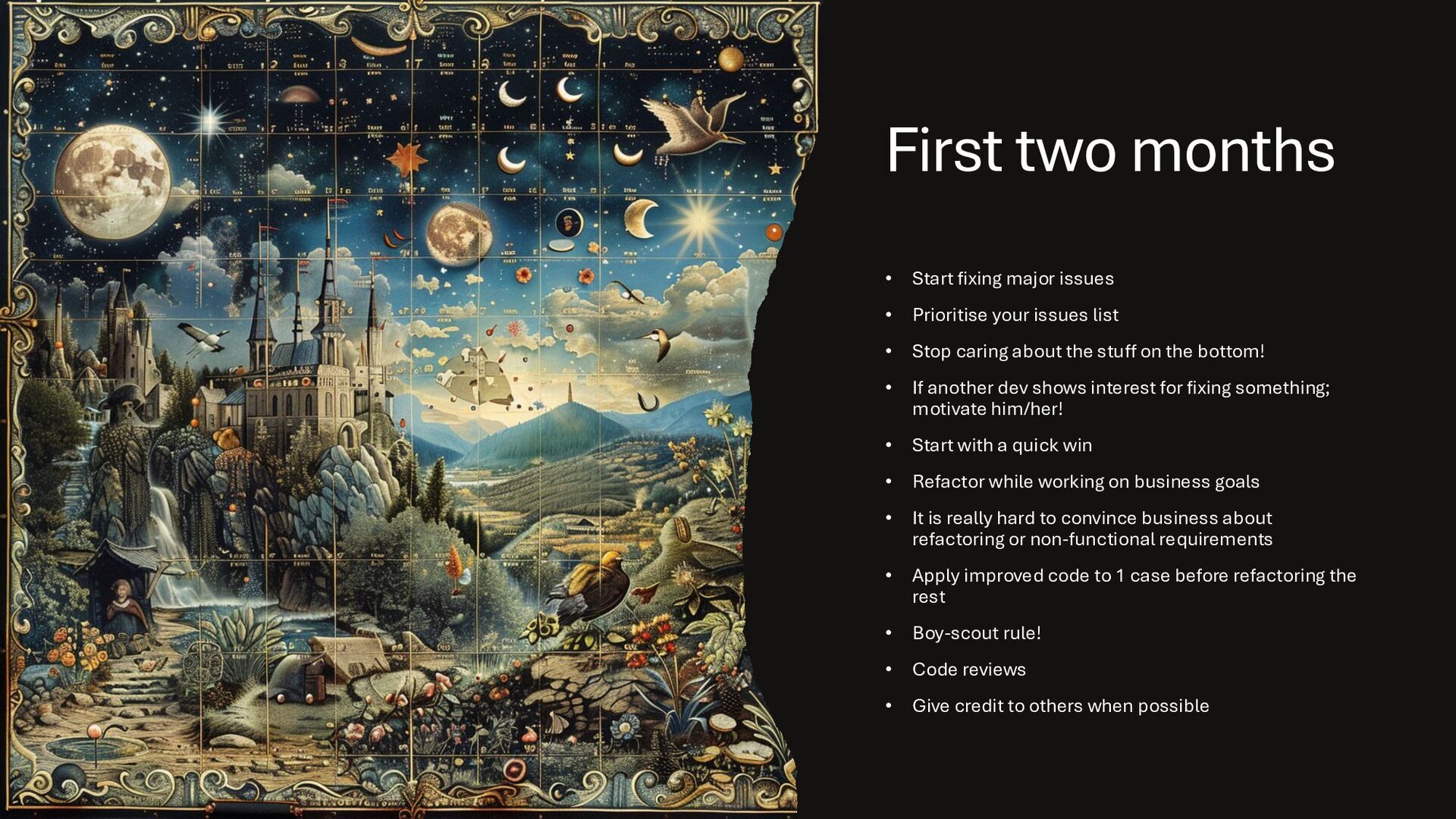
  7. First two months • Start fixing major issues • Prioritise

    your issues list • Stop caring about the stuff on the bottom! • If another dev shows interest for fixing something; motivate him/her! • Start with a quick win • Refactor while working on business goals • It is really hard to convince business about refactoring or non-functional requirements • Apply improved code to 1 case before refactoring the rest • Boy-scout rule! • Code reviews • Give credit to others when possible
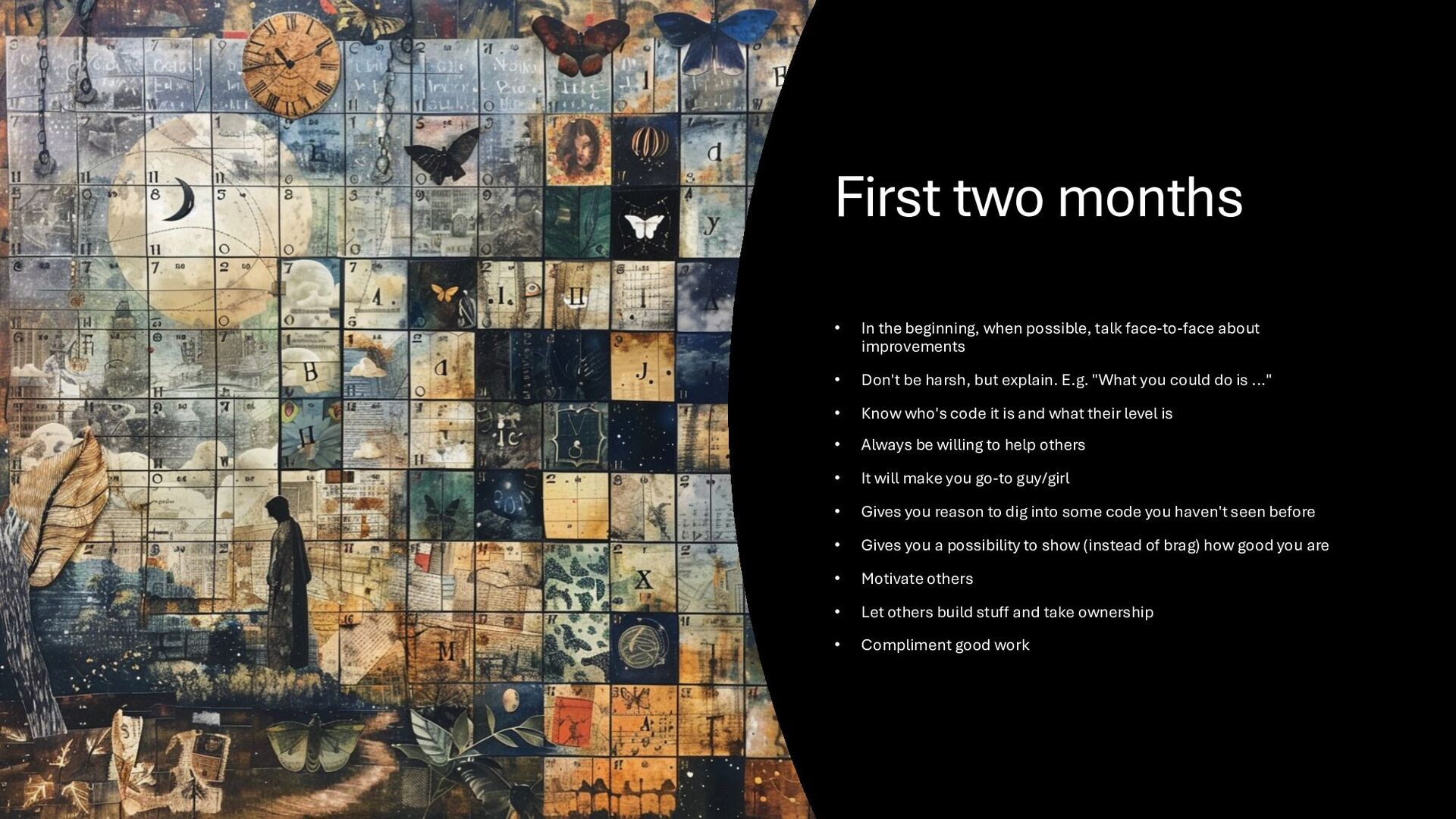
  8. First two months • In the beginning, when possible, talk

    face-to-face about improvements • Don't be harsh, but explain. E.g. "What you could do is ..." • Know who's code it is and what their level is • Always be willing to help others • It will make you go-to guy/girl • Gives you reason to dig into some code you haven't seen before • Gives you a possibility to show (instead of brag) how good you are • Motivate others • Let others build stuff and take ownership • Compliment good work
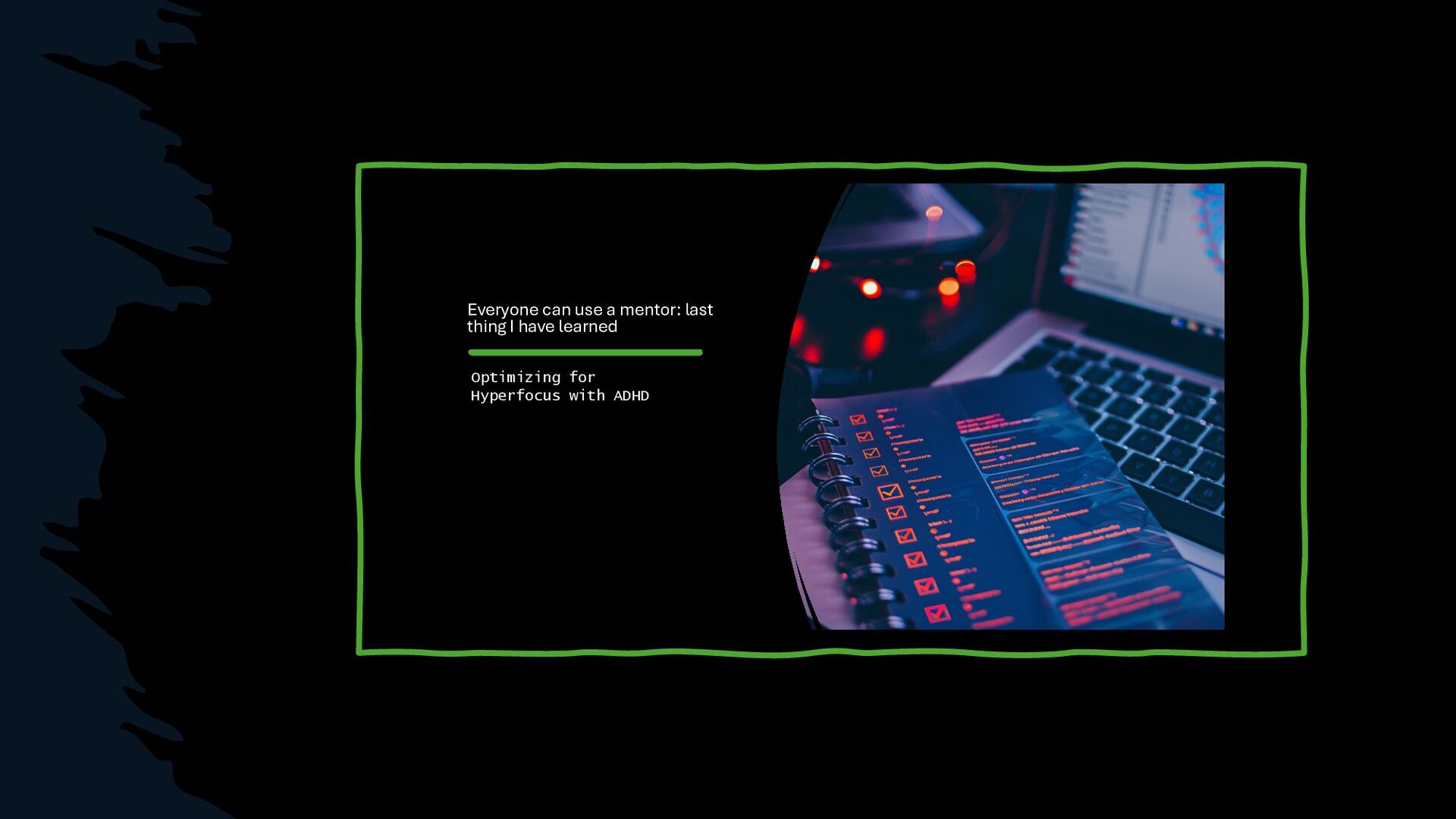
  9. Everyone can use a mentor: last thing I have learned

    Optimizing for Hyperfocus with ADHD
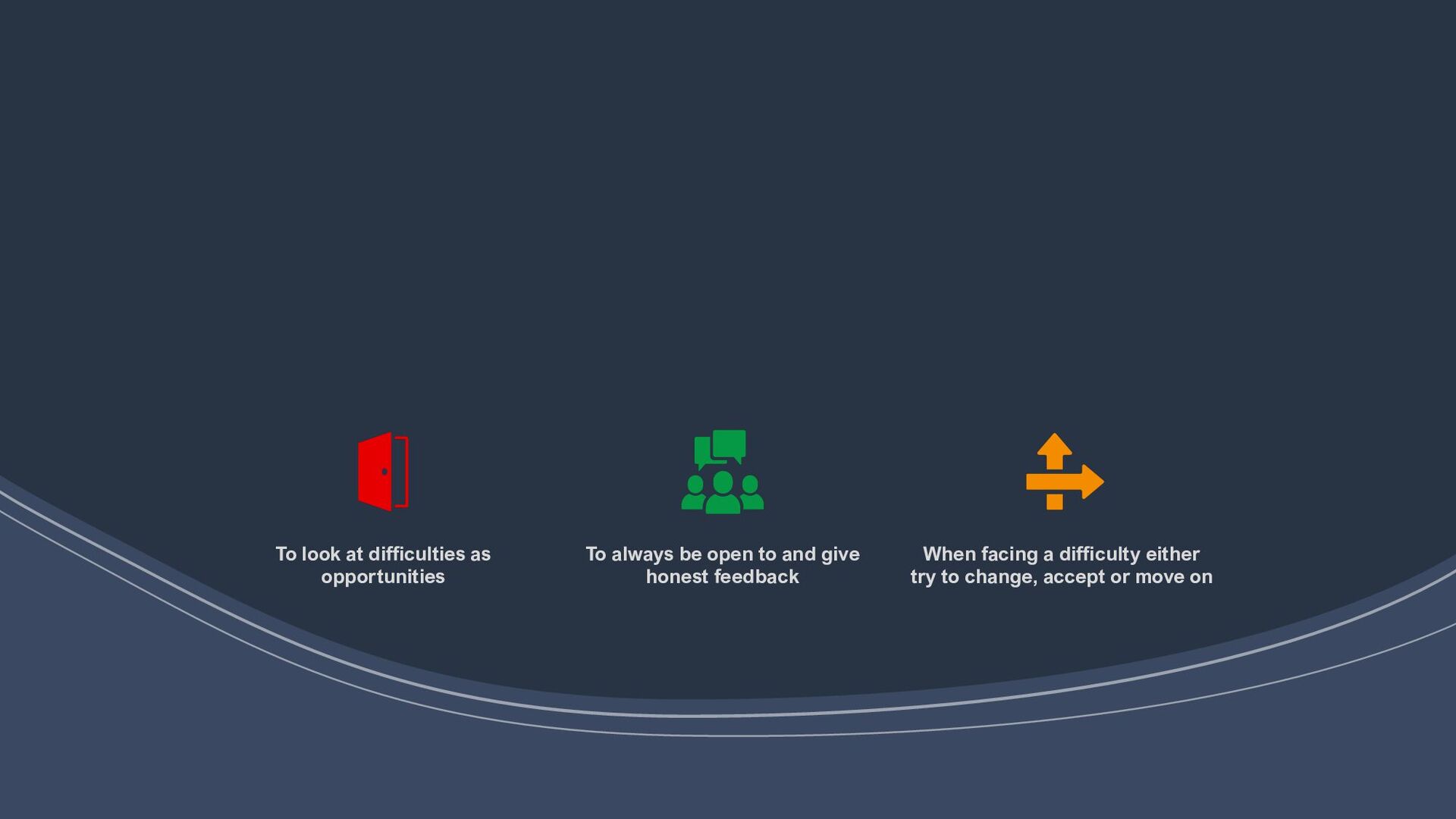
  10. To look at difficulties as opportunities To always be open

    to and give honest feedback When facing a difficulty either try to change, accept or move on
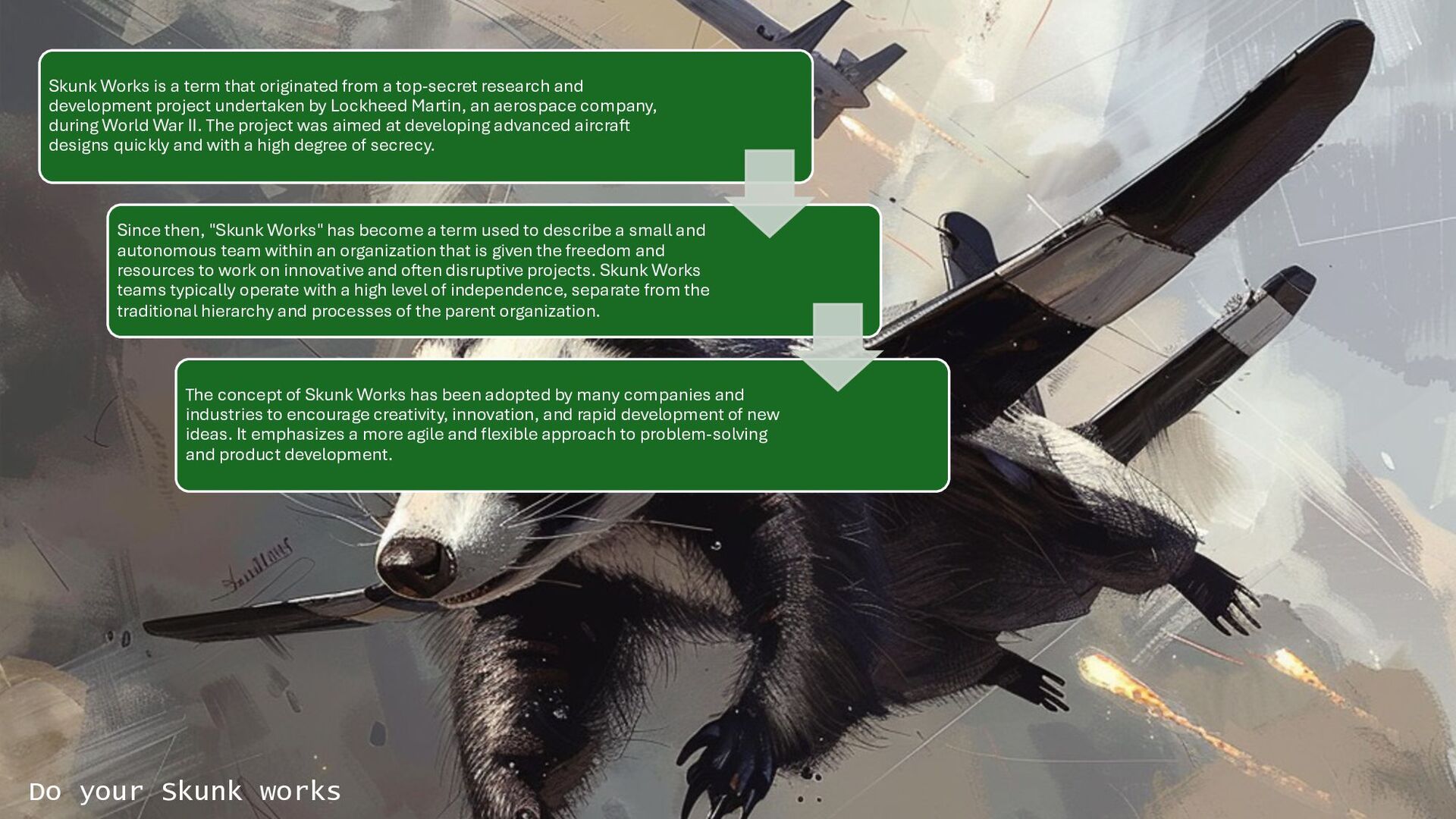
  11. Do your Skunk works Skunk Works is a term that

    originated from a top-secret research and development project undertaken by Lockheed Martin, an aerospace company, during World War II. The project was aimed at developing advanced aircraft designs quickly and with a high degree of secrecy. Since then, "Skunk Works" has become a term used to describe a small and autonomous team within an organization that is given the freedom and resources to work on innovative and often disruptive projects. Skunk Works teams typically operate with a high level of independence, separate from the traditional hierarchy and processes of the parent organization. The concept of Skunk Works has been adopted by many companies and industries to encourage creativity, innovation, and rapid development of new ideas. It emphasizes a more agile and flexible approach to problem-solving and product development.
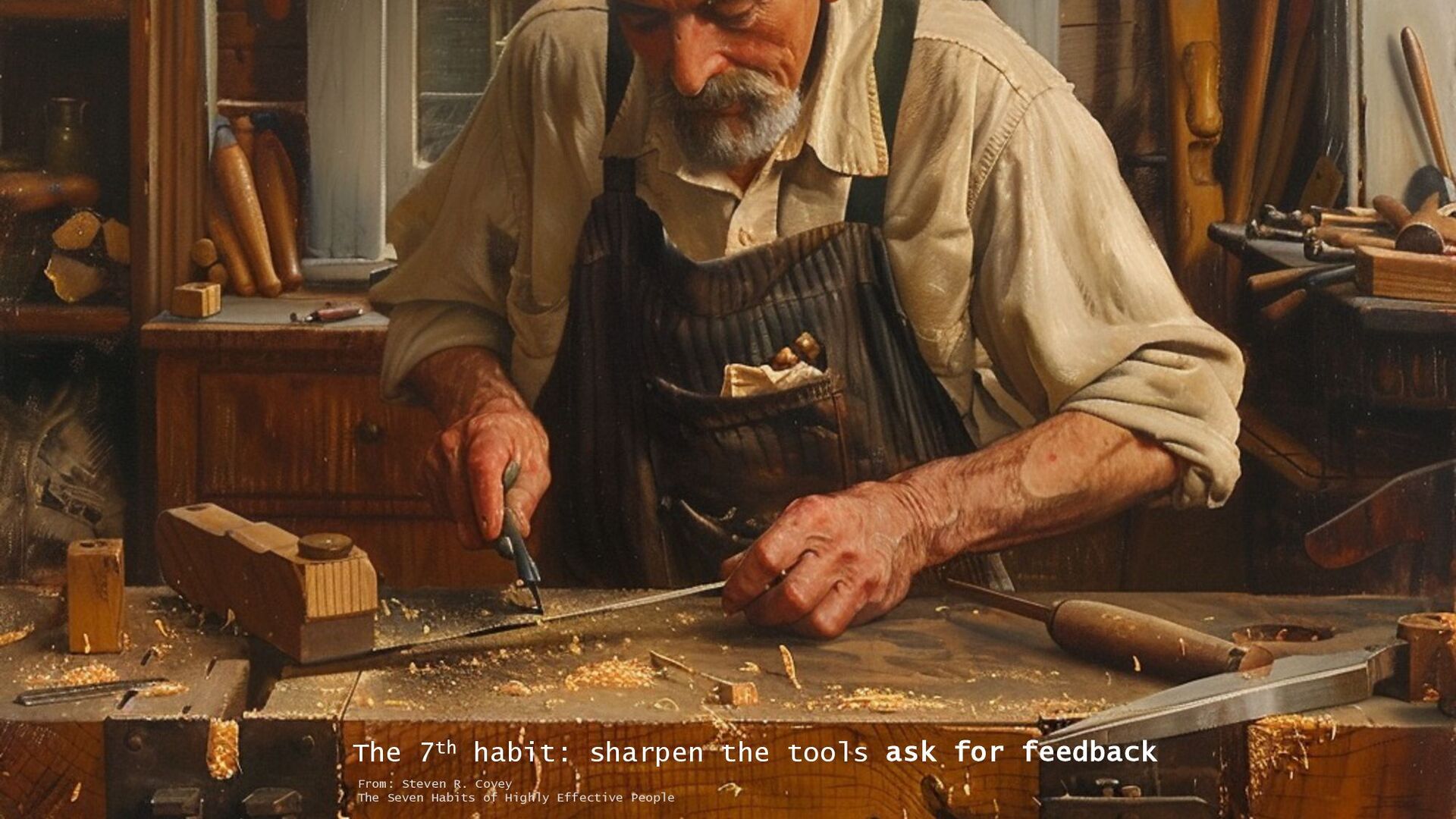
  12. The 7th habit: sharpen the tools ask for feedback From:

    Steven R. Covey The Seven Habits of Highly Effective People