Upgrade to Pro — share decks privately, control downloads, hide ads and more …

2025–2030 Digital Innovation Trends Every Busin...

2025–2030 Digital Innovation Trends Every Business Should Prepare For

A forward-looking exploration of the emerging technologies, shifting consumer behaviors, and digital transformations that will shape business growth over the next five years. This presentation highlights how companies can strengthen their digital foundations, improve customer experiences, and stay ahead in a rapidly evolving digital landscape.

Avatar for Arobit Digital

Arobit Digital

November 20, 2025
Tweet

More Decks by Arobit Digital

Other Decks in Marketing & SEO

Transcript

  1. 202532030 Digital Innovation Trends Every Business Should Prepare For A

    practical look at the technologies and digital shifts that will guide business growth over the next five years.
  2. The Need for Future-Ready Digital Thinking Businesses today operate in

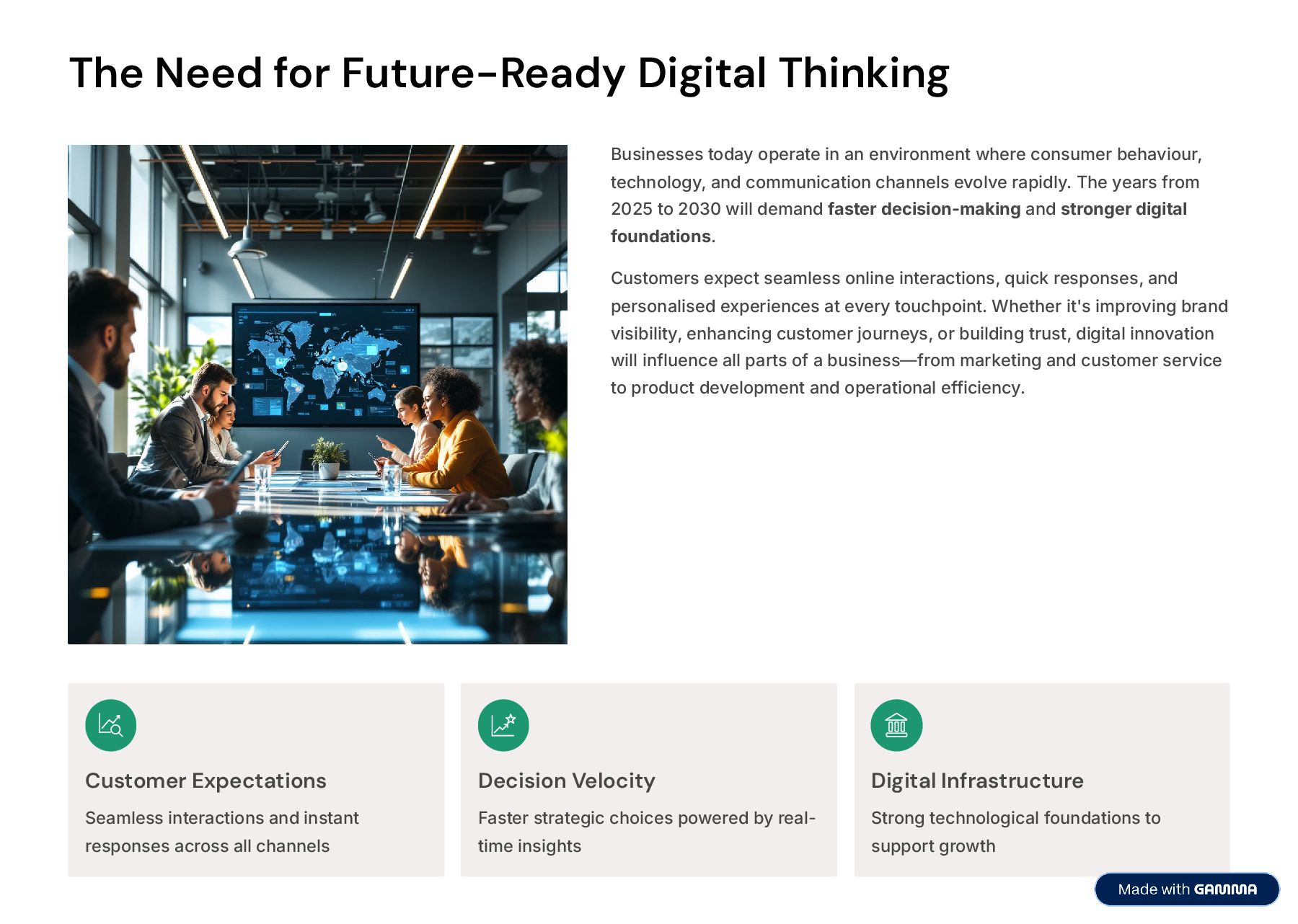
    an environment where consumer behaviour, technology, and communication channels evolve rapidly. The years from 2025 to 2030 will demand faster decision-making and stronger digital foundations. Customers expect seamless online interactions, quick responses, and personalised experiences at every touchpoint. Whether it's improving brand visibility, enhancing customer journeys, or building trust, digital innovation will influence all parts of a business4from marketing and customer service to product development and operational efficiency. Customer Expectations Seamless interactions and instant responses across all channels Decision Velocity Faster strategic choices powered by real- time insights Digital Infrastructure Strong technological foundations to support growth
  3. Artificial Intelligence at the Center of Growth AI will become

    the primary engine behind faster operations and smarter engagement. Companies will use AI to analyze trends, predict customer needs, and automate routine activities that previously consumed valuable time and resources. Trend Analysis Identify patterns and market shifts before competitors Predictive Intelligence Anticipate customer needs and behaviors with precision Smart Automation Free teams from repetitive tasks to focus on strategy Content Strategy Craft more relevant messages that resonate with audiences Businesses that learn to collaborate with AI4rather than fear it4will gain a clear competitive edge in understanding what users are looking for online and how to serve them better.
  4. Rising Need for Personalization From Nice-to-Have to Must-Have By 2030,

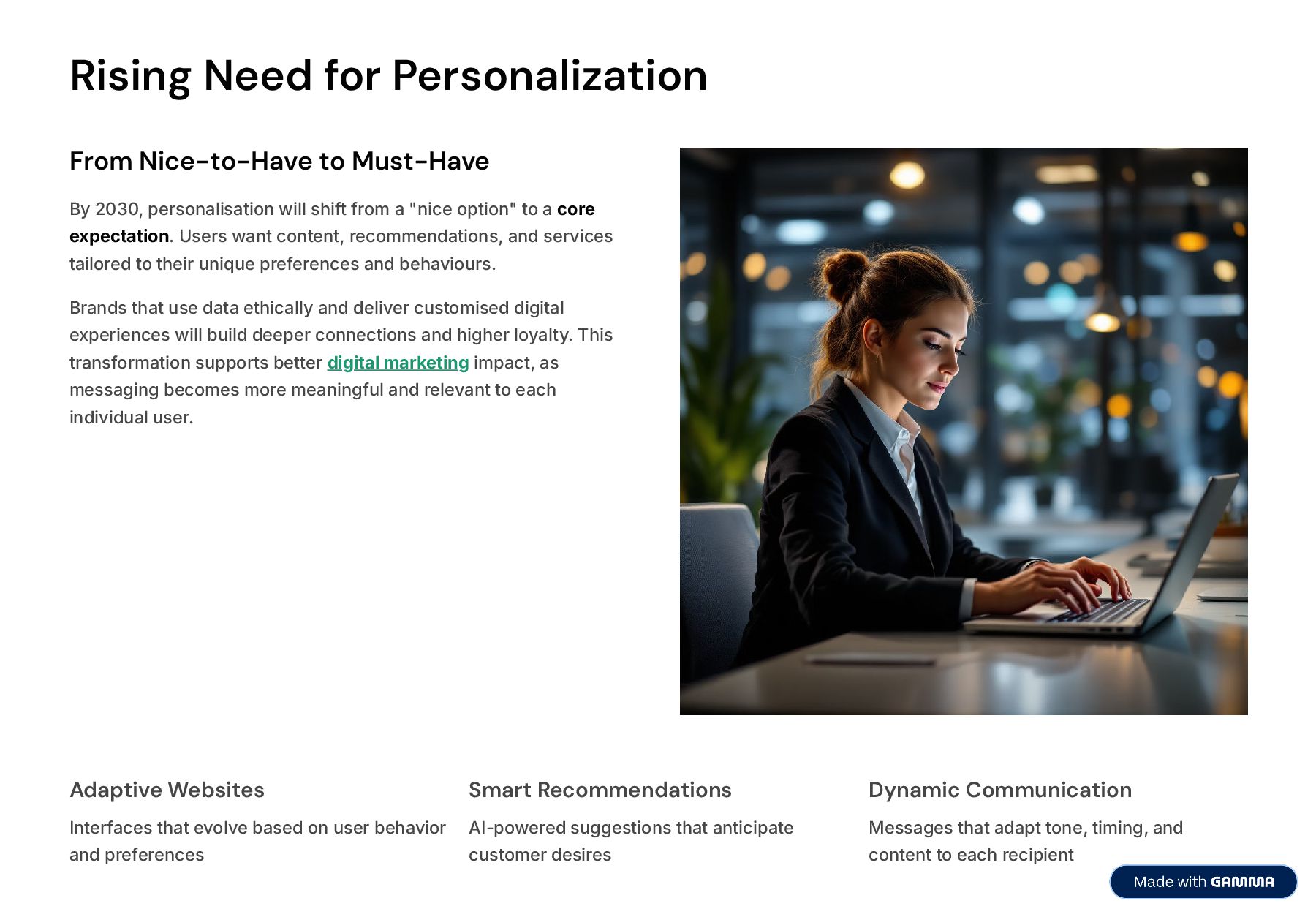
    personalisation will shift from a "nice option" to a core expectation. Users want content, recommendations, and services tailored to their unique preferences and behaviours. Brands that use data ethically and deliver customised digital experiences will build deeper connections and higher loyalty. This transformation supports better digital marketing impact, as messaging becomes more meaningful and relevant to each individual user. Adaptive Websites Interfaces that evolve based on user behavior and preferences Smart Recommendations AI-powered suggestions that anticipate customer desires Dynamic Communication Messages that adapt tone, timing, and content to each recipient
  5. Automation and Smart Workflows Automation will take away repetitive effort

    from teams and allow them to focus on meaningful, strategic work. Whether it's handling customer responses, managing content schedules, or organizing backend operations, automated workflows will improve efficiency and consistency across the board. 1 Customer Response Instant, accurate replies to common inquiries 2 Content Management Scheduled posts and updates across all platforms 3 Backend Operations Seamless data processing and system coordination 4 Online Presence Steady communication and timely customer journeys Key Benefit: Better online presence management means businesses can maintain steady communication, timely updates, and smoother customer journeys without manual strain or resource drain.
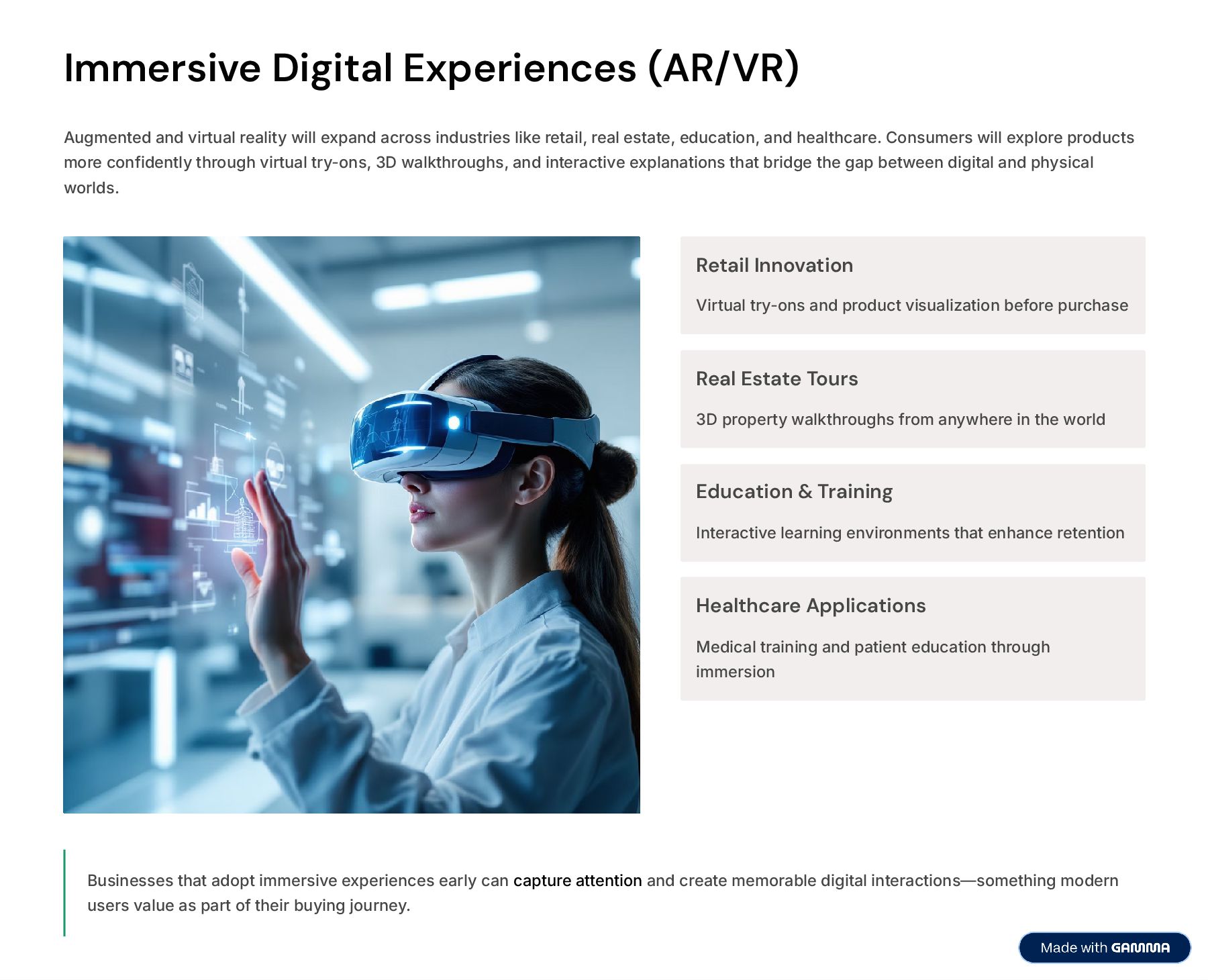
  6. Immersive Digital Experiences (AR/VR) Augmented and virtual reality will expand

    across industries like retail, real estate, education, and healthcare. Consumers will explore products more confidently through virtual try-ons, 3D walkthroughs, and interactive explanations that bridge the gap between digital and physical worlds. Retail Innovation Virtual try-ons and product visualization before purchase Real Estate Tours 3D property walkthroughs from anywhere in the world Education & Training Interactive learning environments that enhance retention Healthcare Applications Medical training and patient education through immersion Businesses that adopt immersive experiences early can capture attention and create memorable digital interactions4something modern users value as part of their buying journey.
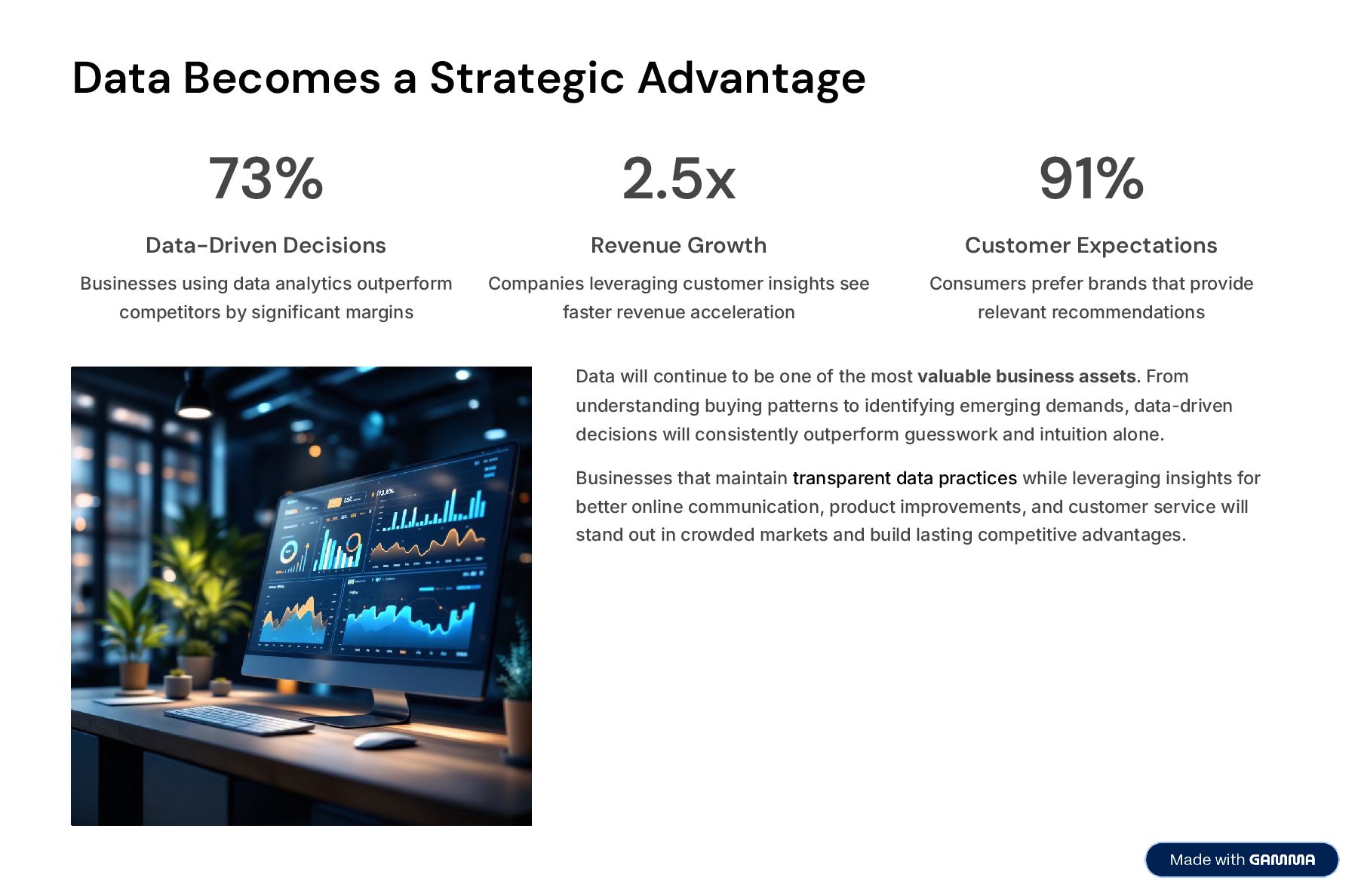
  7. Data Becomes a Strategic Advantage 73% Data-Driven Decisions Businesses using

    data analytics outperform competitors by significant margins 2.5x Revenue Growth Companies leveraging customer insights see faster revenue acceleration 91% Customer Expectations Consumers prefer brands that provide relevant recommendations Data will continue to be one of the most valuable business assets. From understanding buying patterns to identifying emerging demands, data-driven decisions will consistently outperform guesswork and intuition alone. Businesses that maintain transparent data practices while leveraging insights for better online communication, product improvements, and customer service will stand out in crowded markets and build lasting competitive advantages.
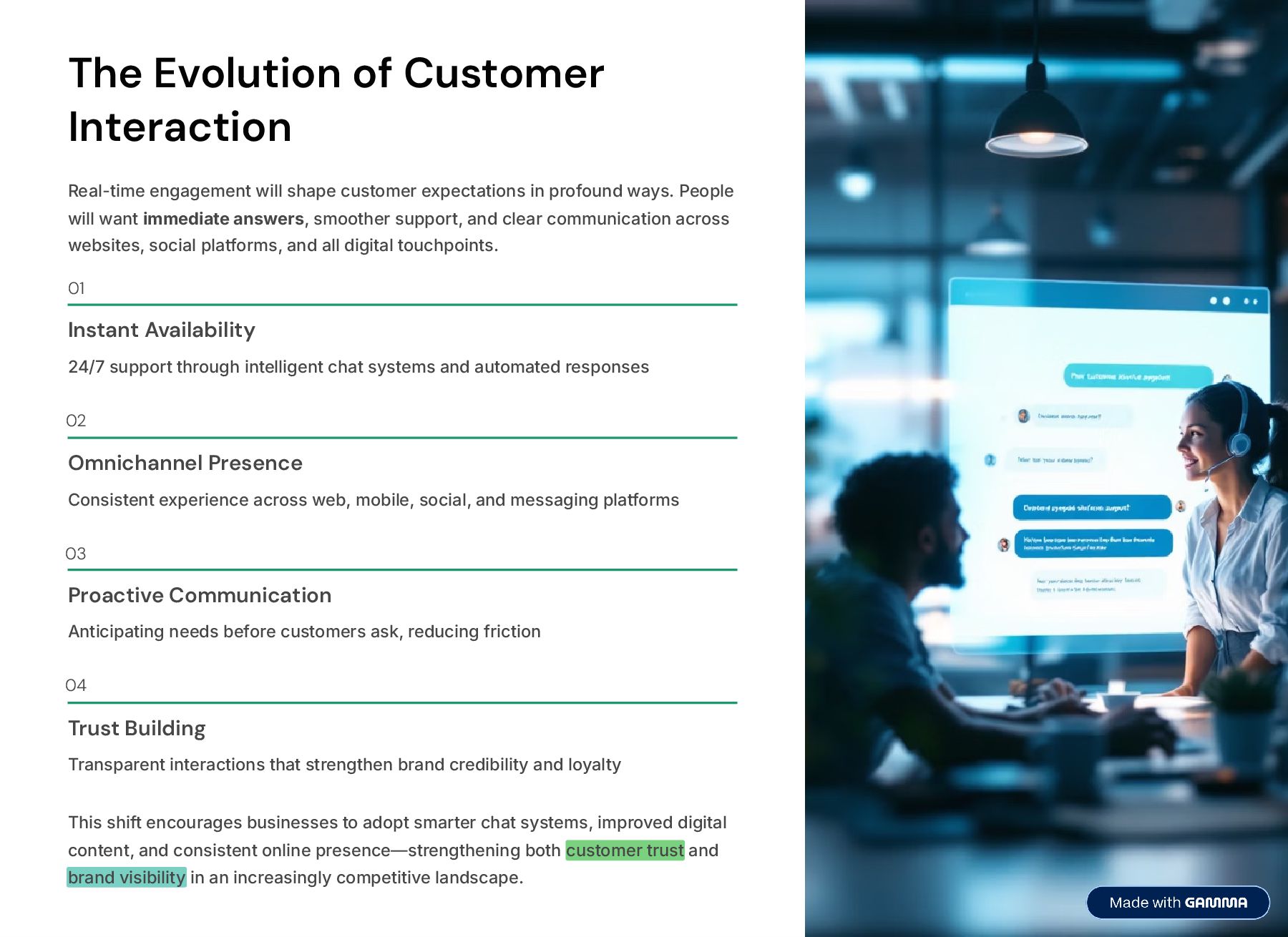
  8. The Evolution of Customer Interaction Real-time engagement will shape customer

    expectations in profound ways. People will want immediate answers, smoother support, and clear communication across websites, social platforms, and all digital touchpoints. 01 Instant Availability 24/7 support through intelligent chat systems and automated responses 02 Omnichannel Presence Consistent experience across web, mobile, social, and messaging platforms 03 Proactive Communication Anticipating needs before customers ask, reducing friction 04 Trust Building Transparent interactions that strengthen brand credibility and loyalty This shift encourages businesses to adopt smarter chat systems, improved digital content, and consistent online presence4strengthening both customer trust and brand visibility in an increasingly competitive landscape.
  9. Cybersecurity and Ethical Tech Adoption As more systems move online,

    cybersecurity will become one of the most important pillars of digital transformation. The stakes have never been higher4breaches can devastate customer trust and company reputation overnight. Businesses must protect user data, secure transactions, and ensure transparent practices at every level. Ethical tech use4especially with AI and customer information4will increasingly influence brand credibility and customer confidence. Data Protection Implement robust encryption and access controls to safeguard sensitive information Transaction Security Ensure every financial interaction meets highest security standards Transparent Practices Clear communication about data usage builds customer trust Ethical AI Use Responsible deployment of AI that respects privacy and fairness Critical Insight: Companies that prioritize security and ethics won't just avoid problems4they'll differentiate themselves as trustworthy partners in an age of digital uncertainty.
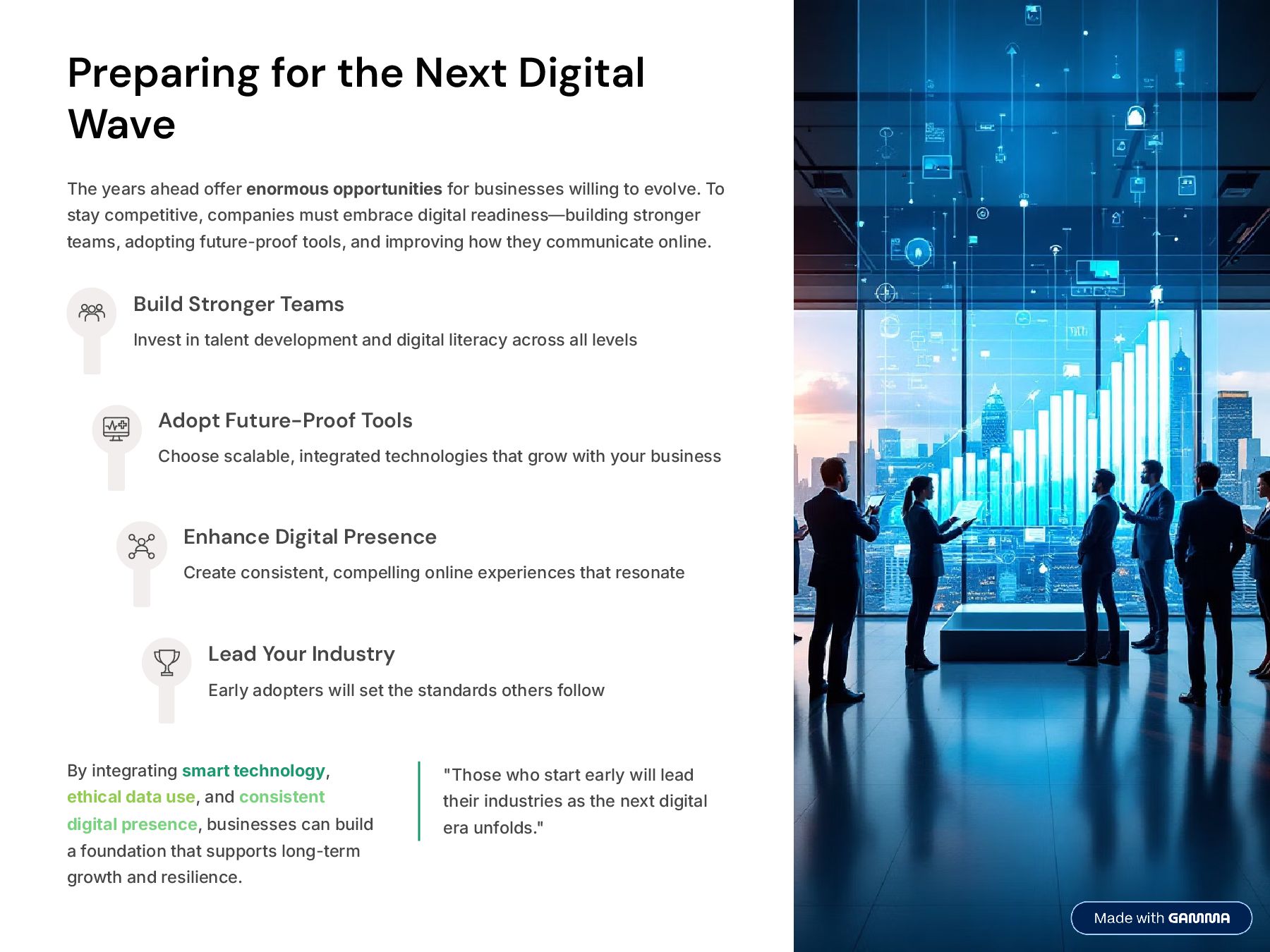
  10. Preparing for the Next Digital Wave The years ahead offer

    enormous opportunities for businesses willing to evolve. To stay competitive, companies must embrace digital readiness4building stronger teams, adopting future-proof tools, and improving how they communicate online. Build Stronger Teams Invest in talent development and digital literacy across all levels Adopt Future-Proof Tools Choose scalable, integrated technologies that grow with your business Enhance Digital Presence Create consistent, compelling online experiences that resonate Lead Your Industry Early adopters will set the standards others follow By integrating smart technology, ethical data use, and consistent digital presence, businesses can build a foundation that supports long-term growth and resilience. "Those who start early will lead their industries as the next digital era unfolds."