Upgrade to Pro — share decks privately, control downloads, hide ads and more …

25 Highly Successful Classroom Management Techn...

Avatar for blog blog
June 28, 2019

25 Highly Successful Classroom Management Techniques

Classroom management is one of those rare arts learned via consistent experimentation and experience. It is essential for every single teacher (Experienced or a Fresher) to implement great classroom management techniques to create a fantastic learning experience.

Avatar for blog

blog

June 28, 2019
Tweet

More Decks by blog

Other Decks in Education

Transcript

  1. • Classroom management is one of those rare arts learned

    via consistent experimentation and experience. • It is essential for every single teacher (Experienced or a Fresher) to implement great classroom management techniques to create a fantastic learning experience.
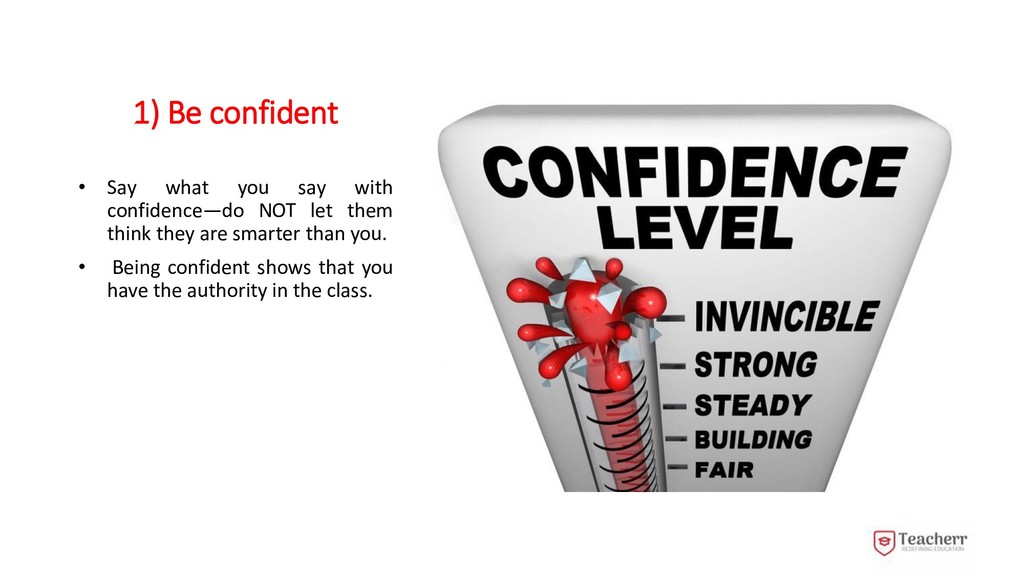
  2. 1) Be confident • Say what you say with confidence—do

    NOT let them think they are smarter than you. • Being confident shows that you have the authority in the class.
  3. 2) Own your mistakes • Students know, and you know,

    that mess-ups are bound to happen. • If you make a mistake…own it. • Admit it. It’s OK. Everyone makes mistakes. • It only shows the students that you are human as well.
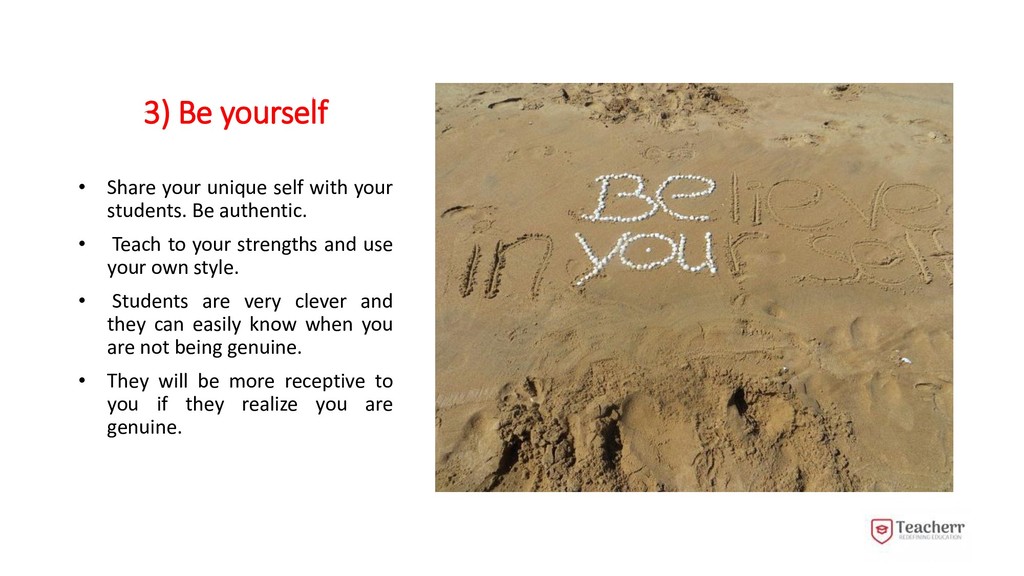
  4. 3) Be yourself • Share your unique self with your

    students. Be authentic. • Teach to your strengths and use your own style. • Students are very clever and they can easily know when you are not being genuine. • They will be more receptive to you if they realize you are genuine.
  5. 4) Have clear, consistent boundaries and behaviour expectations • Always

    make it clear to your students where the boundaries lie in terms of their behaviour. • Make sure to act consistently when someone crosses those boundaries. • This would inform the students of what they can do and what they can’t enabling effective teaching.
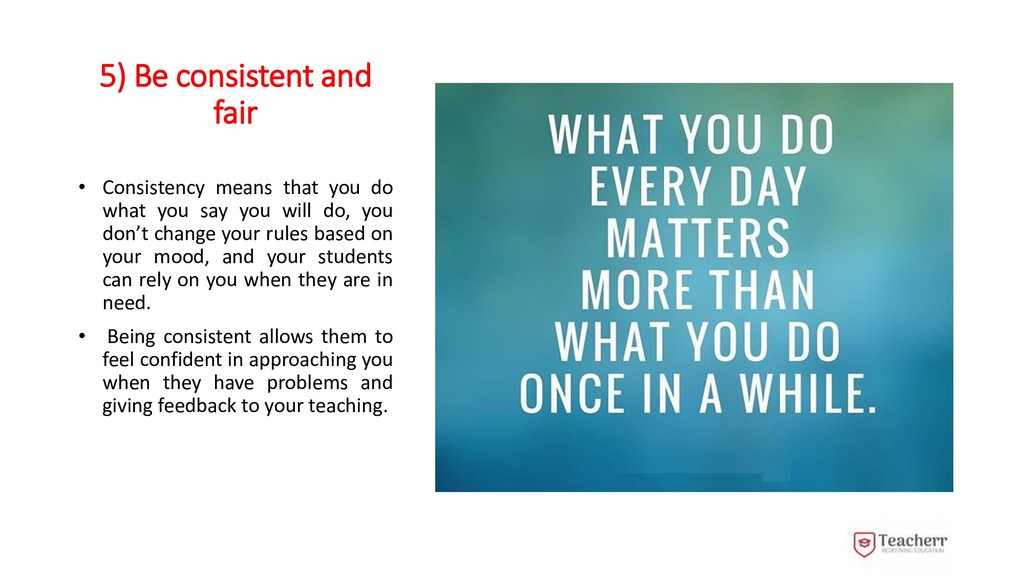
  6. 5) Be consistent and fair • Consistency means that you

    do what you say you will do, you don’t change your rules based on your mood, and your students can rely on you when they are in need. • Being consistent allows them to feel confident in approaching you when they have problems and giving feedback to your teaching.
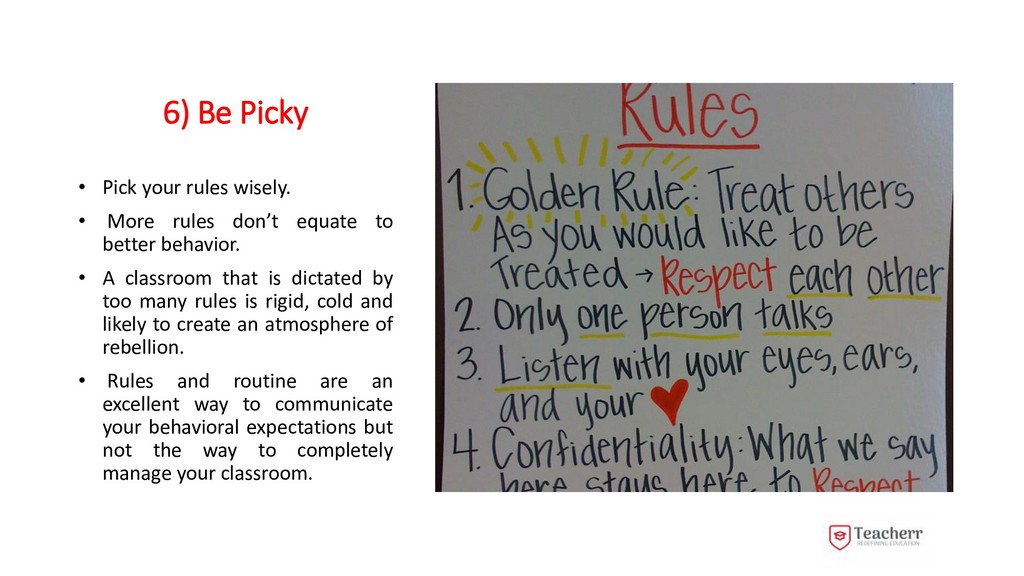
  7. 6) Be Picky • Pick your rules wisely. • More

    rules don’t equate to better behavior. • A classroom that is dictated by too many rules is rigid, cold and likely to create an atmosphere of rebellion. • Rules and routine are an excellent way to communicate your behavioral expectations but not the way to completely manage your classroom.
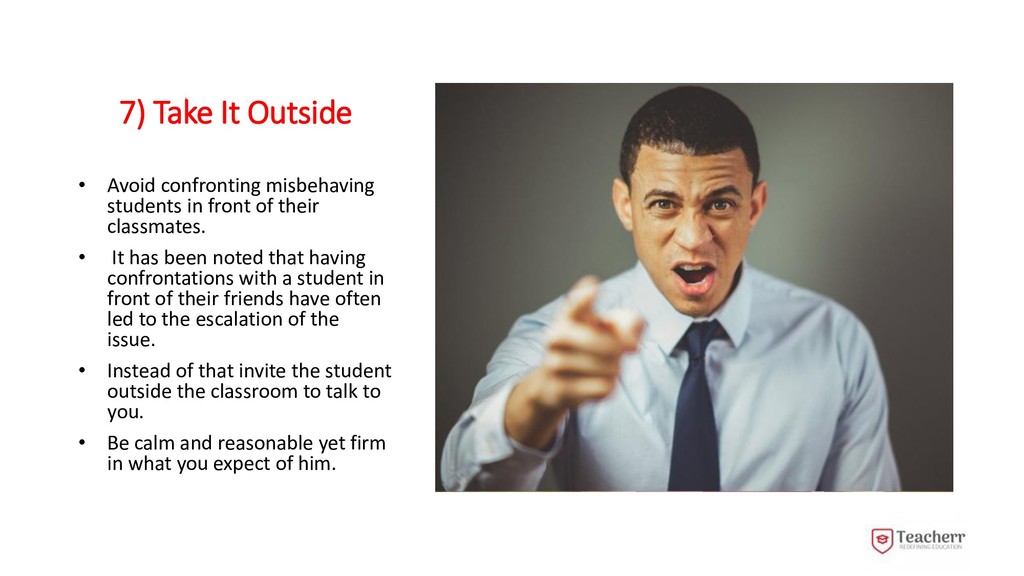
  8. 7) Take It Outside • Avoid confronting misbehaving students in

    front of their classmates. • It has been noted that having confrontations with a student in front of their friends have often led to the escalation of the issue. • Instead of that invite the student outside the classroom to talk to you. • Be calm and reasonable yet firm in what you expect of him.
  9. 8) Stay Calm • When every other thing is out

    of control you can still manage your own reaction. • Be calm and do something which they don’t expect. • Don’t yell for if you do they have won. • Instead just sitting around and staring might cower them down. • If you don’t give the desired response they will get tired of it.
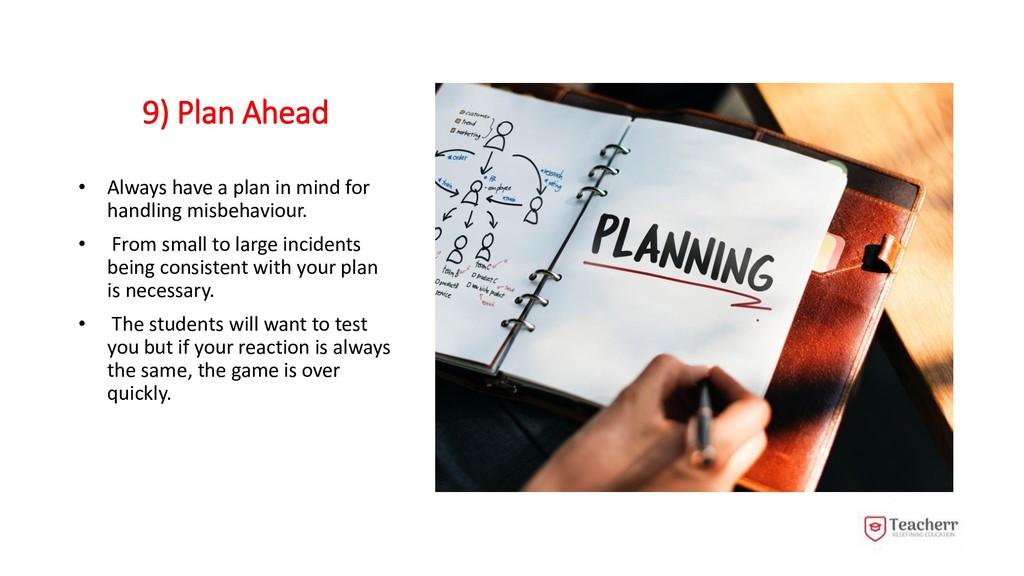
  10. 9) Plan Ahead • Always have a plan in mind

    for handling misbehaviour. • From small to large incidents being consistent with your plan is necessary. • The students will want to test you but if your reaction is always the same, the game is over quickly.
  11. 10) Connect and Reconnect • Greet your students regularly. •

    This enables you to connect with the student and set the tone of the class for the day.
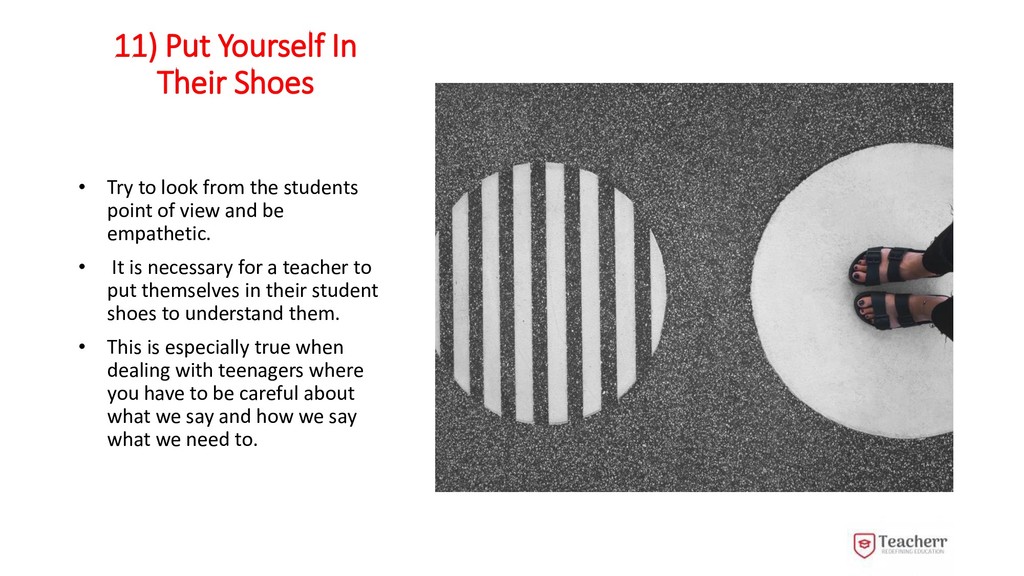
  12. 11) Put Yourself In Their Shoes • Try to look

    from the students point of view and be empathetic. • It is necessary for a teacher to put themselves in their student shoes to understand them. • This is especially true when dealing with teenagers where you have to be careful about what we say and how we say what we need to.
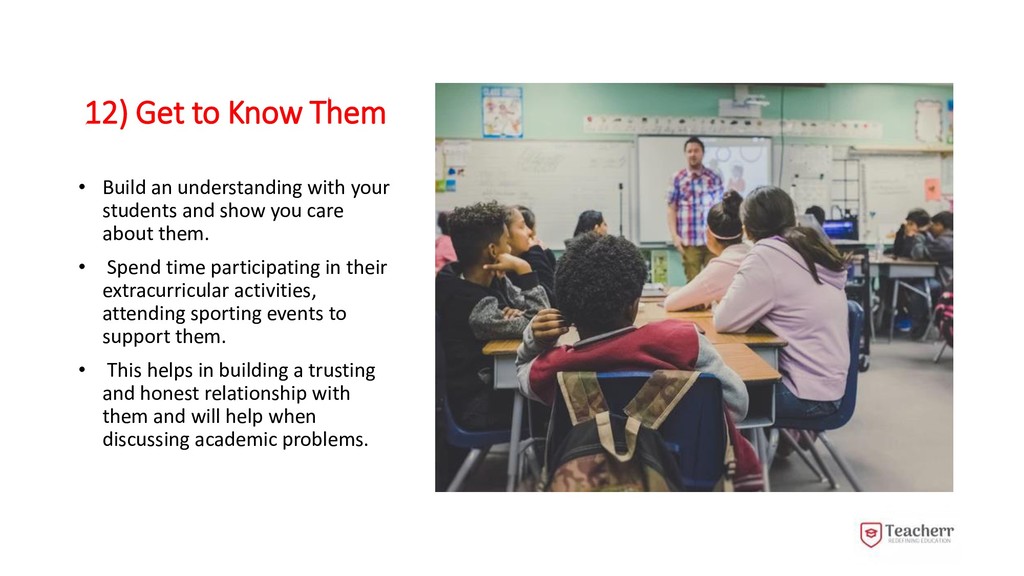
  13. 12) Get to Know Them • Build an understanding with

    your students and show you care about them. • Spend time participating in their extracurricular activities, attending sporting events to support them. • This helps in building a trusting and honest relationship with them and will help when discussing academic problems.
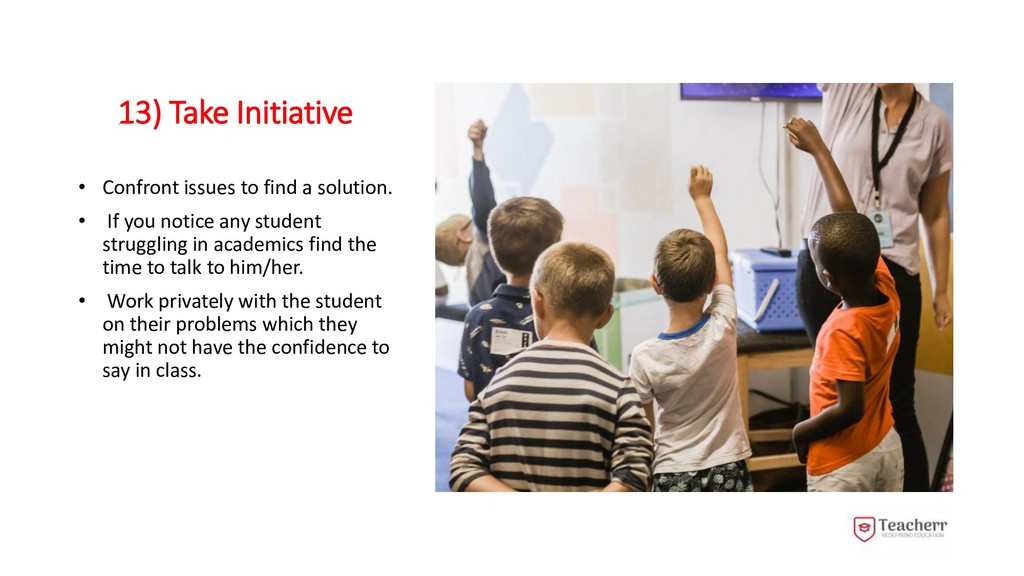
  14. 13) Take Initiative • Confront issues to find a solution.

    • If you notice any student struggling in academics find the time to talk to him/her. • Work privately with the student on their problems which they might not have the confidence to say in class.
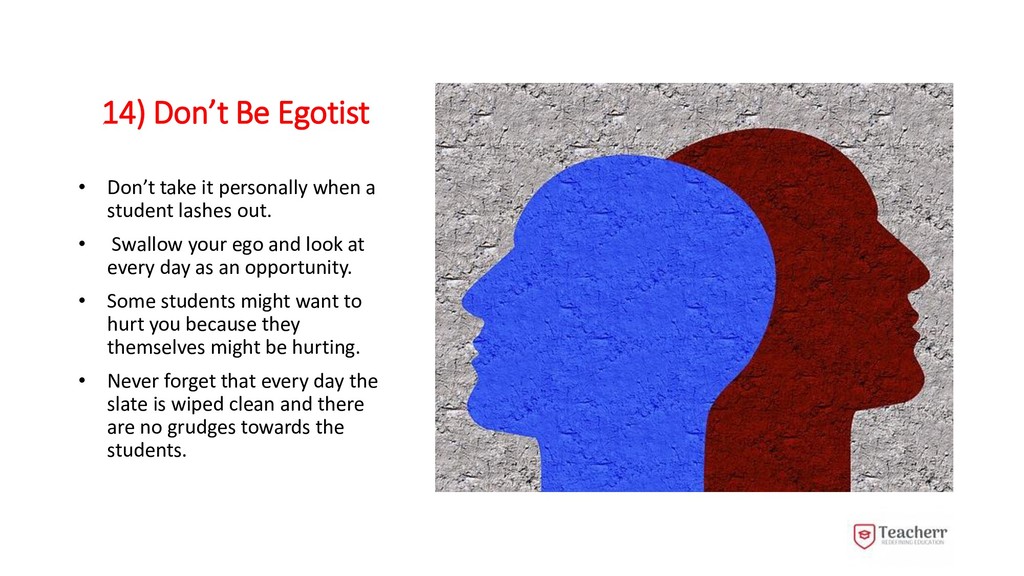
  15. 14) Don’t Be Egotist • Don’t take it personally when

    a student lashes out. • Swallow your ego and look at every day as an opportunity. • Some students might want to hurt you because they themselves might be hurting. • Never forget that every day the slate is wiped clean and there are no grudges towards the students.
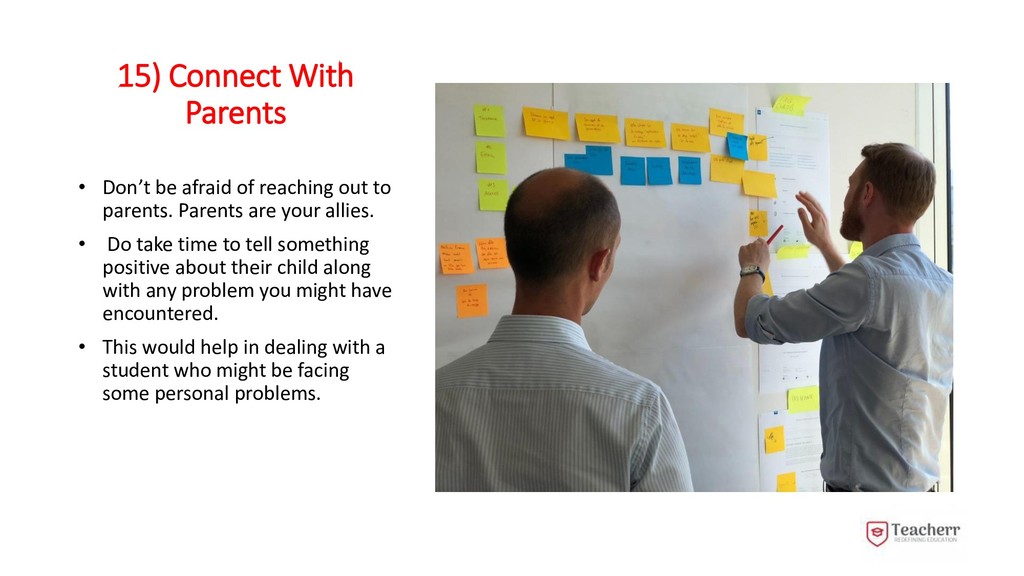
  16. 15) Connect With Parents • Don’t be afraid of reaching

    out to parents. Parents are your allies. • Do take time to tell something positive about their child along with any problem you might have encountered. • This would help in dealing with a student who might be facing some personal problems.
  17. 16) Ask Questions • Ask those questions which make the

    students comfortable. • Be friendly and make the students comfortable. • Communication is really important to make them feel free with you. • Engage them through discussions and asking them several questions as this will boost up their confidence and interest level.
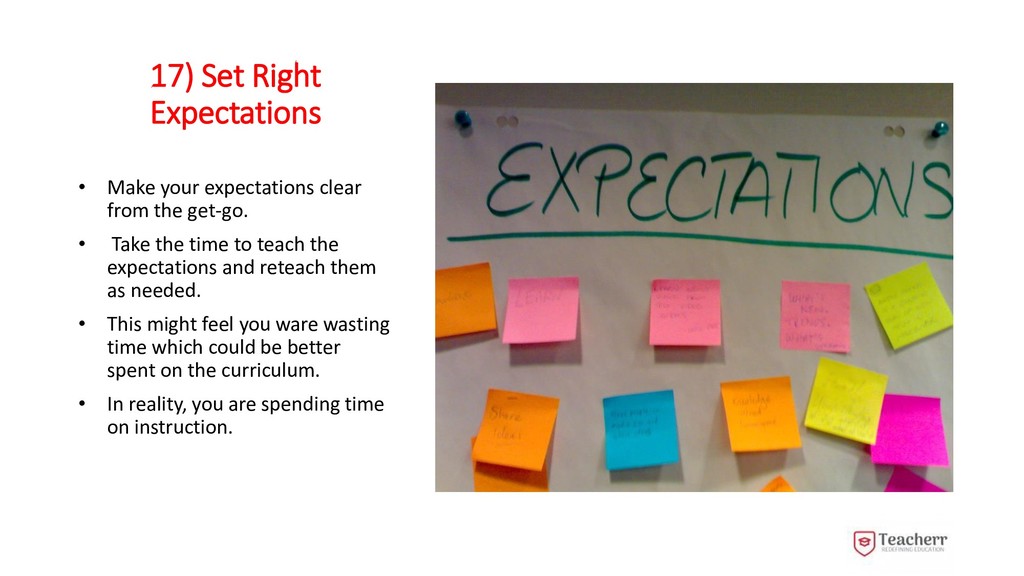
  18. 17) Set Right Expectations • Make your expectations clear from

    the get-go. • Take the time to teach the expectations and reteach them as needed. • This might feel you ware wasting time which could be better spent on the curriculum. • In reality, you are spending time on instruction.
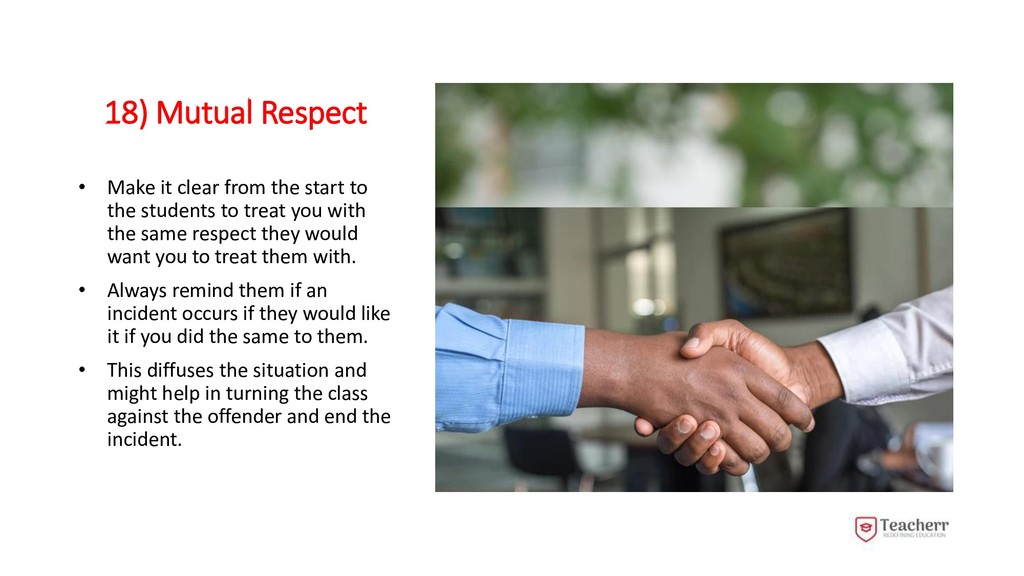
  19. 18) Mutual Respect • Make it clear from the start

    to the students to treat you with the same respect they would want you to treat them with. • Always remind them if an incident occurs if they would like it if you did the same to them. • This diffuses the situation and might help in turning the class against the offender and end the incident.
  20. 19) Transitions • Learn to manage transitions smoothly to limit

    disruption. • Make sure that you plan each transition. Each transition has to be broken down into steps and explicitly taught and monitored.
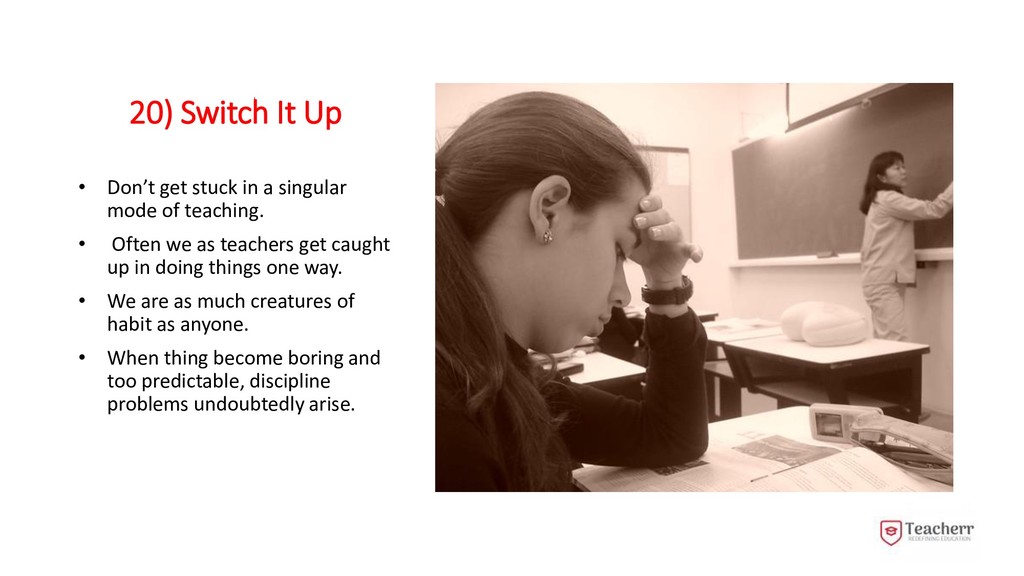
  21. 20) Switch It Up • Don’t get stuck in a

    singular mode of teaching. • Often we as teachers get caught up in doing things one way. • We are as much creatures of habit as anyone. • When thing become boring and too predictable, discipline problems undoubtedly arise.
  22. 21) Keep Students Busy • Get students engaged and involved

    in the lesson to prevent disruptions. • If you have an engaging lesson the students are unlikely to misbehave. Alternate your lessons between you talking and question and answer session. • There are much fewer issues when students are so engaged.
  23. 22) Be transparent • Always be transparent in your objectives.

    To keep a student motivated and attentive the best practice is transparency. • what are we learning today? • Why are we learning that? • What will we be able to do at the end of the lesson? • How will it help the students?
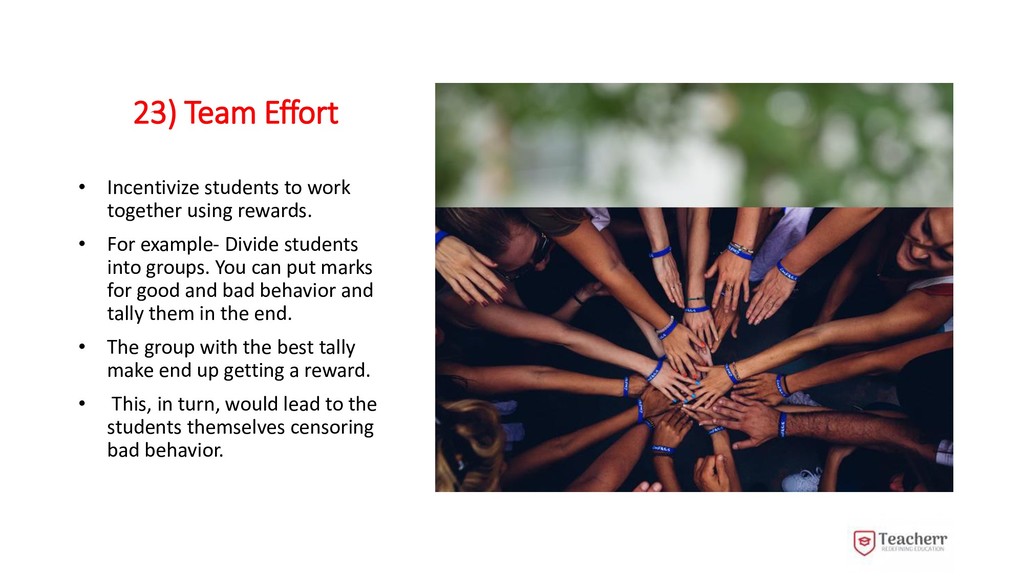
  24. 23) Team Effort • Incentivize students to work together using

    rewards. • For example- Divide students into groups. You can put marks for good and bad behavior and tally them in the end. • The group with the best tally make end up getting a reward. • This, in turn, would lead to the students themselves censoring bad behavior.
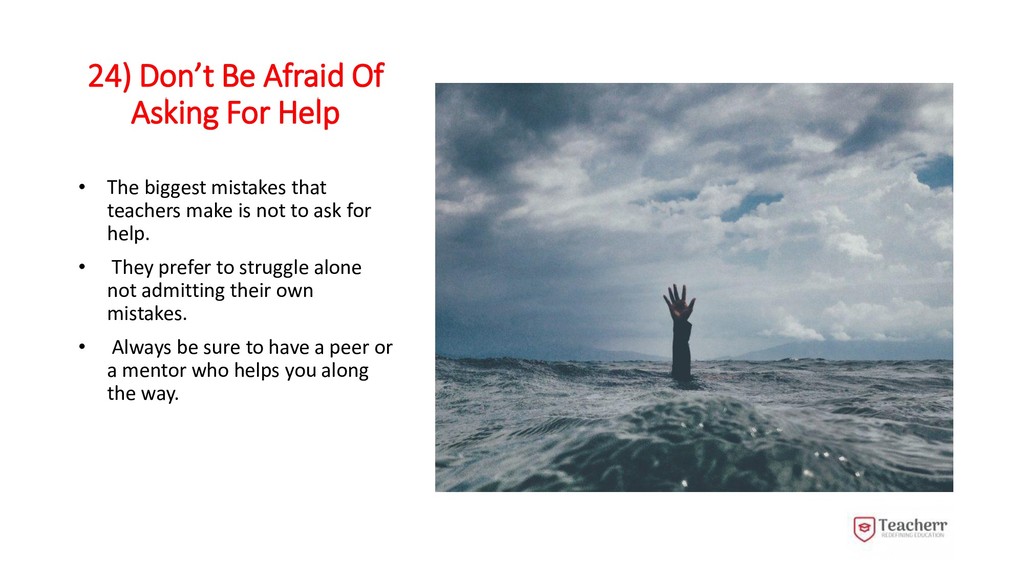
  25. 24) Don’t Be Afraid Of Asking For Help • The

    biggest mistakes that teachers make is not to ask for help. • They prefer to struggle alone not admitting their own mistakes. • Always be sure to have a peer or a mentor who helps you along the way.
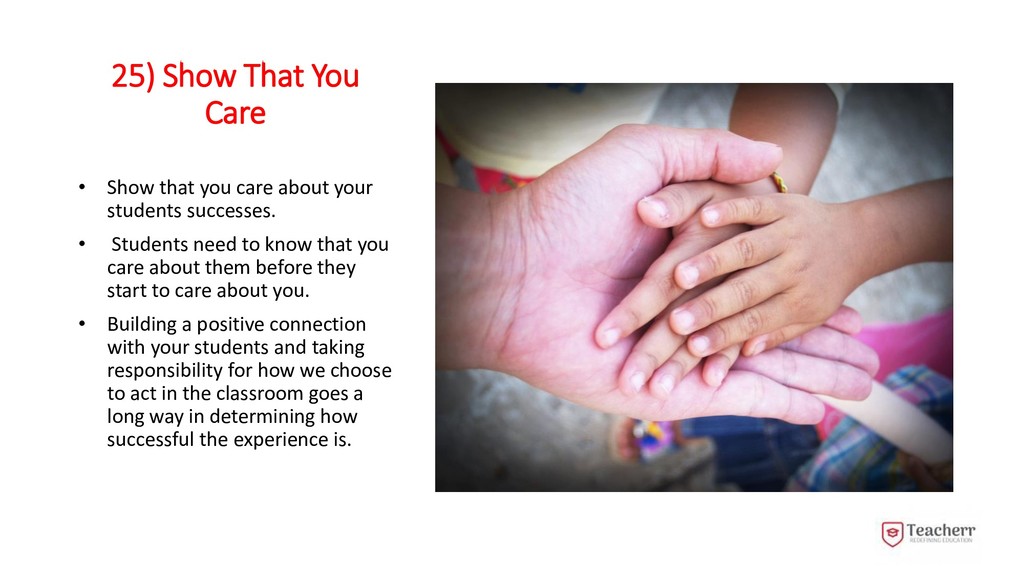
  26. 25) Show That You Care • Show that you care

    about your students successes. • Students need to know that you care about them before they start to care about you. • Building a positive connection with your students and taking responsibility for how we choose to act in the classroom goes a long way in determining how successful the experience is.