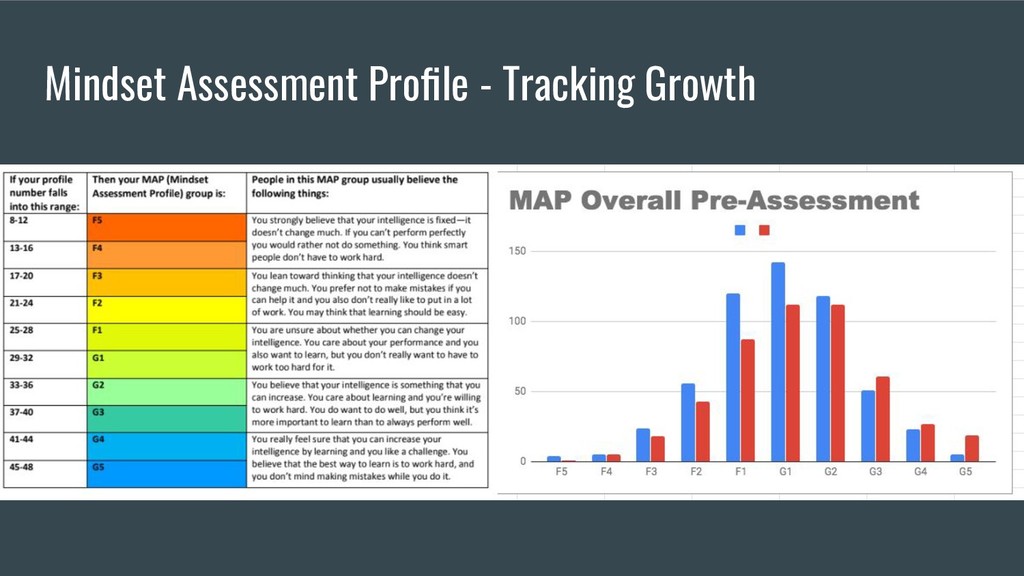
Practices Joan Carrion, Principal Jessica Saxon, Assistant Principal Brianne Mahoney, Health & PE Teacher Tara Philp, 5th Grade Teacher Rutherford Public Schools - Pierrepont School
and I wish you love -To self -To someone you care about -To someone who annoys you *You just opened your heart space* We are using a consultant Sharon McCarthy who delivers PD to our faculty/staff
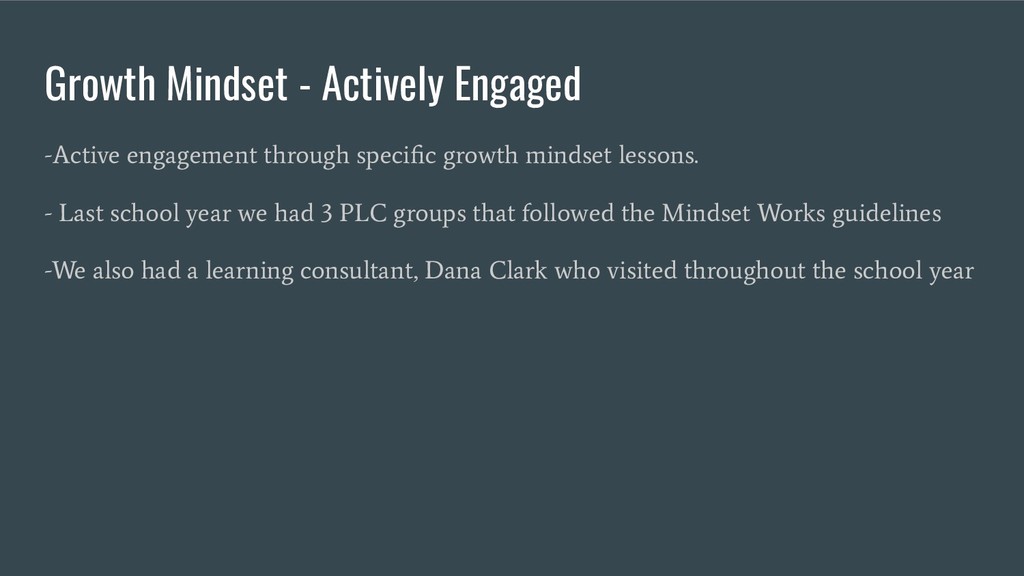
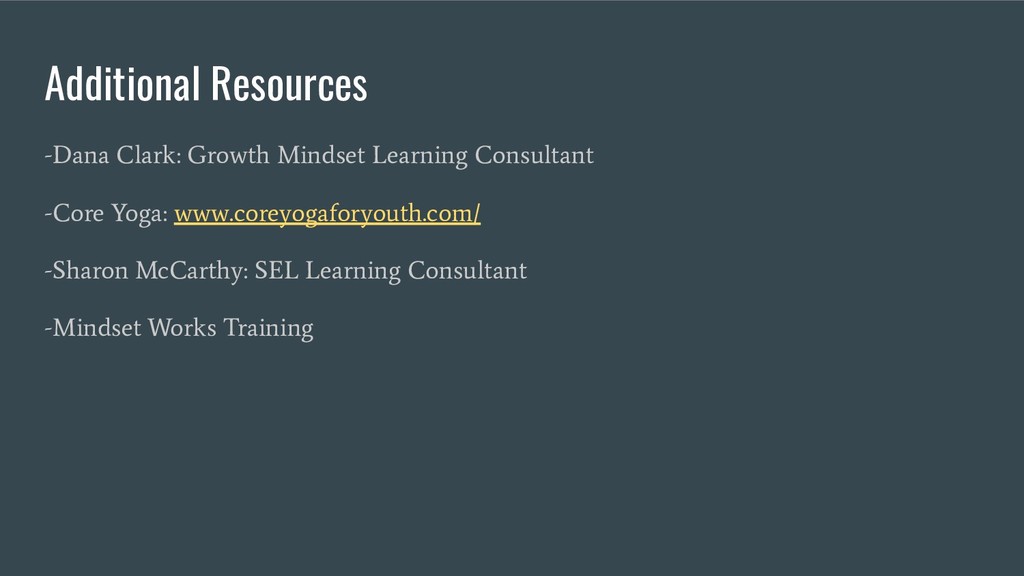
mindset lessons. - Last school year we had 3 PLC groups that followed the Mindset Works guidelines -We also had a learning consultant, Dana Clark who visited throughout the school year
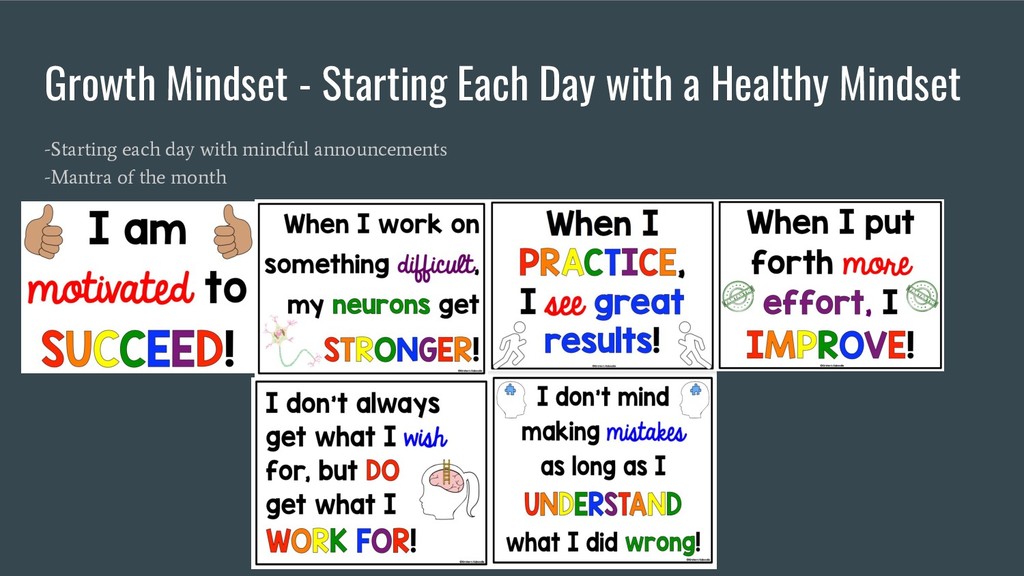
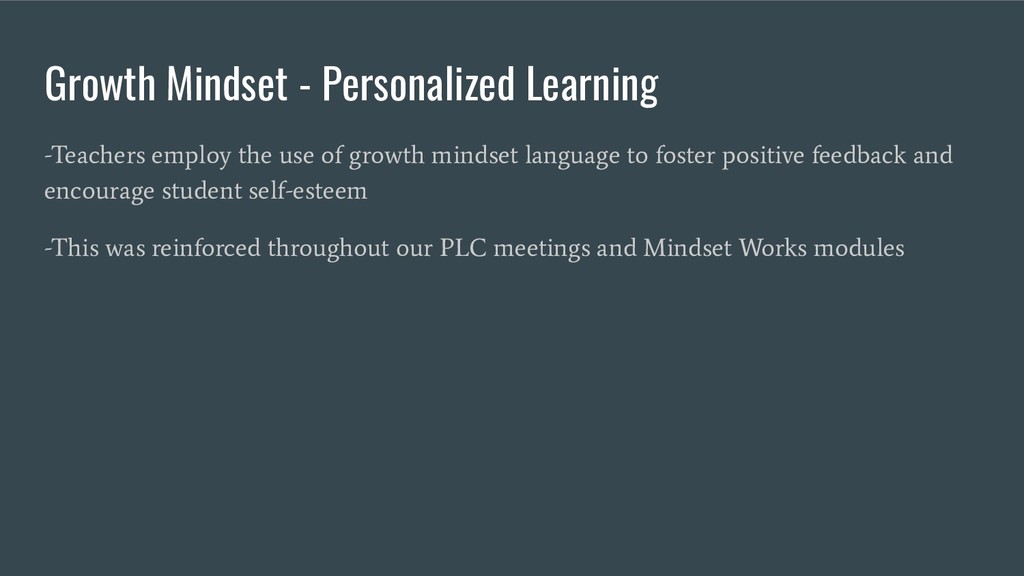
growth mindset language to foster positive feedback and encourage student self-esteem -This was reinforced throughout our PLC meetings and Mindset Works modules
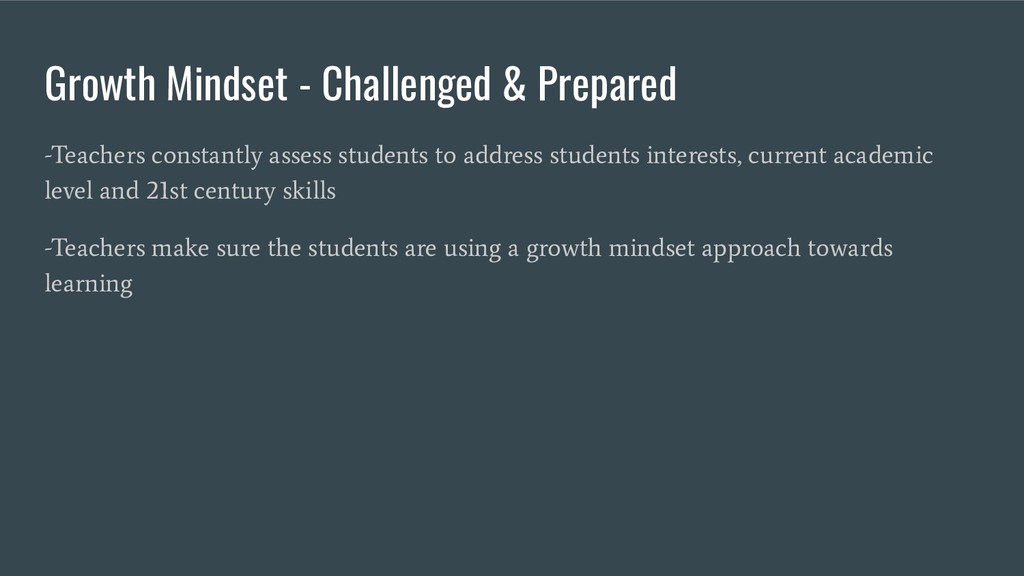
to address students interests, current academic level and 21st century skills -Teachers make sure the students are using a growth mindset approach towards learning
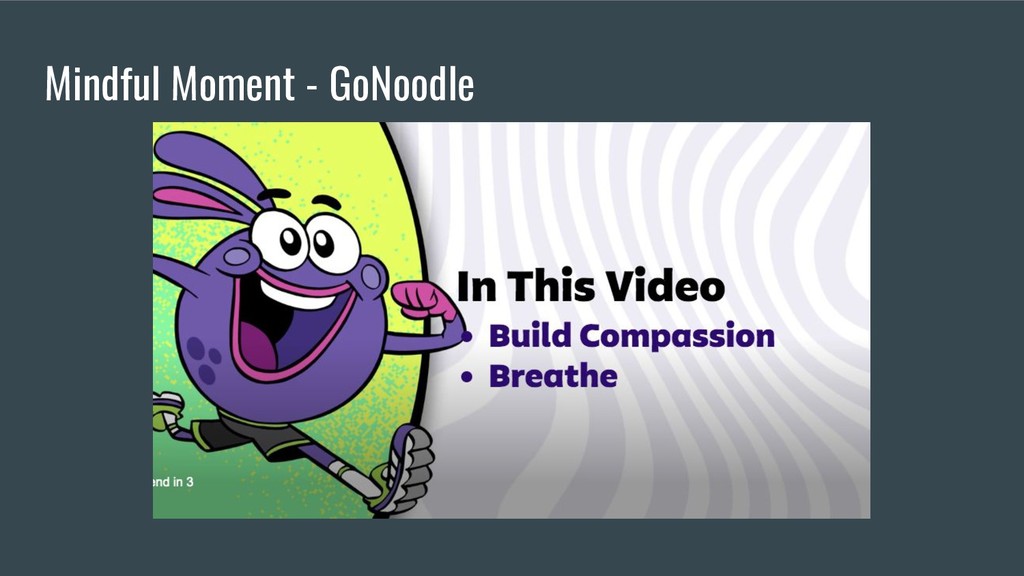
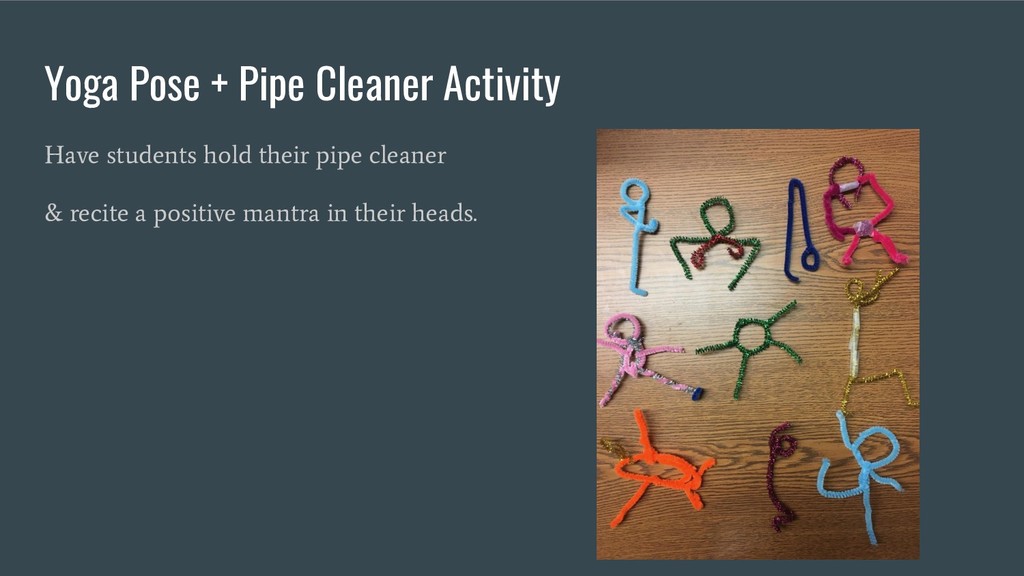
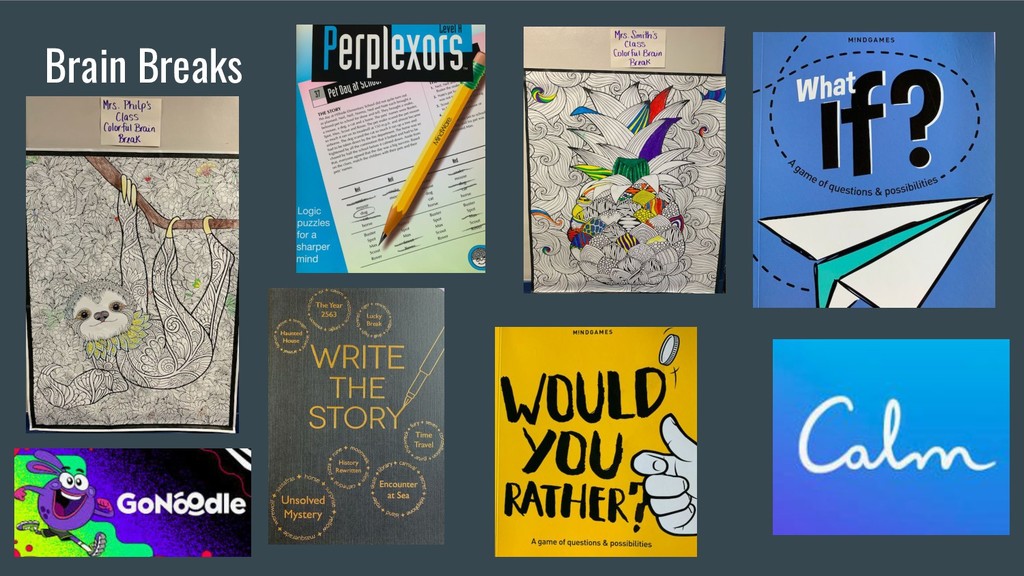
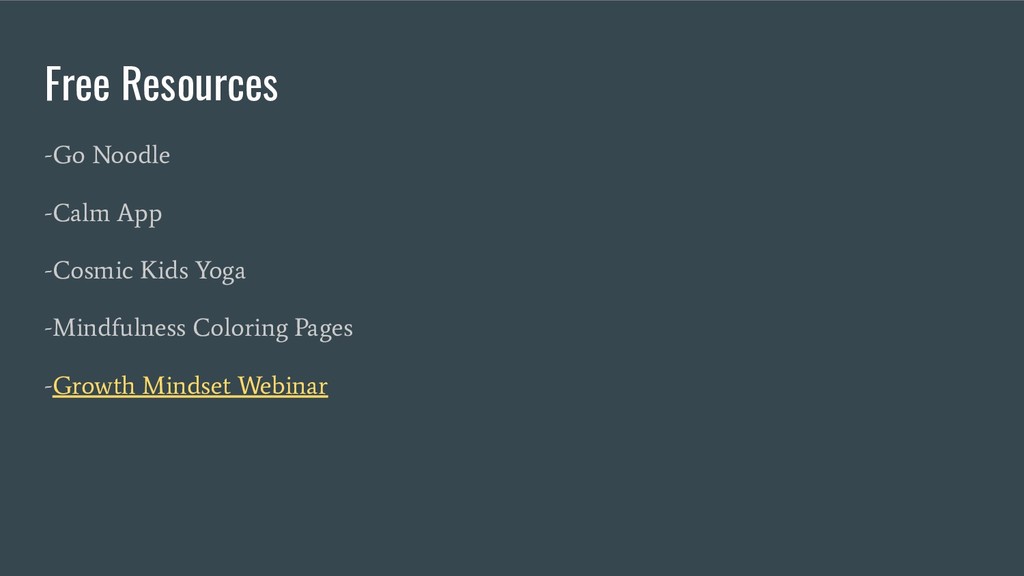
each day with a mindful announcement, using yoga in the classrooms to prepare for the day *Free Resources: Go Noodle, Calm App, YouTube mindfulness videos, Cosmic Kids Yoga
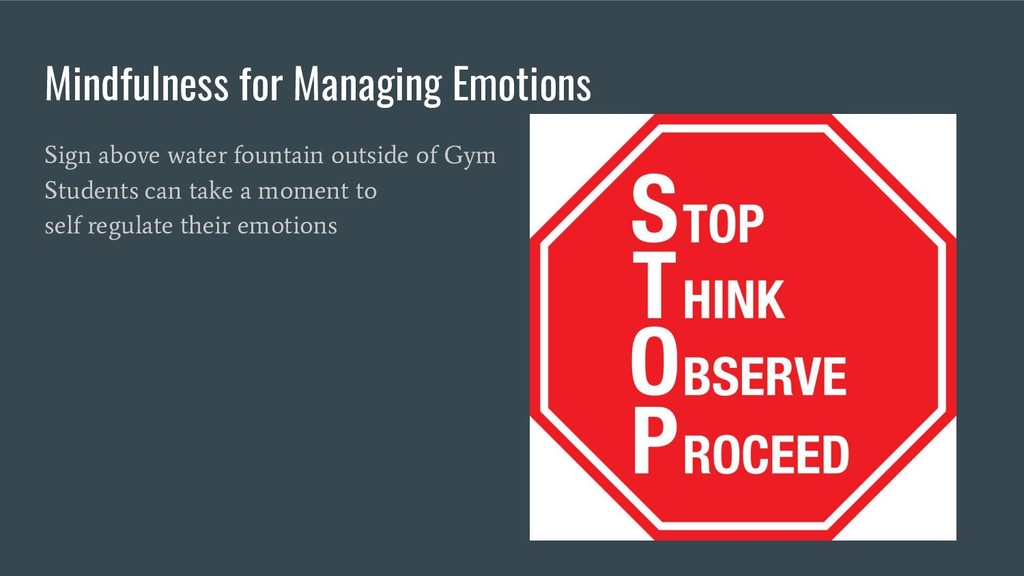
mindfulness techniques students are able to self-regulate their emotions, creating a physically and emotionally safe learning environment *Example: mindful moment poster hung above water fountain outside of the Gym, “don’t flip your lid,” mantras
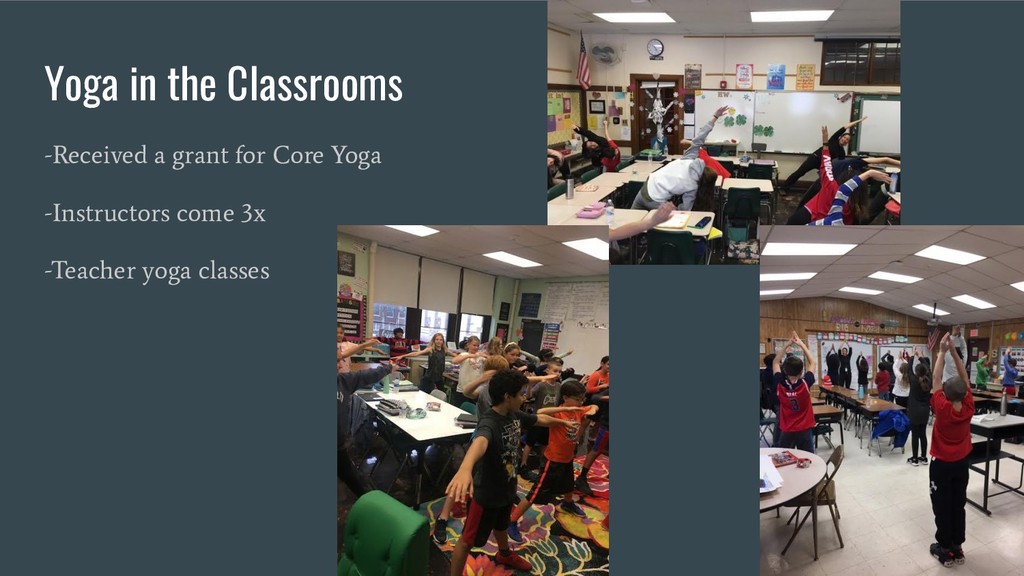
active engagement in the classroom. -Mindfulness is also a school initiative which has resulted in parent outreach and educating the students and teachers to apply the practices as needed *A grant was written for Core Yoga to come to our school 3x throughout the school year for the students *Monthly for the teachers *Parent yoga night
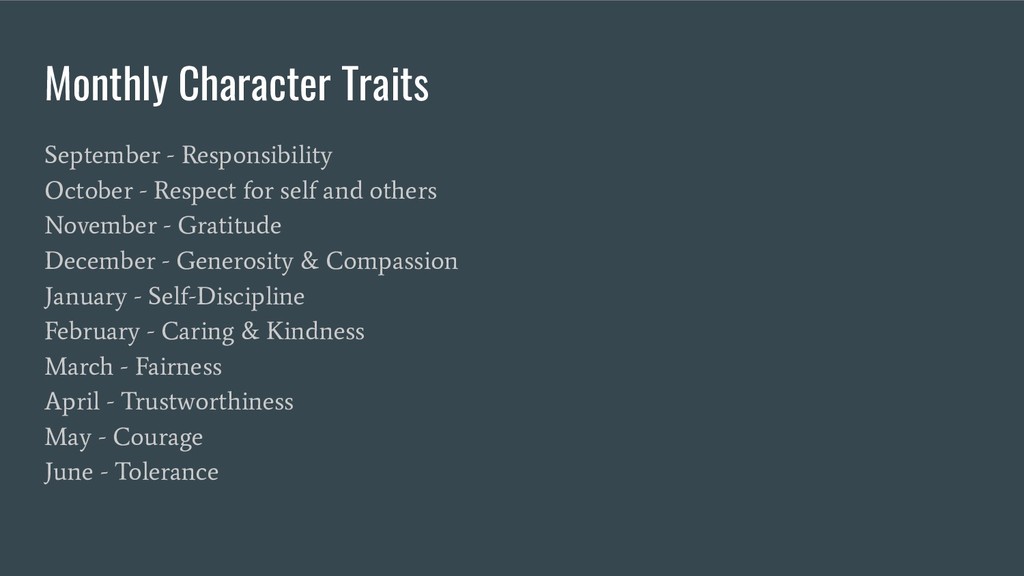
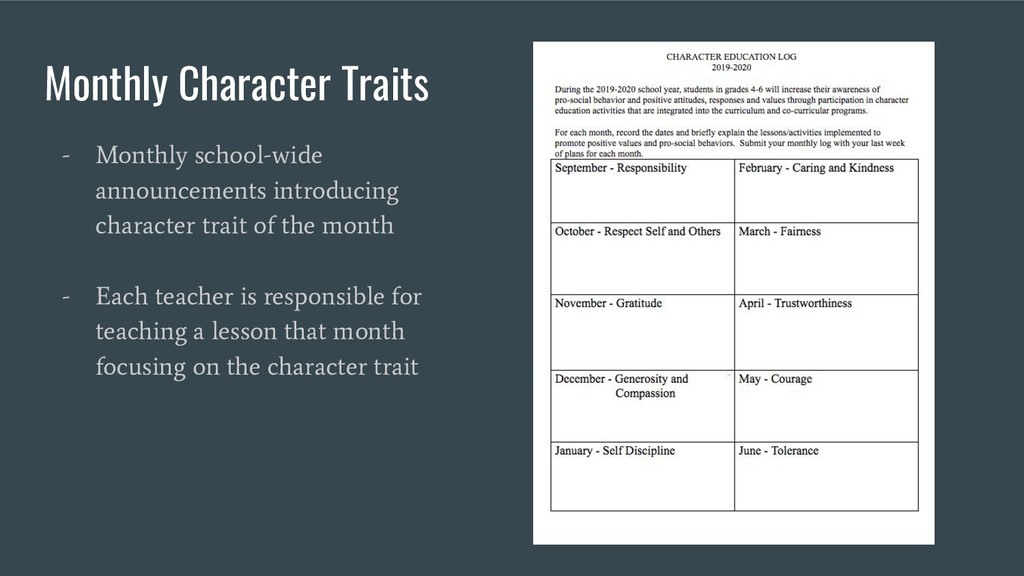
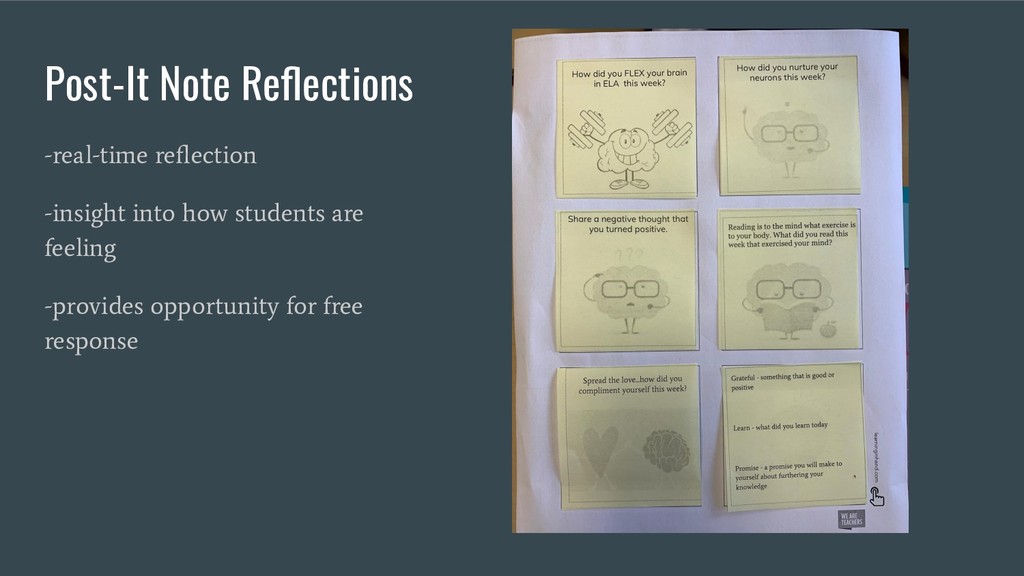
practice different self-regulation skills as they feel they need them with full support from all educators -Also, teachers utilize mindfulness and yoga strategies as “brain breaks” to refocus students -Monthly character traits help to guide our mindfulness
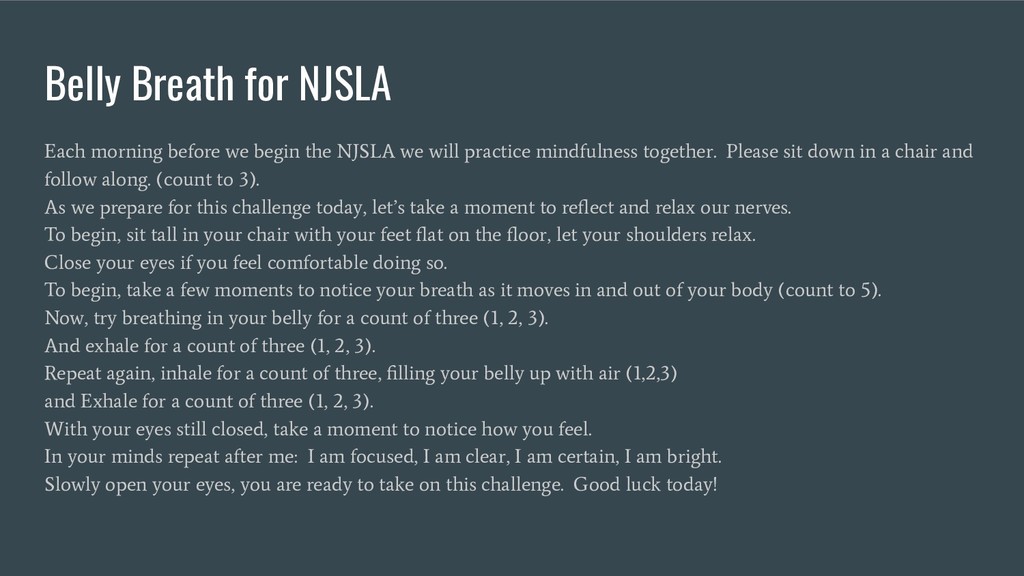
NJSLA we will practice mindfulness together. Please sit down in a chair and follow along. (count to 3). As we prepare for this challenge today, let’s take a moment to reflect and relax our nerves. To begin, sit tall in your chair with your feet flat on the floor, let your shoulders relax. Close your eyes if you feel comfortable doing so. To begin, take a few moments to notice your breath as it moves in and out of your body (count to 5). Now, try breathing in your belly for a count of three (1, 2, 3). And exhale for a count of three (1, 2, 3). Repeat again, inhale for a count of three, filling your belly up with air (1,2,3) and Exhale for a count of three (1, 2, 3). With your eyes still closed, take a moment to notice how you feel. In your minds repeat after me: I am focused, I am clear, I am certain, I am bright. Slowly open your eyes, you are ready to take on this challenge. Good luck today!
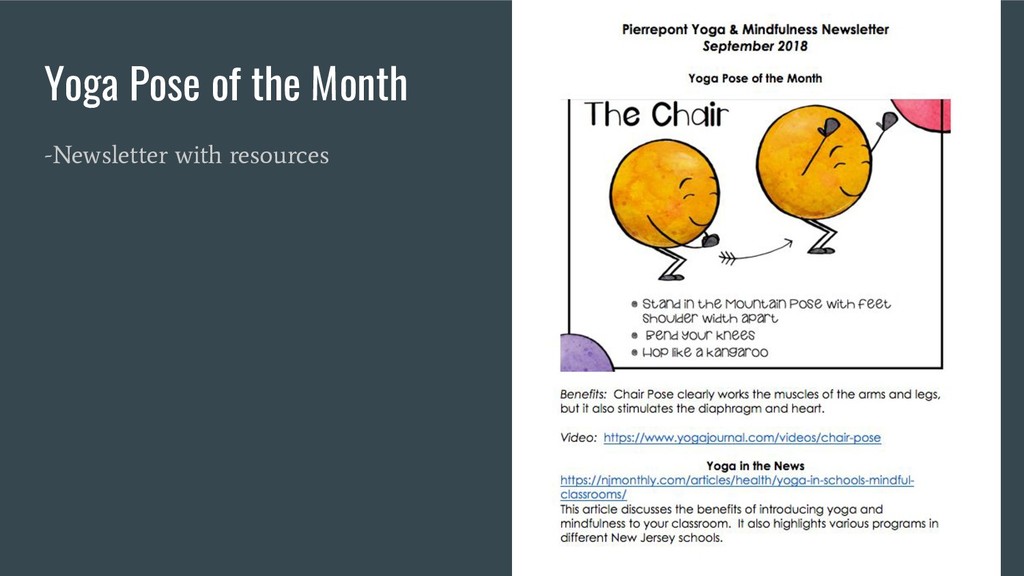
self and others November - Gratitude December - Generosity & Compassion January - Self-Discipline February - Caring & Kindness March - Fairness April - Trustworthiness May - Courage June - Tolerance
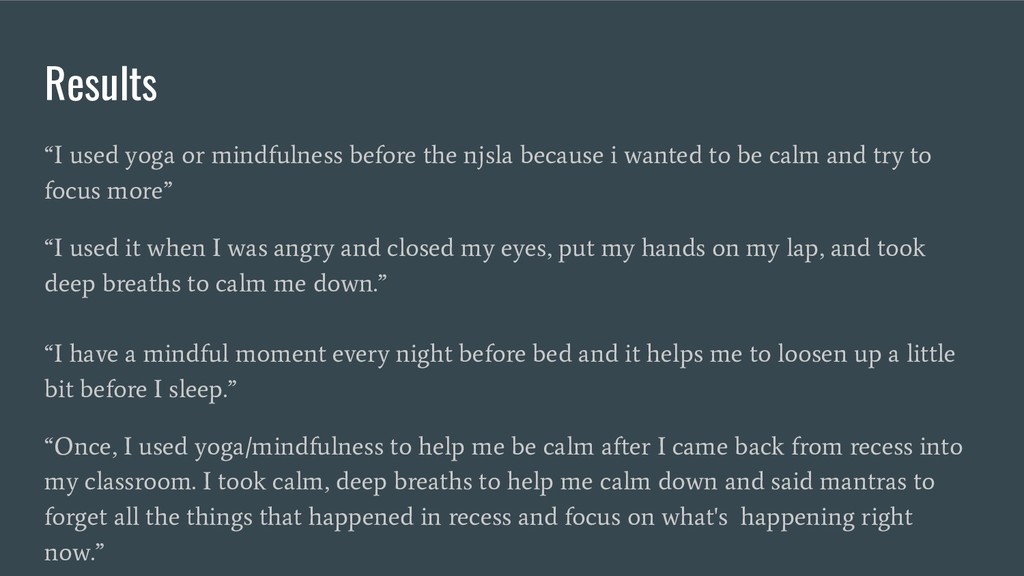
i wanted to be calm and try to focus more” “I used it when I was angry and closed my eyes, put my hands on my lap, and took deep breaths to calm me down.” “I have a mindful moment every night before bed and it helps me to loosen up a little bit before I sleep.” “Once, I used yoga/mindfulness to help me be calm after I came back from recess into my classroom. I took calm, deep breaths to help me calm down and said mantras to forget all the things that happened in recess and focus on what's happening right now.”
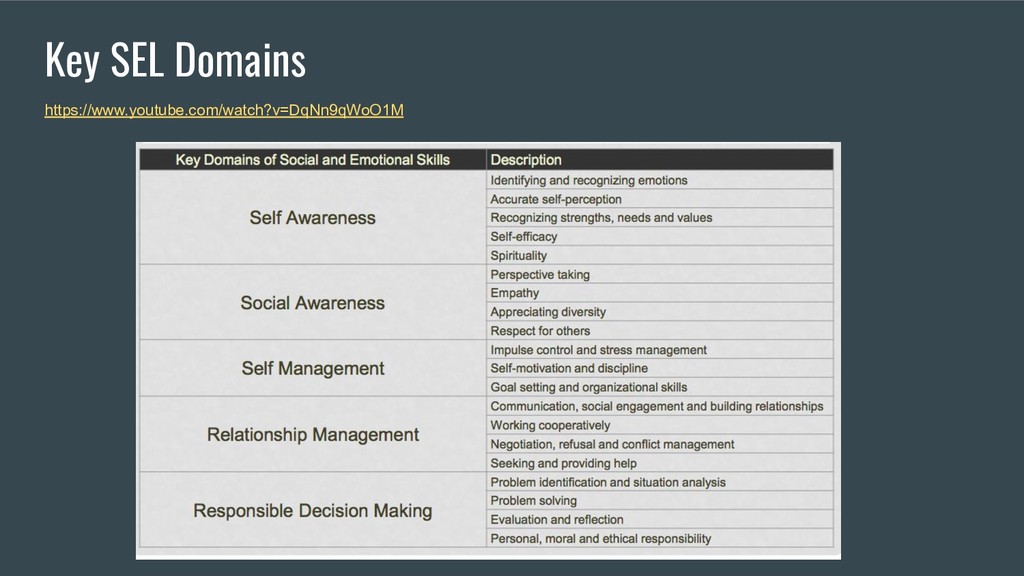
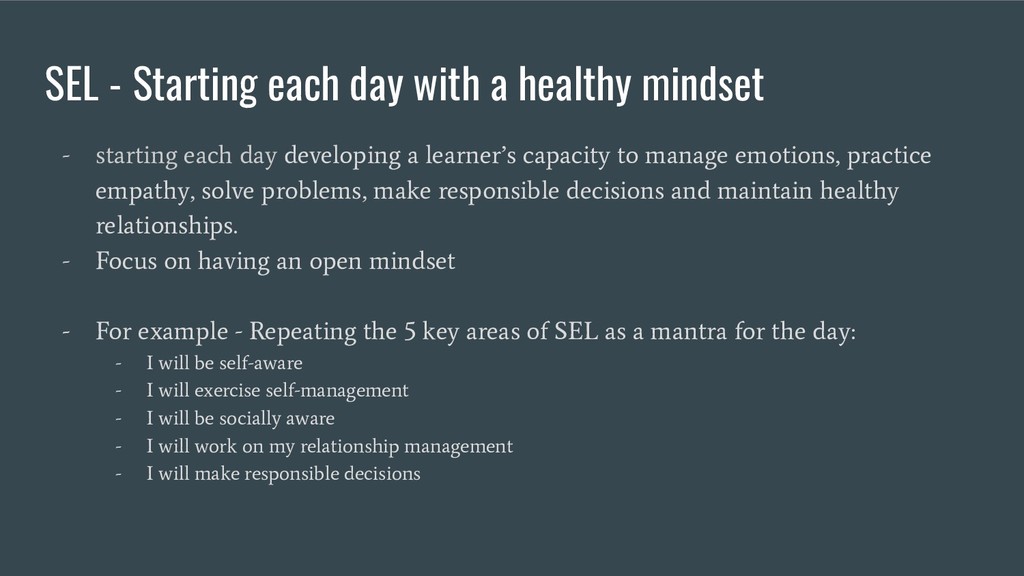
starting each day developing a learner’s capacity to manage emotions, practice empathy, solve problems, make responsible decisions and maintain healthy relationships. - Focus on having an open mindset - For example - Repeating the 5 key areas of SEL as a mantra for the day: - I will be self-aware - I will exercise self-management - I will be socially aware - I will work on my relationship management - I will make responsible decisions
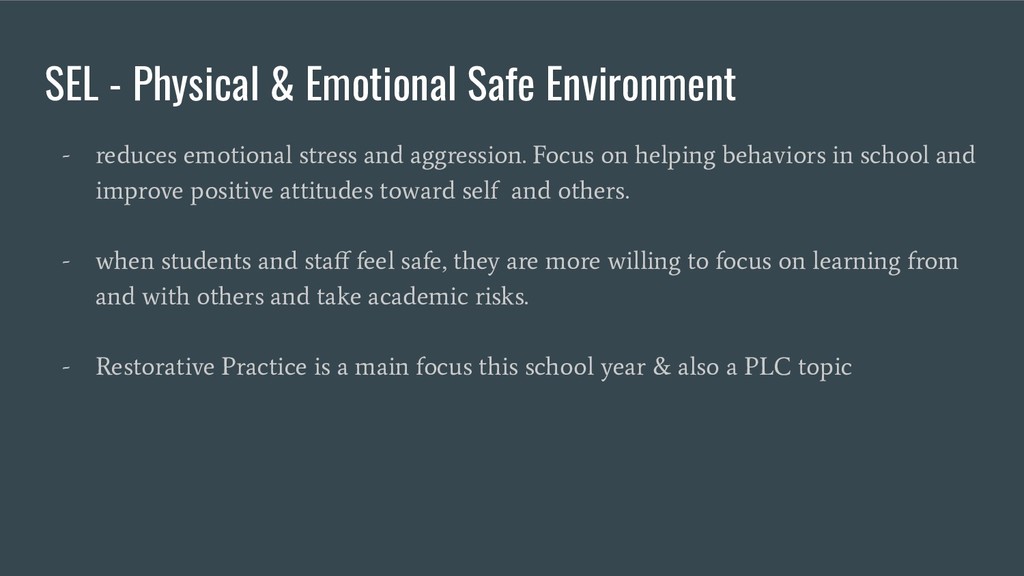
stress and aggression. Focus on helping behaviors in school and improve positive attitudes toward self and others. - when students and staff feel safe, they are more willing to focus on learning from and with others and take academic risks. - Restorative Practice is a main focus this school year & also a PLC topic
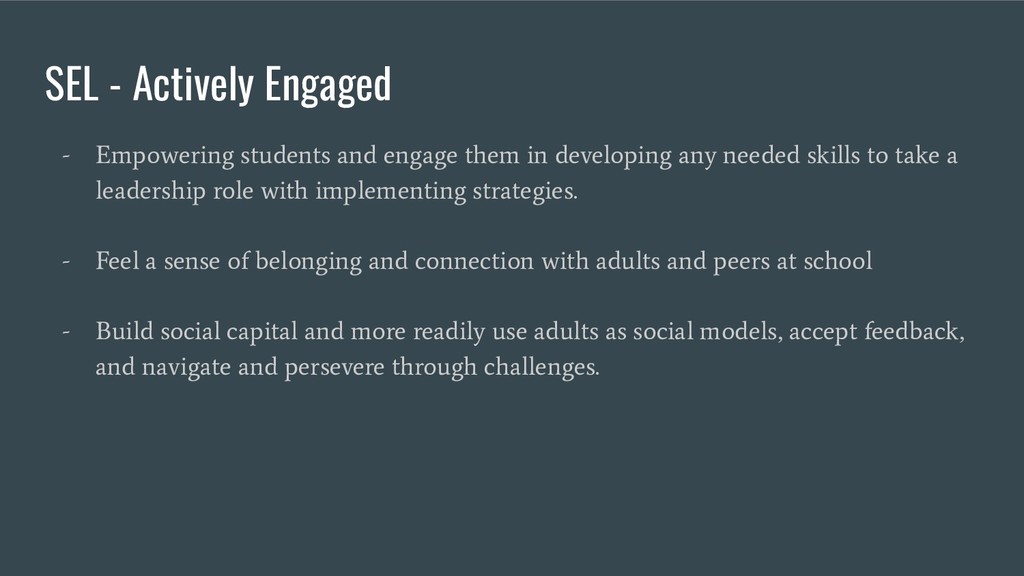
in developing any needed skills to take a leadership role with implementing strategies. - Feel a sense of belonging and connection with adults and peers at school - Build social capital and more readily use adults as social models, accept feedback, and navigate and persevere through challenges.
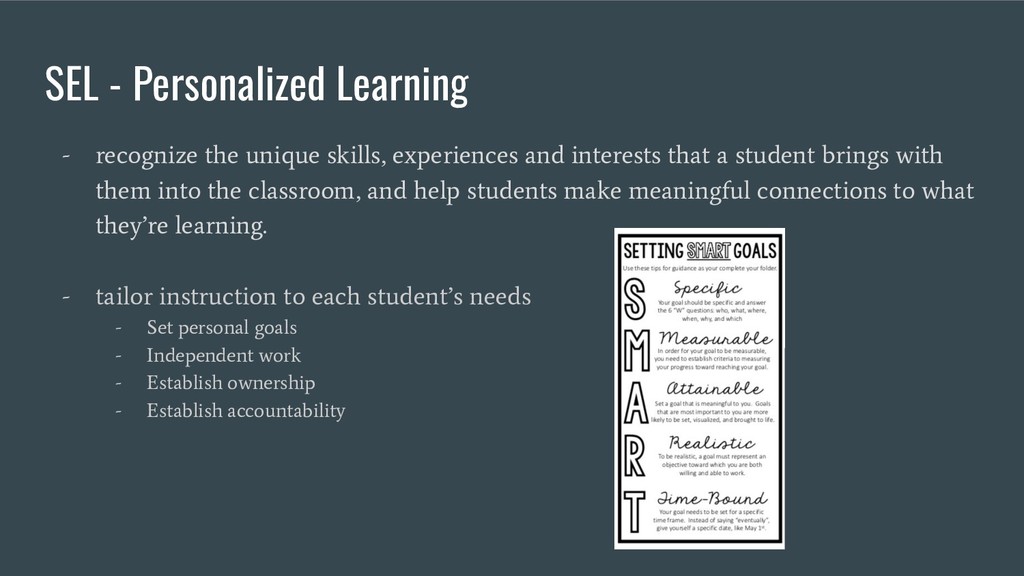
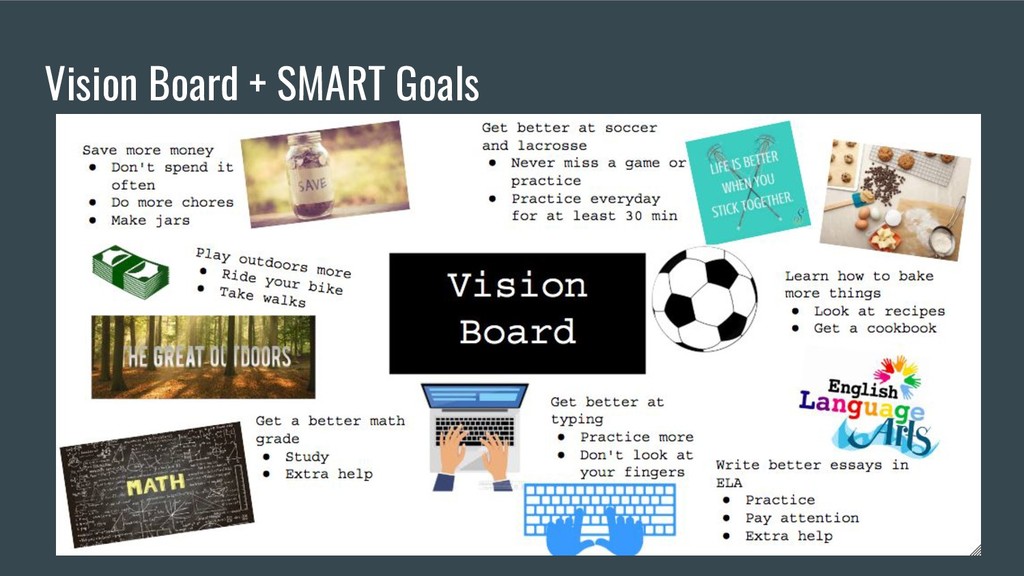
and interests that a student brings with them into the classroom, and help students make meaningful connections to what they’re learning. - tailor instruction to each student’s needs - Set personal goals - Independent work - Establish ownership - Establish accountability
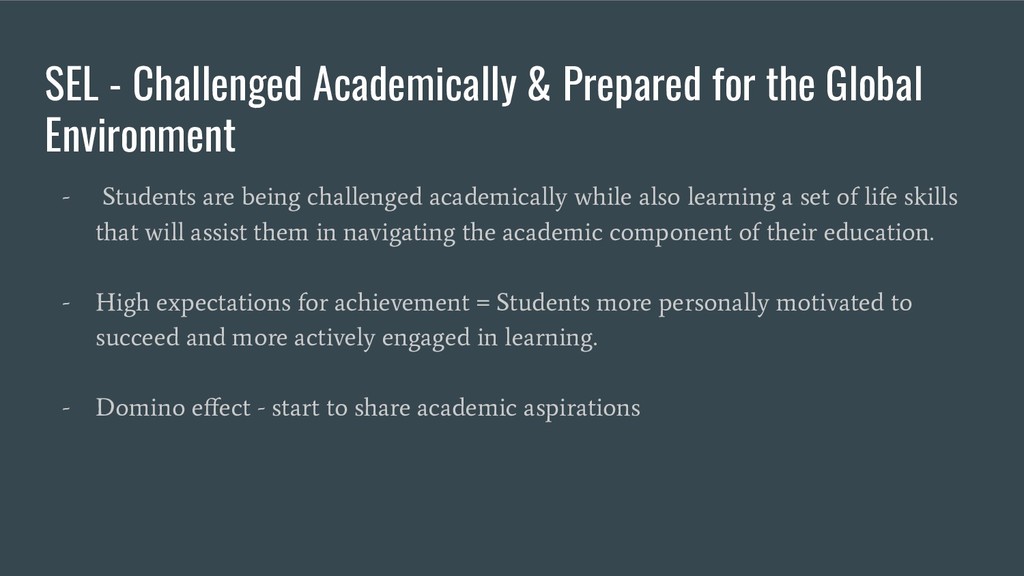
- Students are being challenged academically while also learning a set of life skills that will assist them in navigating the academic component of their education. - High expectations for achievement = Students more personally motivated to succeed and more actively engaged in learning. - Domino effect - start to share academic aspirations
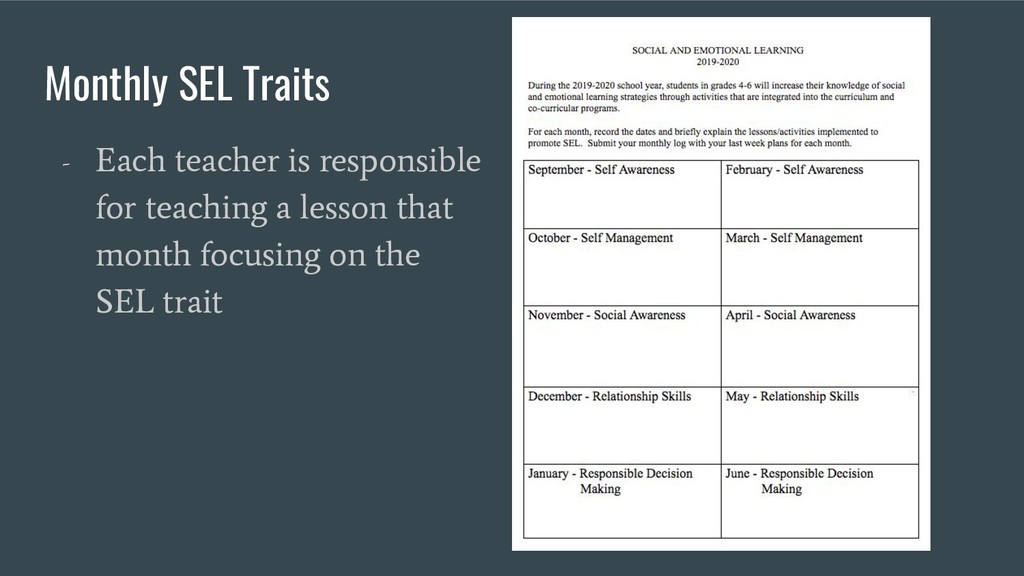
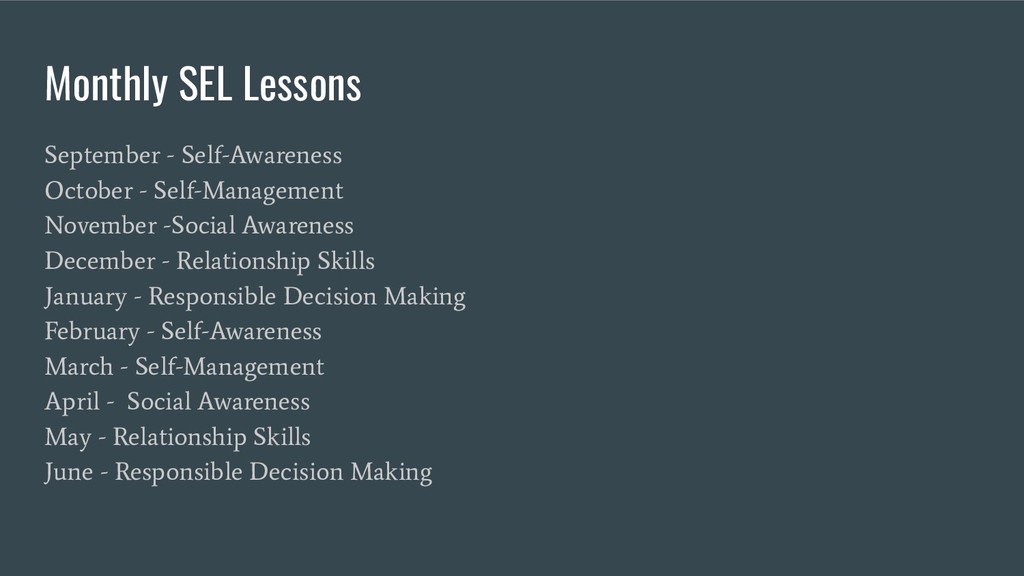
-Social Awareness December - Relationship Skills January - Responsible Decision Making February - Self-Awareness March - Self-Management April - Social Awareness May - Relationship Skills June - Responsible Decision Making
to refresh and digest the information they've learned - helps students to refocus and prepare for additional new materia - allows students to regulate their emotions and work through distracting thoughts
behavior is happening and how to fix it for the future -Teaching students self awareness & empathy - lunch room example -Being an intentionally inviting teacher & making connections -”Be that one person” - every student needs “their person”
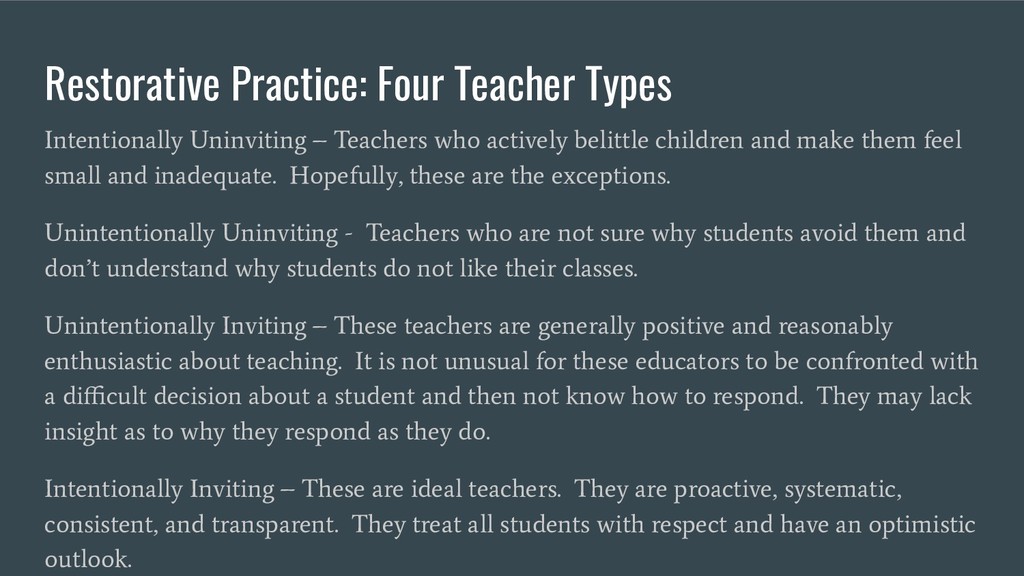
actively belittle children and make them feel small and inadequate. Hopefully, these are the exceptions. Unintentionally Uninviting - Teachers who are not sure why students avoid them and don’t understand why students do not like their classes. Unintentionally Inviting – These teachers are generally positive and reasonably enthusiastic about teaching. It is not unusual for these educators to be confronted with a difficult decision about a student and then not know how to respond. They may lack insight as to why they respond as they do. Intentionally Inviting – These are ideal teachers. They are proactive, systematic, consistent, and transparent. They treat all students with respect and have an optimistic outlook.
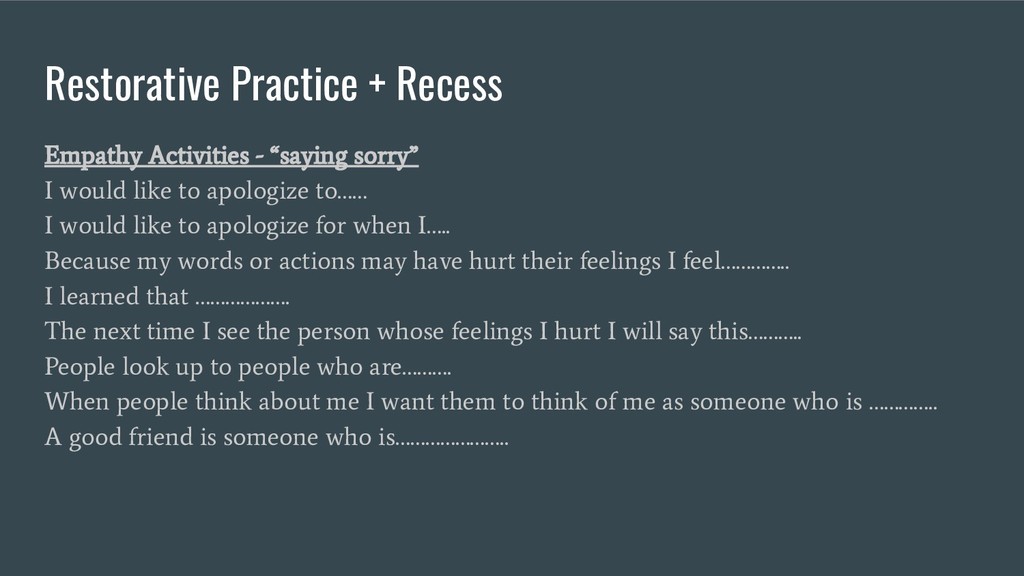
would like to apologize to…… I would like to apologize for when I….. Because my words or actions may have hurt their feelings I feel………….. I learned that ………………. The next time I see the person whose feelings I hurt I will say this……….. People look up to people who are………. When people think about me I want them to think of me as someone who is ………….. A good friend is someone who is…………………..
Program highlights one student per week during the season across our social media platforms and on the video boards during home games. “When you see someone being bullied and/or cyberbullied and you help them, you stop being a bystander and become an Upstander!” Our School Recognition Program focuses on schools who demonstrate and can articulate how their school combats bullying. Selected schools receive a fun filled assembly featuring a Jets player.
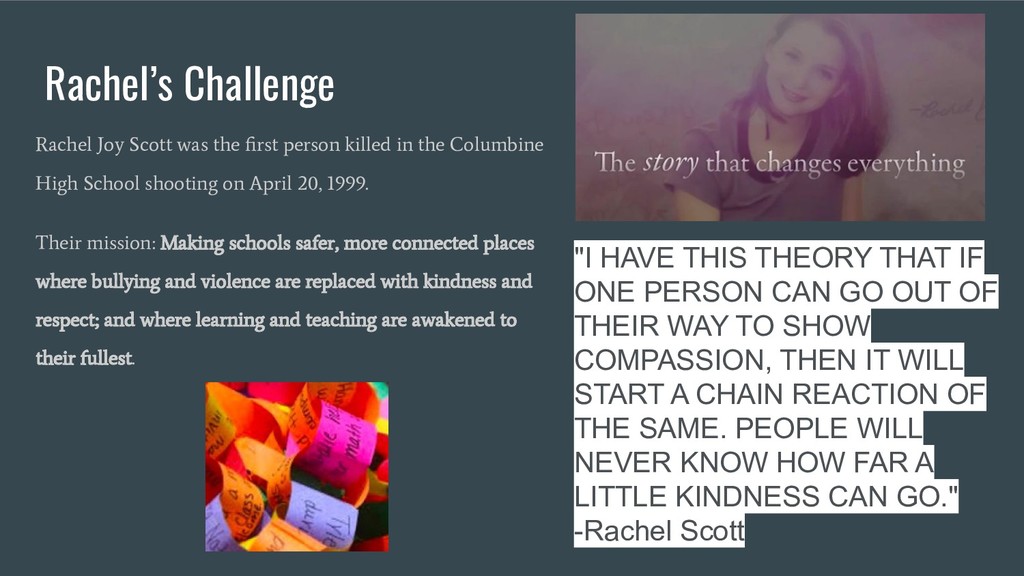
in the Columbine High School shooting on April 20, 1999. Their mission: Making schools safer, more connected places where bullying and violence are replaced with kindness and respect; and where learning and teaching are awakened to their fullest. "I HAVE THIS THEORY THAT IF ONE PERSON CAN GO OUT OF THEIR WAY TO SHOW COMPASSION, THEN IT WILL START A CHAIN REACTION OF THE SAME. PEOPLE WILL NEVER KNOW HOW FAR A LITTLE KINDNESS CAN GO." -Rachel Scott


 hiragahh
 ainischool
 cbtlibrary
 masakiokuda
 ishii_mit
 bvr7352
 signer
 rashwhitman
 frievea
 hiola
 pawan_pharm
 dugsong
 jnunemaker
 sferik
 katarinadahlin
 lara
 eileencodes
 chrisshort
 michielstock
 rabernat
 bcantrill
 sachag
 stephenakadiri