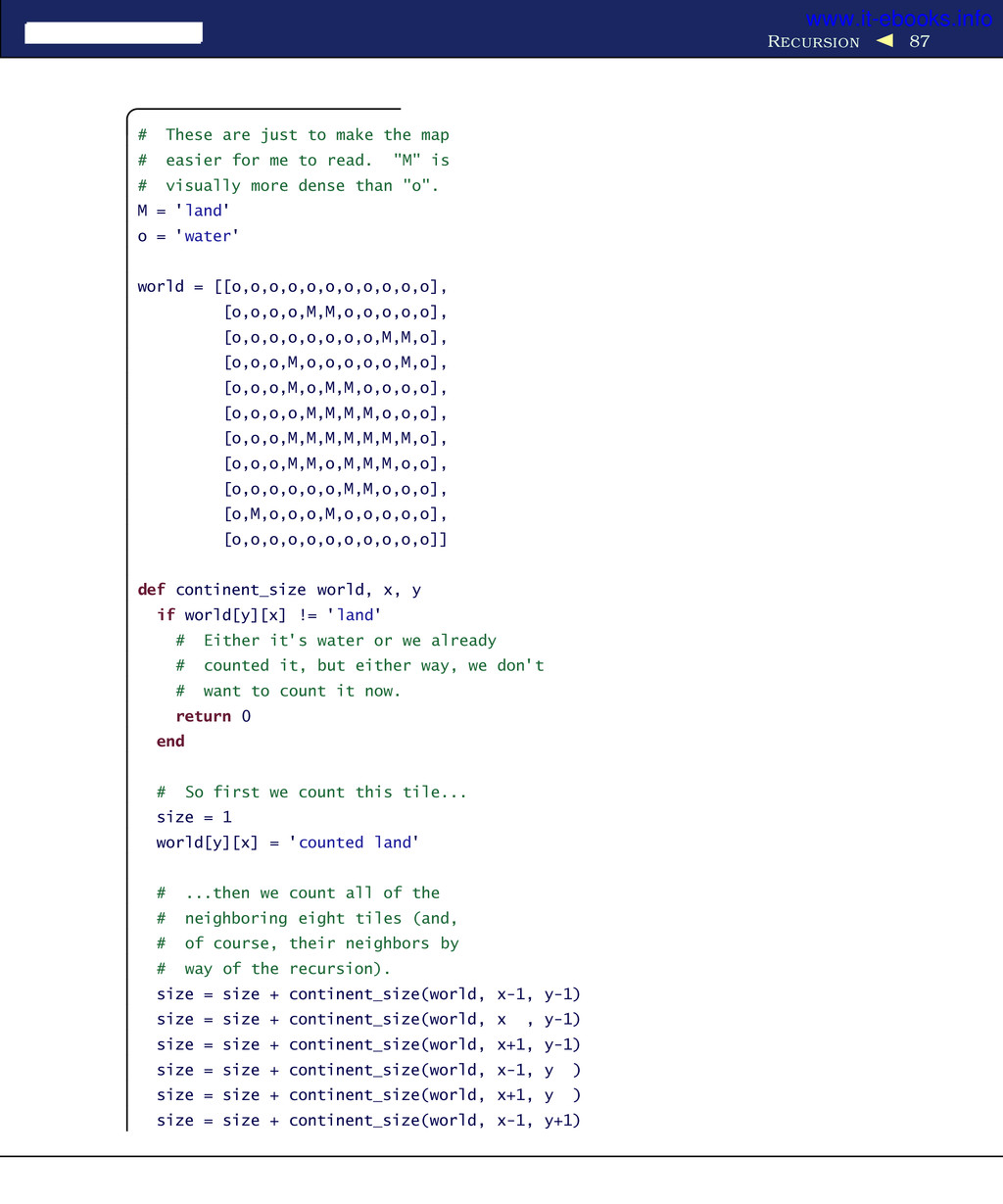
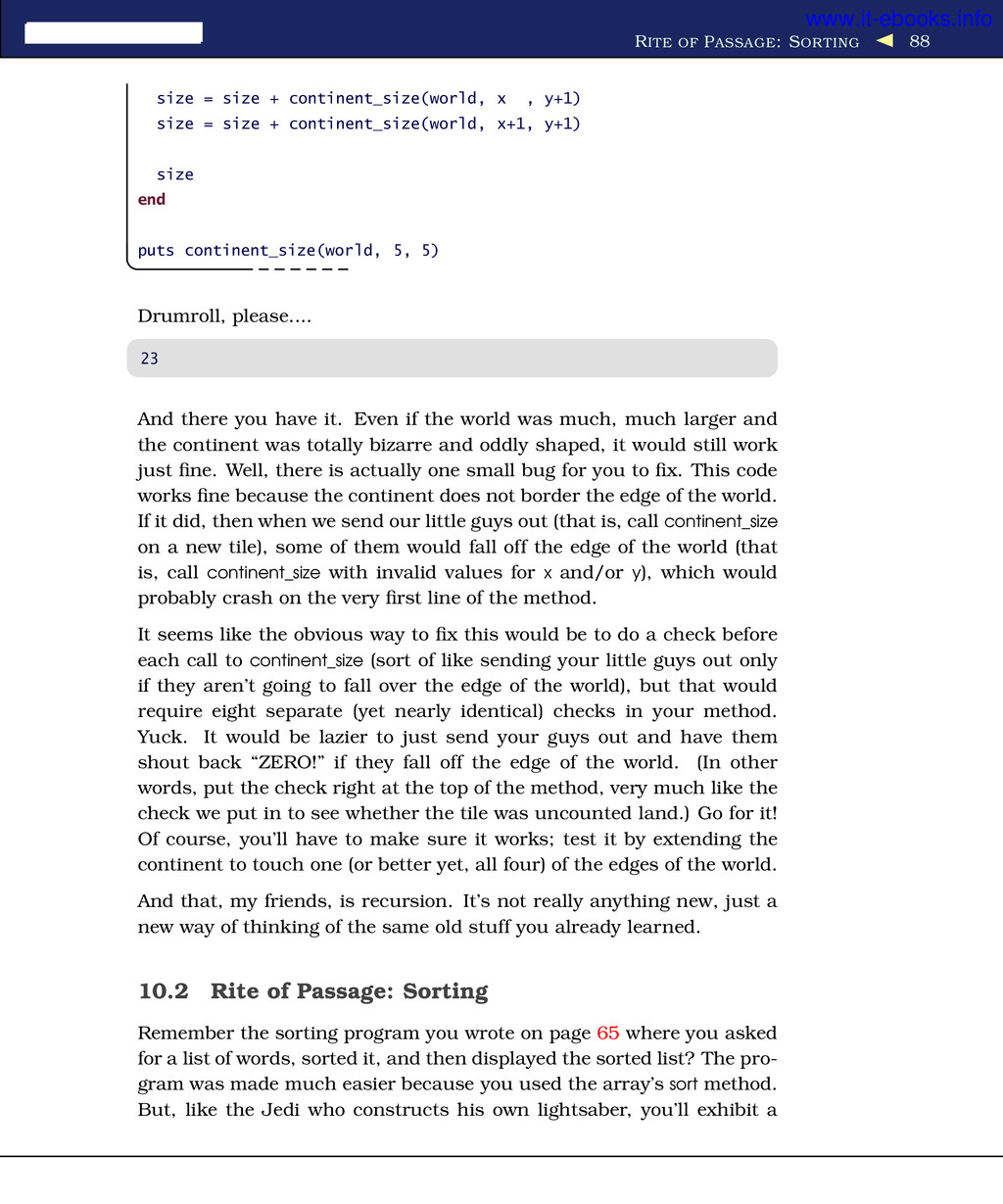
# easier for me to read. "M" is # visually more dense than "o". M = 'land' o = 'water' world = [[o,o,o,o,o,o,o,o,o,o,o], [o,o,o,o,M,M,o,o,o,o,o], [o,o,o,o,o,o,o,o,M,M,o], [o,o,o,M,o,o,o,o,o,M,o], [o,o,o,M,o,M,M,o,o,o,o], [o,o,o,o,M,M,M,M,o,o,o], [o,o,o,M,M,M,M,M,M,M,o], [o,o,o,M,M,o,M,M,M,o,o], [o,o,o,o,o,o,M,M,o,o,o], [o,M,o,o,o,M,o,o,o,o,o], [o,o,o,o,o,o,o,o,o,o,o]] def continent_size world, x, y if world[y][x] != 'land' # Either it's water or we already # counted it, but either way, we don't # want to count it now. return 0 end # So first we count this tile... size = 1 world[y][x] = 'counted land' # ...then we count all of the # neighboring eight tiles (and, # of course, their neighbors by # way of the recursion). size = size + continent_size(world, x-1, y-1) size = size + continent_size(world, x , y-1) size = size + continent_size(world, x+1, y-1) size = size + continent_size(world, x-1, y ) size = size + continent_size(world, x+1, y ) size = size + continent_size(world, x-1, y+1) www.it-ebooks.info


 bermonpainter
 zakiyama
 morganepeng
 rasmusluckow
 portentint
 mkilby
 techseoconnect
 mfonobong
 elsirapls
 garrettdimon
 aleyda
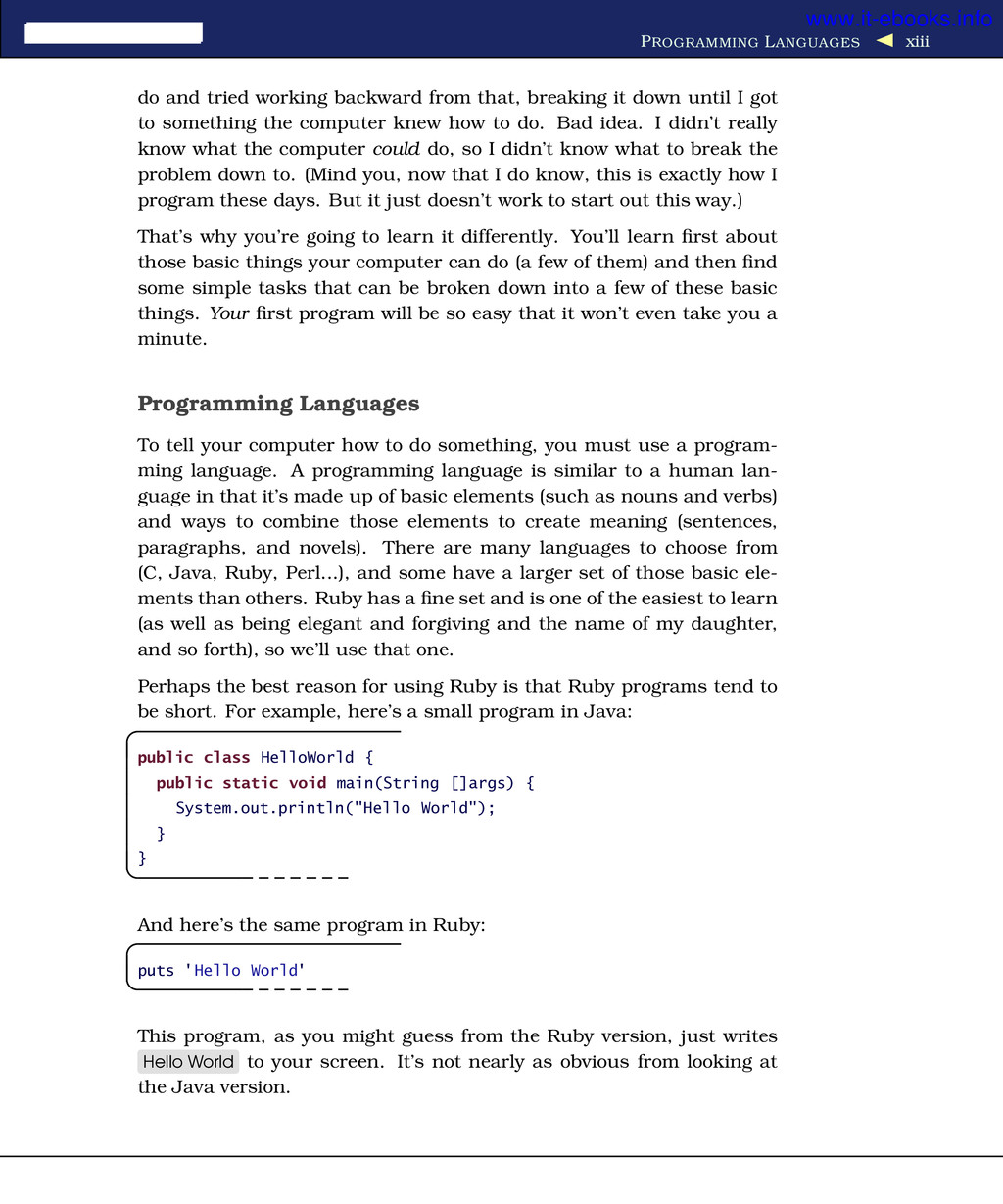
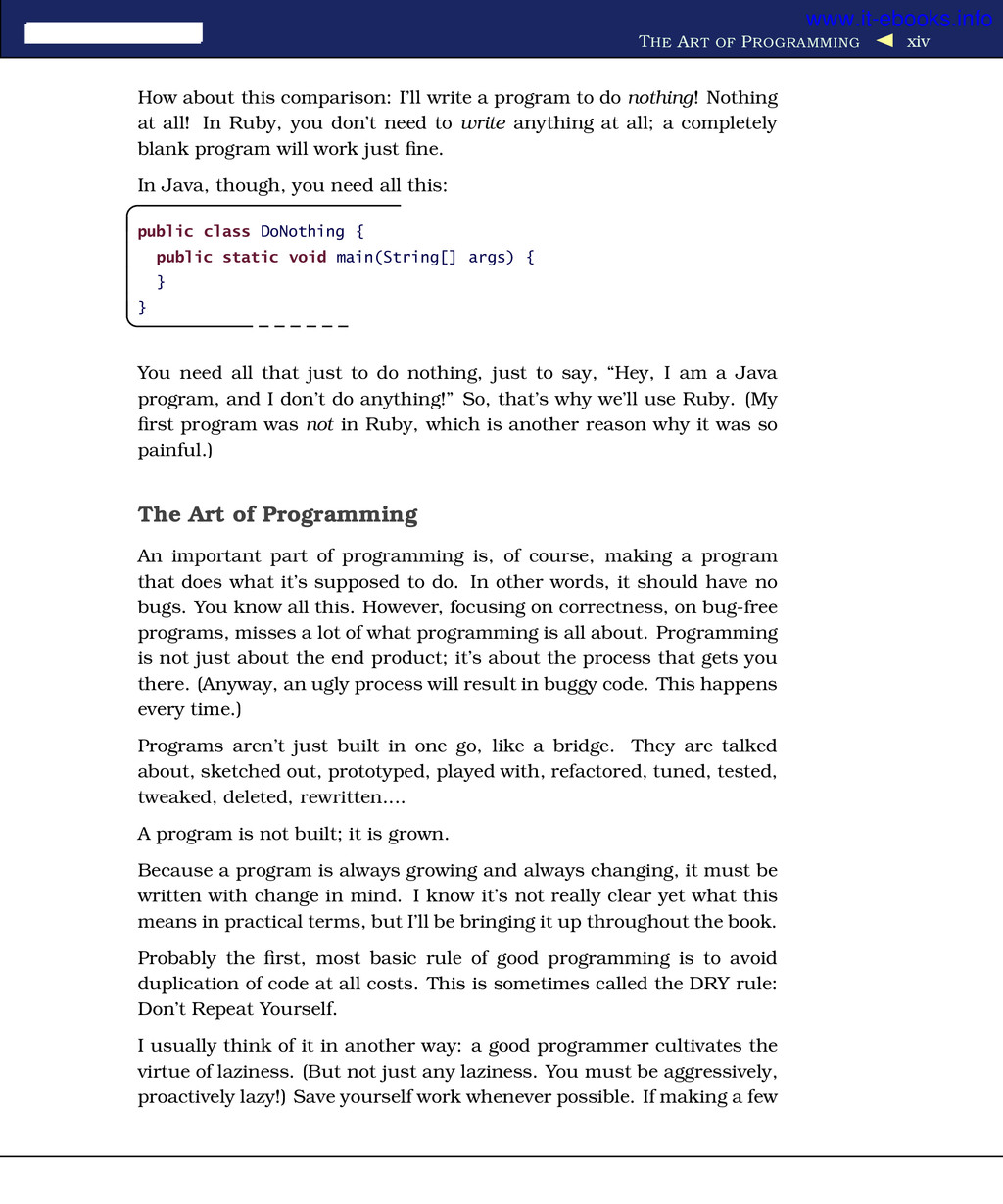
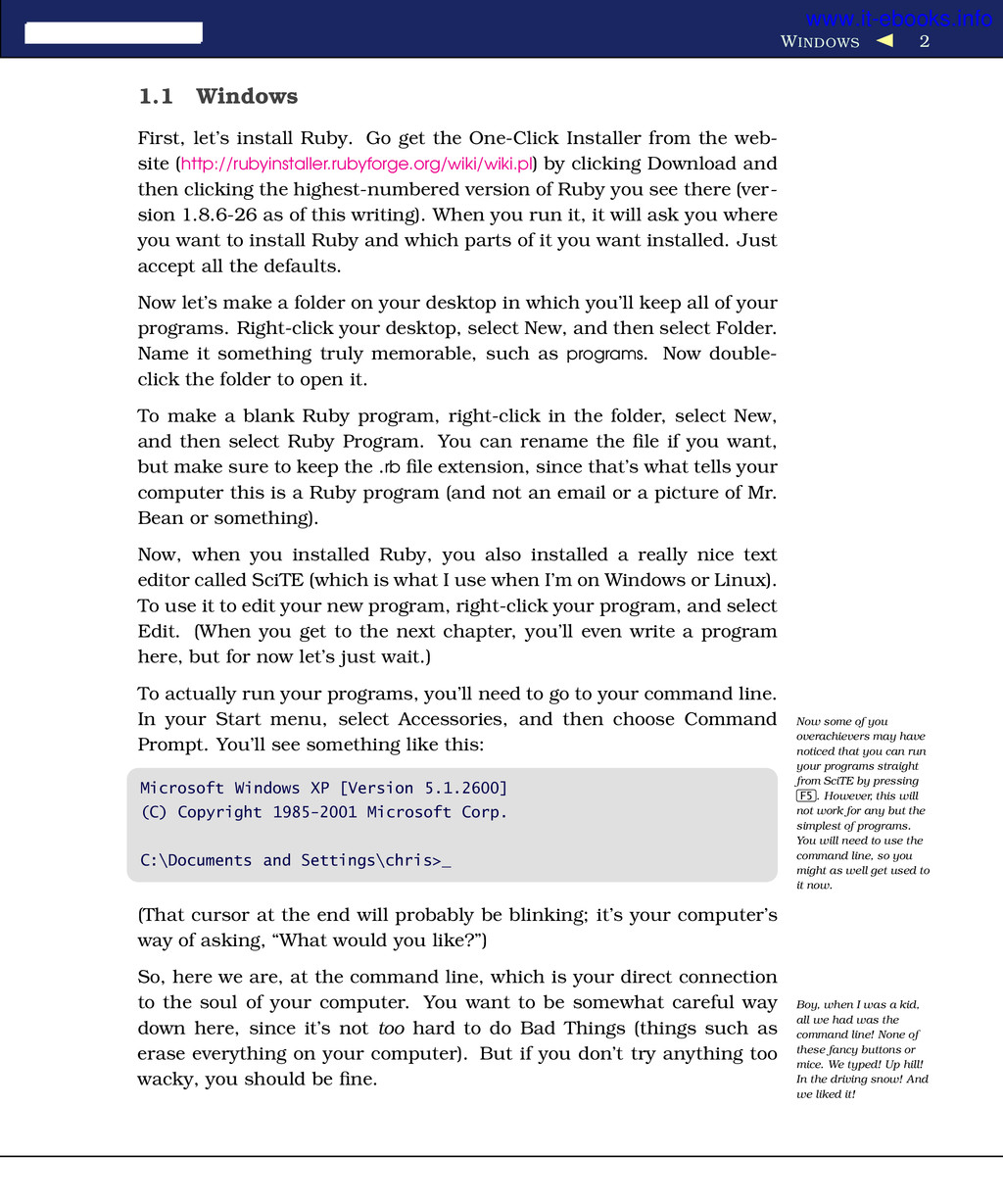
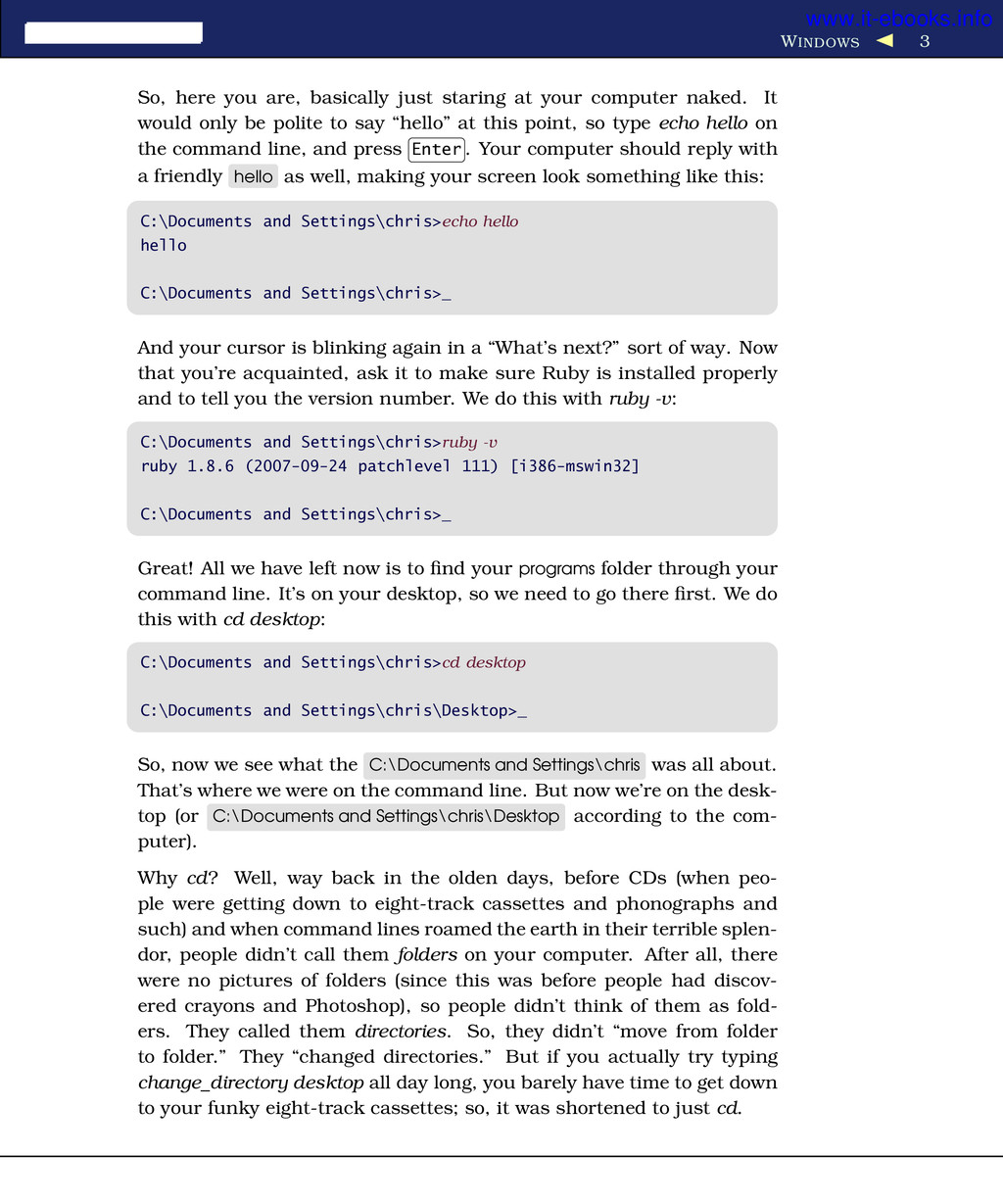
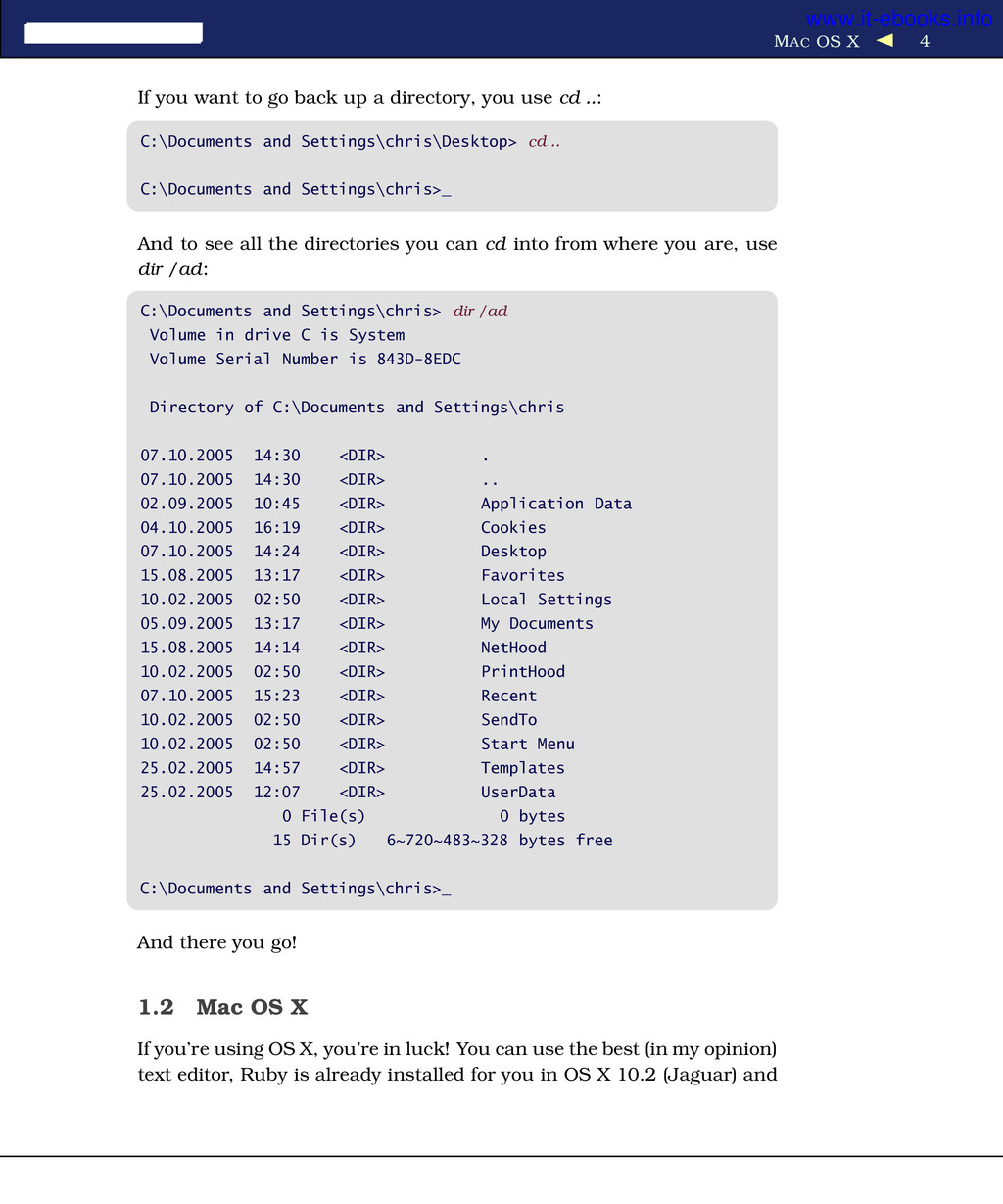
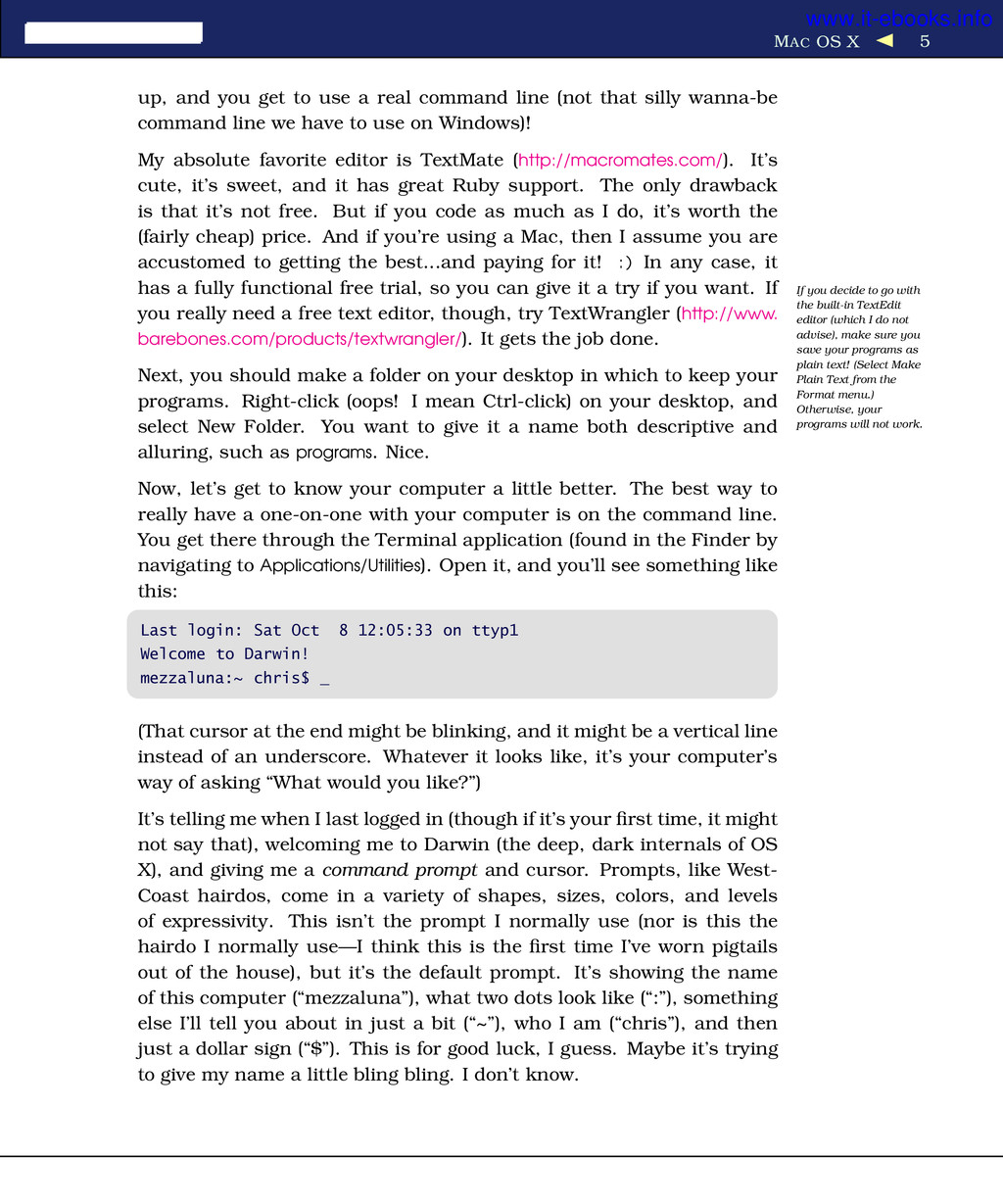
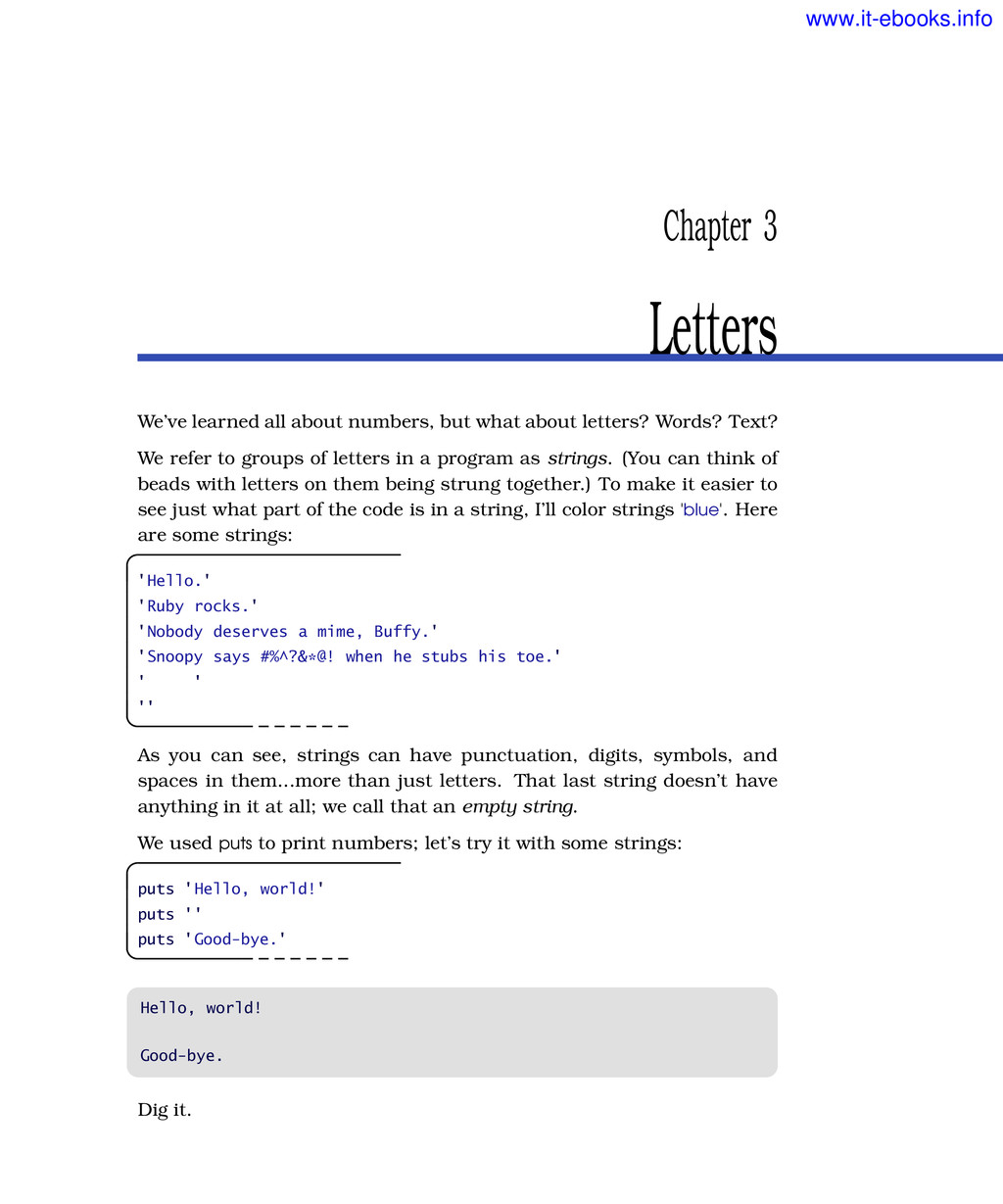
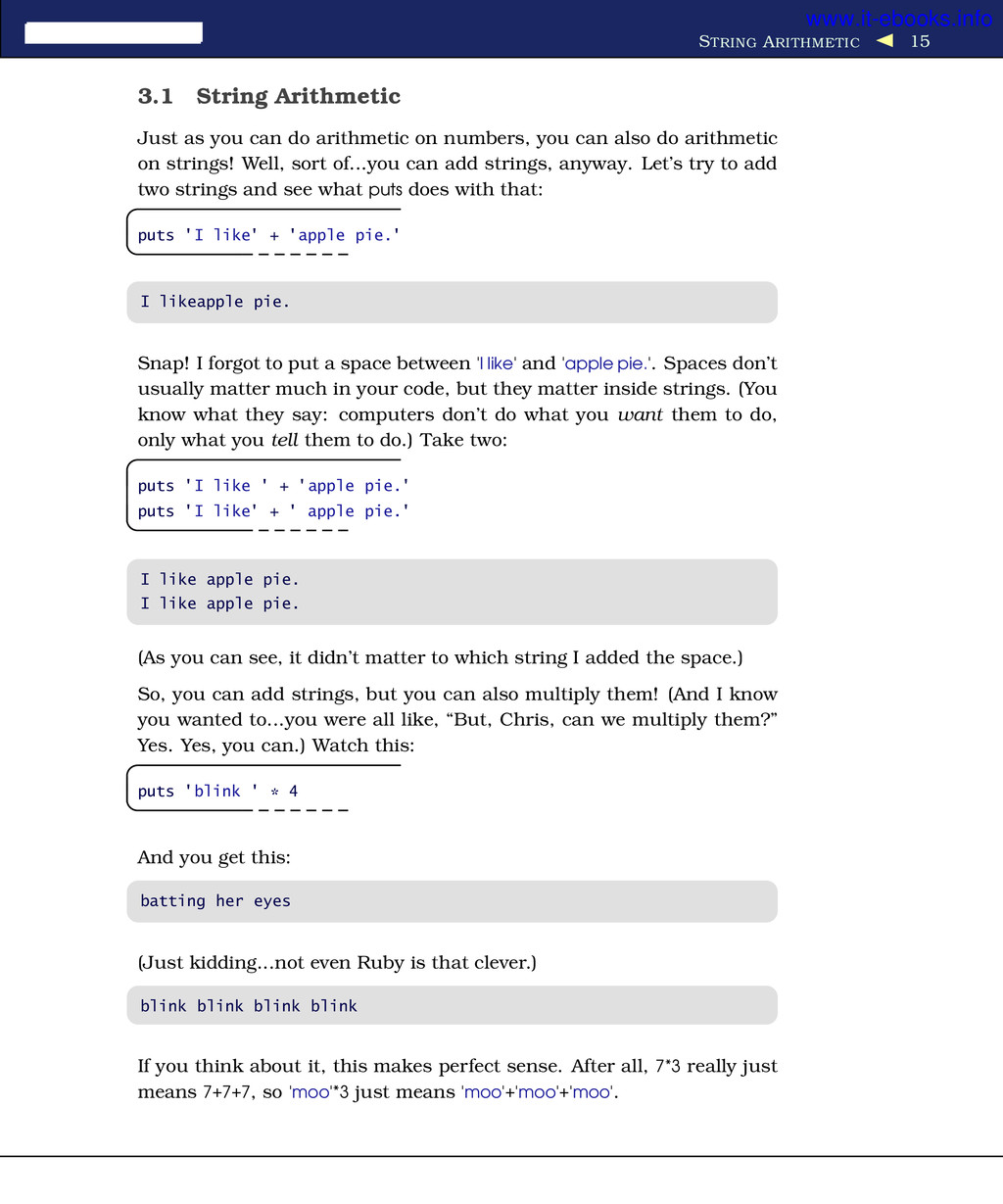
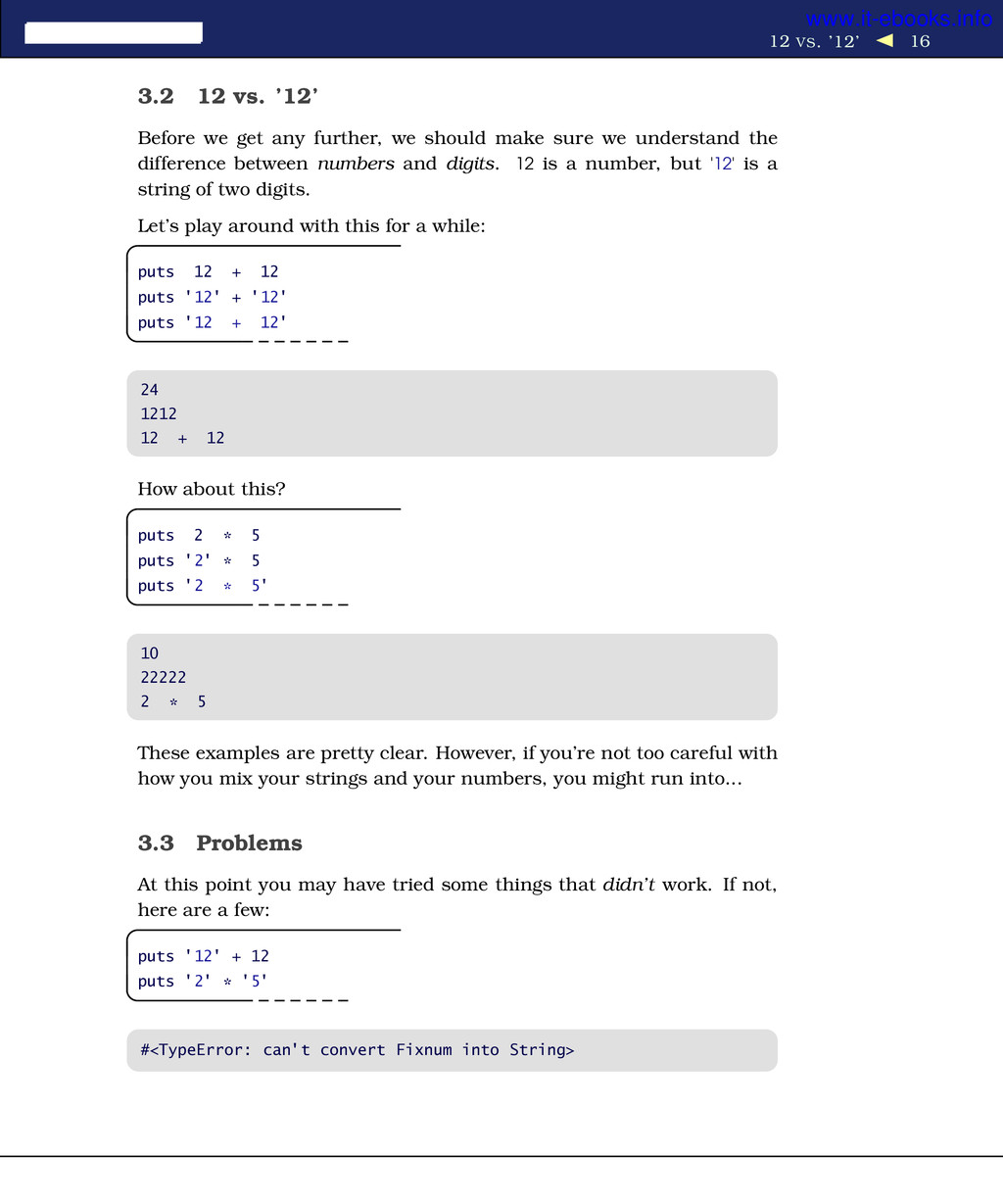
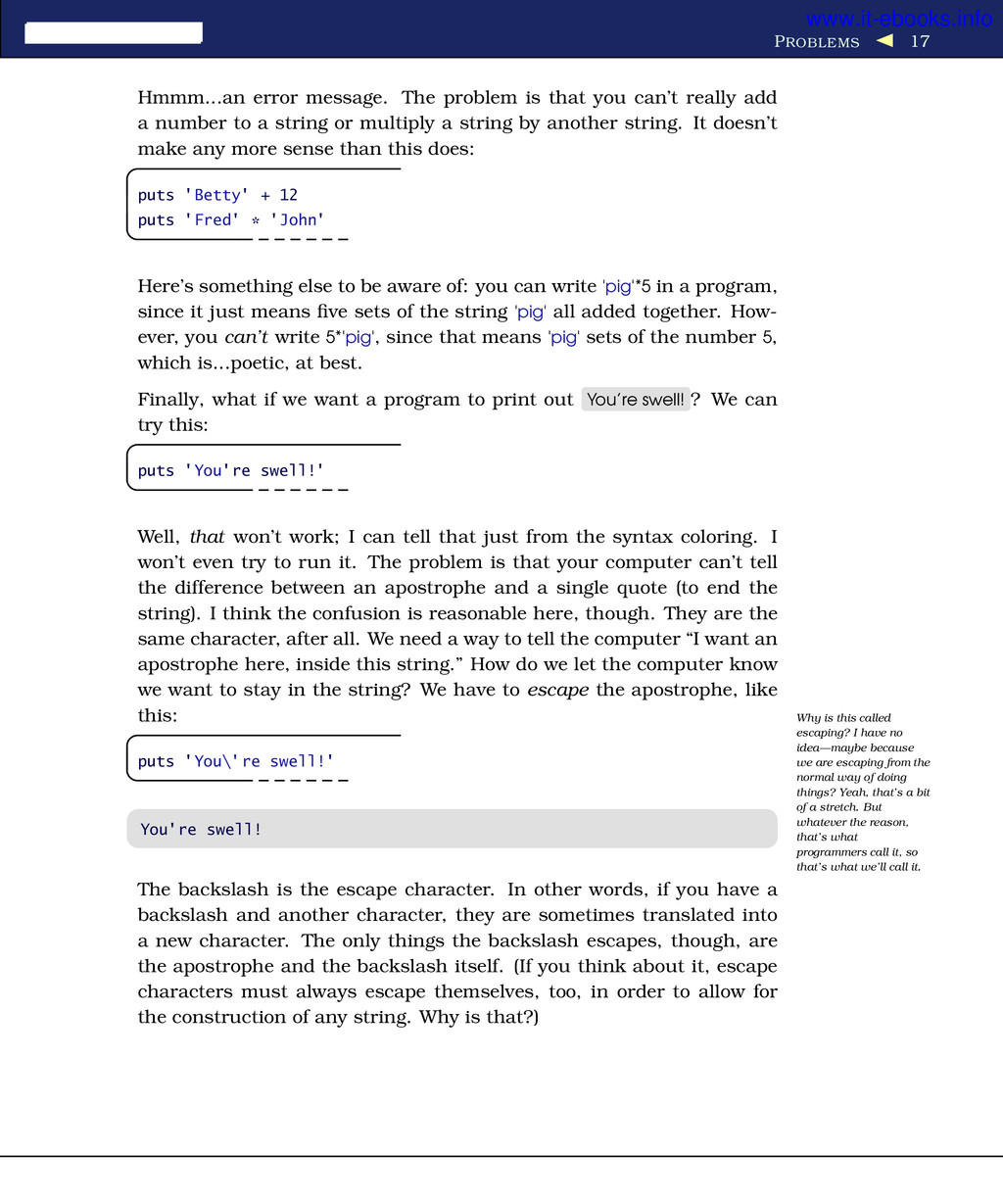
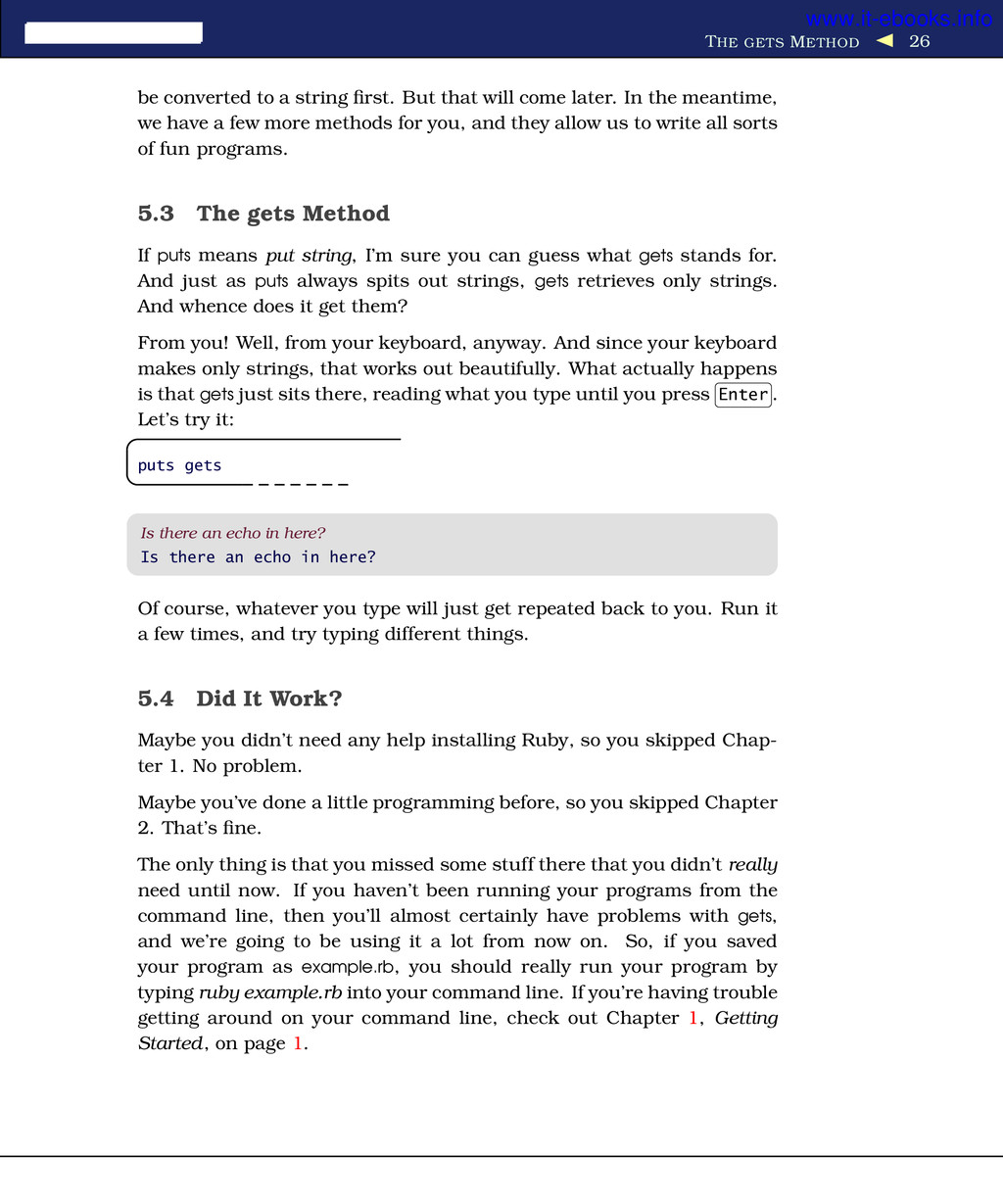
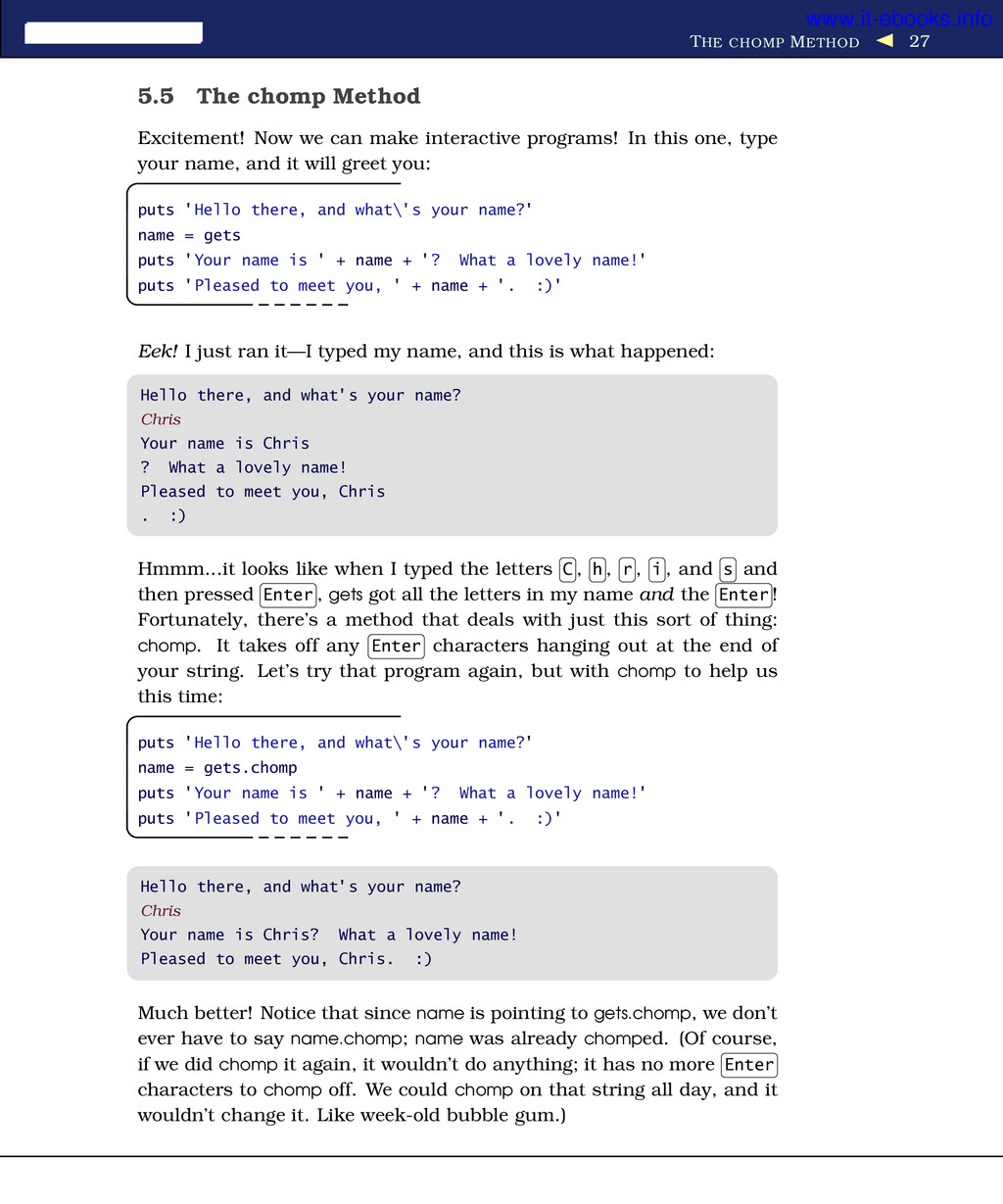
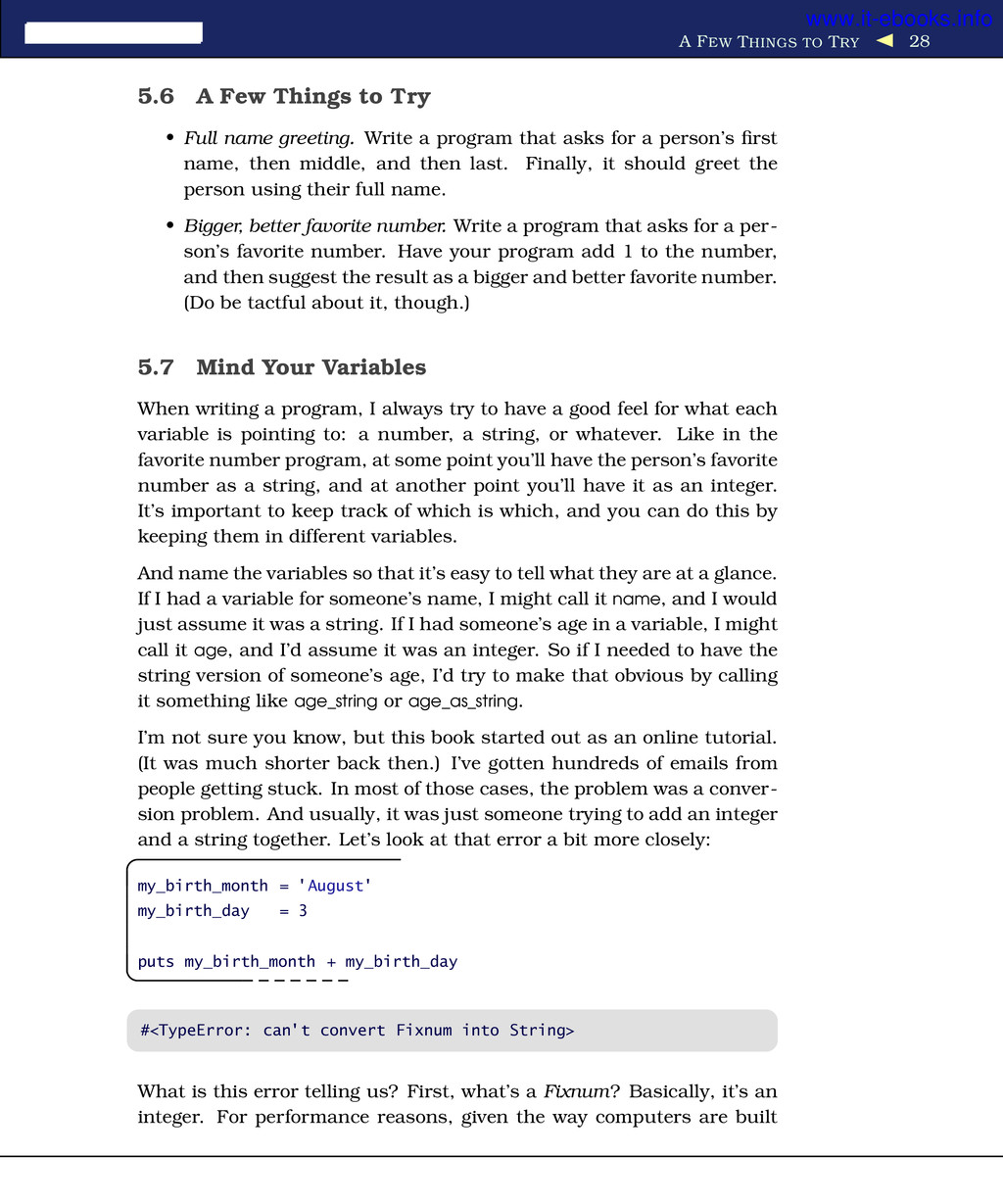
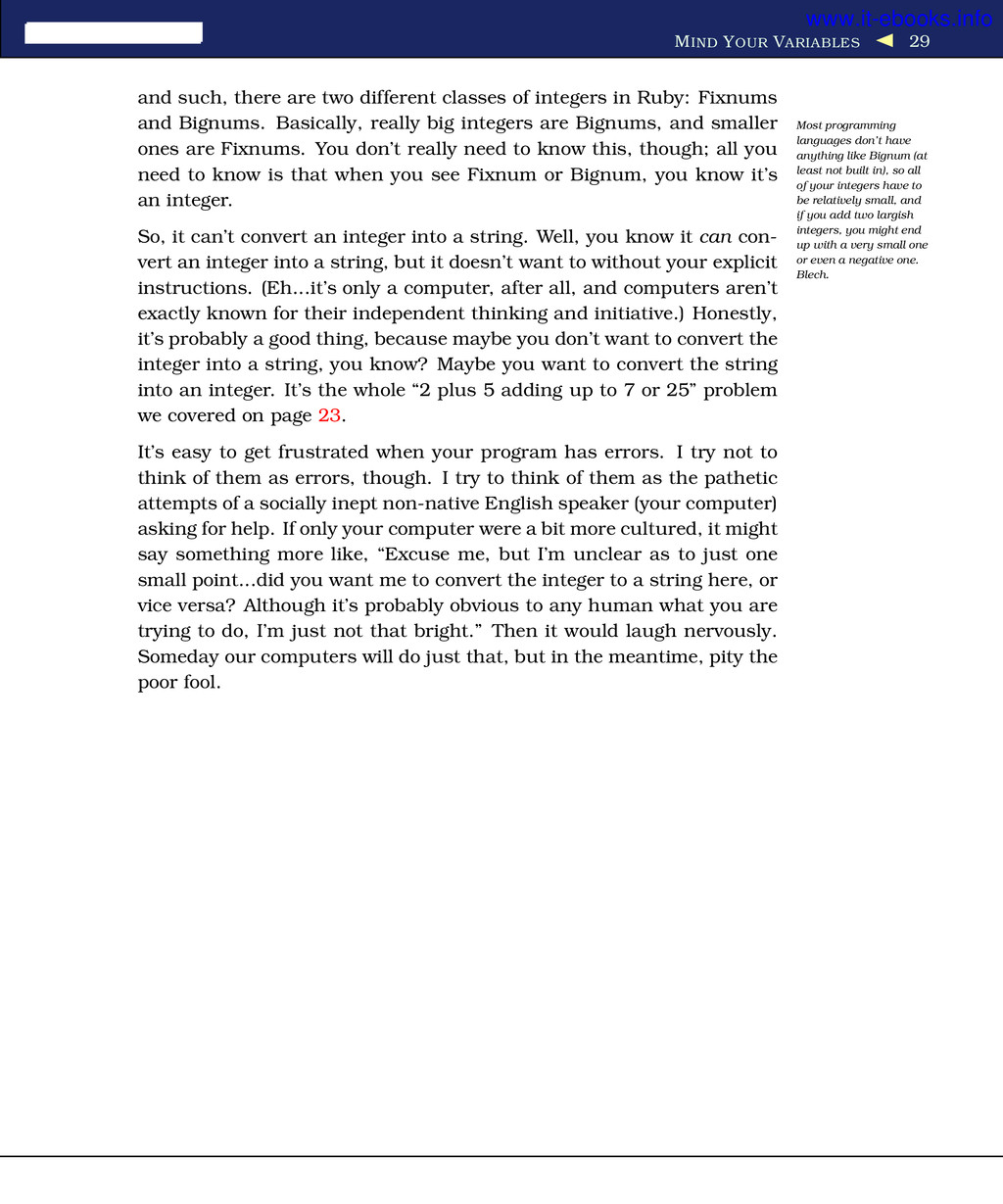
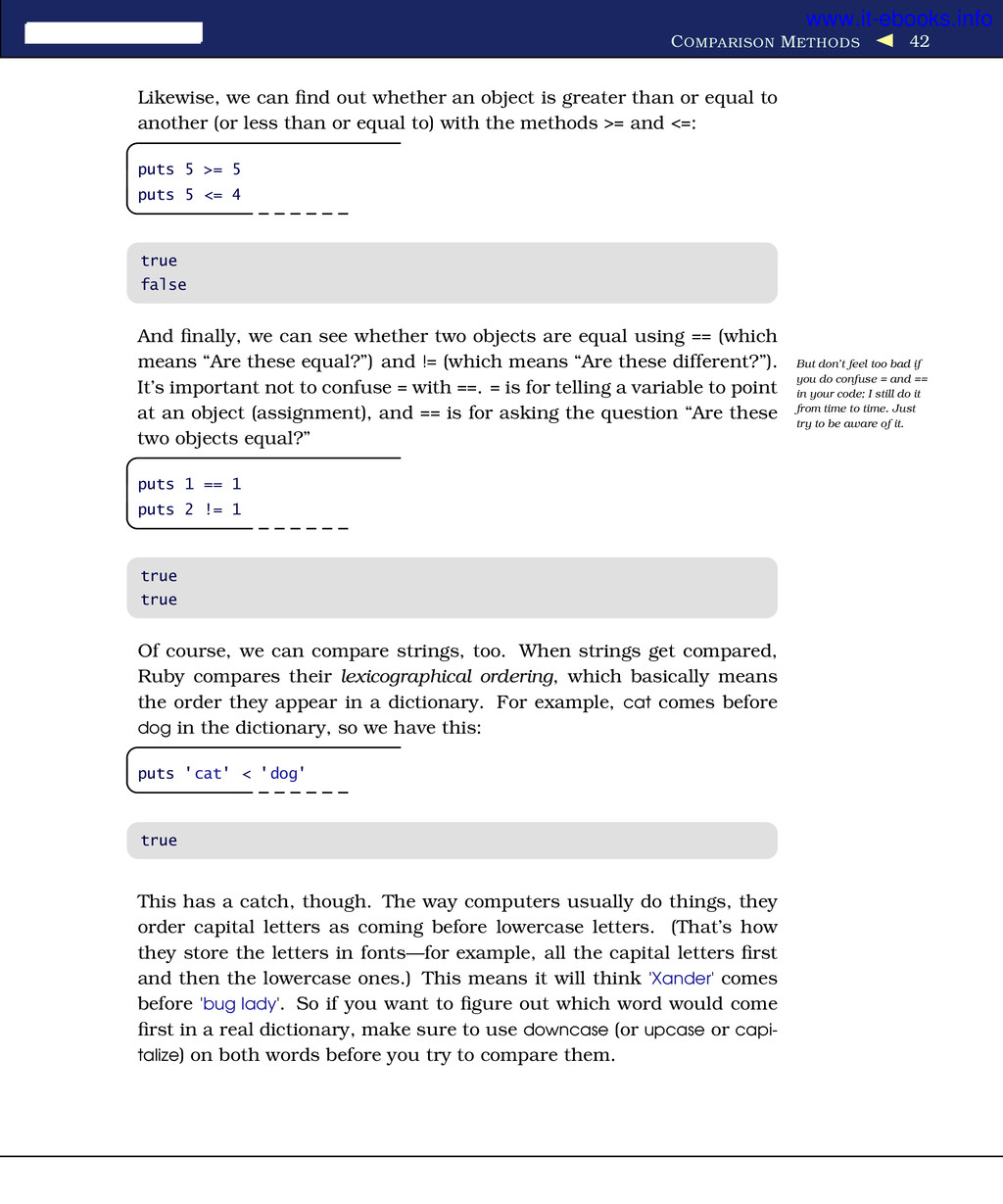
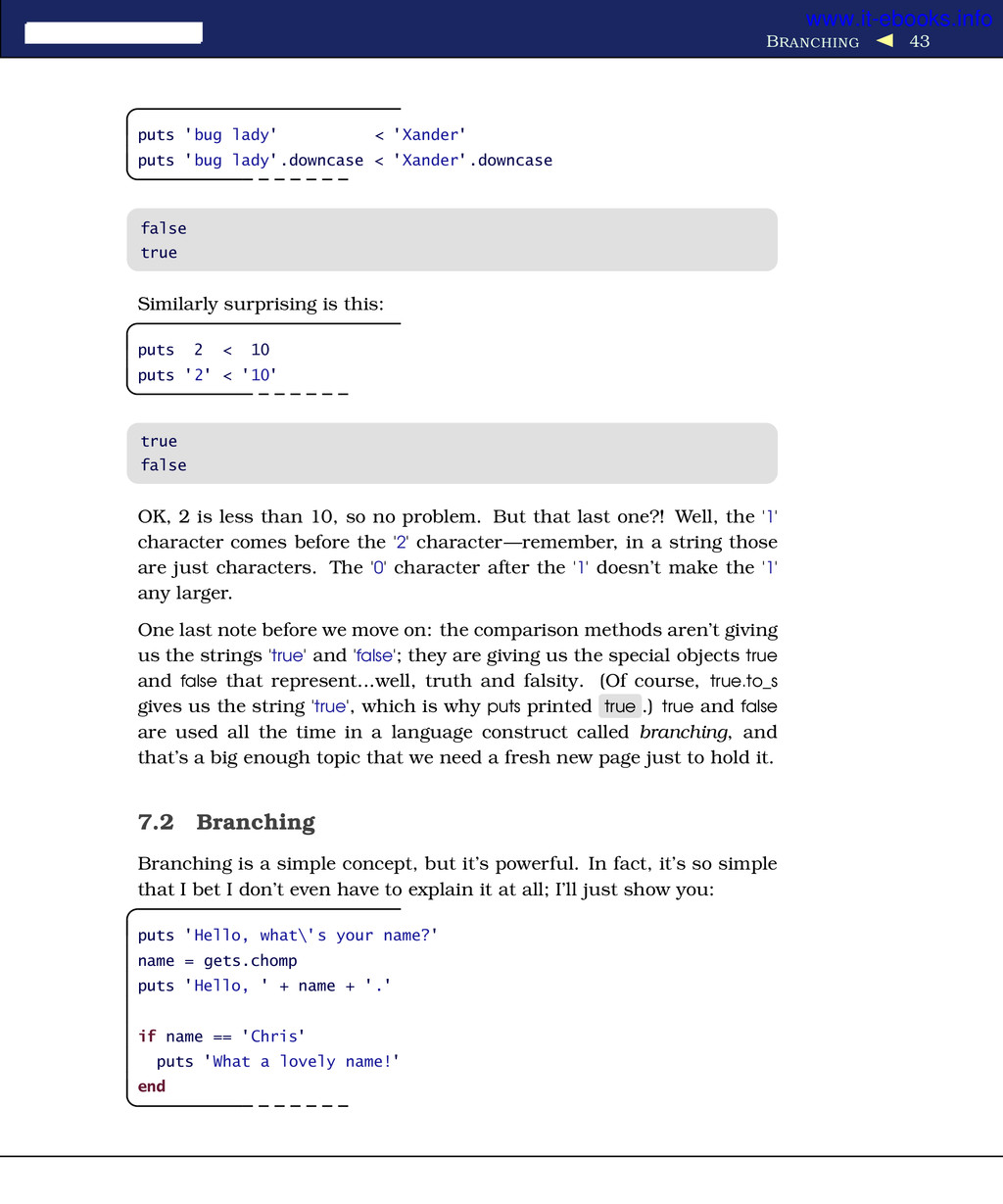
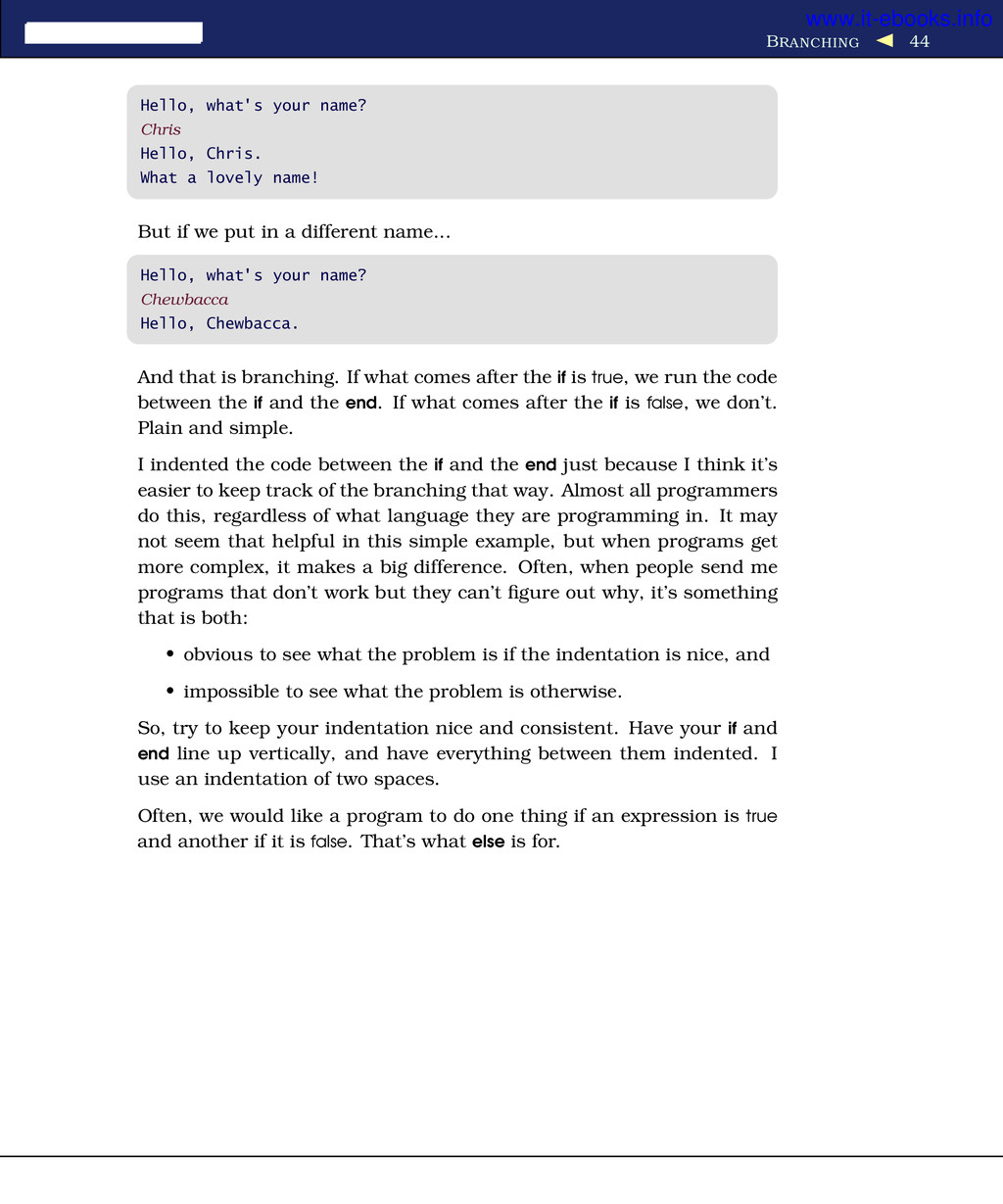
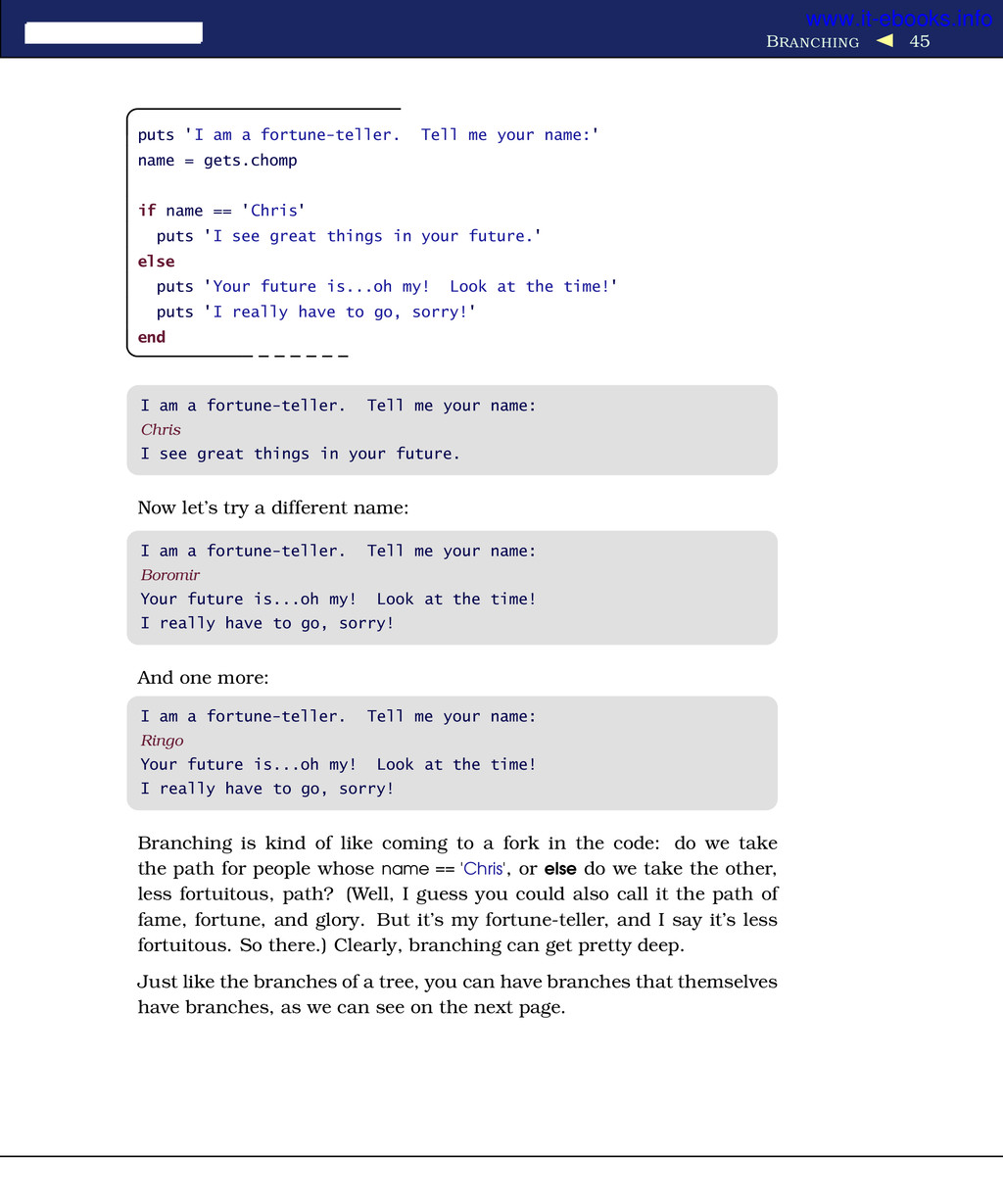
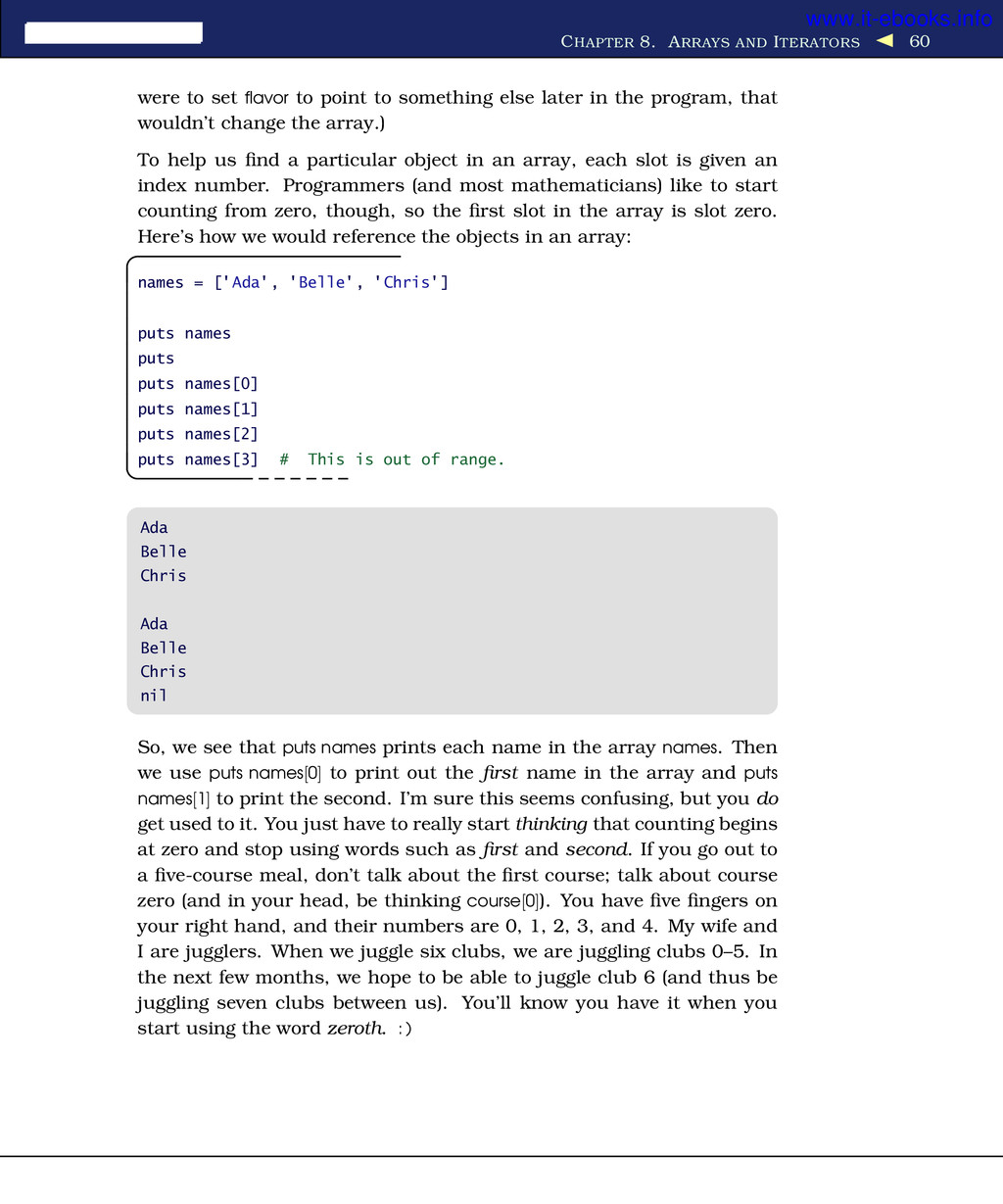
![THE METHOD EACH 61 Finally, we tried puts names[3], just](https://files.speakerdeck.com/presentations/96aa14a088140130c6c4123138094421/slide_75.jpg)
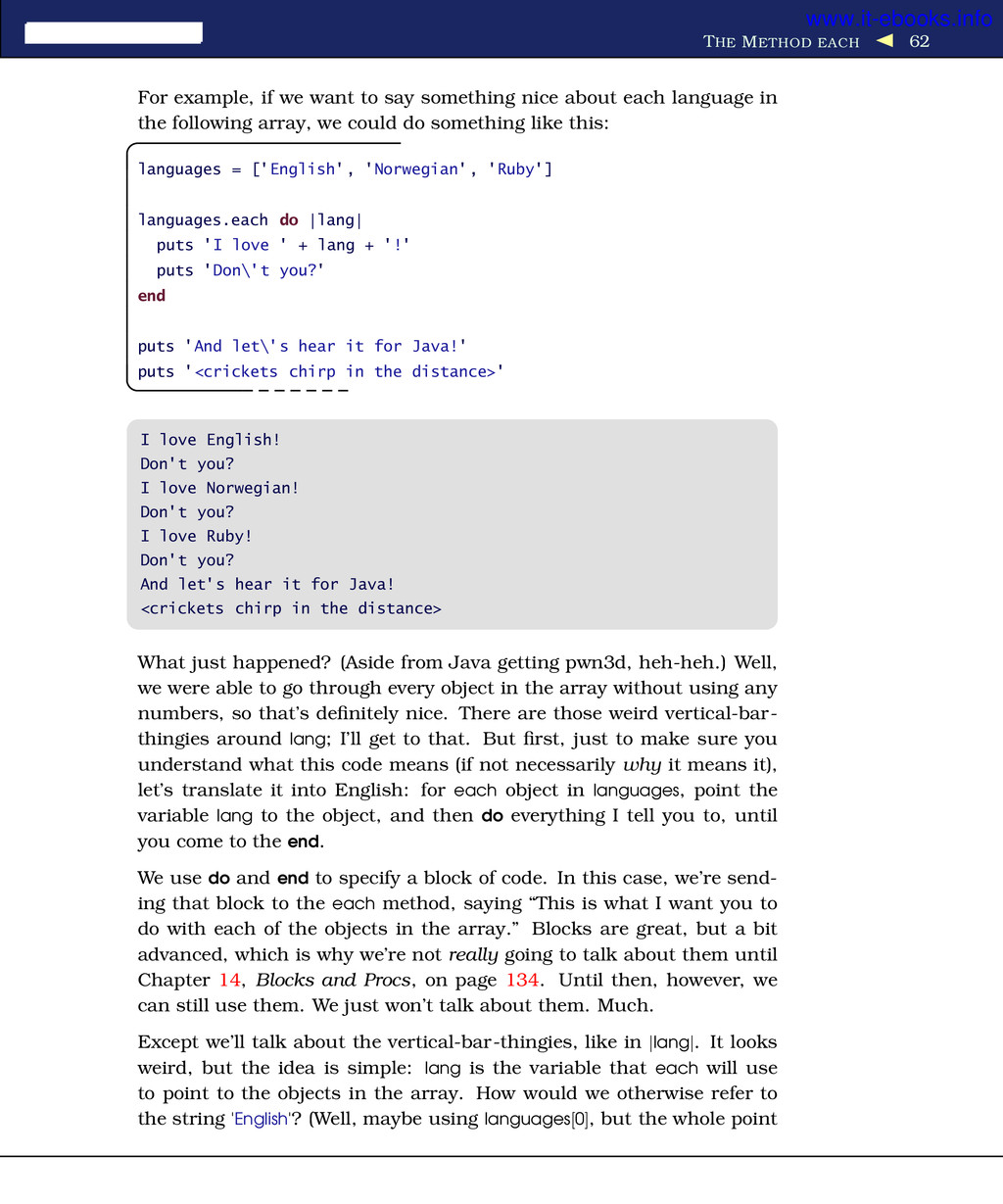
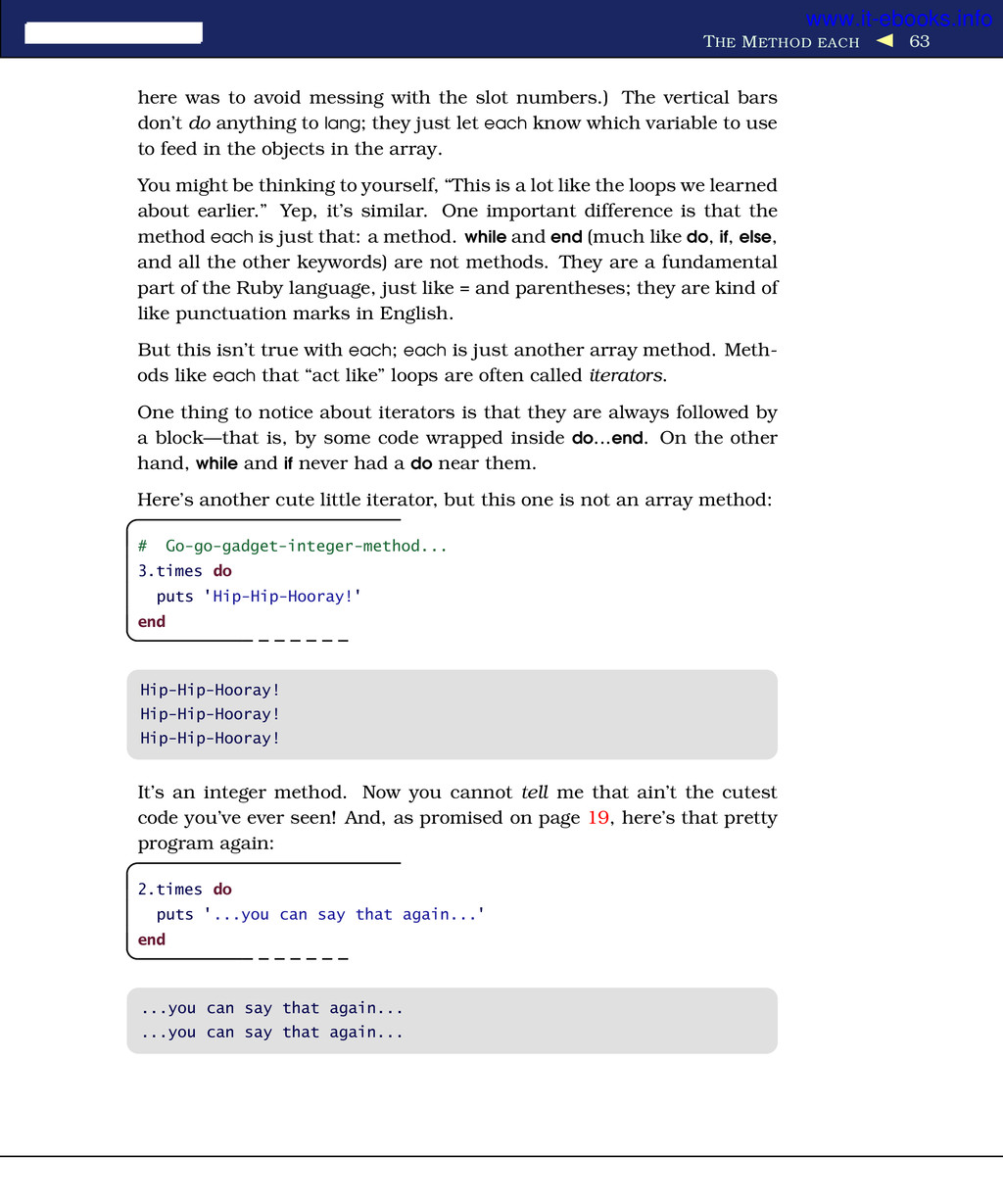
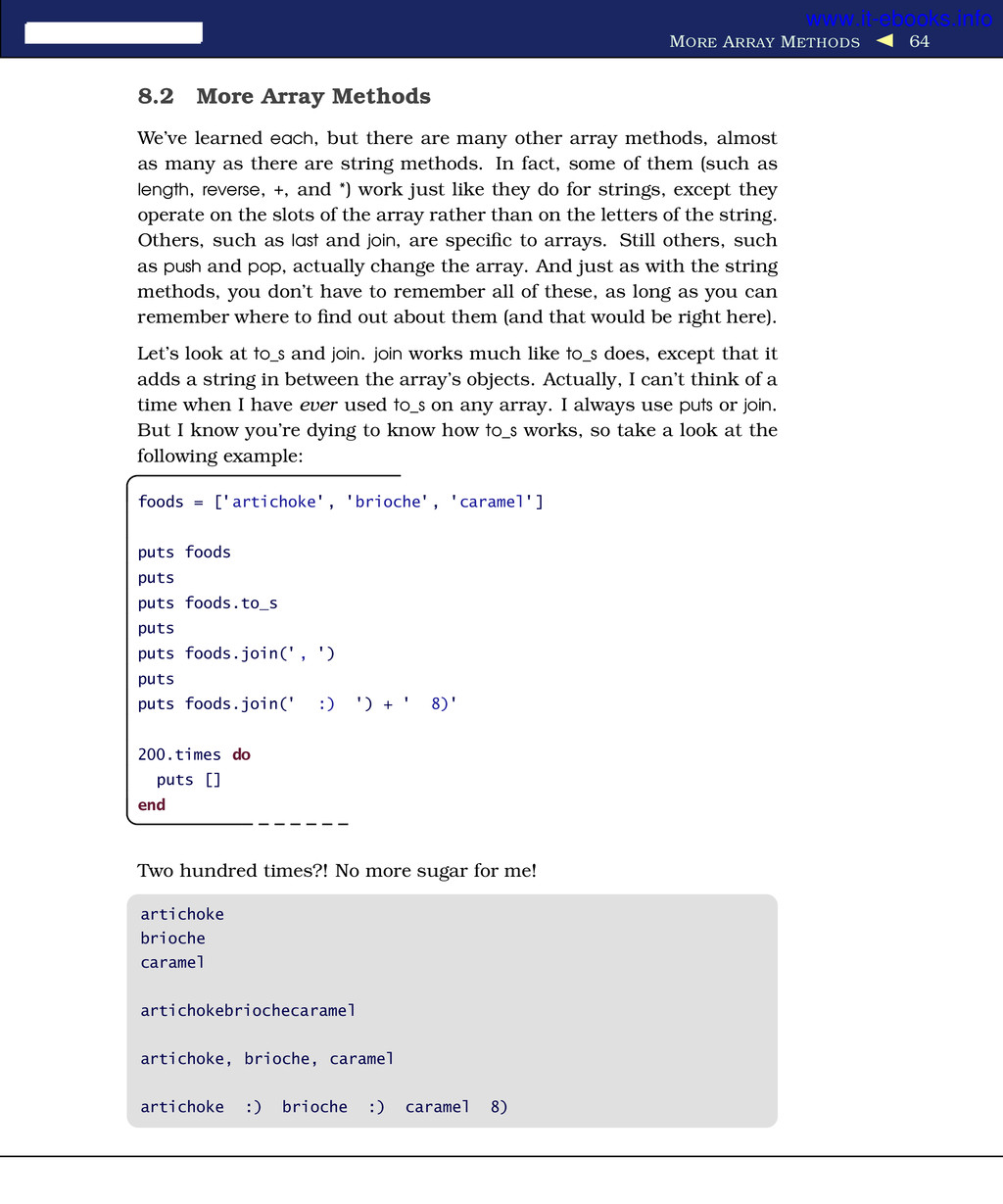
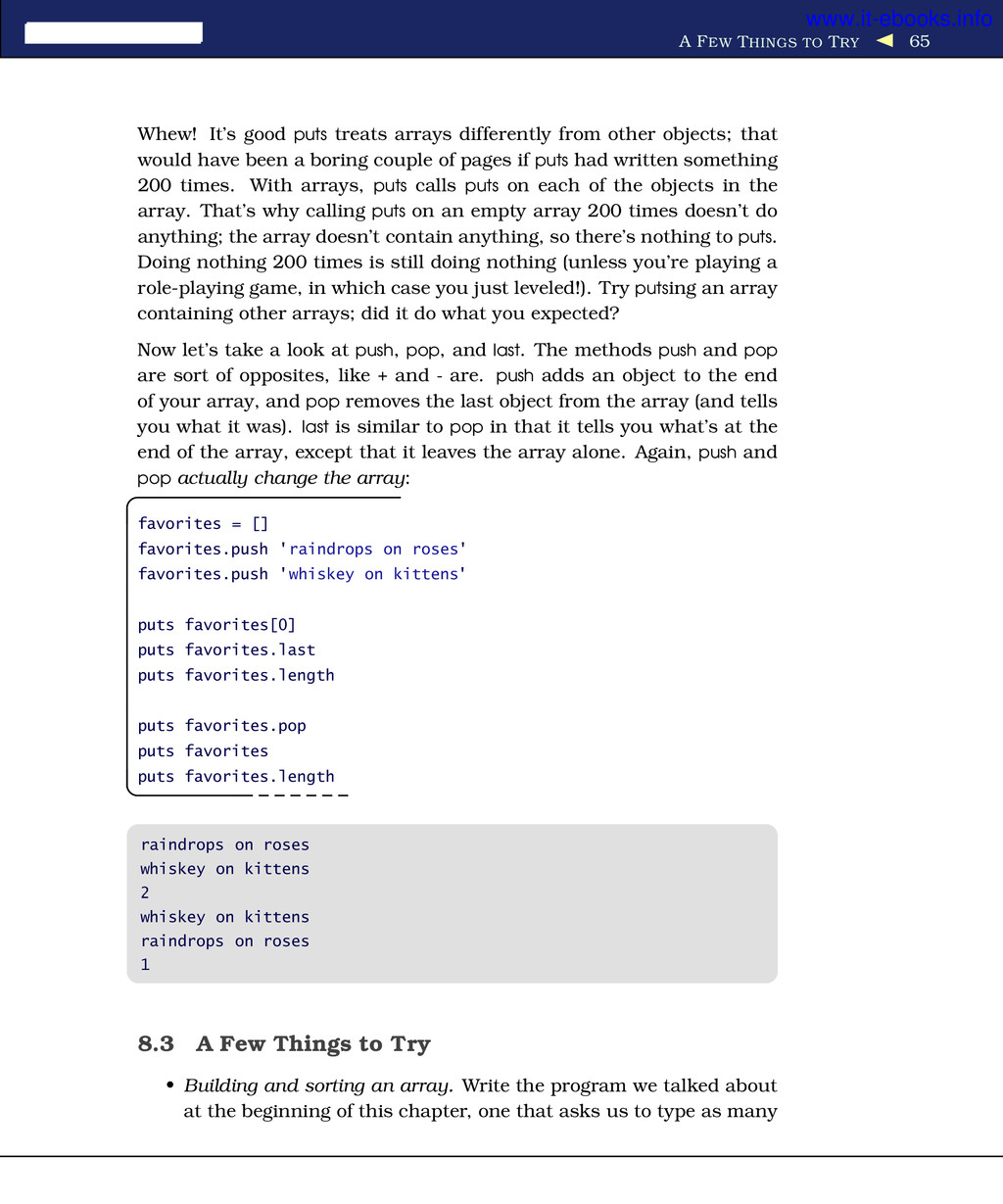
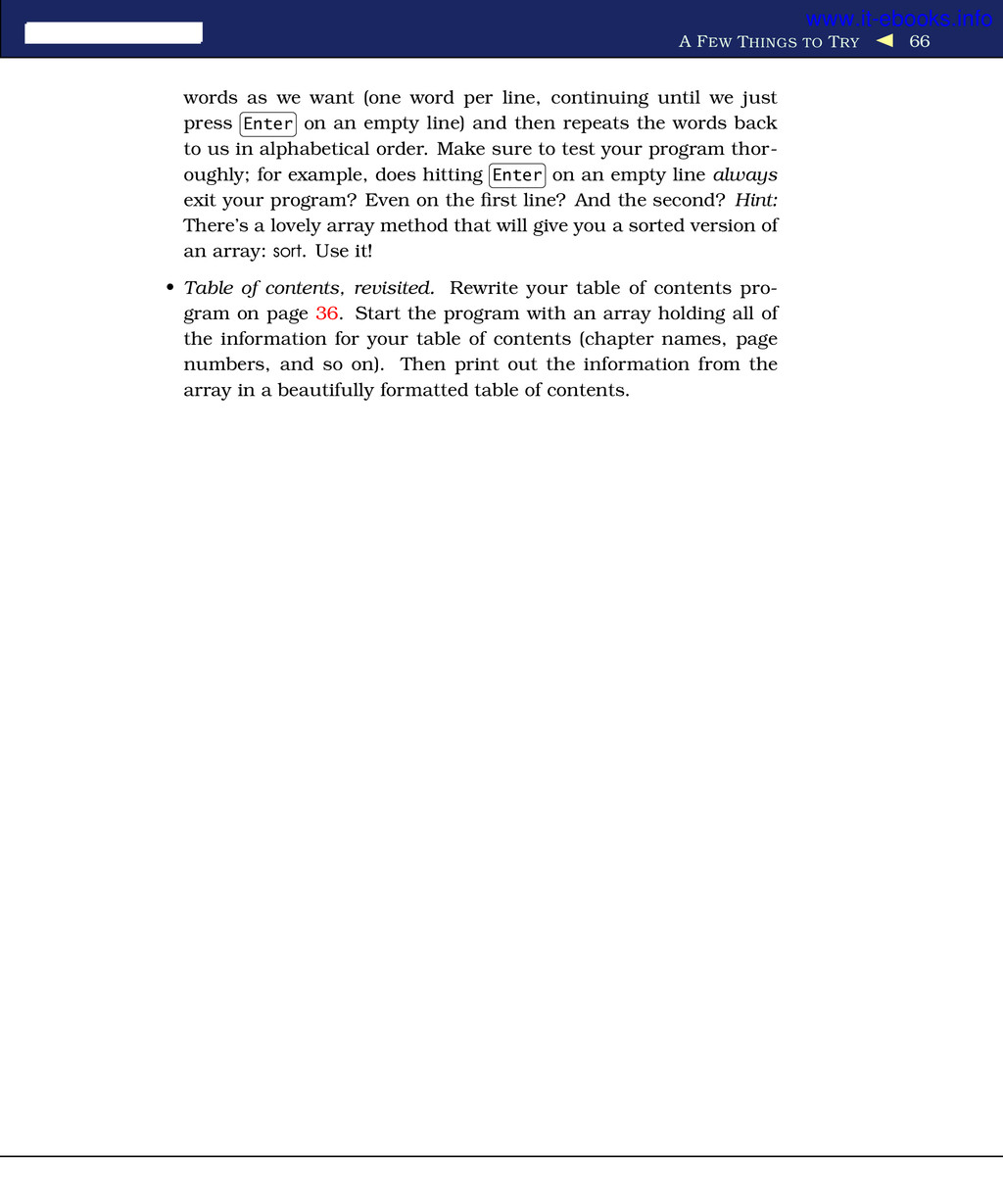
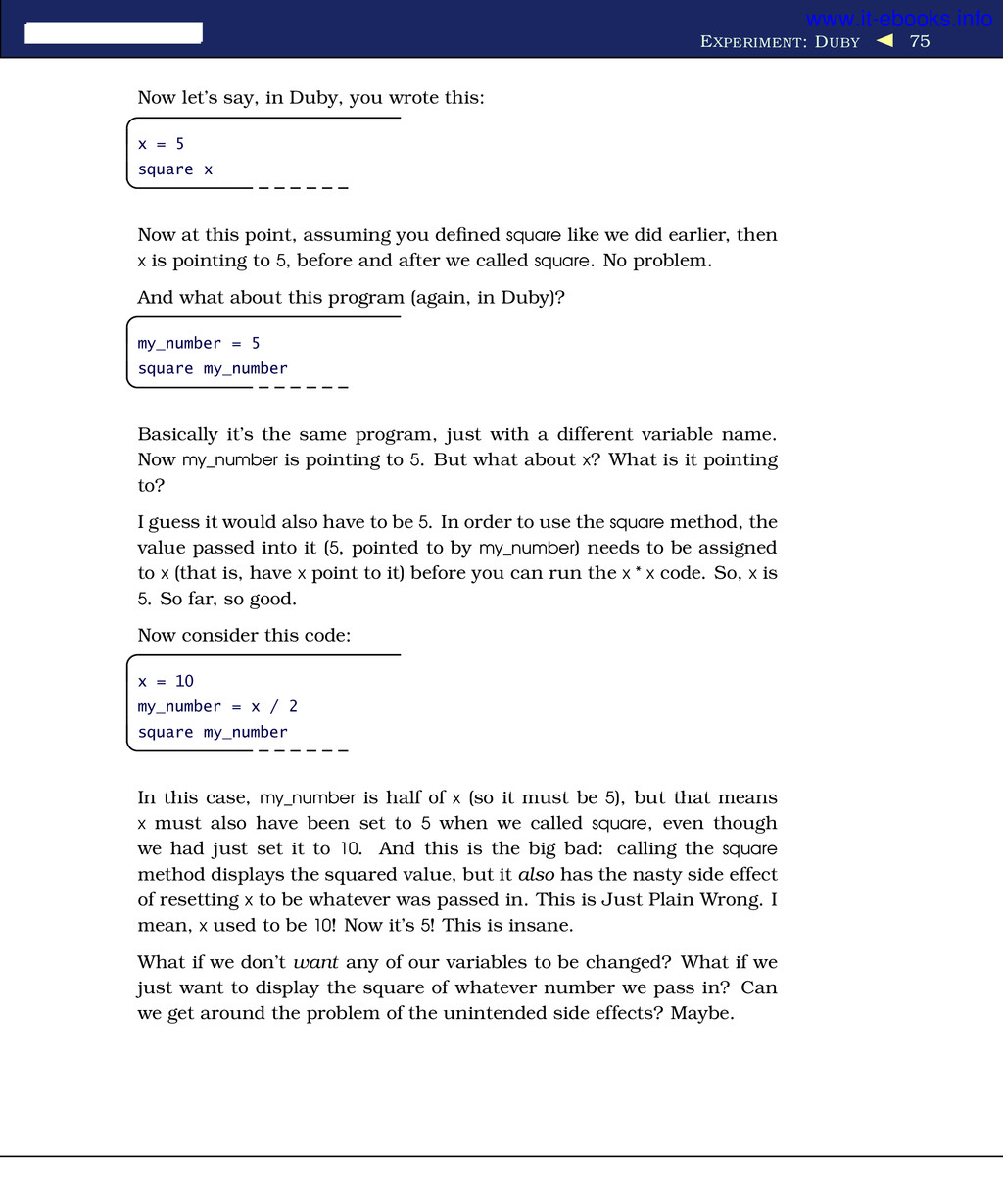
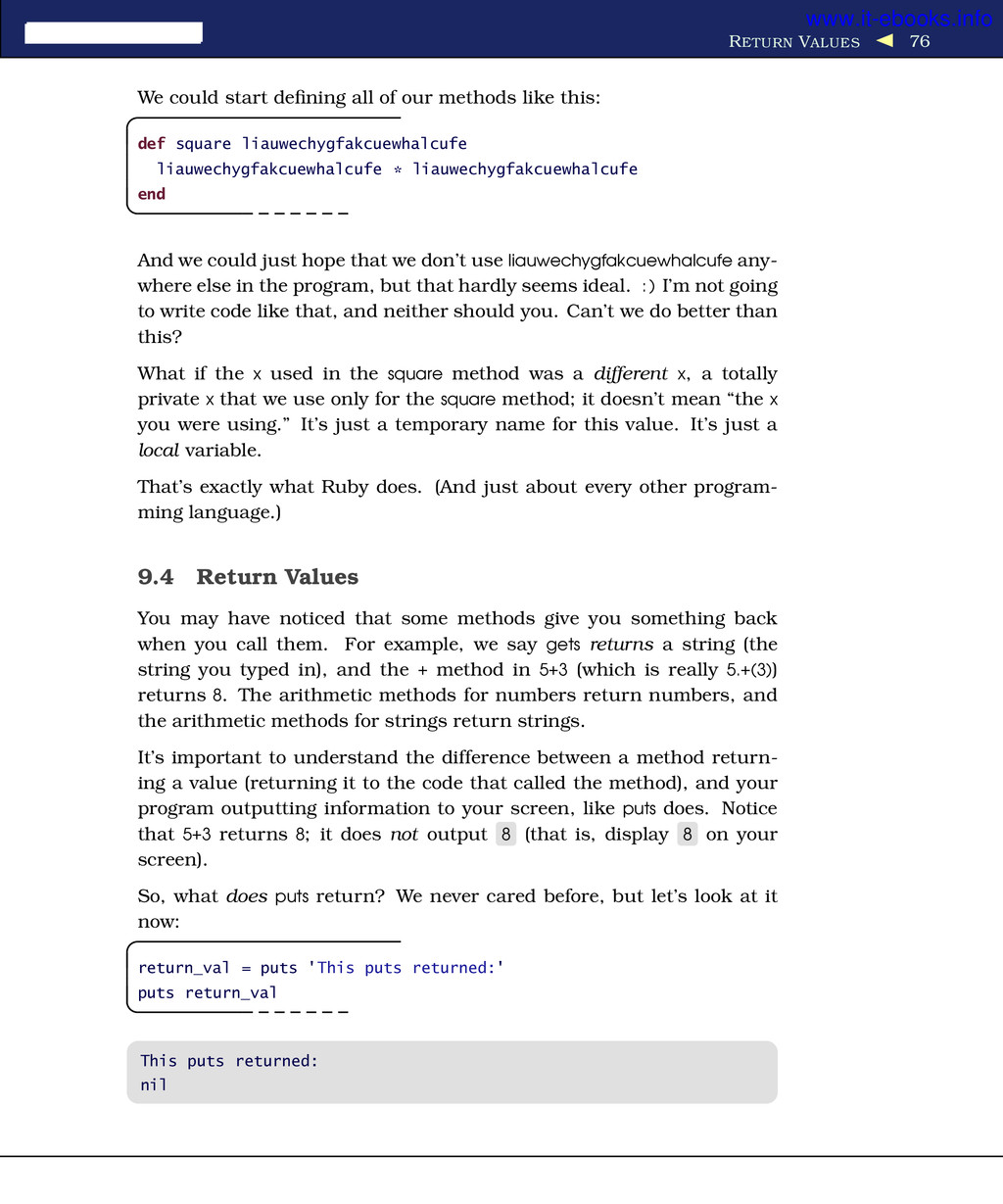
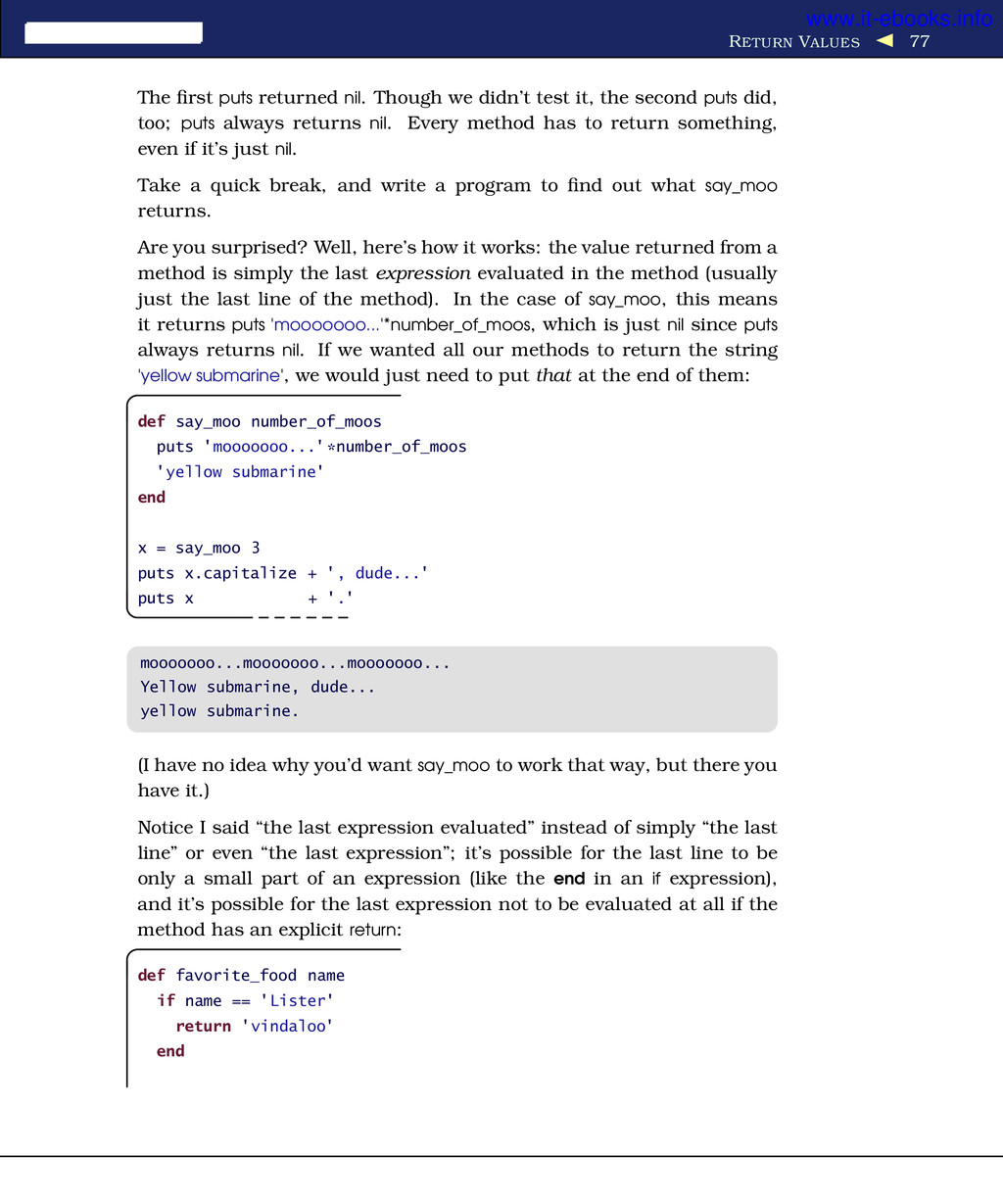
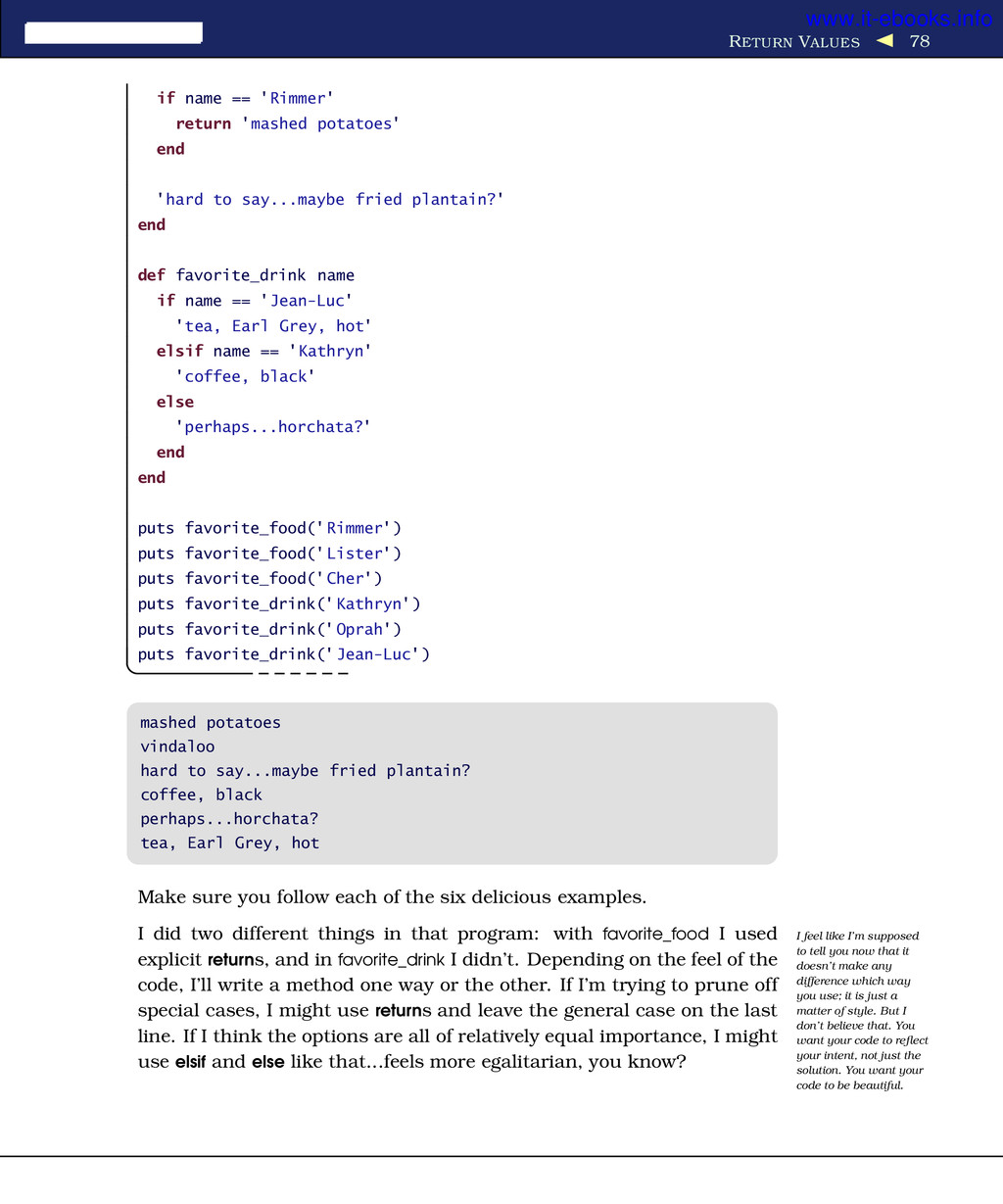
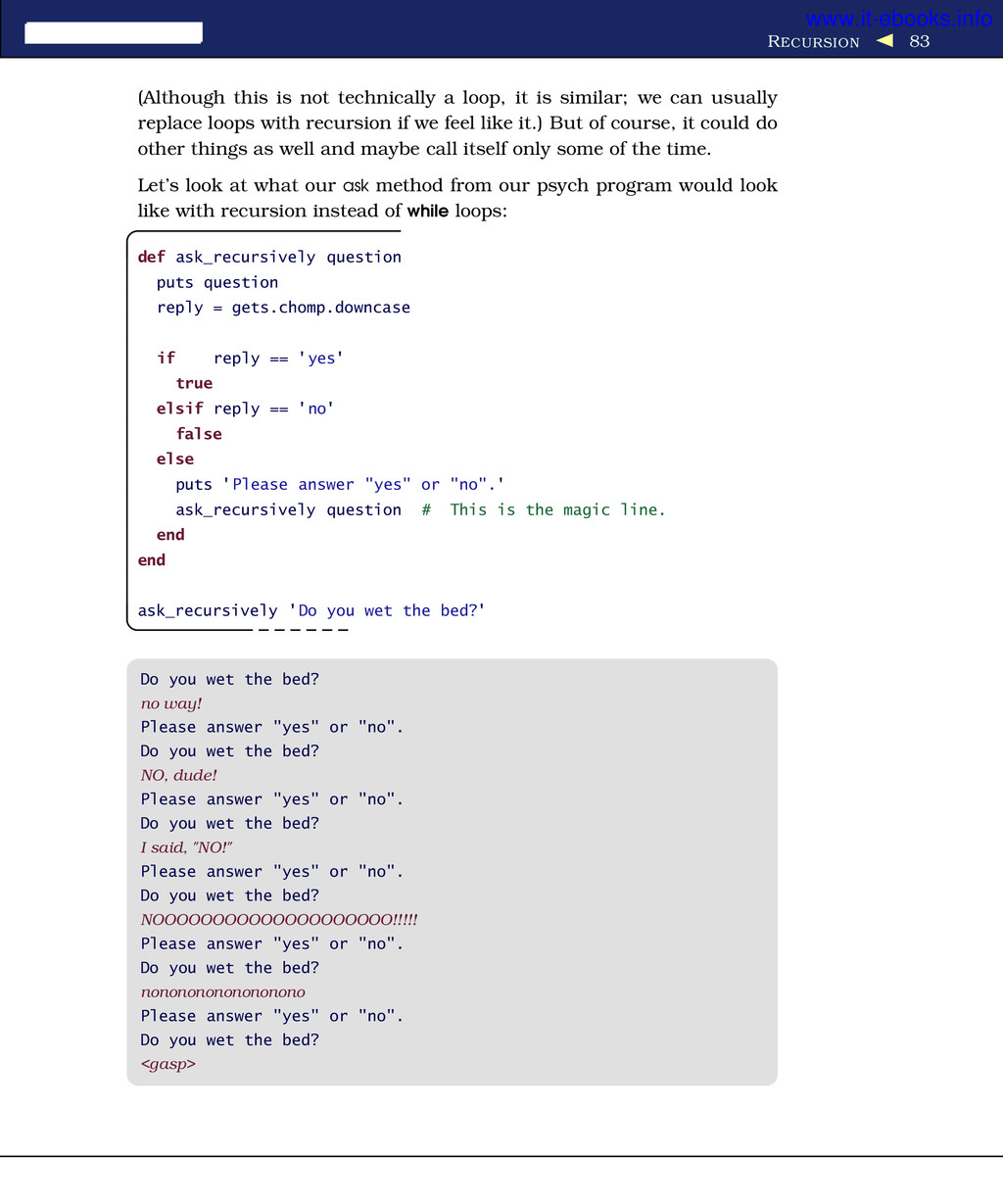
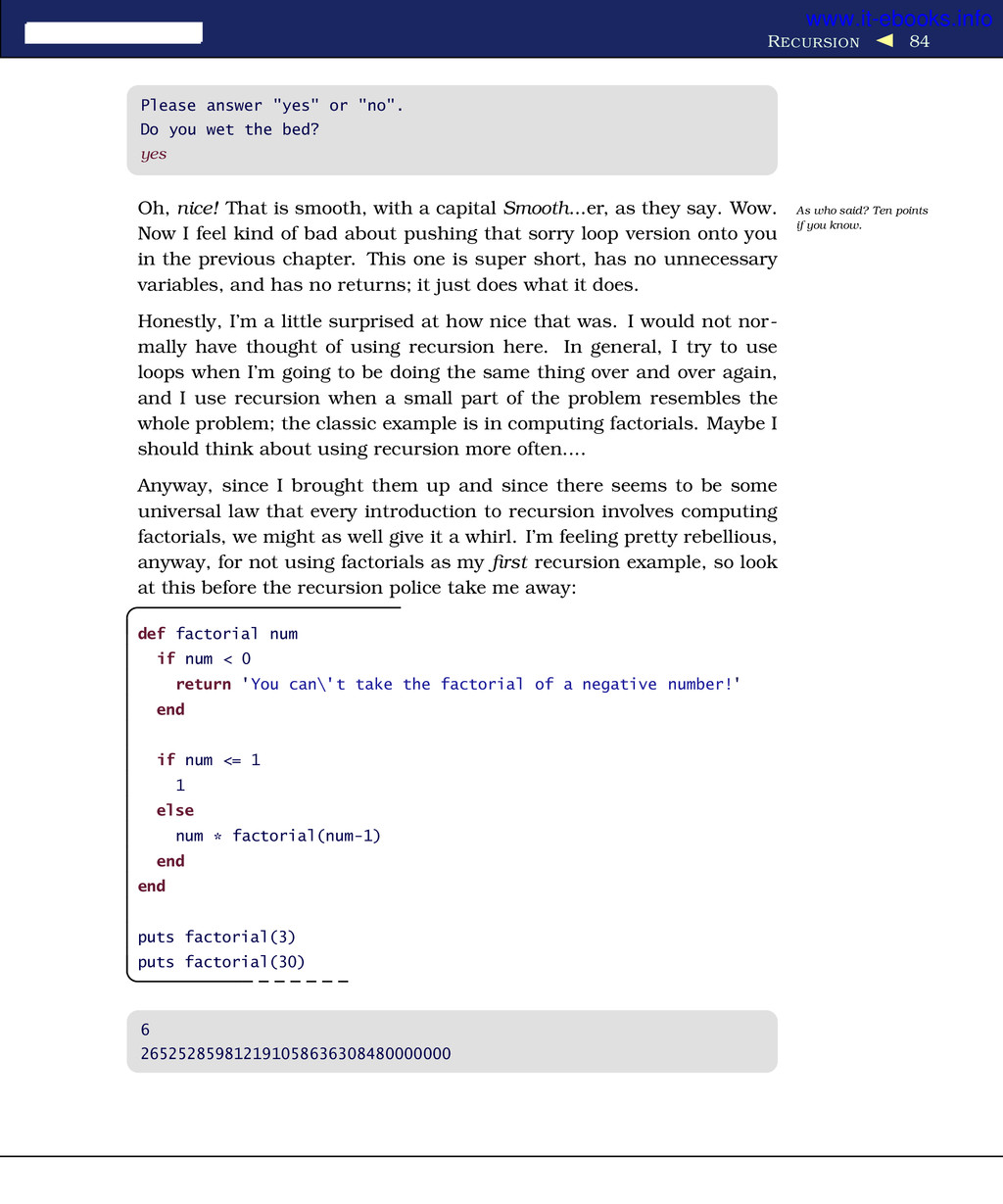
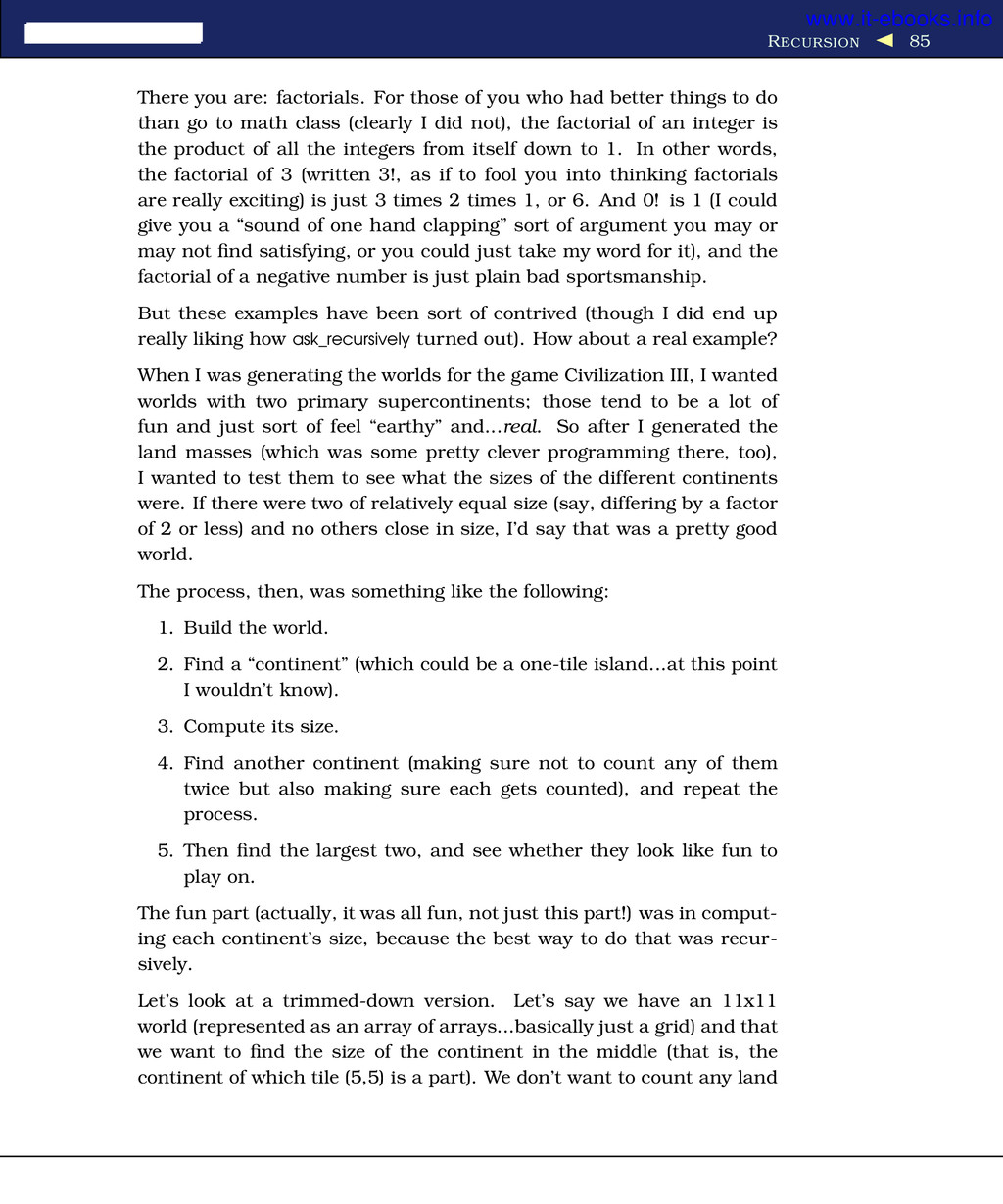
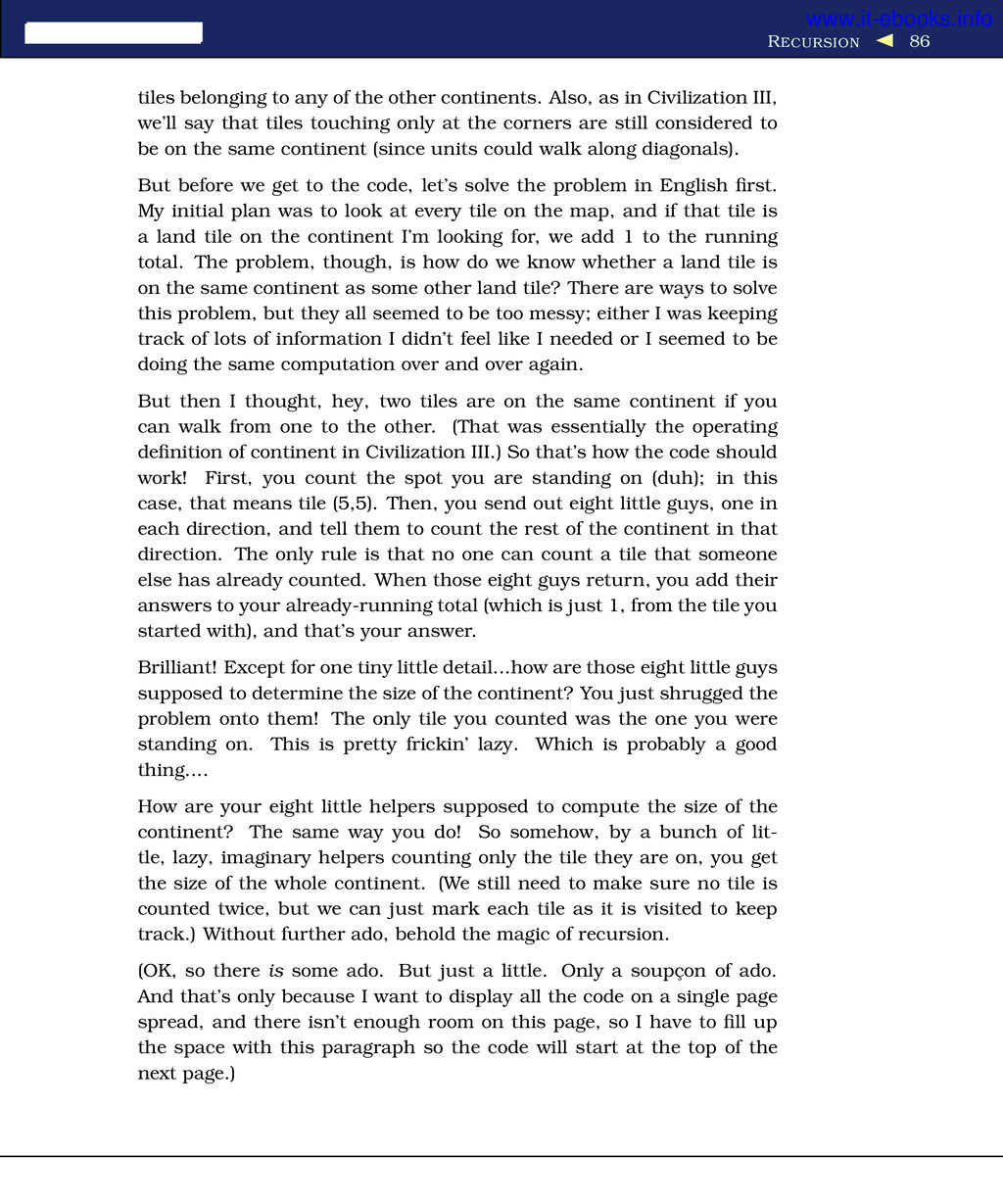
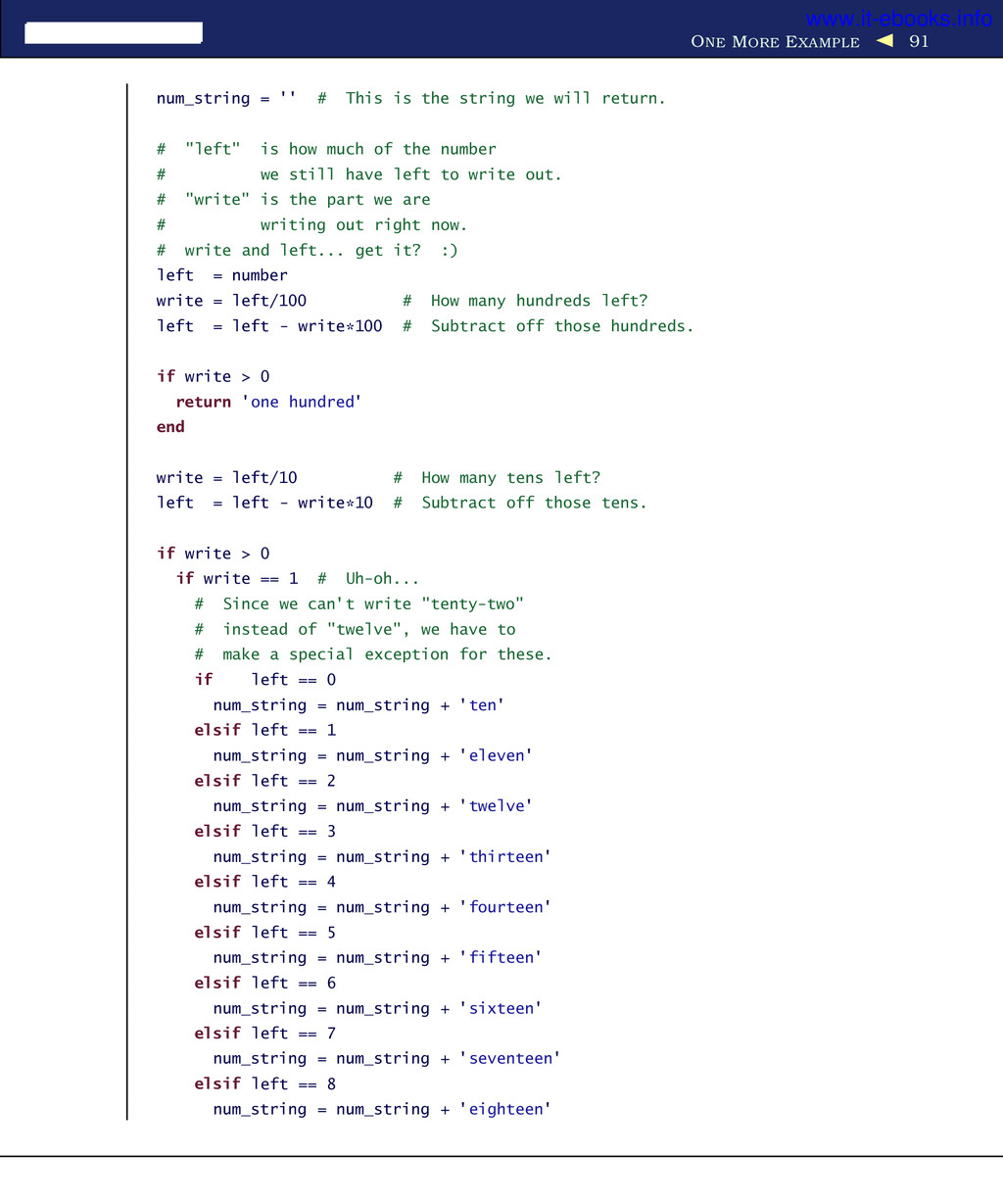
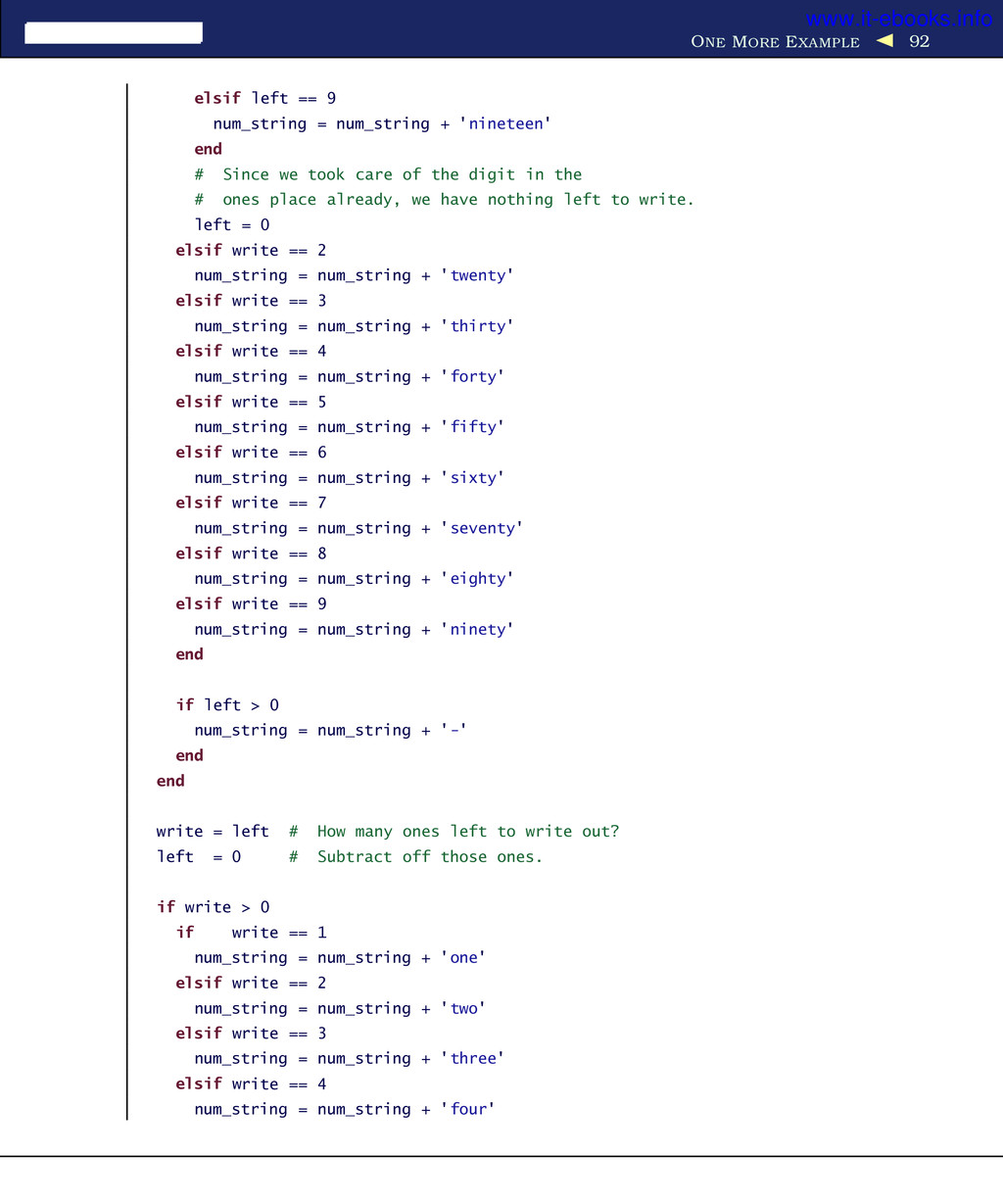
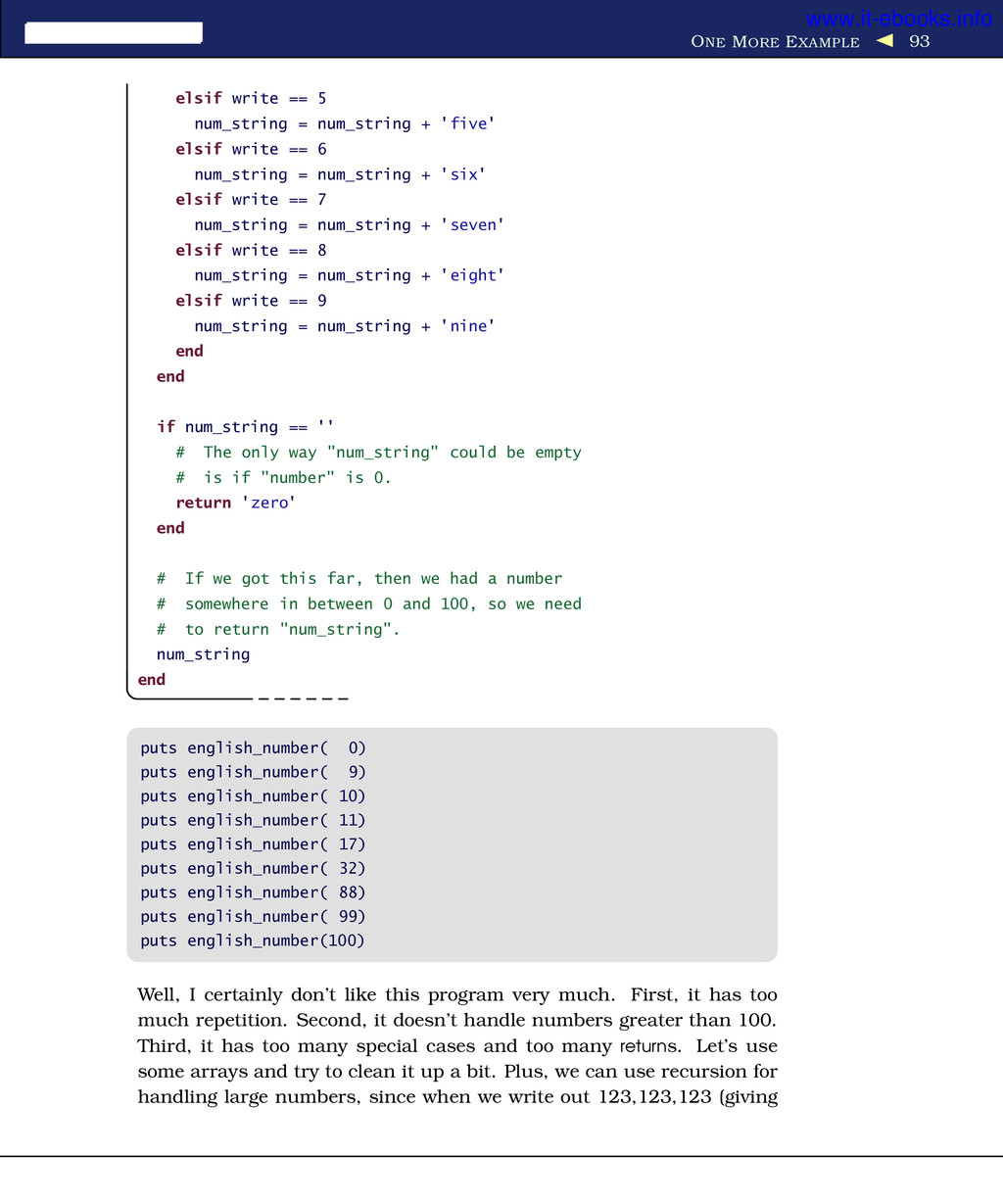
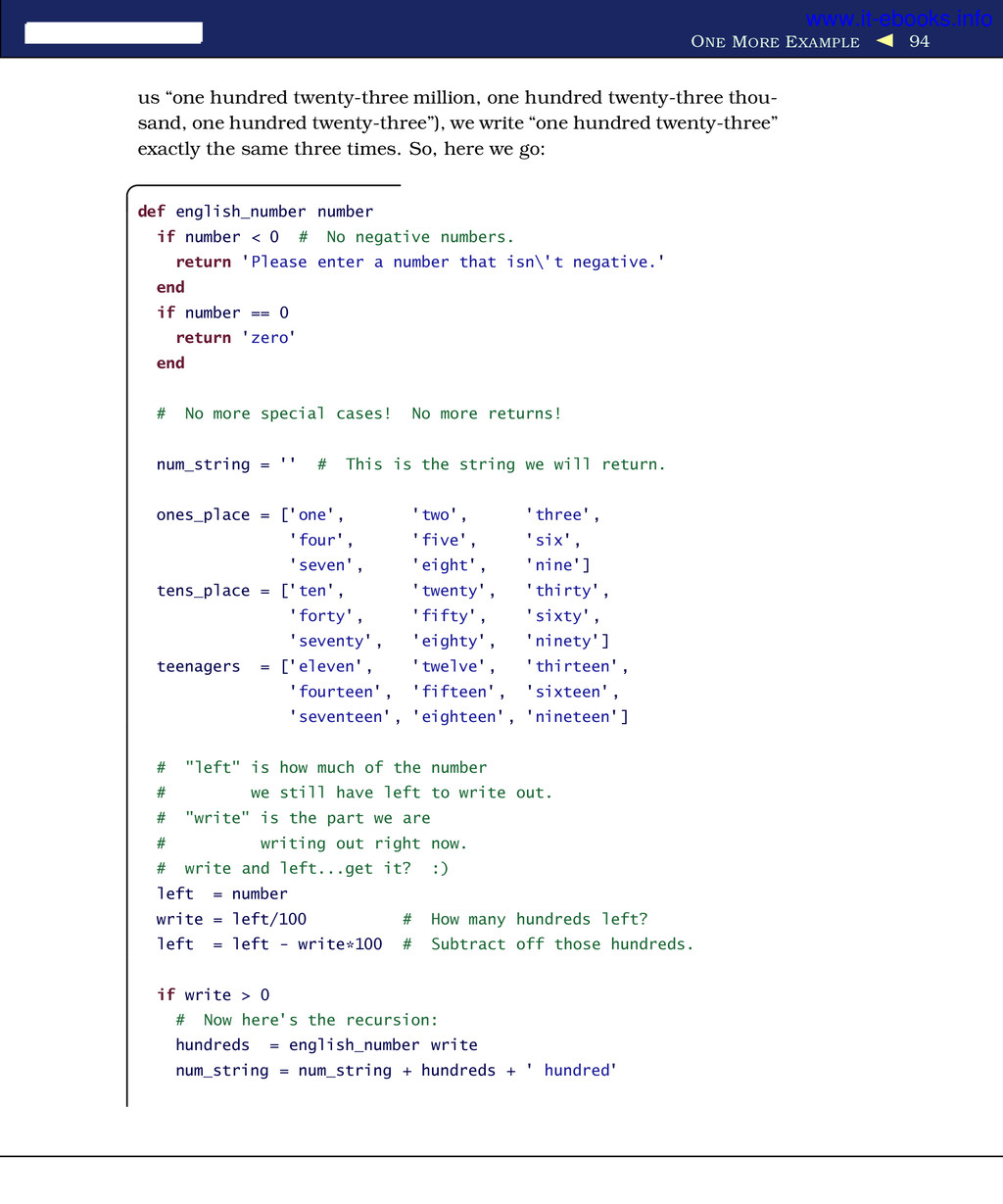
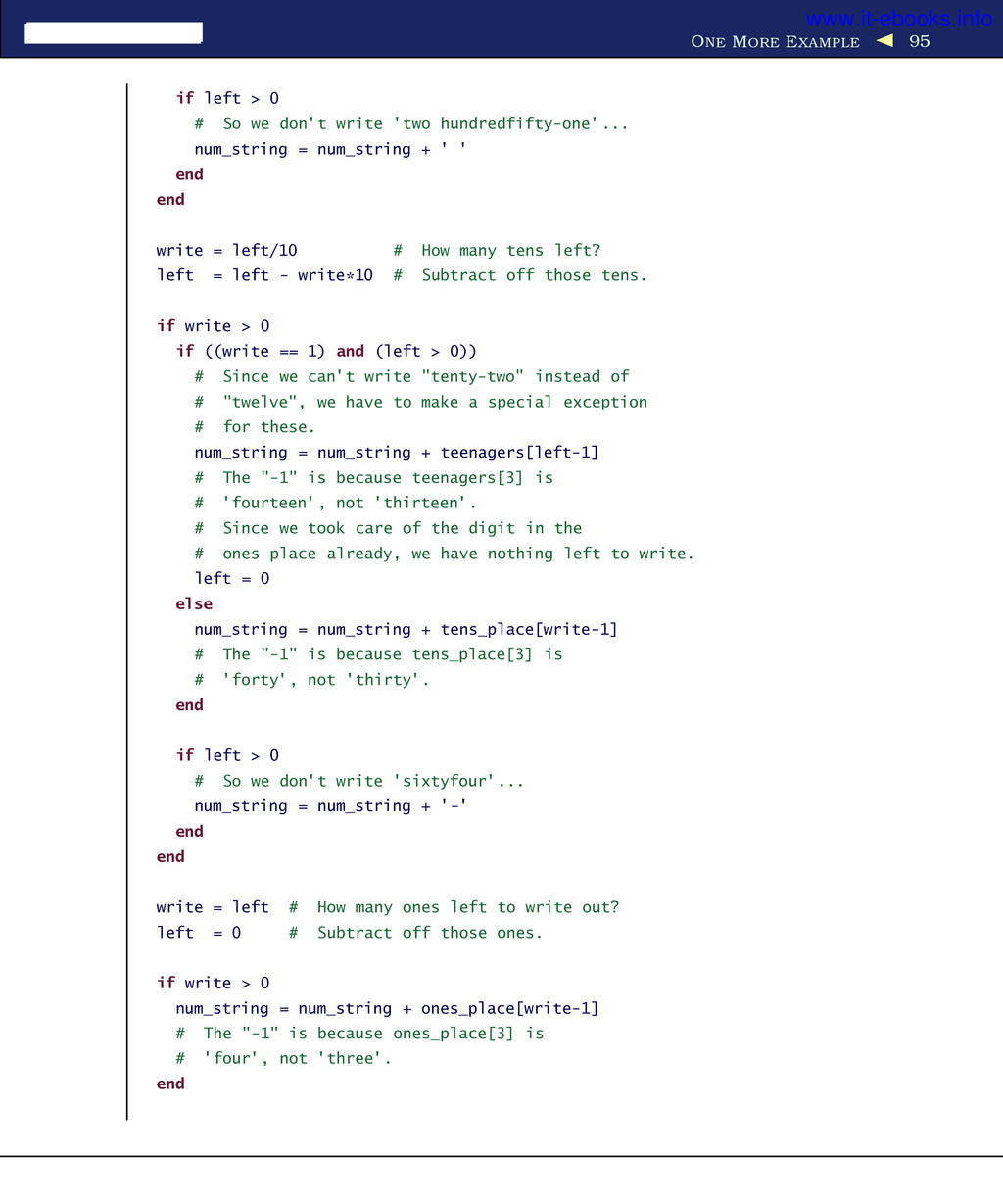
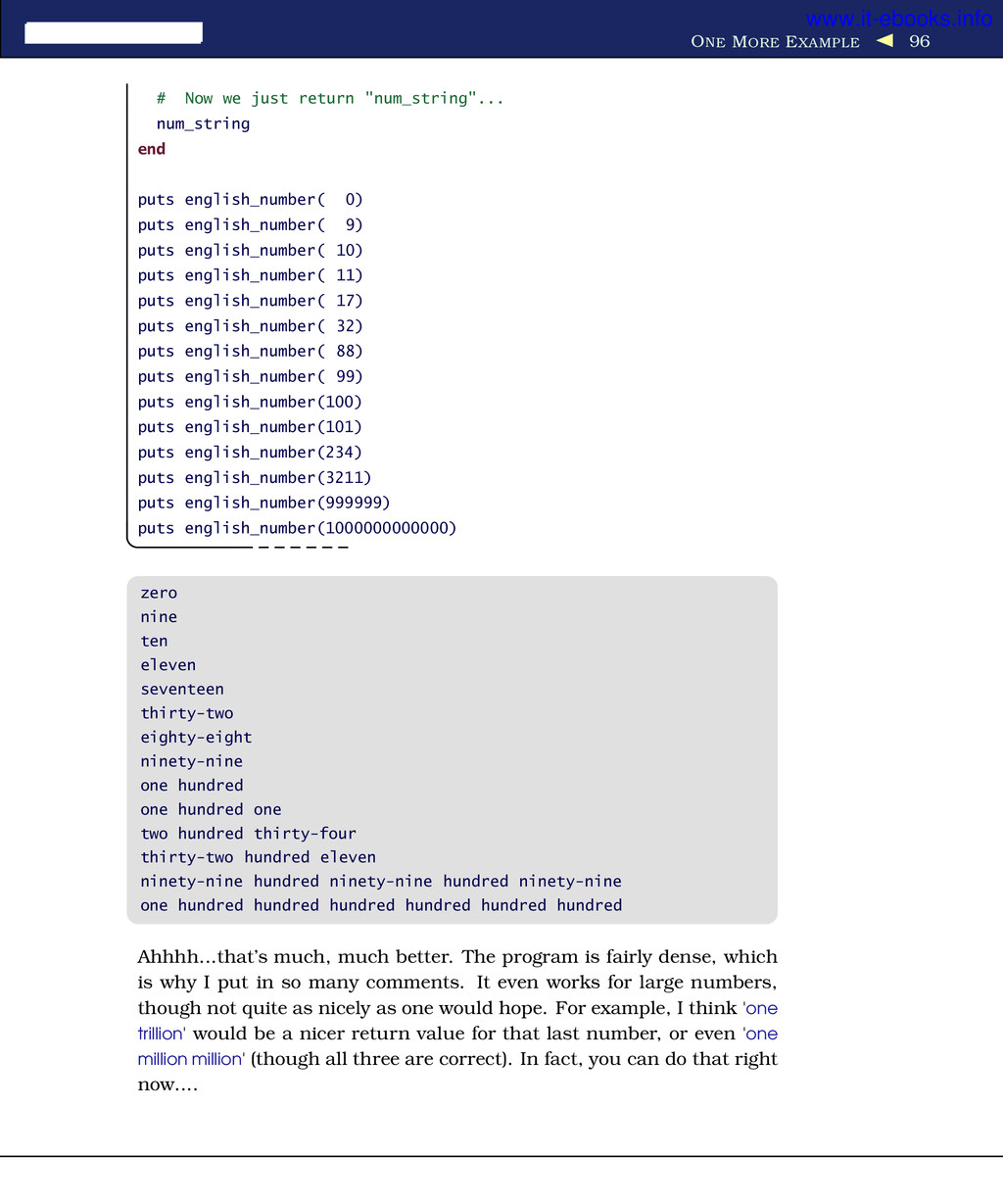
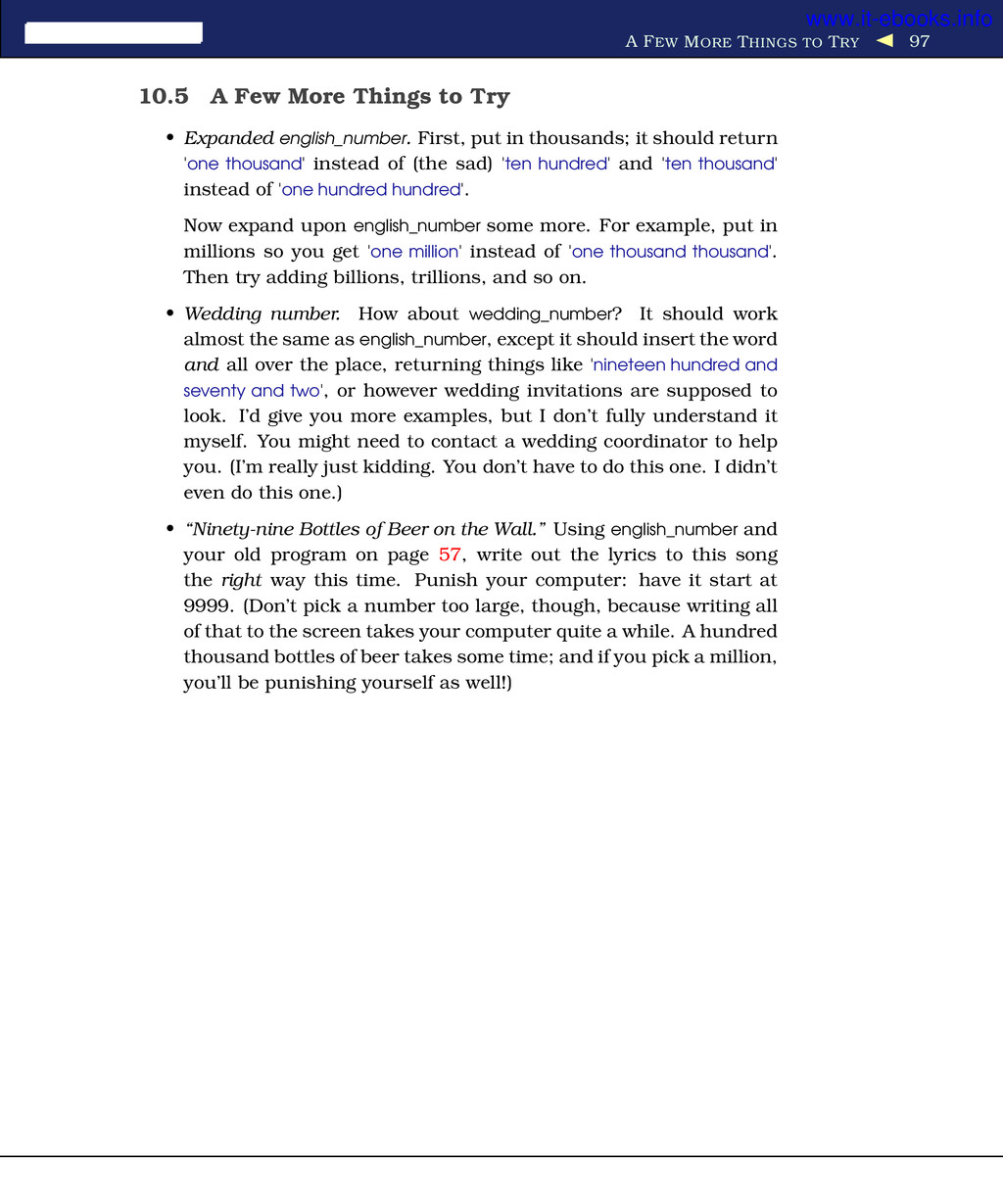
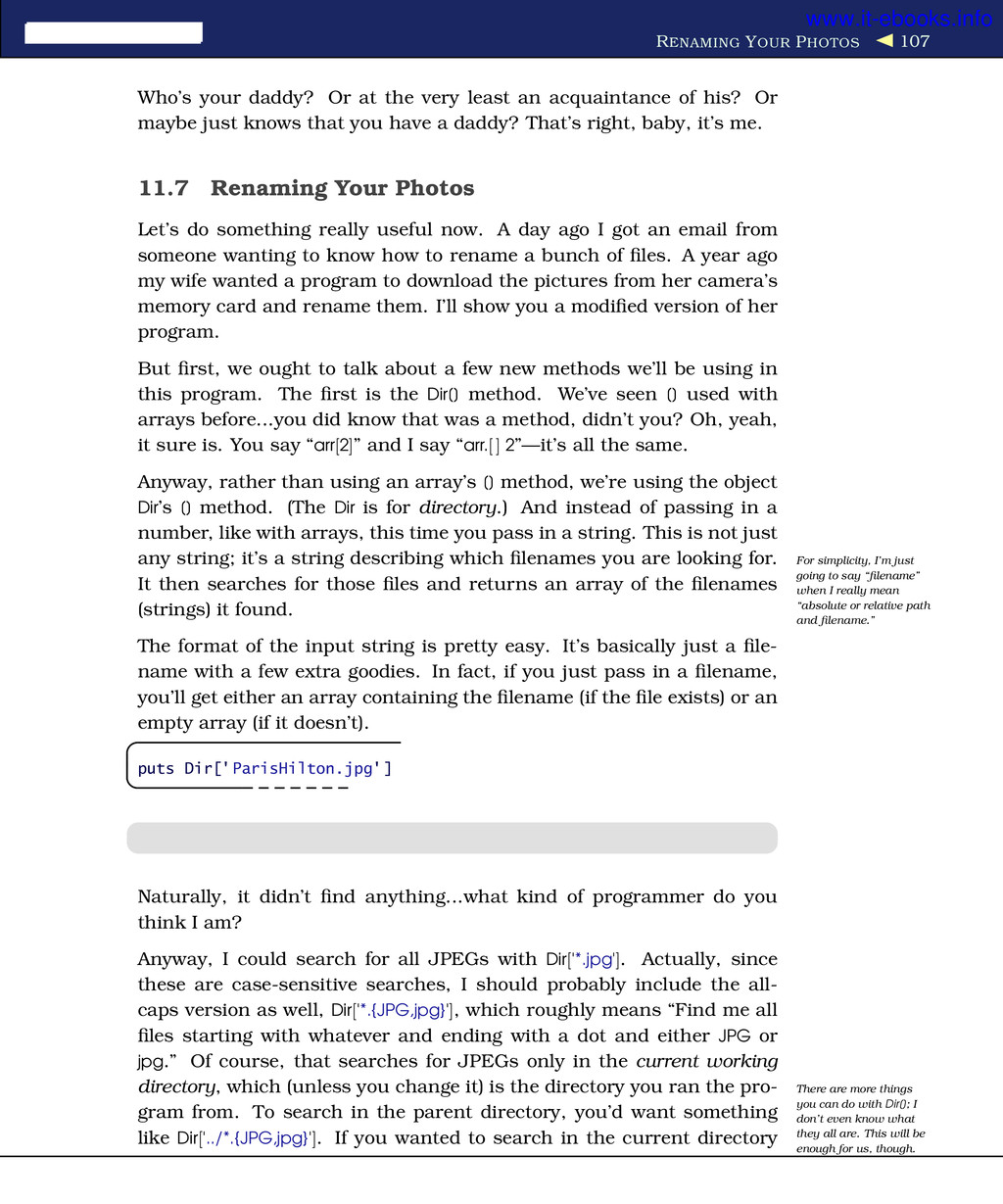
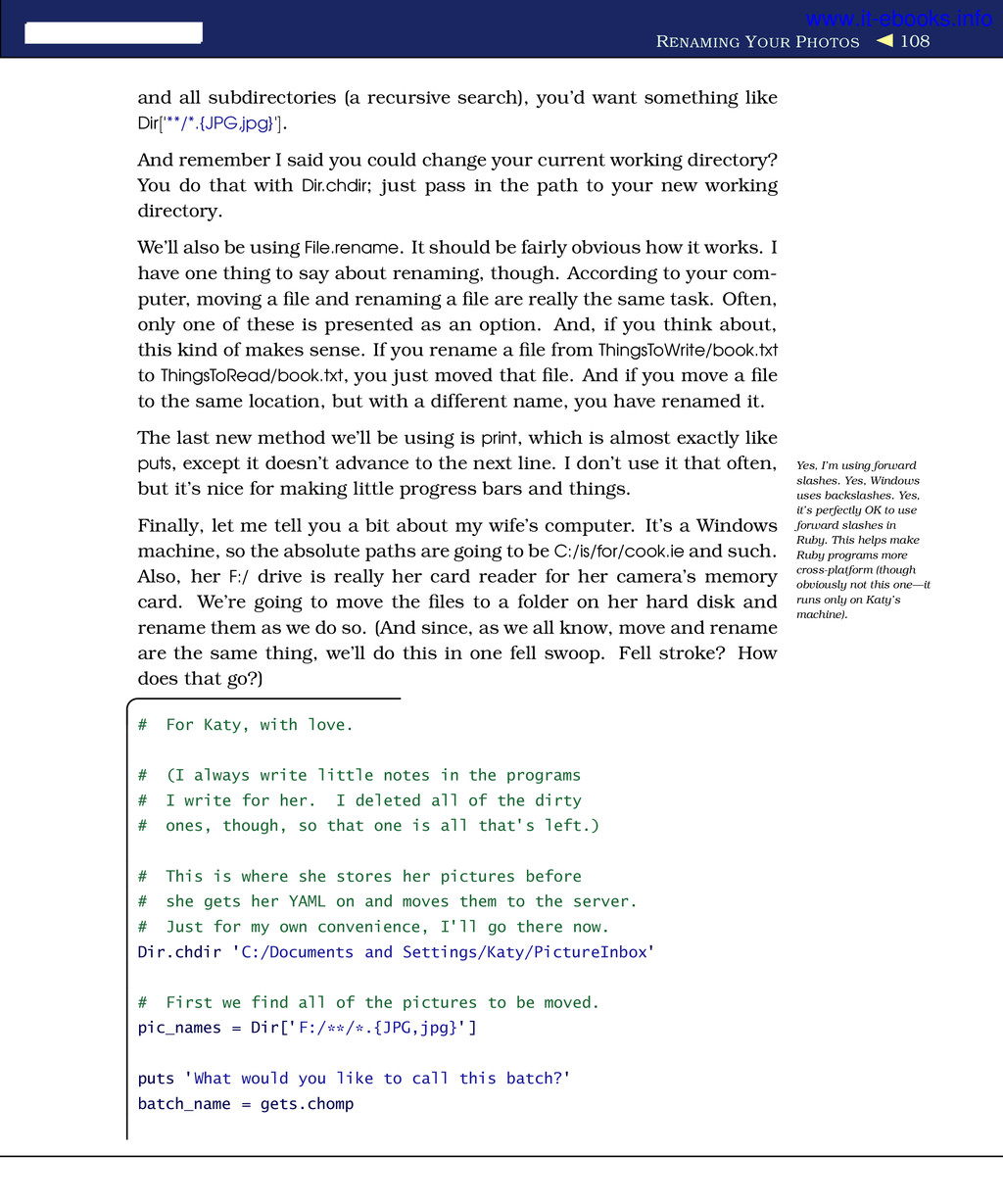
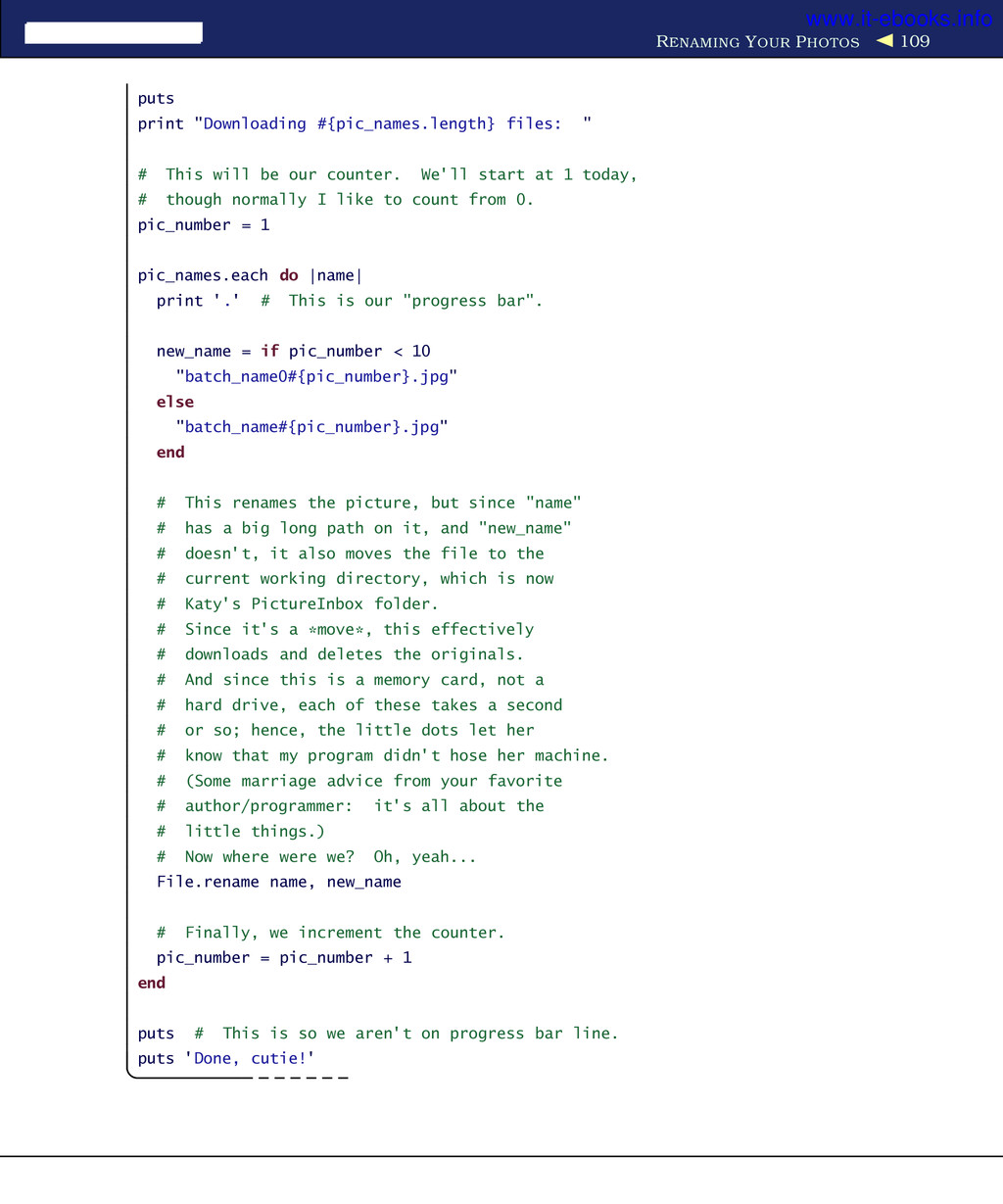
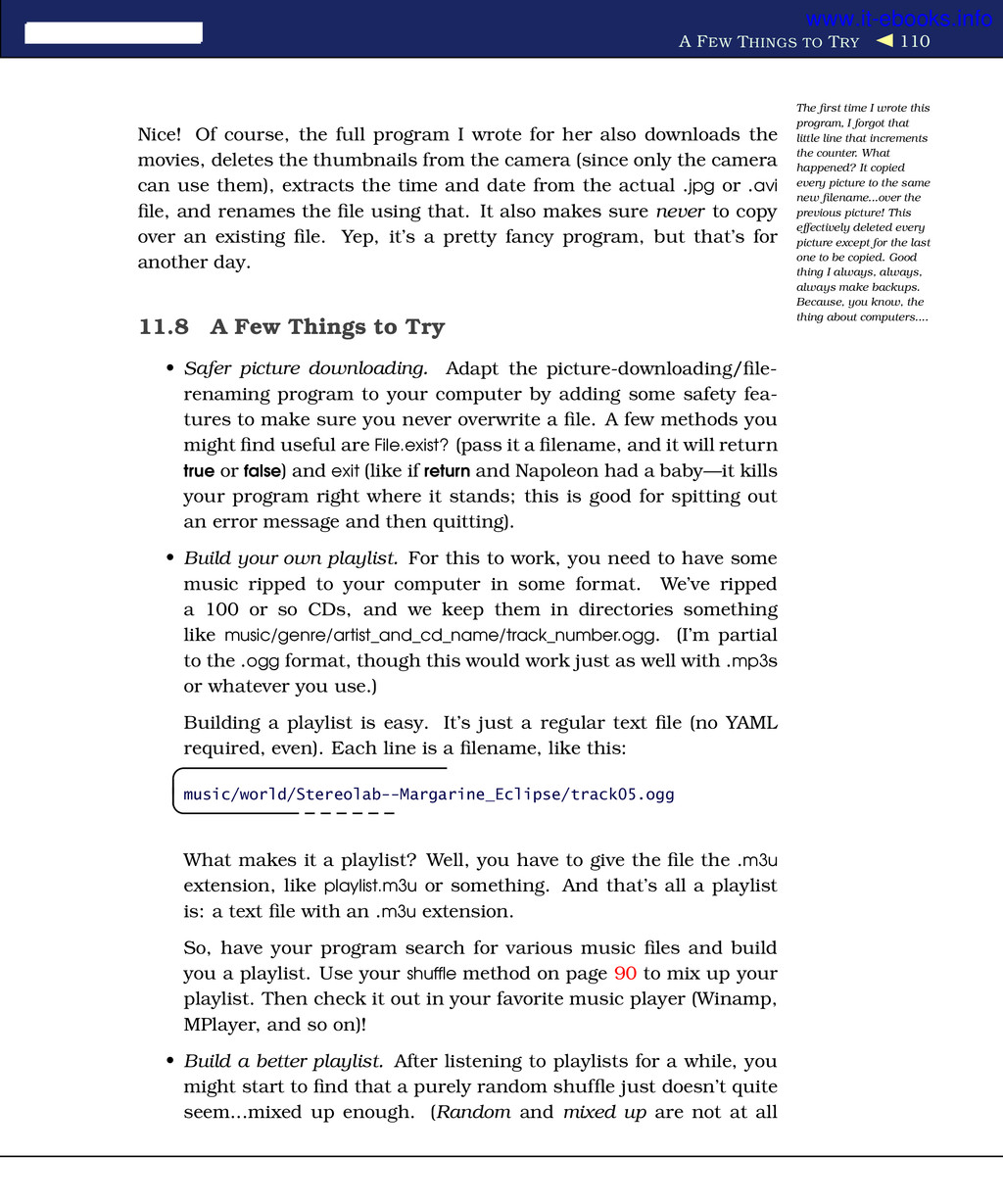
![STRINGY SUPERPOWERS 119 if name[0] == ?C puts 'You have](https://files.speakerdeck.com/presentations/96aa14a088140130c6c4123138094421/slide_133.jpg)
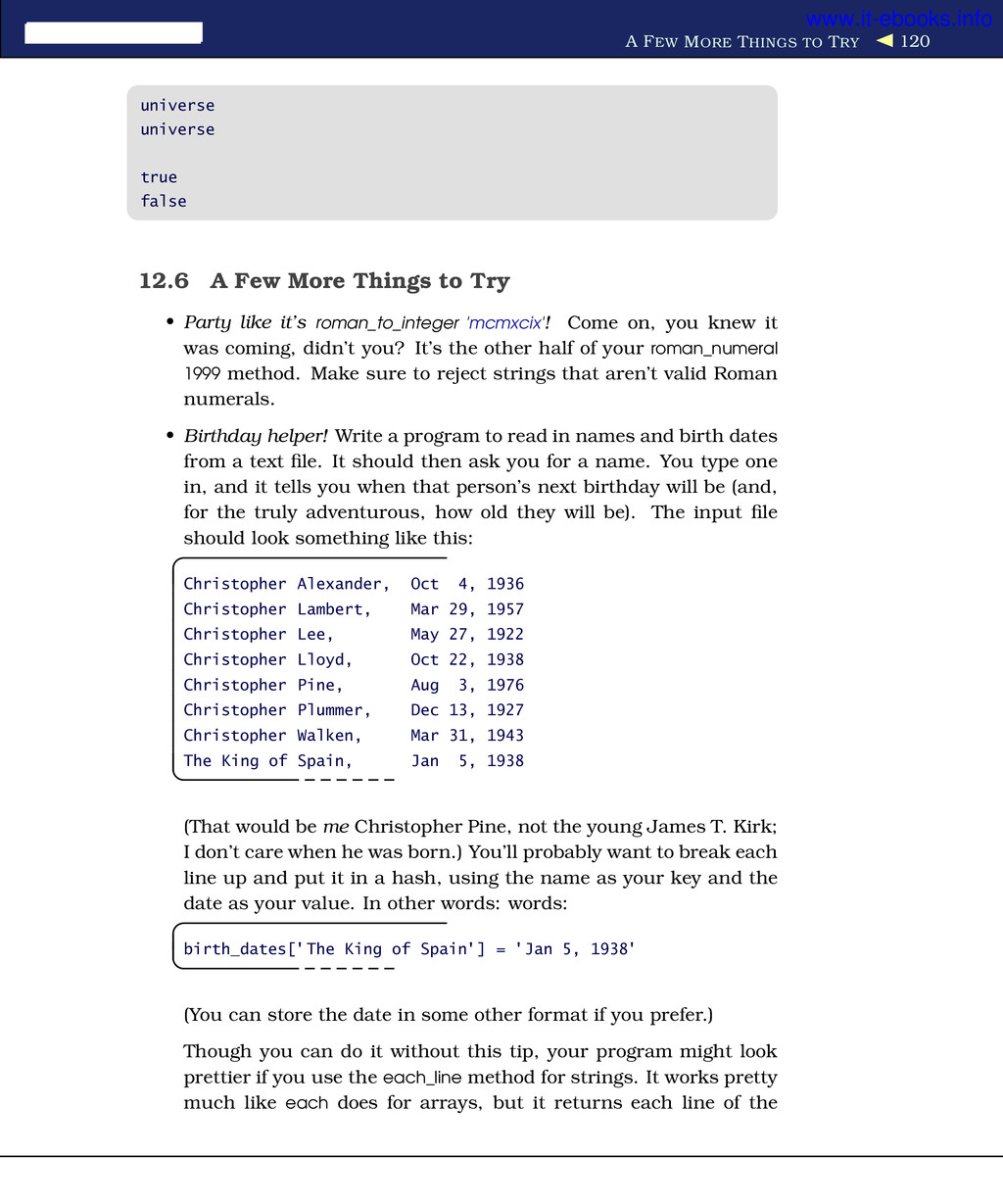
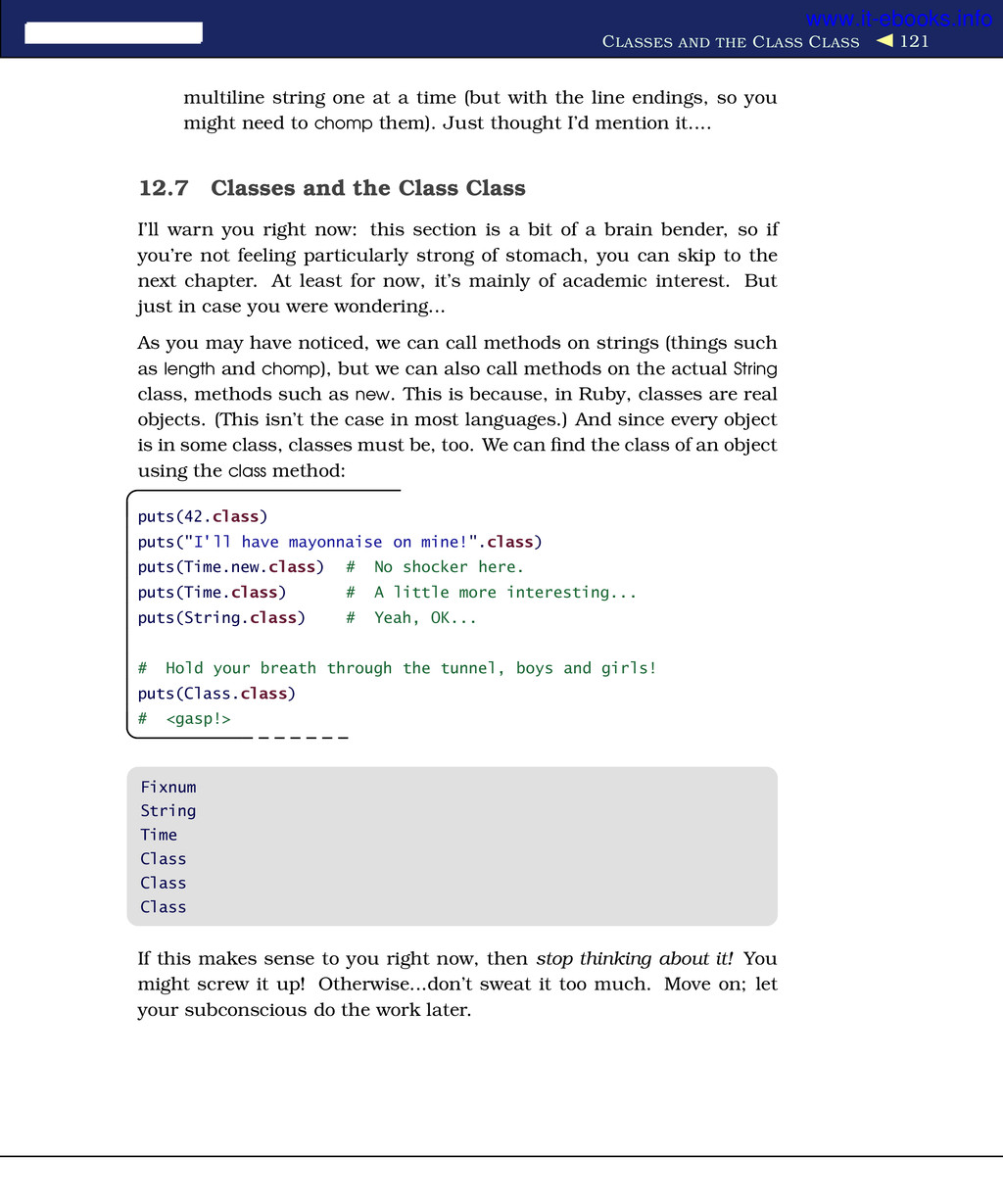
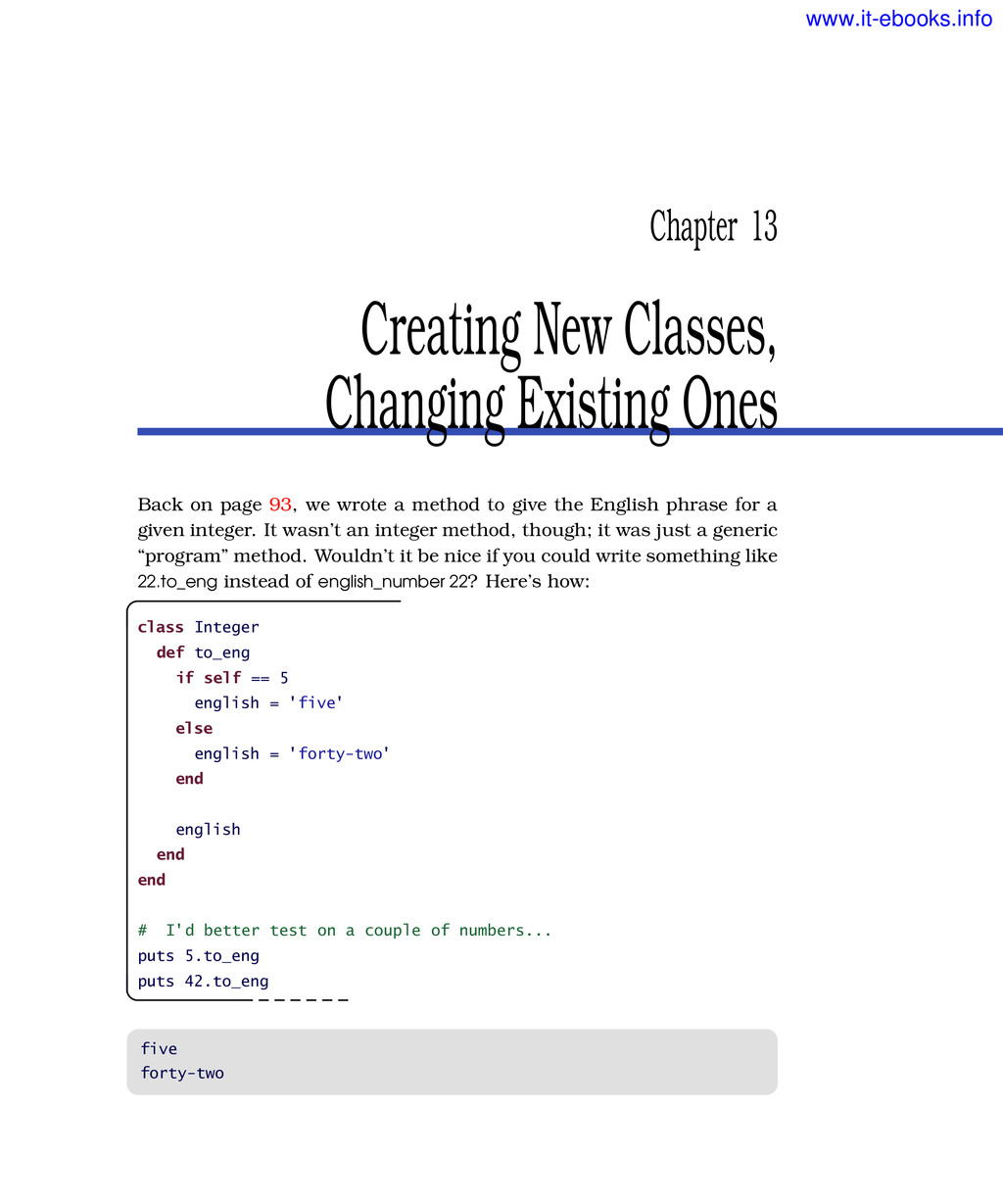
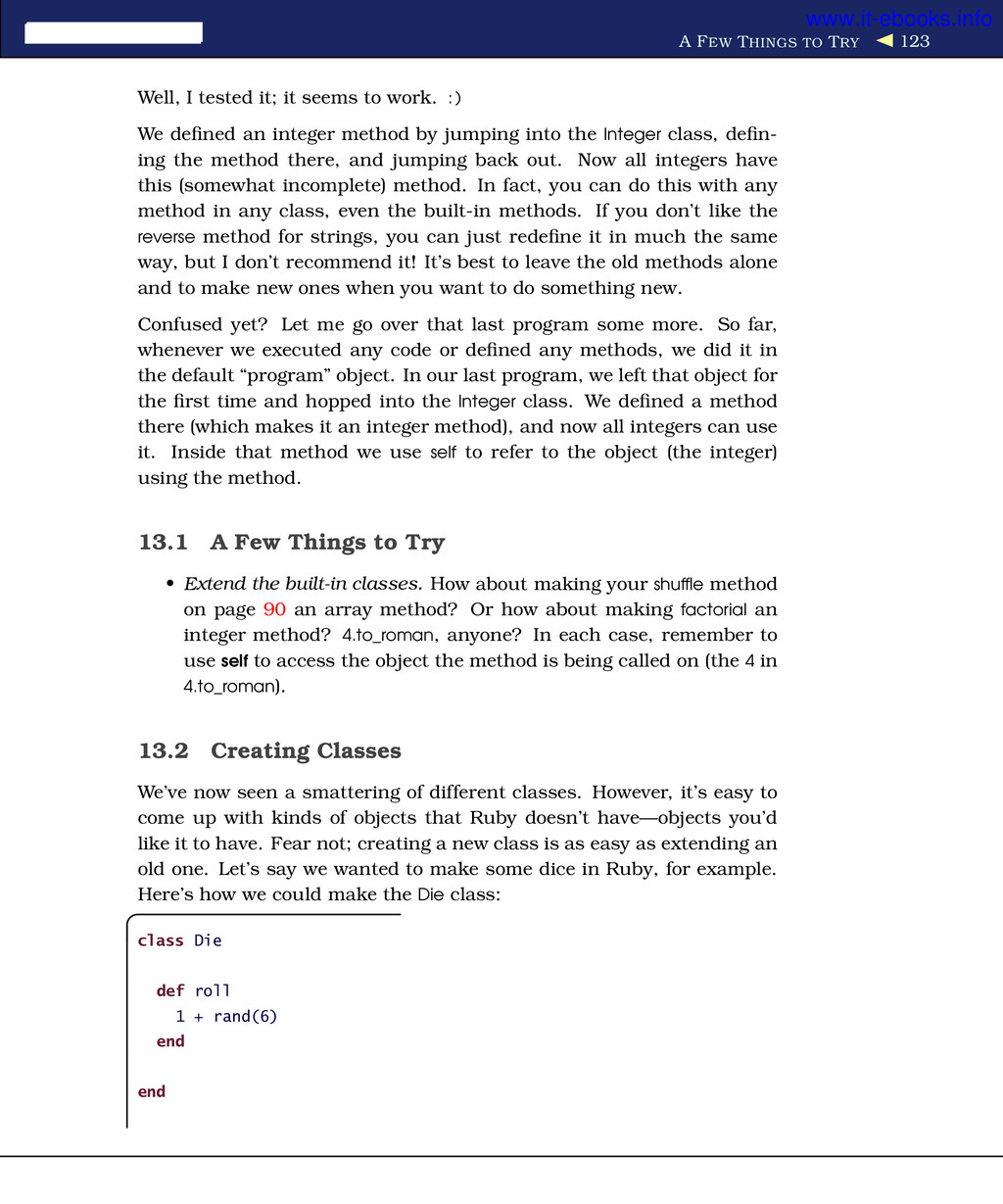
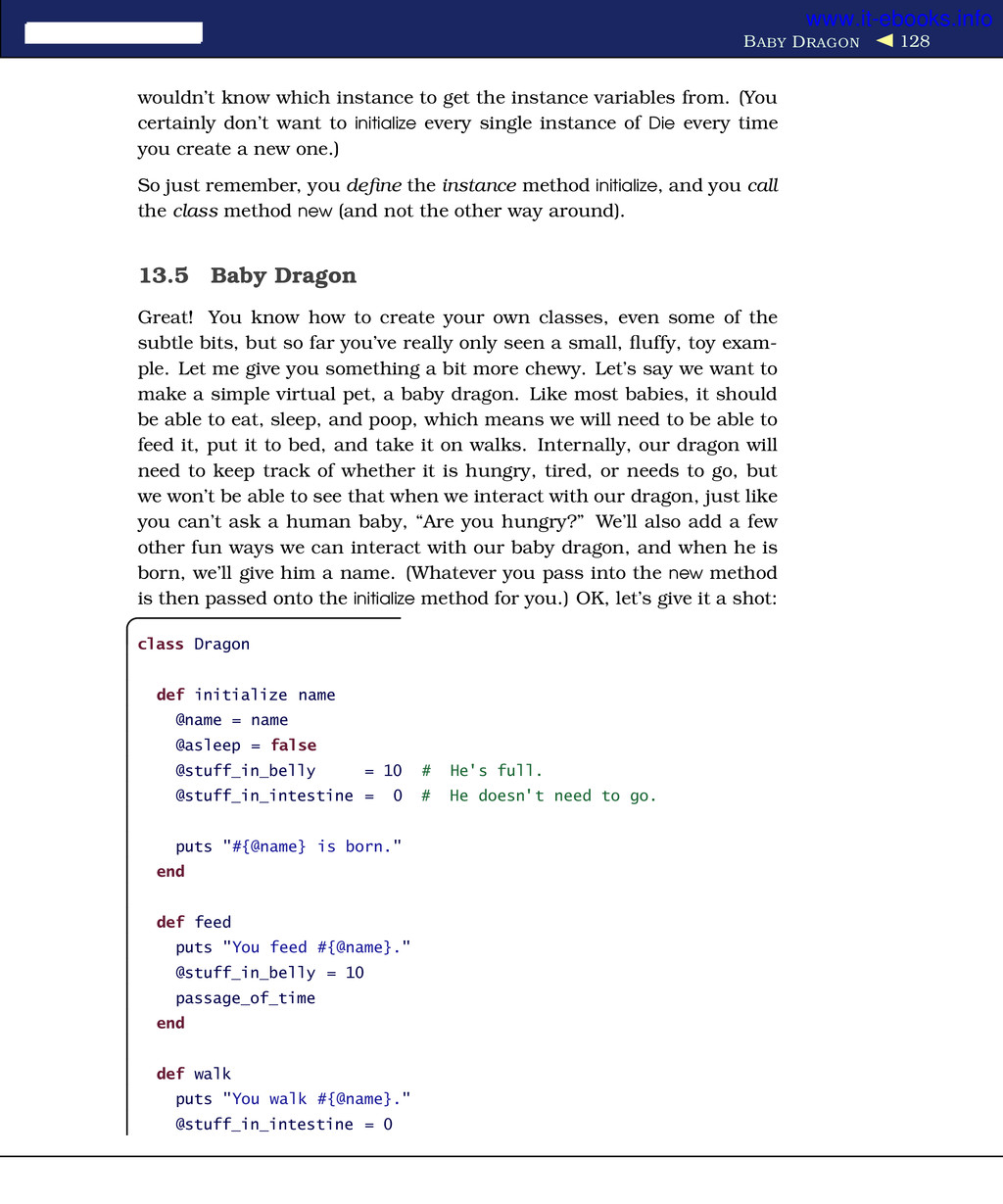
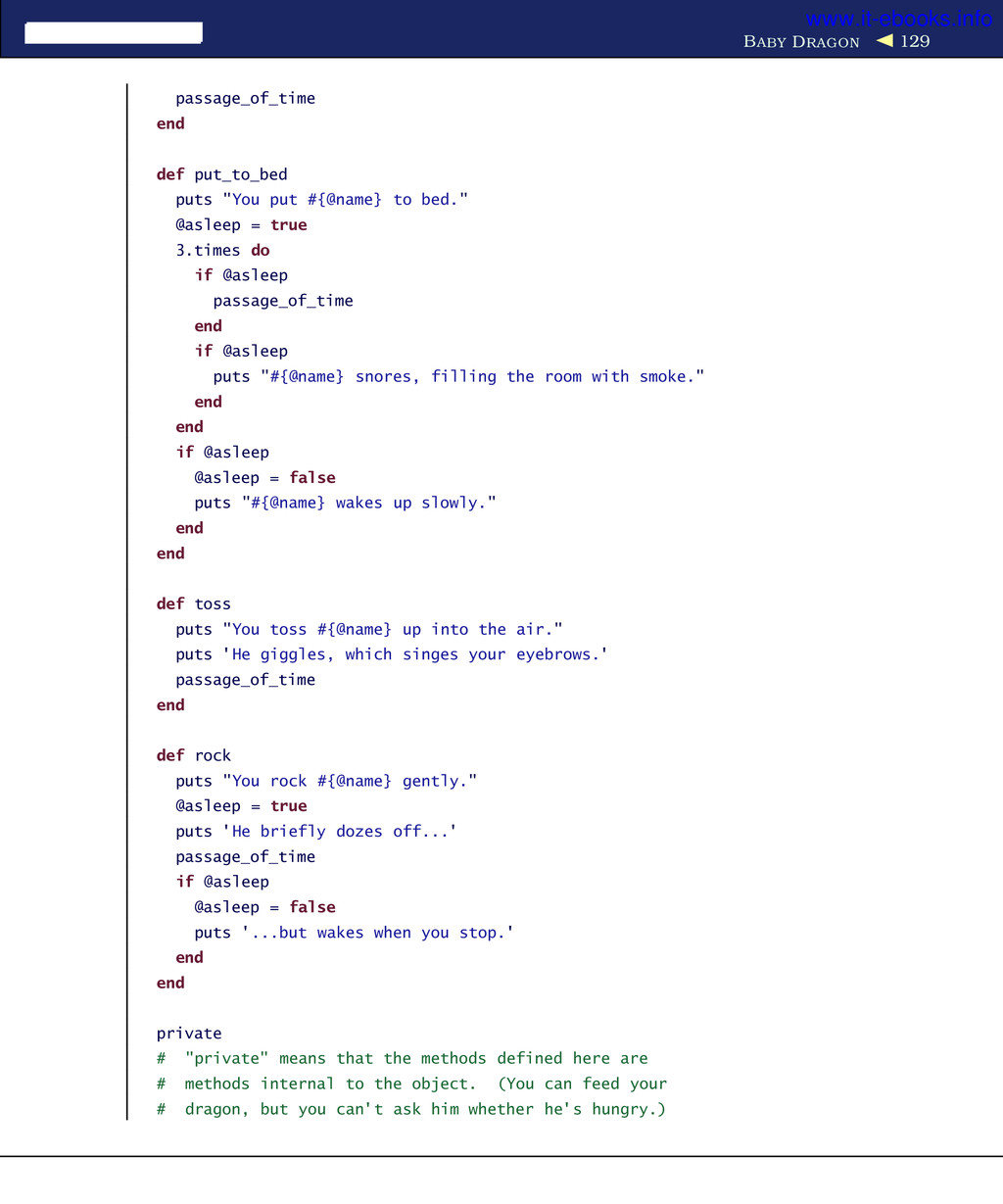
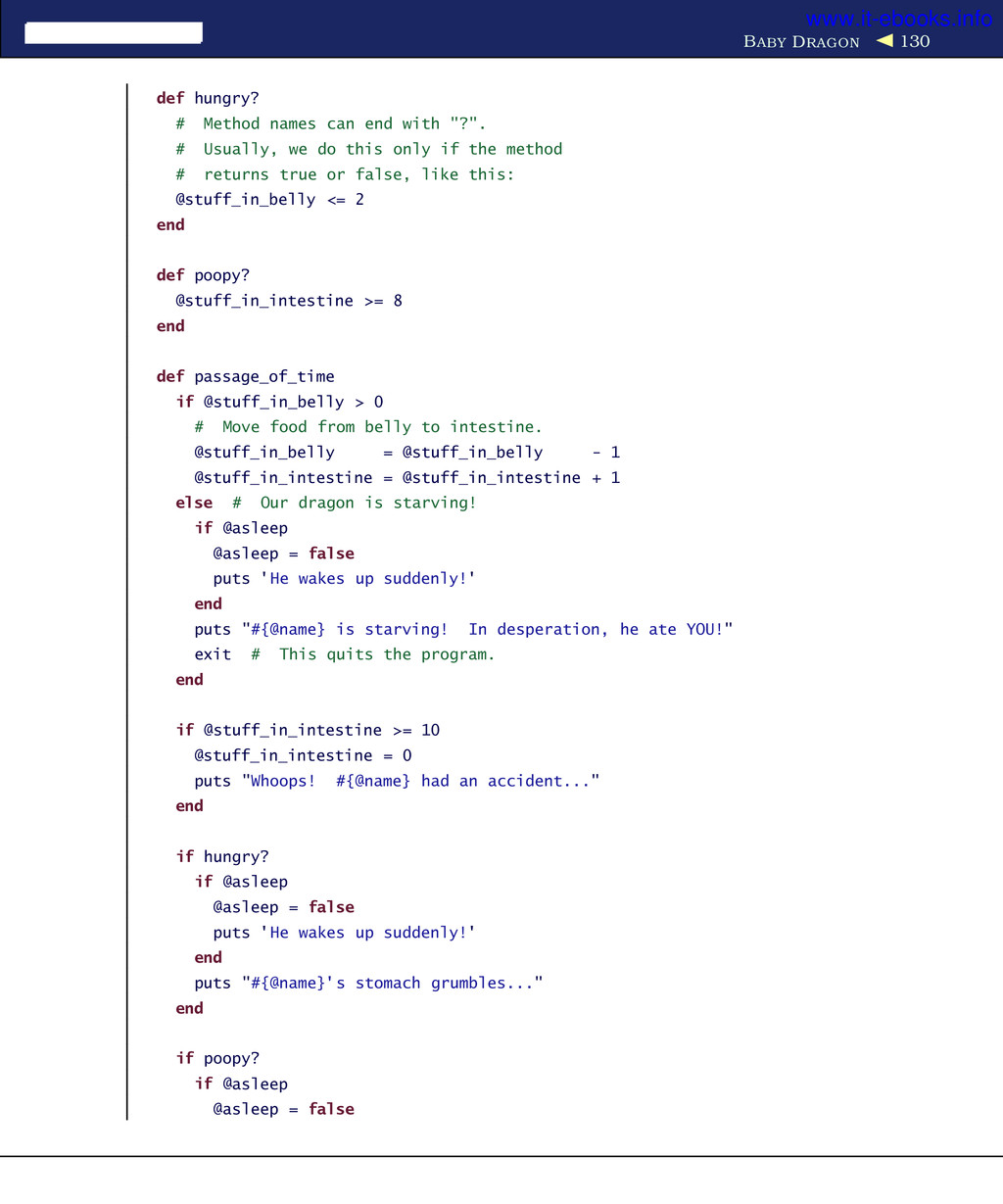
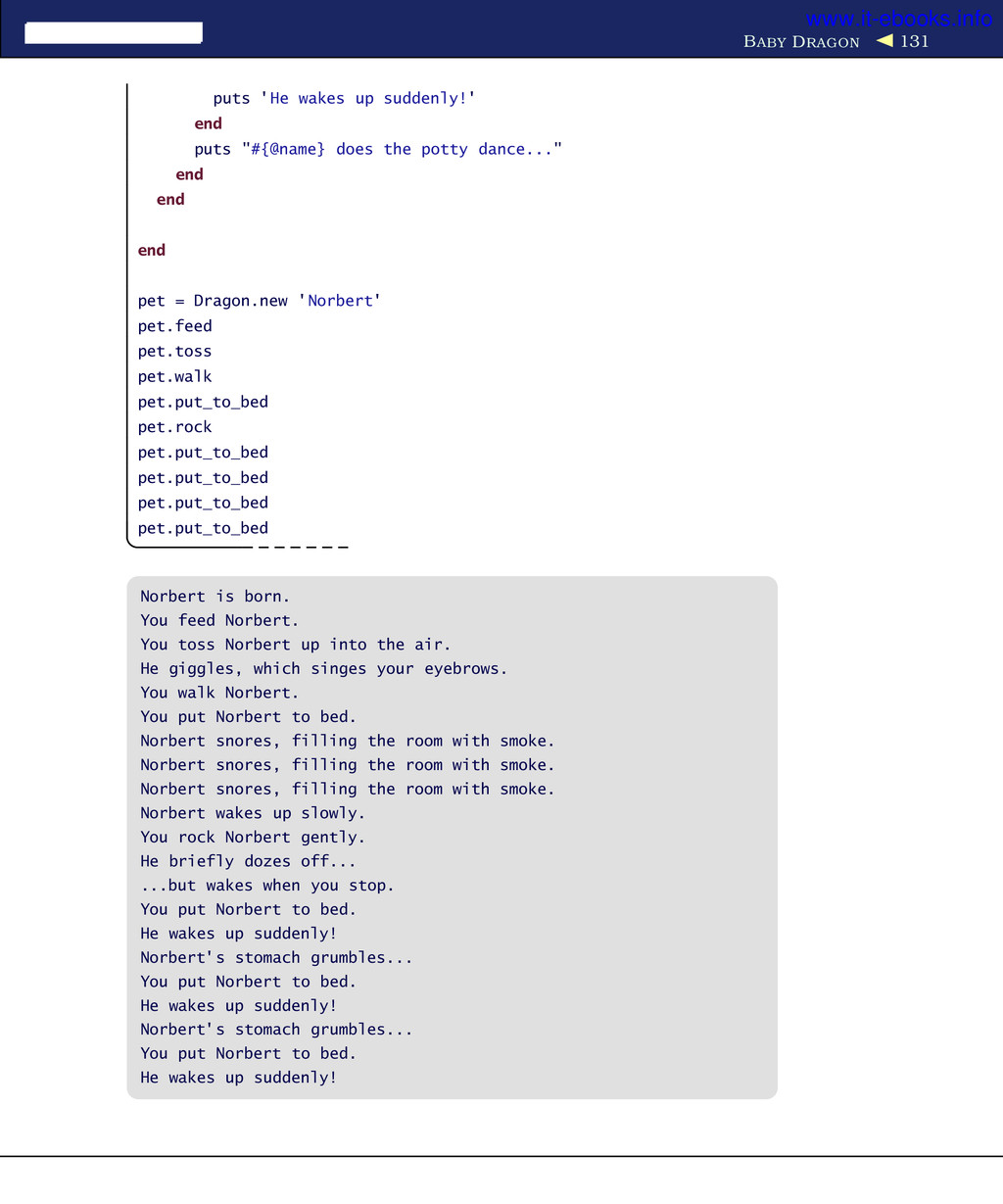
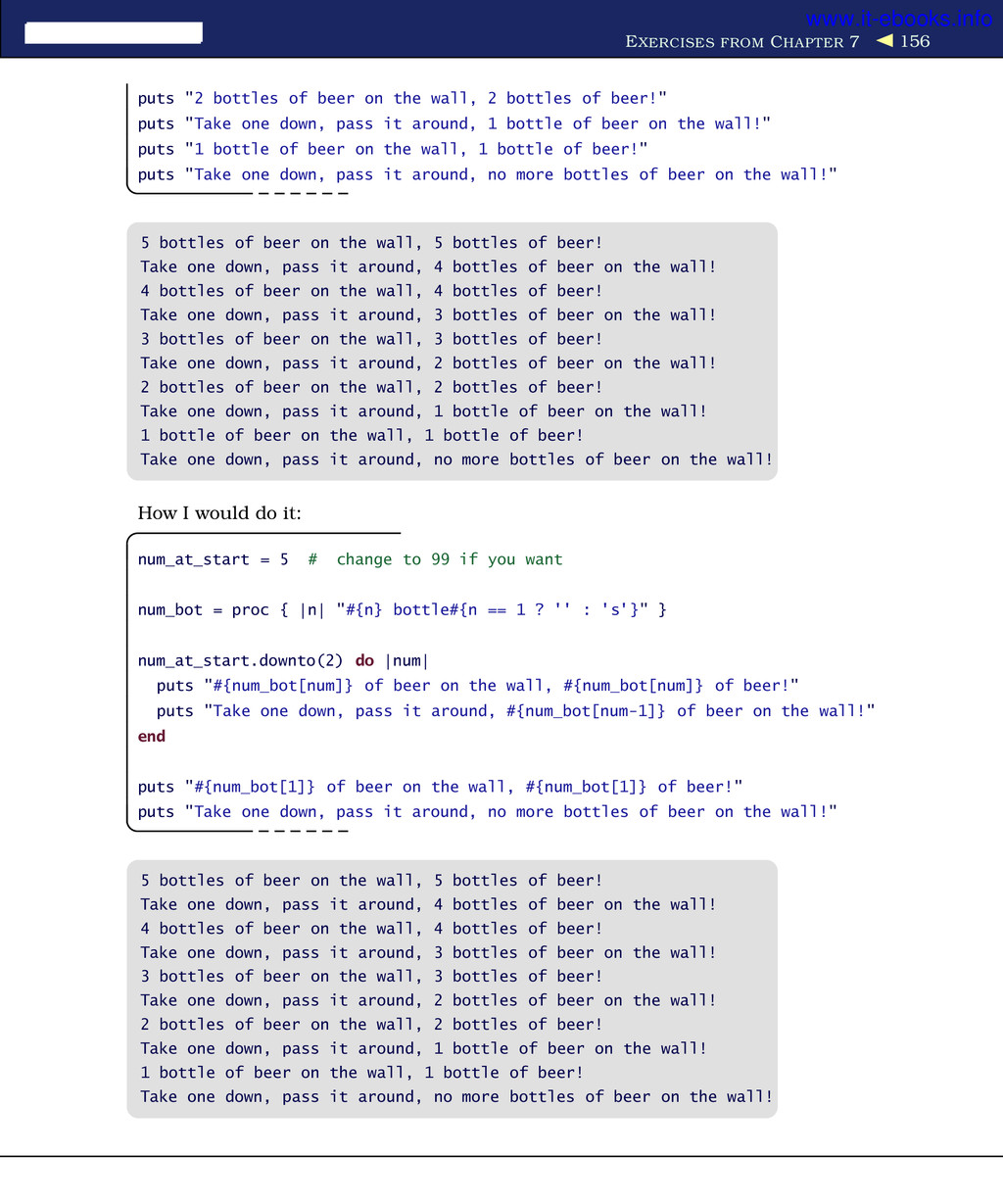
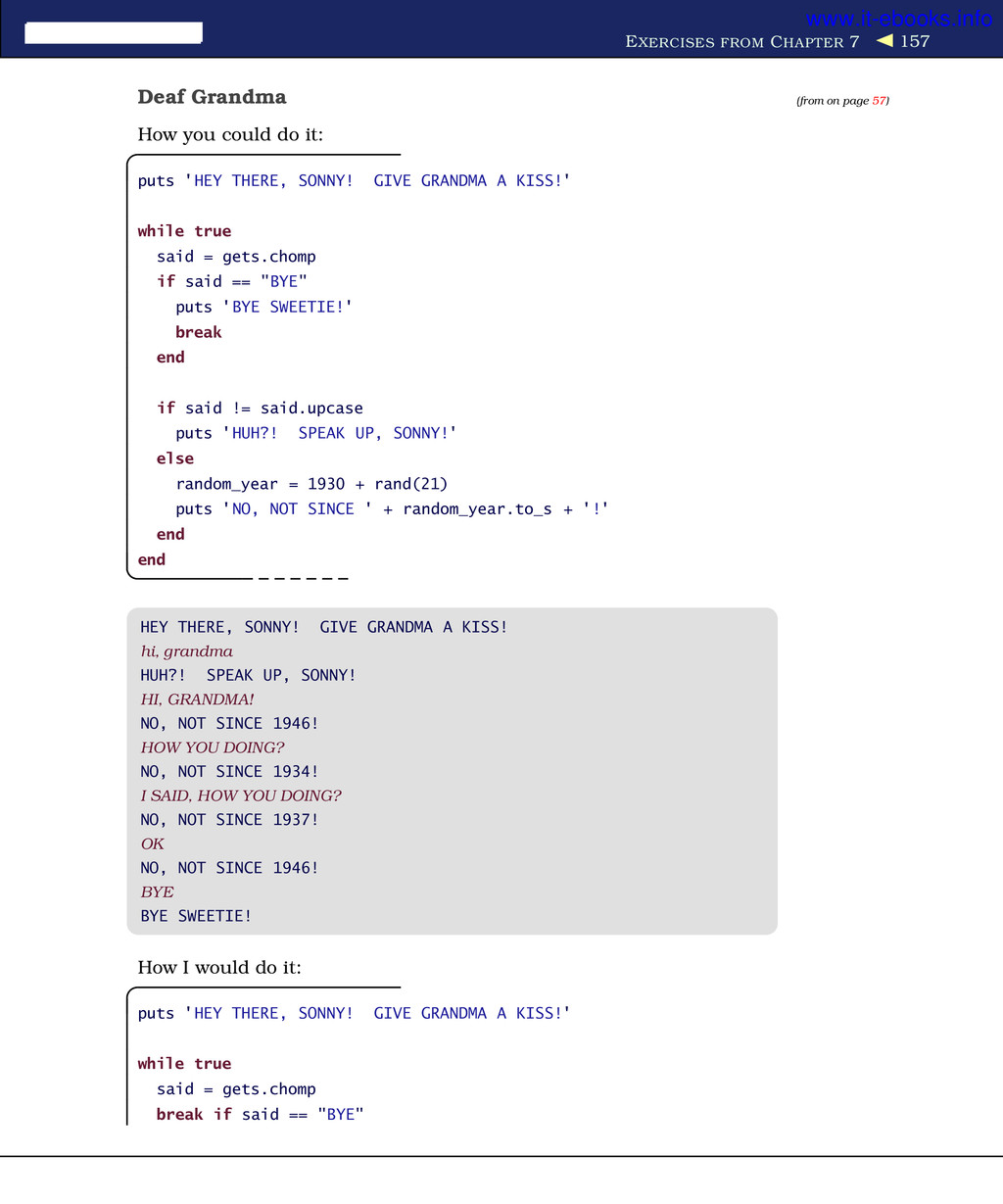
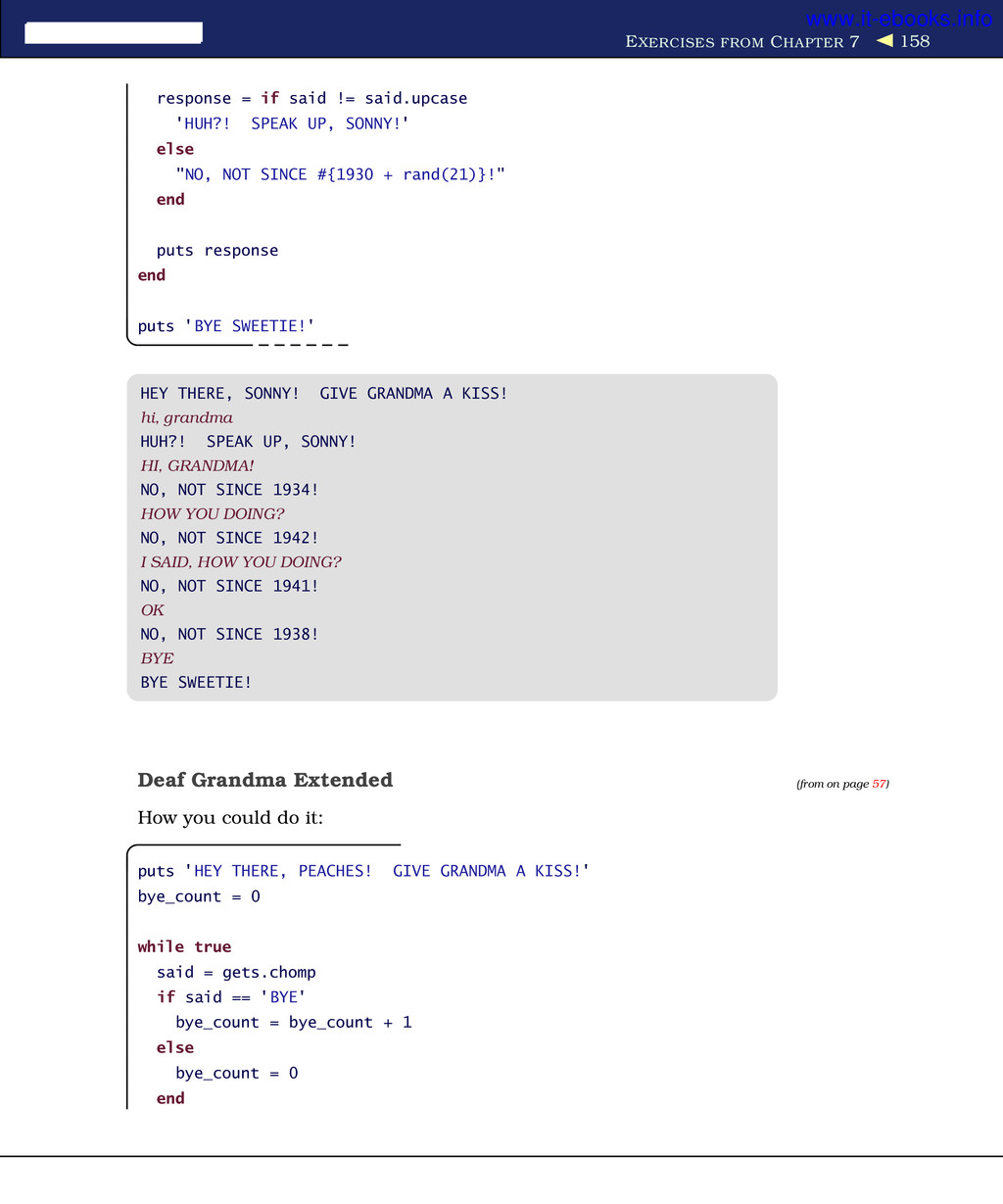
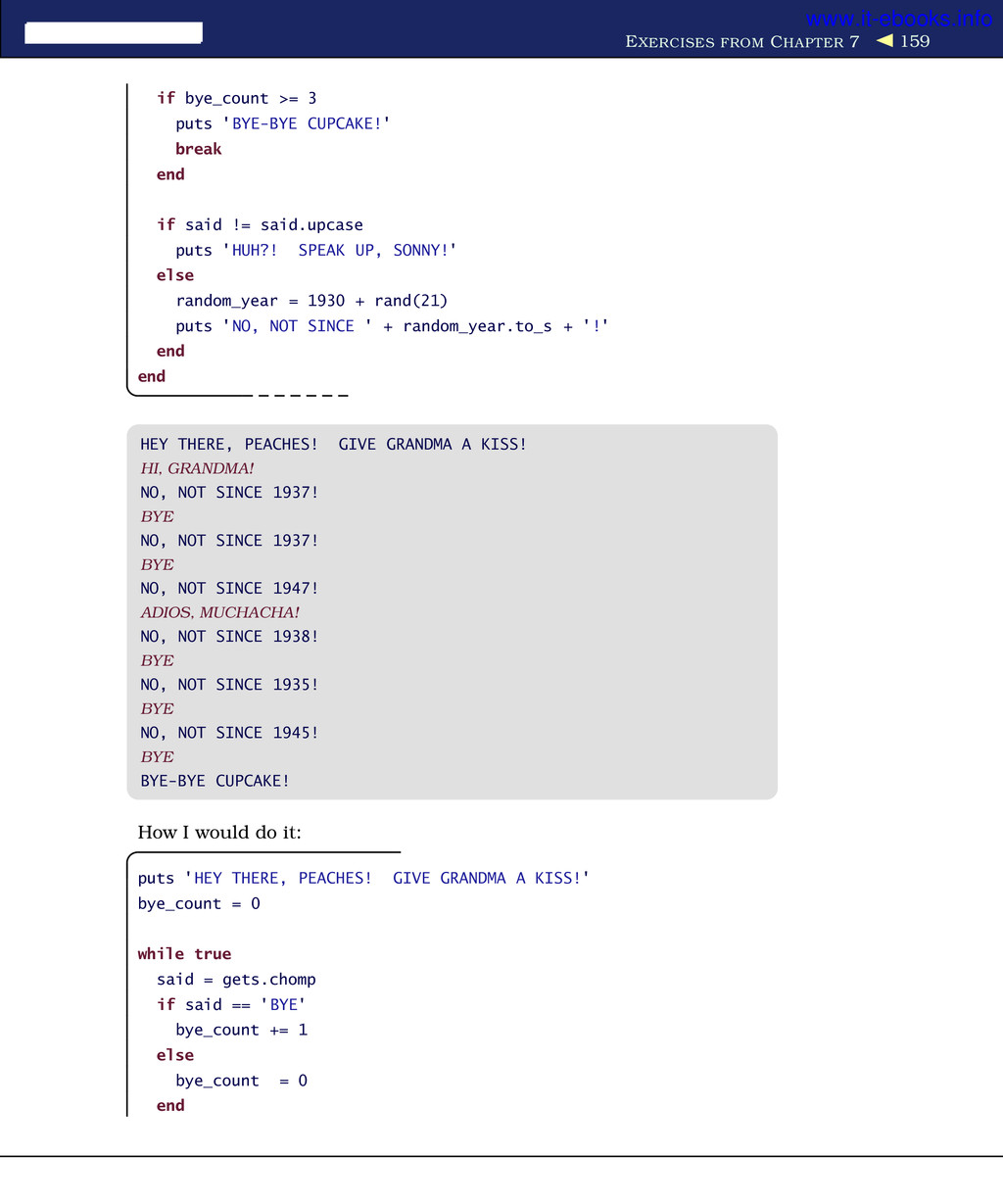
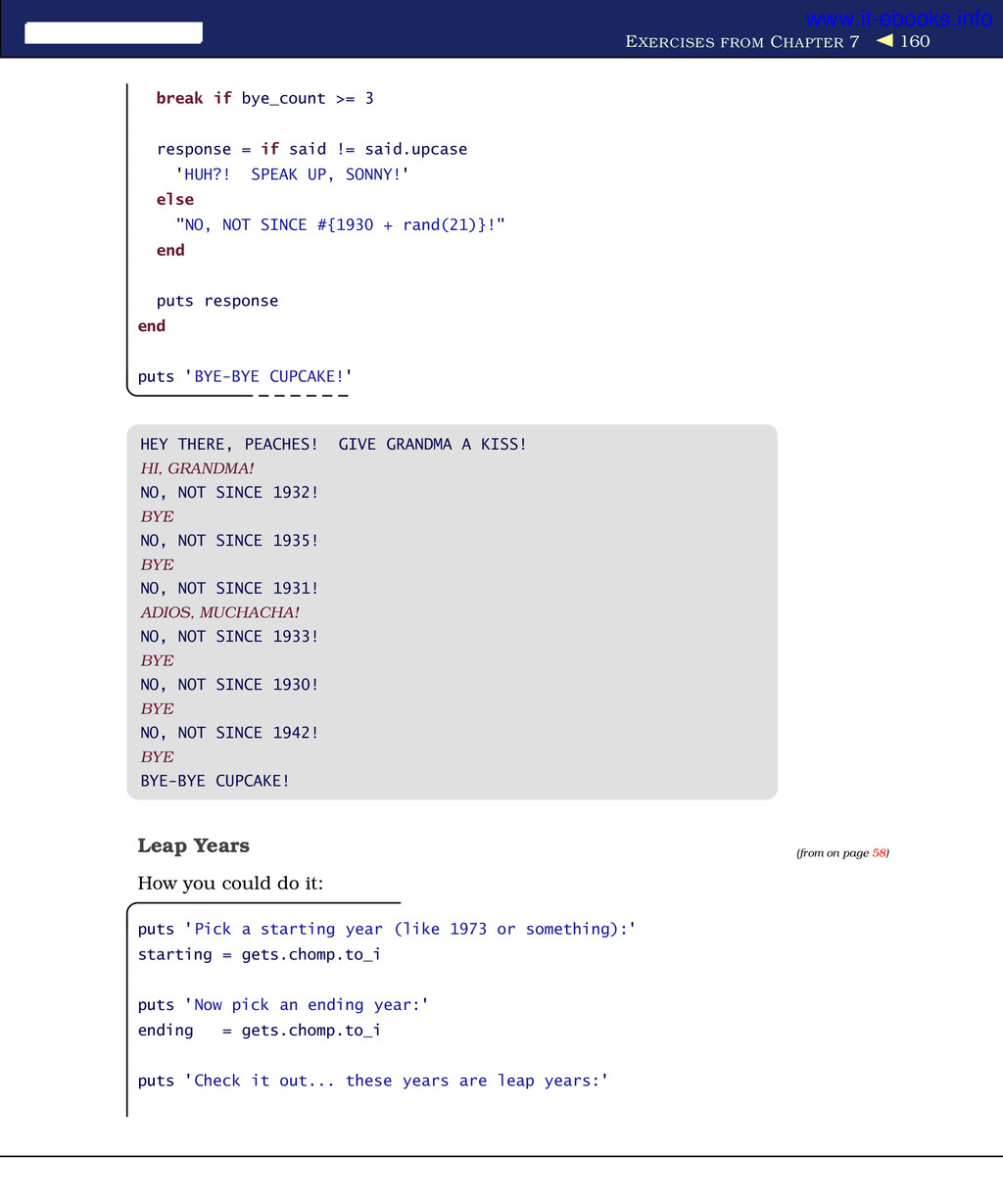
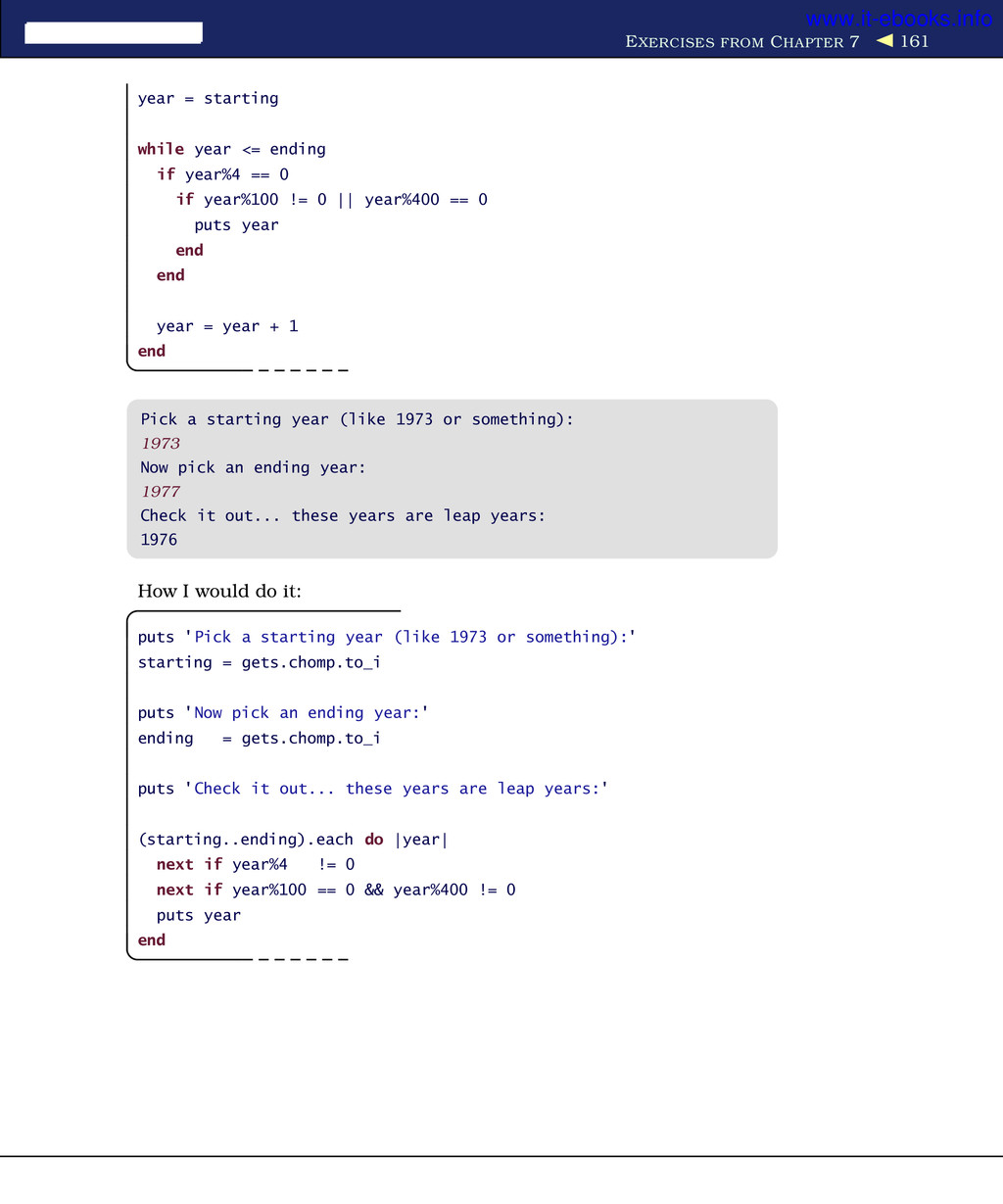
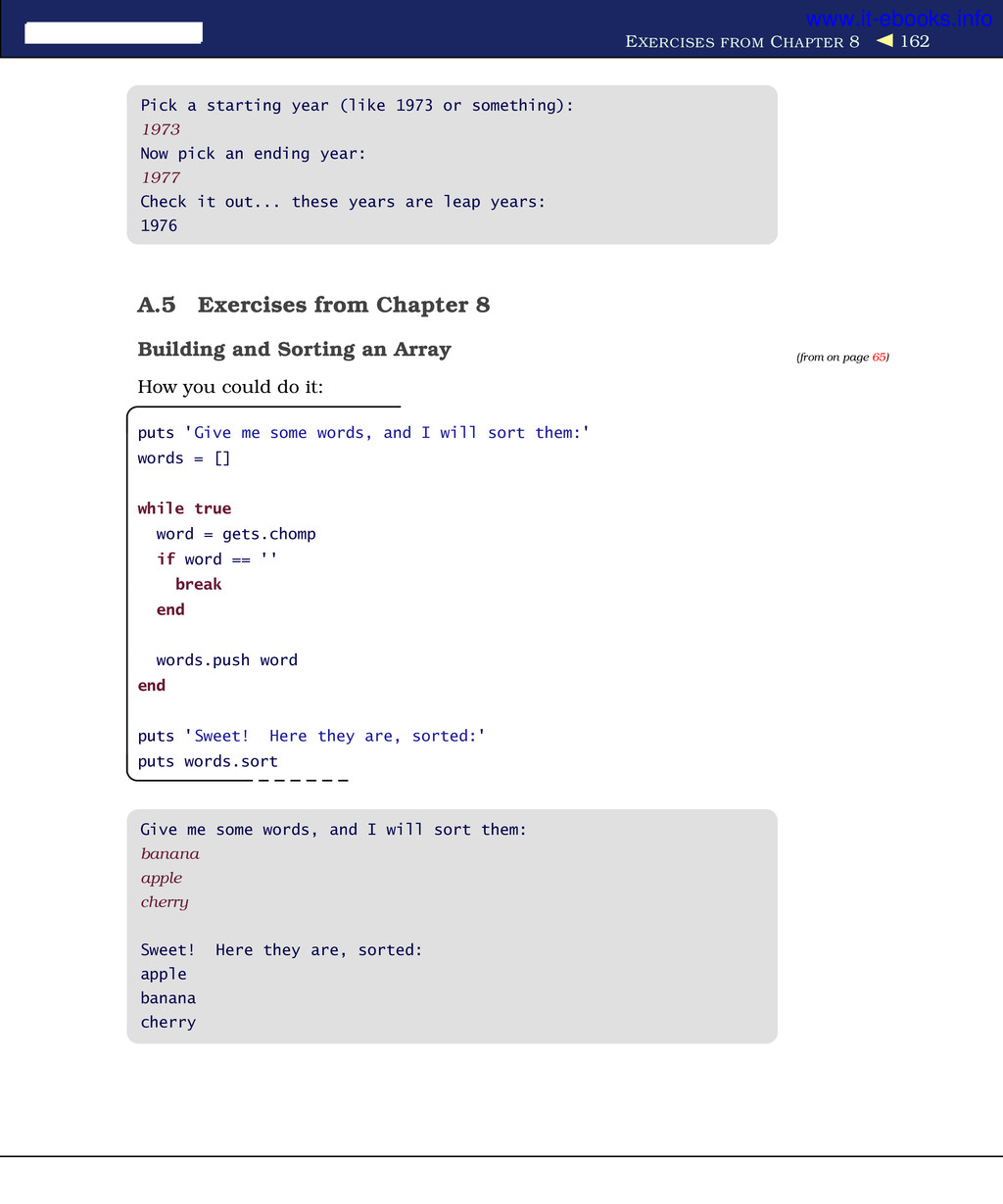
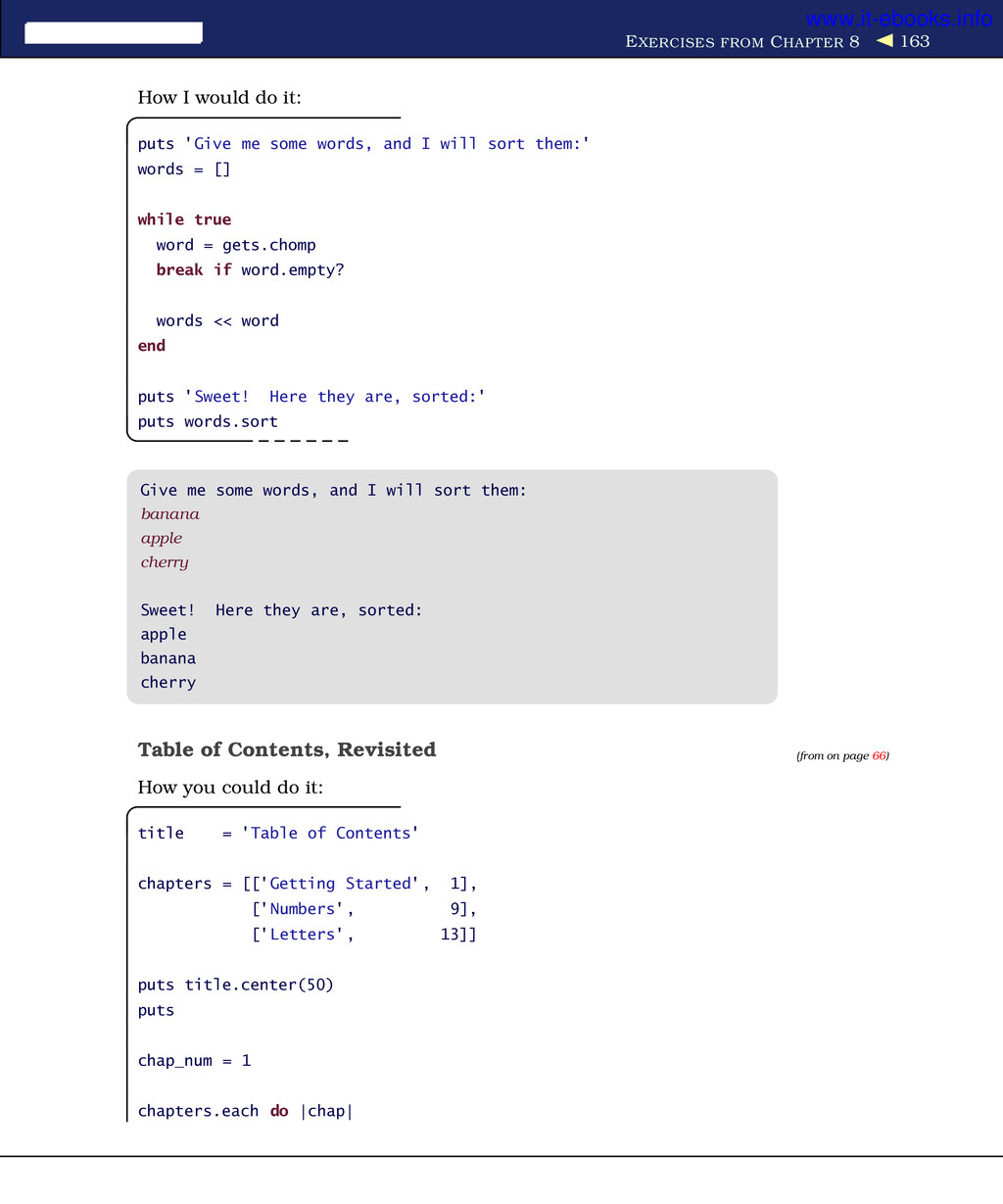
![EXERCISES FROM CHAPTER 8 164 name = chap[0] page =](https://files.speakerdeck.com/presentations/96aa14a088140130c6c4123138094421/slide_178.jpg)
![EXERCISES FROM CHAPTER 10 169 ['D', 1000, 500], ['M', nil,](https://files.speakerdeck.com/presentations/96aa14a088140130c6c4123138094421/slide_183.jpg)
![EXERCISES FROM CHAPTER 12 192 puts date[0..5] end Whose birthday](https://files.speakerdeck.com/presentations/96aa14a088140130c6c4123138094421/slide_206.jpg)