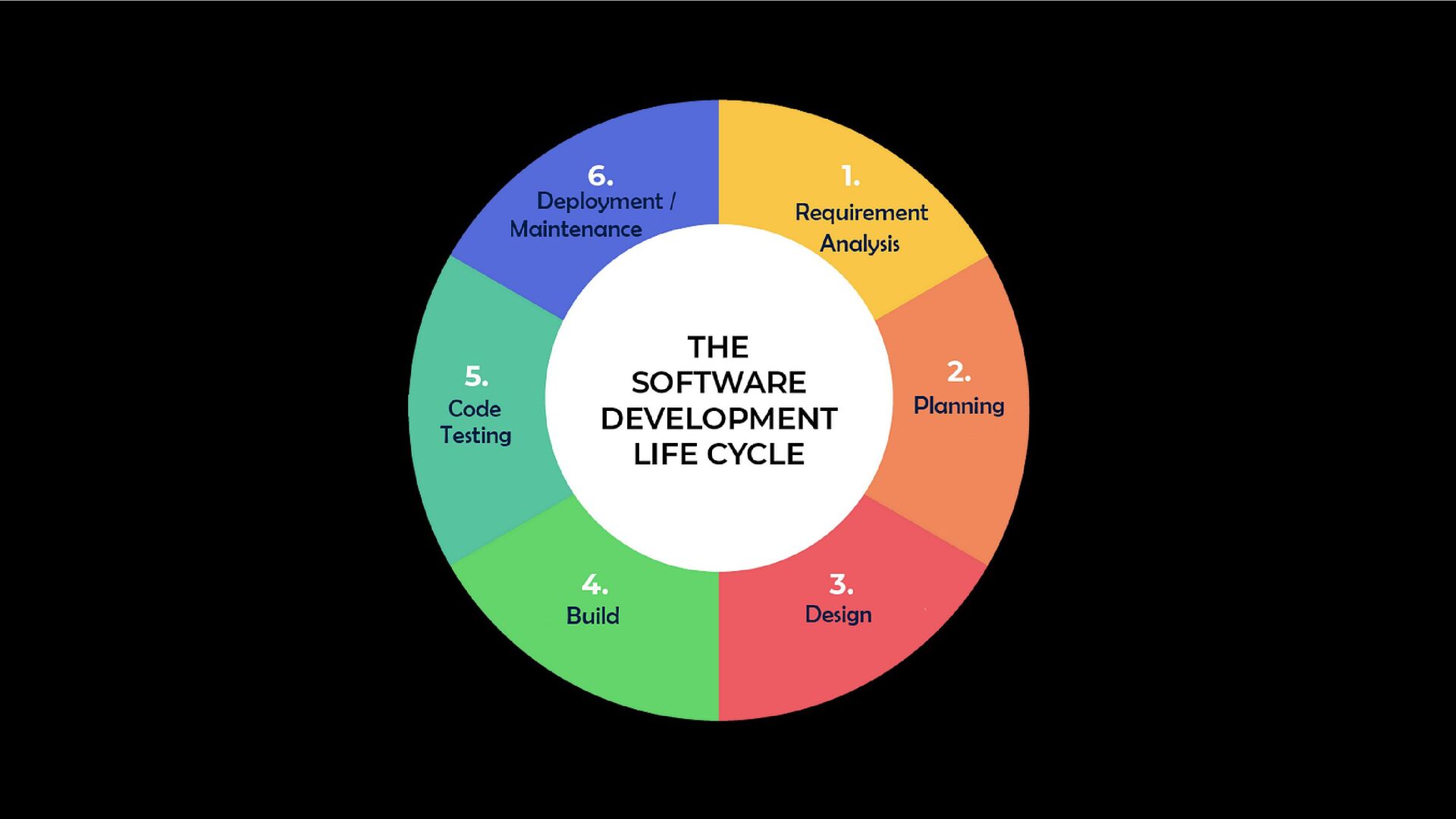
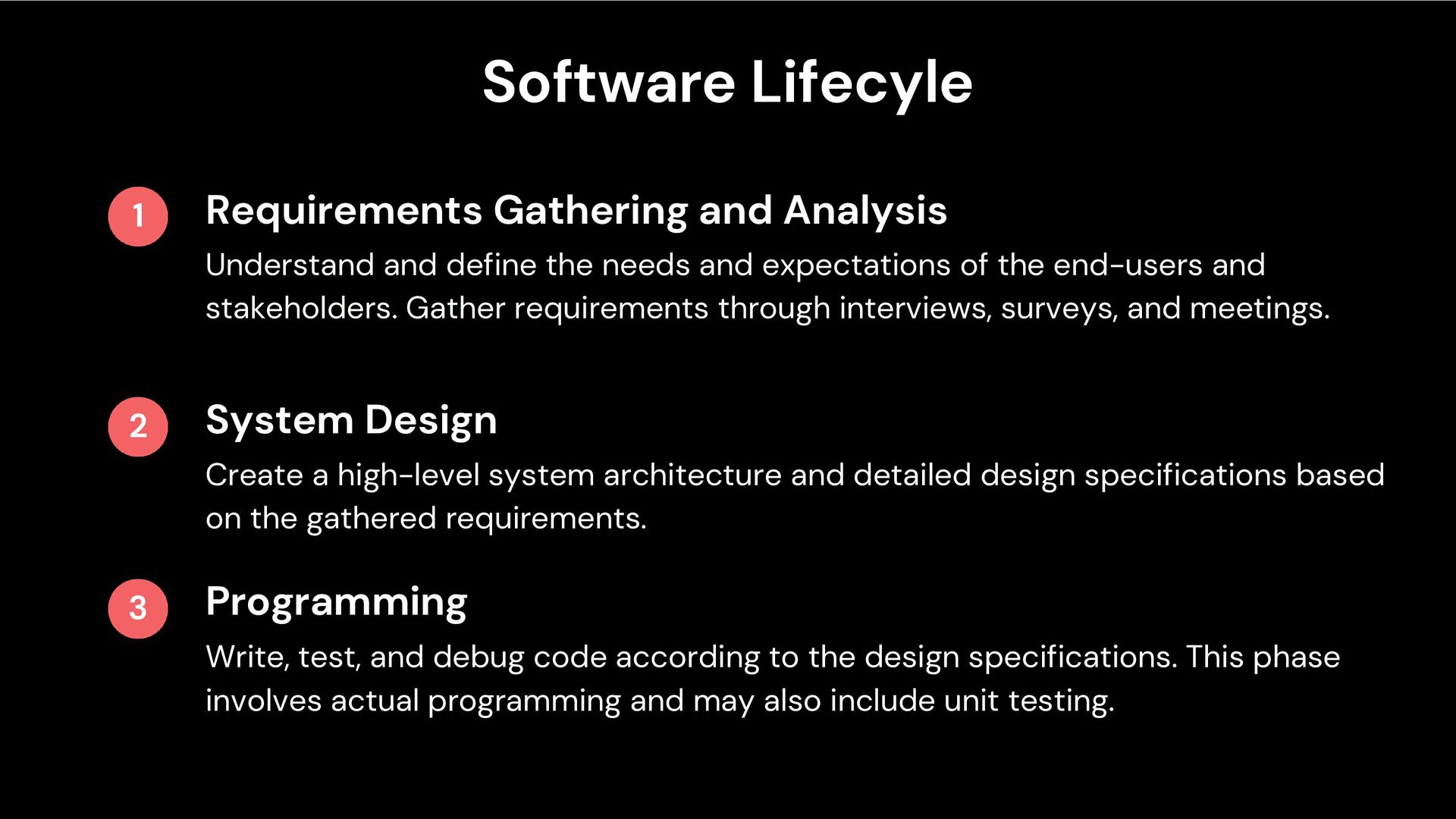
2 3 Understand and define the needs and expectations of the end-users and stakeholders. Gather requirements through interviews, surveys, and meetings. Create a high-level system architecture and detailed design specifications based on the gathered requirements. Write, test, and debug code according to the design specifications. This phase involves actual programming and may also include unit testing.
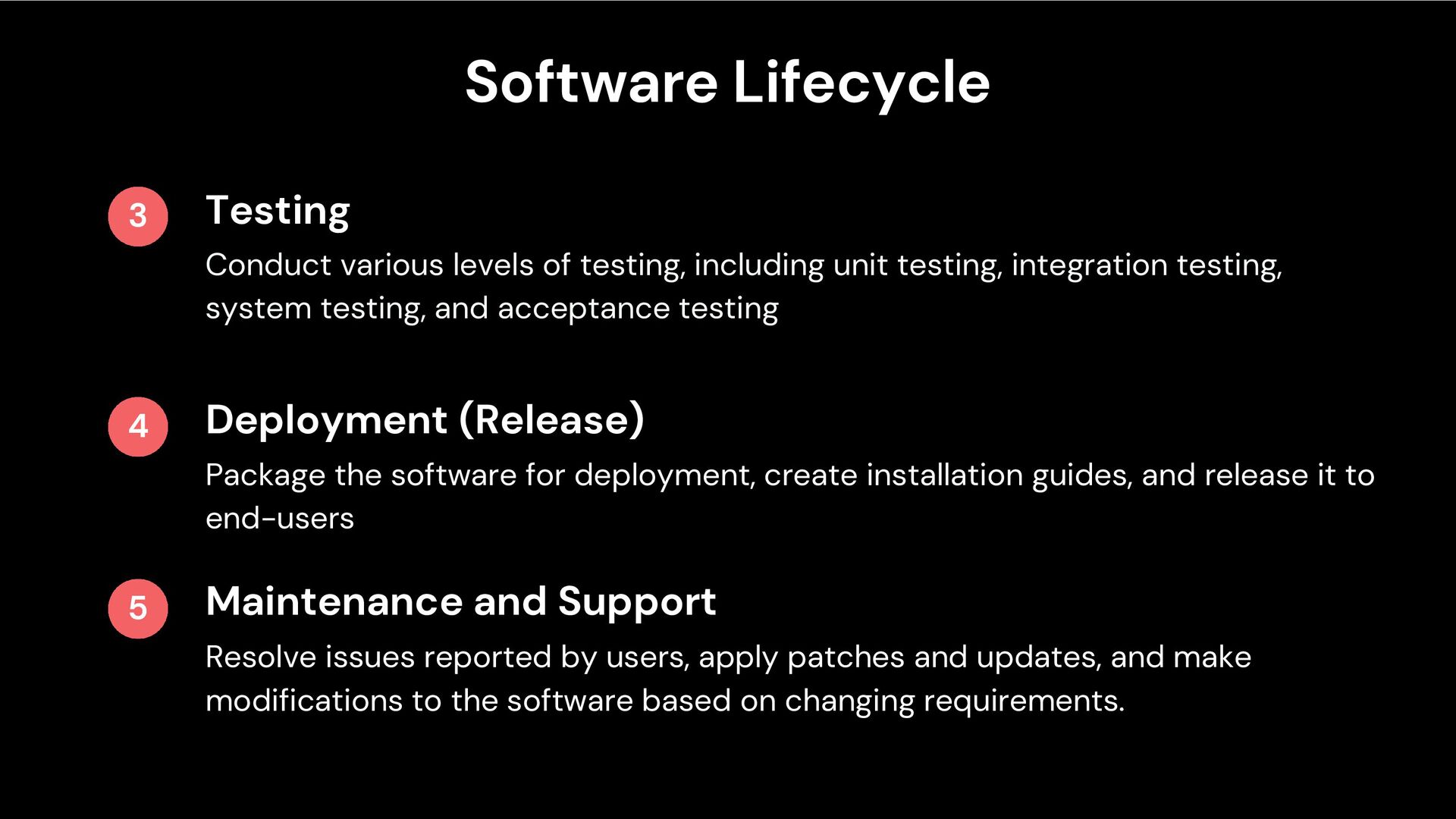
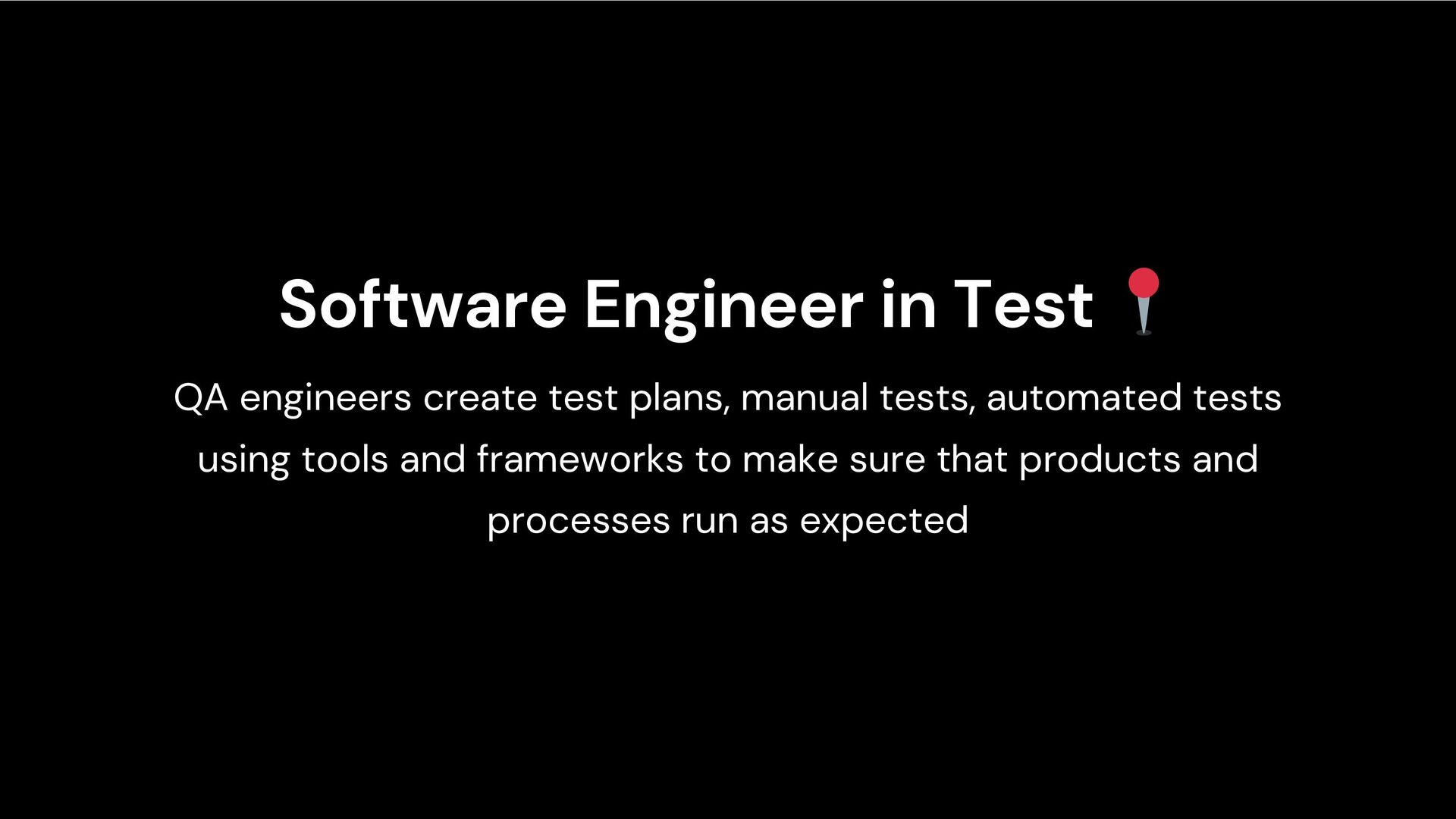
5 Conduct various levels of testing, including unit testing, integration testing, system testing, and acceptance testing Package the software for deployment, create installation guides, and release it to end-users Resolve issues reported by users, apply patches and updates, and make modifications to the software based on changing requirements.
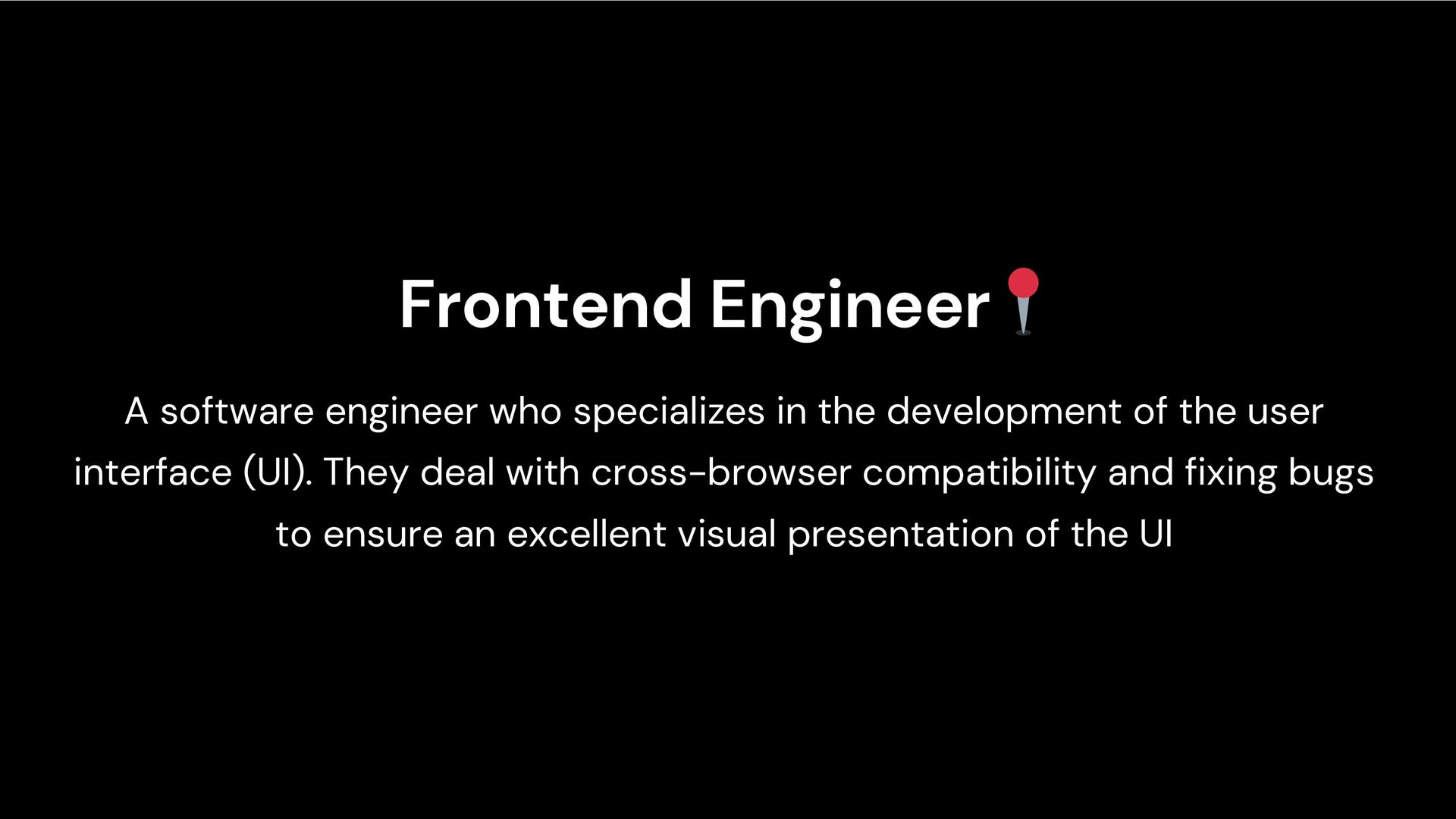
development of the user interface (UI). They deal with cross-browser compatibility and fixing bugs to ensure an excellent visual presentation of the UI
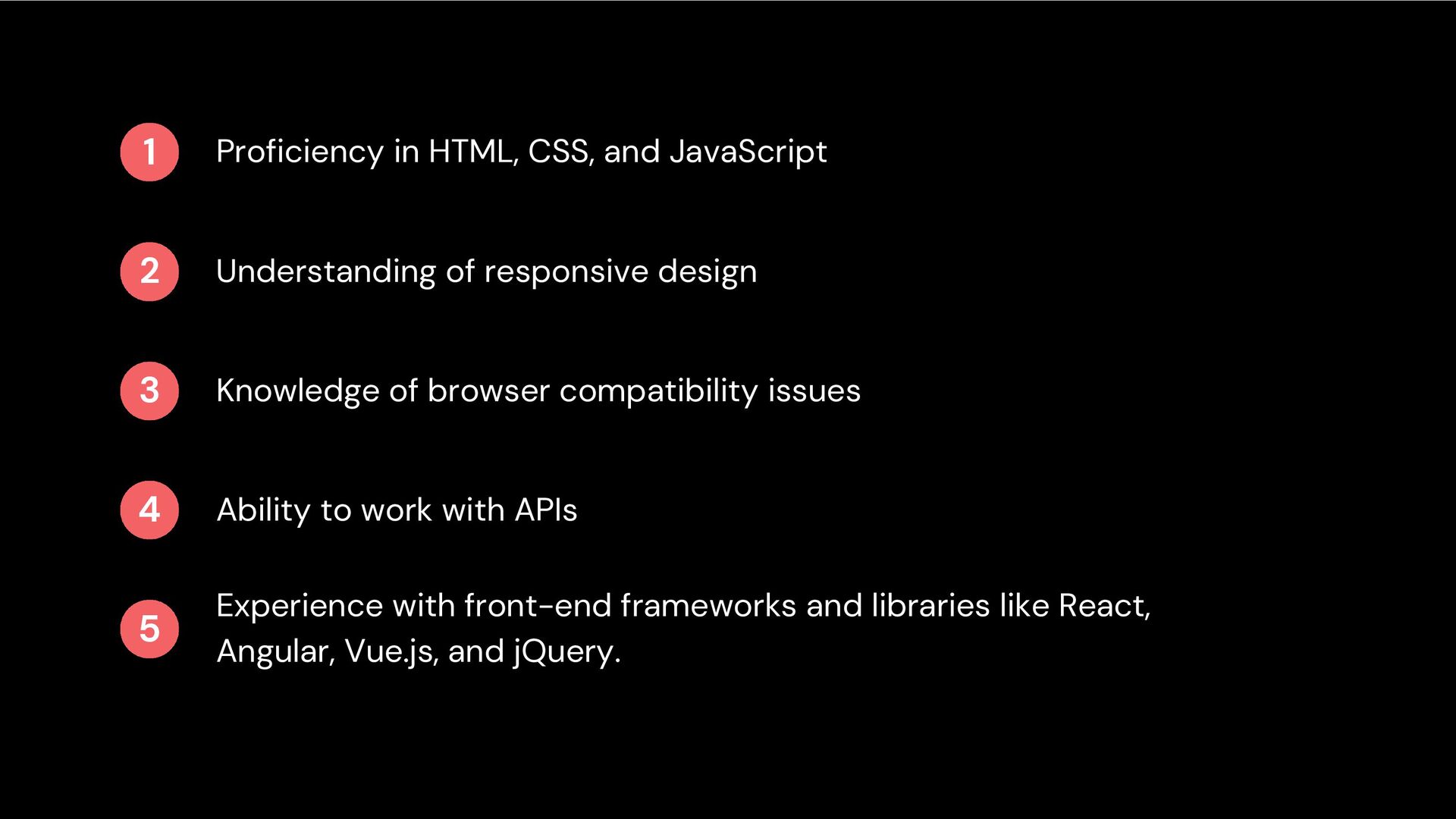
responsive design 3 Knowledge of browser compatibility issues 4 Ability to work with APIs 5 Experience with front-end frameworks and libraries like React, Angular, Vue.js, and jQuery.
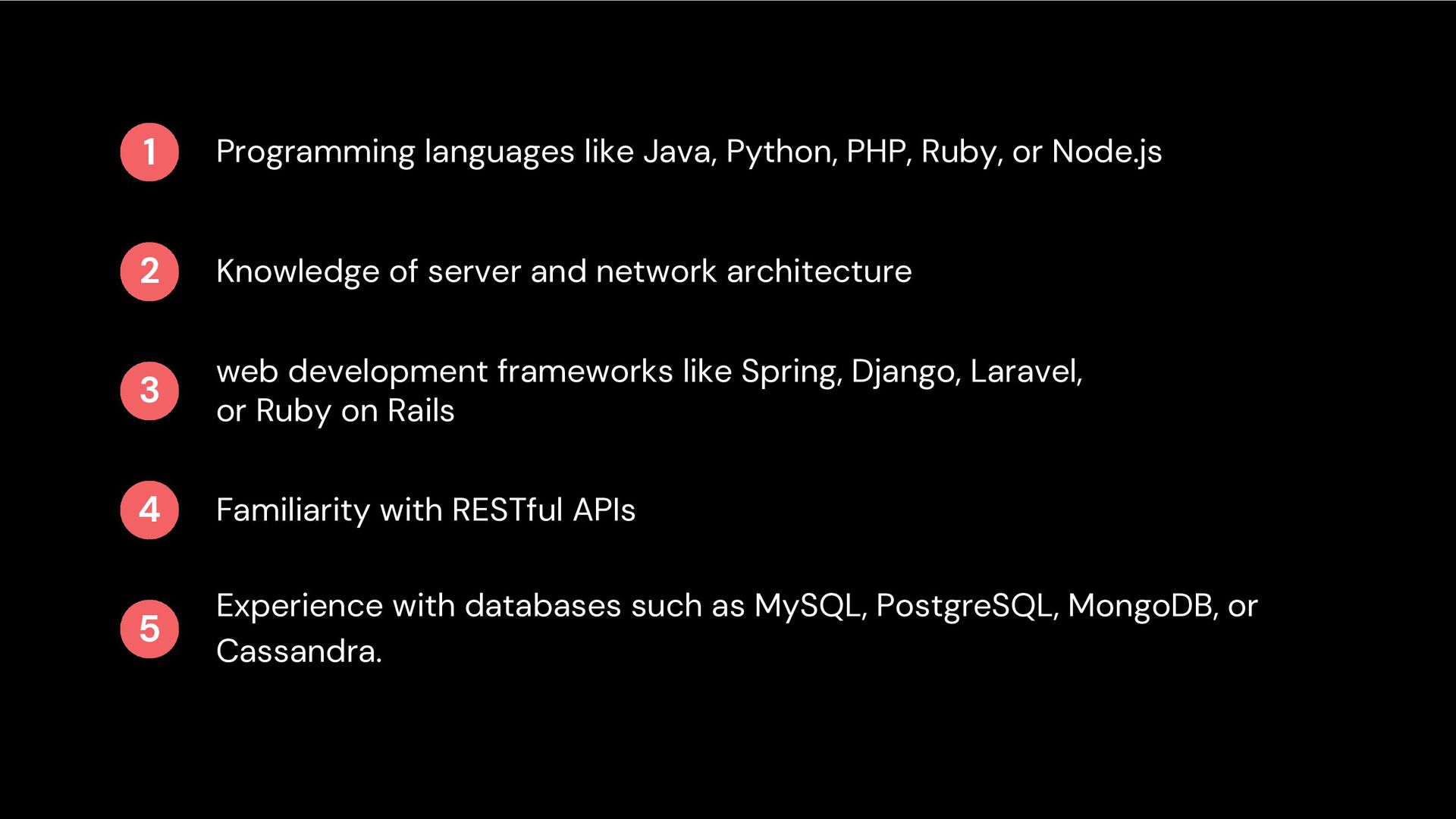
2 Knowledge of server and network architecture 3 web development frameworks like Spring, Django, Laravel, or Ruby on Rails 4 Familiarity with RESTful APIs 5 Experience with databases such as MySQL, PostgreSQL, MongoDB, or Cassandra.
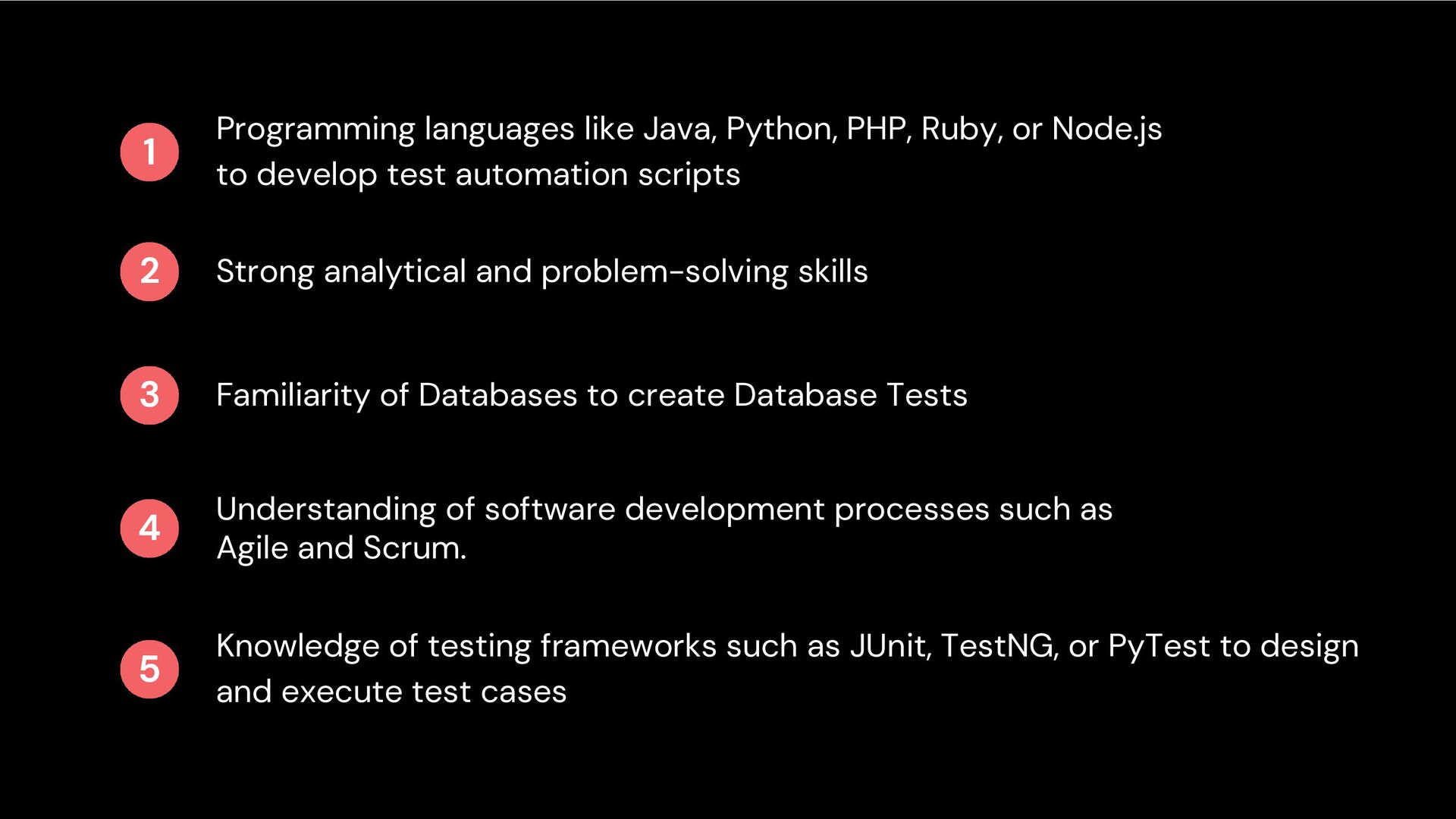
to develop test automation scripts 2 Strong analytical and problem-solving skills 3 Familiarity of Databases to create Database Tests 4 Understanding of software development processes such as Agile and Scrum. 5 Knowledge of testing frameworks such as JUnit, TestNG, or PyTest to design and execute test cases
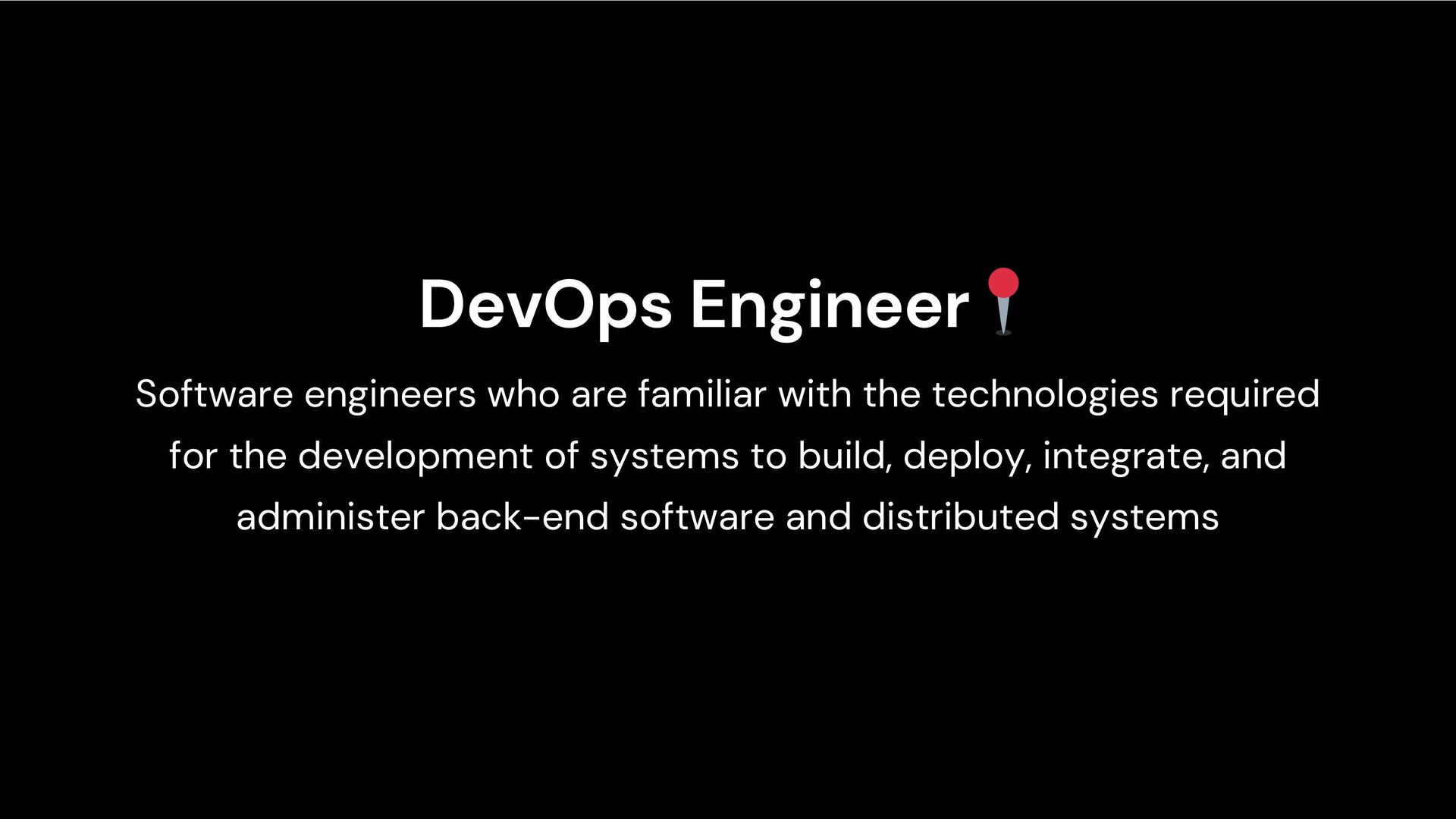
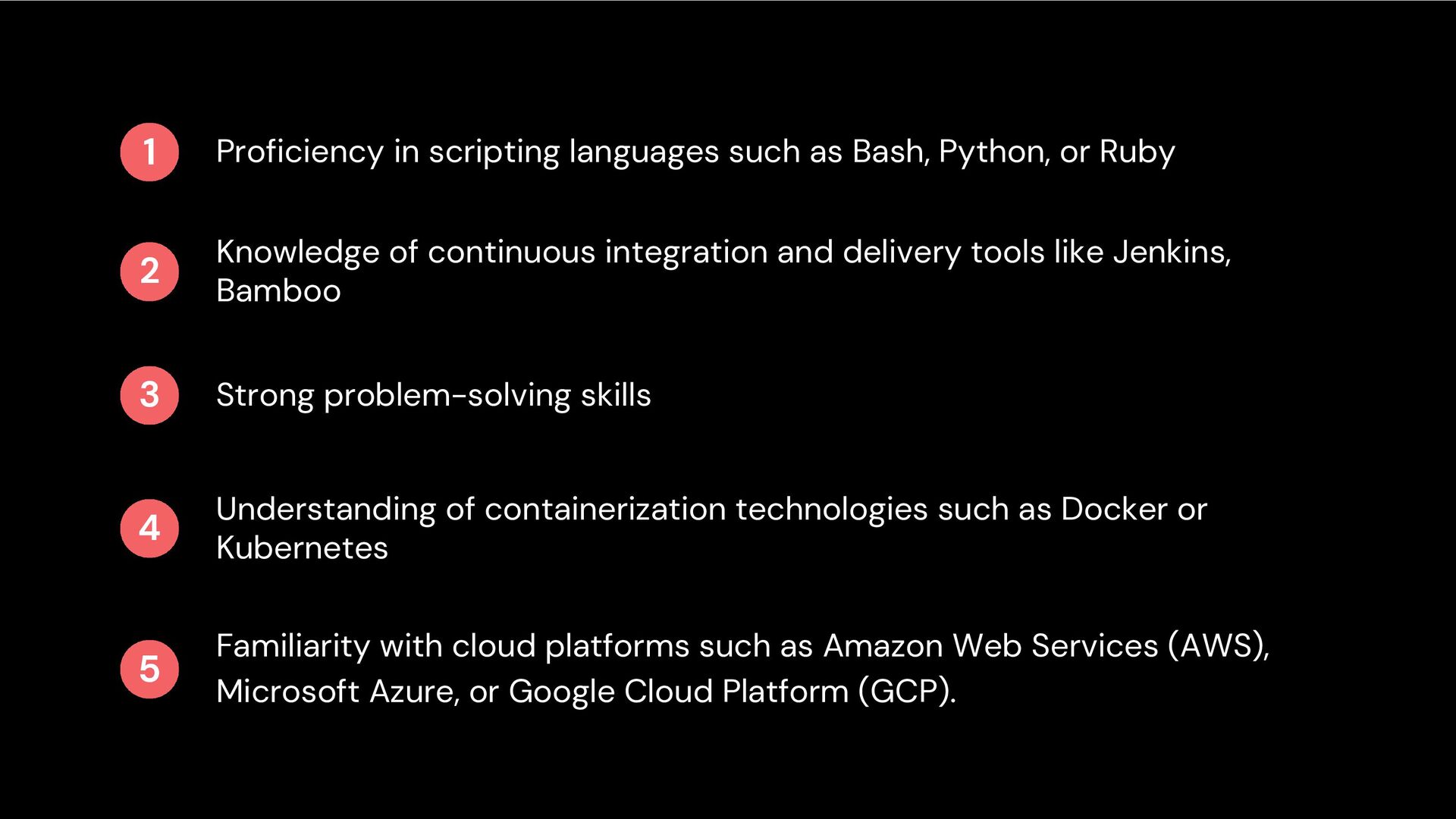
Ruby 2 Knowledge of continuous integration and delivery tools like Jenkins, Bamboo 3 Strong problem-solving skills 4 Understanding of containerization technologies such as Docker or Kubernetes 5 Familiarity with cloud platforms such as Amazon Web Services (AWS), Microsoft Azure, or Google Cloud Platform (GCP).
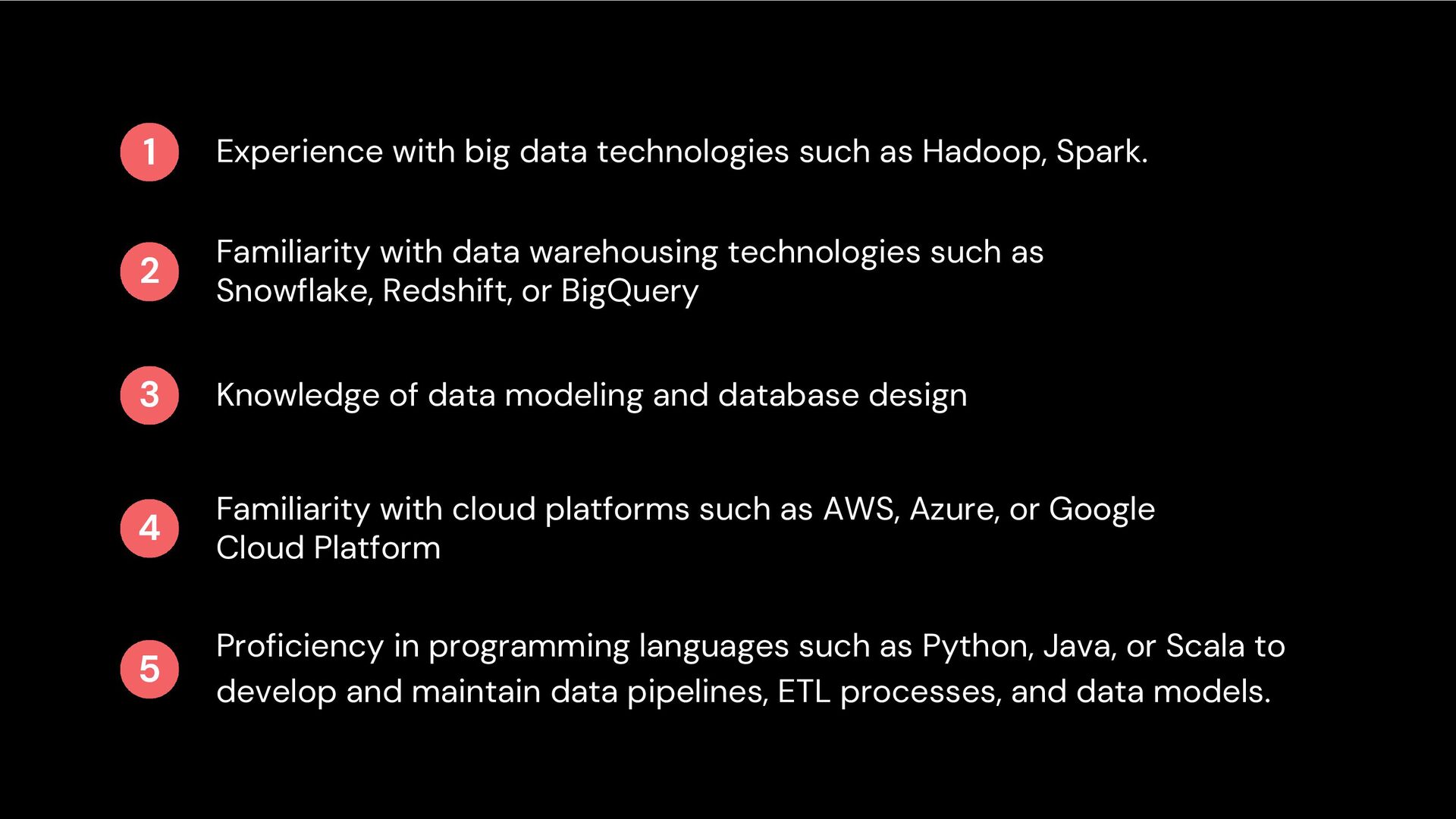
2 Familiarity with data warehousing technologies such as Snowflake, Redshift, or BigQuery 3 Knowledge of data modeling and database design 4 Familiarity with cloud platforms such as AWS, Azure, or Google Cloud Platform 5 Proficiency in programming languages such as Python, Java, or Scala to develop and maintain data pipelines, ETL processes, and data models.
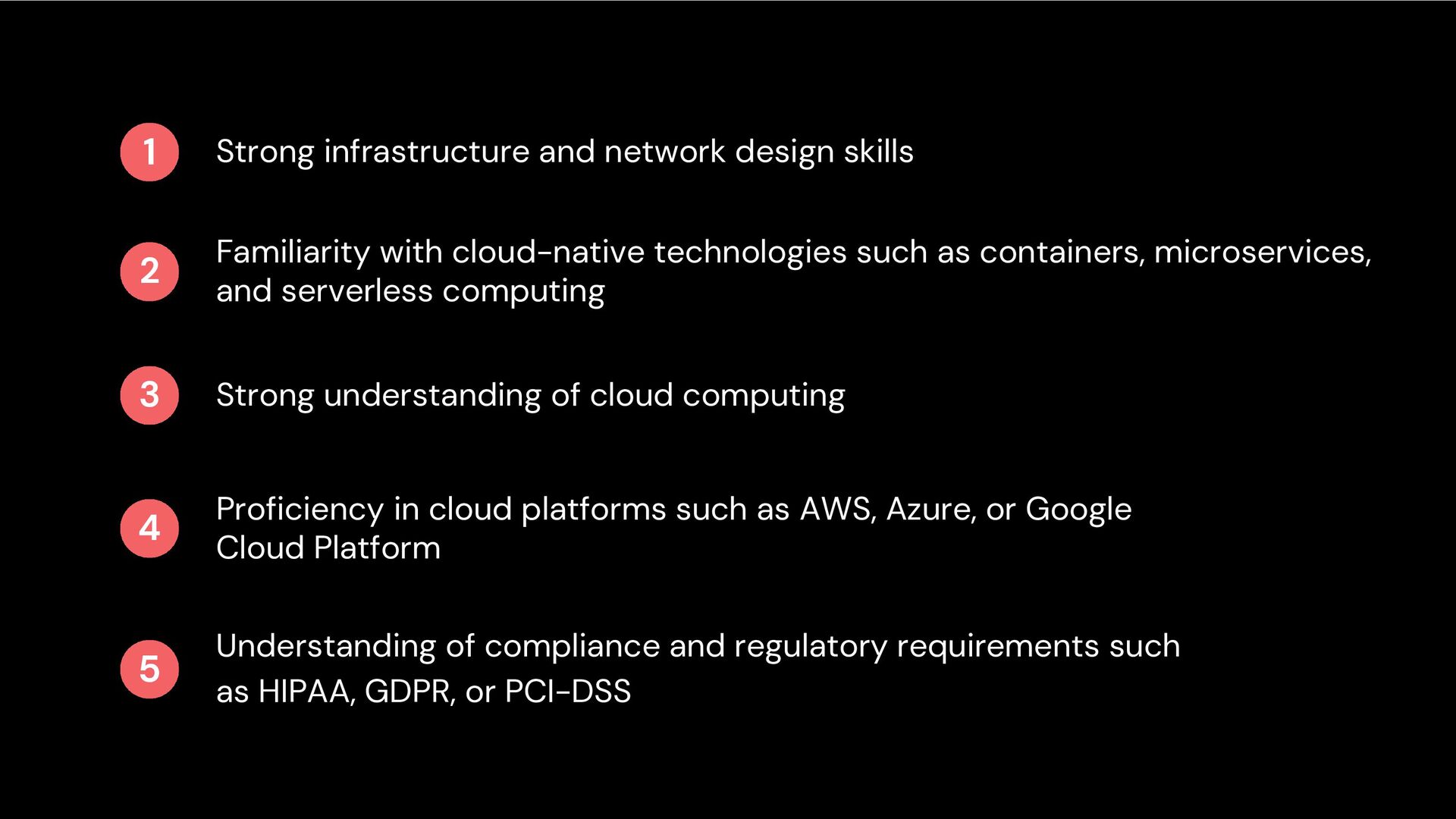
cloud-native technologies such as containers, microservices, and serverless computing 3 Strong understanding of cloud computing 4 Proficiency in cloud platforms such as AWS, Azure, or Google Cloud Platform 5 Understanding of compliance and regulatory requirements such as HIPAA, GDPR, or PCI-DSS
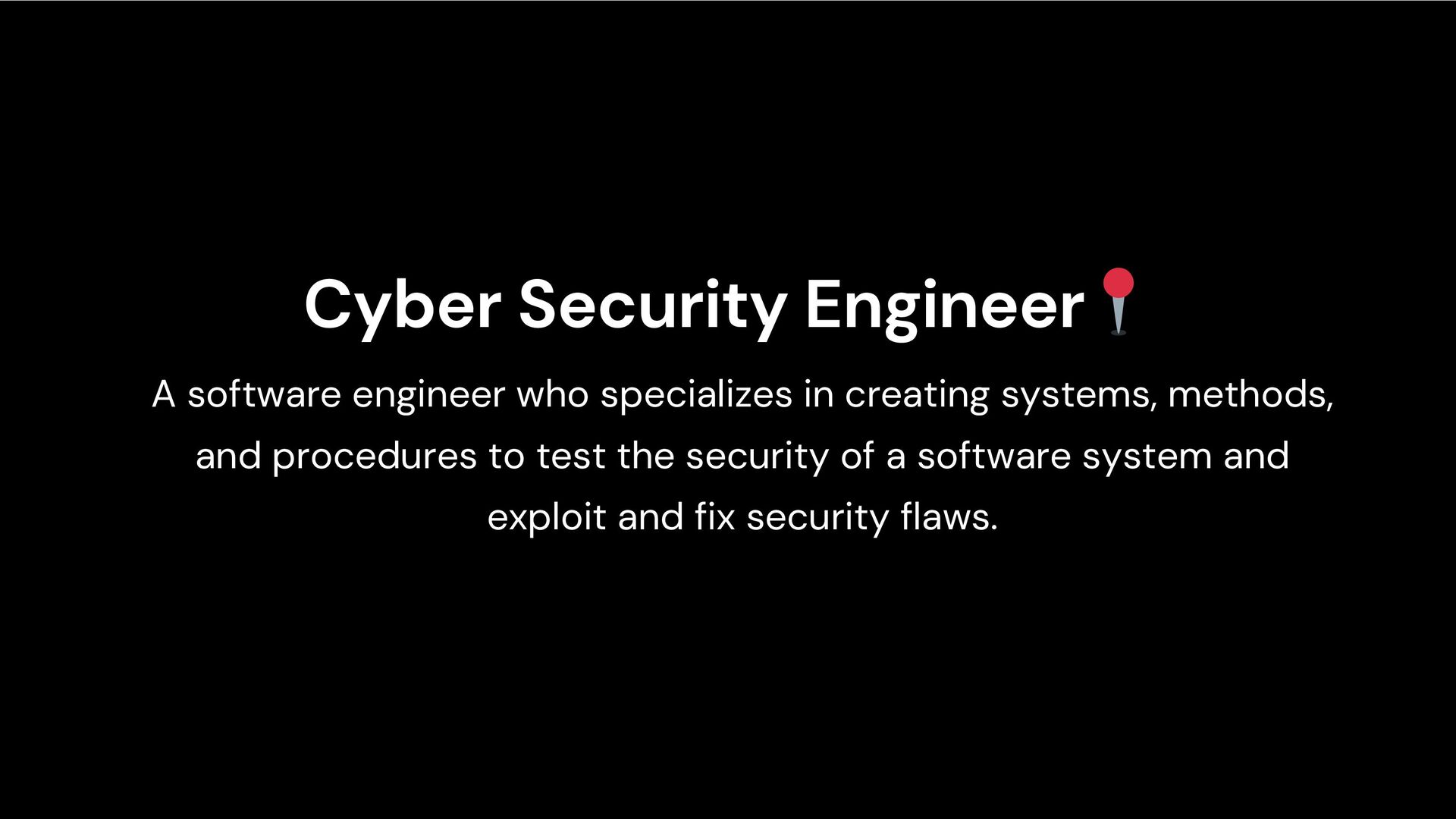
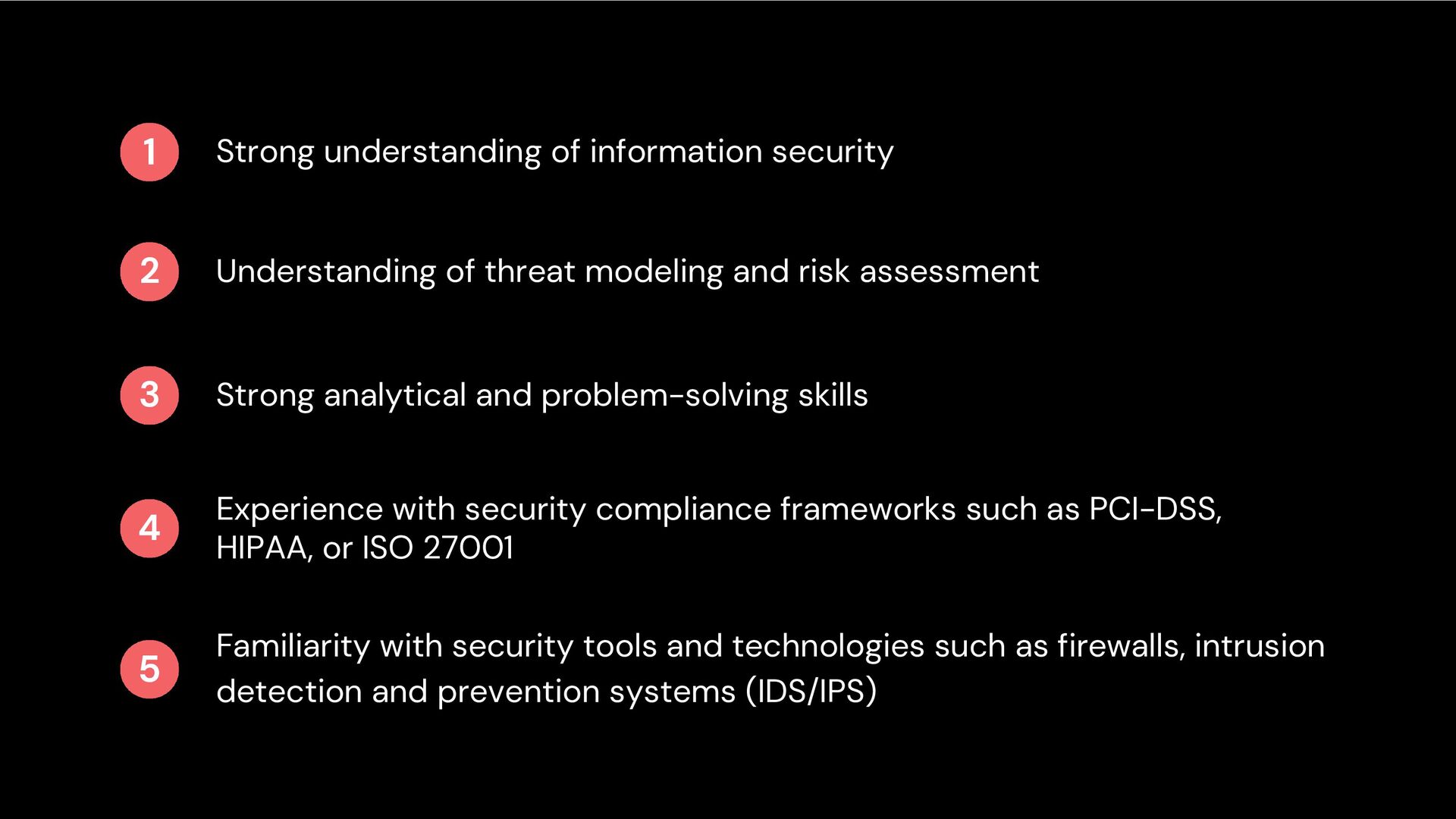
modeling and risk assessment 3 Strong analytical and problem-solving skills 4 Experience with security compliance frameworks such as PCI-DSS, HIPAA, or ISO 27001 5 Familiarity with security tools and technologies such as firewalls, intrusion detection and prevention systems (IDS/IPS)
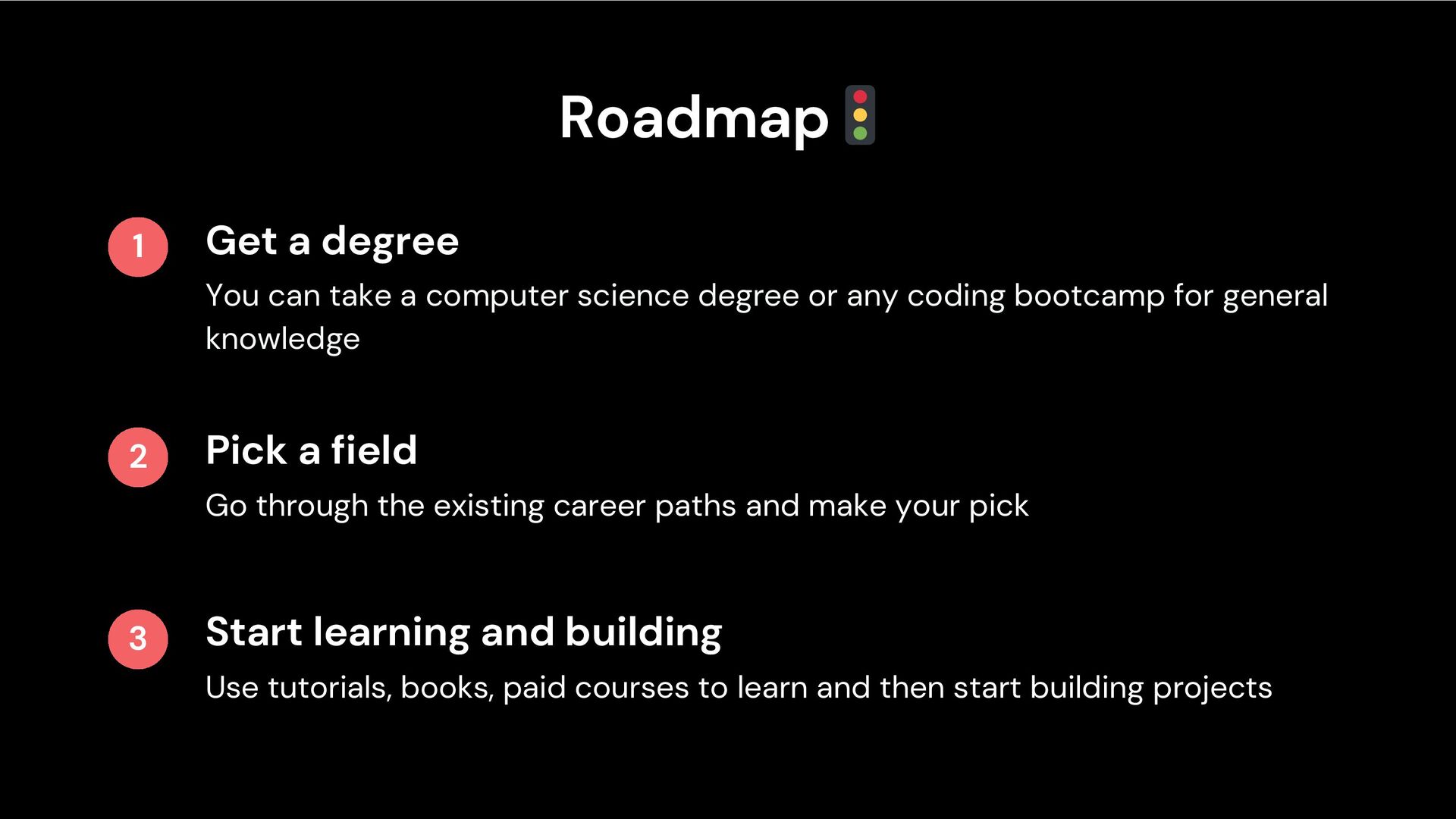
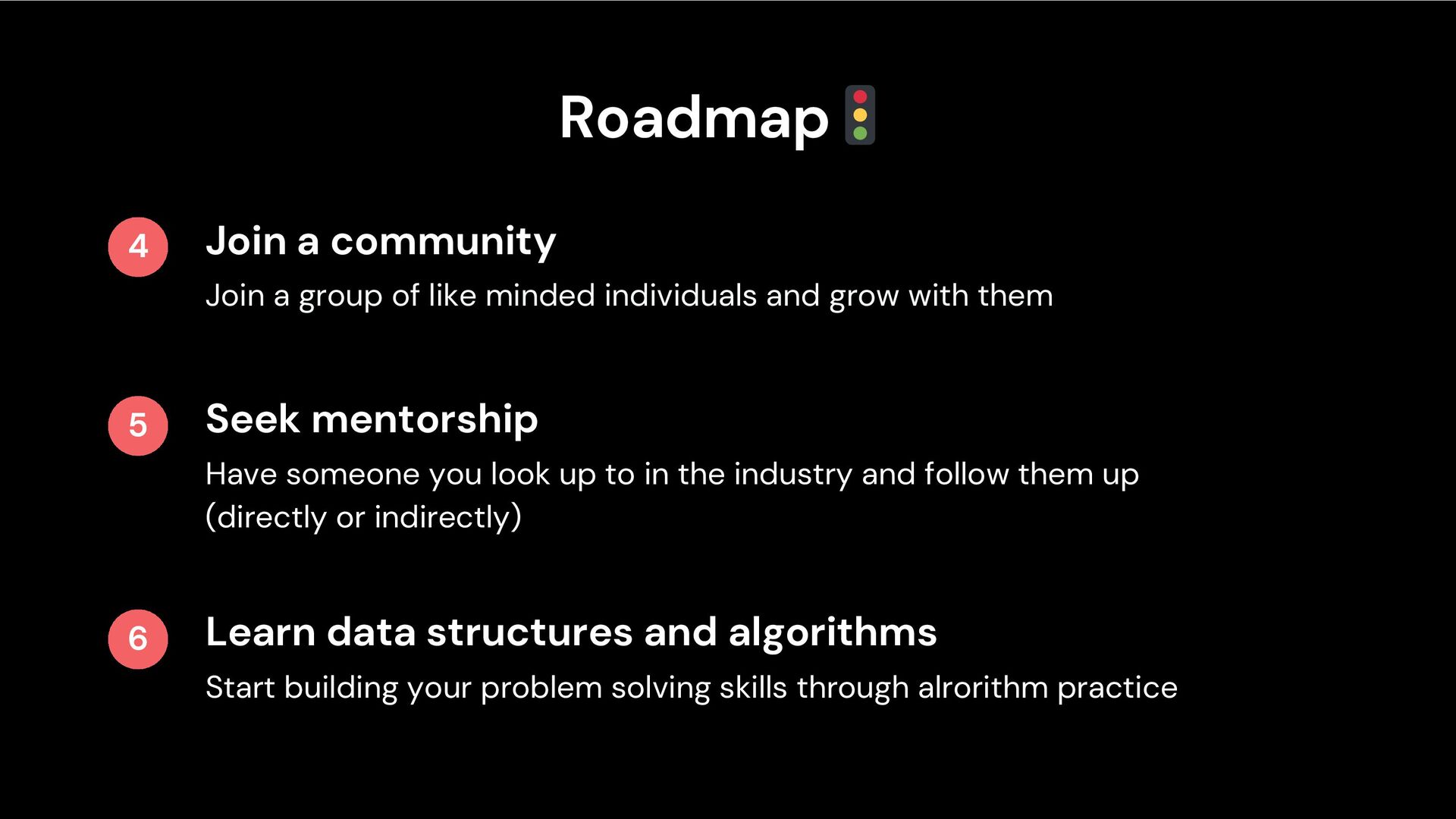
and building 1 2 3 You can take a computer science degree or any coding bootcamp for general knowledge Go through the existing career paths and make your pick Use tutorials, books, paid courses to learn and then start building projects
and algorithms 4 5 6 Join a group of like minded individuals and grow with them Have someone you look up to in the industry and follow them up (directly or indirectly) Start building your problem solving skills through alrorithm practice


 chisom
 jozono
 makocchi
 codmoninc
 ivry_presentationmaterials
 kakehashi
 ezaki
ezaki
 carta_engineering
 kentarofujii
 teamlab
 jtakeda
 hiracky16
 kworkdev
 soudai
 uxyall
 baasie
 bcantrill
 sabderemane
 nmsamuel
 lindahogenes
 ammeep
 axbom
axbom
 davidcarrasco
 lynnandtonic
 danielanewman