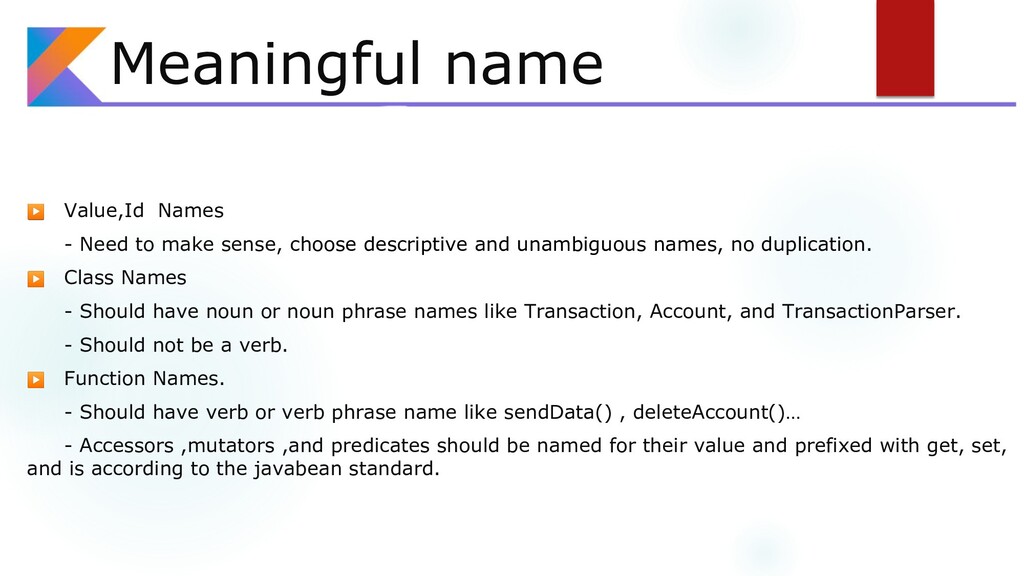
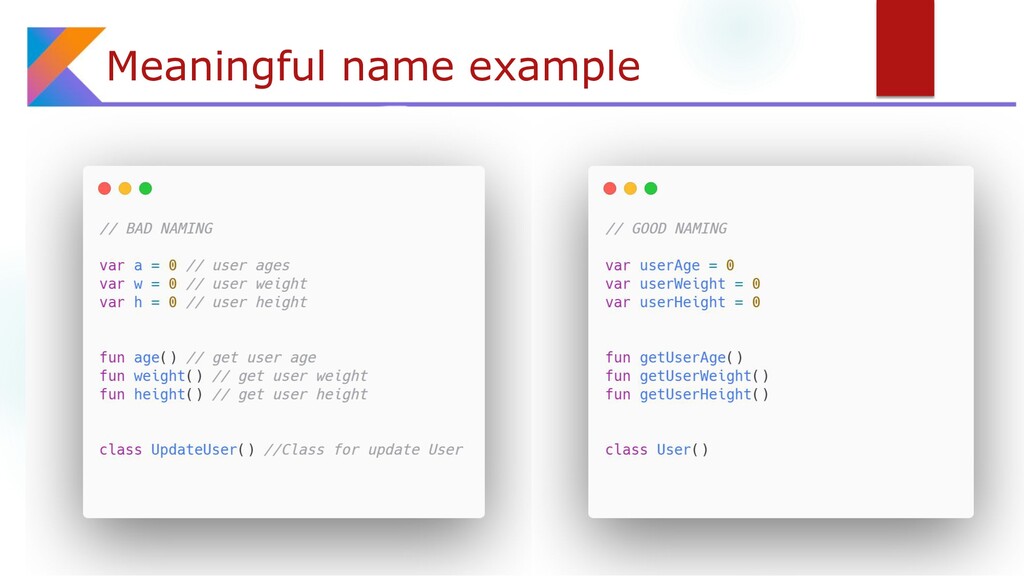
choose descriptive and unambiguous names, no duplication. ▶ Class Names - Should have noun or noun phrase names like Transaction, Account, and TransactionParser. - Should not be a verb. ▶ Function Names. - Should have verb or verb phrase name like sendData() , deleteAccount()… - Accessors ,mutators ,and predicates should be named for their value and prefixed with get, set, and is according to the javabean standard.
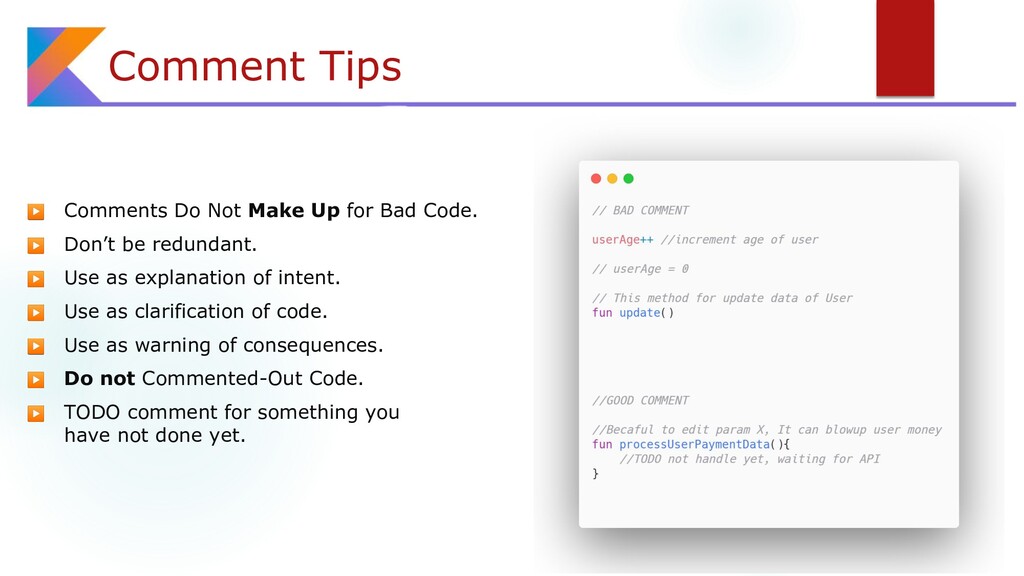
Code. ▶ Don’t be redundant. ▶ Use as explanation of intent. ▶ Use as clarification of code. ▶ Use as warning of consequences. ▶ Do not Commented-Out Code. ▶ TODO comment for something you have not done yet.
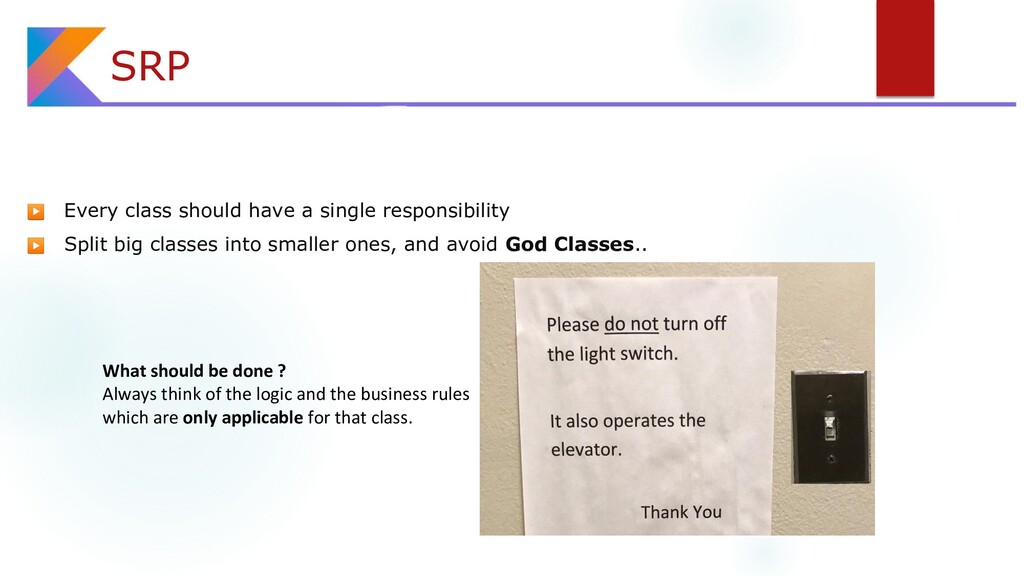
Split big classes into smaller ones, and avoid God Classes.. What should be done ? Always think of the logic and the business rules which are only applicable for that class.
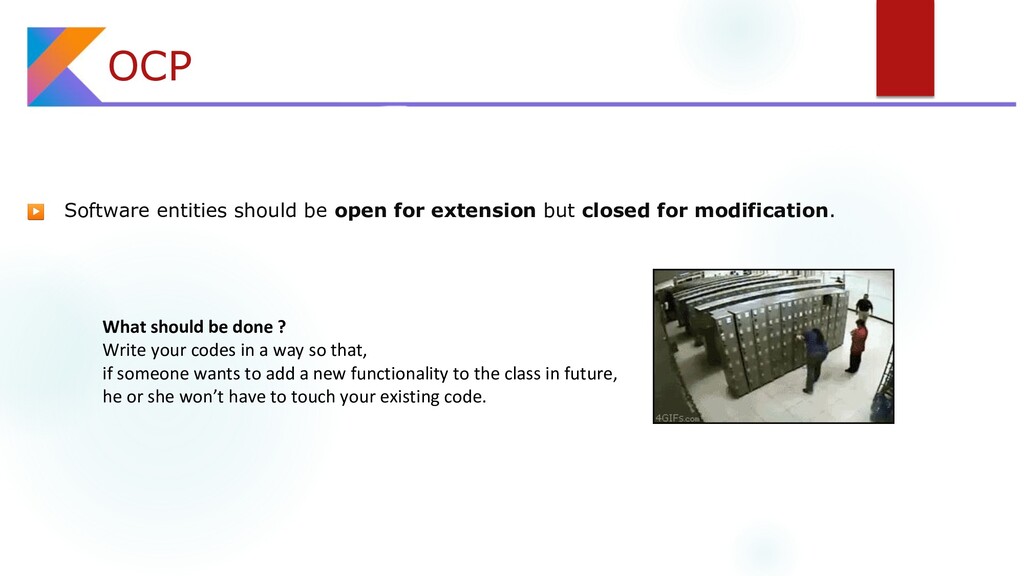
closed for modification. What should be done ? Write your codes in a way so that, if someone wants to add a new functionality to the class in future, he or she won’t have to touch your existing code.
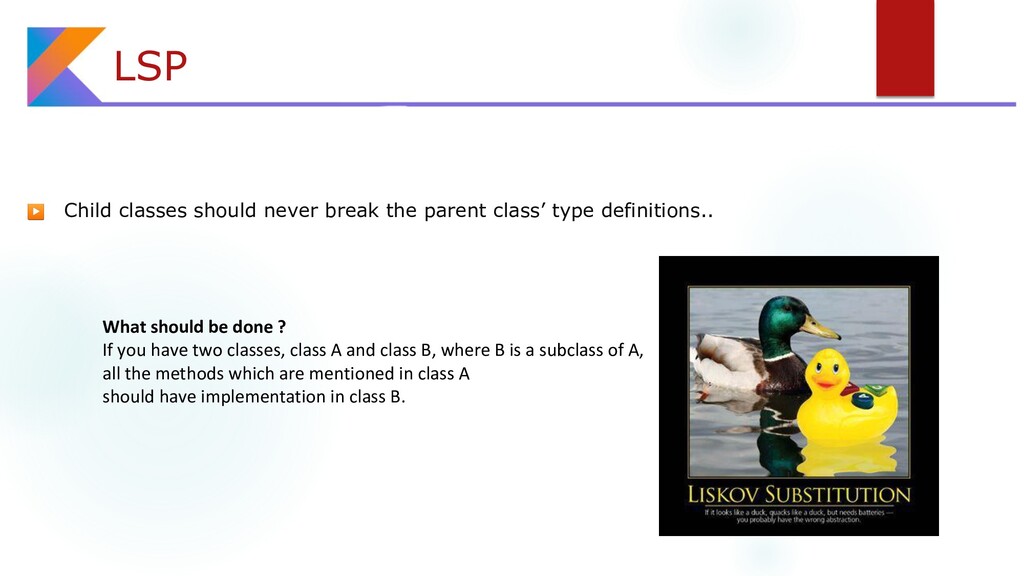
type definitions.. What should be done ? If you have two classes, class A and class B, where B is a subclass of A, all the methods which are mentioned in class A should have implementation in class B.
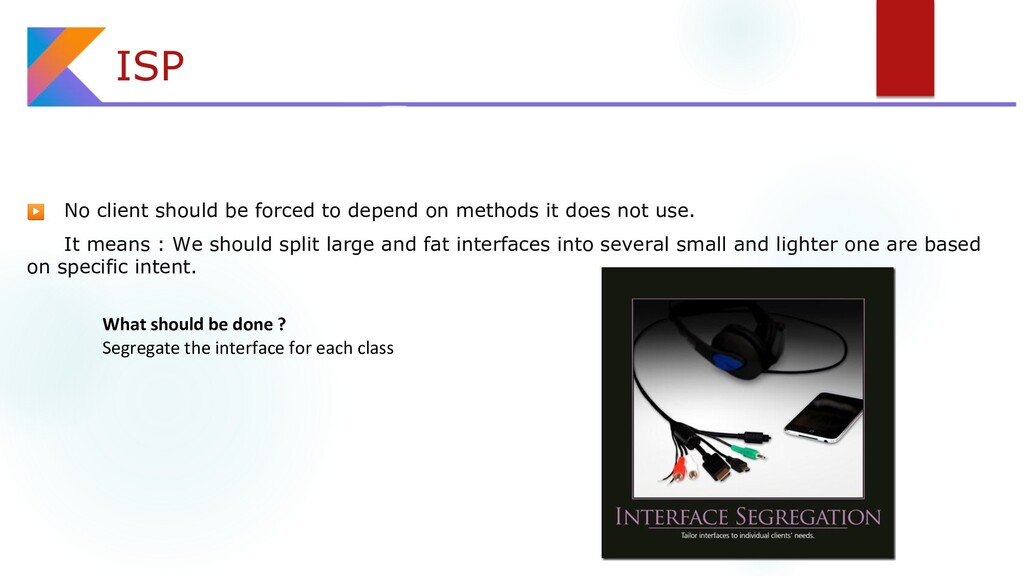
methods it does not use. It means : We should split large and fat interfaces into several small and lighter one are based on specific intent. What should be done ? Segregate the interface for each class
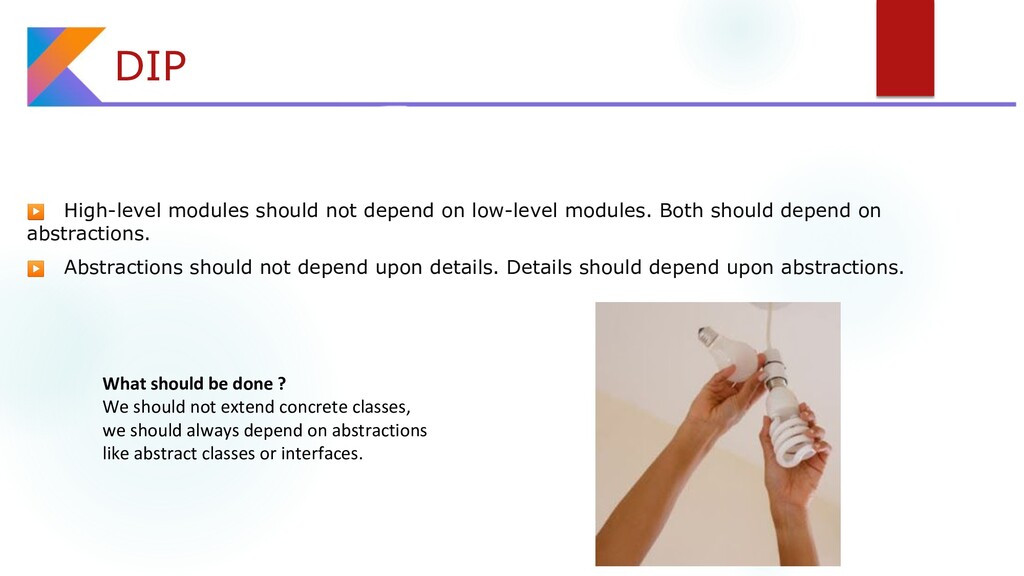
Both should depend on abstractions. ▶ Abstractions should not depend upon details. Details should depend upon abstractions. What should be done ? We should not extend concrete classes, we should always depend on abstractions like abstract classes or interfaces.


 chutienit
 steliosf
 tosite
 palkan
 oku053
 kaityo256
 hollycummins
 rkaga
rkaga
 oniak3ibm
 drumath2237
 kawashimo0
 mofurune
 artoy
artoy
 kristinabergwall1
 skipperchong
 thoeni
 khoart
 axbom
axbom
 rakko
rakko
 keavy
keavy
 marktimemedia
 kimpetersen
 techseoconnect
 marketingsoph
 aleyda