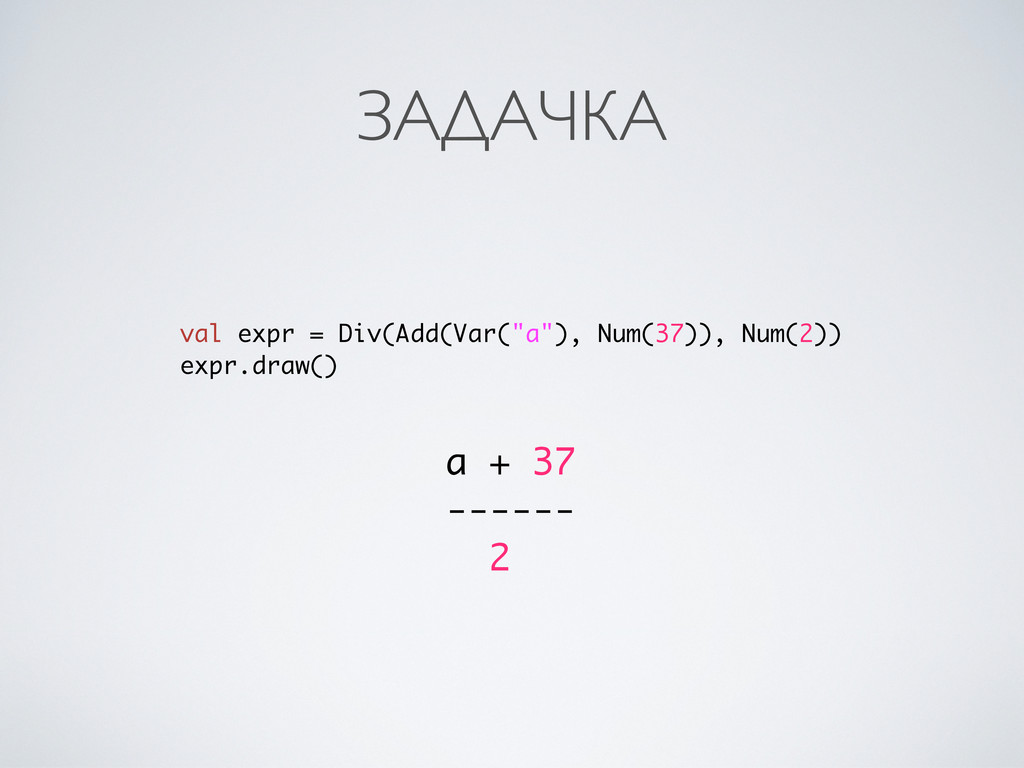
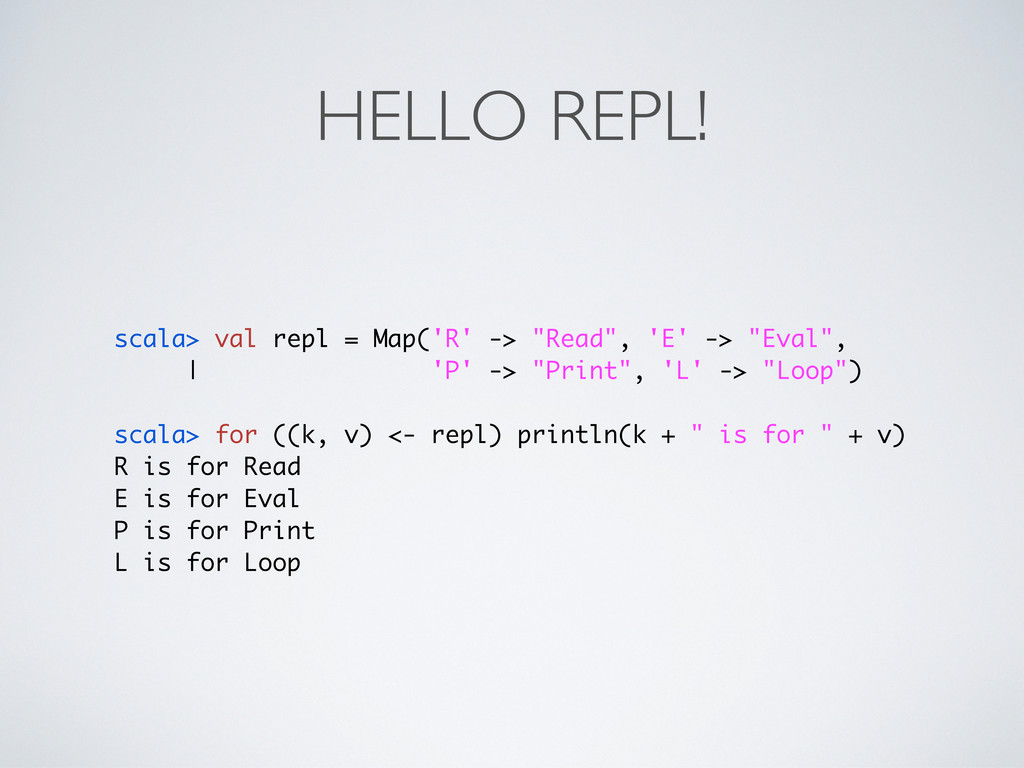
-> "Eval", | 'P' -> "Print", 'L' -> "Loop") scala> for ((k, v) <- repl) println(k + " is for " + v) R is for Read E is for Eval P is for Print L is for Loop
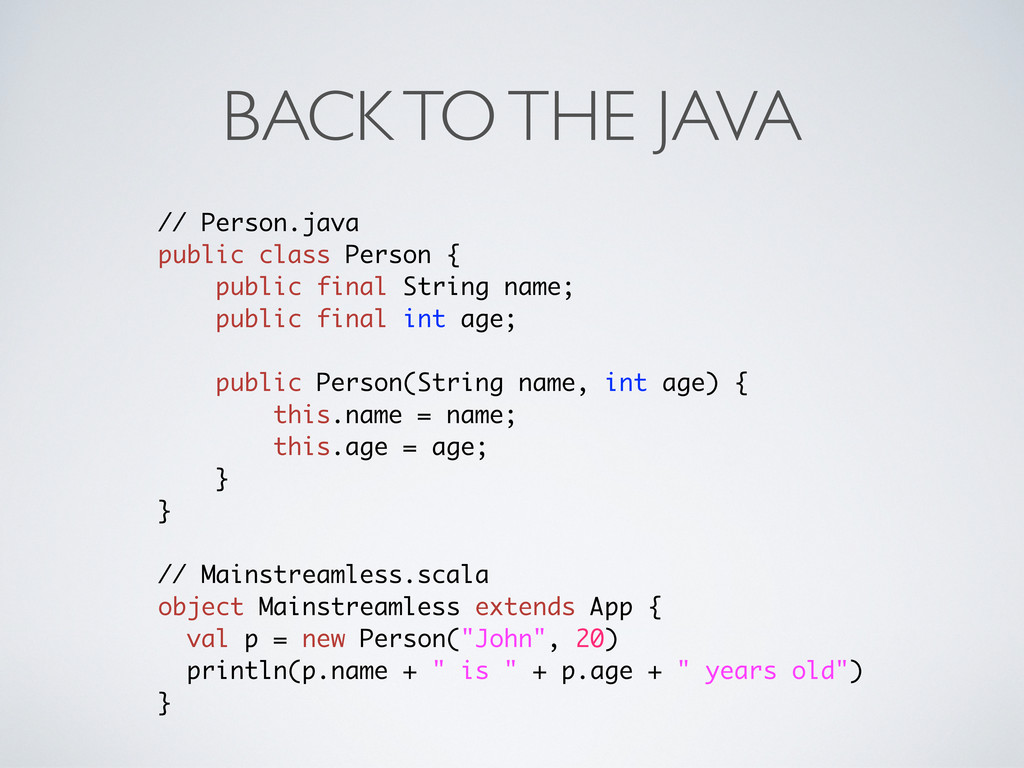
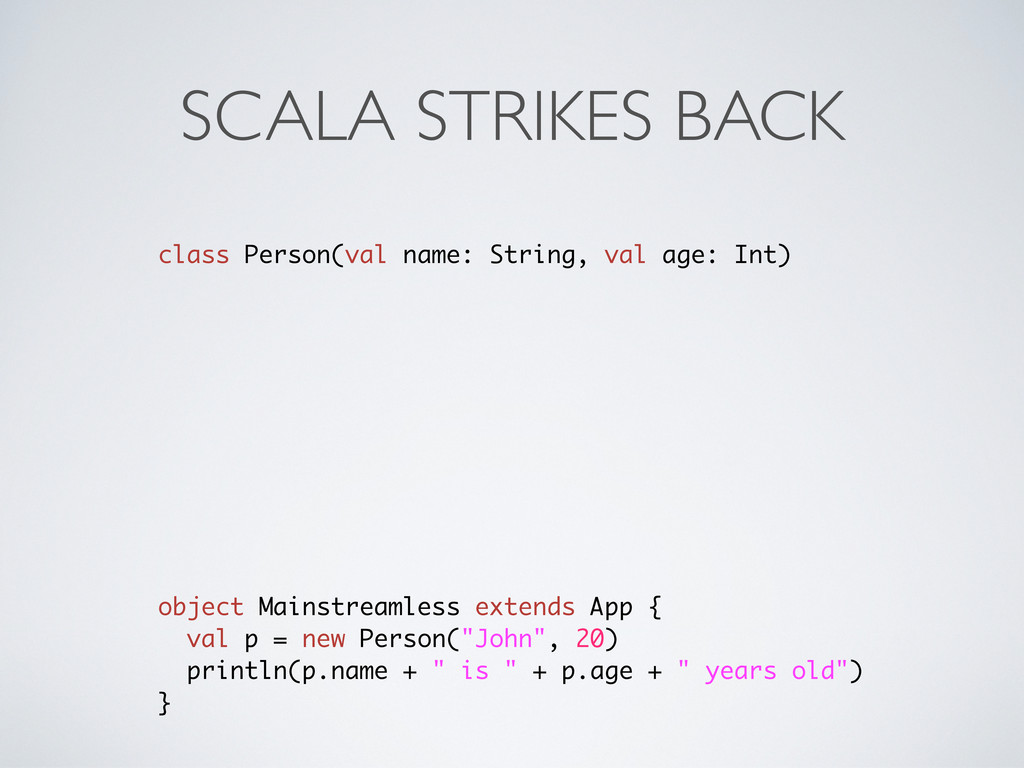
public final String name; public final int age; public Person(String name, int age) { this.name = name; this.age = age; } } // Mainstreamless.scala object Mainstreamless extends App { val p = new Person("John", 20) println(p.name + " is " + p.age + " years old") }
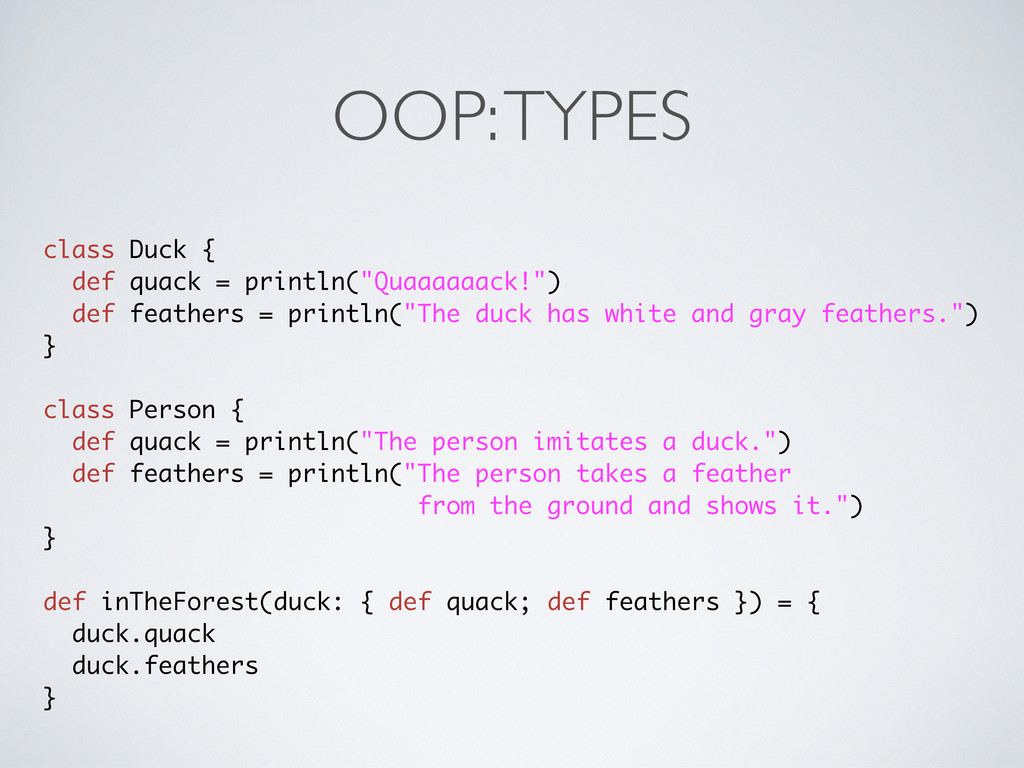
feathers = println("The duck has white and gray feathers.") } class Person { def quack = println("The person imitates a duck.") def feathers = println("The person takes a feather from the ground and shows it.") } def inTheForest(duck: { def quack; def feathers }) = { duck.quack duck.feathers }
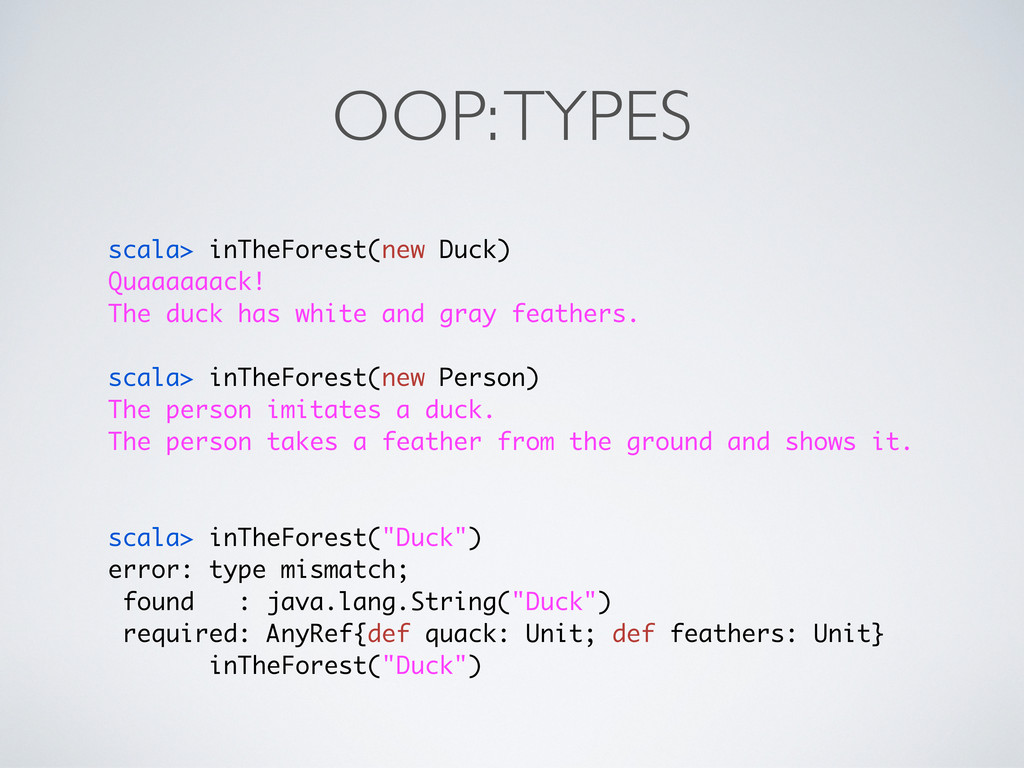
and gray feathers. scala> inTheForest(new Person) The person imitates a duck. The person takes a feather from the ground and shows it. scala> inTheForest("Duck") error: type mismatch; found : java.lang.String("Duck") required: AnyRef{def quack: Unit; def feathers: Unit} inTheForest("Duck")
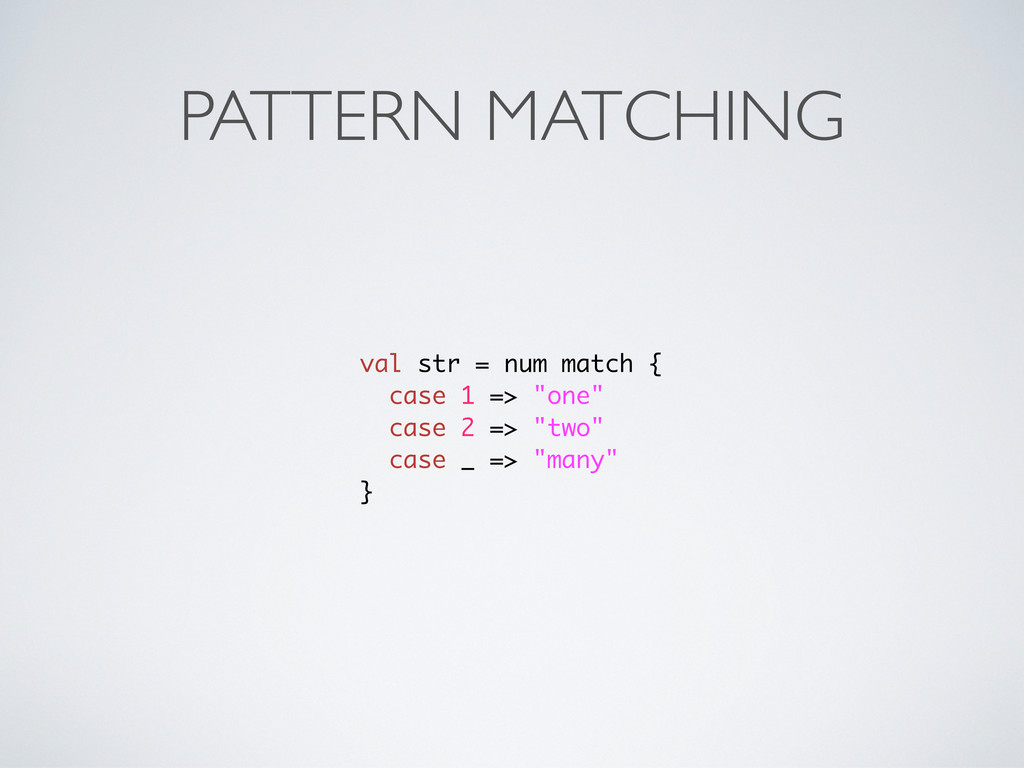
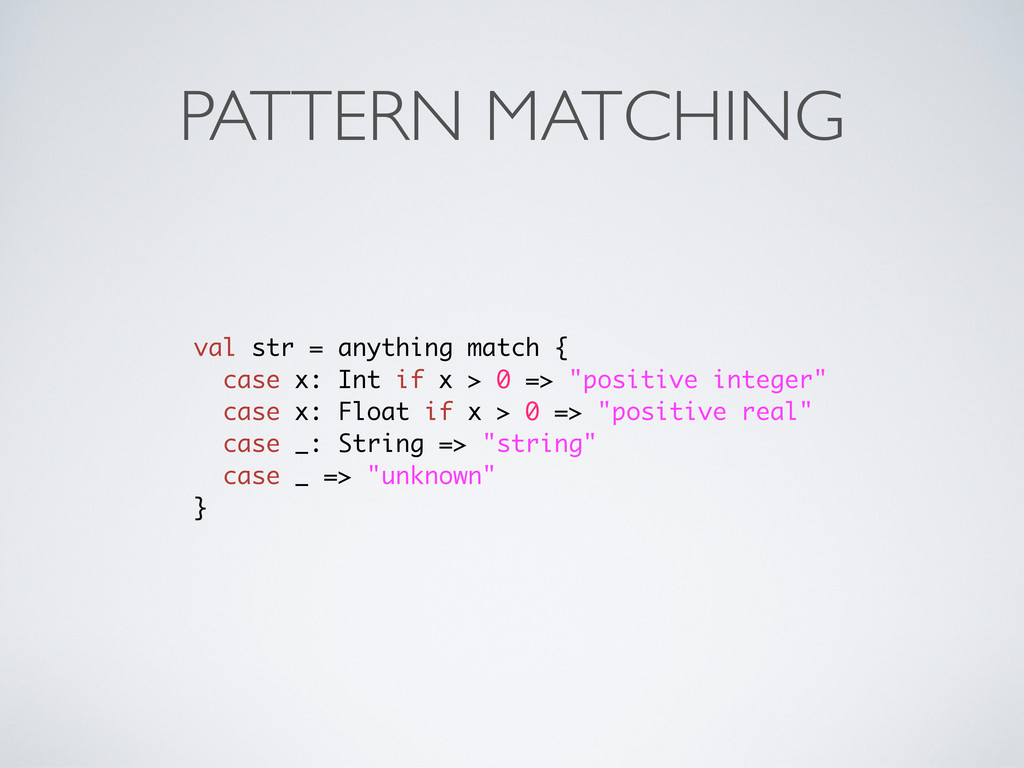
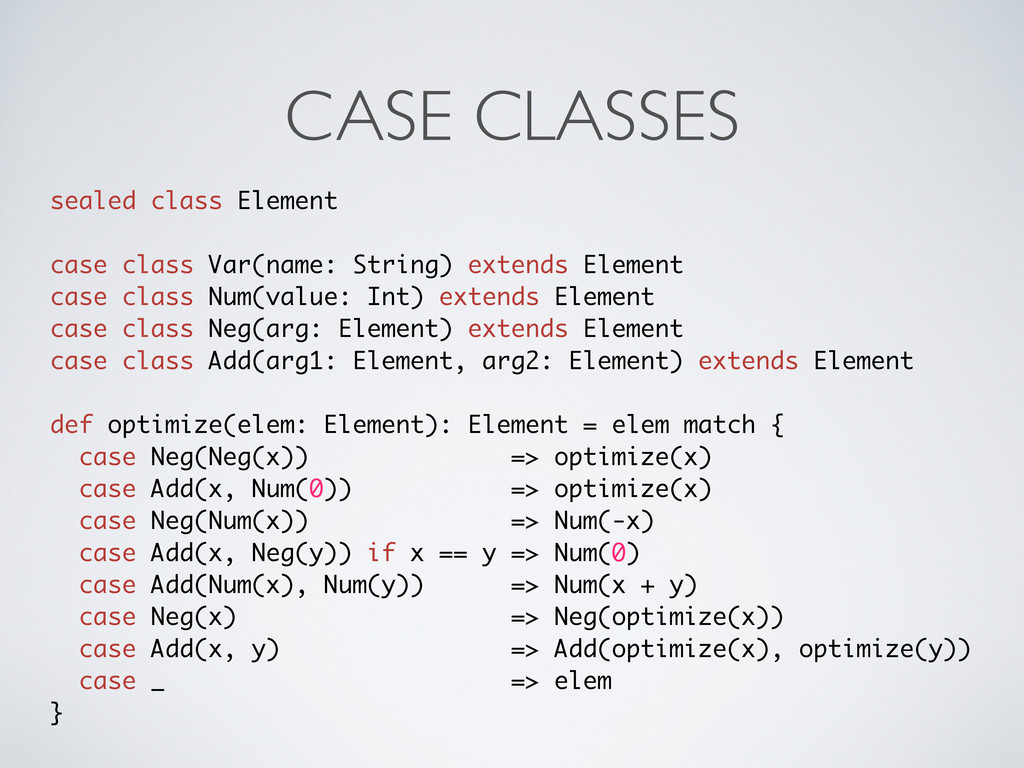
Element case class Num(value: Int) extends Element case class Neg(arg: Element) extends Element case class Add(arg1: Element, arg2: Element) extends Element def optimize(elem: Element): Element = elem match { case Neg(Neg(x)) => optimize(x) case Add(x, Num(0)) => optimize(x) case Neg(Num(x)) => Num(-x) case Add(x, Neg(y)) if x == y => Num(0) case Add(Num(x), Num(y)) => Num(x + y) case Neg(x) => Neg(optimize(x)) case Add(x, y) => Add(optimize(x), optimize(y)) case _ => elem }
– guides & tutorials • Programming in Scala: Second Edition – good book • http://scala-ide.org – Scala IDE for Eclipse • http://plugins.intellij.net/plugin/?id=1347 – IntelliJ IDEA plugin


 cypok
cypok
 econanringo
 naokihaba
 lef237
 sorah
sorah
 teyamagu
 yuta_onishi_97
 moro
moro
 akase244
 morizo_1984
 sylph01
 yukiny
 kawashimo0
 schlessera
 thirion
 palkan
 chrisshort
 iamctodd
 helmedeiros
.png) helenjbeal
helenjbeal
 tenderlove
 reverentgeek
 chrislema
 sergeychernyshev
 cassininazir
![НЕМНОГО О SCALA Владимир Парфиненко vladimir.parfi[email protected] @cypok](https://files.speakerdeck.com/presentations/ed7e4b30a03301305c5142a19afd6dd5/slide_0.jpg)



![OOP: TRAITS trait Ordered[A] { def compare(that: A): Int def](https://files.speakerdeck.com/presentations/ed7e4b30a03301305c5142a19afd6dd5/slide_14.jpg)
![DEMO import java.util.ArrayList; // ... Person[] people, minors, adults; void](https://files.speakerdeck.com/presentations/ed7e4b30a03301305c5142a19afd6dd5/slide_21.jpg)

![BONUS: CONCURRENCY actor { receive { case people: Set[Person] =>](https://files.speakerdeck.com/presentations/ed7e4b30a03301305c5142a19afd6dd5/slide_27.jpg)
![BONUS: PARALLELISM val people: Array[Person] val (minors, adults) = people](https://files.speakerdeck.com/presentations/ed7e4b30a03301305c5142a19afd6dd5/slide_28.jpg)
![BONUS: FUTURES val f: Future[List[String]] = future { session.getRecentPosts }](https://files.speakerdeck.com/presentations/ed7e4b30a03301305c5142a19afd6dd5/slide_29.jpg)