Upgrade to Pro — share decks privately, control downloads, hide ads and more …

AsyncAPI 101

Sponsored · Your Podcast. Everywhere. Effortlessly. Share. Educate. Inspire. Entertain. You do you. We'll handle the rest.

AsyncAPI 101

Avatar for Daniel Kocot

Daniel Kocot

May 10, 2022
Tweet

More Decks by Daniel Kocot

Other Decks in Technology

Transcript

  1. Name: Daniel Kocot Role: Senior Solution Architect / Head of

    API Experience & Operations Email: Twitter: @dk_1977 LinkedIn: [email protected] https://www.linkedin.com/in/danielkocot/
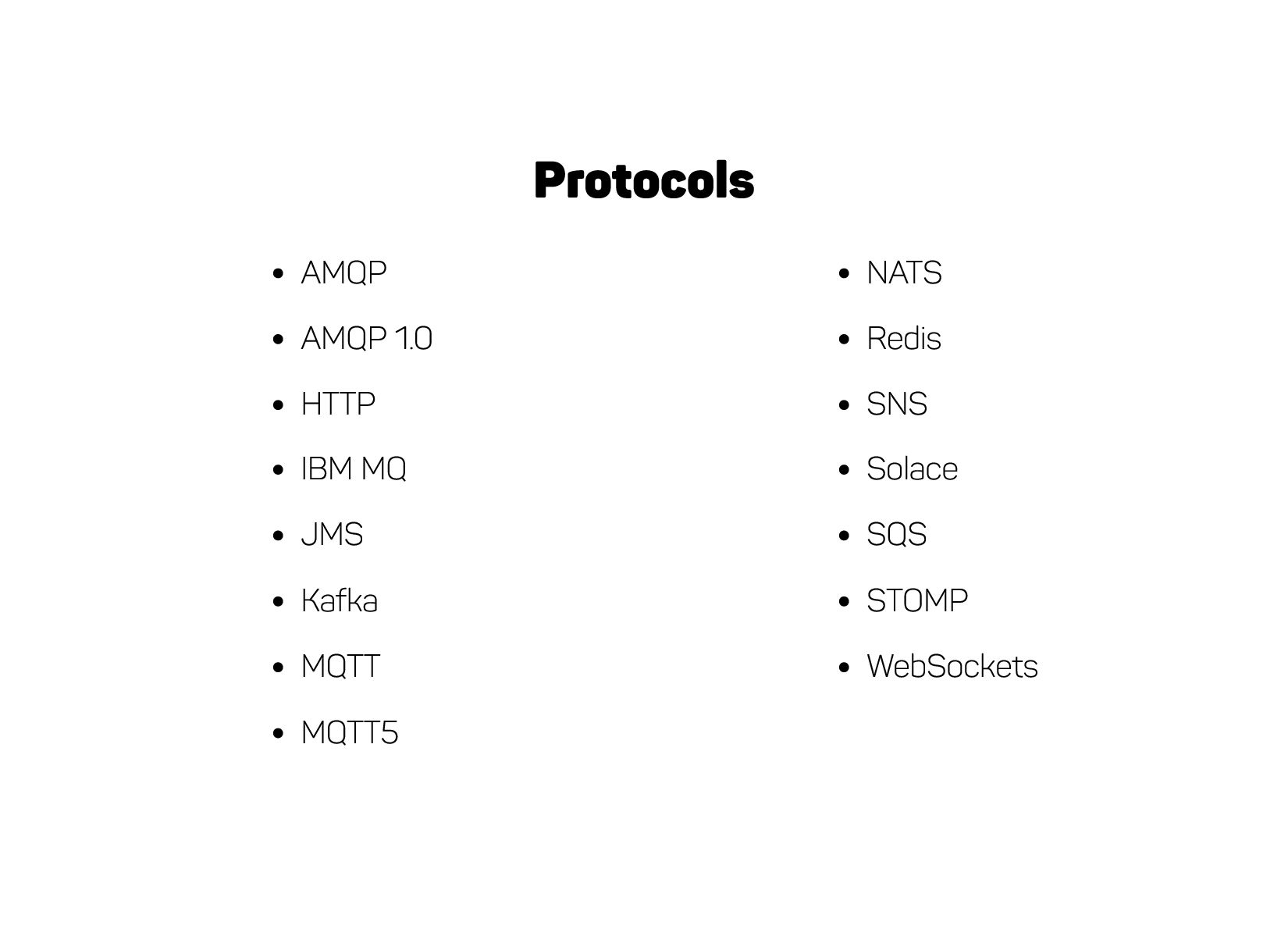
  2. Protocols AMQP AMQP 1.0 HTTP IBM MQ JMS Kafka MQTT

    MQTT5 NATS Redis SNS Solace SQS STOMP WebSockets
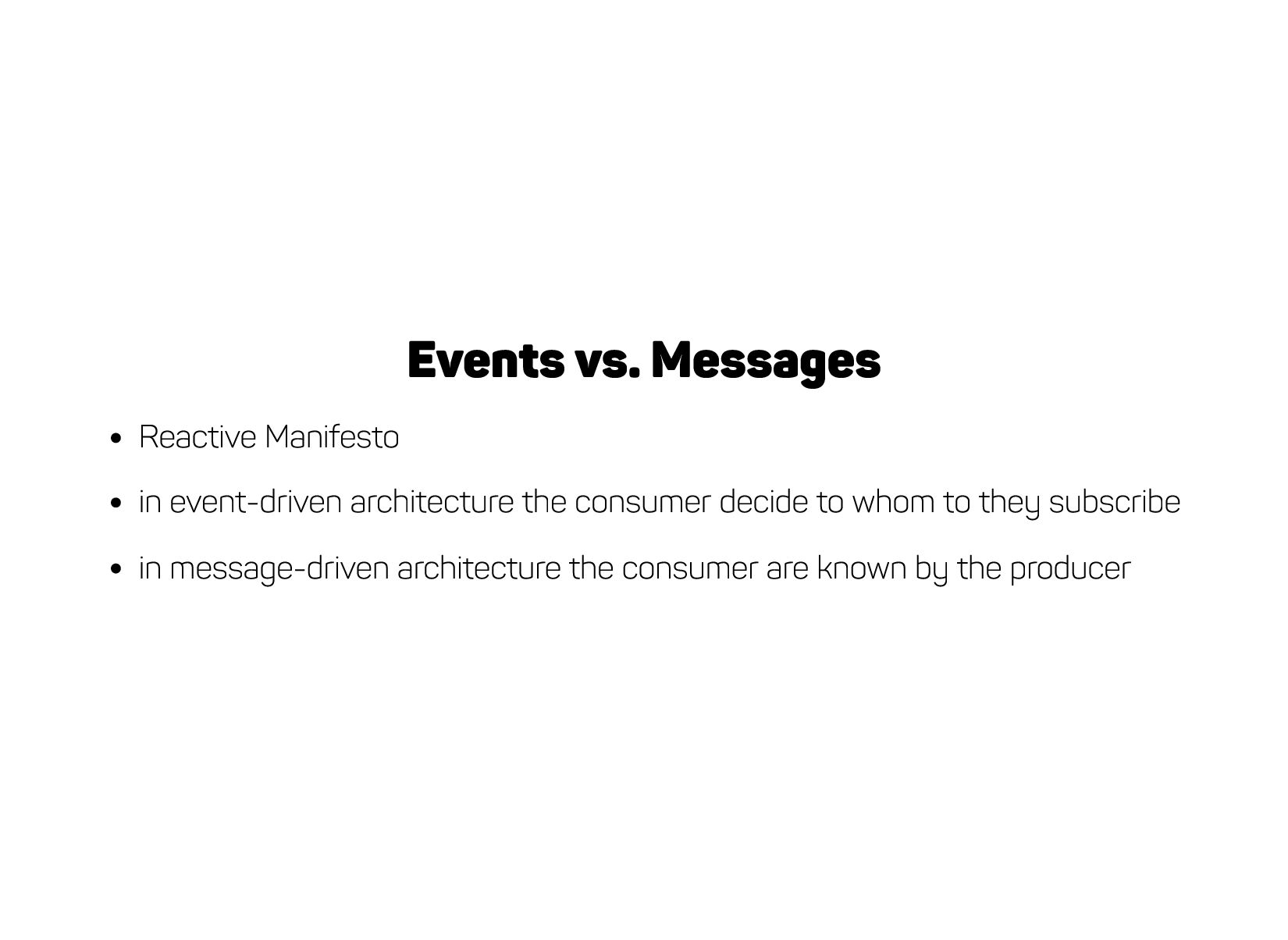
  3. Events vs. Messages Reactive Manifesto in event-driven architecture the consumer

    decide to whom to they subscribe in message-driven architecture the consumer are known by the producer
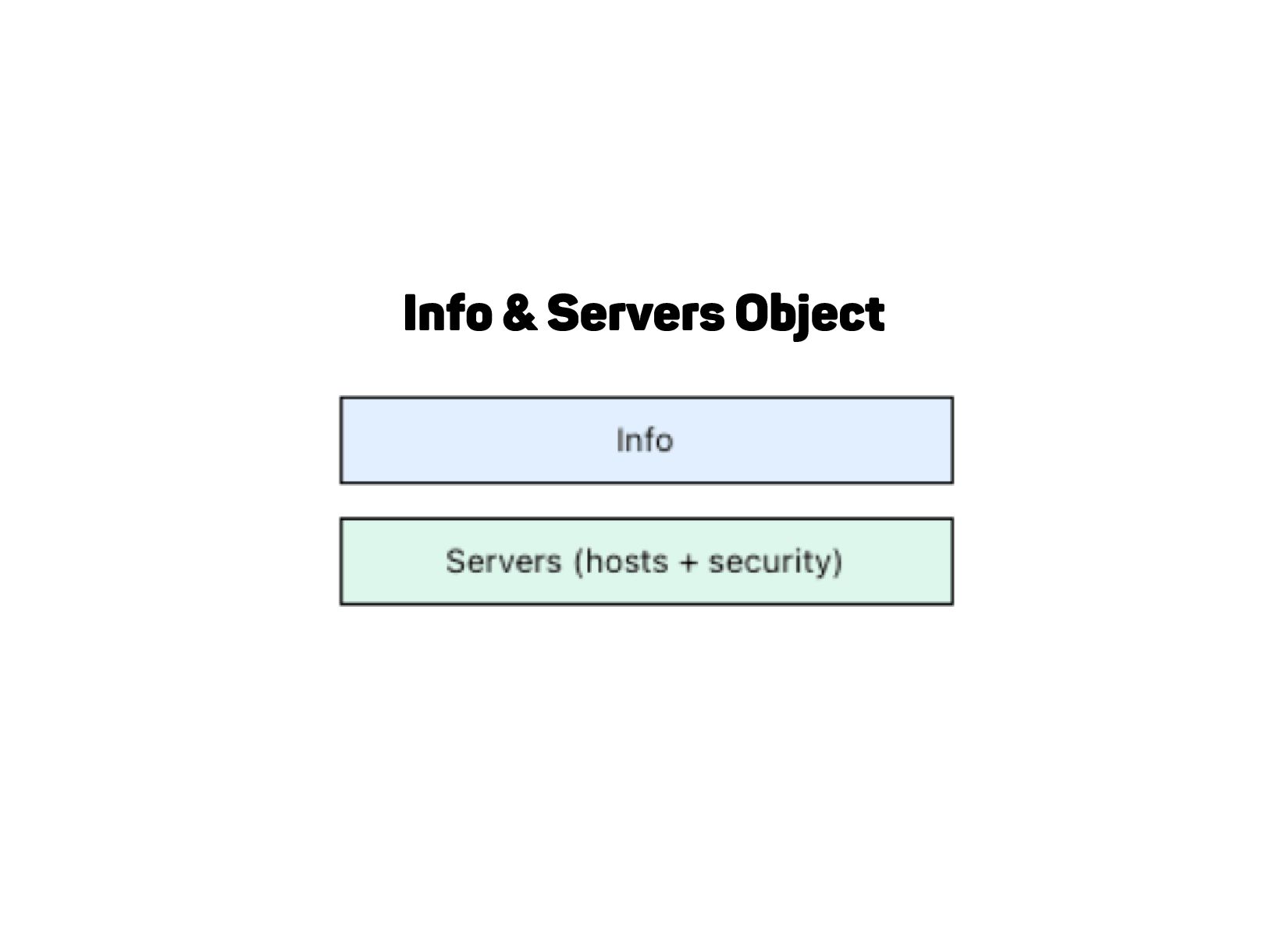
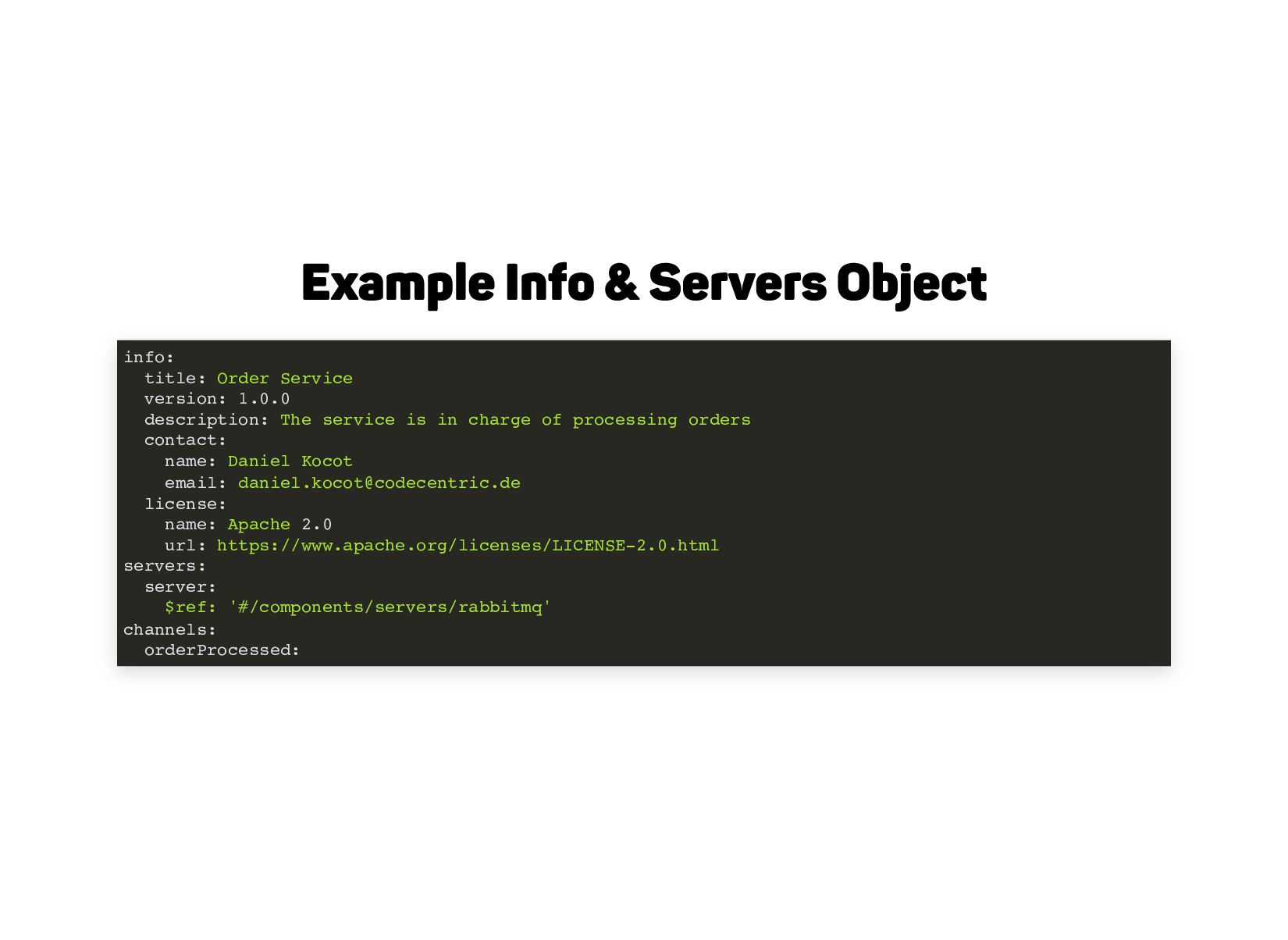
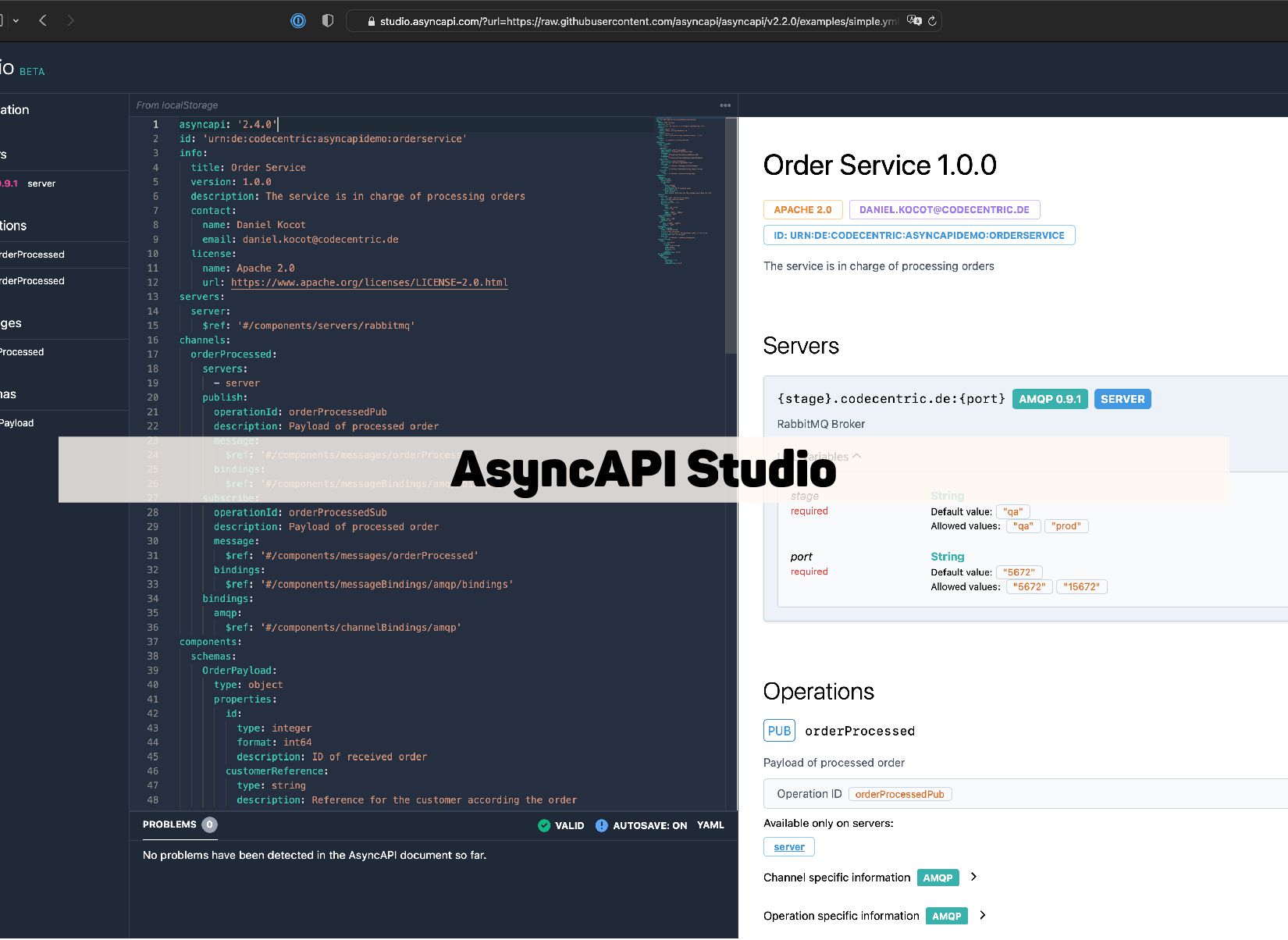
  4. Example Info & Servers Object info: title: Order Service version:

    1.0.0 description: The service is in charge of processing orders contact: name: Daniel Kocot email: [email protected] license: name: Apache 2.0 url: https://www.apache.org/licenses/LICENSE-2.0.html servers: server: $ref: '#/components/servers/rabbitmq' channels: orderProcessed:
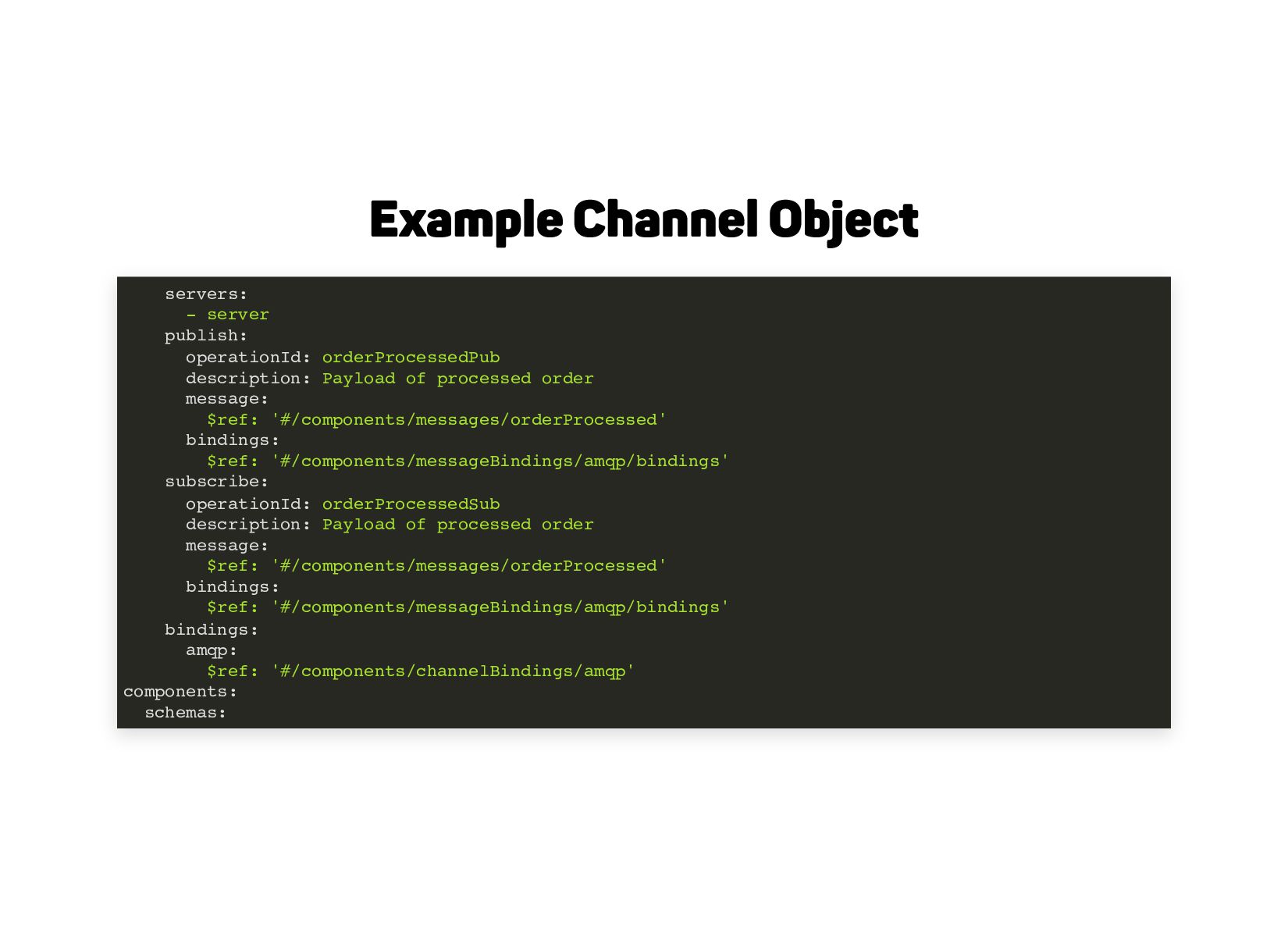
  5. Example Channel Object servers: - server publish: operationId: orderProcessedPub description:

    Payload of processed order message: $ref: '#/components/messages/orderProcessed' bindings: $ref: '#/components/messageBindings/amqp/bindings' subscribe: operationId: orderProcessedSub description: Payload of processed order message: $ref: '#/components/messages/orderProcessed' bindings: $ref: '#/components/messageBindings/amqp/bindings' bindings: amqp: $ref: '#/components/channelBindings/amqp' components: schemas:
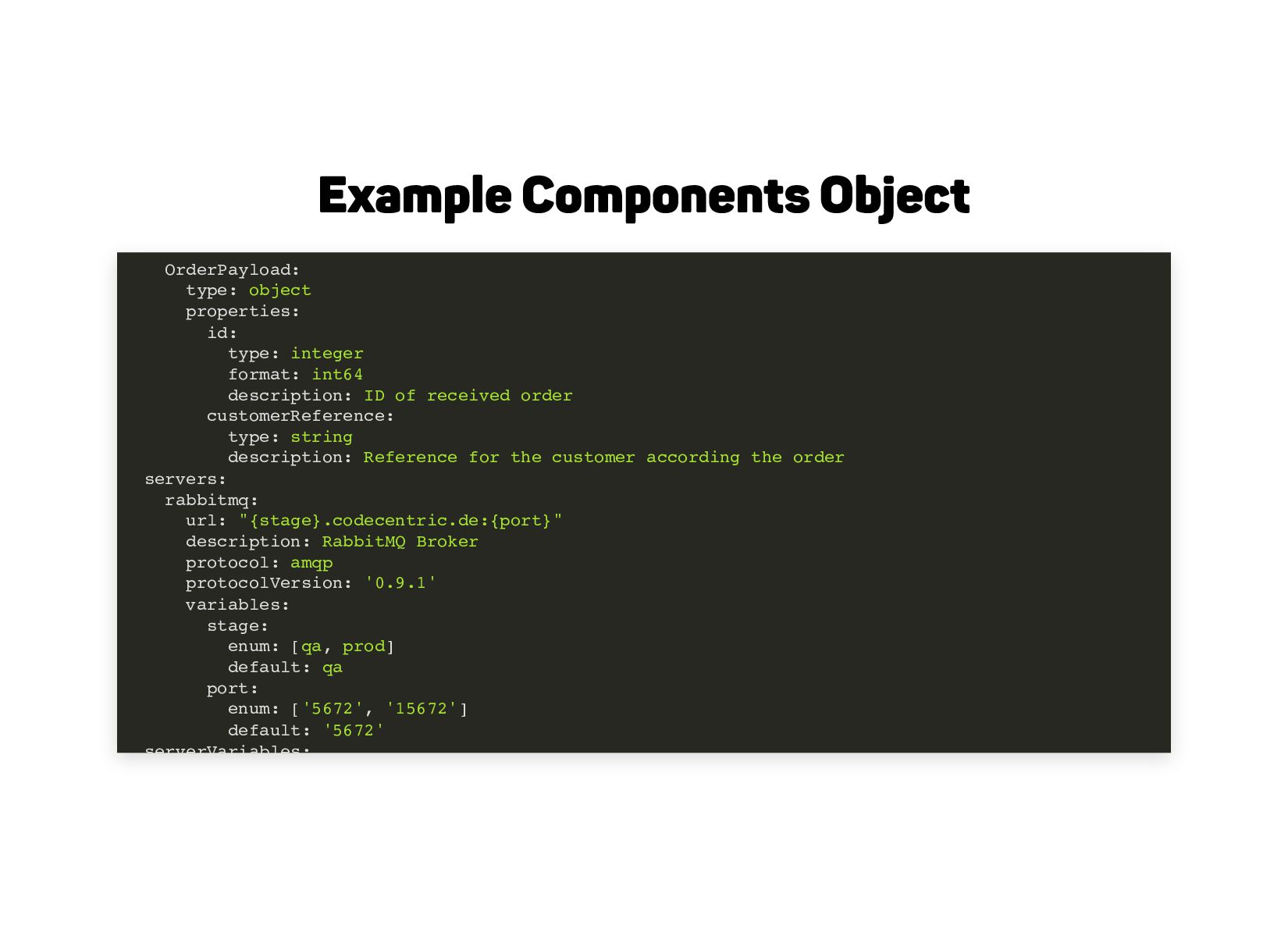
  6. Example Components Object OrderPayload: type: object properties: id: type: integer

    format: int64 description: ID of received order customerReference: type: string description: Reference for the customer according the order servers: rabbitmq: url: "{stage}.codecentric.de:{port}" description: RabbitMQ Broker protocol: amqp protocolVersion: '0.9.1' variables: stage: enum: [qa, prod] default: qa port: enum: ['5672', '15672'] default: '5672' serverVariables:
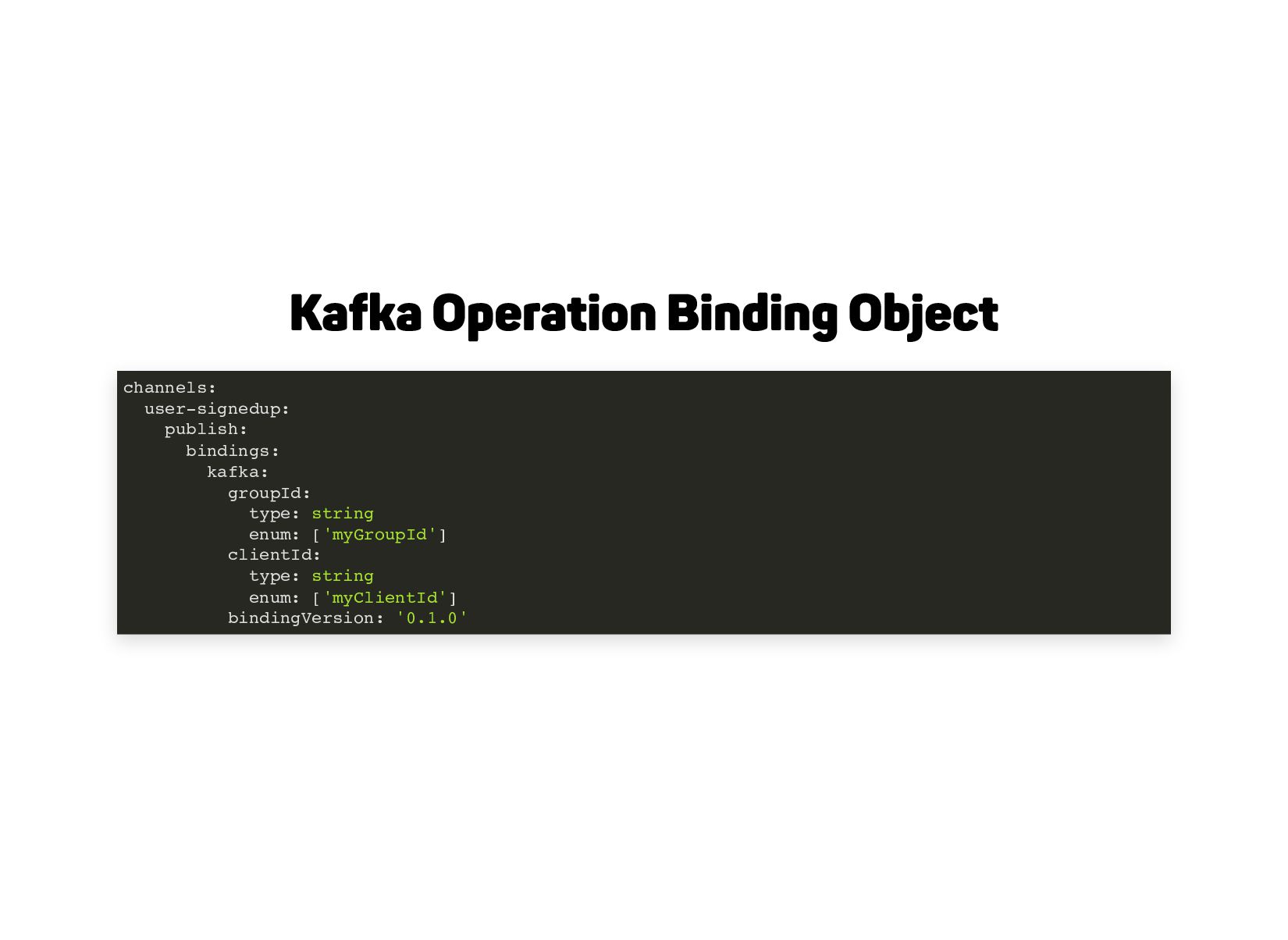
  7. Kafka Operation Binding Object channels: user-signedup: publish: bindings: kafka: groupId:

    type: string enum: ['myGroupId'] clientId: type: string enum: ['myClientId'] bindingVersion: '0.1.0'
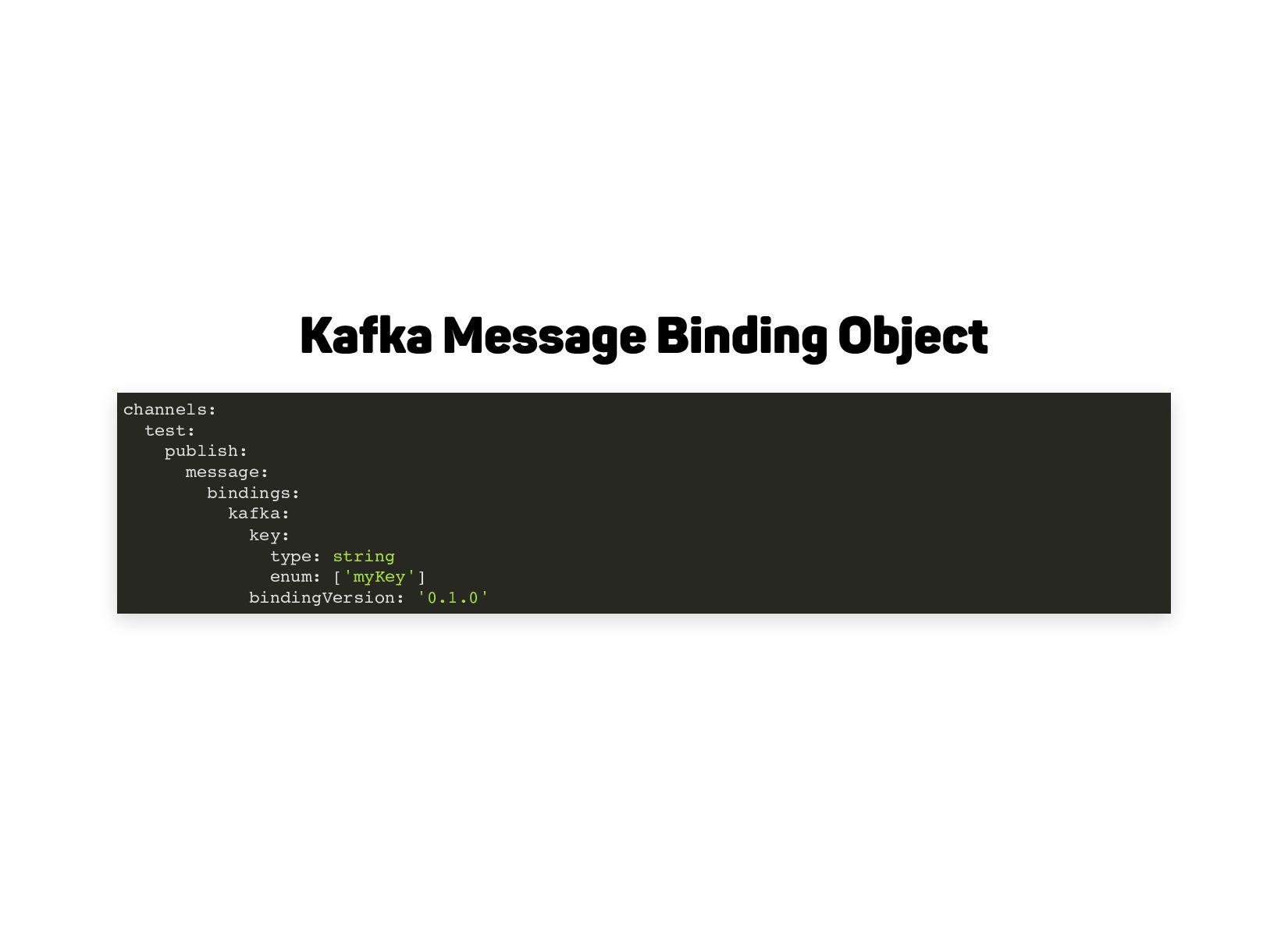
  8. Kafka Message Binding Object channels: test: publish: message: bindings: kafka:

    key: type: string enum: ['myKey'] bindingVersion: '0.1.0'
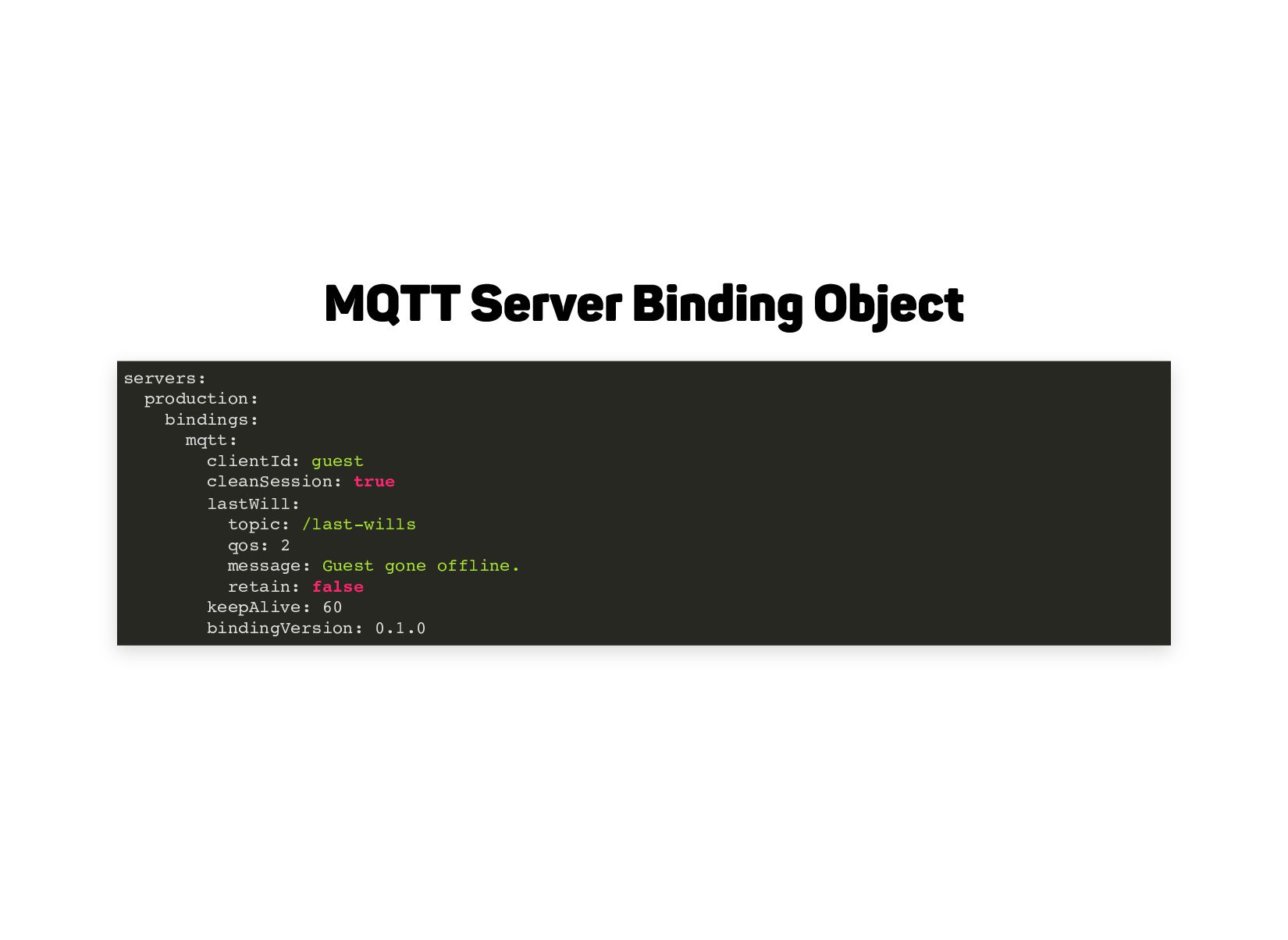
  9. MQTT Server Binding Object servers: production: bindings: mqtt: clientId: guest

    cleanSession: true lastWill: topic: /last-wills qos: 2 message: Guest gone offline. retain: false keepAlive: 60 bindingVersion: 0.1.0
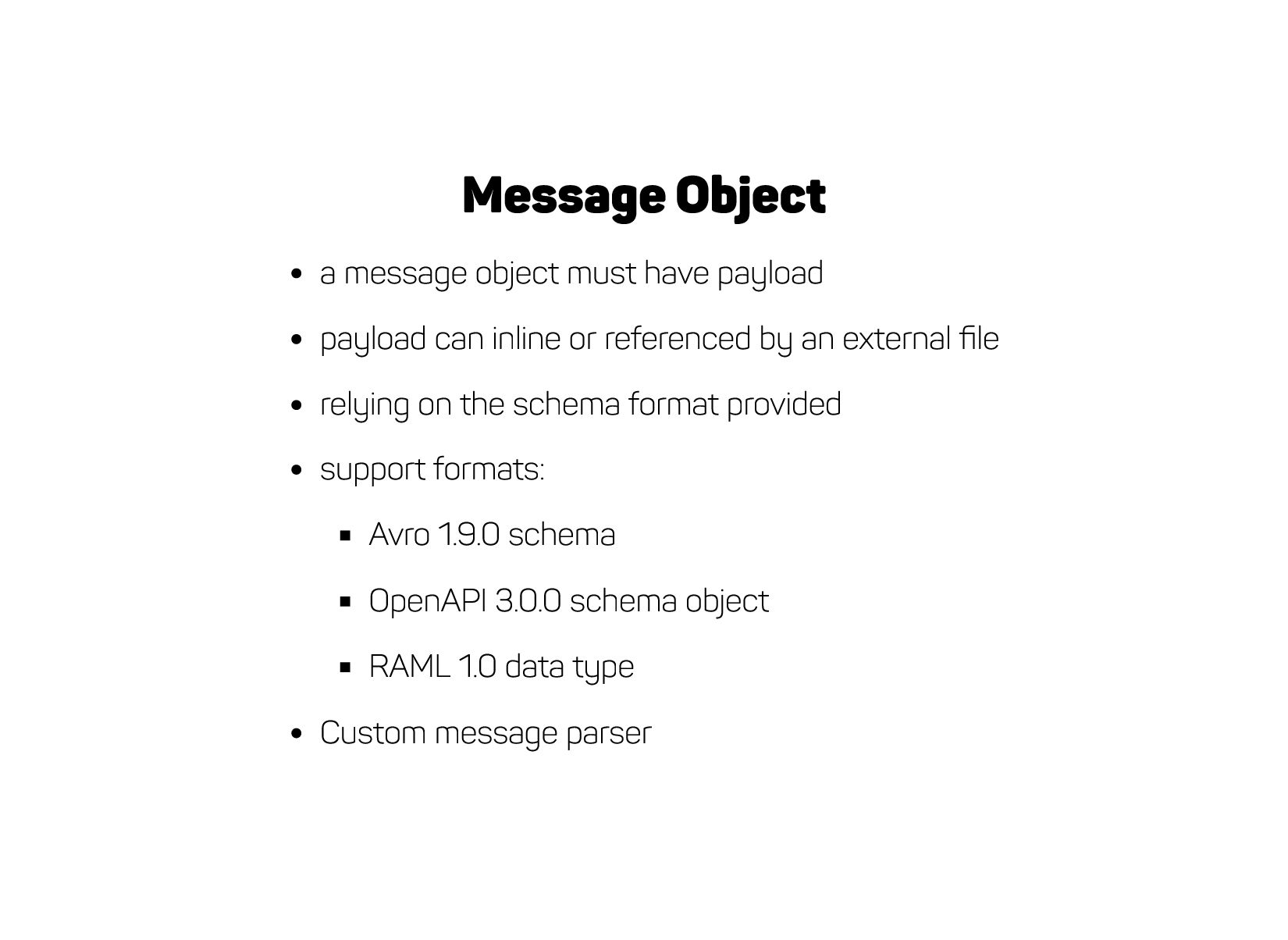
  10. Message Object a message object must have payload payload can

    inline or referenced by an external file relying on the schema format provided support formats: Avro 1.9.0 schema OpenAPI 3.0.0 schema object RAML 1.0 data type Custom message parser
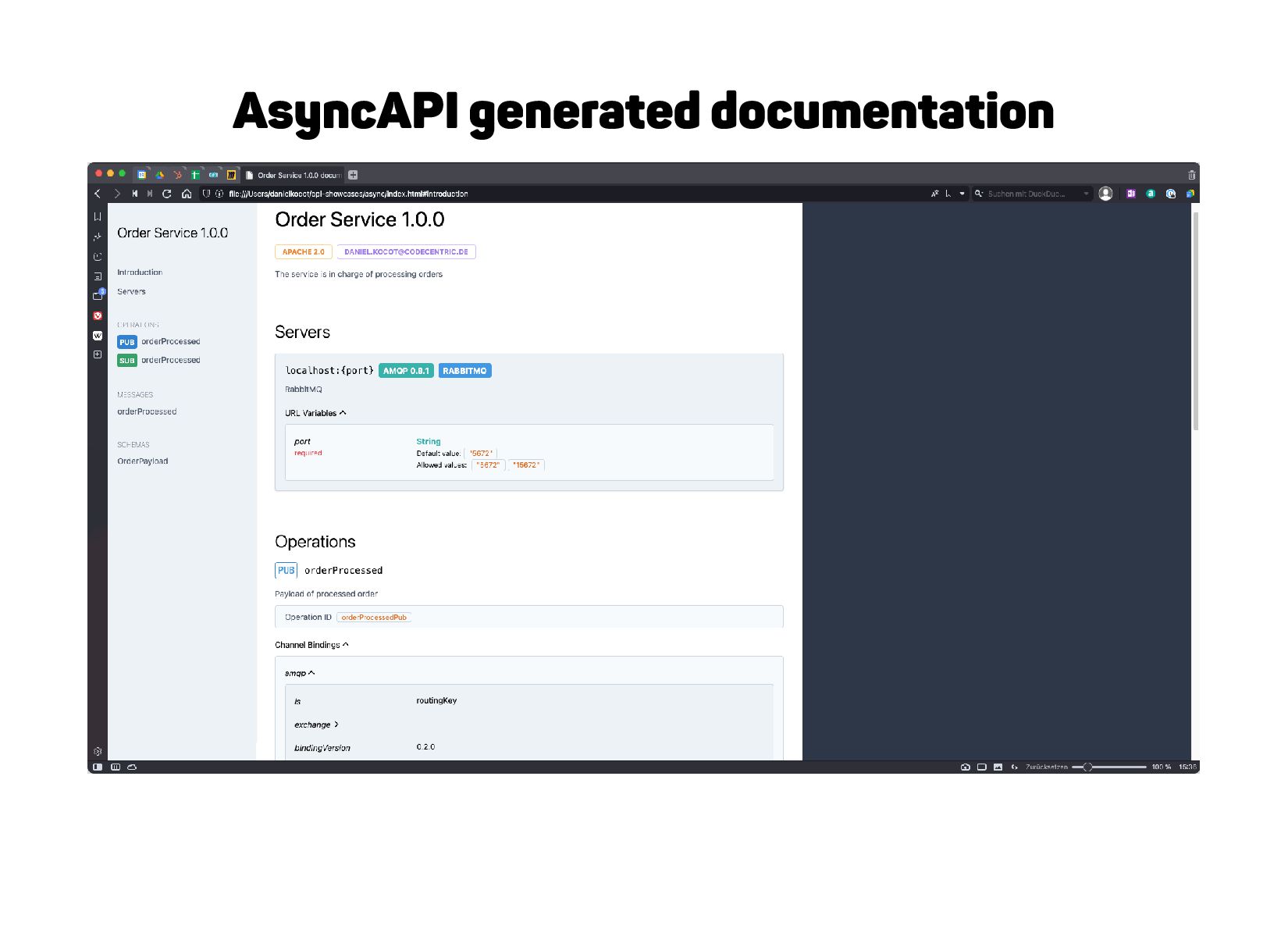
  11. AsyncAPI Generator api-showcases/async on  main [?] on ☁️ ➜

    ag order-service.yaml @asyncapi/html-template Done! ✨ Check out your shiny new generated files at /Users/danielkocot/api-showcases/async.
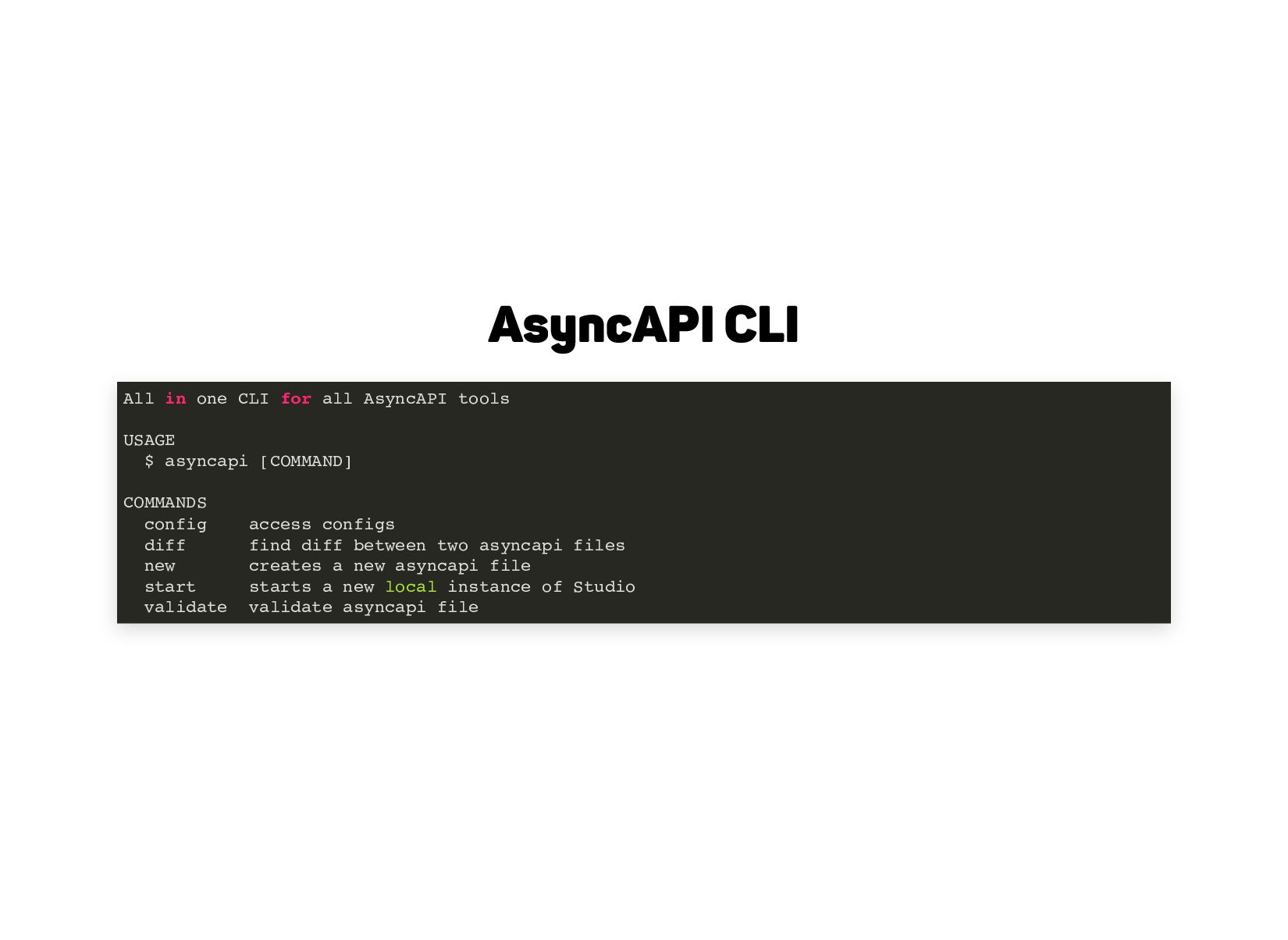
  12. AsyncAPI CLI All in one CLI for all AsyncAPI tools

    USAGE $ asyncapi [COMMAND] COMMANDS config access configs diff find diff between two asyncapi files new creates a new asyncapi file start starts a new local instance of Studio validate validate asyncapi file
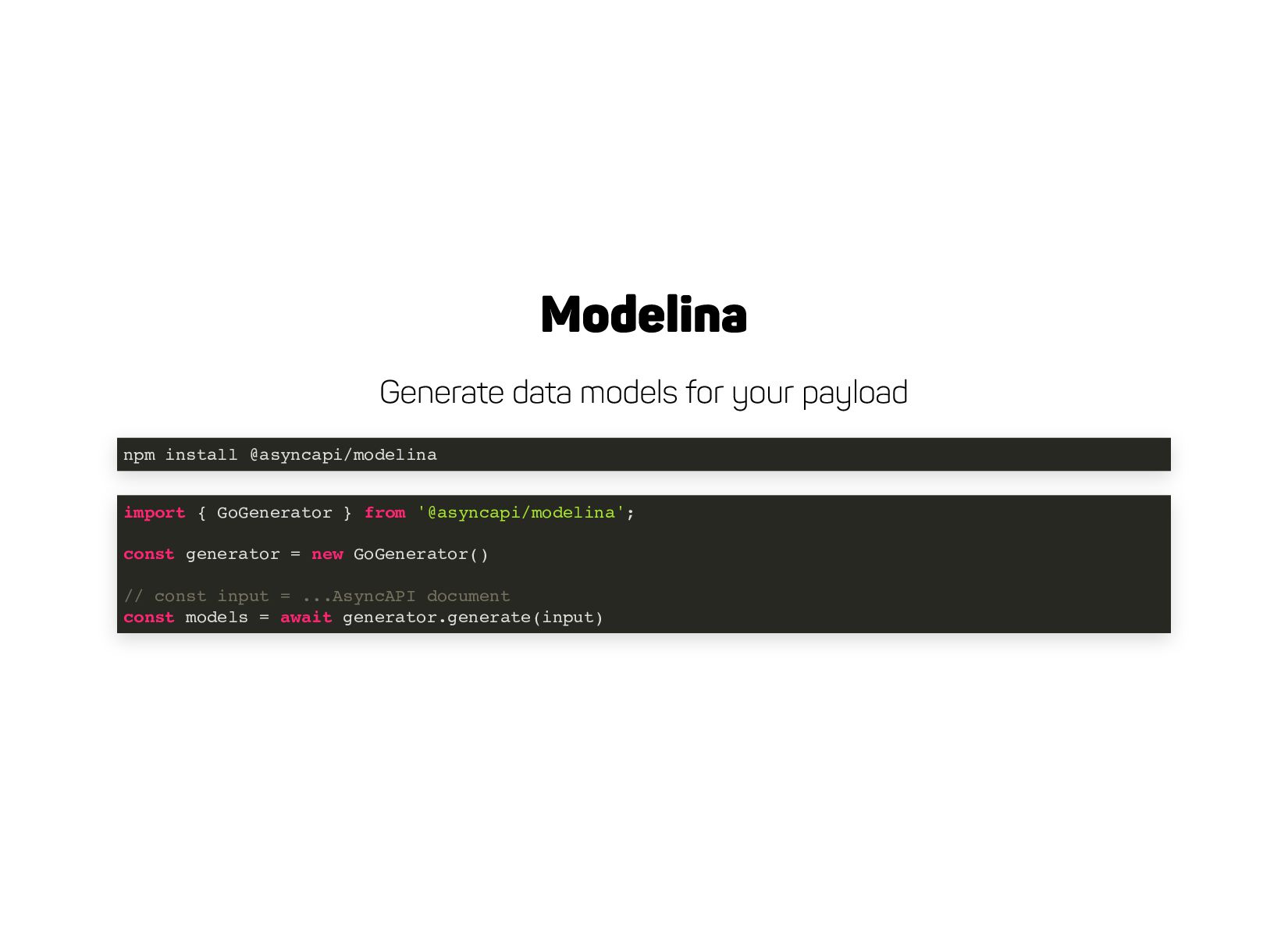
  13. Modelina Generate data models for your payload npm install @asyncapi/modelina

    import { GoGenerator } from '@asyncapi/modelina'; const generator = new GoGenerator() // const input = ...AsyncAPI document const models = await generator.generate(input)
  14. Q&A