Upgrade to Pro — share decks privately, control downloads, hide ads and more …

Design for Six Sigma in Systems Engineering: ID...

Design for Six Sigma in Systems Engineering: IDOV vs. DMADV

Presentation slides accompanying Monograph Series No. 04: "Design for Six Sigma in Systems Engineering: An Architectural Critique of IDOV vs. DMADV" by Daniel Shaeffer (Shaeffer Institute for Systems Architecture).

Full canonical monograph & technical PDF: https://danielshaeffer.com/dfss-idov-dmadv
Permanent Archival DOI: https://doi.org/10.5281/zenodo.22970422

Avatar for Daniel Shaeffer

Daniel Shaeffer

September 30, 2026

More Decks by Daniel Shaeffer

Other Decks in Programming

Transcript

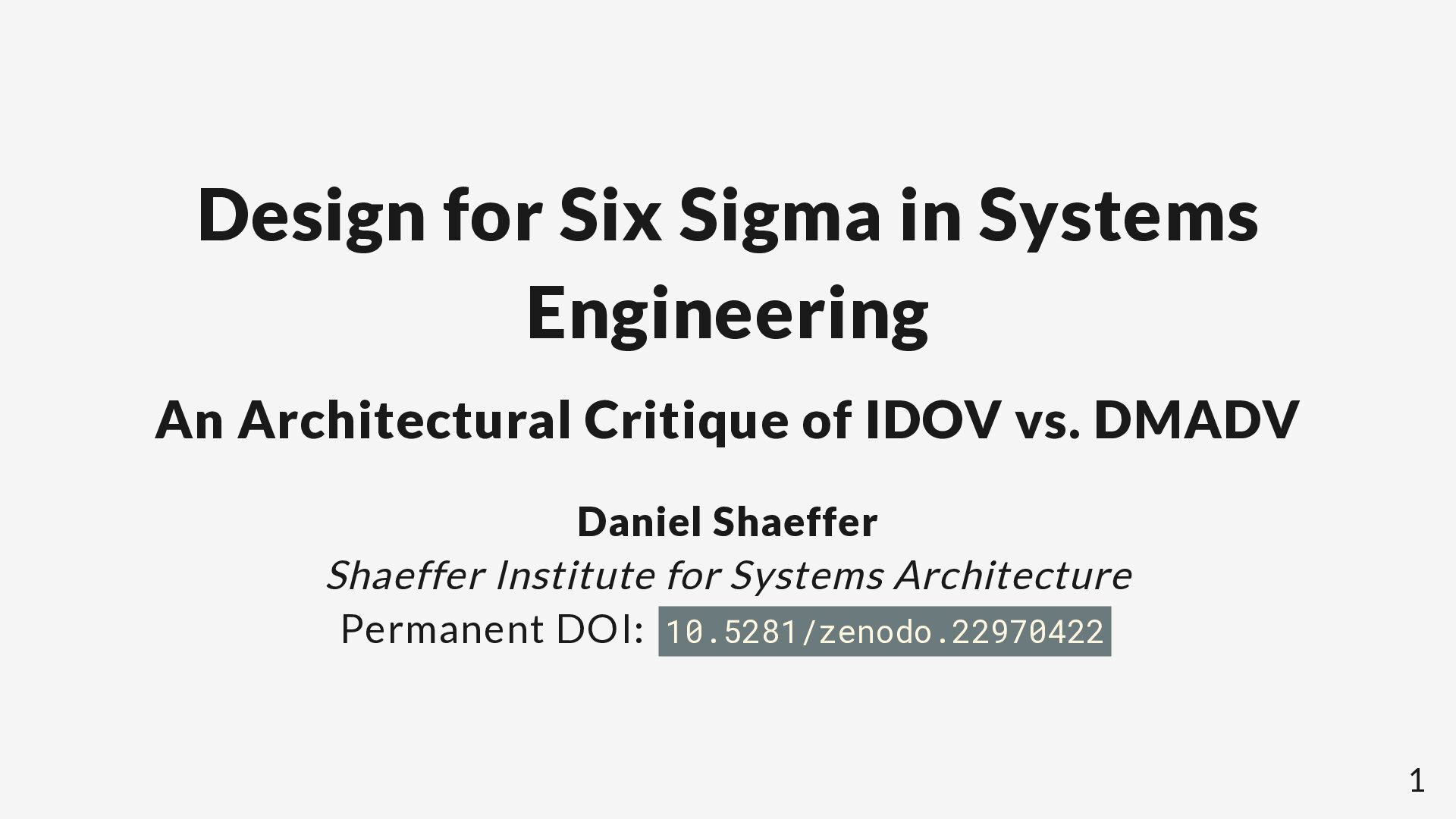
  1. Design for Six Sigma in Systems Engineering An Architectural Critique

    of IDOV vs. DMADV Daniel Shaeffer Shaeffer Institute for Systems Architecture Permanent DOI: 10.5281/zenodo.22970422 1
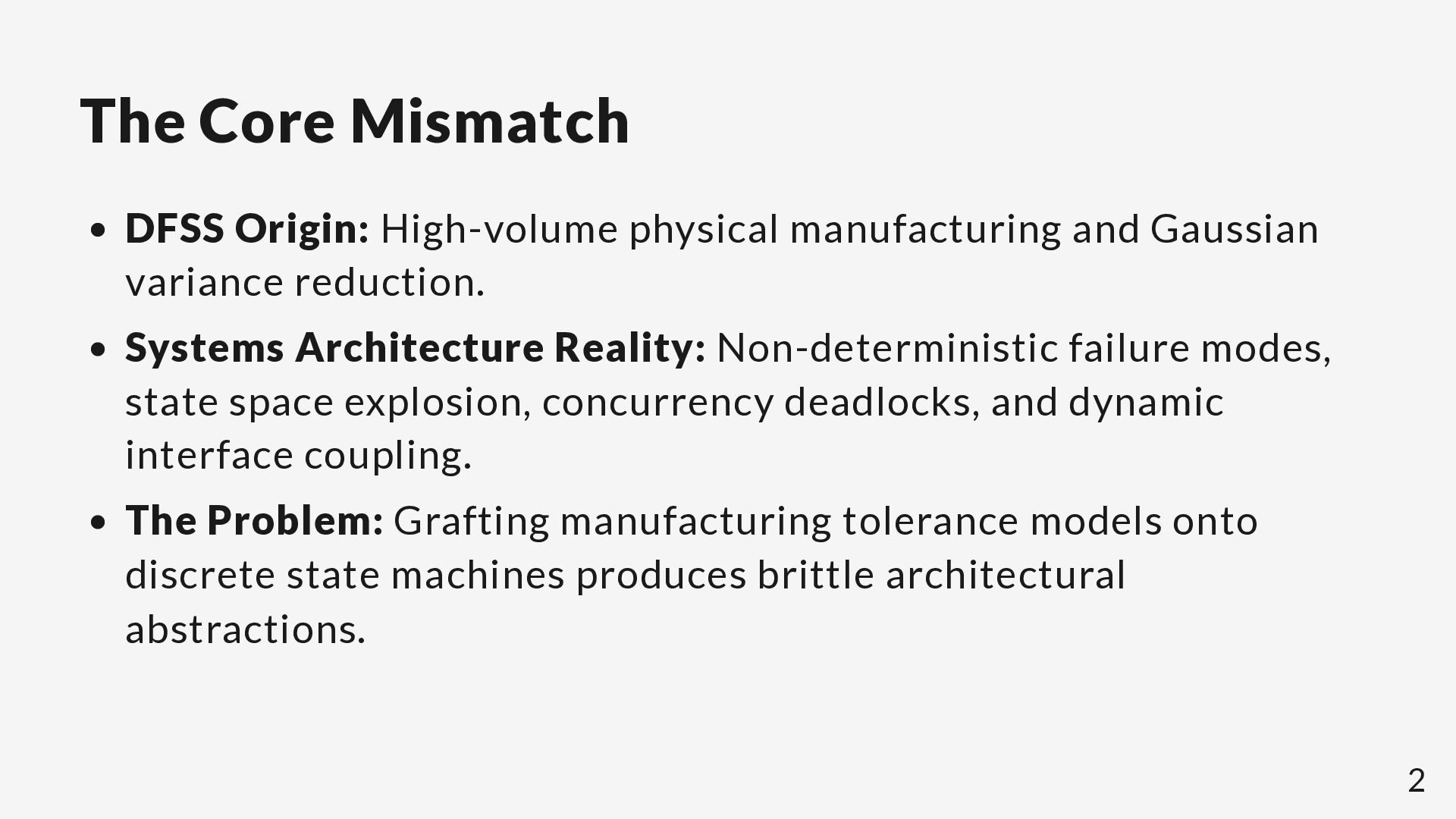
  2. The Core Mismatch DFSS Origin: High-volume physical manufacturing and Gaussian

    variance reduction. Systems Architecture Reality: Non-deterministic failure modes, state space explosion, concurrency deadlocks, and dynamic interface coupling. The Problem: Grafting manufacturing tolerance models onto discrete state machines produces brittle architectural abstractions. 2
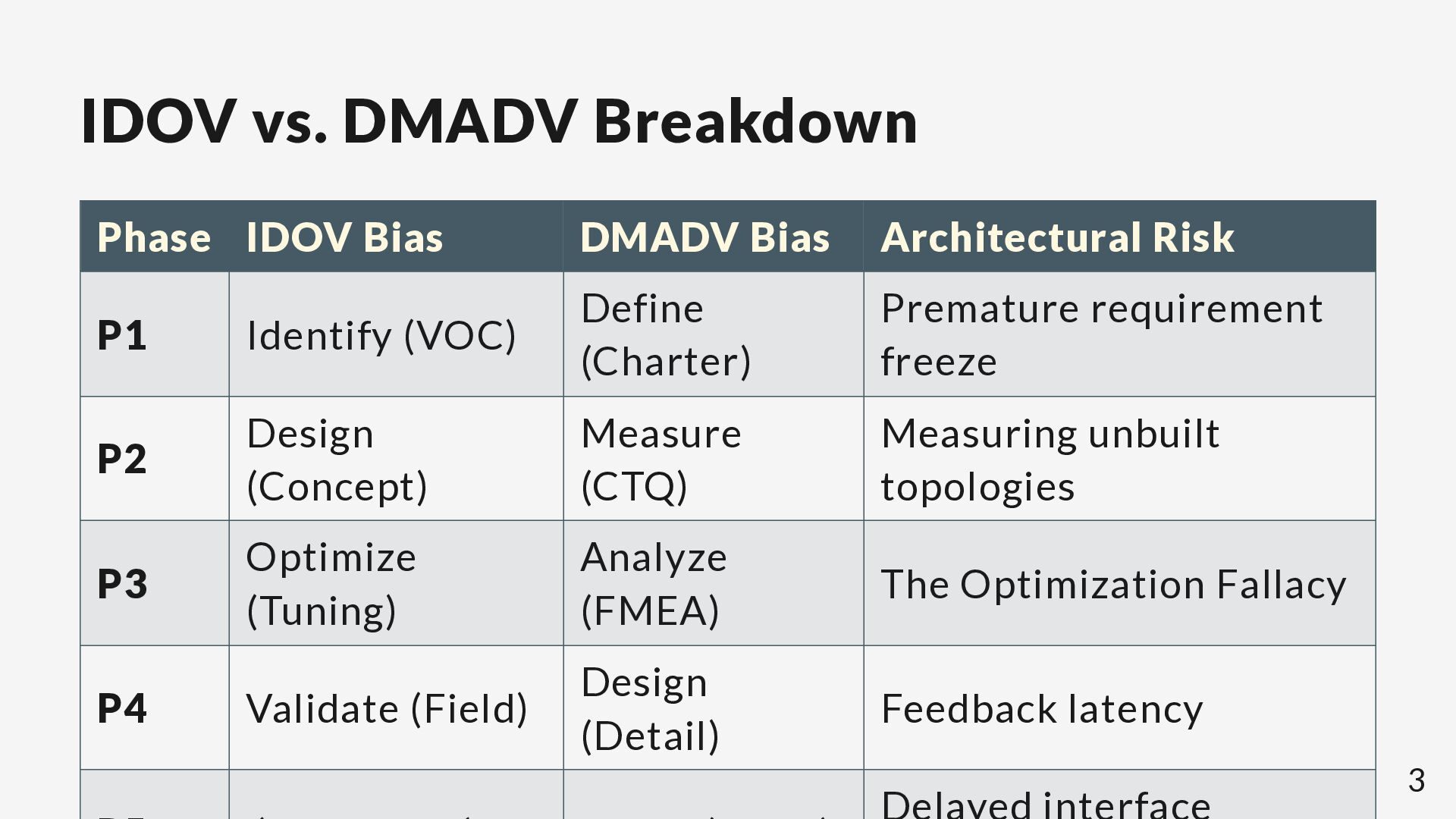
  3. IDOV vs. DMADV Breakdown Phase IDOV Bias DMADV Bias Architectural

    Risk P1 Identify (VOC) Define (Charter) Premature requirement freeze P2 Design (Concept) Measure (CTQ) Measuring unbuilt topologies P3 Optimize (Tuning) Analyze (FMEA) The Optimization Fallacy Validate (Field) Design (Detail) Feedback latency P4 3
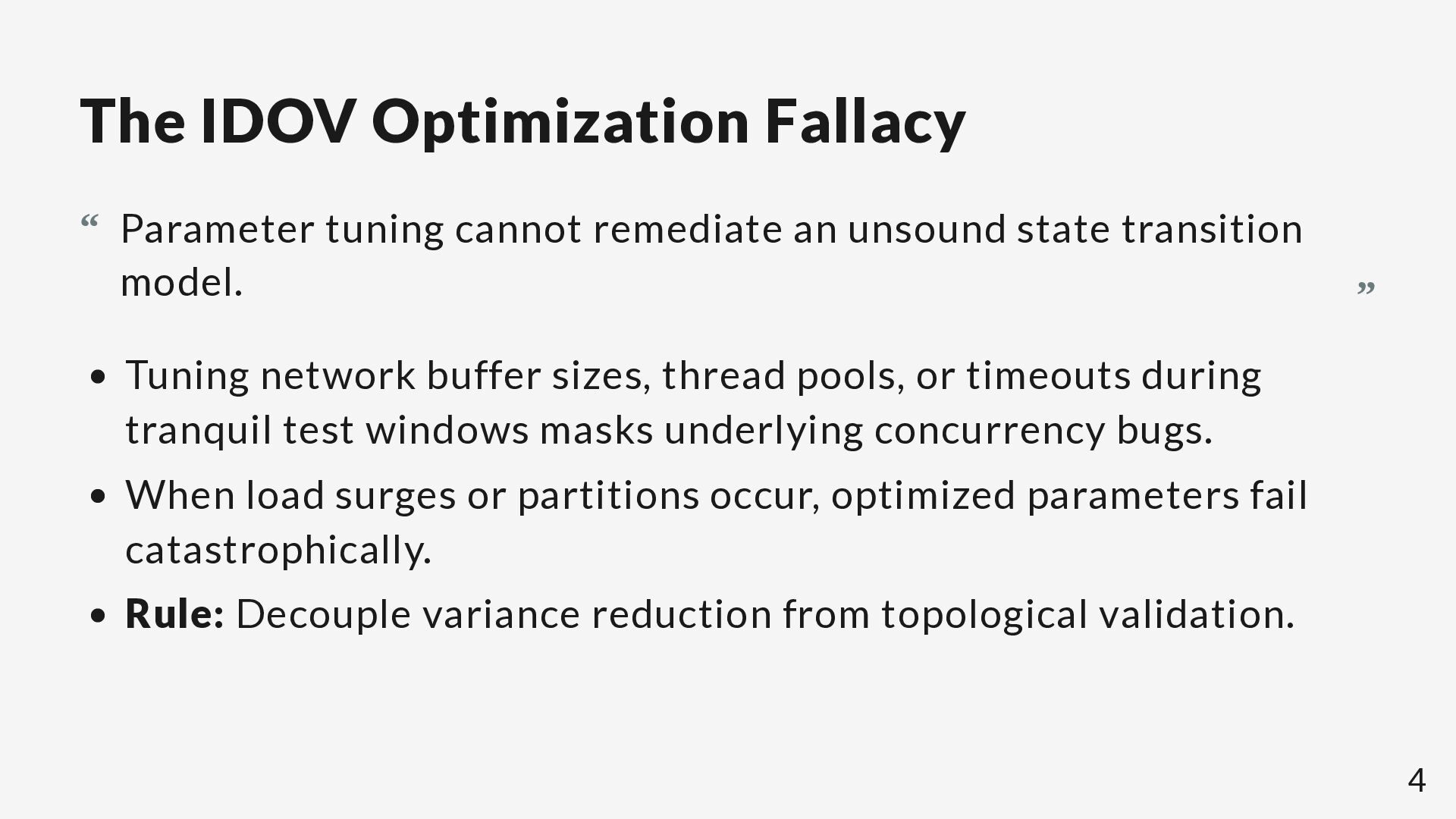
  4. The IDOV Optimization Fallacy “ “ Parameter tuning cannot remediate

    an unsound state transition model. Tuning network buffer sizes, thread pools, or timeouts during tranquil test windows masks underlying concurrency bugs. When load surges or partitions occur, optimized parameters fail catastrophically. Rule: Decouple variance reduction from topological validation. 4
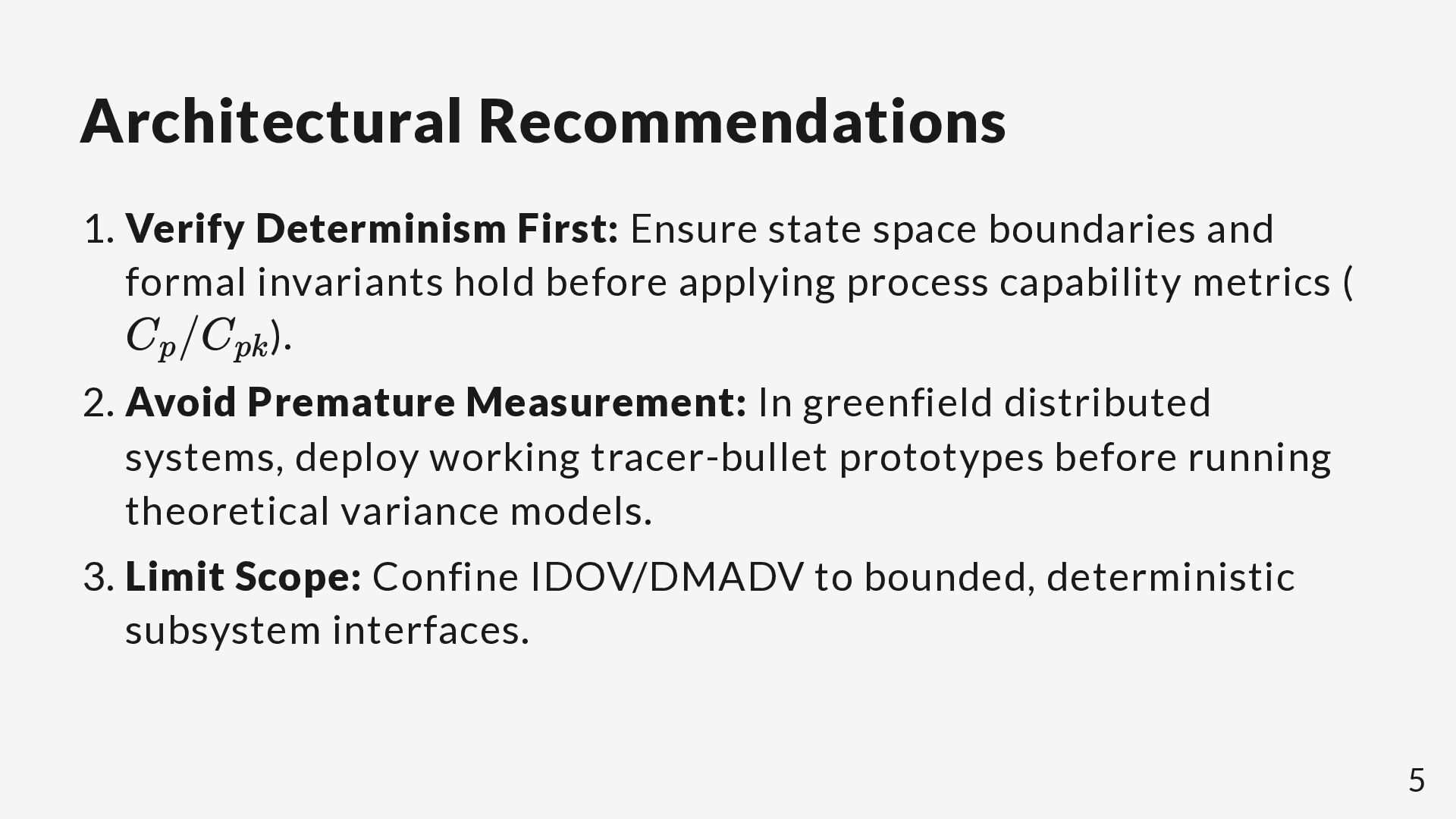
  5. Architectural Recommendations 1. Verify Determinism First: Ensure state space boundaries

    and formal invariants hold before applying process capability metrics ( ). 2. Avoid Premature Measurement: In greenfield distributed systems, deploy working tracer-bullet prototypes before running theoretical variance models. 3. Limit Scope: Confine IDOV/DMADV to bounded, deterministic subsystem interfaces. 5
  6. Canonical Monograph & Source PDF Read the full paper and

    download the technical PDF: danielshaeffer.com/dfss-idov-dmadv Shaeffer Institute for Systems Architecture Archived under DOI: 10.5281/zenodo.22970422 6