Upgrade to Pro — share decks privately, control downloads, hide ads and more …

Plant-Powered Living: How Our Choices Shape the...

Avatar for Daniela Daniela
January 17, 2026

Plant-Powered Living: How Our Choices Shape the Future

A clear, engaging exploration of how plant‑powered living transforms not only our plates but the world around us.
This presentation cuts through common myths, clarifies essential terminology, and shows how a wholefoods vegan diet can meet nutritional needs with confidence and ease. It also widens the lens beyond food, revealing veganism as an ethical, ecological, and spiritual framework that reshapes how we relate to animals, the planet, and ourselves.
Through evidence‑based insights, practical guidance, and thoughtful prompts for self‑inquiry, it invites you to examine long‑held assumptions, reconnect with your values, and consider how everyday choices can become acts of compassion, sustainability, and personal integrity.

Avatar for Daniela

Daniela

January 17, 2026

Other Decks in Education

Transcript

  1. Plant-Powered Living: How Our Choices Shape the Future Presented by

    Daniela B. Volunteer with The Vegan Society January 2026
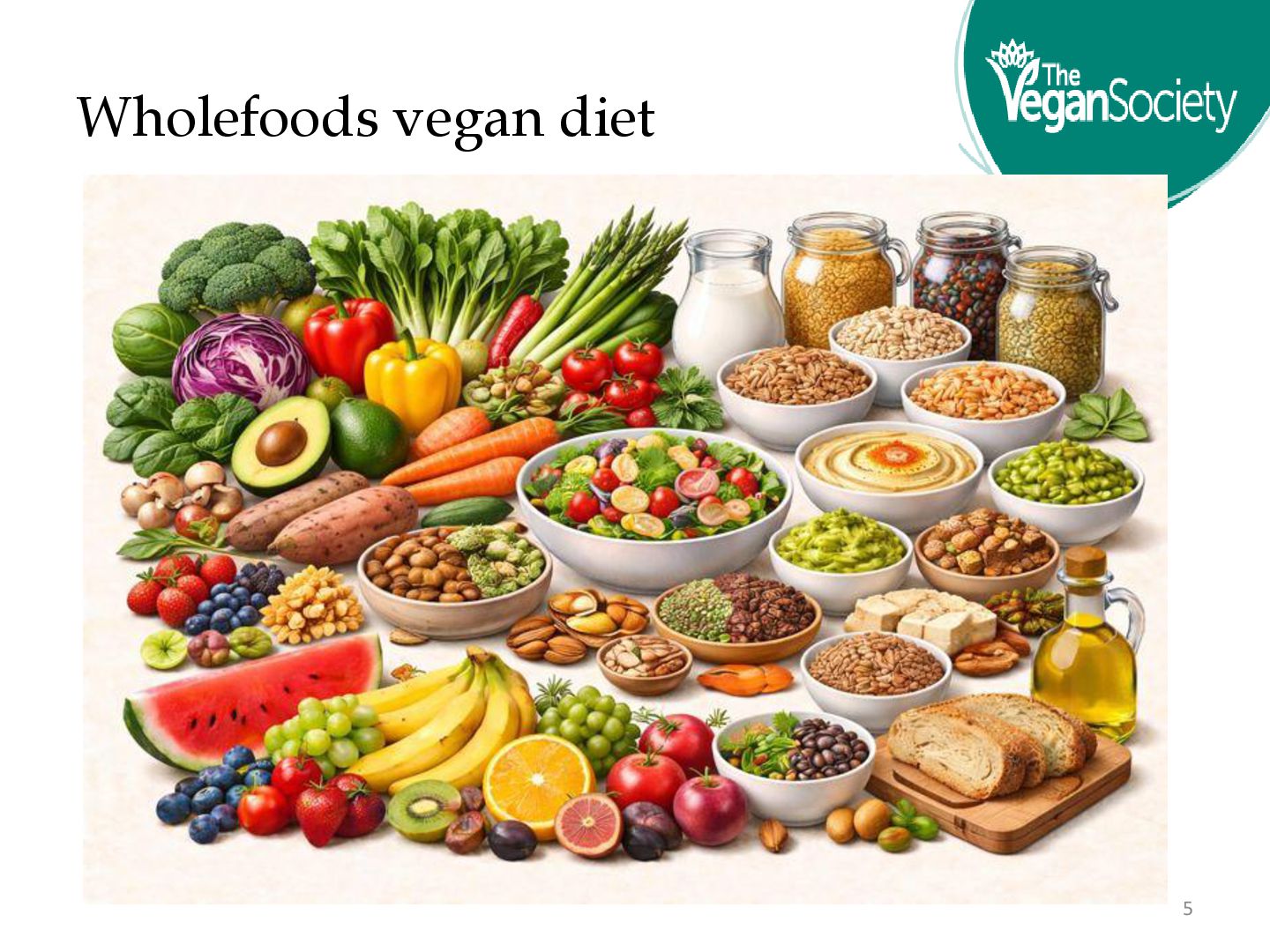
  2. We will cover… Terminology Wholefoods vegan diet Obstacles to &

    challenges of veganism Common myths about veganism Beyond the plate: Defining holistic veganism Benefits & impact of veganism Tips for a transition to vegan eating Is veganism suitable for everyone? Questions for your reflection Resources to inspire you 2
  3. Obstacles to & challenges of veganism Nutritional deficiencies • An

    idea has been propagated for a long time that vegans can become deficient in certain nutrients (mostly vit B12, vit D, iron, calcium, iodine, omega-3). Social or cultural limitations • Facing criticism or stigmatisation from family, friends, co-workers • Eating animal products is integral to someone’s cultural heritage, identity or religion and, therefore, hard to break from • Fear of missing out on certain foods or experiences, by not being invited to events/gatherings Cravings for animal products. E.g. cheese Limited food choice: fading away in many places as variety expands • Large food stores have a good variety of ready-to-eat vegan products. • Restaurants (especially outside of cities) not so much. • But all stores have raw veggies, pulses, fruits, nuts… though availability varies by region. Misconceptions - plenty. Let’s dive in…. 6
  4. Common misconceptions about veganism ‘Vegans don’t get enough protein and

    other nutrients’. Belief: Animal products are traditionally seen as the main sources of protein, iron, calcium, and vit. B12. Reality: Protein is abundant in beans, lentils, tofu, tempeh, seitan, quinoa, nuts, and seeds. Many plant foods also contain iron, calcium, zinc, and omega-3s. The main nutrient that must be supplemented or fortified is vit. B12, because it’s produced by bacteria. Key point: A well-planned vegan diet easily meets nutrient needs. ‘You will get hungry and tired on a vegan diet.’ Belief: Some people switch to veganism but only eat salads or fruit, leading to low calories. Reality: Plant foods are often lower in calories, so you simply need enough of them. Balanced meals with whole grains, legumes, healthy fats and vegetables provide long-lasting energy. Key point: Fatigue comes from under-eating or unbalanced meals, not from veganism itself. ‘Vegan food is tasteless.’ Belief: Some people imagine plain salads or steamed vegetables. Reality: Modern vegan cooking uses herbs, spices, marinades, and textures that rival any cuisine. Key point: Plant-based food offers a huge variety of rich, vibrant flavours when prepared with creativity and good seasoning. 7
  5. Common misconceptions (cont’d) ‘Dairy is essential for strong bones’. Belief:

    Marketing campaigns have long promoted milk as the only source of calcium. Reality: Calcium is found in fortified plant milks, tofu, tahini, almonds, leafy greens, beans, and many vegetables. Bone health also depends on vit. D, exercise, and overall diet. Key point: Strong bones come from the overall diet and physical activity, not from cows. ‘Veganism is boring and restrictive.’ Belief: Some people focus on what vegans don’t eat. Reality: Veganism opens up a huge variety of foods: grains, legumes, fruits, vegetables, nuts, seeds, herbs, spices, and global cuisines. Many people discover more variety after going vegan (like I did). Key point: Veganism expands your palate rather than restricting it. ‘Eating vegan is more expensive’. Belief: Possibly, when you look at speciality vegan products (e.g. fake meat, vegan cheese, vegan fast-food). Reality: Staple vegan foods - beans, lentils, rice, pasta, oats, potatoes, vegetables, fruits - are some of the cheapest foods in the world. Costs rise only if you rely heavily on processed substitutes. Key point: A whole-food vegan diet is often cheaper than a meat-based one. 8
  6. Common misconceptions (cont’d) ‘Vegans need supplements to prevent nutritional deficiency.’

    Belief: Supplements may be associated with a flawed diet. Reality: Most people, vegan or not, benefit from supplements like vit. D or omega-3s. Vegans specifically need vit. B12, which is produced by bacteria and added to animal feed anyway. Taking one supplement doesn’t mean the diet is inadequate. Key point: Needing vit. B12 is not a weakness of veganism but a modern food-system reality. ‘Veganism is only a diet.’ Belief: People may see veganism just as ‘not eating meat’. Reality: Veganism is a lifestyle philosophy that seeks to avoid animal exploitation in all forms (food, clothing, cosmetics, entertainment, and more). Diet is only one part of it. Key point: Veganism is an ethical framework, not just a menu. ‘You can’t build muscles and be strong on a vegan diet.’ Belief: Strength is associated with meat consumption. Reality: Many elite athletes, bodybuilders, and strength trainers thrive on plant-based diets. Muscle growth depends on total protein intake, training and recovery - all achievable with plant proteins. Key point: Muscles respond to protein and training, not to the source of the protein. 9
  7. Common misconceptions (cont’d) ‘Vegan eating is healthy’. Belief: Some people

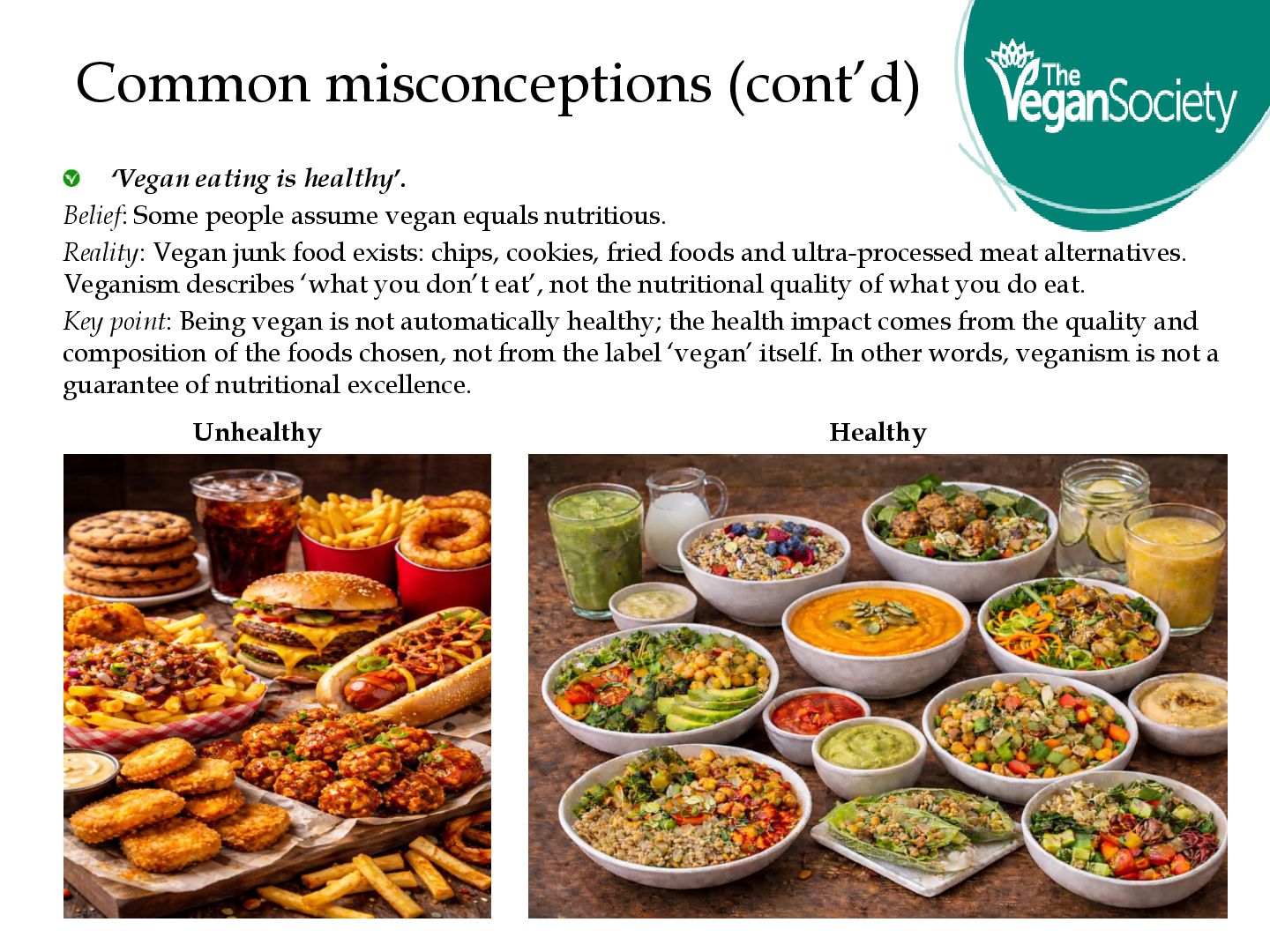
    assume vegan equals nutritious. Reality: Vegan junk food exists: chips, cookies, fried foods and ultra-processed meat alternatives. Veganism describes ‘what you don’t eat’, not the nutritional quality of what you do eat. Key point: Being vegan is not automatically healthy; the health impact comes from the quality and composition of the foods chosen, not from the label ‘vegan’ itself. In other words, veganism is not a guarantee of nutritional excellence. 10 Unhealthy Healthy
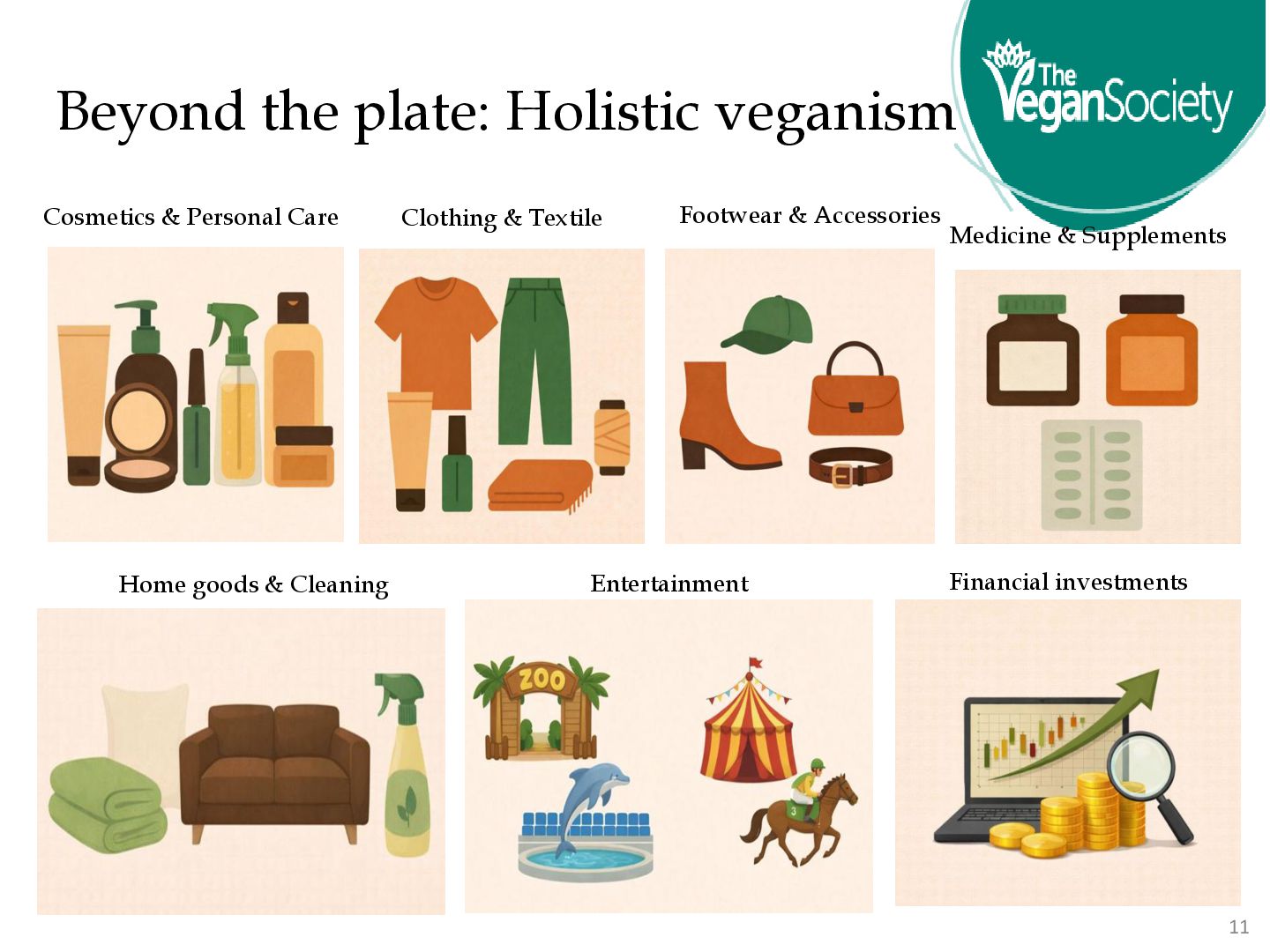
  8. Beyond the plate: Holistic veganism 11 Clothing & Textile Cosmetics

    & Personal Care Footwear & Accessories Medicine & Supplements Home goods & Cleaning Entertainment Financial investments
  9. Benefits and impact of veganism 12 Health & nutrition •

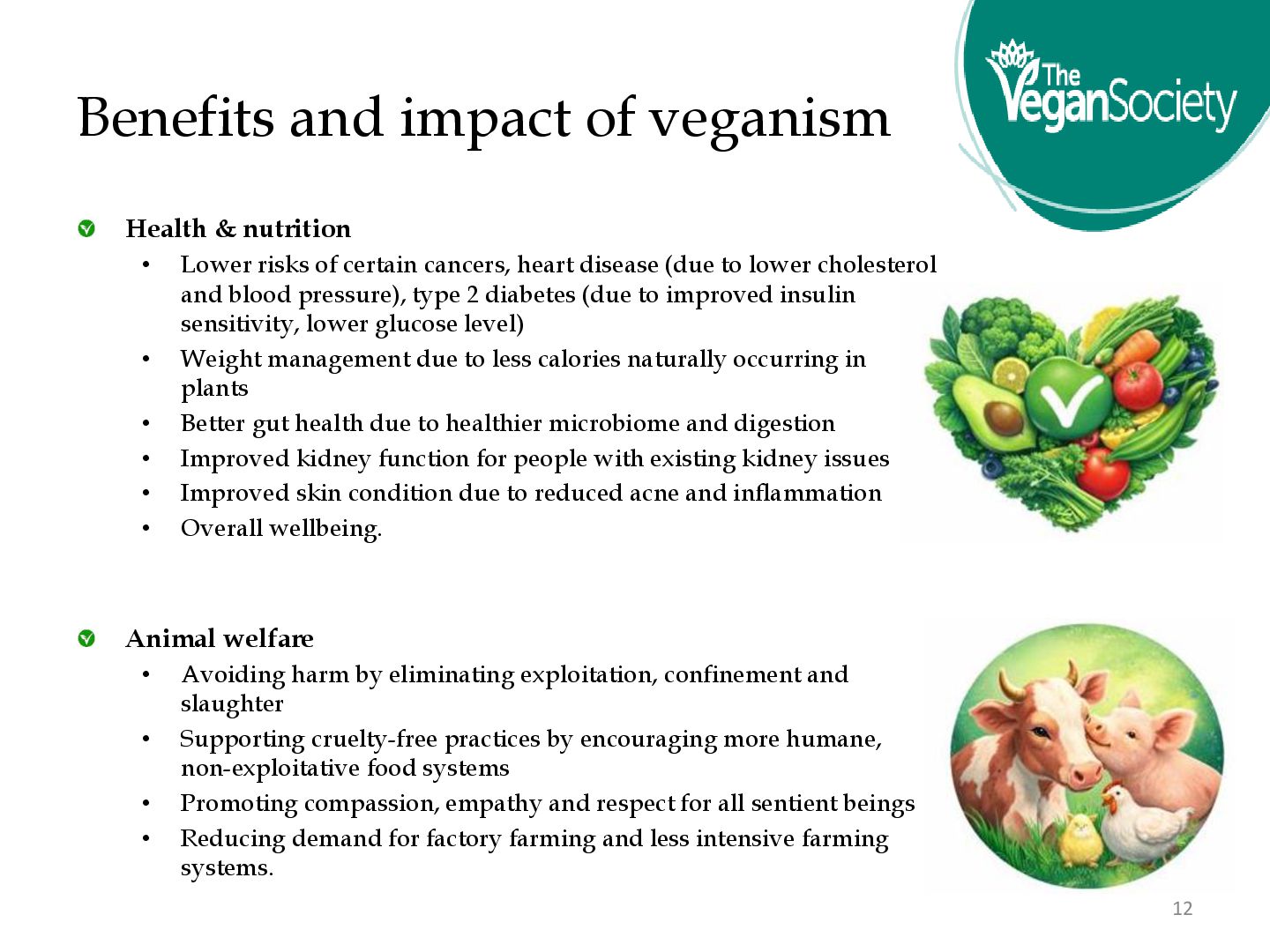
    Lower risks of certain cancers, heart disease (due to lower cholesterol and blood pressure), type 2 diabetes (due to improved insulin sensitivity, lower glucose level) • Weight management due to less calories naturally occurring in plants • Better gut health due to healthier microbiome and digestion • Improved kidney function for people with existing kidney issues • Improved skin condition due to reduced acne and inflammation • Overall wellbeing. Animal welfare • Avoiding harm by eliminating exploitation, confinement and slaughter • Supporting cruelty-free practices by encouraging more humane, non-exploitative food systems • Promoting compassion, empathy and respect for all sentient beings • Reducing demand for factory farming and less intensive farming systems.
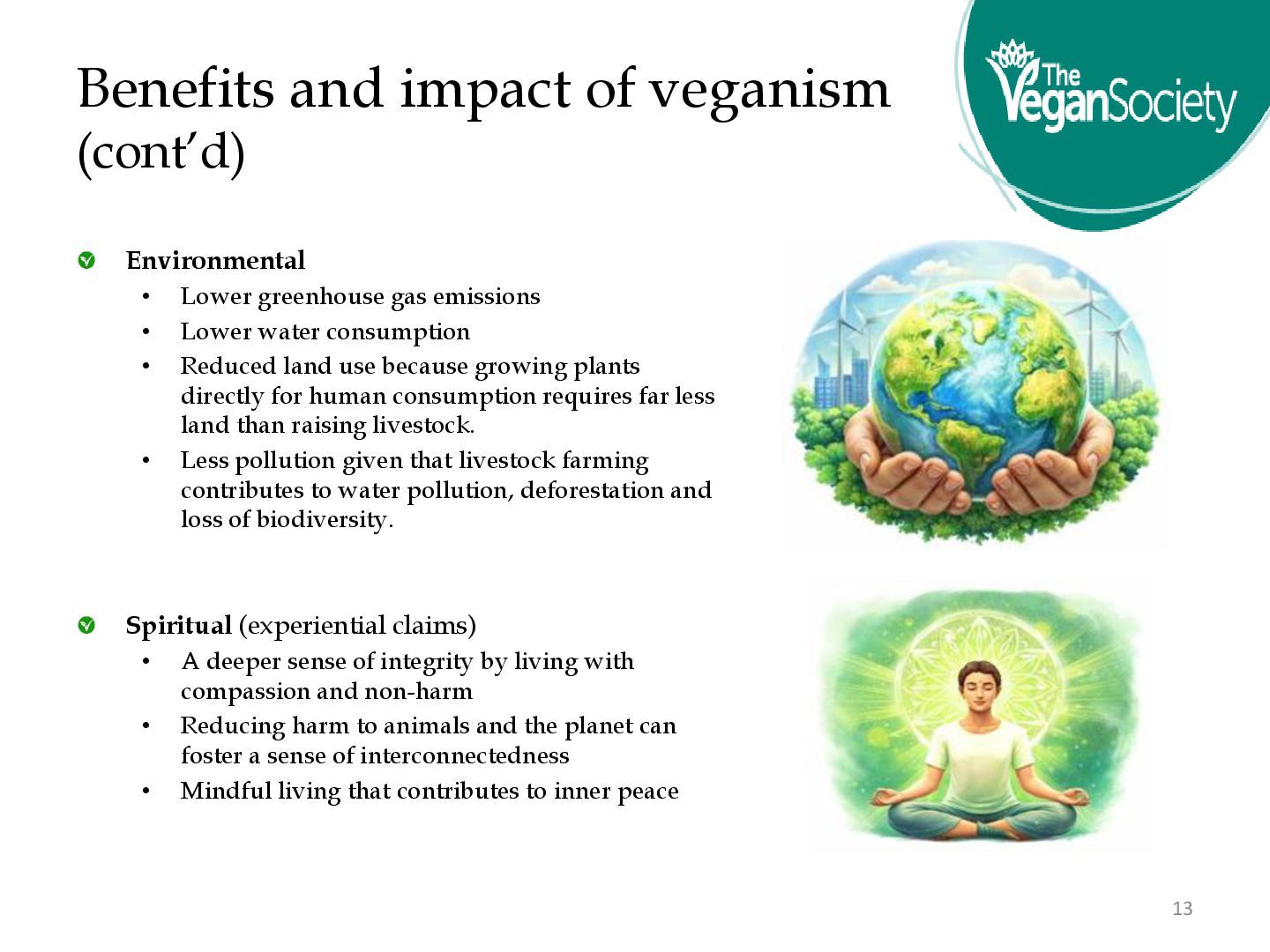
  10. Benefits and impact of veganism (cont’d) Environmental • Lower greenhouse

    gas emissions • Lower water consumption • Reduced land use because growing plants directly for human consumption requires far less land than raising livestock. • Less pollution given that livestock farming contributes to water pollution, deforestation and loss of biodiversity. Spiritual (experiential claims) • A deeper sense of integrity by living with compassion and non-harm • Reducing harm to animals and the planet can foster a sense of interconnectedness • Mindful living that contributes to inner peace 13
  11. Tips for a transition to vegan eating A smooth transition

    to vegan eating becomes much easier when it feels intentional, curious, and flexible. Get informed (first and foremost) • Evidence-based nutrition resources help you understand how to meet your needs confidently. • Beginner-friendly cookbooks and blogs make the learning curve feel exciting. • Documentaries can reinforce your motivation and give you fresh ideas. Start small and progress gradually • Short vegan challenges like a weekend or a week help you experiment without pressure. • Journaling your physical and mental changes builds awareness and keeps you motivated. • Incremental swaps - like plant milk or vegan snacks - make the shift feel natural. Stock your home with vegan staples to avoid temptation • Stock your pantry with essentials such as beans, grains, nuts, tofu, and spices. • Creating a go-to shopping list keeps your kitchen ready for quick meals. • Replacing non-vegan basics (butter, mayo, cheese) with vegan versions helps you stay consistent. Veganise your favourite meals • Simple ingredient swaps let you keep the flavours you love. • Vegan versions of comfort foods make the transition feel joyful. • Experimenting with textures and seasonings helps you recreate familiar dishes. 14
  12. Tips for a transition to vegan eating (cont’d) Prepare ahead

    • Choosing recipes in advance prevents last-minute stress. • Batch-cooking staples like grains, sauces, or roasted vegetables saves time. • Keeping quick meals on hand ensures you’re never stuck without options. Read ingredient labels • Learning common non-vegan additives makes shopping easier. • Using apps like Vegan Verify and Yuka helps you check products quickly. • Becoming familiar with plant-based brands speeds up your routine. Eat diversified and get experimental • Exploring new ingredients like tempeh, lentils, or nutritional yeast keeps meals exciting. • Trying new cuisines opens up flavourful vegan options. • Balancing meals with variety supports good nutrition and satisfaction. Connect with the vegan community to get inspired and ease the transition • Online groups and creators offer recipes, tips, and encouragement. • Shared experiences help you stay inspired and supported Be kind to yourself! • Celebrating every win reinforces progress. • Allowing flexibility prevents guilt from derailing your goals. • Focusing on long-term habits helps keep the transition sustainable. 15
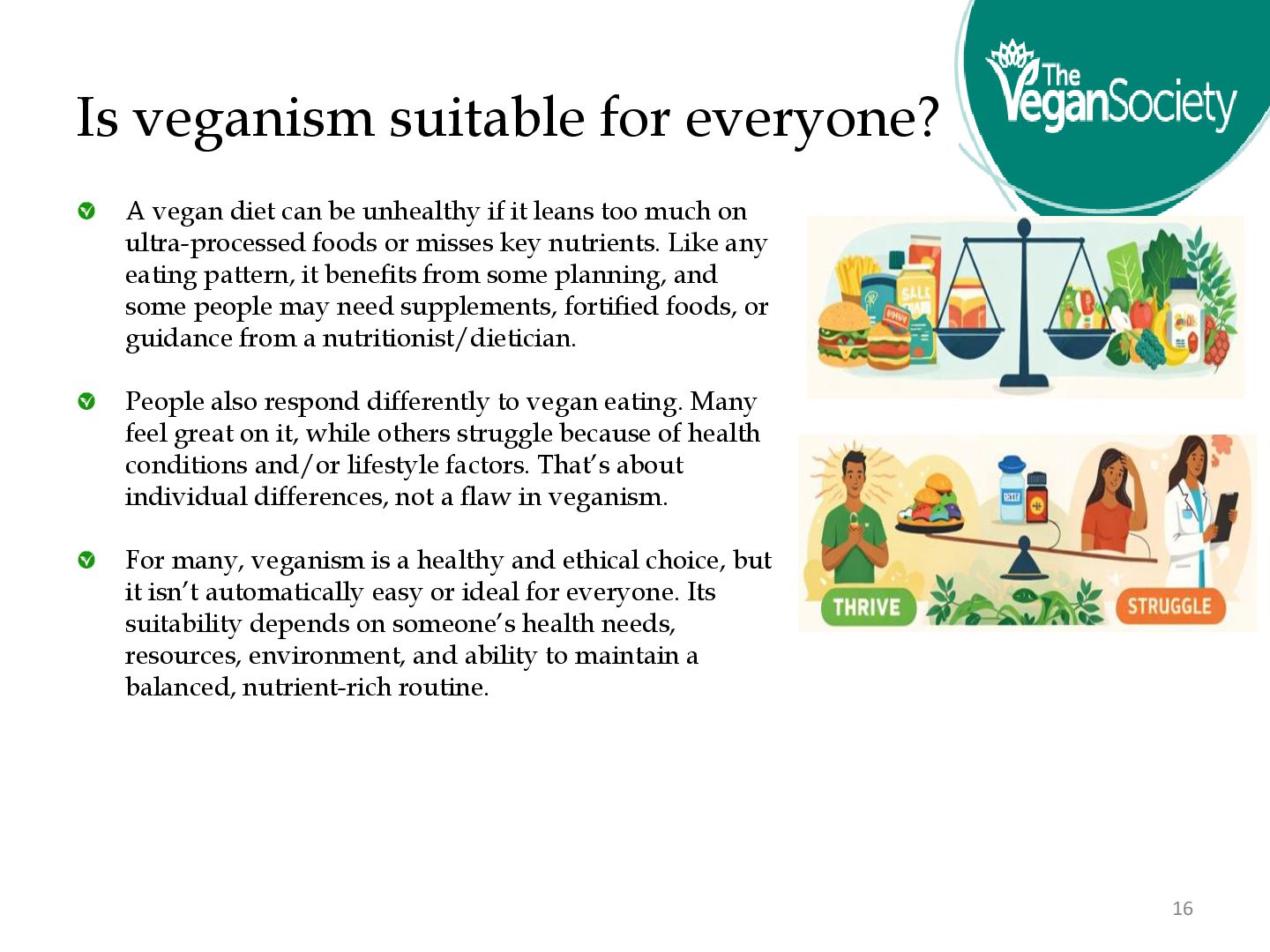
  13. Is veganism suitable for everyone? A vegan diet can be

    unhealthy if it leans too much on ultra-processed foods or misses key nutrients. Like any eating pattern, it benefits from some planning, and some people may need supplements, fortified foods, or guidance from a nutritionist/dietician. People also respond differently to vegan eating. Many feel great on it, while others struggle because of health conditions and/or lifestyle factors. That’s about individual differences, not a flaw in veganism. For many, veganism is a healthy and ethical choice, but it isn’t automatically easy or ideal for everyone. Its suitability depends on someone’s health needs, resources, environment, and ability to maintain a balanced, nutrient-rich routine. 16
  14. Questions for your reflection What taught me to see some

    animals as pets and others as food? Do I value some animals more because they feel familiar, smart, or traditional to eat? How do I feel when I think about how animals are treated on modern farms? What do I actually know about conditions on big farms, and where am I still unsure? What might I learn if I looked into where my food really comes from? How does what farmed animals eat change the nutritional quality of my food? How do my values around kindness show up in my eating? How do I think about animals’ ability to feel fear, stress, or pain? When did I last question my food choices instead of just acting out of habit? What ideas about veganism have I picked up from culture, family, or media — and am I open to rethinking them? What benefits might I notice if I tried eating vegan for a week or a month? 17
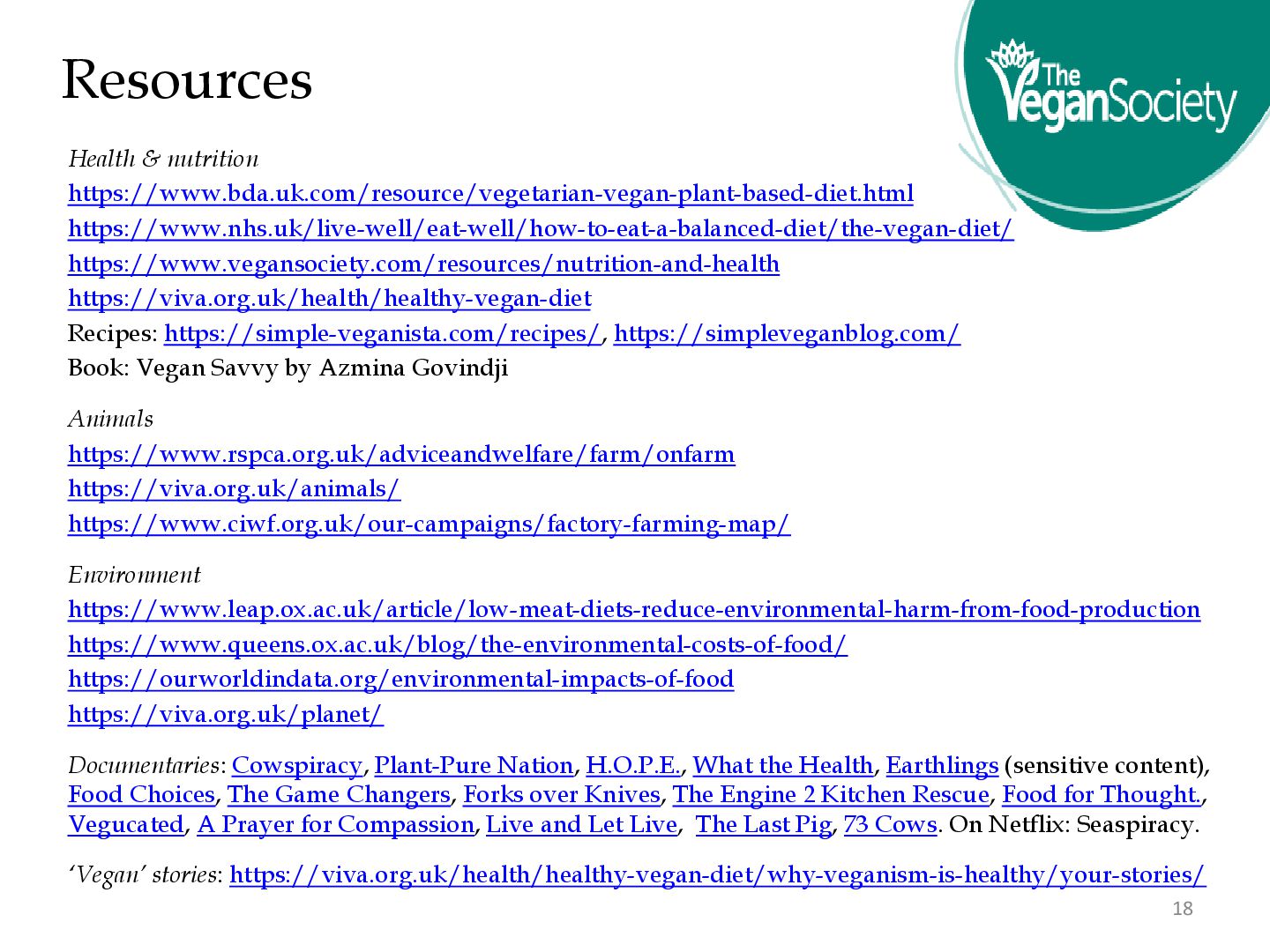
  15. Resources Health & nutrition https://www.bda.uk.com/resource/vegetarian-vegan-plant-based-diet.html https://www.nhs.uk/live-well/eat-well/how-to-eat-a-balanced-diet/the-vegan-diet/ https://www.vegansociety.com/resources/nutrition-and-health https://viva.org.uk/health/healthy-vegan-diet Recipes: https://simple-veganista.com/recipes/,

    https://simpleveganblog.com/ Book: Vegan Savvy by Azmina Govindji Animals https://www.rspca.org.uk/adviceandwelfare/farm/onfarm https://viva.org.uk/animals/ https://www.ciwf.org.uk/our-campaigns/factory-farming-map/ Environment https://www.leap.ox.ac.uk/article/low-meat-diets-reduce-environmental-harm-from-food-production https://www.queens.ox.ac.uk/blog/the-environmental-costs-of-food/ https://ourworldindata.org/environmental-impacts-of-food https://viva.org.uk/planet/ Documentaries: Cowspiracy, Plant-Pure Nation, H.O.P.E., What the Health, Earthlings (sensitive content), Food Choices, The Game Changers, Forks over Knives, The Engine 2 Kitchen Rescue, Food for Thought., Vegucated, A Prayer for Compassion, Live and Let Live, The Last Pig, 73 Cows. On Netflix: Seaspiracy. ‘Vegan’ stories: https://viva.org.uk/health/healthy-vegan-diet/why-veganism-is-healthy/your-stories/ 18