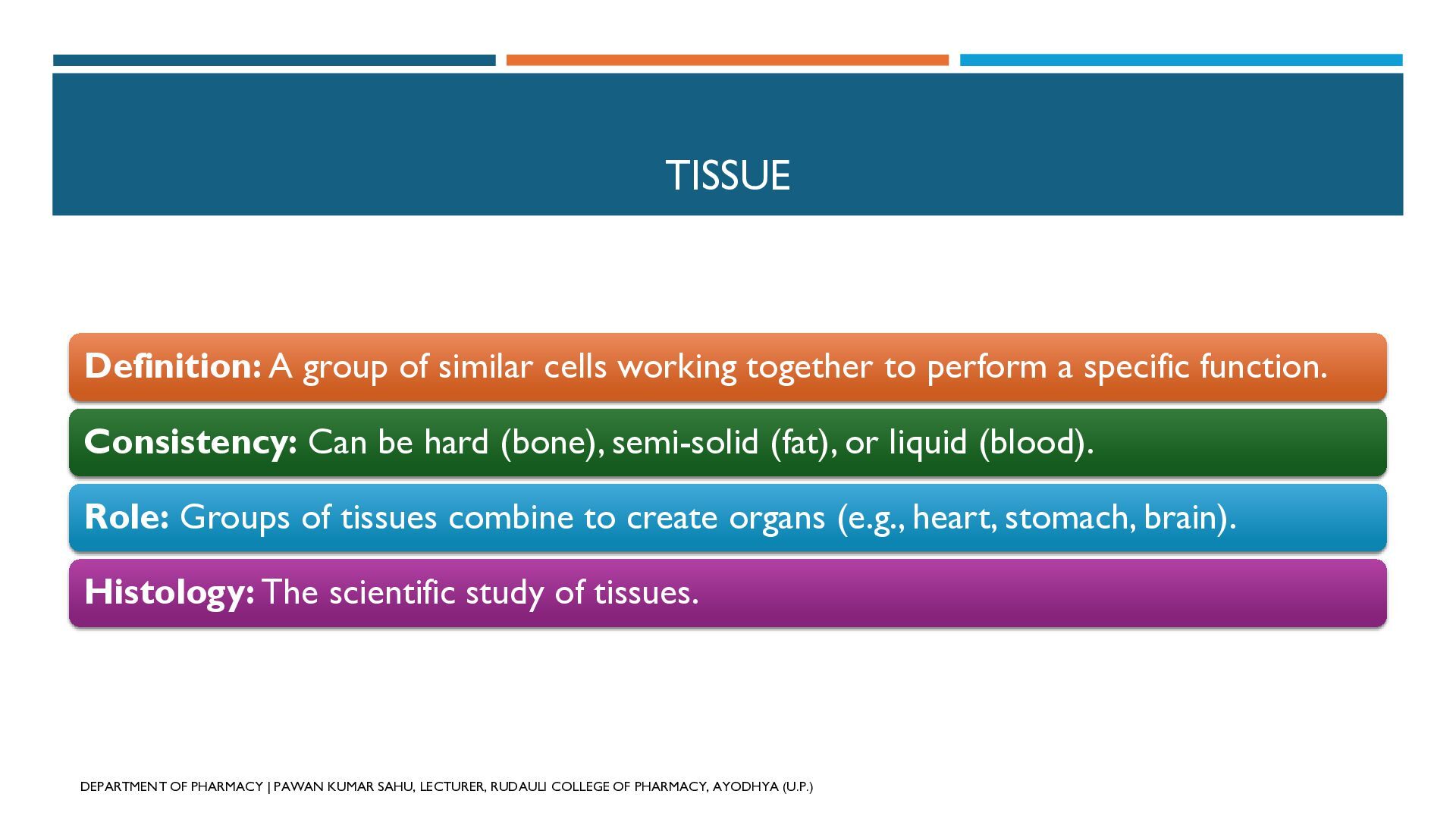
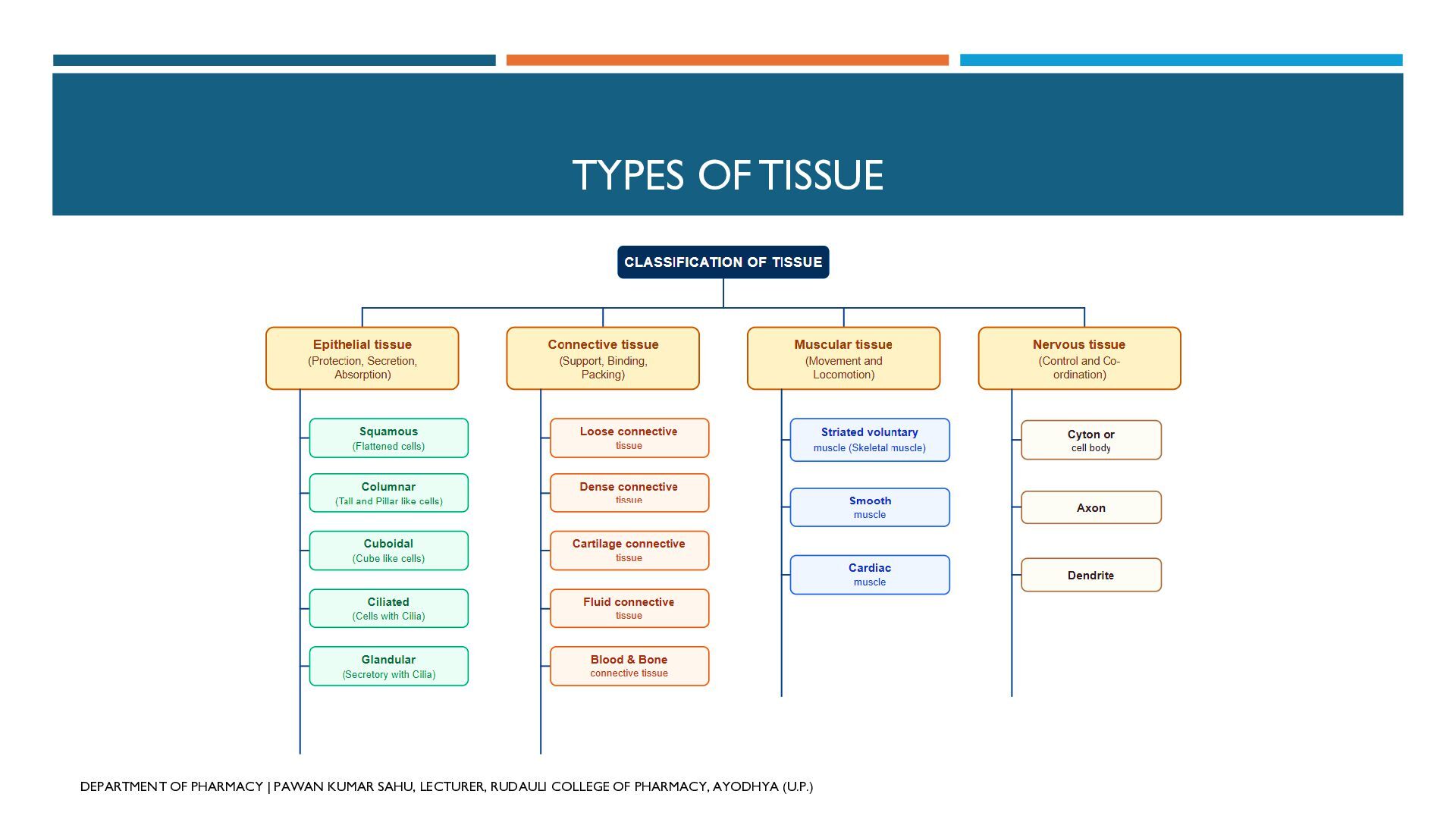
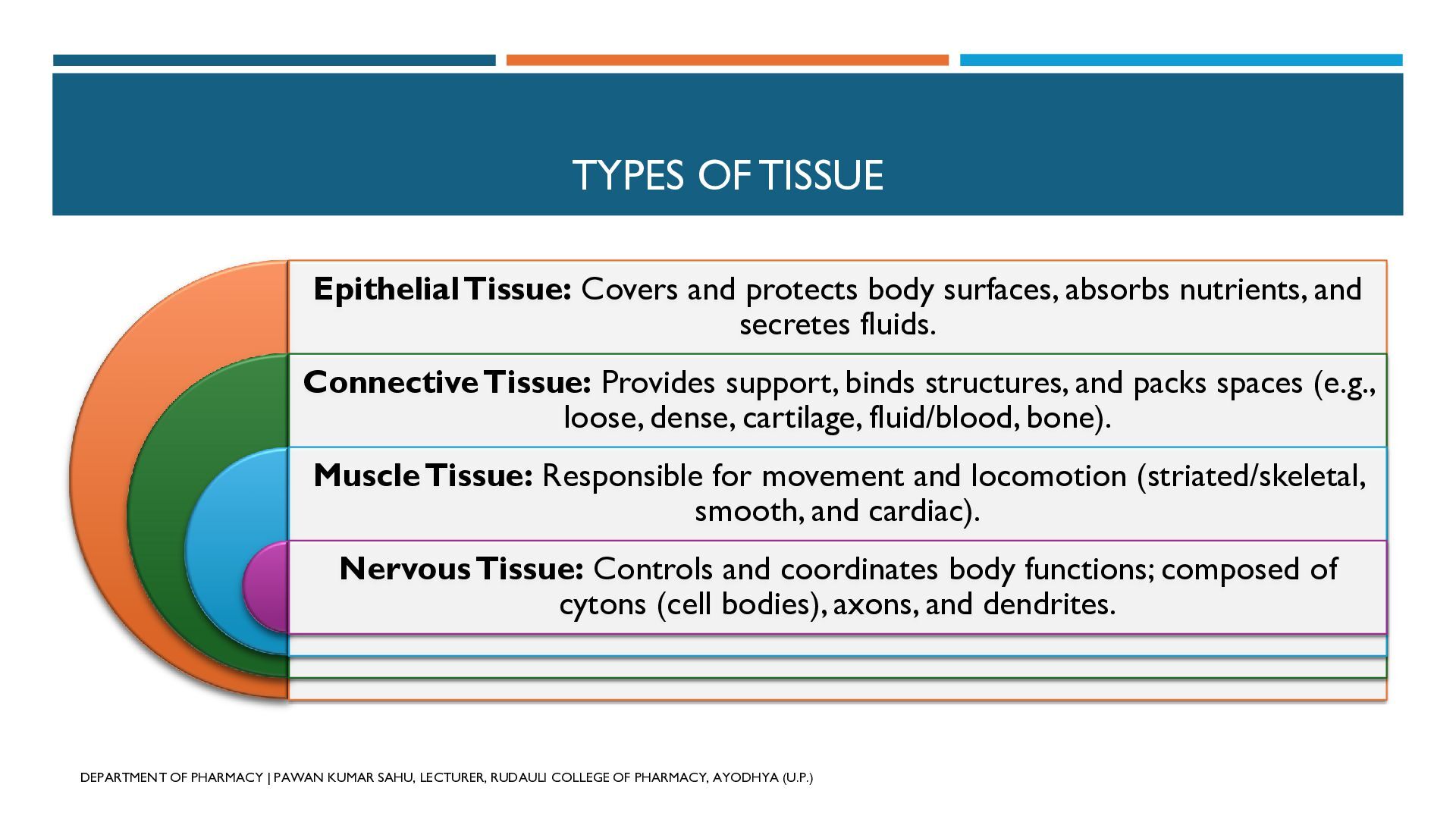
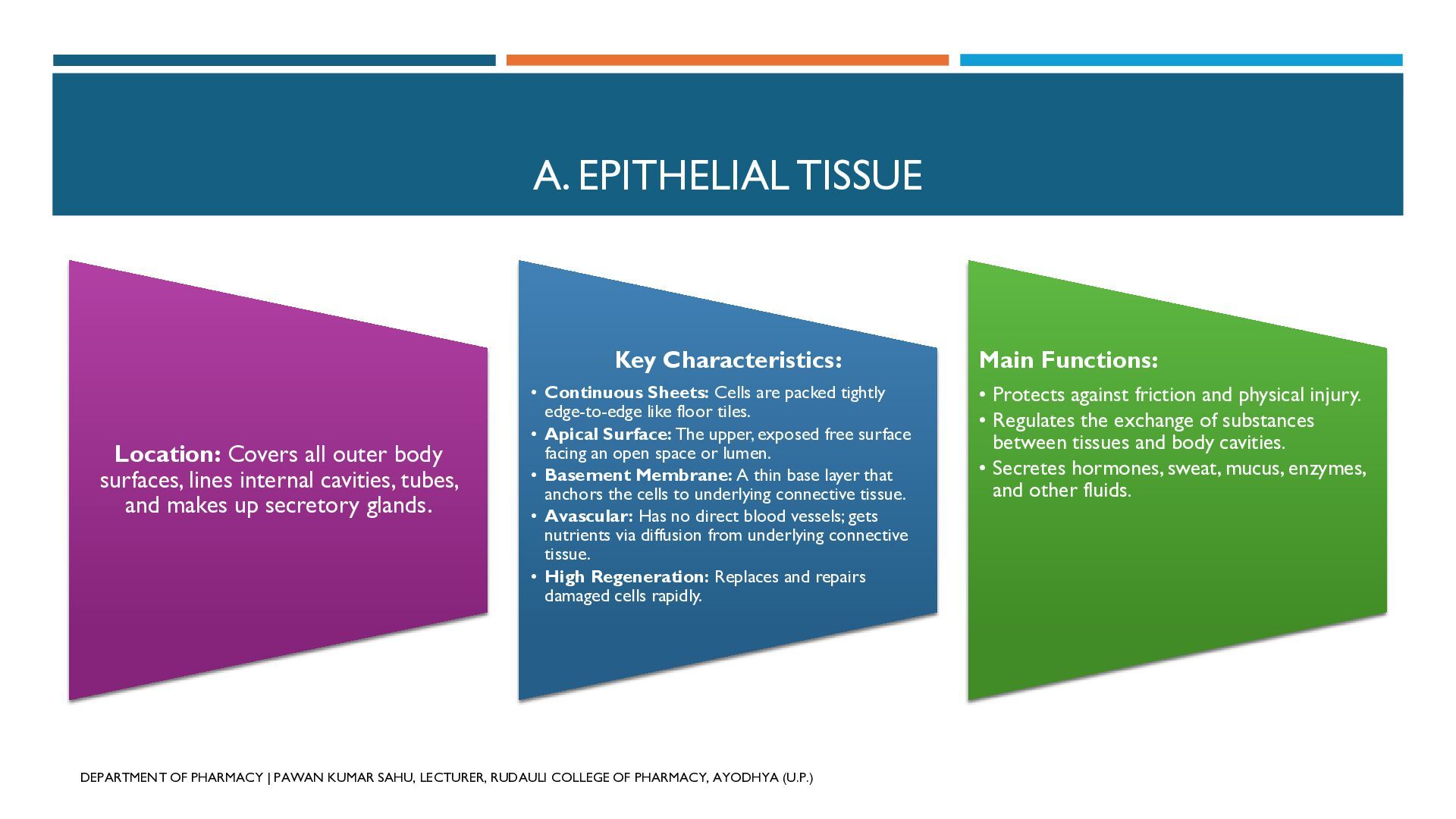
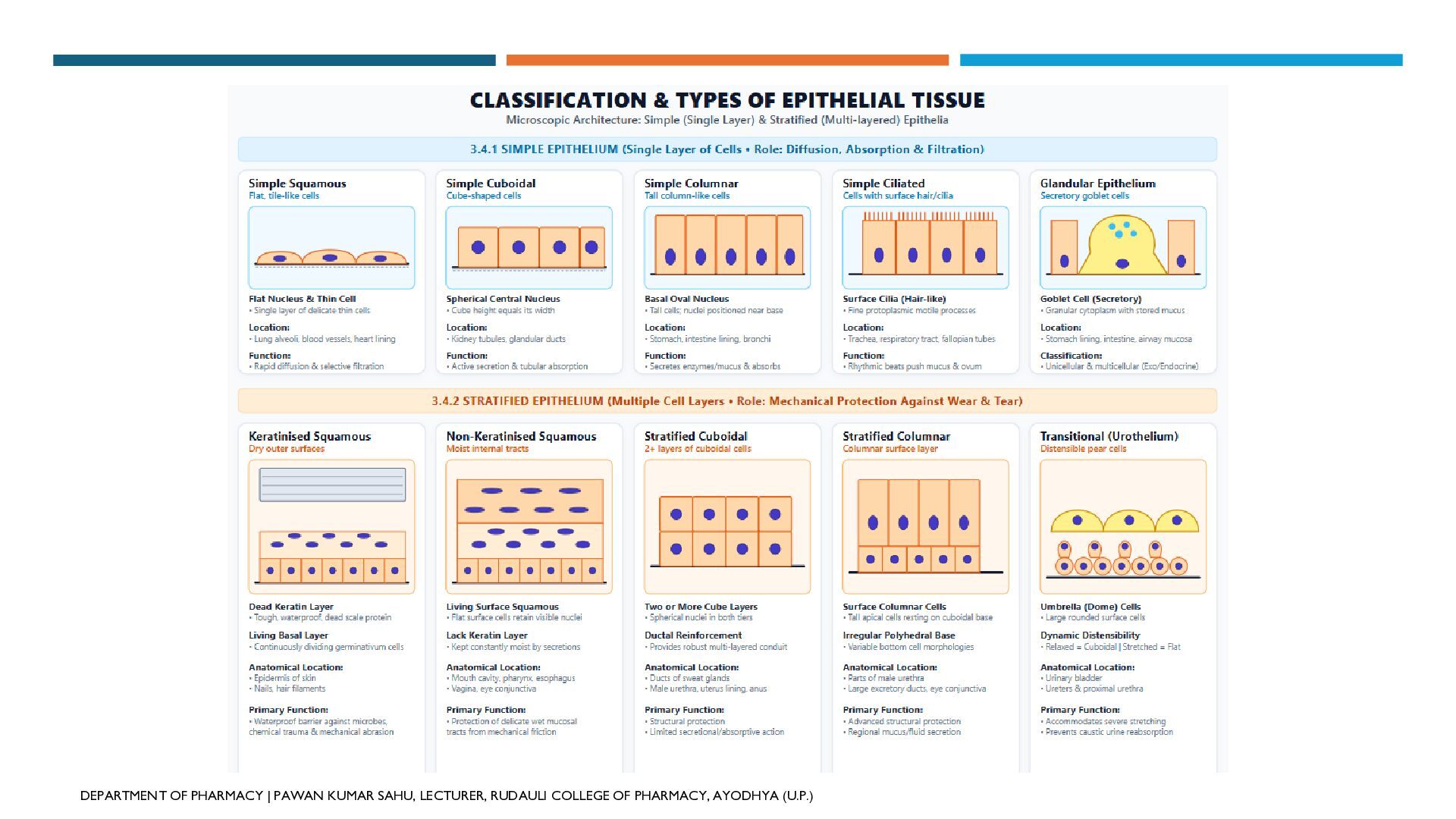
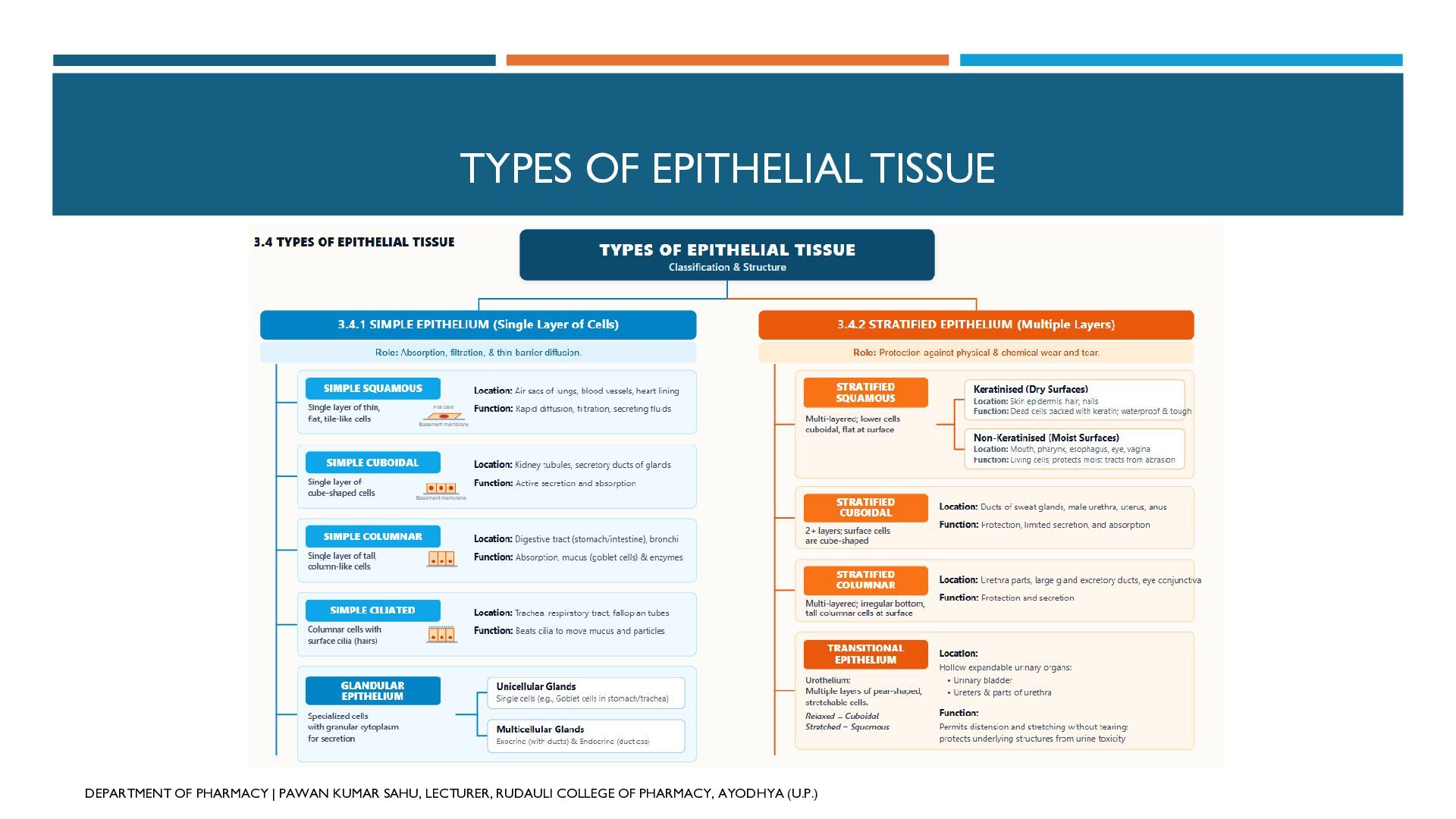
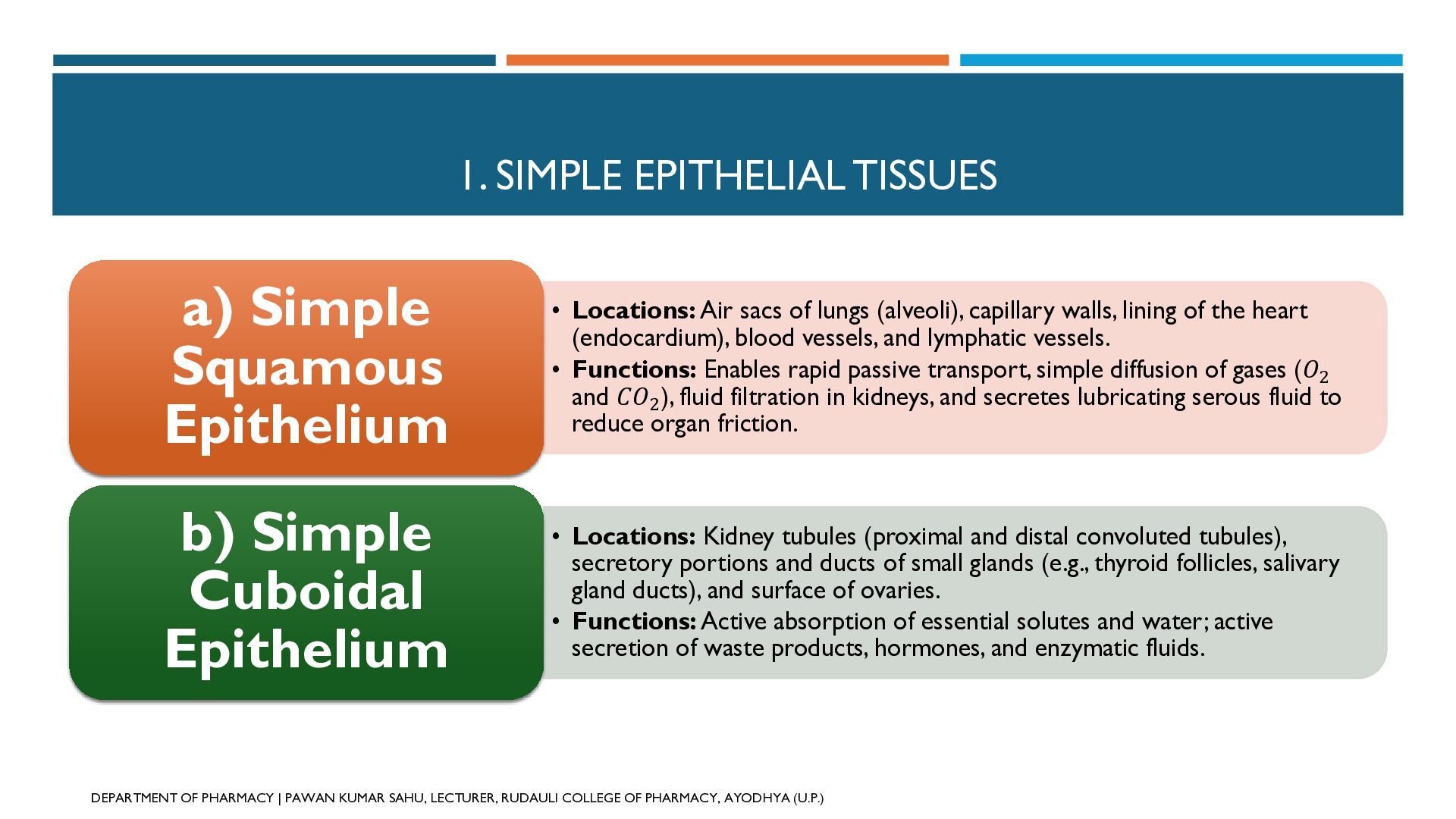
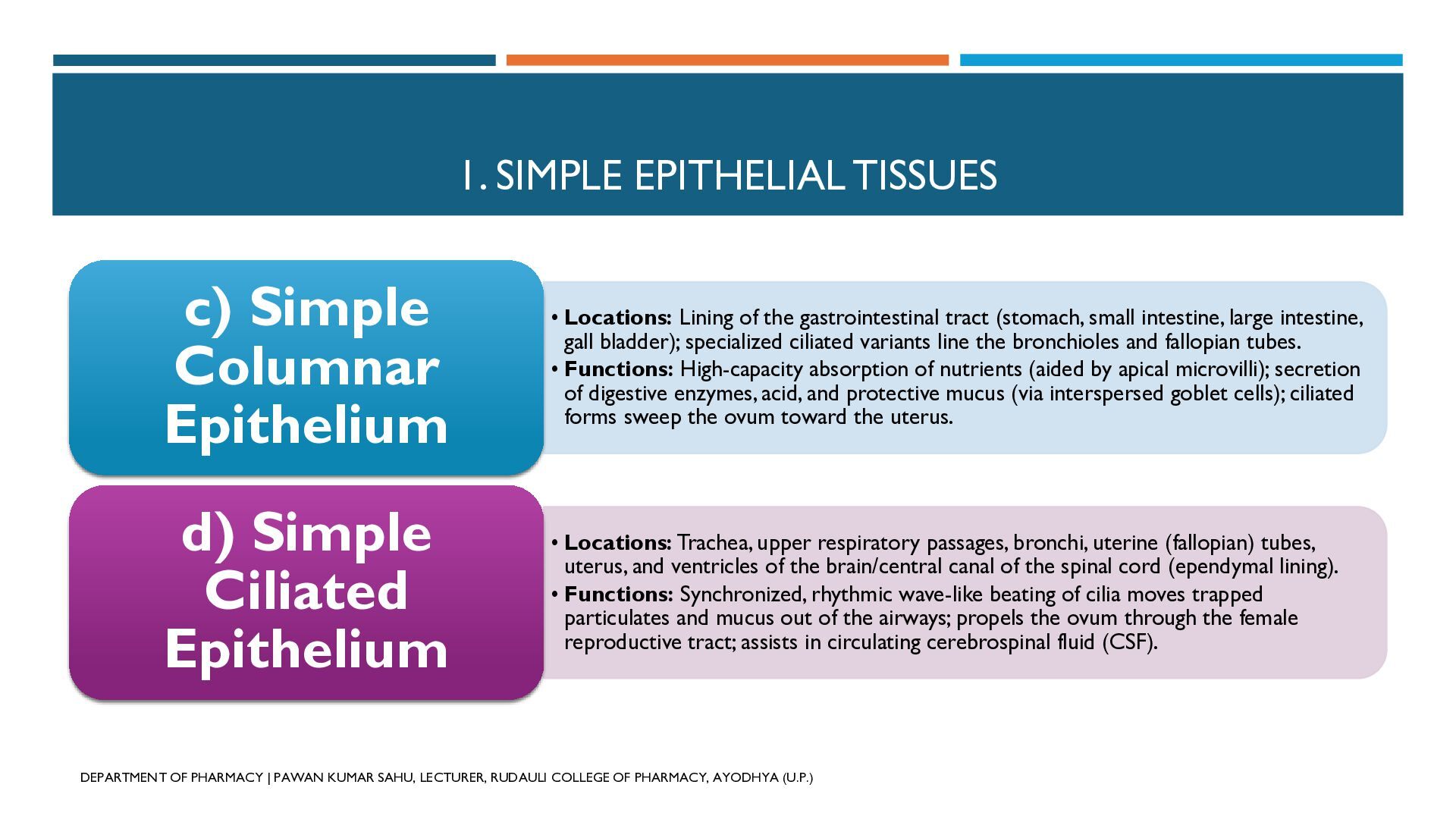
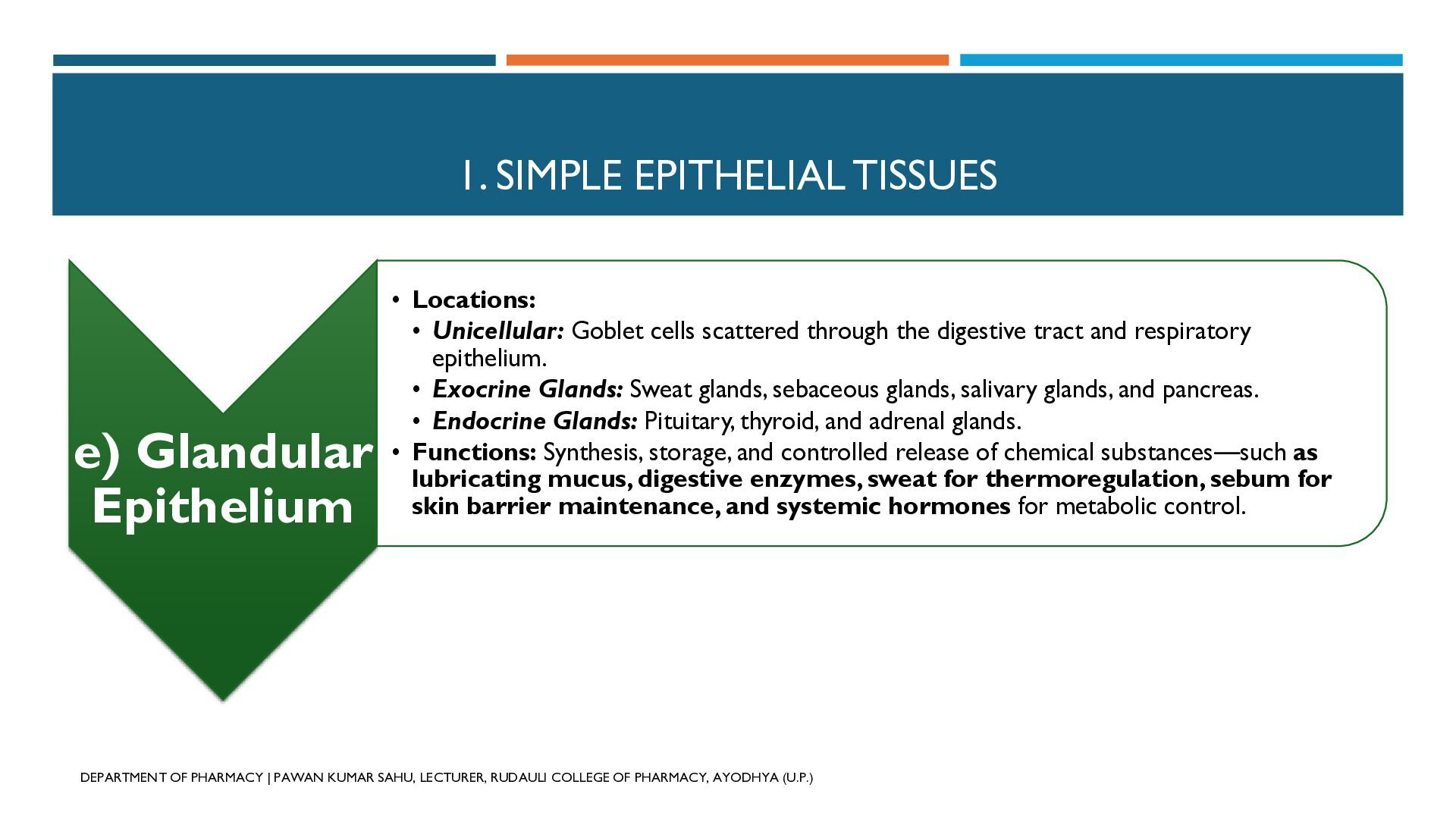
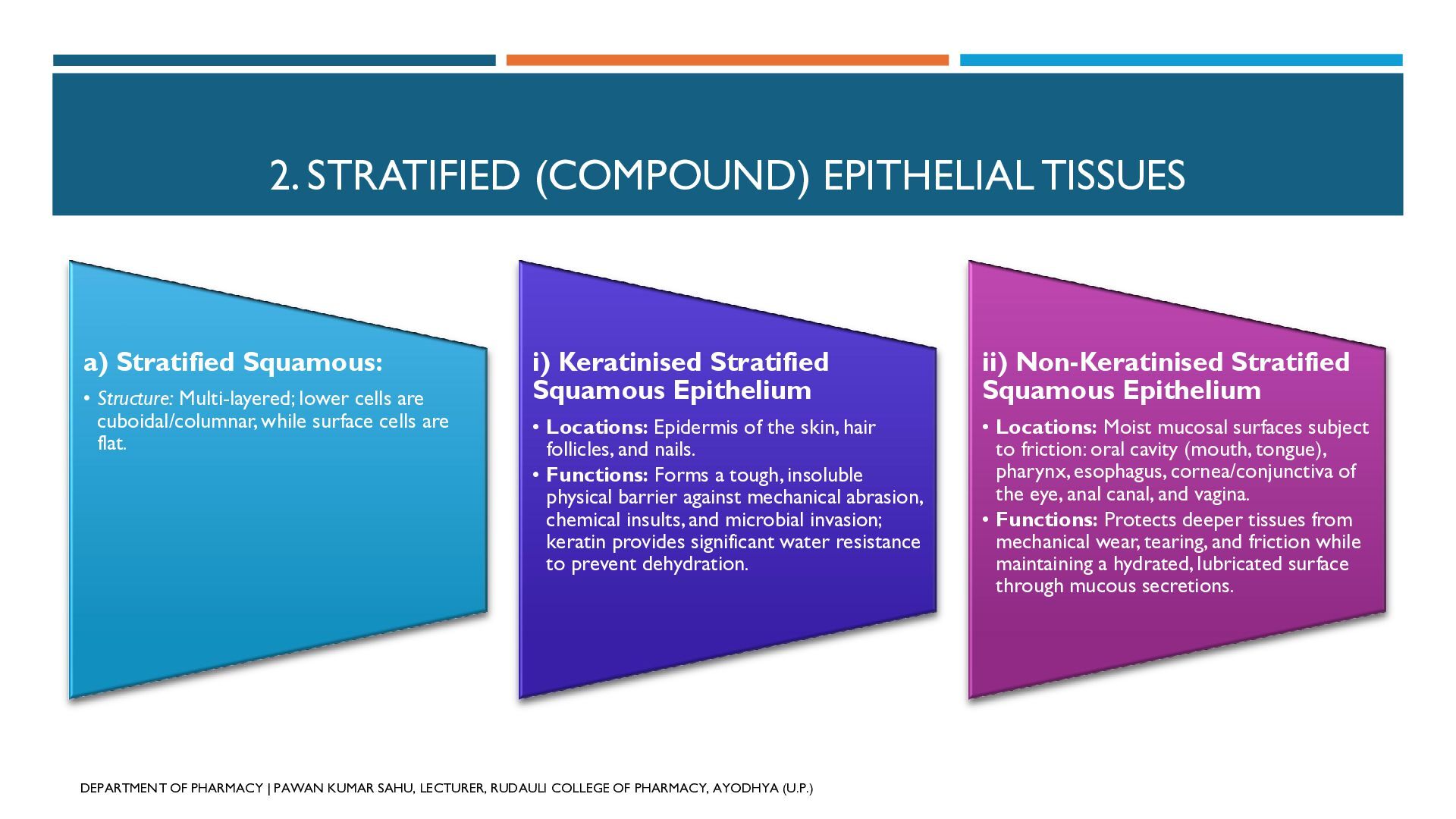
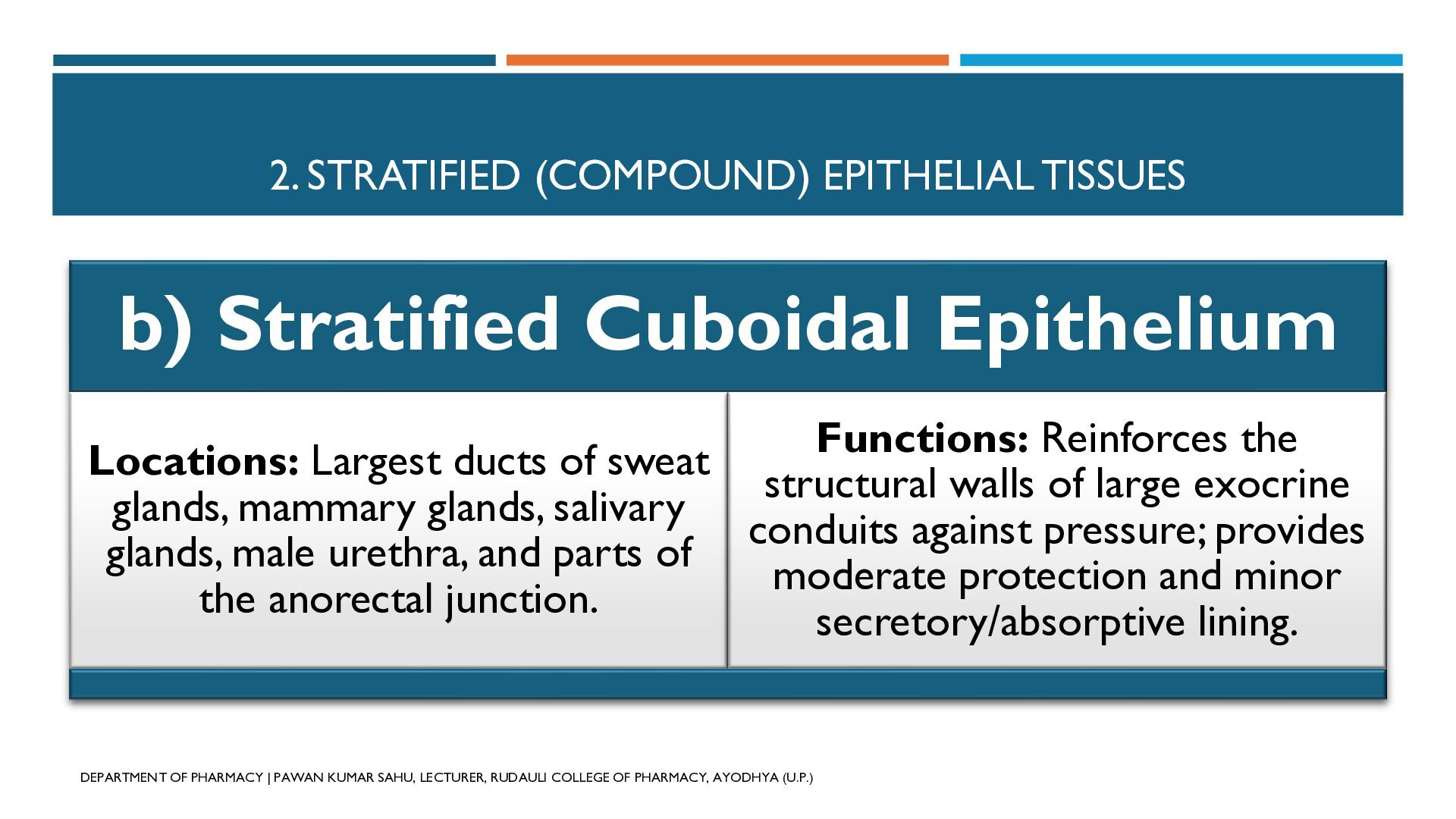
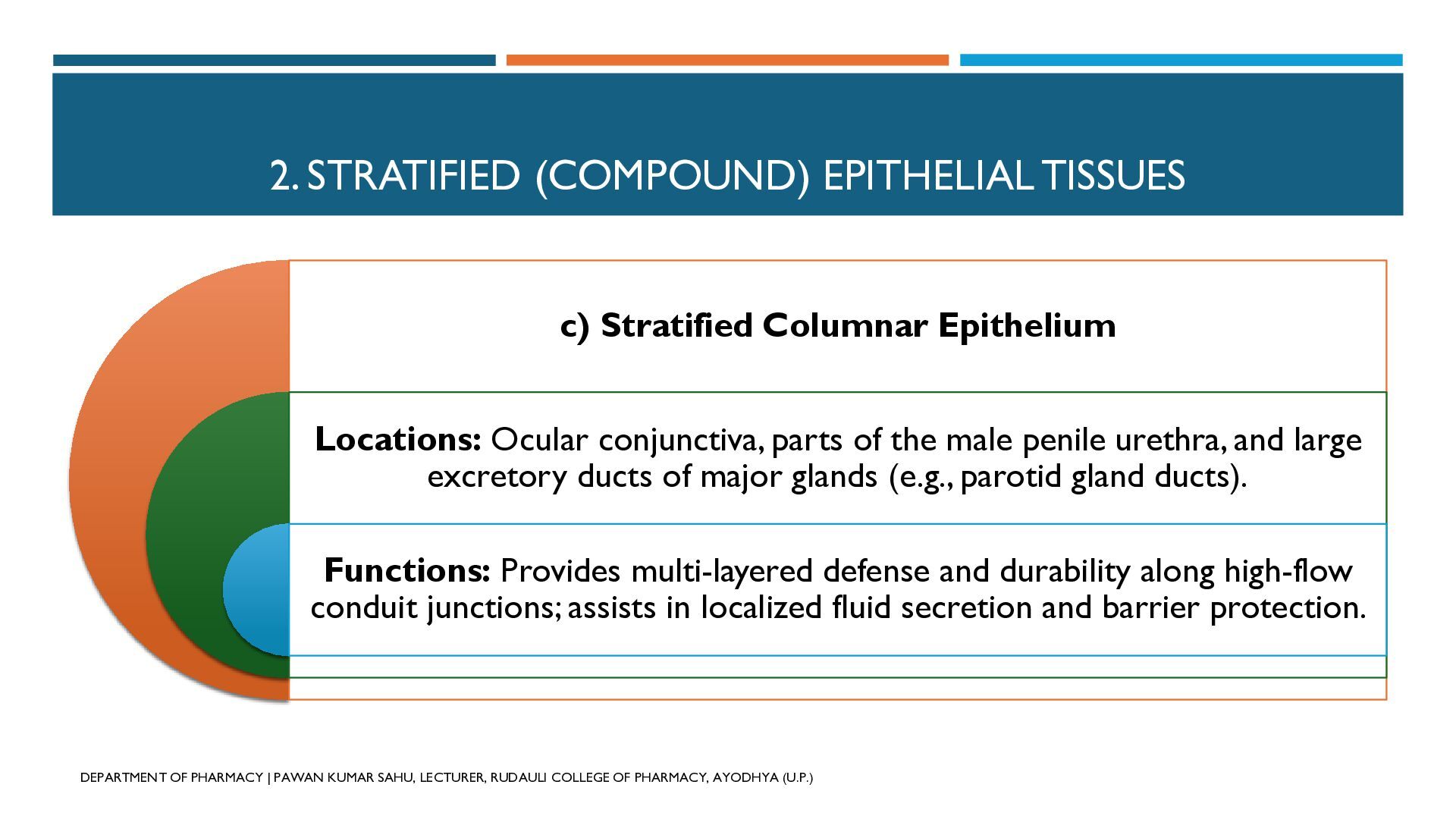
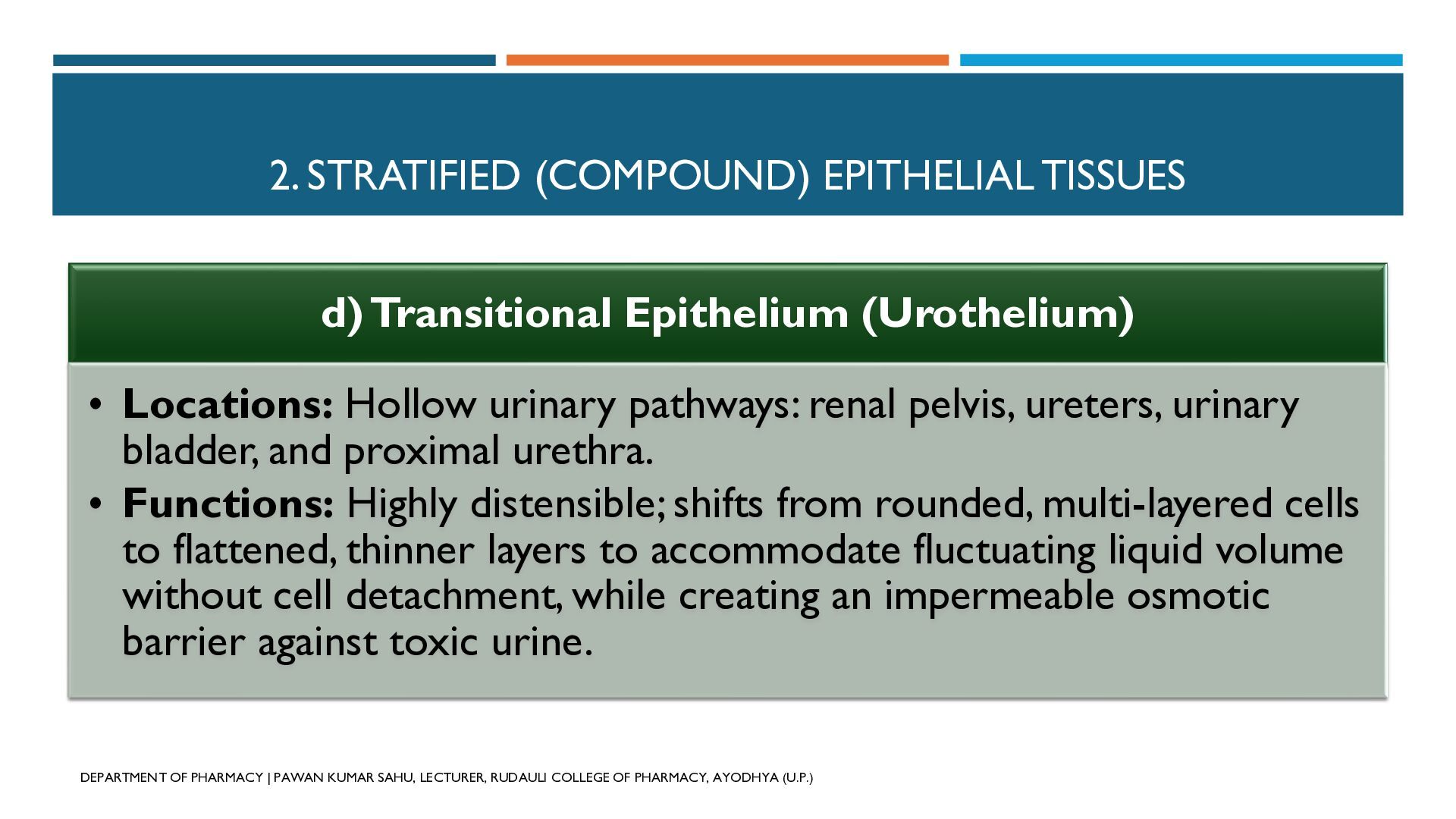
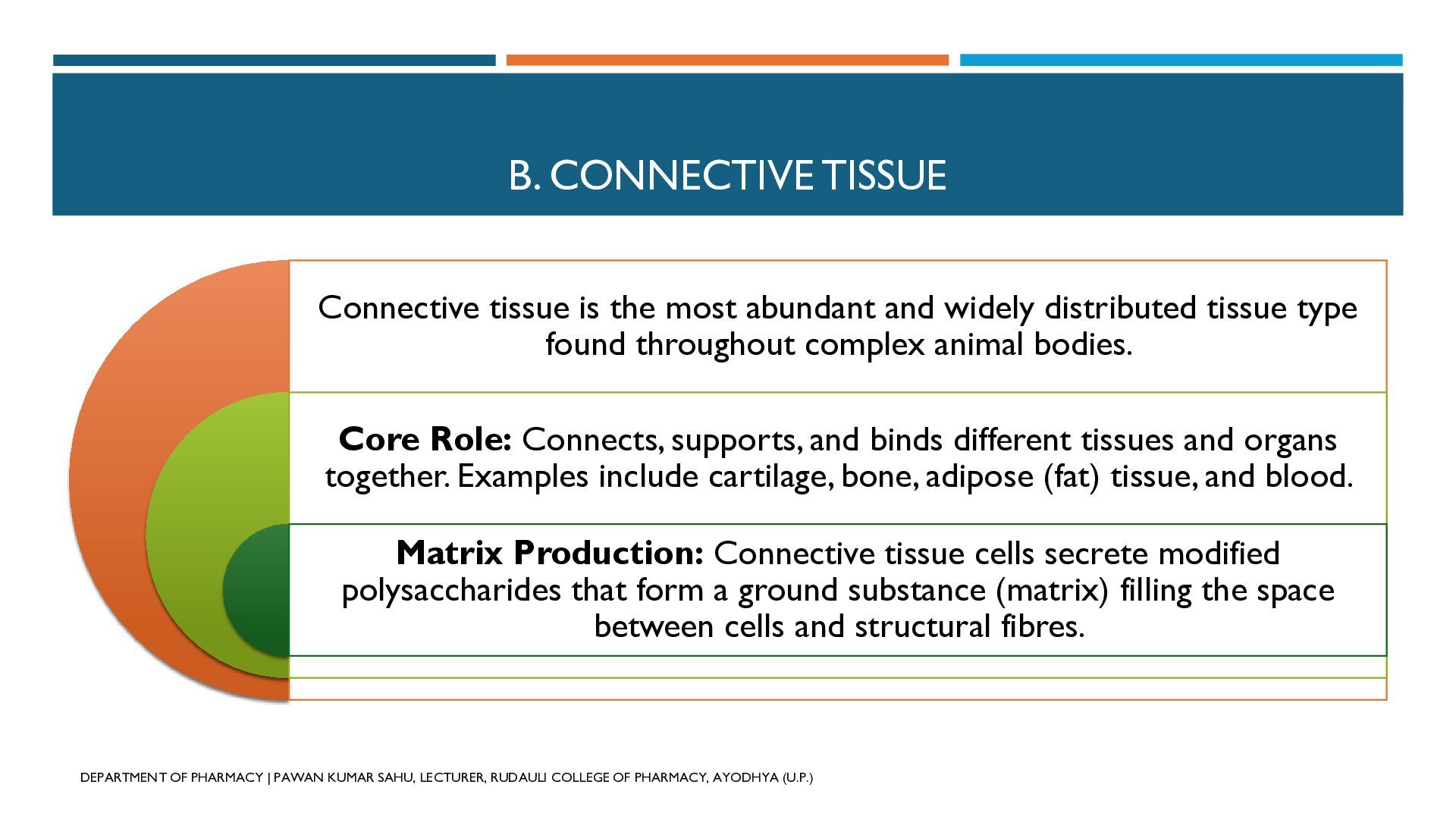
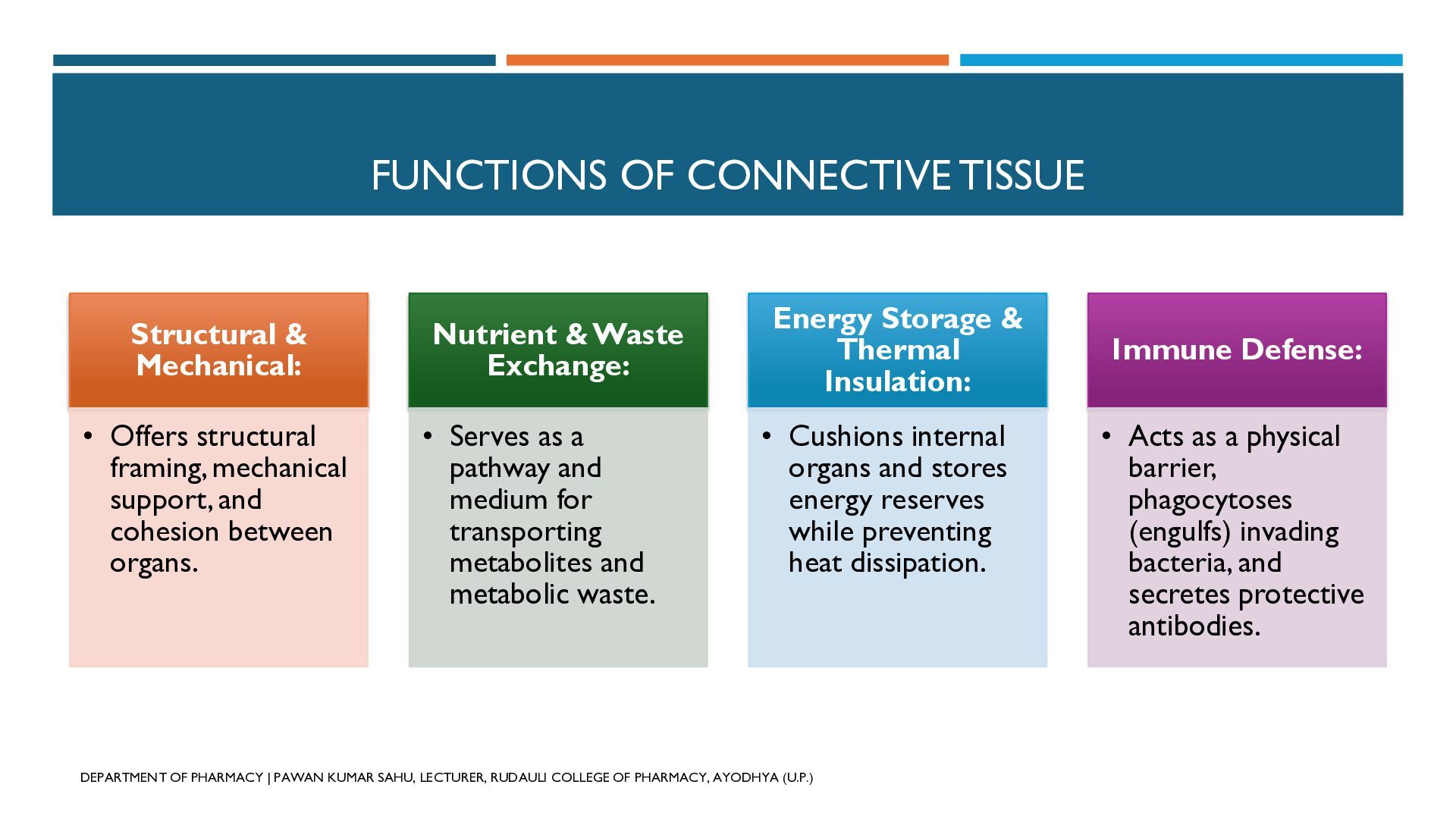
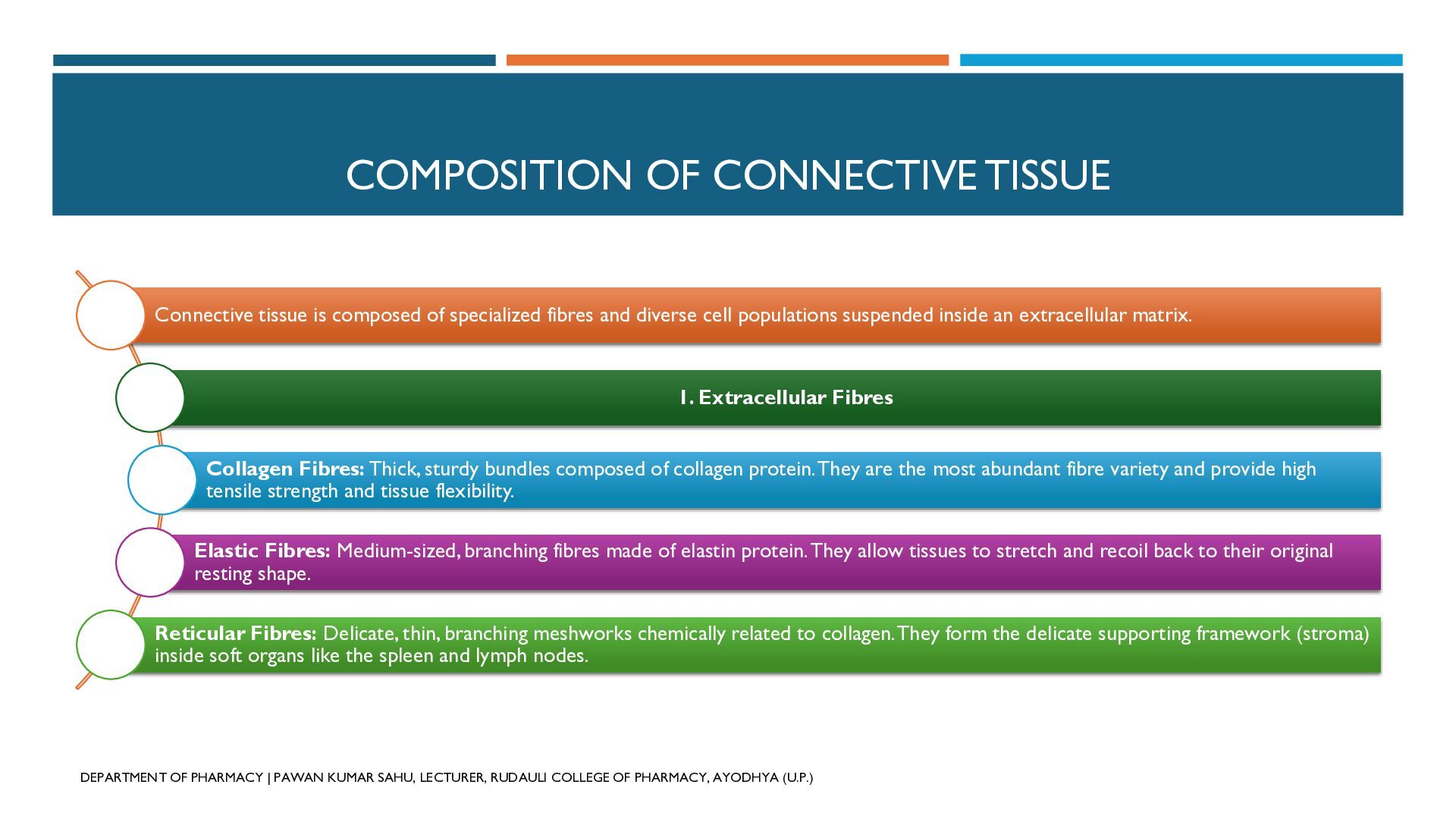
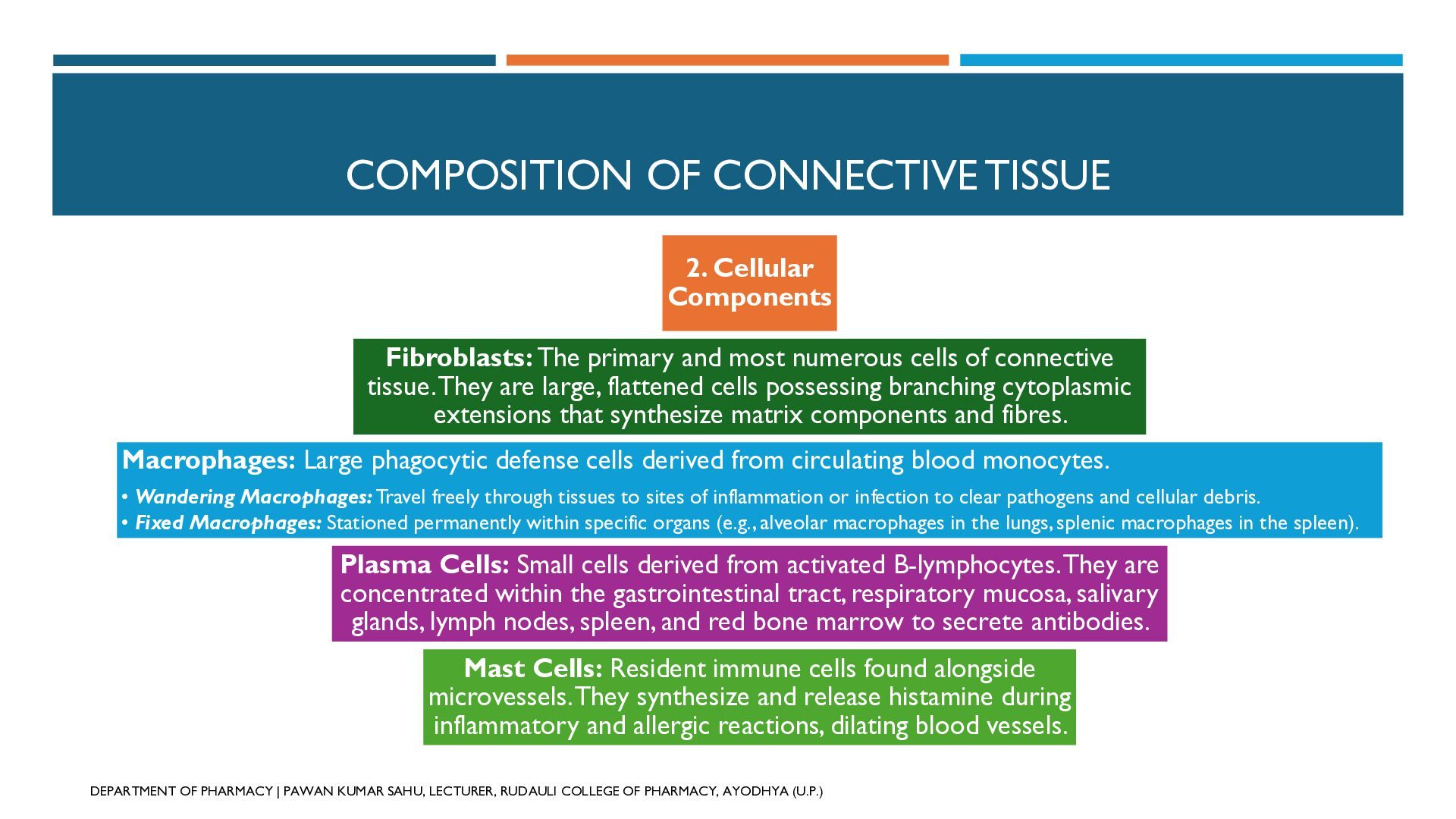
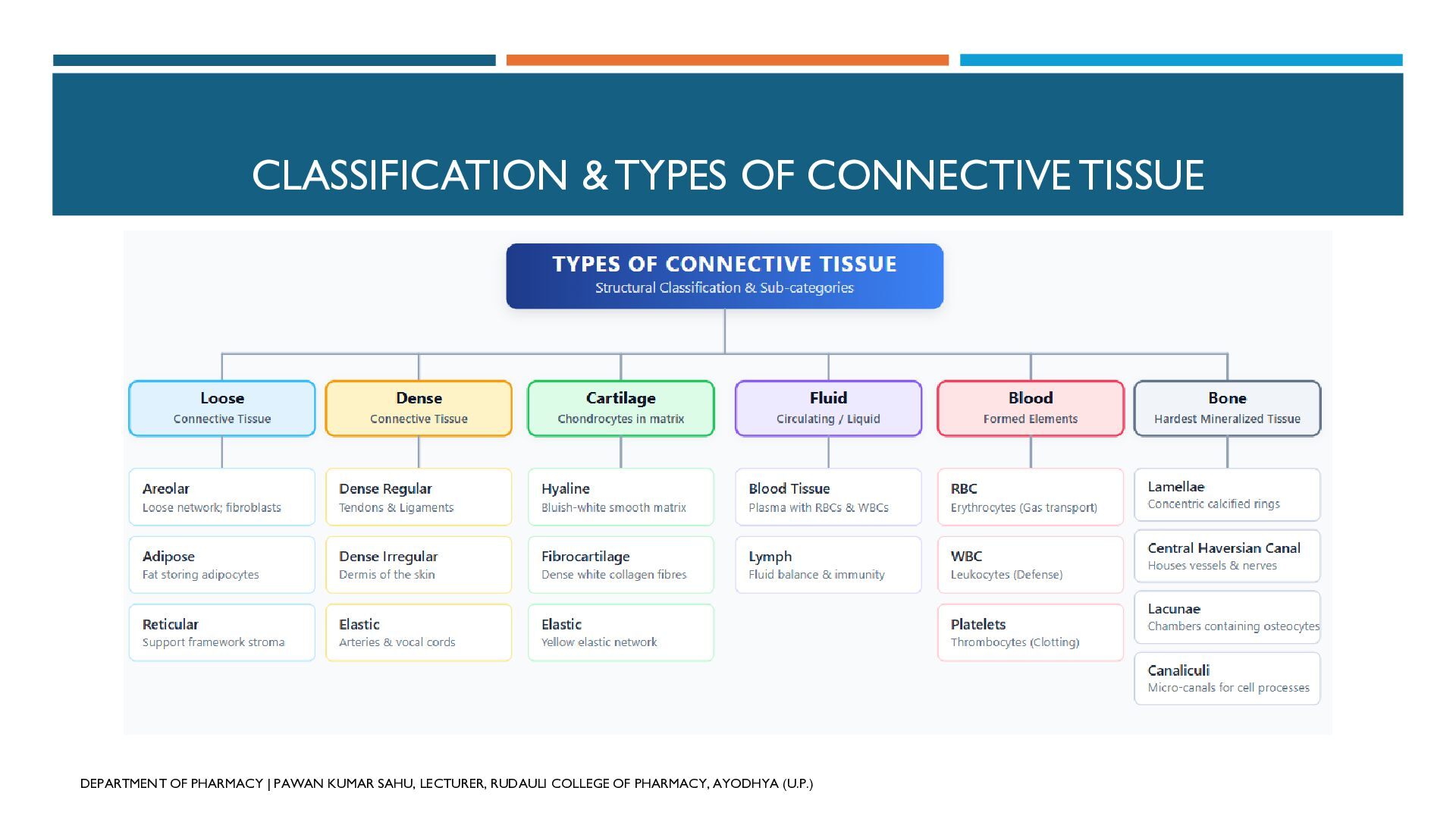
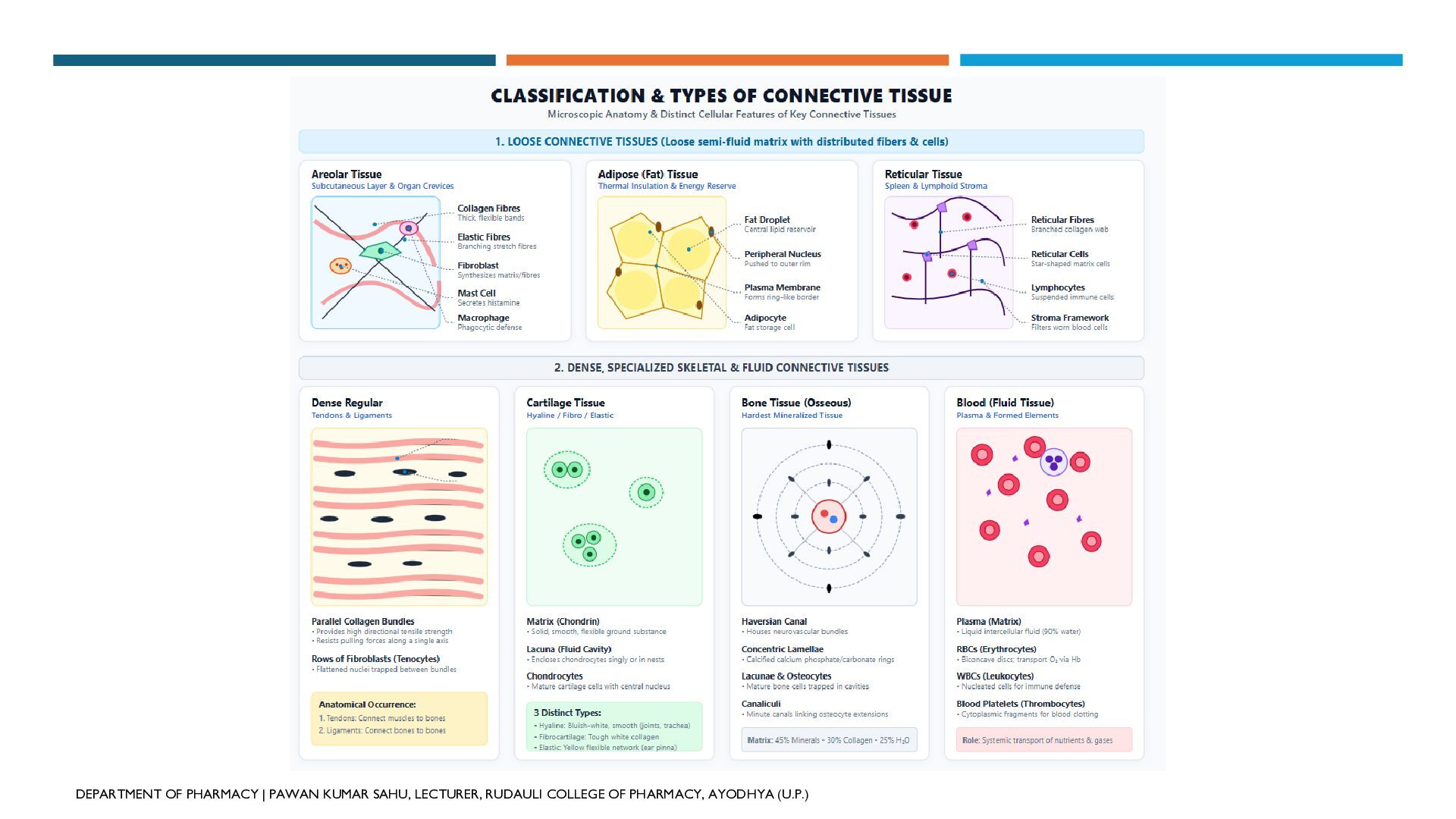
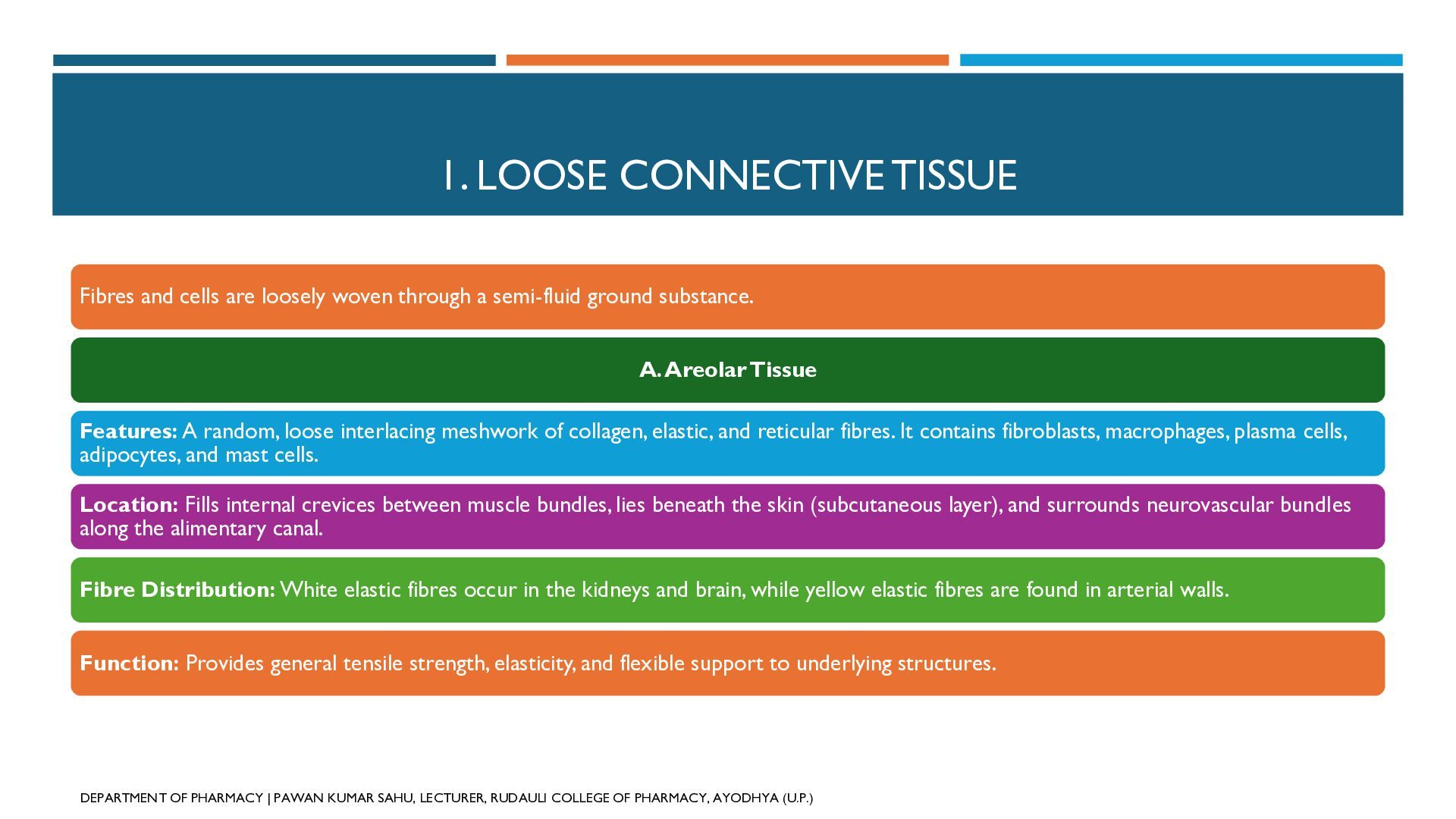
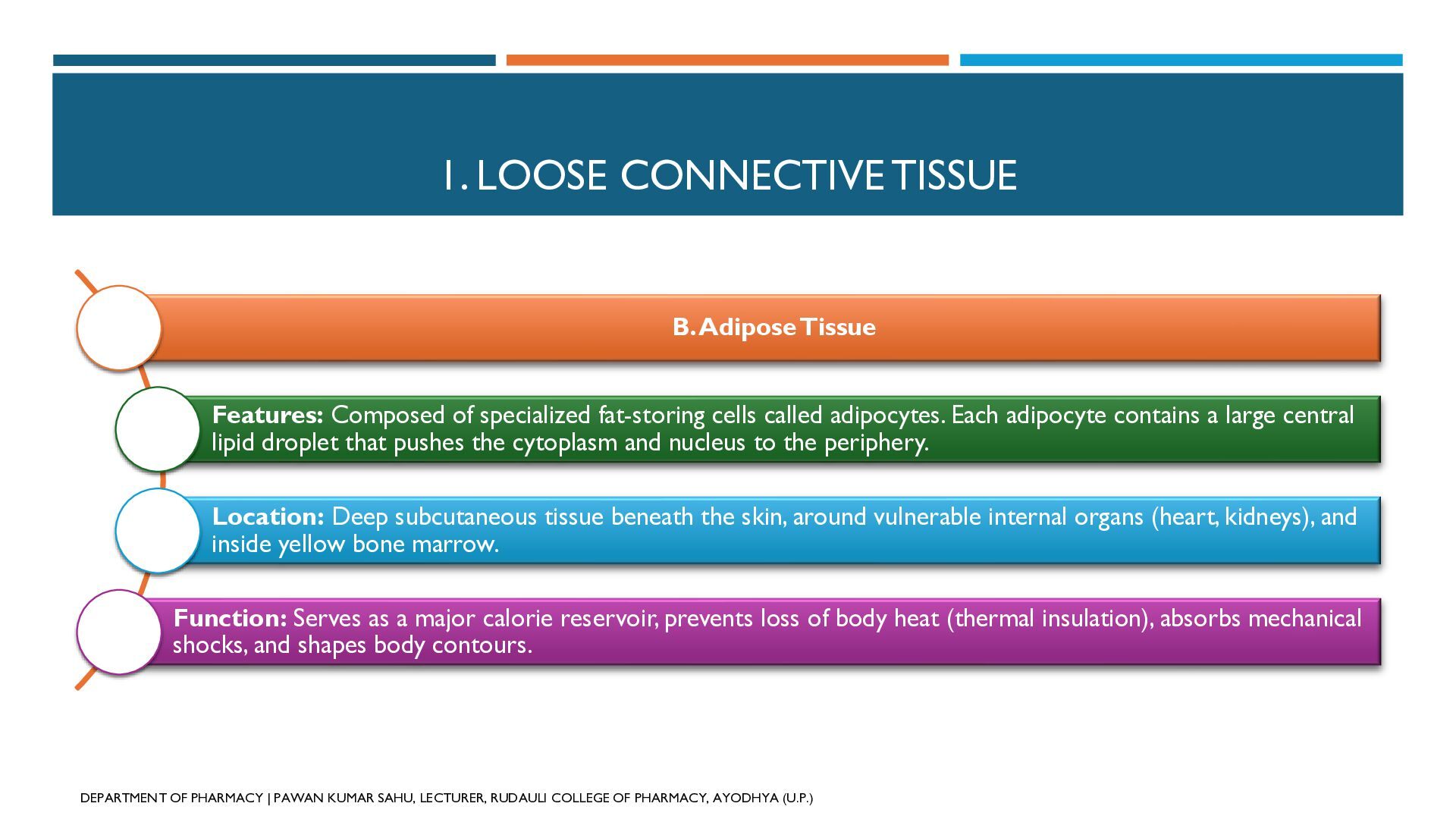
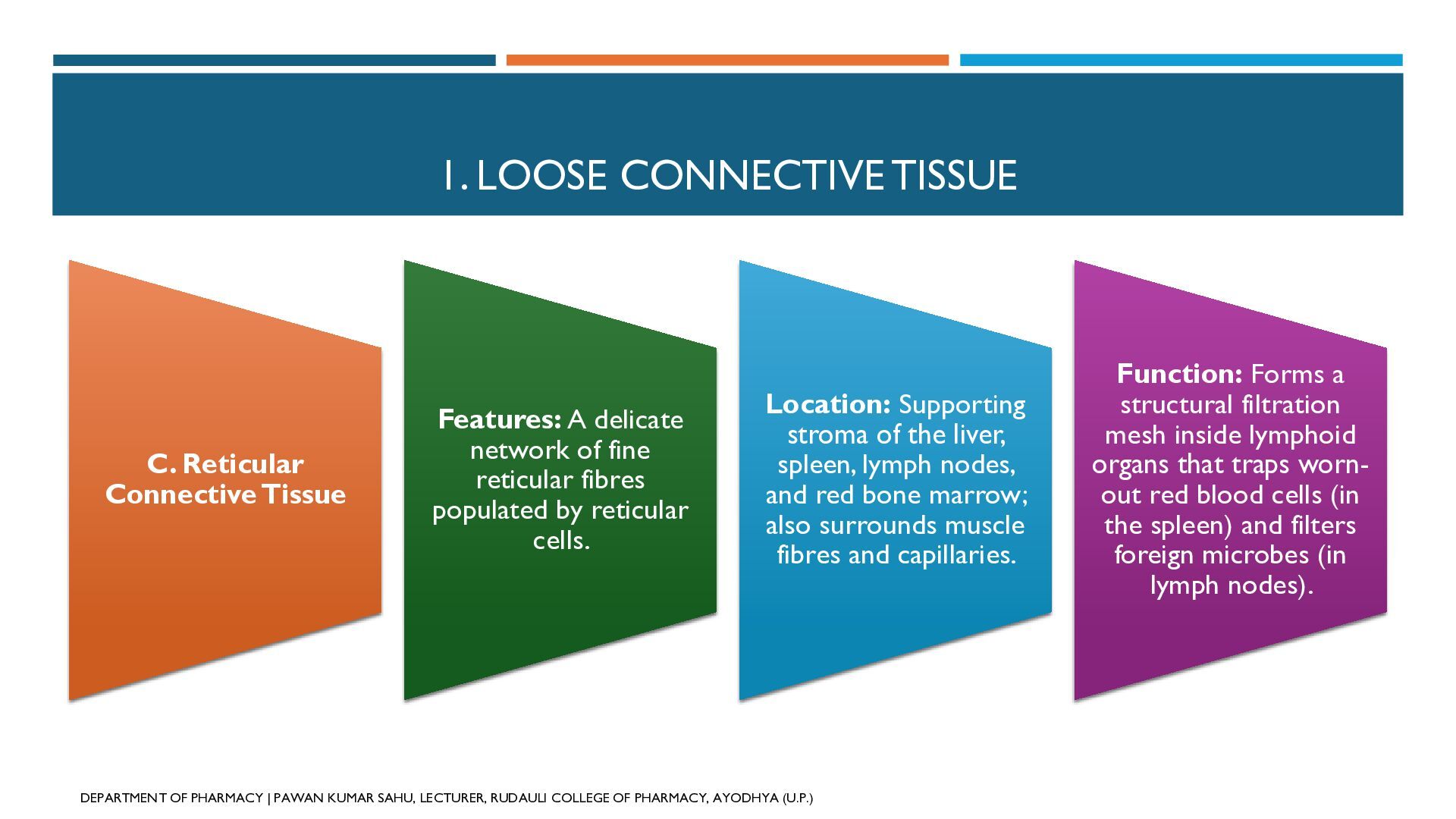
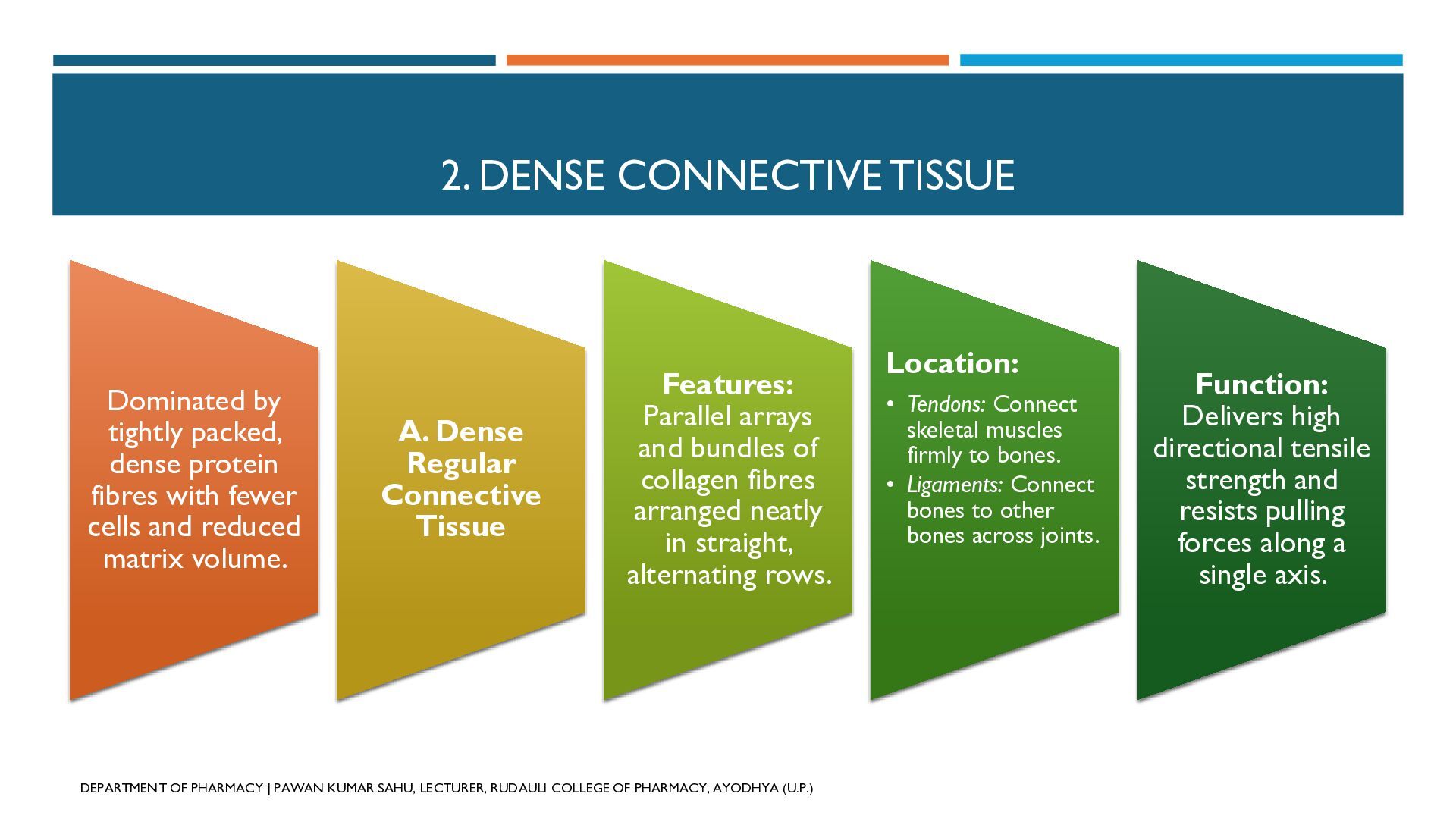
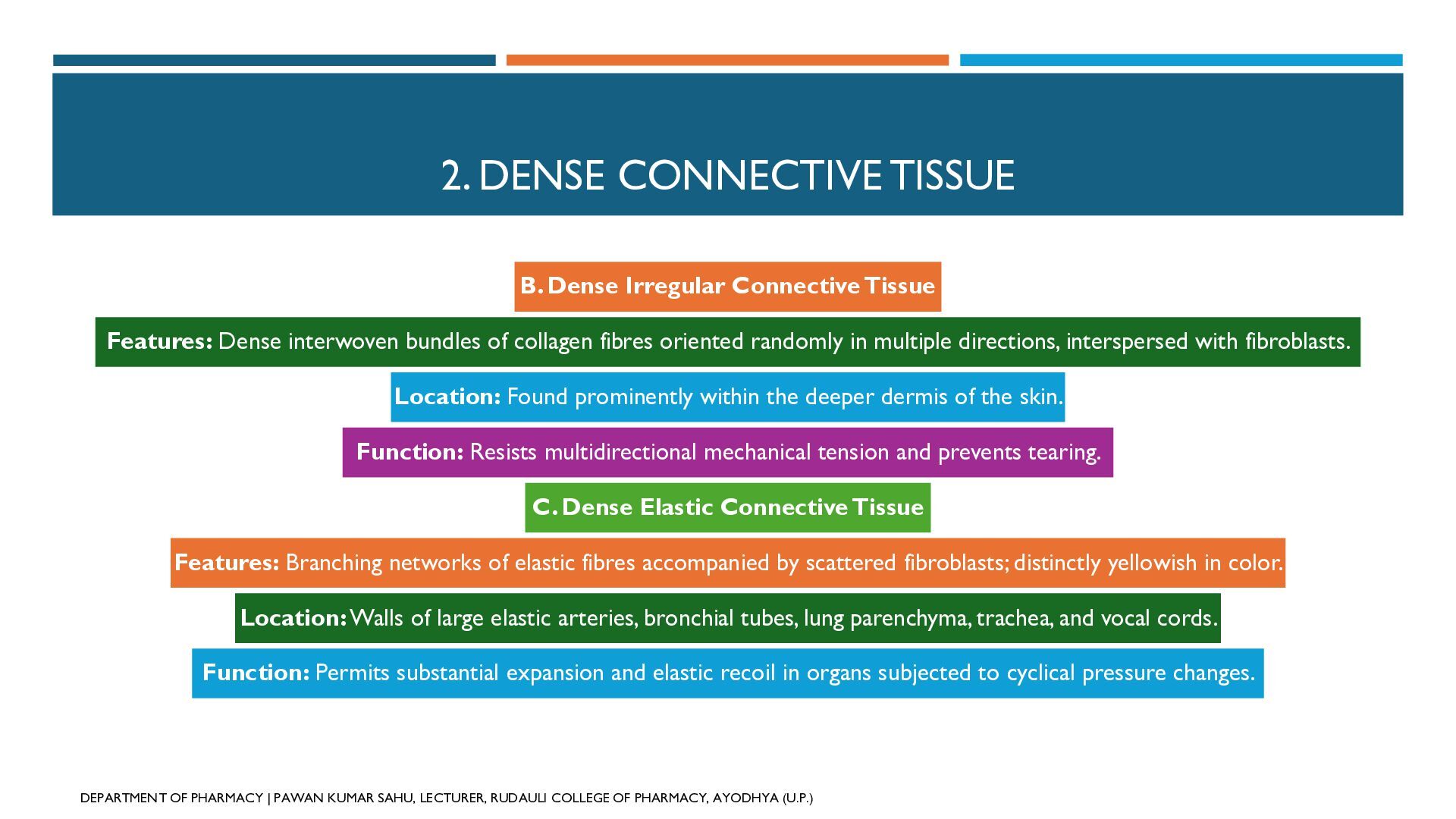
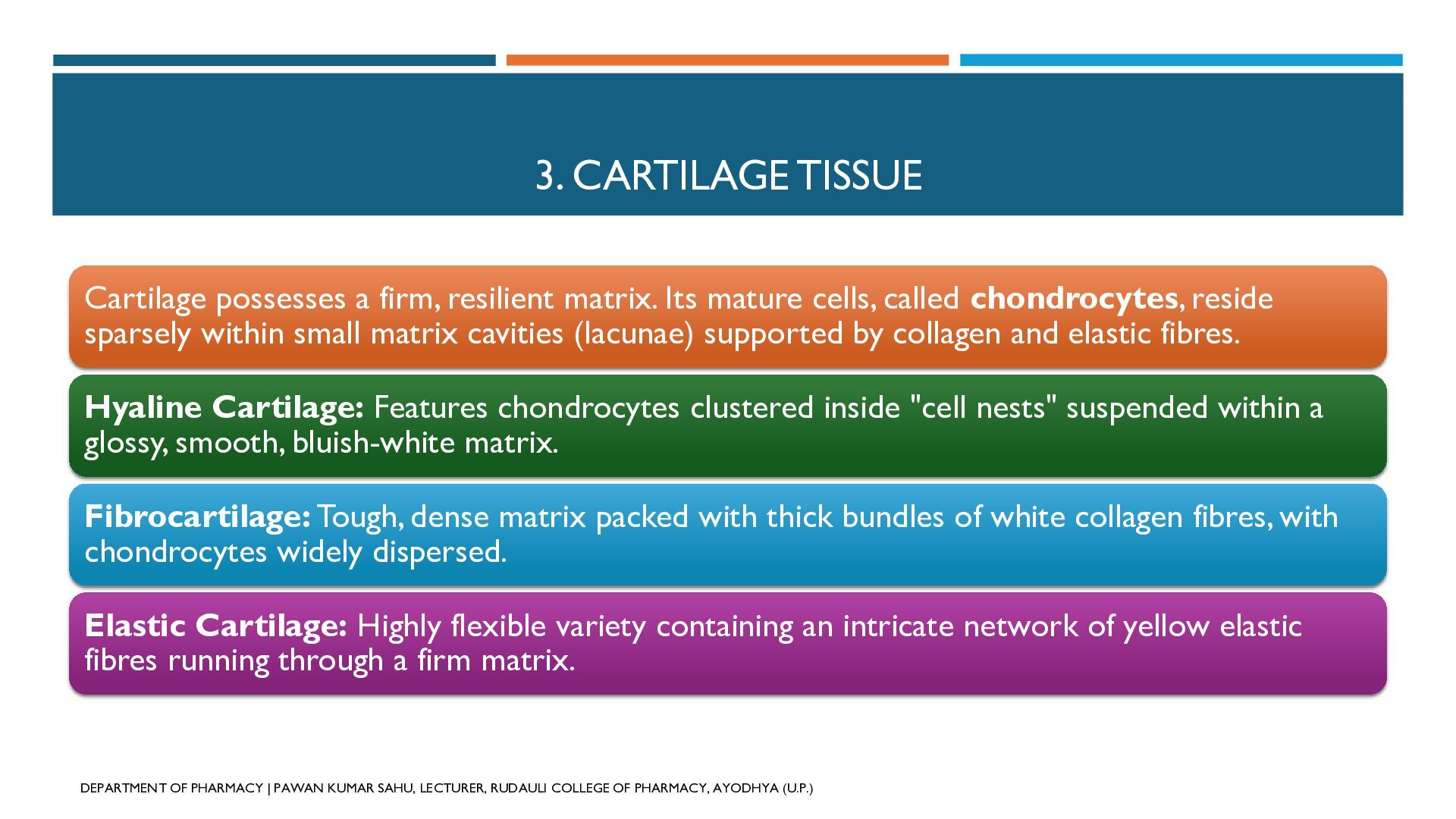
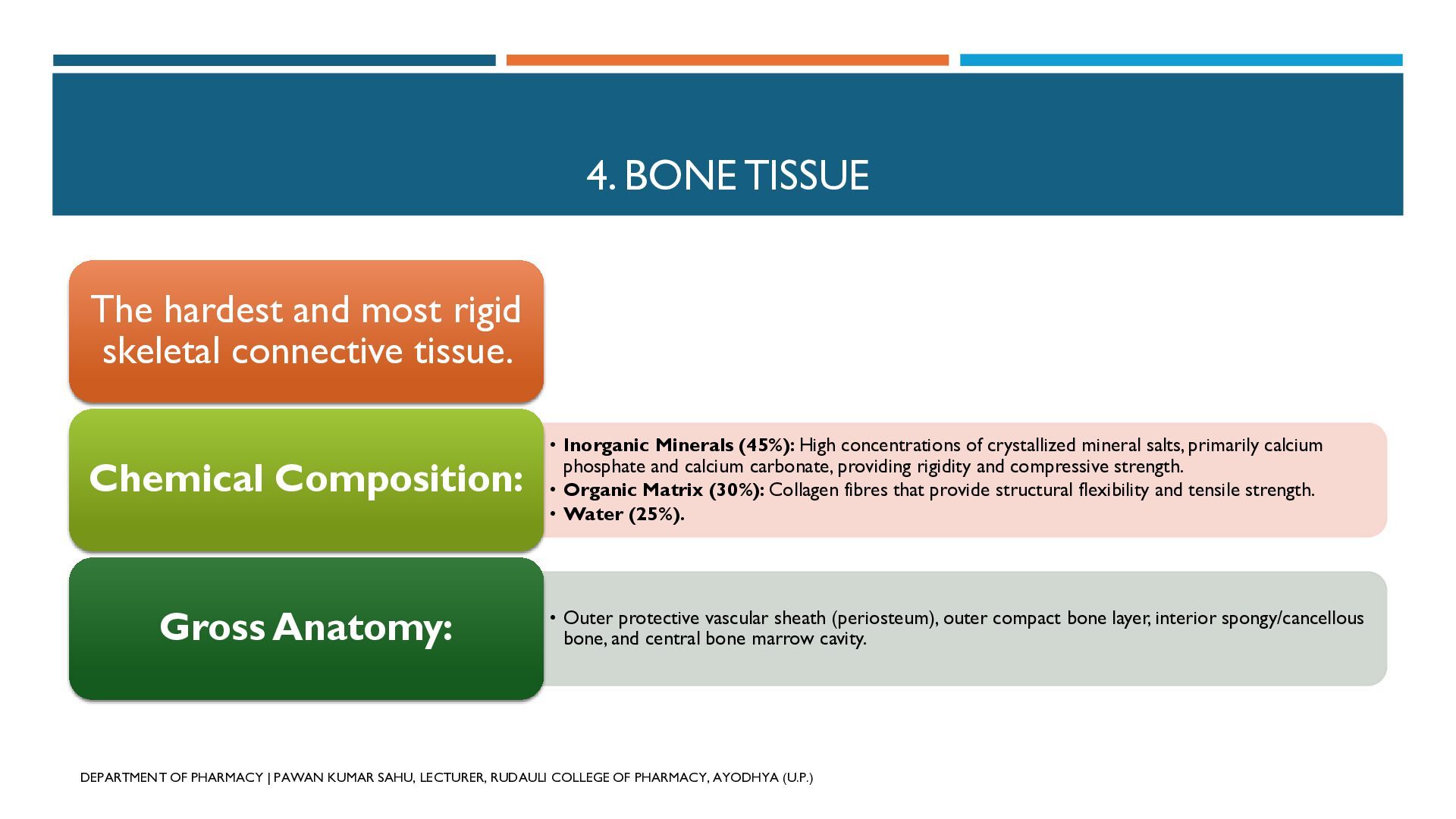
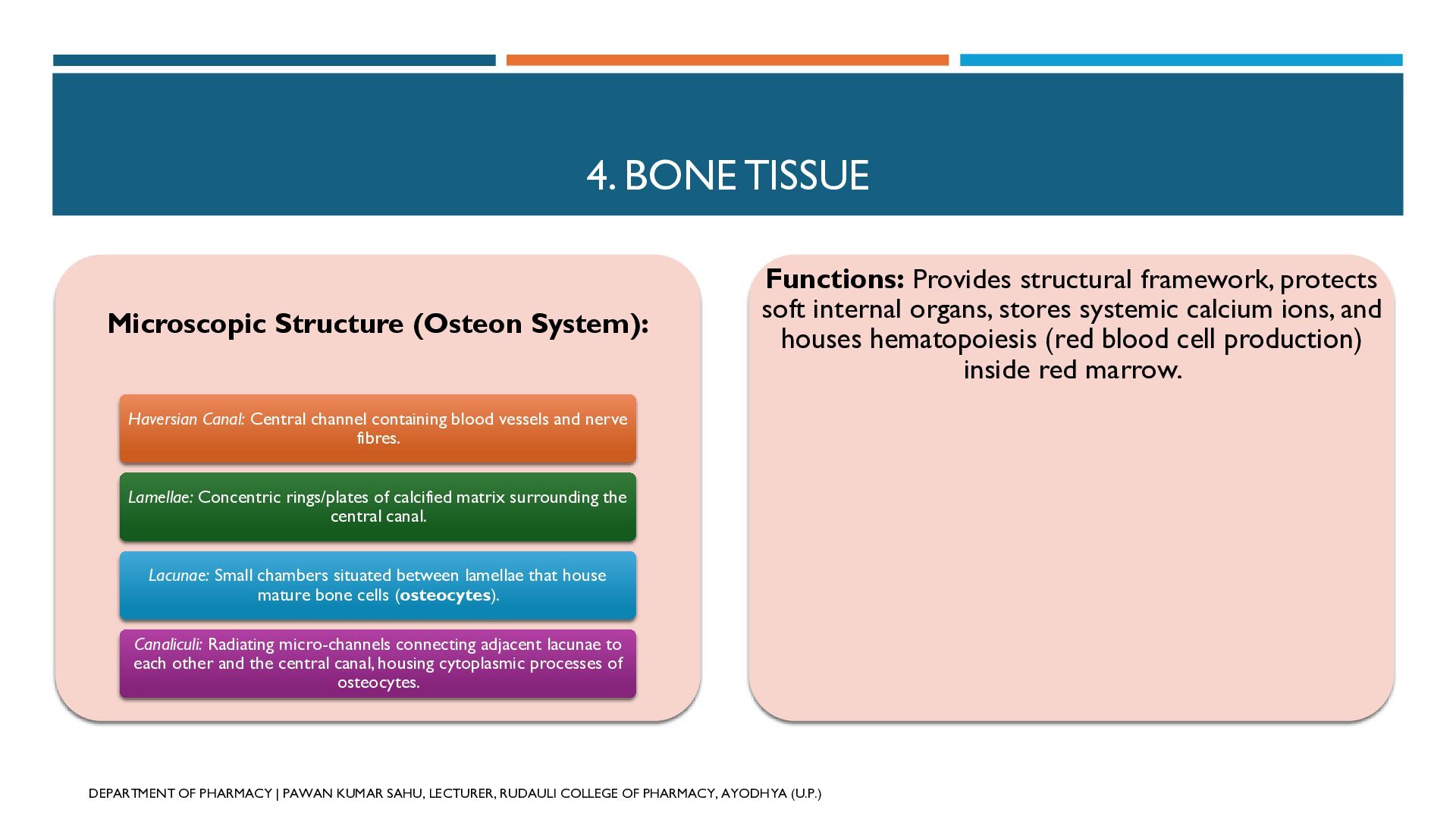
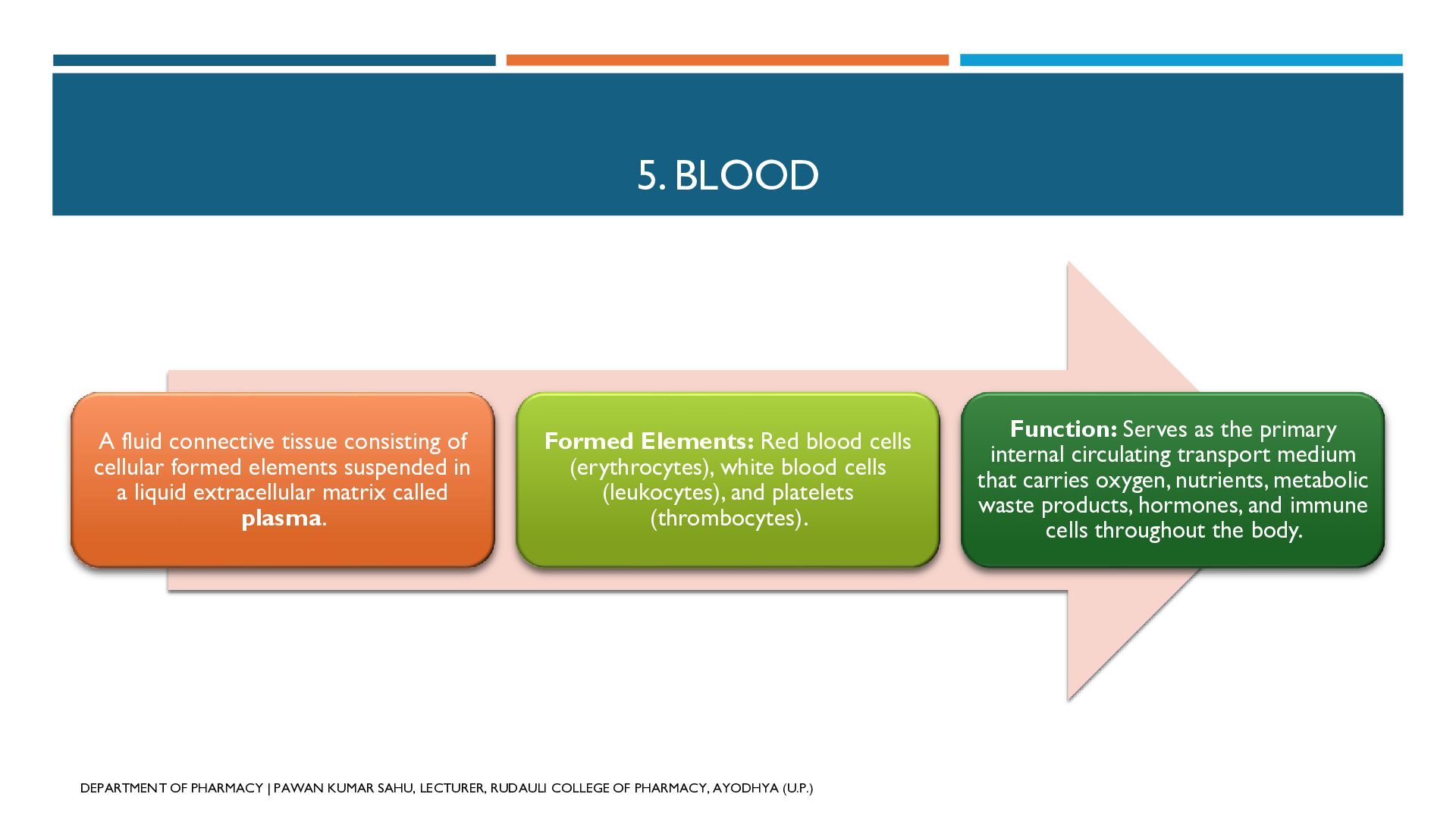
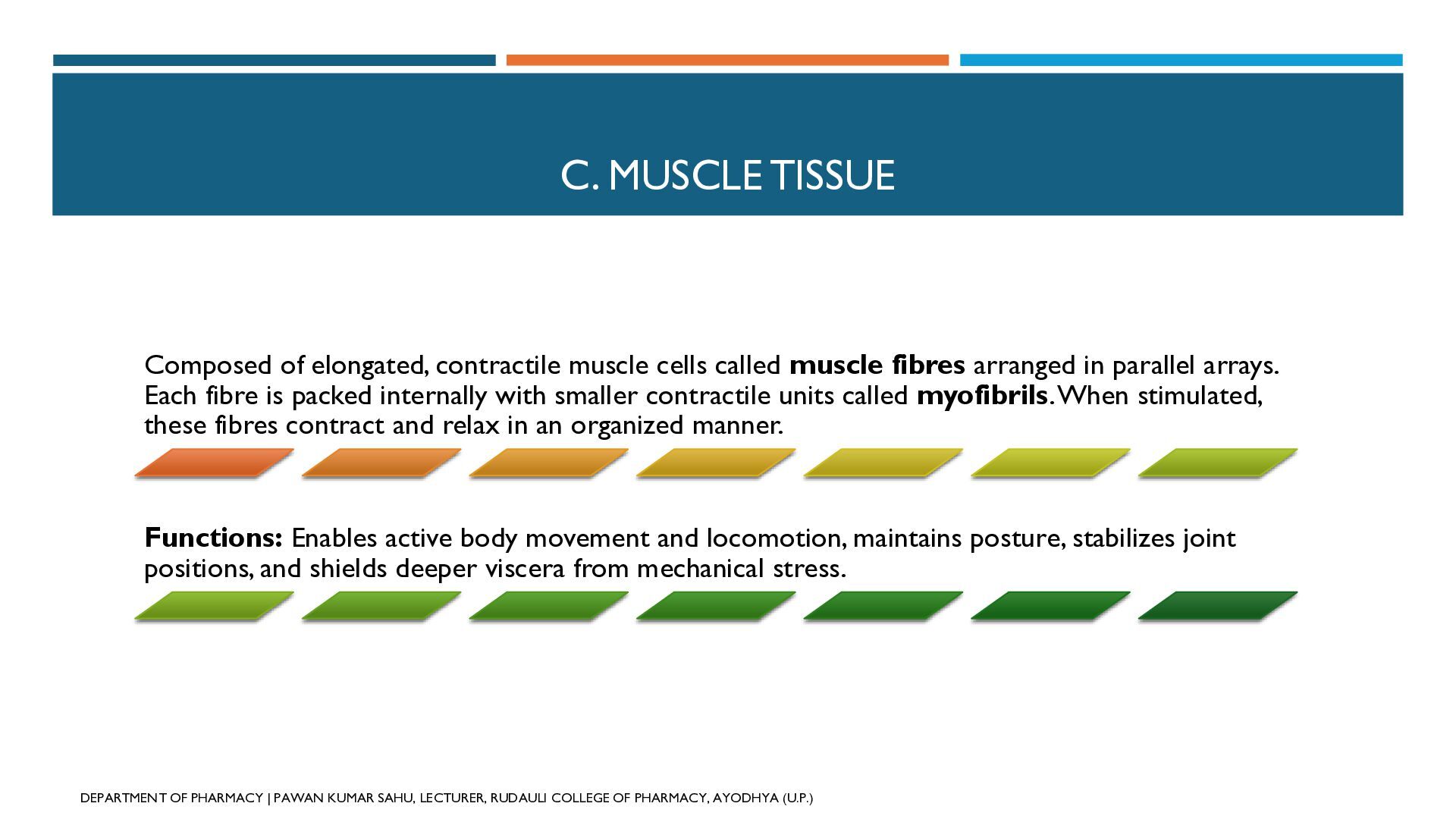
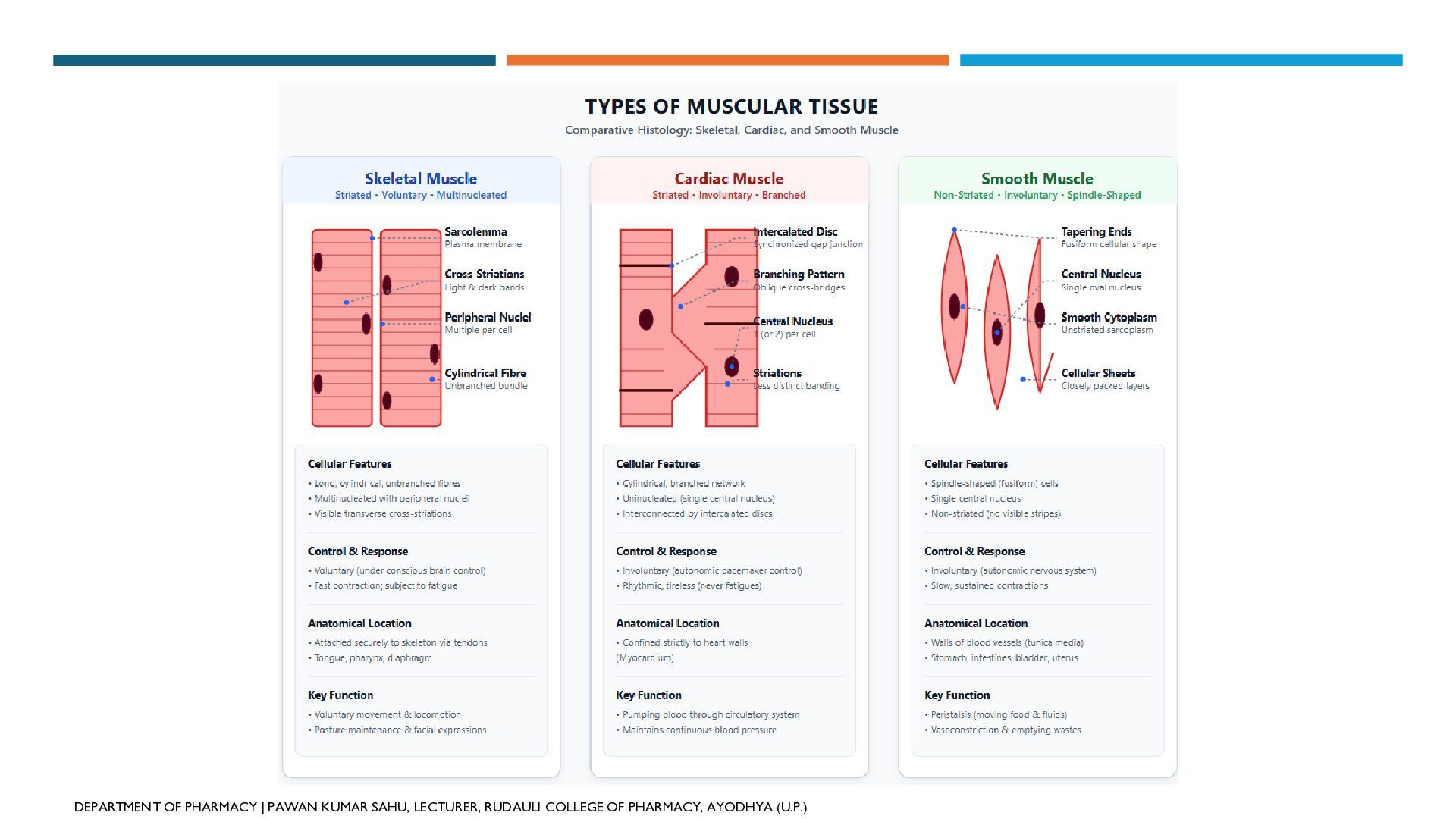
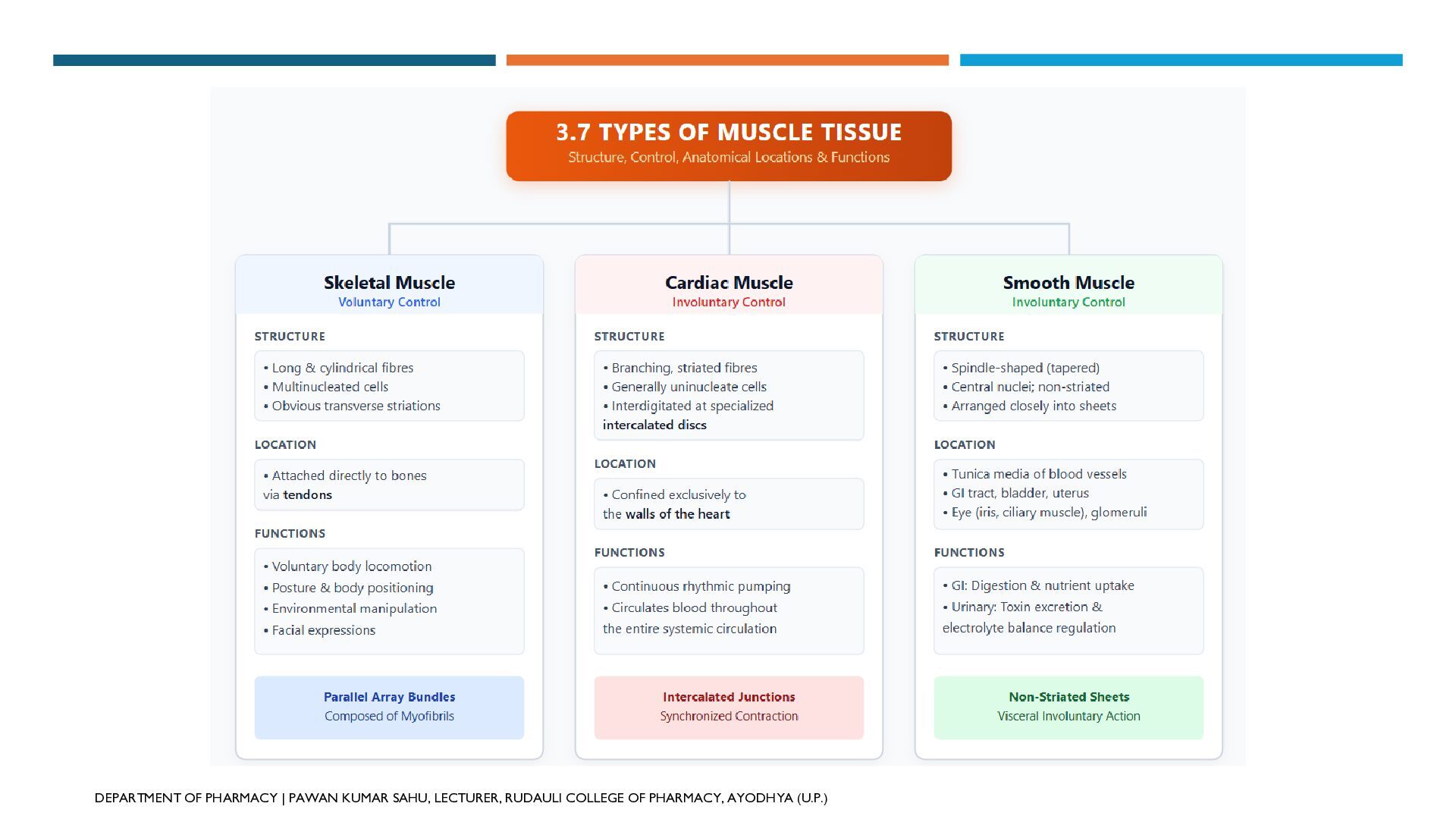
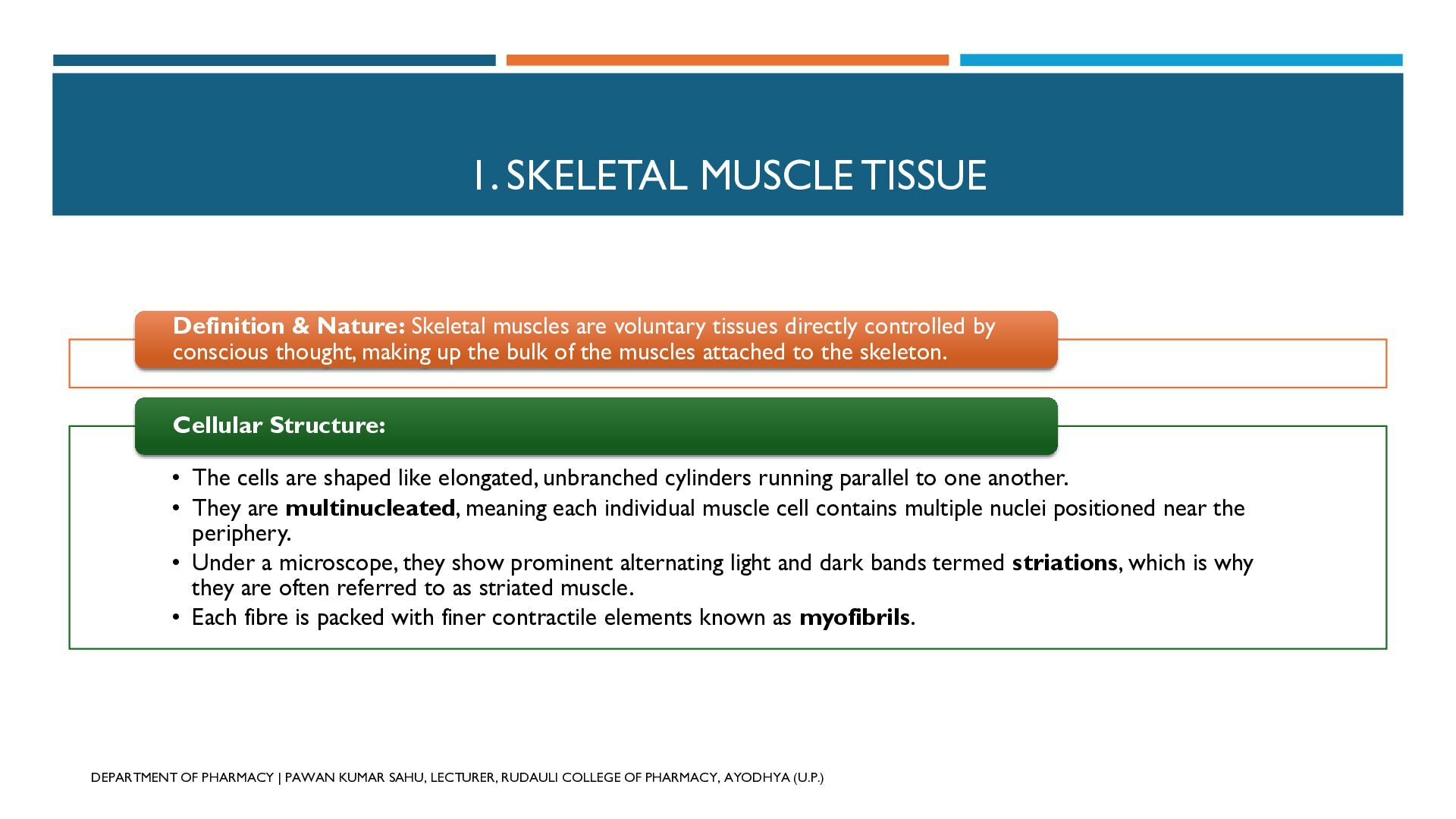
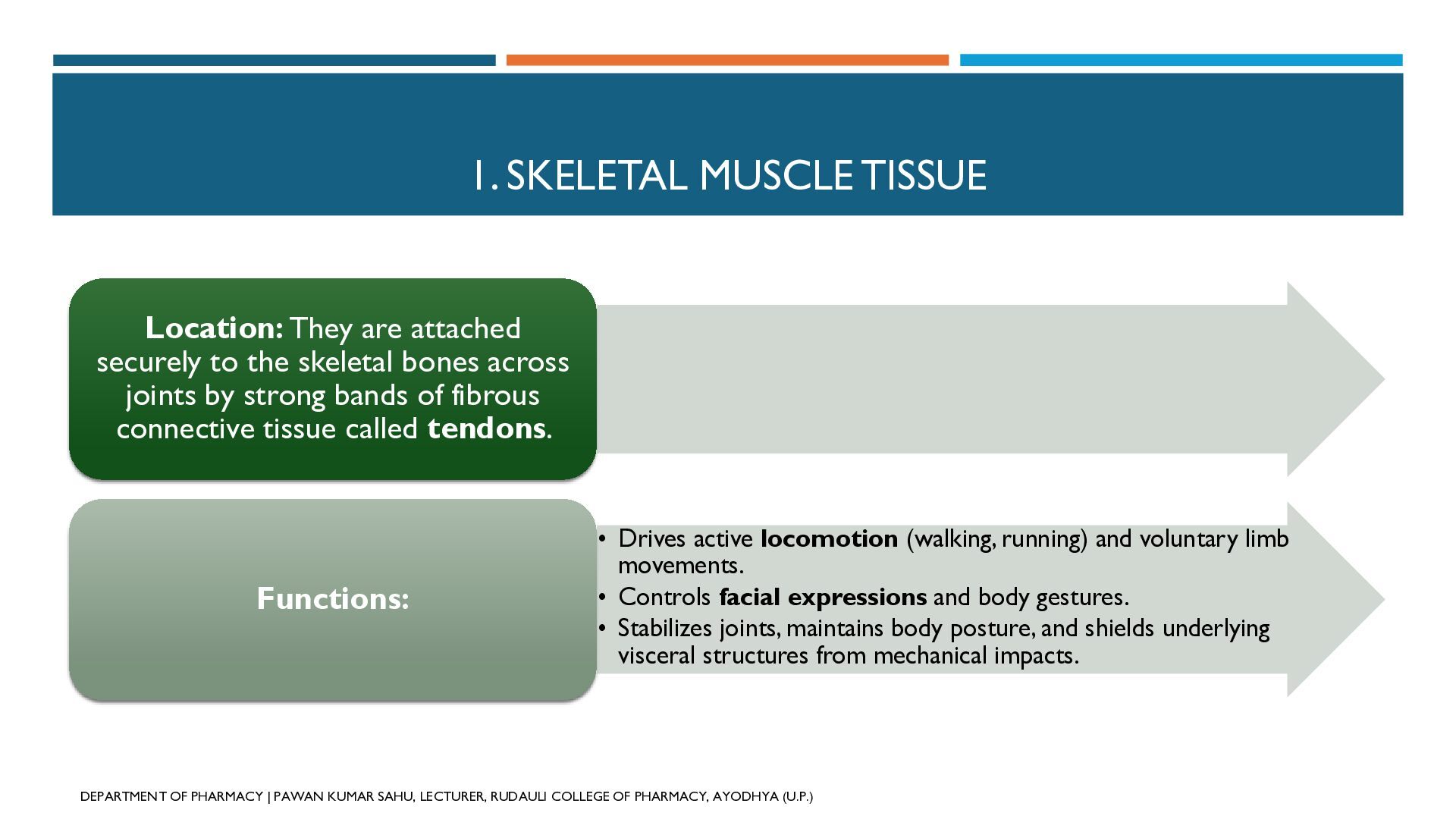
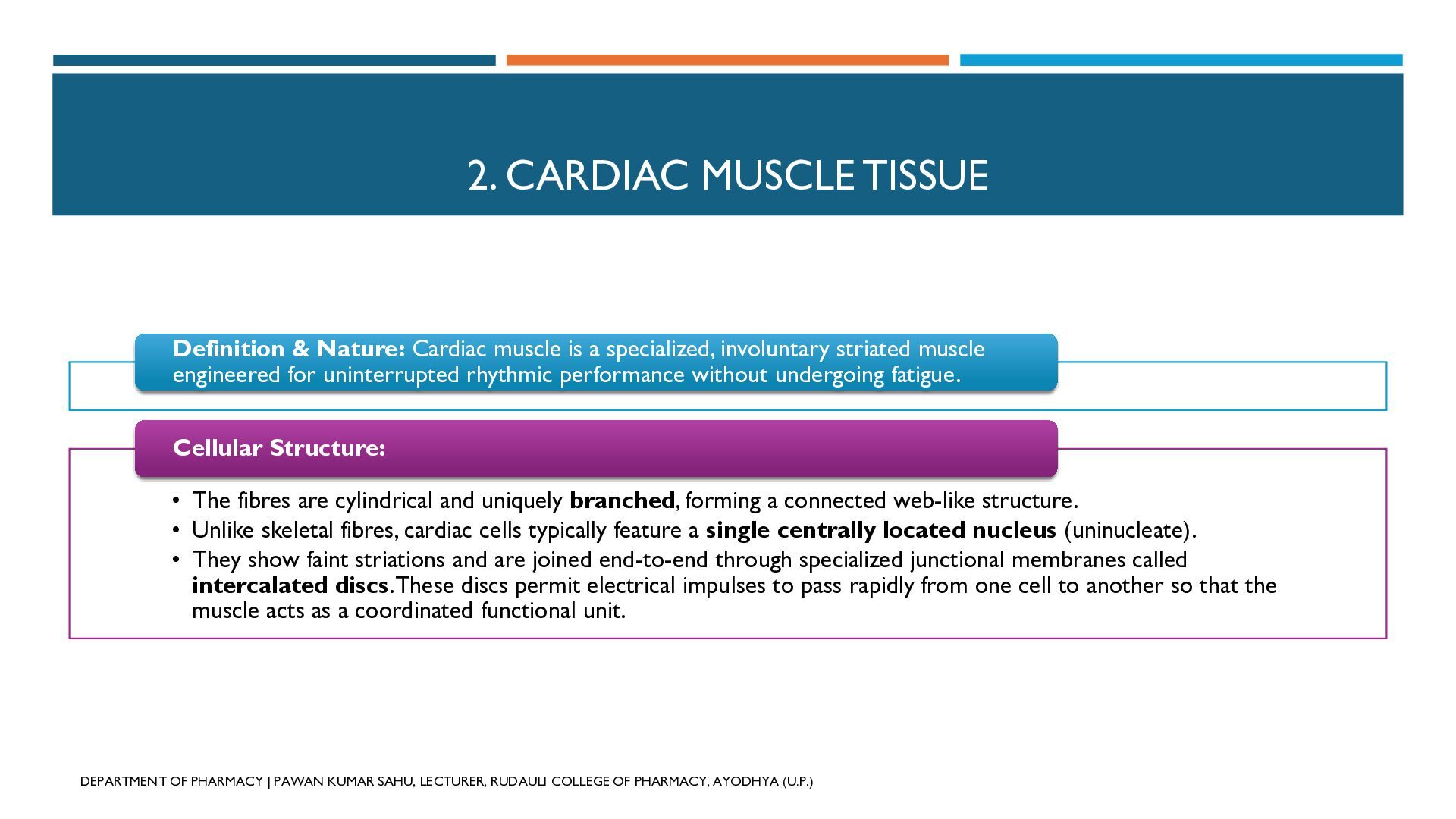
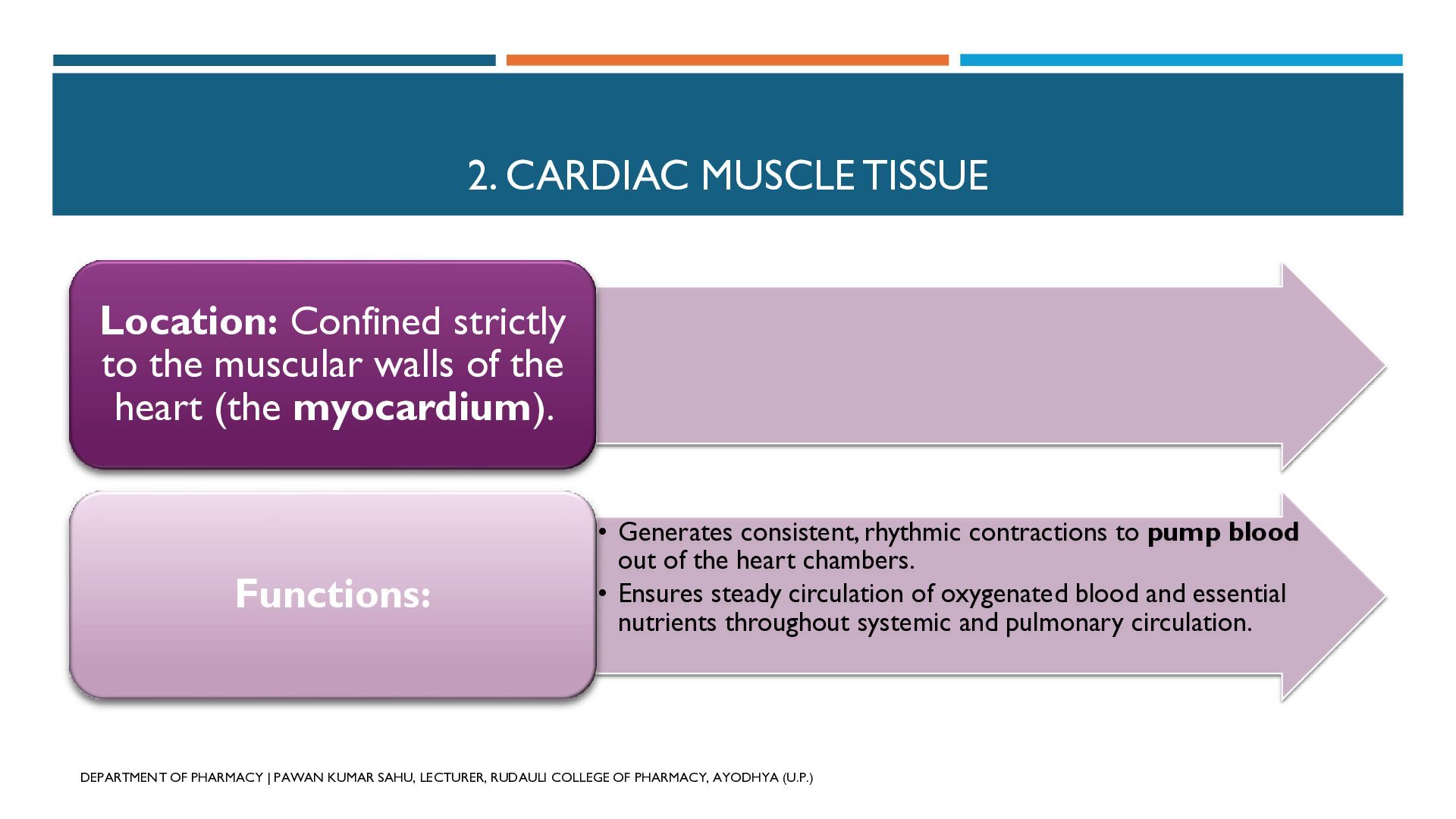
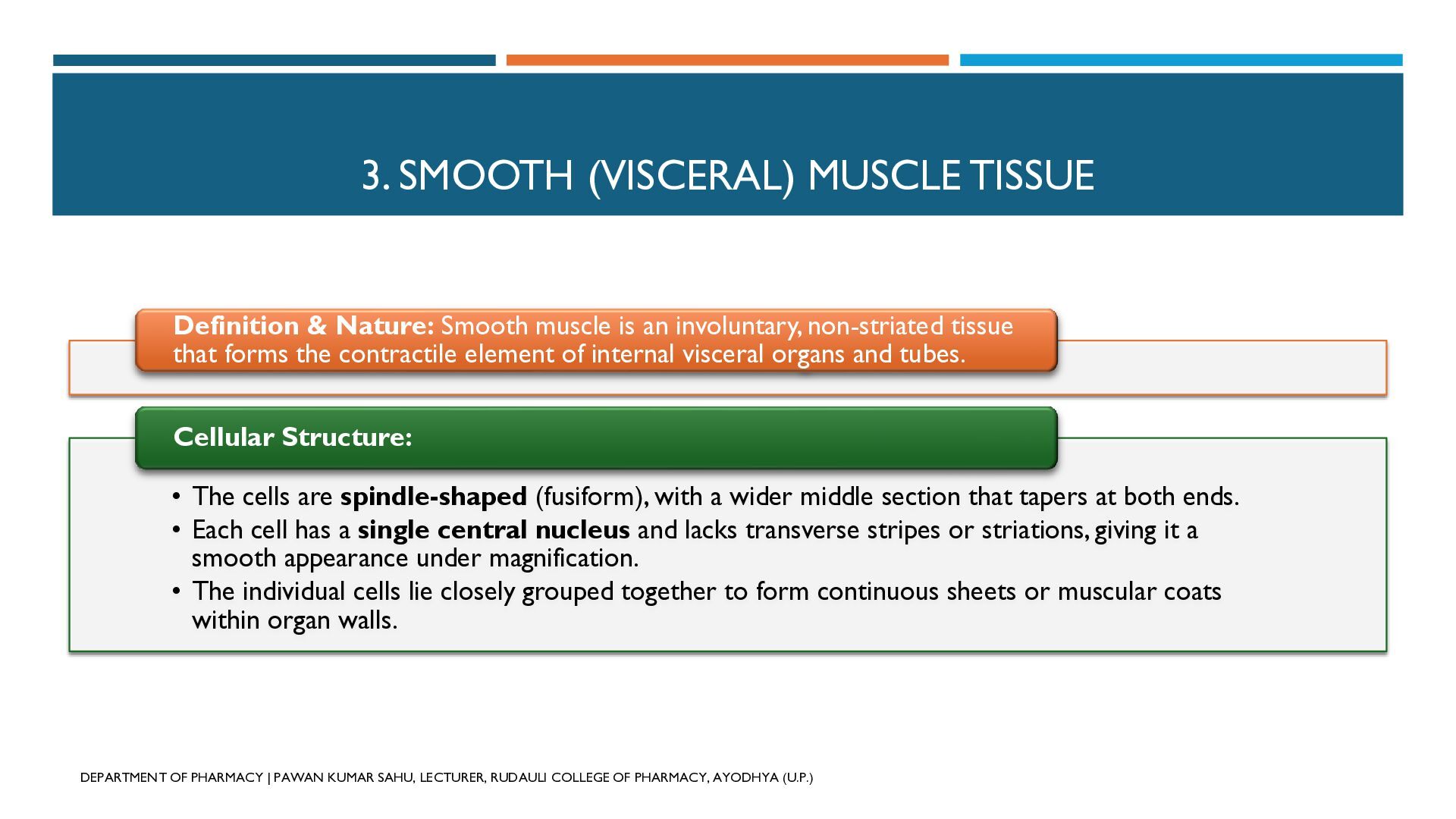
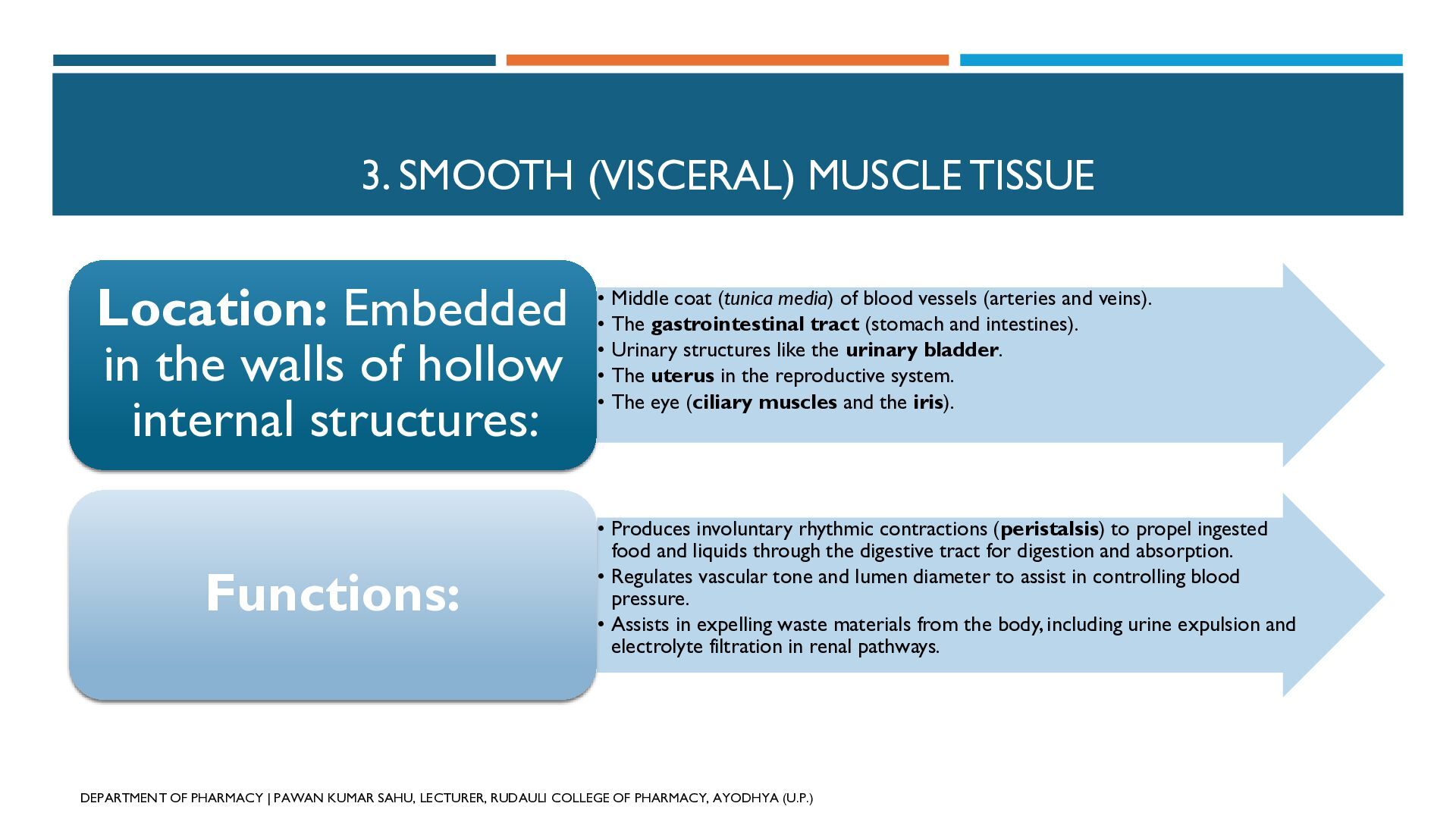
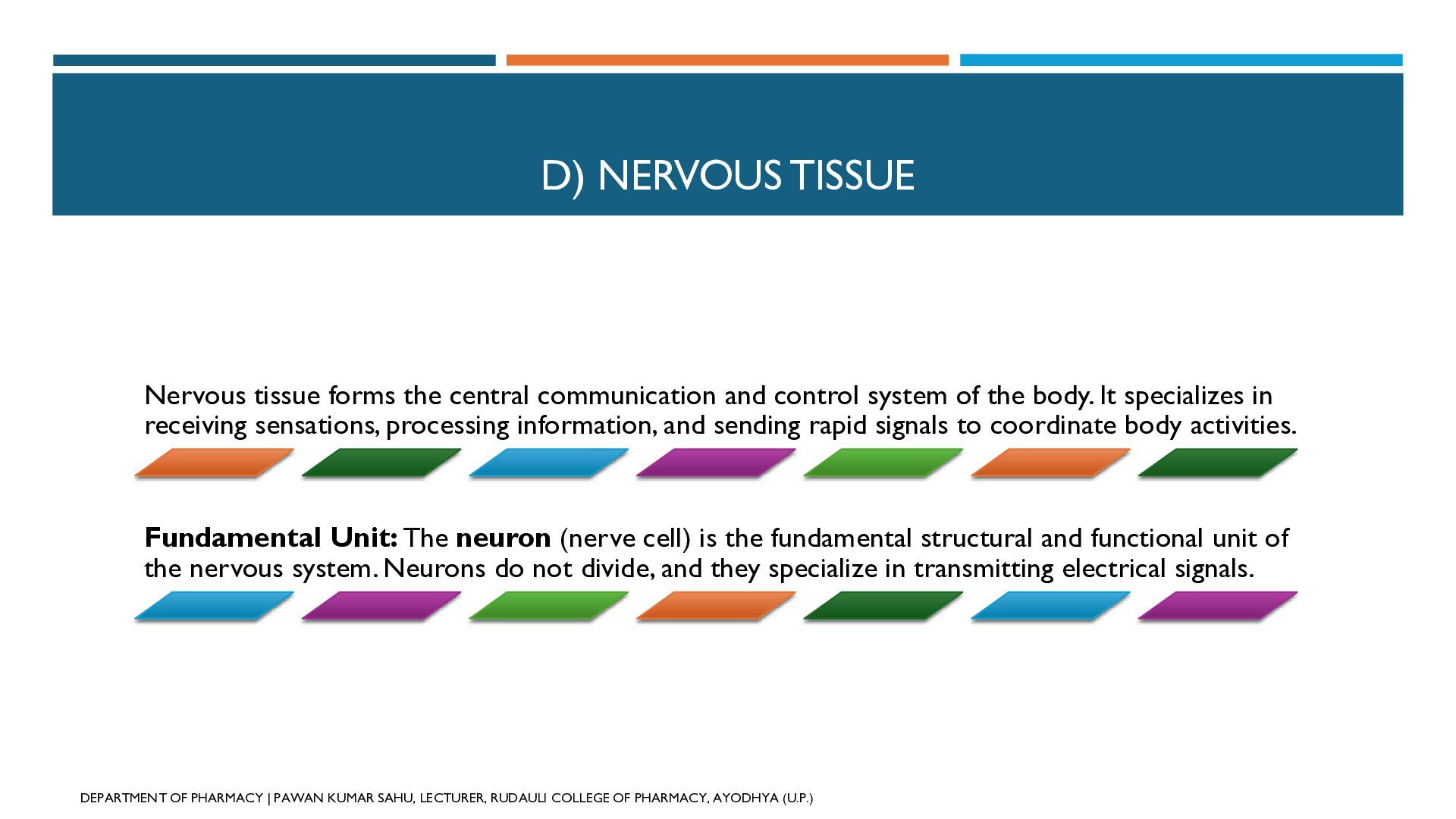
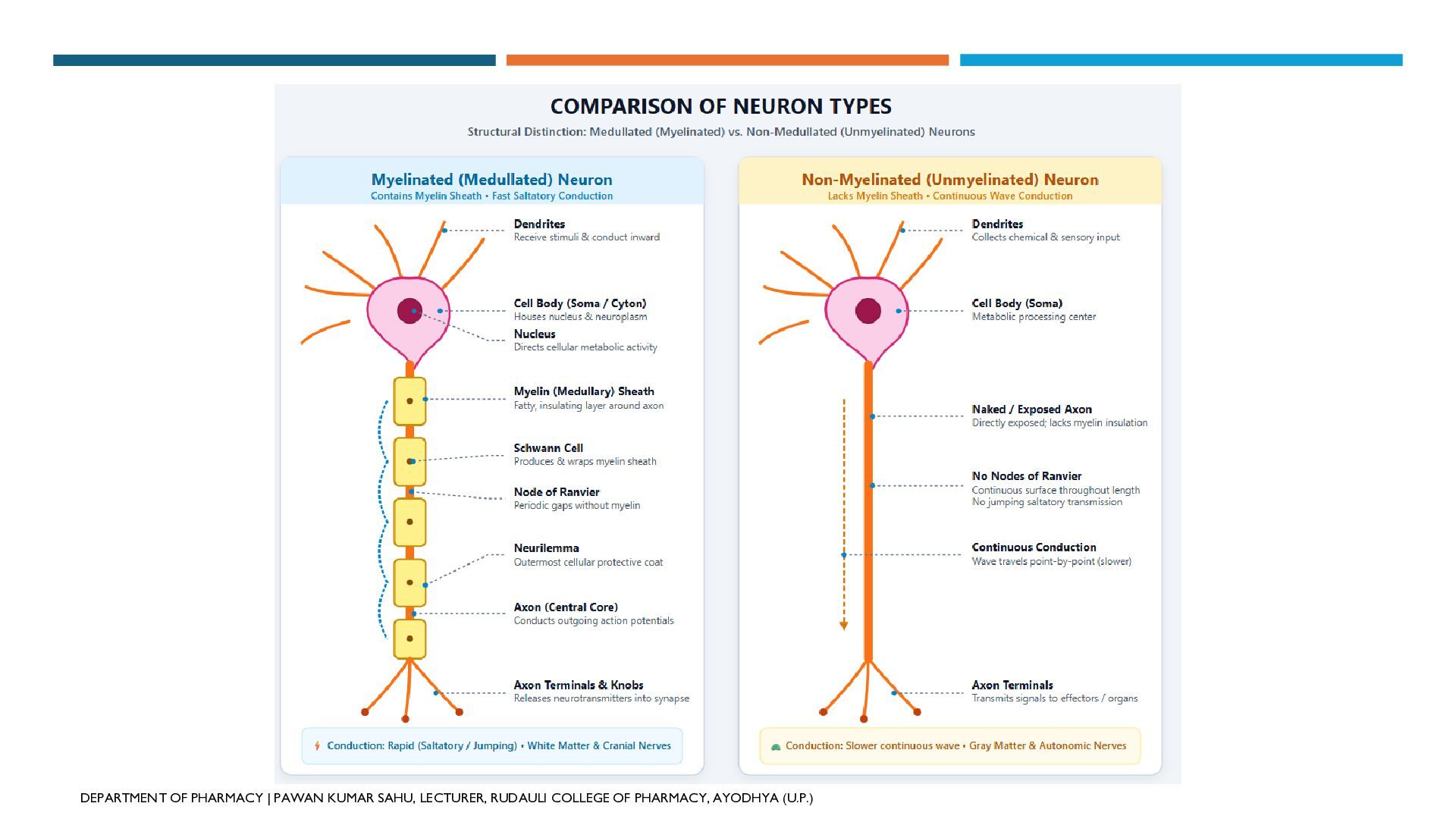
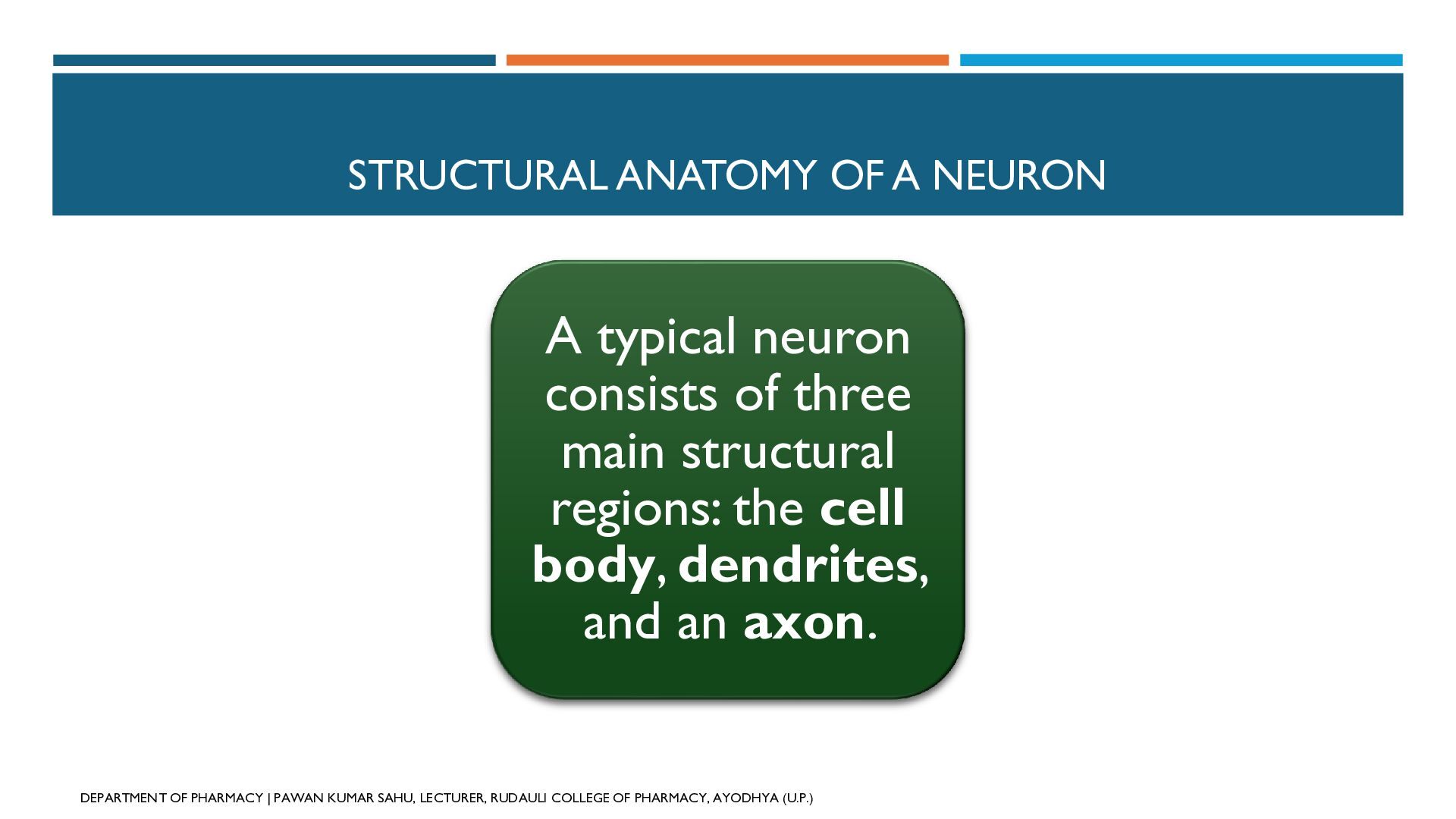
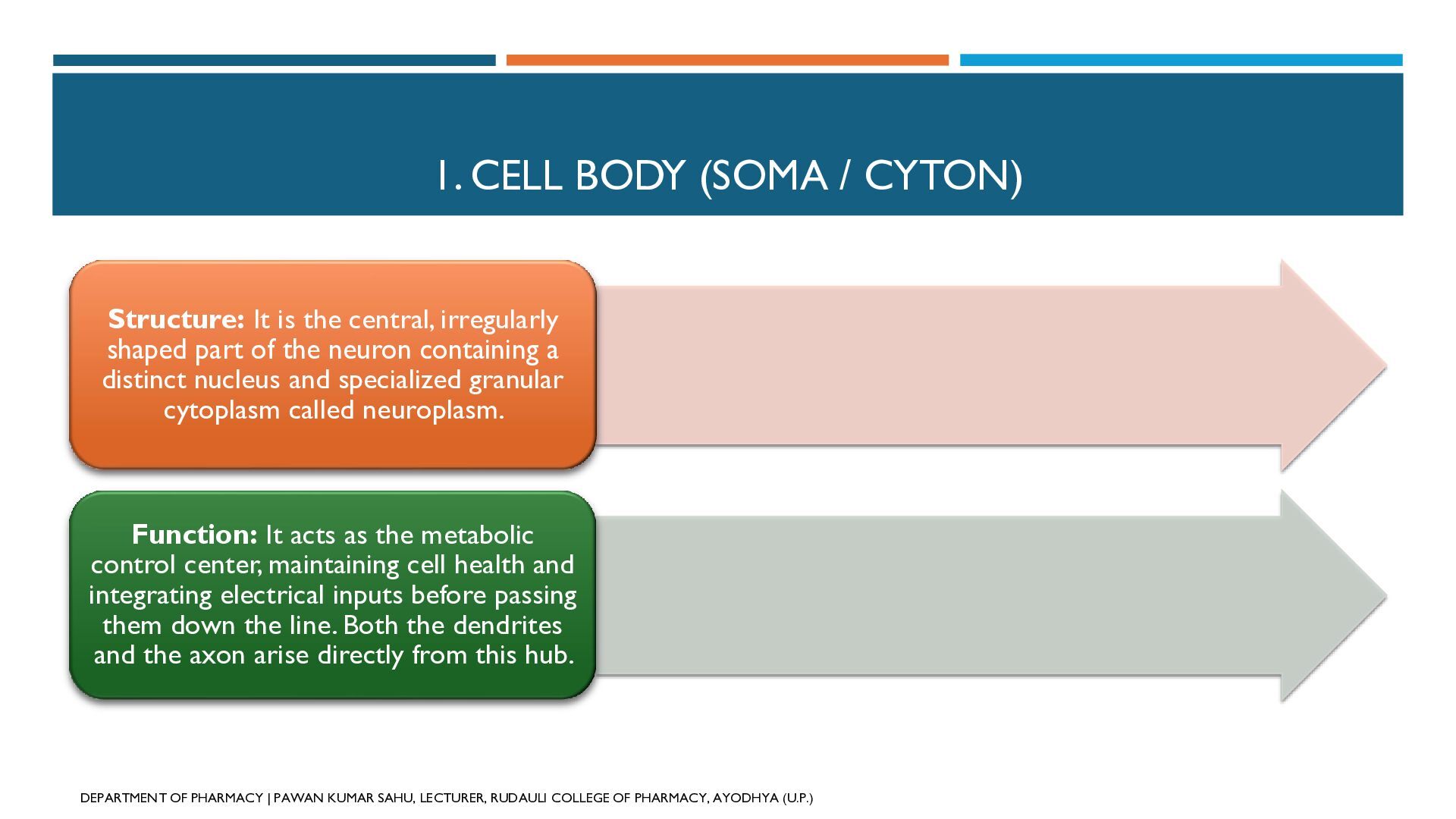
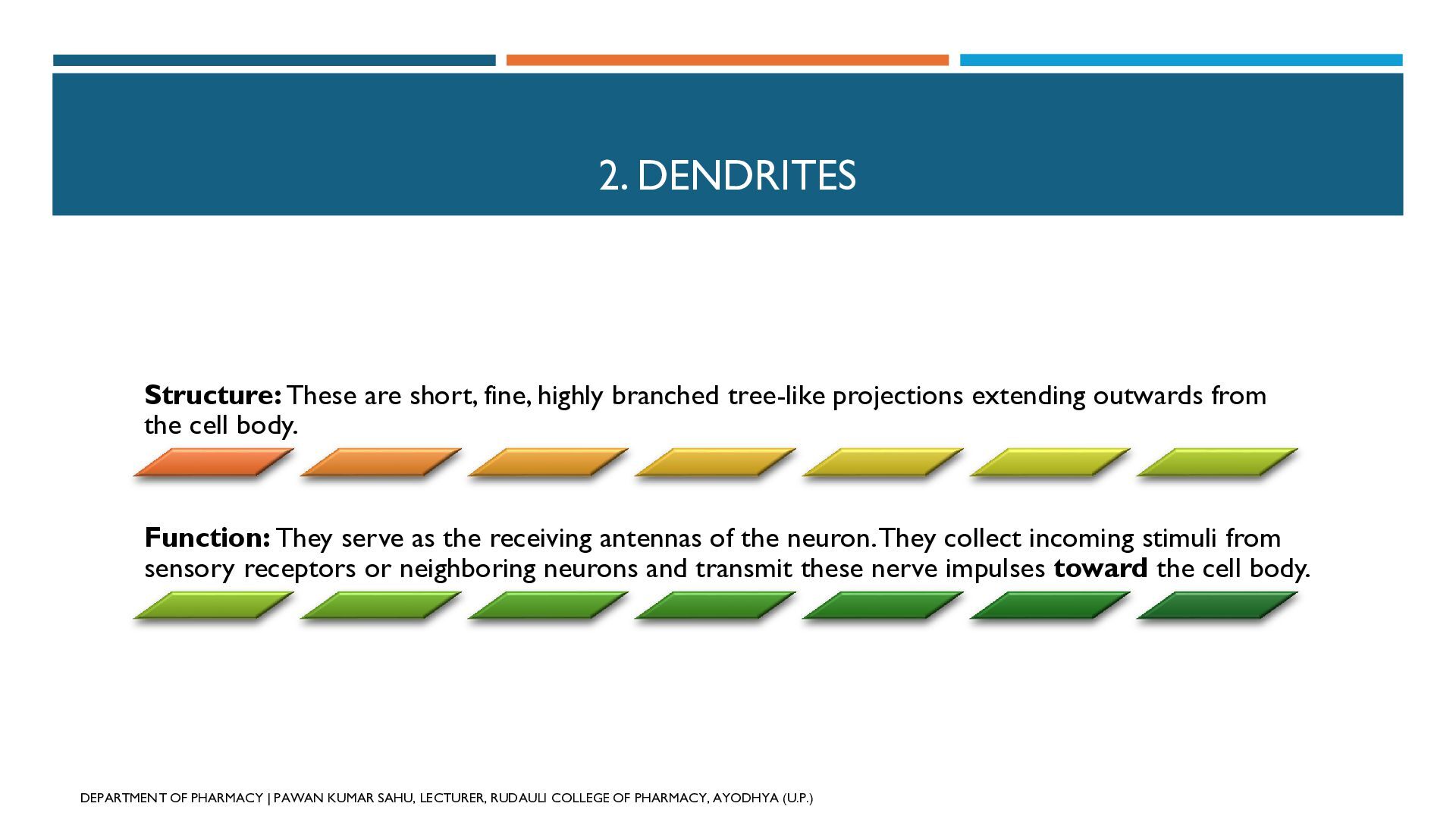
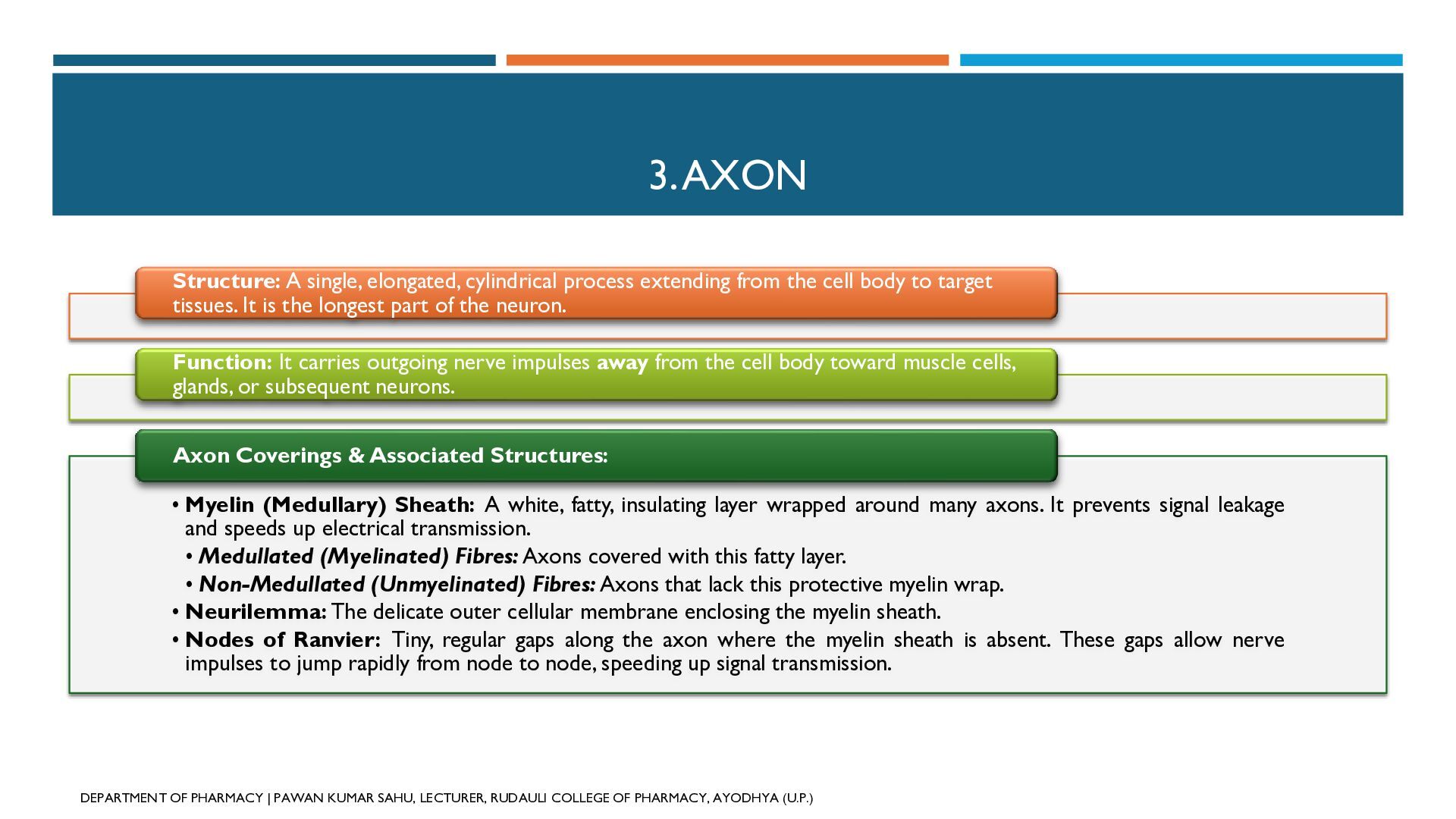
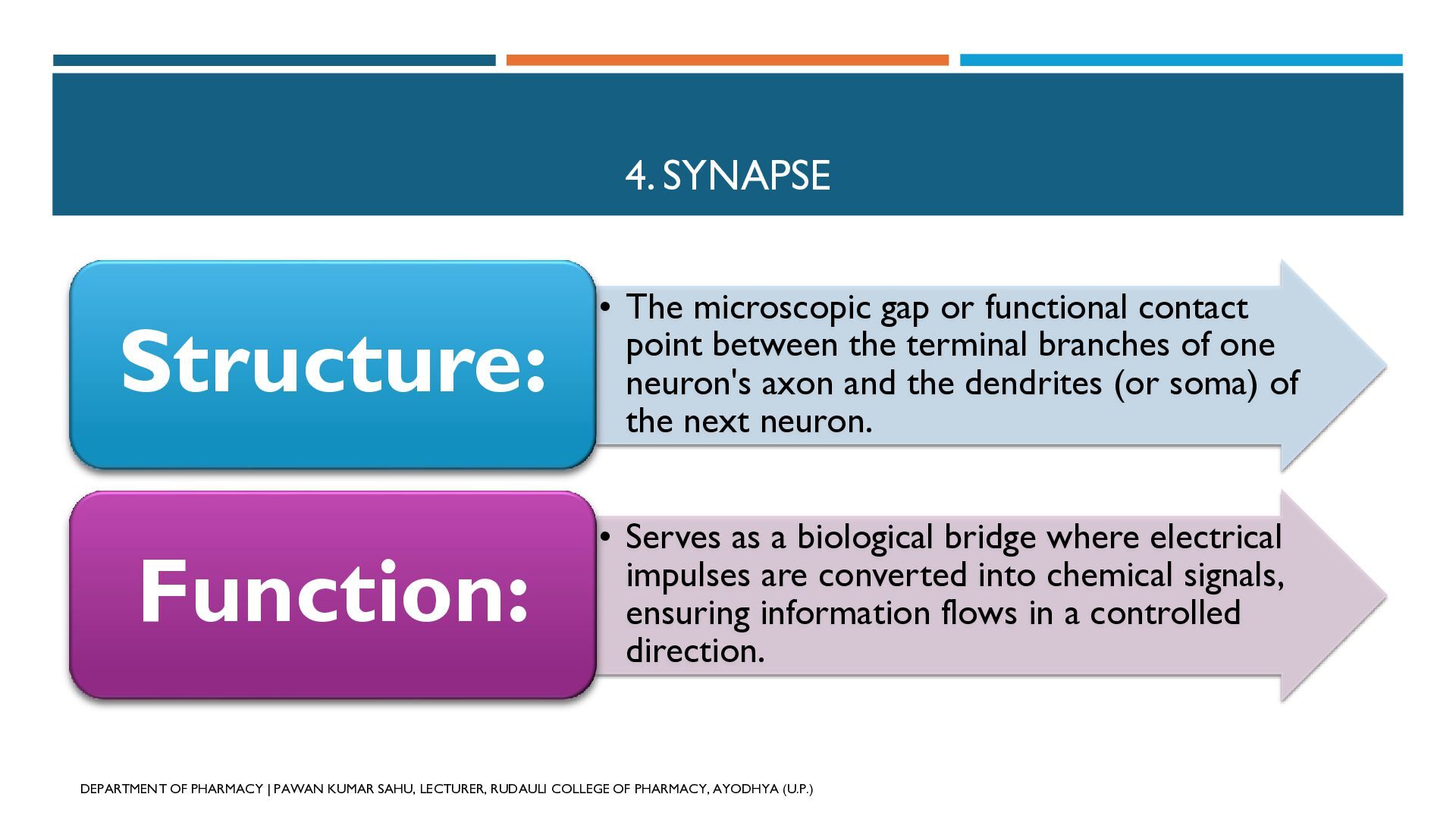
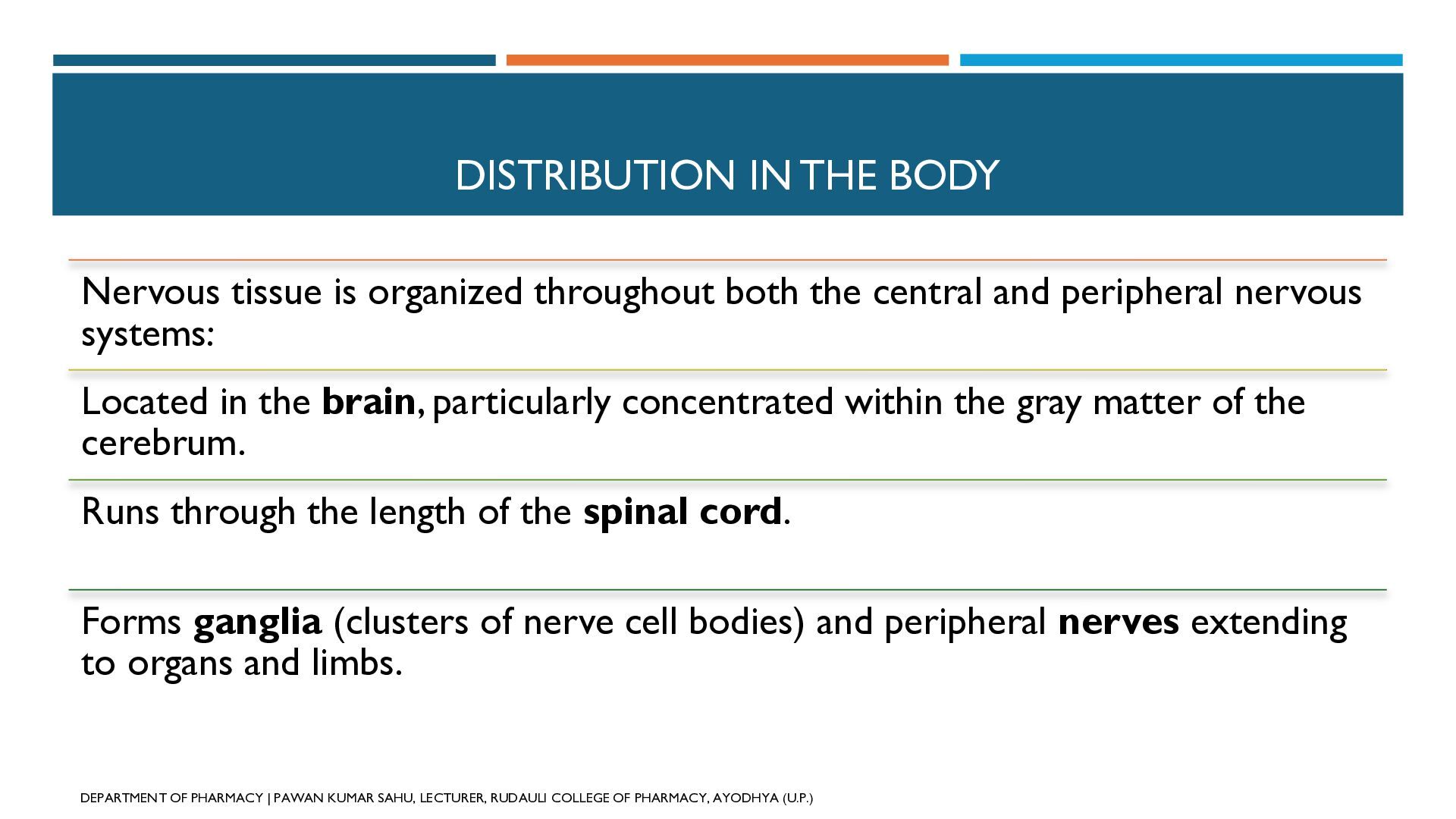
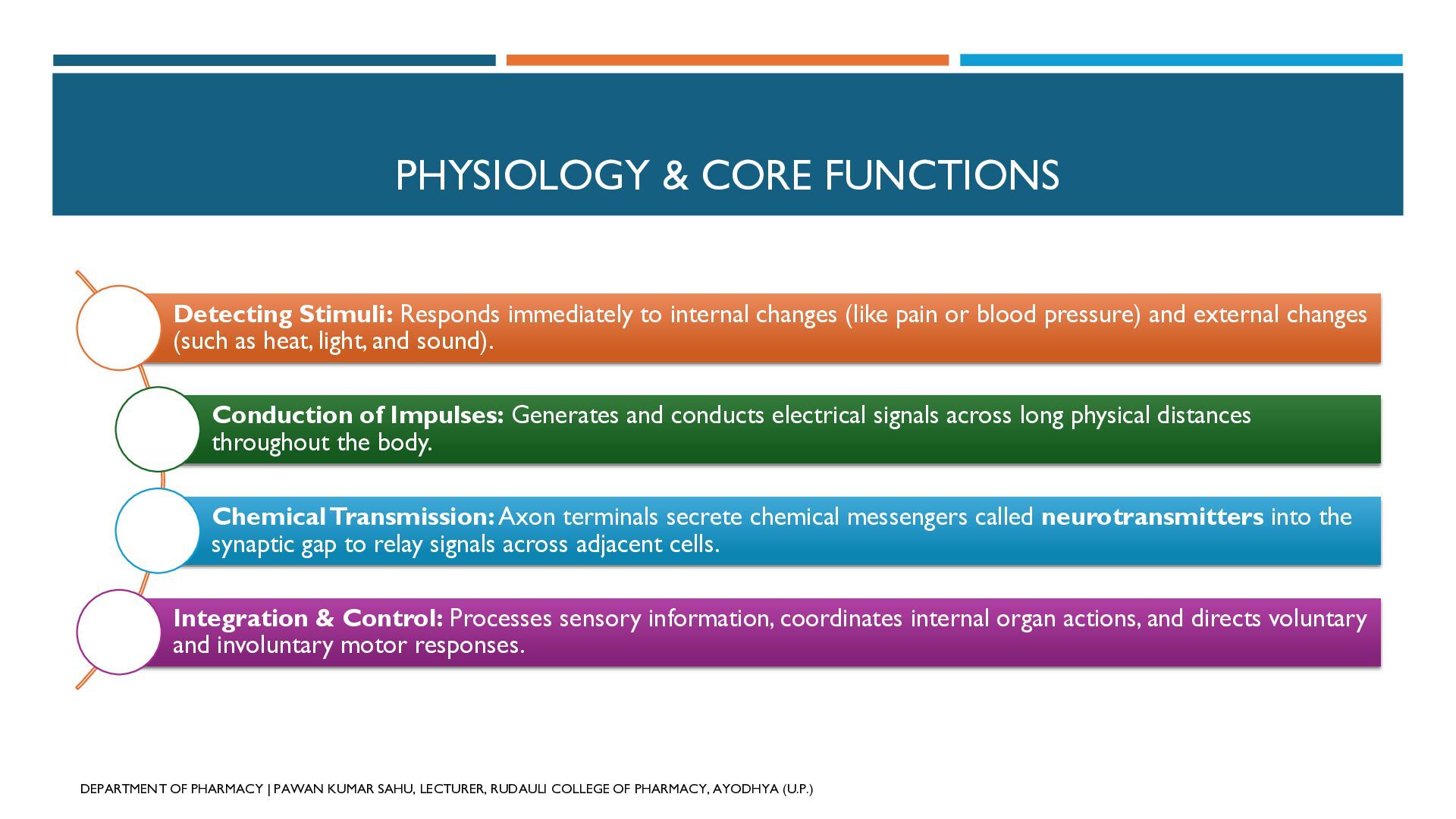
A tissue is a group of structurally similar cells and their intercellular substances that work together to perform specific biological functions. The human body comprises four primary tissue types:1. Epithelial TissueNature: Sheets of closely packed cells resting on a non-cellular basement membrane, with minimal intercellular matrix. Classification:Simple Epithelium (Single Layer): Specialized for absorption, secretion, and filtration. Subtypes include simple squamous (alveoli, endothelium), simple cuboidal (kidney tubules), simple columnar (stomach, intestines), simple ciliated (respiratory tract, fallopian tubes), and glandular epithelium (goblet cells). Stratified Epithelium (Multiple Layers): Specialized for mechanical and chemical protection against wear and tear. Subtypes include stratified squamous (keratinised in skin epidermis; non-keratinised in mouth and esophagus), stratified cuboidal (sweat gland ducts), stratified columnar (male urethra parts), and transitional epithelium/urothelium (urinary bladder, ureters). Primary Functions: Protection, selective absorption, secretion, excretion, and sensory reception. 2. Connective TissueNature: The most abundant and widely distributed tissue in complex animals. Consists of living cells scattered throughout an abundant non-living extracellular matrix containing protein fibres (collagen, elastic, reticular). Classification:Loose Connective Tissue: Fibres and cells are loosely woven in a semi-fluid ground substance. Includes areolar tissue (subcutaneous packing), adipose tissue (fat storage and thermal insulation), and reticular tissue (lymphoid organ stroma). Dense Connective Tissue: Densely packed fibres. Includes dense regular (tendons, ligaments), dense irregular (dermis of skin), and dense elastic (arterial walls, trachea). Specialized Skeletal Tissue: Firm and mineralized support tissues, namely cartilage (hyaline, fibrocartilage, elastic) and bone (calcified matrix with osteons/Haversian systems). Fluid Connective Tissue: Liquid matrix (plasma) with suspended cells, namely blood (erythrocytes, leukocytes, thrombocytes) and lymph. Primary Functions: Binds and supports organs, mechanical protection, thermal insulation, nutrient/waste exchange, and systemic transport. 3. Muscle TissueNature: Highly specialized contractile tissue made of elongated muscle cells (muscle fibres) containing contractile myofibrils. Classification:Skeletal Muscle: Long, cylindrical, multinucleated, striated fibres under voluntary control; attached to bones via tendons to drive body locomotion. Cardiac Muscle: Cylindrical, branched, uninucleated, striated fibres connected by intercalated discs; under involuntary control; confined to the heart wall (myocardium) to pump blood. Smooth Muscle: Spindle-shaped (fusiform), uninucleated, non-striated fibres arranged in sheets; under involuntary control; forms the walls of hollow organs (GI tract, blood vessels, bladder) to control peristalsis and vascular tone. Primary Functions: Body movement, posture maintenance, cardiac pumping, and involuntary visceral propulsion. 4. Nervous TissueNature: Specialized communication network dedicated to excitability and conduction. Fundamental Unit: The neuron (nerve cell), supported and insulated by neuroglial cells. Structure of a Neuron: Comprises a central cell body (soma) containing the nucleus, receiving branches (dendrites), and a long transmitting process (axon) which may be surrounded by an insulating myelin sheath, neurilemma, and Nodes of Ranvier. Synapse: Specialized functional junction where electrical impulses trigger neurotransmitter release to communicate with neighboring cells. Primary Functions: Detection of environmental stimuli, generation and propagation of nerve impulses, synaptic transmission, and overall integration and control of body systems


 pawan_pharm
 cbtlibrary
 doratex
 juanmartin2026
 robintux
 uranoken
 bunnchinn3
 frievea
 ainischool
 mariooc
 ssmedikasda
 yoshimura_datam
 matleenalaakso
 samlambert
 inesmontani
 jct
jct
 ivargrimstad
 jdejongh
 mojombo
 livdayseo
 cassininazir
 akademiya2063
 marktimemedia
 baasie
 portentint