Upgrade to Pro — share decks privately, control downloads, hide ads and more …

Strategic Staffing Plan Development

Sponsored · Your Podcast. Everywhere. Effortlessly. Share. Educate. Inspire. Entertain. You do you. We'll handle the rest.

Strategic Staffing Plan Development

Optimize Workforce Planning for Business Growth

Avatar for MyMarketingFile

MyMarketingFile PRO

February 23, 2025
Tweet

More Decks by MyMarketingFile

Other Decks in Business

Transcript

  1. Strategic Staffing Plan Development: Optimize Workforce Planning for Business Growth

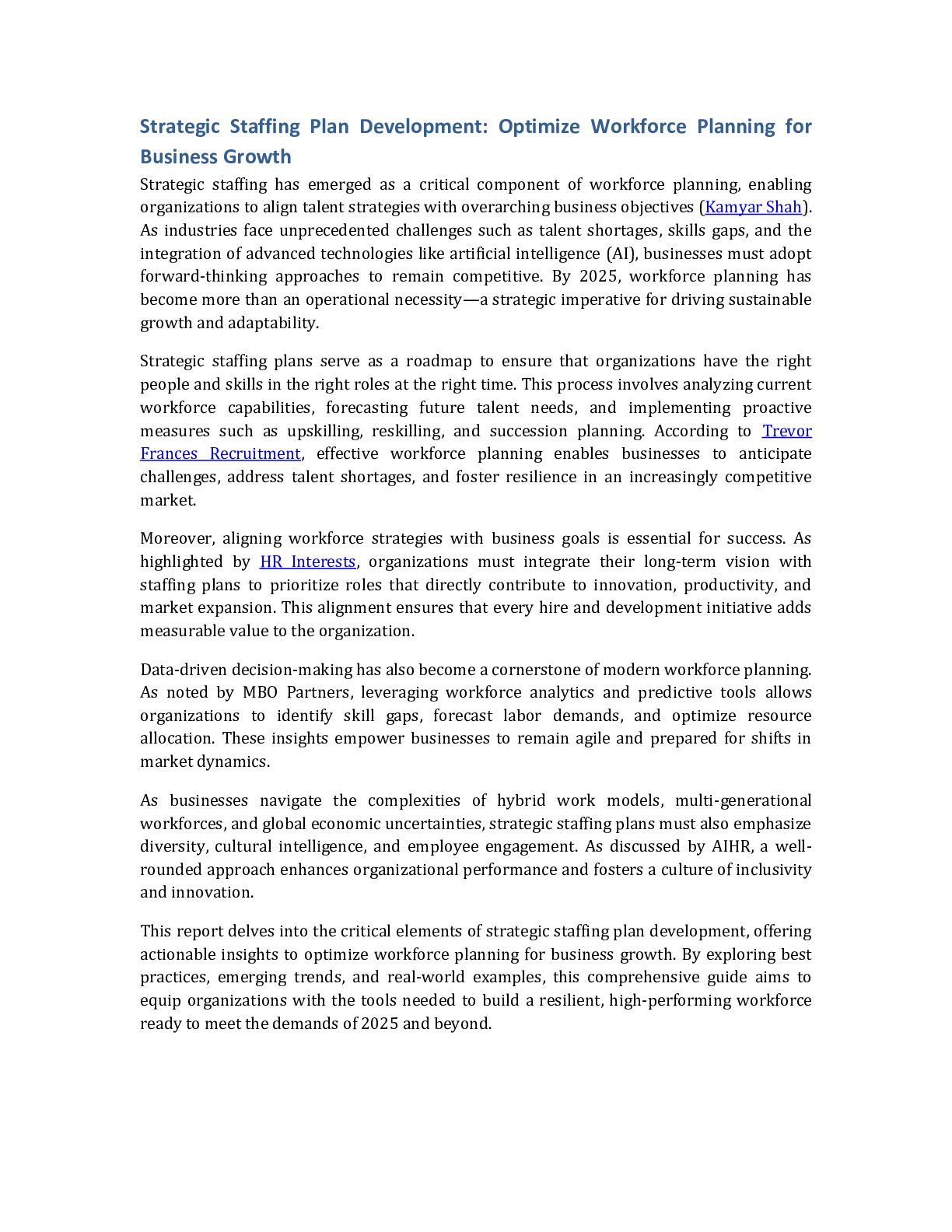
    Strategic staffing has emerged as a critical component of workforce planning, enabling organizations to align talent strategies with overarching business objectives (Kamyar Shah). As industries face unprecedented challenges such as talent shortages, skills gaps, and the integration of advanced technologies like artificial intelligence (AI), businesses must adopt forward-thinking approaches to remain competitive. By 2025, workforce planning has become more than an operational necessity—a strategic imperative for driving sustainable growth and adaptability. Strategic staffing plans serve as a roadmap to ensure that organizations have the right people and skills in the right roles at the right time. This process involves analyzing current workforce capabilities, forecasting future talent needs, and implementing proactive measures such as upskilling, reskilling, and succession planning. According to Trevor Frances Recruitment, effective workforce planning enables businesses to anticipate challenges, address talent shortages, and foster resilience in an increasingly competitive market. Moreover, aligning workforce strategies with business goals is essential for success. As highlighted by HR Interests, organizations must integrate their long-term vision with staffing plans to prioritize roles that directly contribute to innovation, productivity, and market expansion. This alignment ensures that every hire and development initiative adds measurable value to the organization. Data-driven decision-making has also become a cornerstone of modern workforce planning. As noted by MBO Partners, leveraging workforce analytics and predictive tools allows organizations to identify skill gaps, forecast labor demands, and optimize resource allocation. These insights empower businesses to remain agile and prepared for shifts in market dynamics. As businesses navigate the complexities of hybrid work models, multi-generational workforces, and global economic uncertainties, strategic staffing plans must also emphasize diversity, cultural intelligence, and employee engagement. As discussed by AIHR, a well- rounded approach enhances organizational performance and fosters a culture of inclusivity and innovation. This report delves into the critical elements of strategic staffing plan development, offering actionable insights to optimize workforce planning for business growth. By exploring best practices, emerging trends, and real-world examples, this comprehensive guide aims to equip organizations with the tools needed to build a resilient, high-performing workforce ready to meet the demands of 2025 and beyond.
  2. Strategic Staffing Plan Development: Optimize Workforce Planning for Business Growth

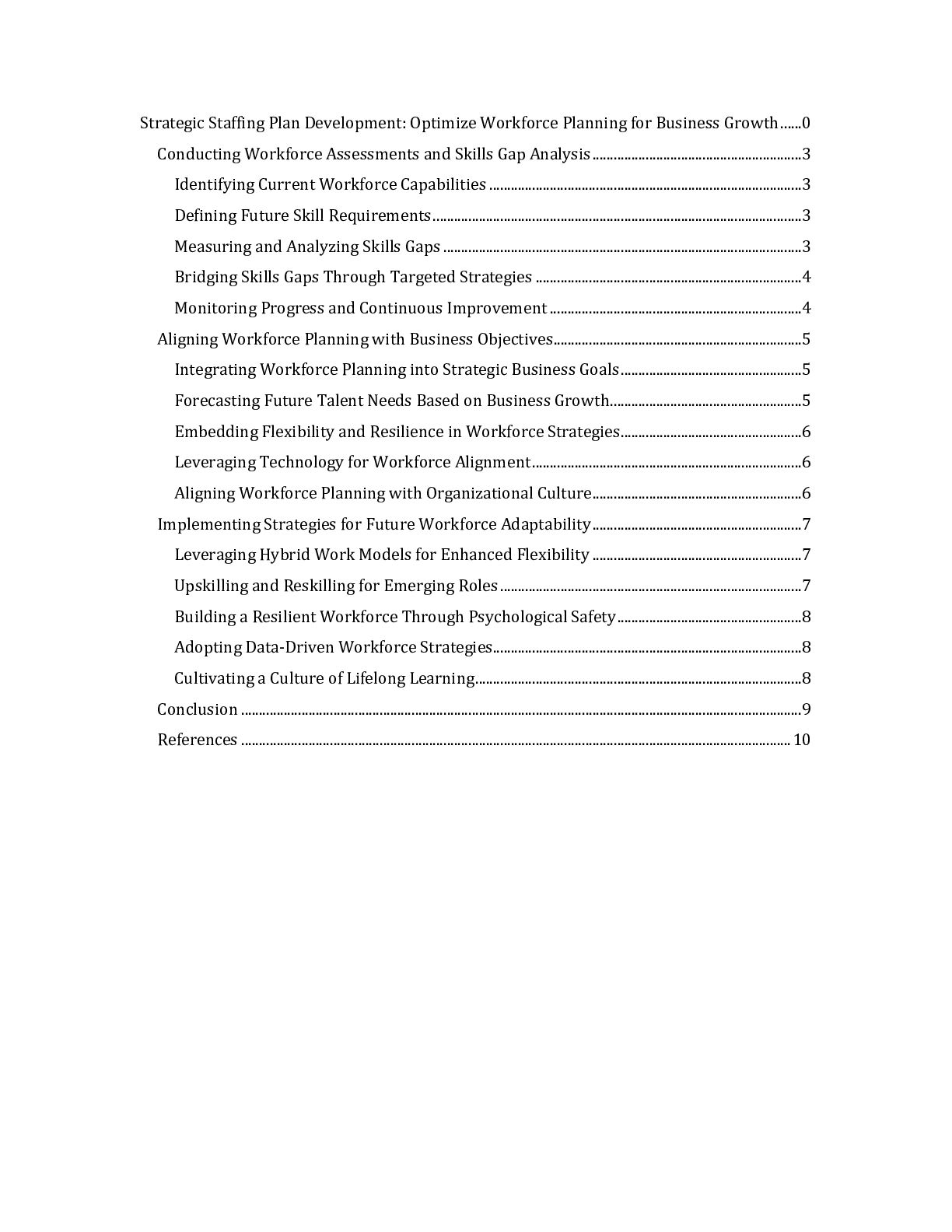
    ...... 0 Conducting Workforce Assessments and Skills Gap Analysis ........................................................... 3 Identifying Current Workforce Capabilities ........................................................................................ 3 Defining Future Skill Requirements ........................................................................................................ 3 Measuring and Analyzing Skills Gaps ..................................................................................................... 3 Bridging Skills Gaps Through Targeted Strategies ........................................................................... 4 Monitoring Progress and Continuous Improvement ....................................................................... 4 Aligning Workforce Planning with Business Objectives...................................................................... 5 Integrating Workforce Planning into Strategic Business Goals ................................................... 5 Forecasting Future Talent Needs Based on Business Growth ...................................................... 5 Embedding Flexibility and Resilience in Workforce Strategies ................................................... 6 Leveraging Technology for Workforce Alignment ............................................................................ 6 Aligning Workforce Planning with Organizational Culture ........................................................... 6 Implementing Strategies for Future Workforce Adaptability ........................................................... 7 Leveraging Hybrid Work Models for Enhanced Flexibility ........................................................... 7 Upskilling and Reskilling for Emerging Roles ..................................................................................... 7 Building a Resilient Workforce Through Psychological Safety .................................................... 8 Adopting Data-Driven Workforce Strategies ....................................................................................... 8 Cultivating a Culture of Lifelong Learning ............................................................................................ 8 Conclusion .............................................................................................................................................................. 9 References ........................................................................................................................................................... 10
  3. Conducting Workforce Assessments and Skills Gap Analysis Identifying Current Workforce

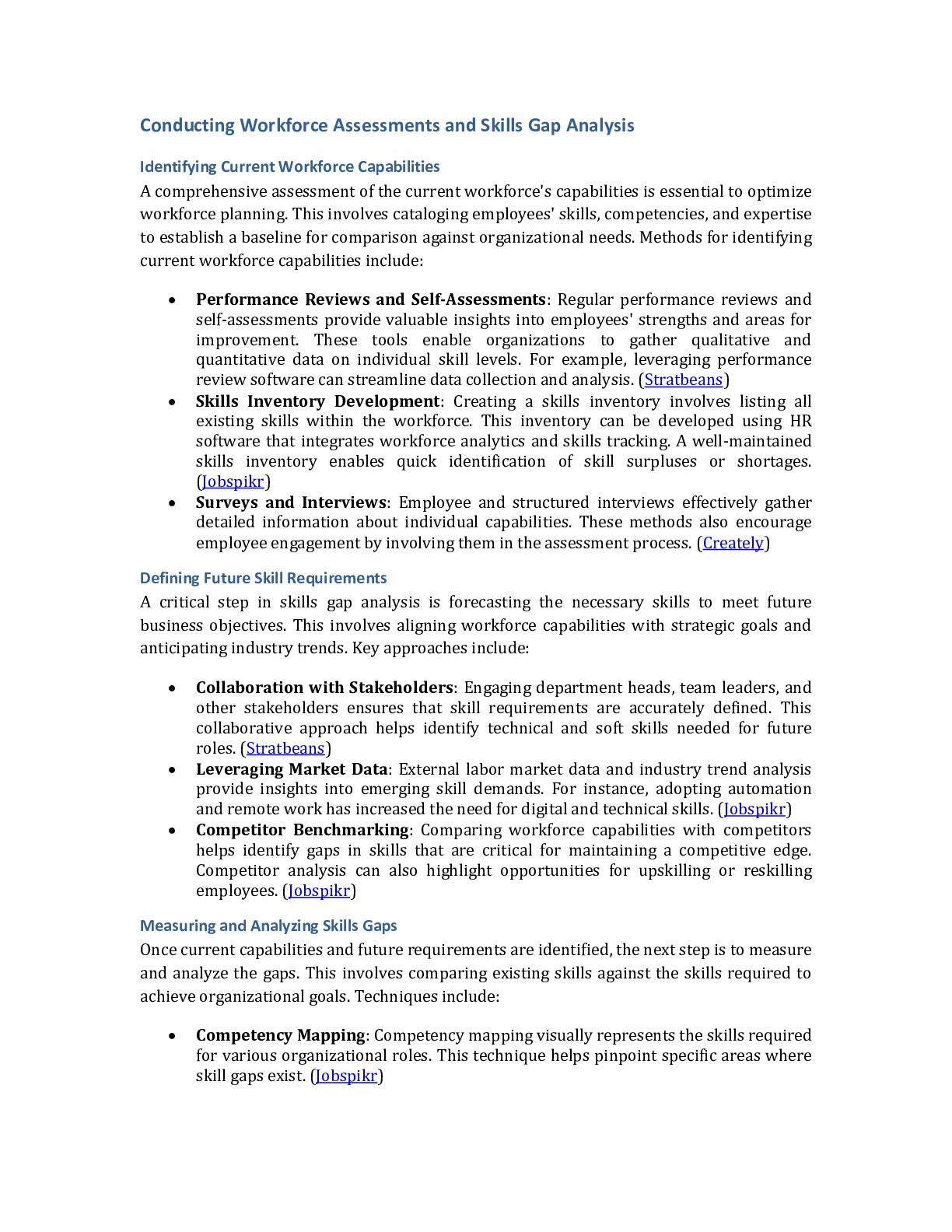
    Capabilities A comprehensive assessment of the current workforce's capabilities is essential to optimize workforce planning. This involves cataloging employees' skills, competencies, and expertise to establish a baseline for comparison against organizational needs. Methods for identifying current workforce capabilities include: • Performance Reviews and Self-Assessments: Regular performance reviews and self-assessments provide valuable insights into employees' strengths and areas for improvement. These tools enable organizations to gather qualitative and quantitative data on individual skill levels. For example, leveraging performance review software can streamline data collection and analysis. (Stratbeans) • Skills Inventory Development: Creating a skills inventory involves listing all existing skills within the workforce. This inventory can be developed using HR software that integrates workforce analytics and skills tracking. A well-maintained skills inventory enables quick identification of skill surpluses or shortages. (Jobspikr) • Surveys and Interviews: Employee and structured interviews effectively gather detailed information about individual capabilities. These methods also encourage employee engagement by involving them in the assessment process. (Creately) Defining Future Skill Requirements A critical step in skills gap analysis is forecasting the necessary skills to meet future business objectives. This involves aligning workforce capabilities with strategic goals and anticipating industry trends. Key approaches include: • Collaboration with Stakeholders: Engaging department heads, team leaders, and other stakeholders ensures that skill requirements are accurately defined. This collaborative approach helps identify technical and soft skills needed for future roles. (Stratbeans) • Leveraging Market Data: External labor market data and industry trend analysis provide insights into emerging skill demands. For instance, adopting automation and remote work has increased the need for digital and technical skills. (Jobspikr) • Competitor Benchmarking: Comparing workforce capabilities with competitors helps identify gaps in skills that are critical for maintaining a competitive edge. Competitor analysis can also highlight opportunities for upskilling or reskilling employees. (Jobspikr) Measuring and Analyzing Skills Gaps Once current capabilities and future requirements are identified, the next step is to measure and analyze the gaps. This involves comparing existing skills against the skills required to achieve organizational goals. Techniques include: • Competency Mapping: Competency mapping visually represents the skills required for various organizational roles. This technique helps pinpoint specific areas where skill gaps exist. (Jobspikr)
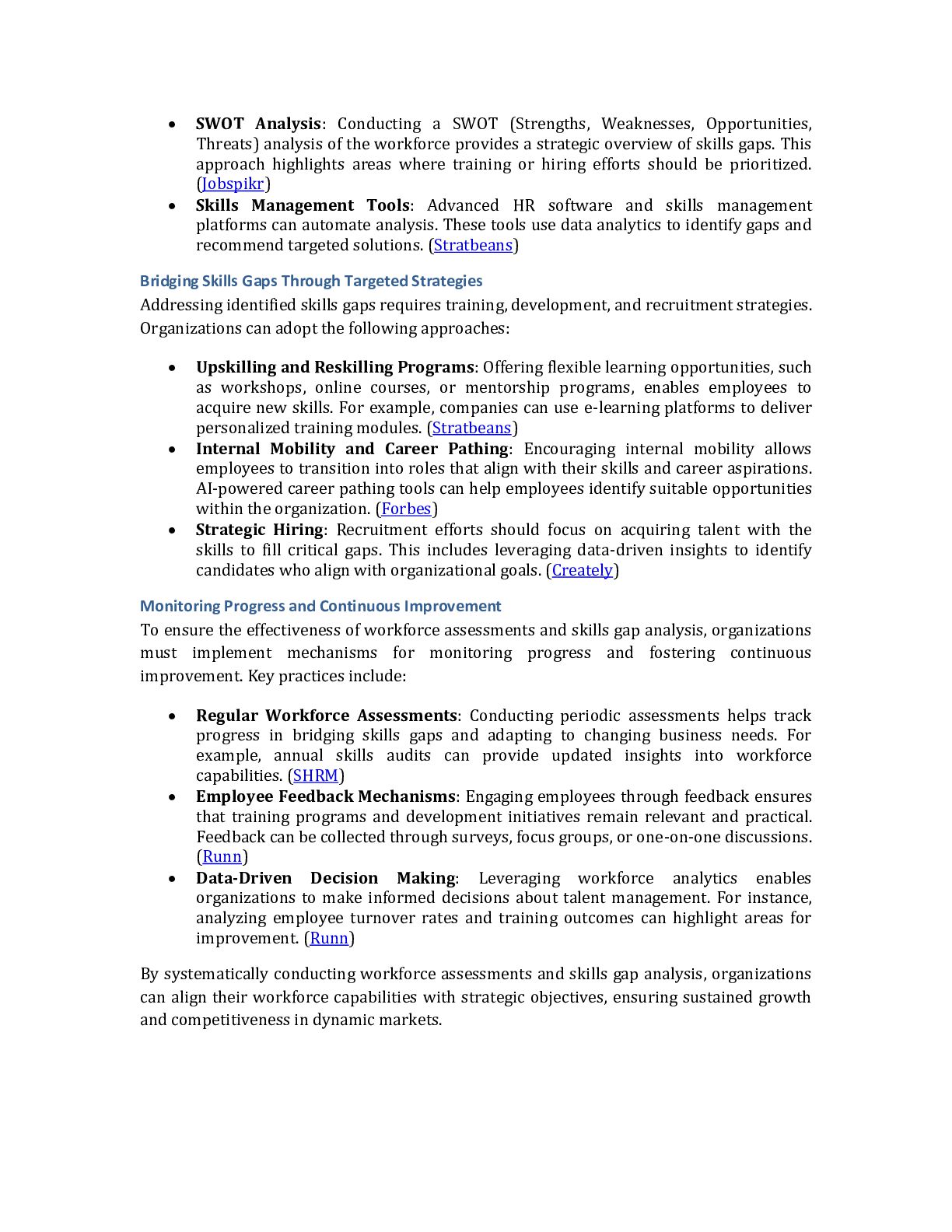
  4. • SWOT Analysis: Conducting a SWOT (Strengths, Weaknesses, Opportunities, Threats)

    analysis of the workforce provides a strategic overview of skills gaps. This approach highlights areas where training or hiring efforts should be prioritized. (Jobspikr) • Skills Management Tools: Advanced HR software and skills management platforms can automate analysis. These tools use data analytics to identify gaps and recommend targeted solutions. (Stratbeans) Bridging Skills Gaps Through Targeted Strategies Addressing identified skills gaps requires training, development, and recruitment strategies. Organizations can adopt the following approaches: • Upskilling and Reskilling Programs: Offering flexible learning opportunities, such as workshops, online courses, or mentorship programs, enables employees to acquire new skills. For example, companies can use e-learning platforms to deliver personalized training modules. (Stratbeans) • Internal Mobility and Career Pathing: Encouraging internal mobility allows employees to transition into roles that align with their skills and career aspirations. AI-powered career pathing tools can help employees identify suitable opportunities within the organization. (Forbes) • Strategic Hiring: Recruitment efforts should focus on acquiring talent with the skills to fill critical gaps. This includes leveraging data-driven insights to identify candidates who align with organizational goals. (Creately) Monitoring Progress and Continuous Improvement To ensure the effectiveness of workforce assessments and skills gap analysis, organizations must implement mechanisms for monitoring progress and fostering continuous improvement. Key practices include: • Regular Workforce Assessments: Conducting periodic assessments helps track progress in bridging skills gaps and adapting to changing business needs. For example, annual skills audits can provide updated insights into workforce capabilities. (SHRM) • Employee Feedback Mechanisms: Engaging employees through feedback ensures that training programs and development initiatives remain relevant and practical. Feedback can be collected through surveys, focus groups, or one-on-one discussions. (Runn) • Data-Driven Decision Making: Leveraging workforce analytics enables organizations to make informed decisions about talent management. For instance, analyzing employee turnover rates and training outcomes can highlight areas for improvement. (Runn) By systematically conducting workforce assessments and skills gap analysis, organizations can align their workforce capabilities with strategic objectives, ensuring sustained growth and competitiveness in dynamic markets.
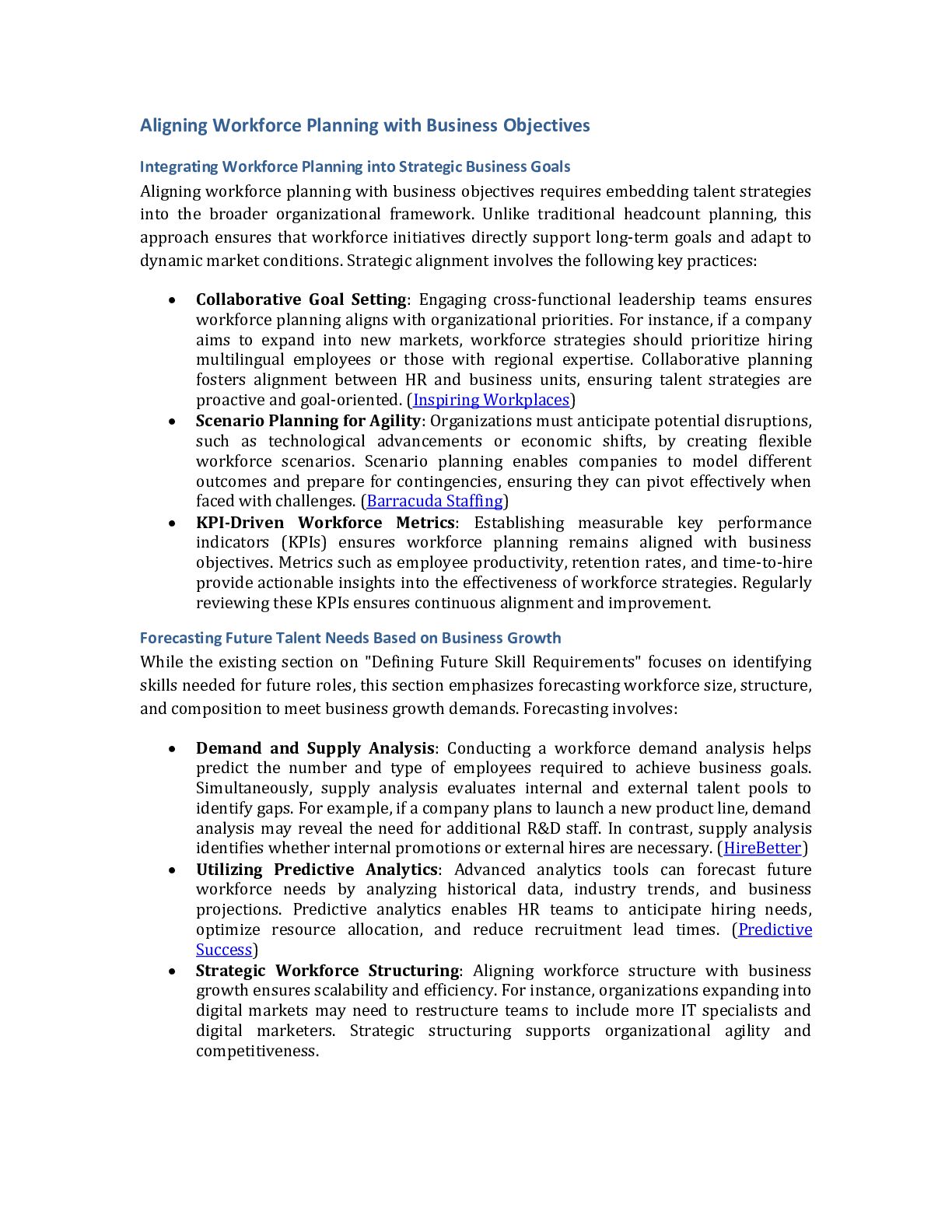
  5. Aligning Workforce Planning with Business Objectives Integrating Workforce Planning into

    Strategic Business Goals Aligning workforce planning with business objectives requires embedding talent strategies into the broader organizational framework. Unlike traditional headcount planning, this approach ensures that workforce initiatives directly support long-term goals and adapt to dynamic market conditions. Strategic alignment involves the following key practices: • Collaborative Goal Setting: Engaging cross-functional leadership teams ensures workforce planning aligns with organizational priorities. For instance, if a company aims to expand into new markets, workforce strategies should prioritize hiring multilingual employees or those with regional expertise. Collaborative planning fosters alignment between HR and business units, ensuring talent strategies are proactive and goal-oriented. (Inspiring Workplaces) • Scenario Planning for Agility: Organizations must anticipate potential disruptions, such as technological advancements or economic shifts, by creating flexible workforce scenarios. Scenario planning enables companies to model different outcomes and prepare for contingencies, ensuring they can pivot effectively when faced with challenges. (Barracuda Staffing) • KPI-Driven Workforce Metrics: Establishing measurable key performance indicators (KPIs) ensures workforce planning remains aligned with business objectives. Metrics such as employee productivity, retention rates, and time-to-hire provide actionable insights into the effectiveness of workforce strategies. Regularly reviewing these KPIs ensures continuous alignment and improvement. Forecasting Future Talent Needs Based on Business Growth While the existing section on "Defining Future Skill Requirements" focuses on identifying skills needed for future roles, this section emphasizes forecasting workforce size, structure, and composition to meet business growth demands. Forecasting involves: • Demand and Supply Analysis: Conducting a workforce demand analysis helps predict the number and type of employees required to achieve business goals. Simultaneously, supply analysis evaluates internal and external talent pools to identify gaps. For example, if a company plans to launch a new product line, demand analysis may reveal the need for additional R&D staff. In contrast, supply analysis identifies whether internal promotions or external hires are necessary. (HireBetter) • Utilizing Predictive Analytics: Advanced analytics tools can forecast future workforce needs by analyzing historical data, industry trends, and business projections. Predictive analytics enables HR teams to anticipate hiring needs, optimize resource allocation, and reduce recruitment lead times. (Predictive Success) • Strategic Workforce Structuring: Aligning workforce structure with business growth ensures scalability and efficiency. For instance, organizations expanding into digital markets may need to restructure teams to include more IT specialists and digital marketers. Strategic structuring supports organizational agility and competitiveness.
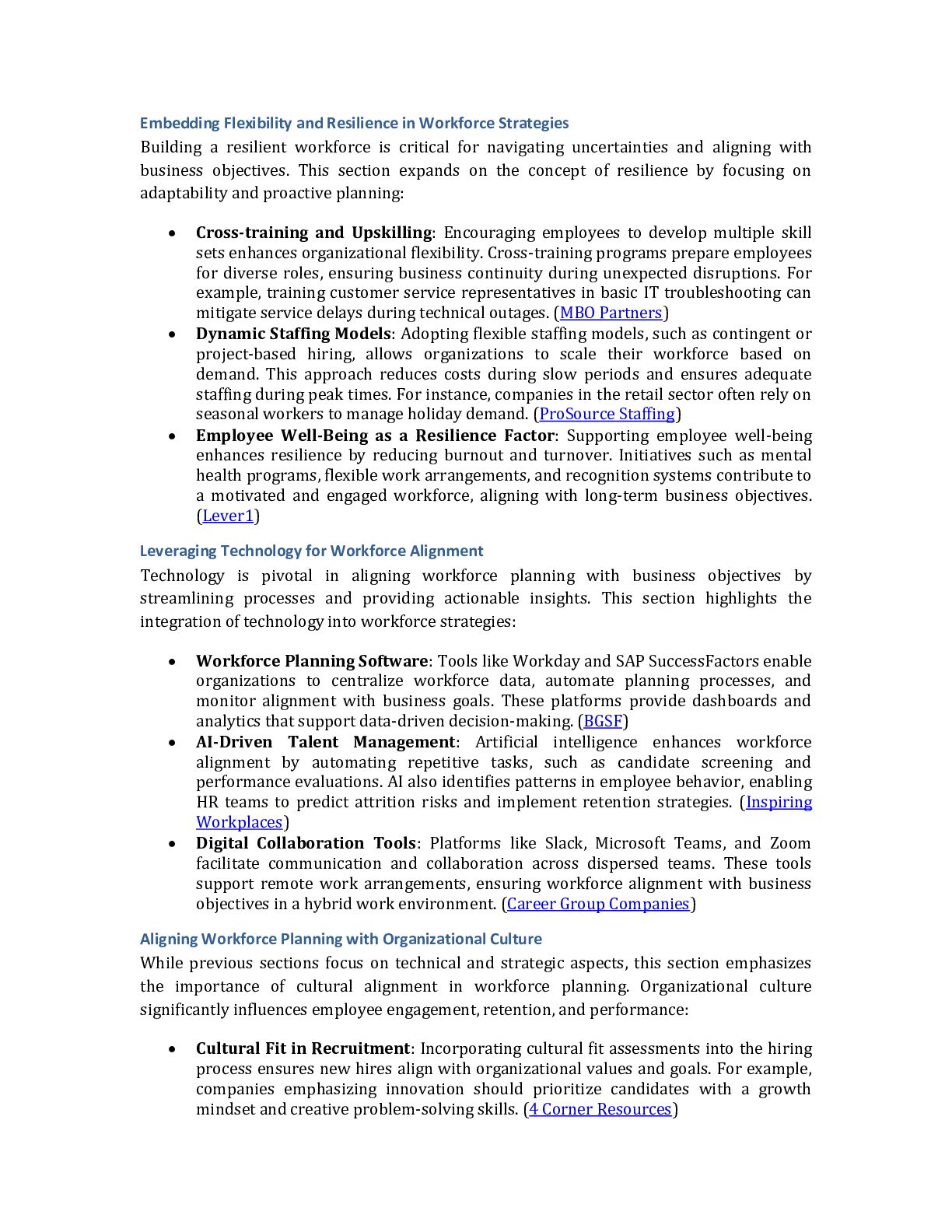
  6. Embedding Flexibility and Resilience in Workforce Strategies Building a resilient

    workforce is critical for navigating uncertainties and aligning with business objectives. This section expands on the concept of resilience by focusing on adaptability and proactive planning: • Cross-training and Upskilling: Encouraging employees to develop multiple skill sets enhances organizational flexibility. Cross-training programs prepare employees for diverse roles, ensuring business continuity during unexpected disruptions. For example, training customer service representatives in basic IT troubleshooting can mitigate service delays during technical outages. (MBO Partners) • Dynamic Staffing Models: Adopting flexible staffing models, such as contingent or project-based hiring, allows organizations to scale their workforce based on demand. This approach reduces costs during slow periods and ensures adequate staffing during peak times. For instance, companies in the retail sector often rely on seasonal workers to manage holiday demand. (ProSource Staffing) • Employee Well-Being as a Resilience Factor: Supporting employee well-being enhances resilience by reducing burnout and turnover. Initiatives such as mental health programs, flexible work arrangements, and recognition systems contribute to a motivated and engaged workforce, aligning with long-term business objectives. (Lever1) Leveraging Technology for Workforce Alignment Technology is pivotal in aligning workforce planning with business objectives by streamlining processes and providing actionable insights. This section highlights the integration of technology into workforce strategies: • Workforce Planning Software: Tools like Workday and SAP SuccessFactors enable organizations to centralize workforce data, automate planning processes, and monitor alignment with business goals. These platforms provide dashboards and analytics that support data-driven decision-making. (BGSF) • AI-Driven Talent Management: Artificial intelligence enhances workforce alignment by automating repetitive tasks, such as candidate screening and performance evaluations. AI also identifies patterns in employee behavior, enabling HR teams to predict attrition risks and implement retention strategies. (Inspiring Workplaces) • Digital Collaboration Tools: Platforms like Slack, Microsoft Teams, and Zoom facilitate communication and collaboration across dispersed teams. These tools support remote work arrangements, ensuring workforce alignment with business objectives in a hybrid work environment. (Career Group Companies) Aligning Workforce Planning with Organizational Culture While previous sections focus on technical and strategic aspects, this section emphasizes the importance of cultural alignment in workforce planning. Organizational culture significantly influences employee engagement, retention, and performance: • Cultural Fit in Recruitment: Incorporating cultural fit assessments into the hiring process ensures new hires align with organizational values and goals. For example, companies emphasizing innovation should prioritize candidates with a growth mindset and creative problem-solving skills. (4 Corner Resources)
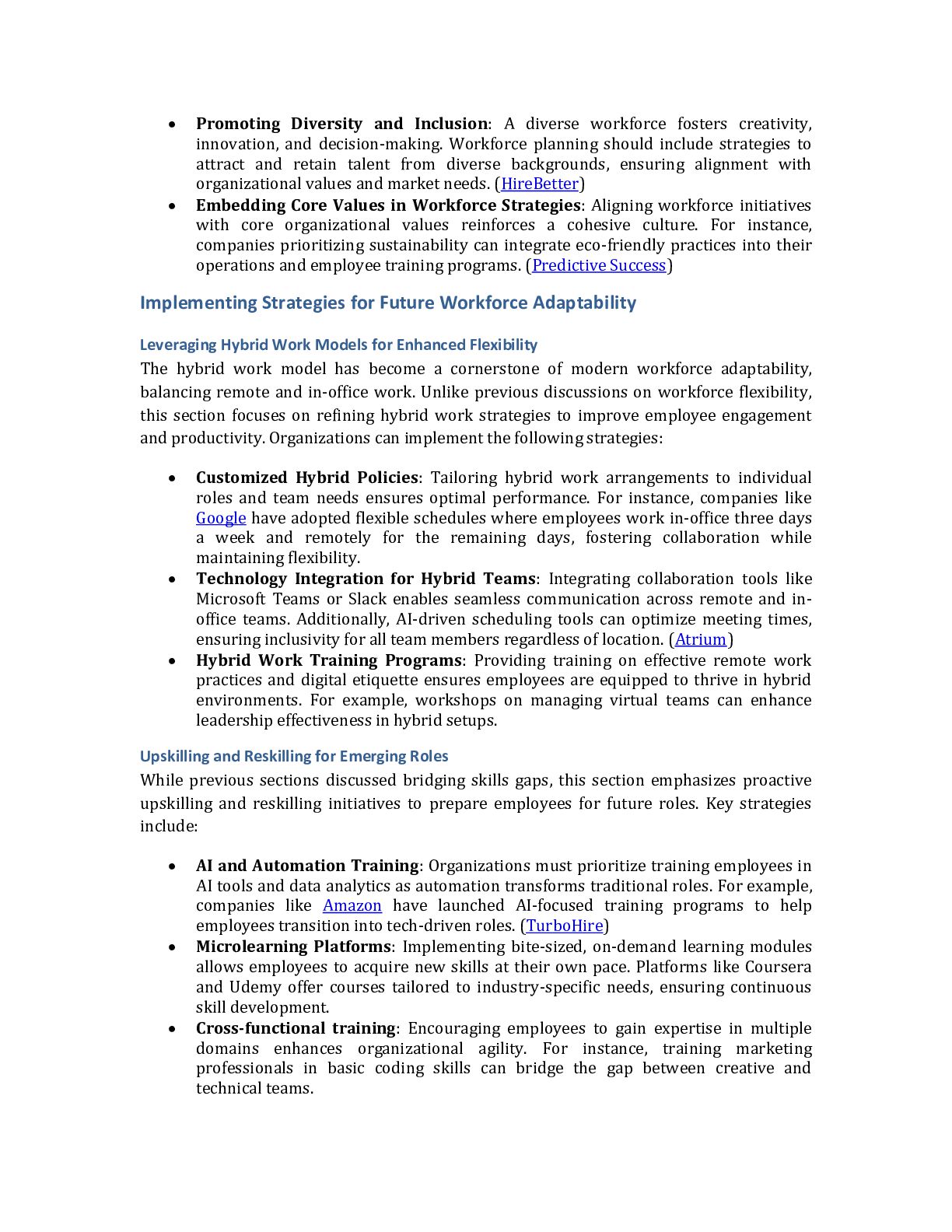
  7. • Promoting Diversity and Inclusion: A diverse workforce fosters creativity,

    innovation, and decision-making. Workforce planning should include strategies to attract and retain talent from diverse backgrounds, ensuring alignment with organizational values and market needs. (HireBetter) • Embedding Core Values in Workforce Strategies: Aligning workforce initiatives with core organizational values reinforces a cohesive culture. For instance, companies prioritizing sustainability can integrate eco-friendly practices into their operations and employee training programs. (Predictive Success) Implementing Strategies for Future Workforce Adaptability Leveraging Hybrid Work Models for Enhanced Flexibility The hybrid work model has become a cornerstone of modern workforce adaptability, balancing remote and in-office work. Unlike previous discussions on workforce flexibility, this section focuses on refining hybrid work strategies to improve employee engagement and productivity. Organizations can implement the following strategies: • Customized Hybrid Policies: Tailoring hybrid work arrangements to individual roles and team needs ensures optimal performance. For instance, companies like Google have adopted flexible schedules where employees work in-office three days a week and remotely for the remaining days, fostering collaboration while maintaining flexibility. • Technology Integration for Hybrid Teams: Integrating collaboration tools like Microsoft Teams or Slack enables seamless communication across remote and in- office teams. Additionally, AI-driven scheduling tools can optimize meeting times, ensuring inclusivity for all team members regardless of location. (Atrium) • Hybrid Work Training Programs: Providing training on effective remote work practices and digital etiquette ensures employees are equipped to thrive in hybrid environments. For example, workshops on managing virtual teams can enhance leadership effectiveness in hybrid setups. Upskilling and Reskilling for Emerging Roles While previous sections discussed bridging skills gaps, this section emphasizes proactive upskilling and reskilling initiatives to prepare employees for future roles. Key strategies include: • AI and Automation Training: Organizations must prioritize training employees in AI tools and data analytics as automation transforms traditional roles. For example, companies like Amazon have launched AI-focused training programs to help employees transition into tech-driven roles. (TurboHire) • Microlearning Platforms: Implementing bite-sized, on-demand learning modules allows employees to acquire new skills at their own pace. Platforms like Coursera and Udemy offer courses tailored to industry-specific needs, ensuring continuous skill development. • Cross-functional training: Encouraging employees to gain expertise in multiple domains enhances organizational agility. For instance, training marketing professionals in basic coding skills can bridge the gap between creative and technical teams.
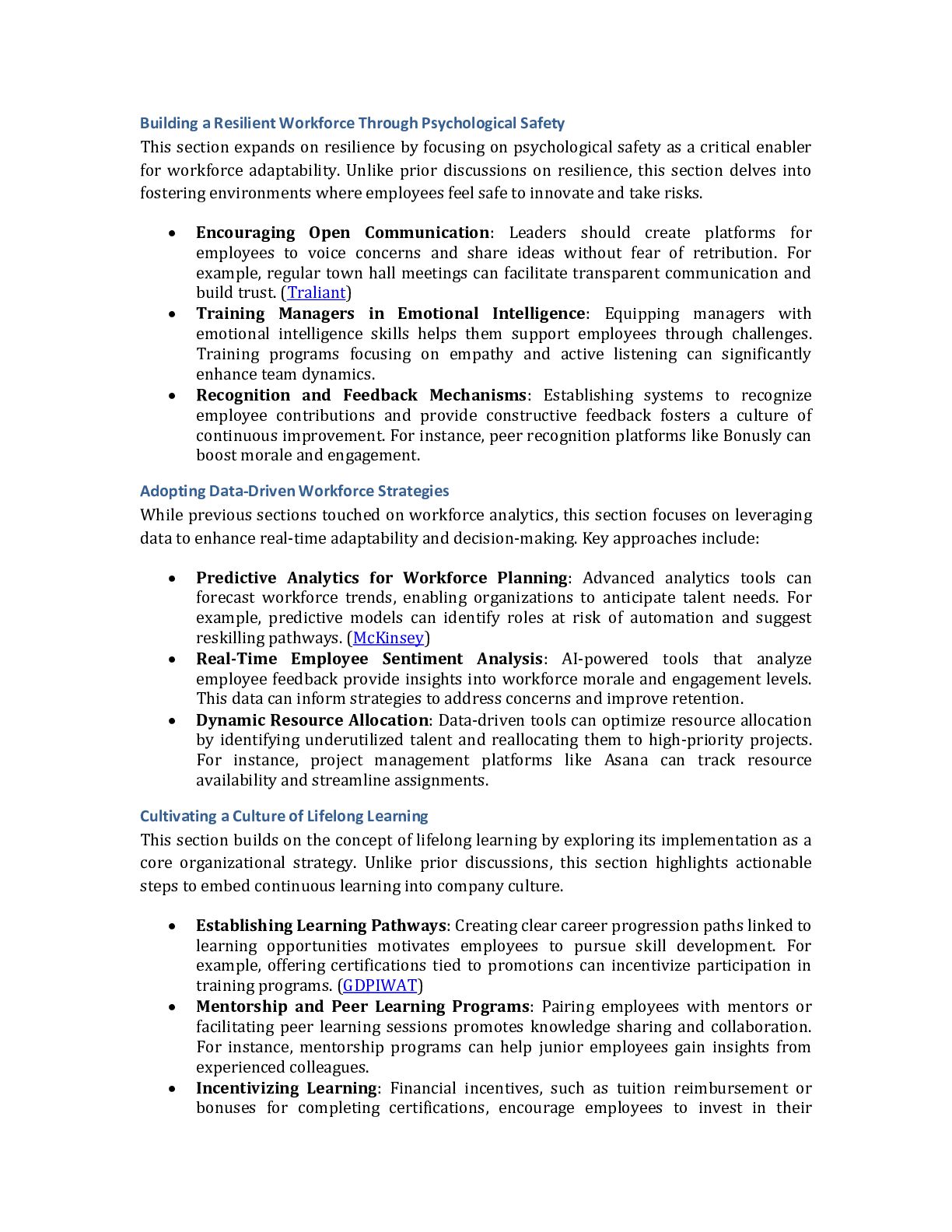
  8. Building a Resilient Workforce Through Psychological Safety This section expands

    on resilience by focusing on psychological safety as a critical enabler for workforce adaptability. Unlike prior discussions on resilience, this section delves into fostering environments where employees feel safe to innovate and take risks. • Encouraging Open Communication: Leaders should create platforms for employees to voice concerns and share ideas without fear of retribution. For example, regular town hall meetings can facilitate transparent communication and build trust. (Traliant) • Training Managers in Emotional Intelligence: Equipping managers with emotional intelligence skills helps them support employees through challenges. Training programs focusing on empathy and active listening can significantly enhance team dynamics. • Recognition and Feedback Mechanisms: Establishing systems to recognize employee contributions and provide constructive feedback fosters a culture of continuous improvement. For instance, peer recognition platforms like Bonusly can boost morale and engagement. Adopting Data-Driven Workforce Strategies While previous sections touched on workforce analytics, this section focuses on leveraging data to enhance real-time adaptability and decision-making. Key approaches include: • Predictive Analytics for Workforce Planning: Advanced analytics tools can forecast workforce trends, enabling organizations to anticipate talent needs. For example, predictive models can identify roles at risk of automation and suggest reskilling pathways. (McKinsey) • Real-Time Employee Sentiment Analysis: AI-powered tools that analyze employee feedback provide insights into workforce morale and engagement levels. This data can inform strategies to address concerns and improve retention. • Dynamic Resource Allocation: Data-driven tools can optimize resource allocation by identifying underutilized talent and reallocating them to high-priority projects. For instance, project management platforms like Asana can track resource availability and streamline assignments. Cultivating a Culture of Lifelong Learning This section builds on the concept of lifelong learning by exploring its implementation as a core organizational strategy. Unlike prior discussions, this section highlights actionable steps to embed continuous learning into company culture. • Establishing Learning Pathways: Creating clear career progression paths linked to learning opportunities motivates employees to pursue skill development. For example, offering certifications tied to promotions can incentivize participation in training programs. (GDPIWAT) • Mentorship and Peer Learning Programs: Pairing employees with mentors or facilitating peer learning sessions promotes knowledge sharing and collaboration. For instance, mentorship programs can help junior employees gain insights from experienced colleagues. • Incentivizing Learning: Financial incentives, such as tuition reimbursement or bonuses for completing certifications, encourage employees to invest in their
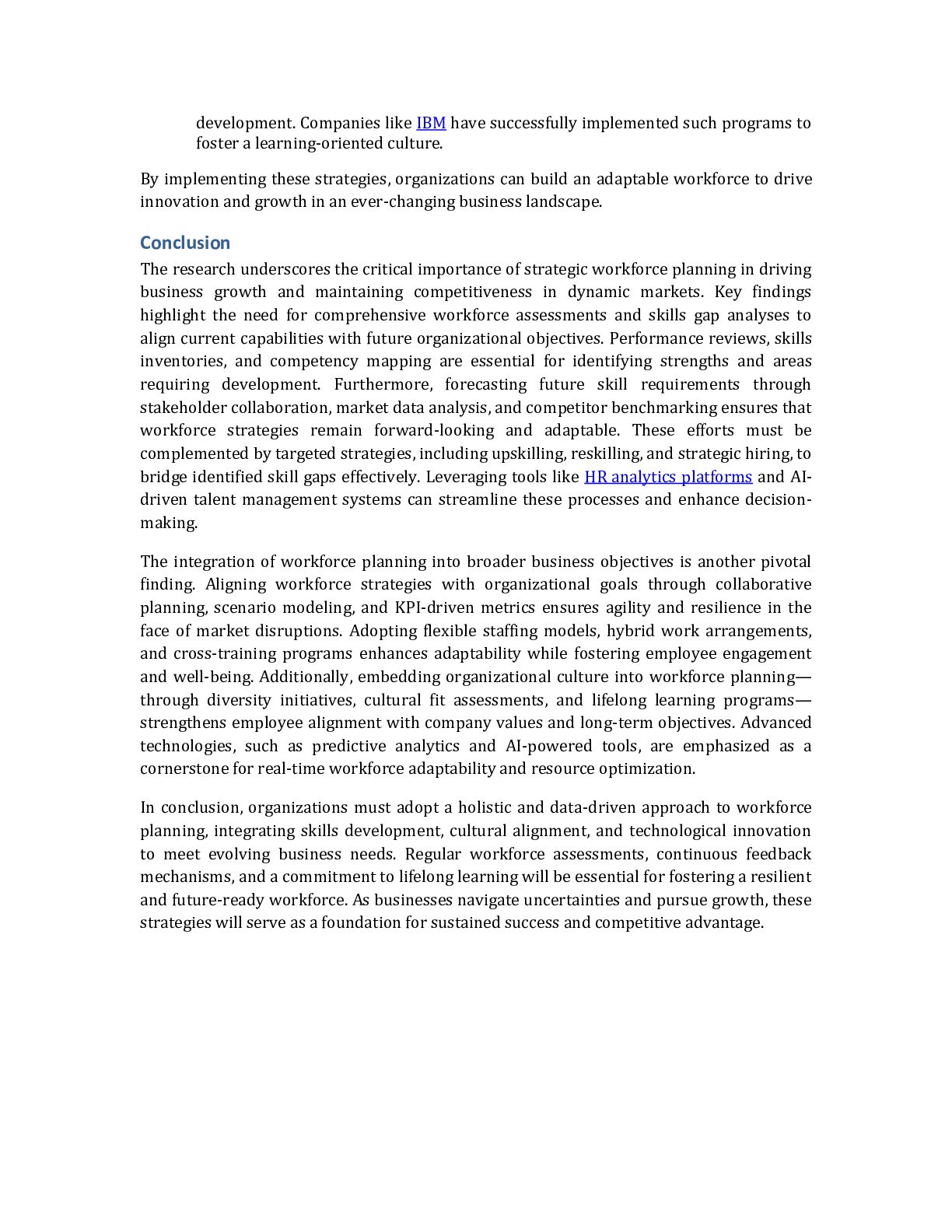
  9. development. Companies like IBM have successfully implemented such programs to

    foster a learning-oriented culture. By implementing these strategies, organizations can build an adaptable workforce to drive innovation and growth in an ever-changing business landscape. Conclusion The research underscores the critical importance of strategic workforce planning in driving business growth and maintaining competitiveness in dynamic markets. Key findings highlight the need for comprehensive workforce assessments and skills gap analyses to align current capabilities with future organizational objectives. Performance reviews, skills inventories, and competency mapping are essential for identifying strengths and areas requiring development. Furthermore, forecasting future skill requirements through stakeholder collaboration, market data analysis, and competitor benchmarking ensures that workforce strategies remain forward-looking and adaptable. These efforts must be complemented by targeted strategies, including upskilling, reskilling, and strategic hiring, to bridge identified skill gaps effectively. Leveraging tools like HR analytics platforms and AI- driven talent management systems can streamline these processes and enhance decision- making. The integration of workforce planning into broader business objectives is another pivotal finding. Aligning workforce strategies with organizational goals through collaborative planning, scenario modeling, and KPI-driven metrics ensures agility and resilience in the face of market disruptions. Adopting flexible staffing models, hybrid work arrangements, and cross-training programs enhances adaptability while fostering employee engagement and well-being. Additionally, embedding organizational culture into workforce planning— through diversity initiatives, cultural fit assessments, and lifelong learning programs— strengthens employee alignment with company values and long-term objectives. Advanced technologies, such as predictive analytics and AI-powered tools, are emphasized as a cornerstone for real-time workforce adaptability and resource optimization. In conclusion, organizations must adopt a holistic and data-driven approach to workforce planning, integrating skills development, cultural alignment, and technological innovation to meet evolving business needs. Regular workforce assessments, continuous feedback mechanisms, and a commitment to lifelong learning will be essential for fostering a resilient and future-ready workforce. As businesses navigate uncertainties and pursue growth, these strategies will serve as a foundation for sustained success and competitive advantage.
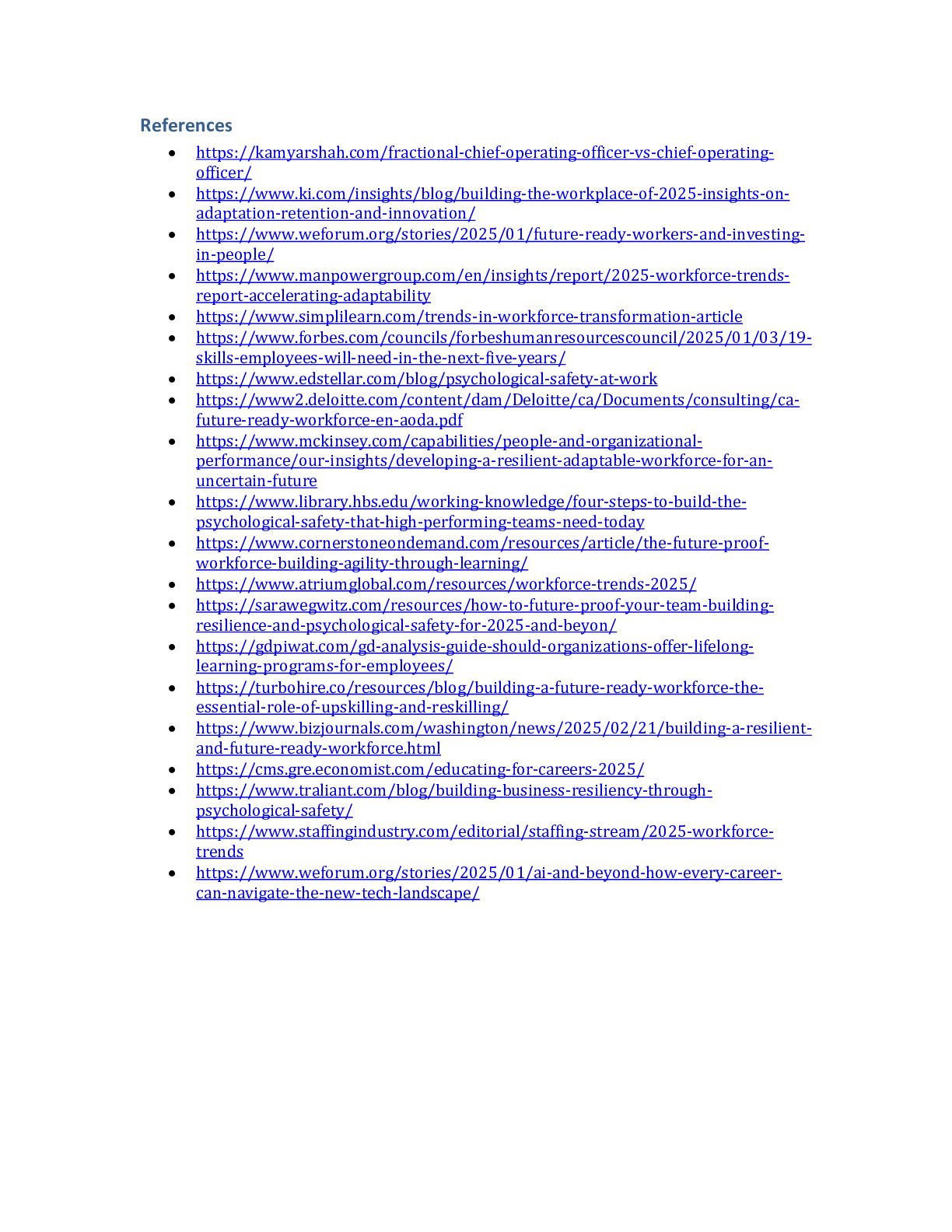
  10. References • https://kamyarshah.com/fractional-chief-operating-officer-vs-chief-operating- officer/ • https://www.ki.com/insights/blog/building-the-workplace-of-2025-insights-on- adaptation-retention-and-innovation/ • https://www.weforum.org/stories/2025/01/future-ready-workers-and-investing- in-people/

    • https://www.manpowergroup.com/en/insights/report/2025-workforce-trends- report-accelerating-adaptability • https://www.simplilearn.com/trends-in-workforce-transformation-article • https://www.forbes.com/councils/forbeshumanresourcescouncil/2025/01/03/19- skills-employees-will-need-in-the-next-five-years/ • https://www.edstellar.com/blog/psychological-safety-at-work • https://www2.deloitte.com/content/dam/Deloitte/ca/Documents/consulting/ca- future-ready-workforce-en-aoda.pdf • https://www.mckinsey.com/capabilities/people-and-organizational- performance/our-insights/developing-a-resilient-adaptable-workforce-for-an- uncertain-future • https://www.library.hbs.edu/working-knowledge/four-steps-to-build-the- psychological-safety-that-high-performing-teams-need-today • https://www.cornerstoneondemand.com/resources/article/the-future-proof- workforce-building-agility-through-learning/ • https://www.atriumglobal.com/resources/workforce-trends-2025/ • https://sarawegwitz.com/resources/how-to-future-proof-your-team-building- resilience-and-psychological-safety-for-2025-and-beyon/ • https://gdpiwat.com/gd-analysis-guide-should-organizations-offer-lifelong- learning-programs-for-employees/ • https://turbohire.co/resources/blog/building-a-future-ready-workforce-the- essential-role-of-upskilling-and-reskilling/ • https://www.bizjournals.com/washington/news/2025/02/21/building-a-resilient- and-future-ready-workforce.html • https://cms.gre.economist.com/educating-for-careers-2025/ • https://www.traliant.com/blog/building-business-resiliency-through- psychological-safety/ • https://www.staffingindustry.com/editorial/staffing-stream/2025-workforce- trends • https://www.weforum.org/stories/2025/01/ai-and-beyond-how-every-career- can-navigate-the-new-tech-landscape/