Upgrade to Pro — share decks privately, control downloads, hide ads and more …

Machine Learning: Learning structure from data

Sponsored · SiteGround - Reliable hosting with speed, security, and support you can count on. →

Machine Learning: Learning structure from data

Machine learning techniques draw on many areas from statistics to theoretical computer science. These algorithms have advanced applications in robotics, health care, finance, and computer games, to name just a few. This talk will serve as a pragmatic introduction to machine learning, understanding of core concepts in a machine learning pipeline, and how one might use it to solve problems in practical settings.

Avatar for Diana Spencer

Diana Spencer

November 28, 2017

Other Decks in Programming

Transcript

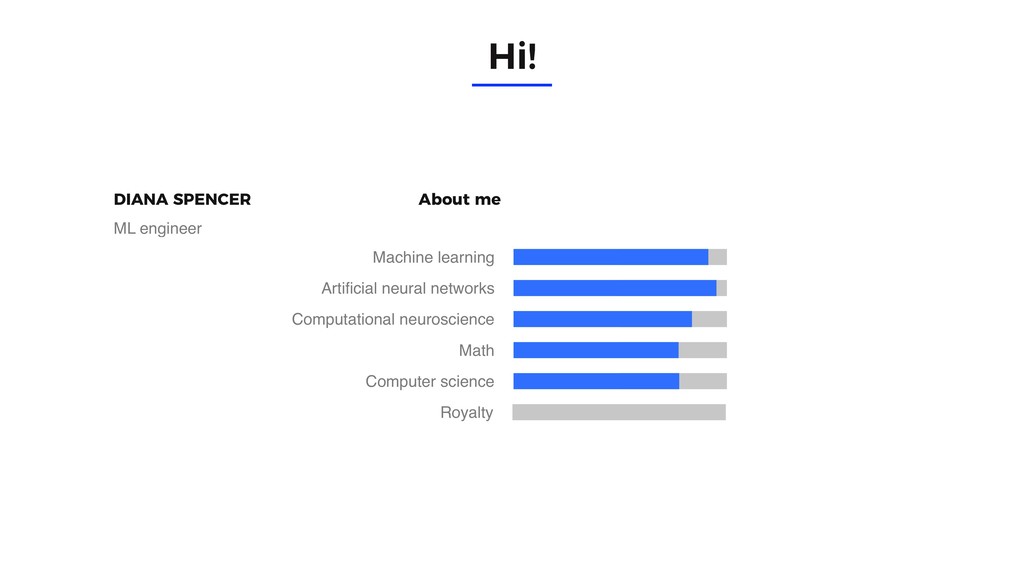
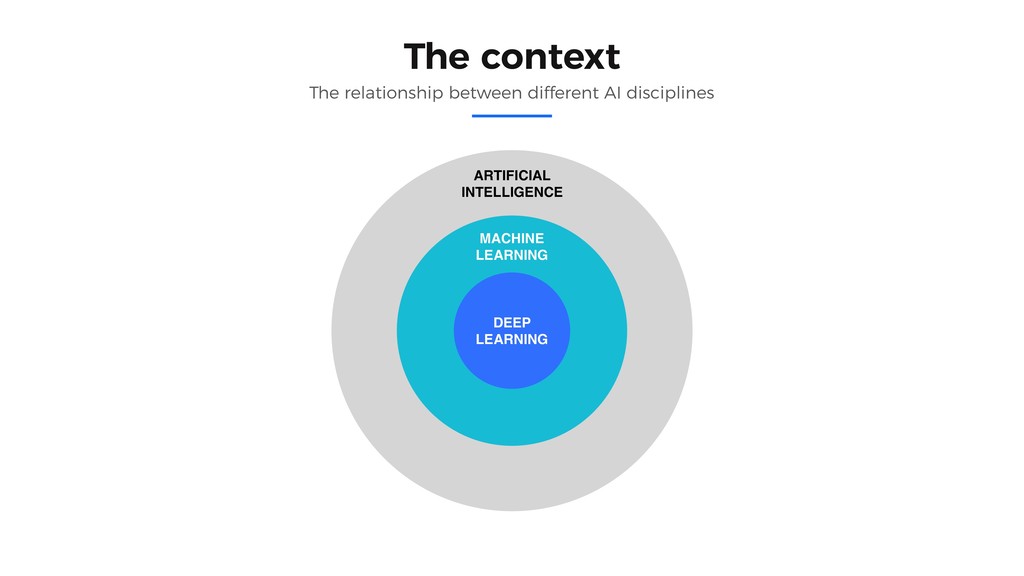
  1. Hi! ML engineer DIANA SPENCER About me Machine learning Artificial

    neural networks Computational neuroscience Math Computer science Royalty
  2. Agenda A science experiment Using a pipeline as a tool

    for comparing algorithms. Machine learning 101 The very basics summed up in 15 minutes. 1 2 3 Supervised learning One method of machine learning.
  3. Agenda A science experiment Using a pipeline as a tool

    for comparing algorithms. Machine learning 101 The very basics summed up in 15 minutes. 1 2 3 Supervised learning One type of machine learning method.
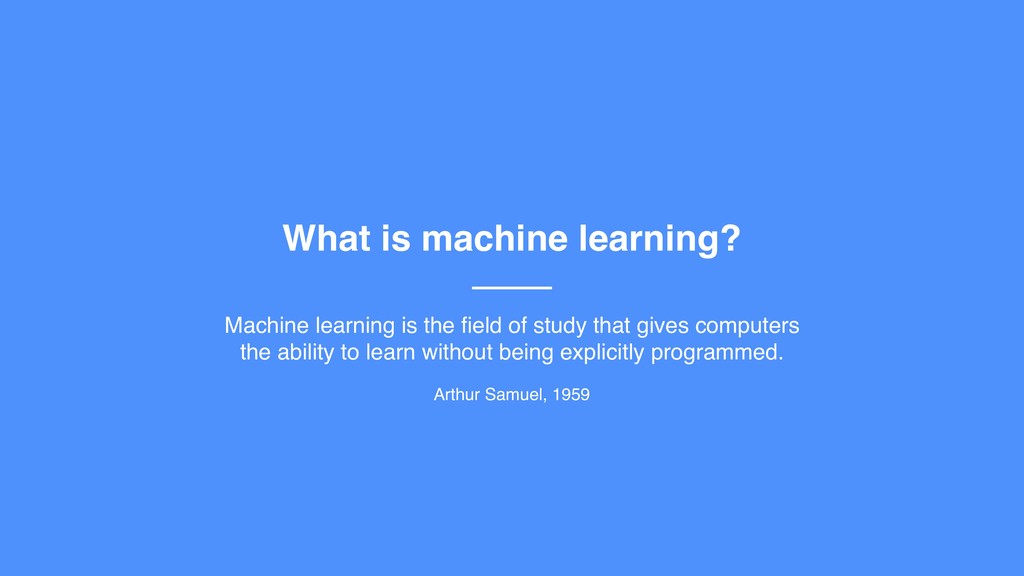
  4. What is machine learning? Machine learning is the field of

    study that gives computers the ability to learn without being explicitly programmed. Arthur Samuel, 1959
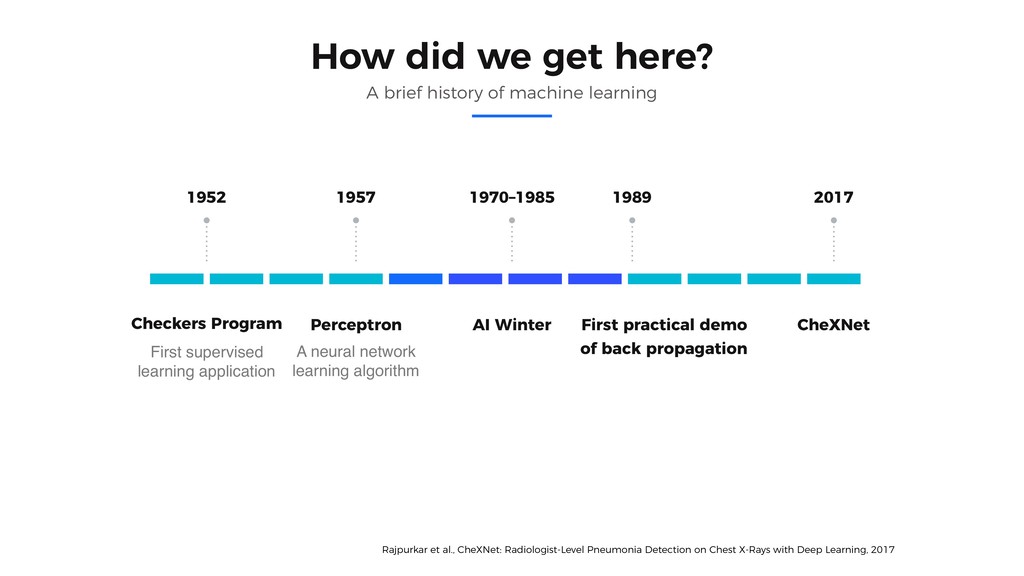
  5. 1952 1957 1970–1985 1989 2017 How did we get here?

    A brief history of machine learning Checkers Program First supervised learning application Perceptron A neural network learning algorithm AI Winter First practical demo of back propagation CheXNet Rajpurkar et al., CheXNet: Radiologist-Level Pneumonia Detection on Chest X-Rays with Deep Learning, 2017
  6. Why use machine learning? To build automated systems with superior

    human-level intelligence to assist us with difficult problem solving tasks.
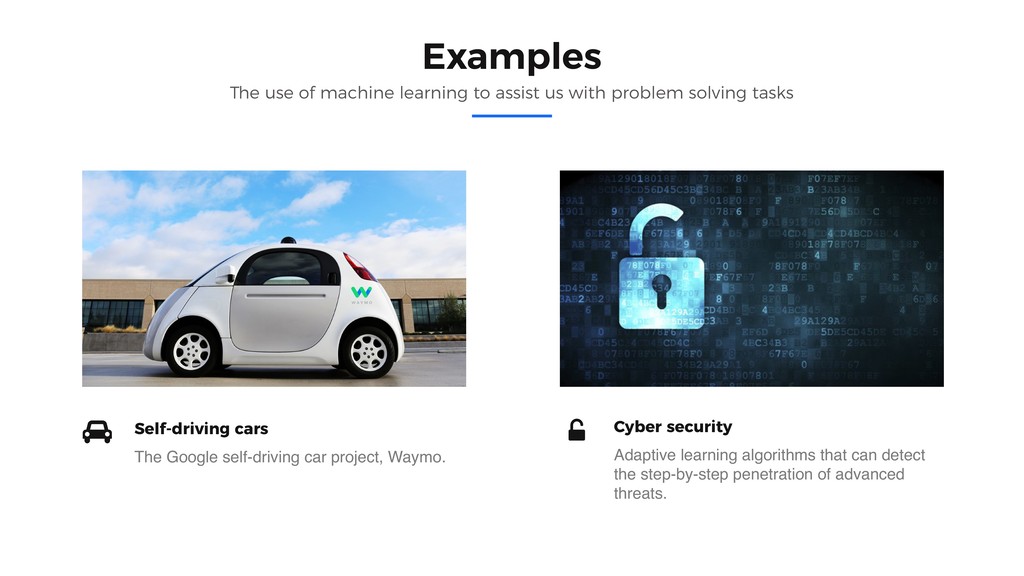
  7. ƞ Examples The use of machine learning to assist us

    with problem solving tasks Self-driving cars The Google self-driving car project, Waymo. Cyber security Adaptive learning algorithms that can detect the step-by-step penetration of advanced threats.
  8. Why use machine learning? To build automated systems with superior

    human-level intelligence to assist us with difficult problem solving tasks. To build automated systems to improve the quality of life for people and the environment.
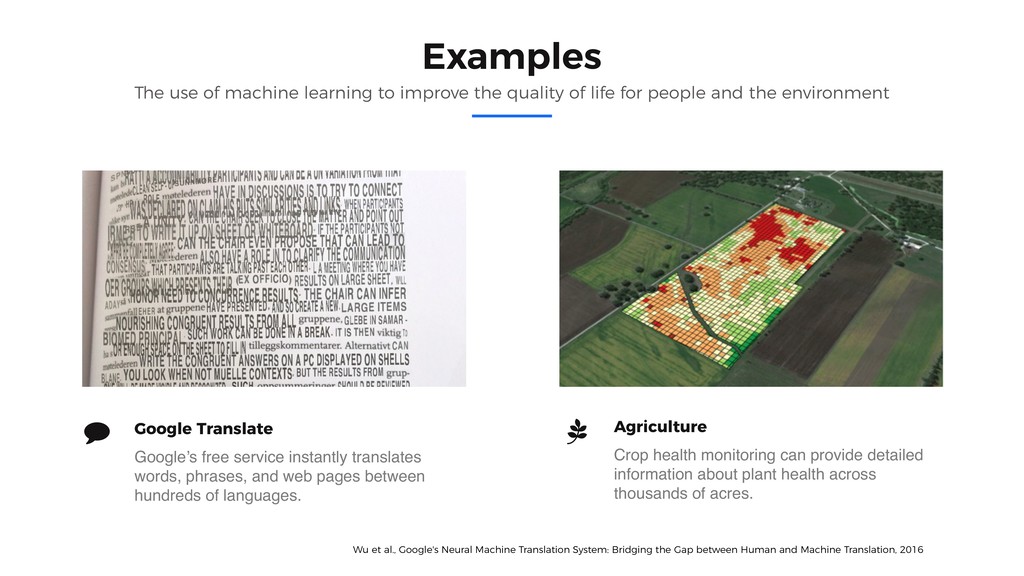
  9. Ŵ Examples The use of machine learning to improve the

    quality of life for people and the environment Google Translate Google’s free service instantly translates words, phrases, and web pages between hundreds of languages. Agriculture Crop health monitoring can provide detailed information about plant health across thousands of acres. Wu et al., Google's Neural Machine Translation System: Bridging the Gap between Human and Machine Translation, 2016
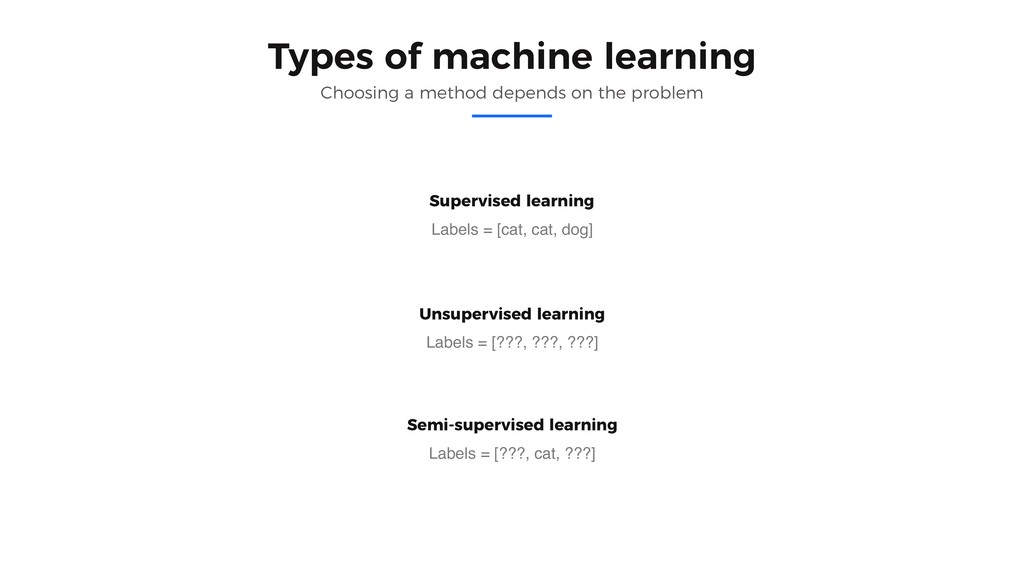
  10. Types of machine learning Choosing a method depends on the

    problem Semi-supervised learning Labels = [???, cat, ???] Supervised learning Labels = [cat, cat, dog] Unsupervised learning Labels = [???, ???, ???]
  11. Agenda A science experiment Using a pipeline as a tool

    for comparing algorithms. Machine learning 101 The very basics summed up in 15 minutes. 1 2 3 Supervised learning One method of machine learning.
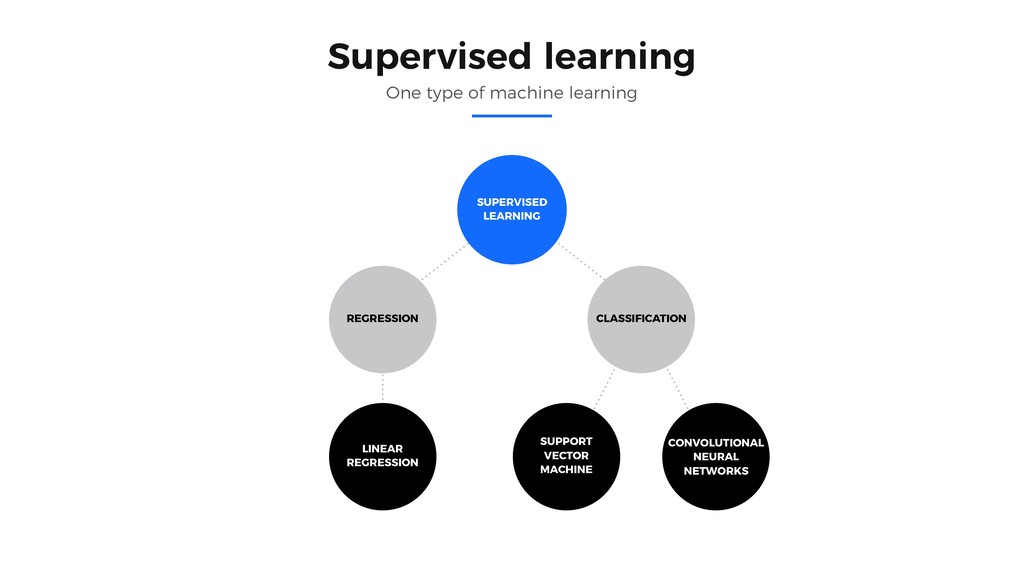
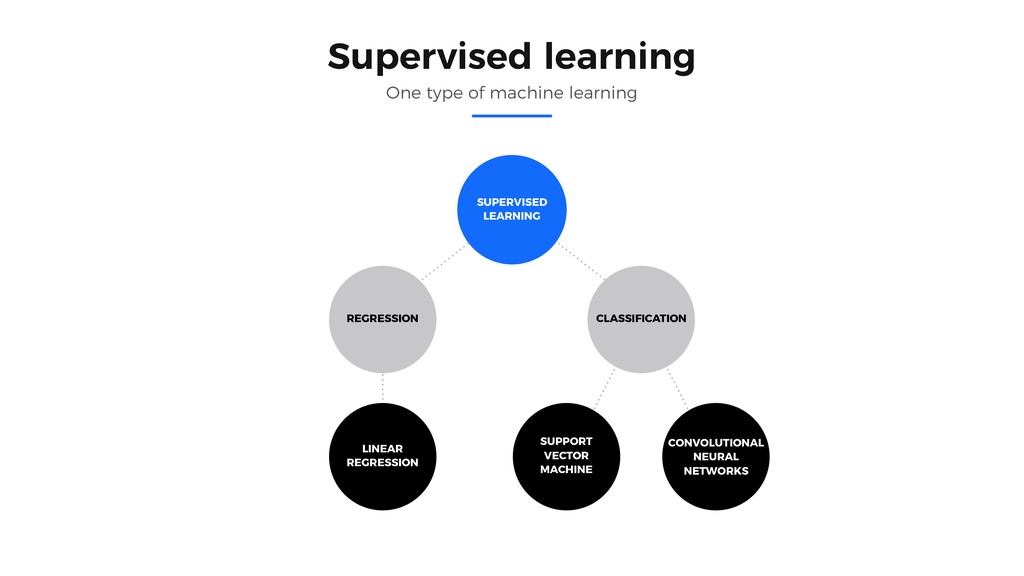
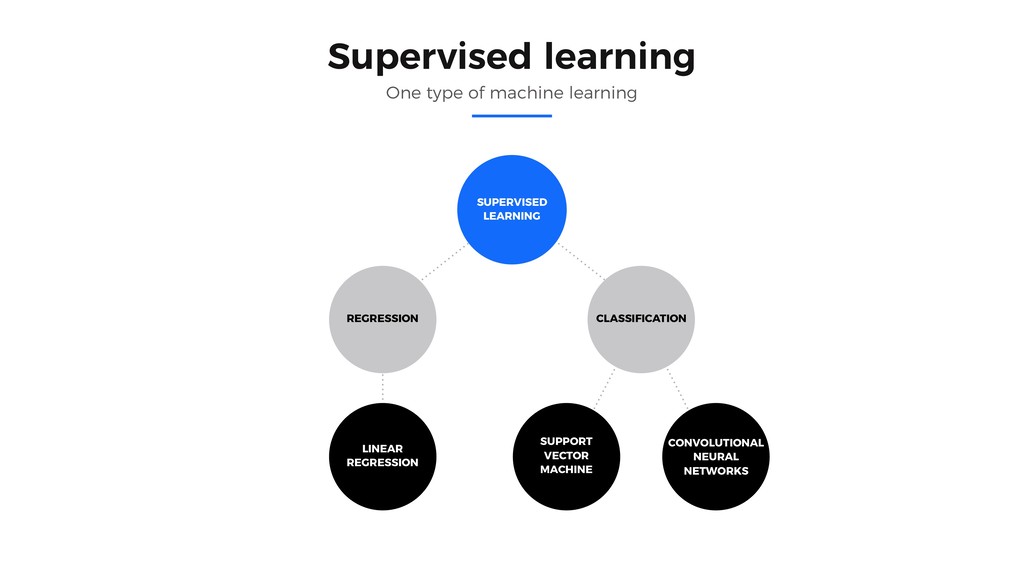
  12. Supervised learning One type of machine learning SUPERVISED LEARNING SUPPORT

    VECTOR MACHINE CONVOLUTIONAL NEURAL NETWORKS LINEAR REGRESSION REGRESSION CLASSIFICATION
  13. Supervised learning One type of machine learning SUPERVISED LEARNING SUPPORT

    VECTOR MACHINE CONVOLUTIONAL NEURAL NETWORKS LINEAR REGRESSION REGRESSION CLASSIFICATION
  14. Supervised learning One type of machine learning SUPERVISED LEARNING SUPPORT

    VECTOR MACHINE CONVOLUTIONAL NEURAL NETWORKS LINEAR REGRESSION REGRESSION CLASSIFICATION
  15. Agenda A science experiment Using a pipeline as a tool

    for comparing algorithms. Machine learning 101 The very basics summed up in 20 minutes. 1 2 3 Supervised learning One method for machine learning.
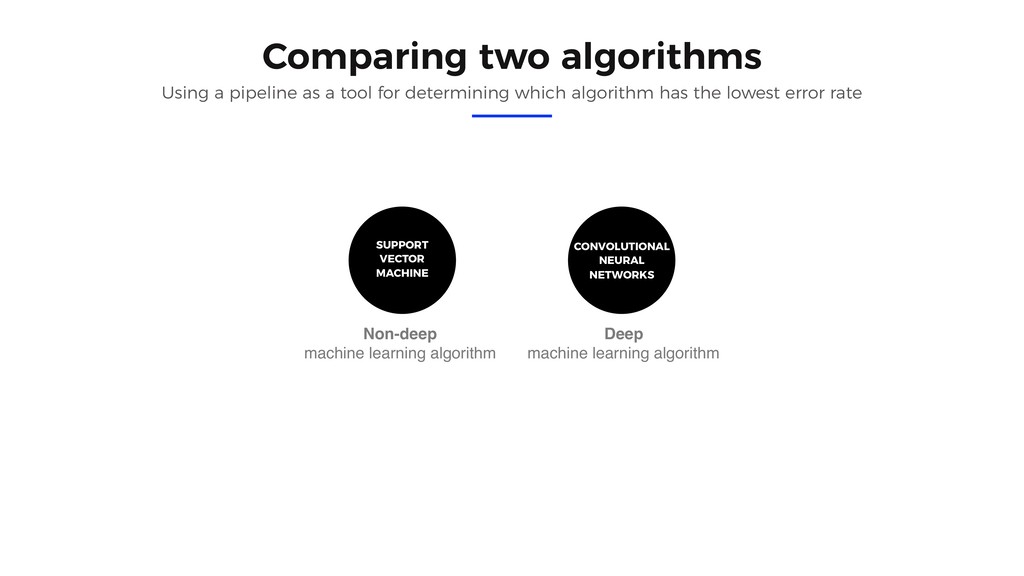
  16. Comparing two algorithms Using a pipeline as a tool for

    determining which algorithm has the lowest error rate Non-deep machine learning algorithm Deep machine learning algorithm SUPPORT VECTOR MACHINE CONVOLUTIONAL NEURAL NETWORKS
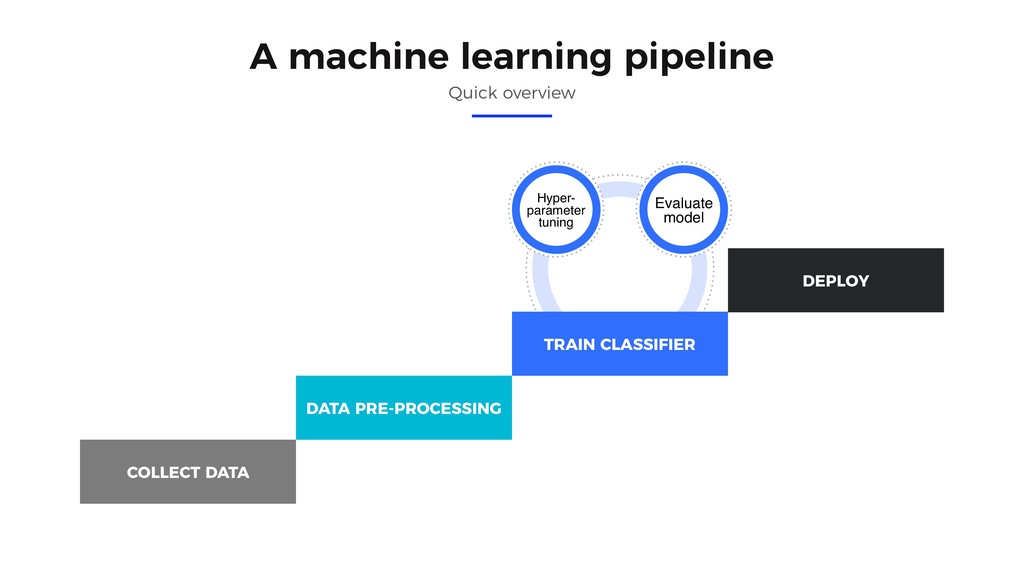
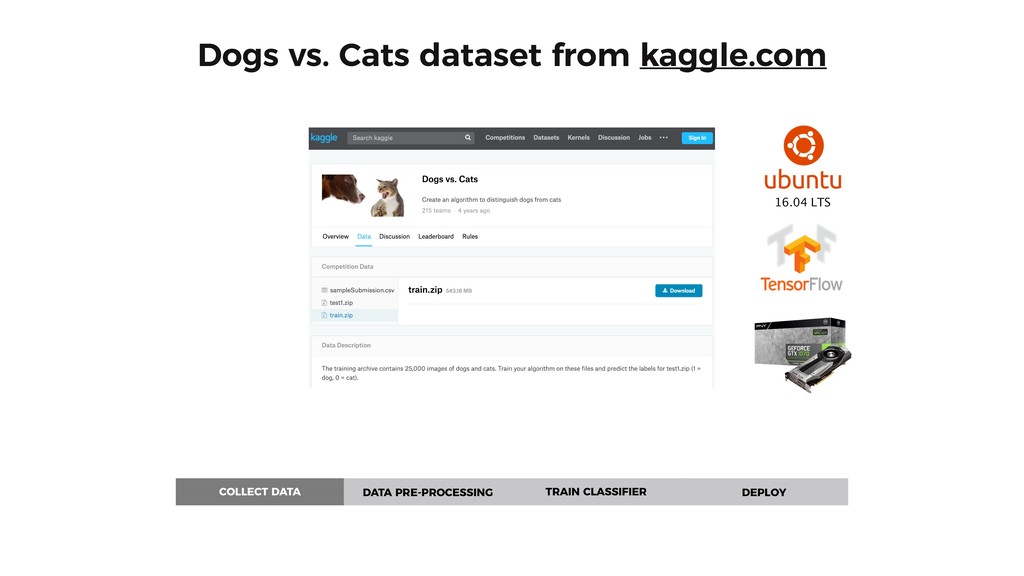
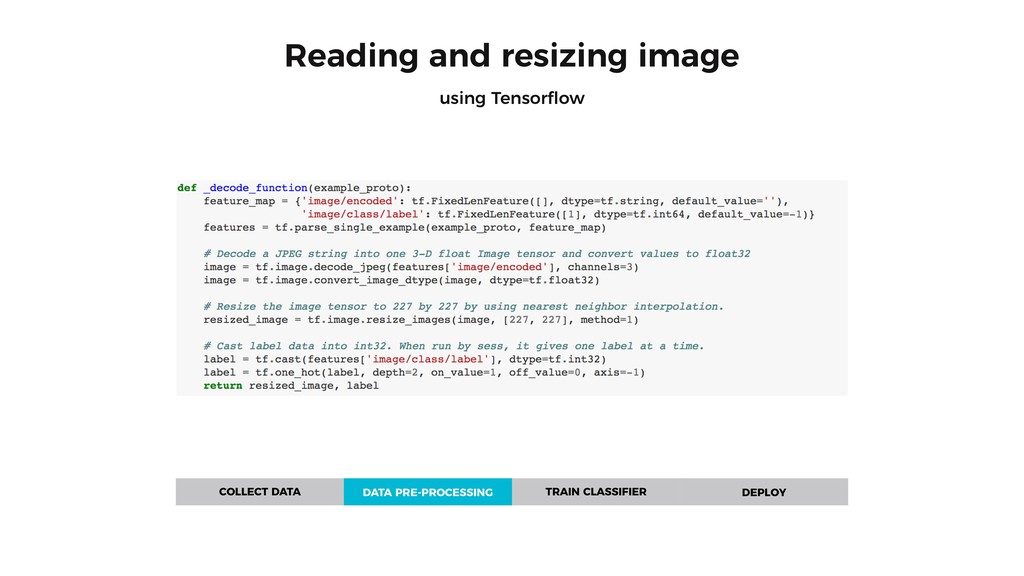
  17. A machine learning pipeline Quick overview COLLECT DATA DATA PRE-PROCESSING

    TRAIN CLASSIFIER DEPLOY Evaluate model Hyper- parameter tuning
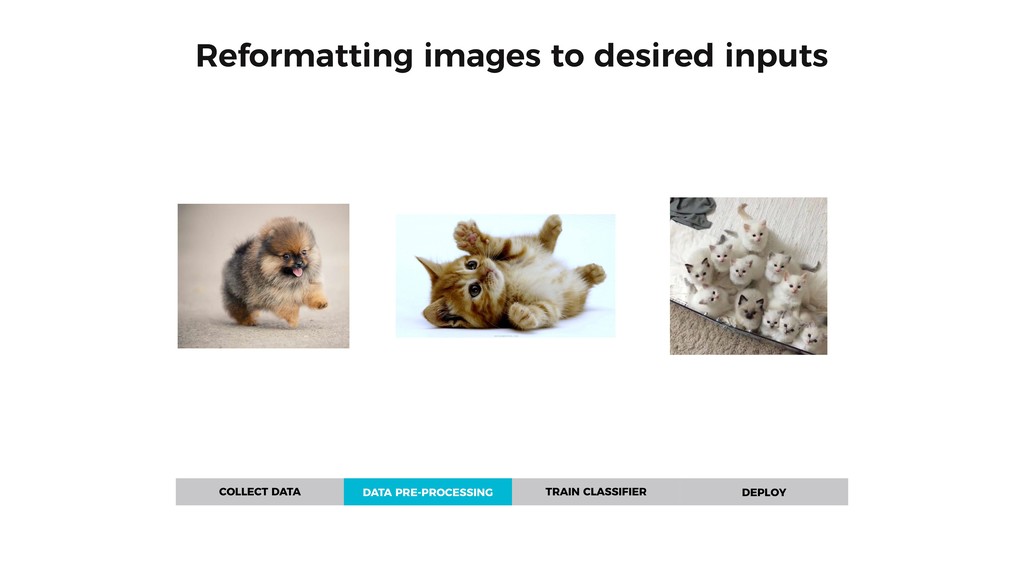
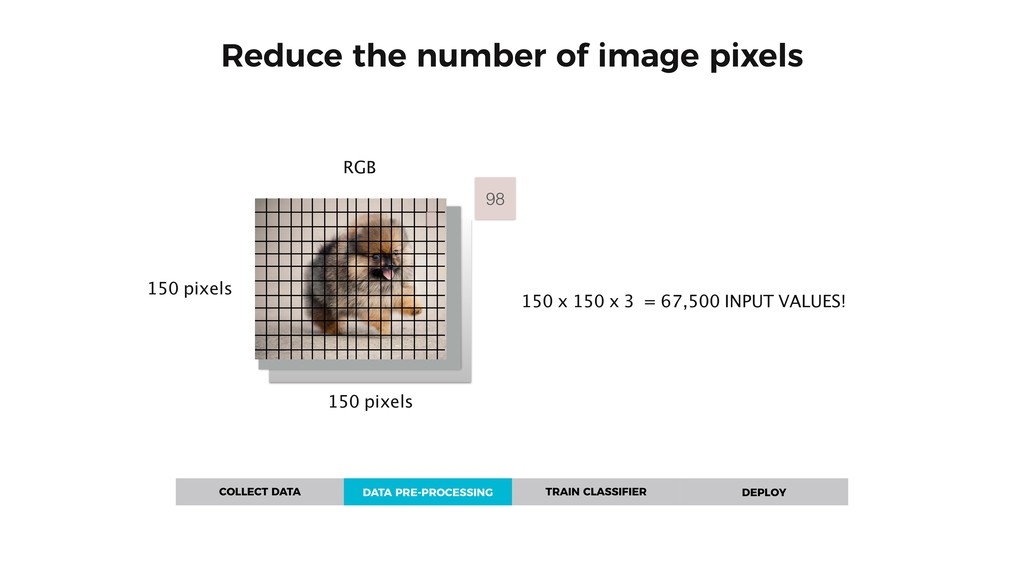
  18. Reduce the number of image pixels 150 pixels 150 pixels

    98 150 x 150 x 3 = 67,500 INPUT VALUES! RGB COLLECT DATA DATA PRE-PROCESSING TRAIN CLASSIFIER DEPLOY
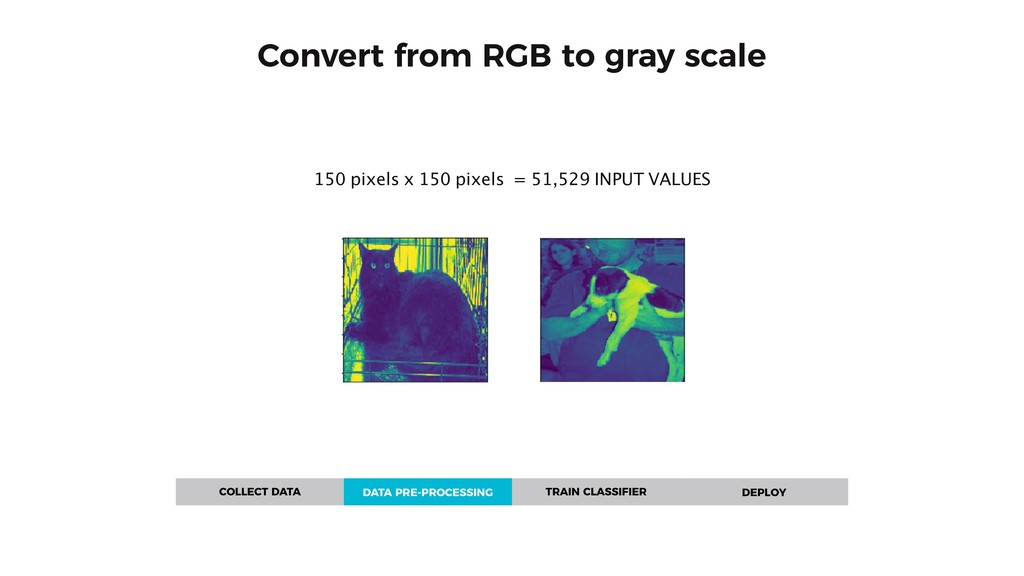
  19. Convert from RGB to gray scale 150 pixels x 150

    pixels = 51,529 INPUT VALUES COLLECT DATA DATA PRE-PROCESSING TRAIN CLASSIFIER DEPLOY
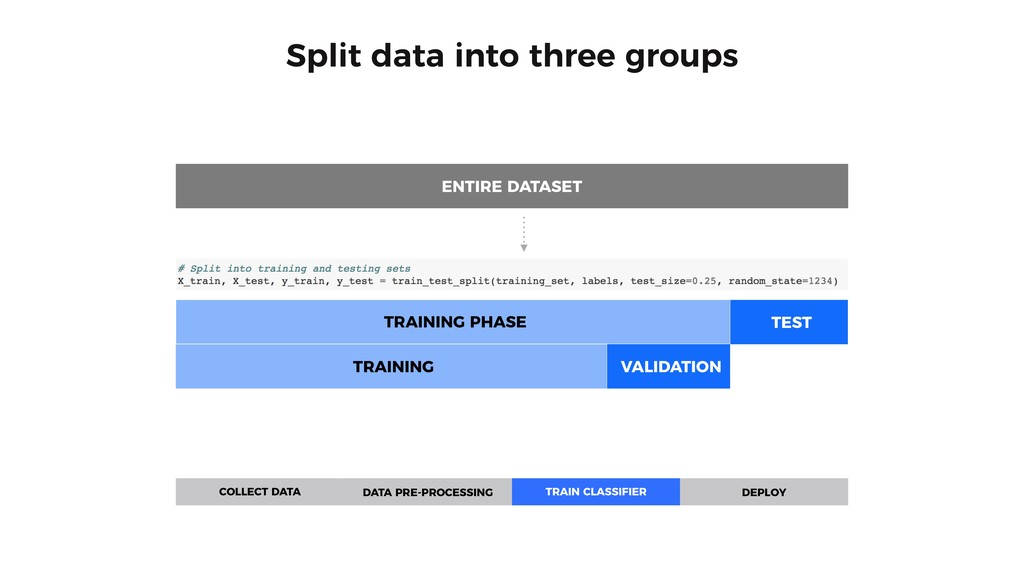
  20. TRAINING COLLECT DATA DATA PRE-PROCESSING TRAIN CLASSIFIER DEPLOY Split data

    into three groups TRAINING PHASE STEP 01 ENTIRE DATASET TEST VALIDATION
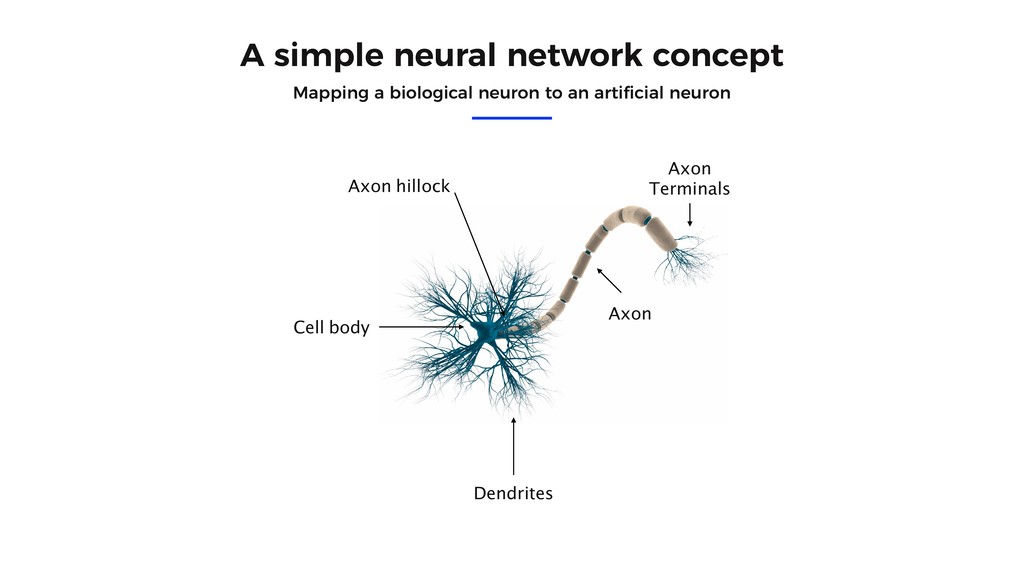
  21. A simple neural network concept Mapping a biological neuron to

    an artificial neuron Cell body Dendrites Axon Axon Terminals Axon hillock
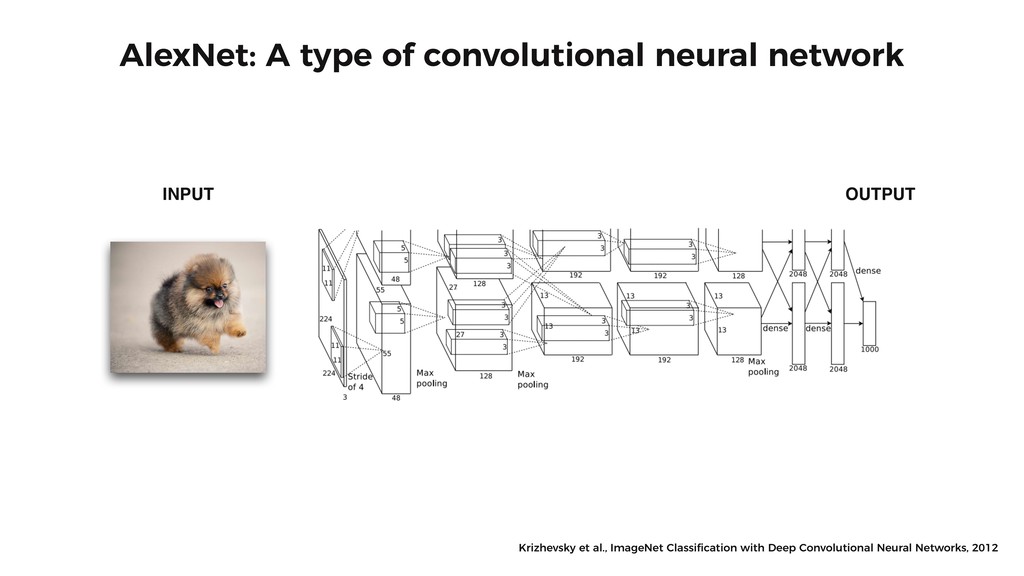
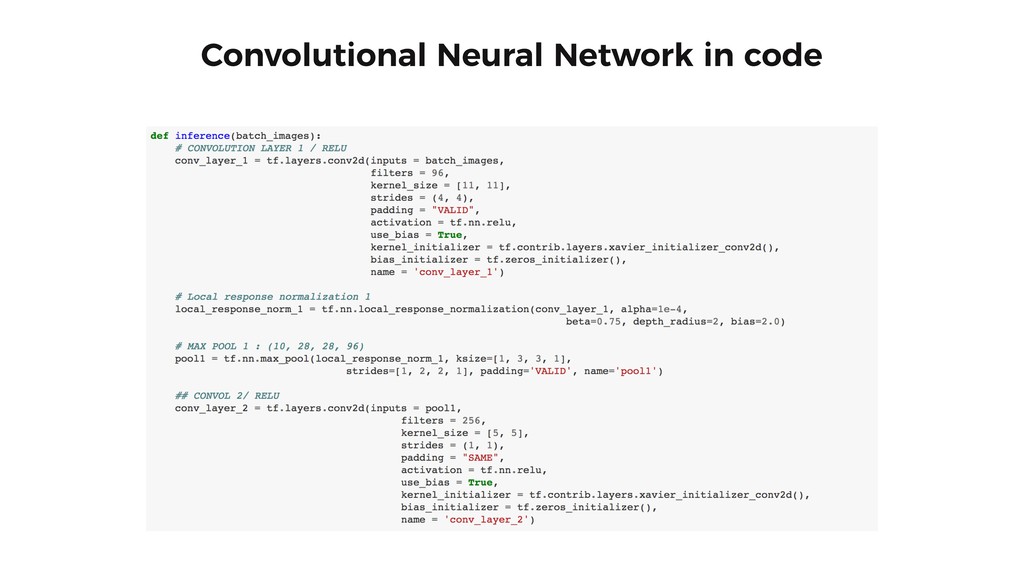
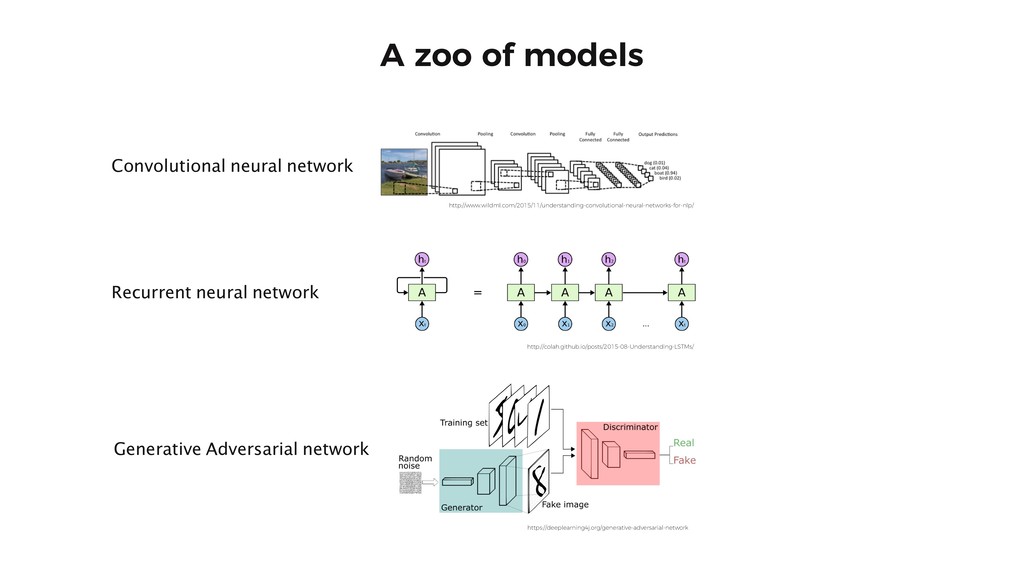
  22. AlexNet: A type of convolutional neural network Krizhevsky et al.,

    ImageNet Classification with Deep Convolutional Neural Networks, 2012 INPUT OUTPUT
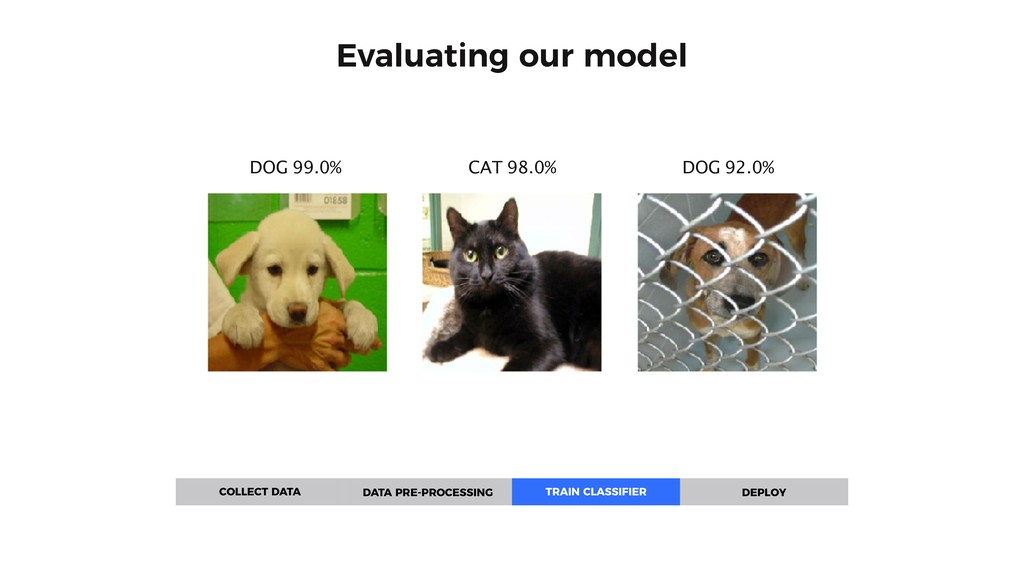
  23. Evaluating our model DOG 99.0% CAT 98.0% DOG 92.0% COLLECT

    DATA DATA PRE-PROCESSING TRAIN CLASSIFIER DEPLOY
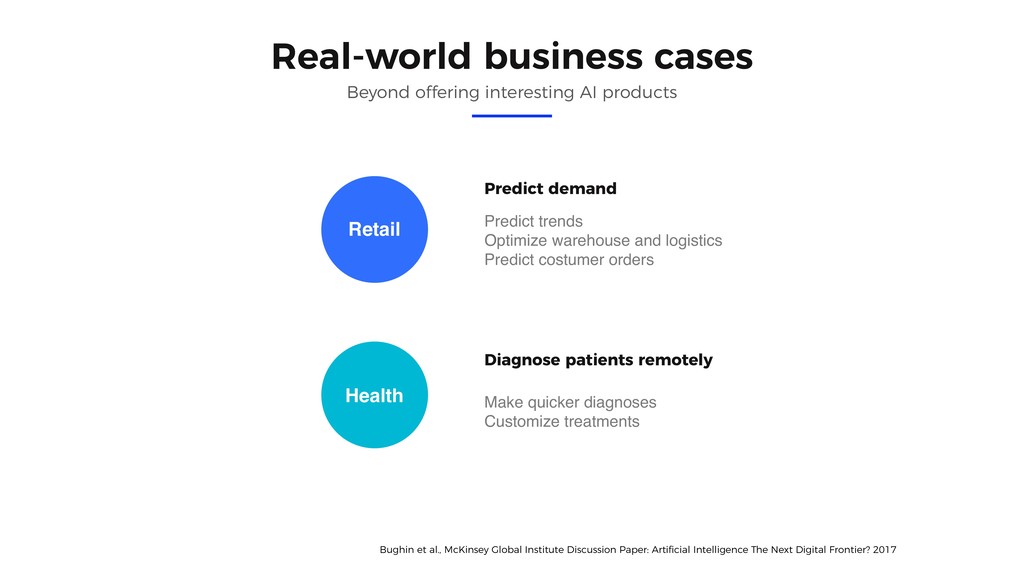
  24. Real-world business cases Beyond offering interesting AI products Predict demand

    Predict trends Optimize warehouse and logistics Predict costumer orders Diagnose patients remotely Make quicker diagnoses Customize treatments Retail Health Bughin et al., McKinsey Global Institute Discussion Paper: Artificial Intelligence The Next Digital Frontier? 2017
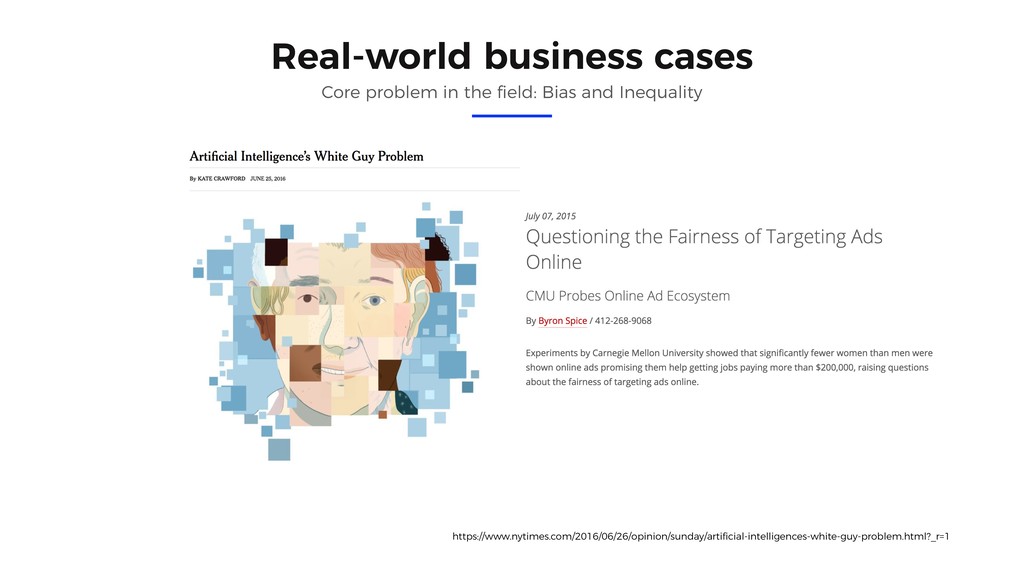
  25. Real-world business cases Core problem in the field: Bias and

    Inequality https://www.nytimes.com/2016/06/26/opinion/sunday/artificial-intelligences-white-guy-problem.html?_r=1
  26. How to cure bias? It’s not a simple solution. Companies

    who are building high stakes decision-making systems • Building an interdiscipary group to test how your systems work against different categories • Build groups and collaborations that tackle ethical questions • Question who your system will benefit and who might be harmed
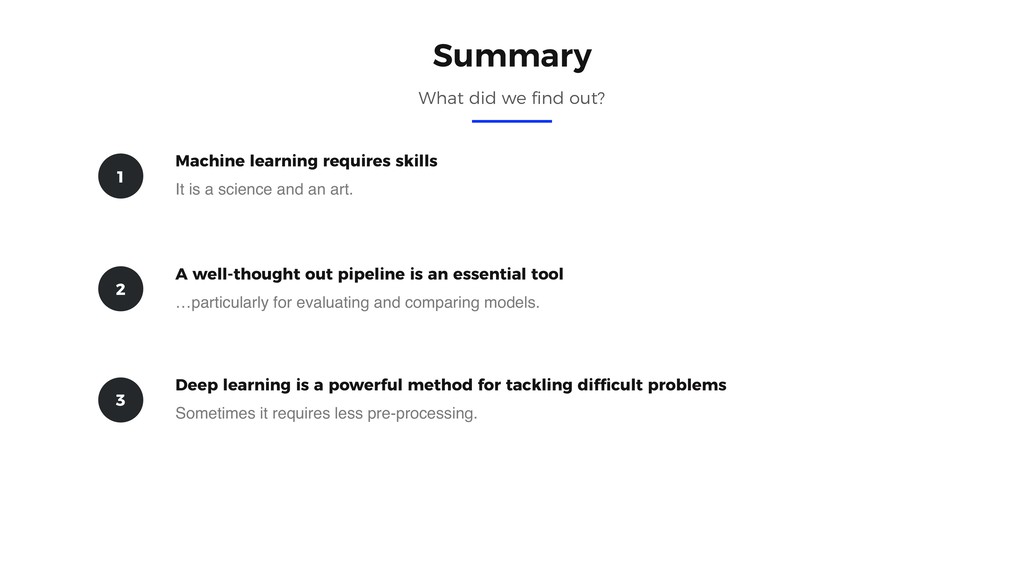
  27. A well-thought out pipeline is an essential tool …particularly for

    evaluating and comparing models. Deep learning is a powerful method for tackling difficult problems Sometimes it requires less pre-processing. Machine learning requires skills It is a science and an art. 1 2 3 What did we find out? Summary