A Step-by-Step Approach to Performance Optimization in Modern Web Applications
A practical guide to optimizing modern web application performance. Covers key techniques like code splitting, caching, API optimization, and scalability to improve speed, user experience, and overall efficiency.
Abstract Performance optimization has become a critical factor in determining the success of modern web applications. This paper presents a structured, step-by-step approach to improving website performance, focusing on key areas such as asset optimization, code efficiency, and delivery mechanisms. By organizing optimization efforts into clear stages, developers and organizations can systematically enhance user experience, reduce load times, and improve search engine visibility. Digital Unicon Web Design • Development • Digital Marketing & Strategy
Strategy Introduction In today’s digital environment, users expect websites to load quickly and respond instantly to interactions. Performance is no longer a secondary consideration—it directly impacts user retention, conversion rates, and search rankings. Modern web applications, especially SaaS platforms, often suffer from performance issues due to increasing complexity, heavy JavaScript usage, and inefficient resource handling. A structured optimization approach is therefore essential to ensure scalability and consistency.
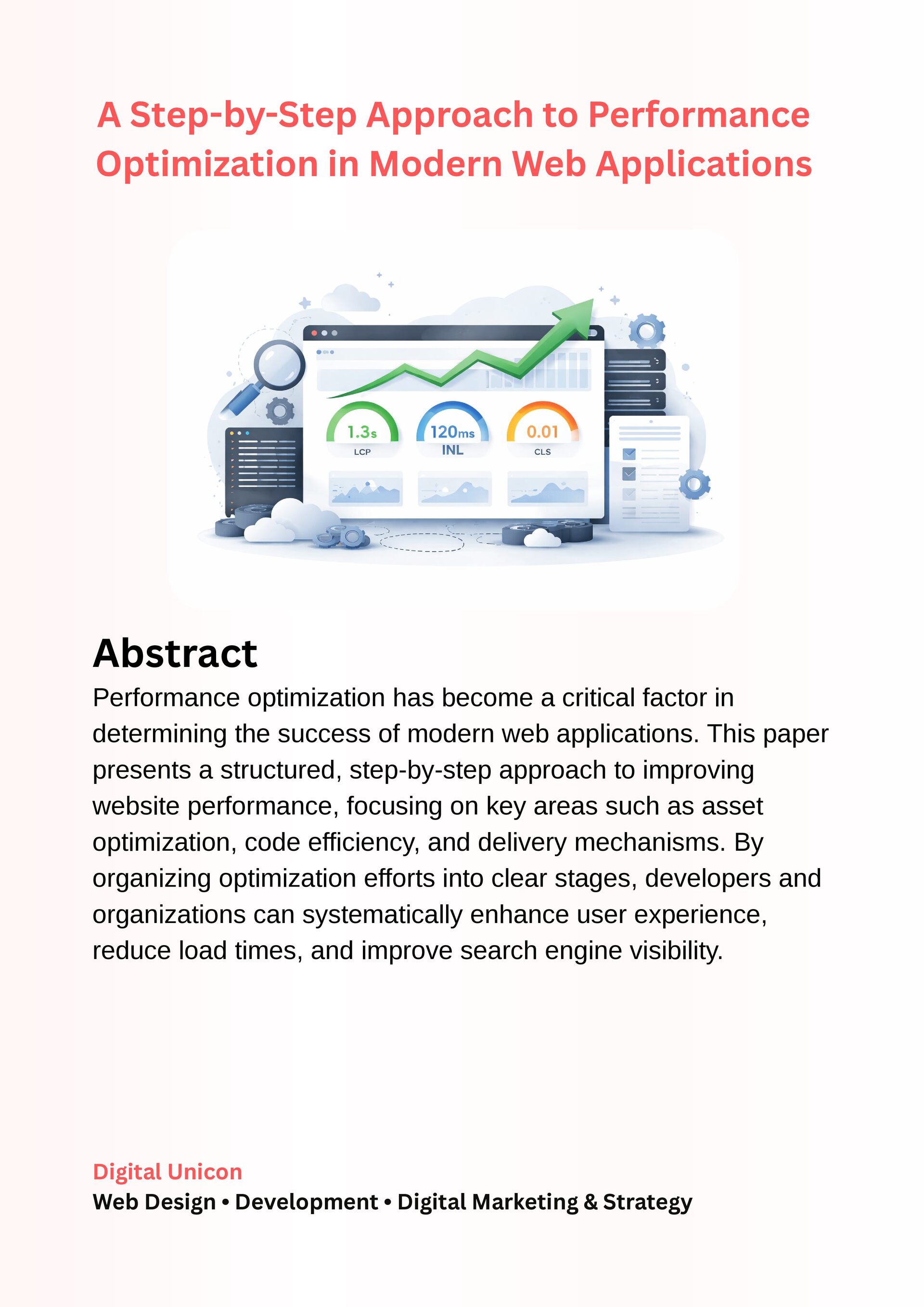
Strategy Understanding Web Performance Fundamentals Before applying optimizations, it is necessary to understand the primary performance indicators: Largest Contentful Paint (LCP): Measures loading performance Interaction to Next Paint (INP): Measures responsiveness Cumulative Layout Shift (CLS): Measures visual stability These metrics collectively define user experience quality and are widely used in performance evaluation tools such as Google Lighthouse and PageSpeed Insights.
Strategy Common Performance Challenges in Modern Applications Several recurring issues contribute to poor performance: 1.Excessive JavaScript execution Large bundles delay interactivity Unused scripts increase load time 2.Unoptimized media assets High-resolution images without compression Lack of modern formats (e.g., WebP) 3.Inefficient loading strategies Blocking resources Absence of lazy loading 4.Layout instability Missing size attributes for media Dynamic content injection Understanding these challenges provides the foundation for a systematic optimization process.
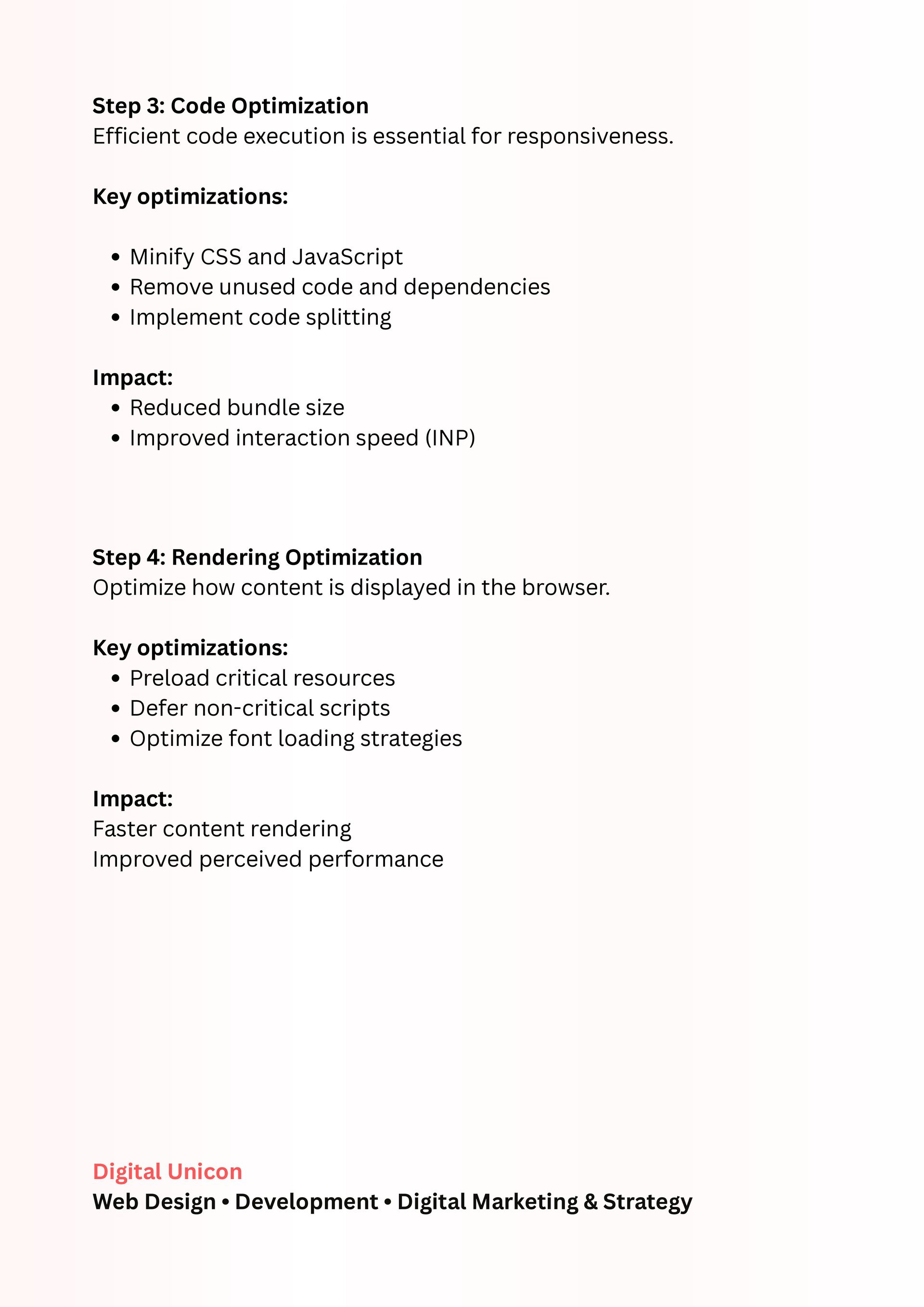
both effective and scalable. Step 1: Performance Audit and Baseline Establishment Begin by measuring current performance to identify bottlenecks. Key actions: Run audits Record baseline metrics (LCP, INP, CLS) Identify high-impact problem areas Step 2: Asset Optimization Assets are often the largest contributors to slow load times. Key optimizations: Compress and resize images Use modern formats (WebP/AVIF) Implement lazy loading for offscreen assets Impact: Significant reduction in initial load time Direct improvement in LCP Digital Unicon Web Design • Development • Digital Marketing & Strategy
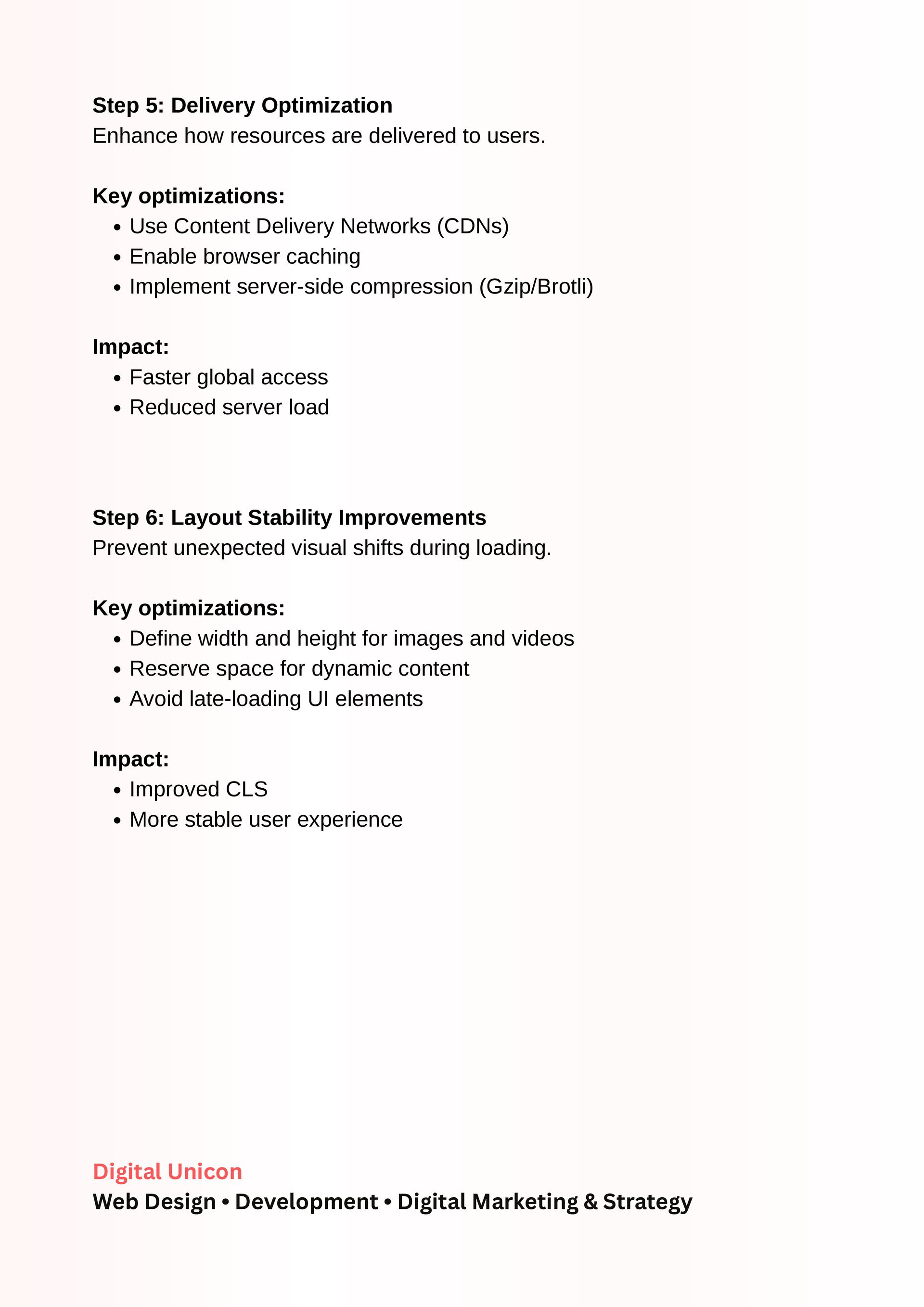
Strategy Step 5: Delivery Optimization Enhance how resources are delivered to users. Key optimizations: Use Content Delivery Networks (CDNs) Enable browser caching Implement server-side compression (Gzip/Brotli) Impact: Faster global access Reduced server load Step 6: Layout Stability Improvements Prevent unexpected visual shifts during loading. Key optimizations: Define width and height for images and videos Reserve space for dynamic content Avoid late-loading UI elements Impact: Improved CLS More stable user experience
best results when applied incrementally rather than all at once. For example: Initial improvements are often achieved through image optimization and caching Further gains come from JavaScript reduction and code splitting Final refinements focus on layout stability and rendering behavior This staged approach ensures measurable progress and easier debugging. Digital Unicon Web Design • Development • Digital Marketing & Strategy
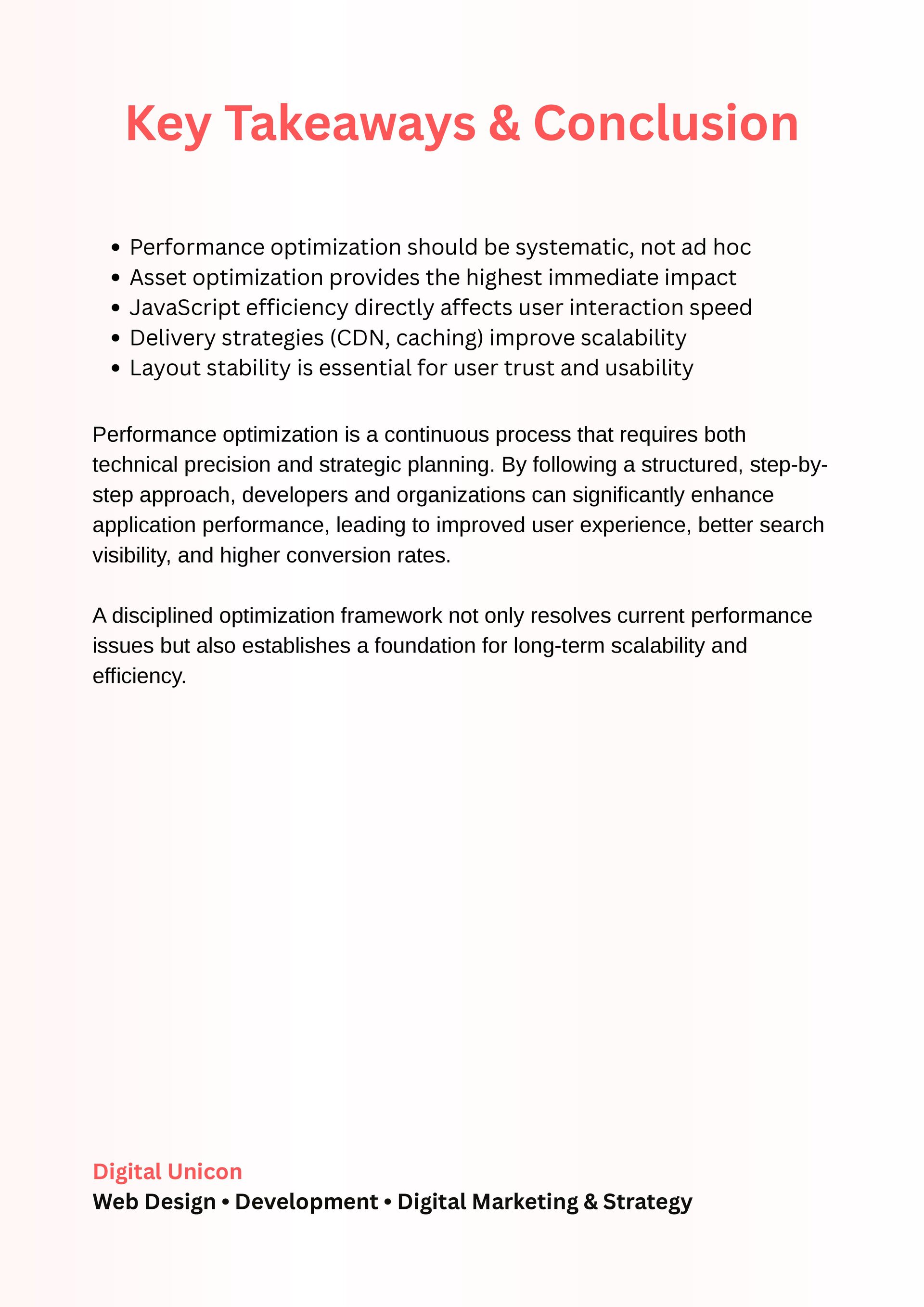
ad hoc Asset optimization provides the highest immediate impact JavaScript efficiency directly affects user interaction speed Delivery strategies (CDN, caching) improve scalability Layout stability is essential for user trust and usability Performance optimization is a continuous process that requires both technical precision and strategic planning. By following a structured, step-by- step approach, developers and organizations can significantly enhance application performance, leading to improved user experience, better search visibility, and higher conversion rates. A disciplined optimization framework not only resolves current performance issues but also establishes a foundation for long-term scalability and efficiency. Digital Unicon Web Design • Development • Digital Marketing & Strategy


 jtakeda
 takanorip
 yamanoku
 kentapapa
 tetsuya28
 pfn
 yut0naga1_fa
 ishikawa_satoru
 yahonda
 kenichiodo
 satomasahiro2005
 tokuty
 jonyablonski
 thoeni
 chriscoyier
 afnizarnur
 keithpitt
 techseoconnect
 lauravandoore
 tanoku
 katiecoart
 jonoalderson
 denniskardys
 eileencodes