Upgrade to Pro — share decks privately, control downloads, hide ads and more …

AI & DEEP ARCHITECT-DEEP LEARNING

Sponsored · Your Podcast. Everywhere. Effortlessly. Share. Educate. Inspire. Entertain. You do you. We'll handle the rest. →
Avatar for C  Deepa C Deepa
October 20, 2026
9

AI & DEEP ARCHITECT-DEEP LEARNING

The evolution of deep learning transformed a fringe mathematical concept into the backbone of modern global technology.
It began in the 1940s–1960s with the perceptron, an early mathematical model attempting to digitally mimic biological neurons. However, severe computational limitations and strict linear logic constraints triggered the first "AI Winter," freezing vital research funding.
The field revived significantly in 1986 when Geoffrey Hinton and his colleagues popularized the backpropagation algorithm, enabling multi-layer networks to learn efficiently. Despite this theoretical breakthrough, slow CPU hardware and tiny dataset sizes limited practical computing applications during the 1990s.
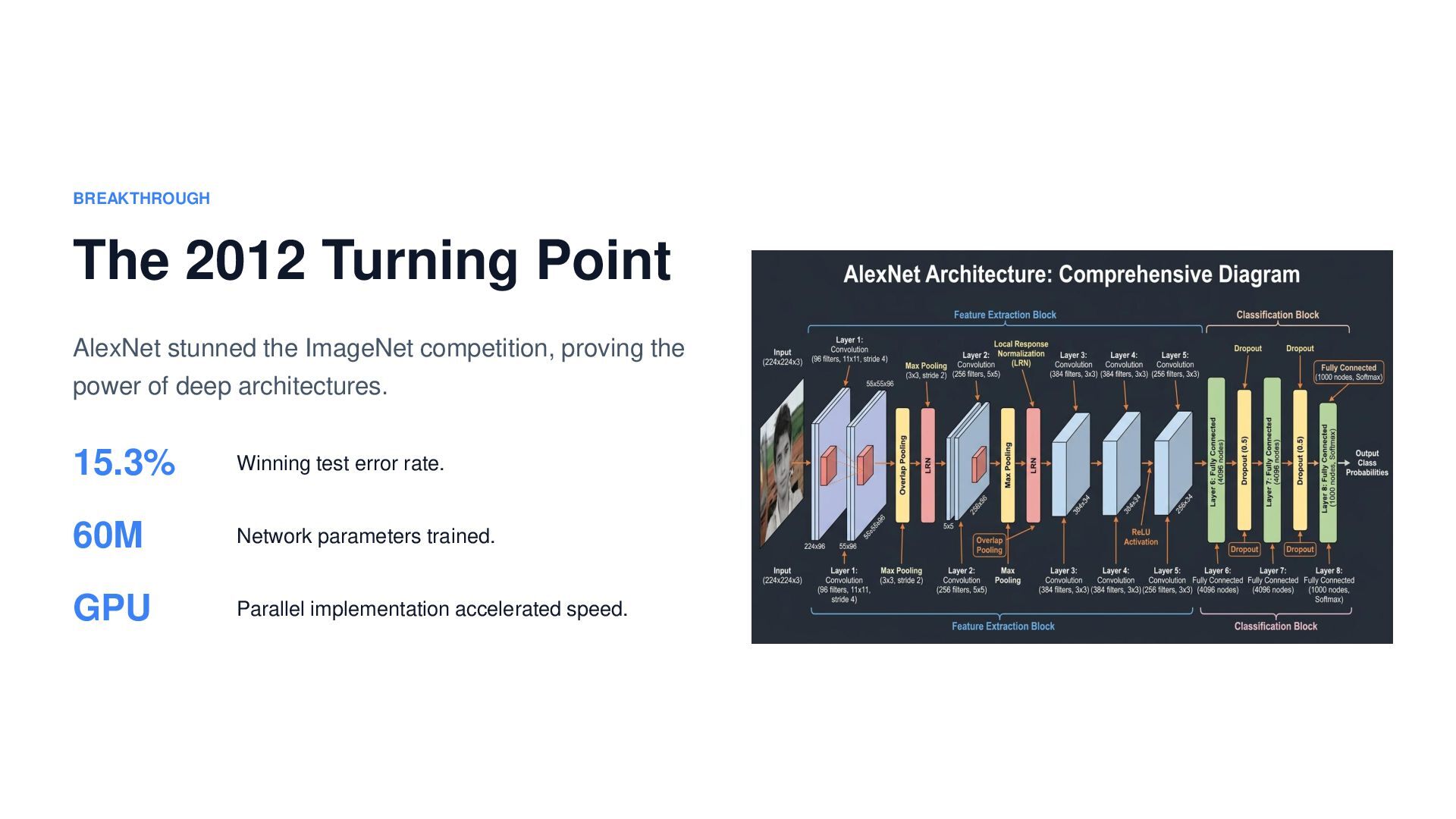
The explosive turning point occurred in 2012 with AlexNet. By leveraging high-powered NVIDIA GPUs and the massive ImageNet dataset, this deep network shattered vision benchmarks. This milestone catalyzed a rapid golden era, leading directly to the breakthrough Transformer architecture (2017) and today’s foundational Generative AI platforms that permanently reshape software engineering.

Avatar for C  Deepa

C Deepa

October 20, 2026

Transcript

  1. CORE CONCEPTS Mimicking the Brain Artificial Intelligence: Forging human-like thinking

    machines. Deep Learning: Learning hierarchical structures automatically. Biological Inspiration: Mimicking neocortex neuron activity.
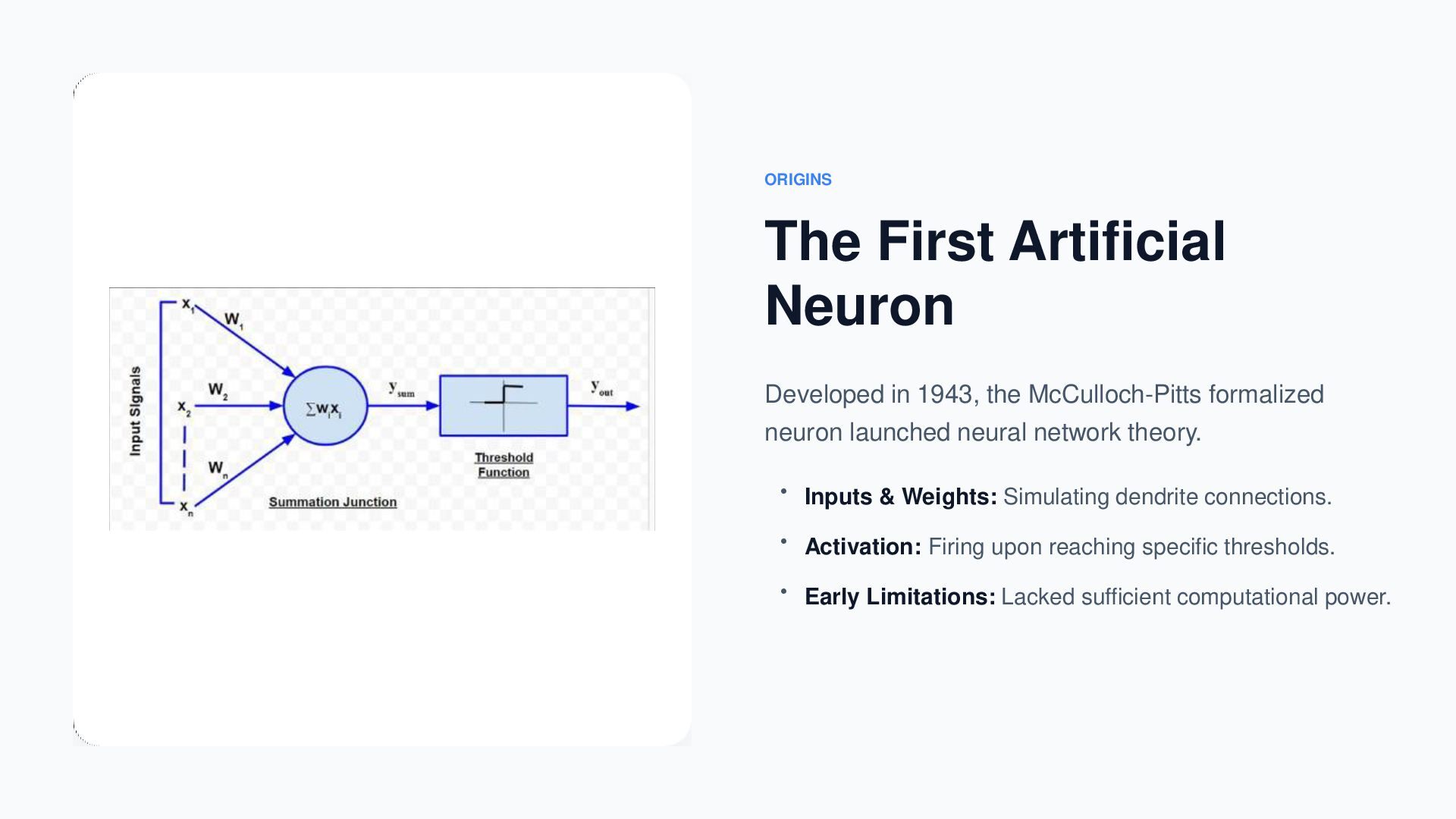
  2. ORIGINS The First Artificial Neuron Developed in 1943, the McCulloch-Pitts

    formalized neuron launched neural network theory. • Inputs & Weights: Simulating dendrite connections. • Activation: Firing upon reaching specific thresholds. • Early Limitations: Lacked sufficient computational power.
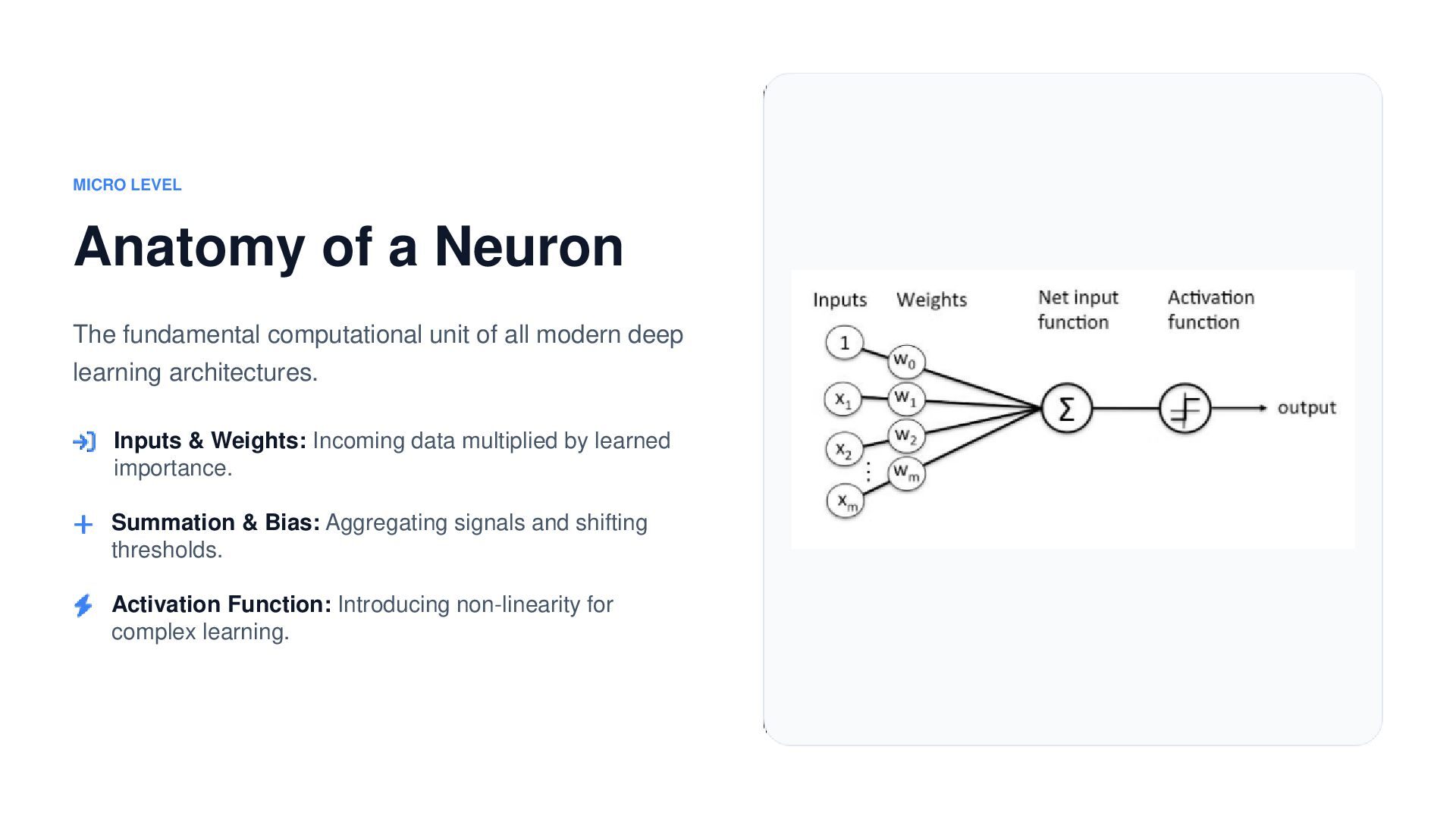
  3. MICRO LEVEL Anatomy of a Neuron The fundamental computational unit

    of all modern deep learning architectures. Inputs & Weights: Incoming data multiplied by learned importance. Summation & Bias: Aggregating signals and shifting thresholds. Activation Function: Introducing non-linearity for complex learning.
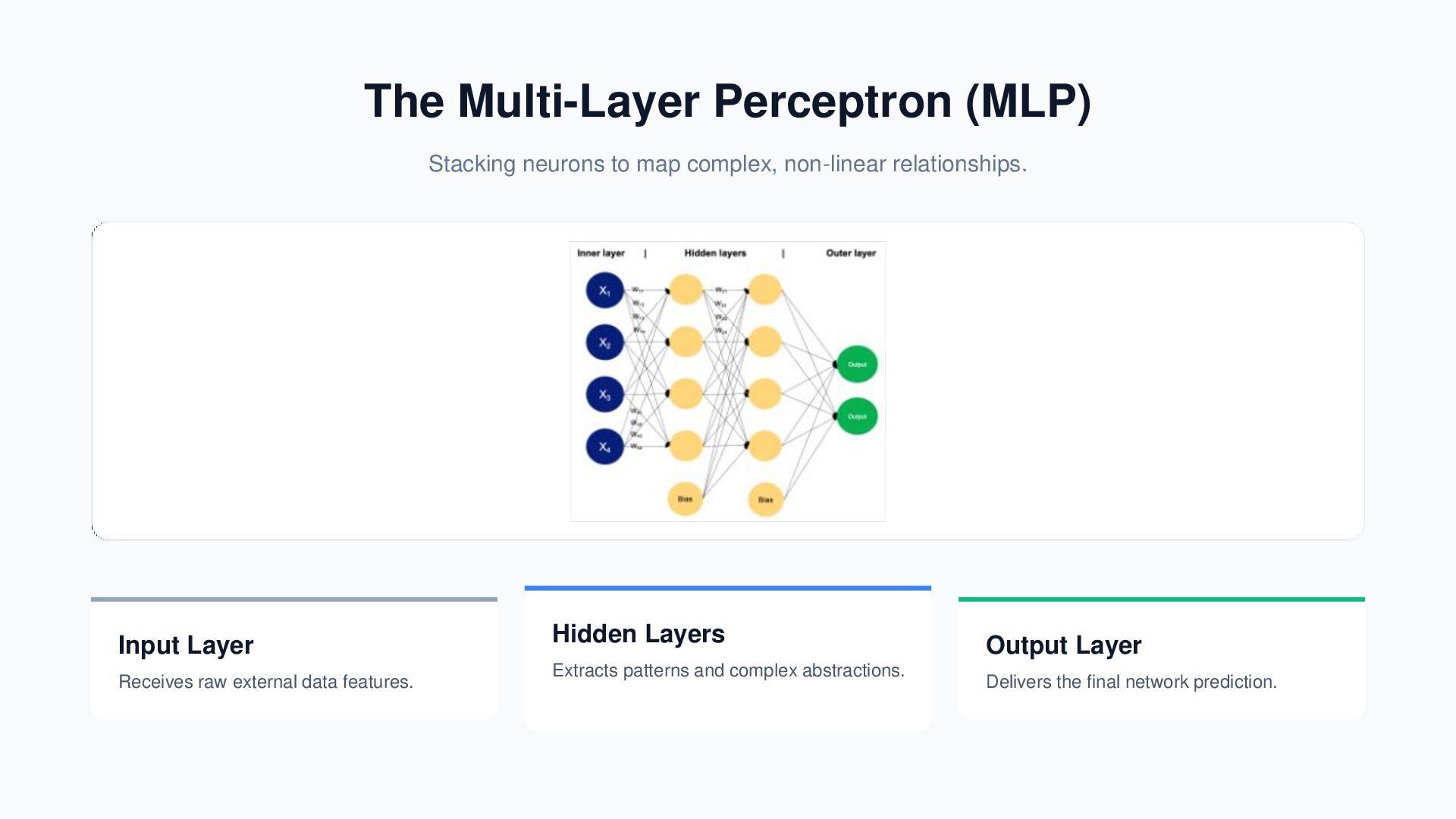
  4. The Multi-Layer Perceptron (MLP) Stacking neurons to map complex, non-linear

    relationships. Input Layer Receives raw external data features. Hidden Layers Extracts patterns and complex abstractions. Output Layer Delivers the final network prediction.
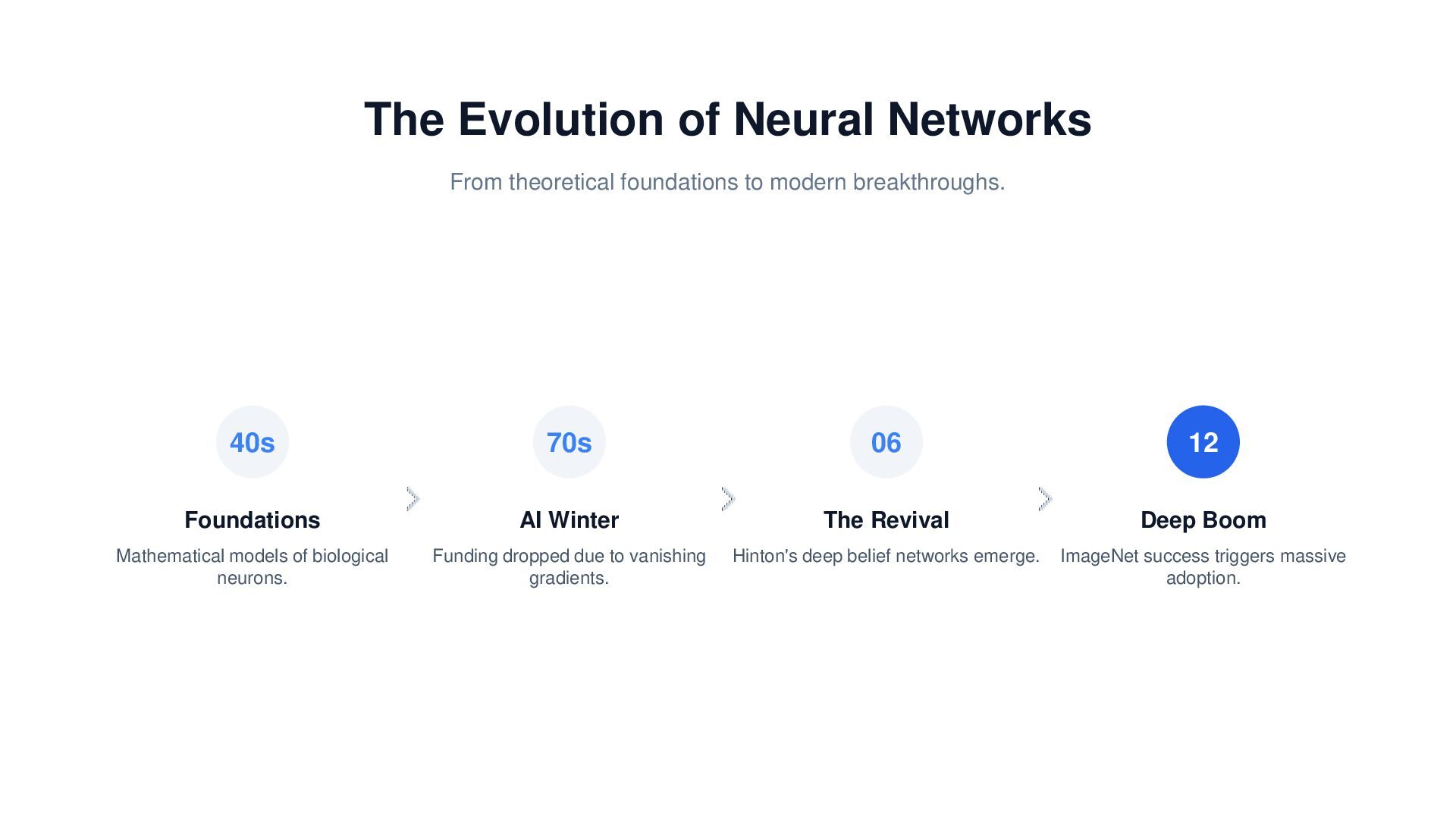
  5. The Evolution of Neural Networks From theoretical foundations to modern

    breakthroughs. 40s 70s 06 12 Foundations AI Winter The Revival Deep Boom Mathematical models of biological neurons. Funding dropped due to vanishing gradients. Hinton's deep belief networks emerge. ImageNet success triggers massive adoption.
  6. BREAKTHROUGH The 2012 Turning Point AlexNet stunned the ImageNet competition,

    proving the power of deep architectures. 15.3% Winning test error rate. 60M Network parameters trained. GPU Parallel implementation accelerated speed.
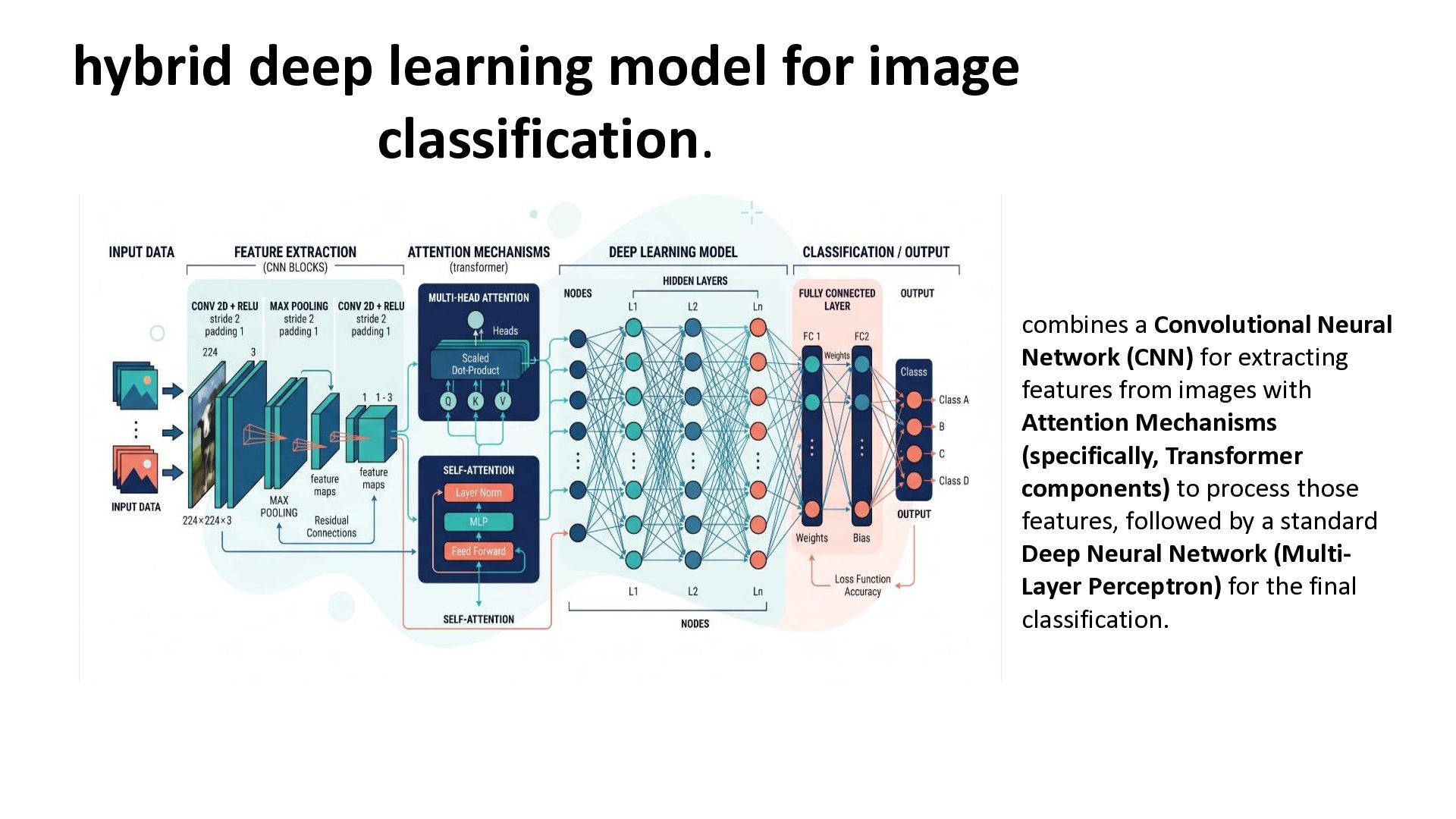
  7. hybrid deep learning model for image classification. combines a Convolutional

    Neural Network (CNN) for extracting features from images with Attention Mechanisms (specifically, Transformer components) to process those features, followed by a standard Deep Neural Network (MultiLayer Perceptron) for the final classification.
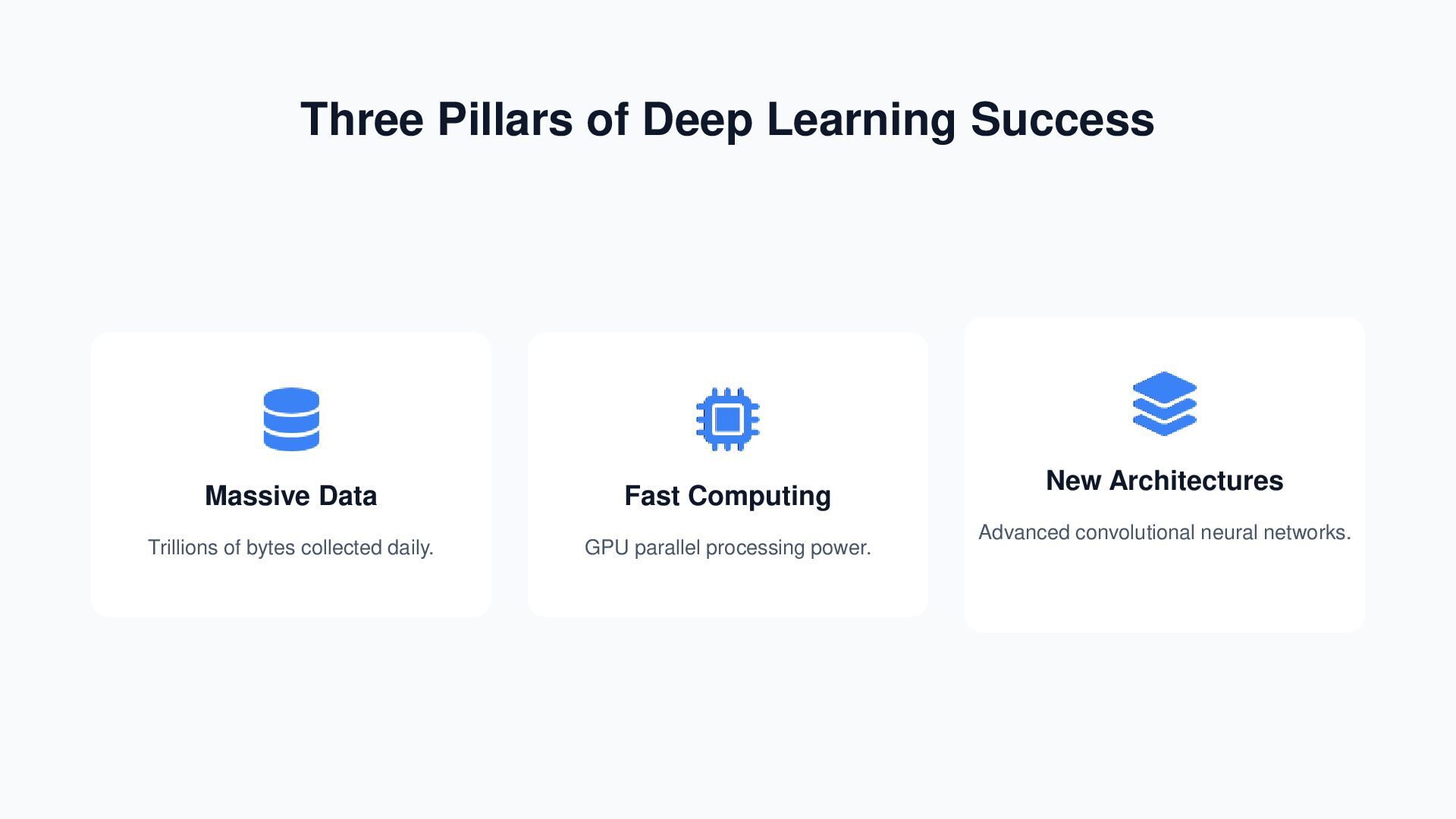
  8. Three Pillars of Deep Learning Success Massive Data Fast Computing

    Trillions of bytes collected daily. GPU parallel processing power. New Architectures Advanced convolutional neural networks.
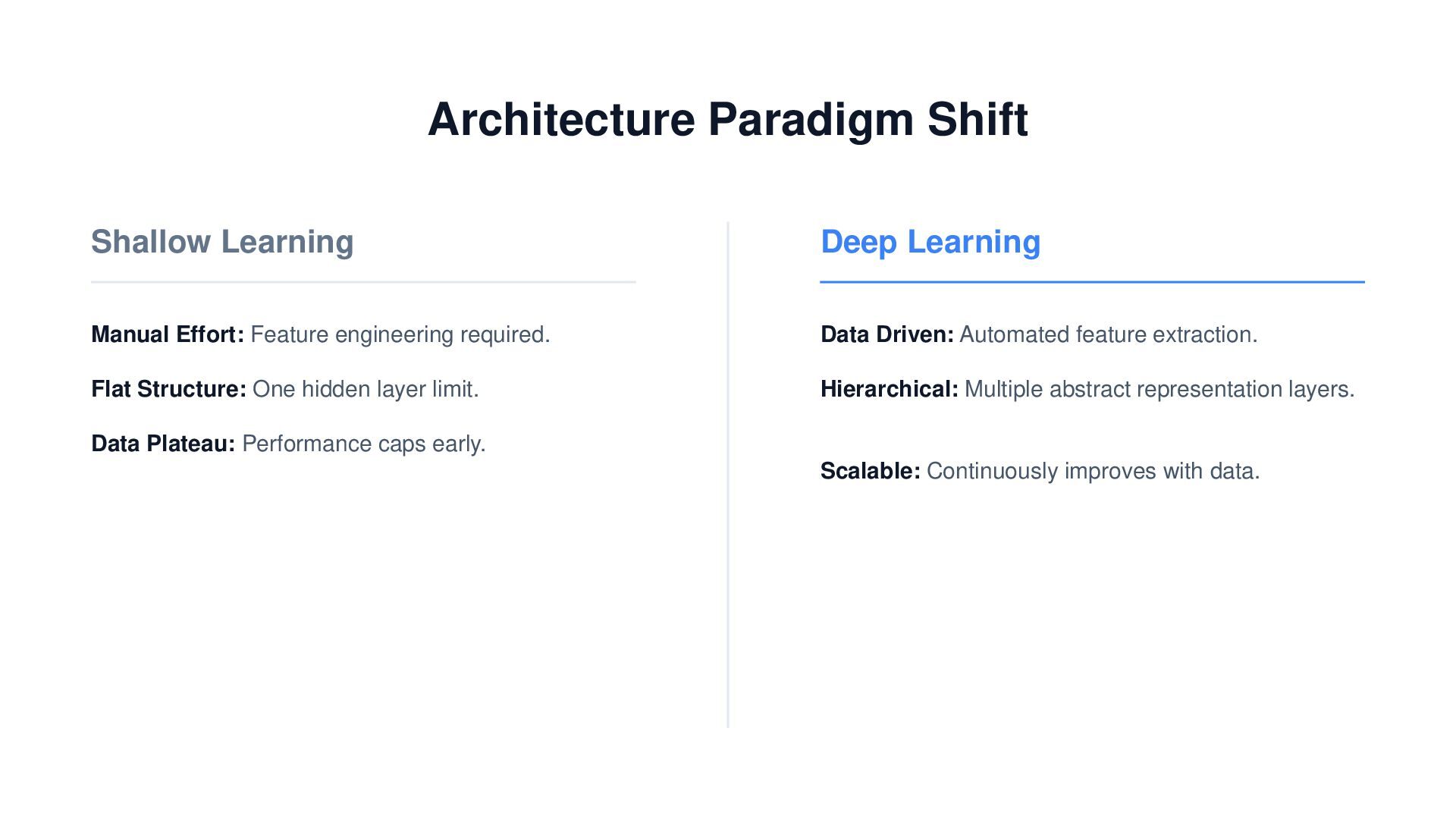
  9. Architecture Paradigm Shift Shallow Learning Deep Learning Manual Effort: Feature

    engineering required. Data Driven: Automated feature extraction. Flat Structure: One hidden layer limit. Hierarchical: Multiple abstract representation layers. Data Plateau: Performance caps early. Scalable: Continuously improves with data.
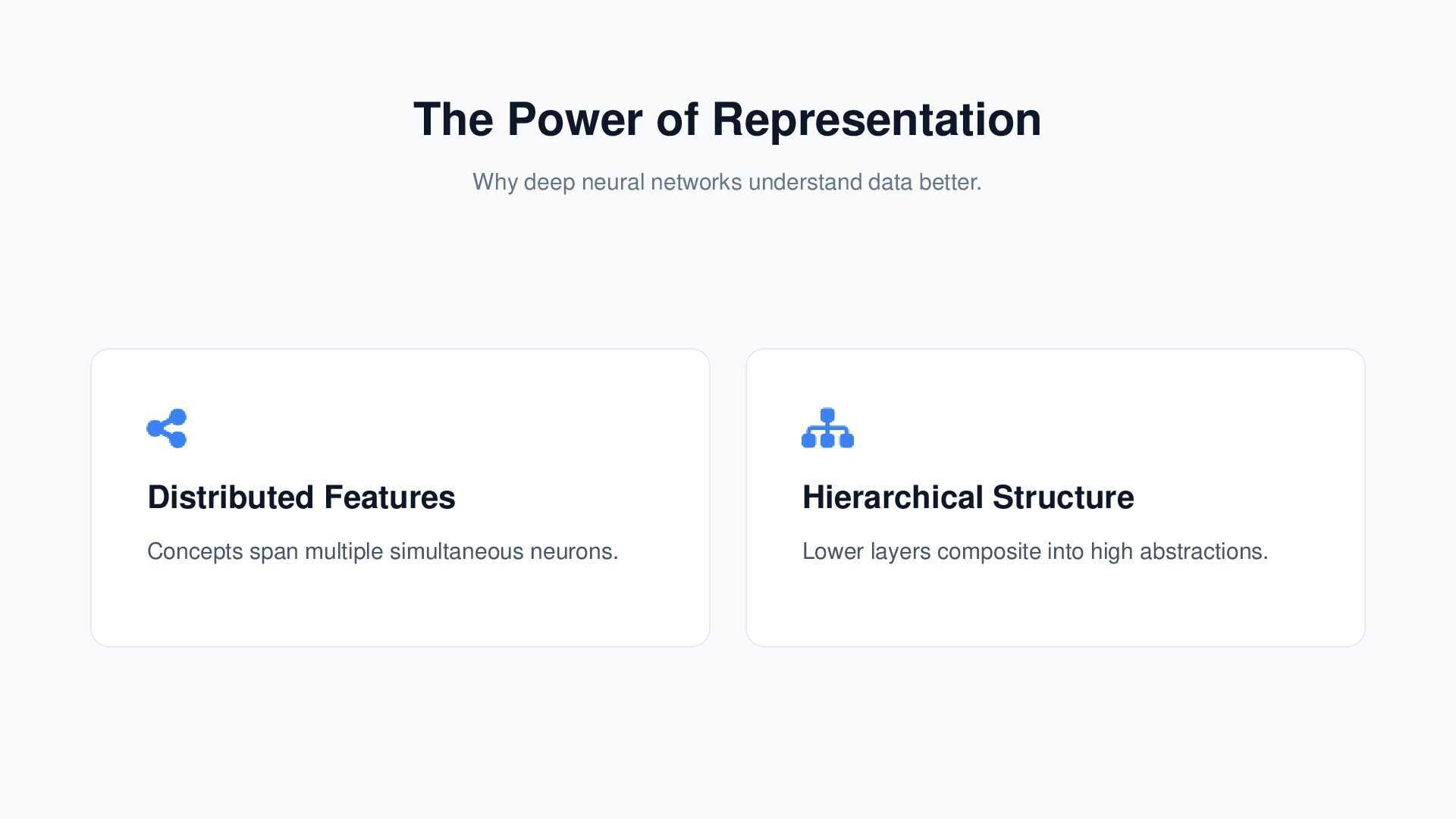
  10. The Power of Representation Why deep neural networks understand data

    better. Distributed Features Hierarchical Structure Concepts span multiple simultaneous neurons. Lower layers composite into high abstractions.
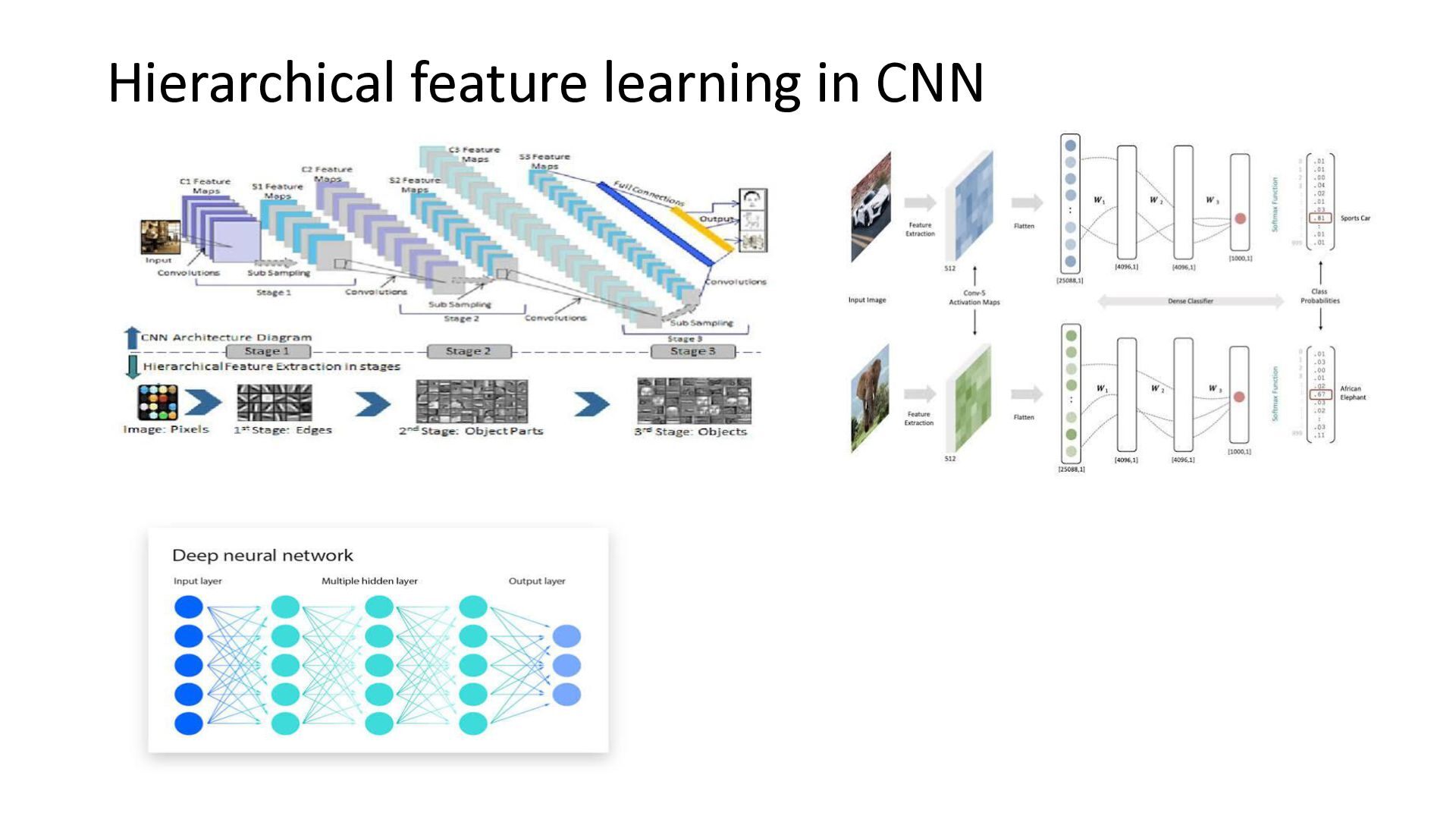
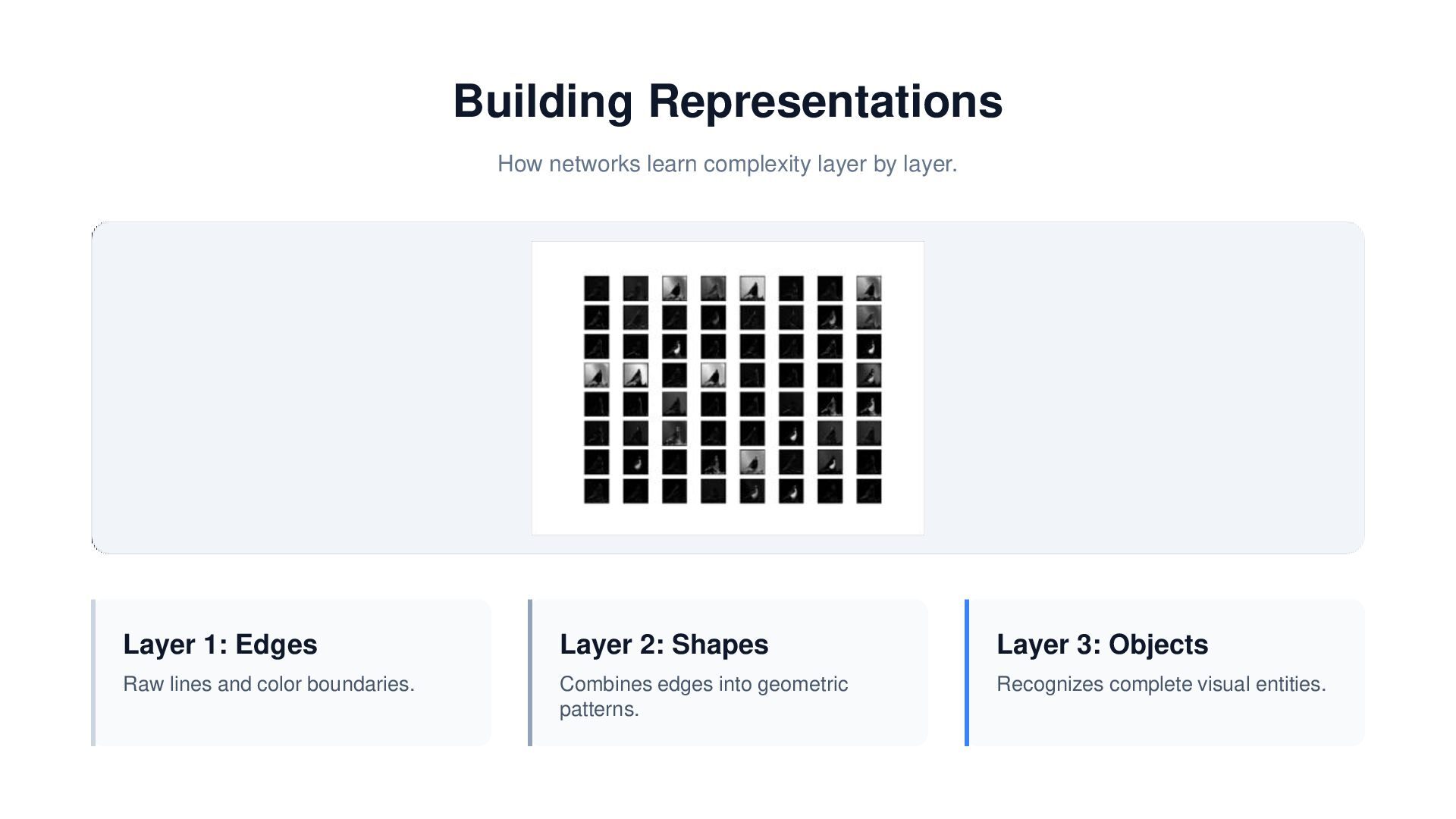
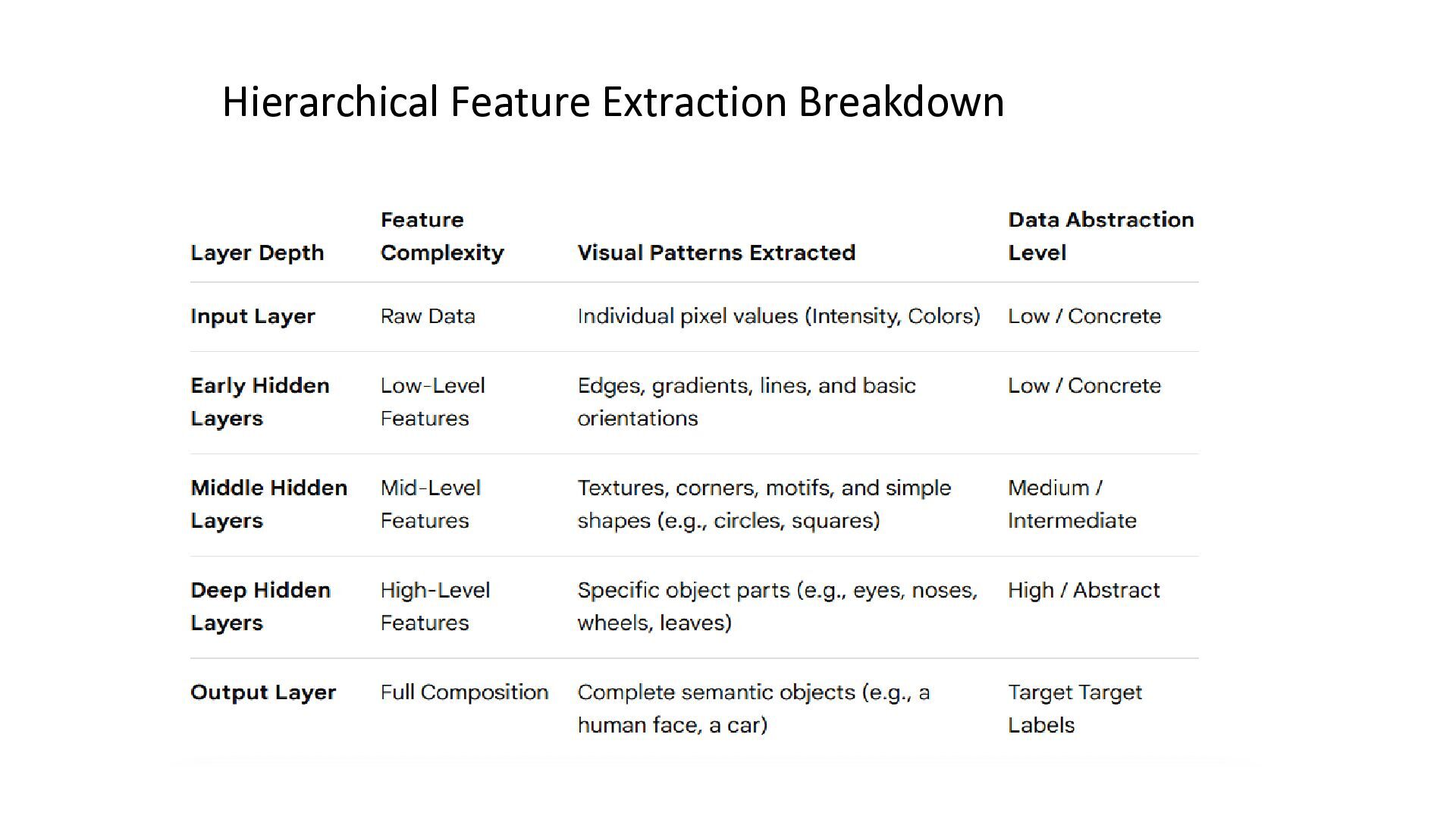
  11. Building Representations How networks learn complexity layer by layer. Layer

    1: Edges Layer 2: Shapes Layer 3: Objects Raw lines and color boundaries. Combines edges into geometric patterns. Recognizes complete visual entities.
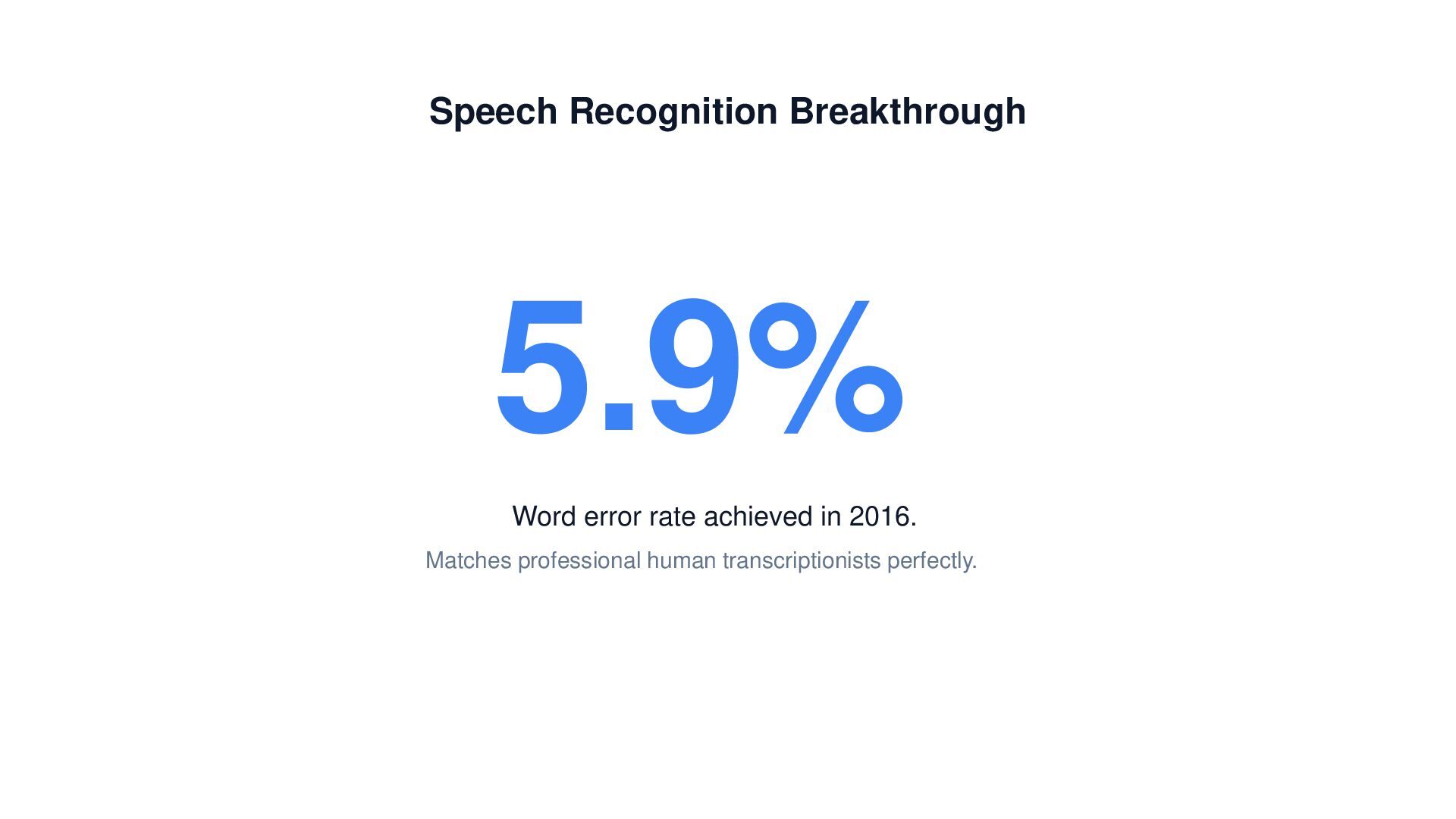
  12. Speech Recognition Breakthrough 5.9% Word error rate achieved in 2016.

    Matches professional human transcriptionists perfectly.
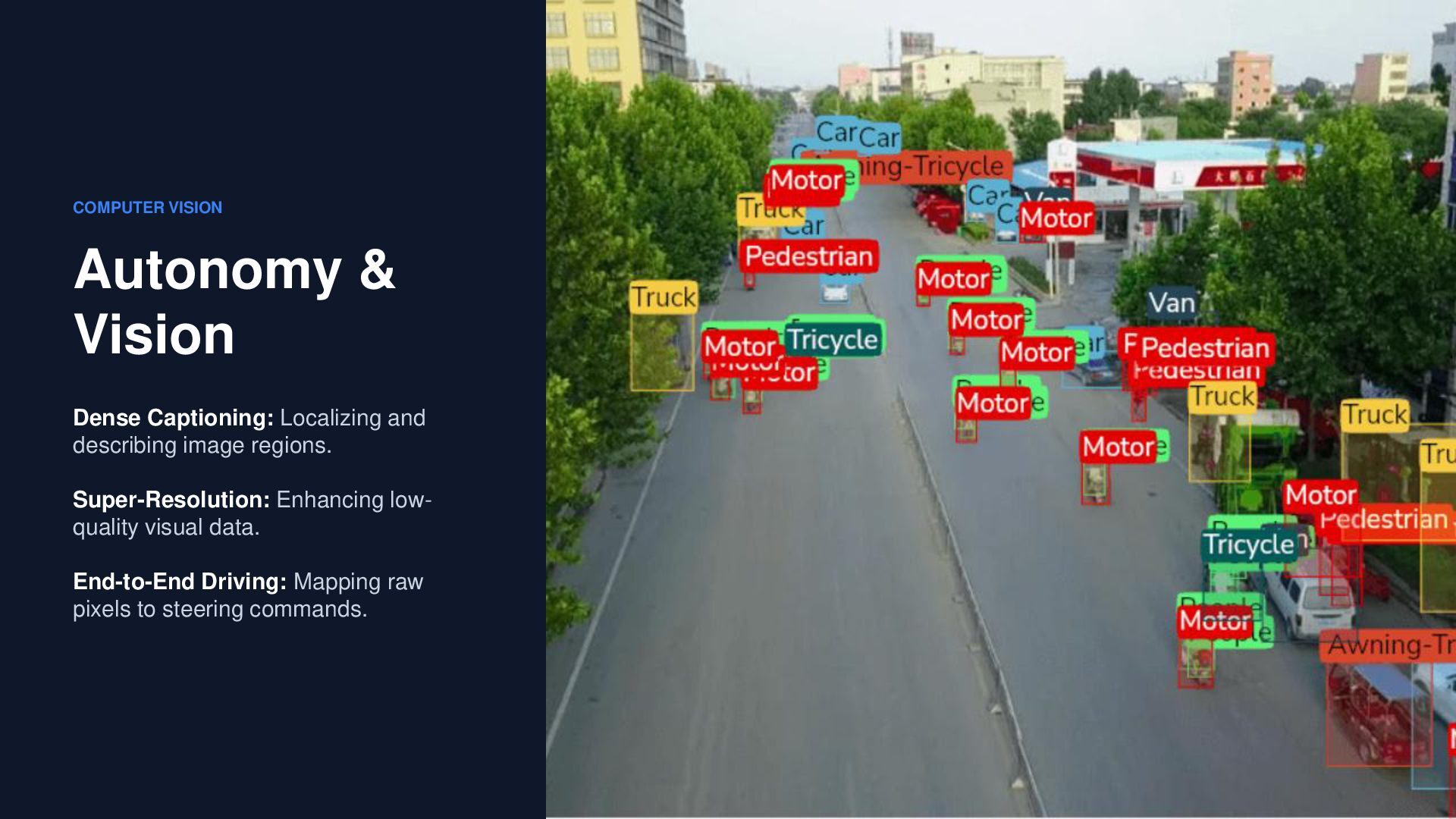
  13. COMPUTER VISION Autonomy & Vision Dense Captioning: Localizing and describing

    image regions. Super-Resolution: Enhancing lowquality visual data. End-to-End Driving: Mapping raw pixels to steering commands.
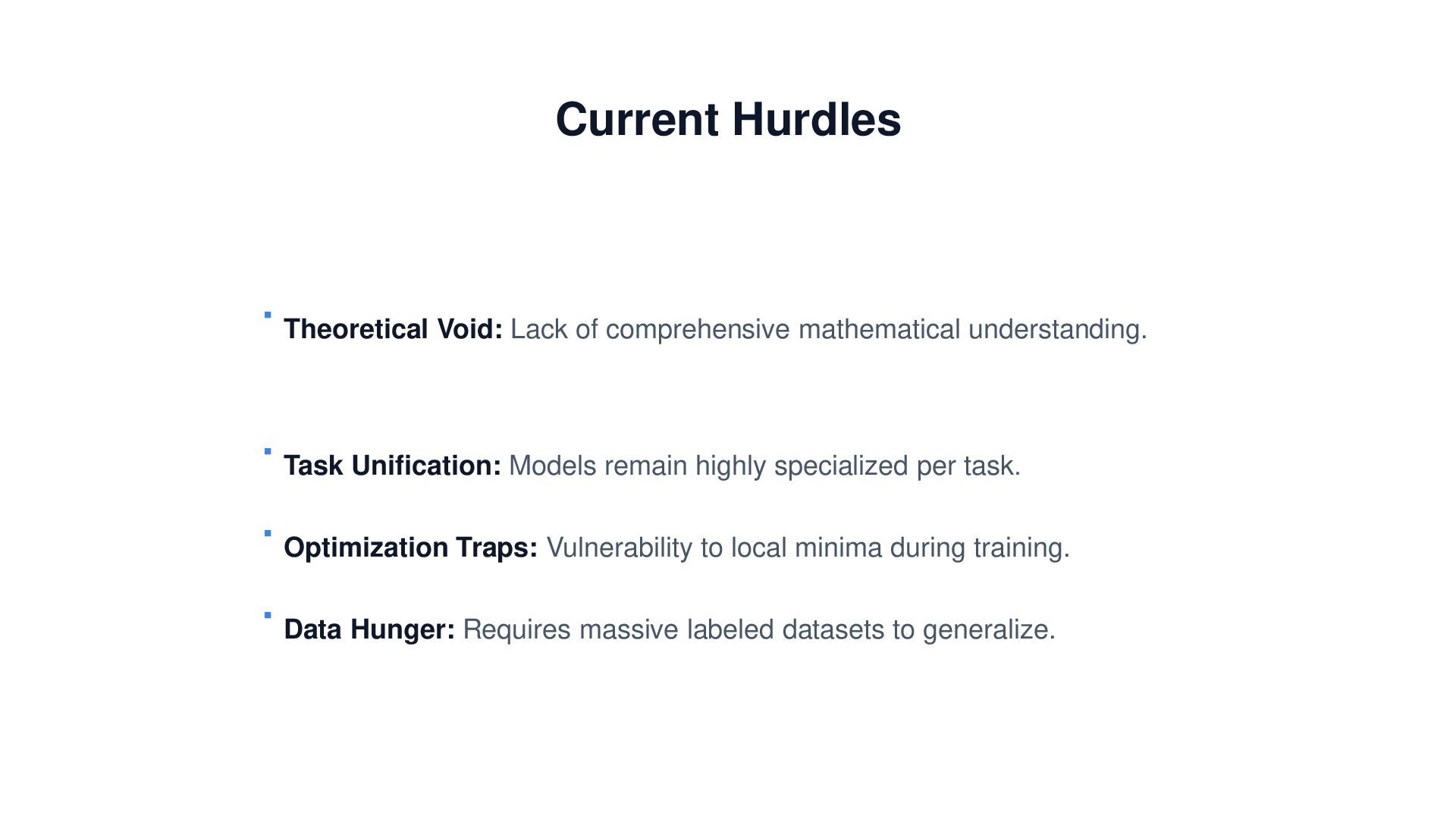
  14. Current Hurdles ▪ ▪ ▪ ▪ Theoretical Void: Lack of

    comprehensive mathematical understanding. Task Unification: Models remain highly specialized per task. Optimization Traps: Vulnerability to local minima during training. Data Hunger: Requires massive labeled datasets to generalize.