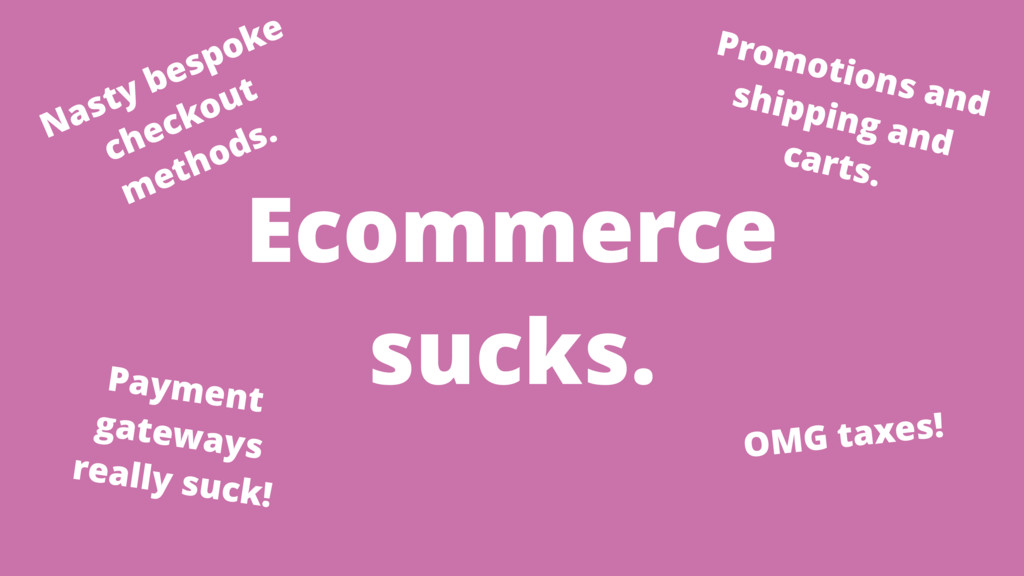
tightly coupled to a given gateway’s solution. This makes it really hard to change gateway, to move code from project to project, or add additional payment options.
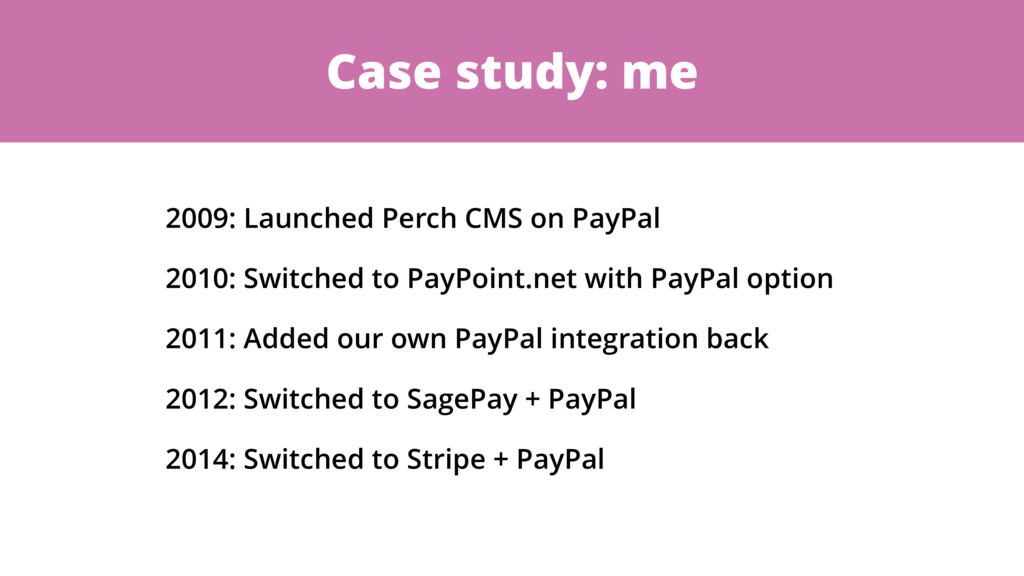
Switched to PayPoint.net with PayPal option 2011: Added our own PayPal integration back 2012: Switched to SagePay + PayPal 2014: Switched to Stripe + PayPal
acts as an abstraction layer between your code and the implementation details of using a payment gateway API. It has drivers for many different gateways.
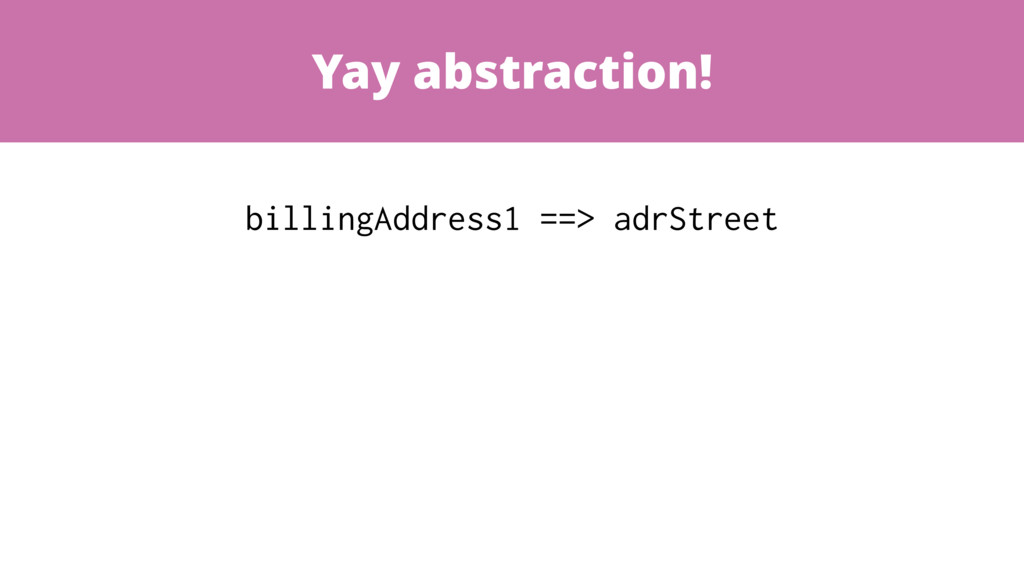
different implementations. That makes it easy to move code from project to project, and means less code needs to be changed if the underlying gateway changes.
on Postgres. (So to speak.) Different gateways still have different process flows, and different weird requirements. Omnipay just eases some of the pain and unifies the interface.
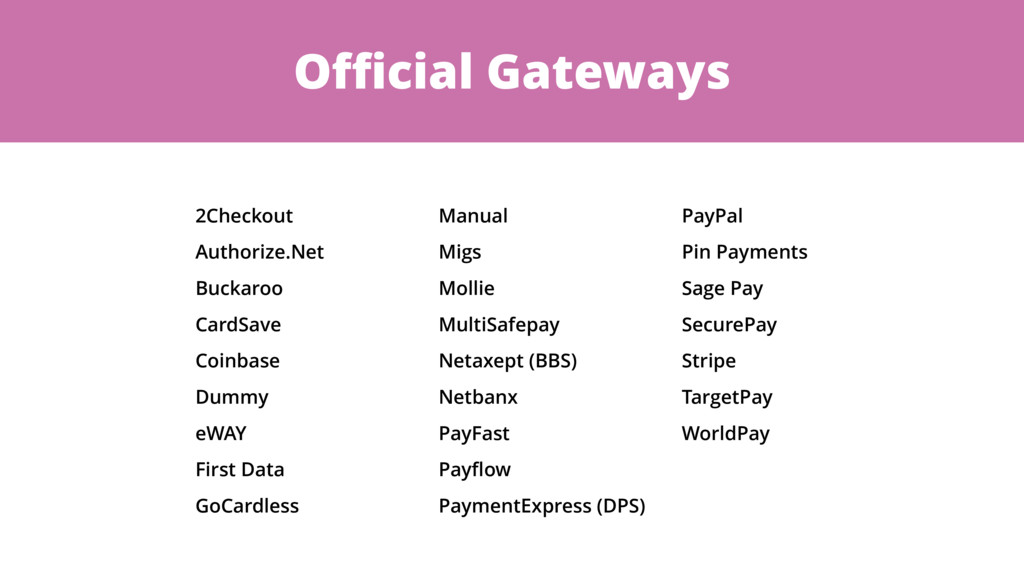
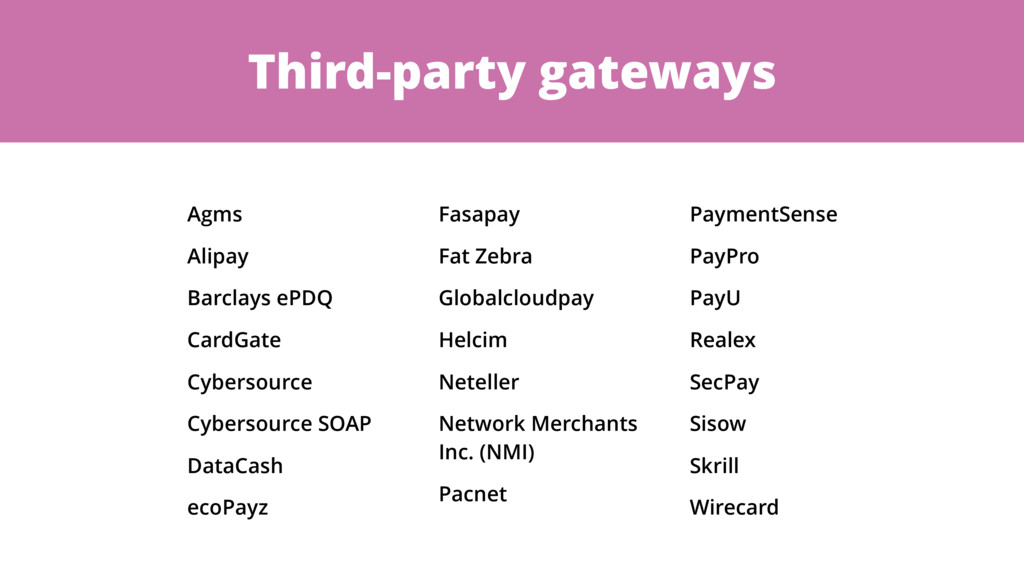
basic Adaptor pattern. Omnipay core provides the framework. Each gateway then has its own driver. There are official, third party and then custom gateway drivers.
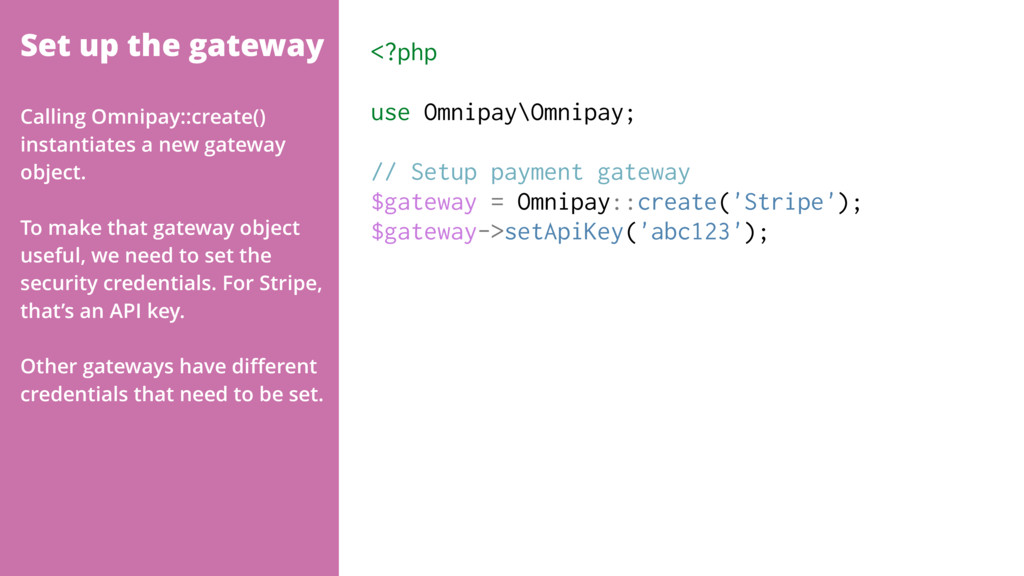
gateway $gateway = Omnipay::create('Stripe'); $gateway->setApiKey('abc123'); Calling Omnipay::create() instantiates a new gateway object. To make that gateway object useful, we need to set the security credentials. For Stripe, that’s an API key. Other gateways have different credentials that need to be set.
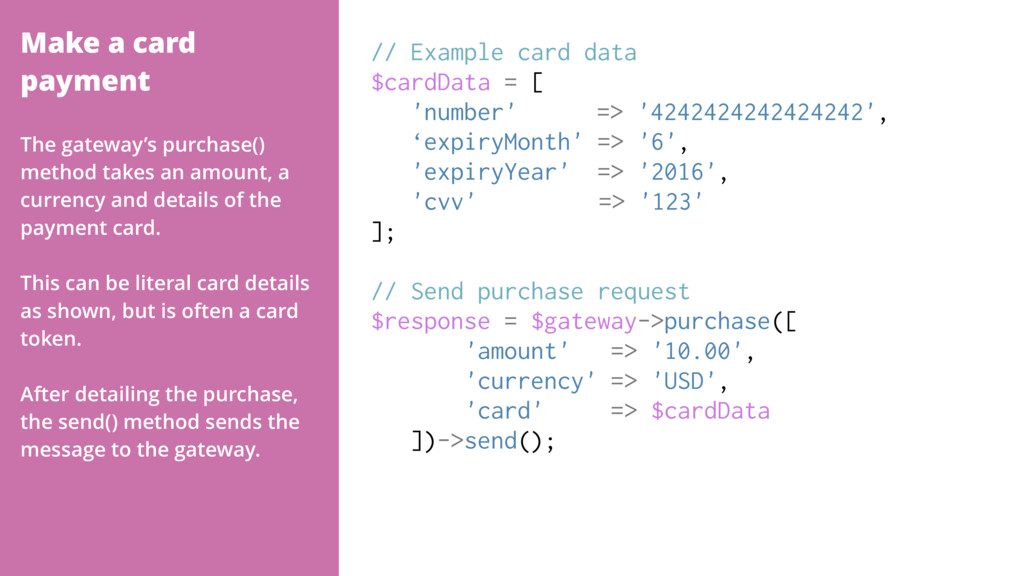
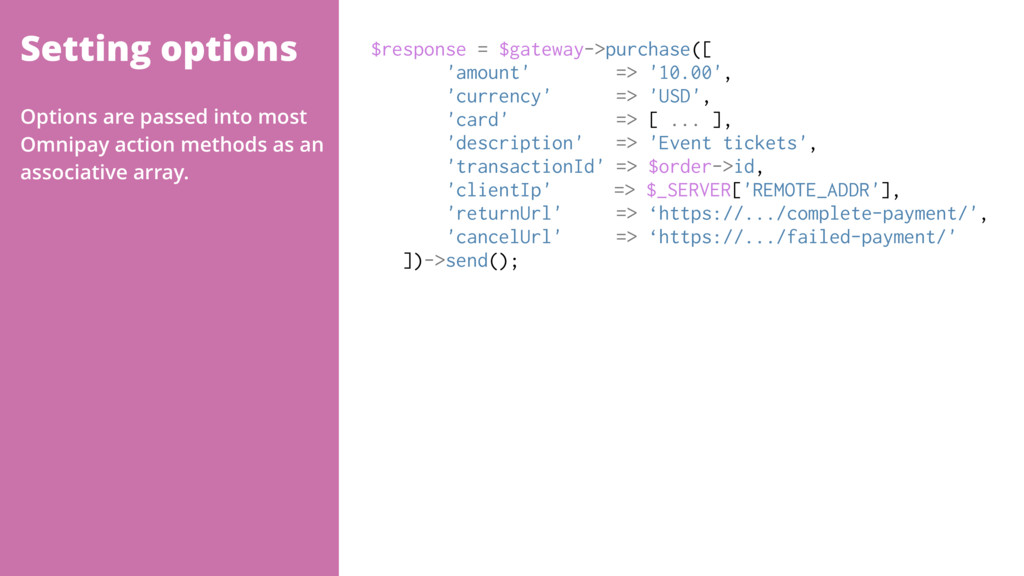
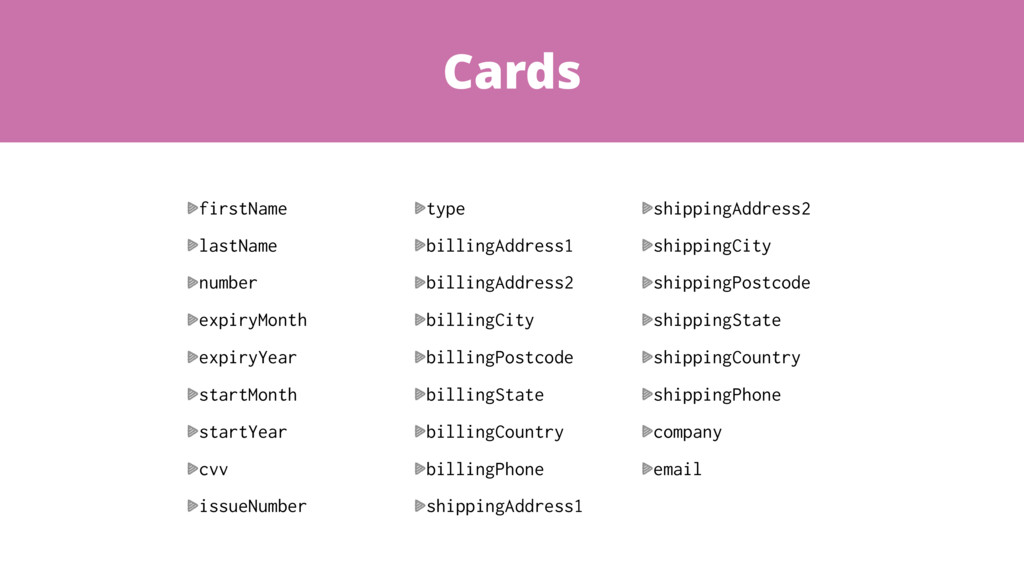
[ 'number' => '4242424242424242', ‘expiryMonth' => '6', 'expiryYear' => '2016', 'cvv' => '123' ]; // Send purchase request $response = $gateway->purchase([ 'amount' => '10.00', 'currency' => 'USD', 'card' => $cardData ])->send(); The gateway’s purchase() method takes an amount, a currency and details of the payment card. This can be literal card details as shown, but is often a card token. After detailing the purchase, the send() method sends the message to the gateway.
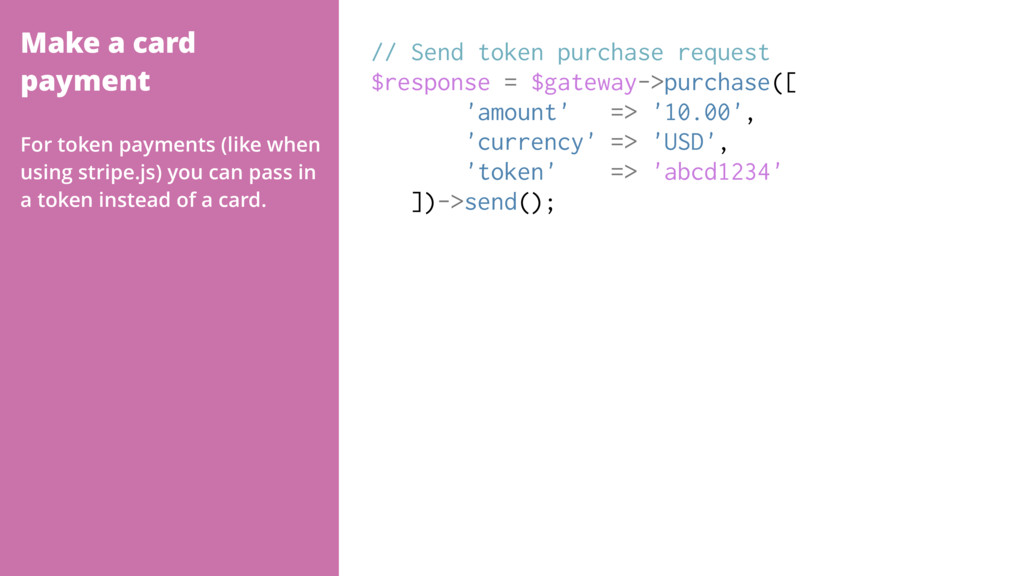
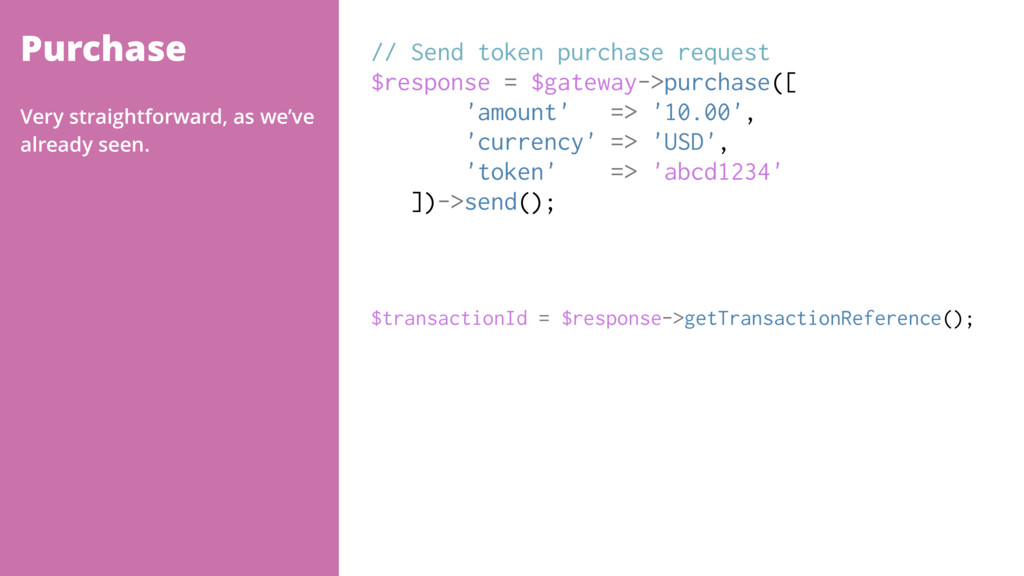
= $gateway->purchase([ 'amount' => '10.00', 'currency' => 'USD', 'token' => 'abcd1234' ])->send(); For token payments (like when using stripe.js) you can pass in a token instead of a card.
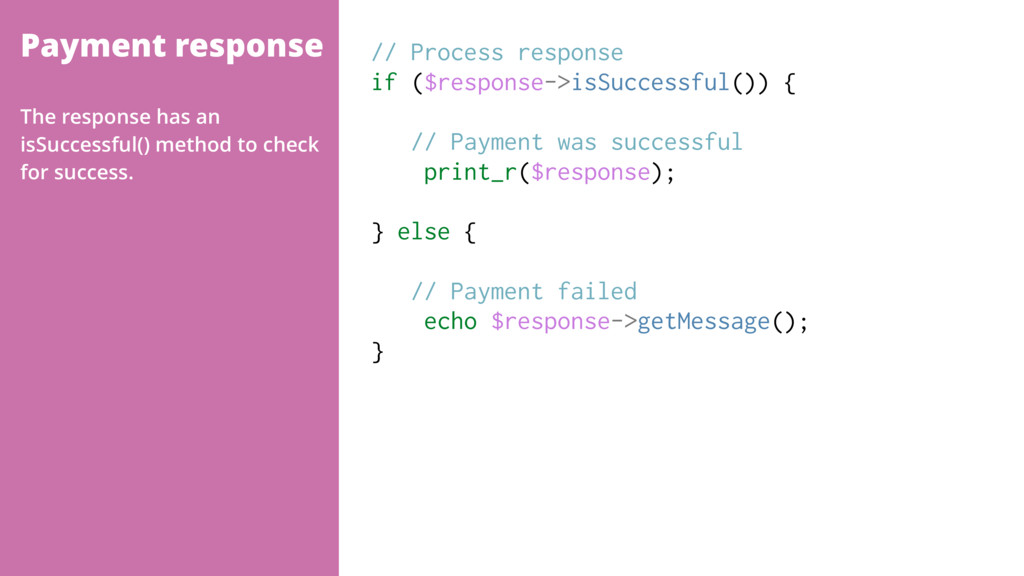
was successful print_r($response); } else { // Payment failed echo $response->getMessage(); } The response has an isSuccessful() method to check for success.
URL to send the customer to. This is often the case for payment flows where the customer gives their card details direct to the gateway and not the merchant site.
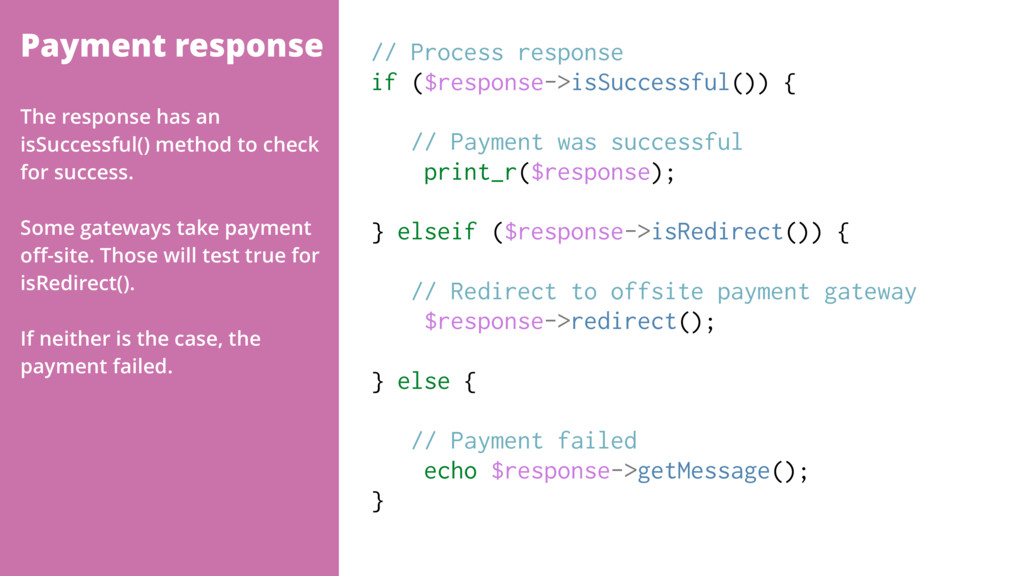
was successful print_r($response); } elseif ($response->isRedirect()) { // Redirect to offsite payment gateway $response->redirect(); } else { // Payment failed echo $response->getMessage(); } The response has an isSuccessful() method to check for success. Some gateways take payment off-site. Those will test true for isRedirect(). If neither is the case, the payment failed.
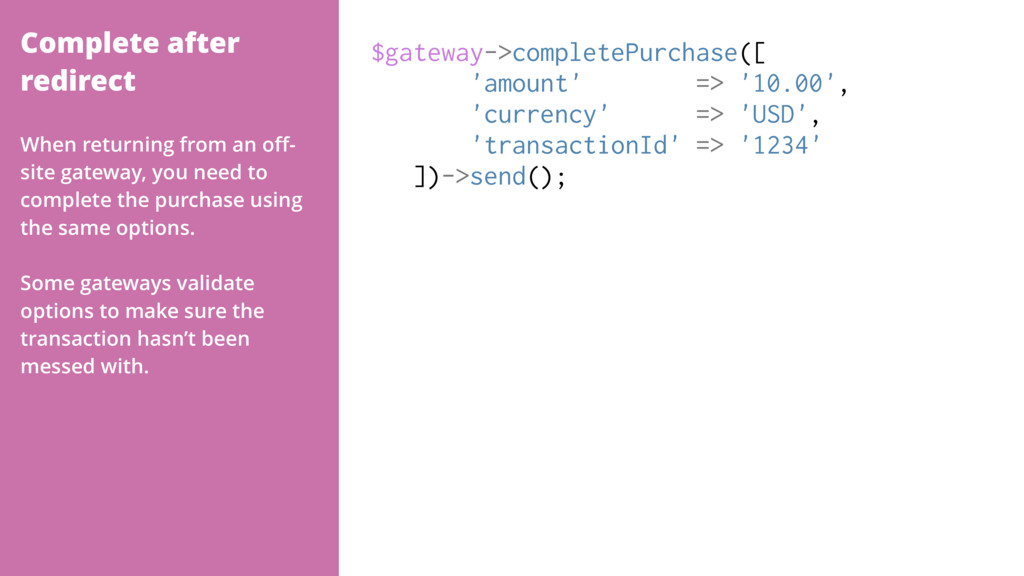
'transactionId' => '1234' ])->send(); When returning from an off- site gateway, you need to complete the purchase using the same options. Some gateways validate options to make sure the transaction hasn’t been messed with.
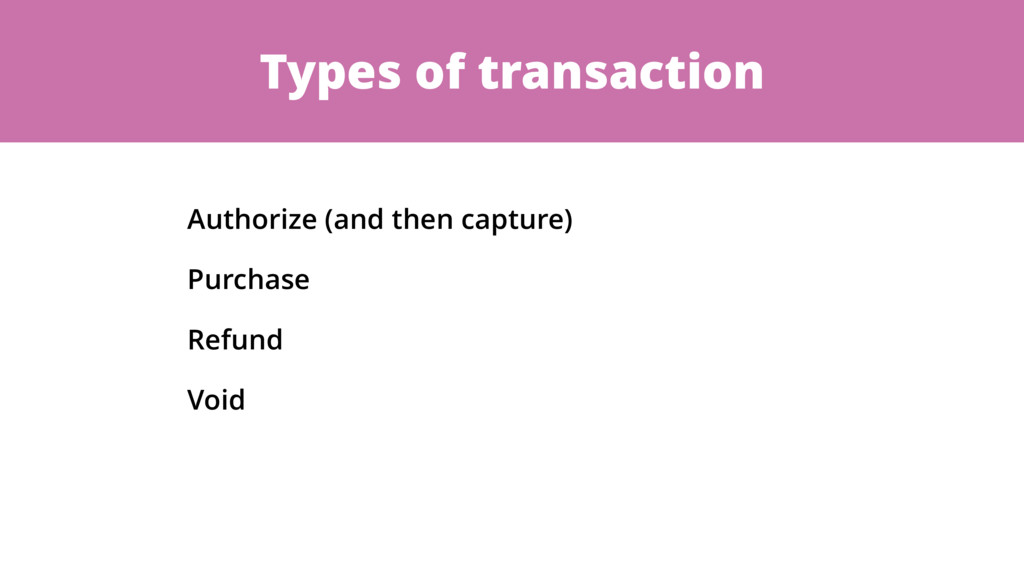
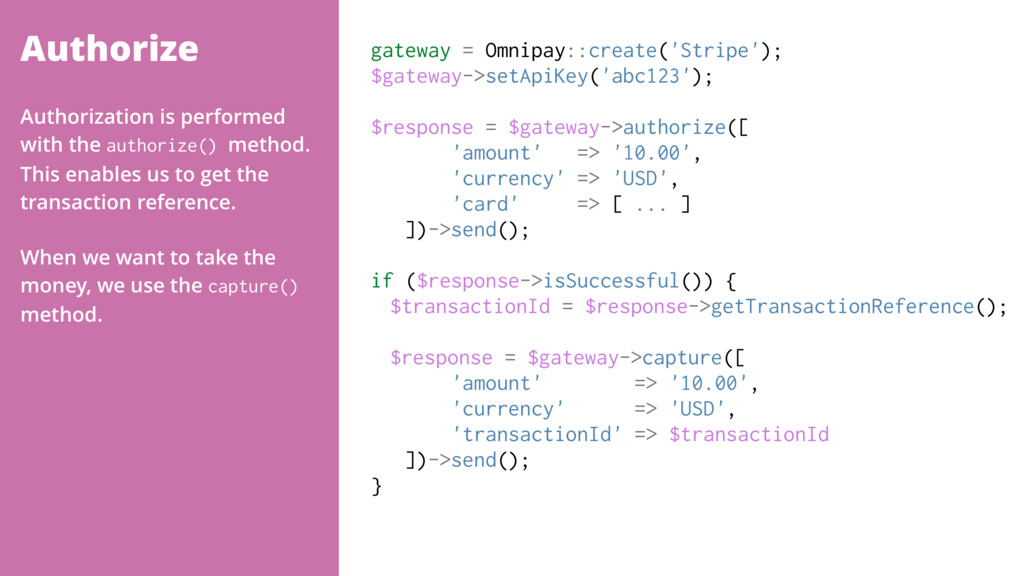
'10.00', 'currency' => 'USD', 'card' => [ ... ] ])->send(); if ($response->isSuccessful()) { $transactionId = $response->getTransactionReference(); $response = $gateway->capture([ 'amount' => '10.00', 'currency' => 'USD', 'transactionId' => $transactionId ])->send(); } Authorization is performed with the authorize() method. This enables us to get the transaction reference. When we want to take the money, we use the capture() method.
= $response->getTransactionReference(); Create, update and delete cards. Creating a card gives you a cardReference which can be used in future transactions.
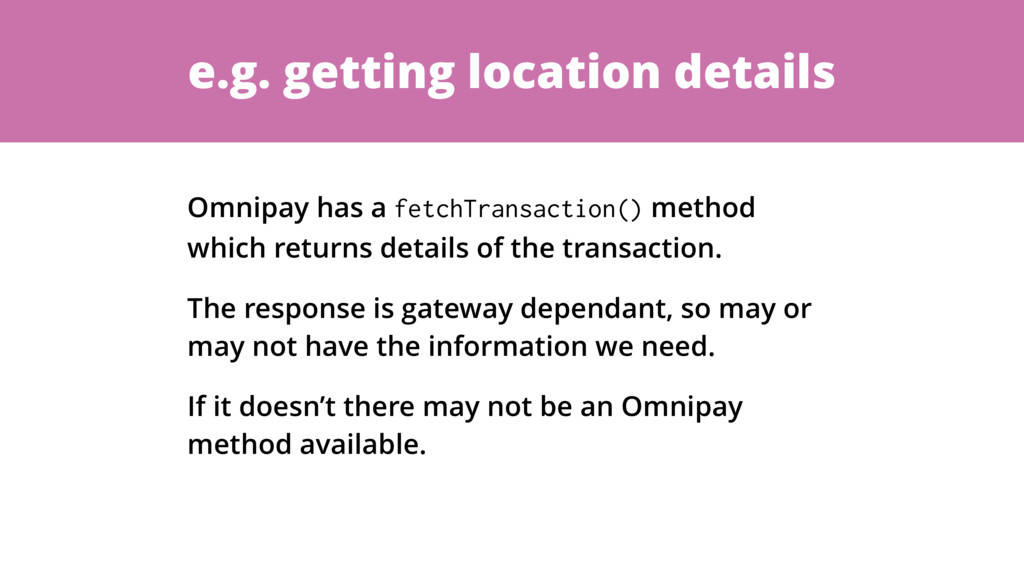
returns details of the transaction. The response is gateway dependant, so may or may not have the information we need. If it doesn’t there may not be an Omnipay method available.
the gateway driver doesn’t provide, things can get messy. You either need to try to extend the driver, or fall back to code outside of Omnipay. If your requirement is common, you might want to submit a patch.
with their own maintainers. Making a change is as easy as making a Github pull request… which is to say it’s of unknown ease. Could be accepted, or rejected, or ignored. Yay open source.
Write code that can be moved between projects Makes the friction of switching between providers much lower Open source: benefit from others’ work Open source: fix and contribute back when needed
Limited to a lowest common denominator for functionality No recurring payments Open source: gateways are sometimes incomplete Open source: getting PRs accepted can be hit and miss


 drewm
drewm
 skydoves
 texmeijin
 marcoroth
 kawashimo0
 oku053
 akit37
 ivargrimstad
 falcon8823
 tmikov2023
 tomokon
 satoshi256kbyte
 econanringo
 gurzu
gurzu
 marcduiker
 hatefulcrawdad
 mfonobong
 jnunemaker
 sergeychernyshev
 lindahogenes
 coloredviolet
 speakerdeck
 akashhashmi
 sarafernandez







![Token billing $response = $gateway->createCard([ 'card' => [...], ])->send(); $cardId](https://files.speakerdeck.com/presentations/eedf9753df9b4bada68d21c6d1e4f8a3/slide_42.jpg)
![Token billing $gateway->purchase([ 'amount' => '10.00', 'cardReference' => 'abc123' ])->send();](https://files.speakerdeck.com/presentations/eedf9753df9b4bada68d21c6d1e4f8a3/slide_43.jpg)