Upgrade to Pro — share decks privately, control downloads, hide ads and more …

10 Hidden Dangers of Free VPNs that Are

10 Hidden Dangers of Free VPNs that Are

VPN stands for a virtual private network. It’s a critical tool that allows its users to encrypt their traffic, hide their IP address, and browse the web anonymously. Some users also turn to VPN to bypass regional restrictions imposed on certain websites and apps such as Netflix, Hulu, Amazon Prime, and HBO Go. Due to increasing awareness of online privacy and security, the popularity of VPNs is ever rising.

Check out here to know more - https://thevpn.guru

Avatar for Elida Barrett

Elida Barrett

December 30, 2019

Other Decks in Technology

Transcript

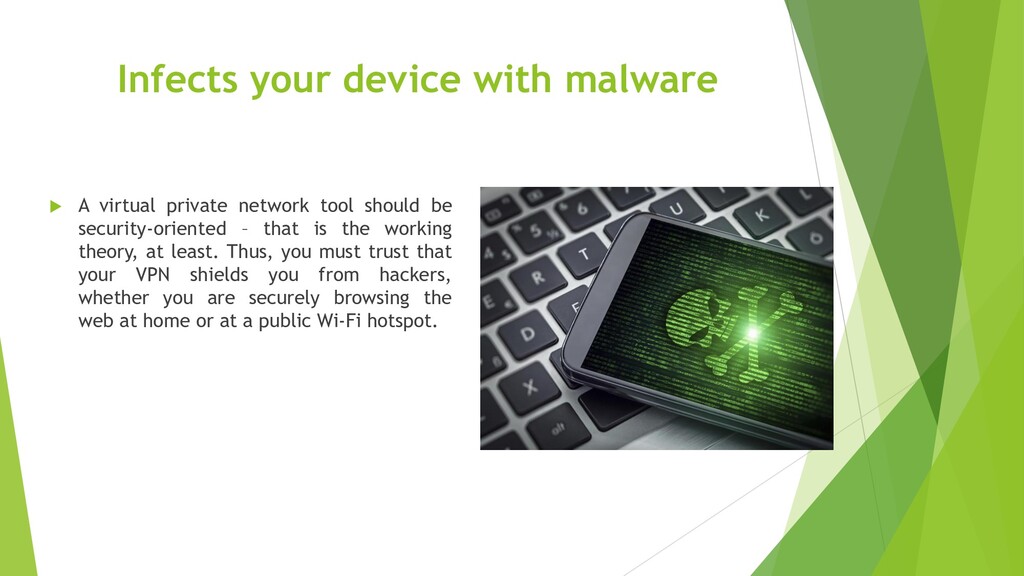
  1. Infects your device with malware  A virtual private network

    tool should be security-oriented – that is the working theory, at least. Thus, you must trust that your VPN shields you from hackers, whether you are securely browsing the web at home or at a public Wi-Fi hotspot.
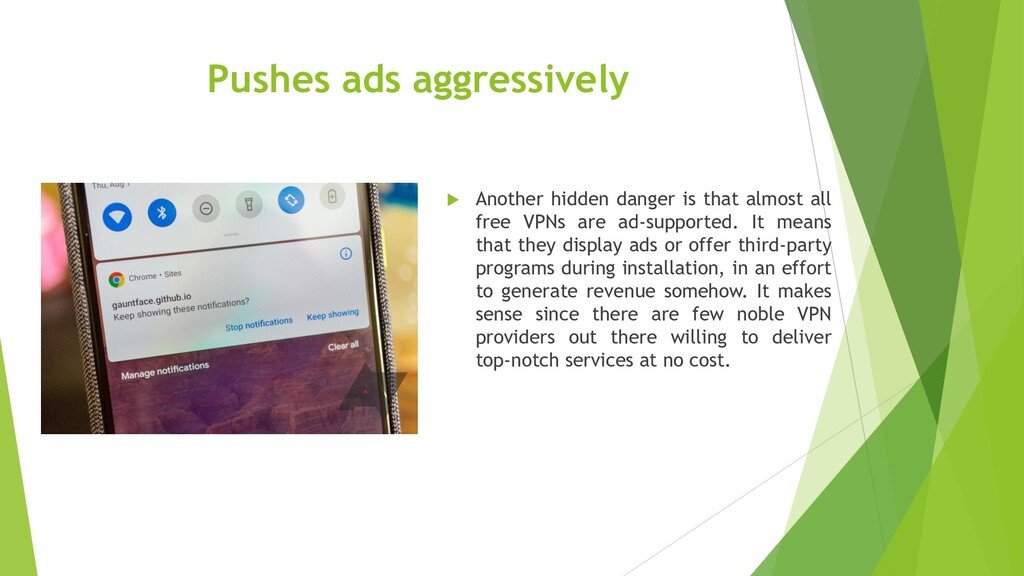
  2. Pushes ads aggressively  Another hidden danger is that almost

    all free VPNs are ad-supported. It means that they display ads or offer third-party programs during installation, in an effort to generate revenue somehow. It makes sense since there are few noble VPN providers out there willing to deliver top-notch services at no cost.
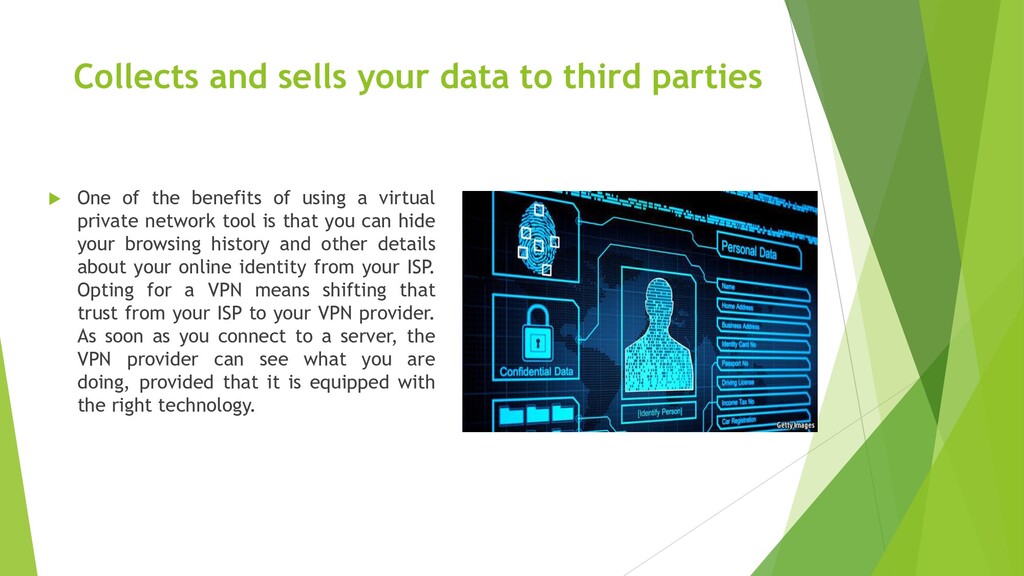
  3. Collects and sells your data to third parties  One

    of the benefits of using a virtual private network tool is that you can hide your browsing history and other details about your online identity from your ISP. Opting for a VPN means shifting that trust from your ISP to your VPN provider. As soon as you connect to a server, the VPN provider can see what you are doing, provided that it is equipped with the right technology.
  4. Provides poor Internet connection speed  Generally speaking, a VPN

    application decreases your Internet connection speed no matter what you do. It is normal. VPN encryption requires more processing power to encapsulate each packet of data in a secure layer.
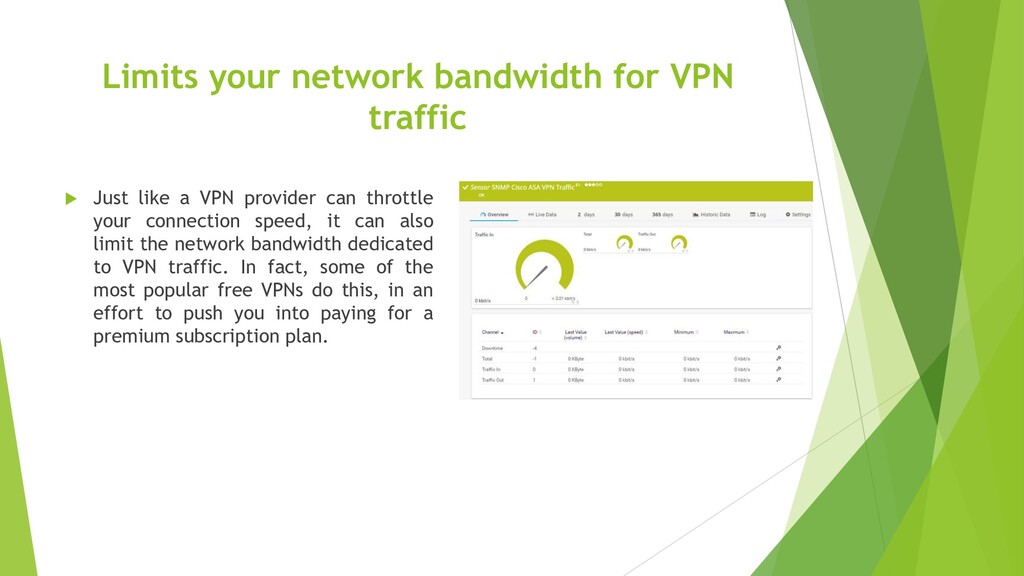
  5. Limits your network bandwidth for VPN traffic  Just like

    a VPN provider can throttle your connection speed, it can also limit the network bandwidth dedicated to VPN traffic. In fact, some of the most popular free VPNs do this, in an effort to push you into paying for a premium subscription plan.
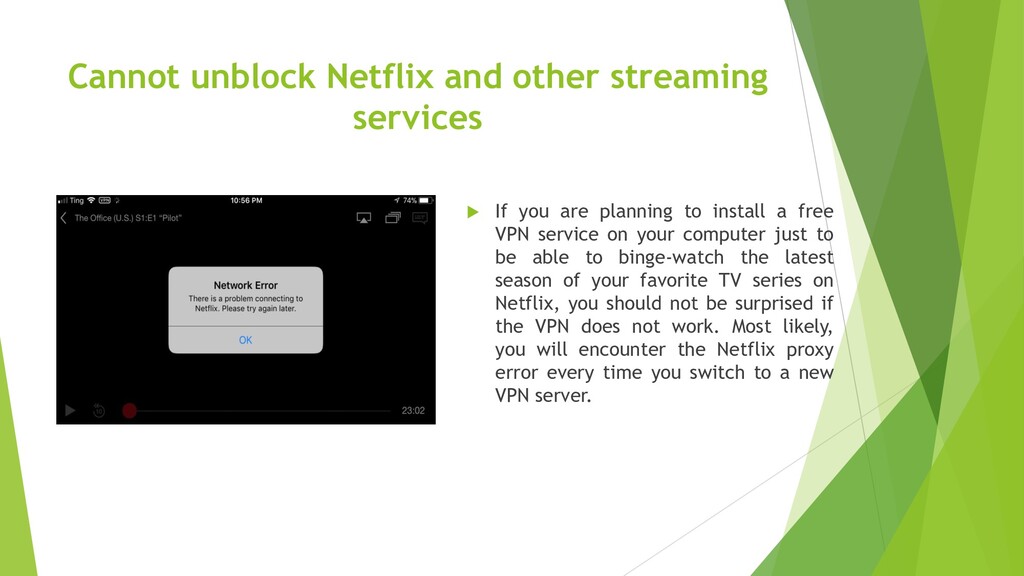
  6. Cannot unblock Netflix and other streaming services  If you

    are planning to install a free VPN service on your computer just to be able to binge-watch the latest season of your favorite TV series on Netflix, you should not be surprised if the VPN does not work. Most likely, you will encounter the Netflix proxy error every time you switch to a new VPN server.
  7. Makes few VPN servers available  If the VPN also

    has a paid counterpart, then you will most likely see a list of VPN servers where most of them are inaccessible. It is a common marketing technique to show you there are, in fact, many servers available, but you must pay to be able to use them.
  8. Does not provide customer support  Issues are bound to

    happen all the time, especially when it comes to software. And virtual private network tools make no exception. But issues are even more common with free VPNs.
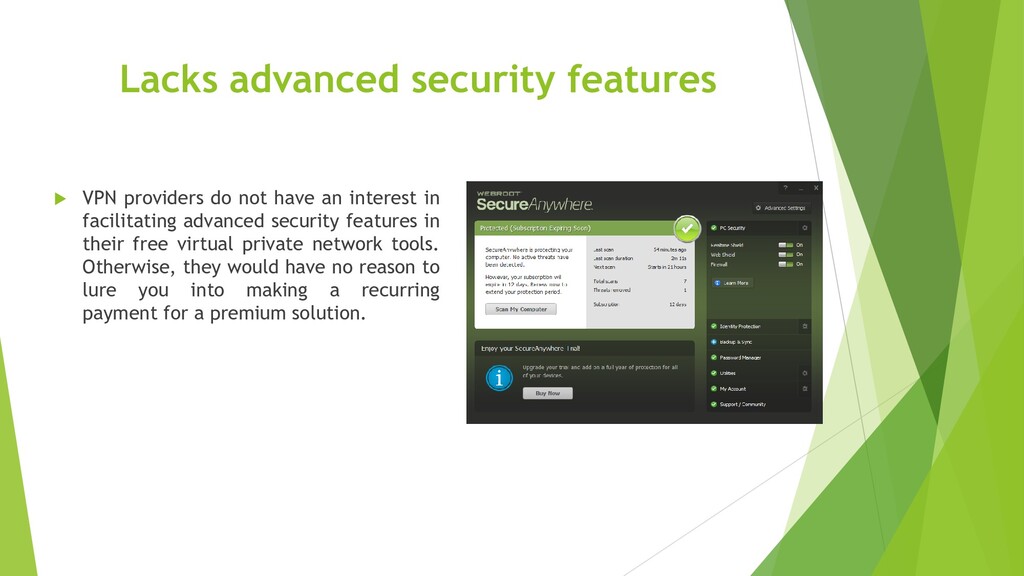
  9. Lacks advanced security features  VPN providers do not have

    an interest in facilitating advanced security features in their free virtual private network tools. Otherwise, they would have no reason to lure you into making a recurring payment for a premium solution.
  10. Many free VPN services are owned by the same company

     A serious hidden danger to experimenting with various free VPN solutions is that you might end up trying apps owned by the same company. And, if you wish to avoid a specific company because of bad practices in the past or simply because you do not like it, this could easily fool you.