The belongs_to Association The has_one Association The has_many Association The has_many :through Association The has_and_belongs_to_many Association Polymorphic Associations
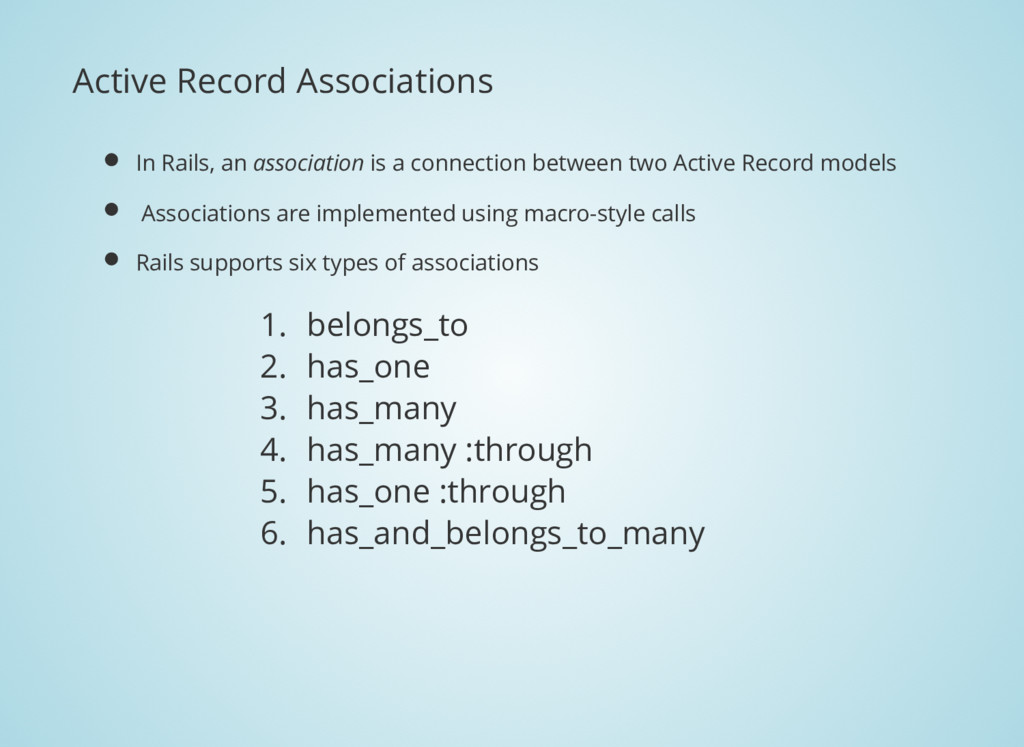
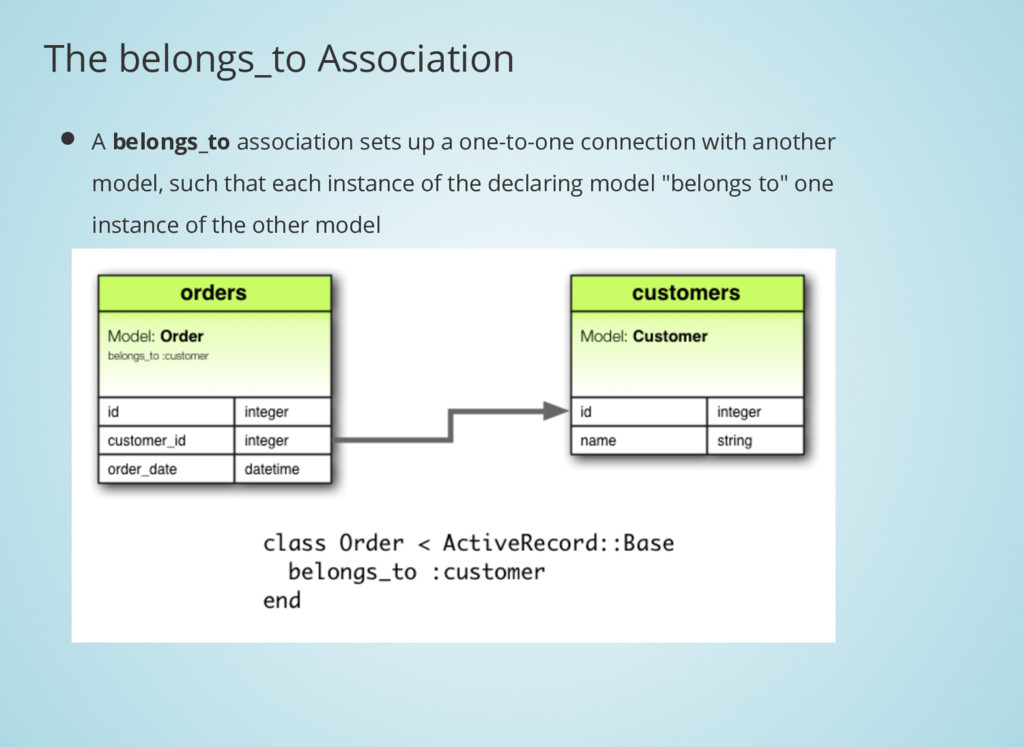
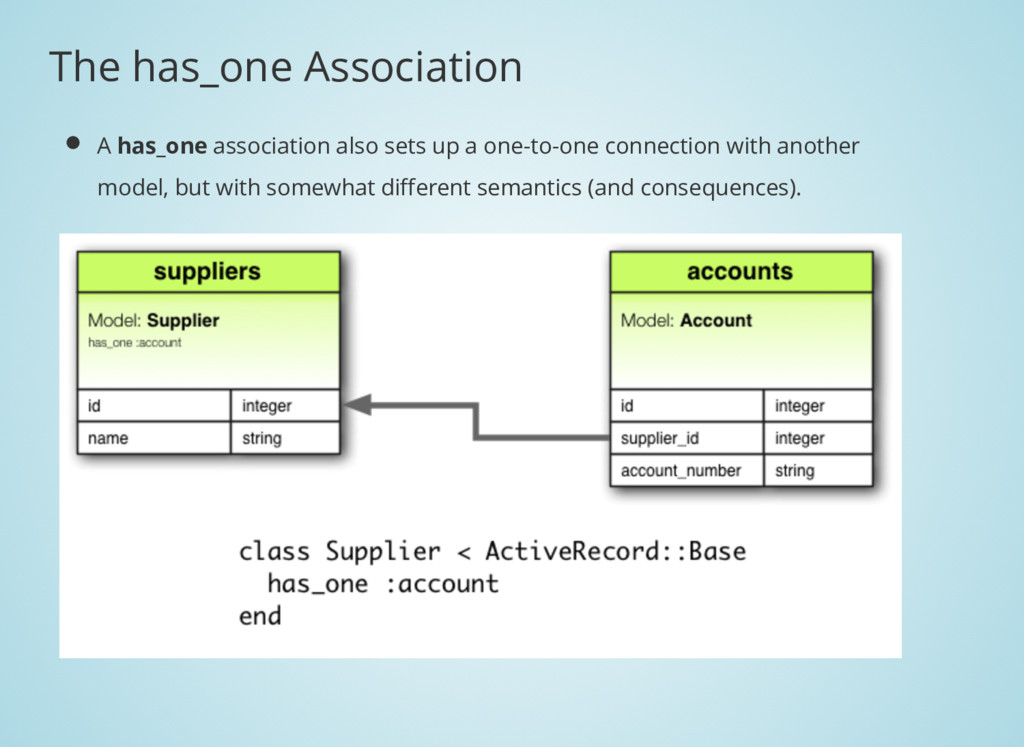
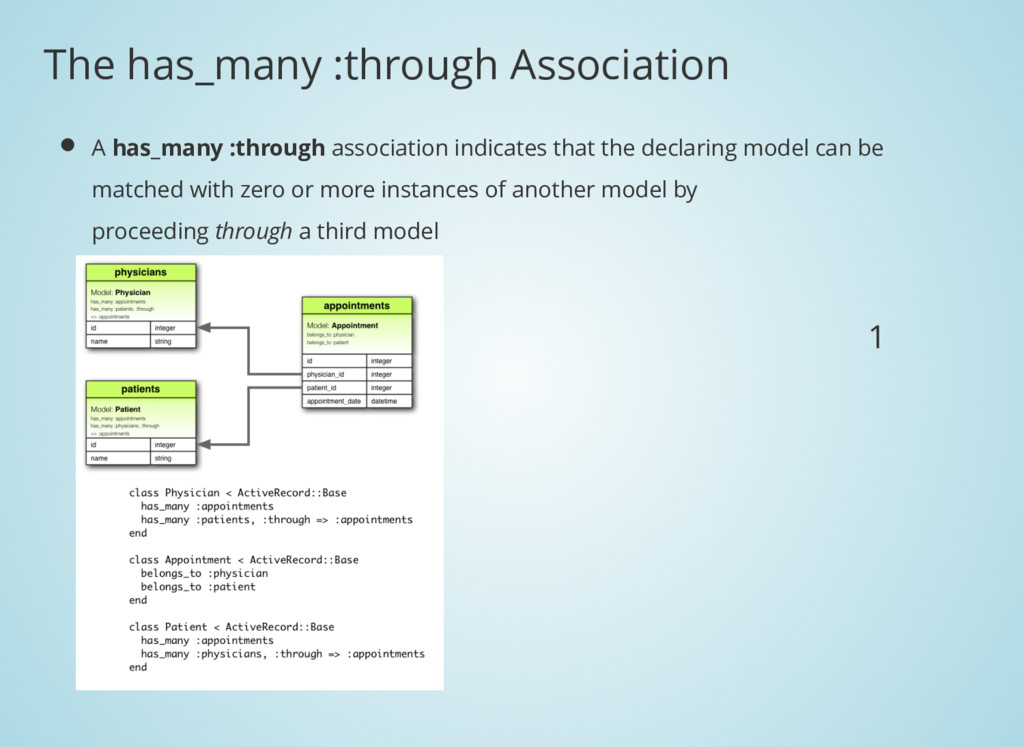
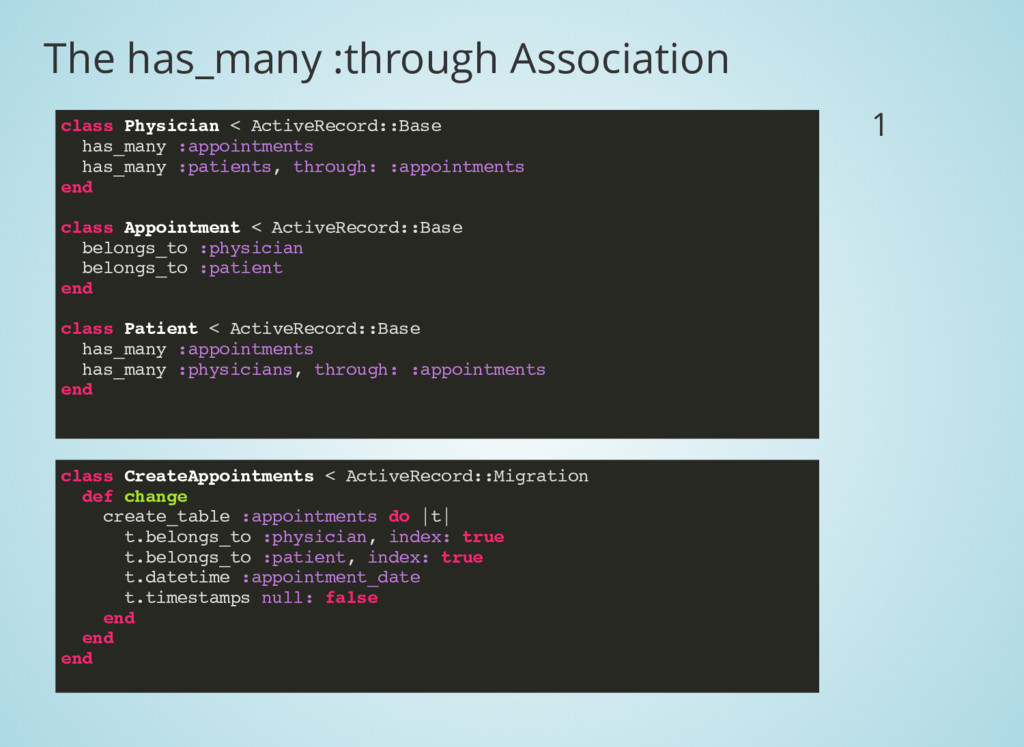
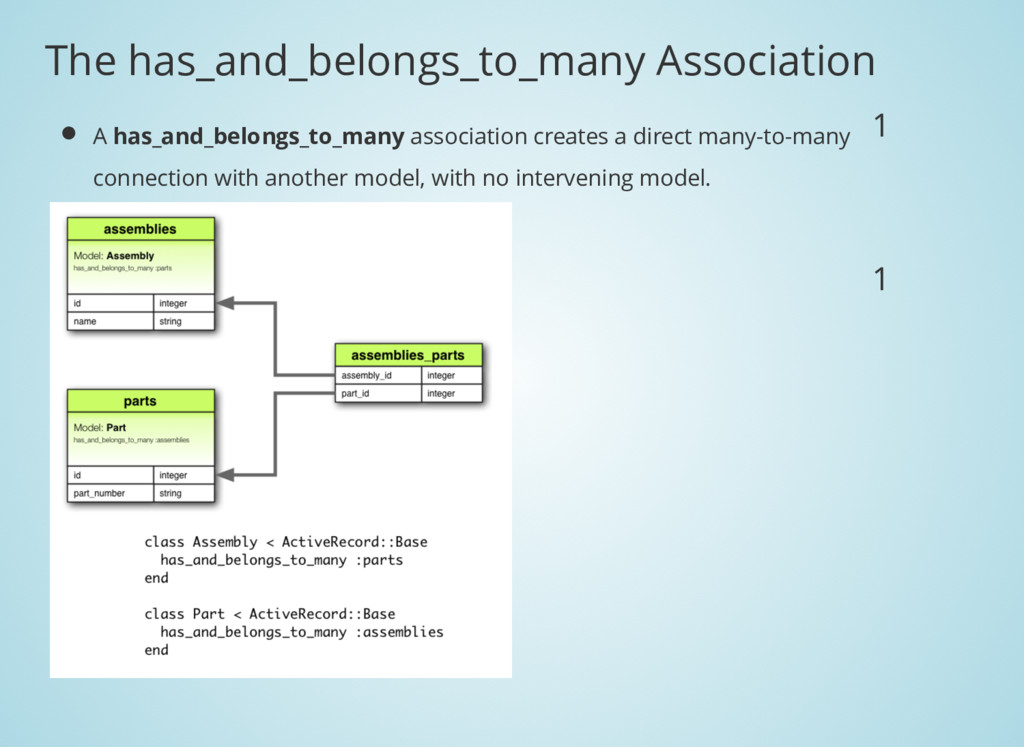
between two Active Record models Associations are implemented using macro-style calls Rails supports six types of associations 1. belongs_to 2. has_one 3. has_many 4. has_many :through 5. has_one :through 6. has_and_belongs_to_many
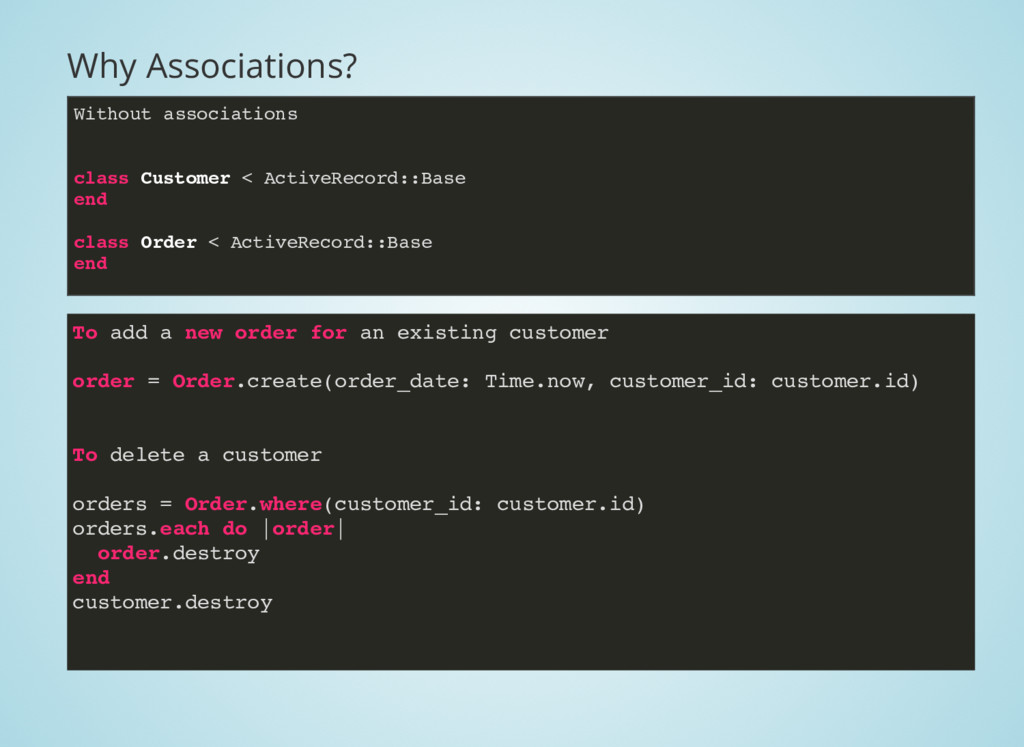
Order < ActiveRecord::Base end To add a new order for an existing customer order = Order.create(order_date: Time.now, customer_id: customer.id) To delete a customer orders = Order.where(customer_id: customer.id) orders.each do |order| order.destroy end customer.destroy
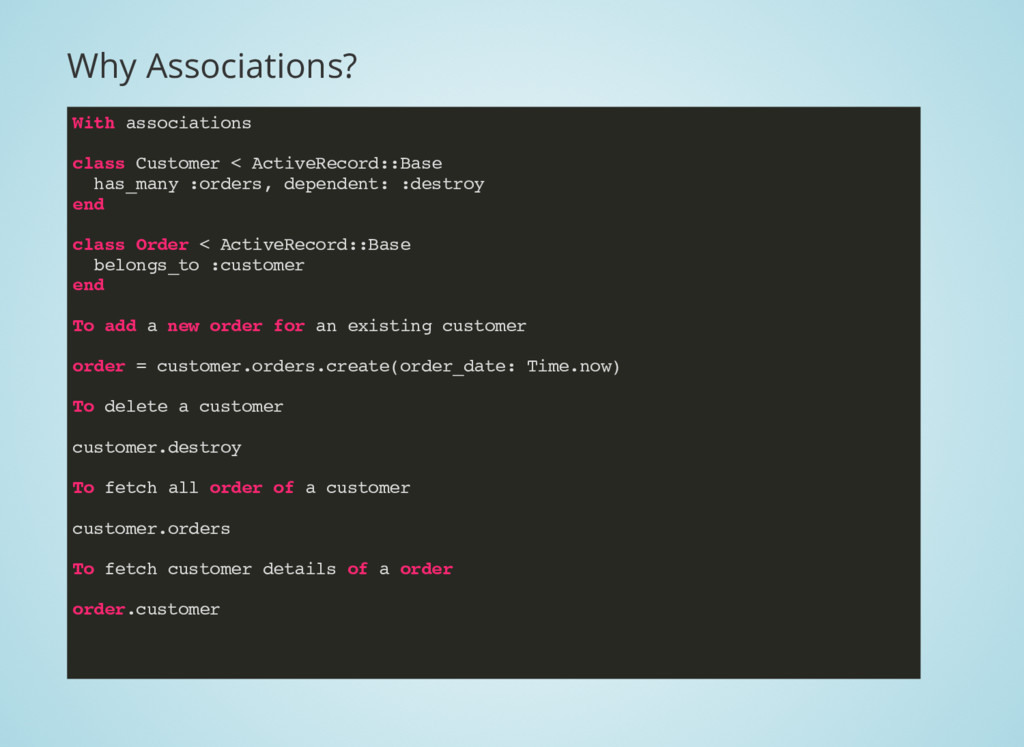
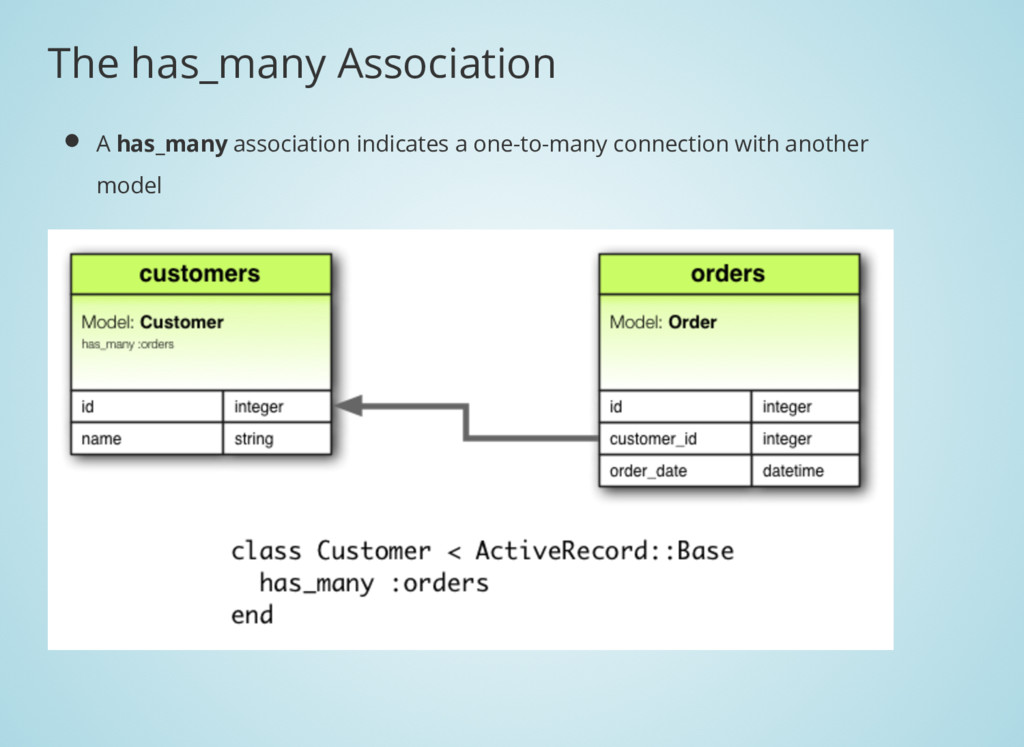
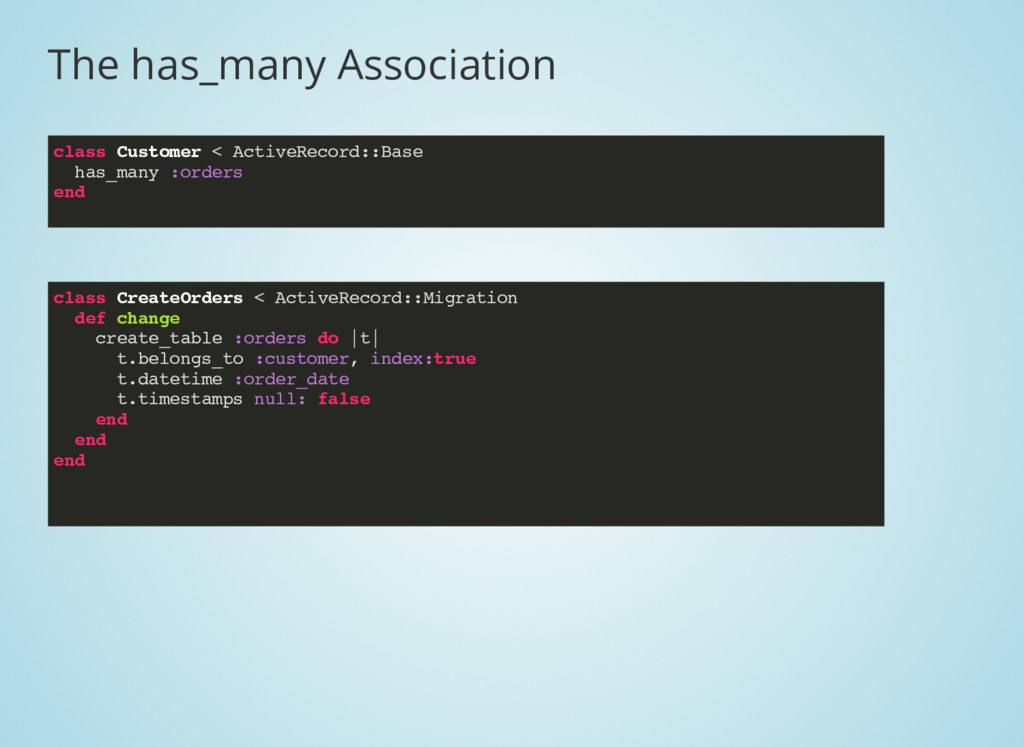
dependent: :destroy end class Order < ActiveRecord::Base belongs_to :customer end To add a new order for an existing customer order = customer.orders.create(order_date: Time.now) To delete a customer customer.destroy To fetch all order of a customer customer.orders To fetch customer details of a order order.customer
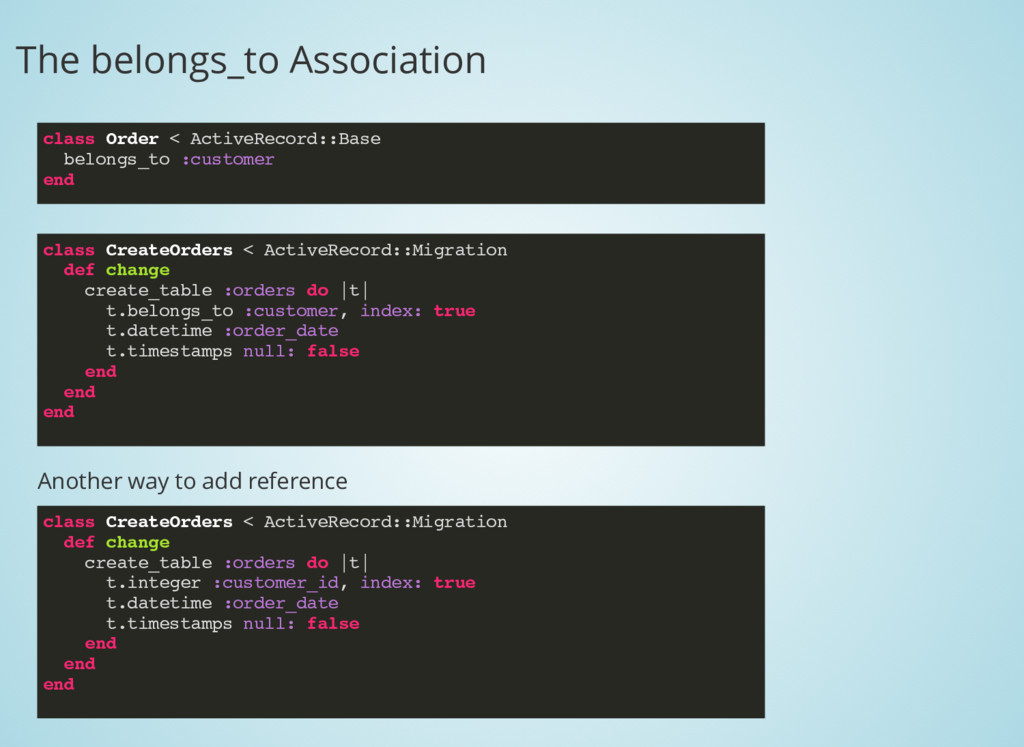
class CreateOrders < ActiveRecord::Migration def change create_table :orders do |t| t.belongs_to :customer, index: true t.datetime :order_date t.timestamps null: false end end end OR class CreateOrders < ActiveRecord::Migration def change create_table :orders do |t| t.integer :customer_id, index: true t.datetime :order_date t.timestamps null: false end end end Another way to add reference
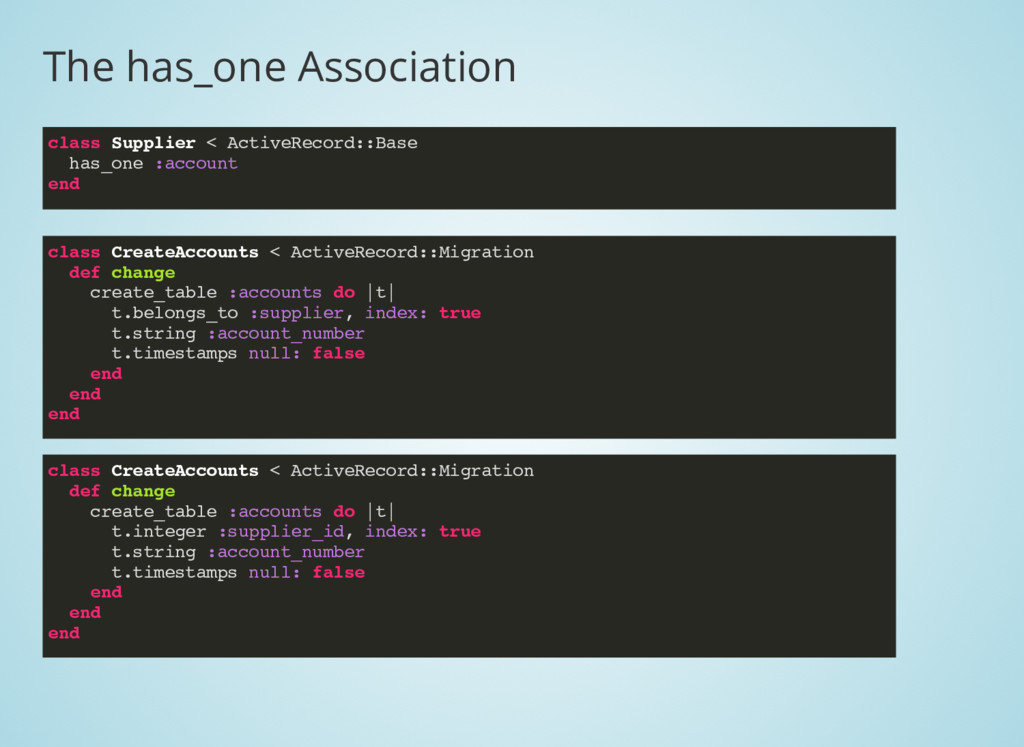
class CreateAccounts < ActiveRecord::Migration def change create_table :accounts do |t| t.belongs_to :supplier, index: true t.string :account_number t.timestamps null: false end end end class CreateAccounts < ActiveRecord::Migration def change create_table :accounts do |t| t.integer :supplier_id, index: true t.string :account_number t.timestamps null: false end end end
class CreateOrders < ActiveRecord::Migration def change create_table :orders do |t| t.belongs_to :customer, index:true t.datetime :order_date t.timestamps null: false end end end
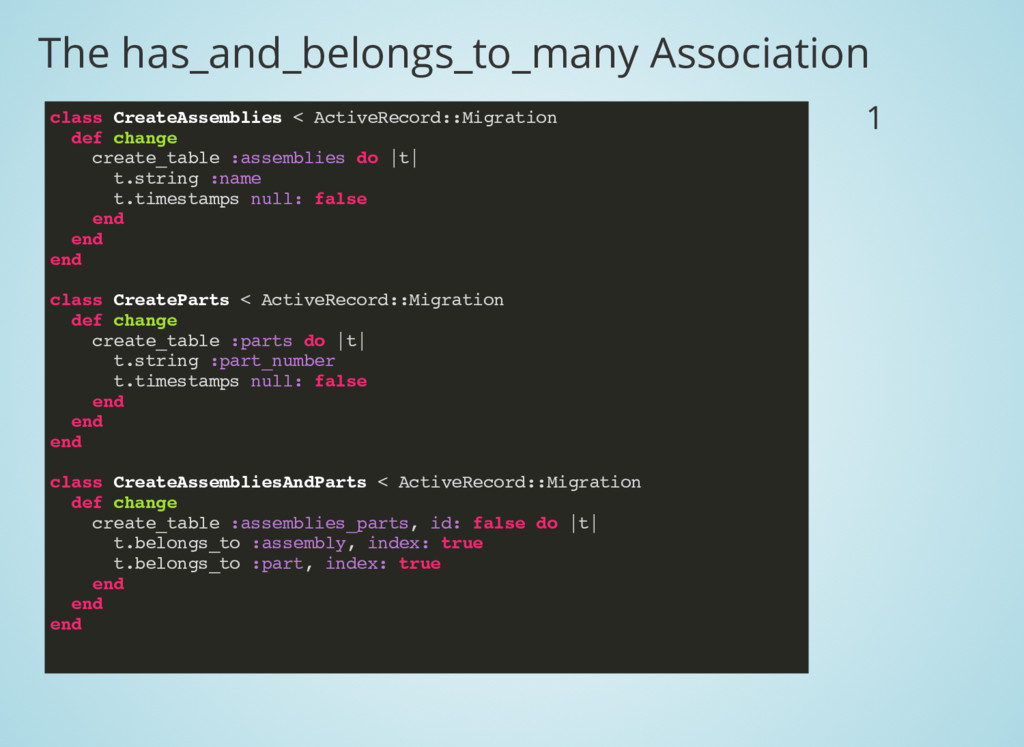
create_table :assemblies do |t| t.string :name t.timestamps null: false end end end class CreateParts < ActiveRecord::Migration def change create_table :parts do |t| t.string :part_number t.timestamps null: false end end end class CreateAssembliesAndParts < ActiveRecord::Migration def change create_table :assemblies_parts, id: false do |t| t.belongs_to :assembly, index: true t.belongs_to :part, index: true end end end
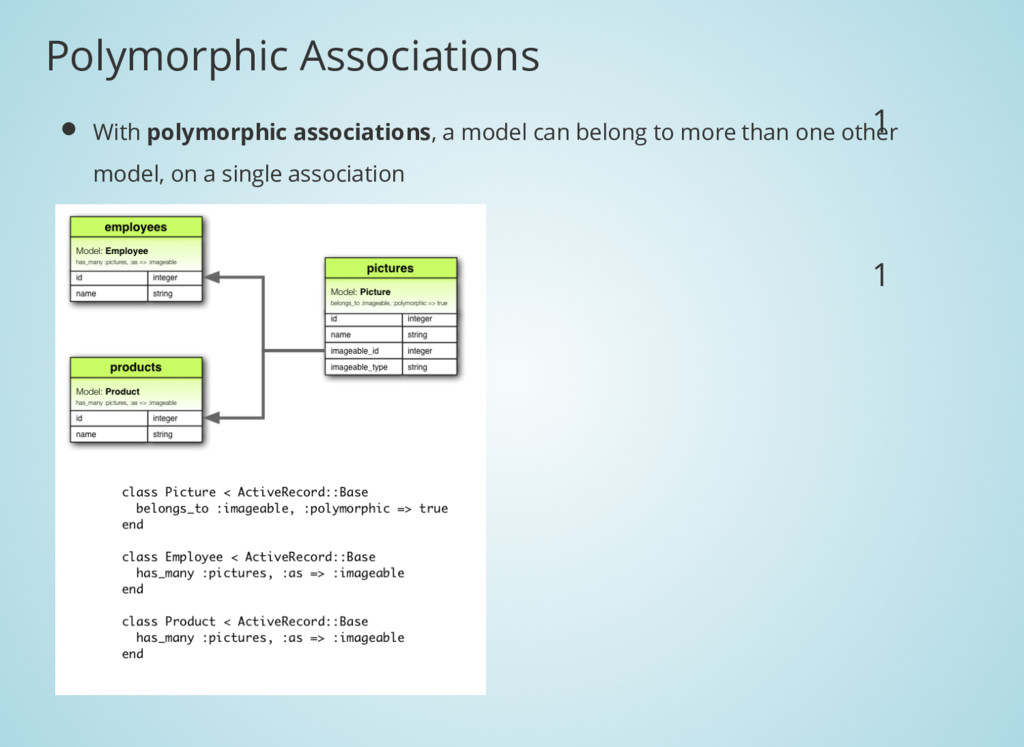
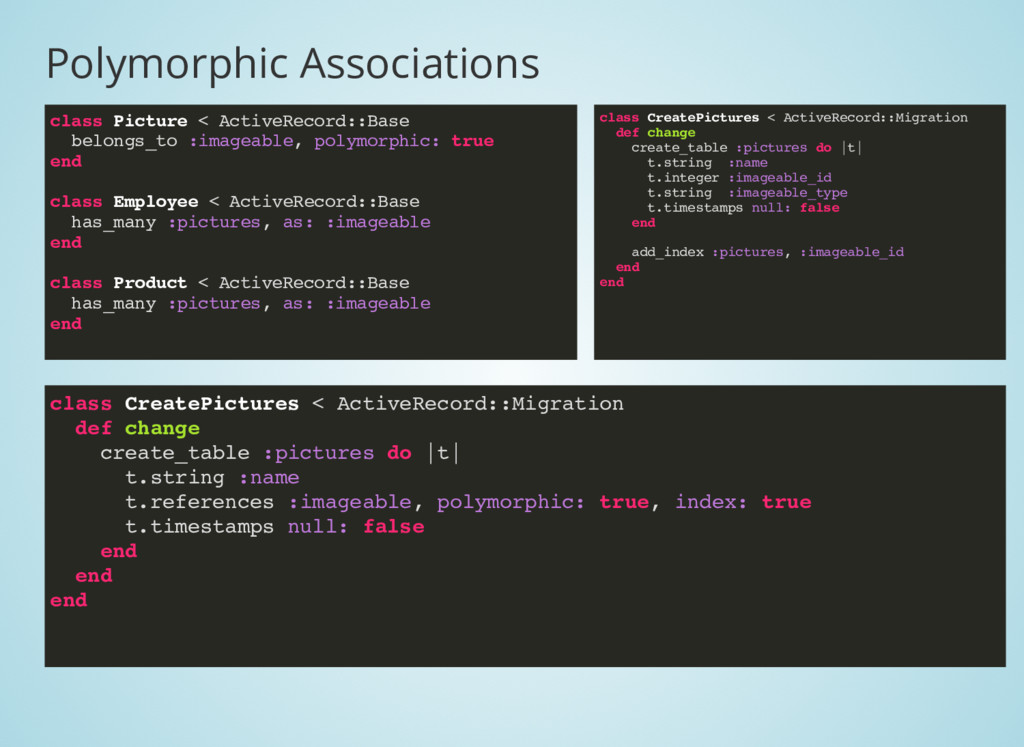
true end class Employee < ActiveRecord::Base has_many :pictures, as: :imageable end class Product < ActiveRecord::Base has_many :pictures, as: :imageable end class CreatePictures < ActiveRecord::Migration def change create_table :pictures do |t| t.string :name t.integer :imageable_id t.string :imageable_type t.timestamps null: false end add_index :pictures, :imageable_id end end class CreatePictures < ActiveRecord::Migration def change create_table :pictures do |t| t.string :name t.references :imageable, polymorphic: true, index: true t.timestamps null: false end end end


 eshaiju
 sansantech
 maimyyym
 prog893
 rfdnxbro
 kaminashi
 sudoakiy
 grimoh
 masakiokuda
 ezaki
 odashi
 riyaamemiya
 kentarofujii
 bkeepers
 mfonobong
 rakko
 tammyeverts
 aleyda
 apolaine
 aki_iinuma
 nikkihalliwell
 morganepeng
 reverentgeek
 katarinadahlin
 ryanjones