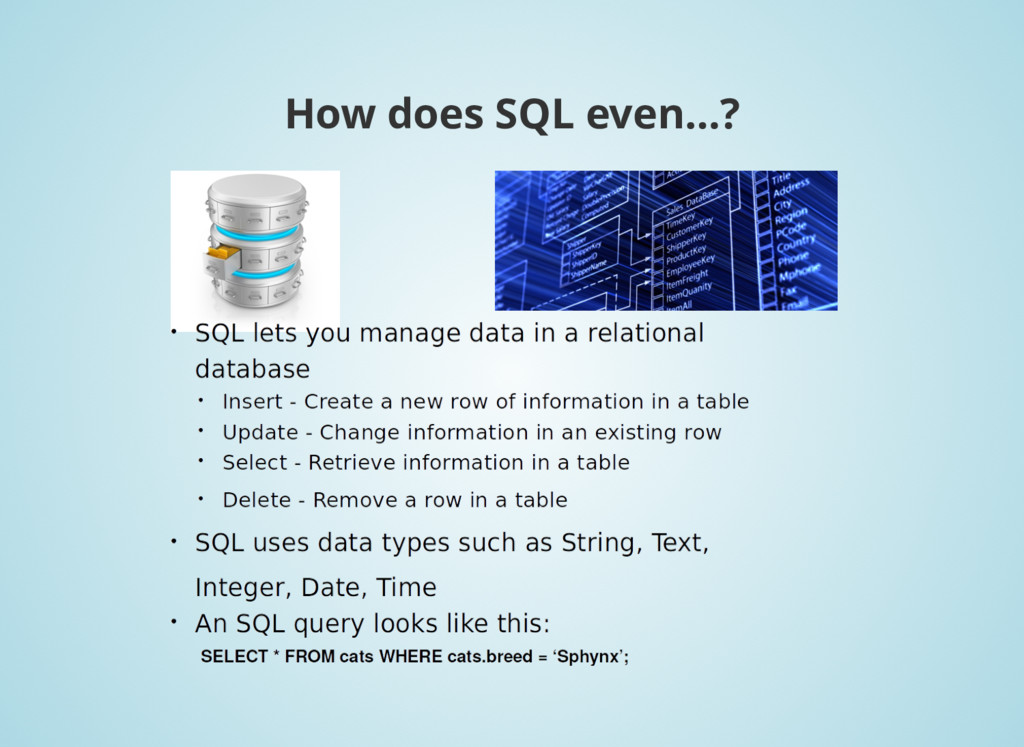
with SQL! ORM stands for Object Relational Mapper Maps database to ruby object They get rid of SQL queries in code SELECT * FROM cats VS Cat.all Essentially ActiveRecord takes ruby code and translates it into SQL code.
data. Represent associations between these models. Represent inheritance hierarchies through related models. Validate models before they get persisted to the database. Perform database operations in an object-oriented fashion.
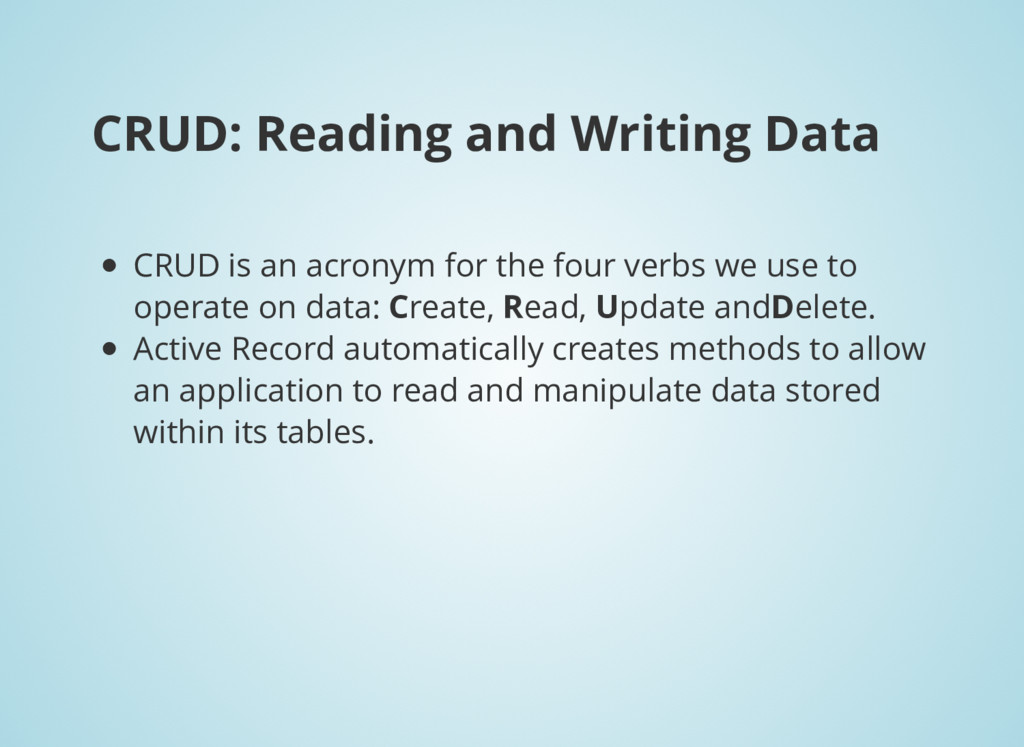
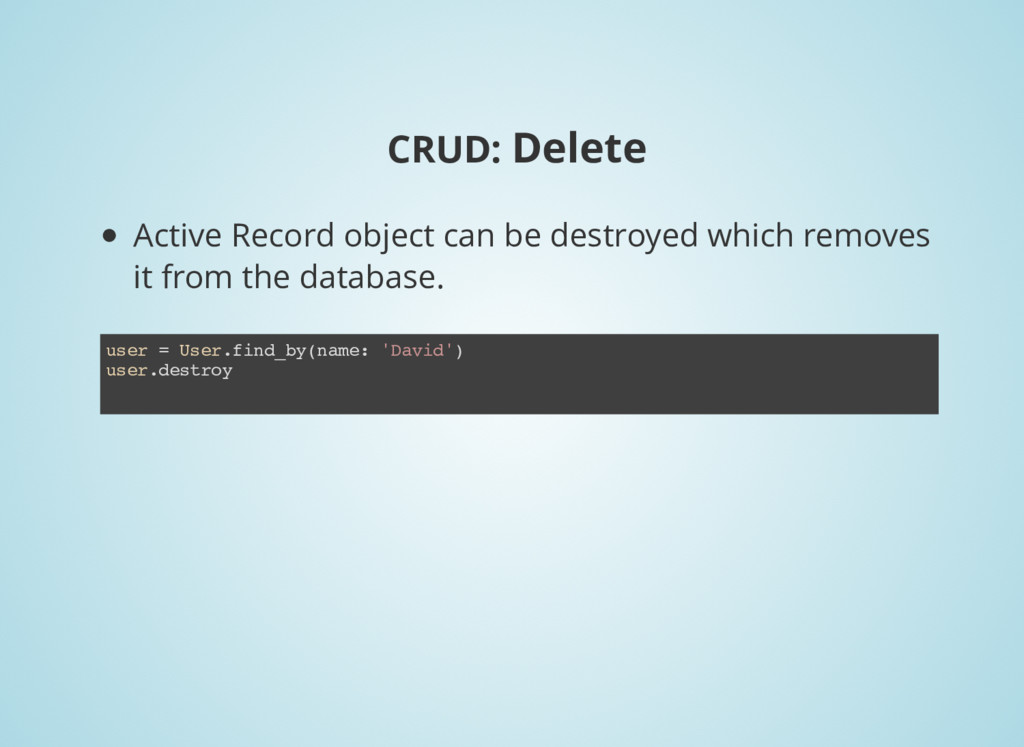
the four verbs we use to operate on data: Create, Read, Update andDelete. Active Record automatically creates methods to allow an application to read and manipulate data stored within its tables.
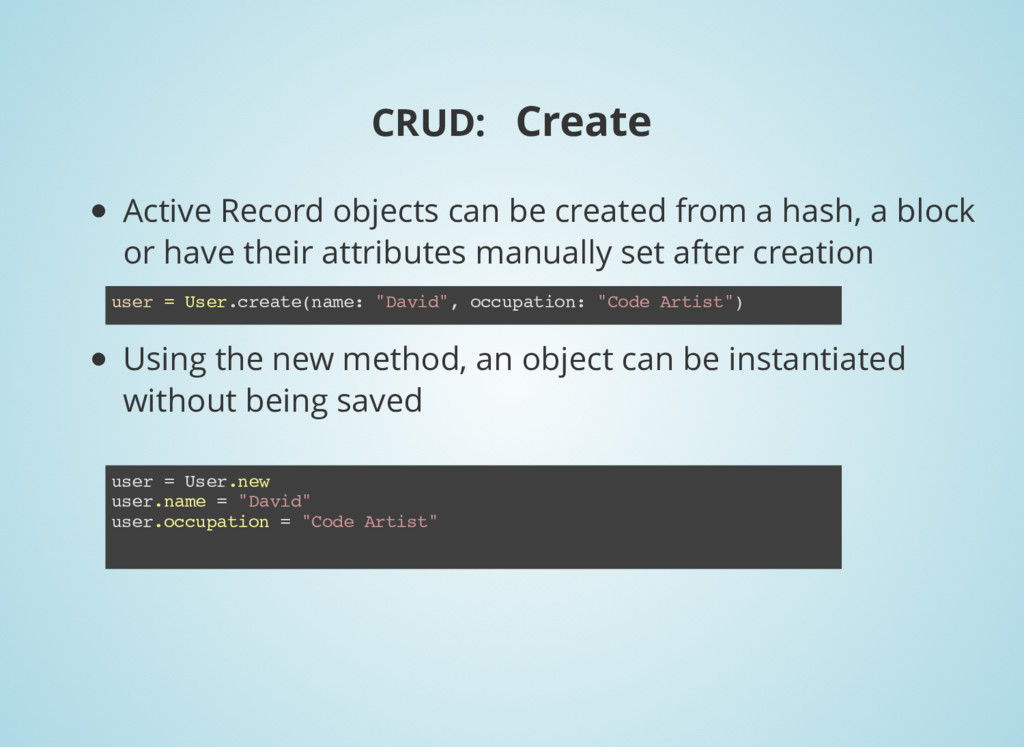
hash, a block or have their attributes manually set after creation Using the new method, an object can be instantiated without being saved user = User.create(name: "David", occupation: "Code Artist") user = User.new user.name = "David" user.occupation = "Code Artist"
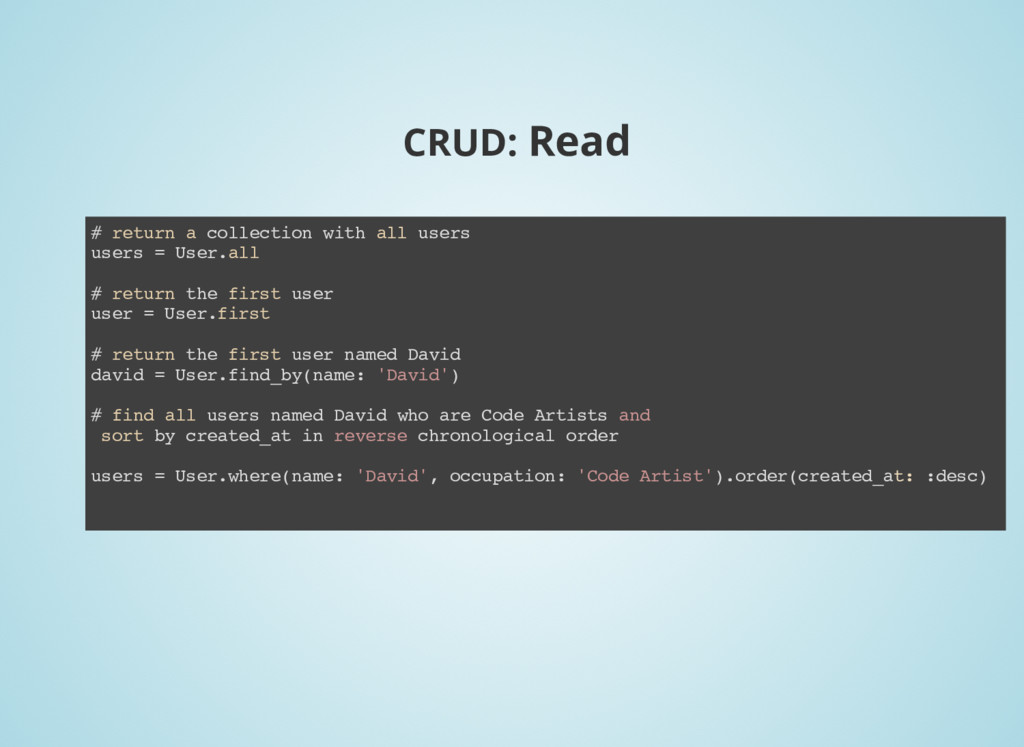
= User.all # return the first user user = User.first # return the first user named David david = User.find_by(name: 'David') # find all users named David who are Code Artists and sort by created_at in reverse chronological order users = User.where(name: 'David', occupation: 'Code Artist').order(created_at: :desc)
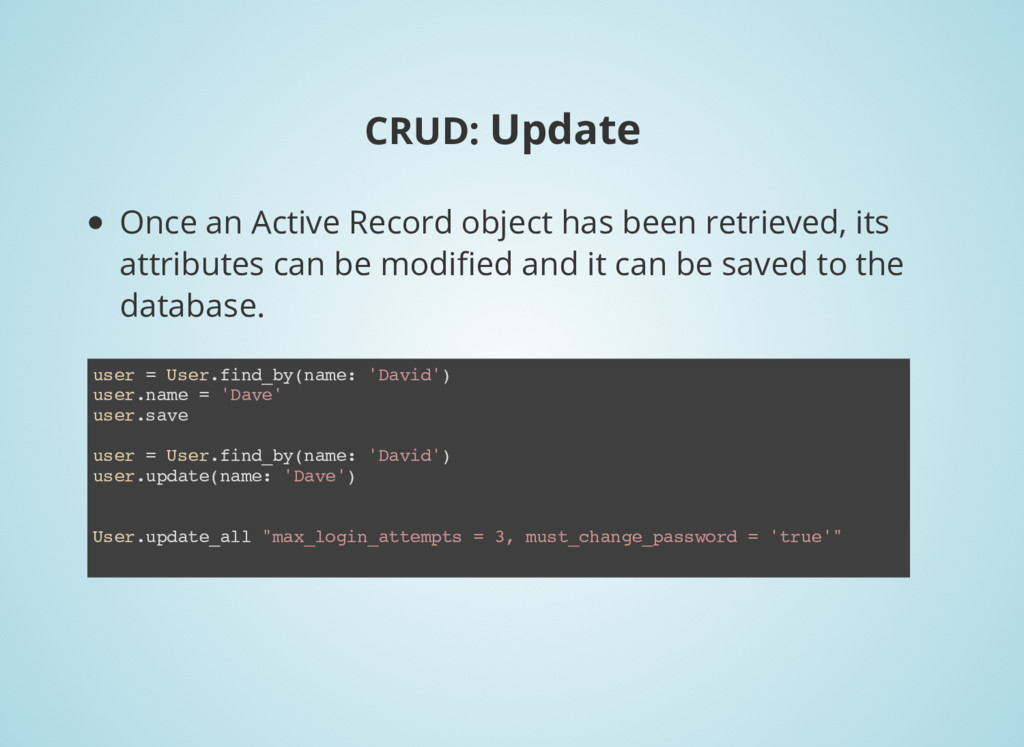
its attributes can be modified and it can be saved to the database. user = User.find_by(name: 'David') user.name = 'Dave' user.save user = User.find_by(name: 'David') user.update(name: 'Dave') User.update_all "max_login_attempts = 3, must_change_password = 'true'"
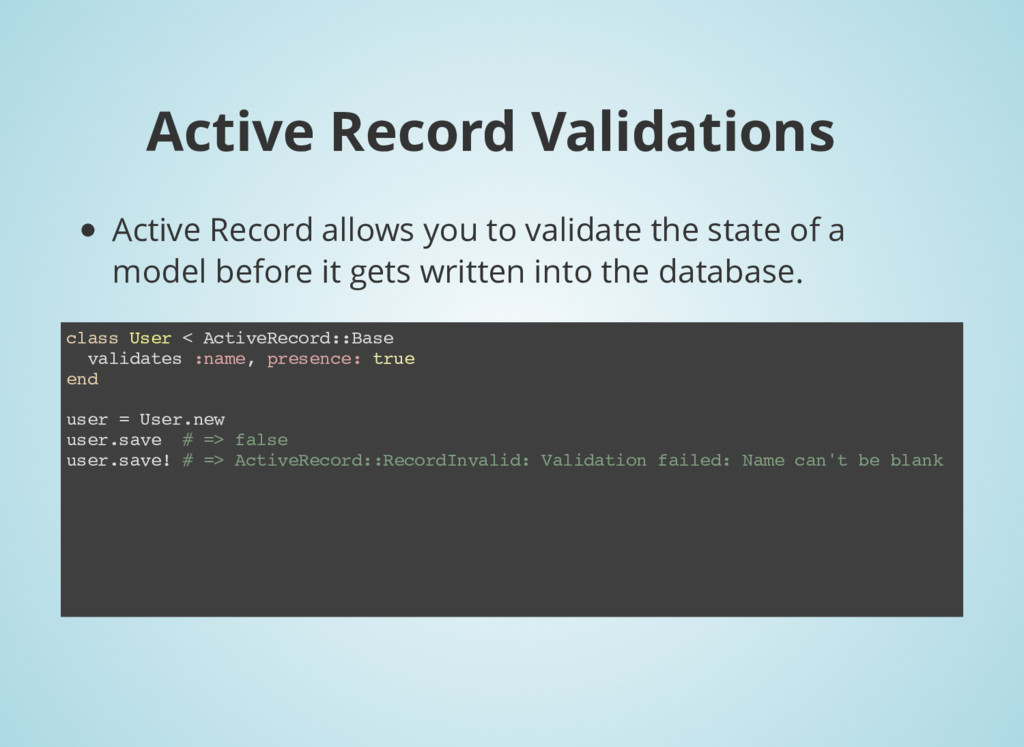
state of a model before it gets written into the database. class User < ActiveRecord::Base validates :name, presence: true end user = User.new user.save # => false user.save! # => ActiveRecord::RecordInvalid: Validation failed: Name can't be blank


 eshaiju
 puhitaku
 nealle
 teamlab
 kaminashi
 satoshi7
 moznion
 yahonda
 prog893
 yu23ki14
 ueponx
 akitoshiga
 pfn
 cassininazir
 geoffreycrofte
 davetheseo
 kimpetersen
 uxyall
 lemiorhan
 sabderemane
 nikkihalliwell
 inesmontani
 skipperchong
 aleyda
 sergeychernyshev