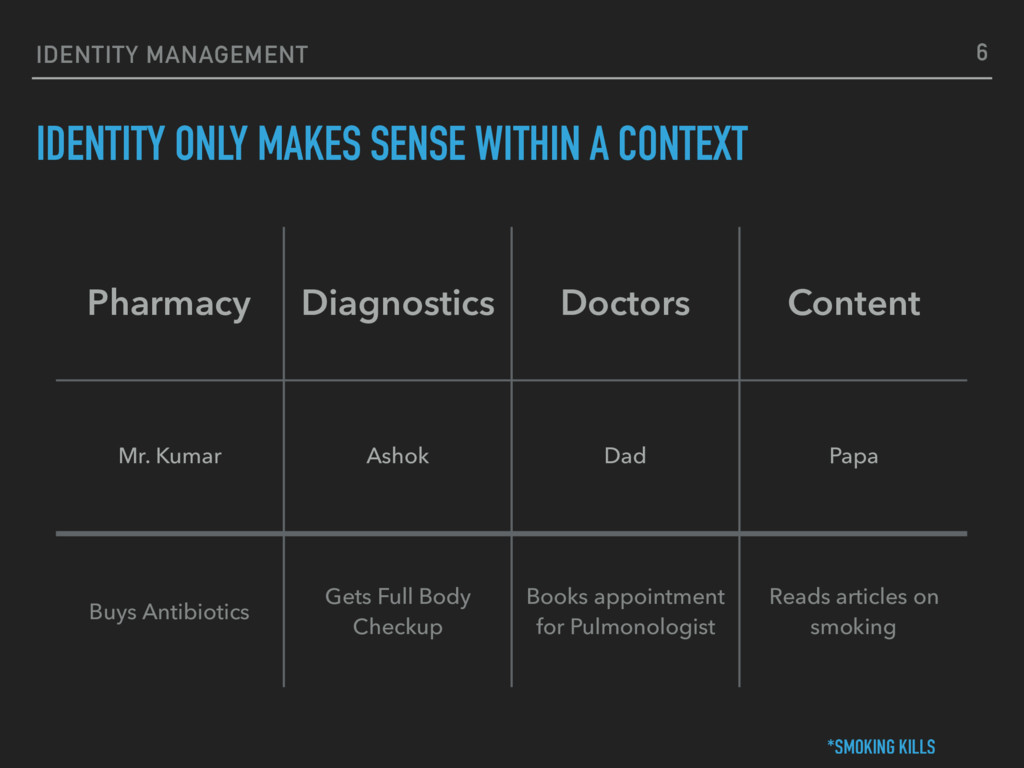
Diagnostics Doctors Content Mr. Kumar Ashok Dad Papa Buys Antibiotics Gets Full Body Checkup Books appointment for Pulmonologist Reads articles on smoking *SMOKING KILLS 6
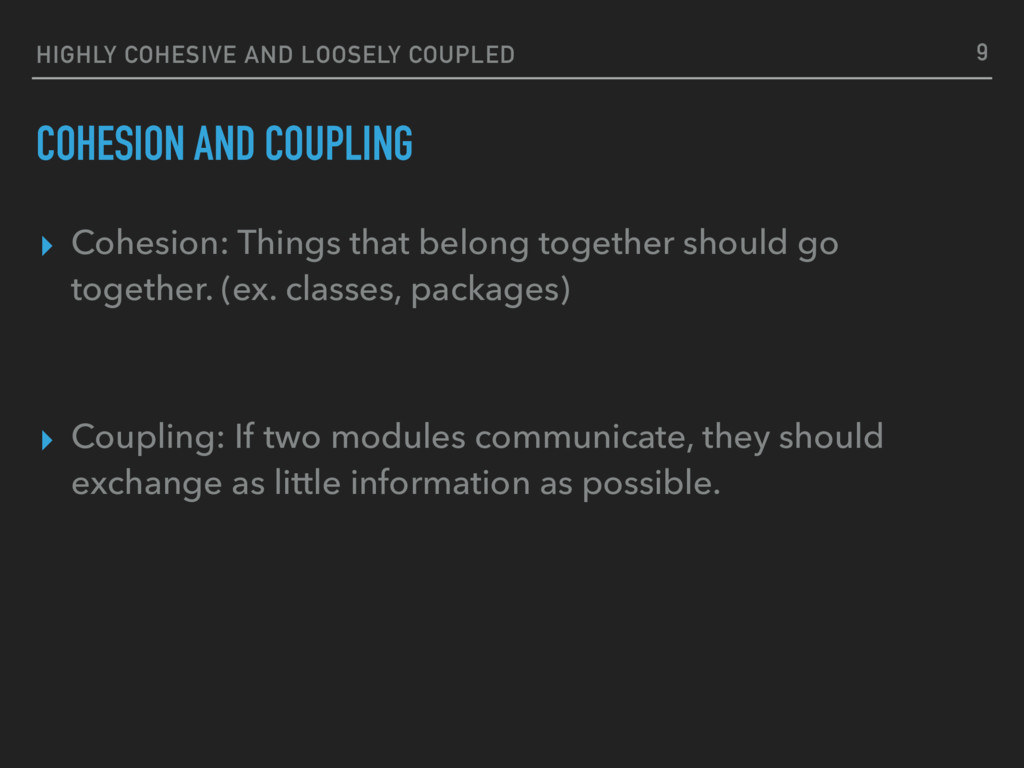
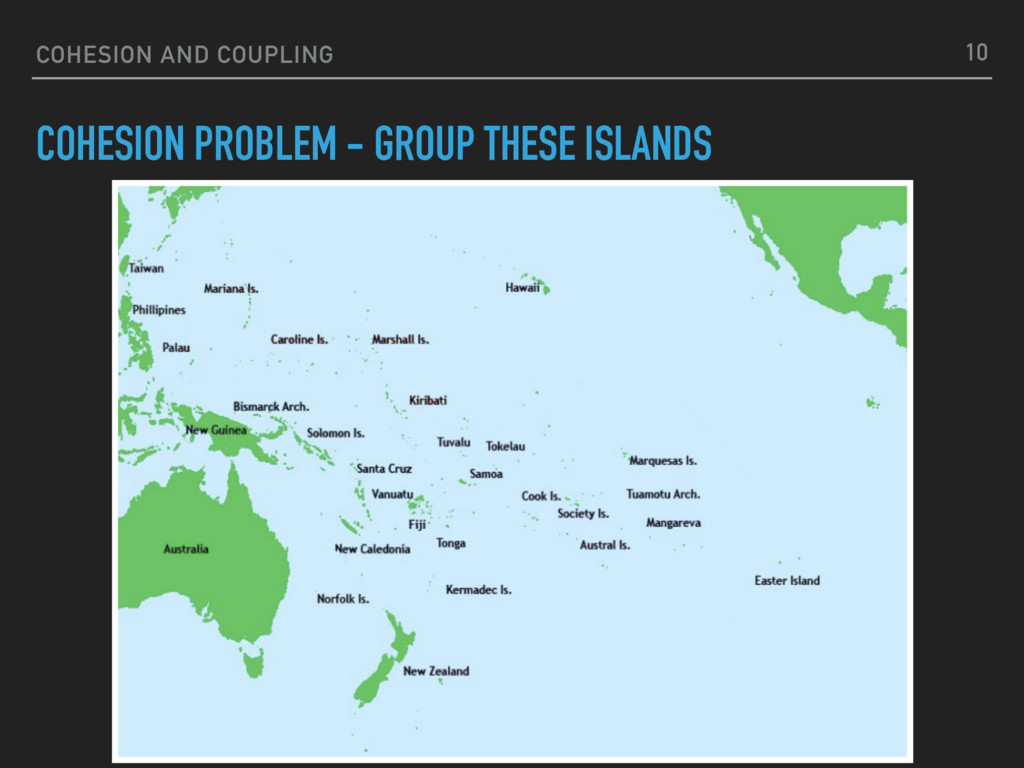
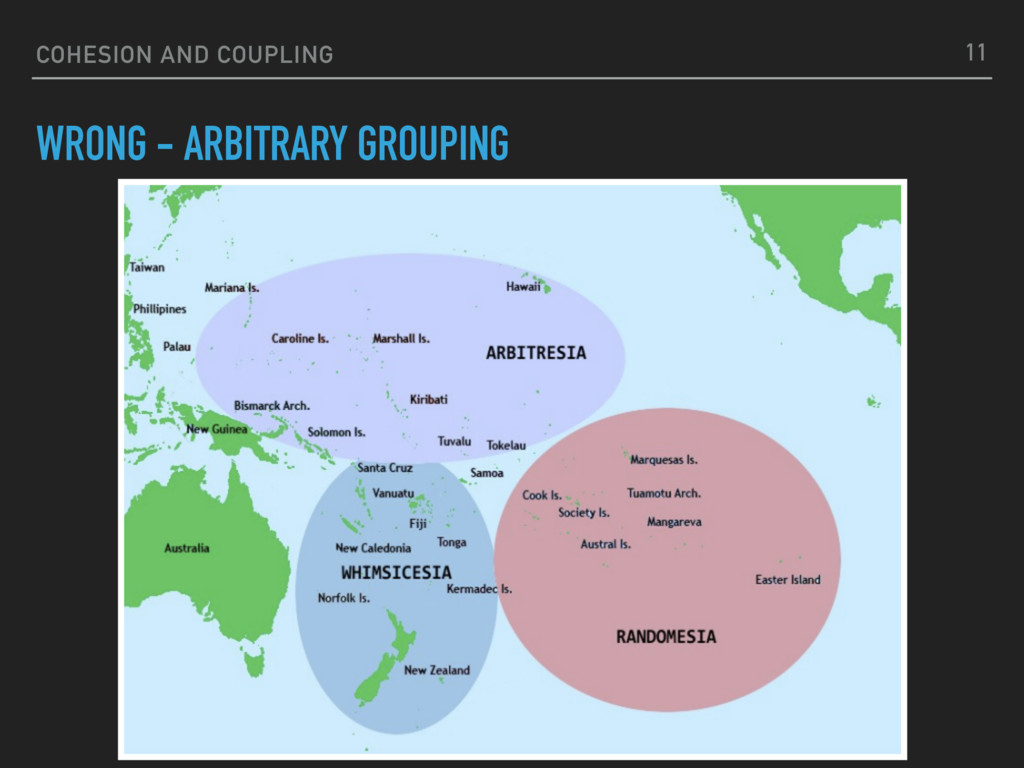
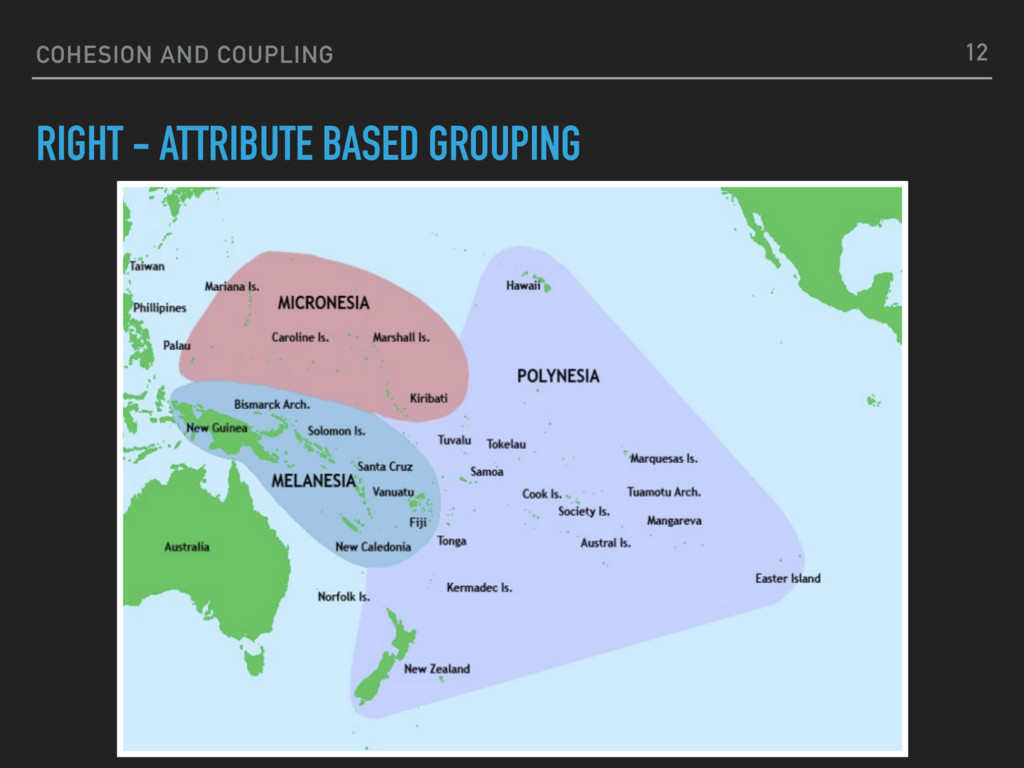
Things that belong together should go together. (ex. classes, packages) ▸ Coupling: If two modules communicate, they should exchange as little information as possible. 9
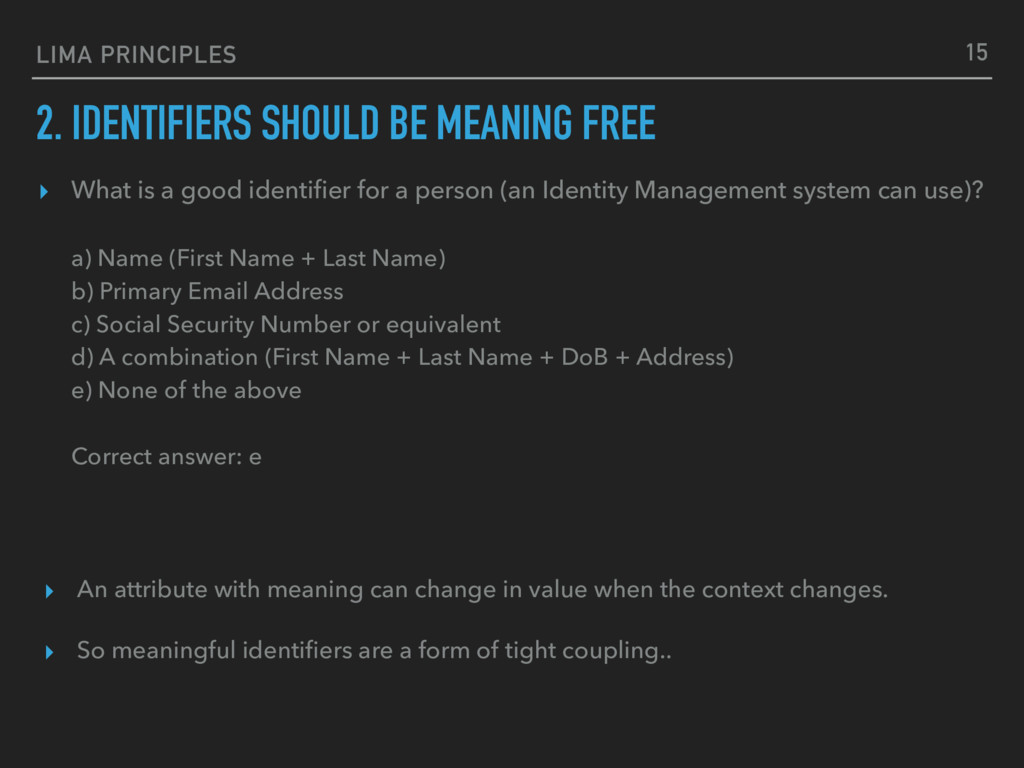
is a good identifier for a person (an Identity Management system can use)? a) Name (First Name + Last Name) b) Primary Email Address c) Social Security Number or equivalent d) A combination (First Name + Last Name + DoB + Address) e) None of the above Correct answer: e ▸ An attribute with meaning can change in value when the context changes. ▸ So meaningful identifiers are a form of tight coupling.. 15
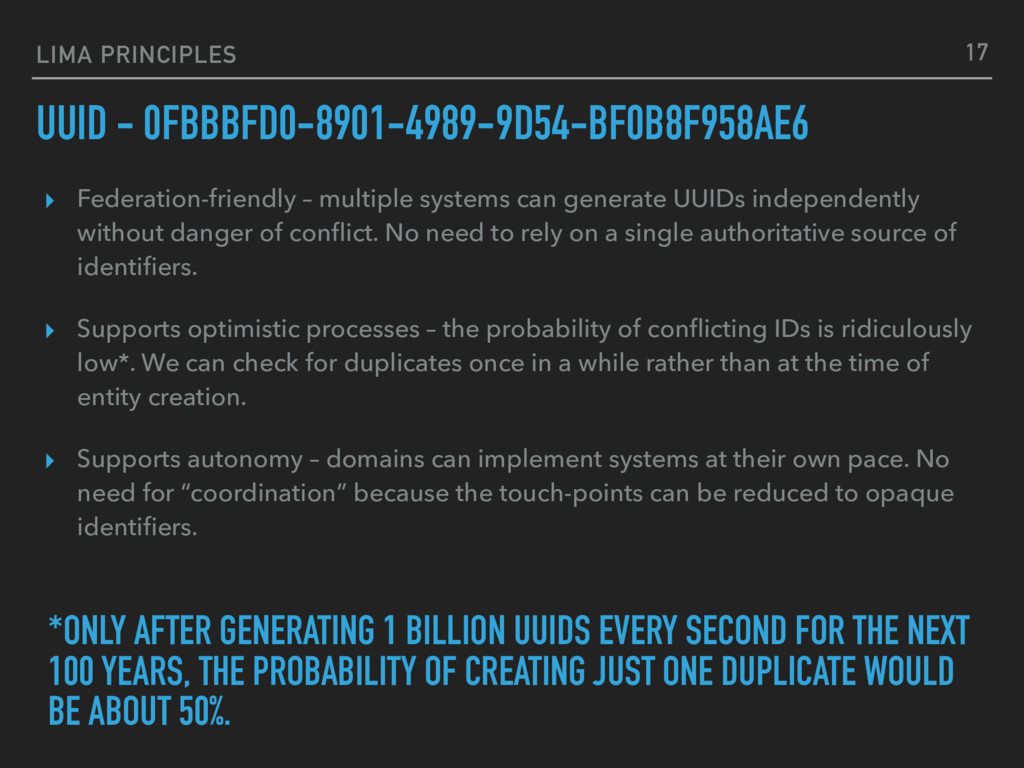
can generate UUIDs independently without danger of conflict. No need to rely on a single authoritative source of identifiers. ▸ Supports optimistic processes – the probability of conflicting IDs is ridiculously low*. We can check for duplicates once in a while rather than at the time of entity creation. ▸ Supports autonomy – domains can implement systems at their own pace. No need for “coordination” because the touch-points can be reduced to opaque identifiers. *ONLY AFTER GENERATING 1 BILLION UUIDS EVERY SECOND FOR THE NEXT 100 YEARS, THE PROBABILITY OF CREATING JUST ONE DUPLICATE WOULD BE ABOUT 50%. 17
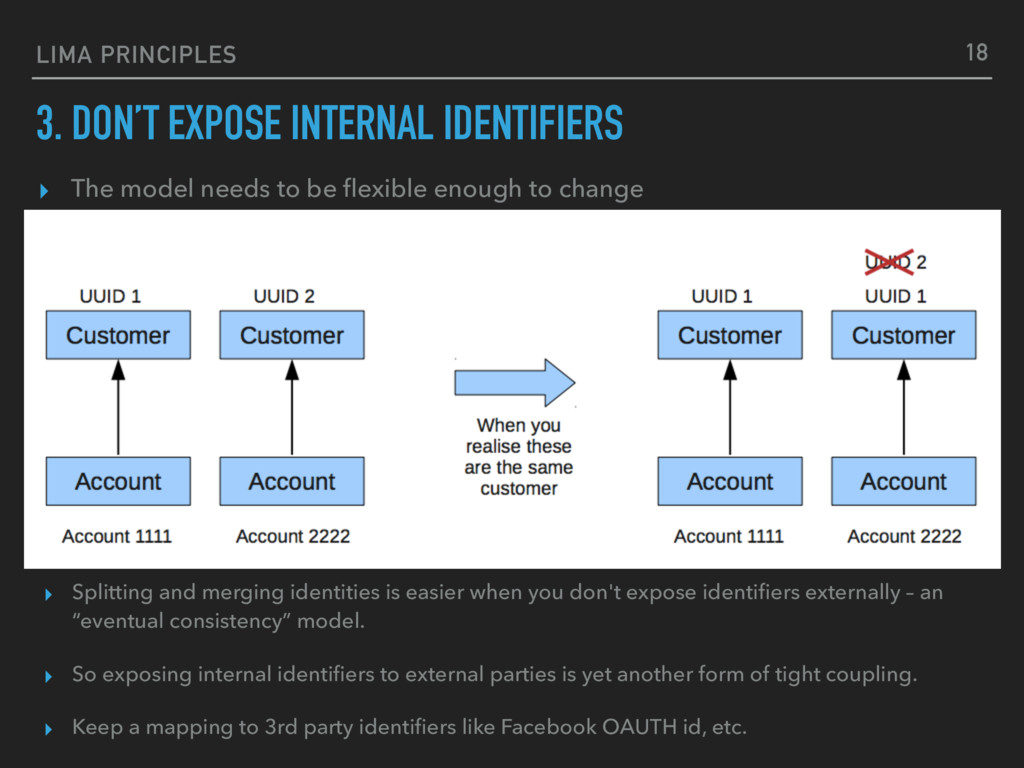
needs to be flexible enough to change ▸ Splitting and merging identities is easier when you don't expose identifiers externally – an “eventual consistency” model. ▸ So exposing internal identifiers to external parties is yet another form of tight coupling. ▸ Keep a mapping to 3rd party identifiers like Facebook OAUTH id, etc. 18
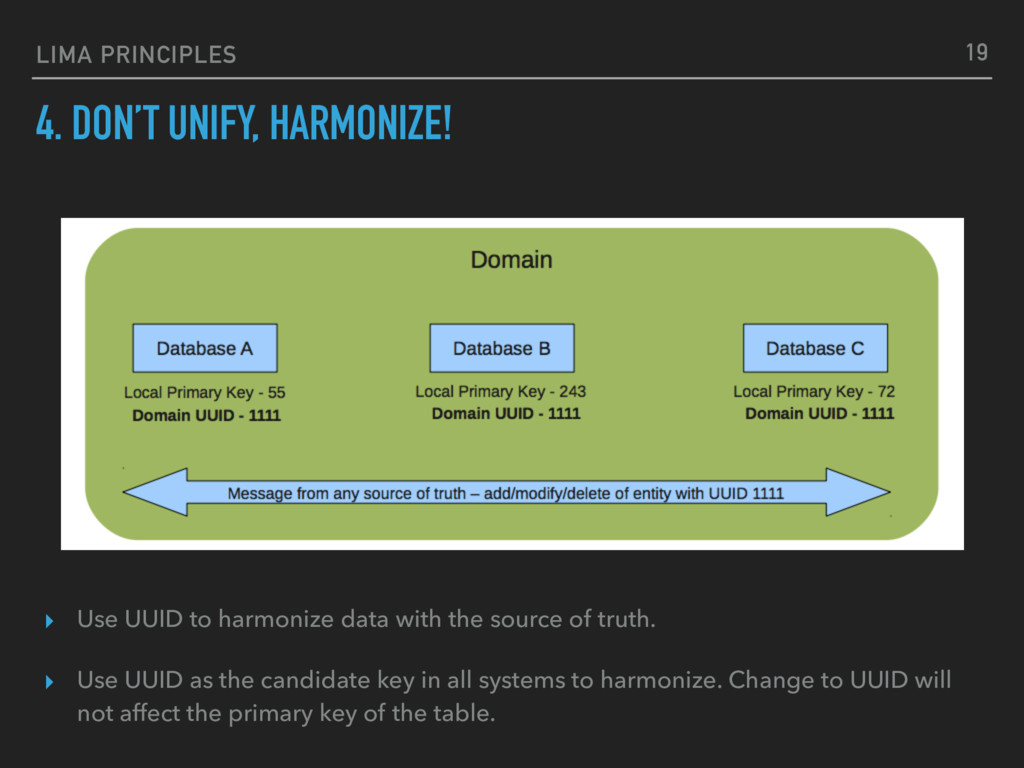
to harmonize data with the source of truth. ▸ Use UUID as the candidate key in all systems to harmonize. Change to UUID will not affect the primary key of the table.
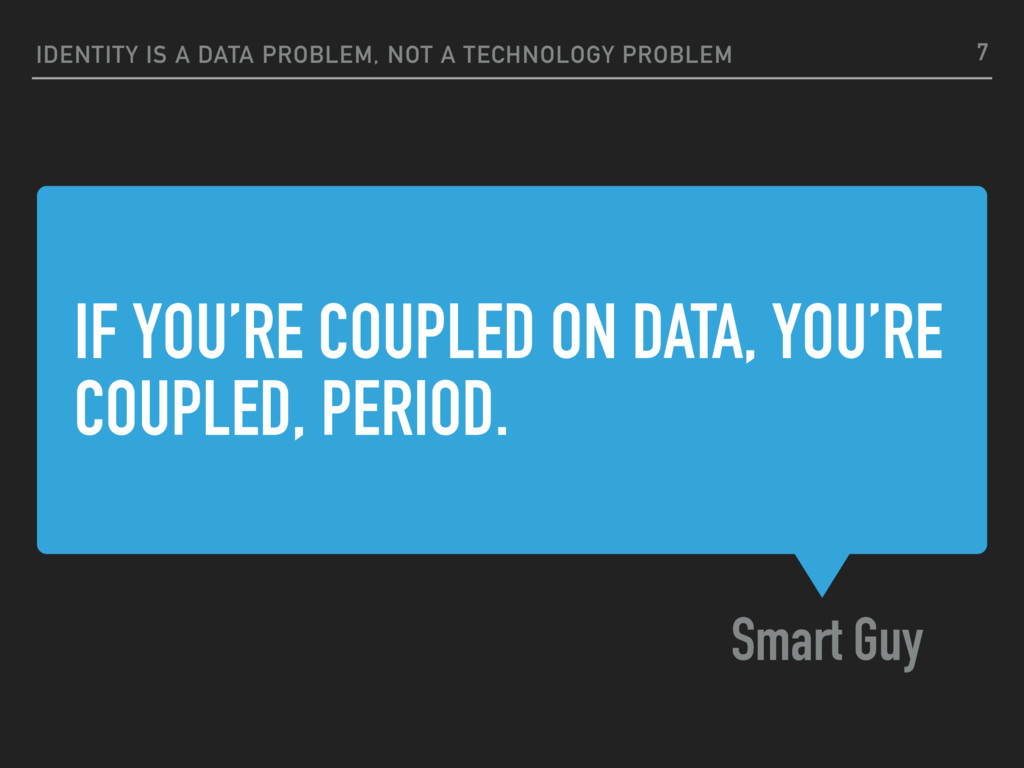
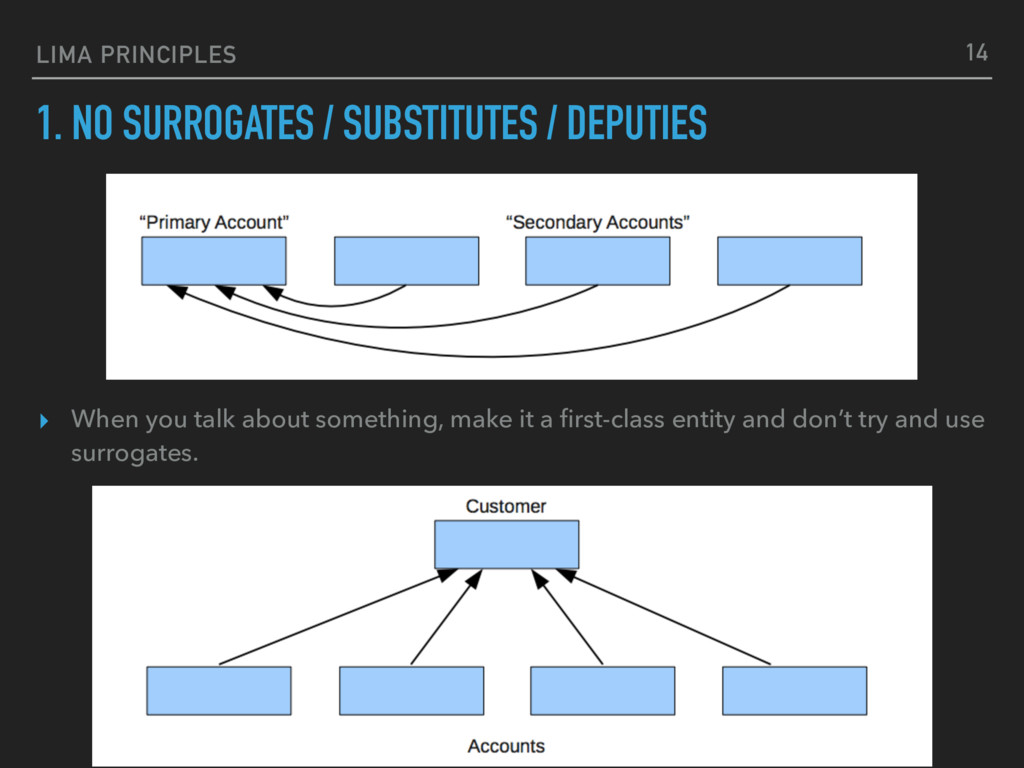
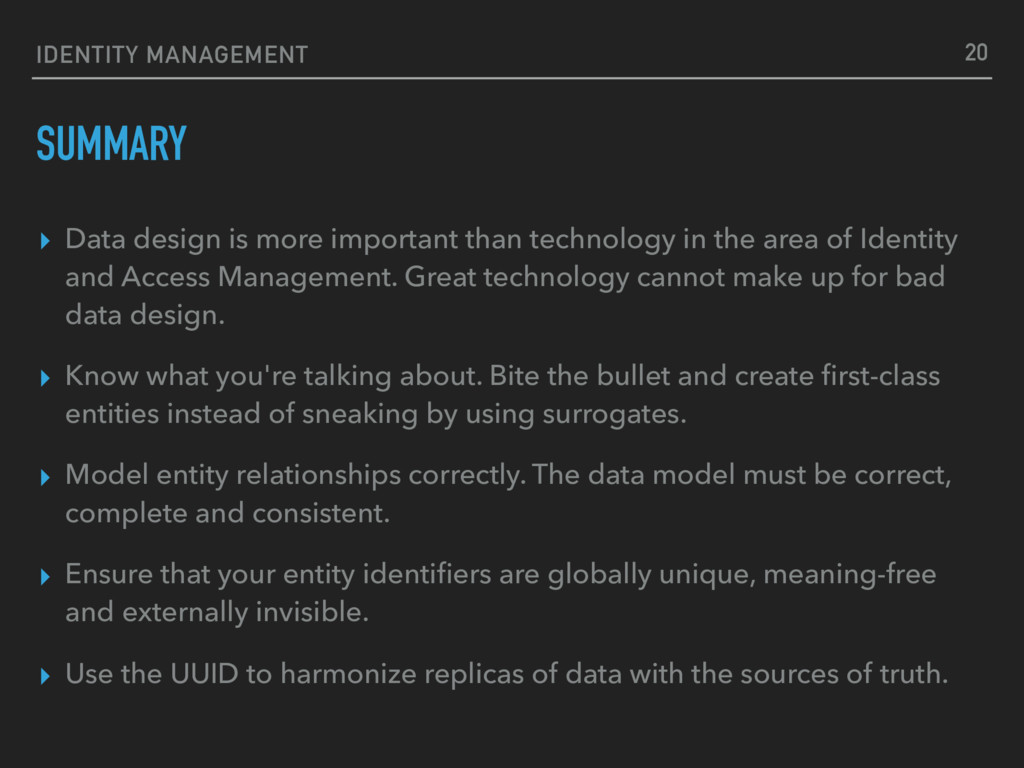
technology in the area of Identity and Access Management. Great technology cannot make up for bad data design. ▸ Know what you're talking about. Bite the bullet and create first-class entities instead of sneaking by using surrogates. ▸ Model entity relationships correctly. The data model must be correct, complete and consistent. ▸ Ensure that your entity identifiers are globally unique, meaning-free and externally invisible. ▸ Use the UUID to harmonize replicas of data with the sources of truth. 20


 esoxjem
 satoshi256kbyte
 dske104
 lynnswap
 tanahiro2010
 marcoroth
 nokomoro3
 minodriven
 sorah
 uyuki234
 colorful12
 iwatsukayura
 steliosf
 danielanewman
 kimpetersen
 pedronauck
 ipullrank
 cassininazir
 chriscoyier
 ianozsvald
 hannesfritz
 lynnandtonic
 mfonobong
 aleyda
 stephaniewalter