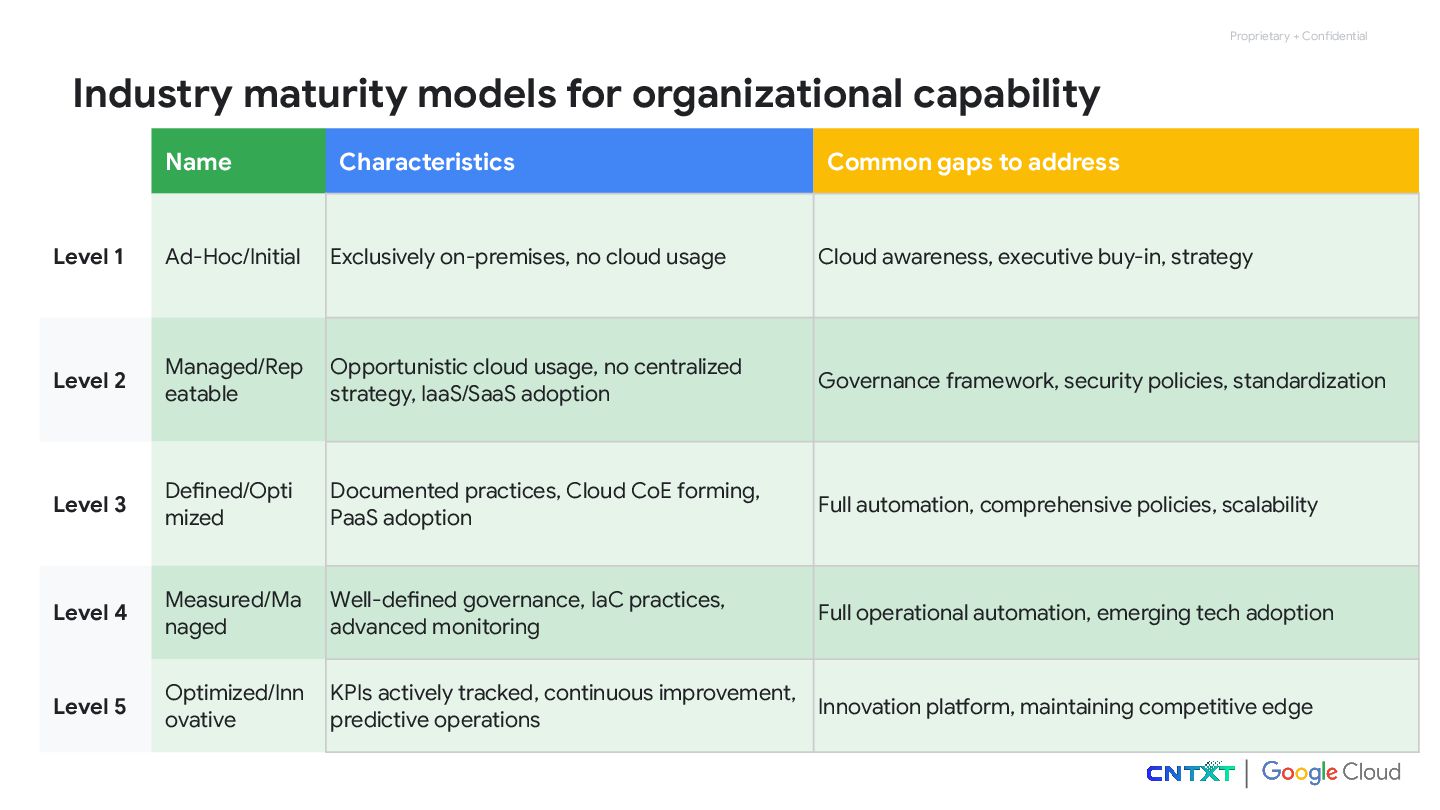
Where do we stand? Cloud Maturity Models & Security Posture
This session covers what one does in the Google Cloud as Day 2 operations, how one leverages the cloud maturity and well-architected framework to their advantage and what to evolve around security in the cloud.
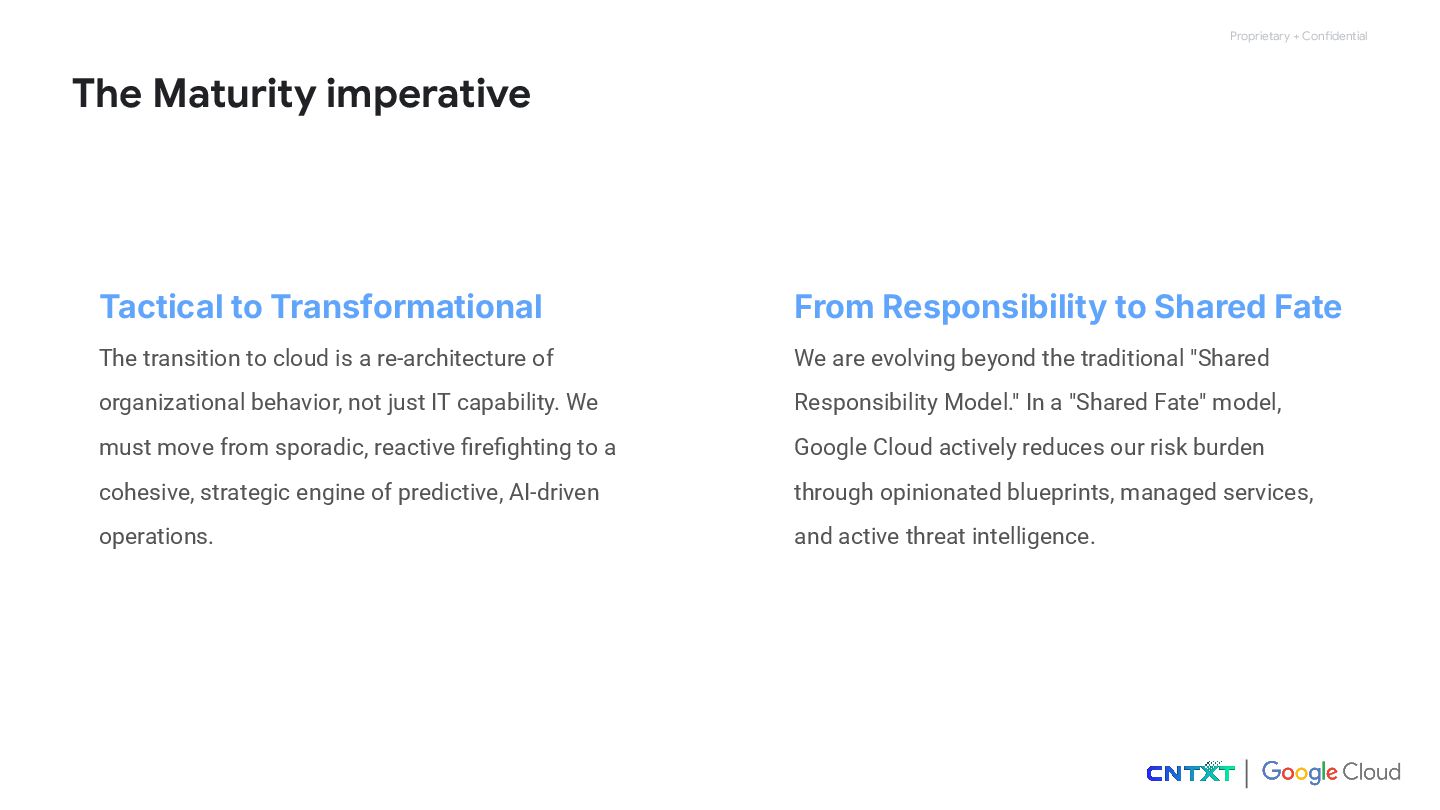
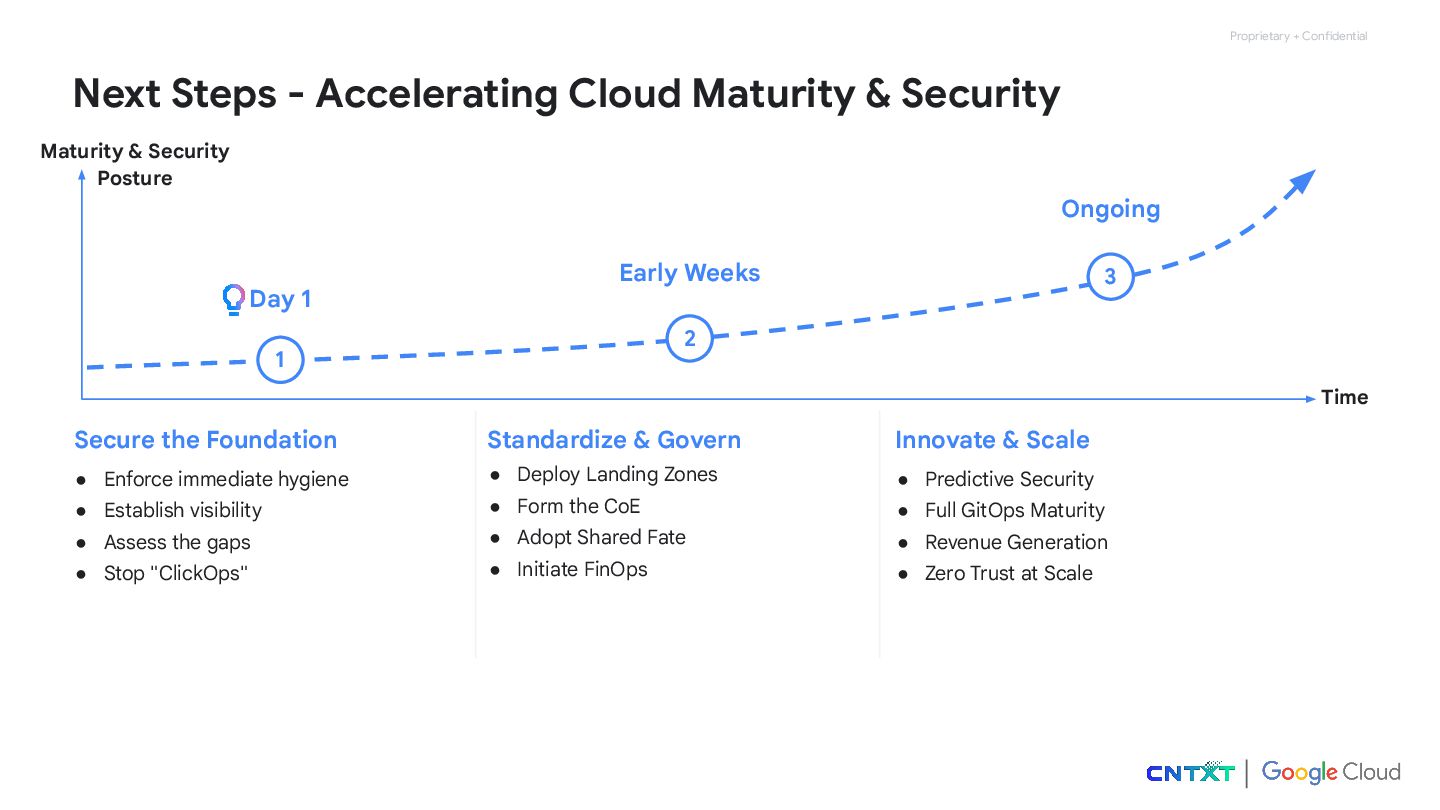
transition to cloud is a re-architecture of organizational behavior, not just IT capability. We must move from sporadic, reactive firefighting to a cohesive, strategic engine of predictive, AI-driven operations. From Responsibility to Shared Fate We are evolving beyond the traditional "Shared Responsibility Model." In a "Shared Fate" model, Google Cloud actively reduces our risk burden through opinionated blueprints, managed services, and active threat intelligence.
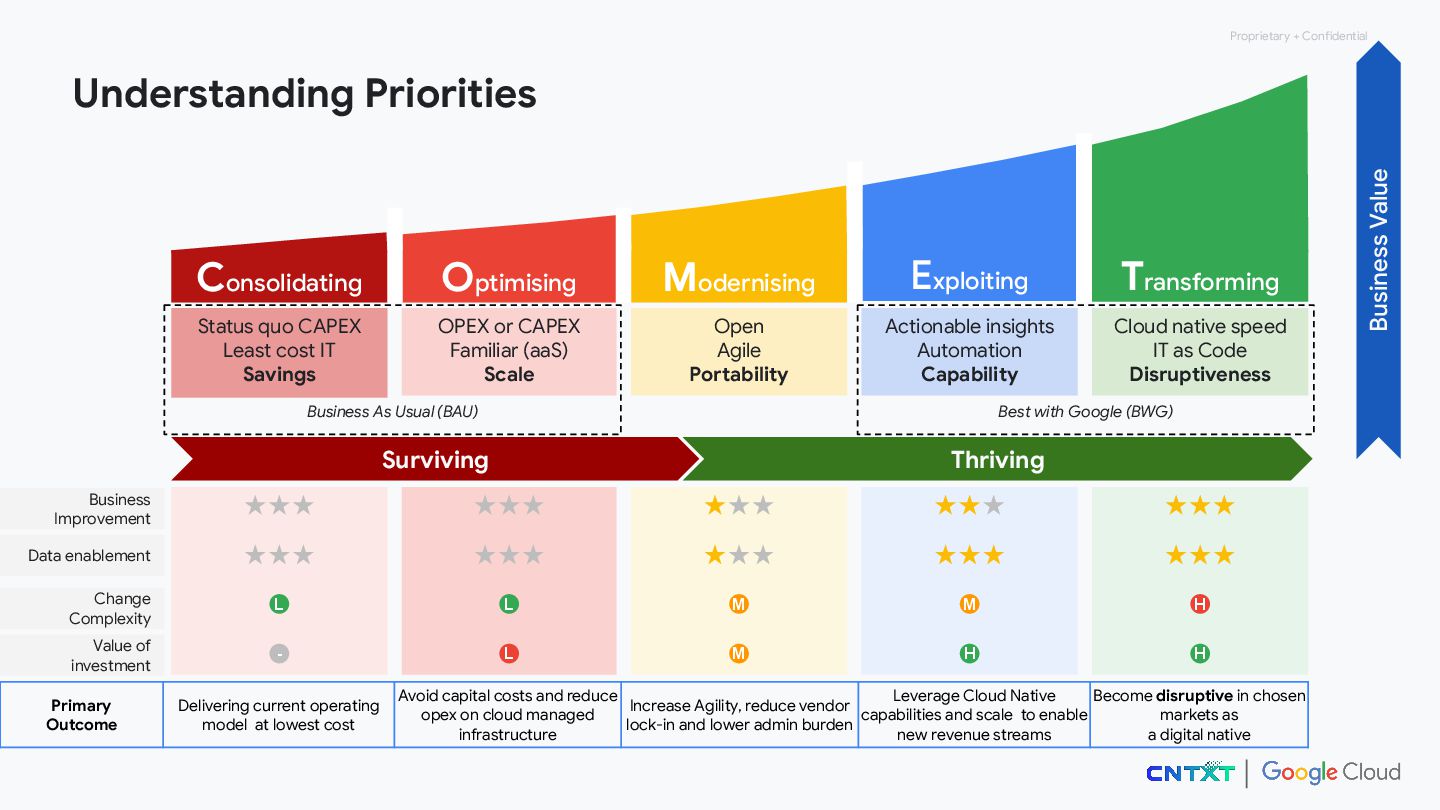
Outcome Delivering current operating model at lowest cost Avoid capital costs and reduce opex on cloud managed infrastructure Increase Agility, reduce vendor lock-in and lower admin burden Leverage Cloud Native capabilities and scale to enable new revenue streams Become disruptive in chosen markets as a digital native H M M L L H H M L - Best with Google (BWG) Consolidating Optimising Modernising Exploiting Transforming Open Agile Portability Status quo CAPEX Least cost IT Savings OPEX or CAPEX Familiar (aaS) Scale Actionable insights Automation Capability Cloud native speed IT as Code Disruptiveness Business Value Thriving Surviving Change Complexity Value of investment Business Improvement Data enablement
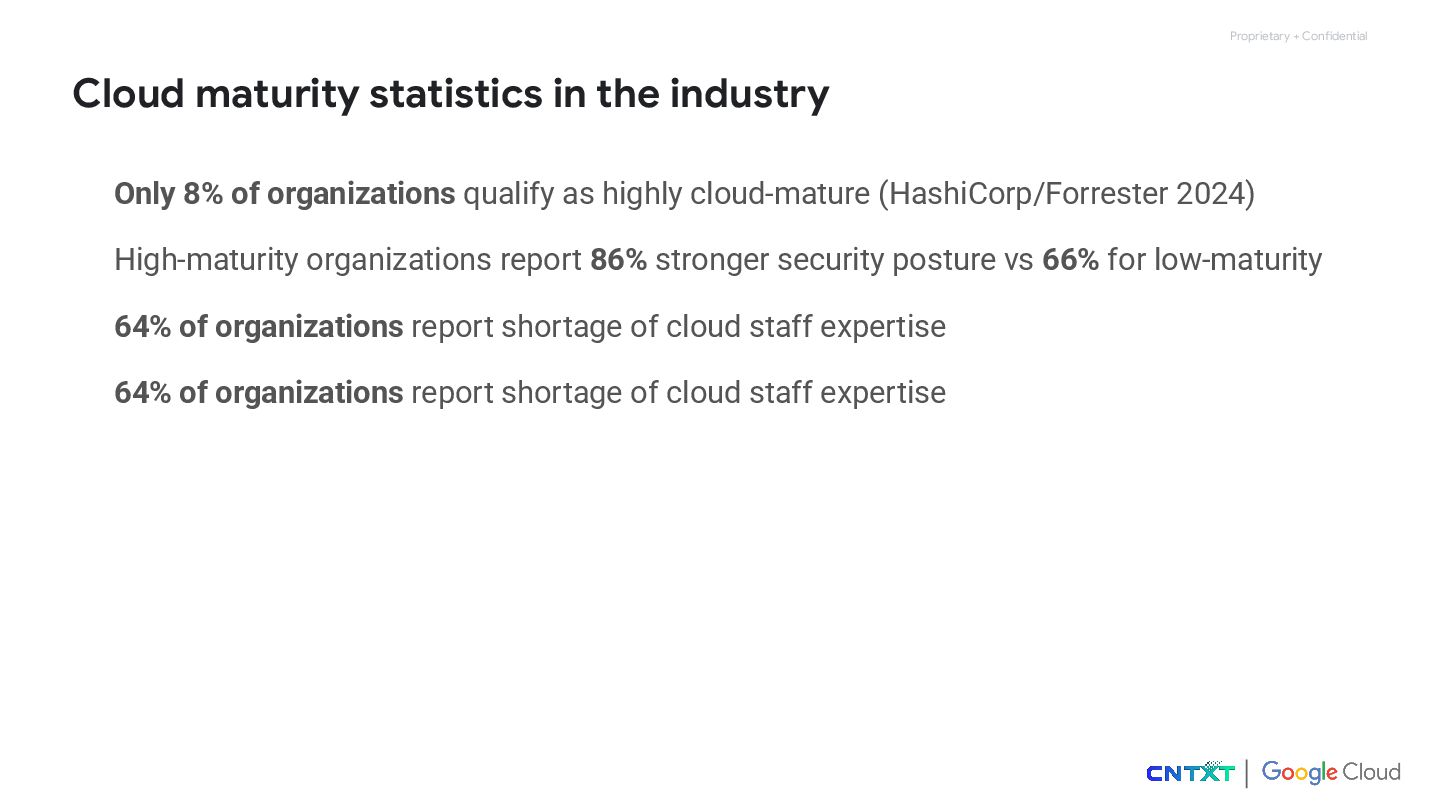
8% of organizations qualify as highly cloud-mature (HashiCorp/Forrester 2024) High-maturity organizations report 86% stronger security posture vs 66% for low-maturity 64% of organizations report shortage of cloud staff expertise 64% of organizations report shortage of cloud staff expertise
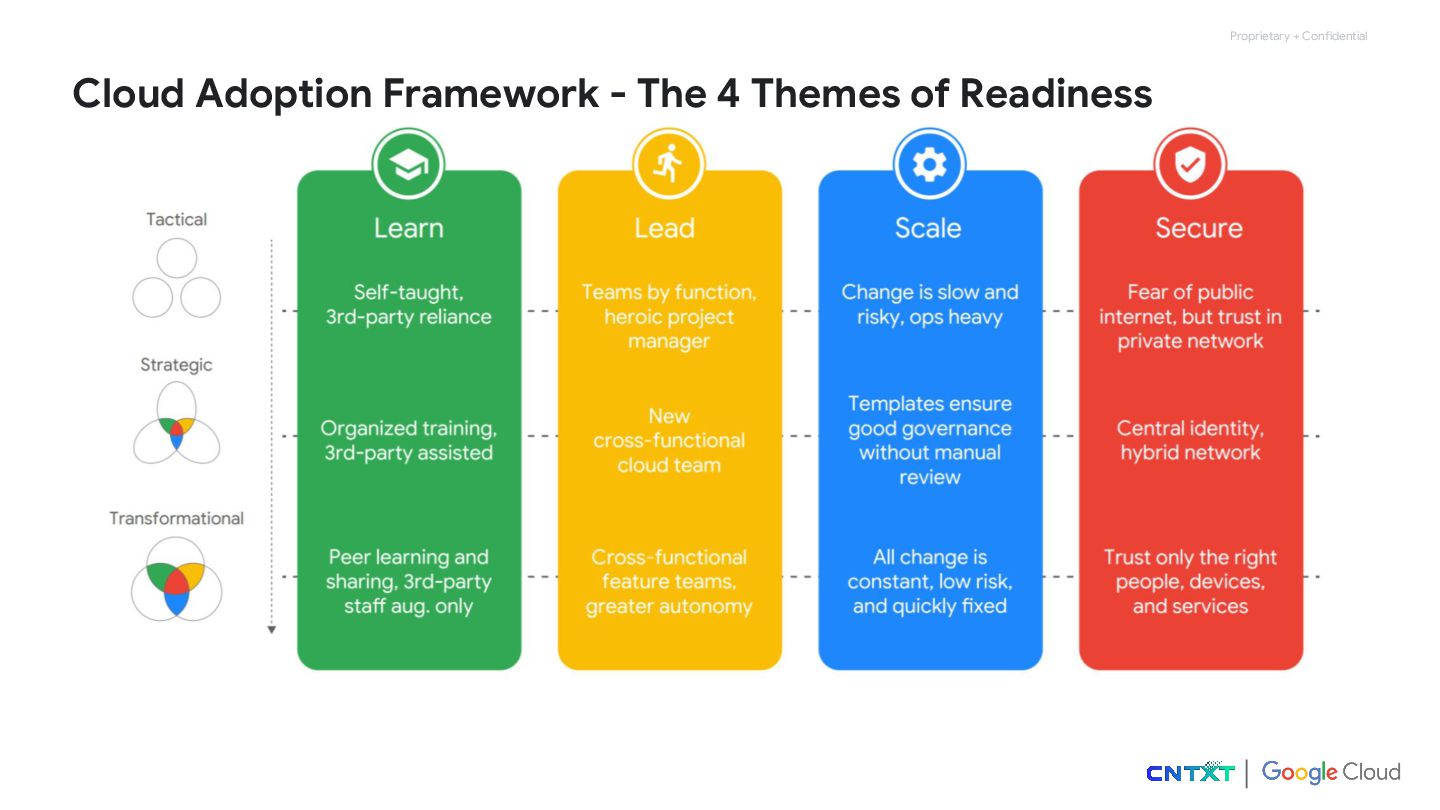
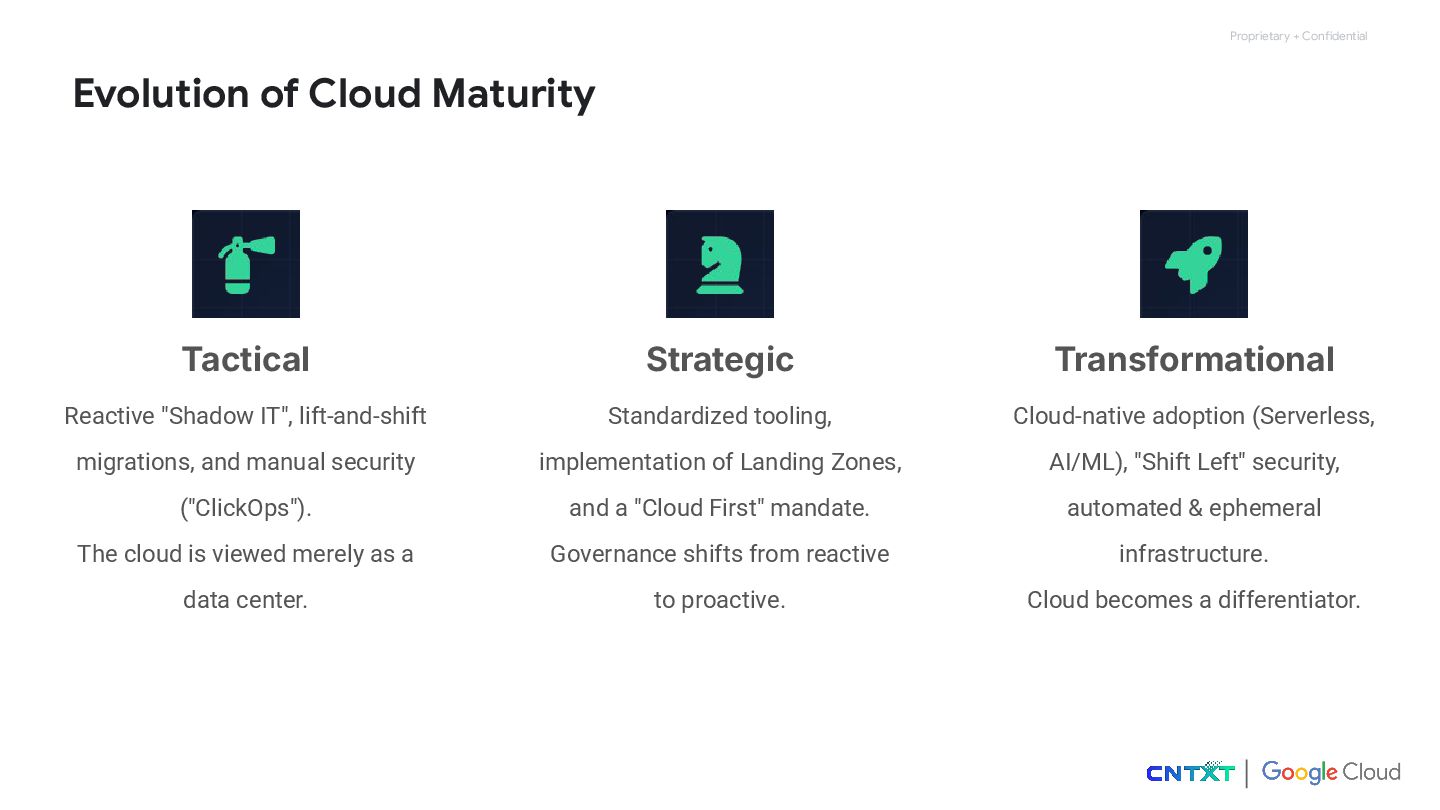
IT", lift-and-shift migrations, and manual security ("ClickOps"). The cloud is viewed merely as a data center. Strategic Standardized tooling, implementation of Landing Zones, and a "Cloud First" mandate. Governance shifts from reactive to proactive. Transformational Cloud-native adoption (Serverless, AI/ML), "Shift Left" security, automated & ephemeral infrastructure. Cloud becomes a differentiator.
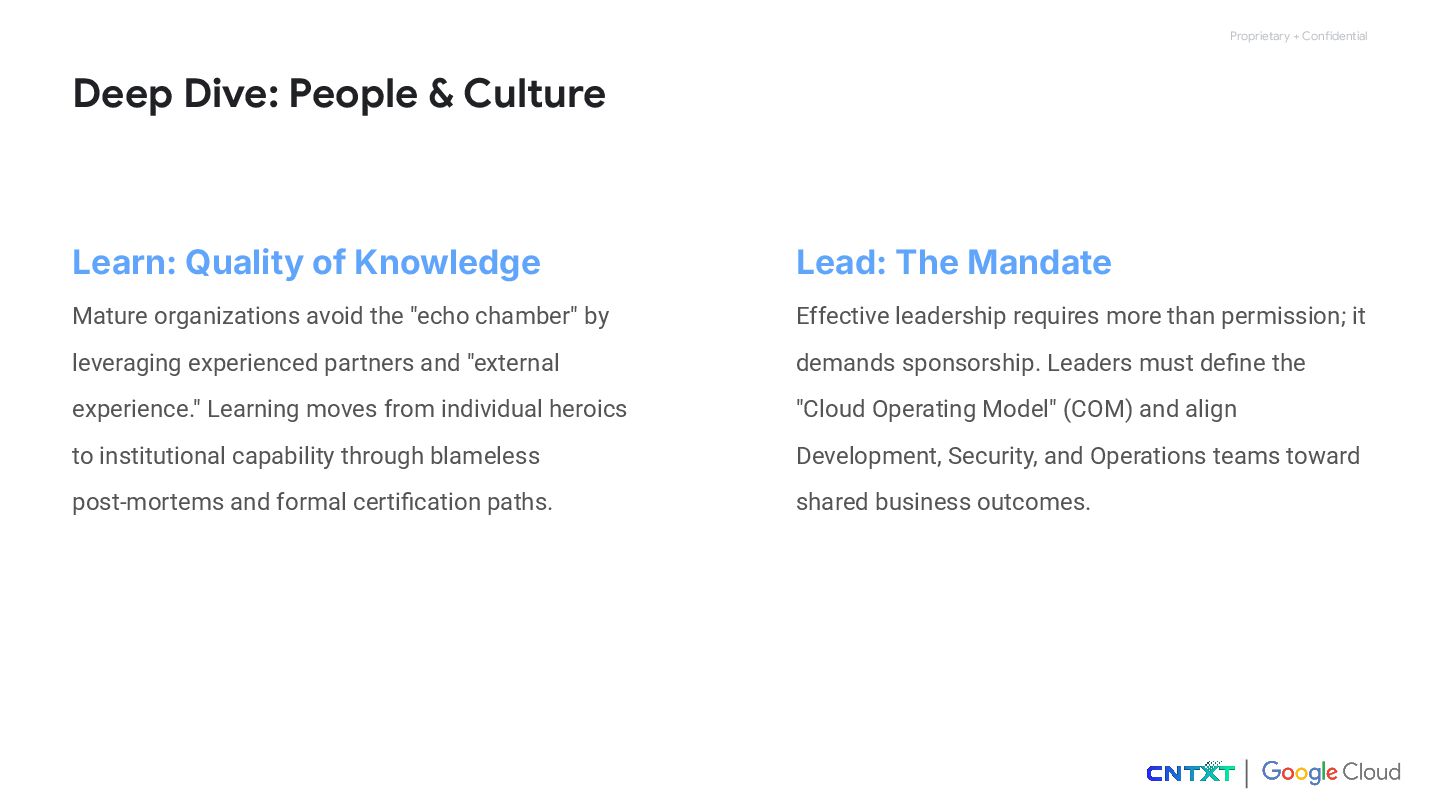
of Knowledge Mature organizations avoid the "echo chamber" by leveraging experienced partners and "external experience." Learning moves from individual heroics to institutional capability through blameless post-mortems and formal certification paths. Lead: The Mandate Effective leadership requires more than permission; it demands sponsorship. Leaders must define the "Cloud Operating Model" (COM) and align Development, Security, and Operations teams toward shared business outcomes.
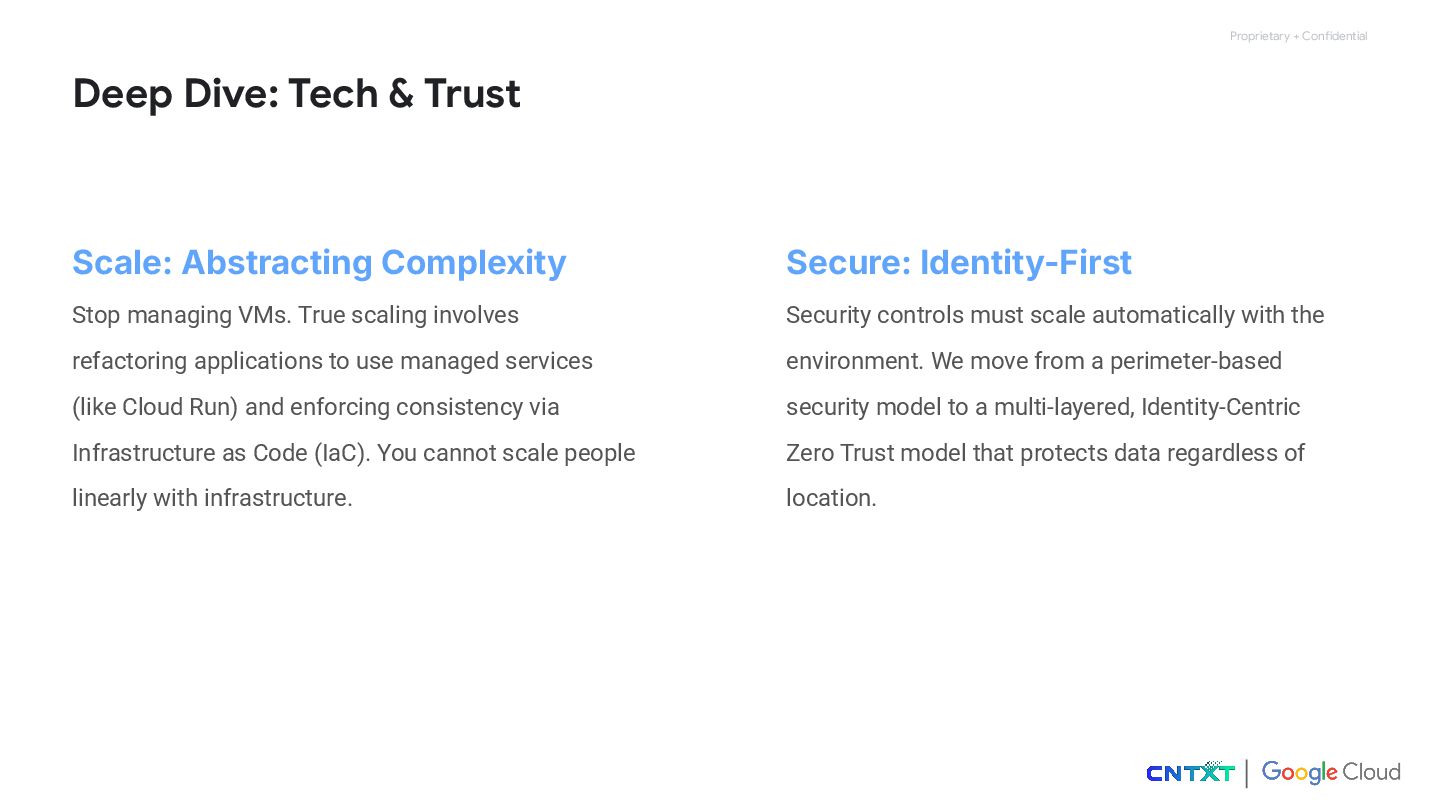
Complexity Stop managing VMs. True scaling involves refactoring applications to use managed services (like Cloud Run) and enforcing consistency via Infrastructure as Code (IaC). You cannot scale people linearly with infrastructure. Secure: Identity-First Security controls must scale automatically with the environment. We move from a perimeter-based security model to a multi-layered, Identity-Centric Zero Trust model that protects data regardless of location.
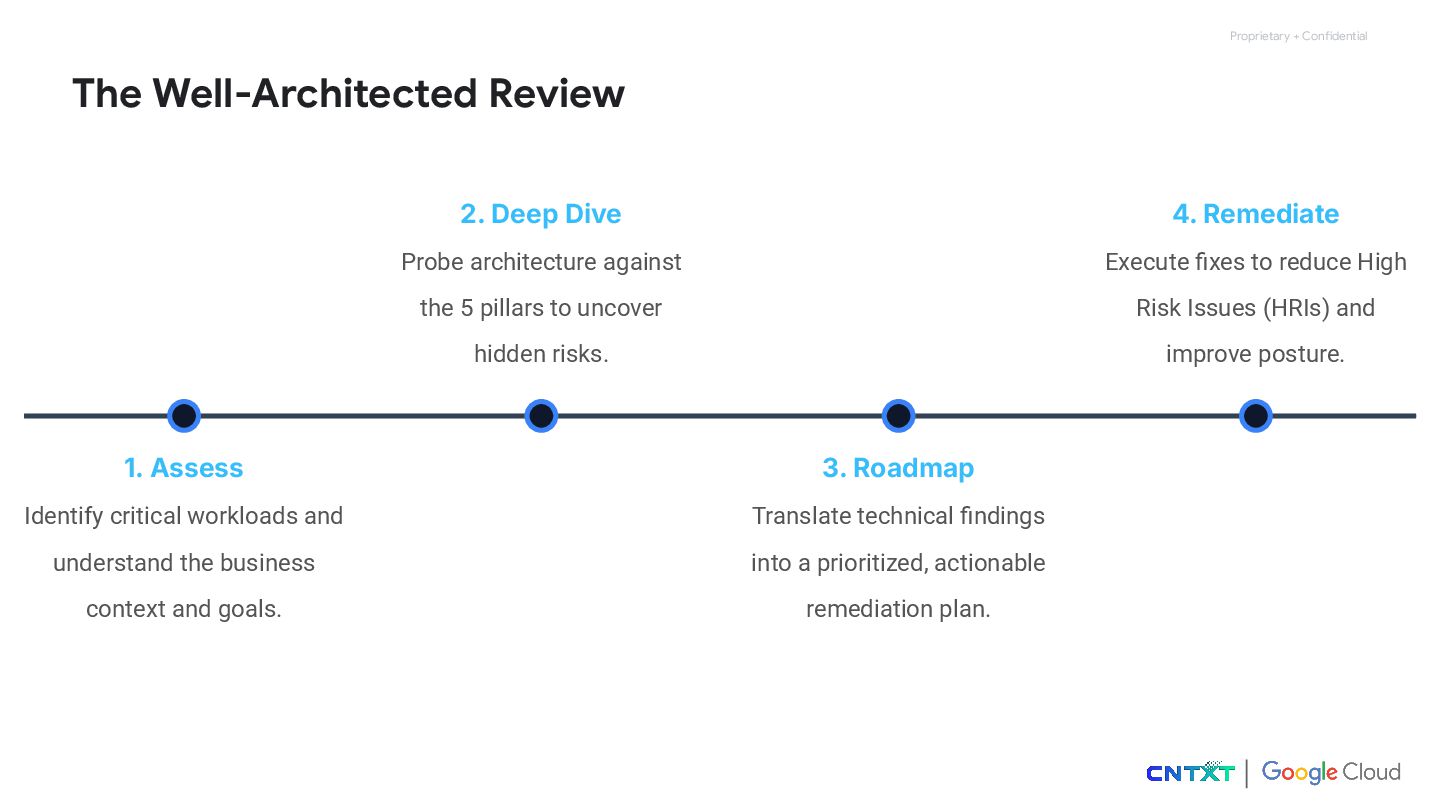
workloads and understand the business context and goals. 2. Deep Dive Probe architecture against the 5 pillars to uncover hidden risks. 3. Roadmap Translate technical findings into a prioritized, actionable remediation plan. 4. Remediate Execute fixes to reduce High Risk Issues (HRIs) and improve posture.
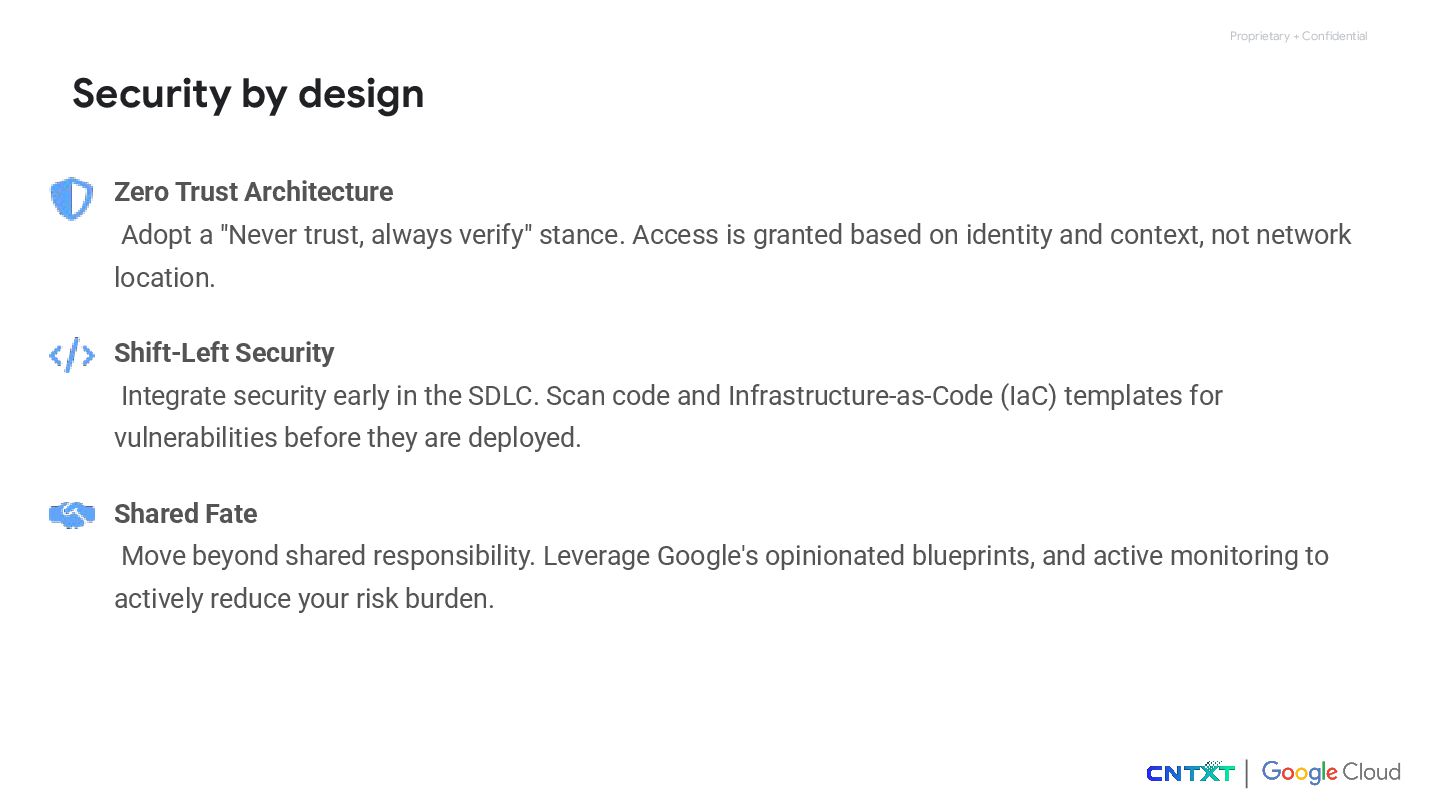
a "Never trust, always verify" stance. Access is granted based on identity and context, not network location. Shift-Left Security Integrate security early in the SDLC. Scan code and Infrastructure-as-Code (IaC) templates for vulnerabilities before they are deployed. Shared Fate Move beyond shared responsibility. Leverage Google's opinionated blueprints, and active monitoring to actively reduce your risk burden.
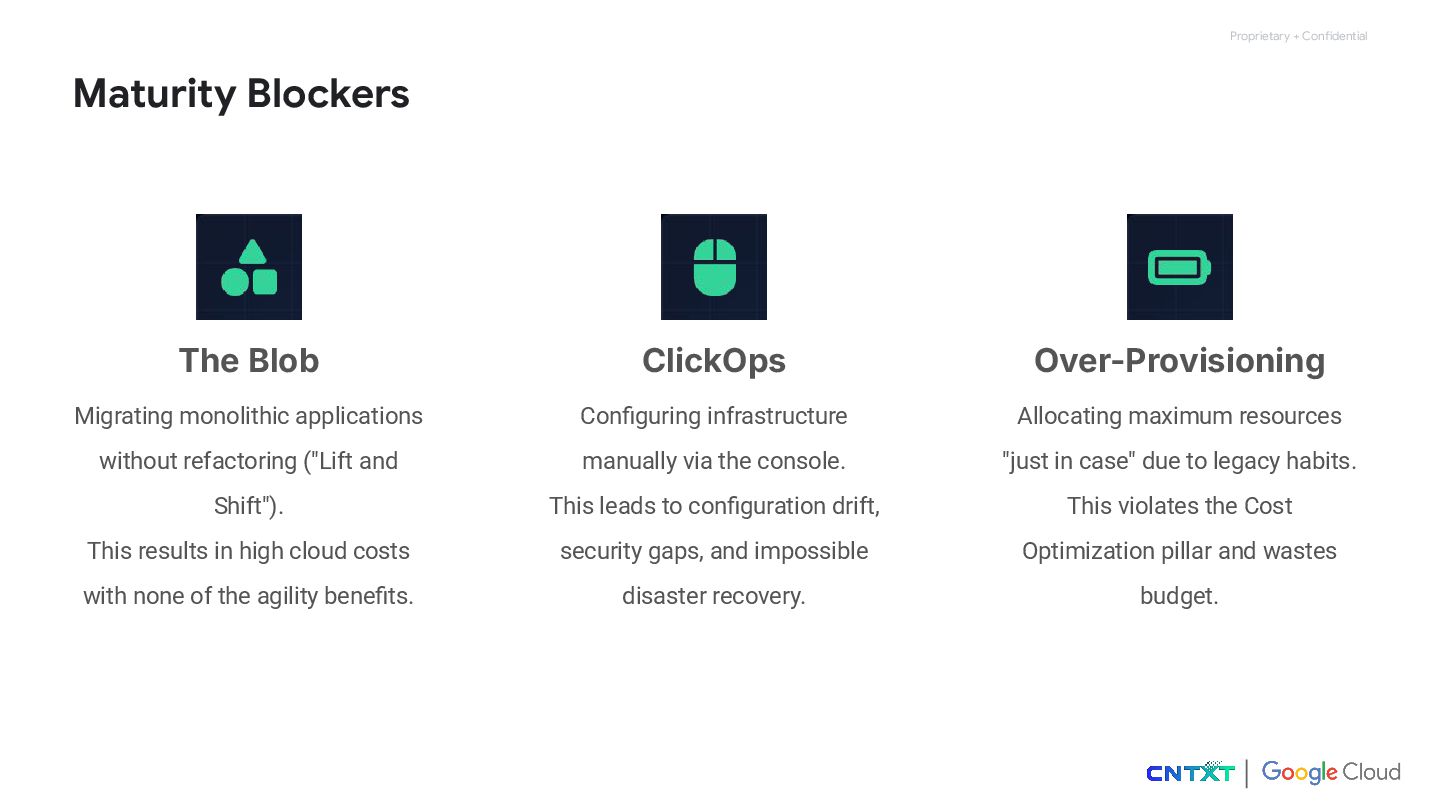
without refactoring ("Lift and Shift"). This results in high cloud costs with none of the agility benefits. ClickOps Configuring infrastructure manually via the console. This leads to configuration drift, security gaps, and impossible disaster recovery. Over-Provisioning Allocating maximum resources "just in case" due to legacy habits. This violates the Cost Optimization pillar and wastes budget.
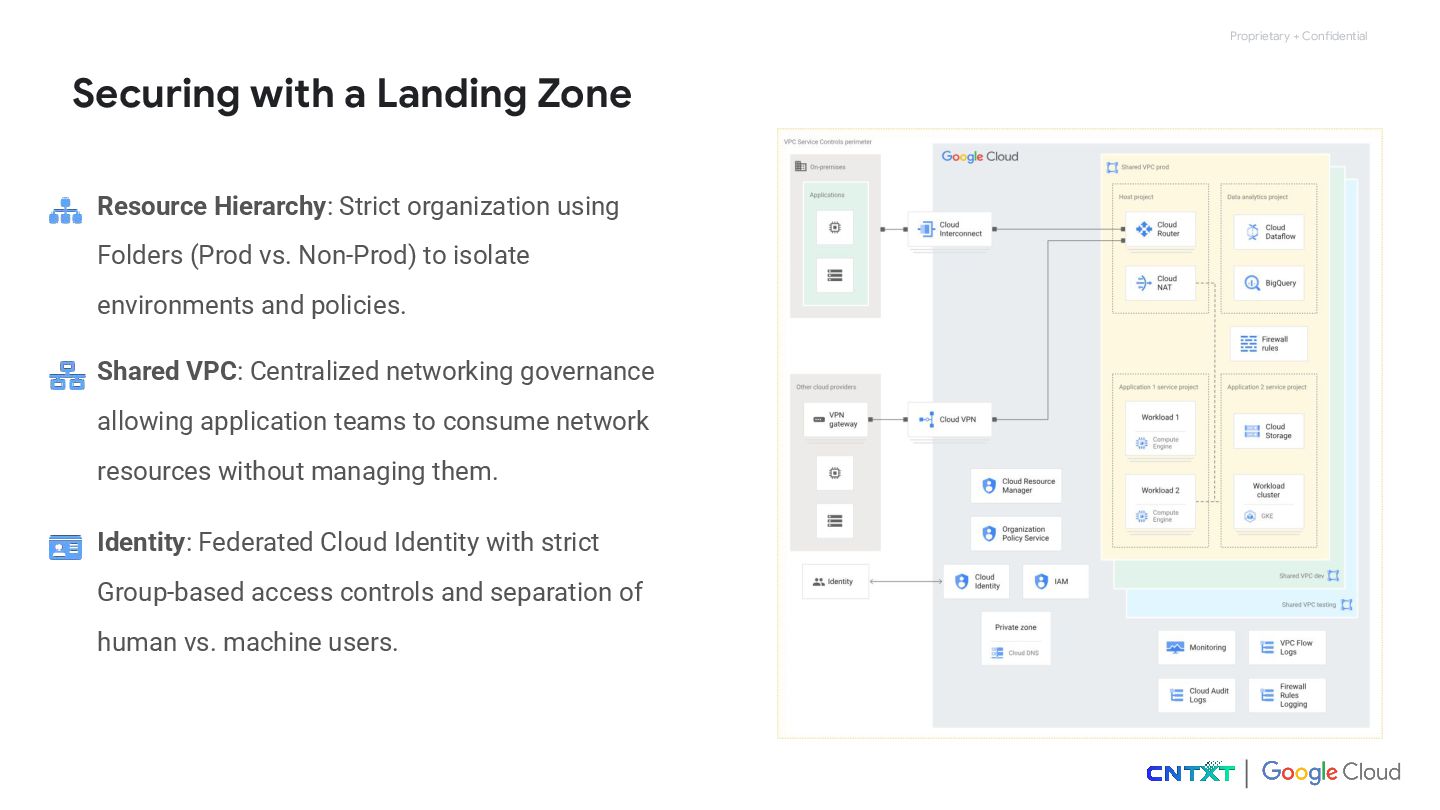
Strict organization using Folders (Prod vs. Non-Prod) to isolate environments and policies. Shared VPC: Centralized networking governance allowing application teams to consume network resources without managing them. Identity: Federated Cloud Identity with strict Group-based access controls and separation of human vs. machine users.
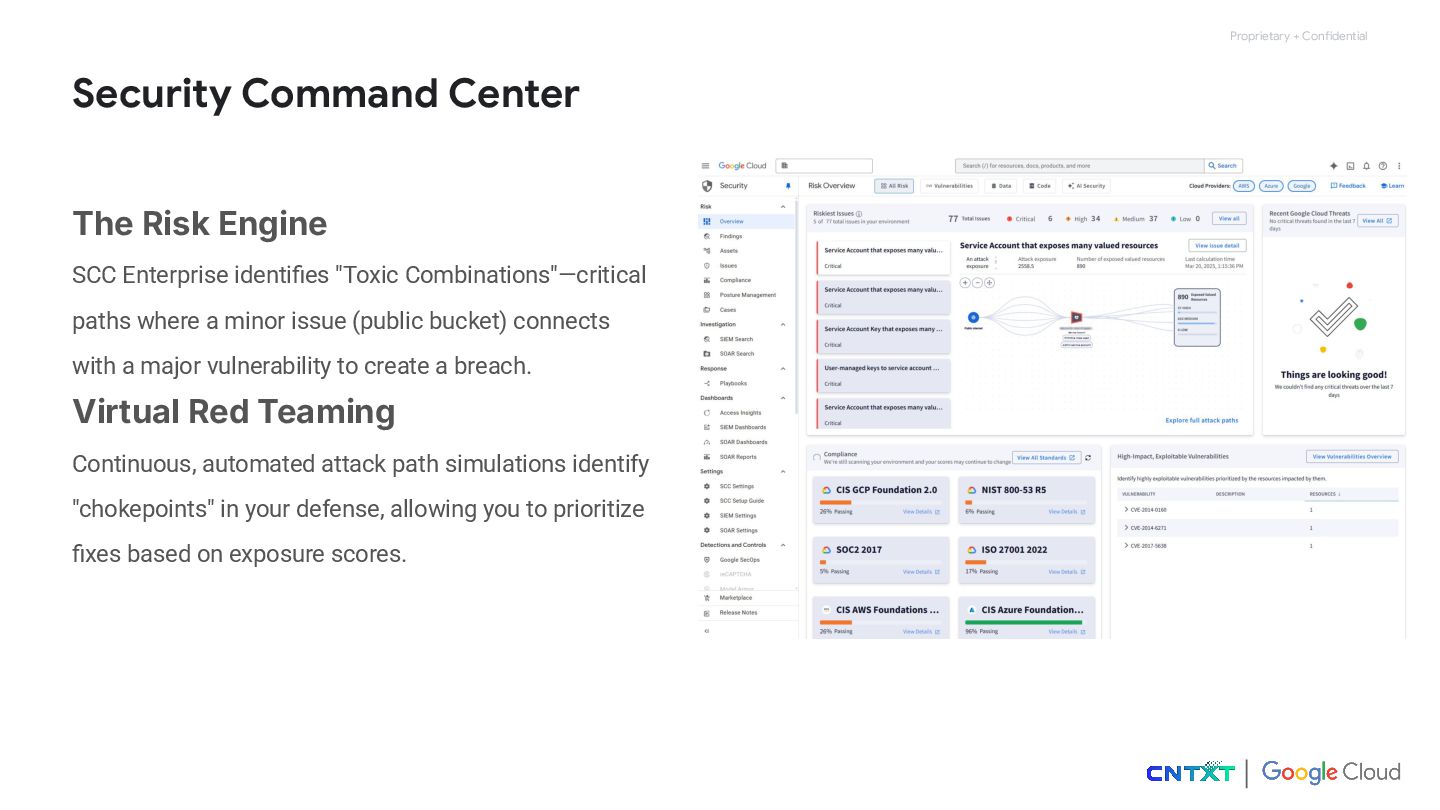
Enterprise identifies "Toxic Combinations"—critical paths where a minor issue (public bucket) connects with a major vulnerability to create a breach. Virtual Red Teaming Continuous, automated attack path simulations identify "chokepoints" in your defense, allowing you to prioritize fixes based on exposure scores.
Enabler Security must shift from being a blocker to an enabler. By using Landing Zones to provide "Guardrails," we allow developers to move fast within safe parameters, satisfying both speed and risk requirements. Finance: ROI of Security Reframe "Technical Debt" as "Financial Risk Exposure." Investment in the "Scale" and "Secure" themes (automation) directly reduces the "Annualized Loss Expectancy" (ALE) of a potential breach.
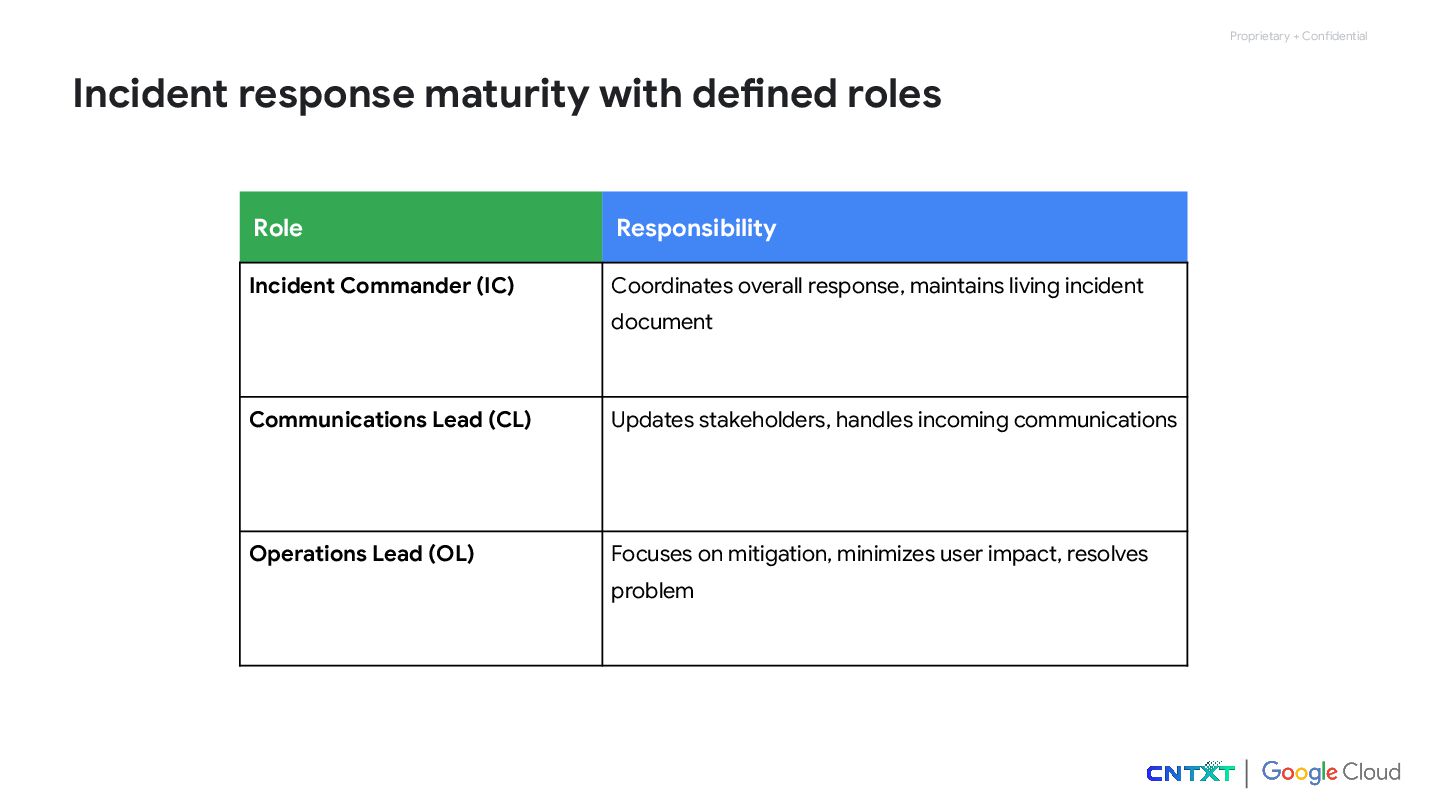
Responsibility Incident Commander (IC) Coordinates overall response, maintains living incident document Communications Lead (CL) Updates stakeholders, handles incoming communications Operations Lead (OL) Focuses on mitigation, minimizes user impact, resolves problem


 faz
faz
 ishiirikie
 nayuts
 tkuchiki
 kazukun0716
 iwatatomoya
 dada4386
 ennael
 sagochiko
 junkifurukawa
 kairim0
 oracle4engineer
 jonoalderson
 inesmontani
 tanoku
 bermonpainter
 aleyda
 wayneb77
 kneath
 mclloyd
 frankvandijk
 akashhashmi
 andyhume
 ryanjones