Upgrade to Pro — share decks privately, control downloads, hide ads and more …

Bocadillo: How I Built A Python Async Web Frame...

Bocadillo: How I Built A Python Async Web Framework And Became An Open Source Maintainer

Florimond Manca

May 25, 2019

Transcript

59 slides
  1. Bocadillo, or how I built an open source Python async

    web framework @FlorimondManca | PyConWeb2019
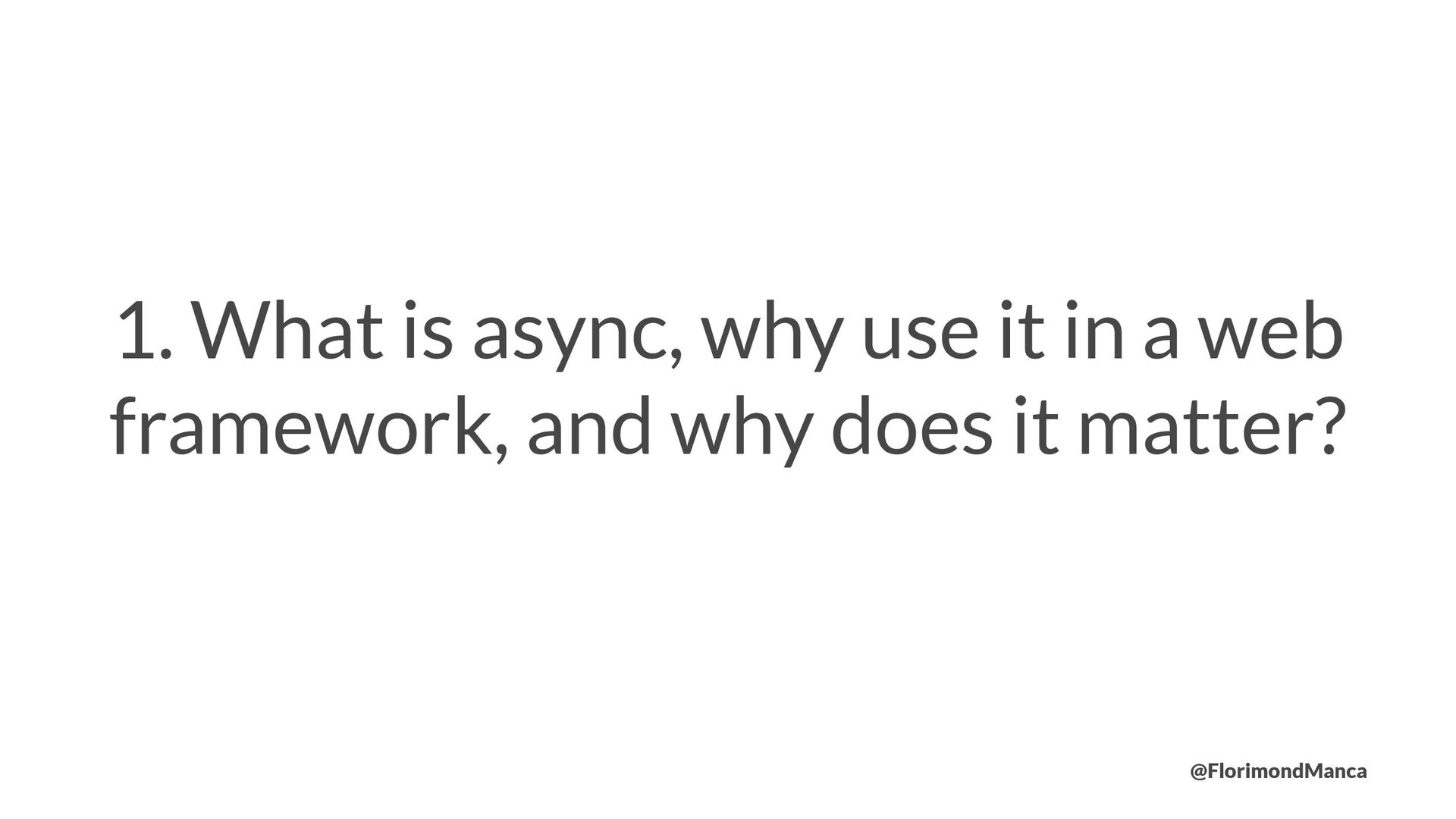
  2. 1. What is async, why use it in a web

    framework, and why does it matter? @FlorimondManca
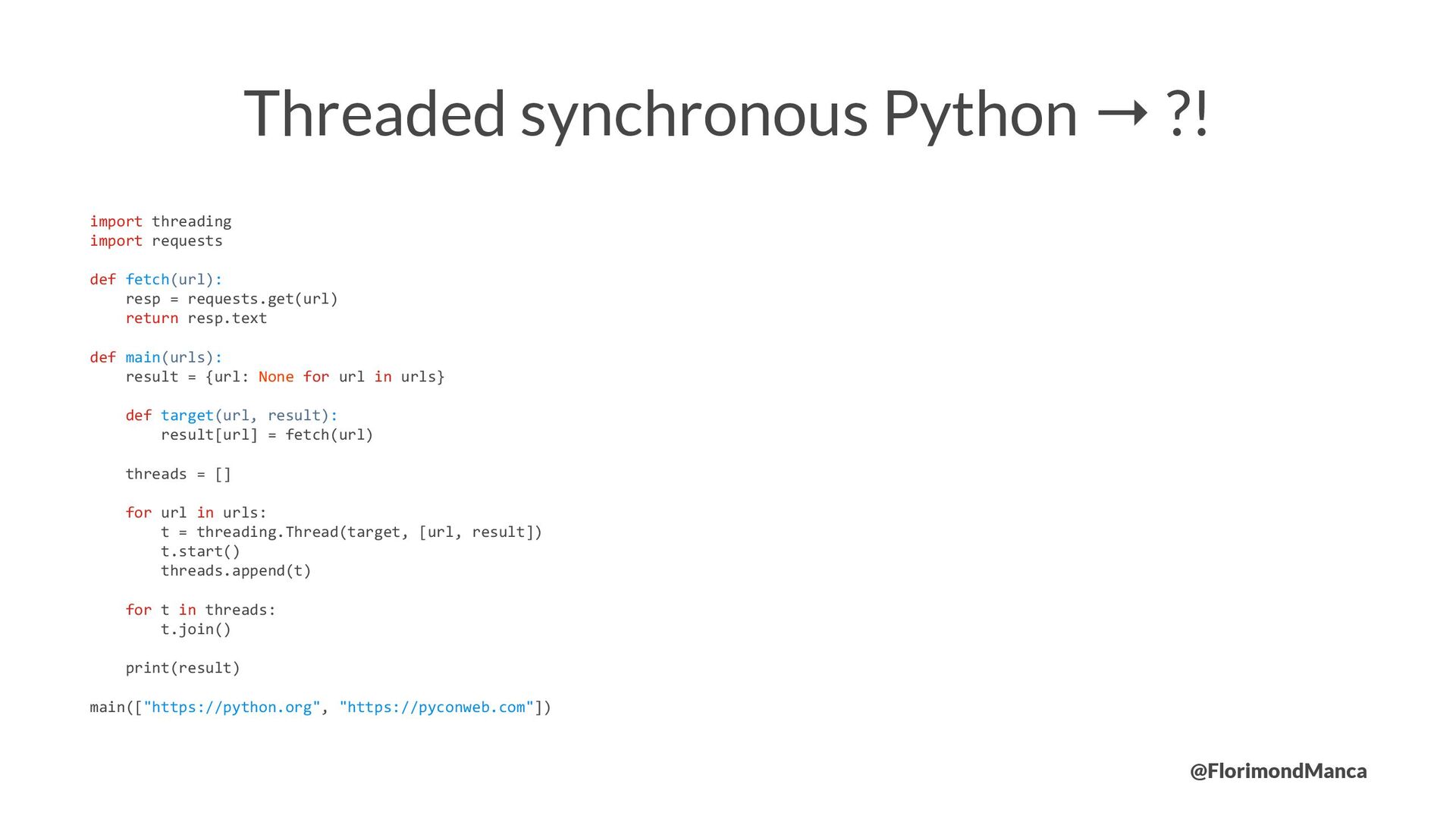
  3. Threaded synchronous Python → ?! import threading import requests def
    fetch(url): resp = requests.get(url) return resp.text def main(urls): result = {url: None for url in urls} def target(url, result): result[url] = fetch(url) threads = [] for url in urls: t = threading.Thread(target, [url, result]) t.start() threads.append(t) for t in threads: t.join() print(result) main(["https://python.org", "https://pyconweb.com"]) @FlorimondManca
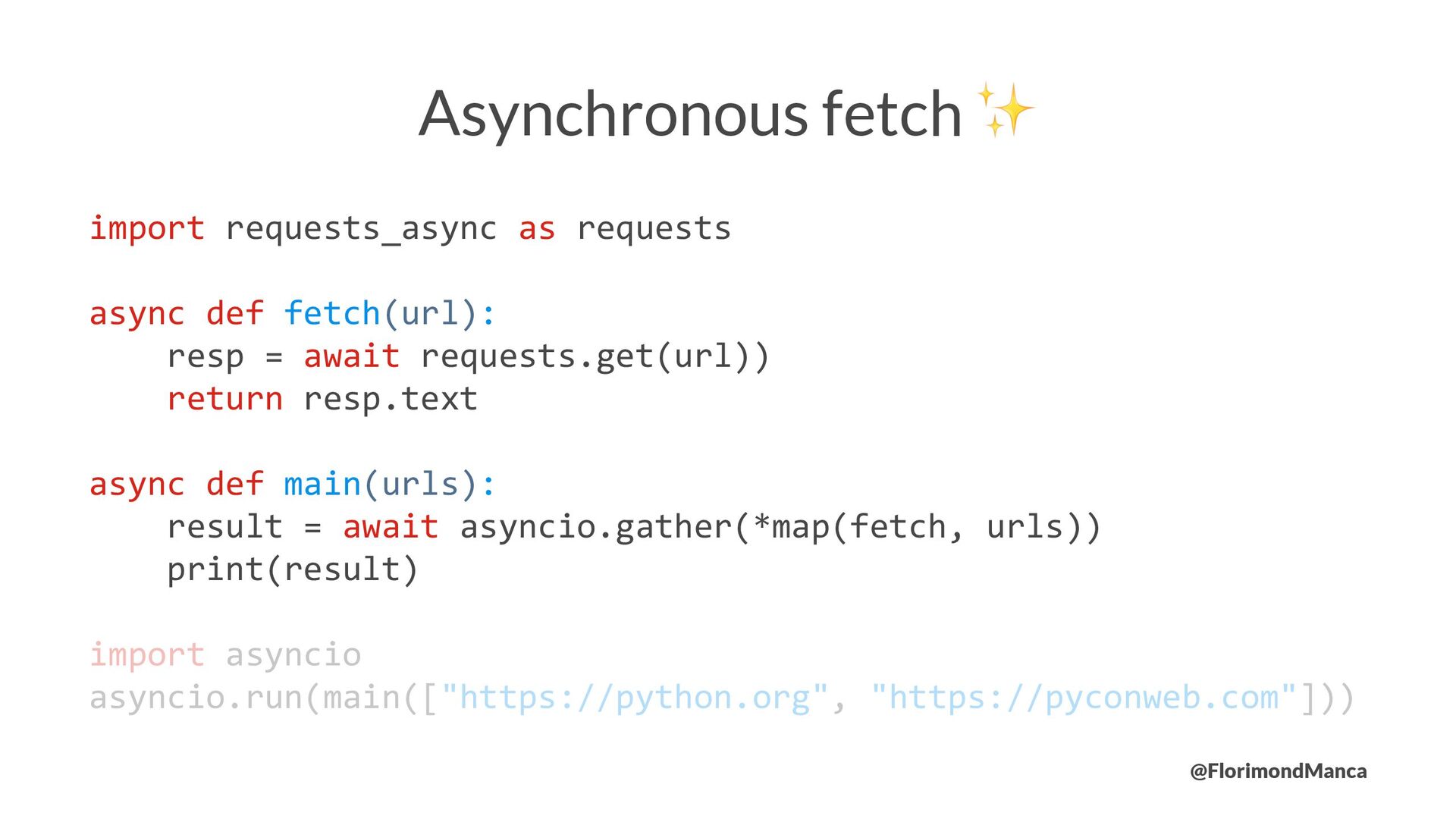
  4. Asynchronous fetch import requests_async as requests async def fetch(url): resp

    = await requests.get(url)) return resp.text async def main(urls): result = await asyncio.gather(*map(fetch, urls)) print(result) import asyncio asyncio.run(main(["https://python.org", "https://pyconweb.com"])) @FlorimondManca
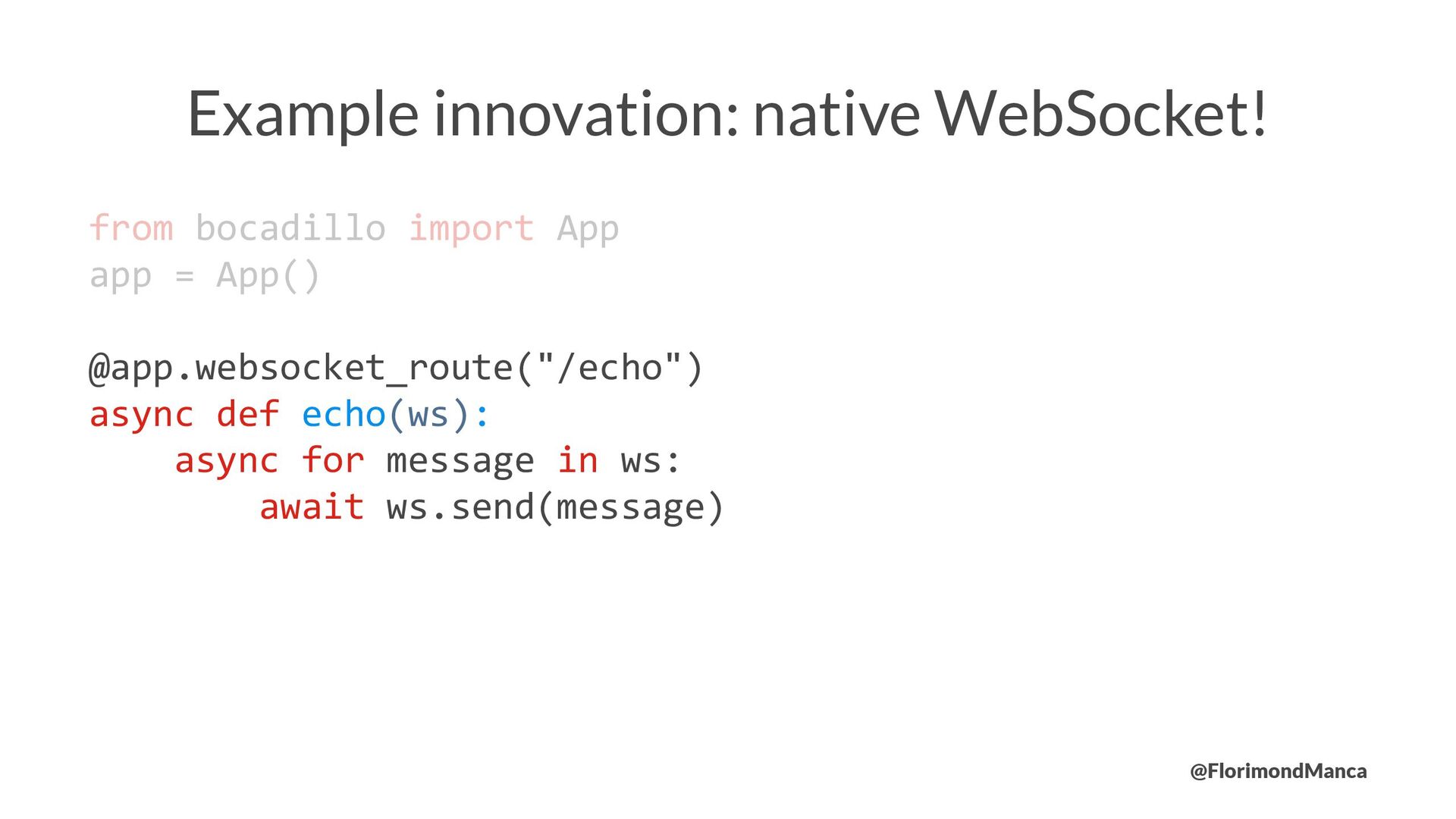
  5. Example innovation: native WebSocket! from bocadillo import App app =

    App() @app.websocket_route("/echo") async def echo(ws): async for message in ws: await ws.send(message) @FlorimondManca
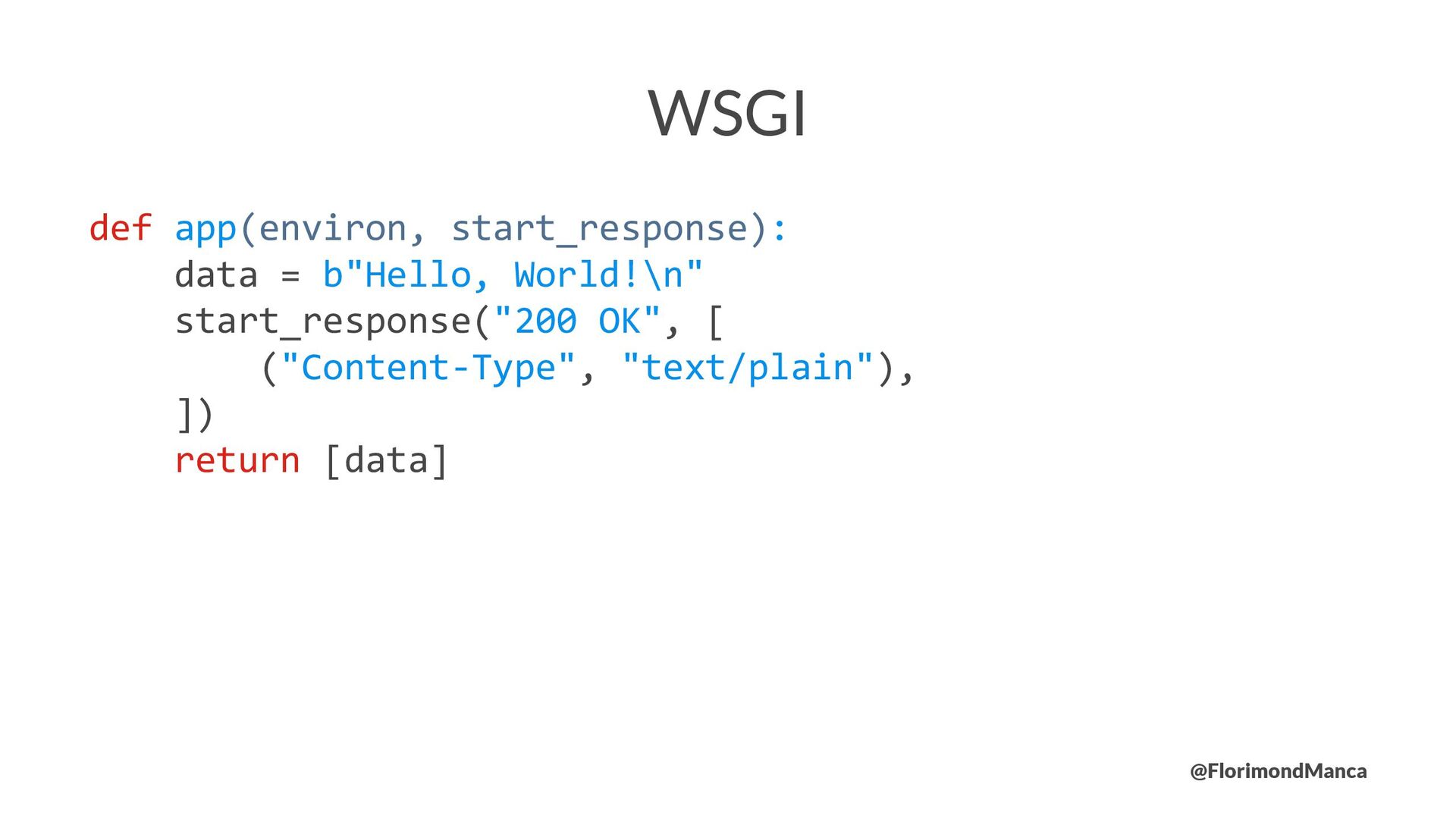
  6. WSGI def app(environ, start_response): data = b"Hello, World!\n" start_response("200 OK",

    [ ("Content-Type", "text/plain"), ]) return [data] @FlorimondManca
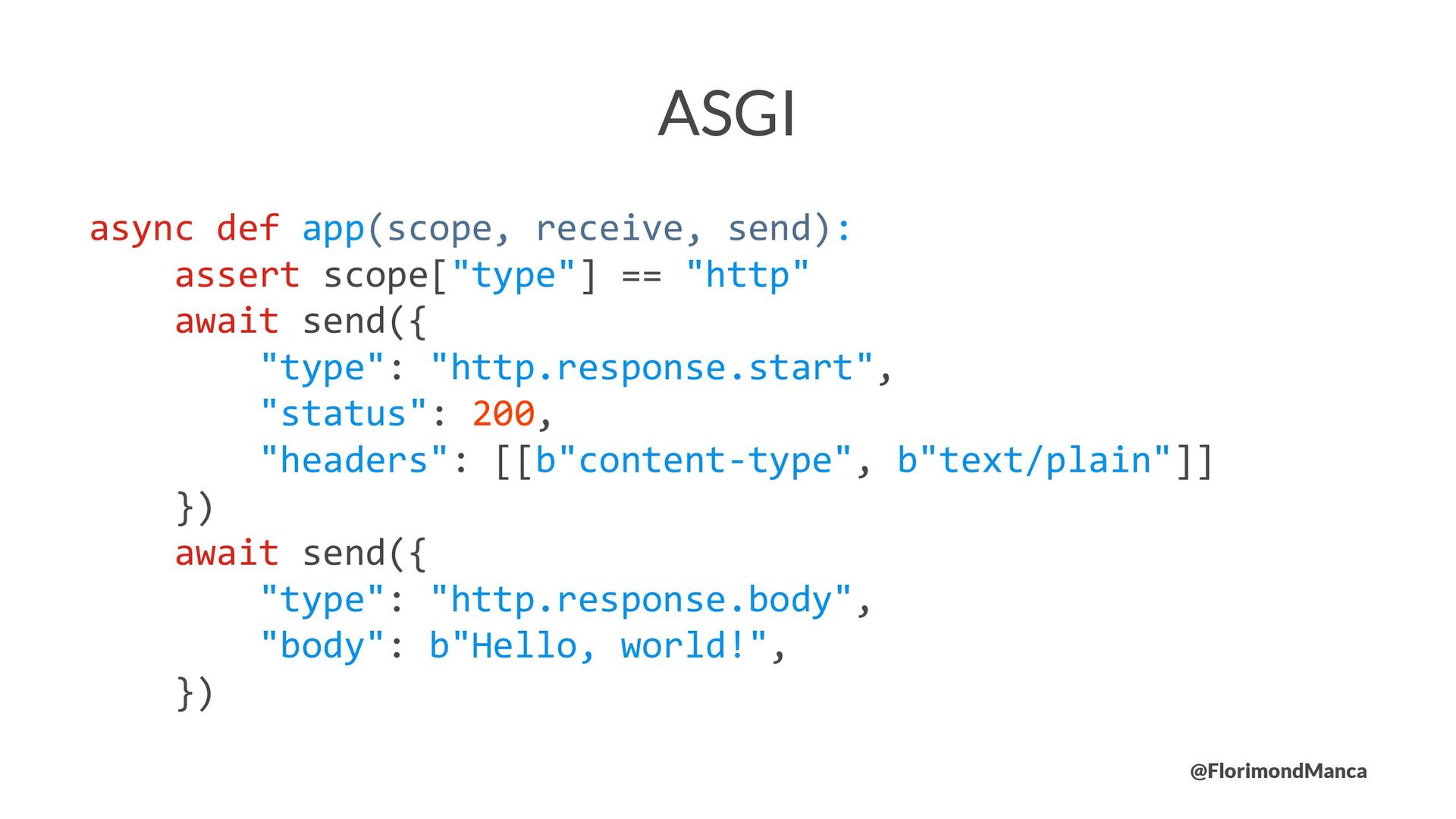
  7. ASGI async def app(scope, receive, send): assert scope["type"] == "http"

    await send({ "type": "http.response.start", "status": 200, "headers": [[b"content-type", b"text/plain"]] }) await send({ "type": "http.response.body", "body": b"Hello, world!", }) @FlorimondManca
  8. 4. How easy is it to build a minimal* framework?
    *App, routing, views @FlorimondManca
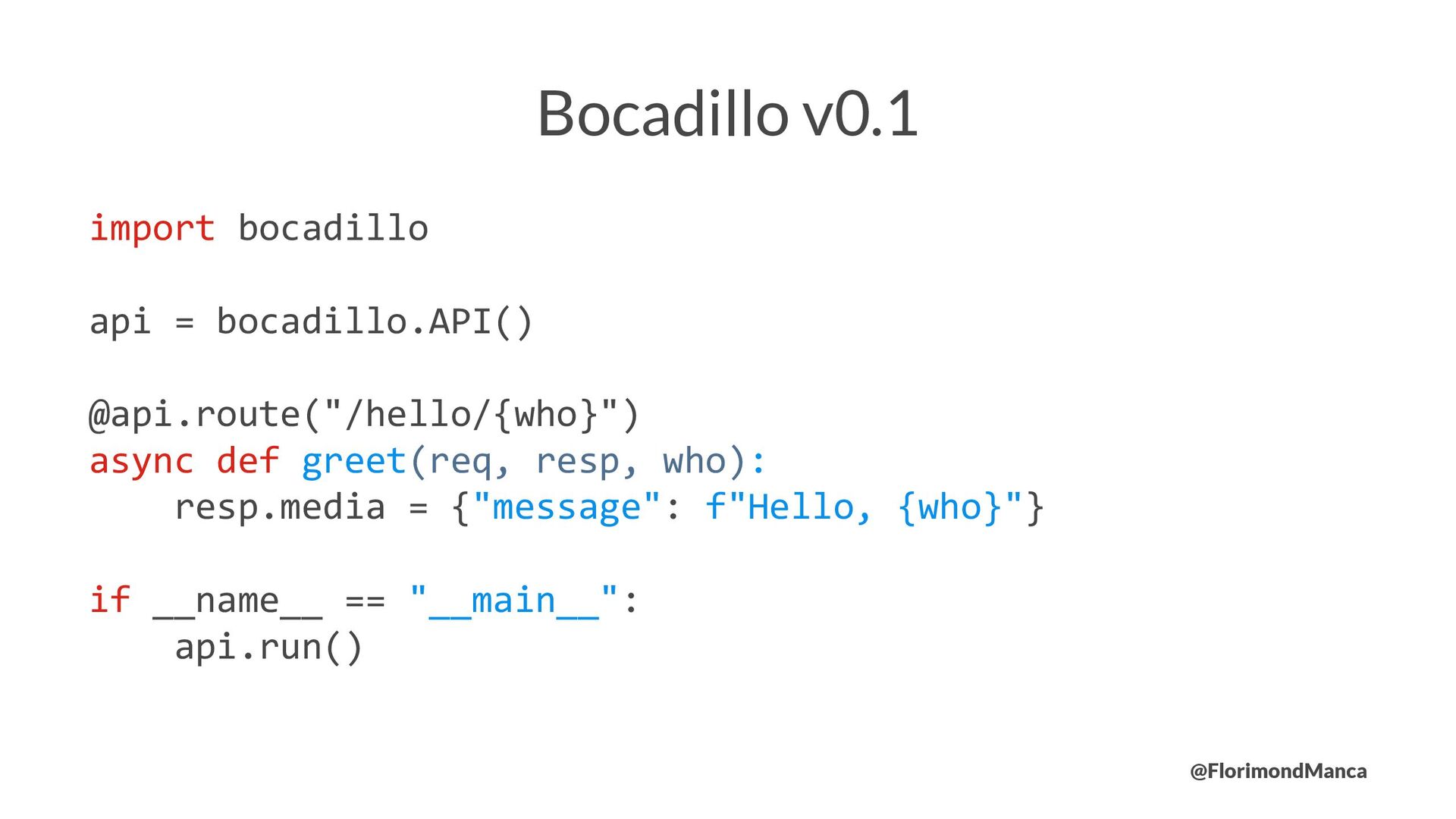
  9. Bocadillo v0.1 import bocadillo api = bocadillo.API() @api.route("/hello/{who}") async def

    greet(req, resp, who): resp.media = {"message": f"Hello, {who}"} if __name__ == "__main__": api.run() @FlorimondManca
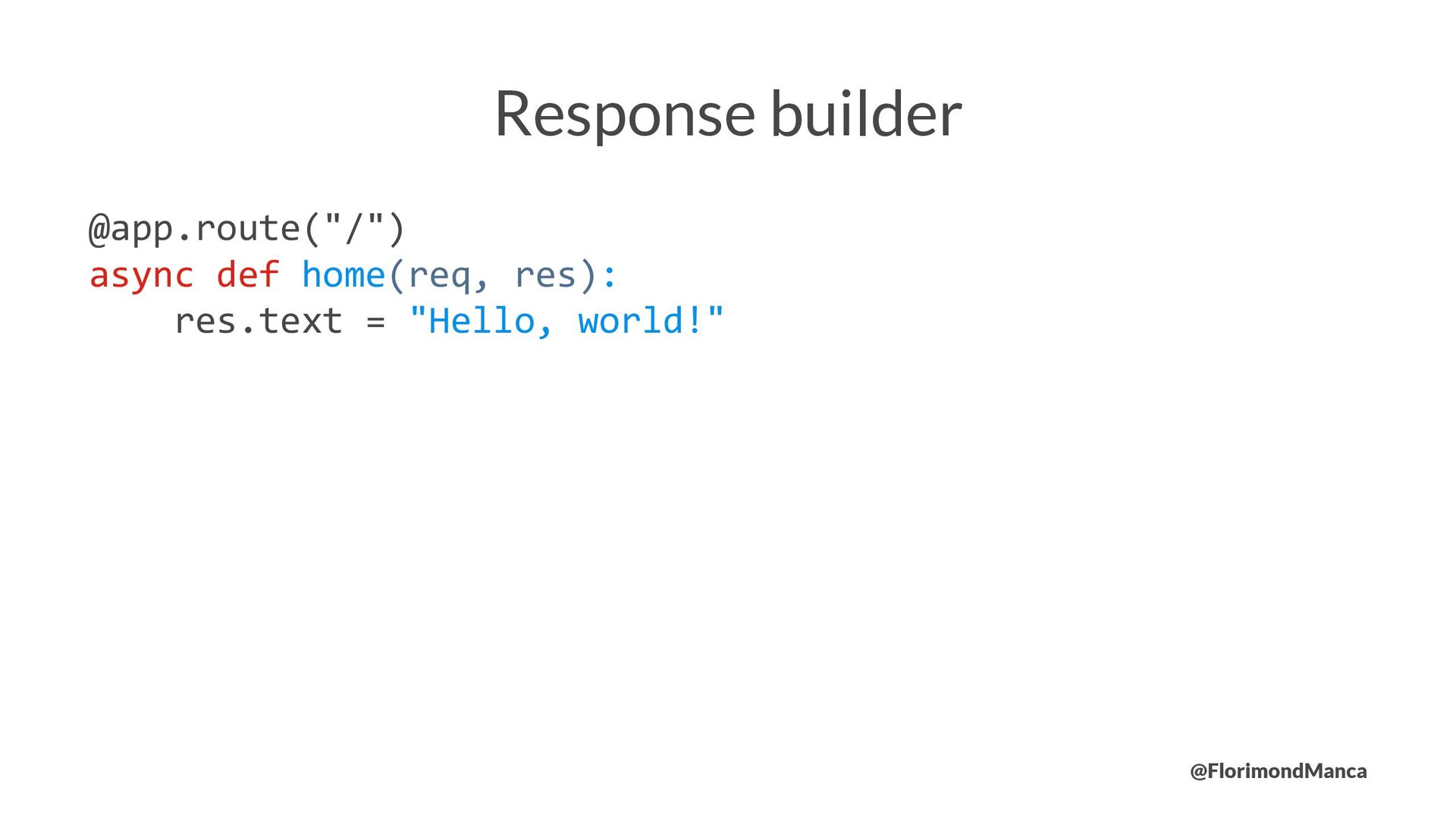
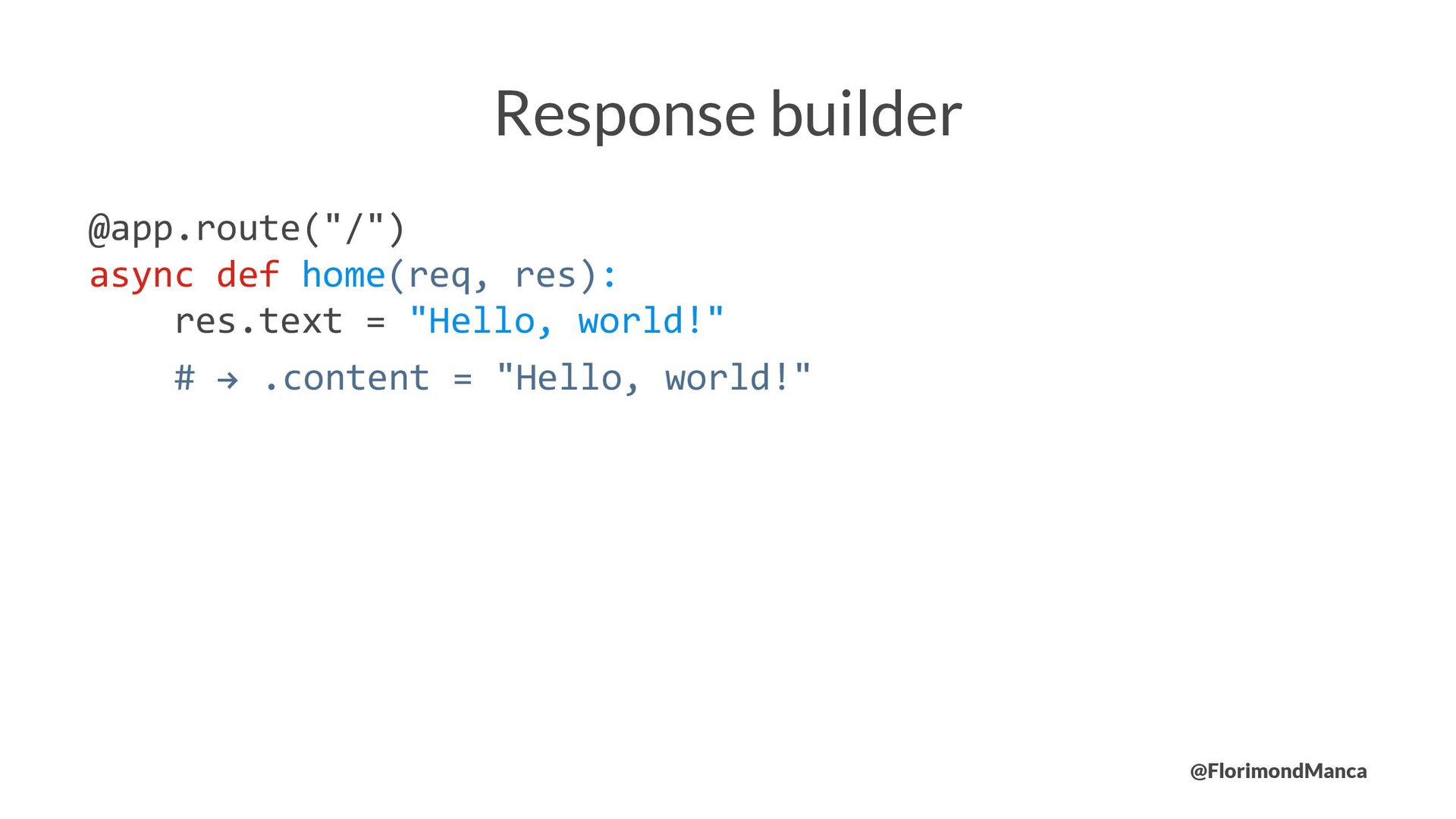
  10. Response builder @app.route("/") async def home(req, res): res.text = "Hello,

    world!" # ! .content = "Hello, world!" @FlorimondManca
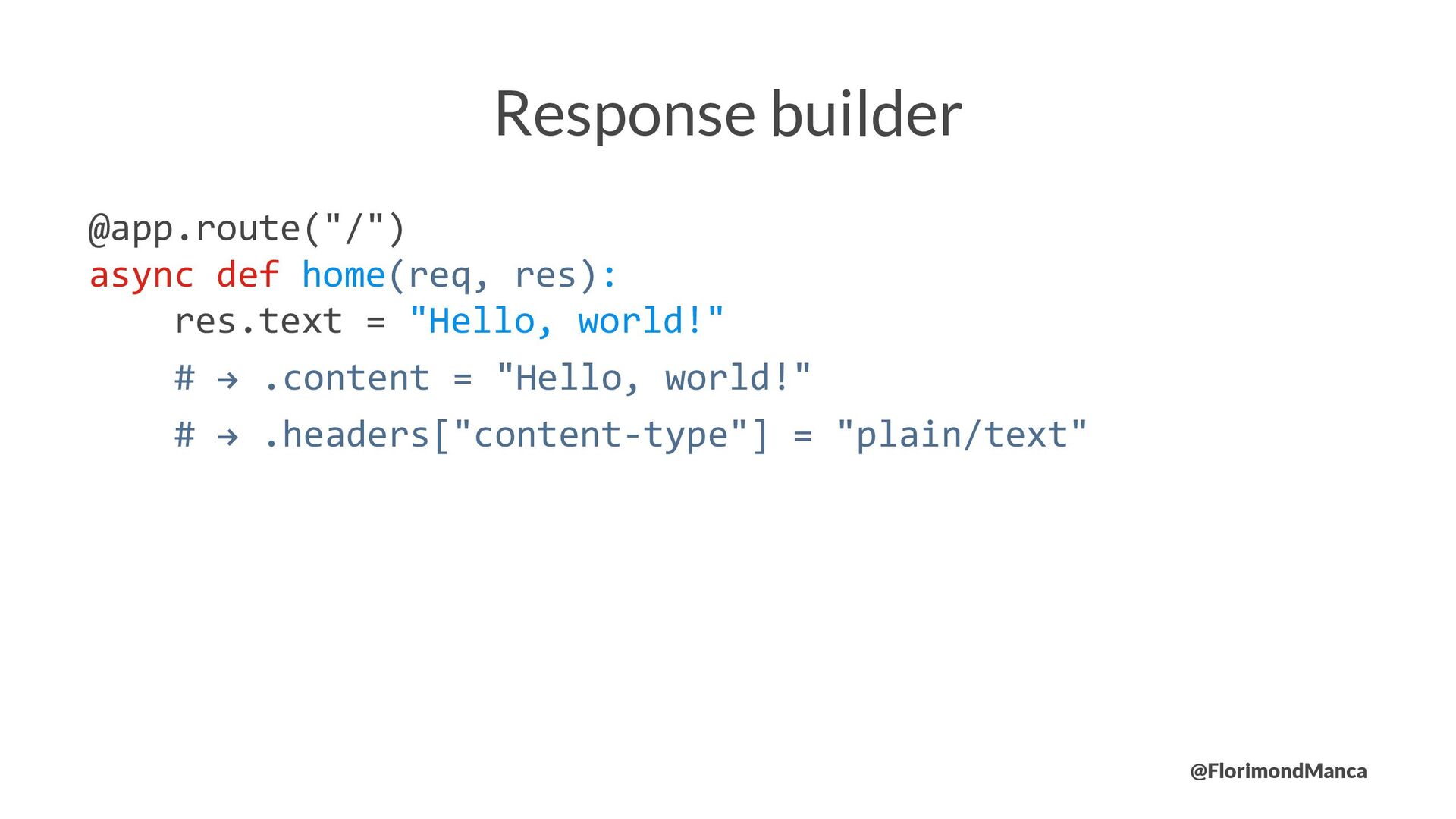
  11. Response builder @app.route("/") async def home(req, res): res.text = "Hello,

    world!" # ! .content = "Hello, world!" # ! .headers["content-type"] = "plain/text" @FlorimondManca
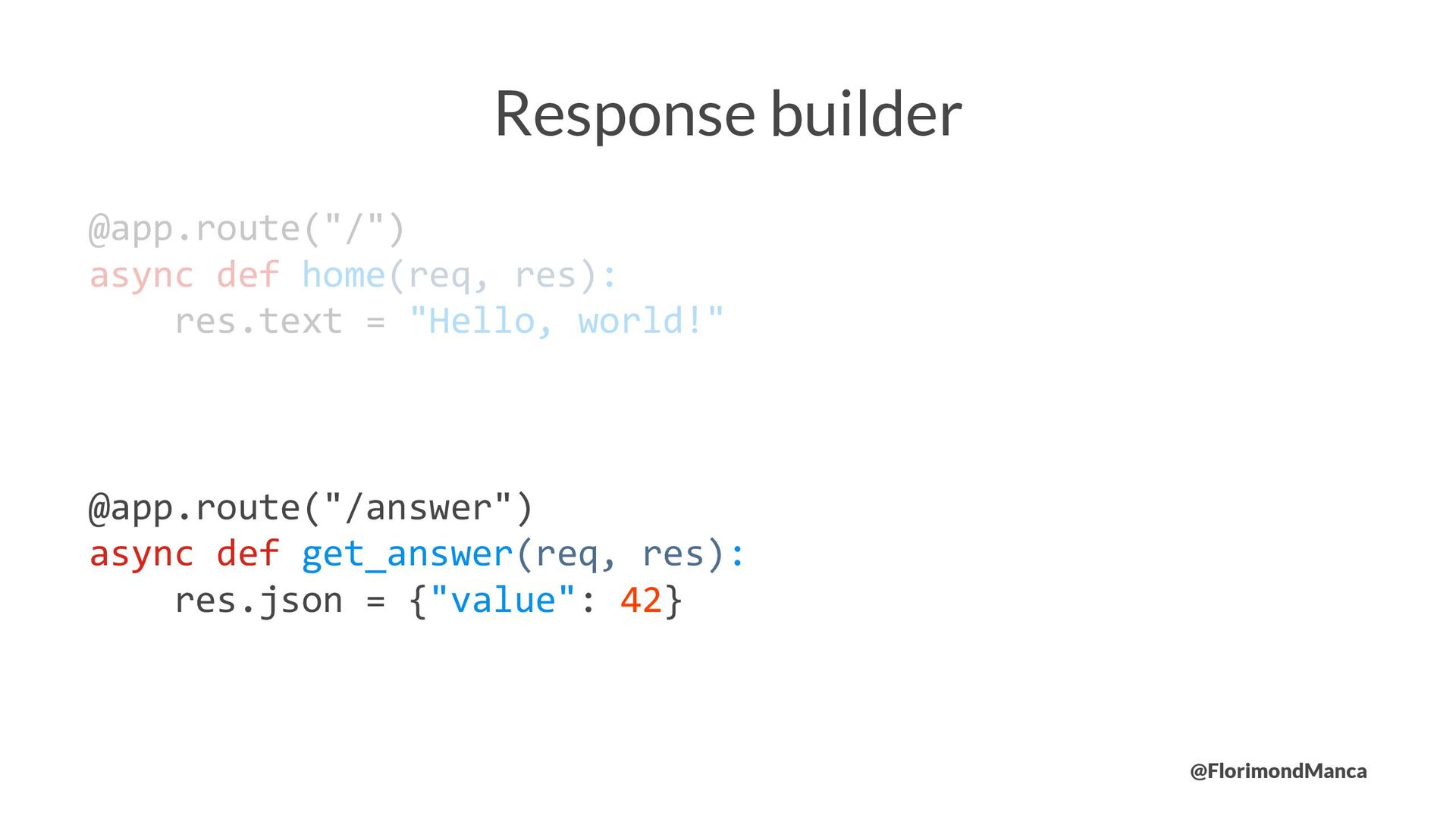
  12. Response builder @app.route("/") async def home(req, res): res.text = "Hello,

    world!" @app.route("/answer") async def get_answer(req, res): res.json = {"value": 42} @FlorimondManca
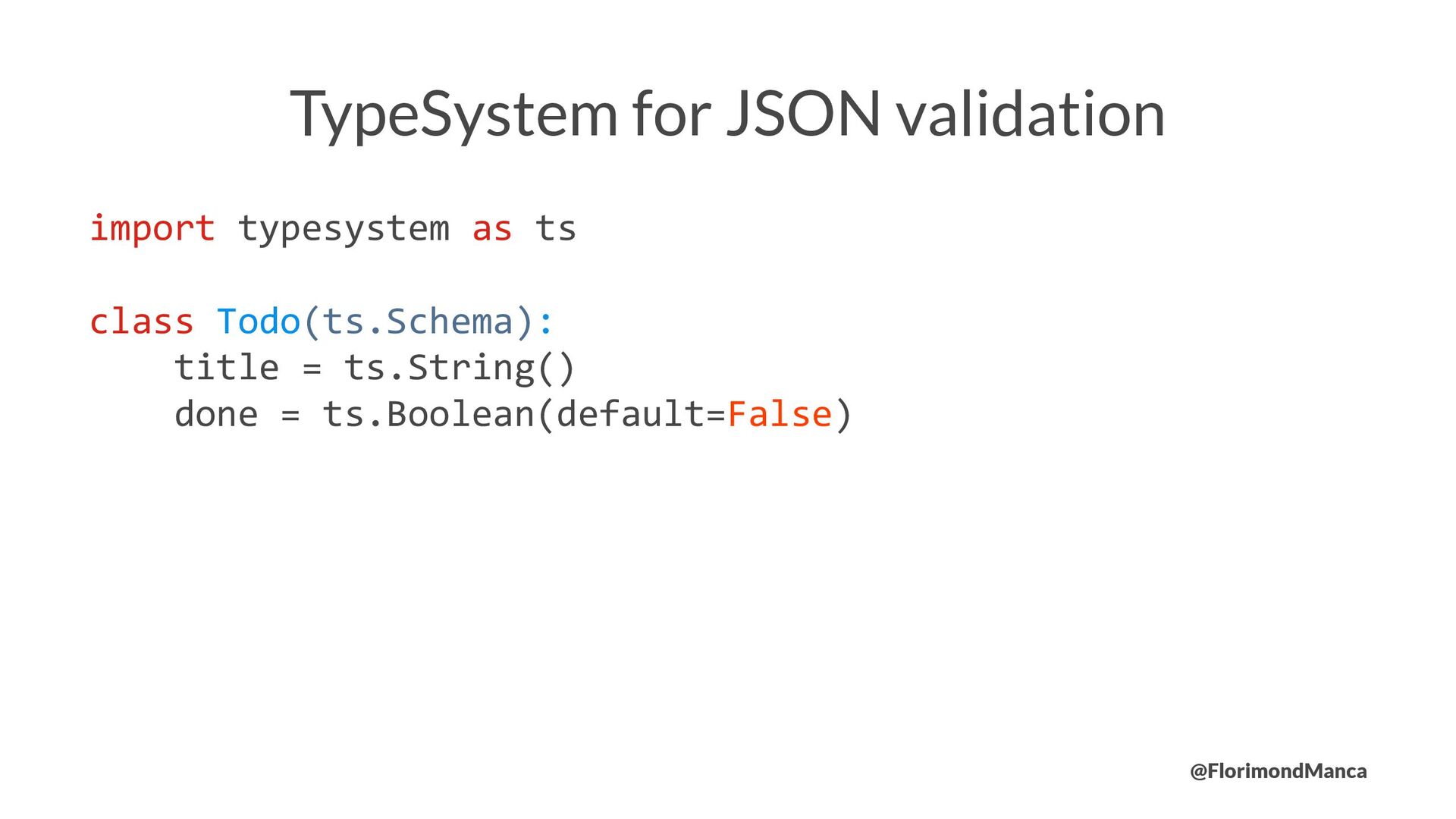
  13. TypeSystem for JSON validation import typesystem as ts class Todo(ts.Schema):

    title = ts.String() done = ts.Boolean(default=False) @FlorimondManca
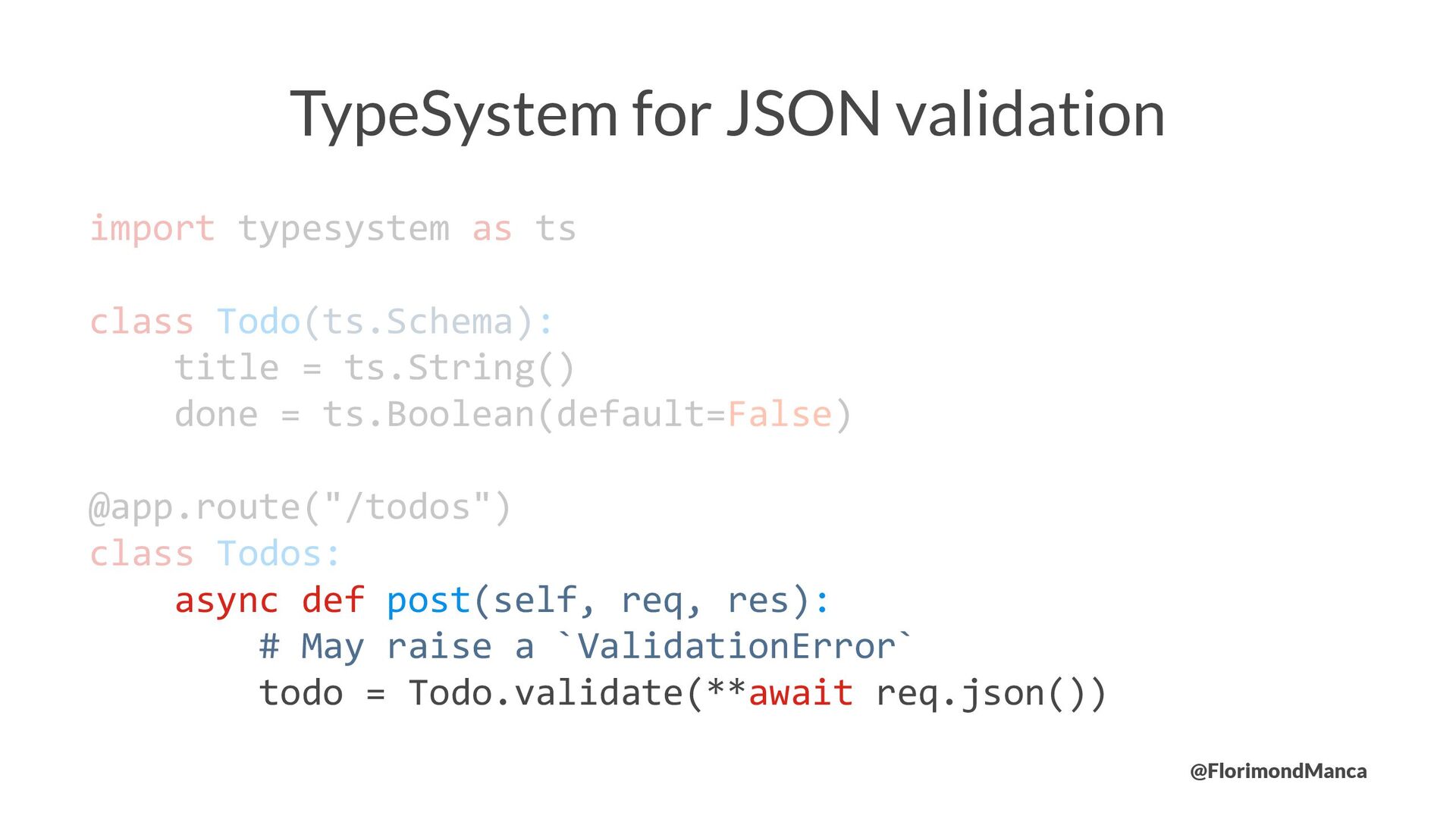
  14. TypeSystem for JSON validation import typesystem as ts class Todo(ts.Schema):

    title = ts.String() done = ts.Boolean(default=False) @app.route("/todos") class Todos: async def post(self, req, res): # May raise a `ValidationError` todo = Todo.validate(**await req.json()) @FlorimondManca
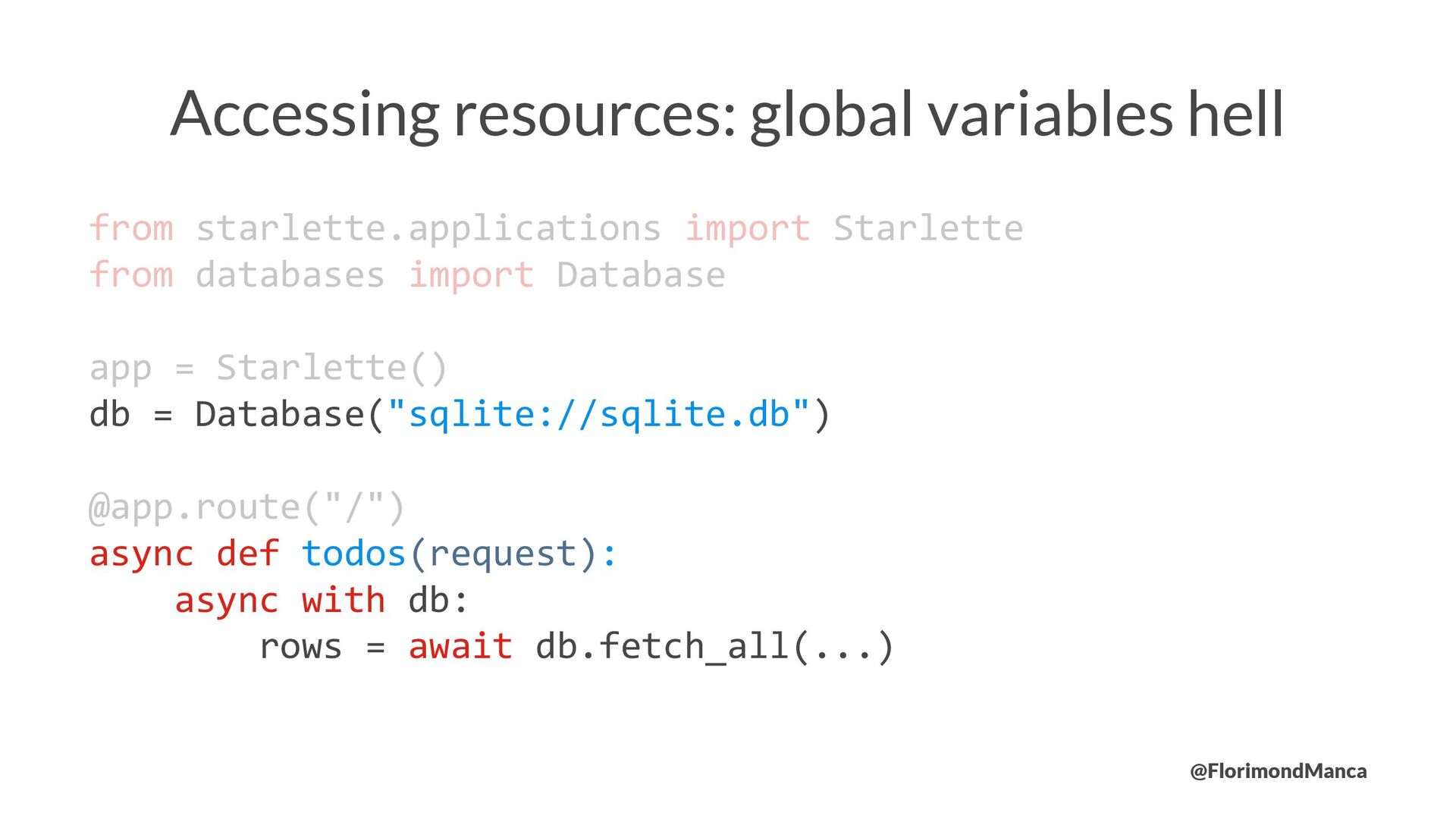
  15. Accessing resources: global variables hell from starlette.applications import Starlette from

    databases import Database app = Starlette() db = Database("sqlite://sqlite.db") @app.route("/") async def todos(request): async with db: rows = await db.fetch_all(...) @FlorimondManca
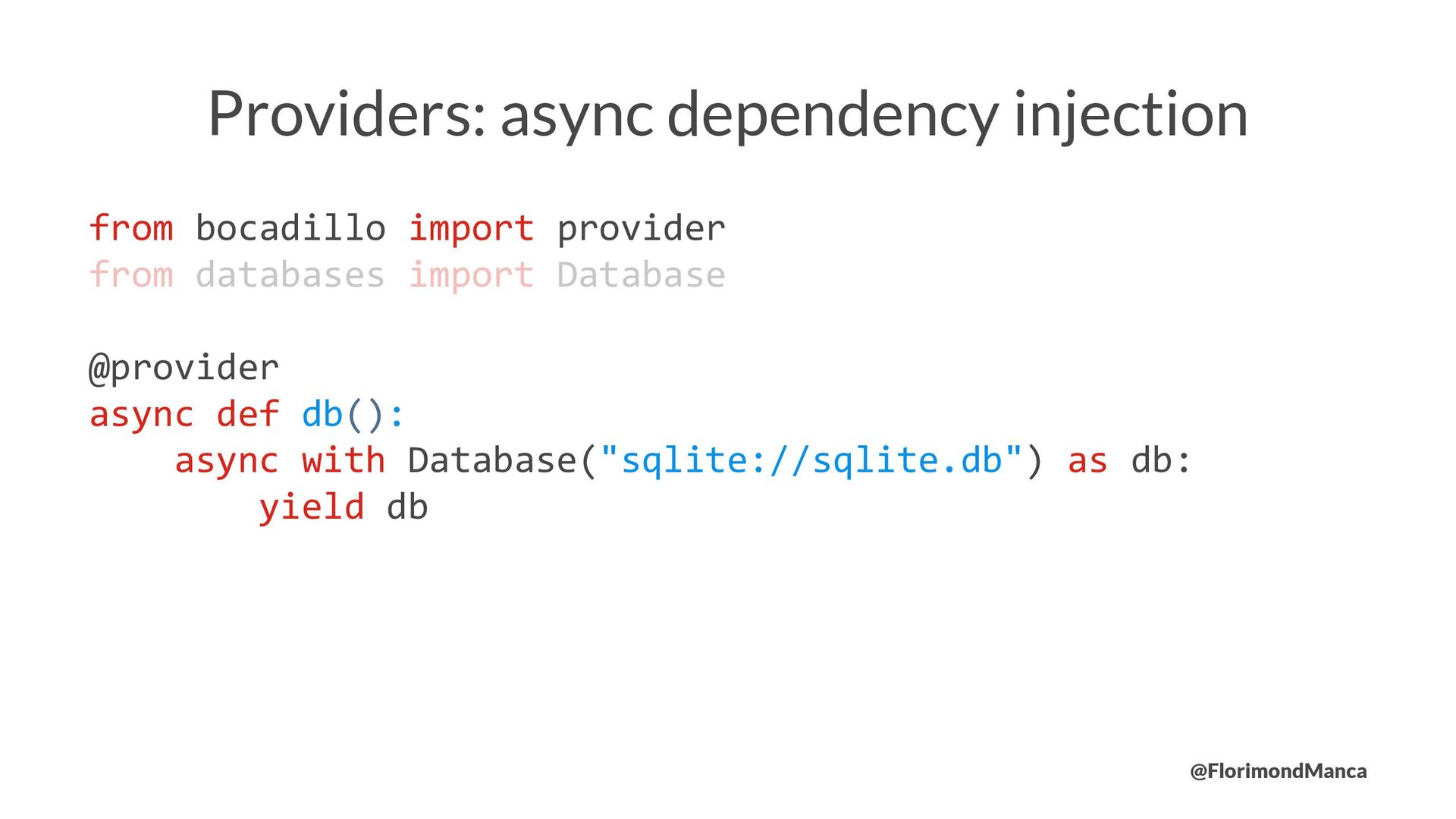
  16. Providers: async dependency injection from bocadillo import provider from databases

    import Database @provider async def db(): async with Database("sqlite://sqlite.db") as db: yield db @FlorimondManca
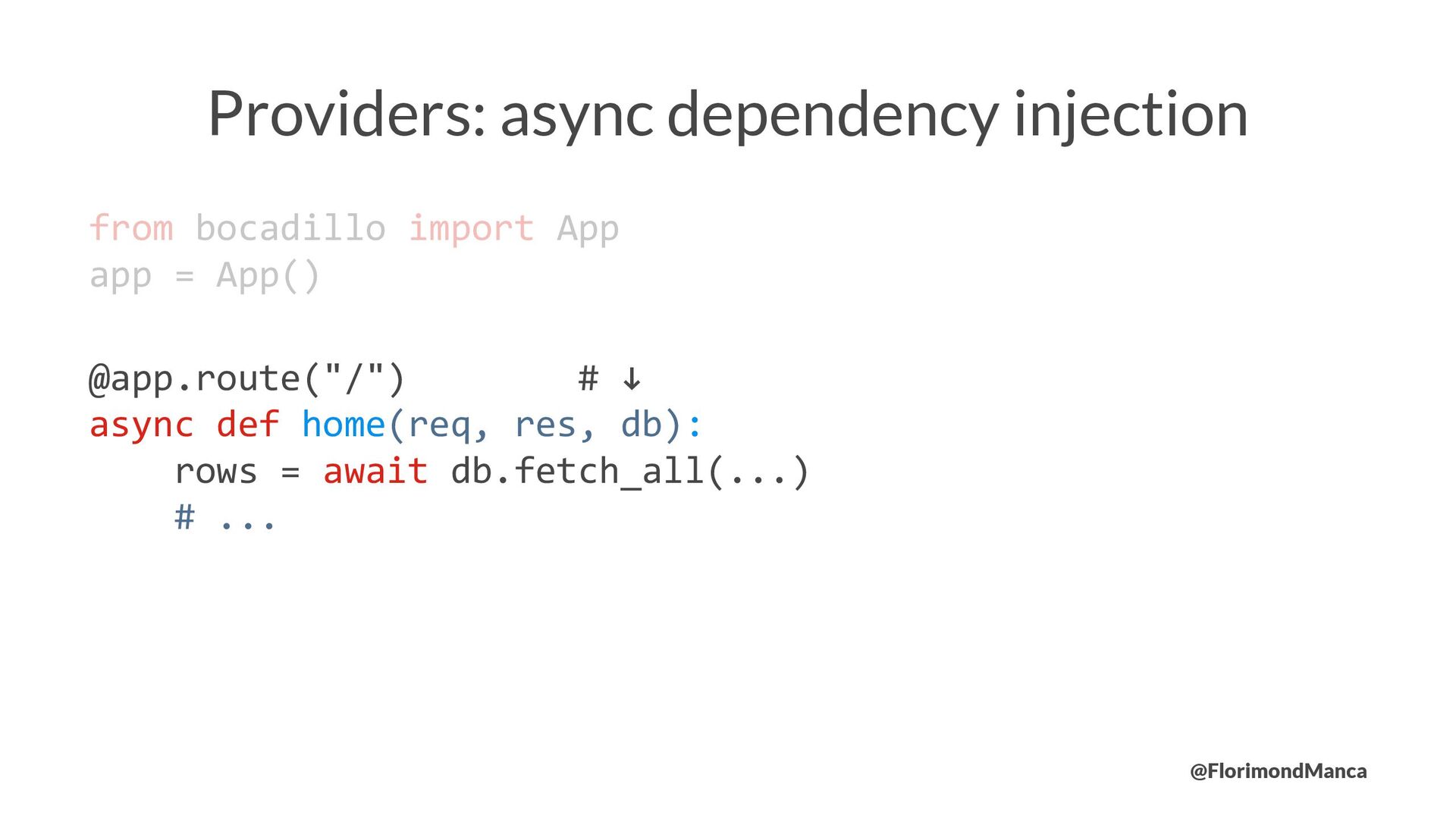
  17. Providers: async dependency injection from bocadillo import App app =

    App() @app.route("/") # ! async def home(req, res, db): rows = await db.fetch_all(...) # ... @FlorimondManca
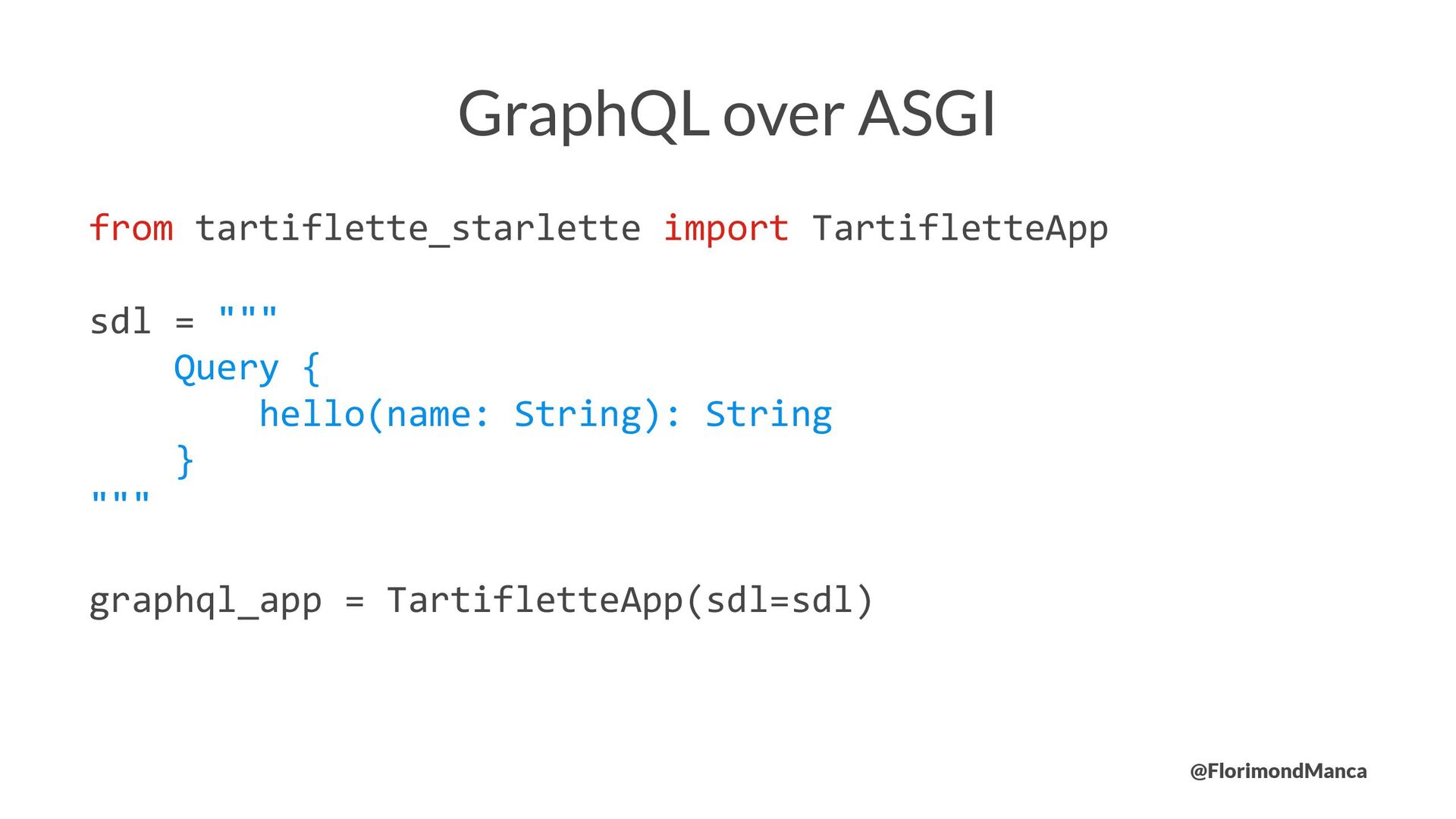
  18. GraphQL over ASGI from tartiflette_starlette import TartifletteApp sdl = """

    Query { hello(name: String): String } """ graphql_app = TartifletteApp(sdl=sdl) @FlorimondManca
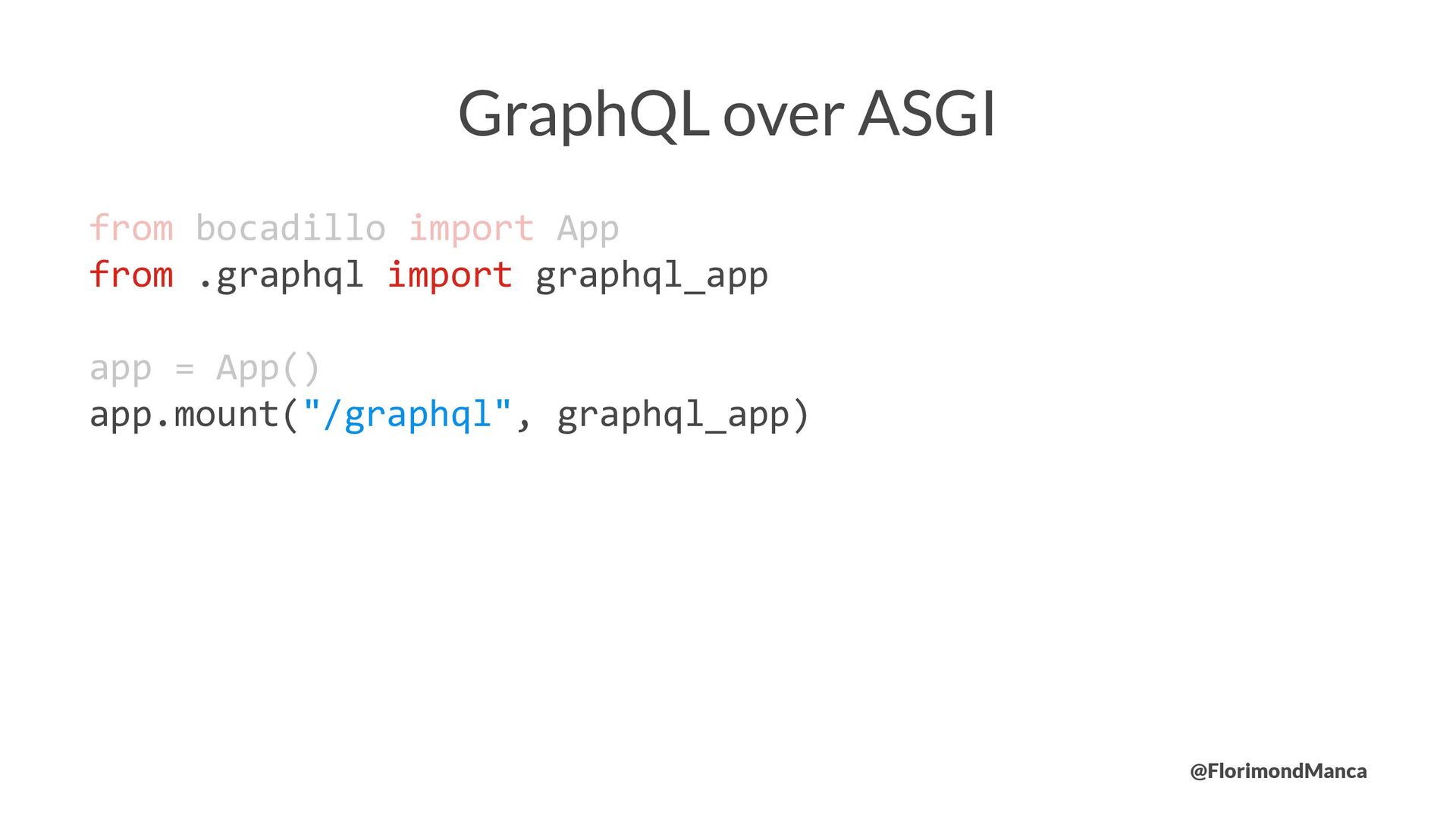
  19. GraphQL over ASGI from bocadillo import App from .graphql import

    graphql_app app = App() app.mount("/graphql", graphql_app) @FlorimondManca
  20. 8. What else can I do to make people use

    my project? @FlorimondManca

More Decks by Florimond Manca

Other Decks in Programming