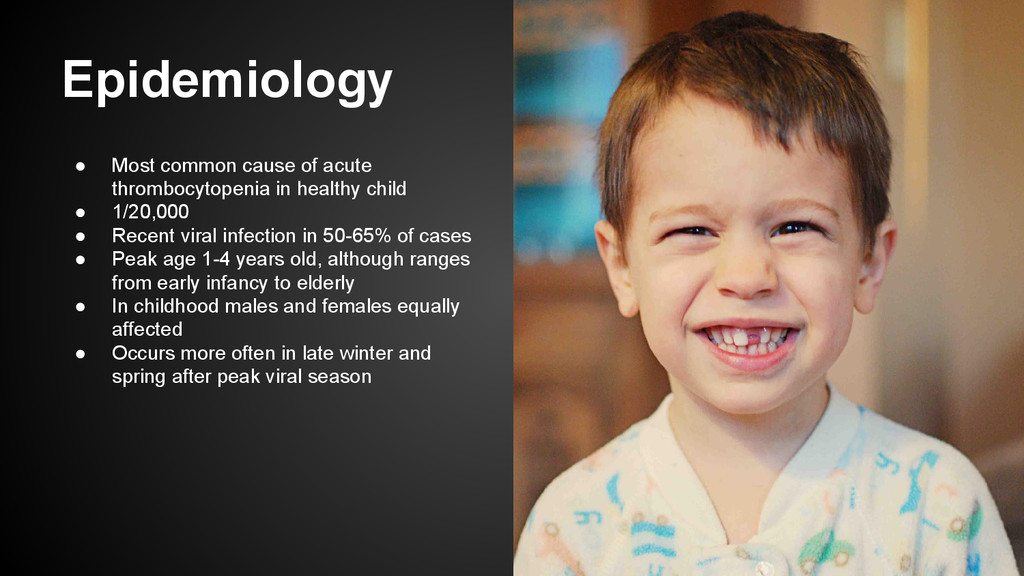
child • 1/20,000 • Recent viral infection in 50-65% of cases • Peak age 1-4 years old, although ranges from early infancy to elderly • In childhood males and females equally affected • Occurs more often in late winter and spring after peak viral season
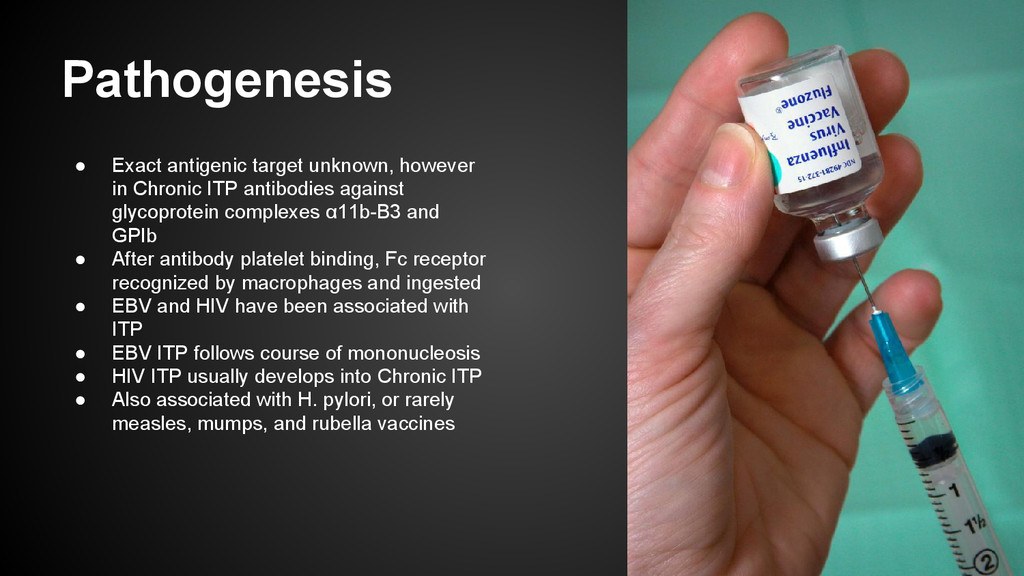
antibodies against glycoprotein complexes α11b-B3 and GPIb • After antibody platelet binding, Fc receptor recognized by macrophages and ingested • EBV and HIV have been associated with ITP • EBV ITP follows course of mononucleosis • HIV ITP usually develops into Chronic ITP • Also associated with H. pylori, or rarely measles, mumps, and rubella vaccines
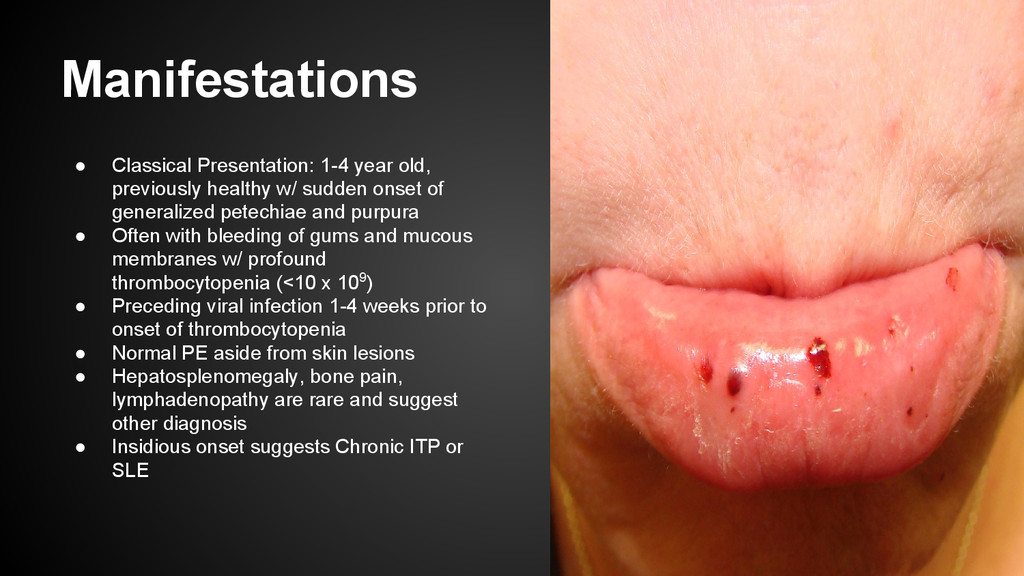
sudden onset of generalized petechiae and purpura • Often with bleeding of gums and mucous membranes w/ profound thrombocytopenia (<10 x 109) • Preceding viral infection 1-4 weeks prior to onset of thrombocytopenia • Normal PE aside from skin lesions • Hepatosplenomegaly, bone pain, lymphadenopathy are rare and suggest other diagnosis • Insidious onset suggests Chronic ITP or SLE
• Spontaneous resolution within 6 months in 70-80% of cases of acute ITP • 20% go on to have Chronic ITP ◦ Appears related to age as 50% of adolescents develop Chronic ITP
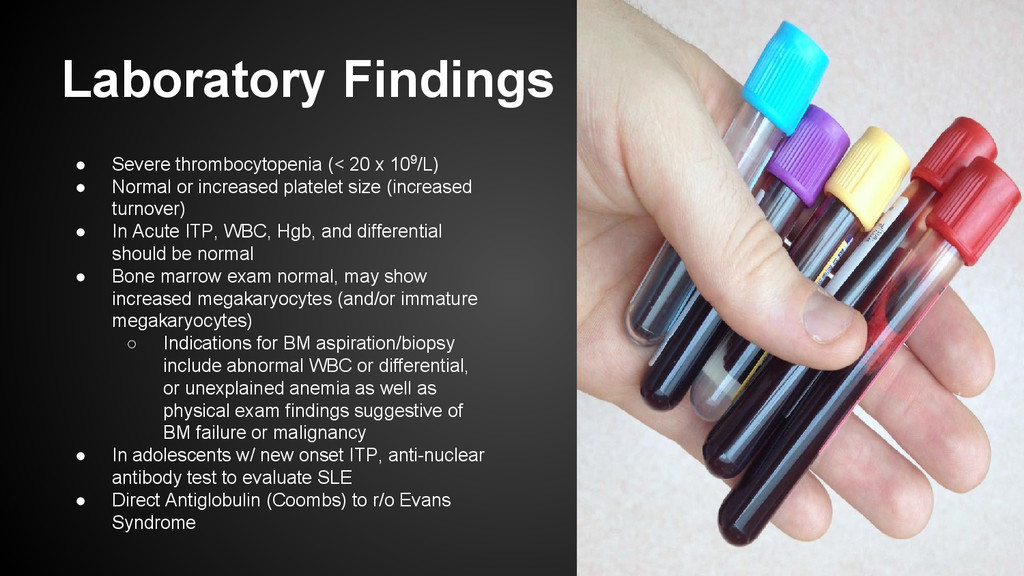
Normal or increased platelet size (increased turnover) • In Acute ITP, WBC, Hgb, and differential should be normal • Bone marrow exam normal, may show increased megakaryocytes (and/or immature megakaryocytes) ◦ Indications for BM aspiration/biopsy include abnormal WBC or differential, or unexplained anemia as well as physical exam findings suggestive of BM failure or malignancy • In adolescents w/ new onset ITP, anti-nuclear antibody test to evaluate SLE • Direct Antiglobulin (Coombs) to r/o Evans Syndrome
normal CBC, and normal findings on PE has a limited DDx that includes exposure to medication that induces drug- dependent antibodies, splenic sequestration due to previously unappreciated portal hypertension, and rarely, early aplastic processes, such as Fanconi anemia. • Autoimmune thrombocytopenia may be an initial manifestation of SLE, HIV, common variable immunodeficiency, or rarely lymphoma. • Wiskott Aldrich must be considered in young males with thrombocytopenia w/ small platelets
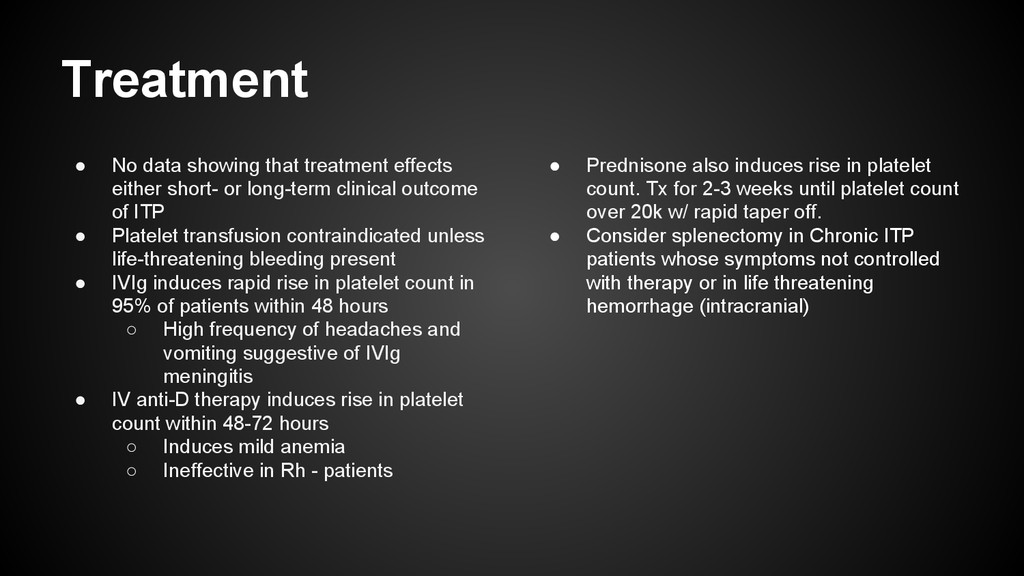
or long-term clinical outcome of ITP • Platelet transfusion contraindicated unless life-threatening bleeding present • IVIg induces rapid rise in platelet count in 95% of patients within 48 hours ◦ High frequency of headaches and vomiting suggestive of IVIg meningitis • IV anti-D therapy induces rise in platelet count within 48-72 hours ◦ Induces mild anemia ◦ Ineffective in Rh - patients • Prednisone also induces rise in platelet count. Tx for 2-3 weeks until platelet count over 20k w/ rapid taper off. • Consider splenectomy in Chronic ITP patients whose symptoms not controlled with therapy or in life threatening hemorrhage (intracranial)


 georgegermanos
 yatabe
 hiola
 ssmedikasda
 ishii_mit
 mutomasa
 masakiokuda
 pawan_pharm
 juanmartin2026
 arnoknobbe
 yasslab
 naochim2026
 robintux
 techseoconnect
 lara
 lauravandoore
 greggifford
 madoxten
 caitiem20
 jakevdp
 dougneiner
 geshan
 lemiorhan
 reverentgeek
 philnash